

Mortality risk attributable to high and low ambient temperature: a multicountry observational study
Open accessThe DOI matches its Crossref record; 43 of the 43 references it cites were found in a registry or an index.
Abstract
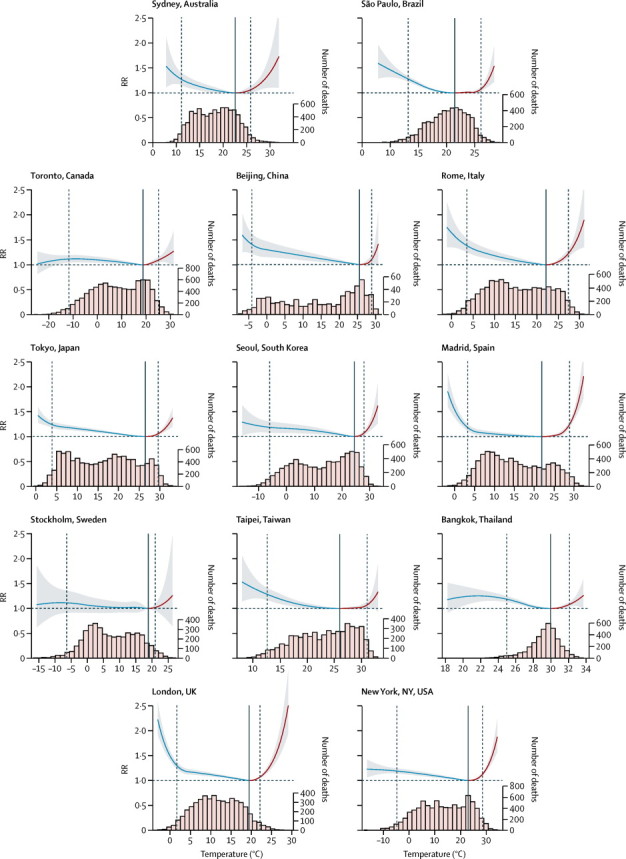
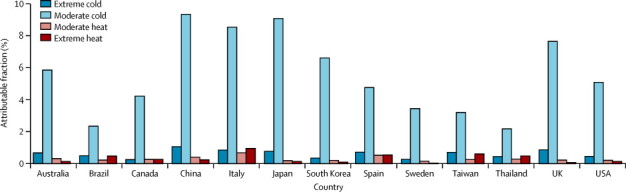
BACKGROUND: Although studies have provided estimates of premature deaths attributable to either heat or cold in selected countries, none has so far offered a systematic assessment across the whole temperature range in populations exposed to different climates. We aimed to quantify the total mortality burden attributable to non-optimum ambient temperature, and the relative contributions from heat and cold and from moderate and extreme temperatures. METHODS: We collected data for 384 locations in Australia, Brazil, Canada, China, Italy, Japan, South Korea, Spain, Sweden, Taiwan, Thailand, UK, and USA. We fitted a standard time-series Poisson model for each location, controlling for trends and day of the week. We estimated temperature-mortality associations with a distributed lag non-linear model with 21 days of lag, and then pooled them in a multivariate metaregression that included country indicators and temperature average and range. We calculated attributable deaths for heat and cold, defined as temperatures above and below the optimum temperature, which corresponded to the point of minimum mortality, and for moderate and extreme temperatures, defined using cutoffs at the 2·5th and 97·5th temperature percentiles. FINDINGS: We analysed 74,225,200 deaths in various periods between 1985 and 2012. In total, 7·71% (95% empirical CI 7·43-7·91) of mortality was attributable to non-optimum temperature in the selected countries within the study period, with substantial differences between countries, ranging from 3·37% (3·06 to 3·63) in Thailand to 11·00% (9·29 to 12·47) in China. The temperature percentile of minimum mortality varied from roughly the 60th percentile in tropical areas to about the 80-90th percentile in temperate regions. More temperature-attributable deaths were caused by cold (7·29%, 7·02-7·49) than by heat (0·42%, 0·39-0·44). Extreme cold and hot temperatures were responsible for 0·86% (0·84-0·87) of total mortality. INTERPRETATION: Most of the temperature-related mortality burden was attributable to the contribution of cold. The effect of days of extreme temperature was substantially less than that attributable to milder but non-optimum weather. This evidence has important implications for the planning of public-health interventions to minimise the health consequences of adverse temperatures, and for predictions of future effect in climate-change scenarios. FUNDING: UK Medical Research Council.
Overview
The claims and statistics of this paper haven’t been checked yet.
Free: it reads the open-access text and checks the first 5 claims that cite a source we can check. Create a free account to check every claim.
Integrity signals
Registry
Cites
Statistics
Figures
Verification
Claims the paper makes
The claims and statistics of this paper haven’t been checked yet.
Free: it reads the open-access text and checks the first 5 claims that cite a source we can check. Create a free account to check every claim.
Claims other papers make about this one
Each is checked against this paper’s own text: does it say what the citing paper says it does?
The cited source says what the claim attributes to it.
In the citing paper
“An immediate and direct impact of climate change is through human exposure to high outdoor temperatures, which is associated with morbidity and an increased risk of premature death (mortality)2–4.”
From The burden of heat-related mortality attributable to recent human-induced climate change (2021) · cites this paper as [2]
The cited source says what the claim attributes to it.
In the citing paper
“Increasing evidence from experimental, epidemiological, and econometric studies has demonstrated the effects of increased heat exposures on productivity [38], learning ability [39], and morbidity and mortality in humans [17,18,40].”
From Reduced cognitive function during a heat wave among residents of non-air-conditioned buildings: An observational study of young adults in the summer of 2016 (2018) · cites this paper as [18]
In the citing paper
“Hundreds of cardiovascular deaths each year among construction workers in Qatar may likewise be due to workplace heat (25).”
From Heat, Human Performance, and Occupational Health: A Key Issue for the Assessment of Global Climate Change Impacts (2016) · cites this paper as [25]
Self-check
Percentages, sums and reported differences re-computed from the paper’s own numbers.
The self-check needs the paper’s full text.
Citations
Cites
Quantifying heterogeneity in a meta‐analysis
Higgins, J. P. T., & Thompson, S. G. (2002) · Statistics in Medicine · doi:10.1002/sim.1186 · Cited by 36,763
(2013) · Cited by 6,752
The Effects of Climate Change on Cardiac Health
De Blois, J., Kjellstrom, T., Agewall, S., Ezekowitz, J. A., Armstrong, P. W., & Atar, D. (2015) · Cardiology · doi:10.1159/000398787 · Cited by 1,697
Relation between elevated ambient temperature and mortality: A review of the epidemiologic evidence
Basu, R. (2002) · Epidemiologic Reviews · doi:10.1093/epirev/mxf007 · Cited by 1,381
Heat-Related Deaths during the July 1995 Heat Wave in Chicago
Semenza, J. C., Rubin, C. H., Falter, K. H., Selanikio, J. D., Flanders, W. D., Howe, H. L., & Wilhelm, J. L. (1996) · New England Journal of Medicine · doi:10.1056/nejm199607113350203 · Cited by 1,376
Weather-Related Mortality: How Heat, Cold, and Heat Waves Affect Mortality in the United States
Anderson, B. G., & Bell, M. L. (2009) · Epidemiology · doi:10.1097/ede.0b013e318190ee08 · Cited by 1,229
Self-citationTime series regression studies in environmental epidemiology
Bhaskaran, K., Gasparrini, A., Hajat, S., Smeeth, L., & Armstrong, B. (2013) · International Journal of Epidemiology · doi:10.1093/ije/dyt092 · Cited by 1,150
Self-citationHigh ambient temperature and mortality: a review of epidemiologic studies from 2001 to 2008
Basu, R. (2009) · Environmental Health · doi:10.1186/1476-069x-8-40 · Cited by 1,135
Reducing and meta-analysing estimates from distributed lag non-linear models
Gasparrini, A., & Armstrong, B. (2013) · BMC Medical Research Methodology · doi:10.1186/1471-2288-13-1 · Cited by 1,081
Self-citation
Cited by
Items 701–800 of 1,006
The transformative service paradox: the dilemma of wellbeing trade-offs
Russell‐Bennett, R., Mulcahy, R. F., Letheren, K., McAndrew, R., & Dulleck, U. (2020) · Journal of service management · doi:10.1108/josm-10-2019-0324 · Cited by 42
Intensified impacts on mortality due to compound winter extremes in the Czech Republic
Plavcová, E., & Urban, A. (2020) · The Science of The Total Environment · doi:10.1016/j.scitotenv.2020.141033 · Cited by 43
Rodrigues, M., Santana, P., & Rocha, A. C. (2021) · Journal of Urban Health · doi:10.1007/s11524-021-00536-z · Cited by 42
Air pollution control efficacy and health impacts: A global observational study from 2000 to 2016
Han, C., Xu, R., Zhang, Y., Yu, W., Zhang, Z., Morawska, L., Heyworth, J. S., Jalaludin, B. B., Morgan, G. G., Marks, G. B., et al. (2020) · Environmental Pollution · doi:10.1016/j.envpol.2021.117211 · Cited by 41
Self-citationHeat-related cardiovascular morbidity and mortality in Switzerland: a clinical perspective
Schulte, F., Röösli, M., & Ragettli, M. S. (2021) · Swiss Medical Weekly · doi:10.4414/smw.2021.w30013 · Cited by 41
Miyamura, K., Nawa, N., Nishimura, H., Fushimi, K., & Fujiwara, T. (2022) · Environment International · doi:10.1016/j.envint.2022.107410 · Cited by 41
Extreme temperature increases the risk of stillbirth in the third trimester of pregnancy
Yang, H., LEE, J. K. W., & Chio, C. (2022) · Scientific Reports · doi:10.1038/s41598-022-23155-3 · Cited by 41
Long-term exposure to ozone and diabetes incidence: A longitudinal cohort study in China
Wang, Y., Cao, R., Xu, Z., Jin, J., Wang, J., Yang, T., Wei, J., Huang, J., & Li, G. (2021) · The Science of The Total Environment · doi:10.1016/j.scitotenv.2021.151634 · Cited by 40
Hanson, C., de Bont, J., Annerstedt, K. S., Alsina, M. D. R., Nobile, F., Roos, N., Waiswa, P., Pembe, A. B., Dossou, J., Chipeta, E. K., et al. (2024) · Nature Medicine · doi:10.1038/s41591-024-03245-7 · Cited by 40
Toward meta-analysis of impacts of heat and cold waves on mortality in Russian North
Shaposhnikov, D. A., & Revich, B. (2015) · Urban Climate · doi:10.1016/j.uclim.2015.11.007 · Cited by 40
Temperature effects on health - current findings and future implications
Schneider, A. E., & Breitner, S. (2016) · EBioMedicine · doi:10.1016/j.ebiom.2016.04.003 · Cited by 40
“Moreover, a recent study by Gasparrini and colleagues estimated that 7.7% of the mortality was attributable to non-optimum temperature using data from 384 locations (Gasparrini et al. 2015).”
InfluentialPhung, D. T., Mueller, J. F., Lai, F. Y., O'Brien, J. W., Dang, N., Morawska, L., & Thai, P. K. (2017) · Environmental Research · doi:10.1016/j.envres.2017.03.023 · Cited by 40
Stjernbrandt, A., Björ, B., Andersson, M., Burström, L., Liljelind, I., Nilsson, T., Lundström, R., & Wahlström, J. (2017) · International Archives of Occupational and Environmental Health · doi:10.1007/s00420-017-1221-3 · Cited by 40
Regional Assessment of Temperature-Related Mortality in Finland
Ruuhela, R., Hyvärinen, O., & Jylhä, K. (2018) · International Journal of Environmental Research and Public Health · doi:10.3390/ijerph15030406 · Cited by 40
“, [6,22]), and multi-city studies including Helsinki, the capital of Finland [23], and at the country level, e.”
Corcuera, I., & Hajat, S. (2020) · International Journal of Environmental Research and Public Health · doi:10.3390/ijerph17061957 · Cited by 40
A review of the impact of outdoor and indoor environmental factors on human health in China
Ma, Y., Zhang, Y., Cheng, B., Feng, F., Jiao, H., XiaoYan, Z., Ma, B., & Yu, Z. (2020) · Environmental Science and Pollution Research · doi:10.1007/s11356-020-10452-5 · Cited by 40
Mortality Risk from Respiratory Diseases Due to Non-Optimal Temperature among Brazilian Elderlies
Jacobson, L. D. S. V., de Oliveira, B. F. A., Schneider, R., Gasparrini, A., & Hacon, S. D. S. (2021) · International Journal of Environmental Research and Public Health · doi:10.3390/ijerph18115550 · Cited by 42
“Additionally, in the south and southeast regions, global warming has affected the average daily temperature and the daily amplitude and few studies have been conducted in Brazil to evaluate the effects of rising temperatures on human health [18,19].”
Self-citationContrasting biophysical and societal impacts of hydro-meteorological extremes
Orth, R., Sungmin, O., Zscheischler, J., Mahecha, M. D., & Reichstein, M. (2022) · Environmental Research Letters · doi:10.1088/1748-9326/ac4139 · Cited by 41
Impacts of air temperature and its extremes on human mortality in Shanghai, China
Bi, X., Wu, C., Wang, C., Wang, Y., Wang, X., Song, C., Li, J., & Fu, C. (2021) · Urban Climate · doi:10.1016/j.uclim.2021.101072 · Cited by 40
Self-citationHeat-related mortality amplified during the COVID-19 pandemic
Sousa, P. M., Trigo, R. M., Russo, A., Geirinhas, J. L., Rodrigues, A. P., Silva, S., & Torres, A. R. (2022) · International Journal of Biometeorology · doi:10.1007/s00484-021-02192-z · Cited by 40
Nyadanu, S. D., Tessema, G. A., Mullins, B. J., & Pereira, G. F. (2022) · The Science of The Total Environment · doi:10.1016/j.scitotenv.2022.155750 · Cited by 40
Kim, K., Lim, Y., Bae, S., Kim, J., Hwang, S., Kim, M.-J., Oh, J., Lim, H., Choi, J., & Kwon, H. (2022) · The Science of The Total Environment · doi:10.1016/j.scitotenv.2022.156464 · Cited by 41
Rai, M., Breitner, S., Huber, V., Zhang, S., Peters, A., & Schneider, A. E. (2023) · Environmental Research · doi:10.1016/j.envres.2023.115668 · Cited by 40
Mortality related to cold and heat. What do we learn from dairy cattle?
Cox, B., Gasparrini, A., Catry, B., Delcloo, A., Bijnens, E. M., Vangronsveld, J., & Nawrot, T. S. (2016) · Environmental Research · doi:10.1016/j.envres.2016.05.018 · Cited by 42
“On the other hand, the importance of moderate, non-extreme low temperatures has recently been suggested by two multi-country studies on human mortality (Gasparrini et al., 2015a, 2015b), with residual cold effects even observed in the four warmest months of the year (Gasparrini et al., 2015a).”
InfluentialSelf-citationTemporal Trends in Heat-Related Mortality: Implications for Future Projections
Kinney, P. L. (2018) · Atmosphere · doi:10.3390/atmos9100409 · Cited by 41
“Further evidence supporting the concept that populations adapt to local temperatures has been shown in an international study across over 300 cities [13,14].”
Circulation and Soil Moisture Contributions to Heatwaves in the United States
Horowitz, R., McKinnon, K. A., & Simpson, I. R. (2022) · Journal of Climate · doi:10.1175/jcli-d-21-0156.1 · Cited by 42
Alari, A., Chen, C., Schwarz, L., Hdansen, K., Chaix, B., & Benmarhnia, T. (2023) · American Journal of Epidemiology · doi:10.1093/aje/kwad032 · Cited by 39
Impact of ambient temperature on respiratory disease: a case-crossover study in Seoul
Lee, H., & Yoon, H. (2024) · Respiratory Research · doi:10.1186/s12931-024-02699-0 · Cited by 39
The Effect of Heat Exposure on Myocardial Blood Flow and Cardiovascular Function
Barry, H., Iglesies‐Grau, J., Chaseling, G. K., Paul, J., Gosselin, C., D’Oliviera‐Sousa, C., Juneau, M., Harel, F., Kaiser, D., Pelletier‐Galarneau, M., et al. (2024) · Annals of Internal Medicine · doi:10.7326/m24-3504 · Cited by 39
“A direct consequence of climate change is a greater frequency of heat extremes (1) that are associated with greater mortality worldwide (2).”
Chen, G., Guo, Y., Yue, X., Xu, R., Yu, W., Ye, T., Tong, S., Gasparrini, A., Bell, M. L., Armstrong, B., et al. (2024) · The Lancet Planetary Health · doi:10.1016/s2542-5196(24)00117-7 · Cited by 39
“17,50 In the first stage, both the conventional exposure–response association and the additional lag response association are defined in the distributed lag model.”
InfluentialSelf-citationChen, Z., Achebak, H., Petetin, H., Turrubiates, R. F. M., Guo, Y., García‐Pando, C. P., & Ballester, J. (2025) · The Lancet Planetary Health · doi:10.1016/s2542-5196(25)00048-8 · Cited by 40
Self-citationTemperature extremes impact mortality and morbidity differently
Gould, C. F., Heft‐Neal, S., Heaney, A. K., Bendavid, E., Callahan, C. W., Kiang, M. V., Zivin, J. G., & Burke, M. (2025) · Science Advances · doi:10.1126/sciadv.adr3070 · Cited by 39
Huang, J., Li, G., Liu, Y., Huang, J. A., Xu, G., Qian, X., Cen, Z., Pan, X., Xu, A., Guo, X., et al. (2018) · Environmental Research · doi:10.1016/j.envres.2018.08.024 · Cited by 39
Increased vulnerability of COPD patient groups to urban climate in view of global warming
Hoffmann, C., Hanisch, M., Heinsohn, J. B., Dostal, V., Jehn, M., Liebers, U., Pankow, W., Donaldson, G. C., & Witt, C. C. (2018) · International Journal of COPD · doi:10.2147/copd.s174148 · Cited by 39
Atmospheric rivers impact California's coastal water quality via extreme precipitation
Aguilera, R., Gershunov, A., & Benmarhnia, T. (2019) · The Science of The Total Environment · doi:10.1016/j.scitotenv.2019.03.318 · Cited by 39
Li, K., & Gyilbag, A. (2020) · Natural hazards and earth system sciences · doi:10.5194/nhess-20-1889-2020 · Cited by 39
Afoakwah, C., Nghiem, S. H., Scuffham, P., Huynh, Q. L., Marwick, T. H., & Byrnes, J. (2020) · The European Journal of Health Economics · doi:10.1007/s10198-020-01198-5 · Cited by 39
“Also, since these variables are likely to directly impact health outcomes [27, 28], they may confound the association between air pollution and health outcomes.”
A Review of the Relation between Household Indoor Temperature and Health Outcomes
Lima, F., Ferreira, P., & Leal, V. (2020) · Energies · doi:10.3390/en13112881 · Cited by 39
Cheng, J., Bambrick, H., Frentiu, F. D., Devine, G. J., Yakob, L., Xu, Z., Li, Z., Yang, W., & Hu, W. (2021) · International Journal of Biometeorology · doi:10.1007/s00484-021-02085-1 · Cited by 39
The effect of absolute versus relative temperature on health and the role of social care
Masiero, G., Mazzonna, F., & Santarossa, M. (2022) · Health Economics · doi:10.1002/hec.4507 · Cited by 39
Reflection on modern methods: visualizing the effects of collinearity in distributed lag models
Basagaña, X., & Barrera‐Gómez, J. (2021) · International Journal of Epidemiology · doi:10.1093/ije/dyab179 · Cited by 39
Lavigne, É., Ryti, N., Gasparrini, A., Sera, F., Weichenthal, S., Chen, H., To, T. M., Evans, G. J., Sun, L., Dheri, A. K., et al. (2022) · Thorax · doi:10.1136/thoraxjnl-2021-217602 · Cited by 39
Self-citationTang, L., Lyu, B., Gao, D., Jia, Z., Fu, Y., & Ma, J. (2023) · Small · doi:10.1002/smll.202308194 · Cited by 39
Impacts of 1.5ºC Global Warming on Natural and Human Systems
Hoegh‐Guldberg, O., Jacob, D., Taylor, M., Bindi, M., Brown, S., Camilloni, I. A., Diédhiou, A., Djalante, R., Ebi, K. L., Engelbrecht, F., et al. (2018) · UWA Profiles and Research Repository (University of Western Australia) · Cited by 40
Onozuka, D., & Hagihara, A. (2015) · Medicine · doi:10.1097/md.0000000000002259 · Cited by 35
“This method has been described in detail elsewhere.(16,19) Population attributable risks to low and high temperatures were calculated by summing the subsets corresponding to days with temperatures lower or higher than the minimum morbidity temperature.”
InfluentialWang, C., Zhang, Z., Zhou, M., Pin, W., Yin, P., Wan, Y., & Zhang, L. (2018) · Health & Place · doi:10.1016/j.healthplace.2018.01.011 · Cited by 39
Goel, H., Shah, K., Kumar, A., Hippen, J. T., & Nadar, S. K. (2022) · Journal of Human Hypertension · doi:10.1038/s41371-022-00707-8 · Cited by 38
Madaniyazi, L., Tobías, A., Kim, Y., Chung, Y., Armstrong, B., & Hashizume, M. (2022) · International Journal of Epidemiology · doi:10.1093/ije/dyac115 · Cited by 38
Self-citationDependence of urban park visits on thermal environment and air quality
Zhang, Y., Rao, F., Xue, J., & Lai, D. (2022) · Urban forestry & urban greening · doi:10.1016/j.ufug.2022.127813 · Cited by 38
Estimating the heat-related mortality and morbidity burden in the province of Quebec, Canada
Boudreault, J., Lavigne, É., Campagna, C., & Chebana, F. (2024) · Environmental Research · doi:10.1016/j.envres.2024.119347 · Cited by 38
Pozzer, A., Steffens, B. L., Proestos, Y., Sciare, J., Akritidis, D., Chowdhury, S., Burkart, K. G., & Bacer, S. (2024) · Nature Communications · doi:10.1038/s41467-024-53649-9 · Cited by 38
“More precisely, AF = ( RR − 1)/ RR , where RR is estimated from the considered ERFs; there are in fact several functions for PM 2.5 4 and just a few for temperature 3,19 .”
InfluentialZeng, W., Zhao, H., Liu, R., Wei, Y., Qiu, Y., Yang, F., Shu, C., & Zhan, Y. (2020) · Environmental Research · doi:10.1016/j.envres.2020.109926 · Cited by 38
Cold weather-related cardiorespiratory symptoms predict higher morbidity and mortality
Ikäheimo, T. M., Jokelainen, J. J., Näyhä, S., Laatikainen, T. K., Jousilahti, P., Laukkanen, J. A., & Jaakkola, J. J. K. (2020) · Environmental Research · doi:10.1016/j.envres.2020.110108 · Cited by 38
Chan, K. H., Xia, X., Ho, K., Guo, Y., Kurmi, O., Du, H., Bennett, D., Bian, Z., Kan, H., McDonnell, J., et al. (2020) · Environment International · doi:10.1016/j.envint.2020.106217 · Cited by 39
“8 epidemiological studies, but our observations lead to a key question as to whether the perceived need of heating matches with the actual need in coping with cold temperatures and the associated health risks (Gasparrini et al., 2015; Lewington et al., 2012; Saeki et al., 2014).”
Self-citationPark, J., Choi, Y. W., & Chae, Y. (2021) · Urban Climate · doi:10.1016/j.uclim.2021.100917 · Cited by 38
Risk factors for heat-related illnesses during the Hajj mass gathering: an expert review
Yezli, S. (2021) · Reviews on Environmental Health · doi:10.1515/reveh-2021-0097 · Cited by 38
Loss of life expectancy from PM2.5 in Brazil: A national study from 2010 to 2018
Yu, P., Xu, R., Li, S., Coêlho, M. D. S. Z. S., Saldiva, P. H. N., Sim, M. R., Abramson, M. J., & Guo, Y. (2022) · Environment International · doi:10.1016/j.envint.2022.107350 · Cited by 38
Self-citationEnvironmental variable importance for under-five mortality in Malaysia: A random forest approach
Phung, V. L. H., Oka, K., Hijioka, Y., Ueda, K., Sahani, M., & Mahiyuddin, W. R. W. (2022) · The Science of The Total Environment · doi:10.1016/j.scitotenv.2022.157312 · Cited by 38
Wang, Y., Lin, L., Xu, Z., Wang, L., Huang, J., Li, G., & Zhou, M. (2023) · Environment International · doi:10.1016/j.envint.2023.107811 · Cited by 38
Avoidable heat-related mortality in China during the 21st century
Zhang, G., Sun, Z., Han, L., Iyakaremye, V., Xu, Z., Miao, S., & Tong, S. (2023) · npj Climate and Atmospheric Science · doi:10.1038/s41612-023-00404-4 · Cited by 38
Self-citationLavigne, É., Burnett, R. T., & Weichenthal, S. (2018) · Scientific Reports · doi:10.1038/s41598-018-34599-x · Cited by 38
Liu, S., Chan, E. Y. Y., Goggins, W. B., & Huang, Z. (2020) · International Journal of Environmental Research and Public Health · doi:10.3390/ijerph17197326 · Cited by 38
Kanti, F. S., Alari, A., Chaix, B., & Benmarhnia, T. (2022) · SSRN Electronic Journal · doi:10.2139/ssrn.4173697 · Cited by 38
Parks, R. M., Rowland, S. T., Do, V., Boehme, A. K., Dominici, F., Hart, C. L., & Kioumourtzoglou, M. (2023) · Communications Medicine · doi:10.1038/s43856-023-00346-1 · Cited by 38
“Six days ’ cumulative association prior to hospital visit was chosen to include the most acute associations from high temperatures 35 , while also maximizing power by not overlapping case and control periods.”
Park, J., Kim, A., Bell, M. L., Kim, H., & Lee, W. (2024) · The Lancet Psychiatry · doi:10.1016/s2215-0366(24)00067-1 · Cited by 37
Self-citationTemperature frequency and mortality: Assessing adaptation to local temperature
Wu, Y. Y., Wen, B., Gasparrini, A., Armstrong, B., Sera, F., Lavigne, É., Li, S., Guo, Y., Overcenco, A. V., Urban, A., et al. (2024) · Environment International · doi:10.1016/j.envint.2024.108691 · Cited by 37
“The increase in frequency and intensity of hot days, as a consequence of global warming, is anticipated to lead to a higher mortality rate (Gasparrini et al., 2015; Kephart et al., 2022).”
InfluentialSelf-citationSpatio-temporal analysis of LST, NDVI and SUHI in a coastal temperate city using local climate zone
Sharmin, T., Chappell, A., & Lannon, S. (2024) · Energy and Built Environment · doi:10.1016/j.enbenv.2024.06.002 · Cited by 39
Extreme Heat and Hospitalization Among Older Persons With Alzheimer Disease and Related Dementias
Delaney, S., Stegmuller, A. R., Mork, D., Mock, L., Bell, M. L., Gill, T. M., Braun, D., & Zanobetti, A. (2025) · JAMA Internal Medicine · doi:10.1001/jamainternmed.2024.7719 · Cited by 37
Self-citationThe Physiology behind the Epidemiology of Heat-Related Health Impacts
Gagnon, D., Schlader, Z. J., & Jay, O. (2025) · Physiology · doi:10.1152/physiol.00012.2025 · Cited by 37
Lee, W., Kim, H., Hwang, S., Zanobetti, A., Schwartz, J. D., & Chung, Y. (2017) · BMC Medical Research Methodology · doi:10.1186/s12874-017-0412-7 · Cited by 37
“These data were analyzed in a previous study [1] and the city-specific descriptive statistics are reported in Additional file 1: Table S1.”
InfluentialSelf-citationThe burden of ambient temperature on years of life lost: A multi-community analysis in Hubei, China
Zhang, Y., Yu, C., Peng, M., & Zhang, L. (2017) · The Science of The Total Environment · doi:10.1016/j.scitotenv.2017.10.079 · Cited by 37
Gronlund, C. J., Cameron, L. L., Shea, C., & O’Neill, M. S. (2019) · Environmental Health · doi:10.1186/s12940-019-0483-5 · Cited by 37
“On the other hand, evidence from other studies suggests that mortality and morbidity increase at less extreme temperatures in temperate climates such as Michigan [8, 25].”
Cui, Y., Ai, S., Liu, Y., Qian, Z. M., Wang, C., Sun, J., Sun, X., Zhang, S., Syberg, K. M., Howard, S. W., et al. (2019) · The Science of The Total Environment · doi:10.1016/j.scitotenv.2019.135046 · Cited by 37
Cold housing: evidence, risk and vulnerability
Daniel, L., Baker, E., Beer, A., & Pham, N. T. A. (2019) · Housing Studies · doi:10.1080/02673037.2019.1686130 · Cited by 37
Li, Q., Gao, Y., Yang, J., Ding, X., Xiong, Y., Su, K., Liu, T., Li, Q., Tang, W., & Liu, Q. (2020) · The Science of The Total Environment · doi:10.1016/j.scitotenv.2020.136682 · Cited by 37
Lei, L., Bao, J., Guo, Y., Wang, Q., Peng, J., & Huang, C. (2020) · BMJ Open · doi:10.1136/bmjopen-2019-033571 · Cited by 37
Self-citationThe impact of temperature on labor productivity——evidence from temperature-sensitive enterprises
Zhang, W., Ding, N., Han, Y., He, J., & Zhang, N. (2023) · Frontiers in Environmental Science · doi:10.3389/fenvs.2022.1039668 · Cited by 37
Quilty, S., Jupurrurla, N. F., Lal, A., Matthews, V., Gasparrini, A., Hope, P. K., Brearley, M. B., & Ebi, K. L. (2023) · The Lancet Planetary Health · doi:10.1016/s2542-5196(23)00138-9 · Cited by 37
“1,3,7,8,28,29 We first created mortality time series for each of the 163 locations where a death was recorded and matched with related temperature series.”
Self-citationNon-Conventional Risk Factors: “Fact” or “Fake” in Cardiovascular Disease Prevention?
Cimmino, G., Natale, F., Alfieri, R., Cante, L. C., Covino, S., Franzese, R., Limatola, M., Marotta, L., Molinari, R., Mollo, N., et al. (2023) · Biomedicines · doi:10.3390/biomedicines11092353 · Cited by 38
“The increase in cardiac work resistance 213 in Figure 9.”
How Does Ambient Air Temperature Affect Diabetes Mortality in Tropical Cities?
Seposo, X., Đăng, T. N., & Honda, Y. (2017) · International Journal of Environmental Research and Public Health · doi:10.3390/ijerph14040385 · Cited by 37
“Seven degrees of freedom per year was used for time trends [10,11,13,33], while 3 df was used for RHave; both are in concurrence with previously published studies.”
Self-citationBuckeridge, M. S., & Ribeiro, W. C. (2018) · Universidade de São Paulo. Instituto de Estudos Avançados eBooks · doi:10.11606/9788563007094 · Cited by 39
Seasonal Temperature Variability and Mortality in the Medicare Population
Healy, J. P., Yazdi, M. D., Wei, Y., Qiu, X., Shtein, A., Dominici, F., Shi, L., & Schwartz, J. D. (2023) · Environmental Health Perspectives · doi:10.1289/ehp11588 · Cited by 36
“1,9,12 However, our fi ndings for seasonal temperature averages go against most of this same literature that reported an increased association of mean temperature with all-cause mortality.”
Self-citationAnalysis of Climate Change Effects on Precipitation and Temperature Trends in Spain
Arellano, B., Zheng, Q., & Cladera, J. R. (2025) · Land · doi:10.3390/land14010085 · Cited by 38
Ren, S., Huang, Z., Yin, G., Yan, X., Dong, Q., Qi, J., Zheng, J., Bao, Y., & Zhang, S. (2025) · Landscape and Urban Planning · doi:10.1016/j.landurbplan.2025.105296 · Cited by 37
Climate Change, Livelihood Crisis and Resilience: An Introduction
Banu, N., & Fazal, S. (2025) · Springer eBooks · doi:10.1007/978-3-031-81132-6_1 · Cited by 37
Bobb, J. F., Ho, K. K. L., Yeh, R. W., Harrington, L., Zai, A., Liao, K. P., & Dominici, F. (2016) · American Journal of Epidemiology · doi:10.1093/aje/kww219 · Cited by 36
Pettersson, H., Olsson, D., & Järvholm, B. (2020) · International Archives of Occupational and Environmental Health · doi:10.1007/s00420-019-01513-5 · Cited by 36
Evidence of rapid adaptation integrated into projections of temperature-related excess mortality
Huber, V., Peña‐Ortiz, C., Gallego, D., Lange, S., & Sera, F. (2022) · Environmental Research Letters · doi:10.1088/1748-9326/ac5dee · Cited by 36
Hess, H. W., Stooks, J., Baker, T. B., Chapman, C. L., Johnson, B. D., Pryor, R. R., Basile, D. P., Monroe, J. C., Hostler, D. P., & Schlader, Z. J. (2022) · Journal of Applied Physiology · doi:10.1152/japplphysiol.00601.2021 · Cited by 36
Ambient temperature and term birthweight in Latin American cities
Bakhtsiyarava, M., Ortigoza, A. F., Sánchez, B. N., Braverman‐Bronstein, A., Kephart, J. L., López, S. R., Hernandez, J. R., & Roux, A. V. D. (2022) · Environment International · doi:10.1016/j.envint.2022.107412 · Cited by 36
“…temperature during each month of gestation with natural cubic splines with internal knots at the 10th, 25th, 50th, 75th, and 90th percentiles of the country-specific temperature, as favored by the AIC comparison approach and because of their wide use in the literature (Gasparrini et al., 2015).”
PanoMRT: Panoramic infrared thermography to model human thermal exposure and comfort
Middel, A., Huff, M., Krayenhoff, E. S., Udupa, A., & Schneider, F. A. (2022) · The Science of The Total Environment · doi:10.1016/j.scitotenv.2022.160301 · Cited by 36
High Summer Temperatures and Mortality in Estonia
Åström, D. O., Åström, C., Rekker, K., Indermitte, E., & Orru, H. (2016) · PLoS ONE · doi:10.1371/journal.pone.0155045 · Cited by 36
“Our finding of a MMT at such a high percentile of the temperature distribution for Estonia and the inland region is in line with previous studies for similar climates [25, 26].”
Out-of-hospital cardiac arrest risk attributable to temperature in Japan
Onozuka, D., & Hagihara, A. (2017) · Scientific Reports · doi:10.1038/srep39538 · Cited by 36
“Because there is no universally accepted setting for distributed lag non-linear models, these choices of the degree of freedom and knots were motivated by previous studies 14 .”
InfluentialÅström, C., Åström, D. O., Andersson, C., Ebi, K. L., & Forsberg, B. (2017) · International Journal of Environmental Research and Public Health · doi:10.3390/ijerph14070741 · Cited by 38
“Most recent studies find that temperature-mortality relationships follow an exponential trend [30].”
Self-citationTemporal changes in mortality attributed to heat extremes for 57 cities in Northeast Asia
Lee, W., Choi, H. M., Kim, D., Honda, Y., Guo, Y. L., & Kim, H. (2017) · The Science of The Total Environment · doi:10.1016/j.scitotenv.2017.10.258 · Cited by 36
Self-citationLuan, G., Yin, P., Wang, L., & Zhou, M. (2018) · International Journal of Environmental Health Research · doi:10.1080/09603123.2018.1533533 · Cited by 36
“The attributable fraction (AF) of attributable YLL (Gasparrini et al. 2015) was calculated according to the overall cumulative relative risk (RR).”
Cold exposure, gut microbiota and health implications: A narrative review
Zhou, E., Zhang, L., He, L., Xiao, Y., Zhang, K., & Luo, B. (2024) · The Science of The Total Environment · doi:10.1016/j.scitotenv.2024.170060 · Cited by 35
Zhang, S., Breitner, S., Stafoggia, M., de'Donato, F. K., Samoli, E., Zafeiratou, S., Katsouyanni, K., Rao, S., Palomares, A. D.-L., Gasparrini, A., et al. (2024) · Environmental Research · doi:10.1016/j.envres.2024.120023 · Cited by 35
“Numerous studies have reported associations between heat and increased mortality risks (Breitner et al., 2014; Gasparrini et al., 2015; Rai et al., 2023; Zhao et al., 2021).”
Self-citationA novel integrated socio-ecological-economic index for assessing heat health risk
Yao, X., Jin, S., Zhao, Z., Sun, R., Wang, C., & Yu, Z. (2024) · Ecological Indicators · doi:10.1016/j.ecolind.2024.112840 · Cited by 36
Iungman, T., Ventura, S., Segura, R., Cirach, M., Mueller, N., Daher, C., Villalba, G., Barboza, E. P., & Nieuwenhuijsen, M. J. (2025) · Environment International · doi:10.1016/j.envint.2025.109313 · Cited by 35
Metadata
- Authors
- Gasparrini, A., Guo, Y., Hashizume, M., Lavigne, E., Zanobetti, A., Schwartz, J., Tobias, A., Tong, S., Rocklöv, J., Forsberg, B., Leone, M., De Sario, M., Bell, M. L., Guo, Y.-L. L., Wu, C.-F., Kan, H., Yi, S.-M., de Sousa Zanotti Stagliorio Coelho, M., Saldiva, P. H. N., Honda, Y., Kim, H., & Armstrong, B.
- Affiliations
- London School of Hygiene & Tropical Medicine (GB)
- The University of Queensland (AU)
- Nagasaki University (JP)
- Harvard University (US)
- Queensland University of Technology (AU)
- Umeå University (SE)
- Regione Lazio (IT)
- Yale University (US)
- National Taiwan University (TW)
- Fudan University (CN)
- Seoul National University (KR)
- University of Tsukuba (JP)
- Corresponding author
- Gasparrini, Antonio
- ORCID
- Venue
- The Lancet
- Publisher
- Elsevier BV
- Published
- 2015-07
- Volume
- 386
- Issue
- 9991
- Pages
- 369-375
- ISSN
- 0099-5355 (ISSN-L)
- 0140-6736
- PMC
- PMC4521077
- OpenAlex
- W2162775913
- Semantic Scholar
- ad689db0aa12fd8b5d847aacec3d0f3aad1214f0
- Cited by
- 2,965
- References
- 43
- Citations by year
- 2026: 402 · 2025: 399 · 2024: 363 · 2023: 303 · 2022: 341 · 2021: 288 · 2020: 230 · 2019: 202 · 2018: 146 · 2017: 150 · 2016: 96 · 2015: 40
- FWCI
- 90.15
- Type
- journal article
- Language
- en
- Open access
- hybrid
- doi.org
- Licence
- cc-by
- www.elsevier.com/tdm/userlicense/1.0/ (tdm)
- creativecommons.org/licenses/by/4.0/ (vor)
- Locations
- The Lancet (publishedVersion, cc-by)
- Europe PMC (PubMed Central) (publishedVersion, other-oa)
- PubMed Central (publishedVersion, cc-by)
- PubMed (publishedVersion)
- LSHTM Research Online (London School of Hygiene and Tropical Medicine) (acceptedVersion)
- DIGITAL.CSIC (Spanish National Research Council (CSIC)) (submittedVersion, cc-by)
- QUT ePrints (Queensland University of Technology) (submittedVersion)
- Institutional Repositories DataBase (IRDB) (submittedVersion, cc-by)
- Nagasaki University's Academic Output SITE (Nagasaki University) (submittedVersion, cc-by-nc-nd)
- Funders
- UK Medical Research Council ((grant G1002296))
- Ministry of Education of the Spanish Government (PRX12/00515)
- NHMRC research fellowship ((#553043))
- ARC Discovery Grant ((DP110100651))
- Global Research Laboratory (grant K21004000001-10A0500-00710)
- Topics
- Physical Sciences › Environmental Science › Health, Toxicology and Mutagenesis › Climate Change and Health Impacts
- Physical Sciences › Environmental Science › Health, Toxicology and Mutagenesis › Air Quality and Health Impacts
- Health Sciences › Medicine › Physiology (medical) › Thermoregulation and physiological responses
- Keywords
- temperature-related mortality, ambient temperature, cold-related mortality, heat-related mortality, temperature extremes, attributable mortality, temperature-mortality relationship, climate and health, minimum mortality temperature, public health interventions, distributed lag non-linear model, meta-regression
- MeSH terms
- Climate, Cold Temperature, Hot Temperature, Humans, Mortality, Global Health, Risk Assessment
About these checks
Registry, retraction, Cites and statistics results are computed, not judged, with one exception: a printed reference that no index lists is read once by a model before it counts as a citation error. Claims are extracted by a model and kept only when their quote appears verbatim in the text; each cited source is then checked, with a model’s help, for whether it says what the claim relies on. Those verdicts can be wrong — read the claim’s quote and the cited source before relying on one.
Statistics and arithmetic are recomputed, not judged.
Confidence bands are shown only for fields calibrated on our annotated test set. None is calibrated yet, so no band is shown.
What counts as a claim ›How we measure confidence ›How we check this ›
Are you an author, or do you see a problem with this page? Request a review
Data sources
Bibliographic data: Semantic Scholar, OpenAlex, Crossref.
Contains information from the Semantic Scholar Academic Graph Datasets, made available under the ODC Attribution License (ODC-BY 1.0).
Semantic Scholar’s data is described in: Kinney, R., et al. (2023). The Semantic Scholar Open Data Platform. arXiv:2301.10140.
