

Mortality risk attributable to high and low ambient temperature: a multicountry observational study
Open accessThe DOI matches its Crossref record; 43 of the 43 references it cites were found in a registry or an index.
Abstract
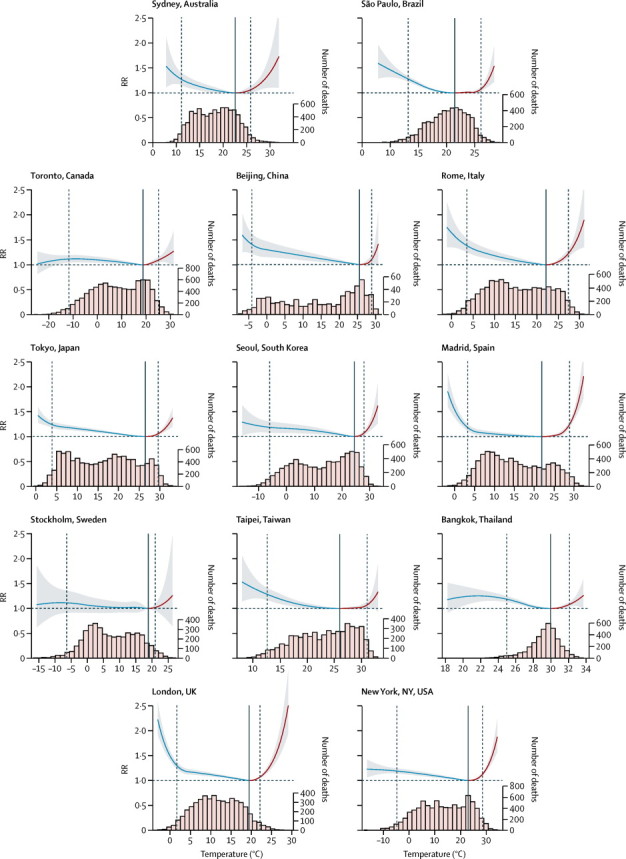
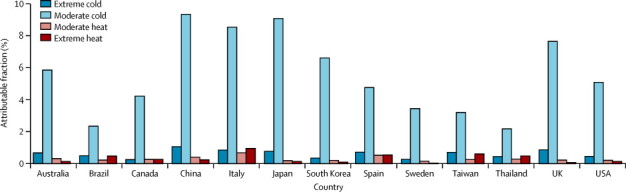
BACKGROUND: Although studies have provided estimates of premature deaths attributable to either heat or cold in selected countries, none has so far offered a systematic assessment across the whole temperature range in populations exposed to different climates. We aimed to quantify the total mortality burden attributable to non-optimum ambient temperature, and the relative contributions from heat and cold and from moderate and extreme temperatures. METHODS: We collected data for 384 locations in Australia, Brazil, Canada, China, Italy, Japan, South Korea, Spain, Sweden, Taiwan, Thailand, UK, and USA. We fitted a standard time-series Poisson model for each location, controlling for trends and day of the week. We estimated temperature-mortality associations with a distributed lag non-linear model with 21 days of lag, and then pooled them in a multivariate metaregression that included country indicators and temperature average and range. We calculated attributable deaths for heat and cold, defined as temperatures above and below the optimum temperature, which corresponded to the point of minimum mortality, and for moderate and extreme temperatures, defined using cutoffs at the 2·5th and 97·5th temperature percentiles. FINDINGS: We analysed 74,225,200 deaths in various periods between 1985 and 2012. In total, 7·71% (95% empirical CI 7·43-7·91) of mortality was attributable to non-optimum temperature in the selected countries within the study period, with substantial differences between countries, ranging from 3·37% (3·06 to 3·63) in Thailand to 11·00% (9·29 to 12·47) in China. The temperature percentile of minimum mortality varied from roughly the 60th percentile in tropical areas to about the 80-90th percentile in temperate regions. More temperature-attributable deaths were caused by cold (7·29%, 7·02-7·49) than by heat (0·42%, 0·39-0·44). Extreme cold and hot temperatures were responsible for 0·86% (0·84-0·87) of total mortality. INTERPRETATION: Most of the temperature-related mortality burden was attributable to the contribution of cold. The effect of days of extreme temperature was substantially less than that attributable to milder but non-optimum weather. This evidence has important implications for the planning of public-health interventions to minimise the health consequences of adverse temperatures, and for predictions of future effect in climate-change scenarios. FUNDING: UK Medical Research Council.
Overview
The claims and statistics of this paper haven’t been checked yet.
Free: it reads the open-access text and checks the first 5 claims that cite a source we can check. Create a free account to check every claim.
Integrity signals
Registry
Cites
Statistics
Figures
Verification
Claims the paper makes
The claims and statistics of this paper haven’t been checked yet.
Free: it reads the open-access text and checks the first 5 claims that cite a source we can check. Create a free account to check every claim.
Claims other papers make about this one
Each is checked against this paper’s own text: does it say what the citing paper says it does?
The cited source says what the claim attributes to it.
In the citing paper
“An immediate and direct impact of climate change is through human exposure to high outdoor temperatures, which is associated with morbidity and an increased risk of premature death (mortality)2–4.”
From The burden of heat-related mortality attributable to recent human-induced climate change (2021) · cites this paper as [2]
The cited source says what the claim attributes to it.
In the citing paper
“Increasing evidence from experimental, epidemiological, and econometric studies has demonstrated the effects of increased heat exposures on productivity [38], learning ability [39], and morbidity and mortality in humans [17,18,40].”
From Reduced cognitive function during a heat wave among residents of non-air-conditioned buildings: An observational study of young adults in the summer of 2016 (2018) · cites this paper as [18]
In the citing paper
“Hundreds of cardiovascular deaths each year among construction workers in Qatar may likewise be due to workplace heat (25).”
From Heat, Human Performance, and Occupational Health: A Key Issue for the Assessment of Global Climate Change Impacts (2016) · cites this paper as [25]
Self-check
Percentages, sums and reported differences re-computed from the paper’s own numbers.
The self-check needs the paper’s full text.
Citations
Cites
Quantifying heterogeneity in a meta‐analysis
Higgins, J. P. T., & Thompson, S. G. (2002) · Statistics in Medicine · doi:10.1002/sim.1186 · Cited by 36,763
(2013) · Cited by 6,752
The Effects of Climate Change on Cardiac Health
De Blois, J., Kjellstrom, T., Agewall, S., Ezekowitz, J. A., Armstrong, P. W., & Atar, D. (2015) · Cardiology · doi:10.1159/000398787 · Cited by 1,697
Relation between elevated ambient temperature and mortality: A review of the epidemiologic evidence
Basu, R. (2002) · Epidemiologic Reviews · doi:10.1093/epirev/mxf007 · Cited by 1,381
Heat-Related Deaths during the July 1995 Heat Wave in Chicago
Semenza, J. C., Rubin, C. H., Falter, K. H., Selanikio, J. D., Flanders, W. D., Howe, H. L., & Wilhelm, J. L. (1996) · New England Journal of Medicine · doi:10.1056/nejm199607113350203 · Cited by 1,376
Weather-Related Mortality: How Heat, Cold, and Heat Waves Affect Mortality in the United States
Anderson, B. G., & Bell, M. L. (2009) · Epidemiology · doi:10.1097/ede.0b013e318190ee08 · Cited by 1,229
Self-citationTime series regression studies in environmental epidemiology
Bhaskaran, K., Gasparrini, A., Hajat, S., Smeeth, L., & Armstrong, B. (2013) · International Journal of Epidemiology · doi:10.1093/ije/dyt092 · Cited by 1,150
Self-citationHigh ambient temperature and mortality: a review of epidemiologic studies from 2001 to 2008
Basu, R. (2009) · Environmental Health · doi:10.1186/1476-069x-8-40 · Cited by 1,135
Reducing and meta-analysing estimates from distributed lag non-linear models
Gasparrini, A., & Armstrong, B. (2013) · BMC Medical Research Methodology · doi:10.1186/1471-2288-13-1 · Cited by 1,081
Self-citation
Cited by
Forouzanfar, M. H., Afshin, A., Alexander, L. T., Anderson, H. R., Bhutta, Z. A., Biryukov, S., Brauer, M., Burnett, R., Cercy, K., Charlson, F. J., et al. (2016) · The Lancet · doi:10.1016/s0140-6736(16)31679-8 · Cited by 7,698
Self-citationStanaway, J. D., Afshin, A., Gakidou, E., Lim, S. S., Abate, D., Abate, K. H., Abbafati, C., Abbasi, N., Abbastabar, H., Abd-Allah, F., et al. (2018) · The Lancet · doi:10.1016/s0140-6736(18)32225-6 · Cited by 4,943
Self-citationGlobal, Regional, and National Burden of Cardiovascular Diseases for 10 Causes, 1990 to 2015
Roth, G. A., Johnson, C., Abajobir, A., Abd-Allah, F., Abera, S. F., Abyu, G., Ahmed, M., Aksut, B., Alam, T., Alam, K., et al. (2017) · Journal of the American College of Cardiology · doi:10.1016/j.jacc.2017.04.052 · Cited by 3,791
“Some CVD risk factors, in particular air pollution or changes in average temperature, may account for larger increases of CVD mortality than previously suspected (31,32).”
Gakidou, E., Afshin, A., Abajobir, A. A., Abate, K. H., Abbafati, C., Abbas, K. M., Abd-Allah, F., Abdulle, A. M., Abera, S. F., Aboyans, V., et al. (2017) · The Lancet · doi:10.1016/s0140-6736(17)32366-8 · Cited by 2,406
Self-citationThe Global Burden of Cardiovascular Diseases and Risk
Vaduganathan, M., Mensah, G. A., Turco, J. V., Fuster, V., & Roth, G. A. (2022) · Journal of the American College of Cardiology · doi:10.1016/j.jacc.2022.11.005 · Cited by 2,217
Hot weather and heat extremes: health risks
Ebi, K. L., Capon, A., Berry, P., Broderick, C., de Dear, R., Havenith, G., Honda, Y., Kovats, R. S., Ma, W., Malik, A., et al. (2021) · The Lancet · doi:10.1016/s0140-6736(21)01208-3 · Cited by 2,172
Self-citationRomanello, M., Di Napoli, C., Drummond, P., Green, C., Kennard, H., Lampard, P., Scamman, D., Arnell, N., Ayeb-Karlsson, S., Ford, L. B., et al. (2022) · The Lancet · doi:10.1016/s0140-6736(22)01540-9 · Cited by 1,710
Self-citationAmbient Particulate Air Pollution and Daily Mortality in 652 Cities
Liu, C., Chen, R., Sera, F., Vicedo-Cabrera, A. M., Guo, Y., Tong, S., Coelho, M. S. Z. S., Saldiva, P. H. N., Lavigne, E., Matus, P., et al. (2019) · New England Journal of Medicine · doi:10.1056/nejmoa1817364 · Cited by 1,668
Self-citationThe burden of heat-related mortality attributable to recent human-induced climate change
Vicedo-Cabrera, A. M., Scovronick, N., Sera, F., Royé, D., Schneider, R., Tobias, A., Astrom, C., Guo, Y., Honda, Y., Hondula, D. M., et al. (2021) · Nature Climate Change · doi:10.1038/s41558-021-01058-x · Cited by 1,347
Self-citationMagnitude of urban heat islands largely explained by climate and population
Manoli, G., Fatichi, S., Schläpfer, M., Yu, K., Crowther, T. W., Meili, N., Burlando, P., Katul, G. G., & Bou-Zeid, E. (2019) · Nature · doi:10.1038/s41586-019-1512-9 · Cited by 1,221
WHO Housing and health guidelines
World Health Organization (2018) · Warwick Research Archive Portal (University of Warwick) · doi:10.82444/warw.33769282 · Cited by 1,140
COVID-19 lockdowns cause global air pollution declines
Venter, Z. S., Aunan, K., Chowdhury, S., & Lelieveld, J. (2020) · Proceedings of the National Academy of Sciences · doi:10.1073/pnas.2006853117 · Cited by 1,081
Zhao, Q., Guo, Y., Ye, T., Gasparrini, A., Tong, S., Overcenco, A., Urban, A., Schneider, A., Entezari, A., Vicedo-Cabrera, A. M., et al. (2021) · The Lancet Planetary Health · doi:10.1016/s2542-5196(21)00081-4 · Cited by 984
Self-citationProjections of temperature-related excess mortality under climate change scenarios
Gasparrini, A., Guo, Y., Sera, F., Vicedo-Cabrera, A. M., Huber, V., Tong, S., de Sousa Zanotti Stagliorio Coelho, M., Nascimento Saldiva, P. H., Lavigne, E., Matus Correa, P., et al. (2017) · The Lancet Planetary Health · doi:10.1016/s2542-5196(17)30156-0 · Cited by 911
Self-citationThe Urban Heat Island: Implications for Health in a Changing Environment
Heaviside, C., Macintyre, H., & Vardoulakis, S. (2017) · Current Environmental Health Reports · doi:10.1007/s40572-017-0150-3 · Cited by 849
International review of district heating and cooling
Werner, S. (2017) · Energy · doi:10.1016/j.energy.2017.04.045 · Cited by 792
Understanding and managing connected extreme events
Raymond, C., Horton, R. M., Zscheischler, J., Martius, O., AghaKouchak, A., Balch, J., Bowen, S. G., Camargo, S. J., Hess, J., Kornhuber, K., et al. (2020) · Nature Climate Change · doi:10.1038/s41558-020-0790-4 · Cited by 708
Xu, Z., FitzGerald, G., Guo, Y., Jalaludin, B., & Tong, S. (2016) · Environment International · doi:10.1016/j.envint.2016.02.007 · Cited by 659
Self-citationBunker, A., Wildenhain, J., Vandenbergh, A., Henschke, N., Rocklöv, J., Hajat, S., & Sauerborn, R. (2016) · EBioMedicine · doi:10.1016/j.ebiom.2016.02.034 · Cited by 650
“Furthermore, across many regions, low temperatures also contribute greatly to the current burden from total mortality (Gasparrini et al., 2015).”
Self-citationChen, R., Yin, P., Wang, L., Liu, C., Niu, Y., Wang, W., Jiang, Y., Liu, Y., Liu, J., Qi, J., et al. (2018) · BMJ · doi:10.1136/bmj.k4306 · Cited by 626
Self-citationKjellstrom, T., Briggs, D., Freyberg, C., Lemke, B., Otto, M., & Hyatt, O. (2016) · Annual Review of Public Health · doi:10.1146/annurev-publhealth-032315-021740 · Cited by 617
Nieuwenhuijsen, M. J. (2020) · Environment International · doi:10.1016/j.envint.2020.105661 · Cited by 612
“Noise causes more than 1.8 million DALYs a year in Europe alone (WHO, 2011) and heat may cause as much as around 0.4% of premature mortality annually worldwide (Gasparrini et al., 2015).”
InfluentialHigher temperatures increase suicide rates in the United States and Mexico
Burke, M., González, F., Baylis, P., Heft-Neal, S., Baysan, C., Basu, S., & Hsiang, S. (2018) · Nature Climate Change · doi:10.1038/s41558-018-0222-x · Cited by 604
Health and climate related ecosystem services provided by street trees in the urban environment
Salmond, J. A., Tadaki, M., Vardoulakis, S., Arbuthnott, K., Coutts, A., Demuzere, M., Dirks, K. N., Heaviside, C., Lim, S., Macintyre, H., et al. (2016) · Environmental Health · doi:10.1186/s12940-016-0103-6 · Cited by 596
“erately cold weather rather than heat [25, 45, 46].”
Heat Wave and Mortality: A Multicountry, Multicommunity Study
Guo, Y., Gasparrini, A., Armstrong, B. G., Tawatsupa, B., Tobias, A., Lavigne, E., Coelho, M. D. S. Z. S., Pan, X., Kim, H., Hashizume, M., et al. (2017) · Environmental Health Perspectives · doi:10.1289/ehp1026 · Cited by 591
“This fi nding is consistent with previous studies for e ff ects of heat waves and high temperatures on mortality (Gasparrini et al. 2015a; Guo et al. 2014; Tong et al. 2012).”
InfluentialSelf-citationPathways linking biodiversity to human health: A conceptual framework
Marselle, M. R., Hartig, T., Cox, D. T. C., de Bell, S., Knapp, S., Lindley, S., Triguero-Mas, M., Böhning-Gaese, K., Braubach, M., Cook, P. A., et al. (2021) · Environment International · doi:10.1016/j.envint.2021.106420 · Cited by 578
Extreme weather impacts of climate change: an attribution perspective
Clarke, B., Otto, F., Stuart-Smith, R., & Harrington, L. (2022) · Environmental Research: Climate · doi:10.1088/2752-5295/ac6e7d · Cited by 573
A Review of Recent Advances in Research on Extreme Heat Events
Horton, R. M., Mankin, J. S., Lesk, C., Coffel, E., & Raymond, C. (2016) · Current Climate Change Reports · doi:10.1007/s40641-016-0042-x · Cited by 524
“Around the world, all-cause, all-age mortality rises 1–3 % per 1 °C above the local “unusually hot” threshold (which is lower in colder climates and areas with less capacity to adapt) [176, 177].”
Human temperature regulation under heat stress in health, disease, and injury
Cramer, M. N., Gagnon, D., Laitano, O., & Crandall, C. G. (2022) · Physiological Reviews · doi:10.1152/physrev.00047.2021 · Cited by 491
Alahmad, B., Khraishah, H., Royé, D., Vicedo-Cabrera, A. M., Guo, Y., Papatheodorou, S. I., Achilleos, S., Acquaotta, F., Armstrong, B., Bell, M. L., et al. (2023) · Circulation · doi:10.1161/circulationaha.122.061832 · Cited by 448
Self-citationGuo, Y., Gasparrini, A., Li, S., Sera, F., Vicedo-Cabrera, A. M., de Sousa Zanotti Stagliorio Coelho, M., Saldiva, P. H. N., Lavigne, E., Tawatsupa, B., Punnasiri, K., et al. (2018) · PLOS Medicine · doi:10.1371/journal.pmed.1002629 · Cited by 434
Self-citationProjecting global urban land expansion and heat island intensification through 2050
Huang, K., Li, X., Liu, X., & Seto, K. C. (2019) · Environmental Research Letters · doi:10.1088/1748-9326/ab4b71 · Cited by 414
Kontis, V., Bennett, J. E., Rashid, T., Parks, R. M., Pearson-Stuttard, J., Guillot, M., Asaria, P., Zhou, B., Battaglini, M., Corsetti, G., et al. (2020) · Nature Medicine · doi:10.1038/s41591-020-1112-0 · Cited by 410
Quantifying the human cost of global warming
Lenton, T. M., Xu, C., Abrams, J. F., Ghadiali, A., Loriani, S., Sakschewski, B., Zimm, C., Ebi, K. L., Dunn, R. R., Svenning, J.-C., et al. (2023) · Nature Sustainability · doi:10.1038/s41893-023-01132-6 · Cited by 409
Burkart, K. G., Brauer, M., Aravkin, A. Y., Godwin, W. W., Hay, S. I., He, J., Iannucci, V. C., Larson, S. L., Lim, S. S., Liu, J., et al. (2021) · The Lancet · doi:10.1016/s0140-6736(21)01700-1 · Cited by 391
Hallmarks of environmental insults
Peters, A., Nawrot, T. S., & Baccarelli, A. A. (2021) · Cell · doi:10.1016/j.cell.2021.01.043 · Cited by 373
Impact of ambient temperature on morbidity and mortality: An overview of reviews
Song, X., Wang, S., Hu, Y., Yue, M., Zhang, T., Liu, Y., Tian, J., & Shang, K. (2017) · Science of The Total Environment · doi:10.1016/j.scitotenv.2017.01.212 · Cited by 370
Changes in extreme events and the potential impacts on human health
Bell, J. E., Brown, C. L., Conlon, K., Herring, S., Kunkel, K. E., Lawrimore, J., Luber, G., Schreck, C., Smith, A., & Uejio, C. (2018) · Journal of the Air & Waste Management Association · doi:10.1080/10962247.2017.1401017 · Cited by 364
Chen, G., Guo, Y., Yue, X., Tong, S., Gasparrini, A., Bell, M. L., Armstrong, B., Schwartz, J., Jaakkola, J. J. K., Zanobetti, A., et al. (2021) · The Lancet Planetary Health · doi:10.1016/s2542-5196(21)00200-x · Cited by 357
Self-citationGlobal Warming and Its Health Impact
Rossati, A. (2017) · The International Journal of Occupational and Environmental Medicine · doi:10.15171/ijoem.2017.963 · Cited by 353
Climate change and cardiovascular disease: implications for global health
Khraishah, H., Alahmad, B., Ostergard, R. L., AlAshqar, A., Albaghdadi, M., Vellanki, N., Chowdhury, M. M., Al-Kindi, S. G., Zanobetti, A., Gasparrini, A., et al. (2022) · Nature Reviews Cardiology · doi:10.1038/s41569-022-00720-x · Cited by 350
Self-citationEstoque, R. C., Ooba, M., Seposo, X. T., Togawa, T., Hijioka, Y., Takahashi, K., & Nakamura, S. (2020) · Nature Communications · doi:10.1038/s41467-020-15218-8 · Cited by 346
Atmospheric blocking and weather extremes over the Euro-Atlantic sector – a review
Kautz, L.-A., Martius, O., Pfahl, S., Pinto, J. G., Ramos, A. M., Sousa, P. M., & Woollings, T. (2022) · Weather and Climate Dynamics · doi:10.5194/wcd-3-305-2022 · Cited by 337
Limitations to Thermoregulation and Acclimatization Challenge Human Adaptation to Global Warming
Hanna, E., & Tait, P. (2015) · International Journal of Environmental Research and Public Health · doi:10.3390/ijerph120708034 · Cited by 334
Cheng, J., Xu, Z., Bambrick, H., Prescott, V., Wang, N., Zhang, Y., Su, H., Tong, S., & Hu, W. (2019) · Environmental Research · doi:10.1016/j.envres.2019.108610 · Cited by 334
Self-citationTemperature Variability and Mortality: A Multi-Country Study
Guo, Y., Gasparrini, A., Armstrong, B. G., Tawatsupa, B., Tobias, A., Lavigne, E., Coelho, M. D. S. Z. S., Pan, X., Kim, H., Hashizume, M., et al. (2016) · Environmental Health Perspectives · doi:10.1289/ehp149 · Cited by 332
“The MCC data set has been described in previous publications (Gasparrini et al. 2015a, 2015b; Guo et al. 2014).”
Self-citationSeasonal variations in cardiovascular disease
Stewart, S., Keates, A. K., Redfern, A., & McMurray, J. J. V. (2017) · Nature Reviews Cardiology · doi:10.1038/nrcardio.2017.76 · Cited by 328
Projecting heat-related excess mortality under climate change scenarios in China
Yang, J., Zhou, M., Ren, Z., Li, M., Wang, B., Liu, D. L., Ou, C.-Q., Yin, P., Sun, J., Tong, S., et al. (2021) · Nature Communications · doi:10.1038/s41467-021-21305-1 · Cited by 315
Self-citationHealth, Wellbeing and the Changing Structure of Communities
(2023) · Climate Change 2022 – Impacts, Adaptation and Vulnerability · doi:10.1017/9781009325844.009 · Cited by 294
Green spaces provide substantial but unequal urban cooling globally
Li, Y., Svenning, J.-C., Zhou, W., Zhu, K., Abrams, J. F., Lenton, T. M., Ripple, W. J., Yu, Z., Teng, S. N., Dunn, R. R., et al. (2024) · Nature Communications · doi:10.1038/s41467-024-51355-0 · Cited by 292
How urban characteristics affect vulnerability to heat and cold: a multi-country analysis
Sera, F., Armstrong, B., Tobias, A., Vicedo-Cabrera, A. M., Åström, C., Bell, M. L., Chen, B.-Y., de Sousa Zanotti Stagliorio Coelho, M., Matus Correa, P., Cruz, J. C., et al. (2019) · International Journal of Epidemiology · doi:10.1093/ije/dyz008 · Cited by 285
Self-citationZhang, Y., Yu, C., & Wang, L. (2017) · Environmental Pollution · doi:10.1016/j.envpol.2017.02.066 · Cited by 278
“Ambient temperatures have shown nonlinear effects on morbidity/mortality-related health outcomes (Bunker et al., 2016; Gasparrini et al., 2015), and increasing evidence was also observed in recent years that cold temperatures may increase the risks of PTB and LBW (Carmichael et al., 2014; Ha et…”
InfluentialMeng, X., Liu, C., Chen, R., Sera, F., Vicedo-Cabrera, A. M., Milojevic, A., Guo, Y., Tong, S., Coêlho, M. D. S. Z. S., Saldiva, P. H. N., et al. (2021) · BMJ · doi:10.1136/bmj.n534 · Cited by 278
Self-citationPhung, D., Thai, P. K., Guo, Y., Morawska, L., Rutherford, S., & Chu, C. (2016) · Science of The Total Environment · doi:10.1016/j.scitotenv.2016.01.154 · Cited by 273
Self-citationMasselot, P., Mistry, M., Vanoli, J., Schneider, R., Iungman, T., Garcia-Leon, D., Ciscar, J.-C., Feyen, L., Orru, H., Urban, A., et al. (2023) · The Lancet Planetary Health · doi:10.1016/s2542-5196(23)00023-2 · Cited by 271
“1,2 These methods can depict fine aspects of the associations, such as non-linear and lagged effects of heat and cold, and identify optimal temperatures.”
Self-citationTen questions concerning thermal comfort and ageing
van Hoof, J., Schellen, L., Soebarto, V., Wong, J. K. W., & Kazak, J. K. (2017) · Building and Environment · doi:10.1016/j.buildenv.2017.05.008 · Cited by 268
Temporally Compound Heat Wave Events and Global Warming: An Emerging Hazard
Baldwin, J. W., Dessy, J. B., Vecchi, G. A., & Oppenheimer, M. (2019) · Earth's Future · doi:10.1029/2018ef000989 · Cited by 267
“…and smaller-scale regional studies demonstrate that heat waves result in elevated mortality and morbidity (e.g., Anderson & Bell, 2009; Burgess et al., 2011; Deschenes & Greenstone, 2011; Fuhrmann et al., 2016; Gasparrini et al., 2015; Lippmann et al., 2013; Merte, 2017; Son et al., 2012).”
Romanello, M., Walawender, M., Hsu, S.-C., Moskeland, A., Palmeiro-Silva, Y., Scamman, D., Smallcombe, J. W., Abdullah, S., Ades, M., Al-Maruf, A., et al. (2025) · The Lancet · doi:10.1016/s0140-6736(25)01919-1 · Cited by 266
Self-citationGreen, H., Bailey, J., Schwarz, L., Vanos, J., Ebi, K., & Benmarhnia, T. (2019) · Environmental Research · doi:10.1016/j.envres.2019.01.010 · Cited by 263
Smart homes and the control of indoor air quality
Schieweck, A., Uhde, E., Salthammer, T., Salthammer, L. C., Morawska, L., Mazaheri, M., & Kumar, P. (2018) · Renewable and Sustainable Energy Reviews · doi:10.1016/j.rser.2018.05.057 · Cited by 255
“Advanced sensor technology opens up great potential to ensure living comfort and health for inhabitants and to assist elder and disabled people with staying in their private homes [19,21].”
Temperature-related mortality: a systematic review and investigation of effect modifiers
Son, J.-Y., Liu, J. C., & Bell, M. L. (2019) · Environmental Research Letters · doi:10.1088/1748-9326/ab1cdb · Cited by 254
“Studies of temperature andmortality across many regions have demonstrated substantial epidemiologic evidence of increased risk of mortality from high or low ambient temperatures or extreme temperature events such as heat waves (Hajat and Kosatky 2010, Gasparrini et al 2015, Ryti et al 2016).”
Self-citationNori-Sarma, A., Sun, S., Sun, Y., Spangler, K. R., Oblath, R., Galea, S., Gradus, J. L., & Wellenius, G. A. (2022) · JAMA Psychiatry · doi:10.1001/jamapsychiatry.2021.4369 · Cited by 253
Chen, K., Wolf, K., Breitner, S., Gasparrini, A., Stafoggia, M., Samoli, E., Andersen, Z. J., Bero-Bedada, G., Bellander, T., Hennig, F., et al. (2018) · Environment International · doi:10.1016/j.envint.2018.04.021 · Cited by 252
Self-citationEffect of night-time temperatures on cause and age-specific mortality in London
Murage, P., Hajat, S., & Kovats, R. S. (2017) · Environmental Epidemiology · doi:10.1097/ee9.0000000000000005 · Cited by 251
Rapid increase in the risk of heat-related mortality
Lüthi, S., Fairless, C., Fischer, E. M., Scovronick, N., Armstrong, B., Coelho, M. D. S. Z. S., Guo, Y. L., Guo, Y., Honda, Y., Huber, V., et al. (2023) · Nature Communications · doi:10.1038/s41467-023-40599-x · Cited by 249
“The relationships areexpressedasrelativeriskandinterpretedasthechangeinmortality risk at speci fi c temperature values against an optimum temperature (the so-called temperature of minimum mortality, MMT) 8,13,20 .”
Self-citationIntegrated Assessment of Urban Overheating Impacts on Human Life
Nazarian, N., Krayenhoff, E. S., Bechtel, B., Hondula, D. M., Paolini, R., Vanos, J., Cheung, T., Chow, W. T. L., de Dear, R., Jay, O., et al. (2022) · Earth's Future · doi:10.1029/2022ef002682 · Cited by 248
“The literature strongly demonstrates positive associations between heat and 739 mortality or morbidity in large cities (Gasparrini et al., 2015; Guo et al., 2017), regardless of 740 climate zone or country income level (H. Green et al., 2019).”
Increasing ambient temperature reduces emotional well-being
Noelke, C., McGovern, M., Corsi, D. J., Jimenez, M. P., Stern, A., Wing, I. S., & Berkman, L. (2016) · Environmental Research · doi:10.1016/j.envres.2016.06.045 · Cited by 247
“While the empirical link between heat exposure and mortality rates is well-established (Curriero et al., 2002; Deschênes & Greenstone, 2011; Gasparrini et al., 2015; Kovats & Hajat, 2008), little is known about the effect of heat exposure on mental health.”
Achebak, H., Devolder, D., & Ballester, J. (2019) · The Lancet Planetary Health · doi:10.1016/s2542-5196(19)30090-7 · Cited by 247
Vicedo-Cabrera, A. M., Sera, F., Liu, C., Armstrong, B., Milojevic, A., Guo, Y., Tong, S., Lavigne, E., Kyselý, J., Urban, A., et al. (2020) · BMJ · doi:10.1136/bmj.m108 · Cited by 243
Self-citationKario, K. (2020) · Hypertension · doi:10.1161/hypertensionaha.120.14742 · Cited by 240
Tzoulaki, I., Elliott, P., Kontis, V., & Ezzati, M. (2016) · Circulation · doi:10.1161/circulationaha.115.008718 · Cited by 236
“to high-latitude populations, the overall effect of low temperatures predominates over that of heat.(153,154) Therefore,”
Climate Change, Extreme Heat, and Health
Bell, M. L., Gasparrini, A., & Benjamin, G. C. (2024) · New England Journal of Medicine · doi:10.1056/nejmra2210769 · Cited by 235
Self-citationPillon, N. J., Loos, R. J. F., Marshall, S. M., & Zierath, J. R. (2021) · Cell · doi:10.1016/j.cell.2021.02.012 · Cited by 234
Global supply chains amplify economic costs of future extreme heat risk
Sun, Y., Zhu, S., Wang, D., Duan, J., Lu, H., Yin, H., Tan, C., Zhang, L., Zhao, M., Cai, W., et al. (2024) · Nature · doi:10.1038/s41586-024-07147-z · Cited by 230
Energy poverty vulnerability index: A multidimensional tool to identify hotspots for local action
Gouveia, J. P., Palma, P., & Simoes, S. G. (2019) · Energy Reports · doi:10.1016/j.egyr.2018.12.004 · Cited by 225
Chen, G., Li, S., Zhang, Y., Zhang, W., Li, D., Wei, X., He, Y., Bell, M. L., Williams, G., Marks, G. B., et al. (2017) · The Lancet Planetary Health · doi:10.1016/s2542-5196(17)30100-6 · Cited by 220
Self-citationDetecting and Attributing Health Burdens to Climate Change
Ebi, K. L., Ogden, N. H., Semenza, J. C., & Woodward, A. (2017) · Environmental Health Perspectives · doi:10.1289/ehp1509 · Cited by 214
“There is robust evidence that a) climate change is affecting the frequency, intensity, and duration of heatwaves (IPCC 2013); and b) exposure to high ambient temperatures is associated with excess morbidity and mortality (e.g., Gasparrini et al. 2015).”
Impacts of 1.5°C Global Warming on Natural and Human Systems
IPCC (2022) · Cambridge University Press eBooks · doi:10.1017/9781009157940.005 · Cited by 221
Increasing Heat Stress in Urban Areas of Eastern China: Acceleration by Urbanization
Luo, M., & Lau, N. (2018) · Geophysical Research Letters · doi:10.1029/2018gl080306 · Cited by 212
“Among these disasters, heat events exert more profound impacts on human morbidity and mortality (Deschênes & Greenstone, 2011; Gasparrini et al., 2015; Kovats & Hajat, 2008; Ma et al., 2014).”
Cardiovascular mortality risk attributable to ambient temperature in China
Yang, J., Yin, P., Zhou, M., Ou, C.-Q., Guo, Y., Gasparrini, A., Liu, Y., Yue, Y., Gu, S., Sang, S., et al. (2015) · Heart · doi:10.1136/heartjnl-2015-308062 · Cited by 210
Self-citationA Penalized Framework for Distributed Lag Non-Linear Models
Gasparrini, A., Scheipl, F., Armstrong, B., & Kenward, M. G. (2017) · Biometrics · doi:10.1111/biom.12645 · Cited by 209
Self-citationCedeño Laurent, J. G., Williams, A., Oulhote, Y., Zanobetti, A., Allen, J. G., & Spengler, J. D. (2018) · PLoS Medicine · doi:10.1371/journal.pmed.1002605 · Cited by 205
Self-citationMapping the increased minimum mortality temperatures in the context of global climate change
Yin, Q., Wang, J., Ren, Z., Li, J., & Guo, Y. (2019) · Nature Communications · doi:10.1038/s41467-019-12663-y · Cited by 203
Self-citationIndoor temperature and health: a global systematic review
Tham, S., Thompson, R., Landeg, O., Murray, K. A., & Waite, T. (2020) · Public Health · doi:10.1016/j.puhe.2019.09.005 · Cited by 202
Opportunities and Challenges for Personal Heat Exposure Research
Kuras, E. R., Richardson, M. B., Calkins, M. M., Ebi, K. L., Hess, J. J., Kintziger, K. W., Jagger, M. A., Middel, A., Scott, A. A., Spector, J. T., et al. (2017) · Environmental Health Perspectives · doi:10.1289/ehp556 · Cited by 200
“…vast majority of epidemiological studies relating extreme heat to human health outcomes rely on meteorological observations of outdoor temperature and humidity from weather stations proximate to the study population as surrogate indicators for personal heat exposure (e.g., Gasparrini et al. 2015).”
InfluentialFatima, S. H., Rothmore, P., Giles, L. C., Varghese, B. M., & Bi, P. (2021) · Environment International · doi:10.1016/j.envint.2021.106384 · Cited by 154
“Previously conducted multi-country analyses (Di Napoli et al., 2018; Gasparrini et al., 2015) on temperature and health associations from similar climates (for example from Spain, UK, France) also indicated increased risk of health outcomes associated with heat stress in these climate zones.”
Tens of thousands additional deaths annually in cities of China between 1.5 °C and 2.0 °C warming
Wang, Y., Wang, A., Zhai, J., Tao, H., Jiang, T., Su, B., Yang, J., Wang, G., Liu, Q., Gao, C., et al. (2019) · Nature Communications · doi:10.1038/s41467-019-11283-w · Cited by 197
City-level impact of extreme temperatures and mortality in Latin America
Kephart, J. L., Sánchez, B. N., Moore, J., Schinasi, L. H., Bakhtsiyarava, M., Ju, Y., Gouveia, N., Caiaffa, W. T., Dronova, I., Arunachalam, S., et al. (2022) · Nature Medicine · doi:10.1038/s41591-022-01872-6 · Cited by 197
Arbuthnott, K., Hajat, S., Heaviside, C., & Vardoulakis, S. (2016) · Environmental Health · doi:10.1186/s12940-016-0102-7 · Cited by 197
“Both heat and cold related mortality are reviewed, as in many parts of the world studies suggest cold related mortality currently has and will continue to have a substantial contribution to temperature related mortality, even under warming projections [28, 29].”
Mistry, M., Schneider, R., Masselot, P., Royé, D., Armstrong, B., Kyselý, J., Orru, H., Sera, F., Tong, S., Lavigne, É., et al. (2022) · Scientific Reports · doi:10.1038/s41598-022-09049-4 · Cited by 199
Self-citationChen, K., de Schrijver, E., Sivaraj, S., Sera, F., Scovronick, N., Jiang, L., Royé, D., Lavigne, É., Kyselý, J., Urban, A., et al. (2024) · Nature Communications · doi:10.1038/s41467-024-45901-z · Cited by 194
“3 and 4, and Supplementary Table4),relativetothehistoricalperiod.”
InfluentialSelf-citationArbuthnott, K. G., & Hajat, S. (2017) · Environmental Health · doi:10.1186/s12940-017-0322-5 · Cited by 193
Khreis, H., Warsow, K. M., Verlinghieri, E., Guzman, A., Pellecuer, L., Ferreira, A., Jones, I., Heinen, E., Rojas-Rueda, D., Mueller, N., et al. (2016) · Journal of Transport & Health · doi:10.1016/j.jth.2016.07.002 · Cited by 192
“High and low ambient temperatures have been associated with all-cause premature mortality (Ma et al. 2014, Guo et al. 2014, Gasparrini et al. 2015), cardiorespiratory morbidity (Turner et al. 2012, Ye et al┻ にどなに┸ Cheng et al┻ にどなねょ┸ children╆s mortality and hospitalisation (Xu et al. 2012), heat…”
Suicide and Ambient Temperature: A Multi-Country Multi-City Study
Kim, Y., Kim, H., Gasparrini, A., Armstrong, B., Honda, Y., Chung, Y., Ng, C. F. S., Tobias, A., Íñiguez, C., Lavigne, E., et al. (2019) · Environmental Health Perspectives · doi:10.1289/ehp4898 · Cited by 192
Self-citationA multi-country analysis on potential adaptive mechanisms to cold and heat in a changing climate
Vicedo-Cabrera, A. M., Sera, F., Guo, Y., Chung, Y., Arbuthnott, K., Tong, S., Tobias, A., Lavigne, E., de Sousa Zanotti Stagliorio Coelho, M., Hilario Nascimento Saldiva, P., et al. (2018) · Environment International · doi:10.1016/j.envint.2017.11.006 · Cited by 191
Self-citationDebele, S. E., Kumar, P., Sahani, J., Marti-Cardona, B., Mickovski, S. B., Leo, L. S., Porcù, F., Bertini, F., Montesi, D., Vojinovic, Z., et al. (2019) · Environmental Research · doi:10.1016/j.envres.2019.108799 · Cited by 191
Masselot, P., Mistry, M., Rao, S., Huber, V., Monteiro, A., Samoli, E., Stafoggia, M., de'Donato, F. K., García-León, D., Ciscar, J.-C., et al. (2025) · Nature Medicine · doi:10.1038/s41591-024-03452-2 · Cited by 194
“…at 1.5 °C, 28,714 deaths per year (95% CI = −10,418 to 89,321) at 3 °C and 69,857 deaths per year (95% CI = 16,055 to 136,430) at 4 °C. for temperature and mortality is complex, being usually U-shaped or J-shaped; it is often steeper on the heat side, although it varies widely between locations 4 .”
InfluentialSelf-citationSchwingshackl, C., Sillmann, J., Vicedo‐Cabrera, A. M., Sandstad, M., & Aunan, K. (2021) · Earth's Future · doi:10.1029/2020ef001885 · Cited by 190
Key Risks across Sectors and Regions
(2023) · Climate Change 2022 – Impacts, Adaptation and Vulnerability · doi:10.1017/9781009325844.025 · Cited by 189
Hands-on Tutorial on a Modeling Framework for Projections of Climate Change Impacts on Health
Vicedo-Cabrera, A. M., Sera, F., & Gasparrini, A. (2019) · Epidemiology · doi:10.1097/ede.0000000000000982 · Cited by 188
Self-citation
Metadata
- Authors
- Gasparrini, A., Guo, Y., Hashizume, M., Lavigne, E., Zanobetti, A., Schwartz, J., Tobias, A., Tong, S., Rocklöv, J., Forsberg, B., Leone, M., De Sario, M., Bell, M. L., Guo, Y.-L. L., Wu, C.-F., Kan, H., Yi, S.-M., de Sousa Zanotti Stagliorio Coelho, M., Saldiva, P. H. N., Honda, Y., Kim, H., & Armstrong, B.
- Affiliations
- London School of Hygiene & Tropical Medicine (GB)
- The University of Queensland (AU)
- Nagasaki University (JP)
- Harvard University (US)
- Queensland University of Technology (AU)
- Umeå University (SE)
- Regione Lazio (IT)
- Yale University (US)
- National Taiwan University (TW)
- Fudan University (CN)
- Seoul National University (KR)
- University of Tsukuba (JP)
- Corresponding author
- Gasparrini, Antonio
- ORCID
- Venue
- The Lancet
- Publisher
- Elsevier BV
- Published
- 2015-07
- Volume
- 386
- Issue
- 9991
- Pages
- 369-375
- ISSN
- 0099-5355 (ISSN-L)
- 0140-6736
- PMC
- PMC4521077
- OpenAlex
- W2162775913
- Semantic Scholar
- ad689db0aa12fd8b5d847aacec3d0f3aad1214f0
- Cited by
- 2,965
- References
- 43
- Citations by year
- 2026: 402 · 2025: 399 · 2024: 363 · 2023: 303 · 2022: 341 · 2021: 288 · 2020: 230 · 2019: 202 · 2018: 146 · 2017: 150 · 2016: 96 · 2015: 40
- FWCI
- 90.15
- Type
- journal article
- Language
- en
- Open access
- hybrid
- doi.org
- Licence
- cc-by
- www.elsevier.com/tdm/userlicense/1.0/ (tdm)
- creativecommons.org/licenses/by/4.0/ (vor)
- Locations
- The Lancet (publishedVersion, cc-by)
- Europe PMC (PubMed Central) (publishedVersion, other-oa)
- PubMed Central (publishedVersion, cc-by)
- PubMed (publishedVersion)
- LSHTM Research Online (London School of Hygiene and Tropical Medicine) (acceptedVersion)
- DIGITAL.CSIC (Spanish National Research Council (CSIC)) (submittedVersion, cc-by)
- QUT ePrints (Queensland University of Technology) (submittedVersion)
- Institutional Repositories DataBase (IRDB) (submittedVersion, cc-by)
- Nagasaki University's Academic Output SITE (Nagasaki University) (submittedVersion, cc-by-nc-nd)
- Funders
- UK Medical Research Council ((grant G1002296))
- Ministry of Education of the Spanish Government (PRX12/00515)
- NHMRC research fellowship ((#553043))
- ARC Discovery Grant ((DP110100651))
- Global Research Laboratory (grant K21004000001-10A0500-00710)
- Topics
- Physical Sciences › Environmental Science › Health, Toxicology and Mutagenesis › Climate Change and Health Impacts
- Physical Sciences › Environmental Science › Health, Toxicology and Mutagenesis › Air Quality and Health Impacts
- Health Sciences › Medicine › Physiology (medical) › Thermoregulation and physiological responses
- Keywords
- temperature-related mortality, ambient temperature, cold-related mortality, heat-related mortality, temperature extremes, attributable mortality, temperature-mortality relationship, climate and health, minimum mortality temperature, public health interventions, distributed lag non-linear model, meta-regression
- MeSH terms
- Climate, Cold Temperature, Hot Temperature, Humans, Mortality, Global Health, Risk Assessment
About these checks
Registry, retraction, Cites and statistics results are computed, not judged, with one exception: a printed reference that no index lists is read once by a model before it counts as a citation error. Claims are extracted by a model and kept only when their quote appears verbatim in the text; each cited source is then checked, with a model’s help, for whether it says what the claim relies on. Those verdicts can be wrong — read the claim’s quote and the cited source before relying on one.
Statistics and arithmetic are recomputed, not judged.
Confidence bands are shown only for fields calibrated on our annotated test set. None is calibrated yet, so no band is shown.
What counts as a claim ›How we measure confidence ›How we check this ›
Are you an author, or do you see a problem with this page? Request a review
Data sources
Bibliographic data: Semantic Scholar, OpenAlex, Crossref.
Contains information from the Semantic Scholar Academic Graph Datasets, made available under the ODC Attribution License (ODC-BY 1.0).
Semantic Scholar’s data is described in: Kinney, R., et al. (2023). The Semantic Scholar Open Data Platform. arXiv:2301.10140.
