

Mortality risk attributable to high and low ambient temperature: a multicountry observational study
Open accessThe DOI matches its Crossref record; 43 of the 43 references it cites were found in a registry or an index.
Abstract
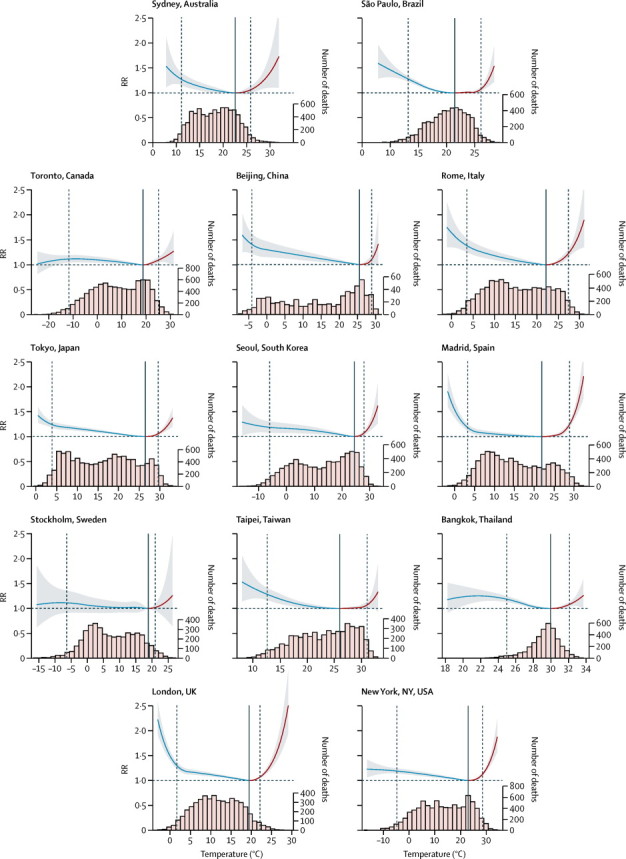
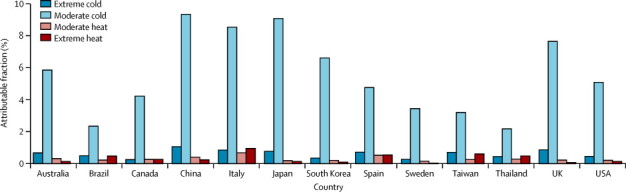
BACKGROUND: Although studies have provided estimates of premature deaths attributable to either heat or cold in selected countries, none has so far offered a systematic assessment across the whole temperature range in populations exposed to different climates. We aimed to quantify the total mortality burden attributable to non-optimum ambient temperature, and the relative contributions from heat and cold and from moderate and extreme temperatures. METHODS: We collected data for 384 locations in Australia, Brazil, Canada, China, Italy, Japan, South Korea, Spain, Sweden, Taiwan, Thailand, UK, and USA. We fitted a standard time-series Poisson model for each location, controlling for trends and day of the week. We estimated temperature-mortality associations with a distributed lag non-linear model with 21 days of lag, and then pooled them in a multivariate metaregression that included country indicators and temperature average and range. We calculated attributable deaths for heat and cold, defined as temperatures above and below the optimum temperature, which corresponded to the point of minimum mortality, and for moderate and extreme temperatures, defined using cutoffs at the 2·5th and 97·5th temperature percentiles. FINDINGS: We analysed 74,225,200 deaths in various periods between 1985 and 2012. In total, 7·71% (95% empirical CI 7·43-7·91) of mortality was attributable to non-optimum temperature in the selected countries within the study period, with substantial differences between countries, ranging from 3·37% (3·06 to 3·63) in Thailand to 11·00% (9·29 to 12·47) in China. The temperature percentile of minimum mortality varied from roughly the 60th percentile in tropical areas to about the 80-90th percentile in temperate regions. More temperature-attributable deaths were caused by cold (7·29%, 7·02-7·49) than by heat (0·42%, 0·39-0·44). Extreme cold and hot temperatures were responsible for 0·86% (0·84-0·87) of total mortality. INTERPRETATION: Most of the temperature-related mortality burden was attributable to the contribution of cold. The effect of days of extreme temperature was substantially less than that attributable to milder but non-optimum weather. This evidence has important implications for the planning of public-health interventions to minimise the health consequences of adverse temperatures, and for predictions of future effect in climate-change scenarios. FUNDING: UK Medical Research Council.
Overview
The claims and statistics of this paper haven’t been checked yet.
Free: it reads the open-access text and checks the first 5 claims that cite a source we can check. Create a free account to check every claim.
Integrity signals
Registry
Cites
Statistics
Figures
Verification
Claims the paper makes
The claims and statistics of this paper haven’t been checked yet.
Free: it reads the open-access text and checks the first 5 claims that cite a source we can check. Create a free account to check every claim.
Claims other papers make about this one
Each is checked against this paper’s own text: does it say what the citing paper says it does?
The cited source says what the claim attributes to it.
In the citing paper
“An immediate and direct impact of climate change is through human exposure to high outdoor temperatures, which is associated with morbidity and an increased risk of premature death (mortality)2–4.”
From The burden of heat-related mortality attributable to recent human-induced climate change (2021) · cites this paper as [2]
The cited source says what the claim attributes to it.
In the citing paper
“Increasing evidence from experimental, epidemiological, and econometric studies has demonstrated the effects of increased heat exposures on productivity [38], learning ability [39], and morbidity and mortality in humans [17,18,40].”
From Reduced cognitive function during a heat wave among residents of non-air-conditioned buildings: An observational study of young adults in the summer of 2016 (2018) · cites this paper as [18]
In the citing paper
“Hundreds of cardiovascular deaths each year among construction workers in Qatar may likewise be due to workplace heat (25).”
From Heat, Human Performance, and Occupational Health: A Key Issue for the Assessment of Global Climate Change Impacts (2016) · cites this paper as [25]
Self-check
Percentages, sums and reported differences re-computed from the paper’s own numbers.
The self-check needs the paper’s full text.
Citations
Cites
Quantifying heterogeneity in a meta‐analysis
Higgins, J. P. T., & Thompson, S. G. (2002) · Statistics in Medicine · doi:10.1002/sim.1186 · Cited by 36,763
(2013) · Cited by 6,752
The Effects of Climate Change on Cardiac Health
De Blois, J., Kjellstrom, T., Agewall, S., Ezekowitz, J. A., Armstrong, P. W., & Atar, D. (2015) · Cardiology · doi:10.1159/000398787 · Cited by 1,697
Relation between elevated ambient temperature and mortality: A review of the epidemiologic evidence
Basu, R. (2002) · Epidemiologic Reviews · doi:10.1093/epirev/mxf007 · Cited by 1,381
Heat-Related Deaths during the July 1995 Heat Wave in Chicago
Semenza, J. C., Rubin, C. H., Falter, K. H., Selanikio, J. D., Flanders, W. D., Howe, H. L., & Wilhelm, J. L. (1996) · New England Journal of Medicine · doi:10.1056/nejm199607113350203 · Cited by 1,376
Weather-Related Mortality: How Heat, Cold, and Heat Waves Affect Mortality in the United States
Anderson, B. G., & Bell, M. L. (2009) · Epidemiology · doi:10.1097/ede.0b013e318190ee08 · Cited by 1,229
Self-citationTime series regression studies in environmental epidemiology
Bhaskaran, K., Gasparrini, A., Hajat, S., Smeeth, L., & Armstrong, B. (2013) · International Journal of Epidemiology · doi:10.1093/ije/dyt092 · Cited by 1,150
Self-citationHigh ambient temperature and mortality: a review of epidemiologic studies from 2001 to 2008
Basu, R. (2009) · Environmental Health · doi:10.1186/1476-069x-8-40 · Cited by 1,135
Reducing and meta-analysing estimates from distributed lag non-linear models
Gasparrini, A., & Armstrong, B. (2013) · BMC Medical Research Methodology · doi:10.1186/1471-2288-13-1 · Cited by 1,081
Self-citation
Cited by
Items 301–400 of 1,006
Metabolomic signatures of the long-term exposure to air pollution and temperature
Nassan, F. L., Kelly, R. S., Kosheleva, A., Koutrakis, P., Vokonas, P., Lasky-Su, J. A., & Schwartz, J. D. (2021) · Environmental Health · doi:10.1186/s12940-020-00683-x · Cited by 93
“They generally report U-shaped relationships with a minimum mortality temperature, typically in the range of 15–20 °C, with increased death rates at any other temperature [24].”
InfluentialSelf-citationExtreme heat and acute air pollution episodes: A need for joint public health warnings?
Pascal, M., Wagner, V., Alari, A., Corso, M., & Tertre, A. L. (2021) · Atmospheric Environment · doi:10.1016/j.atmosenv.2021.118249 · Cited by 95
The effect of high temperature on cause-specific mortality: A multi-county analysis in China
Ban, J., Xu, D., He, M. Z., Sun, Q., Chen, C., Wang, W., Zhu, P., & Li, T. (2017) · Environment International · doi:10.1016/j.envint.2017.05.019 · Cited by 93
“The underlying mechanisms for increased respiratory mortality with high temperature are not yet well known (Gasparrini et al., 2015).”
InfluentialHuang, C., Cheng, J., Phung, D. T., Tawatsupa, B., Hu, W., & Xu, Z. (2018) · Environment International · doi:10.1016/j.envint.2018.08.058 · Cited by 94
Mortality, Temperature, and Public Health Provision: Evidence from Mexico
Cohen, F., & Dechezleprêtre, A. (2022) · American Economic Journal Economic Policy · doi:10.1257/pol.20180594 · Cited by 92
Massazza, A., Teyton, A., Charlson, F., Benmarhnia, T., & Augustinavicius, J. (2022) · The Lancet Planetary Health · doi:10.1016/s2542-5196(22)00120-6 · Cited by 92
Projecting future temperature-related mortality in three largest Australian cities
Guo, Y., Li, S., Liu, D. L., Chen, D., Williams, G. M., & Tong, S. (2015) · Environmental Pollution · doi:10.1016/j.envpol.2015.09.041 · Cited by 94
Self-citationBai, L., Li, Q., Wang, J., Lavigne, É., Gasparrini, A., Copes, R., Yagouti, A., Burnett, R. T., Goldberg, M. S., Villeneuve, P. J., et al. (2016) · Scientific Reports · doi:10.1038/srep30283 · Cited by 93
Self-citationZhao, Q., Zhao, Y., Li, S., Zhang, Y., Wang, Q., Zhang, H., Qiao, H., Li, W., Huxley, R., Williams, G. M., et al. (2017) · The Science of The Total Environment · doi:10.1016/j.scitotenv.2017.08.244 · Cited by 91
Self-citationDíaz, J., Carmona, R., Mirón, I. J., Ortiz, C., & Linares, C. (2015) · Environmental Research · doi:10.1016/j.envres.2015.10.018 · Cited by 90
Bundo, M., de Schrijver, E., Federspiel, A., Toreti, A., Xoplaki, E., Luterbacher, J., Franco, O. H., Müller, T., & Vicedo‐Cabrera, A. M. (2021) · PLoS ONE · doi:10.1371/journal.pone.0258302 · Cited by 91
“As previous studies have shown, the short-term effect of temperature on health can be not linear with increased risks in heat and cold ranges, and also not limited to the same day of exposure with effects still persisting for several days [9,10,12,27,28].”
Carmona, R., Díaz, J., Miron, I. J., Ortíz, C., León-Gómez, I., & Linares, C. (2015) · Environment International · doi:10.1016/j.envint.2015.12.027 · Cited by 91
The effect of ambient temperature on diabetes mortality in China: A multi-city time series study
Yang, J., Yin, P., Zhou, M., Ou, C., Li, M., Liu, Y., Gao, J., Chen, B., Liu, J., Bai, L., et al. (2015) · The Science of The Total Environment · doi:10.1016/j.scitotenv.2015.11.014 · Cited by 93
The effect of ambient temperature on cardiovascular mortality in 27 Brazilian cities
da Silveira, I. H., de Oliveira, B. F. A., Cortes, T. R., & Junger, W. L. (2019) · The Science of The Total Environment · doi:10.1016/j.scitotenv.2019.06.493 · Cited by 89
Narita, K., Hoshide, S., & Kario, K. (2021) · Hypertension Research · doi:10.1038/s41440-021-00732-z · Cited by 89
Choi, H. M., Lee, W., Royé, D., Heo, S., Urban, A., Entezari, A., Vicedo-Cabrera, A. M., Zanobetti, A., Gasparrini, A., Analitis, A., et al. (2022) · EBioMedicine · doi:10.1016/j.ebiom.2022.104251 · Cited by 90
Self-citationReversal of the seasonality of temperature-attributable mortality from respiratory diseases in Spain
Achebak, H., Devolder, D., Ingole, V., & Ballester, J. (2020) · Nature Communications · doi:10.1038/s41467-020-16273-x · Cited by 90
Sarofim, M. C., Saha, S., Hawkins, M. D., Mills, D. M., Hess, J., Horton, R., Kinney, P., Schwartz, J., & St. Juliana, A. (2016) · doi:10.7930/j0mg7mdx · Cited by 88
Self-citationClimate change and respiratory diseases: a 2020 perspective
Joshi, M., Goraya, H., Joshi, A., & Bartter, T. C. (2019) · Current Opinion in Pulmonary Medicine · doi:10.1097/mcp.0000000000000656 · Cited by 88
Pascal, M., Goria, S., Wagner, V., Sabastia, M., Guillet, A., Cordeau, E., Mauclair, C., & Host, S. (2021) · Environment International · doi:10.1016/j.envint.2021.106441 · Cited by 90
Mapping local climate zones and their associated heat risk issues in Beijing: Based on open data
Zhou, Y., Zhang, G., Jiang, L., Chen, X., Xie, T., Wei, Y., Xu, L., Pan, Z., An, P., & Lun, F. (2021) · Sustainable Cities and Society · doi:10.1016/j.scs.2021.103174 · Cited by 89
“The resulting LST values were later converted from degrees Kelvin to degrees Celsius ( C) Most of present studies had discussed the relationship between air temperature and mortality, and they pointed out that the mortality rate would increase with the increase of air temperature (Gasparrini et al., 2015; Lee et al.,…”
Cold homes and mental health harm: Evidence from the UK Household Longitudinal Study
Clair, A., & Baker, E. (2022) · Social Science & Medicine · doi:10.1016/j.socscimed.2022.115461 · Cited by 88
Climate change integration in nursing education: A scoping review
Tiitta, I., Cubelo, F., McDermott‐Levy, R., Jaakkola, J. J. K., & Kuosmanen, L. (2024) · Nurse Education Today · doi:10.1016/j.nedt.2024.106210 · Cited by 91
Ambient temperature as a trigger of preterm delivery in a temperate climate
Cox, B., Vicedo‐Cabrera, A. M., Gasparrini, A., Roels, H. A., Martens, E., Vangronsveld, J., Forsberg, B., & Nawrot, T. S. (2016) · Journal of Epidemiology & Community Health · doi:10.1136/jech-2015-206384 · Cited by 88
Self-citationProjecting future climate change impacts on heat-related mortality in large urban areas in China
Li, Y., Ren, T., Kinney, P. L., Joyner, T. A., & Zhang, W. (2018) · Environmental Research · doi:10.1016/j.envres.2018.01.047 · Cited by 90
“…that temperature-mortality relationships vary in a nonlinear U-, V- or J-shaped fashion, with both winter cold and summer heat spells being associated with increased deaths above a threshold temperature (Kinney et al., 2008; Huang et al., 2011; Gasparrini et al., 2015a, b; Honda et al., 2014).”
Spatial Distribution of Land Surface Temperatures in Kuwait: Urban Heat and Cool Islands
Alahmad, B., Tomasso, L. P., Al-Hemoud, A. M., James, P., & Koutrakis, P. (2020) · International Journal of Environmental Research and Public Health · doi:10.3390/ijerph17092993 · Cited by 87
“Most temperature-related health studies rely on ambient temperatures to reflect the human microenvironmental exposure in their exposure-response estimation [23,24].”
Saucy, A., Ragettli, M. S., Vienneau, D., de Hoogh, K., Tangermann, L., Schäffer, B., Wunderli, J. M., Probst-Hensch, N. M., & Röösli, M. (2021) · The Science of The Total Environment · doi:10.1016/j.scitotenv.2021.147958 · Cited by 87
Angelakιs, A. N., Capodaglio, A. G., Valipour, M., Krasilnikoff, J., Ahmed, A. T., Mandi, L., Tzanakakis, V. A., Baba, A., Kumar, R., Zheng, X., et al. (2023) · Land · doi:10.3390/land12061211 · Cited by 90
Taylor, J., Wilkinson, P., Picetti, R., Symonds, P., Heaviside, C., Macintyre, H. L., Davies, M., Mavrogianni, A., & Hutchinson, E. J. (2017) · Environment International · doi:10.1016/j.envint.2017.11.005 · Cited by 87
Yao, J., Brauer, M., Wei, J., McGrail, K. M., Johnston, F. H., & Henderson, S. B. (2020) · Environmental Health Perspectives · doi:10.1289/ehp5792 · Cited by 78
“This approach has been applied in studies on the acute health effects of air pollution and ambient temperature (Buteau et al. 2018; Gasparrini et al. 2015; Guo et al. 2011; Guo 2017).”
Estimates of country level temperature-related mortality damage functions
Bressler, R. D., Moore, F. C., Rennert, K., & Anthoff, D. (2021) · Scientific Reports · doi:10.1038/s41598-021-99156-5 · Cited by 86
Schwartz, J. D., Lee, M., Kinney, P. L., Yang, S., Mills, D., Sarofim, M. C., Jones, R., Streeter, R., Juliana, A. S., Peers, J., et al. (2015) · Environmental Health · doi:10.1186/s12940-015-0071-2 · Cited by 79
“Research has indicated temperature associations with daily deaths over the course of a year are nonlinear and are often U- or J-shaped, reflecting an increased mortality effect at both relatively cold and hot temperatures [2, 3, 6, 7].”
Self-citationCold, dry air is associated with influenza and pneumonia mortality in Auckland, New Zealand
Davis, R. E. L., Dougherty, E., McArthur, C. J., Huang, Q. S., & Baker, M. G. (2015) · Influenza and Other Respiratory Viruses · doi:10.1111/irv.12369 · Cited by 86
Effects of Extreme Temperatures on Mortality and Hospitalization in Ho Chi Minh City, Vietnam
Đăng, T. N., Honda, Y., Dung, D. V., Pham, A. L. T., Chu, C. M.-Y., Huang, C., & Phung, D. T. (2019) · International Journal of Environmental Research and Public Health · doi:10.3390/ijerph16030432 · Cited by 86
Self-citationEllena, M., Melis, G., Zengarini, N., Gangi, E. D., Ricciardi, G., Mercogliano, P., & Costa, G. (2023) · Urban Climate · doi:10.1016/j.uclim.2023.101514 · Cited by 86
Nocturnal heat exposure and stroke risk
He, C., Breitner, S., Zhang, S., Huber, V., Naumann, M. K., Traidl‐Hoffmann, C., Hammel, G., Peters, A., Ertl, M., & Schneider, A. E. (2024) · European Heart Journal · doi:10.1093/eurheartj/ehae277 · Cited by 86
“23 To avoid any confounding effect of daytime temperature, we controlled for daily maximum temperature using a cross-basis function with the same specification as for HNE.”
Zhang, Y., Peng, M., Wang, L., & Yu, C. (2017) · The Science of The Total Environment · doi:10.1016/j.scitotenv.2017.11.056 · Cited by 87
“We collected the 14-year time-series data onweather andmortality covering 10 UK regions from the open-access databases of a previous multi-country study (Gasparrini et al. 2015a).”
InfluentialAccounting for adaptation and intensity in projecting heat wave-related mortality
Wang, Y., Nordio, F., Nairn, J., Zanobetti, A., & Schwartz, J. D. (2017) · Environmental Research · doi:10.1016/j.envres.2017.11.049 · Cited by 87
Self-citationAmbient temperature and emergency department visits: Time-series analysis in 12 Chinese cities
Zhao, Q., Zhang, Y., Zhang, W., Li, S., Chen, G., Wu, Y., Qiu, C., Ying, K., Tang, H., Huang, J.-A., et al. (2017) · Environmental Pollution · doi:10.1016/j.envpol.2017.02.010 · Cited by 85
Self-citationTemperature-related excess mortality in German cities at 2 °C and higher degrees of global warming
Huber, V., Krummenauer, L., Peña‐Ortiz, C., Lange, S., Gasparrini, A., Vicedo‐Cabrera, A. M., García‐Herrera, R., & Frieler, K. (2020) · Environmental Research · doi:10.1016/j.envres.2020.109447 · Cited by 86
Self-citationNonlinear forces in urban thermal environment using Bayesian optimization-based ensemble learning
Wu, Z., Qiao, R., Zhao, S., Liu, X., Gao, S., Liu, Z., Ao, X., Zhou, S., Wang, Z., & Jiang, Q. M. (2022) · The Science of The Total Environment · doi:10.1016/j.scitotenv.2022.156348 · Cited by 85
Impacts of heat, cold, and temperature variability on mortality in Australia, 2000–2009
Cheng, J., Xu, Z., Bambrick, H., Su, H., Tong, S., & Hu, W. (2018) · The Science of The Total Environment · doi:10.1016/j.scitotenv.2018.10.186 · Cited by 86
Self-citationThe heat wave of October 2020 in central South America
Marengo, J. A., Ambrizzi, T., Barreto, N. D. J. D. C., Cunha, A. P. M. D. A., Ramos, A. M., Skansi, M., Molina‐Carpio, J., & Salinas, R. (2021) · International Journal of Climatology · doi:10.1002/joc.7365 · Cited by 85
Extreme Heat and Cardiovascular Health: What a Cardiovascular Health Professional Should Know
Chaseling, G. K., Iglesies‐Grau, J., Juneau, M., Nigam, A., Kaiser, D., & Gagnon, D. (2021) · Canadian Journal of Cardiology · doi:10.1016/j.cjca.2021.08.008 · Cited by 85
Heterogeneous climate change impacts on electricity demand in world cities circa mid-century
Romitti, Y., & Wing, I. S. (2022) · Scientific Reports · doi:10.1038/s41598-022-07922-w · Cited by 84
Effects of Extreme Temperatures on Cause-Specific Cardiovascular Mortality in China
Wang, X., Li, G., Liu, L., Westerdahl, D., Jin, X., & Pan, X. (2015) · International Journal of Environmental Research and Public Health · doi:10.3390/ijerph121215042 · Cited by 76
“[29] examined the temperature-mortality associations for 384 locations across the world and found that the minimum mortality temperature was close to the 83th (25.”
In the observational record half a degree matters
Schleussner, C., Pfleiderer, P., & Fischer, E. M. (2017) · Nature Climate Change · doi:10.1038/nclimate3320 · Cited by 84
Ho, H. C., Wong, M. S., Yang, L., Shi, W., Yang, J., Bilal, M., & Chan, T. (2017) · Environment International · doi:10.1016/j.envint.2017.12.001 · Cited by 84
Royé, D., Zarrabeitia, M. T., Riancho, J., & Santurtún, A. (2019) · Environmental Research · doi:10.1016/j.envres.2019.03.065 · Cited by 85
Excess mortality in the United States during the first three months of the COVID-19 pandemic
Rivera, R., Rosenbaum, J. E., & Quispe, W. (2020) · Epidemiology and Infection · doi:10.1017/s0950268820002617 · Cited by 83
Household energy efficiency interventions: A systematic literature review
McAndrew, R., Mulcahy, R. F., Gordon, R., & Russell‐Bennett, R. (2021) · Energy Policy · doi:10.1016/j.enpol.2021.112136 · Cited by 87
Persistent Increases in Nighttime Heat Stress From Urban Expansion Despite Heat Island Mitigation
Huang, K., Lee, X., Stone, B., Knievel, J. C., Bell, M. L., & Seto, K. C. (2021) · Journal of Geophysical Research Atmospheres · doi:10.1029/2020jd033831 · Cited by 83
Self-citationShort-term impacts of air temperature on hospitalizations for mental disorders in Lisbon
Almendra, R., Loureiro, A., Silva, G. L., Vasconcelos, J., & Santana, P. (2018) · The Science of The Total Environment · doi:10.1016/j.scitotenv.2018.07.337 · Cited by 85
Kroeger, T., McDonald, R. I., Boucher, T., Zhang, P., & Wang, L. (2018) · Landscape and Urban Planning · doi:10.1016/j.landurbplan.2018.05.014 · Cited by 72
The climatology of cold and heat waves in Brazil from 1961 to 2016
Bitencourt, D. P., Fuentes, M. V., Franke, A. E., Silveira, R. B., & Alves, M. P. A. (2019) · International Journal of Climatology · doi:10.1002/joc.6345 · Cited by 82
Lee, W., Lim, Y., Đăng, T. N., Seposo, X., Honda, Y., Guo, Y. L., Jang, H.-M., & Kim, H. (2017) · Scientific Reports · doi:10.1038/s41598-017-10433-8 · Cited by 82
Self-citationHarrington, L. J., & Otto, F. E. L. (2018) · Environmental Research Letters · doi:10.1088/1748-9326/aaaa99 · Cited by 86
“…2011, Liu et al 2016, Asseng et al 2015, Zhao et al 2017, Lobell and Asseng 2017), increases in excess-heat mortality rates (Mitchell et al 2016a, Gasparrini et al 2015, 2017, Mora et al 2017, Watts et al 2017a, 2017b), and the potential for higher rates of emigration from the most…”
López-Bueno, J. A., Díaz, J., Sánchez, C. S.-G., Martínez, G. S., Franco, M., Gullón, P., Peiró, M. N., Valero, I., & Linares, C. (2020) · Environmental Research · doi:10.1016/j.envres.2020.109993 · Cited by 82
Heat-Related Hospitalizations in Older Adults: An Amplified Effect of the First Seasonal Heatwave
Liss, A., Wu, R., Chui, K. K. H., & Naumova, E. N. (2017) · Scientific Reports · doi:10.1038/srep39581 · Cited by 81
New approach to identifying proper thresholds for a heat warning system using health risk increments
Cheng, Y.-T., Lung, S. C., & Hwang, J. (2018) · Environmental Research · doi:10.1016/j.envres.2018.12.059 · Cited by 84
“In Taiwan, periods of high temperature were found to be associated with different health outcomes (Chung et al., 2009, 2015; Gasparrini et al., 2015; Guo et al., 2014; Honda et al., 2013; Lin et al., 2011, 2012; Sung et al., 2013).”
Influentialde Moraes, S. L., Almendra, R., Santana, P., & Galvani, E. (2019) · Cadernos de Saúde Pública · doi:10.1590/0102-311x00101418 · Cited by 80
Countrywide climate features during recorded climate-related disasters
Tschumi, E., & Zscheischler, J. (2019) · Climatic Change · doi:10.1007/s10584-019-02556-w · Cited by 80
Parrish, R., Colbourn, T., Lauriola, P., Leonardi, G., Hajat, S., & Zeka, A. (2020) · International Journal of Environmental Research and Public Health · doi:10.3390/ijerph17176036 · Cited by 62
Mortality attributable to extreme temperatures in Spain: A comparative analysis by city
Carmona, R., Díaz, J., Miron, I. J., Ortíz, C., Luna, M. Y., & Linares, C. (2016) · Environment International · doi:10.1016/j.envint.2016.02.018 · Cited by 83
“A recent study (Gasparrini et al., 2015a) undertaken in 348 cities across 13 countries estimated that the effect of cold was 50 times greater than that of heat and, more specifically, in the case of Spain the effect of cold was 5 times greater than that of heat.”
InfluentialBehavioral adaptation to heat-related health risks in cities
Hendel, M., Diaz, K. A., & Trémeac, B. (2016) · Energy and Buildings · doi:10.1016/j.enbuild.2016.11.063 · Cited by 80
“While health-relevant outdoor temperature thresholds can easily be chosen from the existing literature relating extreme heat to mortality or morbidity [20], very few studies have sought similar temperature thresholds for indoor environments [21]–[24].”
Social inequalities in the association between temperature and mortality in a South European context
Marí-Dell’Olmo, M., Tobías, A., Gómez, A., Rodríguez‐Sanz, M., de Olalla, P. G., Camprubí, E., Gasparrini, A., & Borrell, C. (2018) · International Journal of Public Health · doi:10.1007/s00038-018-1094-6 · Cited by 80
“Despite the attention given to extreme weather events, most of the temperature-related mortality burden has been attributable to milder but non-optimum temperatures (Gasparrini et al. 2015).”
InfluentialSelf-citationZhou, S., Li, B., Du, C., Liu, H., Wu, Y., Hodder, S., Chen, M., Kosonen, R., Ming, R., Ouyang, L., et al. (2023) · Renewable and Sustainable Energy Reviews · doi:10.1016/j.rser.2023.113504 · Cited by 79
Zhang, Y., Yu, C., Bao, J., & Li, X. (2017) · The Science of The Total Environment · doi:10.1016/j.scitotenv.2017.02.117 · Cited by 79
Zhang, B., Li, G., Ma, Y., & Pan, X. (2018) · Environmental Research · doi:10.1016/j.envres.2017.12.027 · Cited by 79
“As in previous studies (Gasparrini et al., 2015; Lin et al., 2011), a natural cubic spline with 5 degrees of freedom was also used for lags of up to 14 days, which is sufficient to capture the lagging effects of temperature and would not lead to over-fitting.”
Health Impacts of Citywide and Localized Power Outages in New York City
Dominianni, C., Lane, K., Johnson, S., Ito, K., & Matte, T. (2018) · Environmental Health Perspectives · doi:10.1289/ehp2154 · Cited by 81
“Low temperature has been associated with increased risk of mortality (Conlon et al. 2011; Gasparrini et al. 2015).”
Hoehne, C. G., Hondula, D. M., Chester, M., Eisenman, D. P., Middel, A., Fraser, A. M., Watkins, L., & Gerster, K. (2018) · Health & Place · doi:10.1016/j.healthplace.2018.08.014 · Cited by 78
Complex Networks Reveal Heatwave Patterns and Propagations Over the USA
Mondal, S., & Mishra, A. K. (2021) · Geophysical Research Letters · doi:10.1029/2020gl090411 · Cited by 78
“Besides, HW immensely contributes to the increased mortality and morbidity (Anderson & Bell, 2009; Fuhrmann et al., 2016; Gasparrini et al., 2015), wildfire events (Shaposhnikov et al., 2014), loss in crop yield (Wegren, 2011) and infrastructure damage (García-Herrera et al., 2010) along with…”
Hampo, C. C., Schinasi, L. H., & Hoque, S. (2024) · Heliyon · doi:10.1016/j.heliyon.2024.e25801 · Cited by 78
“The World Health Organization has clearly articulated that high temperatures can significantly impact human health, leading to an increased rate of premature mortality [49,50].”
Validating Deep Learning Weather Forecast Models on Recent High-Impact Extreme Events
Pasche, O. C., Wider, J., Zhang, Z., Zscheischler, J., & Engelke, S. (2024) · Artificial Intelligence for the Earth Systems · doi:10.1175/aies-d-24-0033.1 · Cited by 79
“For HRES, the prediction errors in the fi rst days of July 2021, when temperatures started to fall again, are larger than for Pangu-Weather and GraphCast, especially for the grid cells closest to Seattle and Portland.”
InfluentialThe Effects of Climate Change on Patients With Chronic Lung Disease
Witt, C. C., Schubert, J. A., Jehn, M., Holzgreve, A., Liebers, U., Endlicher, W. R., & Scherer, D. (2015) · Deutsches Ärzteblatt international · doi:10.3238/arztebl.2015.0878 · Cited by 79
Heat-related morbidity and mortality in New England: Evidence for local policy
Wellenius, G. A., Eliot, M., Bush, K. F., Holt, D., Lincoln, R. A., Smith, A. E., & Gold, J. (2017) · Environmental Research · doi:10.1016/j.envres.2017.02.005 · Cited by 79
“…associated with higher rates of death are consistent with a large and growing body of evidence showing qualitatively similar effects in virtually every region of the globe (Anderson and Bell, 2011; Basu, 2009; Bobb et al., 2014b; Curriero et al., 2002; Gasparrini et al., 2015b; Guo et al., 2014).”
InfluentialCheng, J., Xu, Z., Bambrick, H., Su, H., Tong, S., & Hu, W. (2017) · Environment International · doi:10.1016/j.envint.2017.09.012 · Cited by 78
“Other weather data such as relative humidity were collected for two cities (Brisbane and Sydney) and air pollutants for one city (Brisbane), which served as the sensitivity analysis to check the robustness of research findings (Gasparrini et al., 2015; Guo et al., 2016).”
InfluentialSelf-citationDai, Q., Ma, W., Huang, H., Xu, K., Qi, X., Yu, H., Dèng, F., Bao, C., & Huo, X. (2018) · The Science of The Total Environment · doi:10.1016/j.scitotenv.2018.07.065 · Cited by 78
The MJA–Lancet Countdown on health and climate change: Australian policy inaction threatens lives
Zhang, Y., Beggs, P. J., Bambrick, H., Berry, H. L., Linnenluecke, M. K., Trueck, S., Alders, R., Bi, P., Boylan, S. M., Green, D., et al. (2018) · Medical Journal of Australia · doi:10.5694/mja18.00789 · Cited by 68
Self-citationde Schrijver, E., Bundo, M., Ragettli, M. S., Sera, F., Gasparrini, A., Franco, O. H., & Vicedo-Cabrera, A. M. (2022) · Environmental Health Perspectives · doi:10.1289/ehp9835 · Cited by 79
“…2022 increase in heat vulnerability contradicts fi ndings in other retrospective studies, which found a reduction of risks, suggesting a partial adaptation of the population to the increase in temperature (Achebak et al. 2019; Gasparrini et al. 2015b; Nordio et al. 2015; Vicedo-Cabrera et al. 2018).”
Self-citationComo as cidades podem favorecer ou dificultar a promoção da saúde de seus moradores?
Fajersztajn, L., Veras, M. M., & Saldiva, P. H. N. (2016) · Estudos Avançados · doi:10.1590/s0103-40142016.00100002 · Cited by 79
Self-citationKendrovski, V., Baccini, M., Martínez, G. S., Wolf, T., Paunović, E., & Menne, B. (2017) · International Journal of Environmental Research and Public Health · doi:10.3390/ijerph14070729 · Cited by 77
Zhang, Y., Xiang, Q., Yu, Y., Zhan, Z., Hu, K., & Ding, Z. (2018) · Environmental Science and Pollution Research · doi:10.1007/s11356-018-3653-z · Cited by 78
Niu, Y., Gao, Y., Yang, J., Qi, L., Xue, T., Guo, M., Zheng, J., Lu, F., Wang, J., & Liu, Q. (2020) · Science of The Total Environment · doi:10.1016/j.scitotenv.2020.139040 · Cited by 73
Arbuthnott, K., Hajat, S., Heaviside, C., & Vardoulakis, S. (2018) · Environment International · doi:10.1016/j.envint.2018.08.053 · Cited by 76
“Even though the exact nature of the temperature-mortality relationship changes by location, in almost all settings and populations there is an increase in the risk of mortality below a given temperature (Gasparrini et al., 2015).”
InfluentialHealth Effects of Climate Change Through Temperature and Air Pollution
Lou, J., Wu, Y., Liu, P., Kota, S. H., & Huang, L. (2019) · Current Pollution Reports · doi:10.1007/s40726-019-00112-9 · Cited by 76
de Schrijver, E., Folly, C. L., Schneider, R., Royé, D., Franco, O. H., Gasparrini, A., & Vicedo‐Cabrera, A. M. (2021) · GeoHealth · doi:10.1029/2020gh000363 · Cited by 78
“The selection of models specifications was based on a previous study, which used a similar temperature dataset for England and Wales (Gasparrini et al., 2015).”
InfluentialSelf-citationLobaccaro, G., Acero, J. A., Martínez, G. S., Padro, A., Laburu, T., & Fernandez, G. (2019) · International Journal of Environmental Research and Public Health · doi:10.3390/ijerph16193574 · Cited by 77
“Furthermore, it is important to consider that the relationship between high temperatures and urban settings have severe health impacts [24,25], including mortality, as has occurred recently in temperate regions [26,27].”
Dupigny‐Giroux, L. L., Mecray, E. L., Stampone, M. D., Hodgkins, G. A., Lentz, E. E., Mills, K. E., Lane, E. D., Miller, R., Hollinger, D. Y., SOLECKI, W. D., et al. (2018) · doi:10.7930/nca4.2018.ch18 · Cited by 78
Chen, K., Zhou, L., Chen, X., Bi, J., & Kinney, P. L. (2017) · Environmental Research · doi:10.1016/j.envres.2017.02.009 · Cited by 75
Royé, D., Íñiguez, C., & Tobías, A. (2020) · Environmental Research · doi:10.1016/j.envres.2020.109237 · Cited by 75
Wang, Z., Zhou, J. F., Li, J., Zou, J., & Fan, L. (2020) · Fish & Shellfish Immunology · doi:10.1016/j.fsi.2020.04.053 · Cited by 75
Impact of heat waves and cold spells on cause-specific mortality in the city of São Paulo, Brazil
de Moraes, S. L., Almendra, R., & Barrozo, L. V. (2021) · International Journal of Hygiene and Environmental Health · doi:10.1016/j.ijheh.2021.113861 · Cited by 76
“Although in recent years, most studies have investigated the effects of heat waves and heat events on mortality, the high risk of deaths related to cold events is also expected to remain in some areas (Gasparrini et al., 2015, 2017).”
Wang, S., Zhu, C., Wang, F., Yu, J., Zhang, S., & Ding, B. (2023) · Small · doi:10.1002/smll.202302835 · Cited by 75
Meade, R. D., Notley, S. R., Kirby, N. V., & Kenny, G. P. (2024) · The Lancet Planetary Health · doi:10.1016/s2542-5196(24)00030-5 · Cited by 75
“64 There is also considerable global heterogeneity in heat-related mortality, 68 with individuals living in hot climates less susceptible to the adverse effects of heatwaves than individuals living in cool climates.”
Heat, heat waves, and out-of-hospital cardiac arrest
Kang, S., Oh, I., Heo, J., Lee, H., Kim, J.-E., Lim, W., Cho, Y., Choi, E., Yi, S., Sang, D. S., et al. (2016) · International Journal of Cardiology · doi:10.1016/j.ijcard.2016.07.071 · Cited by 75
Self-citationRuuhela, R., Jylhä, K., Lanki, T., Tiittanen, P., & Matzarakis, A. (2017) · International Journal of Environmental Research and Public Health · doi:10.3390/ijerph14080944 · Cited by 75
“Most of the temperature-related mortality burden is contributable to cold in different climatic zones—even in tropical and sub-tropical areas [12].”
Heat, Disparities, and Health Outcomes in San Diego County's Diverse Climate Zones
Guirguis, K. J., Basu, R., Al‐Delaimy, W. K., Benmarhnia, T., Clemesha, R. E. S., Corcos, I. A., Guzman‐Morales, J., Hailey, B., Small, I. J., Tardy, A. O., et al. (2018) · GeoHealth · doi:10.1029/2017gh000127 · Cited by 75
Metadata
- Authors
- Gasparrini, A., Guo, Y., Hashizume, M., Lavigne, E., Zanobetti, A., Schwartz, J., Tobias, A., Tong, S., Rocklöv, J., Forsberg, B., Leone, M., De Sario, M., Bell, M. L., Guo, Y.-L. L., Wu, C.-F., Kan, H., Yi, S.-M., de Sousa Zanotti Stagliorio Coelho, M., Saldiva, P. H. N., Honda, Y., Kim, H., & Armstrong, B.
- Affiliations
- London School of Hygiene & Tropical Medicine (GB)
- The University of Queensland (AU)
- Nagasaki University (JP)
- Harvard University (US)
- Queensland University of Technology (AU)
- Umeå University (SE)
- Regione Lazio (IT)
- Yale University (US)
- National Taiwan University (TW)
- Fudan University (CN)
- Seoul National University (KR)
- University of Tsukuba (JP)
- Corresponding author
- Gasparrini, Antonio
- ORCID
- Venue
- The Lancet
- Publisher
- Elsevier BV
- Published
- 2015-07
- Volume
- 386
- Issue
- 9991
- Pages
- 369-375
- ISSN
- 0099-5355 (ISSN-L)
- 0140-6736
- PMC
- PMC4521077
- OpenAlex
- W2162775913
- Semantic Scholar
- ad689db0aa12fd8b5d847aacec3d0f3aad1214f0
- Cited by
- 2,965
- References
- 43
- Citations by year
- 2026: 402 · 2025: 399 · 2024: 363 · 2023: 303 · 2022: 341 · 2021: 288 · 2020: 230 · 2019: 202 · 2018: 146 · 2017: 150 · 2016: 96 · 2015: 40
- FWCI
- 90.15
- Type
- journal article
- Language
- en
- Open access
- hybrid
- doi.org
- Licence
- cc-by
- www.elsevier.com/tdm/userlicense/1.0/ (tdm)
- creativecommons.org/licenses/by/4.0/ (vor)
- Locations
- The Lancet (publishedVersion, cc-by)
- Europe PMC (PubMed Central) (publishedVersion, other-oa)
- PubMed Central (publishedVersion, cc-by)
- PubMed (publishedVersion)
- LSHTM Research Online (London School of Hygiene and Tropical Medicine) (acceptedVersion)
- DIGITAL.CSIC (Spanish National Research Council (CSIC)) (submittedVersion, cc-by)
- QUT ePrints (Queensland University of Technology) (submittedVersion)
- Institutional Repositories DataBase (IRDB) (submittedVersion, cc-by)
- Nagasaki University's Academic Output SITE (Nagasaki University) (submittedVersion, cc-by-nc-nd)
- Funders
- UK Medical Research Council ((grant G1002296))
- Ministry of Education of the Spanish Government (PRX12/00515)
- NHMRC research fellowship ((#553043))
- ARC Discovery Grant ((DP110100651))
- Global Research Laboratory (grant K21004000001-10A0500-00710)
- Topics
- Physical Sciences › Environmental Science › Health, Toxicology and Mutagenesis › Climate Change and Health Impacts
- Physical Sciences › Environmental Science › Health, Toxicology and Mutagenesis › Air Quality and Health Impacts
- Health Sciences › Medicine › Physiology (medical) › Thermoregulation and physiological responses
- Keywords
- temperature-related mortality, ambient temperature, cold-related mortality, heat-related mortality, temperature extremes, attributable mortality, temperature-mortality relationship, climate and health, minimum mortality temperature, public health interventions, distributed lag non-linear model, meta-regression
- MeSH terms
- Climate, Cold Temperature, Hot Temperature, Humans, Mortality, Global Health, Risk Assessment
About these checks
Registry, retraction, Cites and statistics results are computed, not judged, with one exception: a printed reference that no index lists is read once by a model before it counts as a citation error. Claims are extracted by a model and kept only when their quote appears verbatim in the text; each cited source is then checked, with a model’s help, for whether it says what the claim relies on. Those verdicts can be wrong — read the claim’s quote and the cited source before relying on one.
Statistics and arithmetic are recomputed, not judged.
Confidence bands are shown only for fields calibrated on our annotated test set. None is calibrated yet, so no band is shown.
What counts as a claim ›How we measure confidence ›How we check this ›
Are you an author, or do you see a problem with this page? Request a review
Data sources
Bibliographic data: Semantic Scholar, OpenAlex, Crossref.
Contains information from the Semantic Scholar Academic Graph Datasets, made available under the ODC Attribution License (ODC-BY 1.0).
Semantic Scholar’s data is described in: Kinney, R., et al. (2023). The Semantic Scholar Open Data Platform. arXiv:2301.10140.
