

Mortality risk attributable to high and low ambient temperature: a multicountry observational study
Open accessThe DOI matches its Crossref record; 43 of the 43 references it cites were found in a registry or an index.
Abstract
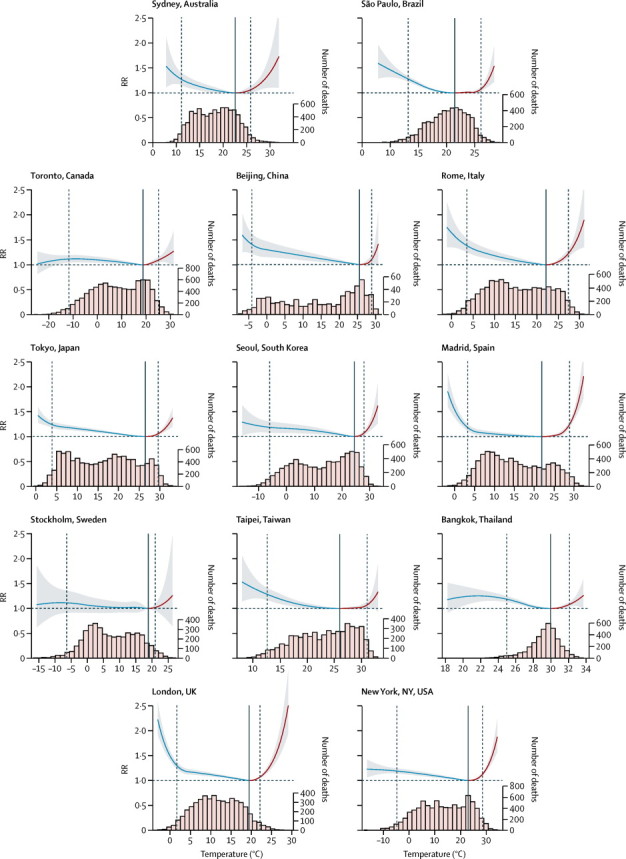
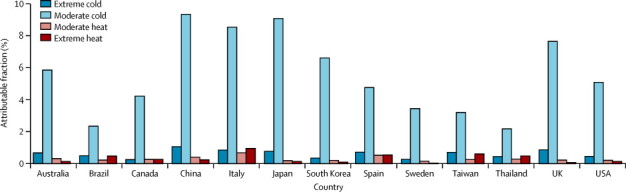
BACKGROUND: Although studies have provided estimates of premature deaths attributable to either heat or cold in selected countries, none has so far offered a systematic assessment across the whole temperature range in populations exposed to different climates. We aimed to quantify the total mortality burden attributable to non-optimum ambient temperature, and the relative contributions from heat and cold and from moderate and extreme temperatures. METHODS: We collected data for 384 locations in Australia, Brazil, Canada, China, Italy, Japan, South Korea, Spain, Sweden, Taiwan, Thailand, UK, and USA. We fitted a standard time-series Poisson model for each location, controlling for trends and day of the week. We estimated temperature-mortality associations with a distributed lag non-linear model with 21 days of lag, and then pooled them in a multivariate metaregression that included country indicators and temperature average and range. We calculated attributable deaths for heat and cold, defined as temperatures above and below the optimum temperature, which corresponded to the point of minimum mortality, and for moderate and extreme temperatures, defined using cutoffs at the 2·5th and 97·5th temperature percentiles. FINDINGS: We analysed 74,225,200 deaths in various periods between 1985 and 2012. In total, 7·71% (95% empirical CI 7·43-7·91) of mortality was attributable to non-optimum temperature in the selected countries within the study period, with substantial differences between countries, ranging from 3·37% (3·06 to 3·63) in Thailand to 11·00% (9·29 to 12·47) in China. The temperature percentile of minimum mortality varied from roughly the 60th percentile in tropical areas to about the 80-90th percentile in temperate regions. More temperature-attributable deaths were caused by cold (7·29%, 7·02-7·49) than by heat (0·42%, 0·39-0·44). Extreme cold and hot temperatures were responsible for 0·86% (0·84-0·87) of total mortality. INTERPRETATION: Most of the temperature-related mortality burden was attributable to the contribution of cold. The effect of days of extreme temperature was substantially less than that attributable to milder but non-optimum weather. This evidence has important implications for the planning of public-health interventions to minimise the health consequences of adverse temperatures, and for predictions of future effect in climate-change scenarios. FUNDING: UK Medical Research Council.
Overview
The claims and statistics of this paper haven’t been checked yet.
Free: it reads the open-access text and checks the first 5 claims that cite a source we can check. Create a free account to check every claim.
Integrity signals
Registry
Cites
Statistics
Figures
Verification
Claims the paper makes
The claims and statistics of this paper haven’t been checked yet.
Free: it reads the open-access text and checks the first 5 claims that cite a source we can check. Create a free account to check every claim.
Claims other papers make about this one
Each is checked against this paper’s own text: does it say what the citing paper says it does?
The cited source says what the claim attributes to it.
In the citing paper
“An immediate and direct impact of climate change is through human exposure to high outdoor temperatures, which is associated with morbidity and an increased risk of premature death (mortality)2–4.”
From The burden of heat-related mortality attributable to recent human-induced climate change (2021) · cites this paper as [2]
The cited source says what the claim attributes to it.
In the citing paper
“Increasing evidence from experimental, epidemiological, and econometric studies has demonstrated the effects of increased heat exposures on productivity [38], learning ability [39], and morbidity and mortality in humans [17,18,40].”
From Reduced cognitive function during a heat wave among residents of non-air-conditioned buildings: An observational study of young adults in the summer of 2016 (2018) · cites this paper as [18]
In the citing paper
“Hundreds of cardiovascular deaths each year among construction workers in Qatar may likewise be due to workplace heat (25).”
From Heat, Human Performance, and Occupational Health: A Key Issue for the Assessment of Global Climate Change Impacts (2016) · cites this paper as [25]
Self-check
Percentages, sums and reported differences re-computed from the paper’s own numbers.
The self-check needs the paper’s full text.
Citations
Cites
Quantifying heterogeneity in a meta‐analysis
Higgins, J. P. T., & Thompson, S. G. (2002) · Statistics in Medicine · doi:10.1002/sim.1186 · Cited by 36,763
(2013) · Cited by 6,752
The Effects of Climate Change on Cardiac Health
De Blois, J., Kjellstrom, T., Agewall, S., Ezekowitz, J. A., Armstrong, P. W., & Atar, D. (2015) · Cardiology · doi:10.1159/000398787 · Cited by 1,697
Relation between elevated ambient temperature and mortality: A review of the epidemiologic evidence
Basu, R. (2002) · Epidemiologic Reviews · doi:10.1093/epirev/mxf007 · Cited by 1,381
Heat-Related Deaths during the July 1995 Heat Wave in Chicago
Semenza, J. C., Rubin, C. H., Falter, K. H., Selanikio, J. D., Flanders, W. D., Howe, H. L., & Wilhelm, J. L. (1996) · New England Journal of Medicine · doi:10.1056/nejm199607113350203 · Cited by 1,376
Weather-Related Mortality: How Heat, Cold, and Heat Waves Affect Mortality in the United States
Anderson, B. G., & Bell, M. L. (2009) · Epidemiology · doi:10.1097/ede.0b013e318190ee08 · Cited by 1,229
Self-citationTime series regression studies in environmental epidemiology
Bhaskaran, K., Gasparrini, A., Hajat, S., Smeeth, L., & Armstrong, B. (2013) · International Journal of Epidemiology · doi:10.1093/ije/dyt092 · Cited by 1,150
Self-citationHigh ambient temperature and mortality: a review of epidemiologic studies from 2001 to 2008
Basu, R. (2009) · Environmental Health · doi:10.1186/1476-069x-8-40 · Cited by 1,135
Reducing and meta-analysing estimates from distributed lag non-linear models
Gasparrini, A., & Armstrong, B. (2013) · BMC Medical Research Methodology · doi:10.1186/1471-2288-13-1 · Cited by 1,081
Self-citation
Cited by
Items 101–200 of 1,006
Sun, S., Weinberger, K. R., Nori-Sarma, A., Spangler, K. R., Sun, Y., Dominici, F., & Wellenius, G. A. (2021) · BMJ · doi:10.1136/bmj-2021-065653 · Cited by 187
Cheng, J., Xu, Z., Bambrick, H., Su, H., Tong, S., & Hu, W. (2018) · Environment International · doi:10.1016/j.envint.2018.03.041 · Cited by 187
“…of heatwave on mortality, including taking into account potential harvesting effect and employing more informative health risk assessment indicators, attributable risk and years of life lost for example (Steenland and Armstrong, 2006; Gasparrini et al., 2015; Huang et al., 2012; Xu et al., 2014).”
InfluentialSelf-citationEnvironmental degradation and population health outcomes: a global panel data analysis
Majeed, M. T., & Öztürk, İ. (2020) · Environmental Science and Pollution Research · doi:10.1007/s11356-020-08167-8 · Cited by 185
Temperature-related mortality impacts under and beyond Paris Agreement climate change scenarios
Vicedo-Cabrera, A. M., Guo, Y., Sera, F., Huber, V., Schleussner, C.-F., Mitchell, D., Tong, S., Coelho, M. D. S. Z. S., Saldiva, P. H. N., Lavigne, E., et al. (2018) · Climatic Change · doi:10.1007/s10584-018-2274-3 · Cited by 184
Self-citationPossible environmental effects on the spread of COVID-19 in China
Xu, H., Yan, C., Fu, Q., Xiao, K., Yu, Y., Han, D., Wang, W., & Cheng, J. (2020) · Science of The Total Environment · doi:10.1016/j.scitotenv.2020.139211 · Cited by 183
Macintyre, H. L., & Heaviside, C. (2019) · Environment International · doi:10.1016/j.envint.2019.02.065 · Cited by 157
“Various studies have investigated the relationship between heat and health effects, now and for future projected conditions (Gasparrini et al., 2015; Hajat et al., 2014; Hondula et al., 2014; Vardoulakis et al., 2014), with some focusing on heatwave events (Arbuthnott and Hajat, 2017; Laaidi et…”
InfluentialGasparrini, A., Masselot, P., Scortichini, M., Schneider, R., Mistry, M., Sera, F., Macintyre, H. L., Phalkey, R. K., & Vicedo-Cabrera, A. M. (2022) · The Lancet Planetary Health · doi:10.1016/s2542-5196(22)00138-3 · Cited by 183
Self-citationAnalitis, A., De’ Donato, F., Scortichini, M., Lanki, T., Basagana, X., Ballester, F., Astrom, C., Paldy, A., Pascal, M., Gasparrini, A., et al. (2018) · International Journal of Environmental Research and Public Health · doi:10.3390/ijerph15091856 · Cited by 181
Self-citationArmstrong, B., Sera, F., Vicedo-Cabrera, A. M., Abrutzky, R., Åström, D. O., Bell, M. L., Chen, B.-Y., de Sousa Zanotti Stagliorio Coelho, M., Correa, P. M., Dang, T. N., et al. (2019) · Environmental Health Perspectives · doi:10.1289/ehp5430 · Cited by 180
Self-citationCardiovascular diseases, cold exposure and exercise
Ikäheimo, T. M. (2018) · Temperature · doi:10.1080/23328940.2017.1414014 · Cited by 182
“Both global [9] and national [10,11] studies have shown that cold-related mortality outnumber the harmful effects of heat.”
Karlsson, M., & Ziebarth, N. R. (2018) · Journal of Environmental Economics and Management · doi:10.1016/j.jeem.2018.06.004 · Cited by 183
“Other unifying research questions with inconclusive evidence surround the questions of (i) the negative impact of cold weather on human health (Braga et al., 2001; Anderson and Bell, 2002; Goldberg et al., 2011; Son et al., 2014; Gasparrini et al., 2015; Chung et al., 2015; Son et al., 2016; White, 2017), and (ii) whe…”
Fourteen pathways between urban transportation and health: A conceptual model and literature review
Glazener, A., Sanchez, K., Ramani, T., Zietsman, J., Nieuwenhuijsen, M. J., Mindell, J. S., Fox, M., & Khreis, H. (2021) · Journal of Transport & Health · doi:10.1016/j.jth.2021.101070 · Cited by 178
“Increasing ambient temperatures have been associated with higher rates of mortality (Gasparrini et al., 2015), hospital admissions (Hondula and Barnett, 2014), cardiovascular disease (including arrhythmia and stroke), diabetes, hypertension, respiratory disease”
Chen, K., Breitner, S., Wolf, K., Hampel, R., Meisinger, C., Heier, M., von Scheidt, W., Kuch, B., Peters, A., Schneider, A. E., et al. (2019) · European Heart Journal · doi:10.1093/eurheartj/ehz116 · Cited by 180
Ho, J., Shi, Y., Lau, K. K., Ng, E., Ren, C., & Goggins, W. B. (2022) · The Science of The Total Environment · doi:10.1016/j.scitotenv.2022.159791 · Cited by 178
Kotharkar, R., & Ghosh, A. (2022) · Sustainable Cities and Society · doi:10.1016/j.scs.2021.103487 · Cited by 176
Taylor, J., Wilkinson, P., Davies, M., Armstrong, B., Chalabi, Z., Mavrogianni, A., Symonds, P., Oikonomou, E., & Bohnenstengel, S. I. (2015) · Urban Climate · doi:10.1016/j.uclim.2015.08.001 · Cited by 176
Self-citationImproving the SDG energy poverty targets: Residential cooling needs in the Global South
Mastrucci, A., Byers, E., Pachauri, S., & Rao, N. D. (2019) · Energy and Buildings · doi:10.1016/j.enbuild.2019.01.015 · Cited by 174
Liu, C., Chen, R., Sera, F., Vicedo-Cabrera, A. M., Guo, Y., Tong, S., Lavigne, E., Correa, P. M., Ortega, N. V., Achilleos, S., et al. (2023) · BMJ · doi:10.1136/bmj-2023-075203 · Cited by 172
Self-citationReconciling theory with the reality of African heatwaves
Harrington, L. J., & Otto, F. E. L. (2020) · Nature Climate Change · doi:10.1038/s41558-020-0851-8 · Cited by 174
Liu, Z., Anderson, B., Yan, K., Dong, W., Liao, H., & Shi, P. (2017) · Scientific Reports · doi:10.1038/srep43909 · Cited by 170
The association between ambient temperature and mortality in South Africa: A time-series analysis
Scovronick, N., Sera, F., Acquaotta, F., Garzena, D., Fratianni, S., Wright, C. Y., & Gasparrini, A. (2018) · Environmental Research · doi:10.1016/j.envres.2017.11.001 · Cited by 170
Self-citationPanno, A., Carrus, G., Lafortezza, R., Mariani, L., & Sanesi, G. (2017) · Environmental Research · doi:10.1016/j.envres.2017.08.016 · Cited by 174
Sicard, P., Khaniabadi, Y. O., Pérez, S., Gualtieri, M., & Marco, A. D. (2019) · Environmental Science and Pollution Research · doi:10.1007/s11356-019-06445-8 · Cited by 171
Excess mortality during the COVID-19 outbreak in Italy: a two-stage interrupted time-series analysis
Scortichini, M., Schneider dos Santos, R., De’ Donato, F., De Sario, M., Michelozzi, P., Davoli, M., Masselot, P., Sera, F., & Gasparrini, A. (2021) · International Journal of Epidemiology · doi:10.1093/ije/dyaa169 · Cited by 168
Self-citationMortality among the homeless: Causes and meteorological relationships
Romaszko, J., Cymes, I., Dragańska, E., Kuchta, R., & Glińska‐Lewczuk, K. (2017) · PLoS ONE · doi:10.1371/journal.pone.0189938 · Cited by 172
Joint effect of heat and air pollution on mortality in 620 cities of 36 countries
Stafoggia, M., Michelozzi, P., Schneider, A. E., Armstrong, B., Scortichini, M., Rai, M., Achilleos, S., Alahmad, B., Analitis, A., Åström, C., et al. (2023) · Environment International · doi:10.1016/j.envint.2023.108258 · Cited by 166
“…of the main effects, and the estimates of level-specific effects from the effect modification analysis, with multilevel random-effects meta-analyses, where the countries and cities were modelled as nested random effects (Vicedo-Cabrera et al., 2020; Liu et al., 2019; Gasparrini et al., 2015).”
InfluentialSelf-citationHu, K., Guo, Y., Hochrainer‐Stigler, S., Liu, W., See, L., Yang, X., Zhong, J., Fei, F., Chen, F., Zhang, Y., et al. (2019) · Environmental Health Perspectives · doi:10.1289/ehp3556 · Cited by 167
“…proportion of 16.4% (95% eCI: 14.9, 17.9) of total rural mortality attributable to cold, which is far greater than the urban estimates of 7.0% (95% eCI: 3.9, 10.1), as well as the average estimates of 15 cities in China [10.4% (95% eCI: 8.8, 11.8)] from a previous study (Gasparrini et al. 2015).”
InfluentialSelf-citationDimitrova, A., Ingole, V., Basagaña, X., Ranzani, O., Milà, C., Ballester, J., & Tonne, C. (2021) · Environment International · doi:10.1016/j.envint.2020.106170 · Cited by 164
Carleton, T., Delgado, M., Greenstone, M., Houser, T., Hsiang, S., Hultgren, A., Jina, A., Kopp, R. E., McCusker, K., Nath, I., et al. (2018) · SSRN Electronic Journal · doi:10.2139/ssrn.3224365 · Cited by 164
“Consistent with prior literature (Heutel, Miller, and Molitor, 2017; Curriero et al., 2002; Gasparrini et al., 2015), we find that these minimum mortality temperatures are highly correlated both with both long-run average temperature (positively) and with income (negatively).”
InfluentialAnomalously warm temperatures are associated with increased injury deaths
Parks, R. M., Bennett, J. E., Tamura-Wicks, H., Kontis, V., Toumi, R., Danaei, G., & Ezzati, M. (2020) · Nature Medicine · doi:10.1038/s41591-019-0721-y · Cited by 150
Hua, J., Zhang, X., Ren, C., Shi, Y., & Lee, T.-C. (2021) · Sustainable Cities and Society · doi:10.1016/j.scs.2020.102507 · Cited by 155
Evaluation of the health-risk reduction potential of countermeasures to urban heat islands
Buchin, O., Hölscher, M.-T., Meier, F., Nehls, T., & Ziegler, F. (2015) · Energy and Buildings · doi:10.1016/j.enbuild.2015.06.038 · Cited by 167
Yang, J., Yin, P., Zhou, M., Ou, C., Li, M., Li, J., Liu, X., Gao, J., Liu, Y., Qin, R. X., et al. (2016) · Environment International · doi:10.1016/j.envint.2016.04.001 · Cited by 162
Regional excess mortality during the 2020 COVID-19 pandemic in five European countries
Konstantinoudis, G., Cameletti, M., Gómez‐Rubio, V., Gómez, I. L., Pirani, M., Baio, G., Larrauri, A., Riou, J., Egger, M., Vineis, P., et al. (2022) · Nature Communications · doi:10.1038/s41467-022-28157-3 · Cited by 165
Climate and environmental triggers of acute myocardial infarction
Claeys, M. J., Rajagopalan, S., Nawrot, T. S., & Brook, R. D. (2016) · European Heart Journal · doi:10.1093/eurheartj/ehw151 · Cited by 161
“Worldwide, the majority of the temperature-related mortality has been shown to be attributable much more to cold, when compared with extreme hot weather.(43) Table 2 summarizes the major epidemiological”
Fu, S. H., Gasparrini, A., Rodriguez, P. S., & Jha, P. (2018) · PLOS Medicine · doi:10.1371/journal.pmed.1002619 · Cited by 161
“A surprising conclusion has been that much of the excess mortality from temperature effects arises due to moderately cold temperatures [2].”
InfluentialSelf-citationTian, Y., Liu, H., Si, Y., Cao, Y., Song, J., Li, M., Wu, Y., Wang, X., Xiang, X., Juan, J., et al. (2019) · PLOS Medicine · doi:10.1371/journal.pmed.1002738 · Cited by 161
Half a degree and rapid socioeconomic development matter for heatwave risk
Russo, S., Sillmann, J., Sippel, S., Barcikowska, M. J., Ghisetti, C., Smid, M., & O’Neill, B. (2019) · Nature Communications · doi:10.1038/s41467-018-08070-4 · Cited by 136
Ambient temperature and added heat wave effects on hospitalizations in California from 1999 to 2009
Sherbakov, T., Malig, B. J., Guirguis, K. J., Gershunov, A., & Basu, R. (2017) · Environmental Research · doi:10.1016/j.envres.2017.08.052 · Cited by 165
García-León, D., Masselot, P., Mistry, M., Gasparrini, A., Motta, C., Feyen, L., & Ciscar, J.-C. (2024) · The Lancet Public Health · doi:10.1016/s2468-2667(24)00179-8 · Cited by 164
Self-citationElevated increases in human-perceived temperature under climate warming
Li, J., Chen, Y. D., Gan, T. Y., & Lau, N.-C. (2018) · Nature Climate Change · doi:10.1038/s41558-017-0036-2 · Cited by 159
Andrews, O., Le Quéré, C., Kjellstrom, T., Lemke, B., & Haines, A. (2018) · The Lancet Planetary Health · doi:10.1016/s2542-5196(18)30240-7 · Cited by 136
Determinants of life expectancy at birth: a longitudinal study on OECD countries
Roffia, P., Bucciol, A., & Hashlamoun, S. (2022) · International Journal of Health Economics and Management · doi:10.1007/s10754-022-09338-5 · Cited by 160
“According to several studies, even air temperature can affect longevity and it is an important determinant of health (Gasparrini et al., 2015; Odhiambo Sewe et al., 2018).”
Seasonal hysteresis of surface urban heat islands
Manoli, G., Fatichi, S., Bou-Zeid, E., & Katul, G. G. (2020) · Proceedings of the National Academy of Sciences · doi:10.1073/pnas.1917554117 · Cited by 141
The impact of temperature on manufacturing worker productivity: Evidence from personnel data
Cai, X., Lu, Y., & Wang, J. (2018) · Journal of Comparative Economics · doi:10.1016/j.jce.2018.06.003 · Cited by 158
Changes in Susceptibility to Heat During the Summer: A Multicountry Analysis
Gasparrini, A., Guo, Y., Hashizume, M., Lavigne, E., Tobias, A., Zanobetti, A., Schwartz, J. D., Leone, M., Michelozzi, P., Kan, H., et al. (2016) · American Journal of Epidemiology · doi:10.1093/aje/kwv260 · Cited by 156
Self-citationIncreased coronary heart disease and stroke hospitalisations from ambient temperatures in Ontario
Bai, L., Li, Q., Wang, J., Lavigne, É., Gasparrini, A., Copes, R., Yagouti, A., Burnett, R. T., Goldberg, M. S., Cakmak, S., et al. (2017) · Heart · doi:10.1136/heartjnl-2017-311821 · Cited by 156
Self-citationExtended two-stage designs for environmental research
Sera, F., & Gasparrini, A. (2022) · Environmental Health · doi:10.1186/s12940-022-00853-z · Cited by 155
“This extension of the two-stage design has been previously used in published analyses which evaluated the short-term health impacts of temperature [6, 16, 34].”
Self-citationCleland, S. E., Steinhardt, W., Neas, L., West, J. J., & Rappold, A. G. (2023) · Environment International · doi:10.1016/j.envint.2023.108005 · Cited by 156
“Geographic variability in heat-related morbidity is consistent with previous findings (Gasparrini et al., 2015; Gronlund et al., 2014; Scovronick et al., 2018; Yang et al., 2015) and may suggest that city-specific mitigation and adaptation strategies are needed to address intensifying UHIs and…”
InfluentialEvaluation of the ERA5 reanalysis-based Universal Thermal Climate Index on mortality data in Europe
Urban, A., Napoli, C. D., Cloke, H., Kyselý, J., Pappenberger, F., Sera, F., Schneider, R., Vicedo-Cabrera, A. M., Acquaotta, F., Ragettli, M. S., et al. (2021) · Environmental Research · doi:10.1016/j.envres.2021.111227 · Cited by 156
Self-citationPalusci, O., Monti, P., Cecere, C., Montazeri, H., & Blocken, B. J. E. (2021) · The Science of The Total Environment · doi:10.1016/j.scitotenv.2021.150490 · Cited by 153
Assessment of extreme heat and hospitalizations to inform early warning systems
Vaidyanathan, A., Saha, S., Vicedo‐Cabrera, A. M., Gasparrini, A., Abdurehman, N., Jordan, R. C., Hawkins, M. D., Hess, J. J., & Elixhauser, A. (2019) · Proceedings of the National Academy of Sciences · doi:10.1073/pnas.1806393116 · Cited by 153
“We conducted a two-stage analysis (35) to estimate E-R relationships for all-cause and cause-specific hospitalizations across states and climatic regions.”
Self-citationChen, G., Zhang, W., Li, S., Zhang, Y., Williams, G. M., Huxley, R., Ren, H., Cao, W., & Guo, Y. (2016) · Environment International · doi:10.1016/j.envint.2016.10.004 · Cited by 151
Self-citationHosseini, M., Javanroodi, K., & Nik, V. M. (2021) · Sustainable Cities and Society · doi:10.1016/j.scs.2021.103634 · Cited by 151
Nieuwenhuijsen, M. J., Khreis, H., Verlinghieri, E., Mueller, N., & Rojas‐Rueda, D. (2017) · Environment International · doi:10.1016/j.envint.2017.03.022 · Cited by 156
“Air pollution (Beelen et al 2014, Heroux et al 2015), noise (Basner et al 2014, Halonen et al. 2015) and temperature (Gasparrini et al 2015) cause adverse health effects including increased morbidity and premature mortality.”
Exploring the association between heat and mortality in Switzerland between 1995 and 2013
Ragettli, M. S., Vicedo‐Cabrera, A. M., Schindler, C., & Röösli, M. (2017) · Environmental Research · doi:10.1016/j.envres.2017.07.021 · Cited by 153
Rohat, G., Flacke, J., Dosio, A., Dao, H., & van Maarseveen, M. F. A. M. (2019) · Earth s Future · doi:10.1029/2018ef001020 · Cited by 151
Estimating the number of excess deaths attributable to heat in 297 United States counties
Weinberger, K. R., Harris, D. A., Spangler, K. R., Zanobetti, A., & Wellenius, G. A. (2020) · Environmental Epidemiology · doi:10.1097/ee9.0000000000000096 · Cited by 149
Self-citationChambers, J. (2020) · Climatic Change · doi:10.1007/s10584-020-02884-2 · Cited by 124
“…affected by temperatures in the extreme percentiles of their local climatologies (Anderson and Bell 2009), with statistically significant effects on mortality when temperatures surpass the 99th percentile even in locations which display evidence of adaptation to heatwaves (Gasparrini et al. 2015a).”
Tobías, A., Armstrong, B., & Gasparrini, A. (2016) · Epidemiology · doi:10.1097/ede.0000000000000567 · Cited by 148
Self-citationMental disease-related emergency admissions attributable to hot temperatures
Lee, S., Lee, H., Myung, W., Kim, E. J., & Kim, H. (2017) · The Science of The Total Environment · doi:10.1016/j.scitotenv.2017.10.260 · Cited by 149
Self-citationChallenges of using air conditioning in an increasingly hot climate
Kownacki, K. L., Hornyánszky, E. D., Chu, T. A., Olsson, J. A., & Becker, P. (2017) · International Journal of Biometeorology · doi:10.1007/s00484-017-1493-z · Cited by 150
“Increasing heat exposure levels are one of the most certain effects of climate change (IPCC 2014) and there is strong evidence of negative health impacts of environmental heat (e.g. Forzieri et al. (2017), Gasparrini et al. (2015), Aström et al. (2015), and Canouï-Poitrine et al. (2005)).”
Rubin, D. M., Huang, J. Y., Fisher, B. T., Gasparrini, A., Tam, V. W., Song, L., Wang, X., Kaufman, J., Fitzpatrick, K., Jain, A., et al. (2020) · JAMA Network Open · doi:10.1001/jamanetworkopen.2020.16099 · Cited by 149
Self-citationThe effect of high indoor temperatures on self-perceived health of elderly persons
van Loenhout, J. A. F., le Grand, A., Duijm, F., Greven, F., Vink, N. M., Hoek, G., & Zuurbier, M. (2016) · Environmental Research · doi:10.1016/j.envres.2015.12.012 · Cited by 129
“An increase in mortality due to heat was also shown in a study by Gasparrini et al. (2015).”
Ambient temperature and preterm birth: A retrospective study of 32 million US singleton births
Sun, S., Weinberger, K. R., Spangler, K. R., Eliot, M. N., Braun, J. M., & Wellenius, G. A. (2019) · Environment International · doi:10.1016/j.envint.2019.02.023 · Cited by 139
“Associations between daily changes in temperature and health outcomes are typically non-linear (frequently U-, V-, or J-shaped) and delayed (lasting for several days after exposure to temperature extremes) (Gasparrini et al., 2015; Sun et al., 2016; Weinberger et al., 2017; Wellenius et al., 2017).”
Verification of Heat Stress Thresholds for a Health-Based Heat-Wave Definition
Napoli, C. D., Pappenberger, F., & Cloke, H. (2019) · Journal of Applied Meteorology and Climatology · doi:10.1175/jamc-d-18-0246.1 · Cited by 146
Short-term association between ambient air pollution and lung cancer mortality
Wang, N., Mengersen, K. L., Tong, S., Kimlin, M. G., Zhou, M., Wang, L., Yin, P., Xu, Z., Cheng, J., Zhang, Y., et al. (2019) · Environmental Research · doi:10.1016/j.envres.2019.108748 · Cited by 147
Self-citationHeat Stress Impacts on Cardiac Mortality in Nepali Migrant Workers in Qatar
Pradhan, B., Kjellstrom, T. E., Atar, D., Sharma, P. R., Kayastha, B., Bhandari, G., & Pradhan, P. K. (2019) · Cardiology · doi:10.1159/000500853 · Cited by 145
Planning for Extreme Heat: A National Survey of U.S. Planners
Meerow, S., & Keith, L. (2021) · Journal of the American Planning Association · doi:10.1080/01944363.2021.1977682 · Cited by 146
Between Extremes: Health Effects of Heat and Cold
Seltenrich, N. (2015) · Environmental Health Perspectives · doi:10.1289/ehp.123-a275 · Cited by 121
“far more common,” explains Antonio Gasparrini of the London School of Hygiene and Tropical Medicine, lead author of the 2015 paper.(16) “These results are quite surprising because we never address [the”
Space-Time-Stratified Case-Crossover Design in Environmental Epidemiology Study
Wu, Y. Y., Li, S., & Guo, Y. (2021) · Health Data Science · doi:10.34133/2021/9870798 · Cited by 143
Self-citationLan, T., Hu, Y., Cheng, L., Chen, L., Guan, X., Yang, Y., Guo, Y., & Pan, J. (2022) · Journal of Global Health · doi:10.7189/jogh.12.11007 · Cited by 142
“We then used the fitted meta-regression model to derive the best linear unbiased prediction (BLUP) of the cumulative exposure-response association (lag 0-14 days) in each city, the benefits of which were discussed previously [54].”
Self-citationGronlund, C. J., Sullivan, K. P., Kefelegn, Y., Cameron, L., & O’Neill, M. S. (2018) · Maturitas · doi:10.1016/j.maturitas.2018.06.002 · Cited by 141
“4% of deaths annually in the Detroit area (Table 1).[8] However, as average ambient temperatures and heat waves increase, the burden of heat-associated health effects may increase substantially in many U.”
Characterizing the contribution of high temperatures to child undernourishment in Sub-Saharan Africa
Baker, R. E., & Anttila-Hughes, J. (2020) · Scientific Reports · doi:10.1038/s41598-020-74942-9 · Cited by 139
Mallen, E., Stone, B., & Lanza, K. (2019) · Urban Climate · doi:10.1016/j.uclim.2019.100528 · Cited by 113
Zou, J., Sun, T., Song, X., Liu, Y.-M., Lei, F., Chen, M., Chen, Z., Zhang, P., Ji, Y., Zhang, X., et al. (2022) · Respiratory Research · doi:10.1186/s12931-022-02011-y · Cited by 141
A systematic review and meta-analysis of cold exposure and cardiovascular disease outcomes
Fan, J., Xiao, Y., Feng, Y., Niu, L.-Y., Tan, X. L., Sun, J., Leng, Y.-Q., Li, W.-Y., Wang, W., & Wang, Y. (2023) · Frontiers in Cardiovascular Medicine · doi:10.3389/fcvm.2023.1084611 · Cited by 138
Khomenko, S., Nieuwenhuijsen, M. J., Ambrós, A., Wegener, S., & Mueller, N. (2020) · Environmental Research · doi:10.1016/j.envres.2020.109238 · Cited by 140
Public Health Preparedness for Extreme Heat Events
Hess, J. J., Errett, N. A., McGregor, G. R., Isaksen, T. B., Wettstein, Z. S., Wheat, S., & Ebi, K. L. (2023) · Annual Review of Public Health · doi:10.1146/annurev-publhealth-071421-025508 · Cited by 140
Song, X., Wang, S., Li, T., Tian, J., Ding, G., Wang, J., Wang, J., & Shang, K. (2017) · The Science of The Total Environment · doi:10.1016/j.scitotenv.2017.09.108 · Cited by 136
“Daily mean temperature was used in our study because studies have indicated that mean temperature is a representative temperature exposure index in evaluating the health effects of ambient temperature (Gasparrini et al., 2015; Guo et al., 2014; Hajat et al., 2006).”
Schneider, R. (2020) · International Journal of Applied Earth Observation and Geoinformation · doi:10.1016/j.jag.2020.102066 · Cited by 140
“T a is used in the fi elds of public health and epidemiology to analyse temperature – - mortality associations, since it has been demonstrated to be a signi fi cant driver of mortality (Gasparrini et al., 2015).”
Spatially Explicit Mapping of Heat Health Risk Utilizing Environmental and Socioeconomic Data
Hu, K., Yang, X., Zhong, J., Fei, F., & Qi, J. (2017) · Environmental Science & Technology · doi:10.1021/acs.est.6b04355 · Cited by 117
Adaptation to Climate Change: A Comparative Analysis of Modeling Methods for Heat-Related Mortality
Gosling, S. N., Hondula, D. M., Bunker, A., Ibarreta, D., Liu, J., Zhang, X., & Sauerborn, R. (2017) · Environmental Health Perspectives · doi:10.1289/ehp634 · Cited by 121
Lee, W., Kim, Y., Sera, F., Gasparrini, A., Park, R., Michelle Choi, H., Prifti, K., Bell, M. L., Abrutzky, R., Guo, Y., et al. (2020) · The Lancet Planetary Health · doi:10.1016/s2542-5196(20)30222-9 · Cited by 114
“20 In the second stage, the lag-cumulative DTR mortality risks specific to communities were pooled using a meta-regression.”
Self-citationShi, W., Sun, Q., Du, P., Tang, S., Chen, C., Sun, Z., Wang, J., Li, T., & Shi, X. (2020) · Environmental Science & Technology · doi:10.1021/acs.est.9b05978 · Cited by 132
The Effects of Heat Exposure on Human Mortality Throughout the United States
Shindell, D., Zhang, Y., Scott, M., Ru, M., Stark, K., & Ebi, K. L. (2020) · GeoHealth · doi:10.1029/2019gh000234 · Cited by 115
“Temperature and mortality are linked not only at hot extremes, such as during heatwaves, but also at temperatures that are moderately hot (Gasparrini et al., 2015; Lee et al., 2014).”
InfluentialMortality burden of diurnal temperature range and its temporal changes: A multi-country study
Lee, W., Bell, M. L., Gasparrini, A., Armstrong, B., Sera, F., Hwang, S., Lavigne, É., Zanobetti, A., Coêlho, M. D. S. Z. S., Saldiva, P. H. N., et al. (2017) · Environment International · doi:10.1016/j.envint.2017.10.018 · Cited by 131
“Our results also suggest a lesser effect of DTR on mortality when compared with the total attributable mortality fraction of absolute temperature from a previous study (Gasparrini et al., 2015b).”
InfluentialSelf-citationXu, Z., Cheng, J., Hu, W., & Tong, S. (2018) · The Science of The Total Environment · doi:10.1016/j.scitotenv.2018.02.268 · Cited by 131
Self-citationHealth risks of warming of 1.5 °C, 2 °C, and higher, above pre-industrial temperatures
Ebi, K. L., Hasegawa, T., Hayes, K., Monaghan, A., Paz, S., & Berry, P. (2018) · Environmental Research Letters · doi:10.1088/1748-9326/aac4bd · Cited by 102
“Particularly for high temperatures, recent projections were often based on mathematical functions where the shape of the exposure-response curve is highly non-linear (Gasparrini et al 2015, WHO 2014).”
Drought–heatwave nexus in Brazil and related impacts on health and fires: A comprehensive review
Libonati, R., Geirinhas, J. L., Silva, P. S., dos Santos, D. M., Rodrigues, J. A., Russo, A., Peres, L. F., Narcizo, L. C., Gomes, M. E. R., Nakano, A. R., et al. (2022) · Annals of the New York Academy of Sciences · doi:10.1111/nyas.14887 · Cited by 133
Stergiou, G. S., Palatini, P., Modesti, P. A., Asayama, K., Asmar, R., Bilo, G., de la Sierra, A., Dolan, E., Head, G., Kario, K., et al. (2020) · Journal of Hypertension · doi:10.1097/hjh.0000000000002341 · Cited by 130
“Cold-induced high BP in winter appears to be associated with increased cardiovascular mortality [10,11,97], which might be related to sympathetic nervous system and renin–angiotensin–aldosterone system activation [98].”
Suitability of gridded climate datasets for use in environmental epidemiology
Spangler, K. R., Weinberger, K. R., & Wellenius, G. A. (2018) · Journal of Exposure Science & Environmental Epidemiology · doi:10.1038/s41370-018-0105-2 · Cited by 130
Combined impacts of climate and air pollution on human health and agricultural productivity
Sillmann, J., Aunan, K., Emberson, L. D., Büker, P., van Oort, B., O’Neill, C., Otero, N., Pandey, D., & Brisebois, A. (2021) · Environmental Research Letters · doi:10.1088/1748-9326/ac1df8 · Cited by 130
Effects of Hot Nights on Mortality in Southern Europe
Royé, D., Sera, F., Tobías, A., Lowe, R., Gasparrini, A., Pascal, M., de’Donato, F., Nunes, B., & Teixeira, J. P. (2021) · Epidemiology · doi:10.1097/ede.0000000000001359 · Cited by 129
Self-citationImplications of climate variability and change on urban and human health: A review
Orimoloye, I. R., Mazinyo, S. P., Kalumba, A. M., Ekundayo, O. Y., & Nel, W. (2019) · Cities · doi:10.1016/j.cities.2019.01.009 · Cited by 129
On the attribution of the impacts of extreme weather events to anthropogenic climate change
Perkins-Kirkpatrick, S. E., Stone, D. A., Mitchell, D., Rosier, S. M., King, A. D., Lo, Y. T. E., Pástor-Paz, J., Frame, D. J., & Wehner, M. F. (2021) · Environmental Research Letters · doi:10.1088/1748-9326/ac44c8 · Cited by 129
Effectiveness of National Weather Service heat alerts in preventing mortality in 20 US cities
Weinberger, K. R., Zanobetti, A., Schwartz, J. D., & Wellenius, G. A. (2018) · Environment International · doi:10.1016/j.envint.2018.03.028 · Cited by 129
“There is an abundance of evidence linking exposure to extreme heat to both fatal (Anderson and Bell 2009; Gasparrini et al. 2015; Guo et al. 2014; Medina-Ramon and Schwartz 2007) and nonfatal (Bobb et al.”
Self-citationWinter season mortality: will climate warming bring benefits?
Kinney, P. L., Schwartz, J., Pascal, M., Petkova, E., Tertre, A. L., Medina, S., & Vautard, R. (2015) · Environmental Research Letters · doi:10.1088/1748-9326/10/6/064016 · Cited by 117
Self-citationIncreased labor losses and decreased adaptation potential in a warmer world
Parsons, L. A., Shindell, D., Tigchelaar, M., Zhang, Y., & Spector, J. T. (2021) · Nature Communications · doi:10.1038/s41467-021-27328-y · Cited by 126
Smit, A. J., Fitchett, J. M., Engelbrecht, F. A., Scholes, R. J., Dzhivhuho, G. A., & Sweijd, N. A. (2020) · International Journal of Environmental Research and Public Health · doi:10.3390/ijerph17165634 · Cited by 127
“Lags between exposure and when an individual is confirmed as infected can be accommodated by distributed lag non-linear models [197,198].”
Metadata
- Authors
- Gasparrini, A., Guo, Y., Hashizume, M., Lavigne, E., Zanobetti, A., Schwartz, J., Tobias, A., Tong, S., Rocklöv, J., Forsberg, B., Leone, M., De Sario, M., Bell, M. L., Guo, Y.-L. L., Wu, C.-F., Kan, H., Yi, S.-M., de Sousa Zanotti Stagliorio Coelho, M., Saldiva, P. H. N., Honda, Y., Kim, H., & Armstrong, B.
- Affiliations
- London School of Hygiene & Tropical Medicine (GB)
- The University of Queensland (AU)
- Nagasaki University (JP)
- Harvard University (US)
- Queensland University of Technology (AU)
- Umeå University (SE)
- Regione Lazio (IT)
- Yale University (US)
- National Taiwan University (TW)
- Fudan University (CN)
- Seoul National University (KR)
- University of Tsukuba (JP)
- Corresponding author
- Gasparrini, Antonio
- ORCID
- Venue
- The Lancet
- Publisher
- Elsevier BV
- Published
- 2015-07
- Volume
- 386
- Issue
- 9991
- Pages
- 369-375
- ISSN
- 0099-5355 (ISSN-L)
- 0140-6736
- PMC
- PMC4521077
- OpenAlex
- W2162775913
- Semantic Scholar
- ad689db0aa12fd8b5d847aacec3d0f3aad1214f0
- Cited by
- 2,965
- References
- 43
- Citations by year
- 2026: 402 · 2025: 399 · 2024: 363 · 2023: 303 · 2022: 341 · 2021: 288 · 2020: 230 · 2019: 202 · 2018: 146 · 2017: 150 · 2016: 96 · 2015: 40
- FWCI
- 90.15
- Type
- journal article
- Language
- en
- Open access
- hybrid
- doi.org
- Licence
- cc-by
- www.elsevier.com/tdm/userlicense/1.0/ (tdm)
- creativecommons.org/licenses/by/4.0/ (vor)
- Locations
- The Lancet (publishedVersion, cc-by)
- Europe PMC (PubMed Central) (publishedVersion, other-oa)
- PubMed Central (publishedVersion, cc-by)
- PubMed (publishedVersion)
- LSHTM Research Online (London School of Hygiene and Tropical Medicine) (acceptedVersion)
- DIGITAL.CSIC (Spanish National Research Council (CSIC)) (submittedVersion, cc-by)
- QUT ePrints (Queensland University of Technology) (submittedVersion)
- Institutional Repositories DataBase (IRDB) (submittedVersion, cc-by)
- Nagasaki University's Academic Output SITE (Nagasaki University) (submittedVersion, cc-by-nc-nd)
- Funders
- UK Medical Research Council ((grant G1002296))
- Ministry of Education of the Spanish Government (PRX12/00515)
- NHMRC research fellowship ((#553043))
- ARC Discovery Grant ((DP110100651))
- Global Research Laboratory (grant K21004000001-10A0500-00710)
- Topics
- Physical Sciences › Environmental Science › Health, Toxicology and Mutagenesis › Climate Change and Health Impacts
- Physical Sciences › Environmental Science › Health, Toxicology and Mutagenesis › Air Quality and Health Impacts
- Health Sciences › Medicine › Physiology (medical) › Thermoregulation and physiological responses
- Keywords
- temperature-related mortality, ambient temperature, cold-related mortality, heat-related mortality, temperature extremes, attributable mortality, temperature-mortality relationship, climate and health, minimum mortality temperature, public health interventions, distributed lag non-linear model, meta-regression
- MeSH terms
- Climate, Cold Temperature, Hot Temperature, Humans, Mortality, Global Health, Risk Assessment
About these checks
Registry, retraction, Cites and statistics results are computed, not judged, with one exception: a printed reference that no index lists is read once by a model before it counts as a citation error. Claims are extracted by a model and kept only when their quote appears verbatim in the text; each cited source is then checked, with a model’s help, for whether it says what the claim relies on. Those verdicts can be wrong — read the claim’s quote and the cited source before relying on one.
Statistics and arithmetic are recomputed, not judged.
Confidence bands are shown only for fields calibrated on our annotated test set. None is calibrated yet, so no band is shown.
What counts as a claim ›How we measure confidence ›How we check this ›
Are you an author, or do you see a problem with this page? Request a review
Data sources
Bibliographic data: Semantic Scholar, OpenAlex, Crossref.
Contains information from the Semantic Scholar Academic Graph Datasets, made available under the ODC Attribution License (ODC-BY 1.0).
Semantic Scholar’s data is described in: Kinney, R., et al. (2023). The Semantic Scholar Open Data Platform. arXiv:2301.10140.
