

Mortality risk attributable to high and low ambient temperature: a multicountry observational study
Open accessThe DOI matches its Crossref record; 43 of the 43 references it cites were found in a registry or an index.
Abstract
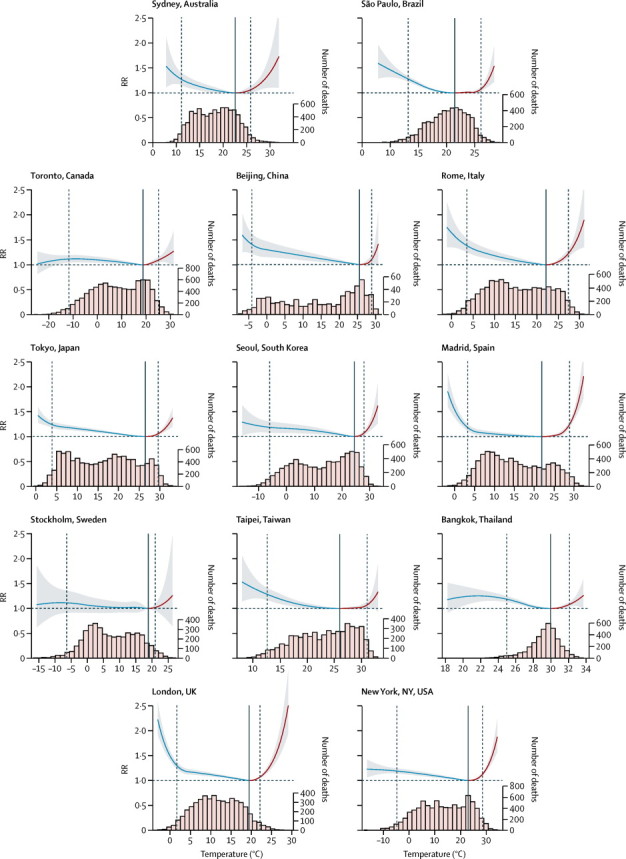
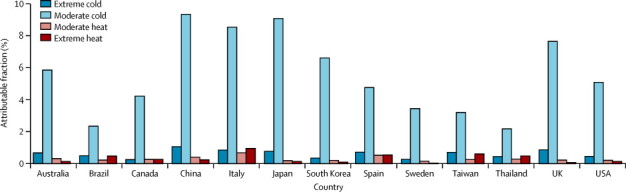
BACKGROUND: Although studies have provided estimates of premature deaths attributable to either heat or cold in selected countries, none has so far offered a systematic assessment across the whole temperature range in populations exposed to different climates. We aimed to quantify the total mortality burden attributable to non-optimum ambient temperature, and the relative contributions from heat and cold and from moderate and extreme temperatures. METHODS: We collected data for 384 locations in Australia, Brazil, Canada, China, Italy, Japan, South Korea, Spain, Sweden, Taiwan, Thailand, UK, and USA. We fitted a standard time-series Poisson model for each location, controlling for trends and day of the week. We estimated temperature-mortality associations with a distributed lag non-linear model with 21 days of lag, and then pooled them in a multivariate metaregression that included country indicators and temperature average and range. We calculated attributable deaths for heat and cold, defined as temperatures above and below the optimum temperature, which corresponded to the point of minimum mortality, and for moderate and extreme temperatures, defined using cutoffs at the 2·5th and 97·5th temperature percentiles. FINDINGS: We analysed 74,225,200 deaths in various periods between 1985 and 2012. In total, 7·71% (95% empirical CI 7·43-7·91) of mortality was attributable to non-optimum temperature in the selected countries within the study period, with substantial differences between countries, ranging from 3·37% (3·06 to 3·63) in Thailand to 11·00% (9·29 to 12·47) in China. The temperature percentile of minimum mortality varied from roughly the 60th percentile in tropical areas to about the 80-90th percentile in temperate regions. More temperature-attributable deaths were caused by cold (7·29%, 7·02-7·49) than by heat (0·42%, 0·39-0·44). Extreme cold and hot temperatures were responsible for 0·86% (0·84-0·87) of total mortality. INTERPRETATION: Most of the temperature-related mortality burden was attributable to the contribution of cold. The effect of days of extreme temperature was substantially less than that attributable to milder but non-optimum weather. This evidence has important implications for the planning of public-health interventions to minimise the health consequences of adverse temperatures, and for predictions of future effect in climate-change scenarios. FUNDING: UK Medical Research Council.
Overview
The claims and statistics of this paper haven’t been checked yet.
Free: it reads the open-access text and checks the first 5 claims that cite a source we can check. Create a free account to check every claim.
Integrity signals
Registry
Cites
Statistics
Figures
Verification
Claims the paper makes
The claims and statistics of this paper haven’t been checked yet.
Free: it reads the open-access text and checks the first 5 claims that cite a source we can check. Create a free account to check every claim.
Claims other papers make about this one
Each is checked against this paper’s own text: does it say what the citing paper says it does?
The cited source says what the claim attributes to it.
In the citing paper
“An immediate and direct impact of climate change is through human exposure to high outdoor temperatures, which is associated with morbidity and an increased risk of premature death (mortality)2–4.”
From The burden of heat-related mortality attributable to recent human-induced climate change (2021) · cites this paper as [2]
The cited source says what the claim attributes to it.
In the citing paper
“Increasing evidence from experimental, epidemiological, and econometric studies has demonstrated the effects of increased heat exposures on productivity [38], learning ability [39], and morbidity and mortality in humans [17,18,40].”
From Reduced cognitive function during a heat wave among residents of non-air-conditioned buildings: An observational study of young adults in the summer of 2016 (2018) · cites this paper as [18]
In the citing paper
“Hundreds of cardiovascular deaths each year among construction workers in Qatar may likewise be due to workplace heat (25).”
From Heat, Human Performance, and Occupational Health: A Key Issue for the Assessment of Global Climate Change Impacts (2016) · cites this paper as [25]
Self-check
Percentages, sums and reported differences re-computed from the paper’s own numbers.
The self-check needs the paper’s full text.
Citations
Cites
Quantifying heterogeneity in a meta‐analysis
Higgins, J. P. T., & Thompson, S. G. (2002) · Statistics in Medicine · doi:10.1002/sim.1186 · Cited by 36,763
(2013) · Cited by 6,752
The Effects of Climate Change on Cardiac Health
De Blois, J., Kjellstrom, T., Agewall, S., Ezekowitz, J. A., Armstrong, P. W., & Atar, D. (2015) · Cardiology · doi:10.1159/000398787 · Cited by 1,697
Relation between elevated ambient temperature and mortality: A review of the epidemiologic evidence
Basu, R. (2002) · Epidemiologic Reviews · doi:10.1093/epirev/mxf007 · Cited by 1,381
Heat-Related Deaths during the July 1995 Heat Wave in Chicago
Semenza, J. C., Rubin, C. H., Falter, K. H., Selanikio, J. D., Flanders, W. D., Howe, H. L., & Wilhelm, J. L. (1996) · New England Journal of Medicine · doi:10.1056/nejm199607113350203 · Cited by 1,376
Weather-Related Mortality: How Heat, Cold, and Heat Waves Affect Mortality in the United States
Anderson, B. G., & Bell, M. L. (2009) · Epidemiology · doi:10.1097/ede.0b013e318190ee08 · Cited by 1,229
Self-citationTime series regression studies in environmental epidemiology
Bhaskaran, K., Gasparrini, A., Hajat, S., Smeeth, L., & Armstrong, B. (2013) · International Journal of Epidemiology · doi:10.1093/ije/dyt092 · Cited by 1,150
Self-citationHigh ambient temperature and mortality: a review of epidemiologic studies from 2001 to 2008
Basu, R. (2009) · Environmental Health · doi:10.1186/1476-069x-8-40 · Cited by 1,135
Reducing and meta-analysing estimates from distributed lag non-linear models
Gasparrini, A., & Armstrong, B. (2013) · BMC Medical Research Methodology · doi:10.1186/1471-2288-13-1 · Cited by 1,081
Self-citation
Cited by
Items 501–600 of 1,006
Spatial patterns of health vulnerability to heatwaves in Vietnam
Đăng, T. N., Doan, Q., Viên, N. T., Khan, A., Thai, P. K., Cunrui, H., Chu, C. M.-Y., Schak, E., & Phung, D. T. (2020) · International Journal of Biometeorology · doi:10.1007/s00484-020-01876-2 · Cited by 60
“Heatwaves are reported to be significantly associated with adverse health effects in different populations worldwide (Guo et al. 2014; Hondula and Barnett 2014; Gasparrini et al. 2015).”
Wu, H., Li, Y., Zhao, L., Wang, S., Tian, Y., Si, Y., Yu, J., & Ding, B. (2020) · ACS Applied Materials & Interfaces · doi:10.1021/acsami.0c05333 · Cited by 60
Heat related mortality in the two largest Belgian urban areas: A time series analysis
Troeyer, K. D., Bauwelinck, M., Aerts, R., Profer, D., Berckmans, J., Delcloo, A., Hamdi, R., Schaeybroeck, B. V., Hooyberghs, H., Lauwaet, D., et al. (2020) · Environmental Research · doi:10.1016/j.envres.2020.109848 · Cited by 60
Evolving heat waves characteristics challenge heat warning systems and prevention plans
Pascal, M., Lagarrigue, R., Tabaï, A., Bonmarin, I., Camail, S., Laaidi, K., Tertre, A. L., & Denys, S. (2021) · International Journal of Biometeorology · doi:10.1007/s00484-021-02123-y · Cited by 61
Song, J., Lü, Y., Zhao, Q., Zhang, Y., Yang, X., Chen, Q., Guo, Y., & Hu, K. (2022) · The Science of The Total Environment · doi:10.1016/j.scitotenv.2022.156127 · Cited by 59
Self-citationHe, F., Wei, J., Dong, Y., Liu, C., Zhao, K., Peng, W., Lu, Z., Zhang, B., Xue, F., Guo, X., et al. (2022) · The Science of The Total Environment · doi:10.1016/j.scitotenv.2022.158046 · Cited by 59
Hajat, S., Chalabi, Z., Wilkinson, P., Erens, B., Jones, L., & Mays, N. (2016) · Public Health · doi:10.1016/j.puhe.2015.12.015 · Cited by 59
Phung, D. T., Guo, Y., Nguyen, H. T., Rutherford, S., Baum, S., & Chu, C. M.-Y. (2016) · Environment International · doi:10.1016/j.envint.2016.03.034 · Cited by 59
Self-citationKim, E., & Kim, H. (2017) · The Science of The Total Environment · doi:10.1016/j.scitotenv.2017.03.248 · Cited by 60
Self-citationHealth effects of milder winters: a review of evidence from the United Kingdom
Hajat, S. (2017) · Environmental Health · doi:10.1186/s12940-017-0323-4 · Cited by 60
“An international comparison that quantified attributable fractions reported that cold was responsible for proportionally less deaths in the UK compared to China, Japan or Italy [12].”
How Uneven Are Changes to Impact‐Relevant Climate Hazards in a 1.5 °C World and Beyond?
Harrington, L. J., Frame, D. J., King, A. D., & Otto, F. E. L. (2018) · Geophysical Research Letters · doi:10.1029/2018gl078888 · Cited by 59
Geirinhas, J. L., Trigo, R. M., Libonati, R., de Castro, L. C. O., Sousa, P. M., Coelho, C. A. S., Peres, L. F., & Magalhães, M. D. A. F. M. (2018) · The Science of The Total Environment · doi:10.1016/j.scitotenv.2018.09.060 · Cited by 59
Impacts of urbanization on the temperature-cardiovascular mortality relationship in Beijing, China
Xing, Q., Sun, Z., Tao, Y., Zhang, X., Miao, S., Zheng, C., & Tong, S. (2020) · Environmental Research · doi:10.1016/j.envres.2020.110234 · Cited by 59
Self-citationHeat and emergency room admissions in the Netherlands
van Loenhout, J. A. F., Delbiso, T. D., Kiriliouk, A., Rodriguez-Llanes, J. M., Segers, J., & Guha-Sapir, D. (2018) · BMC Public Health · doi:10.1186/s12889-017-5021-1 · Cited by 58
“found a higher mortality during cold periods than during warm ones, and a higher contribution from milder non-optimal weather than from extreme temperatures [5].”
Sex differences in temperature-related all-cause mortality in the Netherlands
Folkerts, M. A., Bröde, P., Botzen, W. J. W., Martinius, M. L., Gerrett, N., Harmsen, C. N., & Daanen, H. A. M. (2021) · International Archives of Occupational and Environmental Health · doi:10.1007/s00420-021-01721-y · Cited by 58
A parabrachial-hypothalamic parallel circuit governs cold defense in mice
Yang, W. Z., Xie, H., Du, X., Zhou, Q., Xiao, Y., Zhao, Z., Jia, X., Xu, J., Zhang, W., Cai, S., et al. (2023) · Nature Communications · doi:10.1038/s41467-023-40504-6 · Cited by 58
Huynen, M. M. T. E., & Martens, P. (2015) · International Journal of Environmental Research and Public Health · doi:10.3390/ijerph121013295 · Cited by 58
“[18] argue that most deaths are caused by exposure to moderately hot and cold temperatures, and the contribution of extreme days is comparatively low.”
InfluentialLiu, X., Kong, D., Fu, J., Zhang, Y., Liu, Y., Zhao, Y., Lian, H., Zhao, X., Yang, J. J., & Fan, Z. (2018) · PLoS ONE · doi:10.1371/journal.pone.0204706 · Cited by 58
The Mortality Response to Absolute and Relative Temperature Extremes
Sheridan, S. C., Lee, C. C., & Allen, M. J. (2019) · International Journal of Environmental Research and Public Health · doi:10.3390/ijerph16091493 · Cited by 58
“, [3]), though the magnitude depends on whether extreme events or all events are considered.”
Bakhtsiyarava, M., Schinasi, L. H., Sánchez, B. N., Dronova, I., Kephart, J. L., Ju, Y., Gouveia, N., Caiaffa, W. T., O’Neill, M. S., Yamada, G., et al. (2022) · Social Science & Medicine · doi:10.1016/j.socscimed.2022.115526 · Cited by 57
Exploring vulnerability to heat and cold across urban and rural populations in Switzerland
de Schrijver, E., Royé, D., Gasparrini, A., Franco, O. H., & Vicedo‐Cabrera, A. M. (2023) · Environmental Research Health · doi:10.1088/2752-5309/acab78 · Cited by 57
“To estimate the temperature-mortality association in each cluster, we performed a case time series analysis with conditional quasi-Poisson regression and distributed lag nonlinear models (DLNM) using municipality-specific temperature-mortality series [15, 38].”
Self-citationHuang, Y., Li, C., Liu, D. L., & Yang, J. (2023) · npj Climate and Atmospheric Science · doi:10.1038/s41612-023-00487-z · Cited by 57
Song, J., Gasparrini, A., Wei, D., Lü, Y., Hu, K., Fischer, T. B., & Nieuwenhuijsen, M. J. (2024) · Environment International · doi:10.1016/j.envint.2024.108950 · Cited by 58
Self-citationTaylor, J., Symonds, P., Wilkinson, P., Heaviside, C., Macintyre, H. L., Davies, M., Mavrogianni, A., & Hutchinson, E. J. (2018) · Atmosphere · doi:10.3390/atmos9050190 · Cited by 58
Hu, J., Wen, Y., Duan, Y., Yan, S., Liao, Y., Pan, H., Zhu, J., Yin, P., Cheng, J., & Jiang, H. (2020) · Environmental Pollution · doi:10.1016/j.envpol.2020.114156 · Cited by 48
Wang, Q., Zhang, Y., Ban, J., Zhu, H., Xu, H., & Li, T. (2021) · Environment International · doi:10.1016/j.envint.2021.106742 · Cited by 57
Seasonal variation in mortality and the role of temperature: a multi-country multi-city study
Madaniyazi, L., Armstrong, B., Chung, Y., Ng, C. F. S., Seposo, X., Kim, Y., Tobías, A., Guo, Y., Sera, F., Honda, Y., et al. (2021) · International Journal of Epidemiology · doi:10.1093/ije/dyab143 · Cited by 57
Self-citationLee, W., Prifti, K., Kim, H., Kim, E., Yang, J., Min, J., Park, J. Y., Kim, Y. C., Lee, J. P., & Bell, M. L. (2021) · Epidemiology · doi:10.1097/ede.0000000000001430 · Cited by 57
Self-citationWang, Z., Zhou, Y., Luo, M., Yang, H., Xiao, S., Huang, X., Ou, Y., Zhang, Y., Duan, X., Hu, W., et al. (2020) · Respiratory Research · doi:10.1186/s12931-020-01517-7 · Cited by 56
Cheng, Y., Yu, Z., Xu, C., Manoli, G., Ren, X., Zhang, J., Liu, Y., Yin, R., Zhao, B., & Vejre, H. (2023) · Environmental Science & Technology · doi:10.1021/acs.est.3c01765 · Cited by 57
Gouveia, N., Hernandez, J. R., Kephart, J. L., Ortigoza, A. F., Morales, R., Texcalac-Sangrador, J. L., Rodríguez, D. A., Roux, A. V. D., Sánchez, B. N., & Yamada, G. (2024) · The Science of The Total Environment · doi:10.1016/j.scitotenv.2024.171073 · Cited by 58
Cheng, J., Xu, Z., Zhao, D., Xie, M., Zhang, H., Wang, S., & Su, H. (2016) · The Science of The Total Environment · doi:10.1016/j.scitotenv.2016.07.103 · Cited by 56
Xu, R., Zhao, Q., Coêlho, M. D. S. Z. S., Saldiva, P. H. N., Abramson, M. J., Li, S., & Guo, Y. (2019) · PLoS Medicine · doi:10.1371/journal.pmed.1002950 · Cited by 57
“Moreover, the association between temperature and health often changes only minimally after adjustment for humidity or air pollutants, as suggested by previous studies [42,43].”
Self-citationQuandt, L.-A., Keller, J., Martius, O., & Jones, S. C. (2016) · Weather and Forecasting · doi:10.1175/waf-d-16-0065.1 · Cited by 55
Association between quantity and duration of snowfall and risk of myocardial infarction
Auger, N., Potter, B. J., Smargiassi, A., Bilodeau‐Bertrand, M., Paris, C., & Kosatsky, T. (2017) · Canadian Medical Association Journal · doi:10.1503/cmaj.161064 · Cited by 55
Deginet, A., Wang, T., Alemayue, E. A., Feng, W., Li, Z., Li, X., Tao, L., Luo, Y., Guo, M., Liu, X., et al. (2020) · Environmental Research · doi:10.1016/j.envres.2020.109455 · Cited by 55
Rai, M., Breitner, S., Wolf, K., Peters, A., Schneider, A. E., & Chen, K. (2021) · The Lancet Planetary Health · doi:10.1016/s2542-5196(22)00195-4 · Cited by 54
Al-Kindi, S. G., Motairek, I. K., Khraishah, H., & Rajagopalan, S. (2023) · European Journal of Preventive Cardiology · doi:10.1093/eurjpc/zwad130 · Cited by 54
Machine and deep learning for modelling heat-health relationships
Boudreault, J., Campagna, C., & Chebana, F. (2023) · The Science of The Total Environment · doi:10.1016/j.scitotenv.2023.164660 · Cited by 54
Schillerberg, T. A., & Tian, D. (2024) · Earth s Future · doi:10.1029/2024ef004845 · Cited by 56
Heat disproportionately kills young people: Evidence from wet-bulb temperature in Mexico
Wilson, A. J., Bressler, R. D., Ivanovich, C. C., Tuholske, C. P., Raymond, C., Horton, R., Sobel, A. H., Kinney, P. L., Cavazos, T., & Shrader, J. G. (2024) · Science Advances · doi:10.1126/sciadv.adq3367 · Cited by 53
Quantifying heat-related risks from urban heat island effects: A global urban expansion perspective
Hao, M., Liu, X., & Li, X. (2024) · International Journal of Applied Earth Observation and Geoinformation · doi:10.1016/j.jag.2024.104344 · Cited by 55
Willand, N., Ridley, I. A., & Pears, A. (2015) · Energy and Buildings · doi:10.1016/j.enbuild.2015.12.032 · Cited by 54
Hajat, S., & Gasparrini, A. (2016) · Epidemiology · doi:10.1097/ede.0000000000000479 · Cited by 54
Self-citationThe effects of temperature on short-term mortality risk in Kuwait: A time-series analysis
Alahmad, B., Shakarchi, A. F., AlSeaidan, M., & Fox, M. A. (2019) · Environmental Research · doi:10.1016/j.envres.2019.01.029 · Cited by 53
Khajavi, A., Khalili, D., Azizi, F., & Hadaegh, F. (2019) · The Science of The Total Environment · doi:10.1016/j.scitotenv.2019.01.182 · Cited by 54
Rodrigues, M., Santana, P., & Rocha, A. C. (2019) · International Journal of Biometeorology · doi:10.1007/s00484-019-01685-2 · Cited by 54
Pan, R., Zhang, X., Gao, J., Yi, W., Wei, Q., Xu, Z., Duan, J., Bai, L., Cheng, Q., Zhang, Y., et al. (2019) · The Science of The Total Environment · doi:10.1016/j.scitotenv.2019.133582 · Cited by 54
Impact of extreme temperatures on ambulance dispatches in London, UK
Sangkharat, K., Mahmood, M. A., Thornes, J. E., Fisher, P. A., & Pope, F. D. (2020) · Environmental Research · doi:10.1016/j.envres.2019.109100 · Cited by 54
Street temperature and building characteristics as determinants of indoor heat exposure
Zuurbier, M., van Loenhout, J. A. F., Grand, A. L., Greven, F. E., Duijm, F., & Hoek, G. (2020) · The Science of The Total Environment · doi:10.1016/j.scitotenv.2020.144376 · Cited by 54
“Elevated ambient temperatures are associated with short-term increases in mortality and morbidity, especially in elderly (Baccini et al., 2008; Basu, 2009; Bunker et al., 2016; Gasparrini et al., 2015; Ragettli et al., 2019; Tham et al., 2020; van Loenhout et al., 2018; Yu et al., 2012).”
Effect of extreme temperatures on daily emergency room visits for mental disorders
Yoo, E., Eum, Y., Gao, Q., & Chen, K. (2021) · Environmental Science and Pollution Research · doi:10.1007/s11356-021-12887-w · Cited by 54
Zhang, W., Sheridan, S. C., Birkhead, G. S., Croft, D. P., Brotzge, J. A., Justino, J., Stuart, N. A., Du, Z., Romeiko, X. X., Ye, B., et al. (2020) · CHEST Journal · doi:10.1016/j.chest.2020.05.555 · Cited by 53
Lin, S., Zhang, W., Sheridan, S. C., Mongillo, M., DiRienzo, S., Stuart, N. A., STERN, E. K., Birkhead, G. S., Dong, G., Wu, S., et al. (2021) · Environmental Research · doi:10.1016/j.envres.2021.110924 · Cited by 54
Role of pavement radiative and thermal properties in reducing excess heat in cities
Anand, J., & Sailor, D. J. (2021) · Solar Energy · doi:10.1016/j.solener.2021.10.056 · Cited by 54
Heatwaves and fire in Pantanal: Historical and future perspectives from CORDEX-CORE
Silva, P. S., Geirinhas, J. L., Lapere, R., Laura, W., Sales, D. C., Alegría, A., & Campbell, J. (2022) · Journal of Environmental Management · doi:10.1016/j.jenvman.2022.116193 · Cited by 55
Ratwatte, P., Wehling, H., Kovats, S. R., Landeg, O., & Weston, D. (2022) · Frontiers in Public Health · doi:10.3389/fpubh.2022.939859 · Cited by 53
Powis, C. M., Byrne, D., Zobel, Z., Gassert, K. N., Lute, A. C., & Schwalm, C. R. (2023) · Science Advances · doi:10.1126/sciadv.adg9297 · Cited by 54
“Recent multicountry studies have demonstrated only a small increase, and in some regions a decline, in heat-related mortality ( 55 – 58 ) despite the well-established increase in frequency and severity of heat extremes over the past several decades discussed here and at length elsewhere ( 24 ).”
Seasonality of mortality under climate change: a multicountry projection study
Madaniyazi, L., Armstrong, B., Tobías, A., Mistry, M., Bell, M. L., Urban, A., Kyselý, J., Ryti, N., Cvijanović, I., Ng, C. F. S., et al. (2024) · The Lancet Planetary Health · doi:10.1016/s2542-5196(23)00269-3 · Cited by 53
“2,3 With the warming climate, mortality due to cold is projected to decrease, whereas heat-related mortality is expected to increase in most areas.”
Self-citationYin, B., Wen, F., Liu, L., Guo, Y., Ma, X., & Di, Q. (2024) · Ecotoxicology and Environmental Safety · doi:10.1016/j.ecoenv.2024.116238 · Cited by 53
Self-citationGlobal warming may increase the burden of obstructive sleep apnea
Lechat, B., Manners, J., Pinilla, L., Reynolds, A. C., Scott, H., Vena, D., Bailly, S., Fitton, J., Toson, B., Kaambwa, B., et al. (2025) · Nature Communications · doi:10.1038/s41467-025-60218-1 · Cited by 54
“High ambient temperatures have strong, well-established, negative effects on health 3,4 , including mental health outcomes 5 – 7 , reduced physical activity 8 , and ultimately, mortality 9 – 14 .”
Heat and mortality for ischemic and hemorrhagic stroke in 12 cities of Jiangsu Province, China
Zhou, L., Chen, K., Chen, X., Jing, Y., Ma, Z., Bi, J., & Kinney, P. L. (2017) · The Science of The Total Environment · doi:10.1016/j.scitotenv.2017.05.169 · Cited by 54
“As applied in a previous study (Gasparrini et al., 2015), the fitted univariate meta-regression models were then used to construct the overall cumulative exposure-response curves for all cities.”
Lee, W., Kim, Y., Honda, Y., & Kim, H. (2018) · Environment International · doi:10.1016/j.envint.2018.06.020 · Cited by 53
Self-citationAmbient Temperature and Associations with Daily Visits to a Psychiatric Emergency Unit in Sweden
Carlsen, H. K., Oudin, A., Steingrímsson, S., & Åström, D. O. (2019) · International Journal of Environmental Research and Public Health · doi:10.3390/ijerph16020286 · Cited by 55
“across individuals, as is the case in our study, where all individuals are assumed to be exposed to the same temperatures, such Poisson regression models have been shown to yield identical results to those generated from a conditional logistic regression, which is used in a case-crossover study [19,20].”
Orru, H., Åström, C., Andersson, C., Tamm, T., Ebi, K. L., & Forsberg, B. (2019) · Environmental Research Letters · doi:10.1088/1748-9326/ab1cd9 · Cited by 54
“Climate change is expected to increase global temperatures (IPCC 2013) and the probability of heat extremes (Christidis et al 2014, Seneviratne et al 2014); both have substantial effects on human health (Hajat and Kosatky 2010, Astrom et al 2011,Gasparrini et al 2015).”
Self-citationReview of thermal comfort infused with the latest big data and modeling progresses in public health
Jiang, Y., Luo, Z., Wang, Z., & Lin, B. (2019) · Building and Environment · doi:10.1016/j.buildenv.2019.106336 · Cited by 53
“To quantify the total mortality burden attributable to non-optimum ambient temperature, a multi-country cooperation was organized to analyze 74 million deaths between 1985 and 2012 from 384 locations in 13 countries [38].”
InfluentialHow ambient temperature affects mood: an ecological momentary assessment study in Switzerland
Bundo, M., Preisig, M., Merikangas, K. R., Glaus, J., Vaucher, J., Waeber, G., Marques-Vidal, P. M., Strippoli, M. F., Müller, T., Franco, O. H., et al. (2023) · Environmental Health · doi:10.1186/s12940-023-01003-9 · Cited by 52
Unveiling Community Adaptations to Extreme Heat Events Using Mobile Phone Location Data
Tian, H., Cai, H., Hu, L., Qiang, Y., Zhou, B., Yang, M., & Lin, B. (2024) · Journal of Environmental Management · doi:10.1016/j.jenvman.2024.121665 · Cited by 54
Li, G., Zeng, Q., & Pan, X. (2016) · European Journal of Preventive Cardiology · doi:10.1177/2047487316651352 · Cited by 52
The years of life lost on cardiovascular disease attributable to ambient temperature in China
Luan, G., Yin, P., Li, T., Wang, L., & Zhou, M. (2017) · Scientific Reports · doi:10.1038/s41598-017-13225-2 · Cited by 52
Investigating changes in mortality attributable to heat and cold in Stockholm, Sweden
Åström, D. O., Ebi, K. L., Vicedo‐Cabrera, A. M., & Gasparrini, A. (2018) · International Journal of Biometeorology · doi:10.1007/s00484-018-1556-9 · Cited by 52
“The estimates of the total AF for the last two periods are higher than those reported previously for Stockholm: Gasparrini et al. (2015) quantified a total AF of 3.9%, with cold accounting for 3.7% and heat for 0.2% in the Greater Stockholm area for the period 1990–2002 (our estimates for the same time period were tot…”
InfluentialSelf-citationYears of life lost and mortality due to heat and cold in the three largest English cities
Arbuthnott, K., Hajat, S., Heaviside, C., & Vardoulakis, S. (2020) · Environment International · doi:10.1016/j.envint.2020.105966 · Cited by 53
Lee, W., Choo, J.-Y., Son, J.-Y., & Kim, H. (2016) · The Science of The Total Environment · doi:10.1016/j.scitotenv.2016.03.163 · Cited by 52
“We extended the lag period to 5 years to include the long-term delayof the effects of air pollutants and to excludemorbidities thatwere advanced by only a few years (Gasparrini et al., 2015).”
Self-citationAtmospheric Blocking and Weather Extremes over the Euro-Atlantic Sector – A ReviewPreprint
Kautz, L., Martius, O., Pfahl, S., Pinto, J. G., Ramos, A. M., Sousa, P. M., & Woollings, T. J. (2021) · doi:10.5194/wcd-2021-56 · Cited by 54
“Based on data from 13 countries, it was found that 7 % of the total mortality between 1985 and 2002 was due to extreme coldness (Gasparrini et al., 2015) Moreover, cold spells also influence everyday life by affecting power supply or public transport Both heat waves and cold spells often occur in…”
Palusci, O., & Cecere, C. (2022) · Sustainability · doi:10.3390/su14073948 · Cited by 51
Gao, Y., Huang, W., Zhao, Q., Ryti, N., Armstrong, B., Gasparrini, A., Tong, S., Pascal, M., Urban, A., Zeka, A., et al. (2024) · The Lancet Planetary Health · doi:10.1016/s2542-5196(23)00277-2 · Cited by 51
Self-citationZhang, Y., Yu, Y., Peng, M., Meng, R., Hu, K., & Yu, C. (2018) · Environment International · doi:10.1016/j.envint.2018.03.036 · Cited by 51
Martínez, G. S., Díaz, J., Hooyberghs, H., Lauwaet, D., Ridder, K. D., Linares, C., Carmona, R., Ortíz, C., Kendrovski, V., & Adamonyte, D. (2018) · Environmental Research · doi:10.1016/j.envres.2018.06.001 · Cited by 52
Heat-related mortality at the beginning of the twenty-first century in Rio de Janeiro, Brazil
Geirinhas, J. L., Russo, A., Libonati, R., Trigo, R. M., de Castro, L. C. O., Peres, L. F., Magalhães, M. D. A. F. M., & Nunes, B. (2020) · International Journal of Biometeorology · doi:10.1007/s00484-020-01908-x · Cited by 52
“Direct heat impacts on the human body cause detrimental health (Gasparrini et al. 2015; Mazdiyasni et al. 2017), which can be exacerbated in the case of aggravated risk groups, namely the young, the elderly, the poorer, and those suffering from previous cardiovascular, respiratory, or diabetic…”
Fang, J., Song, J., Wu, R., Xie, Y., Xu, X. J., Zeng, Y., Zhu, Y., Wang, T., Yuan, N., Xu, H., et al. (2021) · Environmental Science and Pollution Research · doi:10.1007/s11356-021-12817-w · Cited by 51
Ingole, V., Sheridan, S. C., Juvekar, S. K., Achebak, H., & Moraga, P. (2021) · Environmental Research · doi:10.1016/j.envres.2021.112304 · Cited by 51
Onozuka, D., Tanoue, Y., Nomura, S., Kawashima, T., Yoneoka, D., Eguchi, A., Ng, C. F. S., Matsuura, K., Shi, S., Makiyama, K., et al. (2021) · International Journal of Epidemiology · doi:10.1093/ije/dyab216 · Cited by 50
“To control for potential differences in underlying mortality arising from the non-optimal temperature between the pre-outbreak and outbreak periods, we model the complex relationship between temperature and mortality characterized by non-linearity and delayed (lagged) effects along the lag ‘ as a cross-basis term f Ti…”
Self-citationThe overlooked health impacts of extreme rainfall exposure in 30 East Asian cities
He, C., Kim, H., Hashizume, M., Lee, W., Honda, Y., Kim, S. E., Guo, Y. L., Schneider, A., Zhu, Y., Zhou, L., et al. (2024) · Nature Sustainability · doi:10.1038/s41893-024-01294-x · Cited by 37
“We included a natural cubic B-spline Article https://doi.org/10.1038/s41893-024-01294-x of calendar day with 4 degrees of freedom (df) per year to control for the seasonality and long-term trends of deaths and an indicator of the day of the week 38 .”
InfluentialSelf-citationGlobal and Regional Cardiovascular Mortality Attributable to Nonoptimal Temperatures Over Time
Hundessa, S., Huang, W., Zhao, Q., Wu, Y. Y., Wen, B., Alahmad, B., Armstrong, B., Gasparrini, A., Sera, F., Tong, S., et al. (2024) · Journal of the American College of Cardiology · doi:10.1016/j.jacc.2024.03.425 · Cited by 50
Self-citationThermogenesis and Energy Metabolism in Brown Adipose Tissue in Animals Experiencing Cold Stress
Zhang, X., Jin, X., Jiang, M., Phillips, C. J. C., & Shi, B. (2025) · International Journal of Molecular Sciences · doi:10.3390/ijms26073233 · Cited by 50
“Environmental-temperature-related mortality is primarily linked to cold environments [3].”
Hospitalization risks associated with floods in a multi-country study
Yang, Z., Huang, W., McKenzie, J. E., Xu, R., Yu, P., Wu, Y. Y., Liu, Y., Wen, B., Zhang, Y., Yu, W., et al. (2025) · Nature Water · doi:10.1038/s44221-025-00425-8 · Cited by 53
“…potential confounding effects introduced by temperature and precipitation through a cross-basis function of daily mean temperature with a maximum lag period of 21 days and a cross-basis function of daily precipitation with a maximum lag period of 14 days, as suggested by previous studies 16,39 .”
Self-citationOnozuka, D., & Hagihara, A. (2016) · The Science of The Total Environment · doi:10.1016/j.scitotenv.2016.10.045 · Cited by 50
O’Lenick, C. R., Chang, H. H., Kramer, M. R., Winquist, A. G., Mulholland, J. A., Friberg, M. D., & Sarnat, S. E. (2017) · Environmental Health · doi:10.1186/s12940-017-0244-2 · Cited by 50
“html [2] Abbreviations: ED, Emergency Department; NDI, Neighborhood Deprivation Index; OR, odds ratio; PI, Posterior Intervals; SES, socioeconomic status; ZCTA, Zip Code Tabulation Area.”
Odame, E., Li, Y., Zheng, S., Vaidyanathan, A., & Silver, K. (2018) · International Journal of Environmental Research and Public Health · doi:10.3390/ijerph15081597 · Cited by 50
Zhang, P., Wiens, K., Wang, R., Luong, L., Ansara, D. L., Gower, S., Bassil, K., & Hwang, S. W. (2019) · International Journal of Environmental Research and Public Health · doi:10.3390/ijerph16183259 · Cited by 50
“This finding is consistent with previous reports that cold weather injuries occur in the general population during low (>0 ◦C) and moderate (0−13◦C) cold stress, in addition to high-cold stress [6,9].”
Hu, J., Hou, Z., Xu, Y., Zhou, M., Zhou, C., Xiao, Y., Yu, M., Huang, B., Xu, X., Lin, L., et al. (2020) · The Science of The Total Environment · doi:10.1016/j.scitotenv.2020.142614 · Cited by 50
Revisiting the “Christmas Holiday Effect” in the Southern Hemisphere
Knight, J., Schilling, C. G., Barnett, A. G., Jackson, R., & Clarke, P. (2016) · Journal of the American Heart Association · doi:10.1161/jaha.116.005098 · Cited by 49
“This is a limitation, but a recent report indicated that the majority of mortality attributable to temperature was caused by cold conditions, with excessive heat playing a reduced role.(2) This should mitigate the impact of not directly accounting for temperature variation in this data set, because the observed Christ…”
Brousse, O., Simpson, C. H., Zonato, A., Martilli, A., Taylor, J., Davies, M., & Heaviside, C. (2024) · Geophysical Research Letters · doi:10.1029/2024gl109634 · Cited by 49
Breathing materiality: aerial violence at a time of atmospheric politics
Nieuwenhuis, M. (2016) · Critical Studies on Terrorism · doi:10.1080/17539153.2016.1199420 · Cited by 49
“It is particularly the places inhabited by temperatured bodies of the urban poor, the disabled and the elderly which are affected most dramatically by warm and cold airs (Gasparrini et al. 2015).”
Sewe, M. O., Bunker, A., Ingole, V., Egondi, T., Åström, D. O., Hondula, D. M., Rocklöv, J., & Schumann, B. (2018) · Environmental Health Perspectives · doi:10.1289/ehp1745 · Cited by 49
“Many studies have reported that mortality and morbidity increase with very high and/or very low ambient temperatures (e.g., Analitis et al. 2008; Baccini et al. 2008; Basagana et al. 2015; Basu and Samet 2002; Gasparrini et al. 2015; Kenny et al. 2010).”
Self-citationLiving environment, heating-cooling behaviours and well-being: Survey of older South Australians
Soebarto, V. I., Bennetts, H., Hansen, A. L., Zuo, J., Williamson, T., Pisaniello, D., van Hoof, J., & Visvanathan, R. (2019) · Building and Environment · doi:10.1016/j.buildenv.2019.03.023 · Cited by 49
Lytras, T., Pantavou, K. G., Mouratidou, E., & Tsiodras, S. (2019) · Eurosurveillance · doi:10.2807/1560-7917.es.2019.24.14.1800118 · Cited by 50
“We modelled the lag-response association for all four variables using a natural cubic spline with three internal knots placed at equally spaced values on the log scale [6].”
InfluentialEstimating near‐surface air temperature across Israel using a machine learning based hybrid approach
Zhou, B., Erell, E., Hough, I., Rosenblatt, J. D., Just, A. C., Novack, V., & Kloog, I. (2020) · International Journal of Climatology · doi:10.1002/joc.6570 · Cited by 49
Sim, K., Kim, Y., Hashizume, M., Gasparrini, A., Armstrong, B., Sera, F., Ng, C. F. S., Honda, Y., & Chung, Y. (2020) · Environment International · doi:10.1016/j.envint.2020.105829 · Cited by 48
Self-citationCan ultra short-term changes in ambient temperature trigger myocardial infarction?
Rowland, S. T., Boehme, A. K., Rush, J., Just, A. C., & Kioumourtzoglou, M. (2020) · Environment International · doi:10.1016/j.envint.2020.105910 · Cited by 49
“We also assessed (2) sensitivity to case definition by re-defining cases according to the following: (a) 410.”
Post-conception heat exposure increases clinically unobserved pregnancy losses
Hajdu, T., & Hajdu, G. (2021) · Scientific Reports · doi:10.1038/s41598-021-81496-x · Cited by 50
Metadata
- Authors
- Gasparrini, A., Guo, Y., Hashizume, M., Lavigne, E., Zanobetti, A., Schwartz, J., Tobias, A., Tong, S., Rocklöv, J., Forsberg, B., Leone, M., De Sario, M., Bell, M. L., Guo, Y.-L. L., Wu, C.-F., Kan, H., Yi, S.-M., de Sousa Zanotti Stagliorio Coelho, M., Saldiva, P. H. N., Honda, Y., Kim, H., & Armstrong, B.
- Affiliations
- London School of Hygiene & Tropical Medicine (GB)
- The University of Queensland (AU)
- Nagasaki University (JP)
- Harvard University (US)
- Queensland University of Technology (AU)
- Umeå University (SE)
- Regione Lazio (IT)
- Yale University (US)
- National Taiwan University (TW)
- Fudan University (CN)
- Seoul National University (KR)
- University of Tsukuba (JP)
- Corresponding author
- Gasparrini, Antonio
- ORCID
- Venue
- The Lancet
- Publisher
- Elsevier BV
- Published
- 2015-07
- Volume
- 386
- Issue
- 9991
- Pages
- 369-375
- ISSN
- 0099-5355 (ISSN-L)
- 0140-6736
- PMC
- PMC4521077
- OpenAlex
- W2162775913
- Semantic Scholar
- ad689db0aa12fd8b5d847aacec3d0f3aad1214f0
- Cited by
- 2,965
- References
- 43
- Citations by year
- 2026: 402 · 2025: 399 · 2024: 363 · 2023: 303 · 2022: 341 · 2021: 288 · 2020: 230 · 2019: 202 · 2018: 146 · 2017: 150 · 2016: 96 · 2015: 40
- FWCI
- 90.15
- Type
- journal article
- Language
- en
- Open access
- hybrid
- doi.org
- Licence
- cc-by
- www.elsevier.com/tdm/userlicense/1.0/ (tdm)
- creativecommons.org/licenses/by/4.0/ (vor)
- Locations
- The Lancet (publishedVersion, cc-by)
- Europe PMC (PubMed Central) (publishedVersion, other-oa)
- PubMed Central (publishedVersion, cc-by)
- PubMed (publishedVersion)
- LSHTM Research Online (London School of Hygiene and Tropical Medicine) (acceptedVersion)
- DIGITAL.CSIC (Spanish National Research Council (CSIC)) (submittedVersion, cc-by)
- QUT ePrints (Queensland University of Technology) (submittedVersion)
- Institutional Repositories DataBase (IRDB) (submittedVersion, cc-by)
- Nagasaki University's Academic Output SITE (Nagasaki University) (submittedVersion, cc-by-nc-nd)
- Funders
- UK Medical Research Council ((grant G1002296))
- Ministry of Education of the Spanish Government (PRX12/00515)
- NHMRC research fellowship ((#553043))
- ARC Discovery Grant ((DP110100651))
- Global Research Laboratory (grant K21004000001-10A0500-00710)
- Topics
- Physical Sciences › Environmental Science › Health, Toxicology and Mutagenesis › Climate Change and Health Impacts
- Physical Sciences › Environmental Science › Health, Toxicology and Mutagenesis › Air Quality and Health Impacts
- Health Sciences › Medicine › Physiology (medical) › Thermoregulation and physiological responses
- Keywords
- temperature-related mortality, ambient temperature, cold-related mortality, heat-related mortality, temperature extremes, attributable mortality, temperature-mortality relationship, climate and health, minimum mortality temperature, public health interventions, distributed lag non-linear model, meta-regression
- MeSH terms
- Climate, Cold Temperature, Hot Temperature, Humans, Mortality, Global Health, Risk Assessment
About these checks
Registry, retraction, Cites and statistics results are computed, not judged, with one exception: a printed reference that no index lists is read once by a model before it counts as a citation error. Claims are extracted by a model and kept only when their quote appears verbatim in the text; each cited source is then checked, with a model’s help, for whether it says what the claim relies on. Those verdicts can be wrong — read the claim’s quote and the cited source before relying on one.
Statistics and arithmetic are recomputed, not judged.
Confidence bands are shown only for fields calibrated on our annotated test set. None is calibrated yet, so no band is shown.
What counts as a claim ›How we measure confidence ›How we check this ›
Are you an author, or do you see a problem with this page? Request a review
Data sources
Bibliographic data: Semantic Scholar, OpenAlex, Crossref.
Contains information from the Semantic Scholar Academic Graph Datasets, made available under the ODC Attribution License (ODC-BY 1.0).
Semantic Scholar’s data is described in: Kinney, R., et al. (2023). The Semantic Scholar Open Data Platform. arXiv:2301.10140.
