

Risk thresholds for alcohol consumption: combined analysis of individual-participant data for 599 912 current drinkers in 83 prospective studies
Open accessThe DOI matches its Crossref record, with a small difference in title or year; 59 of the 59 references it cites were found in a registry or an index.
Abstract
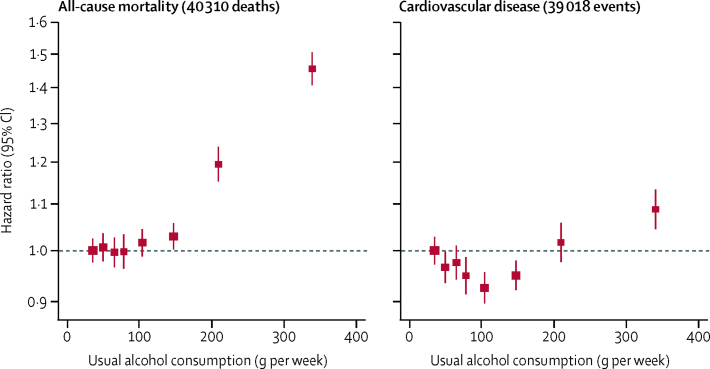
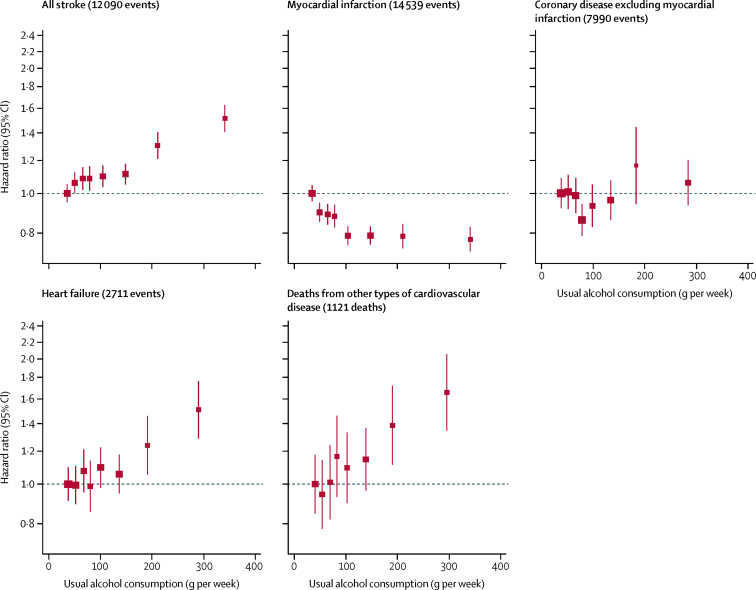
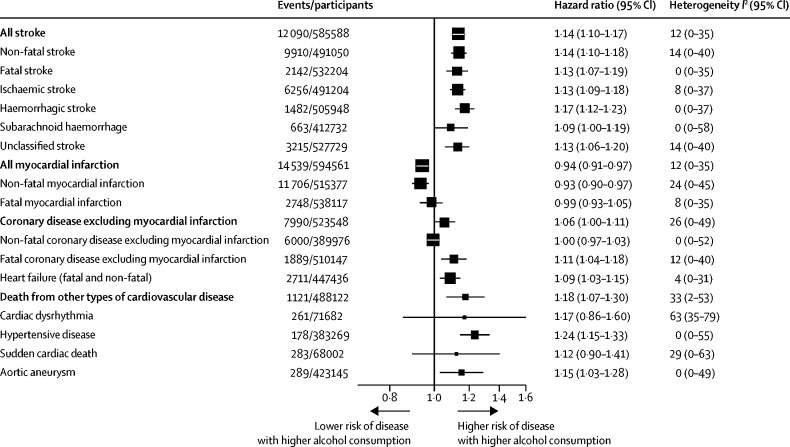
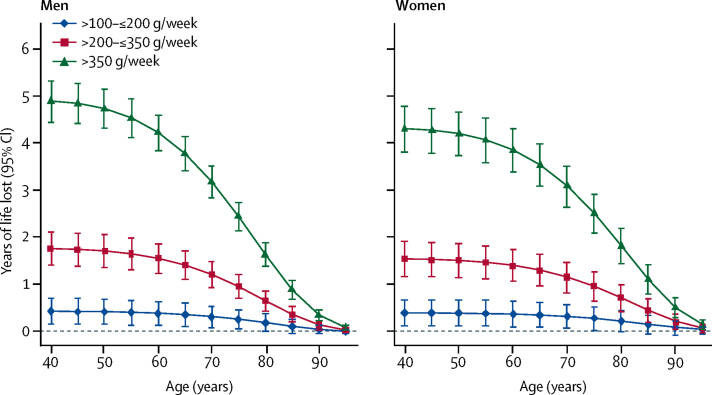
BACKGROUND: Low-risk limits recommended for alcohol consumption vary substantially across different national guidelines. To define thresholds associated with lowest risk for all-cause mortality and cardiovascular disease, we studied individual-participant data from 599 912 current drinkers without previous cardiovascular disease. METHODS: We did a combined analysis of individual-participant data from three large-scale data sources in 19 high-income countries (the Emerging Risk Factors Collaboration, EPIC-CVD, and the UK Biobank). We characterised dose-response associations and calculated hazard ratios (HRs) per 100 g per week of alcohol (12·5 units per week) across 83 prospective studies, adjusting at least for study or centre, age, sex, smoking, and diabetes. To be eligible for the analysis, participants had to have information recorded about their alcohol consumption amount and status (ie, non-drinker vs current drinker), plus age, sex, history of diabetes and smoking status, at least 1 year of follow-up after baseline, and no baseline history of cardiovascular disease. The main analyses focused on current drinkers, whose baseline alcohol consumption was categorised into eight predefined groups according to the amount in grams consumed per week. We assessed alcohol consumption in relation to all-cause mortality, total cardiovascular disease, and several cardiovascular disease subtypes. We corrected HRs for estimated long-term variability in alcohol consumption using 152 640 serial alcohol assessments obtained some years apart (median interval 5·6 years [5th-95th percentile 1·04-13·5]) from 71 011 participants from 37 studies. FINDINGS: In the 599 912 current drinkers included in the analysis, we recorded 40 310 deaths and 39 018 incident cardiovascular disease events during 5·4 million person-years of follow-up. For all-cause mortality, we recorded a positive and curvilinear association with the level of alcohol consumption, with the minimum mortality risk around or below 100 g per week. Alcohol consumption was roughly linearly associated with a higher risk of stroke (HR per 100 g per week higher consumption 1·14, 95% CI, 1·10-1·17), coronary disease excluding myocardial infarction (1·06, 1·00-1·11), heart failure (1·09, 1·03-1·15), fatal hypertensive disease (1·24, 1·15-1·33); and fatal aortic aneurysm (1·15, 1·03-1·28). By contrast, increased alcohol consumption was log-linearly associated with a lower risk of myocardial infarction (HR 0·94, 0·91-0·97). In comparison to those who reported drinking >0-≤100 g per week, those who reported drinking >100-≤200 g per week, >200-≤350 g per week, or >350 g per week had lower life expectancy at age 40 years of approximately 6 months, 1-2 years, or 4-5 years, respectively. INTERPRETATION: In current drinkers of alcohol in high-income countries, the threshold for lowest risk of all-cause mortality was about 100 g/week. For cardiovascular disease subtypes other than myocardial infarction, there were no clear risk thresholds below which lower alcohol consumption stopped being associated with lower disease risk. These data support limits for alcohol consumption that are lower than those recommended in most current guidelines. FUNDING: UK Medical Research Council, British Heart Foundation, National Institute for Health Research, European Union Framework 7, and European Research Council.
Overview
The claims and statistics of this paper haven’t been checked yet.
Free: it reads the open-access text and checks the first 5 claims that cite a source we can check. Create a free account to check every claim.
Integrity signals
Registry
Cites
Statistics
Figures
Verification
Claims the paper makes
The claims and statistics of this paper haven’t been checked yet.
Free: it reads the open-access text and checks the first 5 claims that cite a source we can check. Create a free account to check every claim.
Claims other papers make about this one
Each is checked against this paper’s own text: does it say what the citing paper says it does?
The source backs part of the claim, not all of it — or backs it for a different population, condition or comparison.
In the citing paper
“For example, systematic reviews have quantified exposure levels of alcohol use (e.g. by standard drinks/week) that represent risk-thresholds for stroke, cardio-vascular disease and atrial fibrillation (Samokhvalov, Irving, & Rehm, 2010; Tu et al., 2021; Wood et al., 2018)”
From Risk-thresholds for the association between frequency of cannabis use and the development of psychosis: a systematic review and meta-analysis (2023) · cites this paper as Wood et al., 2018
Experimental — accuracy not yet measuredThe check wasn’t confident either way, so it gives no verdict — never disputed.
In the citing paper
“Regular physical exercise reduces plasma TG levels over and above the effect of weight reduction [151,168,169].”
From 2019 ESC/EAS guidelines for the management of dyslipidaemias: lipid modification to reduce cardiovascular risk (2019) · cites this paper as [168]
Experimental — accuracy not yet measuredIn the citing paper
“However, it is analogous to evidence-based alcohol-related health guidelines where the risk for specific adverse (e.g. cardio-vascular) outcomes is low/absent below certain consumption levels and ‘moderate’ use is recommended”
From Risk-thresholds for the association between frequency of cannabis use and the development of psychosis: a systematic review and meta-analysis (2023) · cites this paper as Wood et al., 2018
Self-check
Percentages, sums and reported differences re-computed from the paper’s own numbers.
The self-check needs the paper’s full text.
Citations
Cites
Bias in meta-analysis detected by a simple, graphical test
Egger, M., Smith, G. D., Schneider, M., & Minder, C. (1997) · BMJ · doi:10.1136/bmj.315.7109.629 · Cited by 56,722 · cited 1×
“35 Methods we used to estimate reductions in life expectancy (years of life lost) are described in the appendix (pp 6–7).”
Quantifying heterogeneity in a meta‐analysis
Higgins, J. P. T., & Thompson, S. G. (2002) · Statistics in Medicine · doi:10.1002/sim.1186 · Cited by 36,763
Self-citationOperating characteristics of a rank correlation test for publication bias
Begg, C. B., & Mazumdar, M. (1994) · Biometrics · doi:10.2307/2533446 · Cited by 16,955 · cited 1×
“33 Evidence of small study effects was assessed visually with funnel plots and by Begg and Mazumdar’s test 34 and Egger’s test.”
Sudlow, C., Gallacher, J., Allen, N., Beral, V., Burton, P., Danesh, J., Downey, P., Elliott, P., Green, J., Landray, M., et al. (2015) · PLOS Medicine · doi:10.1371/journal.pmed.1001779 · Cited by 12,728
Self-citationMACMAHON, S. (1990) · The Lancet · doi:10.1016/0140-6736(90)90878-9 · Cited by 4,253 · cited 1×
“55 However, we did not find convincing evidence that other known risk factors were important mediators or confounders.”
Genomic Aberrations and Survival in Chronic Lymphocytic Leukemia
Döhner, H., Stilgenbauer, S., Benner, A., Leupolt, E., Kröber, A., Bullinger, L., Döhner, K., Bentz, M., & Lichter, P. (2000) · New England Journal of Medicine · doi:10.1056/nejm200012283432602 · Cited by 3,318
ABT-199, a potent and selective BCL-2 inhibitor, achieves antitumor activity while sparing platelets
Souers, A. J., Leverson, J. D., Boghaert, E. R., Ackler, S. L., Catron, N. D., Chen, J., Dayton, B. D., Ding, H., Enschede, S. H., Fairbrother, W. J., et al. (2013) · Nature Medicine · doi:10.1038/nm.3048 · Cited by 3,058
Unmutated Ig VH Genes Are Associated With a More Aggressive Form of Chronic Lymphocytic Leukemia
Hamblin, T. J., Davis, Z., Gardiner, A., Oscier, D. G., & Stevenson, F. K. (1999) · Blood · doi:10.1182/blood.v94.6.1848 · Cited by 2,783
Major lipids, apolipoproteins, and risk of vascular disease
The Emerging Risk Factors Collaboration* (2009) · JAMA · doi:10.1001/jama.2009.1619 · Cited by 2,731
Targeting BCL2 with Venetoclax in Relapsed Chronic Lymphocytic Leukemia
Roberts, A. W., Davids, M. S., Pagel, J. M., Kahl, B. S., Puvvada, S. D., Gerecitano, J. F., Kipps, T. J., Anderson, M. A., Brown, J. R., Gressick, L., et al. (2016) · New England Journal of Medicine · doi:10.1056/nejmoa1513257 · Cited by 1,900
Cited by
Items 201–300 of 1,000
Keyes, K. M., Calvo, E., Ornstein, K. A., Rutherford, C. G., Fox, M. P., Staudinger, U. M., & Fried, L. P. (2019) · Alcoholism Clinical and Experimental Research · doi:10.1111/acer.14125 · Cited by 45
Rossow, I. M., Barták, M., Bloomfield, K., Braddick, F., Bye, E. K., Kilian, C., López‐Pelayo, H., Mäkelä, P., Moan, I. S., Moskalewicz, J., et al. (2021) · International Journal of Environmental Research and Public Health · doi:10.3390/ijerph181910547 · Cited by 49
“At this level, all-cause mortality risk is increased by over 20% [33].”
Backgroundvan Assen, M. A. L. M., Helmink, J. H. M., & Gobbens, R. J. J. (2022) · BMC Geriatrics · doi:10.1186/s12877-021-02704-x · Cited by 52
Donroe, J. H., & Edelman, E. J. (2022) · Annals of Internal Medicine · doi:10.7326/aitc202210180 · Cited by 50
Maniero, C., Lopuszko, A., Papalois, K.-B., Gupta, A. K., Kapil, V., & Khanji, M. Y. (2022) · European Journal of Preventive Cardiology · doi:10.1093/eurjpc/zwac163 · Cited by 54
Diretriz Brasileira de Dislipidemias e Prevenção da Aterosclerose – 2025
Rached, F. H., Miname, M. H., Rocha, V. Z., Zimerman, A., Cesena, F. Y., Sposito, A. C., Santos, R. D., Behr, P. E. B., Bianco, H. T., Alves, R. J., et al. (2025) · Arquivos Brasileiros de Cardiologia · doi:10.36660/abc.20250640 · Cited by 98
Educational attainment and drinking behaviors: Mendelian randomization study in UK Biobank
Zhou, T., Sun, D., Li, X., Ma, H., Heianza, Y., & Qi, L. (2019) · Molecular Psychiatry · doi:10.1038/s41380-019-0596-9 · Cited by 52
“Harmful use of alcohol is a well-established risk factor for all-cause mortality [52].”
BackgroundAlcohol Use and Gastrointestinal Cancer Risk
Scherübl, H. (2020) · Visceral Medicine · doi:10.1159/000507232 · Cited by 50
Hwang, S., Ren, T., & Gao, B. (2020) · Clinical and Molecular Hepatology · doi:10.3350/cmh.2020.0100 · Cited by 40
“These results were further challenged by the Global Burden of Disease study, which indicated even light drinking increases CVD risk and mortality.(23) Given such controversy and disagreement regarding the effects of alcohol on NAFLD, further rigor clinical and mechanistic studies are in urgent need.”
ResultAnderson, P., Jané‐Llopis, E., O'Donnell, A. J., Manthey, J., & Rehm, J. T. (2020) · BMJ Open · doi:10.1136/bmjopen-2019-036371 · Cited by 48
Kaluza, J., Håkansson, N., Harris, H. R., Orsini, N., Michaëlsson, K., & Wolk, A. (2019) · Journal of Internal Medicine · doi:10.1111/joim.12823 · Cited by 42
Lipoprotein(a): Current Evidence for a Physiologic Role and the Effects of Nutraceutical Strategies
Santos, H. O., KONES, R. J., Rumana, U., Earnest, C. P., Izidoro, L. F. M., & Macedo, R. C. O. (2019) · Clinical Therapeutics · doi:10.1016/j.clinthera.2019.06.002 · Cited by 43
Canadian Guidelines on Alcohol Use Disorder Among Older Adults
Butt, P. R., White-Campbell, M., Canham, S. L., Johnston, A. D., Indome, E. O., Purcell, B., Tung, J., & Bussel, L. V. (2020) · Canadian Geriatrics Journal · doi:10.5770/cgj.23.425 · Cited by 46
“(7) Excessive alcohol consumption among older adults may increase the risk of several health conditions including hypertension, hemorrhagic stroke, diabetes mellitus, infections, alcoholic liver disease, and gastrointestinal conditions including gastritis, gastric ulcers, and gastric bleeding.”
BackgroundHo, F. K., Ferguson, L. D., Celis-Morales, C. A., Gray, S. R., Forrest, E., Alazawi, W., Gill, J. M., Katikireddi, S. V., Cleland, J. G., Welsh, P., et al. (2022) · EClinicalMedicine · doi:10.1016/j.eclinm.2022.101435 · Cited by 41
“54 Both GGT concentrations and reported alcohol intake are more strongly associated with CV events, other than MI, including stronger associations with fatal CV events.”
BackgroundSelf-citationLucerón‐Lucas‐Torres, M., Saz‐Lara, A., Díez‐Fernández, A., Martínez‐García, I., Martínez‐Vizcaíno, V., Cavero‐Redondo, I., & Álvarez‐Bueno, C. (2023) · Nutrients · doi:10.3390/nu15122785 · Cited by 46
“Alcohol consumption and cardiovascular events have a reported U or J-shaped association [6,7].”
BackgroundModerate Alcohol Intake in Non-Alcoholic Fatty Liver Disease: To Drink or Not to Drink?
Petroni, M. L., Brodosi, L., Marchignoli, F., Musio, A., & Marchesini, G. (2019) · Nutrients · doi:10.3390/nu11123048 · Cited by 44
“This policy is shared by International Guidelines and should be reinforced following the recent publication of the combined analysis of data from three large-scale data sources in 19 high-income countries (the Emerging Risk Factors Collaboration, EPIC-CVD, and the UK Biobank) [75].”
BackgroundMethodInfluentialEffects of Alcohol on the Cardiovascular System in Women
Piano, M. R., Thur, L. A., Hwang, C.-L., & Phillips, S. A. (2020) · Alcohol research · doi:10.35946/arcr.v40.2.12 · Cited by 53
Decraecker, M., Dutartre, D., Hiriart, J., Irlès‐Depé, M., Grottes, H. M. D., Chermak, F., Foucher, J., Delamarre, A., & de Lédinghen, V. (2021) · Liver International · doi:10.1111/liv.15081 · Cited by 44
White wine phenolics: current methods of analysis
Clarke, S., Bosman, G. W., du Toit, W., & Aleixandre-Tudó, J. L. (2022) · Journal of the Science of Food and Agriculture · doi:10.1002/jsfa.12120 · Cited by 41
Biomarkers of moderate alcohol intake and alcoholic beverages: a systematic literature review
Trius‐Soler, M., Praticò, G., Gürdeniz, G., Garcia‐Aloy, M., Canali, R., Natella, F., Brouwer-Brolsma, E. M., Andrés‐Lacueva, C., & Dragsted, L. O. (2023) · Genes & Nutrition · doi:10.1186/s12263-023-00726-1 · Cited by 46
Moderate alcohol consumption and lower total mortality risk: Justified doubts or established facts?
Costanzo, S., de Gaetano, G., Castelnuovo, A. F. D., Djoussé, L., Poli, A., & van Velden, D. P. (2019) · Nutrition Metabolism and Cardiovascular Diseases · doi:10.1016/j.numecd.2019.05.062 · Cited by 49
Hagström, H., Thiele, M., Sharma, R., Simon, T. G., Roelstraete, B., Söderling, J., & Ludvigsson, J. F. (2022) · Clinical Gastroenterology and Hepatology · doi:10.1016/j.cgh.2021.01.005 · Cited by 42
Panza, K. E., Kline, A. C., Na, P. J., Potenza, M. N., Norman, S. B., & Pietrzak, R. H. (2021) · Drug and Alcohol Dependence · doi:10.1016/j.drugalcdep.2021.109240 · Cited by 45
Piepoli, M. F., Adamo, M., Barison, A., Bestetti, R. B., Biegus, J., Böhm, M., Butler, J., Carapetis, J. R., Ceconi, C., Chioncel, O. D., et al. (2022) · European Journal of Preventive Cardiology · doi:10.1093/eurjpc/zwab147 · Cited by 49
Self-citationSullivan, E. V., & Pfefferbaum, A. (2022) · Alcohol · doi:10.1016/j.alcohol.2022.06.002 · Cited by 45
Mazidi, M., Leeming, E. R., Merino, J., Nguyen, L. H., Selvachandran, S., Pujal, J. C., Maher, T., Kade, K. L., Murray, B. A. K., Graham, M. S., et al. (2021) · Nature Food · doi:10.1038/s43016-021-00398-3 · Cited by 40
Hu, C., Huang, C., Li, J., Liu, F., Huang, K., Liu, Z., Yang, X., Liu, X., Cao, J., Chen, S., et al. (2022) · American Journal of Clinical Nutrition · doi:10.1093/ajcn/nqac159 · Cited by 43
Association between diabetes and thiamine status - A systematic review and meta-analysis
Ziegler, D., Reiners, K., Strom, A., & Obeid, R. (2023) · Metabolism · doi:10.1016/j.metabol.2023.155565 · Cited by 41
Bendtsen, M., Åsberg, K., & McCambridge, J. (2022) · BMC Medicine · doi:10.1186/s12916-022-02374-5 · Cited by 43
“Alcohol consumption has been found to increase the risk of non-communicable diseases, including stroke, heart failure, and cancer, and there is no safe dose [1, 3].”
BackgroundAlcohol Intake and Arterial Hypertension: Retelling of a Multifaceted Story
Vacca, A., Bulfone, L., Cicco, S., Brosolo, G., Porto, A. D., Soardo, G., Catena, C., & Sechi, L. A. (2023) · Nutrients · doi:10.3390/nu15040958 · Cited by 48
“An important study in a metanalysis has recently tried to analyze this issue, including 83 studies from 19 high-income countries, accounting for 599,912 current consumers of alcoholic drinks [47].”
BackgroundZarezadeh, M., Mahmoudinezhad, M., Faghfouri, A. H., Honarvar, N. M., Regestein, Q. R., Papatheodorou, S., Mekary, R. A., & Willett, W. C. (2024) · Ageing Research Reviews · doi:10.1016/j.arr.2024.102419 · Cited by 52
Ranabhat, C. L., Park, M.-B., & Kim, C.-B. (2019) · Nutrients · doi:10.3390/nu12020459 · Cited by 48
“Many studies have shown that the consumption of alcohol is directly proportional to cardiovascular disease and premature mortality, ultimately shortening the life expectancy in the USA [32], UK [33], Sweden [34], and other countries [35].”
BackgroundThe Southern European Atlantic Diet and all-cause mortality in older adults
Carballo‐Casla, A., Ortolá, R., García‐Esquinas, E., Oliveira, A., Sotos‐Prieto, M., Lopes, C. M. M., López‐García, E., & Rodríguez‐Artalejo, F. (2021) · BMC Medicine · doi:10.1186/s12916-021-01911-y · Cited by 40
Ma, H., Li, X., Zhou, T., Sun, D., Shai, I., Heianza, Y., Rimm, E. B., Manson, J. E., & Qi, L. (2021) · Mayo Clinic Proceedings · doi:10.1016/j.mayocp.2021.02.011 · Cited by 43
Self-citationAlcohol use in the older adult US population: Trends, causes, and consequences
Keyes, K. M. (2022) · Alcohol · doi:10.1016/j.alcohol.2022.05.005 · Cited by 49
Synergistic and Detrimental Effects of Alcohol Intake on Progression of Liver Steatosis
Ciaula, A. D., Bonfrate, L., Krawczyk, M. J., Frühbeck, G., & Portincasa, P. (2022) · International Journal of Molecular Sciences · doi:10.3390/ijms23052636 · Cited by 41
Iron and iron-related proteins in alcohol consumers: cellular and clinical aspects
Ferrao, K., Ali, N., & Mehta, K. J. (2022) · Journal of Molecular Medicine · doi:10.1007/s00109-022-02254-8 · Cited by 42
Sarich, P., Gao, S., Zhu, Y., Canfell, K., & Weber, M. F. (2024) · Addiction · doi:10.1111/add.16446 · Cited by 47
Georgescu, O. Ş., Martin, L., Târtea, G. C., Rotaru-Zăvăleanu, A. D., Dinescu, S. N., Vasile, R. C., Greșiță, A., Gheorman, V., Aldea, M., & Dinescu, V. C. (2024) · Life · doi:10.3390/life14091134 · Cited by 54
“…fi ts associated with moderate alcohol consumption, such as increased high-density lipoprotein cholesterol (HDL-C) levels and antioxidant bene fi ts [31–33]. have indicated potential cardiovascular benefits associated with moderate alcohol consumption, such as increased high-density lipoprotein…”
BackgroundLi, D., Xu, J., Liu, F., Wang, X., Yang, H., & Li, X. (2019) · Alcoholism Clinical and Experimental Research · doi:10.1111/acer.14112 · Cited by 40
Practical Guidance for Food Consumption to Prevent Cardiovascular Disease
Nestel, P. J., Beilin, L. J., Clifton, P. M., Watts, G. F., & Mori, T. A. (2020) · Heart Lung and Circulation · doi:10.1016/j.hlc.2020.08.022 · Cited by 43
Alcohol abstinence and mortality in a general population sample of adults in Germany: a cohort study
John, U., Rumpf, H.-J., Hanke, M., & Meyer, C. (2021) · PLOS Medicine · doi:10.1371/journal.pmed.1003819 · Cited by 36
“Our data are in line with those from former studies that revealed a dose relation between quantity and frequency of alcohol consumption and risk of death [4,5,32].”
ResultWeiangkham, D., Umnuaypornlert, A., Saokaew, S., Prommongkol, S., & Ponmark, J. (2022) · Frontiers in Public Health · doi:10.3389/fpubh.2022.962809 · Cited by 37
“Alcohol intake can have a negative impact on one’s overall health (33).”
BackgroundPförringer, D., Mayer, R., Meisinger, C., Freuer, D., & Eyer, F. (2018) · Journal of Occupational Medicine and Toxicology · doi:10.1186/s12995-018-0208-7 · Cited by 39
“concluded that the consumption of more than 100 g alcohol per week is risky [22].”
Self-citationThe metabolomic signatures of alcohol consumption in young adults
Duc, D. H., Bruno, R., Blizzard, L., Venn, A., Dwyer, T., Smith, K. J., Magnussen, C. G., & Gall, S. (2019) · European Journal of Preventive Cardiology · doi:10.1177/2047487319834767 · Cited by 37
“These conflicting effects of alcohol consumption on lipids and lipoproteins coupled with findings on metabolic markers differentially predicting myocardial infarction and stroke(23) may explain the conflicting effects of alcohol on different cardiovascular events.(1)”
BackgroundInfluentialThe effect of tobacco and alcohol consumption on poverty in the United Kingdom
Nyakutsikwa, B., Britton, J. R., & Langley, T. E. (2020) · Addiction · doi:10.1111/add.15096 · Cited by 36
“Moderate alcohol consumption (up to 100g/week), while not risk free, presents a relatively low risk to health, (48) and may be regarded as desirable in households where alcohol use provides enjoyment and supports social cohesion.”
BackgroundChronic Ethanol Consumption Induces Osteopenia via Activation of Osteoblast Necroptosis
Guo, M., Huang, Y., Wu, Q., Chai, L., Jiang, Z., Zeng, Y., Wan, S., Tan, X., Long, Y., Gu, J., et al. (2021) · Oxidative Medicine and Cellular Longevity · doi:10.1155/2021/3027954 · Cited by 39
2022 Taiwan lipid guidelines for primary prevention
Huang, P., Lu, Y., Tsai, Y., Wu, Y., Li, H., Chang, H.-Y., Wu, C., Yang, C., Tarng, D., Huang, C., et al. (2022) · Journal of the Formosan Medical Association · doi:10.1016/j.jfma.2022.05.010 · Cited by 44
Liu, Y., Tabung, F. K., Stampfer, M. J., Redline, S. S., & Huang, T. (2022) · American Journal of Clinical Nutrition · doi:10.1093/ajcn/nqac257 · Cited by 37
Leeman, R. F., Rowland, B. H. P., Gebru, N. M., & Potenza, M. N. (2019) · Philosophical Transactions of the Royal Society B: Biological Sciences · doi:10.1098/rstb.2018.0129 · Cited by 35
Kassaw, N. A., Zhou, A., Mulugeta, A., Lee, S., Burgess, S., & Hyppönen, E. (2024) · International Journal of Epidemiology · doi:10.1093/ije/dyae046 · Cited by 38
Self-citationHydes, T., Kennedy, O. J., Glyn‐Owen, K., Buchanan, R. M., Parkes, J., Cuthbertson, D. J., Roderick, P., & Byrne, C. D. (2024) · Clinical Gastroenterology and Hepatology · doi:10.1016/j.cgh.2024.03.045 · Cited by 36
Clinical significance of elevated liver transaminases in HIV-infected patients
Cai, J. X., Osikowicz, M., & Sebastiani, G. (2019) · AIDS · doi:10.1097/qad.0000000000002233 · Cited by 37
“Alcoholic liver disease Chronic alcohol consumption is frequently observed in HIV-infected patients and is associated with adverse health effects [66].”
BackgroundLipid Profiles After Changes in Alcohol Consumption Among Adults Undergoing Annual Checkups
Suzuki, T., Fukui, S., Shinozaki, T., Asano, T., Yoshida, T., Aoki, J., & Mizuno, A. (2025) · JAMA Network Open · doi:10.1001/jamanetworkopen.2025.0583 · Cited by 42
Jané‐Llopis, E., O'Donnell, A. J., & Anderson, P. (2021) · Social Science & Medicine · doi:10.1016/j.socscimed.2021.113690 · Cited by 39
To, K., Mak, C. C. H., Zhang, C., Zhou, Y., Filbay, S. R., & Khan, W. S. (2021) · Rheumatology International · doi:10.1007/s00296-021-04844-0 · Cited by 36
Tebar, W. R., Christófaro, D. G. D., Diniz, T. A., Lofrano‐Prado, M. C., Botero, J. P., Correia, M. D. A., Cucato, G. G., Ritti‐Dias, R. M., & do Prado, W. L. (2021) · Frontiers in Nutrition · doi:10.3389/fnut.2021.630586 · Cited by 40
Alcohol – The myth of cardiovascular protection
Schutte, R., Smith, L., & Wannamethee, S. G. (2021) · Clinical Nutrition · doi:10.1016/j.clnu.2021.12.009 · Cited by 40
Diet and human reproductive system: Insight of omics approaches
Ma, X., Wu, L., Wang, Y.-X., Han, S., El-Dalatony, M. M., Feng, F., 陶仲宾, Yu, L., & Wang, Y. (2022) · Food Science & Nutrition · doi:10.1002/fsn3.2708 · Cited by 37
Koyanagi, Y. N., Nakatochi, M., Namba, S., Oze, I., Charvat, H., Narita, A., Kawaguchi, T., Ikezaki, H., Hishida, A., Hara, M., et al. (2024) · Science Advances · doi:10.1126/sciadv.ade2780 · Cited by 36
de Boer, W. I. J., Dekker, L. H., Koning, R. H., Navis, G. J., & Mierau, J. O. (2019) · Preventive Medicine · doi:10.1016/j.ypmed.2019.105929 · Cited by 39
“This contradicts other research which points to many adverse health effects of (excessive) alcohol consumption (Bouchery et al., 2011; Wood et al., 2018).”
ResultNeumann, J., Beck, O., Helander, A., & Böttcher, M. (2020) · Alcohol and Alcoholism · doi:10.1093/alcalc/agaa027 · Cited by 41
“, 2004), and the lower threshold for harmful drinking was recently proposed to be 100 g/week (Wood et al., 2018).”
BackgroundHabitual coffee intake and plasma lipid profile: Evidence from UK Biobank
Zhou, A., & Hyppönen, E. (2021) · Clinical Nutrition · doi:10.1016/j.clnu.2020.12.042 · Cited by 39
“Indeed, reanalysis of the data by altering the reference group from non-drinkers to light drinkers (a strategy that has been employed to mitigate the potential influence of reverse causality in studies on alcohol intake) [6], diminished the possible beneficial effects of moderate consumption, and tentatively suggested…”
BackgroundTu, S. J., Gallagher, C., Elliott, A. D., Linz, D., Pitman, B. M., Hendriks, J., Lau, D. H., Sanders, P., & Wong, C. X. J. (2021) · Heart Rhythm · doi:10.1016/j.hrthm.2021.09.040 · Cited by 33
“Notably, the U-shaped relationship between alcohol and SCD seen in our and other studies mirrors that of alcohol and cardiovascular disease in general.(22,23) These findings also differ from the previously reported relationship between alcohol and nonfatal coronary artery disease, which has been observed as L-shaped,…”
ResultUnravelling the complex causal effects of substance use behaviours on common diseases
Xue, A., Zhu, Z., Wang, H., Jiang, L., Visscher, P. M., Zeng, J., & Yang, J. (2024) · Communications Medicine · doi:10.1038/s43856-024-00473-3 · Cited by 39
“In addition, observational studies showed a non-linear relationship of AC with common diseases 10,62 , e.g., a J-shaped relationship withcardiovasculardisease 63,64 .”
InfluentialPlastic frontal pole cortex structure related to individual persistence for goal achievement
Hosoda, C., Tsujimoto, S., Tatekawa, M., Honda, M., Osu, R., & Hanakawa, T. (2020) · Communications Biology · doi:10.1038/s42003-020-0930-4 · Cited by 37
Reduction in World Health Organization Risk Drinking Levels and Cardiovascular Disease
Knox, J., Scodes, J. M., Witkiewitz, K. A., Kranzler, H. R., Mann, K. F., O’Malley, S. S., Wall, M. M., Anton, R. F., & Hasin, D. S. (2020) · Alcoholism Clinical and Experimental Research · doi:10.1111/acer.14386 · Cited by 35
“Our results are encouraging because they indicate that reductions in drinking at these levels are associated with short-term clinical benefit in terms of reduced CVD risk (Wood et al., 2018).”
ResultAlcohol Consumption and Incident Cataract Surgery in Two Large UK Cohorts
Chua, S. Y. L., Luben, R., Hayat, S. A., Broadway, D. C., Khaw, K., Warwick, A., Britten, A., Day, A. C., Strouthidis, N. G., Patel, P. J., et al. (2021) · Ophthalmology · doi:10.1016/j.ophtha.2021.02.007 · Cited by 39
“26,27 Participants were asked to indicate their usual consumption, choosing from 6 frequency categories, which were “ never, ” “ special occasions only, ” “ 1 e 3 times a month, ” “ 1 e 2 times a week, ” “ 3 e 4 times a week, ” and “ daily or almost daily.”
Niebuur, J., Vonk, J. M., Du, Y., de Bock, G. H., Lunter, G. A., Krabbe, P. F. M., Alizadeh, B. Z., Snieder, H., Smidt, N., Boezen, M., et al. (2023) · PLoS ONE · doi:10.1371/journal.pone.0287263 · Cited by 36
Salim, H. A., Hamam, O., Parilday, G., Moustafa, R. A., Ghandour, S., Rutgers, M. P., Sharara, M., Cho, A., Mazumdar, I., Radmard, M., et al. (2024) · Journal of the American Heart Association · doi:10.1161/jaha.124.034581 · Cited by 31
“60 In our study, although we observed a significant association between multiple clinical parameters and CS in the overall cohort and within the M1 occlusion sub-group, similar associations were not found in the proximal M2 occlusion subgroup.”
Du, Y., de Bock, G. H., Vonk, J. M., Pham, A. T., van der Ende, M. Y., Snieder, H., Smidt, N., Krabbe, P. F. M., Alizadeh, B. Z., Lunter, G. A., et al. (2024) · European Journal of Ageing · doi:10.1007/s10433-024-00833-x · Cited by 41
Lindström, J., Aittola, K., Pölönen, A., Hemiö, K., Ahonen, K., Karhunen, L. J., Männikkö, R., Siljamäki-Ojansuu, U., Tilles‐Tirkkonen, T., Virtanen, E., et al. (2021) · International Journal of Environmental Research and Public Health · doi:10.3390/ijerph18052362 · Cited by 52
“The question of whether alcohol should be included as part of a health-promoting diet that prevents T2D and what would be the recommended consumption is controversial and was considered to be out of the scope of the HDI [52,53].”
BackgroundCoordinated data analysis: Knowledge accumulation in lifespan developmental psychology.
Graham, E. K., Willroth, E. C., Weston, S. J., Terrera, G. M., Clouston, S., Hofer, S. M., Mroczek, D. K., & Piccinin, A. M. (2022) · Psychology and Aging · doi:10.1037/pag0000612 · Cited by 40
Εvangelou, Ε., Suzuki, H., Bai, W., Pazoki, R., Gao, H., Matthews, P. M., & Elliott, P. (2021) · eLife · doi:10.7554/elife.65325 · Cited by 37
One-month alcohol abstinence national campaigns: a scoping review of the harm reduction benefits
de Ternay, J., Leblanc, P., Michel, P., Benyamina, A., Naassïla, M., & Rolland, B. (2022) · Harm Reduction Journal · doi:10.1186/s12954-022-00603-x · Cited by 40
“…indicates that both the amount and frequency of alcohol use are directly associated with an increased mortality resulting from various medical risks, including cancer [1], alcohol-related liver diseases [2], stroke, coronary disease, heart failure, hypertensive disease, and aortic aneurysm [3].”
BackgroundChen, H., Chen, J., Zhang, F., Li, Y., Wang, R., Zheng, Q., Zhang, X., Zeng, J., Xu, F., & Lin, Y. (2022) · Frontiers in Cardiovascular Medicine · doi:10.3389/fcvm.2022.964977 · Cited by 38
Second Hits in Dilated Cardiomyopathy
Marstrand, P., Picard, K., & Lakdawala, N. K. (2020) · Current Cardiology Reports · doi:10.1007/s11886-020-1260-3 · Cited by 31
Alcohol consumption in later life and reaching longevity: the Netherlands Cohort Study
van den Brandt, P. A., & Brandts, L. (2020) · Age and Ageing · doi:10.1093/ageing/afaa003 · Cited by 32
“As in observational studies on alcohol and mortality [1, 2, 8], studies on alcohol and longevity may be hampered by possible biases (selection and residual confounding biases).”
BackgroundOutpatient management of alcohol-related liver disease
Simonetto, D. A., Shah, V. H., & Kamath, P. S. (2020) · The Lancet. Gastroenterology & hepatology · doi:10.1016/s2468-1253(19)30415-7 · Cited by 32
A safe level of alcohol consumption: the right answer demands the right question
Mukamal, K. J. (2020) · Journal of Internal Medicine · doi:10.1111/joim.13129 · Cited by 35
Mammographic features are associated with cardiometabolic disease risk and mortality
Graßmann, F., Fang, F., Eriksson, M., Azam, S., Hall, P., & Czene, K. (2021) · European Heart Journal · doi:10.1093/eurheartj/ehab502 · Cited by 32
Global burden of calcific aortic valve disease and attributable risk factors from 1990 to 2019
Yu, J., Wang, Z., Bao, Q., Lei, S., You, Y., Yin, Z., & Xie, X. (2022) · Frontiers in Cardiovascular Medicine · doi:10.3389/fcvm.2022.1003233 · Cited by 35
Acosta, E., Mehta, N., Myrskylä, M., & Ebeling, M. (2022) · The Journals of Gerontology: Series B · doi:10.1093/geronb/gbac032 · Cited by 29
Ku, P., Steptoe, A., Liao, Y., Hsueh, M., & Chen, L. (2019) · Journal of Clinical Medicine · doi:10.3390/jcm8040564 · Cited by 219
“5, 1, 2], in which Xpi denotes Xpi if pi , 0 and log X if pi = 0 [50,51].”
Hongli, Z., Bi, X., Zheng, N., Li, C., & Yan, K. (2021) · PLoS ONE · doi:10.1371/journal.pone.0245670 · Cited by 29
“Although some studies reported a J-shaped association between alcohol drinking and all-cause mortality, which suggested that low alcohol use may confer some degree of protection [9,10], this view was challenged by recent Mendelian randomization studies and meta-analyses [8,11,12].”
BackgroundResultThe proarrhythmic conundrum of alcohol intake
Manolis, T. A., Apostolopoulos, E. J., Manolis, A. S., Melita, H., & Manolis, A. S. (2021) · Trends in Cardiovascular Medicine · doi:10.1016/j.tcm.2021.03.003 · Cited by 34
Nivukoski, U., Niemelä, M., Bloigu, A. H., Bloigu, R., Aalto, M., Laatikainen, T. K., & Niemelä, O. J. (2019) · PLoS ONE · doi:10.1371/journal.pone.0218463 · Cited by 35
“In accordance with this view, alcohol and its reactive metabolites are known to exert toxic effects virtually in all tissues and even relatively low levels of chronic drinking may increase the risk for carcinogenesis [38–40], cognitive decline [41, 42], cardiac dysfunction [43–45] and all-cause mortality [28, 46], whi…”
BackgroundGarnett, C., Kastaun, S., Brown, J., & Kotz, D. (2022) · Addictive Behaviors · doi:10.1016/j.addbeh.2021.107159 · Cited by 28
Cobiac, L. J., Mizdrak, A., & Wilson, N. (2018) · Injury Prevention · doi:10.1136/injuryprev-2018-042914 · Cited by 40
Choi, W., Kim, H. J., Jo, A. J., Choi, S. H., Han, S., Ko, M. J., & Lim, Y. (2021) · Liver International · doi:10.1111/liv.15011 · Cited by 32
Rydberg, M., Zimmerman, M., Löfgren, J. P., Gottsäter, A., Nilsson, P. M., Melander, O., & Dahlin, L. B. (2021) · Scientific Reports · doi:10.1038/s41598-021-94025-7 · Cited by 30
Self-citationPetermann-Rocha, F. E., Zhou, Z., Mathers, J. C., Celis-Morales, C. A., Raubenheimer, D., Sattar, N. A., Pell, J. P., Forrest, E. H., & Ho, F. K. W. (2024) · Nature Communications · doi:10.1038/s41467-024-51314-9 · Cited by 30
Self-citationGenomic prediction of alcohol-related morbidity and mortality
Kiiskinen, T., Mars, N., Palviainen, T., Koskela, J. T., Rämö, J. T., Ripatti, P., Ruotsalainen, S., Palotie, A. V., Madden, P. A. F., Rose, R. J., et al. (2020) · Translational Psychiatry · doi:10.1038/s41398-019-0676-2 · Cited by 36
Self-citationBuss, V. H., Leesong, S., Barr, M. L., Varnfield, M., & Harris, M. (2020) · Journal of Medical Internet Research · doi:10.2196/21159 · Cited by 31
“Wood et al [5] reported that all-cause mortality was positively associated with the level of alcohol intake, based on data from over half a million current drinkers.”
BackgroundWhelton, S. P., Berning, P., Blumenthal, R. S., Marshall, C. H., Martin, S. S., Mortensen, M. B., Blaha, M. J., & Dzaye, O. D. A. (2021) · European Journal of Internal Medicine · doi:10.1016/j.ejim.2021.02.003 · Cited by 30
A Traditional Chinese Medicine Plant Extract Prevents Alcohol-Induced Osteopenia
Qian, D., Zhou, H. C., Fan, P., Yu, T., Patel, A., O'Brien, M. A., Wang, Z., Lu, S., Tong, G., Shan, Y., et al. (2021) · Frontiers in Pharmacology · doi:10.3389/fphar.2021.754088 · Cited by 29
“However, heavy drinking is detrimental to many organs and tissues and is a significant cause of preventable stroke, heart failure, and death (Garaycoechea et al., 2018; GBD, 2018; Wood et al., 2018; USDA and HHS, 2020; NIAAA., 2021).”
BackgroundWelford, P., Östh, J., Hoy, S., Diwan, V. K., & Hallgren, M. Å. (2022) · Complementary Therapies in Medicine · doi:10.1016/j.ctim.2022.102815 · Cited by 36
Louvet, A., Trabut, J., Moreno, C., Moirand, R., Aubin, H., Wandji, L. C. N., Nourredine, M., Ningarhari, M., Ganne‐Carrié, N., Pageaux, G., et al. (2022) · Liver International · doi:10.1111/liv.15221 · Cited by 29
Are workplace factors associated with employee alcohol use? The WIRUS cross-sectional study
Thørrisen, M. M., Skogen, J. C., Bonsaksen, T., Skarpaas, L. S., & Aas, R. W. (2022) · BMJ Open · doi:10.1136/bmjopen-2022-064352 · Cited by 33
Niemelä, O. J., Aalto, M., Bloigu, A. H., Bloigu, R., Halkola, A. S., & Laatikainen, T. K. (2022) · Nutrients · doi:10.3390/nu14214529 · Cited by 33
“Based on current findings it is possible that the patterns of drinking and beveragespecific differences may also explain previous observations on the dose–response relationships between alcohol consumption and attributable health outcomes [1,9].”
Background
Metadata
- Authors
- Wood, A. M., Kaptoge, S., Butterworth, A. S., Willeit, P., Warnakula, S., Bolton, T., Paige, E., Paul, D. S., Sweeting, M., Burgess, S., Bell, S., Astle, W., Stevens, D., Koulman, A., Selmer, R. M., Verschuren, W. M. M., Sato, S., Njølstad, I., Woodward, M., Salomaa, V., Nordestgaard, B. G., Yeap, B. B., Fletcher, A., Melander, O., Kuller, L. H., Balkau, B., Marmot, M., Koenig, W., Casiglia, E., Cooper, C., Arndt, V., Franco, O. H., Wennberg, P., Gallacher, J., de la Cámara, A. G., Völzke, H., Dahm, C. C., Dale, C. E., Bergmann, M. M., Crespo, C. J., van der Schouw, Y. T., Kaaks, R., Simons, L. A., Lagiou, P., Schoufour, J. D., Boer, J. M. A., Key, T. J., Rodriguez, B., Moreno-Iribas, C., Davidson, K. W., Taylor, J. O., Sacerdote, C., Wallace, R. B., Quiros, J. R., Tumino, R., Blazer, D. G., Linneberg, A., Daimon, M., Panico, S., Howard, B., Skeie, G., Strandberg, T., Weiderpass, E., Nietert, P. J., Psaty, B. M., Kromhout, D., Salamanca-Fernandez, E., Kiechl, S., Krumholz, H. M., Grioni, S., Palli, D., Huerta, J. M., Price, J., Sundström, J., Arriola, L., Arima, H., Travis, R. C., Panagiotakos, D. B., Karakatsani, A., Trichopoulou, A., Kühn, T., Grobbee, D. E., Barrett-Connor, E., van Schoor, N., Boeing, H., Overvad, K., Kauhanen, J., Wareham, N., Langenberg, C., Forouhi, N., Wennberg, M., Després, J.-P., Cushman, M., Cooper, J. A., Rodriguez, C. J., Sakurai, M., Shaw, J. E., Knuiman, M., Voortman, T., Meisinger, C., Tjønneland, A., Brenner, H., Palmieri, L., Dallongeville, J., Brunner, E. J., Assmann, G., Trevisan, M., Gillum, R. F., Ford, I., Sattar, N., Lazo, M., Thompson, S. G., Ferrari, P., Leon, D. A., Smith, G. D., Peto, R., Jackson, R., Banks, E., Di Angelantonio, E., Danesh, J., Wood, A. M., Kaptoge, S., Butterworth, A., Willeit, P., Warnakula, S., Bolton, T., Paige, E., Paul, D. S., Sweeting, M., Burgess, S., Bell, S., Astle, W., Stevens, D., Koulman, A., Selmer, R. M., Verschuren, M., Sato, S., Njølstad, I., Woodward, M., Veikko, S., Nordestgaard, B. G., Yeap, B. B., Flecther, A., Melander, O., Kuller, L. H., Balkau, B., Marmot, M., Koenig, W., Casiglia, E., Cooper, C., Arndt, V., Franco, O. H., Wennberg, P., Gallacher, J., Gómez de la Cámara, A., Völzke, H., Dahm, C. C., Dale, C. E., Bergmann, M., Crespo, C., van der Schouw, Y. T., Kaaks, R., Simons, L. A., Lagiou, P., Schoufour, J. D., Boer, J. M. A., Key, T. J., Rodriguez, B., Moreno-Iribas, C., Davidson, K. W., Taylor, J. O., Sacerdote, C., Wallace, R. B., Quiros, J. R., Rimm, E. B., Tumino, R., Blazer III, D. G., Linneberg, A., Daimon, M., Panico, S., Howard, B., Skeie, G., Salomaa, V., Strandberg, T., Weiderpass, E., Nietert, P. J., Psaty, B. M., Kromhout, D., Salamanca-Fernandez, E., Kiechl, S., Krumholz, H. M., Grioni, S., Palli, D., Huerta, J. M., Price, J., Sundström, J., Arriola, L., Arima, H., Travis, R. C., Panagiotakos, D. B., Karakatsani, A., Trichopoulou, A., Kühn, T., Grobbee, D. E., Barrett-Connor, E., van Schoor, N., Boeing, H., Overvad, K., Kauhanen, J., Wareham, N., Langenberg, C., Forouhi, N., Wennberg, M., Després, J.-P., Cushman, M., Cooper, J. A., Rodriguez, C. J., Sakurai, M., Shaw, J. E., Knuiman, M., Voortman, T., Meisinger, C., Tjønneland, A., Brenner, H., Palmieri, L., Dallongeville, J.-P., Brunner, E. J., Assmann, G., Trevisan, M., Gillumn, R. F., Ford, I. F., Sattar, N., Lazo, M., Thompson, S., Ferrari, P., Leon, D. A., Davey Smith, G., Peto, R., Jackson, R., Banks, E., Di Angelantonio, E., & Danesh, J.
- Affiliations
- University of Cambridge (GB)
- University Medical Center Utrecht (NL)
- London School of Hygiene & Tropical Medicine (GB)
- German Institute of Human Nutrition (DE)
- Portland State University (US)
- Institut Pasteur de Lille (FR)
- Howard University Hospital (US)
- ORCID
- Venue
- The Lancet
- Publisher
- Elsevier BV
- Published
- 2018-04
- Volume
- 391
- Issue
- 10129
- Pages
- 1513-1523
- ISSN
- 0099-5355 (ISSN-L)
- 0140-6736
- PMC
- PMC5899998
- OpenAlex
- W2787107952
- Semantic Scholar
- 67861ba0b72d3635d063ce89d6b401c9f5a93164
- Cited by
- 1,188
- References
- 54
- Citations by year
- 2026: 78 · 2025: 117 · 2024: 135 · 2023: 146 · 2022: 155 · 2021: 173 · 2020: 164 · 2019: 155 · 2018: 63
- FWCI
- 105.54
- Type
- journal article
- Language
- en
- Update notices
- erratum (2018-06-02)
- Open access
- hybrid
- doi.org
- Licence
- cc-by
- www.elsevier.com/tdm/userlicense/1.0/ (tdm)
- creativecommons.org/licenses/by/4.0/ (vor)
- Locations
- The Lancet (publishedVersion, cc-by)
- Europe PMC (PubMed Central) (publishedVersion, other-oa)
- PubMed Central (publishedVersion, cc-by)
- PubMed (publishedVersion)
- Pure Amsterdam UMC (publishedVersion, cc-by)
- Research at the University of Copenhagen (University of Copenhagen) (publishedVersion, cc-by)
- Amsterdam UMC (VU Amsterdam) - Institutional Repository (publishedVersion, other-oa)
- EUR Research Repository (Erasmus University Rotterdam) (publishedVersion)
- University of Groningen research database (University of Groningen / Centre for Information Technology) (publishedVersion, cc-by)
- Explore Bristol Research (publishedVersion, other-oa)
- ENLIGHTEN (Jurnal Bimbingan dan Konseling Islam) (acceptedVersion, cc-by-sa)
- ePrints Soton (University of Southampton) (acceptedVersion)
- Socio-Environmental Systems Modeling (acceptedVersion, cc-by)
- Leicester Research Archive (University of Leicester) (acceptedVersion, other-oa)
- LSHTM Research Online (London School of Hygiene and Tropical Medicine) (acceptedVersion)
- ANU Open Research (Australian National University) (submittedVersion, cc-by)
- UNSWorks (UNSW Sydney) (submittedVersion, cc-by)
- UEF eRepo (University of Eastern Finland) (submittedVersion, cc-by)
- VBN Forskningsportal (Aalborg Universitet) (submittedVersion, cc-by)
- RISalud Institutional Health Repository of Andalucía (submittedVersion, cc-by)
- Apollo (University of Cambridge) (submittedVersion, cc-by)
- PDXScholar (Portland State University) (submittedVersion)
- UWA Profiles and Research Repository (UWA) (submittedVersion, cc-by)
- EUR Research Repository (Erasmus University Rotterdam) (submittedVersion)
- RePub (Erasmus University Rotterdam) (submittedVersion, other-oa)
- DiVA at Umeå University (Umeå University) (submittedVersion, other-oa)
- Uppsala University Publications (Uppsala University) (submittedVersion, other-oa)
- HAL (submittedVersion)
- LA Referencia (Red Federada de Repositorios Institucionales de Publicaciones Científicas) (submittedVersion, other-oa)
- Utrecht University Repository (Utrecht University) (submittedVersion, other-oa)
- UCL Discovery (University College London) (submittedVersion)
- NORA - Norwegian Open Research Archives (submittedVersion, other-oa)
- Figshare (submittedVersion, cc-by)
- Työväentutkimus Vuosikirja (submittedVersion)
- Lund University Publications (Lund University) (submittedVersion)
- mediaTUM – the media and publications repository of the Technical University Munich (Technical University Munich) (submittedVersion, other-oa)
- mediaTUM (Technical University of Munich) (submittedVersion)
- Site cant be reached (submittedVersion)
- Edinburgh Research Explorer (University of Edinburgh) (submittedVersion, cc-by)
- Research Portal (Queen's University Belfast) (submittedVersion, cc-by)
- PuSH - Publication Server of Helmholtz Zentrum München (submittedVersion)
- Bristol Research (University of Bristol) (submittedVersion, other-oa)
- Rivm Repository (Netherlands National Institute for Public Health and the Environment) (submittedVersion, cc-by)
- Rivm (National Institute for Public Health and the Environment) (submittedVersion)
- OPUS (Augsburg University) (submittedVersion)
- OPUS (Augsburg University) (submittedVersion, cc-by)
- STM:n Hallinnonalan avoin julkaisuarkisto (Julkari) (submittedVersion)
- Rivm (National Institute for Public Health and the Environment) (submittedVersion, cc-by)
- University of Groningen research database (University of Groningen / Centre for Information Technology) (submittedVersion, cc-by)
- Utrecht University Repository (Utrecht University) (submittedVersion, cc-by)
- Data Archiving and Networked Services (DANS) (submittedVersion, other-oa)
- Data Archiving and Networked Services (DANS) (submittedVersion, cc-by)
- Apollo (cc-by)
- Columbia Academic Commons (Columbia University)
- WOS
- Funders
- World Health Organization
- Wellcome Trust (204623/Z/16/Z)
- Cancer Research UK (16491)
- National Institute for Health and Care Research (NF-SI-0617-10113, NF-SI-0512-10165, NF-SI-0508-10082, NF-SI-0513-10085, NF-SI-0512-10135, NF-SI-0617-10149)
- British Heart Foundation (MR/L003120/1, G0800270, RG/16/11/32334, SP/09/002, RG/08/014, CH/12/2/29428, PG/11/63/29011, RG/13/13/30194, RG/13/2/30098)
- European Commission (LSHM_CT_2006_037197, 279233, 37197)
- National Centre for the Replacement, Refinement and Reduction of Animals in Research (NC/P001076/1)
- Cambridge University Hospitals (146281)
- Novo Nordisk Fonden (NNF14OC0009819)
- Medical Research Council (MR/K013351/1, MC_UU_12015/5, SP/09/002, MR/R024227/1, MR/L003120/1, G0800270, MC_PC_17228, MR/N003284/1, MC_UU_12011/1, MC_UU_12015/1, MR/L003120, MC_UU_00011/1, MR/K014811/1)
- NIHR Cambridge Biomedical Research Centre (MR/L003120/1)
- National Institute on Alcohol Abuse and Alcoholism (U10AA025286)
- FP7 Ideas: European Research Council (268834)
- Topics
- Health Sciences › Medicine › Pathology and Forensic Medicine › Alcohol Consumption and Health Effects
- Health Sciences › Medicine › Epidemiology › Substance Abuse Treatment and Outcomes
- Health Sciences › Medicine › Pharmacology (medical) › Coffee research and impacts
- Keywords
- alcohol consumption, all-cause mortality, cardiovascular disease, stroke, coronary artery disease, heart failure, dose-response relationship, alcohol guidelines, current drinkers, UK Biobank, individual patient data meta-analysis, high-income countries
- MeSH terms
- Alcohol Drinking, Cardiovascular Diseases, Female, Humans, Male, Middle Aged, Prospective Studies
About these checks
Registry, retraction, Cites and statistics results are computed, not judged, with one exception: a printed reference that no index lists is read once by a model before it counts as a citation error. Claims are extracted by a model and kept only when their quote appears verbatim in the text; each cited source is then checked, with a model’s help, for whether it says what the claim relies on. Those verdicts can be wrong — read the claim’s quote and the cited source before relying on one.
Statistics and arithmetic are recomputed, not judged.
Confidence bands are shown only for fields calibrated on our annotated test set. None is calibrated yet, so no band is shown.
What counts as a claim ›How we measure confidence ›How we check this ›
Are you an author, or do you see a problem with this page? Request a review
Data sources
Bibliographic data: Semantic Scholar, OpenAlex, Crossref.
Contains information from the Semantic Scholar Academic Graph Datasets, made available under the ODC Attribution License (ODC-BY 1.0).
Semantic Scholar’s data is described in: Kinney, R., et al. (2023). The Semantic Scholar Open Data Platform. arXiv:2301.10140.
