

Risk thresholds for alcohol consumption: combined analysis of individual-participant data for 599 912 current drinkers in 83 prospective studies
Open accessThe DOI matches its Crossref record, with a small difference in title or year; 59 of the 59 references it cites were found in a registry or an index.
Abstract
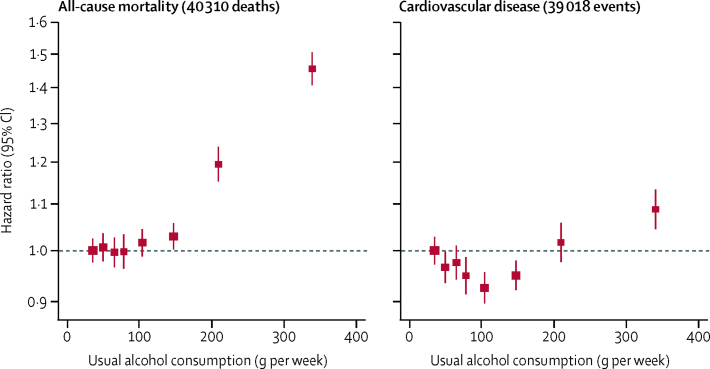
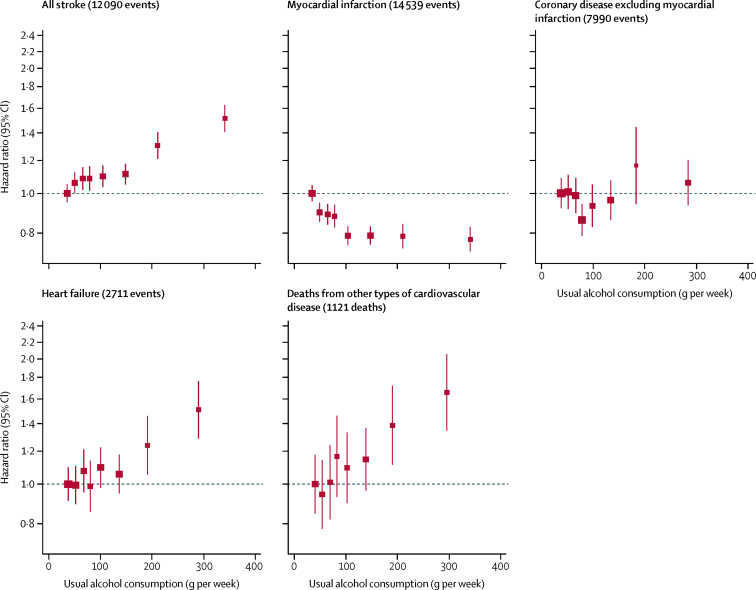
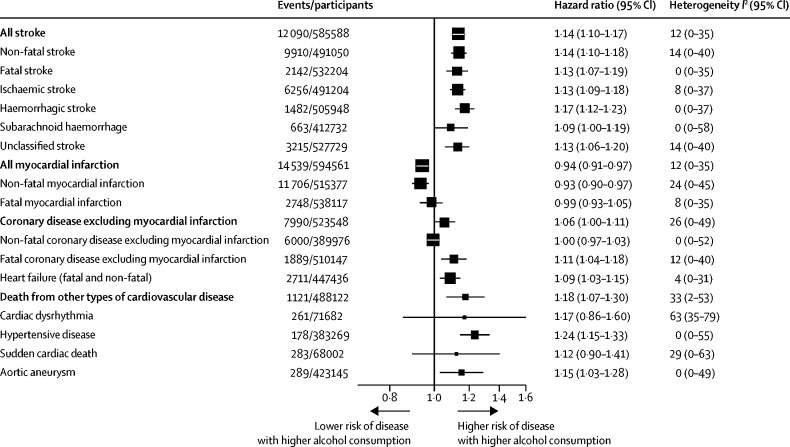
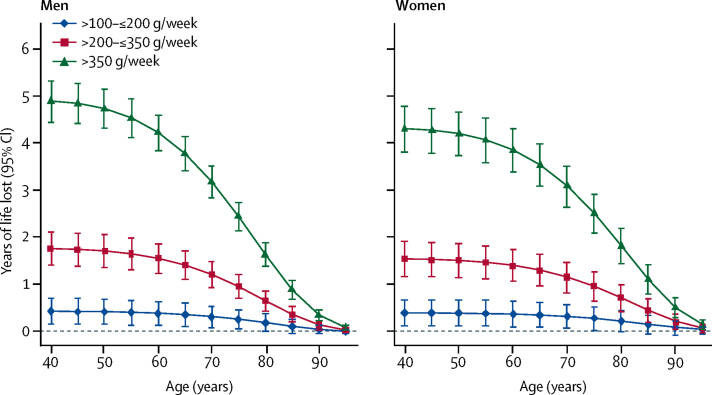
BACKGROUND: Low-risk limits recommended for alcohol consumption vary substantially across different national guidelines. To define thresholds associated with lowest risk for all-cause mortality and cardiovascular disease, we studied individual-participant data from 599 912 current drinkers without previous cardiovascular disease. METHODS: We did a combined analysis of individual-participant data from three large-scale data sources in 19 high-income countries (the Emerging Risk Factors Collaboration, EPIC-CVD, and the UK Biobank). We characterised dose-response associations and calculated hazard ratios (HRs) per 100 g per week of alcohol (12·5 units per week) across 83 prospective studies, adjusting at least for study or centre, age, sex, smoking, and diabetes. To be eligible for the analysis, participants had to have information recorded about their alcohol consumption amount and status (ie, non-drinker vs current drinker), plus age, sex, history of diabetes and smoking status, at least 1 year of follow-up after baseline, and no baseline history of cardiovascular disease. The main analyses focused on current drinkers, whose baseline alcohol consumption was categorised into eight predefined groups according to the amount in grams consumed per week. We assessed alcohol consumption in relation to all-cause mortality, total cardiovascular disease, and several cardiovascular disease subtypes. We corrected HRs for estimated long-term variability in alcohol consumption using 152 640 serial alcohol assessments obtained some years apart (median interval 5·6 years [5th-95th percentile 1·04-13·5]) from 71 011 participants from 37 studies. FINDINGS: In the 599 912 current drinkers included in the analysis, we recorded 40 310 deaths and 39 018 incident cardiovascular disease events during 5·4 million person-years of follow-up. For all-cause mortality, we recorded a positive and curvilinear association with the level of alcohol consumption, with the minimum mortality risk around or below 100 g per week. Alcohol consumption was roughly linearly associated with a higher risk of stroke (HR per 100 g per week higher consumption 1·14, 95% CI, 1·10-1·17), coronary disease excluding myocardial infarction (1·06, 1·00-1·11), heart failure (1·09, 1·03-1·15), fatal hypertensive disease (1·24, 1·15-1·33); and fatal aortic aneurysm (1·15, 1·03-1·28). By contrast, increased alcohol consumption was log-linearly associated with a lower risk of myocardial infarction (HR 0·94, 0·91-0·97). In comparison to those who reported drinking >0-≤100 g per week, those who reported drinking >100-≤200 g per week, >200-≤350 g per week, or >350 g per week had lower life expectancy at age 40 years of approximately 6 months, 1-2 years, or 4-5 years, respectively. INTERPRETATION: In current drinkers of alcohol in high-income countries, the threshold for lowest risk of all-cause mortality was about 100 g/week. For cardiovascular disease subtypes other than myocardial infarction, there were no clear risk thresholds below which lower alcohol consumption stopped being associated with lower disease risk. These data support limits for alcohol consumption that are lower than those recommended in most current guidelines. FUNDING: UK Medical Research Council, British Heart Foundation, National Institute for Health Research, European Union Framework 7, and European Research Council.
Overview
The claims and statistics of this paper haven’t been checked yet.
Free: it reads the open-access text and checks the first 5 claims that cite a source we can check. Create a free account to check every claim.
Integrity signals
Registry
Cites
Statistics
Figures
Verification
Claims the paper makes
The claims and statistics of this paper haven’t been checked yet.
Free: it reads the open-access text and checks the first 5 claims that cite a source we can check. Create a free account to check every claim.
Claims other papers make about this one
Each is checked against this paper’s own text: does it say what the citing paper says it does?
The source backs part of the claim, not all of it — or backs it for a different population, condition or comparison.
In the citing paper
“For example, systematic reviews have quantified exposure levels of alcohol use (e.g. by standard drinks/week) that represent risk-thresholds for stroke, cardio-vascular disease and atrial fibrillation (Samokhvalov, Irving, & Rehm, 2010; Tu et al., 2021; Wood et al., 2018)”
From Risk-thresholds for the association between frequency of cannabis use and the development of psychosis: a systematic review and meta-analysis (2023) · cites this paper as Wood et al., 2018
Experimental — accuracy not yet measuredThe check wasn’t confident either way, so it gives no verdict — never disputed.
In the citing paper
“Regular physical exercise reduces plasma TG levels over and above the effect of weight reduction [151,168,169].”
From 2019 ESC/EAS guidelines for the management of dyslipidaemias: lipid modification to reduce cardiovascular risk (2019) · cites this paper as [168]
Experimental — accuracy not yet measuredIn the citing paper
“However, it is analogous to evidence-based alcohol-related health guidelines where the risk for specific adverse (e.g. cardio-vascular) outcomes is low/absent below certain consumption levels and ‘moderate’ use is recommended”
From Risk-thresholds for the association between frequency of cannabis use and the development of psychosis: a systematic review and meta-analysis (2023) · cites this paper as Wood et al., 2018
Self-check
Percentages, sums and reported differences re-computed from the paper’s own numbers.
The self-check needs the paper’s full text.
Citations
Cites
Bias in meta-analysis detected by a simple, graphical test
Egger, M., Smith, G. D., Schneider, M., & Minder, C. (1997) · BMJ · doi:10.1136/bmj.315.7109.629 · Cited by 56,722 · cited 1×
“35 Methods we used to estimate reductions in life expectancy (years of life lost) are described in the appendix (pp 6–7).”
Quantifying heterogeneity in a meta‐analysis
Higgins, J. P. T., & Thompson, S. G. (2002) · Statistics in Medicine · doi:10.1002/sim.1186 · Cited by 36,763
Self-citationOperating characteristics of a rank correlation test for publication bias
Begg, C. B., & Mazumdar, M. (1994) · Biometrics · doi:10.2307/2533446 · Cited by 16,955 · cited 1×
“33 Evidence of small study effects was assessed visually with funnel plots and by Begg and Mazumdar’s test 34 and Egger’s test.”
Sudlow, C., Gallacher, J., Allen, N., Beral, V., Burton, P., Danesh, J., Downey, P., Elliott, P., Green, J., Landray, M., et al. (2015) · PLOS Medicine · doi:10.1371/journal.pmed.1001779 · Cited by 12,728
Self-citationMACMAHON, S. (1990) · The Lancet · doi:10.1016/0140-6736(90)90878-9 · Cited by 4,253 · cited 1×
“55 However, we did not find convincing evidence that other known risk factors were important mediators or confounders.”
Genomic Aberrations and Survival in Chronic Lymphocytic Leukemia
Döhner, H., Stilgenbauer, S., Benner, A., Leupolt, E., Kröber, A., Bullinger, L., Döhner, K., Bentz, M., & Lichter, P. (2000) · New England Journal of Medicine · doi:10.1056/nejm200012283432602 · Cited by 3,318
ABT-199, a potent and selective BCL-2 inhibitor, achieves antitumor activity while sparing platelets
Souers, A. J., Leverson, J. D., Boghaert, E. R., Ackler, S. L., Catron, N. D., Chen, J., Dayton, B. D., Ding, H., Enschede, S. H., Fairbrother, W. J., et al. (2013) · Nature Medicine · doi:10.1038/nm.3048 · Cited by 3,058
Unmutated Ig VH Genes Are Associated With a More Aggressive Form of Chronic Lymphocytic Leukemia
Hamblin, T. J., Davis, Z., Gardiner, A., Oscier, D. G., & Stevenson, F. K. (1999) · Blood · doi:10.1182/blood.v94.6.1848 · Cited by 2,783
Major lipids, apolipoproteins, and risk of vascular disease
The Emerging Risk Factors Collaboration* (2009) · JAMA · doi:10.1001/jama.2009.1619 · Cited by 2,731
Targeting BCL2 with Venetoclax in Relapsed Chronic Lymphocytic Leukemia
Roberts, A. W., Davids, M. S., Pagel, J. M., Kahl, B. S., Puvvada, S. D., Gerecitano, J. F., Kipps, T. J., Anderson, M. A., Brown, J. R., Gressick, L., et al. (2016) · New England Journal of Medicine · doi:10.1056/nejmoa1513257 · Cited by 1,900
Cited by
Items 401–500 of 1,000
Huffstetler, A. N., Kuzel, A. J., Sabo, R., Richards, A., Brooks, E. M., Kashiri, P. L., Villalobos, G. C., Arias, A. J., Svikis, D. S., Bortz, B. A., et al. (2020) · BMC Family Practice · doi:10.1186/s12875-020-01147-4 · Cited by 20
Ethanol induces necroptosis in gastric epithelial cells in vitro
Liu, J., Guo, M., & Fan, X. (2021) · Journal of Food Biochemistry · doi:10.1111/jfbc.13692 · Cited by 21
Simon, L., Edwards, S., & Molina, P. E. (2022) · Frontiers in Physiology · doi:10.3389/fphys.2021.758230 · Cited by 18
Association of a healthy lifestyle with mortality in older people
Robb, C. E., Carr, P. R., Ball, J., Owen, A. J., Beilin, L. J., Newman, A. B., Nelson, M. R., Reid, C. M., Orchard, S. G., Neumann, F., et al. (2023) · BMC Geriatrics · doi:10.1186/s12877-023-04247-9 · Cited by 23
“Common unhealthy lifestyle behaviours, such as smoking (3), high alcohol consumption (4), adverse dietary patterns (5) or low physical activity (6), have each been associated with morbidity and premature mortality in middle to older-age (7).”
BackgroundMethodThresholds for safer alcohol use might need lowering
Connor, J. P., & Hall, W. (2018) · The Lancet · doi:10.1016/s0140-6736(18)30545-2 · Cited by 19
Alcohol and ideal cardiovascular health: The Multi‐Ethnic Study of Atherosclerosis
Ogunmoroti, O., Osibogun, O. I., McClelland, R. L., Burke, G. L., Nasir, K., & Michos, E. D. (2018) · Clinical Cardiology · doi:10.1002/clc.23125 · Cited by 21
Unite for a Framework Convention for Alcohol Control
Yeung, S. L. A., & Lam, T. H. (2019) · The Lancet · doi:10.1016/s0140-6736(18)32214-1 · Cited by 23
Gender differences of cardiovascular risk
Борисовна, Ш. Э., Maksimov, S. A., & Artamonova, G. V. (2019) · Russian Journal of Cardiology · doi:10.15829/1560-4071-2019-4-99-104 · Cited by 22
Soler‐Vilá, H., Ortolá, R., García‐Esquinas, E., León-Muñoz, L. M., & Rodríguez‐Artalejo, F. (2019) · Scientific Reports · doi:10.1038/s41598-019-46591-0 · Cited by 18
Baggio, S., Trächsel, B., Rousson, V., Rothen, S., Studer, J., Marmet, S., Heller, P., Sporkert, F., Daeppen, J., Gmel, G. E., et al. (2019) · Addiction · doi:10.1111/add.14864 · Cited by 23
“recently, with 100 grams of pure ethanol (ten standard drinks) per week (22).”
BackgroundFrequency of daily tooth brushing and subsequent cardiovascular events
Kobayashi, D., Mizuno, A., Mitsui, R., & Shimbo, T. (2020) · Coronary Artery Disease · doi:10.1097/mca.0000000000000882 · Cited by 20
Johansson, K., Johansson, L., Pennlert, J., Söderberg, S., Jansson, J., & Lind, M. M. (2020) · Stroke · doi:10.1161/strokeaha.120.029630 · Cited by 17
Edelman, E. J., Maisto, S. A., Hansen, N. B., Cutter, C. J., Dziura, J. D., Deng, Y., Fiellin, L. E., O’Connor, P. G., Bedimo, R. G., Gibert, C. L., et al. (2020) · Addiction Science & Clinical Practice · doi:10.1186/s13722-020-00200-y · Cited by 17
Data overuse in aging research: Emerging issues and potential solutions.
Mroczek, D. K., Weston, S. J., Graham, E. K., & Willroth, E. C. (2022) · Psychology and Aging · doi:10.1037/pag0000605 · Cited by 20
Alcohol and Metabolic-associated Fatty Liver Disease
Sun, F.-R., & Wang, B. (2021) · Journal of Clinical and Translational Hepatology · doi:10.14218/jcth.2021.00173 · Cited by 25
Aladin, A. I., Chevli, P. A., Ahmad, M. I., Rasool, S. H., & Herrington, D. M. (2021) · The American Journal of Cardiology · doi:10.1016/j.amjcard.2021.08.033 · Cited by 20
Alcohol and Cardiovascular Diseases—Do the Consumption Pattern and Dose Make the Difference?
Chudzińska, M., Wołowiec, Ł., Banach, J., Rogowicz, D., & Grześk, G. (2022) · Journal of Cardiovascular Development and Disease · doi:10.3390/jcdd9100317 · Cited by 21
“This analysis shows the lower limits for alcohol consumption than those which are recommended in most current guidelines [27].”
BackgroundDietary Influence on Systolic and Diastolic Blood Pressure in the TwinsUK Cohort
Louca, P., Mompeó, O., Leeming, E. R., Berry, S. E., Mangino, M., Spector, T. D., Padmanabhan, S., & Menni, C. (2020) · Nutrients · doi:10.3390/nu12072130 · Cited by 20
Dose of Alcohol From Beer Required for Acute Reduction in Arterial Stiffness
Nishiwaki, M., Yamaguchi, T., Nishida, R., & Matsumoto, N. (2020) · Frontiers in Physiology · doi:10.3389/fphys.2020.01033 · Cited by 17
“Furthermore, the J-shaped association has not gained complete acceptance, especially from the viewpoint of alcohol intake and stroke, cancer, and liver diseases (Arranz et al., 2012; de Gaetano et al., 2016; Zhou et al., 2016; Wood et al., 2018).”
BackgroundInfluentialCho, I. Y., Yoo, J. E., Han, K., Kim, D., Jeong, S., Hwang, S., Lee, H., Jeon, K. H., & Shin, D. W. (2022) · Atherosclerosis · doi:10.1016/j.atherosclerosis.2022.04.027 · Cited by 18
Anderson, P., O'Donnell, A. J., Jané‐Llopis, E., & Kaner, E. (2022) · Journal of Public Health · doi:10.1093/pubmed/fdac052 · Cited by 16
Castelnuovo, A. F. D., Bonaccio, M., Costanzo, S., McElduff, P., Linneberg, A. R., Salomaa, V. V., Männistö, S., Ferrières, J., Dallongeville, J., Thorand, B., et al. (2023) · European Journal of Epidemiology · doi:10.1007/s10654-023-01022-3 · Cited by 16
Self-citationState-of-the-Art Document on Optimal Contemporary Management of Cardiomyopathies
Seferovic, P. M., Polovina, M. M., Rosano, G. M. C., Bozkurt, B., Metra, M., Heymans, S. R. B., Müllens, W., Bauersachs, J. K., Sliwa, K. S., de Boer, R. A., et al. (2023) · European Journal of Heart Failure · doi:10.1002/ejhf.2979 · Cited by 19
Epidemiology of cardiovascular risk factors: Behavioural risk factors
Olié, V., Grave, C., Helft, G., Nguyen‐Thanh, V., Andler, R., Quatremère, G., Pasquereau, A., Lahaie, E., Lailler, G., Verdot, C., et al. (2024) · Archives of cardiovascular diseases · doi:10.1016/j.acvd.2024.10.328 · Cited by 25
Rossetti, I., Zambusi, L., Maccioni, P., Sau, R., Provini, L., Castelli, M. P., Gonciarz, K., Colombo, G., & Morara, S. (2019) · Frontiers in Cellular Neuroscience · doi:10.3389/fncel.2019.00158 · Cited by 18
“This can arise, for example, from increased risk of cancer or cardiovascular diseases (Kunzmann et al., 2018; Wood et al., 2018).”
Background“Thou Shalt not Smoke”: Religion and smoking in a natural experiment of history
Nunziata, L., & Toffolutti, V. (2019) · SSM - Population Health · doi:10.1016/j.ssmph.2019.100412 · Cited by 22
“Indeed, it is commonly believed that a moderate intake of alcohol can have a positive effect on one's health, differently from smoking, perhaps wrongly so (Wood et al., 2018).”
BackgroundWiers, C. E., de Carvalho, L. M., Hodgkinson, C. A., Schwandt, M. L., Kim, S. W., Diazgranados, N., Wang, G., Goldman, D. A., & Volkow, N. D. (2019) · Addiction Biology · doi:10.1111/adb.12838 · Cited by 19
Anderson, P., Manthey, J., Jané‐Llopis, E., Rey, G. N., Bustamante, I. V., Piazza, M., Aguilar, P. S. M., Mejía‐Trujillo, J., Pérez‐Gómez, A., Rowlands, G., et al. (2021) · Journal of General Internal Medicine · doi:10.1007/s11606-020-06503-9 · Cited by 19
“Within the municipal areas, units were randomized to four arms: (1) care as usual (control); (2) training alone; (3) training and municipal support, designed specifically for the study, using a less intensive clinical and training package; and (4) training and municipal support, designed specifically for the study, us…”
MethodAlcohol Consumption and All-Cause Mortality: A Systematic Review
Mayer‐Davis, E. J., Leidy, H. J., Mattes, R. D., Naimi, T. S., Novotny, R., Schneeman, B. O., Kingshipp, B., Spill, M. K., Cole, N. C., Butera, G., et al. (2020) · doi:10.52570/nesr.dgac2020.sr0403 · Cited by 19
Neumann, F., Freak‐Poli, R., Orchard, S. G., Wolfe, R. S., Reid, C. M., Tonkin, A. M., Beilin, L. J., McNeil, J. J., Ryan, J. L., & Woods, R. L. (2021) · European Journal of Preventive Cardiology · doi:10.1093/eurjpc/zwab177 · Cited by 17
Bavuma, C. M., Niyibizi, J. B., Bitunguhari, L., Musafi, S., McQuillan, R., & Wild, S. H. (2022) · Pan African Medical Journal · doi:10.11604/pamj.2022.41.115.30682 · Cited by 21
“Nonetheless alcohol consumed in moderation does not appear to increase the risk of type 2 diabetes and might have a protective effect [40] but this is controversial as there is now evidence suggesting that there is no safe lower limit for cardiovascular disease [41].”
BackgroundZhu, H., Lan, C., Zhao, D., Wang, N., Du, D., Luo, H., Lu, H., Peng, Z., Wang, Y., Qiao, Z., et al. (2022) · npj Science of Food · doi:10.1038/s41538-022-00170-2 · Cited by 17
Sadhu, J. S., Novak, E. L., Mukamal, K. J., Kizer, J. R., Psaty, B. M., Stein, P. K., & Brown, D. (2018) · JAMA Network Open · doi:10.1001/jamanetworkopen.2018.6383 · Cited by 17
Self-citationPowell, L., Feng, Y., Duncan, M. J., Hamer, M., & Stamatakis, E. A. (2019) · Preventive Medicine · doi:10.1016/j.ypmed.2019.105901 · Cited by 16
“We separated participants that consumed alcohol above the recommended levels into two groups due to previous research that has shown the risk of all-cause mortality spikes between 200g alcohol/week and 400g alcohol/week (13).”
ResultRosenthal, A., Beck, A., Zois, E., Vollstädt‐Klein, S., Walter, H., Kiefer, F., Lohoff, F. W., & Charlet, K. (2019) · Alcoholism Clinical and Experimental Research · doi:10.1111/acer.14211 · Cited by 19
Duncombe, S. L., Tanaka, H., Larochelambert, Q. D., Schipman, J., Toussaint, J., & Antero, J. (2020) · British Journal of Sports Medicine · doi:10.1136/bjsports-2020-102624 · Cited by 19
Bouajila, N., Domenighetti, C., Aubin, H., & Naassïla, M. (2024) · Frontiers in Epidemiology · doi:10.3389/fepid.2024.1385064 · Cited by 25
Rinaldi, R., Kunadian, V., Crea, F., & Montone, R. A. (2025) · Trends in Cardiovascular Medicine · doi:10.1016/j.tcm.2025.03.001 · Cited by 19
Associations of alcohol intake with subclinical carotid atherosclerosis in 22,000 Chinese adults
Zhou, T., Im, P. K., Hariri, P., Du, H., Guo, Y., Lin, K., Yang, L., Yu, C., Chen, Y., Sohoni, R., et al. (2023) · Atherosclerosis · doi:10.1016/j.atherosclerosis.2023.06.012 · Cited by 18
“61%) and a 60-fold difference in mean alcohol intake (4 vs 255 g/week) between C1 and C6 at baseline as previously described (Table 2).(12) Among women alcohol consumption levels remained low across the six genetic categories.”
BackgroundAlcohol consumption and prognosis and survival in breast cancer survivors: The Pathways Study
Kwan, M. L., Valice, E., Ergas, I. J., Roh, J. M., Caan, B. J., Feliciano, E. M. C., Kolevska, T., Hartman, T. J., Quesenberry, C. P., Ambrosone, C. B., et al. (2023) · Cancer · doi:10.1002/cncr.34972 · Cited by 16
Floud, S., Hermon, C., Simpson, R. F., & REEVES, G. K. (2023) · BMC Cancer · doi:10.1186/s12885-023-11184-8 · Cited by 81
“…that most of the women who reported drinking less than one drink per week were ex-drinkers, [40] who may have stopped drinking due to poor health and could have different characteristics from drinkers, which might be difficult to measure but could be associated with the development of cancers [41].”
Lifestyle and Lipoprotein(a) Levels: Does a Specific Counseling Make Sense?
Fogacci, F., Micoli, V. D., Sabouret, P. F., Giovannini, M., & Cicero, A. F. G. (2024) · Journal of Clinical Medicine · doi:10.3390/jcm13030751 · Cited by 19
“In any case, the adverse health effects of more than minimal alcohol intake may well outweigh any potential benefit in lowering Lp(a) levels [67,68].”
BackgroundPatterns and predictors of alcohol misuse trajectories from adolescence through early midlife
Stephenson, M. E., Barr, P. B., Thomas, N., Cooke, M. E., Latvala, A., Rose, R. J., Kaprio, J. A., Dick, D. M., & Salvatore, J. E. (2024) · Development and Psychopathology · doi:10.1017/s0954579424000543 · Cited by 18
“Even moderate levels of alcohol consumption are associated with poorer physical health (Cho et al., 2015; Holmes et al., 2014; Wood et al., 2018), lower neurocognitive performance (Topiwala et al., 2022), and increased mortality (Hublin & Kaprio, 2022), and heavy drinking further elevates risk for…”
Risk of diabetes and hypertension in a population with alcohol use disorders
Tseng, P.-Y., Sung, F., Muo, C., Lan, Y., Hser, Y., Chien, S. H., & Wang, J. (2024) · BMC Public Health · doi:10.1186/s12889-024-18318-y · Cited by 16
“Alcohol consumption is well known to have dose– response relationships for regulating blood pressure and glucose metabolism, contributing to the risks of developing hypertension, diabetes and hypertriglyceridemia, and may lead to cardiomyopathy, atrial fibrillation, stroke, etc. [13–20 , 24].”
BackgroundShao, L., Chen, Y., Zhao, Z., & Luo, S. (2024) · Medicine · doi:10.1097/md.0000000000038857 · Cited by 18
Factors associated with high‐risk drinking in older adults: Evidence from a national survey in Japan
Midorikawa, H., Tachikawa, H., Aiba, M., Arai, T., Watanabe, T., & Tamiya, N. (2019) · Geriatrics and gerontology international/Geriatrics & gerontology international · doi:10.1111/ggi.13808 · Cited by 18
Cheong, J., Lindstrom, K., Chandler, S. D., & Tucker, J. A. (2020) · Addictive Behaviors · doi:10.1016/j.addbeh.2020.106387 · Cited by 15
Cardiovascular Consequences of Excessive Alcohol Drinking via Electrocardiogram: A Systematic Review
Farinelli, L. A., Piacentino, D., Browning, B. D., Brewer, B. B., & Leggio, L. (2021) · Journal of Addictions Nursing · doi:10.1097/jan.0000000000000384 · Cited by 17
“…antipsychotic agents, atypical antipsychotic agents, tricyclic antidepressants, selective serotonin reuptake inhibitors, and nonsedating antihistamines (Al-Khatib et al., 2003; Chiang, 2006; Darpö, 2001; Haddad & Anderson, 2002; Kupec, 1998; Taylor, 2003; Vieweg & Wood, 2004; Yap & Camm, 2003).”
Murakami, K., Shinozaki, N., Masayasu, S., & Livingstone, M. B. E. (2021) · Nutrients · doi:10.3390/nu13103391 · Cited by 19
“The cutoff values for added sugars and alcohol were determined by the World Health Organization’s definition [38] and a combined analysis of 83 prospective studies on the association between alcohol consumption and mortality [39], respectively.”
MethodOrtolá, R., García‐Esquinas, E., Soto, A. B., Carballo‐Casla, A., Sotos‐Prieto, M., Banegas, J. R., & Rodríguez‐Artalejo, F. (2022) · Addiction · doi:10.1111/add.15809 · Cited by 15
“Recent research aiming to overcome some of these methodological issues has found conflicting results for the relationship between light alcohol intake and all-cause mortality [5–7]; however, it also found some benefits for cardiovascular deaths [6], ischaemic heart disease [5,8] and diabetes [8], which were counterwei…”
ResultMechanisms of quality-of-life improvement in treatment for alcohol use disorder.
Carlon, H. A., Hurlocker, M. C., & Witkiewitz, K. A. (2022) · Journal of Consulting and Clinical Psychology · doi:10.1037/ccp0000750 · Cited by 21
Zhou, Y., Hua, J., & Huang, Z. (2023) · Frontiers in Nutrition · doi:10.3389/fnut.2022.1022977 · Cited by 19
Scott, R. G., Wiener, C. H., & Paulson, D. L. (2018) · The Gerontologist · doi:10.1093/geront/gny129 · Cited by 21
“Although heavy use of alcohol has been consistently related to adverse health outcomes (Wood et al., 2018), evidence suggests that moderate drinkers may be more likely to experience less difficulty with instrumental activities of daily living (IADLs; Cawthon et al.”
BackgroundSurvival to Age 90 in Men: The Tromsø Study 1974–2018
Brenn, T. (2019) · International Journal of Environmental Research and Public Health · doi:10.3390/ijerph16112028 · Cited by 15
“This indicates an adverse effect of alcohol in this study, which has also been documented by others [37].”
ResultNixon, S. J., & Lewis, B. (2019) · International review of neurobiology · doi:10.1016/bs.irn.2019.10.016 · Cited by 19
Ogunmoroti, O., Osibogun, O. I., McClelland, R. L., Lazo, M., Mathews, L. M., Okunrintemi, V., Oni, E., Burke, G. L., & Michos, E. D. (2020) · Drug and Alcohol Dependence · doi:10.1016/j.drugalcdep.2020.108358 · Cited by 15
Self-citationClift, A. K., Lannou, E. L., Tighe, C. P., Shah, S. S., Beatty, M., Hyvärinen, A., Lane, S. J., Strauss, T., Dunn, D. D., Lu, J., et al. (2021) · JMIR mhealth and uhealth · doi:10.2196/25655 · Cited by 15
Bernal-Orozco, M. F., Salmeron-Curiel, P. B., Prado-Arriaga, R. J., Orozco-Gutiérrez, J. F., Badillo-Camacho, N., Márquez‐Sandoval, F., Martínez, M. B. A., González-Gómez, M., Gutiérrez-González, P., Vizmanos-Lamotte, B., et al. (2020) · Nutrients · doi:10.3390/nu12030809 · Cited by 21
“Alcoholic beverages While avoiding alcohol intake has been recommended [63,64], a recent review of 83 prospective studies concluded that 100 g of alcohol per week is the intake threshold associated with the lowest risk of mortality [63].”
BackgroundHealthy eating for secondary stroke prevention
Wu, S., & Anderson, C. S. (2020) · The Lancet Neurology · doi:10.1016/s1474-4422(20)30450-6 · Cited by 14
Nutrition Guidelines for Improved Clinical Care
Wilson, T. E., & Bendich, A. (2022) · Medical Clinics of North America · doi:10.1016/j.mcna.2022.04.007 · Cited by 16
“Wood and colleagues (2008) observed the effect of alcohol on life expectancy in a study of 83 prospective cohort studies that included 787,000 subjects.(46) Their study concluded that for persons aged between 40 and 50 years, life expectancy was longest when alcohol”
Ferri, S., Stefanini, B., Mulazzani, L., Alvisi, M., Tovoli, F., Leoni, S., Muratori, L., Lotti, T., Granito, A., Bolondi, L., et al. (2022) · Nutrients · doi:10.3390/nu14122493 · Cited by 17
“In the last decades a great amount of data reporting a J-shaped relationship between alcohol consumption and extra-hepatic events (as all cause mortality and cardiovascular disease) has been reported, with a moderate alcohol consumption (1–2 units per day) associated with better outcomes compared to abstainers [19,20]…”
BackgroundVallée, A. (2022) · Journal of Clinical Hypertension · doi:10.1111/jch.14571 · Cited by 15
Rao, W., Li, Y., Li, N., Yao, Q. Y., & Li, Y. (2022) · Acta Obstetricia Et Gynecologica Scandinavica · doi:10.1111/aogs.14464 · Cited by 20
Niemelä, O. J., Bloigu, A. H., Bloigu, R., Halkola, A. S., Niemelä, M., Aalto, M., & Laatikainen, T. K. (2022) · International Journal of Environmental Research and Public Health · doi:10.3390/ijerph192215048 · Cited by 17
“Alcohol and its reactive metabolites exert toxic effects virtually in every tissue inducing also a wide spectrum of disease manifestations, such as carcinogenesis [61–63], disturbed brain function [64,65], heart failures [66–68] as well as increased all-cause mortality [69,70].”
BackgroundYamamoto, R., Li, Q., Otsuki, N., Shinzawa, M., Yamaguchi, M., Wakasugi, M., Nagasawa, Y., & Isaka, Y. (2023) · Nutrients · doi:10.3390/nu15071592 · Cited by 16
“This systematic review also disclosed a potential deleterious effect of high alcohol consumption on proteinuria, similar to the findings of the association between high alcohol consumption and cardiometabolic diseases, including hypertension [64], diabetes [65], stroke [66], and heart failure [66].”
ResultWieczorek, M., Meier, C., Kliegel, M., & Maurer, J. (2023) · International Journal of Public Health · doi:10.3389/ijph.2023.1606210 · Cited by 20
Wang, K., Yang, L., Li, Q., Yang, X., Chen, Z., Xu, Y., Chen, Y., 贾延劼, & Gong, Z. (2024) · Journal of Inflammation Research · doi:10.2147/jir.s465780 · Cited by 15
“7 8–10 Therefore, a comprehensive and systematic study of the consequences of alcohol intake on cerebral infarction and its underlying mechanism is necessary.”
BackgroundGusti, Y., Liu, W., Athar, F., Cahill, P. A., & Redmond, E. M. (2025) · Nutrients · doi:10.3390/nu17050802 · Cited by 17
Biomarkers of vascular injury in relation to myocardial infarction risk: A population-based study
Pletsch‐Borba, L., Grafetstätter, M., Hüsing, A., Maldonado, S. G., Kloß, M., Groß, M.-L., Johnson, T., Sookthai, D., Bugert, P., Kaaks, R., et al. (2019) · Scientific Reports · doi:10.1038/s41598-018-38259-y · Cited by 16
Self-citationChange in moderate alcohol consumption and quality of life: evidence from 2 population-based cohorts
Yao, X. I., Ni, M. Y., Cheung, F., Wu, J. T. K., Schooling, C. M., Leung, G. M., & Pang, H. (2019) · Canadian Medical Association Journal · doi:10.1503/cmaj.181583 · Cited by 15
Diao, Y., Nie, J., Tan, P., Zhao, Y., Zhao, T., Tu, J., Ji, H., Cao, Y., Wu, Z., Liang, H., et al. (2020) · Aging · doi:10.18632/aging.103401 · Cited by 18
Alcohol consumption and cause-specific mortality in Cuba: prospective study of 120 623 adults
Rojas, N. B. A., Lacey, B., Simadibrata, D. M., Ross, S., Varona-Pérez, P., Burrett, J. A., Martínez, M. C., Lorenzo-Vázquez, E., Constantén, S. B., Thomson, B., et al. (2021) · EClinicalMedicine · doi:10.1016/j.eclinm.2020.100692 · Cited by 18
“The modest excess risk of vascular mortality at high levels of alcohol consumption is consistent with that generally described in high-income countries [1].”
BackgroundResultInfluentialSelf-citationPast and Future Alcohol-Attributable Mortality in Europe
Janssen, F., Gewily, S. E., Bardoutsos, A., & Trias‐Llimós, S. (2020) · International Journal of Environmental Research and Public Health · doi:10.3390/ijerph17239024 · Cited by 15
“Among the specific actions that could increase this awareness include the lowering of the norms for alcohol consumption levels in national guidelines [2], and the inclusion of health warning messages in alcohol labelling [47].”
BackgroundMicrobiome-by-ethanol interactions impact Drosophila melanogaster fitness, physiology, and behavior
Chandler, J., Innocent, L. V., Martinez, D. J., Huang, I. L., Yang, J. L., Eisen, M. B., & Ludington, W. B. (2022) · iScience · doi:10.1016/j.isci.2022.104000 · Cited by 18
“In general, ethanol consumption in humans is associated with shorter lifespan (Wood et al., 2018).”
BackgroundSpagert, L., Janßen, C., & Geigl, C. (2022) · BMC Public Health · doi:10.1186/s12889-022-13777-7 · Cited by 19
“Taking into account the overall mortality rate, no more than 100 g alcohol should be consumed per week [22].”
BackgroundWilkens, T. L., Sørensen, H., Jensen, M. K., Furtado, J. D., Dragsted, L. O., & Mukamal, K. J. (2022) · Current Problems in Cardiology · doi:10.1016/j.cpcardiol.2022.101395 · Cited by 16
“21,22 Recently published mega-data epidemiological studies 23,24 have questioned the lower risk of CHD in light-moderate drinkers relative to abstainers as shown in observational studies for decades.”
BackgroundSun, B., Zhang, L., Xiang, D., Li, Q., Ren, Y., Cao, Y., Sun, T., Zhang, W., Wu, L., Zhu, L., et al. (2022) · Journal of Oncology · doi:10.1155/2022/7062105 · Cited by 16
Differential associations between diet and prediabetes or diabetes in the KORA FF4 study
Breuninger, T. A., Riedl, A., Wawro, N., Rathmann, W., Strauch, K., Quante, A. S., Peters, A., Thorand, B., Meisinger, C., & Linseisen, J. (2018) · Journal of Nutritional Science · doi:10.1017/jns.2018.25 · Cited by 17
Self-citationLifecourse Drinking Patterns, Hypertension, and Heart Problems Among U.S. Adults
Lui, C. K., Kerr, W. C., Li, L., Mulia, N., Ye, Y., Williams, E., Greenfield, T. K., & Lown, E. A. (2020) · American Journal of Preventive Medicine · doi:10.1016/j.amepre.2019.10.018 · Cited by 14
Low-dose ethanol intake prevents high-fat diet-induced adverse cardiovascular events in mice
Nie, J., Ngokana, L. D., Kou, J., Zhao, Y., Tu, J., Ji, H., Tan, P., Zhao, T., Cao, Y., Wu, Z., et al. (2020) · Food & Function · doi:10.1039/c9fo02645b · Cited by 14
Basu, A., Chien, L.-C., Alman, A. C., & Snell‐Bergeon, J. K. (2021) · European Journal of Nutrition · doi:10.1007/s00394-021-02564-6 · Cited by 14
“The habitual alcohol consumption in our cohort was significantly higher among non-diabetic controls than among those with T1D, and overall number of drinks consumed per month exceeded levels of light (≤ 3 drinks/week) and moderate drinking (> 3 drinks/week to ≤ 14 drinks/week for men or > 3 drinks/week to ≤ 7 drinks/…”
BackgroundDiretriz de Síndrome Coronariana Crônica – 2025
César, L. A. M., Gowdak, L. H. W., Pavanello, R., Ferreira, J. F. M., Mioto, B. M., Poppi, N. T., Mendonça, C. J. L., Beck, A. L. D. S., de Brito, A. S. X., Abizaid, A., et al. (2025) · Arquivos Brasileiros de Cardiologia · doi:10.36660/abc.20250619 · Cited by 33
Hu, Y., Korhonen, K., Li, P., Bobák, M., Martikainen, P., & Bijlsma, M. J. (2022) · The Journals of Gerontology Series A · doi:10.1093/gerona/glac252 · Cited by 15
Yoon, E. L., Park, H., Hong, H., Lee, C., Kim, M., Kang, B., & Jun, D. W. (2024) · Hepatology Research · doi:10.1111/hepr.14133 · Cited by 18
“6,15 Therefore, the goal of this study was to gain a more comprehensive understanding of the characteristics of MetALD compared to relatively well - known disease entities such as MASLD and ALD.”
Mezzacappa, C., Ochoa‐Allemant, P., Serper, M., Taddei, T. H., John, B. V., Kaplan, D. E., & Mahmud, N. (2024) · Clinical Gastroenterology and Hepatology · doi:10.1016/j.cgh.2024.10.035 · Cited by 15
Niu, C., Dong, J., Zhang, P., Yang, Q., Xue, D., Liu, B., Xiao, D., Zhuang, R., Li, M., & Zhang, L. (2025) · Frontiers in Public Health · doi:10.3389/fpubh.2025.1541641 · Cited by 18
German, Í. J. S., Pomini, K. T., Bighetti, A. C. C., Andreo, J. C., Reis, C. H. B., Shinohara, A. L., Rosa, G. M., Teixeira, D. D. B., Rosso, M. P. D. O., Buchaim, D. V., et al. (2020) · Materials · doi:10.3390/ma13030695 · Cited by 14
Armario, P., Brotons, C., Elosúa, R., de Leciñana, M. A., Castro, A., Clarà, A. B. I., Cortés, O., Rodríguez, Á. D., Herranz, M., Justo, S., et al. (2020) · Hipertensión y Riesgo Vascular · doi:10.1016/j.hipert.2020.07.004 · Cited by 15
Degerud, E., Høiseth, G., Mørland, J. G., Ariansen, I., Graff‐Iversen, S., Ystrøm, E., Zuccolo, L., Tell, G. S., & Næss, Ø. (2021) · American Journal of Epidemiology · doi:10.1093/aje/kwab063 · Cited by 13
“In conventional observational studies, the risk of ischemic heart disease (IHD) has been consistently lower among drinkers in comparison with nondrinkers (3, 8, 9), with the exception of chronic heavy drinkers.”
Anderson, P., Kokole, D., & Jané‐Llopis, E. (2021) · Drug and Alcohol Review · doi:10.1111/dar.13408 · Cited by 14
Curioni, C. C., da Silva, A. C. F., Pereira, A. D. S., & Mocellin, M. C. (2022) · Integrated science · doi:10.1007/978-3-030-85357-0_5 · Cited by 19
Ding, C., O’Neill, D., & Britton, A. R. (2022) · Addiction · doi:10.1111/add.15850 · Cited by 15
“Previous research has suggested that the intake threshold associated with increased risk of mortality among CVD patients may be higher than 14 units/week [6, 41], so in exploratory post-hoc analyses the average weekly intake during the assessment interval was calculated for each patient in the group of stable heavy dr…”
Tanaka, A., Yamaguchi, M., Ishimoto, T., Katsuno, T., Nobata, H., Iwagaitsu, S., Sugiyama, H., Kinashi, H., Banno, S., Imaizumi, T., et al. (2022) · Nutrition Journal · doi:10.1186/s12937-022-00785-x · Cited by 13
Qiu, W., Cai, A., Li, L., & Feng, Y. (2022) · Nutrients · doi:10.3390/nu14235073 · Cited by 15
“found the lowest threshold for all-cause mortality was about 100 g/week [22].”
BackgroundResultVallée, A. (2023) · Public Health · doi:10.1016/j.puhe.2023.05.014 · Cited by 14
Hotz, I., Deschwanden, P. F., Mérillat, S., & Jäncke, L. (2023) · NeuroImage · doi:10.1016/j.neuroimage.2023.120461 · Cited by 13
Tessitore, E., Branca, M., Heg, D., Nanchen, D., Auer, R., Räber, L., Klingenberg, R., Windecker, S., Lüscher, T. F., Carballo, S., et al. (2023) · European Journal of Preventive Cardiology · doi:10.1093/eurjpc/zwad364 · Cited by 15
“19 To address the association between drinking patterns, including frequency, quantity, and binge drinking, and CV prognosis among patients with established coronary heart disease, we examined data from an inception cohort study of patients with ACS in Switzerland. with a primary diagnosis of ACS…”
Demattéis, M., & Pennel, L. (2018) · La Presse Médicale · doi:10.1016/j.lpm.2018.05.014 · Cited by 18
Why Less Is Always More in the Treatment of Alcohol Use Disorders
Nutt, D., Gual, A., Anderson, P., & Rehm, J. T. (2019) · JAMA Psychiatry · doi:10.1001/jamapsychiatry.2018.2807 · Cited by 13
Anderson, P., Jané‐Llopis, E., & Rehm, J. T. (2020) · Alcohol and Alcoholism · doi:10.1093/alcalc/agaa029 · Cited by 14
Metadata
- Authors
- Wood, A. M., Kaptoge, S., Butterworth, A. S., Willeit, P., Warnakula, S., Bolton, T., Paige, E., Paul, D. S., Sweeting, M., Burgess, S., Bell, S., Astle, W., Stevens, D., Koulman, A., Selmer, R. M., Verschuren, W. M. M., Sato, S., Njølstad, I., Woodward, M., Salomaa, V., Nordestgaard, B. G., Yeap, B. B., Fletcher, A., Melander, O., Kuller, L. H., Balkau, B., Marmot, M., Koenig, W., Casiglia, E., Cooper, C., Arndt, V., Franco, O. H., Wennberg, P., Gallacher, J., de la Cámara, A. G., Völzke, H., Dahm, C. C., Dale, C. E., Bergmann, M. M., Crespo, C. J., van der Schouw, Y. T., Kaaks, R., Simons, L. A., Lagiou, P., Schoufour, J. D., Boer, J. M. A., Key, T. J., Rodriguez, B., Moreno-Iribas, C., Davidson, K. W., Taylor, J. O., Sacerdote, C., Wallace, R. B., Quiros, J. R., Tumino, R., Blazer, D. G., Linneberg, A., Daimon, M., Panico, S., Howard, B., Skeie, G., Strandberg, T., Weiderpass, E., Nietert, P. J., Psaty, B. M., Kromhout, D., Salamanca-Fernandez, E., Kiechl, S., Krumholz, H. M., Grioni, S., Palli, D., Huerta, J. M., Price, J., Sundström, J., Arriola, L., Arima, H., Travis, R. C., Panagiotakos, D. B., Karakatsani, A., Trichopoulou, A., Kühn, T., Grobbee, D. E., Barrett-Connor, E., van Schoor, N., Boeing, H., Overvad, K., Kauhanen, J., Wareham, N., Langenberg, C., Forouhi, N., Wennberg, M., Després, J.-P., Cushman, M., Cooper, J. A., Rodriguez, C. J., Sakurai, M., Shaw, J. E., Knuiman, M., Voortman, T., Meisinger, C., Tjønneland, A., Brenner, H., Palmieri, L., Dallongeville, J., Brunner, E. J., Assmann, G., Trevisan, M., Gillum, R. F., Ford, I., Sattar, N., Lazo, M., Thompson, S. G., Ferrari, P., Leon, D. A., Smith, G. D., Peto, R., Jackson, R., Banks, E., Di Angelantonio, E., Danesh, J., Wood, A. M., Kaptoge, S., Butterworth, A., Willeit, P., Warnakula, S., Bolton, T., Paige, E., Paul, D. S., Sweeting, M., Burgess, S., Bell, S., Astle, W., Stevens, D., Koulman, A., Selmer, R. M., Verschuren, M., Sato, S., Njølstad, I., Woodward, M., Veikko, S., Nordestgaard, B. G., Yeap, B. B., Flecther, A., Melander, O., Kuller, L. H., Balkau, B., Marmot, M., Koenig, W., Casiglia, E., Cooper, C., Arndt, V., Franco, O. H., Wennberg, P., Gallacher, J., Gómez de la Cámara, A., Völzke, H., Dahm, C. C., Dale, C. E., Bergmann, M., Crespo, C., van der Schouw, Y. T., Kaaks, R., Simons, L. A., Lagiou, P., Schoufour, J. D., Boer, J. M. A., Key, T. J., Rodriguez, B., Moreno-Iribas, C., Davidson, K. W., Taylor, J. O., Sacerdote, C., Wallace, R. B., Quiros, J. R., Rimm, E. B., Tumino, R., Blazer III, D. G., Linneberg, A., Daimon, M., Panico, S., Howard, B., Skeie, G., Salomaa, V., Strandberg, T., Weiderpass, E., Nietert, P. J., Psaty, B. M., Kromhout, D., Salamanca-Fernandez, E., Kiechl, S., Krumholz, H. M., Grioni, S., Palli, D., Huerta, J. M., Price, J., Sundström, J., Arriola, L., Arima, H., Travis, R. C., Panagiotakos, D. B., Karakatsani, A., Trichopoulou, A., Kühn, T., Grobbee, D. E., Barrett-Connor, E., van Schoor, N., Boeing, H., Overvad, K., Kauhanen, J., Wareham, N., Langenberg, C., Forouhi, N., Wennberg, M., Després, J.-P., Cushman, M., Cooper, J. A., Rodriguez, C. J., Sakurai, M., Shaw, J. E., Knuiman, M., Voortman, T., Meisinger, C., Tjønneland, A., Brenner, H., Palmieri, L., Dallongeville, J.-P., Brunner, E. J., Assmann, G., Trevisan, M., Gillumn, R. F., Ford, I. F., Sattar, N., Lazo, M., Thompson, S., Ferrari, P., Leon, D. A., Davey Smith, G., Peto, R., Jackson, R., Banks, E., Di Angelantonio, E., & Danesh, J.
- Affiliations
- University of Cambridge (GB)
- University Medical Center Utrecht (NL)
- London School of Hygiene & Tropical Medicine (GB)
- German Institute of Human Nutrition (DE)
- Portland State University (US)
- Institut Pasteur de Lille (FR)
- Howard University Hospital (US)
- ORCID
- Venue
- The Lancet
- Publisher
- Elsevier BV
- Published
- 2018-04
- Volume
- 391
- Issue
- 10129
- Pages
- 1513-1523
- ISSN
- 0099-5355 (ISSN-L)
- 0140-6736
- PMC
- PMC5899998
- OpenAlex
- W2787107952
- Semantic Scholar
- 67861ba0b72d3635d063ce89d6b401c9f5a93164
- Cited by
- 1,188
- References
- 54
- Citations by year
- 2026: 78 · 2025: 117 · 2024: 135 · 2023: 146 · 2022: 155 · 2021: 173 · 2020: 164 · 2019: 155 · 2018: 63
- FWCI
- 105.54
- Type
- journal article
- Language
- en
- Update notices
- erratum (2018-06-02)
- Open access
- hybrid
- doi.org
- Licence
- cc-by
- www.elsevier.com/tdm/userlicense/1.0/ (tdm)
- creativecommons.org/licenses/by/4.0/ (vor)
- Locations
- The Lancet (publishedVersion, cc-by)
- Europe PMC (PubMed Central) (publishedVersion, other-oa)
- PubMed Central (publishedVersion, cc-by)
- PubMed (publishedVersion)
- Pure Amsterdam UMC (publishedVersion, cc-by)
- Research at the University of Copenhagen (University of Copenhagen) (publishedVersion, cc-by)
- Amsterdam UMC (VU Amsterdam) - Institutional Repository (publishedVersion, other-oa)
- EUR Research Repository (Erasmus University Rotterdam) (publishedVersion)
- University of Groningen research database (University of Groningen / Centre for Information Technology) (publishedVersion, cc-by)
- Explore Bristol Research (publishedVersion, other-oa)
- ENLIGHTEN (Jurnal Bimbingan dan Konseling Islam) (acceptedVersion, cc-by-sa)
- ePrints Soton (University of Southampton) (acceptedVersion)
- Socio-Environmental Systems Modeling (acceptedVersion, cc-by)
- Leicester Research Archive (University of Leicester) (acceptedVersion, other-oa)
- LSHTM Research Online (London School of Hygiene and Tropical Medicine) (acceptedVersion)
- ANU Open Research (Australian National University) (submittedVersion, cc-by)
- UNSWorks (UNSW Sydney) (submittedVersion, cc-by)
- UEF eRepo (University of Eastern Finland) (submittedVersion, cc-by)
- VBN Forskningsportal (Aalborg Universitet) (submittedVersion, cc-by)
- RISalud Institutional Health Repository of Andalucía (submittedVersion, cc-by)
- Apollo (University of Cambridge) (submittedVersion, cc-by)
- PDXScholar (Portland State University) (submittedVersion)
- UWA Profiles and Research Repository (UWA) (submittedVersion, cc-by)
- EUR Research Repository (Erasmus University Rotterdam) (submittedVersion)
- RePub (Erasmus University Rotterdam) (submittedVersion, other-oa)
- DiVA at Umeå University (Umeå University) (submittedVersion, other-oa)
- Uppsala University Publications (Uppsala University) (submittedVersion, other-oa)
- HAL (submittedVersion)
- LA Referencia (Red Federada de Repositorios Institucionales de Publicaciones Científicas) (submittedVersion, other-oa)
- Utrecht University Repository (Utrecht University) (submittedVersion, other-oa)
- UCL Discovery (University College London) (submittedVersion)
- NORA - Norwegian Open Research Archives (submittedVersion, other-oa)
- Figshare (submittedVersion, cc-by)
- Työväentutkimus Vuosikirja (submittedVersion)
- Lund University Publications (Lund University) (submittedVersion)
- mediaTUM – the media and publications repository of the Technical University Munich (Technical University Munich) (submittedVersion, other-oa)
- mediaTUM (Technical University of Munich) (submittedVersion)
- Site cant be reached (submittedVersion)
- Edinburgh Research Explorer (University of Edinburgh) (submittedVersion, cc-by)
- Research Portal (Queen's University Belfast) (submittedVersion, cc-by)
- PuSH - Publication Server of Helmholtz Zentrum München (submittedVersion)
- Bristol Research (University of Bristol) (submittedVersion, other-oa)
- Rivm Repository (Netherlands National Institute for Public Health and the Environment) (submittedVersion, cc-by)
- Rivm (National Institute for Public Health and the Environment) (submittedVersion)
- OPUS (Augsburg University) (submittedVersion)
- OPUS (Augsburg University) (submittedVersion, cc-by)
- STM:n Hallinnonalan avoin julkaisuarkisto (Julkari) (submittedVersion)
- Rivm (National Institute for Public Health and the Environment) (submittedVersion, cc-by)
- University of Groningen research database (University of Groningen / Centre for Information Technology) (submittedVersion, cc-by)
- Utrecht University Repository (Utrecht University) (submittedVersion, cc-by)
- Data Archiving and Networked Services (DANS) (submittedVersion, other-oa)
- Data Archiving and Networked Services (DANS) (submittedVersion, cc-by)
- Apollo (cc-by)
- Columbia Academic Commons (Columbia University)
- WOS
- Funders
- World Health Organization
- Wellcome Trust (204623/Z/16/Z)
- Cancer Research UK (16491)
- National Institute for Health and Care Research (NF-SI-0617-10113, NF-SI-0512-10165, NF-SI-0508-10082, NF-SI-0513-10085, NF-SI-0512-10135, NF-SI-0617-10149)
- British Heart Foundation (MR/L003120/1, G0800270, RG/16/11/32334, SP/09/002, RG/08/014, CH/12/2/29428, PG/11/63/29011, RG/13/13/30194, RG/13/2/30098)
- European Commission (LSHM_CT_2006_037197, 279233, 37197)
- National Centre for the Replacement, Refinement and Reduction of Animals in Research (NC/P001076/1)
- Cambridge University Hospitals (146281)
- Novo Nordisk Fonden (NNF14OC0009819)
- Medical Research Council (MR/K013351/1, MC_UU_12015/5, SP/09/002, MR/R024227/1, MR/L003120/1, G0800270, MC_PC_17228, MR/N003284/1, MC_UU_12011/1, MC_UU_12015/1, MR/L003120, MC_UU_00011/1, MR/K014811/1)
- NIHR Cambridge Biomedical Research Centre (MR/L003120/1)
- National Institute on Alcohol Abuse and Alcoholism (U10AA025286)
- FP7 Ideas: European Research Council (268834)
- Topics
- Health Sciences › Medicine › Pathology and Forensic Medicine › Alcohol Consumption and Health Effects
- Health Sciences › Medicine › Epidemiology › Substance Abuse Treatment and Outcomes
- Health Sciences › Medicine › Pharmacology (medical) › Coffee research and impacts
- Keywords
- alcohol consumption, all-cause mortality, cardiovascular disease, stroke, coronary artery disease, heart failure, dose-response relationship, alcohol guidelines, current drinkers, UK Biobank, individual patient data meta-analysis, high-income countries
- MeSH terms
- Alcohol Drinking, Cardiovascular Diseases, Female, Humans, Male, Middle Aged, Prospective Studies
About these checks
Registry, retraction, Cites and statistics results are computed, not judged, with one exception: a printed reference that no index lists is read once by a model before it counts as a citation error. Claims are extracted by a model and kept only when their quote appears verbatim in the text; each cited source is then checked, with a model’s help, for whether it says what the claim relies on. Those verdicts can be wrong — read the claim’s quote and the cited source before relying on one.
Statistics and arithmetic are recomputed, not judged.
Confidence bands are shown only for fields calibrated on our annotated test set. None is calibrated yet, so no band is shown.
What counts as a claim ›How we measure confidence ›How we check this ›
Are you an author, or do you see a problem with this page? Request a review
Data sources
Bibliographic data: Semantic Scholar, OpenAlex, Crossref.
Contains information from the Semantic Scholar Academic Graph Datasets, made available under the ODC Attribution License (ODC-BY 1.0).
Semantic Scholar’s data is described in: Kinney, R., et al. (2023). The Semantic Scholar Open Data Platform. arXiv:2301.10140.
