

Risk thresholds for alcohol consumption: combined analysis of individual-participant data for 599 912 current drinkers in 83 prospective studies
Open accessThe DOI matches its Crossref record, with a small difference in title or year; 59 of the 59 references it cites were found in a registry or an index.
Abstract
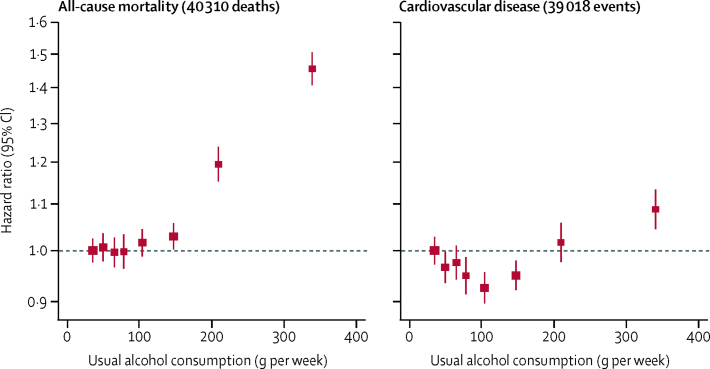
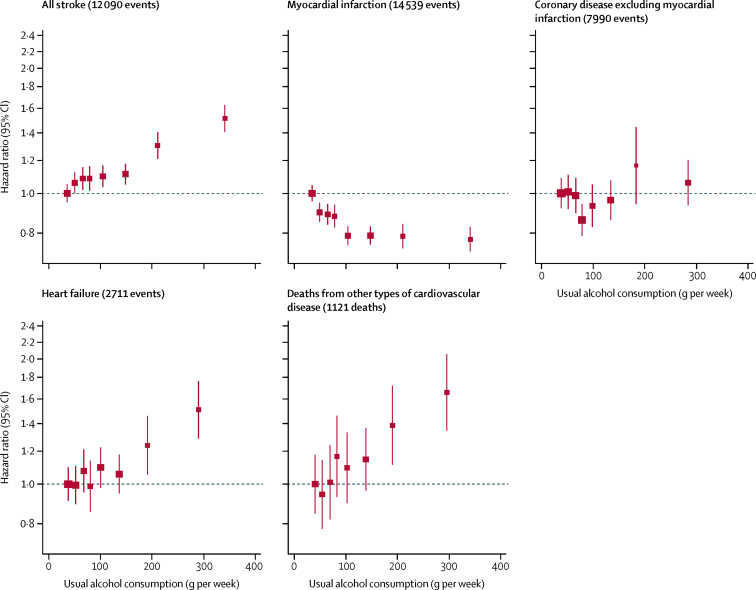
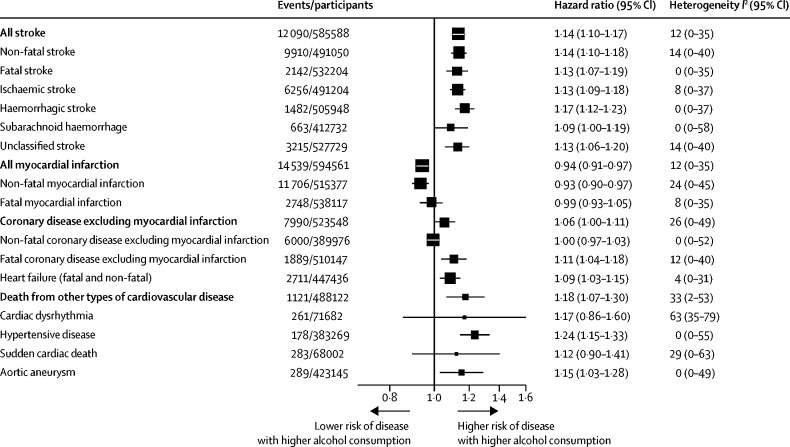
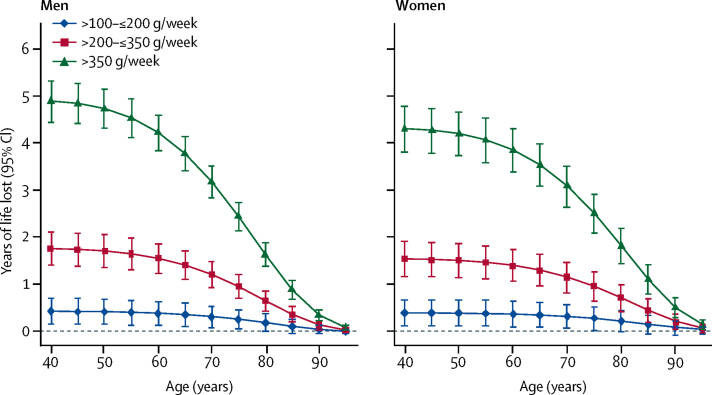
BACKGROUND: Low-risk limits recommended for alcohol consumption vary substantially across different national guidelines. To define thresholds associated with lowest risk for all-cause mortality and cardiovascular disease, we studied individual-participant data from 599 912 current drinkers without previous cardiovascular disease. METHODS: We did a combined analysis of individual-participant data from three large-scale data sources in 19 high-income countries (the Emerging Risk Factors Collaboration, EPIC-CVD, and the UK Biobank). We characterised dose-response associations and calculated hazard ratios (HRs) per 100 g per week of alcohol (12·5 units per week) across 83 prospective studies, adjusting at least for study or centre, age, sex, smoking, and diabetes. To be eligible for the analysis, participants had to have information recorded about their alcohol consumption amount and status (ie, non-drinker vs current drinker), plus age, sex, history of diabetes and smoking status, at least 1 year of follow-up after baseline, and no baseline history of cardiovascular disease. The main analyses focused on current drinkers, whose baseline alcohol consumption was categorised into eight predefined groups according to the amount in grams consumed per week. We assessed alcohol consumption in relation to all-cause mortality, total cardiovascular disease, and several cardiovascular disease subtypes. We corrected HRs for estimated long-term variability in alcohol consumption using 152 640 serial alcohol assessments obtained some years apart (median interval 5·6 years [5th-95th percentile 1·04-13·5]) from 71 011 participants from 37 studies. FINDINGS: In the 599 912 current drinkers included in the analysis, we recorded 40 310 deaths and 39 018 incident cardiovascular disease events during 5·4 million person-years of follow-up. For all-cause mortality, we recorded a positive and curvilinear association with the level of alcohol consumption, with the minimum mortality risk around or below 100 g per week. Alcohol consumption was roughly linearly associated with a higher risk of stroke (HR per 100 g per week higher consumption 1·14, 95% CI, 1·10-1·17), coronary disease excluding myocardial infarction (1·06, 1·00-1·11), heart failure (1·09, 1·03-1·15), fatal hypertensive disease (1·24, 1·15-1·33); and fatal aortic aneurysm (1·15, 1·03-1·28). By contrast, increased alcohol consumption was log-linearly associated with a lower risk of myocardial infarction (HR 0·94, 0·91-0·97). In comparison to those who reported drinking >0-≤100 g per week, those who reported drinking >100-≤200 g per week, >200-≤350 g per week, or >350 g per week had lower life expectancy at age 40 years of approximately 6 months, 1-2 years, or 4-5 years, respectively. INTERPRETATION: In current drinkers of alcohol in high-income countries, the threshold for lowest risk of all-cause mortality was about 100 g/week. For cardiovascular disease subtypes other than myocardial infarction, there were no clear risk thresholds below which lower alcohol consumption stopped being associated with lower disease risk. These data support limits for alcohol consumption that are lower than those recommended in most current guidelines. FUNDING: UK Medical Research Council, British Heart Foundation, National Institute for Health Research, European Union Framework 7, and European Research Council.
Overview
The claims and statistics of this paper haven’t been checked yet.
Free: it reads the open-access text and checks the first 5 claims that cite a source we can check. Create a free account to check every claim.
Integrity signals
Registry
Cites
Statistics
Figures
Verification
Claims the paper makes
The claims and statistics of this paper haven’t been checked yet.
Free: it reads the open-access text and checks the first 5 claims that cite a source we can check. Create a free account to check every claim.
Claims other papers make about this one
Each is checked against this paper’s own text: does it say what the citing paper says it does?
The source backs part of the claim, not all of it — or backs it for a different population, condition or comparison.
In the citing paper
“For example, systematic reviews have quantified exposure levels of alcohol use (e.g. by standard drinks/week) that represent risk-thresholds for stroke, cardio-vascular disease and atrial fibrillation (Samokhvalov, Irving, & Rehm, 2010; Tu et al., 2021; Wood et al., 2018)”
From Risk-thresholds for the association between frequency of cannabis use and the development of psychosis: a systematic review and meta-analysis (2023) · cites this paper as Wood et al., 2018
Experimental — accuracy not yet measuredThe check wasn’t confident either way, so it gives no verdict — never disputed.
In the citing paper
“Regular physical exercise reduces plasma TG levels over and above the effect of weight reduction [151,168,169].”
From 2019 ESC/EAS guidelines for the management of dyslipidaemias: lipid modification to reduce cardiovascular risk (2019) · cites this paper as [168]
Experimental — accuracy not yet measuredIn the citing paper
“However, it is analogous to evidence-based alcohol-related health guidelines where the risk for specific adverse (e.g. cardio-vascular) outcomes is low/absent below certain consumption levels and ‘moderate’ use is recommended”
From Risk-thresholds for the association between frequency of cannabis use and the development of psychosis: a systematic review and meta-analysis (2023) · cites this paper as Wood et al., 2018
Self-check
Percentages, sums and reported differences re-computed from the paper’s own numbers.
The self-check needs the paper’s full text.
Citations
Cites
Bias in meta-analysis detected by a simple, graphical test
Egger, M., Smith, G. D., Schneider, M., & Minder, C. (1997) · BMJ · doi:10.1136/bmj.315.7109.629 · Cited by 56,722 · cited 1×
“35 Methods we used to estimate reductions in life expectancy (years of life lost) are described in the appendix (pp 6–7).”
Quantifying heterogeneity in a meta‐analysis
Higgins, J. P. T., & Thompson, S. G. (2002) · Statistics in Medicine · doi:10.1002/sim.1186 · Cited by 36,763
Self-citationOperating characteristics of a rank correlation test for publication bias
Begg, C. B., & Mazumdar, M. (1994) · Biometrics · doi:10.2307/2533446 · Cited by 16,955 · cited 1×
“33 Evidence of small study effects was assessed visually with funnel plots and by Begg and Mazumdar’s test 34 and Egger’s test.”
Sudlow, C., Gallacher, J., Allen, N., Beral, V., Burton, P., Danesh, J., Downey, P., Elliott, P., Green, J., Landray, M., et al. (2015) · PLOS Medicine · doi:10.1371/journal.pmed.1001779 · Cited by 12,728
Self-citationMACMAHON, S. (1990) · The Lancet · doi:10.1016/0140-6736(90)90878-9 · Cited by 4,253 · cited 1×
“55 However, we did not find convincing evidence that other known risk factors were important mediators or confounders.”
Genomic Aberrations and Survival in Chronic Lymphocytic Leukemia
Döhner, H., Stilgenbauer, S., Benner, A., Leupolt, E., Kröber, A., Bullinger, L., Döhner, K., Bentz, M., & Lichter, P. (2000) · New England Journal of Medicine · doi:10.1056/nejm200012283432602 · Cited by 3,318
ABT-199, a potent and selective BCL-2 inhibitor, achieves antitumor activity while sparing platelets
Souers, A. J., Leverson, J. D., Boghaert, E. R., Ackler, S. L., Catron, N. D., Chen, J., Dayton, B. D., Ding, H., Enschede, S. H., Fairbrother, W. J., et al. (2013) · Nature Medicine · doi:10.1038/nm.3048 · Cited by 3,058
Unmutated Ig VH Genes Are Associated With a More Aggressive Form of Chronic Lymphocytic Leukemia
Hamblin, T. J., Davis, Z., Gardiner, A., Oscier, D. G., & Stevenson, F. K. (1999) · Blood · doi:10.1182/blood.v94.6.1848 · Cited by 2,783
Major lipids, apolipoproteins, and risk of vascular disease
The Emerging Risk Factors Collaboration* (2009) · JAMA · doi:10.1001/jama.2009.1619 · Cited by 2,731
Targeting BCL2 with Venetoclax in Relapsed Chronic Lymphocytic Leukemia
Roberts, A. W., Davids, M. S., Pagel, J. M., Kahl, B. S., Puvvada, S. D., Gerecitano, J. F., Kipps, T. J., Anderson, M. A., Brown, J. R., Gressick, L., et al. (2016) · New England Journal of Medicine · doi:10.1056/nejmoa1513257 · Cited by 1,900
Cited by
Items 701–800 of 1,000
van de Luitgaarden, I. A. T., Gulayin, P., Gutiérrez, L., Calandrelli, M., Mores, N., Ponzo, J., Lanas, F. T., Schrieks, I. C., Grobbee, D. E., Beulens, J. W. J., et al. (2021) · Global Heart · doi:10.5334/gh.840 · Cited by 6
“By contrast, alcohol in moderation has been repeatedly suggested to have potential beneficial effects on ischemic cardiovascular disease and type 2 diabetes mellitus [5, 6].”
BackgroundSelf-citationAlcohol: the role in nutrition and health
Suter, P. M. (2020) · Elsevier eBooks · doi:10.1016/b978-0-12-818460-8.00025-3 · Cited by 5
He, F., Liao, Z., Li, Y., Luo, Y., Wu, L., Lin, L., Chen, Y., Deng, W., & Huang, J. (2023) · Journal of Cardiothoracic Surgery · doi:10.1186/s13019-023-02137-0 · Cited by 5
“It has reported that hypertension, dyslipidemia, diabetes, overweight or obesity and alcohol consumption are five major cardiovascular risk factors (CRFs) [3, 4].”
BackgroundOuyang, F., Wang, B., Wu, Q., Yu, N., Liu, J., Li, L., Xu, Z., Lv, L., & Zeng, X. (2023) · Magnetic Resonance Imaging · doi:10.1016/j.mri.2023.07.012 · Cited by 5
Retinal microvascular complexity as a putative biomarker of biological age: a pilot study
Popović, N., Ždralević, M., Vujosevic, S., Radunović, M., Zečević, A. A., Dragović, I. R., Vukčević, B., Popović, T., Radulović, L., Vuković, T., et al. (2023) · Biogerontology · doi:10.1007/s10522-023-10057-8 · Cited by 6
Collier, E. S., Blomqvist, J., & Bendtsen, M. (2023) · Alcohol and Alcoholism · doi:10.1093/alcalc/agad070 · Cited by 7
“Regular consumption of alcohol is associated with an increased risk of several non-communicable diseases (Wood et al .”
BackgroundWáng, Q., Liu, Y., Xu, S., Liu, F., Huang, L., Xu, F., & Liu, Y. (2024) · Journal of Evidence-Based Medicine · doi:10.1111/jebm.12632 · Cited by 5
Metabolic bariatric surgery, alcohol misuse and liver cirrhosis: a narrative review
Basa, M. L., Cha, D. S., Mitchell, D. P., & Chan, D. L. (2024) · Metabolism and Target Organ Damage · doi:10.20517/mtod.2024.22 · Cited by 6
Hill, C. (2021) · Nutrition Clinique et Métabolisme · doi:10.1016/j.nupar.2021.03.003 · Cited by 8
Alcohol and Mortality: An Actuarial Issue
Gutterman, S. (2021) · North American Actuarial Journal · doi:10.1080/10920277.2021.1946660 · Cited by 5
“As another example, in a pooled analysis of approximately 600,000 alcohol consumers in 83 prospective studies covering 19 high-income countries, Wood et al. (2018)(20) found that alcohol consumption was positively and linearly associated with increased risk of stroke, heart failure, fatal hypertensive disease, fatal a…”
BackgroundResultInfluentialBuntrock, C., Freund, J., Smit, F., Riper, H. M., Lehr, D., Boß, L., Berking, M., & Ebert, D. D. (2021) · Addiction · doi:10.1111/add.15718 · Cited by 5
Drumright, L. N., Nance, R. M., Ruderman, S. A., Ma, J., Whitney, B. M., Hahn, A. W., Fredericksen, R. J., Luu, B., Lober, W. B., Moore, R. D., et al. (2023) · HIV Medicine · doi:10.1111/hiv.13466 · Cited by 6
“Several large cohort and case–control studies have demonstrated that increased alcohol intake [25, 27, 29, 30], even above recommended limits [24, 27], had a greater protective effect than no or light alcohol consumption.”
BackgroundGoodie, J. L., Wilfong, K. M., & Kroke, P. C. (2019) · Elsevier eBooks · doi:10.1016/b978-0-12-815015-3.00010-6 · Cited by 5
Alcohol Consumption: Discussing Potential Risks for Informed Decisions in Breast Cancer Survivors
Terry, K., Mayer, D. K., & Wehner, K. (2021) · Clinical journal of oncology nursing · doi:10.1188/21.cjon.672-679 · Cited by 5
Assessment of CVD Risk Factors in Secondary Prevention after Ischemic Stroke Using the ICF
Lucki, M., Chlebuś, E., Wareńczak, A., Daroszewski, P., & Lisiński, P. (2022) · International Journal of Environmental Research and Public Health · doi:10.3390/ijerph19063368 · Cited by 5
“The following criteria were used [31]: qualifier 0—alcohol intake per day < 10 g; qualifier 4—alcohol intake per day > 10 g.”
MethodSclerostin, vascular risk factors, and brain atrophy in excessive drinkers
Martín‐González, C., Godoy-Reyes, A. M., Abreu-González, P., Fernández-Rodríguez, C. M., Martín‐Ponce, E., Sánchez-Pérez, M. J., Alvisa-Negrín, J. C., Rodríguez-Gaspar, M., & González‐Reimers, E. (2023) · Frontiers in Human Neuroscience · doi:10.3389/fnhum.2023.1084756 · Cited by 5
“, 1999), more recent epidemiological studies show that drinking more than 100 g/week may shorten lifespan (Wood et al., 2018), and consumption of more than 30 g/day among men or 5–15 g/day among women may be associated with increased cancer risk (Cao et al.”
BackgroundCommentary on : Caution is needed when using self-reported alcohol use disorder screening tools
Baggio, S., & Iglesias, K. (2019) · Addictive Behaviors · doi:10.1016/j.addbeh.2019.106115 · Cited by 6
Bokemeyer, F., Gali, K., Kiefer, P., Bleich, C., Freitag, J., Bokemeyer, C., Abel, B., Schulz, H., & Lebherz, L. (2024) · Journal of Cancer Survivorship · doi:10.1007/s11764-024-01673-5 · Cited by 4
Baxevanis, G. K., & Kanellos, P. T. (2024) · Journal of Medicinal Food · doi:10.1089/jmf.2023.0054 · Cited by 5
“9 Finally, one of the most recent cohort studies of 83.732 adult Chinese participants on alcohol consumption and the risk of CVD development con fi rmed the results of the previous studies showing that light alcohol consumption (25 g/wk) was associated with lower CVD risk compared to non-drinkers or…”
InfluentialRana, D., Westrop, S. C., Jaiswal, N., Germeni, E., McGarty, A. M., Ells, L. J., Lally, P. J., McEwan, M. J., Melville, C. A., Harris, L., et al. (2025) · Health Technology Assessment · doi:10.3310/bstg4556 · Cited by 4
Predicting incident type 2 diabetes in a Japanese cohort: an 8-year analysis of the NAGALA database
Wang, Y., Liu, F., Tong, R., He, Z., Fang, Q., Feng, J., An, H., & Liu, J. (2025) · Frontiers in Endocrinology · doi:10.3389/fendo.2025.1465032 · Cited by 5
Armario, P., Brotons, C., Elosúa, R., de Leciñana, M. A., Castro, A., Clarà, A. B. I., Cortés, O., Rodríguez, Á. D., Herranz, M., Justo, S., et al. (2020) · PubMed Central · Cited by 5
Darrah, T., Waa, A. M., Jones, A., & Mizdrak, A. (2021) · International Journal of Critical Indigenous Studies · doi:10.5204/ijcis.v14i1.1809 · Cited by 5
Verthein, U., Lahusen, H., Martens, M., Prilutskaya, M., Yussopov, O., Kaliyeva, Z., & Schulte, B. (2022) · International Journal of Public Health · doi:10.3389/ijph.2022.1604803 · Cited by 6
Stelander, L. T., Lorem, G. F., Høye, A., Bramness, J. G., Wynn, R., & Grønli, O. (2023) · Archives of Public Health · doi:10.1186/s13690-023-01035-0 · Cited by 6
“Weekly consumption (g/week) was subsequently recoded as a categorical variable with three levels (abstainers, < 100 g/week, and ≥ 100 g/week), as there is some evidence for a low-risk drinking threshold of 100 g/week [14].”
BackgroundMethodValter, R., Guyonvarch, O., Allagbé, I., & Faou, A.-L. L. (2023) · Preventive Medicine · doi:10.1016/j.ypmed.2023.107585 · Cited by 5
Collier, E. S., Blomqvist, J., Crawford, J., McCambridge, J., & Bendtsen, M. (2023) · Substance Abuse Treatment Prevention and Policy · doi:10.1186/s13011-023-00569-4 · Cited by 4
“Regular consumption of alcohol is associated with an increased risk of negative physical and psychological consequences, as well as harm to others and society more broadly[1–3].”
BackgroundDoes habitual moderate alcohol consumption enhance working memory performance?
Cansino, S., Torres-Trejo, F., Estrada-Manilla, C., & Ruiz‐Velasco, S. (2023) · Current Psychology · doi:10.1007/s12144-023-05459-3 · Cited by 4
The effect of prognostic nutritional index on diabetic patients with myocardial infarction
Peng, Y., Lin, A., Luo, B., Chen, L., & Lin, Y. (2024) · Diabetology & Metabolic Syndrome · doi:10.1186/s13098-024-01409-6 · Cited by 5
“The definition of alcohol consumption is average alcohol consumption ≥ 100 g per week for more than one year before admission [26].”
BackgroundTholen, R., Ponnet, K. S., Hal, G. F. V., Bruyn, S. D., Buffel, V., de Velde, S. M. V., Bracke, P., Bos, P., Akvardar, Y., Arnold, P., et al. (2024) · Journal of Prevention · doi:10.1007/s10935-024-00807-w · Cited by 4
“To account for the intensity of alcohol use, separate analyses were performed for light and heavy alcohol consumption, distinguished based on prior research (Wood et al., 2018).”
Sterling, S., Lu, Y., Grijalva, C., Ross, T. B., Weisner, C. M., Elson, J., & Chi, F. W. (2024) · Journal of Substance Use and Addiction Treatment · doi:10.1016/j.josat.2024.209532 · Cited by 7
Andersen, A. M., Beach, S. R. H., Philibert, W., Mills, J. A., Milefchik, E., Papworth, E., Dawes, K., Moody, J., Weeks, G., Froehlich, E., et al. (2024) · Epigenetics · doi:10.1080/15592294.2024.2433833 · Cited by 4
Cánovas, E., Kallmeyer, A., Tarín, N., Cristóbal, C., Huelmos, A. I., Lázaro, A. M. P., Aceña, Á., Landaluce, C. G., González‐Lorenzo, Ó., Lumpuy‐Castillo, J., et al. (2024) · American Journal of Preventive Cardiology · doi:10.1016/j.ajpc.2024.100923 · Cited by 6
Alcohol Consumption and Incident Heart Failure in Men and Women
Qin, H., van Essen, B. J., ter Maaten, J. M., & Voors, A. A. (2025) · European Journal of Heart Failure · doi:10.1002/ejhf.3587 · Cited by 8
Qin, H.-H., Zhao, M., Wu, T., Zhu, S., Qiao, Y., Lei, X., Liu, W., & Sun, R. (2025) · BMC Public Health · doi:10.1186/s12889-025-21898-y · Cited by 4
“Based on the lowest recommended drinking threshold for all-cause mortality of approximately no more than 100 g per week [27] and combined with the frequency of subjects’ drinking and given that Chinese drinkers consume an average of 32.8 g pure alcohol per day [28], we categorized drinking of more…”
InfluentialJohansson, M., Själander, A., Lind, M. M., & Johansson, L. Å. (2025) · European Journal of Internal Medicine · doi:10.1016/j.ejim.2025.106436 · Cited by 5
Wang, Z., Hu, L., Chen, A., Wu, Y., Wang, G., Xie, X., He, Q., Xue, Y., Lin, J., Zheng, Z., et al. (2025) · Nutrition Metabolism and Cardiovascular Diseases · doi:10.1016/j.numecd.2025.104287 · Cited by 5
Are we surgeons finding it all too much? Dealing with the pressures of our profession
van Dijk, C. N. (2018) · Journal of ISAKOS Joint Disorders & Orthopaedic Sports Medicine · doi:10.1136/jisakos-2018-000237 · Cited by 5
Schlienger, J.-L. (2019) · Médecine des Maladies Métaboliques · doi:10.1016/s1957-2557(19)30021-5 · Cited by 5
Wang, M., Xie, Y., Zhao, S., Wang, Y., Cui, J., & Chang, S. (2020) · Postgraduate Medicine · doi:10.1080/00325481.2020.1805945 · Cited by 4
Detección y registro del consumo de alcohol en Urgencias
Bruguera, P., Barrio, P., Oliveras, C., Vázquez, M., Soler, V. G., Nuño, L., Vieta, E., & Gual, A. (2020) · Revista Española de Salud Pública · doi:10.4321/s1135-57272020000100021 · Cited by 5
“NIH Public Access; 2015 Sep;39(9):1698–704.”
BackgroundInfluentialAlcohol and atrial fibrillation: dose matters, not so much the type
Csengeri, D., Sprünker, N.-A., & Schnabel, R. B. (2021) · European Heart Journal · doi:10.1093/eurheartj/ehab180 · Cited by 4
Risky Alcohol Use and Comorbidity in a Swedish Adolescent Emergency Psychiatric Inpatient Population
Eberhard, S., Rask, O., Höglund, P., Råstam, M., & Johansson, B. A. (2021) · Journal of Addiction · doi:10.1155/2021/5514144 · Cited by 4
“consumption is not associated with a risk of disease [9], but a scoring instrument is often used to describe drinking patterns and grading risky behaviour [2, 4, 10].”
BackgroundAlcohol consumption patterns and unhealthy aging among older lifetime drinkers from Spain
Ortolá, R., García‐Esquinas, E., Carballo‐Casla, A., Sotos‐Prieto, M., Banegas, J. R., & Rodríguez‐Artalejo, F. (2022) · Drug and Alcohol Dependence · doi:10.1016/j.drugalcdep.2022.109444 · Cited by 4
Urinary Sodium Excretion Enhances the Effect of Alcohol on Blood Pressure
Jiang, X., Anasanti, M. D., Drenos, F., Blakemore, A. I. F., & Pazoki, R. (2022) · Healthcare · doi:10.3390/healthcare10071296 · Cited by 4
“Observational studies have demonstrated an association of alcohol consumption (drinks per day) with blood pressure [38] and CVD [39].”
BackgroundGrao‐Cruces, E., la Paz, S. M., & Martín, M. E. (2022) · Journal of Functional Foods · doi:10.1016/j.jff.2022.105188 · Cited by 4
Zheng, W., Liang, Y., Lee, W. S., & Ko, Y. (2023) · International Journal of Environmental Research and Public Health · doi:10.3390/ijerph20043369 · Cited by 5
“Interestingly, we found a positive association between alcohol intake and SRH, where this finding is consistent with several findings that more frequent alcohol intake was associated with good health [75], though not all [52,76,77].”
ResultLangås, J. R., Eskild, A., Hofvind, S. S. H., & Bjelland, E. K. (2023) · International Journal of Epidemiology · doi:10.1093/ije/dyad129 · Cited by 7
John, U., Rumpf, H., Hanke, M., & Meyer, C. (2023) · Alcohol · doi:10.1016/j.alcohol.2023.10.003 · Cited by 4
Unnikrishnan, R., Zhao, Y., Chondur, R., & Burgess, P. (2023) · International Journal of Environmental Research and Public Health · doi:10.3390/ijerph20227066 · Cited by 6
“The recent Mendelian randomisation and meta-analyses studies reported that alcohol use leads to health loss across populations regardless of the amount [2], and the protective effect or risk reduction is an artefact of epidemiological methods and large datasets [2,45–47].”
BackgroundThe Impact of Alcohol Consumption Pattern on Liver Fibrosis in Asymptomatic Patients
Minea, H. O., Sîngeap, A.-M., Sfarti, C. V., Gîrleanu, I., Chiriac, S. A., Muzica, C. M., Cuciureanu, T., Petrea, O. C., Huiban, L., Zenovia, S., et al. (2023) · Journal of Clinical Medicine · doi:10.3390/jcm12237405 · Cited by 5
“Cumulative data from different epidemiological studies support the hypothesis of a direct dependence of the risk of liver disease on the amount of alcohol consumed [35].”
BackgroundDiet quality and chronic axonal polyneuropathy: a population‐based study
Taams, N. E., Voortman, T., Hanewinckel, R., Drenthen, J., van Doorn, P. A., & Ikram, M. A. (2019) · Annals of Clinical and Translational Neurology · doi:10.1002/acn3.50939 · Cited by 4
“Furthermore, the group abstainers is known to be a difficult group to categorize in observational studies, as both former and never drinkers together form this group and might differ systematically from drinkers in ways that are also related to disease but may be difficult to measure and adjust for.(29) We observed a…”
BackgroundSelf-citationSzolnoki, G., Filopoulos, S., Stein-Hammer, C., & Brazsil, D. (2021) · International Journal of Wine Business Research · doi:10.1108/ijwbr-12-2020-0060 · Cited by 4
Alcohol-attributable burden of cancer in Argentina
van de Luitgaarden, I. A. T., Bardach, A., Espínola, N., Schrieks, I. C., Grobbee, D. E., & Beulens, J. W. J. (2022) · BMC Public Health · doi:10.1186/s12889-022-12549-7 · Cited by 5
“On the other hand, moderate alcohol consumption is thought to have potential benefits on ischemic heart disease and diabetes [6, 7].”
BackgroundSelf-citationLiu, X., Brock, K. E., Brennan‐Speranza, T. C., Flicker, L. A., Golledge, J., Hankey, G. J., Girgis, C. M., & Yeap, B. B. (2023) · Clinical Endocrinology · doi:10.1111/cen.14926 · Cited by 4
“The categorization of excessive alcohol consumption was based on the original lifestyle scoring, and lower thresholds may be more appropriate for future studies.(35) Similarly, categorization of milk consumption prioritized avoidance of condensed or full cream milk and did not dissect out avoidance of milk consumption.”
MethodSelf-citationSaavedra-Clarke, S., Parra-Soto, S. L., Murillo, A. G., Carpio-Arias, T. V., Landaeta‐Díaz, L., Nava‐González, E. J., Ríos-Castillo, I., Núñez‐Martínez, B., Gómez, G., Araneda‐Flores, J., et al. (2023) · Journal of the American Nutrition Association · doi:10.1080/27697061.2023.2263526 · Cited by 6
“Alcochoix+”: controlled drinking within a structured programme – a cohort study in Switzerland
Favrod-Coune, T., Aebischer, G., Grondin, F., Girod, I., Simoneau, H., & Broers, B. (2019) · Swiss Medical Weekly · doi:10.4414/smw.2019.20120 · Cited by 5
Yoshimoto, H., Nakamura, I., & Kojima, Y. (2020) · Alcohol · doi:10.1016/j.alcohol.2020.09.005 · Cited by 4
A Sharp Decline in Burden of Stroke in Rural China During COVID-19 Pandemic
Liu, J., Yang, Q., Zhang, X., Lin, Q., Yang, Y., Guo, D., Mao, W., Tu, J., Liu, Z., Li, J., et al. (2021) · Frontiers in Neurology · doi:10.3389/fneur.2020.596871 · Cited by 4
Effects of chronic moderate alcohol consumption on right ventricle and pulmonary remodelling
Silva, A. F., Sousa‐Nunes, F., Faria‐Costa, G., Rodrigues, I., Guimarães, J. T., Leite-Moreira, A. F., Henriques‐Coelho, T., Negrão, R., & Moreira‐Gonçalves, D. (2021) · Experimental Physiology · doi:10.1113/ep088788 · Cited by 4
Risk thresholds for alcohol consumption – Authors' reply
Wood, A., Kaptoge, S., Paige, E., Angelantonio, E. D., & Danesh, J. (2018) · The Lancet · doi:10.1016/s0140-6736(18)32181-0 · Cited by 4
Self-citationAlcohol and the global burden of disease – Authors' reply
Griswold, M., & Gakidou, E. E. (2019) · The Lancet · doi:10.1016/s0140-6736(19)30706-8 · Cited by 4
Cardiovascular and hepatic outcomes: prognostic differences across MASLD-MetALD-ALD continuum
Lee, H. A., Kim, G., & Kim, W. (2026) · Clinical and Molecular Hepatology · doi:10.3350/cmh.2026.0367 · Cited by 7
Does higher alcohol consumption affect attitudes towards alcohol control measures in Estonia?
Reile, R., & Rehm, J. (2023) · Public Health in Practice · doi:10.1016/j.puhip.2023.100455 · Cited by 3
“…the health gains of reducing alcohol consumption are clustered on the sub-population with high-alcohol consumption as demonstrated by Wood et al. [9], where the long-term reduction of alcohol consumption from 196 g per week to ≤ 100 g per week would result in 1 – 2 years of longer life…”
BackgroundEffects of essential tremor on longevity and mortality rates in families
Onat, O. E., Ustunel, F., Akbostanci, C., Doganyigit, K. E., Sen, M., Günaydın, E. C., Bilgüvar, K., & Akbostancı, M. C. (2025) · PLoS ONE · doi:10.1371/journal.pone.0320422 · Cited by 3
“Previous research has indicated that moderate alcohol consumption may have neuroprotective effects, potentially alleviating tremor symptoms and improving motor function [46,47].”
Pérez-Robles, M., Campos-Perez, W. Y., Godinez-Mora, S., Lopez-Alvarez, V., Ramos-Villalobos, L. E., Corona-Ruiz, F., Armendáriz‐Borunda, J., & Martínez‐López, E. (2025) · Healthcare · doi:10.3390/healthcare13121426 · Cited by 5
“Wood et al. suggest that even moderate alcohol intake may exacerbate CAD progression by elevating systemic inflammation [43], partly through increased homocysteine, oxLDL, and oxidative stress levels [44].”
Huerta, J. M., Colorado-Yohar, S. M., Andreu-Reinón, M. E., Mokoroa, O., Tainta, M., Guevara, M., Gasque, A., Castilla, J., Petrova, D., Crous‐Bou, M., et al. (2025) · Frontiers in Nutrition · doi:10.3389/fnut.2025.1671047 · Cited by 4
Self-citationZhang, J.-F., Cai, X., Tang, W., Song, Y., Zhang, X.-X., Shi, Y.-Q., & Li, T. (2025) · Frontiers in Public Health · doi:10.3389/fpubh.2025.1676833 · Cited by 3
Steensland, Å., Kastbom, L., Johnson, B. H., Larsson, M., Heilig, M. A., Segernäs, A., & Capusan, A. J. (2026) · International Journal of Drug Policy · doi:10.1016/j.drugpo.2025.105130 · Cited by 3
Anindya, K., Bendtsen, M., Jernberg, T., Calling, S., Lind, L., Weinehall, L., Ng, N., & Rosvall, M. (2026) · Scientific Reports · doi:10.1038/s41598-026-42858-5 · Cited by 3
A fresh approach to the development of national alcohol guidelines
Naimi, T. S. (2018) · Addiction · doi:10.1111/add.14428 · Cited by 4
Gesundheitsrisiko Alkohol – neue Empfehlungen zum Umgang mit Alkohol
Seitz, H. K., & John, U. (2023) · Die Innere Medizin · doi:10.1007/s00108-023-01574-2 · Cited by 3
Gunnarsson, K. U., Henriksson, M., & Bendtsen, M. (2024) · Journal of Medical Internet Research · doi:10.2196/44574 · Cited by 3
“While evidence suggests that there is no safe limit on alcohol consumption [4], harmful drinking represents a marked increased risk of negative health and social consequences [1,4,5].”
Ehrnrooth, A., Gluschkoff, K., Jokela, M. M., & Komulainen, K. (2024) · Social Psychiatry and Psychiatric Epidemiology · doi:10.1007/s00127-024-02654-w · Cited by 5
“Figure 3 presents the marginal probabilities of the incidence and persistence of harmful alcohol use at different levels of sociodemographic risk factors.”
Chen, X., Shi, J., Hu, Y., Ma, H., Jiang, Z., & Lou, B. (2024) · International Journal of Diabetes in Developing Countries · doi:10.1007/s13410-024-01355-z · Cited by 3
“…liver failure and mental disorder); (3) the history of smoking (defined as at least one cigarette a day or seven cigarettes a week in the past 6 months [8]) and the history of alcohol drinking (defined as at least 100 g alcohol consumption a week in the past 6 months [9]); (4) pregnancy history.”
Fontán-Vela, J., Ortíz, C., López‐Cuadrado, T., Téllez-Plaza, M., García‐Esquinas, E., Ortolá, R., Rodríguez‐Artalejo, F., & Galán, I. (2025) · Public Health · doi:10.1016/j.puhe.2025.105728 · Cited by 3
Ruiz‐García, A., Pallarés‐Carratalá, V., Serrano-Cumplido, A., Pascual-Fuster, V., Arranz-Martínez, E., & Escobar, C. (2025) · Journal of Clinical Medicine · doi:10.3390/jcm14113940 · Cited by 3
Zou, Q., Ogaz-González, R., Du, Y., Duan, M.-J., Lunter, G. A., & Corpeleijn, E. (2025) · Archives of Public Health · doi:10.1186/s13690-025-01678-1 · Cited by 5
“The variable “daily average alcohol intake” was classified into three groups as well: abstainer, light to moderate (consuming 0 ~ 15 g of alcohol on average per day), and excessive drinking (consuming > = 15 g) [39].”
Zhang, Z., Wu, S., Jin, T., Duan, Z., & Du, X. (2025) · Frontiers in Neurology · doi:10.3389/fneur.2025.1631775 · Cited by 3
Llisterri, J. L., Amezcua, M., Pedregal, E. G., Jordana, J., Sampedro, A. R., & Marín, A. L. V. (2020) · Nutrición Hospitalaria · doi:10.20960/nh.02930 · Cited by 8
Alcohol and Cancer: Waiting for the Storm to Pass or Dancing in the Rains!
Vaish, R., & Bajpai, J. (2020) · Indian Journal of Medical and Paediatric Oncology · doi:10.4103/ijmpo.ijmpo_91_20 · Cited by 3
“[4] The benefit of moderate drinking of alcohol is controversial with upsurgence of recent data demonstrating the contrary.[5,6]”
BackgroundKotsopoulos, J., Kim, S. J., Armel, S. R., Bordeleau, L. J., Foulkes, W. D., McKinnon, W. C., Panchal, S., Cohen, S. A., Sun, S. B., Sun, P., et al. (2021) · Cancer · doi:10.1002/cncr.33654 · Cited by 6
“40 The neuroprotective effects of moderate alcohol intake are thought to be mediated by a favorable impact on factors involved in protecting the brain vasculature, which also explains the protective effect of alcohol on cardiovascular disease.(41,42) There were several strengths and limitations associated with the cur…”
BackgroundAgarwal, S. K. (2021) · Integrative Journal of Medical Sciences · doi:10.15342/ijms.2021.399 · Cited by 4
Socioeconomic inequalities in health in high-income countries: The facts and the options
van Lenthe, F. J., & Mackenbach, J. P. (2021) · doi:10.1093/med/9780198816805.003.0009 · Cited by 12
Diagnostic challenges in patients with alcohol-related liver disease
Krag, A. A., Roskams, T., Pinzani, M., & Mueller, S. (2022) · Zeitschrift für Gastroenterologie · doi:10.1055/a-1713-4372 · Cited by 3
“compensa-▶ Table1 Liver stiffness and fibrosis stages in ALD (biopsy proven studies).”
Muraki, I., Iso, H., Imano, H., Cui, R., Ikehara, S., Yamagishi, K., & Tamakoshi, A. (2022) · Journal of Atherosclerosis and Thrombosis · doi:10.5551/jat.63517 · Cited by 3
Michelsen, M. E., Grønkjær, M. S., Mortensen, E. L., & Wimmelmann, C. L. (2022) · PLoS ONE · doi:10.1371/journal.pone.0277511 · Cited by 3
“Although alcohol is a leading risk factor for death and disability, its overall association with health is complex as several observational studies have observed the U- or J-shaped curve suggesting that light to moderate drinking can have beneficial health outcomes [2, 3].”
BackgroundMetz, V. E., Leibowitz, A., Satre, D. D., Parthasarathy, S., Jackson-Morris, M., Cocohoba, J. M., & Sterling, S. (2022) · Contemporary Clinical Trials · doi:10.1016/j.cct.2022.107004 · Cited by 3
Baumann, S., Staudt, A., Freyer‐Adam, J., Zeiser, M., Bischof, G., Meyer, C., & John, U. (2022) · Frontiers in Public Health · doi:10.3389/fpubh.2022.1027837 · Cited by 4
Moderate wine consumption and cancer risk in context
Fradera, U., & Stein-Hammer, C. (2023) · BIO Web of Conferences · doi:10.1051/bioconf/20235604002 · Cited by 3
A reference interval study of ferritin and transferrin levels in donors from two blood centers
Zeng, X., Meng, X., Wang, Y., Li, S., Liao, Q., Shan, Z., Huang, J., Shi, J., Wang, L., Chen, H., et al. (2023) · Experimental and Therapeutic Medicine · doi:10.3892/etm.2023.11916 · Cited by 4
Madden, M., Stewart, D., & McCambridge, J. (2023) · Addiction Research & Theory · doi:10.1080/16066359.2023.2207017 · Cited by 3
“Although heavy drinkers are most at risk from the consequences of alcohol consumption, all drinkers are at risk of alcohol harms, as are nondrinkers around them (Babor et al. 2010; Wood et al. 2018).”
BackgroundAlcohol consumption and heart failure: a dose-response meta-analysis
Wong, B., Ryan, C. A., Fagbamigbe, A. F., Bray, J. J. H., McNamee, B., Niranjan, V. R., Zhou, S., Bogdanet, D., Reddin, C., McDonald, K., et al. (2024) · Cochrane Database of Systematic Reviews · doi:10.1002/14651858.cd015398 · Cited by 3
Tighe, C. A., Quinn, D. A., Boudreaux-Kelly, M. Y., Atchison, K., & Bachrach, R. L. (2024) · Journal of Women & Aging · doi:10.1080/08952841.2024.2395105 · Cited by 4
Meddőségi kezelésben részt vevő nők és férfiak életviteli szokásainak felmérése
Máté, G., Balló, A., Szántó, Á., Kopa, Z., & Török, Á. (2024) · Orvosi Hetilap · doi:10.1556/650.2024.33124 · Cited by 5
Alcohol, Depression, and Anxiety
Onaemo, V. N., & Chireh, B. (2024) · Springer eBooks · doi:10.1007/978-3-031-32046-0_130-1 · Cited by 5
Wranker, L. S., Elmståhl, S., & Ekström, H. (2018) · Scandinavian Journal of Pain · doi:10.1515/sjpain-2018-0064 · Cited by 3
“to reduce alcohol consumption among older individuals who also use analgesics [4, 5].”
BackgroundHaarkortisol als chronischer Stressparameter bei Patienten mit akutem ST-Strecken-Hebungs-Infarkt
Crom, H., & Trappe, H. (2020) · Herz · doi:10.1007/s00059-020-04990-4 · Cited by 3
Zima, T. (2018) · PubMed Central · Cited by 13
Alcohol consumption and future hospital usage: The EPIC-Norfolk prospective population study
Luben, R., Hayat, S. A., Mulligan, A. A., Lentjes, M. A. H., Wareham, N. J., Pharoah, P. D. P., & Khaw, K. (2018) · PLoS ONE · doi:10.1371/journal.pone.0200747 · Cited by 5
Self-citation
Metadata
- Authors
- Wood, A. M., Kaptoge, S., Butterworth, A. S., Willeit, P., Warnakula, S., Bolton, T., Paige, E., Paul, D. S., Sweeting, M., Burgess, S., Bell, S., Astle, W., Stevens, D., Koulman, A., Selmer, R. M., Verschuren, W. M. M., Sato, S., Njølstad, I., Woodward, M., Salomaa, V., Nordestgaard, B. G., Yeap, B. B., Fletcher, A., Melander, O., Kuller, L. H., Balkau, B., Marmot, M., Koenig, W., Casiglia, E., Cooper, C., Arndt, V., Franco, O. H., Wennberg, P., Gallacher, J., de la Cámara, A. G., Völzke, H., Dahm, C. C., Dale, C. E., Bergmann, M. M., Crespo, C. J., van der Schouw, Y. T., Kaaks, R., Simons, L. A., Lagiou, P., Schoufour, J. D., Boer, J. M. A., Key, T. J., Rodriguez, B., Moreno-Iribas, C., Davidson, K. W., Taylor, J. O., Sacerdote, C., Wallace, R. B., Quiros, J. R., Tumino, R., Blazer, D. G., Linneberg, A., Daimon, M., Panico, S., Howard, B., Skeie, G., Strandberg, T., Weiderpass, E., Nietert, P. J., Psaty, B. M., Kromhout, D., Salamanca-Fernandez, E., Kiechl, S., Krumholz, H. M., Grioni, S., Palli, D., Huerta, J. M., Price, J., Sundström, J., Arriola, L., Arima, H., Travis, R. C., Panagiotakos, D. B., Karakatsani, A., Trichopoulou, A., Kühn, T., Grobbee, D. E., Barrett-Connor, E., van Schoor, N., Boeing, H., Overvad, K., Kauhanen, J., Wareham, N., Langenberg, C., Forouhi, N., Wennberg, M., Després, J.-P., Cushman, M., Cooper, J. A., Rodriguez, C. J., Sakurai, M., Shaw, J. E., Knuiman, M., Voortman, T., Meisinger, C., Tjønneland, A., Brenner, H., Palmieri, L., Dallongeville, J., Brunner, E. J., Assmann, G., Trevisan, M., Gillum, R. F., Ford, I., Sattar, N., Lazo, M., Thompson, S. G., Ferrari, P., Leon, D. A., Smith, G. D., Peto, R., Jackson, R., Banks, E., Di Angelantonio, E., Danesh, J., Wood, A. M., Kaptoge, S., Butterworth, A., Willeit, P., Warnakula, S., Bolton, T., Paige, E., Paul, D. S., Sweeting, M., Burgess, S., Bell, S., Astle, W., Stevens, D., Koulman, A., Selmer, R. M., Verschuren, M., Sato, S., Njølstad, I., Woodward, M., Veikko, S., Nordestgaard, B. G., Yeap, B. B., Flecther, A., Melander, O., Kuller, L. H., Balkau, B., Marmot, M., Koenig, W., Casiglia, E., Cooper, C., Arndt, V., Franco, O. H., Wennberg, P., Gallacher, J., Gómez de la Cámara, A., Völzke, H., Dahm, C. C., Dale, C. E., Bergmann, M., Crespo, C., van der Schouw, Y. T., Kaaks, R., Simons, L. A., Lagiou, P., Schoufour, J. D., Boer, J. M. A., Key, T. J., Rodriguez, B., Moreno-Iribas, C., Davidson, K. W., Taylor, J. O., Sacerdote, C., Wallace, R. B., Quiros, J. R., Rimm, E. B., Tumino, R., Blazer III, D. G., Linneberg, A., Daimon, M., Panico, S., Howard, B., Skeie, G., Salomaa, V., Strandberg, T., Weiderpass, E., Nietert, P. J., Psaty, B. M., Kromhout, D., Salamanca-Fernandez, E., Kiechl, S., Krumholz, H. M., Grioni, S., Palli, D., Huerta, J. M., Price, J., Sundström, J., Arriola, L., Arima, H., Travis, R. C., Panagiotakos, D. B., Karakatsani, A., Trichopoulou, A., Kühn, T., Grobbee, D. E., Barrett-Connor, E., van Schoor, N., Boeing, H., Overvad, K., Kauhanen, J., Wareham, N., Langenberg, C., Forouhi, N., Wennberg, M., Després, J.-P., Cushman, M., Cooper, J. A., Rodriguez, C. J., Sakurai, M., Shaw, J. E., Knuiman, M., Voortman, T., Meisinger, C., Tjønneland, A., Brenner, H., Palmieri, L., Dallongeville, J.-P., Brunner, E. J., Assmann, G., Trevisan, M., Gillumn, R. F., Ford, I. F., Sattar, N., Lazo, M., Thompson, S., Ferrari, P., Leon, D. A., Davey Smith, G., Peto, R., Jackson, R., Banks, E., Di Angelantonio, E., & Danesh, J.
- Affiliations
- University of Cambridge (GB)
- University Medical Center Utrecht (NL)
- London School of Hygiene & Tropical Medicine (GB)
- German Institute of Human Nutrition (DE)
- Portland State University (US)
- Institut Pasteur de Lille (FR)
- Howard University Hospital (US)
- ORCID
- Venue
- The Lancet
- Publisher
- Elsevier BV
- Published
- 2018-04
- Volume
- 391
- Issue
- 10129
- Pages
- 1513-1523
- ISSN
- 0099-5355 (ISSN-L)
- 0140-6736
- PMC
- PMC5899998
- OpenAlex
- W2787107952
- Semantic Scholar
- 67861ba0b72d3635d063ce89d6b401c9f5a93164
- Cited by
- 1,188
- References
- 54
- Citations by year
- 2026: 78 · 2025: 117 · 2024: 135 · 2023: 146 · 2022: 155 · 2021: 173 · 2020: 164 · 2019: 155 · 2018: 63
- FWCI
- 105.54
- Type
- journal article
- Language
- en
- Update notices
- erratum (2018-06-02)
- Open access
- hybrid
- doi.org
- Licence
- cc-by
- www.elsevier.com/tdm/userlicense/1.0/ (tdm)
- creativecommons.org/licenses/by/4.0/ (vor)
- Locations
- The Lancet (publishedVersion, cc-by)
- Europe PMC (PubMed Central) (publishedVersion, other-oa)
- PubMed Central (publishedVersion, cc-by)
- PubMed (publishedVersion)
- Pure Amsterdam UMC (publishedVersion, cc-by)
- Research at the University of Copenhagen (University of Copenhagen) (publishedVersion, cc-by)
- Amsterdam UMC (VU Amsterdam) - Institutional Repository (publishedVersion, other-oa)
- EUR Research Repository (Erasmus University Rotterdam) (publishedVersion)
- University of Groningen research database (University of Groningen / Centre for Information Technology) (publishedVersion, cc-by)
- Explore Bristol Research (publishedVersion, other-oa)
- ENLIGHTEN (Jurnal Bimbingan dan Konseling Islam) (acceptedVersion, cc-by-sa)
- ePrints Soton (University of Southampton) (acceptedVersion)
- Socio-Environmental Systems Modeling (acceptedVersion, cc-by)
- Leicester Research Archive (University of Leicester) (acceptedVersion, other-oa)
- LSHTM Research Online (London School of Hygiene and Tropical Medicine) (acceptedVersion)
- ANU Open Research (Australian National University) (submittedVersion, cc-by)
- UNSWorks (UNSW Sydney) (submittedVersion, cc-by)
- UEF eRepo (University of Eastern Finland) (submittedVersion, cc-by)
- VBN Forskningsportal (Aalborg Universitet) (submittedVersion, cc-by)
- RISalud Institutional Health Repository of Andalucía (submittedVersion, cc-by)
- Apollo (University of Cambridge) (submittedVersion, cc-by)
- PDXScholar (Portland State University) (submittedVersion)
- UWA Profiles and Research Repository (UWA) (submittedVersion, cc-by)
- EUR Research Repository (Erasmus University Rotterdam) (submittedVersion)
- RePub (Erasmus University Rotterdam) (submittedVersion, other-oa)
- DiVA at Umeå University (Umeå University) (submittedVersion, other-oa)
- Uppsala University Publications (Uppsala University) (submittedVersion, other-oa)
- HAL (submittedVersion)
- LA Referencia (Red Federada de Repositorios Institucionales de Publicaciones Científicas) (submittedVersion, other-oa)
- Utrecht University Repository (Utrecht University) (submittedVersion, other-oa)
- UCL Discovery (University College London) (submittedVersion)
- NORA - Norwegian Open Research Archives (submittedVersion, other-oa)
- Figshare (submittedVersion, cc-by)
- Työväentutkimus Vuosikirja (submittedVersion)
- Lund University Publications (Lund University) (submittedVersion)
- mediaTUM – the media and publications repository of the Technical University Munich (Technical University Munich) (submittedVersion, other-oa)
- mediaTUM (Technical University of Munich) (submittedVersion)
- Site cant be reached (submittedVersion)
- Edinburgh Research Explorer (University of Edinburgh) (submittedVersion, cc-by)
- Research Portal (Queen's University Belfast) (submittedVersion, cc-by)
- PuSH - Publication Server of Helmholtz Zentrum München (submittedVersion)
- Bristol Research (University of Bristol) (submittedVersion, other-oa)
- Rivm Repository (Netherlands National Institute for Public Health and the Environment) (submittedVersion, cc-by)
- Rivm (National Institute for Public Health and the Environment) (submittedVersion)
- OPUS (Augsburg University) (submittedVersion)
- OPUS (Augsburg University) (submittedVersion, cc-by)
- STM:n Hallinnonalan avoin julkaisuarkisto (Julkari) (submittedVersion)
- Rivm (National Institute for Public Health and the Environment) (submittedVersion, cc-by)
- University of Groningen research database (University of Groningen / Centre for Information Technology) (submittedVersion, cc-by)
- Utrecht University Repository (Utrecht University) (submittedVersion, cc-by)
- Data Archiving and Networked Services (DANS) (submittedVersion, other-oa)
- Data Archiving and Networked Services (DANS) (submittedVersion, cc-by)
- Apollo (cc-by)
- Columbia Academic Commons (Columbia University)
- WOS
- Funders
- World Health Organization
- Wellcome Trust (204623/Z/16/Z)
- Cancer Research UK (16491)
- National Institute for Health and Care Research (NF-SI-0617-10113, NF-SI-0512-10165, NF-SI-0508-10082, NF-SI-0513-10085, NF-SI-0512-10135, NF-SI-0617-10149)
- British Heart Foundation (MR/L003120/1, G0800270, RG/16/11/32334, SP/09/002, RG/08/014, CH/12/2/29428, PG/11/63/29011, RG/13/13/30194, RG/13/2/30098)
- European Commission (LSHM_CT_2006_037197, 279233, 37197)
- National Centre for the Replacement, Refinement and Reduction of Animals in Research (NC/P001076/1)
- Cambridge University Hospitals (146281)
- Novo Nordisk Fonden (NNF14OC0009819)
- Medical Research Council (MR/K013351/1, MC_UU_12015/5, SP/09/002, MR/R024227/1, MR/L003120/1, G0800270, MC_PC_17228, MR/N003284/1, MC_UU_12011/1, MC_UU_12015/1, MR/L003120, MC_UU_00011/1, MR/K014811/1)
- NIHR Cambridge Biomedical Research Centre (MR/L003120/1)
- National Institute on Alcohol Abuse and Alcoholism (U10AA025286)
- FP7 Ideas: European Research Council (268834)
- Topics
- Health Sciences › Medicine › Pathology and Forensic Medicine › Alcohol Consumption and Health Effects
- Health Sciences › Medicine › Epidemiology › Substance Abuse Treatment and Outcomes
- Health Sciences › Medicine › Pharmacology (medical) › Coffee research and impacts
- Keywords
- alcohol consumption, all-cause mortality, cardiovascular disease, stroke, coronary artery disease, heart failure, dose-response relationship, alcohol guidelines, current drinkers, UK Biobank, individual patient data meta-analysis, high-income countries
- MeSH terms
- Alcohol Drinking, Cardiovascular Diseases, Female, Humans, Male, Middle Aged, Prospective Studies
About these checks
Registry, retraction, Cites and statistics results are computed, not judged, with one exception: a printed reference that no index lists is read once by a model before it counts as a citation error. Claims are extracted by a model and kept only when their quote appears verbatim in the text; each cited source is then checked, with a model’s help, for whether it says what the claim relies on. Those verdicts can be wrong — read the claim’s quote and the cited source before relying on one.
Statistics and arithmetic are recomputed, not judged.
Confidence bands are shown only for fields calibrated on our annotated test set. None is calibrated yet, so no band is shown.
What counts as a claim ›How we measure confidence ›How we check this ›
Are you an author, or do you see a problem with this page? Request a review
Data sources
Bibliographic data: Semantic Scholar, OpenAlex, Crossref.
Contains information from the Semantic Scholar Academic Graph Datasets, made available under the ODC Attribution License (ODC-BY 1.0).
Semantic Scholar’s data is described in: Kinney, R., et al. (2023). The Semantic Scholar Open Data Platform. arXiv:2301.10140.
