

Risk thresholds for alcohol consumption: combined analysis of individual-participant data for 599 912 current drinkers in 83 prospective studies
Open accessThe DOI matches its Crossref record, with a small difference in title or year; 59 of the 59 references it cites were found in a registry or an index.
Abstract
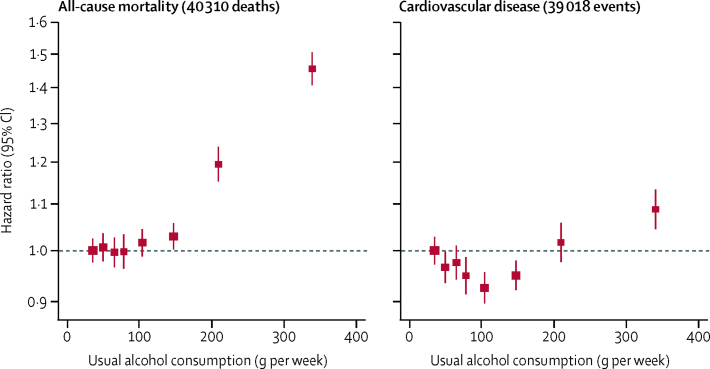
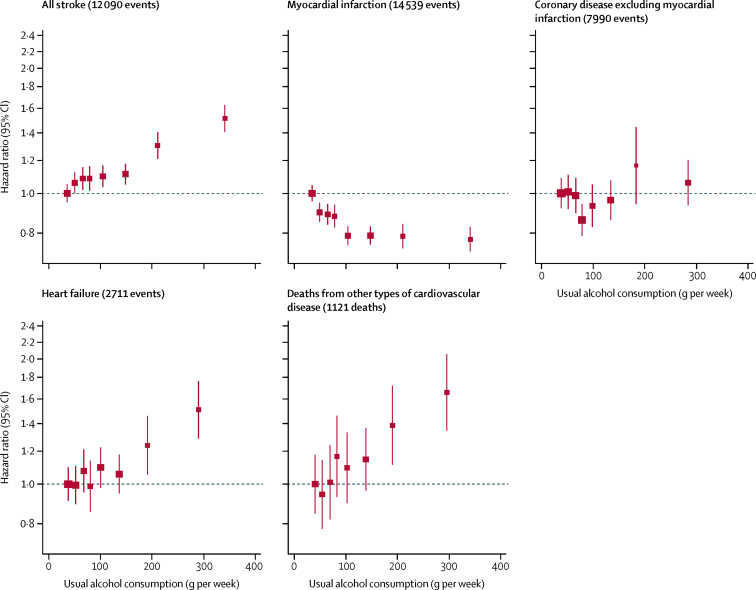
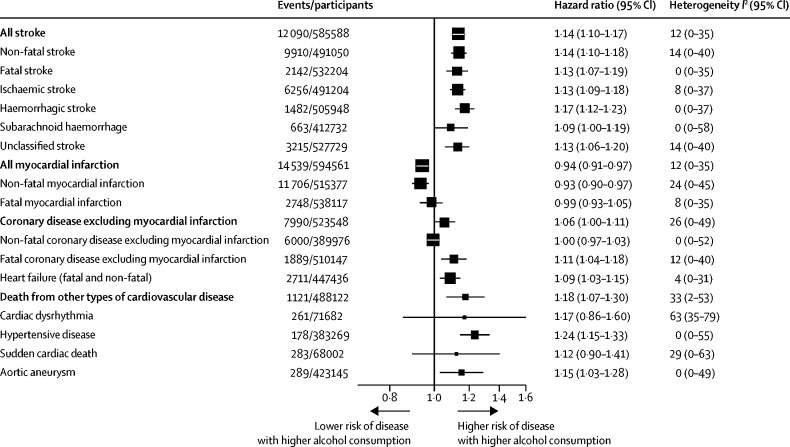
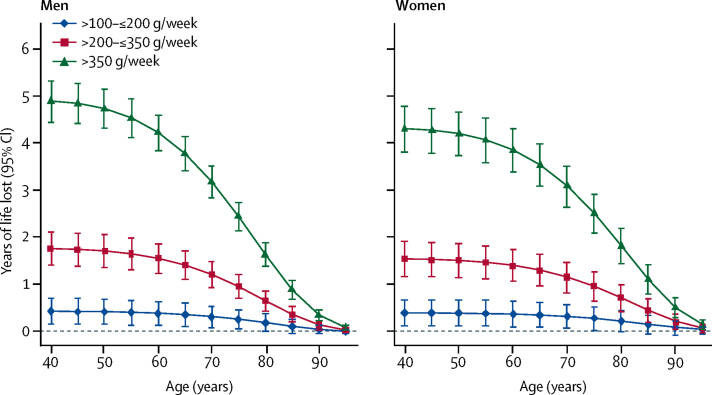
BACKGROUND: Low-risk limits recommended for alcohol consumption vary substantially across different national guidelines. To define thresholds associated with lowest risk for all-cause mortality and cardiovascular disease, we studied individual-participant data from 599 912 current drinkers without previous cardiovascular disease. METHODS: We did a combined analysis of individual-participant data from three large-scale data sources in 19 high-income countries (the Emerging Risk Factors Collaboration, EPIC-CVD, and the UK Biobank). We characterised dose-response associations and calculated hazard ratios (HRs) per 100 g per week of alcohol (12·5 units per week) across 83 prospective studies, adjusting at least for study or centre, age, sex, smoking, and diabetes. To be eligible for the analysis, participants had to have information recorded about their alcohol consumption amount and status (ie, non-drinker vs current drinker), plus age, sex, history of diabetes and smoking status, at least 1 year of follow-up after baseline, and no baseline history of cardiovascular disease. The main analyses focused on current drinkers, whose baseline alcohol consumption was categorised into eight predefined groups according to the amount in grams consumed per week. We assessed alcohol consumption in relation to all-cause mortality, total cardiovascular disease, and several cardiovascular disease subtypes. We corrected HRs for estimated long-term variability in alcohol consumption using 152 640 serial alcohol assessments obtained some years apart (median interval 5·6 years [5th-95th percentile 1·04-13·5]) from 71 011 participants from 37 studies. FINDINGS: In the 599 912 current drinkers included in the analysis, we recorded 40 310 deaths and 39 018 incident cardiovascular disease events during 5·4 million person-years of follow-up. For all-cause mortality, we recorded a positive and curvilinear association with the level of alcohol consumption, with the minimum mortality risk around or below 100 g per week. Alcohol consumption was roughly linearly associated with a higher risk of stroke (HR per 100 g per week higher consumption 1·14, 95% CI, 1·10-1·17), coronary disease excluding myocardial infarction (1·06, 1·00-1·11), heart failure (1·09, 1·03-1·15), fatal hypertensive disease (1·24, 1·15-1·33); and fatal aortic aneurysm (1·15, 1·03-1·28). By contrast, increased alcohol consumption was log-linearly associated with a lower risk of myocardial infarction (HR 0·94, 0·91-0·97). In comparison to those who reported drinking >0-≤100 g per week, those who reported drinking >100-≤200 g per week, >200-≤350 g per week, or >350 g per week had lower life expectancy at age 40 years of approximately 6 months, 1-2 years, or 4-5 years, respectively. INTERPRETATION: In current drinkers of alcohol in high-income countries, the threshold for lowest risk of all-cause mortality was about 100 g/week. For cardiovascular disease subtypes other than myocardial infarction, there were no clear risk thresholds below which lower alcohol consumption stopped being associated with lower disease risk. These data support limits for alcohol consumption that are lower than those recommended in most current guidelines. FUNDING: UK Medical Research Council, British Heart Foundation, National Institute for Health Research, European Union Framework 7, and European Research Council.
Overview
The claims and statistics of this paper haven’t been checked yet.
Free: it reads the open-access text and checks the first 5 claims that cite a source we can check. Create a free account to check every claim.
Integrity signals
Registry
Cites
Statistics
Figures
Verification
Claims the paper makes
The claims and statistics of this paper haven’t been checked yet.
Free: it reads the open-access text and checks the first 5 claims that cite a source we can check. Create a free account to check every claim.
Claims other papers make about this one
Each is checked against this paper’s own text: does it say what the citing paper says it does?
The source backs part of the claim, not all of it — or backs it for a different population, condition or comparison.
In the citing paper
“For example, systematic reviews have quantified exposure levels of alcohol use (e.g. by standard drinks/week) that represent risk-thresholds for stroke, cardio-vascular disease and atrial fibrillation (Samokhvalov, Irving, & Rehm, 2010; Tu et al., 2021; Wood et al., 2018)”
From Risk-thresholds for the association between frequency of cannabis use and the development of psychosis: a systematic review and meta-analysis (2023) · cites this paper as Wood et al., 2018
Experimental — accuracy not yet measuredThe check wasn’t confident either way, so it gives no verdict — never disputed.
In the citing paper
“Regular physical exercise reduces plasma TG levels over and above the effect of weight reduction [151,168,169].”
From 2019 ESC/EAS guidelines for the management of dyslipidaemias: lipid modification to reduce cardiovascular risk (2019) · cites this paper as [168]
Experimental — accuracy not yet measuredIn the citing paper
“However, it is analogous to evidence-based alcohol-related health guidelines where the risk for specific adverse (e.g. cardio-vascular) outcomes is low/absent below certain consumption levels and ‘moderate’ use is recommended”
From Risk-thresholds for the association between frequency of cannabis use and the development of psychosis: a systematic review and meta-analysis (2023) · cites this paper as Wood et al., 2018
Self-check
Percentages, sums and reported differences re-computed from the paper’s own numbers.
The self-check needs the paper’s full text.
Citations
Cites
Bias in meta-analysis detected by a simple, graphical test
Egger, M., Smith, G. D., Schneider, M., & Minder, C. (1997) · BMJ · doi:10.1136/bmj.315.7109.629 · Cited by 56,722 · cited 1×
“35 Methods we used to estimate reductions in life expectancy (years of life lost) are described in the appendix (pp 6–7).”
Quantifying heterogeneity in a meta‐analysis
Higgins, J. P. T., & Thompson, S. G. (2002) · Statistics in Medicine · doi:10.1002/sim.1186 · Cited by 36,763
Self-citationOperating characteristics of a rank correlation test for publication bias
Begg, C. B., & Mazumdar, M. (1994) · Biometrics · doi:10.2307/2533446 · Cited by 16,955 · cited 1×
“33 Evidence of small study effects was assessed visually with funnel plots and by Begg and Mazumdar’s test 34 and Egger’s test.”
Sudlow, C., Gallacher, J., Allen, N., Beral, V., Burton, P., Danesh, J., Downey, P., Elliott, P., Green, J., Landray, M., et al. (2015) · PLOS Medicine · doi:10.1371/journal.pmed.1001779 · Cited by 12,728
Self-citationMACMAHON, S. (1990) · The Lancet · doi:10.1016/0140-6736(90)90878-9 · Cited by 4,253 · cited 1×
“55 However, we did not find convincing evidence that other known risk factors were important mediators or confounders.”
Genomic Aberrations and Survival in Chronic Lymphocytic Leukemia
Döhner, H., Stilgenbauer, S., Benner, A., Leupolt, E., Kröber, A., Bullinger, L., Döhner, K., Bentz, M., & Lichter, P. (2000) · New England Journal of Medicine · doi:10.1056/nejm200012283432602 · Cited by 3,318
ABT-199, a potent and selective BCL-2 inhibitor, achieves antitumor activity while sparing platelets
Souers, A. J., Leverson, J. D., Boghaert, E. R., Ackler, S. L., Catron, N. D., Chen, J., Dayton, B. D., Ding, H., Enschede, S. H., Fairbrother, W. J., et al. (2013) · Nature Medicine · doi:10.1038/nm.3048 · Cited by 3,058
Unmutated Ig VH Genes Are Associated With a More Aggressive Form of Chronic Lymphocytic Leukemia
Hamblin, T. J., Davis, Z., Gardiner, A., Oscier, D. G., & Stevenson, F. K. (1999) · Blood · doi:10.1182/blood.v94.6.1848 · Cited by 2,783
Major lipids, apolipoproteins, and risk of vascular disease
The Emerging Risk Factors Collaboration* (2009) · JAMA · doi:10.1001/jama.2009.1619 · Cited by 2,731
Targeting BCL2 with Venetoclax in Relapsed Chronic Lymphocytic Leukemia
Roberts, A. W., Davids, M. S., Pagel, J. M., Kahl, B. S., Puvvada, S. D., Gerecitano, J. F., Kipps, T. J., Anderson, M. A., Brown, J. R., Gressick, L., et al. (2016) · New England Journal of Medicine · doi:10.1056/nejmoa1513257 · Cited by 1,900
Cited by
Items 501–600 of 1,000
Dobbels, F., Denhaerynck, K., Klem, M. L., Sereika, S. M., Geest, S. D., SIMONE, P. D., Berben, L., Binet, I., Burkhalter, H., Drent, G., et al. (2018) · Transplantation Reviews · doi:10.1016/j.trre.2018.09.003 · Cited by 13
Ortolá, R., García-Esquinas, E., Soler-Vila, H., Ordovas, J. M., López-García, E., & Rodríguez-Artalejo, F. (2019) · Journal of Epidemiology and Community Health · doi:10.1136/jech-2018-211104 · Cited by 12
Atherogenic dyslipidaemia and residual cardiovascular risk: Understanding the link to heart disease
Girón, G. O., Otero, S., Nikolaou, P., Alcover, S., Ramos-Regalado, L., Zaragoza, C., Liberale, L., Borrell-Pagés, M., Padró, T., Suades, R., et al. (2026) · European Journal of Clinical Investigation · doi:10.1111/eci.70167 · Cited by 14
“While moderate fermented beverages consumption is part of the Mediterranean diet, it has been associated with reduced CV events, 128,129 current guidelines recommend limiting alcohol consumption to 100 g/week.”
Staudt, A., Freyer‐Adam, J., Meyer, C., Bischof, G., John, U., & Baumann, S. (2022) · JMIR Public Health and Surveillance · doi:10.2196/33345 · Cited by 13
“The rationale of the intervention was based on findings that alcohol consumption has linear dose-response relationships with cancer [25,26] and cardiovascular disease [27].”
Anthony, E., Reece, J. C., Milanzi, E., Joo, J. E., Joseland, S. L., Clendenning, M., Whelan, A., Parry, S., Arnold, J. L., Vijay, V., et al. (2022) · BMC Gastroenterology · doi:10.1186/s12876-022-02557-7 · Cited by 12
“based on a 2018 combined analysis for risk thresholds for alcohol consumption [27].”
MethodYu, X., Gain, E. P., & Kedia, S. (2024) · Journal of Affective Disorders · doi:10.1016/j.jad.2024.01.004 · Cited by 14
Alcohol consumption patterns in Russia according to the ESSE-RF study: is there a COVID-19 trace?
Maksimov, S. A., Shalnova, S. A., Balanova, Y. А., Васильевна, К. А., Имаева, А. Э., Kutsenko, V. A., Аркадьевна, М. Г., Kotova, M. B., Karamnova, N. S., Евстифеева, С. Е., et al. (2023) · CARDIOVASCULAR THERAPY AND PREVENTION · doi:10.15829/1728-8800-2023-3786 · Cited by 15
Naimi, T. S., & Chikritzhs, T. N. (2024) · Alcoholism Clinical and Experimental Research · doi:10.1111/acer.15478 · Cited by 13
Kang, H., & Kim, D. H. (2024) · BMC Public Health · doi:10.1186/s12889-024-20984-x · Cited by 15
“In fact, research indicates that even in advanced age, individuals can gain health benefits from abstaining from or reducing alcohol consumption [63] and quitting smoking [64].”
Hong, X., Xie, P., Liu, H., Tian, Z., Zhang, R., & Cui, M. (2025) · Frontiers in Nutrition · doi:10.3389/fnut.2025.1564580 · Cited by 14
Gómez, E. V., Nephew, L. D., Gawrieh, S., Vuppalanchi, R., Kettler, C. D., Pike, F., Tu, W., Samala, N. R., Liangpunsakul, S., & Chalasani, N. (2025) · Journal of Hepatology · doi:10.1016/j.jhep.2025.06.033 · Cited by 15
Alcohol, health and cardiovascular disease
Masip, J., & Lluch, J. (2019) · Revista Clínica Española (English Edition) · doi:10.1016/j.rceng.2019.07.001 · Cited by 23
Diagnostic Definitions and Classification of Substance Use Disorders
Saunders, J. B., & Latt, N. C. (2020) · Springer eBooks · doi:10.1007/978-3-030-36391-8_8 · Cited by 15
Janjua, M., Knuiman, M. W., Divitini, M., McQuillan, B., Olynyk, J. K., Jeffrey, G. P., & Adams, L. A. (2021) · Hepatology Communications · doi:10.1002/hep4.1828 · Cited by 13
Self-citationPredictors and prevalence of hazardous alcohol use in middle-late to late adulthood in Europe
Tschorn, M., Schulze, S., Förstner, B. R., Holmberg, C., Spallek, J., Heinz, A., & Rapp, M. A. (2022) · Aging & Mental Health · doi:10.1080/13607863.2022.2076208 · Cited by 15
“…were linked to serious health consequences like cardiovascular diseases (Wood et al., 2018), cancer (Bagnardi et al., 2015) and all-cause mortality (Wood et al., 2018), and heavy drinking increases the risk for aggressive behavior (Heinz et al., 2011) as well as cognitive decline and dementia…”
BackgroundMethodInfluentialDragic, D., Chang, S.-L., Ennour‐Idrissi, K., Durocher, F., Severi, G., & Diorio, C. (2022) · Epigenomics · doi:10.2217/epi-2022-0055 · Cited by 13
Kimura, Y., Yamamoto, R., Shinzawa, M., Aoki, K., Tomi, R., Ozaki, S., Yoshimura, R., Shimomura, A., Iwatani, H., Isaka, Y., et al. (2023) · Nutrients · doi:10.3390/nu15061540 · Cited by 13
“Alcohol consumption causes various health problems [6]: a J-shaped association has been reported with stroke [7,8], especially ischemic stroke [9,10]; a U-shaped association with type 2 diabetes [11–14]; a positive dose-dependent association with atrial fibrillation [15,16], heart failure [7], hemorrhagic stroke [9,10…”
BackgroundRiddell, J., Hempenstall, A., Nakata, Y., Gregson, S., Hayes, R. B., Smith, S., Coates, M., Charlie, L., Perrett, C., Newie, V., et al. (2023) · PLoS ONE · doi:10.1371/journal.pone.0284151 · Cited by 15
Cook, W. K., Kerr, W. C., Zhu, Y., Bright, S., Buckley, C. M., Kilian, C., Lasserre, A. M., Llamosas‐Falcón, L., Mulia, N., Rehm, J. T., et al. (2024) · Drug and Alcohol Review · doi:10.1111/dar.13819 · Cited by 13
López-Santi, R., Haseeb, S., Alexander, B., D′Ovidio, A., Giménez, S., Secotaro, C. R., Demaría, D. M., Pupi, L. M., Costantini, S., Piskorz, D. L., et al. (2018) · Diseases · doi:10.3390/diseases6030077 · Cited by 13
“[25] improved on previous meta-analyses to define the low-risk drinking thresholds associated with all-cause mortality and cardiovascular disease.”
MethodAlcohol Consumption and Aortic Root Dilatation: Insights from the Corinthia Study
Oikonomou, E. K., Lazaros, G. A., Tsalamandris, S., Vogiatzi, G., Christoforatou, E., Papakonstantinou, M., Goliopoulou, A., Tousouli, M., Chasikidis, C., & Tousoulis, D. (2019) · Angiology · doi:10.1177/0003319719848172 · Cited by 13
Chevli, P. A., Aladin, A. I., Kanaya, A. M., Kandula, N. R., Malaver, D., & Herrington, D. M. (2019) · Nutrition Metabolism and Cardiovascular Diseases · doi:10.1016/j.numecd.2019.07.021 · Cited by 13
Nagakura, Y., Kato, H., Asano, S., Jinno, Y., & Tanei, S. (2021) · International Journal of Environmental Research and Public Health · doi:10.3390/ijerph18020836 · Cited by 13
“, the mortality risk is reduced by light consumption compared to abstinence but increases steeply as consumption increases [27,28].”
BackgroundSkourlis, N., Massara, P., Patsis, I., Peppa, E., Katsouyanni, K., & Trichopoulou, A. (2021) · Nutrients · doi:10.3390/nu13093077 · Cited by 13
“In addition, most cohort studies in this area assess participants’ alcohol intake at the time of entry into a cohort and provide no information during follow-up [18].”
BackgroundSelf-citationTrends in older people’s drinking habits, Sweden 2004–2017
Raninen, J., & Agahi, N. (2020) · Nordic Studies on Alcohol and Drugs · doi:10.1177/1455072520954336 · Cited by 11
“We do know that alcohol is a major contributor to the disease burden in society (Griswold et al., 2018; Wood et al., 2018) and that older people are more susceptible to the effects of alcohol (Anderson et al., 2012).”
Women and Alcohol: Limitations in the Cardiovascular Guidelines
Wang, C. N., Liblik, K., Haseeb, S., López-Santi, R., & Baranchuk, A. M. (2022) · Current Problems in Cardiology · doi:10.1016/j.cpcardiol.2022.101200 · Cited by 11
Niemelä, O. J., Bloigu, A. H., Bloigu, R., Aalto, M., & Laatikainen, T. K. (2023) · Journal of Clinical Medicine · doi:10.3390/jcm12134276 · Cited by 16
“Among the various individual lifestyle risk factors, alcohol drinking has been established as a major contributor to both hepatic and multiple extrahepatic health risks, including cardiac insufficiency [56,57], adverse brain outcomes [58,59], carcinogenesis [60–62] and all-cause mortality [63,64].”
BackgroundWestrop, S. C., Rana, D., Jaiswal, N., Wu, O., McGarty, A. M., Melville, C. A., Ells, L. J., Lally, P. J., McEwan, M., Harris, L., et al. (2024) · Journal of Intellectual Disability Research · doi:10.1111/jir.13120 · Cited by 11
Major Psychiatric Disorders, Substance Use Behaviors, and Longevity
Rosoff, D. B., Hamandi, A. M., Bell, A. S., Mavromatis, L. A., Park, L. M., Jung, J., Wagner, J., & Lohoff, F. W. (2024) · JAMA Psychiatry · doi:10.1001/jamapsychiatry.2024.1429 · Cited by 12
Alcohol and mortality in Mexico: prospective study of 150 000 adults
Trichia, E., Alegre-Díaz, J., Aguilar-Ramirez, D. J., Ramírez-Reyes, R., Garcilazo‐Ávila, A., González-Carballo, C., Bragg, F., Gnatiuc, L., Herrington, W. G., Holland, L., et al. (2024) · The Lancet Public Health · doi:10.1016/s2468-2667(24)00228-7 · Cited by 14
Self-citationKoponen, K., McDonald, D. T., Jousilahti, P., Méric, G., Inouye, M., Lahti, L., Niiranen, T., Männistö, S., Havulinna, A. S., Knight, R. D., et al. (2025) · European Journal of Nutrition · doi:10.1007/s00394-025-03668-z · Cited by 13
“Alcohol has been shown to have a positive curvilinear relationship with all-cause mortality, with a minimum mortality risk starting at a 100 g per week threshold [3].”
Self-citationCHD Risk Minimization through Lifestyle Control: Machine Learning Gateway
He, X., Matam, B. R., Bellary, S., Ghosh, G., & Chattopadhyay, A. K. (2020) · Scientific Reports · doi:10.1038/s41598-020-60786-w · Cited by 11
O’Flaherty, R., Simon, Á., Alonso‐Sampedro, M., Batán, S. S., Fernández‐Merino, C., Gudé, F., Saldova, R., & González‐Quintela, A. (2022) · Biomolecules · doi:10.3390/biom12020241 · Cited by 11
Ahlner, F., Falk, H., Johansson, L., Fässberg, M. M., Sterner, T. R., Samuelsson, J., Zettergren, A., Wærn, M., & Skoog, I. G. (2022) · International Journal of Environmental Research and Public Health · doi:10.3390/ijerph19148248 · Cited by 16
Alcohol and health. Does regular drinking of small dose of alcohol really good for your health?
Surma, S., & Więcek, A. (2022) · Archives of Medical Science - Atherosclerotic Diseases · doi:10.5114/amsad/150319 · Cited by 14
“, involving nearly 600 000 people, also showed a positive and curvilinear relationship between alcohol consumption and the risk of death [27].”
BackgroundOh, J., Park, E., Kim, B., Choi, Y., Yun, E. H., Lim, M. K., Im, J.-S., & Park, E. Y. (2022) · Epidemiology and Health · doi:10.4178/epih.e2022068 · Cited by 12
“Even though several studies have suggested the classic J-shaped curve regarding the protective effect of light alcohol consumption for ischemic heart disease and all-cause mortality [20,21], it is well established that there is no safe limit of alcohol consumption for causing cancer [22,23].”
BackgroundOuyang, F., Wang, B., Wu, Q., Yang, Q., Meng, X., Liu, J., Xu, Z., Lv, L., & Zeng, X. (2023) · European Journal of Radiology · doi:10.1016/j.ejrad.2023.110922 · Cited by 12
Zhang, N., Xue, F., Wu, X., Zhang, W., Hou, J., Xiang, J., Lv, Y., & Zhang, X. (2023) · Alcohol and Alcoholism · doi:10.1093/alcalc/agad046 · Cited by 13
Tevik, K., Selbæk, G., Engedal, K., Seim, A., Krokstad, S., & Helvik, A. (2019) · PLoS ONE · doi:10.1371/journal.pone.0214813 · Cited by 11
Nadkarni, A., Velleman, R. D. B., Bhatia, U., Fernandes, G., D’Souza, E., & Murthy, P. (2019) · Alcohol · doi:10.1016/j.alcohol.2019.08.006 · Cited by 11
“, hypertension and stroke) diseases (Holst, Tolstrup, Sørensen, & Becker, 2017; Rehm et al., 2017; Schoepf & Heun, 2015; Wood et al., 2018).”
Park, J. E., Hong, J. P., Jeon, H. J., Seong, S. J., Sohn, J. H., Ha, T. H., Lee, D. W., Park, J., Cho, S., Chang, S. M., et al. (2020) · Social Psychiatry and Psychiatric Epidemiology · doi:10.1007/s00127-020-01845-5 · Cited by 11
Chevli, P. A., Hari, K., Kanaya, A. M., Talegawkar, S. A., Needham, B. L., & Herrington, D. M. (2020) · Alcoholism Clinical and Experimental Research · doi:10.1111/acer.14422 · Cited by 14
“Despite multiple studies revealing the benefits of low to moderate alcohol consumption, a recent analysis from the study of nearly 600,000 individuals revealed that more than 1 drink per day was associated with increased all-cause mortality (Wood et al., 2018).”
Backgroundde Veld, L., van Hoof, J. J., Wolberink, I. M., & van der Lely, N. (2020) · European Journal of Pediatrics · doi:10.1007/s00431-020-03823-0 · Cited by 13
Changing dietary approaches to prevent cardiovascular disease
Nestel, P. J., Beilin, L. J., & Mori, T. A. (2020) · Current Opinion in Lipidology · doi:10.1097/mol.0000000000000709 · Cited by 11
Chen, I., Kuo, P., Yang, A. C., Tsai, S., Liu, T., Liu, H., Lan, T., Chen, H., Huang, H., Chung, R., et al. (2020) · Scientific Reports · doi:10.1038/s41598-020-75199-y · Cited by 12
Bell, S. (2018) · Journal of the American Heart Association · doi:10.1161/jaha.118.009698 · Cited by 11
“They found that no level of alcohol intake was associated with a lower risk of developing hypertension in either sex, which is in contrast to previous systematic reviews of this topic as well as observational studies of alcohol consumption and some cardiovascular outcomes.(3,4) Piano and co-workers(5) provide compleme…”
BackgroundResultSelf-citationRomero‐Gómez, M., Arab, J. P., de Oliveira, C. P. M. S., Hernández, M., Arrese, M. A., Cortez‐Pinto, H., & Bataller, R. A. (2024) · Seminars in Liver Disease · doi:10.1055/s-0044-1785228 · Cited by 11
AUDIT C compared to PEth in middle-aged volunteers
Fredriksson, M., & Werner, M. (2024) · Alcohol and Alcoholism · doi:10.1093/alcalc/agae048 · Cited by 12
“Some data suggest a positive effect of moderate alcohol consumption in a middle-aged population, especially women, in high-income countries concerning some types of ischemic heart disease (Bell et al. 2017, Wood et al. 2018).”
Zhao, A., Wu, L., Lin, L., Li, S., Liao, X., Chen, L., & Lin, Y. (2024) · Scientific Reports · doi:10.1038/s41598-024-69668-x · Cited by 16
Kado, A., Moriya, K., Inoue, Y., Yanagimoto, S., Tsutsumi, T., Koike, K., & Fujishiro, M. (2024) · Scientific Reports · doi:10.1038/s41598-024-76084-8 · Cited by 11
“First, in this study, “heavy-drinking” group was defined based on the alcohol consumption of > 100 g/week, with a higher mortality rate 10,69 , whereas alcohol consumption of ≤ 100 g/week was considered “light-to-moderate drinking” 69 .”
BackgroundEurasian clinical practice guidelines for dietary management of cardiovascular diseases (2024)
Starodubova, A. V., Chazova, I. E., Tutelyan, V. A., Nikityuk, D. B., Pavlovskaya, E. V., Кislyak, O. A., Blinova, N. V., Brumberg, A. A. B., Bubnova, M. G., Varaeva, Y. R., et al. (2024) · Eurasian heart journal · doi:10.38109/2225-1685-2024-4-6-66 · Cited by 13
Unhealthy alcohol use and risk of coronary heart disease among young and middle-aged adults
Rana, J. S., Chi, F. W., Acquah, I., & Sterling, S. (2025) · American Journal of Preventive Cardiology · doi:10.1016/j.ajpc.2025.100947 · Cited by 10
“Of note, compared to other studies [26,30,31], the follow up period for our study was relatively short (4 years), suggesting that a longer follow up period could have resulted in stronger associations.”
Yang, Q., Li, M., Chen, P., Dou, N., Liu, M., Lu, P., & Yu, C. (2025) · Journal of the American Heart Association · doi:10.1161/jaha.124.035936 · Cited by 11
“32 Furthermore, a cross-sectional study indicated that low, moderate, and heavy drinkers exhibited significantly lower allostatic load scores, encompassing cardiovascular, metabolic, and other health metrics, compared with nondrinkers.”
Health effects associated with alcohol consumption: a Burden of Proof study
Dai, X., Nicholson, S. I., Lawlor, H. R., Carr, S., Steinmetz, J. D., Chen, N. M., McLaughlin, S. A., Hay, S. I., Ong, S. K., Aravkin, A. Y., et al. (2026) · Nature Health · doi:10.1038/s44360-026-00139-5 · Cited by 15
“Additional study details are provided in Supplementary Tables 9–11; results without trimming are shown in Supplementary Fig.”
InfluentialAlcohol, salud y enfermedad cardiovascular
Masip, J., & Lluch, J. (2019) · Revista Clínica Española · doi:10.1016/j.rce.2019.05.013 · Cited by 17
Hypertension Canada’s 2020 hypertension guidelines for pharmacists: An update
Watson, K. E., Hamarneh, Y. N. A., Rabi, D. M., Daskalopoulou, S. S., & Tsuyuki, R. T. (2020) · Canadian Pharmacists Journal / Revue des Pharmaciens du Canada · doi:10.1177/1715163520975809 · Cited by 11
“Wood et al.(31) identified a positive linear relationship between hypertension-related mortality and alcohol consumption (Hazard Ratio per 100 g per week higher consumption, 1.”
BackgroundInfluentialAlcohol consumption, smoking, and invasive breast cancer risk after ductal carcinoma in situ
Jordahl, K. M., Malone, K. E., Baglia, M. L., Flanagan, M. R., Tang, M.-T. C., Porter, P. L., & Li, C. I. (2022) · Breast Cancer Research and Treatment · doi:10.1007/s10549-022-06573-9 · Cited by 10
Cui, M., Li, F., Gang, X., Gao, Y., Xiao, X., Wang, G., Liu, Y., & Wang, G. (2023) · Journal of Diabetes · doi:10.1111/1753-0407.13371 · Cited by 12
Arafa, A., Kashima, R., Kokubo, Y., Teramoto, M., Sakai, Y., Nosaka, S., Kawachi, H., Shimamoto, K., Matsumoto, C., Gao, Q., et al. (2023) · Environmental Health and Preventive Medicine · doi:10.1265/ehpm.22-00231 · Cited by 13
“The included studies used data from the British Regional Heart Study (BRHS) [24], the British ClinicAl research using LInked Bespoke studies and Electronic health Records (CALIBER) [27], the Cohort of Swedish Men (COSM) [28], the Swedish Mammography Cohort (SMC) [28], 83 cohorts from 19 high-income countries [29], and…”
MethodCejudo, M. G. J., Ochoa‐Rosales, C., Ahmadizar, F., Kavousi, M., Geleijnse, J. M., & Voortman, T. (2023) · European Journal of Nutrition · doi:10.1007/s00394-023-03209-6 · Cited by 10
Self-citationTrius‐Soler, M., Mukamal, K. J., & Guasch‐Ferré, M. (2023) · Current Opinion in Lipidology · doi:10.1097/mol.0000000000000906 · Cited by 10
“Indeed, although alcohol consumption has been variably associated with lower risk of some but not all forms of CVD [55], alcohol consumption is marked by specific patterns or domains that may have vastly different associations with health.”
BackgroundCampanella, A., Bonfiglio, C., Cuccaro, F., Donghia, R., Tatoli, R., & Giannelli, G. (2023) · Nutrients · doi:10.3390/nu16010059 · Cited by 12
Visontay, R., Mewton, L. R., Sunderland, M., Chapman, C., & Slade, T. N. (2024) · Alcoholism Clinical and Experimental Research · doi:10.1111/acer.15299 · Cited by 11
Bendtsen, M. (2019) · JMIR Research Protocols · doi:10.2196/12898 · Cited by 10
Helgadóttir, B., Mather, L., Narusyte, J., Ropponen, A., Blom, V., & Svedberg, P. (2019) · BMJ Open · doi:10.1136/bmjopen-2019-031889 · Cited by 12
Okubo, R., & Tabuchi, T. (2020) · Journal of Affective Disorders · doi:10.1016/j.jad.2020.10.037 · Cited by 10
Sattgast, L. H., Branscum, A. J., Walter, N. A. R., Newman, N., Gonzales, S. W., Grant, K. A., Turner, R. T., & Iwaniec, U. T. (2021) · Alcohol · doi:10.1016/j.alcohol.2020.12.003 · Cited by 11
“A meta-analysis of 83 prospective studies with a combined 599,912 drinkers reported a threshold of 100 g alcohol/week at which an increased risk of all-cause mortality occurred (Wood et al., 2018).”
Alcohol and cardiovascular disease: Position Paper of the Czech Society of Cardiology
Cífková, R., & Krajčoviechová, A. (2019) · Central European Journal of Public Health · doi:10.21101/cejph.a5998 · Cited by 10
“A paper published recently in the Lancet (8) reported data of 599,912 alcohol drinkers obtained from 83 prospective studies conducted in high-income countries and documenting overall 40,310 deaths and 39,018 cardiovascular events (5.”
BackgroundInfluentialMoreno‐Franco, B., Pérez‐Esteban, A., Civeira, F., Guallar‐Castillón, P., Casasnovas, J. A., Mateo‐Gállego, R., Jarauta, E., Malo, S., & Laclaustra, M. (2020) · Addiction · doi:10.1111/add.15012 · Cited by 11
Dietary patterns generated by the Treelet Transform and risk of stroke: a Danish cohort study
Frederiksen, S. B., Themsen, H. H., Overvad, K., & Dahm, C. C. (2020) · Public Health Nutrition · doi:10.1017/s1368980019004324 · Cited by 12
“Our results could be due to the non-uniform reference group (Q1), as this quintile included both participants who never consume alcohol – possibly for health-related reasons, and thus might have a high underlying risk of stroke(37) – and those with frequent alcohol intake.”
BackgroundSelf-citationAlcohol and mortality in older people: understanding the J-shaped curve
Stott, D. J. (2020) · Age and Ageing · doi:10.1093/ageing/afaa027 · Cited by 11
Polygenic Interactions With Environmental Exposures in Blood Pressure Regulation: The HUNT Study
Øvretveit, K., Ingeström, E., Spitieris, M., Tragante, V., Thomas, L. F., Steinsland, I., Brumpton, B. M., Gudbjartsson, D. F., Hólm, H., Stefánsson, K., et al. (2024) · Journal of the American Heart Association · doi:10.1161/jaha.123.034612 · Cited by 11
“43 Moreover, we did not find a reliable signal for alcohol consumption using with the 5 original alcohol exposures from the data set, suggesting that the signal for the dichotomized binge drinking exposure may be spurious.”
Impact of Alcohol Consumption on Lifespan: a Mendelian randomization study in Europeans
Jiesisibieke, Z. L., & Schooling, C. M. (2024) · Scientific Reports · doi:10.1038/s41598-024-73333-8 · Cited by 9
“However, the included studies recruited across the age range [49–52].”
BackgroundXu, Y., Chen, R., Torkki, P. M., Zheng, W., & Chen, A. (2024) · BMC Geriatrics · doi:10.1186/s12877-024-05599-6 · Cited by 9
“The protective effects of moderate alcohol intake on cognition are likely due to mechanisms such as improved cardiovascular health, which is closely linked to brain health [82, 83].”
Blood Pressure After Changes in Light-to-Moderate Alcohol Consumption in Women and Men
Suzuki, T., Fukui, S., Yoneoka, D., Aoki, J., & Fujiwara, T. (2025) · Journal of the American College of Cardiology · doi:10.1016/j.jacc.2025.09.018 · Cited by 13
Arecco, L., Cacilhas, P. M., Gismondi, C. B. L., Bruzzone, M., Gentile, G., Gerosa, R., Blondeaux, E., Agostinetto, E., Dauccia, C., Lobo-Martins, S., et al. (2026) · The Breast · doi:10.1016/j.breast.2026.104719 · Cited by 9
“These classifications were defined in accordance with international guidelines and widely adopted epidemiological standards [15].”
Challenges, policy and politics in drug checking: reflections of the TEDItorial team
der Linden, N. V., Koning, R. P. J., van der Gouwe, D., Ventura, M., & Measham, F. C. (2022) · Drugs Habits and Social Policy · doi:10.1108/dhs-10-2022-0037 · Cited by 9
Carbonic maceration vinification: A tool for wine alcohol reduction
Viguera, A. R. G., Portu, J., López, R., Garijo, P., González‐Arenzana, L., & Santamaría, P. (2023) · Food Chemistry · doi:10.1016/j.foodchem.2023.136558 · Cited by 9
Epidemiological survey of hypertension among middle-aged and elderly adults in Anhui Province
Zhai, Y., Cui, C., Yu, T., & Su, Z. (2023) · Medicine · doi:10.1097/md.0000000000034402 · Cited by 9
Gamba, M., Pano, O., Raguindin, P. F., Roa‐Díaz, Z. M., Muka, T., Glišić, M., Franco, O. H., & Marques-Vidal, P. M. (2023) · Nutrients · doi:10.3390/nu15224793 · Cited by 9
“The only difference between the DPI and the hDPI derives from the exclusion in the hDPI of alcohol items, whose protective effect against CVD is being increasingly challenged [34,35].”
BackgroundSelf-citationAspects épidémiologiques de l’alcoolodépendance
Laqueille, X., Lacombe, M., & Dervaux, A. (2018) · La Presse Médicale · doi:10.1016/j.lpm.2018.04.009 · Cited by 17
Devilly, G. J., & Srbinovski, A. (2019) · International Journal of Drug Policy · doi:10.1016/j.drugpo.2018.12.007 · Cited by 9
van Oort, S., Beulens, J. W. J., van der Heijden, A. A. W. A., Elders, P. J. M., Stehouwer, C. D. A., van de Luitgaarden, I. A. T., Schrieks, I. C., Grobbee, D. E., & van Ballegooijen, A. J. (2019) · Nutrition Metabolism and Cardiovascular Diseases · doi:10.1016/j.numecd.2019.09.021 · Cited by 9
Self-citationAlcohol Intoxication as a Stroke Mimic and the Incidence of Acute Alcohol Intoxication in Stroke
Hassing, L. T., Verschoof, M. A., & Koppen, H. (2019) · Journal of Stroke and Cerebrovascular Diseases · doi:10.1016/j.jstrokecerebrovasdis.2019.104424 · Cited by 9
Impact on ICU mortality of moderate alcohol consumption in patients admitted with infection
Gacouin, A., Painvin, B., Coirier, V., Quelven, Q., Delange, B., Joussellin, V., Belicard, F., L'her, F., Maamar, A., Tulzo, Y. L., et al. (2020) · Journal of Critical Care · doi:10.1016/j.jcrc.2020.02.008 · Cited by 9
Epidemiology of Alcoholic Liver Disease in Korea
Lee, S. W. (2020) · Korean Journal of Gastroenterology · doi:10.4166/kjg.2020.76.2.55 · Cited by 9
“남성에 비해 작기 때문에 남성보다 알코올 분해 능력이 떨어 진다.(15,16) 따라서 같은 양의 술을 마셔도 남성에 비해 여성에”
Halford, J. L., Weng, L.-C. C., Choi, S. H., Jurgens, S. J., Morrill, V. N., Khurshid, S. S., Trinquart, L., Benjamin, E. J., Ellinor, P. T., & Lubitz, S. A. (2020) · Circulation Genomic and Precision Medicine · doi:10.1161/circgen.120.003111 · Cited by 13
Lucki, M., Chlebuś, E., Wareńczak, A., & Lisiński, P. (2021) · Medicina · doi:10.3390/medicina57030190 · Cited by 11
Alcohol intake, beverage type, and lung function: a multicohort study of Chinese adults
Wang, D., Cao, L., Zhou, M., Ma, J., Wang, B., Yuan, J., & Chen, W. (2022) · Annals of the New York Academy of Sciences · doi:10.1111/nyas.14744 · Cited by 10
Kim, M., Kim, H., Han, K., Yoo, J., Yang, K., & Jeon, H. J. (2022) · Journal of Psychiatric Research · doi:10.1016/j.jpsychires.2022.09.022 · Cited by 9
Kurshed, A. A. M., Ádány, R., & Diószegi, J. (2022) · International Journal of Molecular Sciences · doi:10.3390/ijms232415989 · Cited by 10
Liu, C., Yin, R., Cao, X., Shi, Z.-H., Huang, F., Wei, B., Deng, G., Zheng, P., & Guan, Y. (2022) · Frontiers in Genetics · doi:10.3389/fgene.2022.843661 · Cited by 10
Total Dealcoholisation of Wines by Very Low Temperature Vacuum Distillation Technology Called GoLo
Veiga-del-Baño, J. M., Cuenca-Martínez, J. J., Oliva, J. M., Cámara, M. Á., & Andreo‐Martínez, P. (2024) · Beverages · doi:10.3390/beverages10020032 · Cited by 9
“…solid “pharmacological” human evidence on the biological effects of wine polyphenols [5], and a reduction in the risk of heart disease (a lower risk of myocardial infarction) seems to be the only disease still recognised in critical reviews of epidemiological data related to wine consumption [6].”
BackgroundGalán, I., Fontán, J., Ortíz, C., López‐Cuadrado, T., Téllez-Plaza, M., & García‐Esquinas, E. (2024) · Addictive Behaviors · doi:10.1016/j.addbeh.2024.108108 · Cited by 10
Fountoukidis, G., Schiza, A., Smith, D. R., Othman, M., Bergman, M., Ahlgren, J., Lambe, M. P., Irenaeus, S., & Valachis, A. (2025) · BMC Cancer · doi:10.1186/s12885-025-13694-z · Cited by 9
Vieiros, M., Almeida-Toledano, L., Serra-Delgado, M., Navarro‐Tapia, E., Ramos-Triguero, A., Muñoz, C., Martínez, L., Marchei, E., Gómez‐Roig, M. D., García‐Algar, Ó., et al. (2025) · Biomedicine & Pharmacotherapy · doi:10.1016/j.biopha.2025.118138 · Cited by 10
Jeong, J., Han, S., Park, G., Park, S.-W., Jeon, Y., Lim, S., Kwon, W. J., Choi, S. H., & Park, N. H. (2025) · Scientific Reports · doi:10.1038/s41598-025-10380-9 · Cited by 8
“New evidence has suggested that MASLD is not only a hepatic manifestation of metabolic syndrome but also an independent risk factor for other diseases and increased mortality 27–36 .”
Norris, A. L., Rich, C. M., Kaplan, C., Krieger, N. H., Carey, K. B., & Carey, M. P. (2020) · Psychology and Sexuality · doi:10.1080/19419899.2020.1729848 · Cited by 10
“, >7 drinks per week) given that this level of drinking (a) is associated with greater all-cause mortality (Wood et al., 2018), (b) mediates the likelihood of being sexually revictimized in the future (Norris, Carey, Shepardson, & Carey, 2018; Testa et al.”
BackgroundMethodInfluentialUkai, T., Tabuchi, T., & Iso, H. (2022) · Preventive Medicine · doi:10.1016/j.ypmed.2022.107293 · Cited by 11
Sakai, K., Okada, H., Hamaguchi, M., Nishioka, N., Tateyama, Y., Shimamoto, T., Kurogi, K., Murata, H., Ito, M., Iwami, T., et al. (2023) · Current Problems in Cardiology · doi:10.1016/j.cpcardiol.2023.101818 · Cited by 10
Metadata
- Authors
- Wood, A. M., Kaptoge, S., Butterworth, A. S., Willeit, P., Warnakula, S., Bolton, T., Paige, E., Paul, D. S., Sweeting, M., Burgess, S., Bell, S., Astle, W., Stevens, D., Koulman, A., Selmer, R. M., Verschuren, W. M. M., Sato, S., Njølstad, I., Woodward, M., Salomaa, V., Nordestgaard, B. G., Yeap, B. B., Fletcher, A., Melander, O., Kuller, L. H., Balkau, B., Marmot, M., Koenig, W., Casiglia, E., Cooper, C., Arndt, V., Franco, O. H., Wennberg, P., Gallacher, J., de la Cámara, A. G., Völzke, H., Dahm, C. C., Dale, C. E., Bergmann, M. M., Crespo, C. J., van der Schouw, Y. T., Kaaks, R., Simons, L. A., Lagiou, P., Schoufour, J. D., Boer, J. M. A., Key, T. J., Rodriguez, B., Moreno-Iribas, C., Davidson, K. W., Taylor, J. O., Sacerdote, C., Wallace, R. B., Quiros, J. R., Tumino, R., Blazer, D. G., Linneberg, A., Daimon, M., Panico, S., Howard, B., Skeie, G., Strandberg, T., Weiderpass, E., Nietert, P. J., Psaty, B. M., Kromhout, D., Salamanca-Fernandez, E., Kiechl, S., Krumholz, H. M., Grioni, S., Palli, D., Huerta, J. M., Price, J., Sundström, J., Arriola, L., Arima, H., Travis, R. C., Panagiotakos, D. B., Karakatsani, A., Trichopoulou, A., Kühn, T., Grobbee, D. E., Barrett-Connor, E., van Schoor, N., Boeing, H., Overvad, K., Kauhanen, J., Wareham, N., Langenberg, C., Forouhi, N., Wennberg, M., Després, J.-P., Cushman, M., Cooper, J. A., Rodriguez, C. J., Sakurai, M., Shaw, J. E., Knuiman, M., Voortman, T., Meisinger, C., Tjønneland, A., Brenner, H., Palmieri, L., Dallongeville, J., Brunner, E. J., Assmann, G., Trevisan, M., Gillum, R. F., Ford, I., Sattar, N., Lazo, M., Thompson, S. G., Ferrari, P., Leon, D. A., Smith, G. D., Peto, R., Jackson, R., Banks, E., Di Angelantonio, E., Danesh, J., Wood, A. M., Kaptoge, S., Butterworth, A., Willeit, P., Warnakula, S., Bolton, T., Paige, E., Paul, D. S., Sweeting, M., Burgess, S., Bell, S., Astle, W., Stevens, D., Koulman, A., Selmer, R. M., Verschuren, M., Sato, S., Njølstad, I., Woodward, M., Veikko, S., Nordestgaard, B. G., Yeap, B. B., Flecther, A., Melander, O., Kuller, L. H., Balkau, B., Marmot, M., Koenig, W., Casiglia, E., Cooper, C., Arndt, V., Franco, O. H., Wennberg, P., Gallacher, J., Gómez de la Cámara, A., Völzke, H., Dahm, C. C., Dale, C. E., Bergmann, M., Crespo, C., van der Schouw, Y. T., Kaaks, R., Simons, L. A., Lagiou, P., Schoufour, J. D., Boer, J. M. A., Key, T. J., Rodriguez, B., Moreno-Iribas, C., Davidson, K. W., Taylor, J. O., Sacerdote, C., Wallace, R. B., Quiros, J. R., Rimm, E. B., Tumino, R., Blazer III, D. G., Linneberg, A., Daimon, M., Panico, S., Howard, B., Skeie, G., Salomaa, V., Strandberg, T., Weiderpass, E., Nietert, P. J., Psaty, B. M., Kromhout, D., Salamanca-Fernandez, E., Kiechl, S., Krumholz, H. M., Grioni, S., Palli, D., Huerta, J. M., Price, J., Sundström, J., Arriola, L., Arima, H., Travis, R. C., Panagiotakos, D. B., Karakatsani, A., Trichopoulou, A., Kühn, T., Grobbee, D. E., Barrett-Connor, E., van Schoor, N., Boeing, H., Overvad, K., Kauhanen, J., Wareham, N., Langenberg, C., Forouhi, N., Wennberg, M., Després, J.-P., Cushman, M., Cooper, J. A., Rodriguez, C. J., Sakurai, M., Shaw, J. E., Knuiman, M., Voortman, T., Meisinger, C., Tjønneland, A., Brenner, H., Palmieri, L., Dallongeville, J.-P., Brunner, E. J., Assmann, G., Trevisan, M., Gillumn, R. F., Ford, I. F., Sattar, N., Lazo, M., Thompson, S., Ferrari, P., Leon, D. A., Davey Smith, G., Peto, R., Jackson, R., Banks, E., Di Angelantonio, E., & Danesh, J.
- Affiliations
- University of Cambridge (GB)
- University Medical Center Utrecht (NL)
- London School of Hygiene & Tropical Medicine (GB)
- German Institute of Human Nutrition (DE)
- Portland State University (US)
- Institut Pasteur de Lille (FR)
- Howard University Hospital (US)
- ORCID
- Venue
- The Lancet
- Publisher
- Elsevier BV
- Published
- 2018-04
- Volume
- 391
- Issue
- 10129
- Pages
- 1513-1523
- ISSN
- 0099-5355 (ISSN-L)
- 0140-6736
- PMC
- PMC5899998
- OpenAlex
- W2787107952
- Semantic Scholar
- 67861ba0b72d3635d063ce89d6b401c9f5a93164
- Cited by
- 1,188
- References
- 54
- Citations by year
- 2026: 78 · 2025: 117 · 2024: 135 · 2023: 146 · 2022: 155 · 2021: 173 · 2020: 164 · 2019: 155 · 2018: 63
- FWCI
- 105.54
- Type
- journal article
- Language
- en
- Update notices
- erratum (2018-06-02)
- Open access
- hybrid
- doi.org
- Licence
- cc-by
- www.elsevier.com/tdm/userlicense/1.0/ (tdm)
- creativecommons.org/licenses/by/4.0/ (vor)
- Locations
- The Lancet (publishedVersion, cc-by)
- Europe PMC (PubMed Central) (publishedVersion, other-oa)
- PubMed Central (publishedVersion, cc-by)
- PubMed (publishedVersion)
- Pure Amsterdam UMC (publishedVersion, cc-by)
- Research at the University of Copenhagen (University of Copenhagen) (publishedVersion, cc-by)
- Amsterdam UMC (VU Amsterdam) - Institutional Repository (publishedVersion, other-oa)
- EUR Research Repository (Erasmus University Rotterdam) (publishedVersion)
- University of Groningen research database (University of Groningen / Centre for Information Technology) (publishedVersion, cc-by)
- Explore Bristol Research (publishedVersion, other-oa)
- ENLIGHTEN (Jurnal Bimbingan dan Konseling Islam) (acceptedVersion, cc-by-sa)
- ePrints Soton (University of Southampton) (acceptedVersion)
- Socio-Environmental Systems Modeling (acceptedVersion, cc-by)
- Leicester Research Archive (University of Leicester) (acceptedVersion, other-oa)
- LSHTM Research Online (London School of Hygiene and Tropical Medicine) (acceptedVersion)
- ANU Open Research (Australian National University) (submittedVersion, cc-by)
- UNSWorks (UNSW Sydney) (submittedVersion, cc-by)
- UEF eRepo (University of Eastern Finland) (submittedVersion, cc-by)
- VBN Forskningsportal (Aalborg Universitet) (submittedVersion, cc-by)
- RISalud Institutional Health Repository of Andalucía (submittedVersion, cc-by)
- Apollo (University of Cambridge) (submittedVersion, cc-by)
- PDXScholar (Portland State University) (submittedVersion)
- UWA Profiles and Research Repository (UWA) (submittedVersion, cc-by)
- EUR Research Repository (Erasmus University Rotterdam) (submittedVersion)
- RePub (Erasmus University Rotterdam) (submittedVersion, other-oa)
- DiVA at Umeå University (Umeå University) (submittedVersion, other-oa)
- Uppsala University Publications (Uppsala University) (submittedVersion, other-oa)
- HAL (submittedVersion)
- LA Referencia (Red Federada de Repositorios Institucionales de Publicaciones Científicas) (submittedVersion, other-oa)
- Utrecht University Repository (Utrecht University) (submittedVersion, other-oa)
- UCL Discovery (University College London) (submittedVersion)
- NORA - Norwegian Open Research Archives (submittedVersion, other-oa)
- Figshare (submittedVersion, cc-by)
- Työväentutkimus Vuosikirja (submittedVersion)
- Lund University Publications (Lund University) (submittedVersion)
- mediaTUM – the media and publications repository of the Technical University Munich (Technical University Munich) (submittedVersion, other-oa)
- mediaTUM (Technical University of Munich) (submittedVersion)
- Site cant be reached (submittedVersion)
- Edinburgh Research Explorer (University of Edinburgh) (submittedVersion, cc-by)
- Research Portal (Queen's University Belfast) (submittedVersion, cc-by)
- PuSH - Publication Server of Helmholtz Zentrum München (submittedVersion)
- Bristol Research (University of Bristol) (submittedVersion, other-oa)
- Rivm Repository (Netherlands National Institute for Public Health and the Environment) (submittedVersion, cc-by)
- Rivm (National Institute for Public Health and the Environment) (submittedVersion)
- OPUS (Augsburg University) (submittedVersion)
- OPUS (Augsburg University) (submittedVersion, cc-by)
- STM:n Hallinnonalan avoin julkaisuarkisto (Julkari) (submittedVersion)
- Rivm (National Institute for Public Health and the Environment) (submittedVersion, cc-by)
- University of Groningen research database (University of Groningen / Centre for Information Technology) (submittedVersion, cc-by)
- Utrecht University Repository (Utrecht University) (submittedVersion, cc-by)
- Data Archiving and Networked Services (DANS) (submittedVersion, other-oa)
- Data Archiving and Networked Services (DANS) (submittedVersion, cc-by)
- Apollo (cc-by)
- Columbia Academic Commons (Columbia University)
- WOS
- Funders
- World Health Organization
- Wellcome Trust (204623/Z/16/Z)
- Cancer Research UK (16491)
- National Institute for Health and Care Research (NF-SI-0617-10113, NF-SI-0512-10165, NF-SI-0508-10082, NF-SI-0513-10085, NF-SI-0512-10135, NF-SI-0617-10149)
- British Heart Foundation (MR/L003120/1, G0800270, RG/16/11/32334, SP/09/002, RG/08/014, CH/12/2/29428, PG/11/63/29011, RG/13/13/30194, RG/13/2/30098)
- European Commission (LSHM_CT_2006_037197, 279233, 37197)
- National Centre for the Replacement, Refinement and Reduction of Animals in Research (NC/P001076/1)
- Cambridge University Hospitals (146281)
- Novo Nordisk Fonden (NNF14OC0009819)
- Medical Research Council (MR/K013351/1, MC_UU_12015/5, SP/09/002, MR/R024227/1, MR/L003120/1, G0800270, MC_PC_17228, MR/N003284/1, MC_UU_12011/1, MC_UU_12015/1, MR/L003120, MC_UU_00011/1, MR/K014811/1)
- NIHR Cambridge Biomedical Research Centre (MR/L003120/1)
- National Institute on Alcohol Abuse and Alcoholism (U10AA025286)
- FP7 Ideas: European Research Council (268834)
- Topics
- Health Sciences › Medicine › Pathology and Forensic Medicine › Alcohol Consumption and Health Effects
- Health Sciences › Medicine › Epidemiology › Substance Abuse Treatment and Outcomes
- Health Sciences › Medicine › Pharmacology (medical) › Coffee research and impacts
- Keywords
- alcohol consumption, all-cause mortality, cardiovascular disease, stroke, coronary artery disease, heart failure, dose-response relationship, alcohol guidelines, current drinkers, UK Biobank, individual patient data meta-analysis, high-income countries
- MeSH terms
- Alcohol Drinking, Cardiovascular Diseases, Female, Humans, Male, Middle Aged, Prospective Studies
About these checks
Registry, retraction, Cites and statistics results are computed, not judged, with one exception: a printed reference that no index lists is read once by a model before it counts as a citation error. Claims are extracted by a model and kept only when their quote appears verbatim in the text; each cited source is then checked, with a model’s help, for whether it says what the claim relies on. Those verdicts can be wrong — read the claim’s quote and the cited source before relying on one.
Statistics and arithmetic are recomputed, not judged.
Confidence bands are shown only for fields calibrated on our annotated test set. None is calibrated yet, so no band is shown.
What counts as a claim ›How we measure confidence ›How we check this ›
Are you an author, or do you see a problem with this page? Request a review
Data sources
Bibliographic data: Semantic Scholar, OpenAlex, Crossref.
Contains information from the Semantic Scholar Academic Graph Datasets, made available under the ODC Attribution License (ODC-BY 1.0).
Semantic Scholar’s data is described in: Kinney, R., et al. (2023). The Semantic Scholar Open Data Platform. arXiv:2301.10140.
