

Risk thresholds for alcohol consumption: combined analysis of individual-participant data for 599 912 current drinkers in 83 prospective studies
Open accessThe DOI matches its Crossref record, with a small difference in title or year; 59 of the 59 references it cites were found in a registry or an index.
Abstract
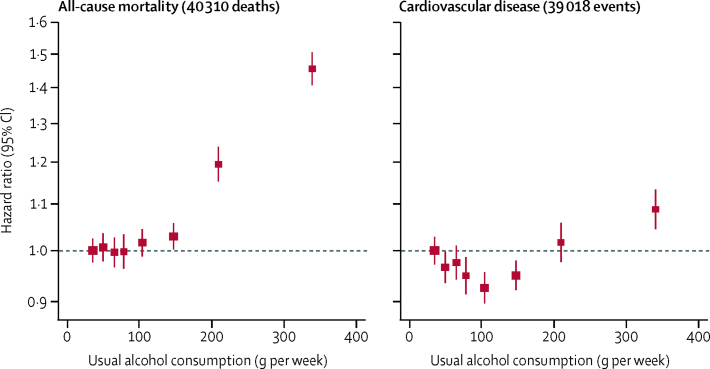
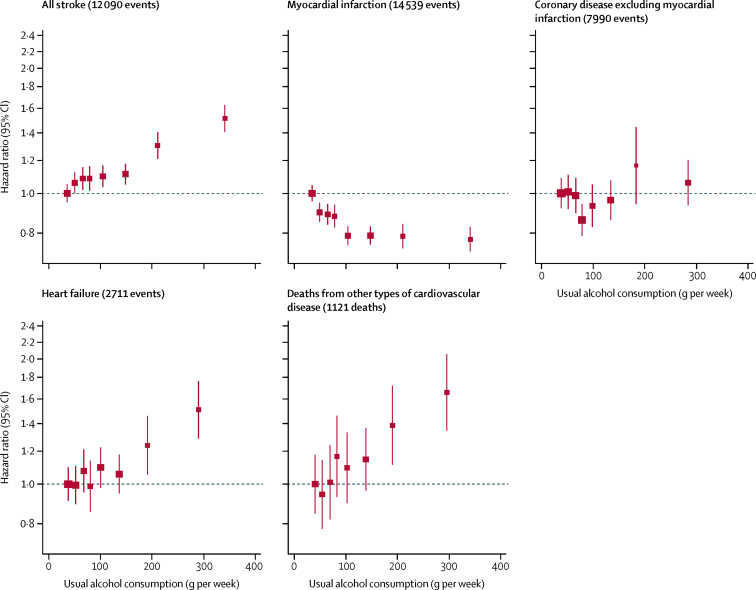
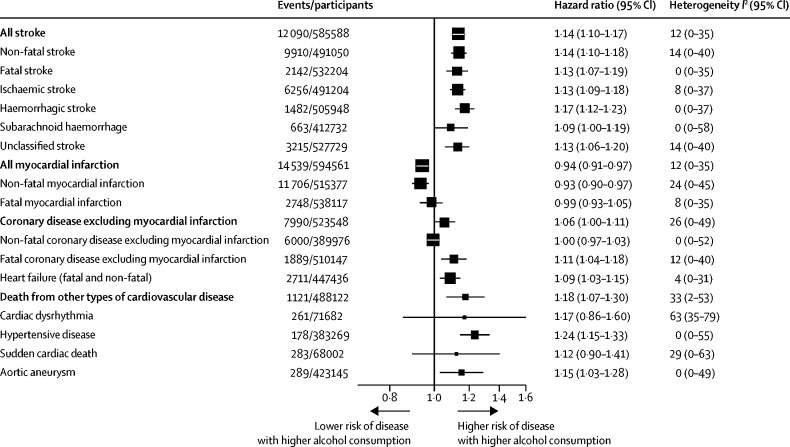
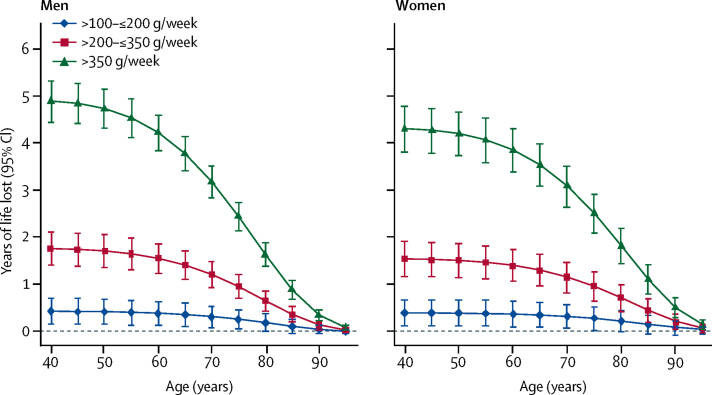
BACKGROUND: Low-risk limits recommended for alcohol consumption vary substantially across different national guidelines. To define thresholds associated with lowest risk for all-cause mortality and cardiovascular disease, we studied individual-participant data from 599 912 current drinkers without previous cardiovascular disease. METHODS: We did a combined analysis of individual-participant data from three large-scale data sources in 19 high-income countries (the Emerging Risk Factors Collaboration, EPIC-CVD, and the UK Biobank). We characterised dose-response associations and calculated hazard ratios (HRs) per 100 g per week of alcohol (12·5 units per week) across 83 prospective studies, adjusting at least for study or centre, age, sex, smoking, and diabetes. To be eligible for the analysis, participants had to have information recorded about their alcohol consumption amount and status (ie, non-drinker vs current drinker), plus age, sex, history of diabetes and smoking status, at least 1 year of follow-up after baseline, and no baseline history of cardiovascular disease. The main analyses focused on current drinkers, whose baseline alcohol consumption was categorised into eight predefined groups according to the amount in grams consumed per week. We assessed alcohol consumption in relation to all-cause mortality, total cardiovascular disease, and several cardiovascular disease subtypes. We corrected HRs for estimated long-term variability in alcohol consumption using 152 640 serial alcohol assessments obtained some years apart (median interval 5·6 years [5th-95th percentile 1·04-13·5]) from 71 011 participants from 37 studies. FINDINGS: In the 599 912 current drinkers included in the analysis, we recorded 40 310 deaths and 39 018 incident cardiovascular disease events during 5·4 million person-years of follow-up. For all-cause mortality, we recorded a positive and curvilinear association with the level of alcohol consumption, with the minimum mortality risk around or below 100 g per week. Alcohol consumption was roughly linearly associated with a higher risk of stroke (HR per 100 g per week higher consumption 1·14, 95% CI, 1·10-1·17), coronary disease excluding myocardial infarction (1·06, 1·00-1·11), heart failure (1·09, 1·03-1·15), fatal hypertensive disease (1·24, 1·15-1·33); and fatal aortic aneurysm (1·15, 1·03-1·28). By contrast, increased alcohol consumption was log-linearly associated with a lower risk of myocardial infarction (HR 0·94, 0·91-0·97). In comparison to those who reported drinking >0-≤100 g per week, those who reported drinking >100-≤200 g per week, >200-≤350 g per week, or >350 g per week had lower life expectancy at age 40 years of approximately 6 months, 1-2 years, or 4-5 years, respectively. INTERPRETATION: In current drinkers of alcohol in high-income countries, the threshold for lowest risk of all-cause mortality was about 100 g/week. For cardiovascular disease subtypes other than myocardial infarction, there were no clear risk thresholds below which lower alcohol consumption stopped being associated with lower disease risk. These data support limits for alcohol consumption that are lower than those recommended in most current guidelines. FUNDING: UK Medical Research Council, British Heart Foundation, National Institute for Health Research, European Union Framework 7, and European Research Council.
Overview
The claims and statistics of this paper haven’t been checked yet.
Free: it reads the open-access text and checks the first 5 claims that cite a source we can check. Create a free account to check every claim.
Integrity signals
Registry
Cites
Statistics
Figures
Verification
Claims the paper makes
The claims and statistics of this paper haven’t been checked yet.
Free: it reads the open-access text and checks the first 5 claims that cite a source we can check. Create a free account to check every claim.
Claims other papers make about this one
Each is checked against this paper’s own text: does it say what the citing paper says it does?
The source backs part of the claim, not all of it — or backs it for a different population, condition or comparison.
In the citing paper
“For example, systematic reviews have quantified exposure levels of alcohol use (e.g. by standard drinks/week) that represent risk-thresholds for stroke, cardio-vascular disease and atrial fibrillation (Samokhvalov, Irving, & Rehm, 2010; Tu et al., 2021; Wood et al., 2018)”
From Risk-thresholds for the association between frequency of cannabis use and the development of psychosis: a systematic review and meta-analysis (2023) · cites this paper as Wood et al., 2018
Experimental — accuracy not yet measuredThe check wasn’t confident either way, so it gives no verdict — never disputed.
In the citing paper
“Regular physical exercise reduces plasma TG levels over and above the effect of weight reduction [151,168,169].”
From 2019 ESC/EAS guidelines for the management of dyslipidaemias: lipid modification to reduce cardiovascular risk (2019) · cites this paper as [168]
Experimental — accuracy not yet measuredIn the citing paper
“However, it is analogous to evidence-based alcohol-related health guidelines where the risk for specific adverse (e.g. cardio-vascular) outcomes is low/absent below certain consumption levels and ‘moderate’ use is recommended”
From Risk-thresholds for the association between frequency of cannabis use and the development of psychosis: a systematic review and meta-analysis (2023) · cites this paper as Wood et al., 2018
Self-check
Percentages, sums and reported differences re-computed from the paper’s own numbers.
The self-check needs the paper’s full text.
Citations
Cites
Bias in meta-analysis detected by a simple, graphical test
Egger, M., Smith, G. D., Schneider, M., & Minder, C. (1997) · BMJ · doi:10.1136/bmj.315.7109.629 · Cited by 56,722 · cited 1×
“35 Methods we used to estimate reductions in life expectancy (years of life lost) are described in the appendix (pp 6–7).”
Quantifying heterogeneity in a meta‐analysis
Higgins, J. P. T., & Thompson, S. G. (2002) · Statistics in Medicine · doi:10.1002/sim.1186 · Cited by 36,763
Self-citationOperating characteristics of a rank correlation test for publication bias
Begg, C. B., & Mazumdar, M. (1994) · Biometrics · doi:10.2307/2533446 · Cited by 16,955 · cited 1×
“33 Evidence of small study effects was assessed visually with funnel plots and by Begg and Mazumdar’s test 34 and Egger’s test.”
Sudlow, C., Gallacher, J., Allen, N., Beral, V., Burton, P., Danesh, J., Downey, P., Elliott, P., Green, J., Landray, M., et al. (2015) · PLOS Medicine · doi:10.1371/journal.pmed.1001779 · Cited by 12,728
Self-citationMACMAHON, S. (1990) · The Lancet · doi:10.1016/0140-6736(90)90878-9 · Cited by 4,253 · cited 1×
“55 However, we did not find convincing evidence that other known risk factors were important mediators or confounders.”
Genomic Aberrations and Survival in Chronic Lymphocytic Leukemia
Döhner, H., Stilgenbauer, S., Benner, A., Leupolt, E., Kröber, A., Bullinger, L., Döhner, K., Bentz, M., & Lichter, P. (2000) · New England Journal of Medicine · doi:10.1056/nejm200012283432602 · Cited by 3,318
ABT-199, a potent and selective BCL-2 inhibitor, achieves antitumor activity while sparing platelets
Souers, A. J., Leverson, J. D., Boghaert, E. R., Ackler, S. L., Catron, N. D., Chen, J., Dayton, B. D., Ding, H., Enschede, S. H., Fairbrother, W. J., et al. (2013) · Nature Medicine · doi:10.1038/nm.3048 · Cited by 3,058
Unmutated Ig VH Genes Are Associated With a More Aggressive Form of Chronic Lymphocytic Leukemia
Hamblin, T. J., Davis, Z., Gardiner, A., Oscier, D. G., & Stevenson, F. K. (1999) · Blood · doi:10.1182/blood.v94.6.1848 · Cited by 2,783
Major lipids, apolipoproteins, and risk of vascular disease
The Emerging Risk Factors Collaboration* (2009) · JAMA · doi:10.1001/jama.2009.1619 · Cited by 2,731
Targeting BCL2 with Venetoclax in Relapsed Chronic Lymphocytic Leukemia
Roberts, A. W., Davids, M. S., Pagel, J. M., Kahl, B. S., Puvvada, S. D., Gerecitano, J. F., Kipps, T. J., Anderson, M. A., Brown, J. R., Gressick, L., et al. (2016) · New England Journal of Medicine · doi:10.1056/nejmoa1513257 · Cited by 1,900
Cited by
Items 101–200 of 1,000
Ding, C., O’Neill, D., Bell, S., Stamatakis, E., & Britton, A. R. (2021) · BMC Medicine · doi:10.1186/s12916-021-02040-2 · Cited by 101
Self-citationAune, D., Huang, W., Nie, J., & Wang, Y. (2021) · BioMed Research International · doi:10.1155/2021/9376134 · Cited by 106
Epidemiology of Alcohol Use and Alcoholic Liver Disease
Mellinger, J. L. (2019) · Clinical Liver Disease · doi:10.1002/cld.806 · Cited by 100
Liu, Z., Chen, X., Gill, T. M., Ma, C., Crimmins, E. M., & Levine, M. E. (2019) · PLOS Medicine · doi:10.1371/journal.pmed.1002827 · Cited by 92
Red Wine Consumption Associated With Increased Gut Microbiota α-Diversity in 3 Independent Cohorts
Roy, C. I. L., Wells, P. M., Si, J., Raes, J., Bell, J. T., & Spector, T. D. (2019) · Gastroenterology · doi:10.1053/j.gastro.2019.08.024 · Cited by 88
Perilli, M., Toselli, F., Franceschetto, L., Cinquetti, A., Ceretta, A., Cecchetto, G., & Viel, G. (2023) · International Journal of Molecular Sciences · doi:10.3390/ijms241512175 · Cited by 102
“Excessive alcohol consumption has been identified as an important risk factor for illness, disability, and mortality, with an increased prevalence of secondary cardiovascular, liver, cancer, and neurological disorders [1,2].”
BackgroundInfectious diseases occurring in the context of substance use disorders: A concise review
Kolla, B. P., Oesterle, T., Gold, M. S., Southwick, F. S., & Rummans, T. A. (2020) · Journal of the Neurological Sciences · doi:10.1016/j.jns.2020.116719 · Cited by 93
Drinking and Obesity: Alcoholic Liver Disease/Nonalcoholic Fatty Liver Disease Interactions
Åberg, F., & Färkkilä, M. (2020) · Seminars in Liver Disease · doi:10.1055/s-0040-1701443 · Cited by 87
Marcos, A., Serra‐Majem, L., Pérez‐Jiménez, F., Pascual, V., Tinahones, F. J., & Estruch, R. (2021) · Nutrients · doi:10.3390/nu13030879 · Cited by 98
Alcohol Consumption and Cardiovascular Disease Risk: Placing New Data in Context
Hoek, A. G., van Oort, S., Mukamal, K. J., & Beulens, J. W. J. (2022) · Current Atherosclerosis Reports · doi:10.1007/s11883-022-00992-1 · Cited by 108
Millwood, I. Y., Im, P. K., Bennett, D., Hariri, P., Yang, L., Du, H., Kartsonaki, C., Lin, K., Yu, C., Chen, Y., et al. (2023) · The Lancet Public Health · doi:10.1016/s2468-2667(23)00217-7 · Cited by 98
“5–7 However, systematic differences in health characteristics and behaviours (such as prior ill health, socio-economic status, or smoking behaviours) between non-drinkers, moderate and heavy drinkers, often influenced by selection into cohort studies and their demographics characteristics, can lead…”
BackgroundSelf-citationNew alcohol-related genes suggest shared genetic mechanisms with neuropsychiatric disorders
Εvangelou, Ε., Gao, H., Chu, C., Ntritsos, G., Blakeley, P., Butts, A. R., Pazoki, R., Suzuki, H., Koskeridis, F., Yiorkas, A. M., et al. (2019) · Nature Human Behaviour · doi:10.1038/s41562-019-0653-z · Cited by 97
Self-citationXu, L., Mondal, D., & Polya, D. A. (2020) · International Journal of Environmental Research and Public Health · doi:10.3390/ijerph17072536 · Cited by 91
van de Luitgaarden, I. A. T., van Oort, S., Bouman, E. J., Schoonmade, L. J., Schrieks, I. C., Grobbee, D. E., van der Schouw, Y. T., Larsson, S. C., Burgess, S., van Ballegooijen, A. J., et al. (2021) · European Journal of Epidemiology · doi:10.1007/s10654-021-00799-5 · Cited by 100
Self-citationModifiable Lifestyle Behaviors and CKD Progression: A Narrative Review
Schrauben, S. J., Apple, B. J., & Chang, A. R. (2022) · Kidney360 · doi:10.34067/kid.0003122021 · Cited by 114
“drinking appears to be protective for some CVD events.(83-87) It is proposed that alcohol”
BackgroundOptimum nutritional strategies for cardiovascular disease prevention and rehabilitation (BACPR)
Butler, T., Kerley, C. P., Altieri, N., Alvarez, J., Green, J., Hinchliffe, J., Stanford, D., & Paterson, K. (2020) · Heart · doi:10.1136/heartjnl-2019-315499 · Cited by 92
Alcohol use disorders and the brain
Rao, R., & Topiwala, A. (2020) · Addiction · doi:10.1111/add.15023 · Cited by 94
Alcohol Intake in Patients With Cardiomyopathy and Heart Failure: Consensus and Controversy
Andersson, C., Schou, M., Gustafsson, F., & Torp-Pedersen, C. T. (2022) · Circulation Heart Failure · doi:10.1161/circheartfailure.121.009459 · Cited by 101
Robinson, T., Ali, M. U., Easterbrook, B., Coronado‐Montoya, S., Daldegan‐Bueno, D., Hall, W., Jutras‐Aswad, D., & Fischer, B. (2022) · Drug and Alcohol Dependence · doi:10.1016/j.drugalcdep.2022.109582 · Cited by 93
Lee, S., Choi, E., Jung, J., Han, K.-D., Oh, S., & Lip, G. Y. H. (2021) · European Heart Journal · doi:10.1093/eurheartj/ehab315 · Cited by 85
Guía ESC 2021 sobre la prevención de la enfermedad cardiovascular en la práctica clínica
Visseren, F. L. J., Mach, F., Smulders, Y. M., Carballo, D., Koskinas, K. C., Bäck, M., Bénétos, A., Biffi, A., Boavida, J. M., Capodanno, D., et al. (2022) · Revista Española de Cardiología · doi:10.1016/j.recesp.2021.10.016 · Cited by 125
Self-citationSterling, S., Palzes, V. A., Lu, Y., Kline‐Simon, A. H., Parthasarathy, S., Ross, T. B., Elson, J., Weisner, C. M., Maxim, C., & Chi, F. W. (2020) · JAMA Network Open · doi:10.1001/jamanetworkopen.2020.4687 · Cited by 89
Sullivan, E. V., & Pfefferbaum, A. (2019) · Neuropsychology · doi:10.1037/neu0000557 · Cited by 88
“A large-scale analysis on nearly 600,000 individual drinkers from 83 prospective studies, conducted in 19 highincome countries sought risk thresholds of safe or beneficial drinking (Wood et al., 2018).”
BackgroundInfluentialAcquired cardiovascular disease in adults with congenital heart disease
Brida, M., Rosa, S. D., Legendre, A., Ladouceur, M., Dos, L., Scognamiglio, G., Mario, C. D., Roos‐Hesselink, J. W., Goossens, E., Diller, G., et al. (2023) · European Heart Journal · doi:10.1093/eurheartj/ehad570 · Cited by 86
Wang, Y.-D., Yang, X., Wen, L., Shen, D., Zheng, P., Tu, M., You, W., Zhu, Y.-R., Wang, H., & Feng, J. (2022) · Neural Regeneration Research · doi:10.4103/1673-5374.339489 · Cited by 83
“Bone marrow mesenchymal stem cells (bMSCs) are capable of repairing and replacing damaged tissues by differentiating into effector cells, such as neurons and glial cells (Hermann et al., 2004; Wislet-Gendebien et al., 2005; Pirzad Jahromi et al., 2015; Zhao et al., 2015; Fesharaki et al., 2018; Wood et al., 2018).”
BackgroundOrtolá, R., Sotos‐Prieto, M., García‐Esquinas, E., Galán, I., & Rodríguez‐Artalejo, F. (2024) · JAMA Network Open · doi:10.1001/jamanetworkopen.2024.24495 · Cited by 90
van den Brink, W., Addolorato, G., Aubin, H., Benyamina, A., Caputo, F., Dematteis, M., Gual, A., Lesch, O., Mann, K., Maremmani, I., et al. (2018) · Addiction Biology · doi:10.1111/adb.12645 · Cited by 75
“Drug development for alcohol dependence is highly challenging (Litten et al. 2012; Litten et al. 2018) due to methodological issues of alcohol pharmacotherapy trials (Litten et al. 2012; Yardley & Ray 2017).”
BackgroundEvidence-Based Pharmacotherapies for Alcohol Use Disorder
Fairbanks, J., Umbreit, A., Kolla, B. P., Karpyak, V. M., Schneekloth, T. D., Loukianova, L. L., & Sinha, S. (2020) · Mayo Clinic Proceedings · doi:10.1016/j.mayocp.2020.01.030 · Cited by 89
“AUDs are associated with substantial morbidity and mortality.(3) Despite the availability of effective psychosocial and pharmacologic options, alcohol and other substance use disorders are widely under-treated.”
BackgroundBeyer, F. R., Campbell, F., Bertholet, N., Daeppen, J. B., Saunders, J. B., Pienaar, E. D., Muirhead, C. R., & Kaner, E. F. S. (2019) · Alcohol and Alcoholism · doi:10.1093/alcalc/agz035 · Cited by 72
Alcohol Intake as a Risk Factor for Acute Stroke: The INTERSTROKE Study
Smyth, A., O'Donnell, M. J., Rangarajan, S., Hankey, G. J., Oveisgharan, S., Canavan, M. D., McDermott, C., Xavier, D., Zhang, H., Damasceno, A. A. M., et al. (2022) · Neurology · doi:10.1212/wnl.0000000000201388 · Cited by 101
Bendtsen, M., McCambridge, J., Åsberg, K., & Bendtsen, P. (2021) · Addiction · doi:10.1111/add.15294 · Cited by 71
Mellor, D. D., Hanna‐Khalil, B., & Carson, R. (2020) · Beverages · doi:10.3390/beverages6020025 · Cited by 81
“Therefore, it is essential to consider the balance of the potentially beneficial effects of beer with the known negative consequences associated with the habitual consumption of alcohol at even relatively low levels [10,11].”
BackgroundAnderson, P., Kokole, D., & Jané‐Llopis, E. (2021) · Nutrients · doi:10.3390/nu13093153 · Cited by 71
“At an individual level, forty-year-olds who drink more than 350 g of alcohol per week (about five drinks a day) lose four to five years of life compared with those who drink 100 g of alcohol or less per week (approximately one and a half drinks a day) [3].”
BackgroundALDH2 and Cardiovascular Disease
Chen, C., Ferreira, J. C. B., & Mochly‐Rosen, D. (2019) · Advances in experimental medicine and biology · doi:10.1007/978-981-13-6260-6_3 · Cited by 80
Jakimovski, D., Guan, Y., Ramanathan, M. K., Weinstock‐Guttman, B., & Zivadinov, R. (2019) · Neurodegenerative Disease Management · doi:10.2217/nmt-2018-0046 · Cited by 88
Brennan, S., McDonald, S. J., Page, M. J., Reid, J. E. A., Ward, S. A., Forbes, A. B., & McKenzie, J. E. (2020) · Systematic Reviews · doi:10.1186/s13643-019-1220-4 · Cited by 80
“However, uncertainty around the effects of light to moderate alcohol consumption has made it challenging to establish thresholds for minimising the lifetime risk of harm [2].”
BackgroundInfluentialPiepoli, M. F., Adamo, M., Barison, A., Bestetti, R. B., Biegus, J., Böhm, M., Butler, J., Carapetis, J. R., Ceconi, C., Chioncel, O. D., et al. (2022) · European Journal of Heart Failure · doi:10.1002/ejhf.2351 · Cited by 81
Self-citationTamaki, N., Kimura, T., Wakabayashi, S., Umemura, T., Kurosaki, M., Loomba, R. S., & Izumi, N. (2024) · Alimentary Pharmacology & Therapeutics · doi:10.1111/apt.18015 · Cited by 76
“24 Other research has also shown that the risk of mortality is higher in ALD compared to the general population.”
BackgroundRobinson, T., Ali, M. U., Easterbrook, B., Hall, W., Jutras-Aswad, D., & Fischer, B. (2023) · Psychological Medicine · doi:10.1017/s0033291722000502 · Cited by 68
Risk Thresholds for Total and Beverage-Specific Alcohol Consumption and Incident Atrial Fibrillation
Tu, S. J., Gallagher, C., Elliott, A. D., Linz, D., Pitman, B. M., Hendriks, J., Lau, D. H., Sanders, P., & Wong, C. X. J. (2021) · JACC. Clinical electrophysiology · doi:10.1016/j.jacep.2021.05.013 · Cited by 75
Alcohol and Cancer Risk: Clinical and Research Implications
Klein, W. M. P., Jacobsen, P. B., & Helzlsouer, K. J. (2019) · JAMA · doi:10.1001/jama.2019.19133 · Cited by 79
Di Castelnuovo, A., Costanzo, S., Bonaccio, M., McElduff, P., Linneberg, A., Salomaa, V., Männistö, S., Moitry, M., Ferrières, J., Dallongeville, J., et al. (2022) · Addiction · doi:10.1111/add.15593 · Cited by 64
“Important differences in terms of drinking cultures have been observed among countries [7, 8, 25], including: frequency and volume of drinking, drinking context (such as with meals), beverage preference, the way in which alcohol is”
BackgroundResultSelf-citationÅberg, F., Färkkilä, M., & Männistö, V. (2020) · Alcoholism Clinical and Experimental Research · doi:10.1111/acer.14271 · Cited by 63
Alcohol, Intraocular Pressure, and Open-Angle Glaucoma
Stuart, K. V., Madjedi, K. M., Luben, R., Chua, S. Y. L., Warwick, A., Chia, M. A., Pasquale, L. R., Wiggs, J. L., Kang, J. H., Hysi, P. G., et al. (2022) · Ophthalmology · doi:10.1016/j.ophtha.2022.01.023 · Cited by 71
“93”
Steatotic Liver Disease: Metabolic Dysfunction, Alcohol, or Both?
Staufer, K., & Stauber, R. E. (2023) · Biomedicines · doi:10.3390/biomedicines11082108 · Cited by 80
“, a threshold of 100 g EtOH/week was associated with all-cause mortality in high-income countries [39].”
BackgroundModerate Beer Intake and Cardiovascular Health in Overweight Individuals
Padró, T., Muñoz‐García, N., Vilahur, G., Chagas, P., Deyà, A., Antonijoan, R. M., & Badimón, L. (2018) · Nutrients · doi:10.3390/nu10091237 · Cited by 68
“The balance between risks and benefits of moderate alcohol consumption in health is still under discussion [33,34].”
BackgroundNova, E., Martín, I. S. M., Díaz, L. E., & Marcos, A. (2018) · Nutrition Research · doi:10.1016/j.nutres.2018.12.007 · Cited by 65
Device‐measured light‐intensity physical activity and mortality: A meta‐analysis
Ku, P., Hamer, M., Liao, Y., Hsueh, M., & Chen, L. (2019) · Scandinavian Journal of Medicine and Science in Sports · doi:10.1111/sms.13557 · Cited by 252
Validation of the AUDIT and AUDIT-C for Hazardous Drinking in Community-Dwelling Older Adults
van Gils, Y., Franck, E., Dierckx, E., van Alphen, S. P. J., Saunders, J. B., & Dom, G. (2021) · International Journal of Environmental Research and Public Health · doi:10.3390/ijerph18179266 · Cited by 69
“Additionally, this guideline has been recently described as ‘lowest risk of all-cause mortality’ in a study among current drinkers [15].”
BackgroundAbdul‐Rahman, T., Lizano-Jubert, I., Garg, N., Talukder, S., López, P. P., Awuah, W. A., Shah, R. M., Chambergo, D., Cantu‐Herrera, E., Farooqi, M., et al. (2023) · Progress in Cardiovascular Diseases · doi:10.1016/j.pcad.2023.06.002 · Cited by 66
Kałuża, J., Harris, H. R., Lindén, A., & Wolk, A. (2019) · American Journal of Epidemiology · doi:10.1093/aje/kwz020 · Cited by 72
Xue, A., Jiang, L., Zhu, Z., Wray, N. R., Visscher, P. M., Zeng, J., & Yang, J. (2021) · Nature Communications · doi:10.1038/s41467-020-20237-6 · Cited by 65
Modifiable lifestyle factors and heart failure: A Mendelian randomization study
van Oort, S., Beulens, J. W. J., van Ballegooijen, A. J., Handoko, M. L., & Larsson, S. C. (2020) · American Heart Journal · doi:10.1016/j.ahj.2020.06.007 · Cited by 68
Zhang, X., Liu, Y., Li, S., Lichtenstein, A. H., Chen, S., Na, M., Veldheer, S., Xing, A., Wang, Y., Wu, S., et al. (2021) · Nutrition Journal · doi:10.1186/s12937-021-00671-y · Cited by 68
“combined perspective studies [5] and genetic epidemio-”
BackgroundMethodWhat's in wine? A clinician's perspective,
Haseeb, S., Alexander, B., López-Santi, R., Liprandi, Á. S., & Baranchuk, A. M. (2018) · Trends in Cardiovascular Medicine · doi:10.1016/j.tcm.2018.06.010 · Cited by 74
Ortolá, R., García‐Esquinas, E., López‐García, E., León-Muñoz, L. M., Banegas, J. R., & Rodríguez‐Artalejo, F. (2018) · Addiction · doi:10.1111/add.14402 · Cited by 68
Cost‐Effectiveness of Noninvasive Screening for Alcohol‐Related Liver Fibrosis
Asphaug, L., Thiele, M., Krag, A., Melberg, H. O., & on behalf of the GALAXY Consortium (2020) · Hepatology · doi:10.1002/hep.30979 · Cited by 60
“(1) Liver-related death is a major consequence of excessive alcohol consumption, already in moderate drinkers without alcohol addiction disorder.(2) Because alcohol-related liver mortality is on the rise, this calls for action.”
BackgroundEthanol exposure increases mutation rate through error-prone polymerases
Voordeckers, K., Colding, C., Grasso, L., Pardo, B., Hoes, L., Kominek, J., Gielens, K., Dekoster, K., Gordon, J., van der Zande, E., et al. (2020) · Nature Communications · doi:10.1038/s41467-020-17447-3 · Cited by 65
Martemucci, G., Khalil, M., Luca, A. D., Abdallah, H., & D‘Alessandro, A. G. (2024) · Metabolites · doi:10.3390/metabo14060327 · Cited by 70
“However, concerning different types of CVD, the consumption of 100 g per week of alcohol showed a harmful association [437].”
BackgroundAssociation of High-Intensity Binge Drinking With Lipid and Liver Function Enzyme Levels
Rosoff, D. B., Charlet, K., Jung, J., Lee, J., Muench, C., Luo, A., Longley, M., Mauro, K. L., & Lohoff, F. W. (2019) · JAMA Network Open · doi:10.1001/jamanetworkopen.2019.5844 · Cited by 61
Xiao, J., Wang, F., Wong, N.-K., Lv, Y., Liu, Y., Zhong, J., Chen, S., Li, W., Koike, K., Liu, X., et al. (2020) · Gene Expression · doi:10.3727/105221620x15952664091823 · Cited by 65
The Impact of Alcohol Consumption on Cardiovascular Health: Myths and Measures
Arora, M., ElSayed, A., Beger, B., Naidoo, P., Shilton, T., Jain, N., Armstrong-Walenczak, K., Mwangi, J., Wang, Y., Eiselé, J.-L., et al. (2022) · Global Heart · doi:10.5334/gh.1132 · Cited by 69
“28).(21) It has been argued that people with moderate consumption and no binge episodes may appear to have a slightly lower risk of ischaemic heart disease (IHD), but the protective effect of moderate alcohol consumption for CVD has been challenged.”
BackgroundThe Association of Autonomic Nervous System Function With Ischemic Stroke, and Treatment Strategies
Zhao, M., Guan, L., & Wang, Y. (2020) · Frontiers in Neurology · doi:10.3389/fneur.2019.01411 · Cited by 66
“High alcohol intake is undoubtable dangerous (86).”
Yoon, S. J., Jung, J. G., Lee, S., Kim, J. S., Ahn, S., Shin, E.-S., Jang, J., & Lim, S. (2020) · BMC Public Health · doi:10.1186/s12889-019-7820-z · Cited by 66
“In contrast, the result of an additional metaanalysis containing 600,000 people found that drinking increased the risks of fatal myocardial infarction (MI), all kinds of stroke, fatal coronary diseases that were not MI, heart failure, and hypertensive diseases [11].”
BackgroundResultInfluentialZhong, V. W., Allen, N. B., Greenland, P., Carnethon, M. R., Ning, H., Wilkins, J. T., Lloyd‐Jones, D. M., & Horn, L. V. (2021) · International Journal of Epidemiology · doi:10.1093/ije/dyaa205 · Cited by 63
Lagström, H., Stenholm, S., Akbaraly, T. N., Pentti, J., Vahtera, J., Kivimäki, M., & Head, J. A. (2019) · American Journal of Clinical Nutrition · doi:10.1093/ajcn/nqz329 · Cited by 64
Mínguez-Alarcón, L., Chavarro, J. E., & Gaskins, A. J. (2018) · Fertility and Sterility · doi:10.1016/j.fertnstert.2018.05.026 · Cited by 56
Alcohol use and cardiometabolic risk in the UK Biobank: A Mendelian randomization study
Lankester, J., Zanetti, D., Ingelsson, E., & Assimes, T. L. (2021) · PLoS ONE · doi:10.1371/journal.pone.0255801 · Cited by 63
Cause-specific mortality in patients with steatotic liver disease in the United States
Ochoa‐Allemant, P., Hubbard, R. A., Kaplan, D. E., & Serper, M. (2025) · Journal of Hepatology · doi:10.1016/j.jhep.2025.05.013 · Cited by 73
Schutte, R., Papageorgiou, M., Najlah, M., Huisman, H. W., Ricci, C., Zhang, J., Milner, N., & Schutte, A. E. (2020) · Clinical Nutrition · doi:10.1016/j.clnu.2020.02.009 · Cited by 58
Trends in U.S. women’s binge drinking in middle adulthood by socioeconomic status, 2006–2018
McKetta, S. C., & Keyes, K. M. (2020) · Drug and Alcohol Dependence · doi:10.1016/j.drugalcdep.2020.108026 · Cited by 61
“Indeed, the science is increasingly clear that there is no safe dose of alcohol for health (Wood et al., 2018).”
BackgroundAims, design and preliminary findings of the Hellenic National Nutrition and Health Survey (HNNHS)
Contributors, H., Magriplis, E., Dimakopoulos, I., Karageorgou, D., Mitsopoulou, A.-V., Bakogianni, I., Micha, R., Michas, G., Ntouroupi, T. G., Tsaniklidou, S.-M., et al. (2019) · BMC Medical Research Methodology · doi:10.1186/s12874-018-0655-y · Cited by 58
Self-citationKeyes, K. M., Allel, K., Staudinger, U. M., Ornstein, K. A., & Calvo, E. (2019) · International review of neurobiology · doi:10.1016/bs.irn.2019.09.001 · Cited by 65
Lõhmus, M., Stenfors, C. U. D., Lind, T., Lauber, A., & Georgelis, A. (2021) · International Journal of Environmental Research and Public Health · doi:10.3390/ijerph18063303 · Cited by 69
“Definitions of threshold levels for harmful alcohol consumption vary largely between the recommendations from different studies and authorities (52-56).”
Cancer and Cardiovascular Disease
Alhuneafat, L., Guha, A., Blaes, A. H., & Konety, S. (2025) · JACC CardioOncology · doi:10.1016/j.jaccao.2025.07.001 · Cited by 67
Antero, J., Tanaka, H., Larochelambert, Q. D., Perme, M. P., & Toussaint, J. (2020) · British Journal of Sports Medicine · doi:10.1136/bjsports-2019-101696 · Cited by 64
Alcohol and illicit drug use in people with diabetes
Pastor, A., Conn, J., MacIsaac, R. J., & Bonomo, Y. (2020) · The Lancet Diabetes & Endocrinology · doi:10.1016/s2213-8587(19)30410-3 · Cited by 53
An Overview of Bioactive Phenolic Molecules and Antioxidant Properties of Beer: Emerging Trends
Nardini, M. (2023) · Molecules · doi:10.3390/molecules28073221 · Cited by 60
“The risks of alcohol consumption are well established, with researchers having moved from the view that moderate (<14 units/week) alcohol consumption may be associated with reduced risk of mortality and, especially, of cardiovascular disease to the more contemporary view that there may be no safe threshold for alcohol…”
BackgroundReduced Stress-Related Neural Network Activity Mediates the Effect of Alcohol on Cardiovascular Risk
Mezue, K. N., Osborne, M. T., Abohashem, S., Zureigat, H., Gharios, C., Grewal, S., Radfar, A., Cardeiro, A., Abbasi, T. A., Choi, K. W., et al. (2023) · Journal of the American College of Cardiology · doi:10.1016/j.jacc.2023.04.015 · Cited by 55
Daily Drinking Is Associated with Increased Mortality
Hartz, S. M., Oehlert, M., Horton, A., Grucza, R. A., Fisher, S. L., Culverhouse, R. C., Nelson, K. G., Sumerall, S. W., Neal, P. C., Regnier, P., et al. (2018) · Alcoholism: Clinical and Experimental Research · doi:10.1111/acer.13886 · Cited by 53
Corona, O., Liguori, L., Albanese, D., Matteo, M. D., Cinquanta, L., & Russo, P. (2019) · European Food Research and Technology · doi:10.1007/s00217-019-03376-z · Cited by 67
Lifestyle management to prevent atherosclerotic cardiovascular disease: evidence and challenges
Trier, T. J. V., Mohammadnia, N., Snaterse, M., Peters, R. J. G., Jorstad, H. T., & Bax, W. A. (2021) · Netherlands Heart Journal · doi:10.1007/s12471-021-01642-y · Cited by 62
“tional meta-analysis, comprising 600,000 individuals, found such harmful effects of drinking on cardiovascular outcome that the authors argued that difficulties determining the optimal target would have to result in lowering the recommended dose of alcohol consumption in existing guidelines [34].”
BackgroundMarques-Vidal, P. M., Tsampasian, V., Cassidy, A., Biondi‐Zoccai, G., Chrysohoou, C. A., Koskinas, K. C., Verschuren, W. M. M., Czapla, M., Kavousi, M., Kouvari, M., et al. (2025) · European Journal of Preventive Cardiology · doi:10.1093/eurjpc/zwaf310 · Cited by 63
Self-citationBörschel, C. S., & Schnabel, R. B. (2018) · International Journal of Cardiology · doi:10.1016/j.ijcard.2018.11.123 · Cited by 59
de Goede, J., Reeuwijk, K. G., Braun, K. P. J., le Cessie, S., Durston, S., Engels, R. C. M. E., Goudriaan, A. E., Moons, K. G. M., Vollebergh, W., Vries, T. J. D., et al. (2020) · Advances in Nutrition · doi:10.1093/advances/nmaa170 · Cited by 62
Song, P., Zha, M., Yang, X., Xu, Y., Wang, H., Fang, Z. A., Yang, X., Xia, W., & Zeng, C. (2019) · Atherosclerosis · doi:10.1016/j.atherosclerosis.2019.01.005 · Cited by 54
Minzer, S., Estruch, R., & Casas, R. M. (2020) · Molecules · doi:10.3390/molecules25215045 · Cited by 55
“[30], in high-income countries, among current alcohol drinkers, 100 g of alcohol per week, showed a lower risk threshold for all-cause mortality.”
BackgroundStelander, L. T., Høye, A., Bramness, J. G., Selbæk, G., Lunde, L.-H., Wynn, R., & Grønli, O. (2021) · Substance Abuse Treatment Prevention and Policy · doi:10.1186/s13011-021-00376-9 · Cited by 51
“Due to some evidence on cut-off limits of at-risk drinking among older adults [26, 35, 36], we dichotomized drinking quantity to “moderate” (≤2 units/≤24 g of ethanol) or “at-risk” (≥3 units/ ≥36 g of ethanol) drinking on typical drinking days.”
BackgroundAnderson, P., O'Donnell, A. J., Kokole, D., Jané‐Llopis, E., & Kaner, E. (2021) · International Journal of Environmental Research and Public Health · doi:10.3390/ijerph181910347 · Cited by 52
“Alcohol use is a leading risk factor for ill‐health and premature death [1,2].”
BackgroundJCS/JHFS 2025 Guideline on Diagnosis and Treatment of Heart Failure
Kitai, T., Kohsaka, S., Kato, T., Kato, E. T., Sato, K., TERAMOTO, K., Yaku, H., Akiyama, E., Ando, M., Izumi, C., et al. (2025) · Journal of Cardiac Failure · doi:10.1016/j.cardfail.2025.02.014 · Cited by 68
Adverse Liver Outcomes, Cardiovascular Events, and Mortality in Steatotic Liver Disease
Ochoa‐Allemant, P., Hubbard, R. A., Kaplan, D. E., & Serper, M. (2025) · JAMA Internal Medicine · doi:10.1001/jamainternmed.2025.1809 · Cited by 63
Ricci, C., Schutte, A. E., Schutte, R., Smuts, C. M., & Pieters, M. (2020) · American Journal of Clinical Nutrition · doi:10.1093/ajcn/nqaa008 · Cited by 51
Tsai, S., Hsu, L., Tsai, H., Yeh, Y., Lu, C., Chen, P., Wang, J., Chiu, Y., Lin, C., & Hsu, Y. (2020) · The FASEB Journal · doi:10.1096/fj.201902550rrr · Cited by 50
Mood Profiling for Sustainable Mental Health among Athletes
Terry, P. C., & Parsons-Smith, R. L. (2021) · Sustainability · doi:10.3390/su13116116 · Cited by 52
“, excessive alcohol consumption [79]) or to performance (e.”
BackgroundManagement of liver diseases: Current perspectives
Ray, G. (2022) · World Journal of Gastroenterology · doi:10.3748/wjg.v28.i40.5818 · Cited by 59
Skråstad, R. B., Aamo, T. O., Andreassen, T. N., Havnen, H., Hveem, K., Krokstad, S., Salvesen, Ø. O., & Spigset, O. (2023) · Alcohol and Alcoholism · doi:10.1093/alcalc/agad015 · Cited by 51
“Keeping alcohol intake below 100 g a week is associated with lower health risk than a higher consumption (Wood et al., 2018), and”
BackgroundResveratrol shifts energy metabolism to increase lipid oxidation in healthy old mice
Gimeno-Mallench, L., Mas‐Bargues, C., Inglés, M., Olaso, G., Borrás, C., Gambini, J., & Viña, J. (2019) · Biomedicine & Pharmacotherapy · doi:10.1016/j.biopha.2019.109130 · Cited by 50
Manolis, T. A., Manolis, A. S., & Manolis, A. S. (2018) · Alcohol · doi:10.1016/j.alcohol.2018.08.011 · Cited by 48
Wong, C. X. J., Tu, S. J., & Marcus, G. M. (2023) · JACC. Clinical electrophysiology · doi:10.1016/j.jacep.2022.10.023 · Cited by 52
A burden of proof study on alcohol consumption and ischemic heart disease
Carr, S., Bryazka, D., McLaughlin, S. A., Zheng, P., Bahadursingh, S., Aravkin, A. Y., Hay, S. I., Lawlor, H. R., Mullany, E. C., Murray, C. J. L., et al. (2024) · Nature Communications · doi:10.1038/s41467-024-47632-7 · Cited by 59
“Due to the growing number of studies suggesting increased disease risk, including cancer 3,4 , associated with alcohol use even at very low levels 176 , the use of RCTs to study alcohol consumption is ethically questionable 177 .”
Influential
Metadata
- Authors
- Wood, A. M., Kaptoge, S., Butterworth, A. S., Willeit, P., Warnakula, S., Bolton, T., Paige, E., Paul, D. S., Sweeting, M., Burgess, S., Bell, S., Astle, W., Stevens, D., Koulman, A., Selmer, R. M., Verschuren, W. M. M., Sato, S., Njølstad, I., Woodward, M., Salomaa, V., Nordestgaard, B. G., Yeap, B. B., Fletcher, A., Melander, O., Kuller, L. H., Balkau, B., Marmot, M., Koenig, W., Casiglia, E., Cooper, C., Arndt, V., Franco, O. H., Wennberg, P., Gallacher, J., de la Cámara, A. G., Völzke, H., Dahm, C. C., Dale, C. E., Bergmann, M. M., Crespo, C. J., van der Schouw, Y. T., Kaaks, R., Simons, L. A., Lagiou, P., Schoufour, J. D., Boer, J. M. A., Key, T. J., Rodriguez, B., Moreno-Iribas, C., Davidson, K. W., Taylor, J. O., Sacerdote, C., Wallace, R. B., Quiros, J. R., Tumino, R., Blazer, D. G., Linneberg, A., Daimon, M., Panico, S., Howard, B., Skeie, G., Strandberg, T., Weiderpass, E., Nietert, P. J., Psaty, B. M., Kromhout, D., Salamanca-Fernandez, E., Kiechl, S., Krumholz, H. M., Grioni, S., Palli, D., Huerta, J. M., Price, J., Sundström, J., Arriola, L., Arima, H., Travis, R. C., Panagiotakos, D. B., Karakatsani, A., Trichopoulou, A., Kühn, T., Grobbee, D. E., Barrett-Connor, E., van Schoor, N., Boeing, H., Overvad, K., Kauhanen, J., Wareham, N., Langenberg, C., Forouhi, N., Wennberg, M., Després, J.-P., Cushman, M., Cooper, J. A., Rodriguez, C. J., Sakurai, M., Shaw, J. E., Knuiman, M., Voortman, T., Meisinger, C., Tjønneland, A., Brenner, H., Palmieri, L., Dallongeville, J., Brunner, E. J., Assmann, G., Trevisan, M., Gillum, R. F., Ford, I., Sattar, N., Lazo, M., Thompson, S. G., Ferrari, P., Leon, D. A., Smith, G. D., Peto, R., Jackson, R., Banks, E., Di Angelantonio, E., Danesh, J., Wood, A. M., Kaptoge, S., Butterworth, A., Willeit, P., Warnakula, S., Bolton, T., Paige, E., Paul, D. S., Sweeting, M., Burgess, S., Bell, S., Astle, W., Stevens, D., Koulman, A., Selmer, R. M., Verschuren, M., Sato, S., Njølstad, I., Woodward, M., Veikko, S., Nordestgaard, B. G., Yeap, B. B., Flecther, A., Melander, O., Kuller, L. H., Balkau, B., Marmot, M., Koenig, W., Casiglia, E., Cooper, C., Arndt, V., Franco, O. H., Wennberg, P., Gallacher, J., Gómez de la Cámara, A., Völzke, H., Dahm, C. C., Dale, C. E., Bergmann, M., Crespo, C., van der Schouw, Y. T., Kaaks, R., Simons, L. A., Lagiou, P., Schoufour, J. D., Boer, J. M. A., Key, T. J., Rodriguez, B., Moreno-Iribas, C., Davidson, K. W., Taylor, J. O., Sacerdote, C., Wallace, R. B., Quiros, J. R., Rimm, E. B., Tumino, R., Blazer III, D. G., Linneberg, A., Daimon, M., Panico, S., Howard, B., Skeie, G., Salomaa, V., Strandberg, T., Weiderpass, E., Nietert, P. J., Psaty, B. M., Kromhout, D., Salamanca-Fernandez, E., Kiechl, S., Krumholz, H. M., Grioni, S., Palli, D., Huerta, J. M., Price, J., Sundström, J., Arriola, L., Arima, H., Travis, R. C., Panagiotakos, D. B., Karakatsani, A., Trichopoulou, A., Kühn, T., Grobbee, D. E., Barrett-Connor, E., van Schoor, N., Boeing, H., Overvad, K., Kauhanen, J., Wareham, N., Langenberg, C., Forouhi, N., Wennberg, M., Després, J.-P., Cushman, M., Cooper, J. A., Rodriguez, C. J., Sakurai, M., Shaw, J. E., Knuiman, M., Voortman, T., Meisinger, C., Tjønneland, A., Brenner, H., Palmieri, L., Dallongeville, J.-P., Brunner, E. J., Assmann, G., Trevisan, M., Gillumn, R. F., Ford, I. F., Sattar, N., Lazo, M., Thompson, S., Ferrari, P., Leon, D. A., Davey Smith, G., Peto, R., Jackson, R., Banks, E., Di Angelantonio, E., & Danesh, J.
- Affiliations
- University of Cambridge (GB)
- University Medical Center Utrecht (NL)
- London School of Hygiene & Tropical Medicine (GB)
- German Institute of Human Nutrition (DE)
- Portland State University (US)
- Institut Pasteur de Lille (FR)
- Howard University Hospital (US)
- ORCID
- Venue
- The Lancet
- Publisher
- Elsevier BV
- Published
- 2018-04
- Volume
- 391
- Issue
- 10129
- Pages
- 1513-1523
- ISSN
- 0099-5355 (ISSN-L)
- 0140-6736
- PMC
- PMC5899998
- OpenAlex
- W2787107952
- Semantic Scholar
- 67861ba0b72d3635d063ce89d6b401c9f5a93164
- Cited by
- 1,188
- References
- 54
- Citations by year
- 2026: 78 · 2025: 117 · 2024: 135 · 2023: 146 · 2022: 155 · 2021: 173 · 2020: 164 · 2019: 155 · 2018: 63
- FWCI
- 105.54
- Type
- journal article
- Language
- en
- Update notices
- erratum (2018-06-02)
- Open access
- hybrid
- doi.org
- Licence
- cc-by
- www.elsevier.com/tdm/userlicense/1.0/ (tdm)
- creativecommons.org/licenses/by/4.0/ (vor)
- Locations
- The Lancet (publishedVersion, cc-by)
- Europe PMC (PubMed Central) (publishedVersion, other-oa)
- PubMed Central (publishedVersion, cc-by)
- PubMed (publishedVersion)
- Pure Amsterdam UMC (publishedVersion, cc-by)
- Research at the University of Copenhagen (University of Copenhagen) (publishedVersion, cc-by)
- Amsterdam UMC (VU Amsterdam) - Institutional Repository (publishedVersion, other-oa)
- EUR Research Repository (Erasmus University Rotterdam) (publishedVersion)
- University of Groningen research database (University of Groningen / Centre for Information Technology) (publishedVersion, cc-by)
- Explore Bristol Research (publishedVersion, other-oa)
- ENLIGHTEN (Jurnal Bimbingan dan Konseling Islam) (acceptedVersion, cc-by-sa)
- ePrints Soton (University of Southampton) (acceptedVersion)
- Socio-Environmental Systems Modeling (acceptedVersion, cc-by)
- Leicester Research Archive (University of Leicester) (acceptedVersion, other-oa)
- LSHTM Research Online (London School of Hygiene and Tropical Medicine) (acceptedVersion)
- ANU Open Research (Australian National University) (submittedVersion, cc-by)
- UNSWorks (UNSW Sydney) (submittedVersion, cc-by)
- UEF eRepo (University of Eastern Finland) (submittedVersion, cc-by)
- VBN Forskningsportal (Aalborg Universitet) (submittedVersion, cc-by)
- RISalud Institutional Health Repository of Andalucía (submittedVersion, cc-by)
- Apollo (University of Cambridge) (submittedVersion, cc-by)
- PDXScholar (Portland State University) (submittedVersion)
- UWA Profiles and Research Repository (UWA) (submittedVersion, cc-by)
- EUR Research Repository (Erasmus University Rotterdam) (submittedVersion)
- RePub (Erasmus University Rotterdam) (submittedVersion, other-oa)
- DiVA at Umeå University (Umeå University) (submittedVersion, other-oa)
- Uppsala University Publications (Uppsala University) (submittedVersion, other-oa)
- HAL (submittedVersion)
- LA Referencia (Red Federada de Repositorios Institucionales de Publicaciones Científicas) (submittedVersion, other-oa)
- Utrecht University Repository (Utrecht University) (submittedVersion, other-oa)
- UCL Discovery (University College London) (submittedVersion)
- NORA - Norwegian Open Research Archives (submittedVersion, other-oa)
- Figshare (submittedVersion, cc-by)
- Työväentutkimus Vuosikirja (submittedVersion)
- Lund University Publications (Lund University) (submittedVersion)
- mediaTUM – the media and publications repository of the Technical University Munich (Technical University Munich) (submittedVersion, other-oa)
- mediaTUM (Technical University of Munich) (submittedVersion)
- Site cant be reached (submittedVersion)
- Edinburgh Research Explorer (University of Edinburgh) (submittedVersion, cc-by)
- Research Portal (Queen's University Belfast) (submittedVersion, cc-by)
- PuSH - Publication Server of Helmholtz Zentrum München (submittedVersion)
- Bristol Research (University of Bristol) (submittedVersion, other-oa)
- Rivm Repository (Netherlands National Institute for Public Health and the Environment) (submittedVersion, cc-by)
- Rivm (National Institute for Public Health and the Environment) (submittedVersion)
- OPUS (Augsburg University) (submittedVersion)
- OPUS (Augsburg University) (submittedVersion, cc-by)
- STM:n Hallinnonalan avoin julkaisuarkisto (Julkari) (submittedVersion)
- Rivm (National Institute for Public Health and the Environment) (submittedVersion, cc-by)
- University of Groningen research database (University of Groningen / Centre for Information Technology) (submittedVersion, cc-by)
- Utrecht University Repository (Utrecht University) (submittedVersion, cc-by)
- Data Archiving and Networked Services (DANS) (submittedVersion, other-oa)
- Data Archiving and Networked Services (DANS) (submittedVersion, cc-by)
- Apollo (cc-by)
- Columbia Academic Commons (Columbia University)
- WOS
- Funders
- World Health Organization
- Wellcome Trust (204623/Z/16/Z)
- Cancer Research UK (16491)
- National Institute for Health and Care Research (NF-SI-0617-10113, NF-SI-0512-10165, NF-SI-0508-10082, NF-SI-0513-10085, NF-SI-0512-10135, NF-SI-0617-10149)
- British Heart Foundation (MR/L003120/1, G0800270, RG/16/11/32334, SP/09/002, RG/08/014, CH/12/2/29428, PG/11/63/29011, RG/13/13/30194, RG/13/2/30098)
- European Commission (LSHM_CT_2006_037197, 279233, 37197)
- National Centre for the Replacement, Refinement and Reduction of Animals in Research (NC/P001076/1)
- Cambridge University Hospitals (146281)
- Novo Nordisk Fonden (NNF14OC0009819)
- Medical Research Council (MR/K013351/1, MC_UU_12015/5, SP/09/002, MR/R024227/1, MR/L003120/1, G0800270, MC_PC_17228, MR/N003284/1, MC_UU_12011/1, MC_UU_12015/1, MR/L003120, MC_UU_00011/1, MR/K014811/1)
- NIHR Cambridge Biomedical Research Centre (MR/L003120/1)
- National Institute on Alcohol Abuse and Alcoholism (U10AA025286)
- FP7 Ideas: European Research Council (268834)
- Topics
- Health Sciences › Medicine › Pathology and Forensic Medicine › Alcohol Consumption and Health Effects
- Health Sciences › Medicine › Epidemiology › Substance Abuse Treatment and Outcomes
- Health Sciences › Medicine › Pharmacology (medical) › Coffee research and impacts
- Keywords
- alcohol consumption, all-cause mortality, cardiovascular disease, stroke, coronary artery disease, heart failure, dose-response relationship, alcohol guidelines, current drinkers, UK Biobank, individual patient data meta-analysis, high-income countries
- MeSH terms
- Alcohol Drinking, Cardiovascular Diseases, Female, Humans, Male, Middle Aged, Prospective Studies
About these checks
Registry, retraction, Cites and statistics results are computed, not judged, with one exception: a printed reference that no index lists is read once by a model before it counts as a citation error. Claims are extracted by a model and kept only when their quote appears verbatim in the text; each cited source is then checked, with a model’s help, for whether it says what the claim relies on. Those verdicts can be wrong — read the claim’s quote and the cited source before relying on one.
Statistics and arithmetic are recomputed, not judged.
Confidence bands are shown only for fields calibrated on our annotated test set. None is calibrated yet, so no band is shown.
What counts as a claim ›How we measure confidence ›How we check this ›
Are you an author, or do you see a problem with this page? Request a review
Data sources
Bibliographic data: Semantic Scholar, OpenAlex, Crossref.
Contains information from the Semantic Scholar Academic Graph Datasets, made available under the ODC Attribution License (ODC-BY 1.0).
Semantic Scholar’s data is described in: Kinney, R., et al. (2023). The Semantic Scholar Open Data Platform. arXiv:2301.10140.
