

Global, regional, and national prevalence estimates of physical or sexual, or both, intimate partner violence against women in 2018
Open accessThe DOI matches its Crossref record; 20 of the 20 references it cites were found in a registry or an index.
Abstract
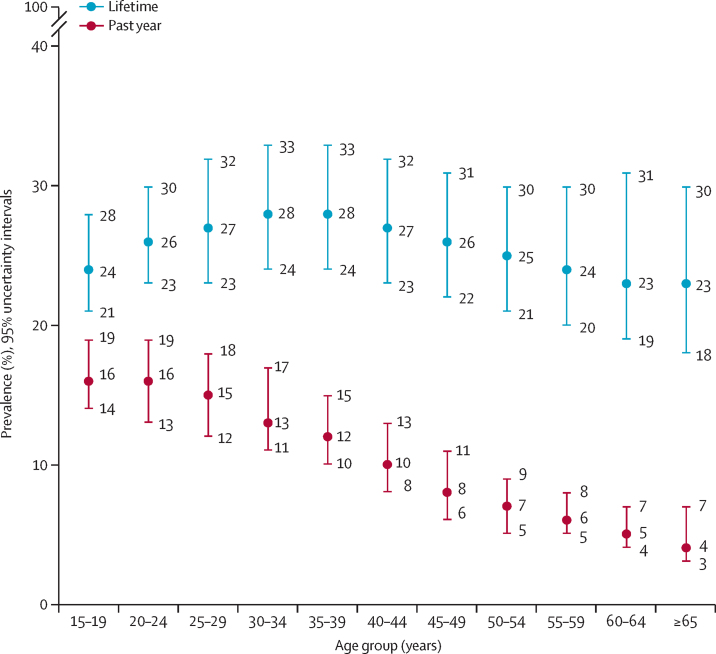
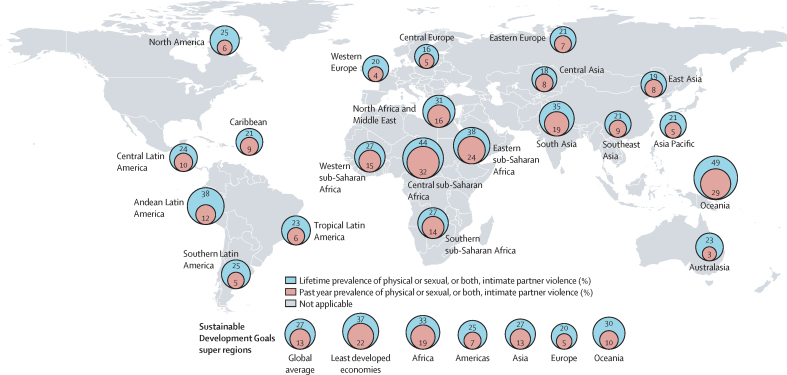
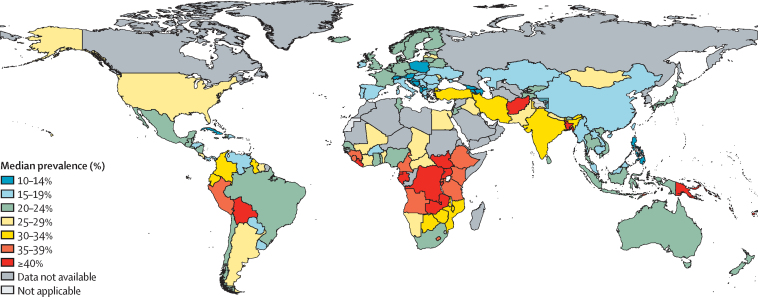
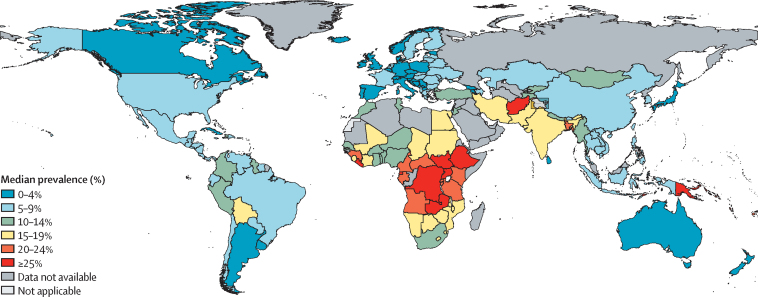
BACKGROUND: Intimate partner violence against women is a global public health problem with many short-term and long-term effects on the physical and mental health of women and their children. The Sustainable Development Goals (SDGs) call for its elimination in target 5.2. To monitor governments' progress towards SDG target 5.2, this study aimed to provide global, regional, and country baseline estimates of physical or sexual, or both, violence against women by male intimate partners. METHODS: This study developed global, regional, and country estimates, based on data from the WHO Global Database on Prevalence of Violence Against Women. These data were identified through a systematic literature review searching MEDLINE, Global Health, Embase, Social Policy, and Web of Science, and comprehensive searches of national statistics and other websites. A country consultation process identified additional studies. Included studies were conducted between 2000 and 2018, representative at the national or sub-national level, included women aged 15 years or older, and used act-based measures of physical or sexual, or both, intimate partner violence. Non-population-based data, including administrative data, studies not generalisable to the whole population, studies with outcomes that only provided the combined prevalence of physical or sexual, or both, intimate partner violence with other forms of violence, and studies with insufficient data to allow extrapolation or imputation were excluded. We developed a Bayesian multilevel model to jointly estimate lifetime and past year intimate partner violence by age, year, and country. This framework adjusted for heterogeneous age groups and differences in outcome definition, and weighted surveys depending on whether they were nationally or sub-nationally representative. This study is registered with PROSPERO (number CRD42017054100). FINDINGS: The database comprises 366 eligible studies, capturing the responses of 2 million women. Data were obtained from 161 countries and areas, covering 90% of the global population of women and girls (15 years or older). Globally, 27% (uncertainty interval [UI] 23-31%) of ever-partnered women aged 15-49 years are estimated to have experienced physical or sexual, or both, intimate partner violence in their lifetime, with 13% (10-16%) experiencing it in the past year before they were surveyed. This violence starts early, affecting adolescent girls and young women, with 24% (UI 21-28%) of women aged 15-19 years and 26% (23-30%) of women aged 19-24 years having already experienced this violence at least once since the age of 15 years. Regional variations exist, with low-income countries reporting higher lifetime and, even more pronouncedly, higher past year prevalence compared with high-income countries. INTERPRETATION: These findings show that intimate partner violence against women was already highly prevalent across the globe before the COVID-19 pandemic. Governments are not on track to meet the SDG targets on the elimination of violence against women and girls, despite robust evidence that intimate partner violence can be prevented. There is an urgent need to invest in effective multisectoral interventions, strengthen the public health response to intimate partner violence, and ensure it is addressed in post-COVID-19 reconstruction efforts. FUNDING: UK Department for International Development through the UN Women-WHO Joint Programme on Strengthening Violence against Women Data, and UNDP-UN Population Fund-UNICEF-WHO-World Bank Special Programme of Research, Development, and Research Training in Human Reproduction, a cosponsored programme executed by WHO.
Overview
The claims and statistics of this paper haven’t been checked yet.
Free: it reads the open-access text and checks the first 5 claims that cite a source we can check. Create a free account to check every claim.
Integrity signals
Registry
Cites
Statistics
Figures
Verification
Claims the paper makes
The claims and statistics of this paper haven’t been checked yet.
Free: it reads the open-access text and checks the first 5 claims that cite a source we can check. Create a free account to check every claim.
Claims other papers make about this one
Each is checked against this paper’s own text: does it say what the citing paper says it does?
The source backs part of the claim, not all of it — or backs it for a different population, condition or comparison.
In the citing paper
“These findings directly contrast another WHO study that estimated a lifetime prevalence between 21 and 25 per cent in high-income countries (Sardinha et al., 2022).”
From The Intergenerational Transmission of Emotional Intimate Partner Violence: a Systematic Review and Meta-Analysis (2025) · cites this paper as Sardinha et al., 2022
Experimental — accuracy not yet measuredThe source backs part of the claim, not all of it — or backs it for a different population, condition or comparison.
In the citing paper
“Lower global estimates were also highlighted by a recent study (L. Sardinha et al., 2022) where 26% of ever-partnered women aged 15 years and older were estimated to have experienced physical or sexual IPV, or both, at least once in their lifetime.”
From Global Prevalence and Mental Health Outcomes of Intimate Partner Violence Among Women: A Systematic Review and Meta-Analysis (2024) · cites this paper as L. Sardinha et al., 2022
Experimental — accuracy not yet measuredThe cited source says what the claim attributes to it.
In the citing paper
“Sardinha and colleagues’ study also reported much lower global rates of past year experience of physical or sexual violence, or both, by a partner among ever partnered women aged 15–49 years.”
From Global Prevalence and Mental Health Outcomes of Intimate Partner Violence Among Women: A Systematic Review and Meta-Analysis (2024) · cites this paper as L. Sardinha et al., 2022
The cited source says what the claim attributes to it.
In the citing paper
“Neither of these studies examined psychological IPV.”
From Global Prevalence and Mental Health Outcomes of Intimate Partner Violence Among Women: A Systematic Review and Meta-Analysis (2024) · cites this paper as L. Sardinha et al., 2022
Self-check
Percentages, sums and reported differences re-computed from the paper’s own numbers.
The self-check needs the paper’s full text.
Citations
Cites
The world report on violence and health
Krug, E. G., Mercy, J. A., Dahlberg, L. L., & Zwi, A. B. (2002) · The Lancet · doi:10.1016/s0140-6736(02)11133-0 · Cited by 9,110
Vos, T., Barber, R. M., Bell, B., Bertozzi-Villa, A., Biryukov, S., Bolliger, I., Charlson, F., Davis, A., Degenhardt, L., Dicker, D., et al. (2015) · The Lancet · doi:10.1016/s0140-6736(15)60692-4 · Cited by 6,414
Guidelines for accurate and transparent health estimates reporting: the GATHER statement
Stevens, G. A., Alkema, L., Black, R. E., Boerma, J. T., Collins, G. S., Ezzati, M., Grove, J. T., Hogan, D. R., Hogan, M. C., Horton, R., et al. (2016) · The Lancet · doi:10.1016/s0140-6736(16)30388-9 · Cited by 1,798
The Global Prevalence of Intimate Partner Violence Against Women
Devries, K. M., Mak, J. Y. T., García-Moreno, C., Petzold, M., Child, J. C., Falder, G., Lim, S., Bacchus, L. J., Engell, R. E., Rosenfeld, L., et al. (2013) · Science · doi:10.1126/science.1240937 · Cited by 1,460
The global prevalence of intimate partner homicide: a systematic review
Stöckl, H., Devries, K., Rotstein, A., Abrahams, N., Campbell, J., Watts, C., & Moreno, C. G. (2013) · The Lancet · doi:10.1016/s0140-6736(13)61030-2 · Cited by 955
Self-citationViolence against women during covid-19 pandemic restrictions
Roesch, E., Amin, A., Gupta, J., & García-Moreno, C. (2020) · BMJ · doi:10.1136/bmj.m1712 · Cited by 511
Self-citationAddressing violence against women: a call to action
García-Moreno, C., Zimmerman, C., Morris-Gehring, A., Heise, L., Amin, A., Abrahams, N., Montoya, O., Bhate-Deosthali, P., Kilonzo, N., & Watts, C. (2015) · The Lancet · doi:10.1016/s0140-6736(14)61830-4 · Cited by 483
Self-citationBacchus, L. J., Ranganathan, M., Watts, C., & Devries, K. (2018) · BMJ Open · doi:10.1136/bmjopen-2017-019995 · Cited by 464
Hamadani, J. D., Hasan, M. I., Baldi, A. J., Hossain, S. J., Shiraji, S., Bhuiyan, M. S. A., Mehrin, S. F., Fisher, J., Tofail, F., Tipu, S. M. M. U., et al. (2020) · The Lancet Global Health · doi:10.1016/s2214-109x(20)30366-1 · Cited by 463
Guidelines for accurate and transparent health estimates reporting: the GATHER statement
Stevens, G. A., Alkema, L., Black, R. E., Boerma, J. T., Collins, G. S., Ezzati, M., Grove, J. T., Hogan, D. R., Hogan, M. C., Horton, R., et al. (2016) · PLOS Medicine · doi:10.1371/journal.pmed.1002056 · Cited by 424
Research works printed but not linked: 2
- Flaxman AD Vos T Murray CJL An integrative metaregression framework for descriptive epidemiology 2015 University of Washington Press Seattle
- Jewkes R Willan S Heise L Effective design and implementation elements in interventions to prevent violence against women and girls https://www.whatworks.co.za/documents/publications/373-intervention-report19-02-20/file January, 2020 PMC8621962 34831885
Cited by
Items 901–999 of 999
Periyasamy, C., Narayanan, G., Kandasamy, A., Ezhumalai, S., & Shanmugam, B. (2024) · Indian Journal of Social Psychiatry · doi:10.4103/ijsp.ijsp_101_23 · Cited by 1
la Rosa-Gómez, A. D., Hernández-Posadas, A., Valencia, P. D., Flores-Plata, L. A., & Elvira, A. I. F. (2024) · Salud Mental · doi:10.17711/sm.0185-3325.2024.032 · Cited by 2
Swanson, A. C., & Lawson, A. K. (2024) · Springer eBooks · doi:10.1007/978-3-031-67474-7_1
Shukla, S., Mosha, N. R., Meyer, S. R., Harvey, S. E., Lees, S. S., Mshana, G. H., & Stöckl, H. (2024) · Social Science & Medicine · doi:10.1016/j.socscimed.2024.117513
Self-citationCárdenas, M. L. B., López, R. P., Ruiz, A. D. B., Gómez, L. M. M., & Inostroza, C. (2024) · Revista Colombiana de Psiquiatría · doi:10.1016/j.rcp.2024.09.005
Patterns and Determinants of Physical Violence Against Women in MalawiPreprint
Mzumara, T., Maunda, P., Mbotwa, M., Nambala, C., Kaonga, B., Lubanga, A. F., Bwanali, A. N., Munthali, G. N. C., Banda, L. O. L., & Sibande, M. K. (2024) · Research Square · doi:10.21203/rs.3.rs-5527694/v1
Sipilä, M., Helminen, M., Hakulinen, T., & Paavilainen, E. (2024) · Maternal and Child Health Journal · doi:10.1007/s10995-024-04021-2 · Cited by 2
“(Sardinha et al., 2022; de Moraes et al., 2016).”
Craig, M. O., & Sailofsky, D. (2024) · Crime Media Culture An International Journal · doi:10.1177/17416590241306019
Erhardt‐Ohren, B., McCoy, S. I., Feehan, D. M., Haar, R. J., & Prata, N. (2024) · Conflict and Health · doi:10.1186/s13031-024-00636-y · Cited by 1
¡No es fácil pedir ayuda! Barreras entre mujeres aimaras: Un estudio cualitativo en Bolivia
Becerra, R. M. Á., Pacheco-Luza, E. F., Cabrera, G. I. B., & Acevedo-Duque, Á. (2024) · PSIQUEMAG/ Revista Científica Digital de Psicología · doi:10.18050/psiquemag.v13i2.3136
Li, H., Dey, A., Singh, A., McDougal, L., Hay, K., & Raj, A. (2024) · Journal of Interpersonal Violence · doi:10.1177/08862605241308294 · Cited by 1
“However, this is less explored in lower resource contexts such as India, where IPV is pervasive and early education enrollment rates are low relative to that seen in many other middle-income nations (Sardinha et al., 2022; UNICEF, 2024).”
Validation of the Slovenian Intimate Violence and Traumatic Affect Scale (S-VITA)
Krohne, N., Leo, D. D., & Poštuvan, V. (2025) · Violence Against Women · doi:10.1177/10778012241307331
Choden, P., Sendall, M. C., & Armstrong, K. A. (2025) · Journal of Gender-Based Violence · doi:10.1332/23986808y2024d000000061
Willie, T. C., Callands, T. A., Phillips, K., Flowers, B., & Kershaw, T. (2025) · Sexuality Research and Social Policy · doi:10.1007/s13178-024-01078-0
“Globally, 27% of women and girls have experienced IPV in their lifetime (Sardinha et al., 2022).”
Heterosexual Partner Sexual Violence: Identifying Women Victims Through Questions on Sexual Coercion
Pons-Salvador, G., Sanz, A. M., & Viejo, C. M. (2025) · Journal of Interpersonal Violence · doi:10.1177/08862605241311614 · Cited by 1
“Intimate partner violence against women is one of the most widespread forms of gender-based violence worldwide (Sardinha et al., 2022; World Health Organization [WHO], 2021).”
Ernest-Okonofua*, E. O., Ibadin, F., Oyiborhoro, O. G., Abengowe, I. T., & Khan, S. (2025) · Asian Journal of Social Sciences and Legal Studies · doi:10.34104/ejmhs.025.04090419
Intimate Partner Violence and Mental Health Outcomes in South Asia
Kanougiya, S., & Shrivastava, S. (2024) · Springer eBooks · doi:10.1007/978-981-97-2098-9_18
Schubotz, D., McAlister, S., & Neill, G. (2025) · Youth · doi:10.3390/youth5010007
“Research evidence across the world is strengthening in relation to the scale of gender-based violence (GBV) (World Health Organization, 2021; Sardinha et al., 2022), and, in particular, the high levels of violent experiences that women and girls report.”
Cerejo, D., Jesus, M., & Concejero, L. T. (2025) · Social Sciences · doi:10.3390/socsci14020086 · Cited by 1
Hammock, A. C., Inman, E. M., Madi, P., Violari, A., & Kidman, R. C. (2025) · SSRN Electronic Journal · doi:10.2139/ssrn.5114375
da Costa, C. M., Florêncio, C. B. S., Martins, P. H. D. F., & Silva, S. S. D. C. (2025) · Psicologia e Saúde em Debate · doi:10.22289/2446-922x.v11a1a21 · Cited by 1
Intimate Partner Violence Leading to Stroke and Mental Health Challenges
Adhikari, S. P., Stranges, T. N., Marshall, R. A., Lorenz, B. R., Zadeh‐Tehrani, S. N., & van Donkelaar, P. (2024) · Springer eBooks · doi:10.1007/978-3-031-32035-4_106-1
Violência Doméstica Contra a mulher: um Estudo de Representações Sociais com Policiais Militares
Lago, A. D. S., Gomes, N. P., de Oliveira, J. F., Suto, C. S. S., Virgens, I. D. R., Assunção, A. C. R., & Lima, V. D. O. C. (2024) · Revista Psicologia e Saúde · doi:10.20435/pssa.v16i1.2368
Alshouibi, E. N. (2025) · BMC Oral Health · doi:10.1186/s12903-025-05688-x
“A recent study reported that 2 in every 10 men and 3 in every 10 women are victims of domestic violence, and less than 20% of those victims seek medical attention [5, 6].”
Hernández, R. R., Viveros, N. C., & Ochoa, A. (2025) · Lecture notes in computer science · doi:10.1007/978-3-031-83879-8_14
Figueroa, D., Mamun, M. M. A., Jung, D. K., Li, G., Tan, S. T., Jamshed, F., Butzin-Dozier, Z., Mertens, A., Lin, J., Pitchik, H. O., et al. (2025) · Scientific Reports · doi:10.1038/s41598-025-90505-2 · Cited by 1
Martins, J. P., & Marson, F. A. L. (2025) · Psychiatry Research · doi:10.1016/j.psychres.2025.116433 · Cited by 1
Empowering Women and Girls in Public Health
Saleh, J.-E. A. (2025) · BENTHAM SCIENCE PUBLISHERS eBooks · doi:10.2174/9789815305609125010016
Kothari, R., Husain, Z., & Mukherjee, D. (2025) · Violence Against Women · doi:10.1177/10778012251329359
Kitutu, F. E., Olum, R., Nakamanya, S. K., Nakisita, O., Clarke, S. E., & Hutchinson, E. (2025) · Research Square · doi:10.21203/rs.3.rs-5514997/v1
Narayanan, K., Edward, S., & Baalann, K. P. (2025) · Cureus · doi:10.7759/cureus.82234
“In 2015, members of countries agreed upon the 2030 UN Agenda for Sustainable Development Goals (SDGs), a framework that calls for the elimination of violence against women and girls under Goal 5 on gender equality and women’s empowerment [2].”
Reneflot, A., Straiton, M., Stene‐Larsen, K., Knudsen, A. K., Kirkøen, B., & Myklestad, I. (2025) · Frontiers in Psychiatry · doi:10.3389/fpsyt.2025.1531033
Pourbakhtiar, M., Ghaffari, M., & Rakhshanderou, S. (2025) · Payesh (Health Monitor) Journal · doi:10.61186/payesh.24.1.69
Jiwatram-Negrón, T., Meinhart, M., Ahmed, S., Nikitin, D., & Gilbert, L. (2025) · Social Work Research · doi:10.1093/swr/svaf006
Typology of acquaintance rapist: Criminal profiling based on latent class analysis (LCA)
Ceballos-Espinoza, F. (2025) · Journal of Forensic Practice · doi:10.1108/jfp-08-2024-0044 · Cited by 1
Ajonye, A. A., Ogwuche, C. H., Atime, S. M., & Omudu, E. A. (2025) · African Journal of Social Sciences and Humanities Research · doi:10.52589/ajsshr-zkhpx6pt
Mindfulnessbaserte intervensjoner for utøvere av partnervold – en oversikt
Hoff, U. G. D., Leidland, R., & Hansen, A. L. (2025) · Tidsskrift for Norsk psykologforening · doi:10.52734/tfrg8068
Elizabeth, L. (2025) · Springer eBooks · doi:10.1007/978-3-031-87608-0_2
Academics and Intimate Partner Violence Communication
Elizabeth, L. (2025) · Springer eBooks · doi:10.1007/978-3-031-87608-0_10
Barbosa, E. C., Pereira, S., Bacchus, L., Colombini, M., Feder, G. S., Schraiber, L. B., & d’Oliveira, A. F. P. L. (2025) · The Lancet Regional Health - Americas · doi:10.1016/j.lana.2025.101114 · Cited by 8
Tavrow, P., Maderas, N. M., Evelia, H., Kathambi, G., & Obbuyi, A. (2025) · BMC Global and Public Health · doi:10.1186/s44263-025-00165-7
“To prevent SGBV and assist survivors, researchers have called for comprehensive, multifaceted, student-centered approaches [3, 4, 13, 15].”
Qiao, J., Zhou, N., & Cao, H. (2025) · Journal of Family Violence · doi:10.1007/s10896-025-00899-w · Cited by 1
Poulsen, A. (2025) · Queensland University of Technology · doi:10.5204/thesis.eprints.257453 · Cited by 1
Cai, Z. (2025) · Lecture notes in computer science · doi:10.1007/978-3-031-93712-5_9 · Cited by 2
Understanding Social Media Advocacy: Advocacy Communication on the Violence Against Women Act
Choi, M., Kang, S., & Kim, Y. (2025) · Health Communication · doi:10.1080/10410236.2025.2510002 · Cited by 2
An osteopathic approach to post-traumatic stress disorder in sexually abused women: a case report
Gutiv, A., & Mattatia, J. (2025) · European Journal of Trauma & Dissociation · doi:10.1016/j.ejtd.2025.100567
Acharya, S. R. (2025) · BMC Public Health · doi:10.1186/s12889-025-23414-8 · Cited by 1
“Region of residence plays a significant role in influencing estimates of GBV and associated chronic conditions [23, 36, 45].”
Siddiqui, M. M. U., Sameen, S., Ambreen, S., Lakhdir, M. P. A., & Usmani, B. A. (2025) · Research Square · doi:10.21203/rs.3.rs-6810413/v1
Heinzel, M., & Weaver, C. E. (2025) · International Studies Quarterly · doi:10.1093/isq/sqaf049
Kim, G., & Hong, J. (2025) · Journal of Korean Academy of Psychiatric and Mental Health Nursing · doi:10.12934/jkpmhn.2025.34.2.155 · Cited by 1
Exploring the Determinants of Intimate Partner Violence in the Dar es Salaam Region, Tanzania
Matemba, G. B., Ndunguru, M. J., & Genda, E. L. (2025) · Pan-African Journal of Health and Environmental Science · doi:10.56893/ajhes2025v04i01.05
Gender equity and intimate partner violence among adolescents and young adults in Tanzania
Madaha, F., Reif, L. K., Cordeiro, A. A., Harvey, S. E., Lees, S. S., Masasi, F., Lugata, A., Nago, F., Mwakisole, A. H., Kapiga, S., et al. (2025) · Culture Health & Sexuality · doi:10.1080/13691058.2025.2517291
Wood, S. N., Dozier, J. L., Karp, C. A., OlaOlorun, F. M., Omoluabi, E., Mosso, R., Akilimali, P. Z., Kibira, S. P. S., Makumbi, F. E., Guiella, G., et al. (2025) · BMC Women s Health · doi:10.1186/s12905-025-03874-1
“[29].”
Park, D. S. (2026) · Journal of Development Economics · doi:10.1016/j.jdeveco.2026.103823
Barker, K. M., Patwardhan, V., Chokhandre, P. K., SINGH, A. K., Singh, A., & McDougal, L. (2025) · doi:10.12688/verixiv.1560.1
Nardi-Rodríguez, A., Bernardes, S. F., Pastor-Mira, M. D. L. Á., López-Roig, S., Pamies-Aubalat, L., Sánchez-Prada, A., Pérez, V. A. F., Rodríguez‐Rodríguez, I., & Heras-González, P. (2025) · JMIR Research Protocols · doi:10.2196/66396
“Today, IPV against women remains a widespread epidemic, affecting at least 30% of women worldwide [16].”
Kalra, H., Tran, T. D., Nguyen, H. T. M., Chandra, P. S., Sharp, H. M., & Fisher, J. (2025) · BMC Pregnancy and Childbirth · doi:10.1186/s12884-025-07840-5 · Cited by 1
“Globally, it is estimated that about 35% of women experience IPV in their lifetimes with significant variations in prevalence within and between countries [5, 6].”
Chalise, B., Clark, C. J., Bhattarai, S., & Thapa, S. (2025) · Social Science & Medicine · doi:10.1016/j.socscimed.2025.118416
Nandi, A., Haberland, N. A., Kozak, M., Zahra, F. T., & Ngo, T. D. (2025) · BMJ Public Health · doi:10.1136/bmjph-2024-001530 · Cited by 1
Sheikhnezhad, L., Hassankhani, H., Sawin, E. M., Sanaat, Z., & Sahebihagh, M. H. (2025) · BMC Women s Health · doi:10.1186/s12905-025-03872-3
“IPV has several short-term and long-term impacts on the physical and mental health of women and their children [4].”
Sam, M., Barrocas, J., Clemente-Teixeira, M., Taveira‐Gomes, T., Vidal-Alves, M. J., & Magalhães, T. (2025) · PLoS ONE · doi:10.1371/journal.pone.0326235
“[ 23,24] This leads us to hypothesize that a substantial number of victims may abandon regular care and disconnect from the health system care when they feel they have been identified as such.”
Bourey, C., Murray, S. M., Tol, W. A., Bass, J., Ba, A., Mahenge, B., Munthali, S., & Falb, K. (2025) · The Lancet Global Health · doi:10.1016/s2214-109x(25)00191-3 · Cited by 2
“2 In response, IPV researchers and practitioners have developed effective interventions that, particularly in low-income and middle-income countries (LMICs), include gender-transformative approaches that target patriarchal attitudes and norms, which are a root cause of violence against women.”
Bystanders Responses in Cases of Violence Against Women: Categories and Gender Differences
Pérez, V. A. F., Sánchez-Prada, A., Álvarez, C. D., Vázquez-González, L. I., Ferreiro-Basurto, V., & Nardi-Rodríguez, A. (2025) · Journal of Interpersonal Violence · doi:10.1177/08862605251355895
“Violence against women and girls (VAWGs) is a social and health problem of pandemic proportions experienced by almost a third of all women worldwide (Sardinha et al., 2022).”
Santo, I. D. D. O., Gosangi, B., & Khurana, B. (2025) · Springer eBooks · doi:10.1007/978-3-031-78916-8_63
The AOFOG declaration on violence against women: A regional call to action for Asia and Oceania
Jaisamrarn, U., Lumbiganon, P., Haththotuwa, R., Li, J., Olson, A. L., Gupta, K., Teo, J. B. H., Cheung, S. C., Black, K. I., Hadijono, S., et al. (2025) · Journal of obstetrics and gynaecology research · doi:10.1111/jog.70004
Marzecki, F., Ahmadzadeh, Y. I., Jayaweera, K., Rijsdijk, F. V., Siribaddana, S., Sumathipala, A., Herath, K. B., Jabir, S., Widanaralalage, B. K., Badini, I., et al. (2025) · Journal of Affective Disorders · doi:10.1016/j.jad.2025.120005 · Cited by 1
Gheorghe, C., & Cosmoiu, A. (2025) · Journal of Interpersonal Violence · doi:10.1177/08862605251355624 · Cited by 1
Ngina, J., Thomas, H. L., Wood, S. N., Williams, A., Thiongo, M. N., Mwatha, R., Kamau, M., Wamue-Ngare, G., Decker, M. R., & Gichangi, P. (2025) · doi:10.12688/verixiv.1714.1 · Cited by 1
Ricoy-Cano, A. J., Carnero, M. R., Robles, Y. D. L. F., & Zambrano, C. V. (2025) · Journal of Elder Abuse & Neglect · doi:10.1080/08946566.2025.2541169
“…lasting physical, psychological, and social consequences (Krahé, 2018; Office on Women’s Health OASH, 2024; Oram et al., 2017), and a grave violation of human rights (Stöckl & Sorenson, 2024) affecting women at all life stages and in all territories (Ricoy-Cano et al., 2024; Sardinha et al., 2022).”
Regional Determinants of Domestic Violence in India: Machine Learning Approach
Sharma, M., & Balabhadra, G. (2025) · Communications in computer and information science · doi:10.1007/978-3-031-98949-0_12
Mumu, R. T., Shaikh, M. P., & Ayan, S. S. (2025) · medRxiv · doi:10.1101/2025.08.02.25332863 · Cited by 1
Temporal Evolution and Projections of Violence Against Women in Brazil: Scenarios from 2013 to 2033
Coelho, M. D. M. F., Oriá, M. O. B., Tamboril, A. C. R., Moreira, W. C., de Oliveira, B. A., Martins, M. C., Coutinho, J. F. V., Diniz, J. L., Gubert, F. D. A., de Albuquerque, T. R., et al. (2025) · Journal of Interpersonal Violence · doi:10.1177/08862605251355969
“In the United States, women from marginalized communities, especially African-American and Latina women, face similar challenges, with less access to shelters and protection services due to language barriers and discrimination (Sardinha et al., 2022).”
InfluentialEltigani, B., Hoffmann, R., & Cluver, L. D. (2025) · SSRN Electronic Journal · doi:10.2139/ssrn.5350608
He, F., Li, X., Xu, X., Bao, S., Chen, Y., Liu, H., & Chen, Y. Y. (2025) · PLoS ONE · doi:10.1371/journal.pone.0325912 · Cited by 1
“…states; and in the process of growing up, the Gender roles and societal expectations place additional stress on women, with sexual violence [62], sexual abuse [60], interpersonal violence, stress exposure and stress susceptibility [33] at the micro level, and gender inequality [63,64] at…”
Social Psychiatry in South Asia: An Overview
Singh, A. K., & Kar, S. K. (2025) · Springer eBooks · doi:10.1007/978-981-96-8078-8_1 · Cited by 2
Emerging links between intimate partner violence and women’s cardiovascular disease risk
Pyle, G., & Peters, O. (2024) · The Conversation · doi:10.64628/aam.47uv3gfvs
Fanslow, J., Gulliver, P. J., Mellar, B. M., Selak, V., & Mcintosh, T. K. D. (2025) · Scandinavian Journal of Public Health · doi:10.1177/14034948251355143 · Cited by 4
“…estimates indicate that one in three ever-partnered women have experienced physical and/or sexual violence by an intimate partner in their lifetime [2], and one in five girls have experienced child sexual abuse [3]. understanding of health consequences of violence has also increased, but gaps…”
Frano, E. L., Conklin, J., & Okumu, M. (2025) · JMIR Research Protocols · doi:10.2196/76996
Intimate Partner Violence Leading to Stroke and Mental Health Challenges
Adhikari, S. P., Stranges, T. N., Marshall, R. A., Lorenz, B. R., Zadeh‐Tehrani, S. N., & van Donkelaar, P. (2025) · Springer eBooks · doi:10.1007/978-3-031-73368-0_106
Gibson, M. A., Gurmu, E. D., Alvergne, A., Redhead, D., & Myers, S. (2025) · PNAS Nexus · doi:10.1093/pnasnexus/pgaf282 · Cited by 1
“Despite long-standing efforts to eliminate IPV perpetrated by men against women (IPVAW), the most common form of IPV worldwide, it is estimated that one in three women alive today have been assaulted by a male partner (2), and in many countries, this form of violence remains widely tolerated (3)).”
Tarzia, L., Chondros, P., Trevena, J. A., Hegarty, K. L., Russell, M. A., & Sanci, L. A. (2025) · Journal of Sexual Aggression · doi:10.1080/13552600.2025.2550296 · Cited by 3
Adebowale, A. S., Salawu, M. M., Fagbamigbe, A. F., & Fawole, O. I. (2025) · PubMed Central
The Implementation Obstacles and Solution Paths of the Domestic Violence Warning System
俞, 瑶. (2025) · Advances in Social Sciences · doi:10.12677/ass.2025.149778
Ugwu, N. V., Okoye, K. M., & Eze, V. U. (2025) · HTS Teologiese Studies / Theological Studies · doi:10.4102/hts.v81i1.10826
“…women is more prevalent among married women than among younger individuals in dating relationships in Nsukka, a finding consistent with studies that indicate a higher rate of IVP among older married women because of prolonged exposure to abusive relationships (Sardinha et al. 2022; WHO 2021).”
The Role of MRI in Debunking the Fallacy of “Mild” Traumatic Brain Injury
Chen, X., Wright, D. K., Chung, S., & Lui, Y. W. (2025) · Journal of Magnetic Resonance Imaging · doi:10.1002/jmri.70083
“IPV, which affects approximately one in four women globally [96], often involves trauma to the head, face, and neck, resulting in mTBI with symptoms including headache, dizziness, disturbed sleep, and depression, though diagnosis is often complicated by co-existing behavioral and psychiatric…”
Baek, S., & Yoon, J. (2025) · Journal of Affective Disorders · doi:10.1016/j.jad.2025.120254 · Cited by 2
Omotayo, D. O., Taiwo, F. O., Oluwatoyin, O. A., Abiodun-Ojo, E. O., Busayo, S. I., Oluwaseyi, A. A., Ifeoluwa, A. O., & Oluwaseun, E. A.-I. (2025) · International Journal of Nursing and Midwifery · doi:10.5897/ijnm2024.0540 · Cited by 1
Uysal, J., Johns, N. E., Undie, C., Liambila, W., Pearson, E., Reed, E., & Silverman, J. G. (2025) · PLOS Global Public Health · doi:10.1371/journal.pgph.0004087
“In Kenya the estimated prevalence of lifetime and past year IPV is higher than the global average [12] and RC is prevalent [5].”
Almegewly, W. H., Khedr, M. A., Hendy, A., Hussien, R. M., Amodi, R., Aleanzi, A., Alfaifi, R., Alshamari, J., Almalki, N., Alkhars, F., et al. (2026) · Scientific Reports · doi:10.21203/rs.3.rs-7429088/v1
Li, C., Hu, F., Gao, Q., Wang, Y., Chen, J., Cai, Y., & Wang, Y. (2025) · Journal of Interpersonal Violence · doi:10.1177/08862605251368826
“It is essentially a pattern of behavior aimed at maintaining power and control within an intimate relationship (Krause-Utz et al., 2023; Sardinha et al., 2022).”
Mejía-Sánchez, R., Cárcamo-Zepeda, E., & Landa–Blanco, M. (2025) · Hispanic Health Care International · doi:10.1177/15404153251365598
“In this context, intimate partner violence (IPV) refers toacts that cause physical, sexual, and psychological harm, as well as controlling and aggressive behaviors occurring within intimate relationships (Sardinha et al., 2022).”
Katende-Kyenda, L. N., & Mteleli, T. (2025) · Futurity Education · doi:10.57125/fed.2025.09.25.01
“Furthermore, a study by Sardinha et al. (2022) revealed that in Southern Africa, a staggering 27% of women aged 15 and older experienced physical and/or sexual violence from an intimate partner at some point in their lives.”
Pérez‐Aronsson, A., Al-Adhami, M., Sarkadi, A., & Warner, G. (2025) · Violence Against Women · doi:10.1177/10778012251379450
“DVA and SV affect women across the world (Sardinha et al., 2022, 2024), and are associated with health problems such as chronic pain (Schou-Bredal et al., 2022), depression (Lohmann et al., 2024; Schou-Bredal et al., 2022) and posttraumatic stress disorder (Lohmann et al., 2024).”
Hou, L., Shan, S., Luo, Z., Xiao, W., Ying, J., Wu, J., Liu, W., & Song, P. (2025) · BMJ Global Health · doi:10.1136/bmjgh-2025-020501 · Cited by 1
Abramsky, T., Hameed, S., Musenze, J. B., Witt, A., Mugooda, H., Opito, D., Awino, E., Pinto, G., Namy, S., Nakuti, J., et al. (2025) · BMC Public Health · doi:10.1186/s12889-025-24178-x
“Globally, an estimated 27% of ever-partnered women aged 15 to 49 years have experienced physical and/or sexual intimate partner violence (IPV) during their lifetime [1].”
Wood, S. N., Williams, A., Akilimali, P. Z., Kayembe, D. M., Bell, S. O., & Decker, M. R. (2025) · BMC Public Health · doi:10.1186/s12889-025-24148-3 · Cited by 2
“Approximately one in five women in Kongo Central and Kinshasa experienced physical and/or sexual IPV within the past year, which is higher than many other global contexts [30]; this percentage increased to 35.3% in Kinshasa and 29.7% in Kongo Central when including emotional IPV.”
InfluentialTomar, S., Baker, H., Amani, H., Iredell, K., Moussa, K. B., Nouhou, A. M., Gayles, J., Reed, E., Kiene, S. M., Lundgren, R., et al. (2025) · PLoS ONE · doi:10.1371/journal.pone.0333677
“Globally, 24% of adolescent girls (aged 15–19 years) are estimated to have experienced physical or sexual IPV in their lifetime [36].”
Not Alone, but Together: Community Level Empowerment of Women and Intimate Partner Violence in India
Sinha, D. U., Mitra, C., Dhar, P., Sam, S., Dutta, M., & Husain, Z. (2025) · Spatial Demography · doi:10.1007/s40980-025-00148-0
“It is the most common form of violence against women in all societies, affecting about one in three women globally (Sardinha et al., 2022).”
Ayowole, D. J., Adebajo, G. O., Olasehinde, I. A., & Ayowole, P. T. (2025) · Discover Mental Health · doi:10.1007/s44192-025-00247-w · Cited by 3
“Physical abuse is the most visible and reported form of abuse because of the glaring evidence of such abuse on victims [16, 17].”
Metadata
- Authors
- Sardinha, L., Maheu-Giroux, M., Stöckl, H., Meyer, S. R., & García-Moreno, C.
- Affiliations
- World Health Organization (CH)
- London School of Hygiene & Tropical Medicine (GB)
- Venue
- The Lancet
- Publisher
- Elsevier BV
- Published
- 2022-02
- Volume
- 399
- Issue
- 10327
- Pages
- 803-813
- ISSN
- 0099-5355 (ISSN-L)
- 0140-6736
- PMC
- PMC8885817
- OpenAlex
- W4212796598
- Cited by
- 1,328
- References
- 20
- Citations by year
- 2026: 295 · 2025: 366 · 2024: 341 · 2023: 246 · 2022: 79
- FWCI
- 197.93
- Type
- journal article
- Language
- en
- Open access
- hybrid
- doi.org
- Licence
- cc-by-nc-nd
- www.elsevier.com/tdm/userlicense/1.0/ (tdm)
- www.elsevier.com/legal/tdmrep-license (tdm)
- creativecommons.org/licenses/by-nc-nd/3.0/igo/ (vor)
- Locations
- The Lancet (publishedVersion, cc-by-nc-nd)
- PubMed Central (publishedVersion, cc-by-nc-nd)
- PubMed (publishedVersion)
- Funders
- World Health Organization
- Topics
- Social Sciences › Health › Intimate Partner and Family Violence
- Health Sciences › Medicine › Geriatrics and Gerontology › Elder Abuse and Neglect
- Social Sciences › Sociology and Political Science › Gender, Violence, Rights in Latin America
- Keywords
- intimate partner violence, violence against women, physical violence, sexual violence, lifetime prevalence, global prevalence estimates, Bayesian hierarchical model, adolescent girls, young women, country-level estimates, gender-based violence
- MeSH terms
- Intimate Partner Violence, Sustainable Development, COVID-19, Adolescent, Adult, Female, Humans, Male, Public Health, Risk Factors, Sexual Partners, Global Health, World Health Organization, Prevalence, Databases, Factual, Young Adult
About these checks
Registry, retraction, Cites and statistics results are computed, not judged, with one exception: a printed reference that no index lists is read once by a model before it counts as a citation error. Claims are extracted by a model and kept only when their quote appears verbatim in the text; each cited source is then checked, with a model’s help, for whether it says what the claim relies on. Those verdicts can be wrong — read the claim’s quote and the cited source before relying on one.
Statistics and arithmetic are recomputed, not judged.
Confidence bands are shown only for fields calibrated on our annotated test set. None is calibrated yet, so no band is shown.
What counts as a claim ›How we measure confidence ›How we check this ›
Are you an author, or do you see a problem with this page? Request a review
Data sources
Bibliographic data: Semantic Scholar, OpenAlex, Crossref.
Contains information from the Semantic Scholar Academic Graph Datasets, made available under the ODC Attribution License (ODC-BY 1.0).
Semantic Scholar’s data is described in: Kinney, R., et al. (2023). The Semantic Scholar Open Data Platform. arXiv:2301.10140.
