

Global, regional, and national prevalence estimates of physical or sexual, or both, intimate partner violence against women in 2018
Open accessThe DOI matches its Crossref record; 20 of the 20 references it cites were found in a registry or an index.
Abstract
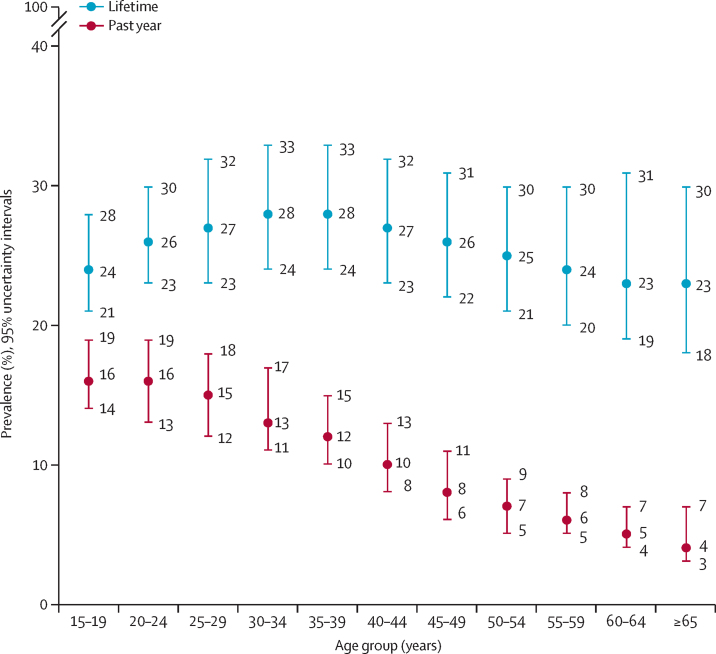
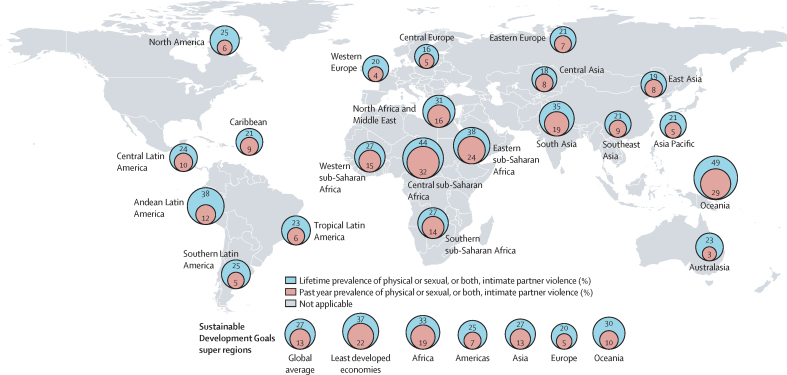
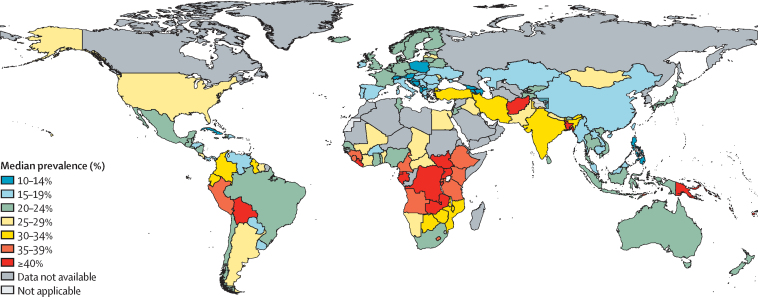
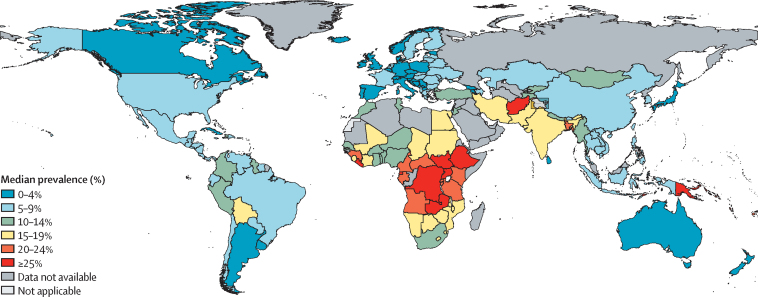
BACKGROUND: Intimate partner violence against women is a global public health problem with many short-term and long-term effects on the physical and mental health of women and their children. The Sustainable Development Goals (SDGs) call for its elimination in target 5.2. To monitor governments' progress towards SDG target 5.2, this study aimed to provide global, regional, and country baseline estimates of physical or sexual, or both, violence against women by male intimate partners. METHODS: This study developed global, regional, and country estimates, based on data from the WHO Global Database on Prevalence of Violence Against Women. These data were identified through a systematic literature review searching MEDLINE, Global Health, Embase, Social Policy, and Web of Science, and comprehensive searches of national statistics and other websites. A country consultation process identified additional studies. Included studies were conducted between 2000 and 2018, representative at the national or sub-national level, included women aged 15 years or older, and used act-based measures of physical or sexual, or both, intimate partner violence. Non-population-based data, including administrative data, studies not generalisable to the whole population, studies with outcomes that only provided the combined prevalence of physical or sexual, or both, intimate partner violence with other forms of violence, and studies with insufficient data to allow extrapolation or imputation were excluded. We developed a Bayesian multilevel model to jointly estimate lifetime and past year intimate partner violence by age, year, and country. This framework adjusted for heterogeneous age groups and differences in outcome definition, and weighted surveys depending on whether they were nationally or sub-nationally representative. This study is registered with PROSPERO (number CRD42017054100). FINDINGS: The database comprises 366 eligible studies, capturing the responses of 2 million women. Data were obtained from 161 countries and areas, covering 90% of the global population of women and girls (15 years or older). Globally, 27% (uncertainty interval [UI] 23-31%) of ever-partnered women aged 15-49 years are estimated to have experienced physical or sexual, or both, intimate partner violence in their lifetime, with 13% (10-16%) experiencing it in the past year before they were surveyed. This violence starts early, affecting adolescent girls and young women, with 24% (UI 21-28%) of women aged 15-19 years and 26% (23-30%) of women aged 19-24 years having already experienced this violence at least once since the age of 15 years. Regional variations exist, with low-income countries reporting higher lifetime and, even more pronouncedly, higher past year prevalence compared with high-income countries. INTERPRETATION: These findings show that intimate partner violence against women was already highly prevalent across the globe before the COVID-19 pandemic. Governments are not on track to meet the SDG targets on the elimination of violence against women and girls, despite robust evidence that intimate partner violence can be prevented. There is an urgent need to invest in effective multisectoral interventions, strengthen the public health response to intimate partner violence, and ensure it is addressed in post-COVID-19 reconstruction efforts. FUNDING: UK Department for International Development through the UN Women-WHO Joint Programme on Strengthening Violence against Women Data, and UNDP-UN Population Fund-UNICEF-WHO-World Bank Special Programme of Research, Development, and Research Training in Human Reproduction, a cosponsored programme executed by WHO.
Overview
The claims and statistics of this paper haven’t been checked yet.
Free: it reads the open-access text and checks the first 5 claims that cite a source we can check. Create a free account to check every claim.
Integrity signals
Registry
Cites
Statistics
Figures
Verification
Claims the paper makes
The claims and statistics of this paper haven’t been checked yet.
Free: it reads the open-access text and checks the first 5 claims that cite a source we can check. Create a free account to check every claim.
Claims other papers make about this one
Each is checked against this paper’s own text: does it say what the citing paper says it does?
The source backs part of the claim, not all of it — or backs it for a different population, condition or comparison.
In the citing paper
“These findings directly contrast another WHO study that estimated a lifetime prevalence between 21 and 25 per cent in high-income countries (Sardinha et al., 2022).”
From The Intergenerational Transmission of Emotional Intimate Partner Violence: a Systematic Review and Meta-Analysis (2025) · cites this paper as Sardinha et al., 2022
Experimental — accuracy not yet measuredThe source backs part of the claim, not all of it — or backs it for a different population, condition or comparison.
In the citing paper
“Lower global estimates were also highlighted by a recent study (L. Sardinha et al., 2022) where 26% of ever-partnered women aged 15 years and older were estimated to have experienced physical or sexual IPV, or both, at least once in their lifetime.”
From Global Prevalence and Mental Health Outcomes of Intimate Partner Violence Among Women: A Systematic Review and Meta-Analysis (2024) · cites this paper as L. Sardinha et al., 2022
Experimental — accuracy not yet measuredThe cited source says what the claim attributes to it.
In the citing paper
“Sardinha and colleagues’ study also reported much lower global rates of past year experience of physical or sexual violence, or both, by a partner among ever partnered women aged 15–49 years.”
From Global Prevalence and Mental Health Outcomes of Intimate Partner Violence Among Women: A Systematic Review and Meta-Analysis (2024) · cites this paper as L. Sardinha et al., 2022
The cited source says what the claim attributes to it.
In the citing paper
“Neither of these studies examined psychological IPV.”
From Global Prevalence and Mental Health Outcomes of Intimate Partner Violence Among Women: A Systematic Review and Meta-Analysis (2024) · cites this paper as L. Sardinha et al., 2022
Self-check
Percentages, sums and reported differences re-computed from the paper’s own numbers.
The self-check needs the paper’s full text.
Citations
Cites
The world report on violence and health
Krug, E. G., Mercy, J. A., Dahlberg, L. L., & Zwi, A. B. (2002) · The Lancet · doi:10.1016/s0140-6736(02)11133-0 · Cited by 9,110
Vos, T., Barber, R. M., Bell, B., Bertozzi-Villa, A., Biryukov, S., Bolliger, I., Charlson, F., Davis, A., Degenhardt, L., Dicker, D., et al. (2015) · The Lancet · doi:10.1016/s0140-6736(15)60692-4 · Cited by 6,414
Guidelines for accurate and transparent health estimates reporting: the GATHER statement
Stevens, G. A., Alkema, L., Black, R. E., Boerma, J. T., Collins, G. S., Ezzati, M., Grove, J. T., Hogan, D. R., Hogan, M. C., Horton, R., et al. (2016) · The Lancet · doi:10.1016/s0140-6736(16)30388-9 · Cited by 1,798
The Global Prevalence of Intimate Partner Violence Against Women
Devries, K. M., Mak, J. Y. T., García-Moreno, C., Petzold, M., Child, J. C., Falder, G., Lim, S., Bacchus, L. J., Engell, R. E., Rosenfeld, L., et al. (2013) · Science · doi:10.1126/science.1240937 · Cited by 1,460
The global prevalence of intimate partner homicide: a systematic review
Stöckl, H., Devries, K., Rotstein, A., Abrahams, N., Campbell, J., Watts, C., & Moreno, C. G. (2013) · The Lancet · doi:10.1016/s0140-6736(13)61030-2 · Cited by 955
Self-citationViolence against women during covid-19 pandemic restrictions
Roesch, E., Amin, A., Gupta, J., & García-Moreno, C. (2020) · BMJ · doi:10.1136/bmj.m1712 · Cited by 511
Self-citationAddressing violence against women: a call to action
García-Moreno, C., Zimmerman, C., Morris-Gehring, A., Heise, L., Amin, A., Abrahams, N., Montoya, O., Bhate-Deosthali, P., Kilonzo, N., & Watts, C. (2015) · The Lancet · doi:10.1016/s0140-6736(14)61830-4 · Cited by 483
Self-citationBacchus, L. J., Ranganathan, M., Watts, C., & Devries, K. (2018) · BMJ Open · doi:10.1136/bmjopen-2017-019995 · Cited by 464
Hamadani, J. D., Hasan, M. I., Baldi, A. J., Hossain, S. J., Shiraji, S., Bhuiyan, M. S. A., Mehrin, S. F., Fisher, J., Tofail, F., Tipu, S. M. M. U., et al. (2020) · The Lancet Global Health · doi:10.1016/s2214-109x(20)30366-1 · Cited by 463
Guidelines for accurate and transparent health estimates reporting: the GATHER statement
Stevens, G. A., Alkema, L., Black, R. E., Boerma, J. T., Collins, G. S., Ezzati, M., Grove, J. T., Hogan, D. R., Hogan, M. C., Horton, R., et al. (2016) · PLOS Medicine · doi:10.1371/journal.pmed.1002056 · Cited by 424
Research works printed but not linked: 2
- Flaxman AD Vos T Murray CJL An integrative metaregression framework for descriptive epidemiology 2015 University of Washington Press Seattle
- Jewkes R Willan S Heise L Effective design and implementation elements in interventions to prevent violence against women and girls https://www.whatworks.co.za/documents/publications/373-intervention-report19-02-20/file January, 2020 PMC8621962 34831885
Cited by
Items 801–900 of 999
Religion and Domestic Violence
Lalonde, C., & Arnocky, S. A. (2023) · Springer eBooks · doi:10.1007/978-3-030-85493-5_1431-1 · Cited by 6
Populations at Special Health Risk: Men
White, A. (2023) · Elsevier eBooks · doi:10.1016/b978-0-323-99967-0.00019-3 · Cited by 1
Intimate Partner Violence: Worldwide Incidence Rates
Andreescu, V. (2023) · Springer eBooks · doi:10.1007/978-3-030-85493-5_2034-1 · Cited by 1
Violência e feminicídio: representações sociais de familiares de vítimas de feminicídio
Reis, I. D. O. (2023) · doi:10.11606/d.22.2023.tde-12072023-104852 · Cited by 1
Factors Determining Intimate Partner Violence (IPV) Among Married Women in BhutanPreprint
Jamtsho, C. (2023) · Research Square · doi:10.21203/rs.3.rs-3283346/v1 · Cited by 1
Risk Factors for Domestic Violence
Allard, V., Slight, M., & Higgs, T. (2023) · Springer eBooks · doi:10.1007/978-3-030-85493-5_1442-1 · Cited by 2
Postpartum depression in Jamaica: Exploring the lived experiences.
Elmore, S. (2023) · ThinkIR: The University of Louisville's Institutional Repository (University of Louisville) · doi:10.18297/etd/4107 · Cited by 1
Behind Closed Doors: Attitudes, Dark Traits, and Perceptions of Intimate Partner Sexual Violence
Brunet, L. M. (2023) · Carleton University's Institutional Repository (MacOdrum Library, Carleton University) · doi:10.22215/etd/2023-15667 · Cited by 2
The Radical Power of Education
Nandi, A., Haberland, N. A., & Ngo, T. D. (2023) · doi:10.31899/sbsr2023.1056 · Cited by 1
Underreporting of Men’s Violence Against Female Intimate Partners
Girard, S., & Higgs, T. (2023) · Springer eBooks · doi:10.1007/978-3-030-85493-5_1671-1 · Cited by 3
Mannell, J., Brown, L. J., Jordaan, E., Hatcher, A. M., & Gibbs, A. (2024) · SSRN Electronic Journal · doi:10.2139/ssrn.4800400 · Cited by 1
Leth, P. M., & Thomsen, A. H. (2024) · Elsevier eBooks · doi:10.1016/b978-0-443-21441-7.00141-2 · Cited by 1
Głomb, K., Sekulak, M., Augustyn, A., & Michałkiewicz, N. (2024) · Research Square · doi:10.21203/rs.3.rs-5017608/v1 · Cited by 1
Identifying and responding to intimate partner violence in refugee settlement servicesPreprint
Spangaro, J., Spence, N., Man, N. W. Y., Walsh, J., Cameron, J., Hegarty, K. L., Koziol‐McLain, J., McMahon, T., Zwi, A. B., Toole‐Anstey, C., et al. (2024) · Research Square · doi:10.21203/rs.3.rs-5263730/v1 · Cited by 1
McCrossin, R. (2025) · Preprints.org · doi:10.20944/preprints202504.1047.v1
Violence as a public health issue
Fanslow, J. (2025) · Scandinavian Journal of Public Health · doi:10.1177/14034948251360605 · Cited by 1
Una de cada cuatro mujeres mayores de 15 años de edad ha sufrido violencia de pareja alguna vez
Discacciati, V. R., & Salgado, M. V. (2022) · Evidencia actualizacion en la práctica ambulatoria · doi:10.51987/evidencia.v25i2.7006
Sáenz-Herrero, M., Recio-Barbero, M., López-Atanes, M., Santorcuato, A., Amaia Bacigalupe, H., & Segarra, R. (2022) · SSRN Electronic Journal · doi:10.2139/ssrn.4165643
Nuwabaine, L., Kawuki, J., Amwiine, E., Asiimwe, J. B., Sserwanja, Q., Gatasi, G., Donkor, E., & Atwijukiire, H. (2022) · Research Square · doi:10.21203/rs.3.rs-2251231/v1
Alcohol, gender, and violence: Factors influencing blame for partner aggression
Ross, J. M., & Davis, J. (2022) · Behavioral Sciences & the Law · doi:10.1002/bsl.2604 · Cited by 4
YALÇIN, M. (2022) · Journal of Social Research and Behavioral Sciences · doi:10.52096/jsrbs.8.17.02
YALÇIN, M. (2022) · Journal of Social Research and Behavioral Sciences · doi:10.52096/jsrbs.8.17.08
Conceptos y temas relacionados a la salud de los adolescentes en la formación en enfermería
Cassiani, S. H. D. B., Dias, B. M., Beltrán, M. P. B., Gualdrón, L. M. V., Pérez, T. R., Aguilar, G. M. V., Ponce, R. A. L., & Valdivia, A. R. C. (2022) · Revista Latino-Americana de Enfermagem · doi:10.1590/1518-8345.6166.3650 · Cited by 3
Romero‐Martínez, Á. (2022) · Springer eBooks · doi:10.1007/978-3-030-98711-4_93-1
Adolescence, Intimate Partner Violence and
McArthur, J. L., Corbett, M., & Ternes, M. (2023) · Springer eBooks · doi:10.1007/978-3-030-85493-5_13-1
Prevalence of Intimate Partner Violence among Women in Arumeru District
Magesa, R. J. (2023) · INTERNATIONAL JOURNAL OF MULTIDISCIPLINARY RESEARCH AND ANALYSIS · doi:10.47191/ijmra/v6-i1-41
Janislawski, K. (2023) · Open Access Victoria University of Wellington | Te Herenga Waka (Figshare) · doi:10.26686/wgtn.22138031 · Cited by 2
Intimate Partner Violence and Head Trauma
Lindsey, H. M., Menefee, D. S., Dams-O’Connor, K., Marshall, A. D., Merkley, T. L., Wilde, E. A., Keleher, F., & Esopenko, C. (2022) · Springer eBooks · doi:10.1007/978-3-030-98711-4_9-1
العنف ضد الزوجة وعلاقته بالتسامح لدى عينة من الزوجات الراشدات (دراسة سيكومترية-كلينيكية)
السيد, ه. ا. ش. (2023) · المجلة التربوية لکلية التربية بسوهاج · doi:10.21608/edusohag.2023.288946
Erol, F. (2023) · Journal of Southeast European and Black Sea Studies · doi:10.1080/14683857.2023.2189541
Intimate partner violence: Warning signs and interventions
Gary, A., Kiper, V., Geist, R., & Rice, L. (2023) · Nursing Made Incredibly Easy! · doi:10.1097/01.nme.0000923356.04475.dc · Cited by 1
Fornari, L. F., & da Fonseca, R. M. G. S. (2023) · Escola Anna Nery · doi:10.1590/2177-9465-ean-2022-0317en
Domestic Violence and Resilience of Survivors: Adolescents and Women
Batubara, I. M. S. (2023) · Springer eBooks · doi:10.1007/978-3-030-98711-4_79-1
Intimate Partner Violence: Family Background of Perpetrators
Kayabol, N. B. A. (2023) · Springer eBooks · doi:10.1007/978-3-030-85493-5_880-1
Intimate Partner Violence: Relationship Counseling Strategies
Kayabol, N. B. A. (2023) · Springer eBooks · doi:10.1007/978-3-030-85493-5_2030-1
Case Study: Screening and Reporting Orbital Floor Fractures in Intimate Partner Violence
Cohen, A. R., Renner, L. M., & Shriver, E. M. (2023) · Springer eBooks · doi:10.1007/978-3-030-98711-4_157-1
Alternative Framing of Sexual and Domestic Violence Against Women on Weibo
Zhang, Q. (2023) · Advances in Social Science, Education and Humanities Research/Advances in social science, education and humanities research · doi:10.2991/978-2-38476-062-6_22
Adzofu, H. Y., Banougnin, B. H., Nyame, S., Ae-Ngibise, K. A., Asante, K. P., & Omigbodun, A. O. (2023) · Research Square · doi:10.21203/rs.3.rs-3097255/v1
Sally, R., Lakdawala, N. R., Lee, N., Sicco, K. L., & Pomeranz, M. K. (2023) · Dermatology Practical & Conceptual · doi:10.5826/dpc.1303a138
“nificant public health concern, with one in three women estimated to experience some form of GBV throughout their lifetime regardless of racial, socio-economic, or religious background [1].”
BackgroundSituational diagnosis of cases of gender-based violence
Chimborazo, J. L. C., & Calero, W. E. M. (2022) · Minerva · doi:10.47460/minerva.v3i9.71
“Otras investigaciones [5], muestran que una relación llena de conflictos por finanzas, celos y transgresión de rol aumenta en 27% la posibilidad de que ocurra un evento de violencia doméstica [5], [6].”
Backgroundأثر البيئة المحيطة على قبول الممارسات الضارة بين السيدات المتعلمات في مصر
السقا, ر. ع. م. ع. (2023) · مجلة جامعة الإسکندرية للعلوم الإدارية · doi:10.21608/acj.2023.311406
Romero‐Martínez, Á. (2023) · Springer eBooks · doi:10.1007/978-3-031-31547-3_93
Exposure to Violence and the Link with Asthma
Han, Y., Suglia, S. F., & Celedon, J. C. (2023) · Springer eBooks · doi:10.1007/978-3-031-31547-3_44
Identifying and Managing Gender Violence and Aggression
Benagiano, G., Fathalla, M. F., & Schenker, J. (2023) · Springer eBooks · doi:10.1007/978-3-031-31547-3_101
Domestic Violence and Resilience of Survivors: Adolescents and Women
Batubara, I. M. S. (2023) · Springer eBooks · doi:10.1007/978-3-031-31547-3_79
Determinantes no convencionales con impacto en la salud cardiovascular de la mujer en Latinoamérica
Oddi, A. Á., Crosa, V. L., Verdugo, S., Romera, M., Patiño, I., Costa, Y. C., D’Imperio, H., & Rubilar, B. (2023) · Revista Argentina de Cardiología · doi:10.7775/rac.es.v91.i4.20647 · Cited by 1
Utilization of Norwegian crisis shelters before and during the COVID-19 pandemic
Baste, V., Haukenes, I., Morken, T., Moen, B. E., & Alsaker, K. (2023) · Women s Health · doi:10.1177/17455057231202405
Ndungu, J., Ngcobo-Sithole, M. B., & Gibbs, A. (2023) · Journal of Adolescent Research · doi:10.1177/07435584231203200 · Cited by 1
“Current evidence shows that 24% of women aged 15 to 19 years have experienced IPV at least once in their life-time, since they turned 15 (Sardinha et al., 2022).”
Intimate Partner Violence in Teenage Relationships: Gender
Russell, N. A. (2023) · Springer eBooks · doi:10.1007/978-3-030-85493-5_905-1
Noriega-Arce, N., & Romaní, F. (2023) · Revista Peruana de Ginecología y Obstetricia · doi:10.31403/rpgo.v69i2543 · Cited by 2
Gender and the Nature of Intimate Partner Violence
Joseph, R. M., Brown, J., & Bongar, B. M. (2023) · Springer eBooks · doi:10.1007/978-3-030-85493-5_658-1
Gram, L., Paradkar, S., Singh, C., Suryavanshi, A., Cislaghi, B., Osrin, D., & Daruwalla, N. (2023) · SSRN Electronic Journal · doi:10.2139/ssrn.4615924
Social Isolation and Spousal Violence during COVID-19 Pandemic: Moderating Effects of Social Support
Khan, R. T., & Zakar, R. (2023) · Contemporary Issues in Social Sciences and Management Practices · doi:10.61503/cissmp.v2i3.42
“…studies indicated an increase in the level of intimate partners’ violence against women across the globe (Agüero, 2021; Peterman et al., 2020; Sabri et al., 2020; Sánchez et al., 2020; Sardinha et al., 2022), making it one of the most pressing public health issues in the world at that time.”
BackgroundResultNaysila, N., & Purwanto, D. (2023) · Indonesian Journal of Law and Justice · doi:10.47134/ijlj.v1i3.2042 · Cited by 9
¿VIOLENCIA DE PAREJA ENTRE LA COMUNIDAD LGBTQIA+? UNA REVISIÓN SISTEMÁTICA DE LA LITERATURA
Palao-Loayza, L. (2023) · ACTA PSICOLÓGICA PERUANA · doi:10.56891/acpp.v8i2.403 · Cited by 1
“La violencia de pareja hace referencia al comportamiento dentro de una relación íntima que conlleva a maltratos psicológicos, físicos o sexual (Ellsberg et al., 2008; Sardinha et al., 2022).”
BackgroundSalvador-Oscco, E., Santander-Cahuantico, A. C., Fernandez‐Guzman, D., & Bendezú-Quispe, G. (2023) · International Journal of Social Psychiatry · doi:10.1177/00207640231216357 · Cited by 5
“About 27% of women between the ages of 15 and 49 have experienced some form of physical or sexual IPV in their lifetime, and 13% in the past year (Sardinha et al., 2022).”
BackgroundPrevention and Control of Violence and Intentional Injuries
Bowman, B., & Matzopoulos, R. (2024) · Elsevier eBooks · doi:10.1016/b978-0-323-99967-0.00164-2
Khairani, C., & Alfikri, M. (2023) · Jurnal Ilmu Komunikasi UHO Jurnal Penelitian Kajian Ilmu Komunikasi dan Informasi · doi:10.52423/jikuho.v8i2.49
Moral foundations in gender violence cases decided in Portuguese courts
Martinho, A. M., Kroesen, M., & Chorus, C. G. (2024) · European Journal of Criminology · doi:10.1177/14773708241229505
“Those behaviors have a severe impact on the physical and mental well-being of victims, mainly women and girls (Lutgendorf, 2019; Sardinha et al., 2022; Stewart and Vigod, 2017; Stöckl et al., 2013; Stubbs and Szoeke, 2022).”
Intimate Partner Violence in Teenage Relationships: Gender
Russell, N. A. (2024) · Springer eBooks · doi:10.1007/978-3-030-85493-5_905-2
Is intimate partner violence declining? It's still an open question – Authors' reply
Ma, N., Song, Y., & Li, Z. (2024) · The Lancet Global Health · doi:10.1016/s2214-109x(24)00028-7
Kimber, M., Baker‐Sullivan, E., Stewart, D. E., & Vanstone, M. G. (2024) · JMIR Research Protocols · doi:10.2196/50864
“Similarly, 27% of ever-partnered women between the ages of 15 and 29 years will experience IPV in their lifetime, with 24% of women aged 15-19 years and 26% of women aged 19-24 years having experienced IPV before the age of 15 years [5].”
BackgroundSuleiman, A. G., Sufiyan, M. B., & Babandi, Z. S. (2024) · Journal of Community Medicine and Primary Health Care · doi:10.4314/jcmphc.v36i1.4
Reflexões sobre o processo de notificação da violência de gênero na Atenção Primária à Saúde
Müller, F. C., & da Rosa, T. (2024) · Casa Leiria eBooks · doi:10.29327/5393978.1-4
Wong, I., Wen, S., & Denson, T. F. (2024) · SSRN Electronic Journal · doi:10.2139/ssrn.4822931
Spanish Contemporary Women's Writing as a Tool to Teach CSE
Oaknín, M. (2024) · Advances in educational technologies and instructional design book series · doi:10.4018/979-8-3693-2053-2.ch004
Editorial Statement: Towards social justice in Neuropsychology
Fasfous, A. F. (2023) · Bethlehem University Journal · doi:10.13169/bethunivj.39.1.2022.00
Gender-Based Violence Cases and Response at One-Stop Centers in Shinyanga Region, Tanzania
Mntam, B. D., & Bwikizo, S. S. (2024) · January to February 2024 · doi:10.46606/eajess2024v05i01.0360 · Cited by 1
Hanedar, E. Y., Kayacık, A. D., Hanedar, A. Ö., Ünkazan, S., Turan, Z., & Suveren, Y. (2024) · SSRN Electronic Journal · doi:10.2139/ssrn.4853528
Nandi, A., Haberland, N. A., Kozak, M., Zahra, F. T., & Ngo, T. D. (2024) · SSRN Electronic Journal · doi:10.2139/ssrn.4857267
Gutiérrez, R. F., Álvarez, N. F., Morán, L., García, P. S., Gómez, Y. F., & Alcedo, M. Á. (2024) · Revista Española de Discapacidad · doi:10.5569/2340-5104.12.01.02
Oliveira, M. R., Madeiro, A. P., do Nascimento, F. F., Andrade, J. X., Rodrigues, M. T. P., & Mascarenhas, M. D. M. (2024) · Revista Brasileira de Epidemiologia · doi:10.1590/1980-549720240030
“Data from 161 countries in 2018 showed that 27% of women aged 15 to 49 have experienced physical or sexual violence (or both) caused by an intimate partner throughout their lives 1 .”
BackgroundInfluentialMaryam, S., & Tryatmaja, D. (2024) · Jurnal Politik dan Pemerintahan Daerah · doi:10.36355/jppd.v6i1.147 · Cited by 4
Petrini, J. M., Carreño, P. K., Subramani, D., Lutgendorf, M. A., Velosky, A. G., Patzkowski, M. S., Herrera, G. F., & Highland, K. B. (2024) · Journal of Public Health · doi:10.1007/s10389-024-02310-2
“Violence against women, including psychological, sexual, and physical violence, is a long-standing and urgent public health issue (Oram et al. 2017; Sardinha et al. 2022) in both civilian and US military populations (Kwan et al. 2020; Lofgreen et al. 2017; Wilson 2018).”
Traylor, D., Anderson, E. E., Allenbrand, C. K., Kaur, T., Gill, H., & Singh, H. (2024) · Cureus · doi:10.7759/cureus.63681
“Women and individuals from the LGBTQ+ community are often disproportionately affected [23-25].”
Backgroundsd fgsd sdfga ytfjkuit ku uyjtfgsdf gsfg jhtuyjkpç98olyuikyujthgbdfvs gfwetr yhry jh
fghfgh, V. H. H. (2024) · Journal Archives of Health · doi:10.46919/archv5n3-001
Hosseini, Z. S., Ahmadinia, H., Ghorashi, Z., & Rezaeian, M. (2024) · مجله علمی دانشگاه علوم پزشکی رفسنجان · doi:10.61186/jrums.23.1.46 · Cited by 1
Sexual Offenses, Adult: Sexual Offense – Global Crime Figures and Statistics
Tony, L., & Tsz-Ngai, M. (2024) · Encyclopedia of Forensic and Legal Medicine · doi:10.1016/b978-0-443-21441-7.00228-4
Gender-based Violence in an Indian Resettlement Colony Threatened with Re-eviction
Surjeet, S., Maji, I., Khan, Y., Chaudhuri, S. D., Punia, J., Ruhil, R., & Puliyel, J. M. (2024) · Medical Journal of Dr D Y Patil Vidyapeeth · doi:10.4103/mjdrdypu.mjdrdypu_651_23 · Cited by 1
Rodrigues, P. S., Alonso, J. S. C., de Souza, A. P., Sponchiado, V. B. Y., Vernasque, J. R. D. S., & Marín, M. J. S. (2024) · Cogitare Enfermagem · doi:10.1590/ce.v29i0.95203
Rodrigues, P. S., Alonso, J. S. C., de Souza, A. P., Sponchiado, V. B. Y., Vernasque, J. R. D. S., & Marín, M. J. S. (2024) · Cogitare Enfermagem · doi:10.1590/ce.v29i0.95204
Disrupting Trajectories Leading to Domestic Violence
Wells, L., Fyie, K., Kneebone, R. D., Montesanti, S. R., Boodt, C., & Davidson, R. (2024) · The School of Public Policy Publications · doi:10.55016/ojs/sppp.v17i1.78867
“Domestic violence against women — which includes physical, emotional and sexual violence by boyfriends, spouses and other partners — is highly prevalent globally (Sardinha et al. 2022).”
BackgroundEvaluación del conocimiento de emociones en población clínica paraguaya con el modelo de Rasch
Amarilla, R. F. (2023) · Gredos (University of Salamanca) · doi:10.14201/gredos.159237
Intimate Partner Violence among Antenatal Women of Rural Area: A Cross-sectional Study
Sharma, A., Patel, S., Lilhare, A. K., Yadav, K. S., & Dhakar, J. S. (2024) · Journal of Public Health and Primary Care · doi:10.4103/jphpc.jphpc_46_23
A cross-sectional study on domestic violence among infertile women in western Iran
Jenabi, E., Khazaei, S., Gholami, A. H., & Abdoli, S. (2024) · Industrial Psychiatry Journal · doi:10.4103/ipj.ipj_102_24
“[3] The prevalence rate of domestic violence was reported at 23.1% in Iran.”
InfluentialDiaz-Gonzalez, M., Larrinaga-Llaguno, M., Pérez‐Urdiales, I., la Hoz, G. V.-D., Gárate‐Echenique, L., & Tíscar-González, V. (2024) · Medunab · doi:10.29375/01237047.4646
Romero‐Martínez, Á., Robles, M. B., Cerdá-Alberich, L., Aparici, F., Martí‐Bonmatí, L., Sarrate‐Costa, C., Lila, M., & Moya‐Albiol, L. (2024) · Journal of Psychiatric Research · doi:10.1016/j.jpsychires.2024.09.019
Negussie, Y. M., Asnake, A. A., Asmare, Z. A., Fente, B. M., Melkam, M., Bezie, M. M., Asebe, H. A., & Seifu, B. L. (2024) · PLoS ONE · doi:10.1371/journal.pone.0311682
Hanedar, E. Y., Kayacık, A. D., Hanedar, A. Ö., Ünkazan, S., Turan, Z., & Suveren, Y. (2024) · Gender Issues · doi:10.1007/s12147-024-09343-7
“Previous research indicates that social and cultural norms are among the most popular factors influencing the prevalence of violence against women (Kuhlmann et al., 2023; Sardinha et al., 2022; Scarborough et al., 2019; Tekkas Kerman & Betrus, 2020).”
Iraola, É., Ménard, J.-P., Baranne, M., Cudonnec, J., Buresi, I., & Chariot, P. (2024) · European Journal of Obstetrics & Gynecology and Reproductive Biology · doi:10.1016/j.ejogrb.2024.10.016 · Cited by 1
Williams, O., Oyundoyin, B. M., & Adeyemi, T. (2024) · African Journal of Social Sciences and Humanities Research · doi:10.52589/ajsshr-42u5i45f · Cited by 3
Rafin, R., Dehingia, N., Plazaola-Castaño, J., & Raj, A. (2024) · The Lancet Global Health · doi:10.1016/s2214-109x(24)00278-x · Cited by 1
Mootz, J. J., dos Santos, P. F., Moridi, L., dos Santos, K., Weissman, M. M., Oliffe, J. L., Stith, S. M., Khan, S., Feliciano, P., Suleman, A., et al. (2024) · Cambridge Prisms Global Mental Health · doi:10.1017/gmh.2024.92 · Cited by 1
Keskin, G., & Aslan, M. (2024) · International Journal of Social Psychiatry · doi:10.1177/00207640241291501
“During their lifetime, about one in three women, approximately 736 million women, experience physical or sexual violence by an intimate partner (Sardinha et al., 2022; WHO, 2021).”
Okello, B. J., Matte, F. R., Modi, D., Malinga, J., Owilli, E. T., Apio, M., & Kayizzi, J. (2024) · SJ Insights · doi:10.51168/insights.v1i10.12
Kolié, D., Sow, A., Ghesquière, G., Bastelaere, S. V., Sandouno, M., Diallo, T. S., Soropogui, S., Barry, Y., Fofana, T. O., Camara, B. S., et al. (2024) · Frontiers in Global Women s Health · doi:10.3389/fgwh.2024.1365601 · Cited by 4
Kothari, R., Husain, Z., & Dutta, M. (2024) · Sustainable development goals series · doi:10.1007/978-981-97-6761-8_1
Kim, R., Puno, A., Choo, S., Kim, S., & Kim, R. (2024) · Journal of Interpersonal Violence · doi:10.1177/08862605241293802
“According to a previous study that collected data from 161 countries in 2018, about 13% of women experienced physical or sexual violence in the past year (Sardinha et al., 2022).”
Metadata
- Authors
- Sardinha, L., Maheu-Giroux, M., Stöckl, H., Meyer, S. R., & García-Moreno, C.
- Affiliations
- World Health Organization (CH)
- London School of Hygiene & Tropical Medicine (GB)
- Venue
- The Lancet
- Publisher
- Elsevier BV
- Published
- 2022-02
- Volume
- 399
- Issue
- 10327
- Pages
- 803-813
- ISSN
- 0099-5355 (ISSN-L)
- 0140-6736
- PMC
- PMC8885817
- OpenAlex
- W4212796598
- Cited by
- 1,328
- References
- 20
- Citations by year
- 2026: 295 · 2025: 366 · 2024: 341 · 2023: 246 · 2022: 79
- FWCI
- 197.93
- Type
- journal article
- Language
- en
- Open access
- hybrid
- doi.org
- Licence
- cc-by-nc-nd
- www.elsevier.com/tdm/userlicense/1.0/ (tdm)
- www.elsevier.com/legal/tdmrep-license (tdm)
- creativecommons.org/licenses/by-nc-nd/3.0/igo/ (vor)
- Locations
- The Lancet (publishedVersion, cc-by-nc-nd)
- PubMed Central (publishedVersion, cc-by-nc-nd)
- PubMed (publishedVersion)
- Funders
- World Health Organization
- Topics
- Social Sciences › Health › Intimate Partner and Family Violence
- Health Sciences › Medicine › Geriatrics and Gerontology › Elder Abuse and Neglect
- Social Sciences › Sociology and Political Science › Gender, Violence, Rights in Latin America
- Keywords
- intimate partner violence, violence against women, physical violence, sexual violence, lifetime prevalence, global prevalence estimates, Bayesian hierarchical model, adolescent girls, young women, country-level estimates, gender-based violence
- MeSH terms
- Intimate Partner Violence, Sustainable Development, COVID-19, Adolescent, Adult, Female, Humans, Male, Public Health, Risk Factors, Sexual Partners, Global Health, World Health Organization, Prevalence, Databases, Factual, Young Adult
About these checks
Registry, retraction, Cites and statistics results are computed, not judged, with one exception: a printed reference that no index lists is read once by a model before it counts as a citation error. Claims are extracted by a model and kept only when their quote appears verbatim in the text; each cited source is then checked, with a model’s help, for whether it says what the claim relies on. Those verdicts can be wrong — read the claim’s quote and the cited source before relying on one.
Statistics and arithmetic are recomputed, not judged.
Confidence bands are shown only for fields calibrated on our annotated test set. None is calibrated yet, so no band is shown.
What counts as a claim ›How we measure confidence ›How we check this ›
Are you an author, or do you see a problem with this page? Request a review
Data sources
Bibliographic data: Semantic Scholar, OpenAlex, Crossref.
Contains information from the Semantic Scholar Academic Graph Datasets, made available under the ODC Attribution License (ODC-BY 1.0).
Semantic Scholar’s data is described in: Kinney, R., et al. (2023). The Semantic Scholar Open Data Platform. arXiv:2301.10140.
