

Global, regional, and national prevalence estimates of physical or sexual, or both, intimate partner violence against women in 2018
Open accessThe DOI matches its Crossref record; 20 of the 20 references it cites were found in a registry or an index.
Abstract
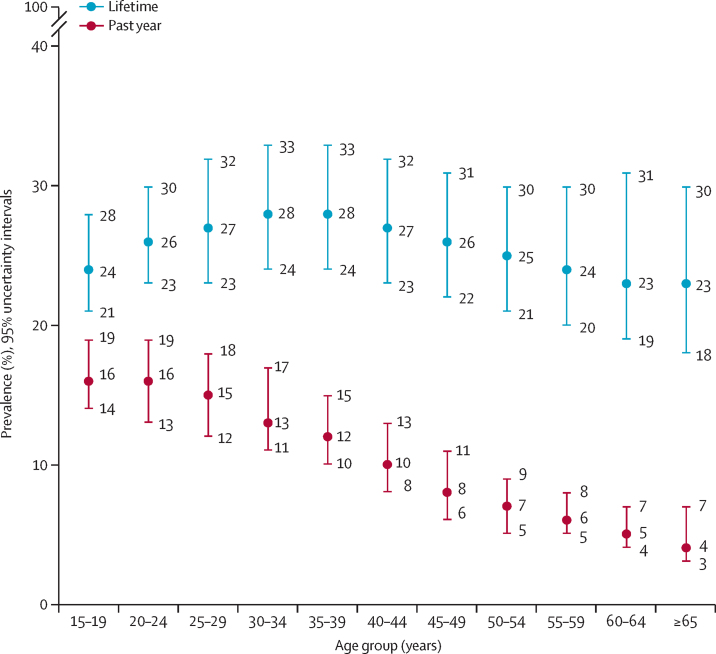
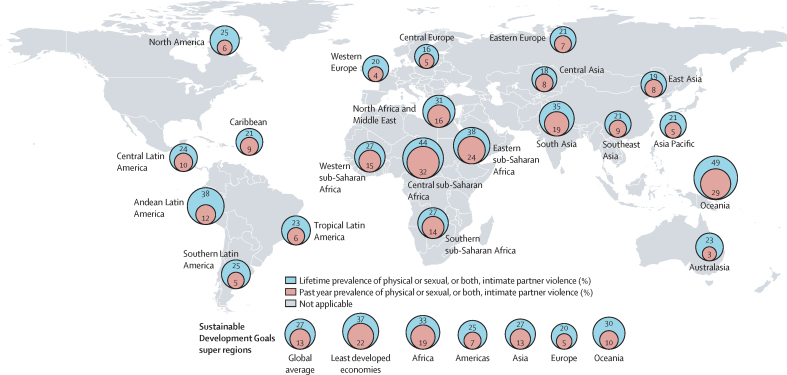
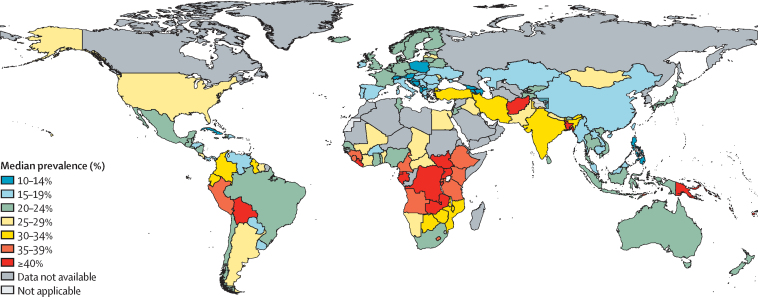
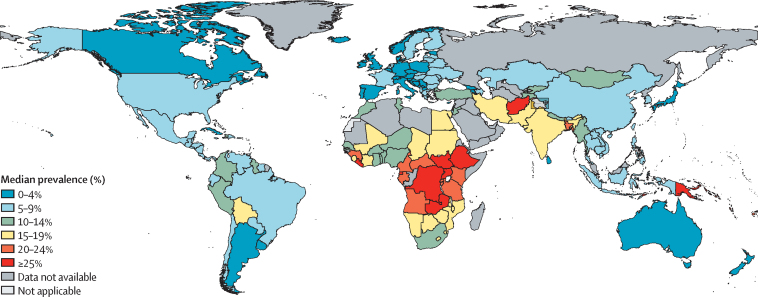
BACKGROUND: Intimate partner violence against women is a global public health problem with many short-term and long-term effects on the physical and mental health of women and their children. The Sustainable Development Goals (SDGs) call for its elimination in target 5.2. To monitor governments' progress towards SDG target 5.2, this study aimed to provide global, regional, and country baseline estimates of physical or sexual, or both, violence against women by male intimate partners. METHODS: This study developed global, regional, and country estimates, based on data from the WHO Global Database on Prevalence of Violence Against Women. These data were identified through a systematic literature review searching MEDLINE, Global Health, Embase, Social Policy, and Web of Science, and comprehensive searches of national statistics and other websites. A country consultation process identified additional studies. Included studies were conducted between 2000 and 2018, representative at the national or sub-national level, included women aged 15 years or older, and used act-based measures of physical or sexual, or both, intimate partner violence. Non-population-based data, including administrative data, studies not generalisable to the whole population, studies with outcomes that only provided the combined prevalence of physical or sexual, or both, intimate partner violence with other forms of violence, and studies with insufficient data to allow extrapolation or imputation were excluded. We developed a Bayesian multilevel model to jointly estimate lifetime and past year intimate partner violence by age, year, and country. This framework adjusted for heterogeneous age groups and differences in outcome definition, and weighted surveys depending on whether they were nationally or sub-nationally representative. This study is registered with PROSPERO (number CRD42017054100). FINDINGS: The database comprises 366 eligible studies, capturing the responses of 2 million women. Data were obtained from 161 countries and areas, covering 90% of the global population of women and girls (15 years or older). Globally, 27% (uncertainty interval [UI] 23-31%) of ever-partnered women aged 15-49 years are estimated to have experienced physical or sexual, or both, intimate partner violence in their lifetime, with 13% (10-16%) experiencing it in the past year before they were surveyed. This violence starts early, affecting adolescent girls and young women, with 24% (UI 21-28%) of women aged 15-19 years and 26% (23-30%) of women aged 19-24 years having already experienced this violence at least once since the age of 15 years. Regional variations exist, with low-income countries reporting higher lifetime and, even more pronouncedly, higher past year prevalence compared with high-income countries. INTERPRETATION: These findings show that intimate partner violence against women was already highly prevalent across the globe before the COVID-19 pandemic. Governments are not on track to meet the SDG targets on the elimination of violence against women and girls, despite robust evidence that intimate partner violence can be prevented. There is an urgent need to invest in effective multisectoral interventions, strengthen the public health response to intimate partner violence, and ensure it is addressed in post-COVID-19 reconstruction efforts. FUNDING: UK Department for International Development through the UN Women-WHO Joint Programme on Strengthening Violence against Women Data, and UNDP-UN Population Fund-UNICEF-WHO-World Bank Special Programme of Research, Development, and Research Training in Human Reproduction, a cosponsored programme executed by WHO.
Overview
The claims and statistics of this paper haven’t been checked yet.
Free: it reads the open-access text and checks the first 5 claims that cite a source we can check. Create a free account to check every claim.
Integrity signals
Registry
Cites
Statistics
Figures
Verification
Claims the paper makes
The claims and statistics of this paper haven’t been checked yet.
Free: it reads the open-access text and checks the first 5 claims that cite a source we can check. Create a free account to check every claim.
Claims other papers make about this one
Each is checked against this paper’s own text: does it say what the citing paper says it does?
The source backs part of the claim, not all of it — or backs it for a different population, condition or comparison.
In the citing paper
“These findings directly contrast another WHO study that estimated a lifetime prevalence between 21 and 25 per cent in high-income countries (Sardinha et al., 2022).”
From The Intergenerational Transmission of Emotional Intimate Partner Violence: a Systematic Review and Meta-Analysis (2025) · cites this paper as Sardinha et al., 2022
Experimental — accuracy not yet measuredThe source backs part of the claim, not all of it — or backs it for a different population, condition or comparison.
In the citing paper
“Lower global estimates were also highlighted by a recent study (L. Sardinha et al., 2022) where 26% of ever-partnered women aged 15 years and older were estimated to have experienced physical or sexual IPV, or both, at least once in their lifetime.”
From Global Prevalence and Mental Health Outcomes of Intimate Partner Violence Among Women: A Systematic Review and Meta-Analysis (2024) · cites this paper as L. Sardinha et al., 2022
Experimental — accuracy not yet measuredThe cited source says what the claim attributes to it.
In the citing paper
“Sardinha and colleagues’ study also reported much lower global rates of past year experience of physical or sexual violence, or both, by a partner among ever partnered women aged 15–49 years.”
From Global Prevalence and Mental Health Outcomes of Intimate Partner Violence Among Women: A Systematic Review and Meta-Analysis (2024) · cites this paper as L. Sardinha et al., 2022
The cited source says what the claim attributes to it.
In the citing paper
“Neither of these studies examined psychological IPV.”
From Global Prevalence and Mental Health Outcomes of Intimate Partner Violence Among Women: A Systematic Review and Meta-Analysis (2024) · cites this paper as L. Sardinha et al., 2022
Self-check
Percentages, sums and reported differences re-computed from the paper’s own numbers.
The self-check needs the paper’s full text.
Citations
Cites
The world report on violence and health
Krug, E. G., Mercy, J. A., Dahlberg, L. L., & Zwi, A. B. (2002) · The Lancet · doi:10.1016/s0140-6736(02)11133-0 · Cited by 9,110
Vos, T., Barber, R. M., Bell, B., Bertozzi-Villa, A., Biryukov, S., Bolliger, I., Charlson, F., Davis, A., Degenhardt, L., Dicker, D., et al. (2015) · The Lancet · doi:10.1016/s0140-6736(15)60692-4 · Cited by 6,414
Guidelines for accurate and transparent health estimates reporting: the GATHER statement
Stevens, G. A., Alkema, L., Black, R. E., Boerma, J. T., Collins, G. S., Ezzati, M., Grove, J. T., Hogan, D. R., Hogan, M. C., Horton, R., et al. (2016) · The Lancet · doi:10.1016/s0140-6736(16)30388-9 · Cited by 1,798
The Global Prevalence of Intimate Partner Violence Against Women
Devries, K. M., Mak, J. Y. T., García-Moreno, C., Petzold, M., Child, J. C., Falder, G., Lim, S., Bacchus, L. J., Engell, R. E., Rosenfeld, L., et al. (2013) · Science · doi:10.1126/science.1240937 · Cited by 1,460
The global prevalence of intimate partner homicide: a systematic review
Stöckl, H., Devries, K., Rotstein, A., Abrahams, N., Campbell, J., Watts, C., & Moreno, C. G. (2013) · The Lancet · doi:10.1016/s0140-6736(13)61030-2 · Cited by 955
Self-citationViolence against women during covid-19 pandemic restrictions
Roesch, E., Amin, A., Gupta, J., & García-Moreno, C. (2020) · BMJ · doi:10.1136/bmj.m1712 · Cited by 511
Self-citationAddressing violence against women: a call to action
García-Moreno, C., Zimmerman, C., Morris-Gehring, A., Heise, L., Amin, A., Abrahams, N., Montoya, O., Bhate-Deosthali, P., Kilonzo, N., & Watts, C. (2015) · The Lancet · doi:10.1016/s0140-6736(14)61830-4 · Cited by 483
Self-citationBacchus, L. J., Ranganathan, M., Watts, C., & Devries, K. (2018) · BMJ Open · doi:10.1136/bmjopen-2017-019995 · Cited by 464
Hamadani, J. D., Hasan, M. I., Baldi, A. J., Hossain, S. J., Shiraji, S., Bhuiyan, M. S. A., Mehrin, S. F., Fisher, J., Tofail, F., Tipu, S. M. M. U., et al. (2020) · The Lancet Global Health · doi:10.1016/s2214-109x(20)30366-1 · Cited by 463
Guidelines for accurate and transparent health estimates reporting: the GATHER statement
Stevens, G. A., Alkema, L., Black, R. E., Boerma, J. T., Collins, G. S., Ezzati, M., Grove, J. T., Hogan, D. R., Hogan, M. C., Horton, R., et al. (2016) · PLOS Medicine · doi:10.1371/journal.pmed.1002056 · Cited by 424
Research works printed but not linked: 2
- Flaxman AD Vos T Murray CJL An integrative metaregression framework for descriptive epidemiology 2015 University of Washington Press Seattle
- Jewkes R Willan S Heise L Effective design and implementation elements in interventions to prevent violence against women and girls https://www.whatworks.co.za/documents/publications/373-intervention-report19-02-20/file January, 2020 PMC8621962 34831885
Cited by
Items 601–700 of 999
Román-Lazarte, V., Roman, L. Á., & Galeas-Torre, M. K. (2023) · Revista Colombiana de Psiquiatría · doi:10.1016/j.rcp.2023.08.004 · Cited by 2
Makongoza, M., Kiguwa, P., & Mayisela, S. (2023) · Contemporary perspectives on family research · doi:10.1108/s1530-35352023008 · Cited by 3
Violencia en las relaciones de noviazgo en estudiantes universitarios de enfermería
Ramírez, L. C., Lagunas, M. D. L. Á. T., Morales, E. G. V., de Matos, M. A., & Flores, A. (2023) · Horizonte Sanitario · doi:10.19136/hs.a23n1.5663 · Cited by 2
On Their Own Terms: How Cocalera Organizing Expanded Indigenous Women’s Rights in Bolivia
Farthing, L., & Grisaffi, T. (2024) · Latin American Research Review · doi:10.1017/lar.2024.14 · Cited by 2
Noor, L. A. (2024) · AL-MANHAJ Jurnal Hukum dan Pranata Sosial Islam · doi:10.37680/almanhaj.v6i2.5054 · Cited by 1
“Based on UN data, around 30% of women worldwide have experienced domestic violence at least once in their lives(Sardinha et al., 2022).”
BackgroundDavies, R. L., Rice, K., & Rock, A. J. (2024) · Health & Social Care in the Community · doi:10.1155/2024/7548403 · Cited by 2
Closing the Gender Gap: Women and Men Creating Social Change through Dialogue
Dunson, K. (2024) · Advances in Social Sciences Research Journal · doi:10.14738/assrj.118.17356 · Cited by 1
Cordeiro, A. A., Moorhouse, L. R., Dadirai, T., Maswera, R., Chang, A. Y., Nyamukapa, C. A., & Gregson, S. (2024) · BMC Women s Health · doi:10.1186/s12905-024-03428-x · Cited by 3
“A recent systematic review found that, among ever-partnered women, aged 15–49 years in the African region, lifetime and past-year prevalence of physical violence, sexual violence or both were 27% and 14%, respectively [4].”
InfluentialD’Costa, M. (2023) · Springer eBooks · doi:10.1007/978-3-030-85493-5_278-1 · Cited by 2
Trauma Bonding and Intimate Partner Violence
Reid, J. A. (2024) · Wiley eBooks · doi:10.1002/9781394182275.ch4 · Cited by 2
Erhardt‐Ohren, B., & Prata, N. (2025) · medRxiv · doi:10.1101/2025.01.16.25320653 · Cited by 4
Åker, T. H., Risan, P., & Milne, R. J. (2023) · Nordic Journal of Studies in Policing · doi:10.18261/njsp.10.1.2 · Cited by 1
RetractedViolence in pandemic times: The dynamic relationship between COVID ‐19 and intimate partner violence
Hernández, W., Chaparro, A. C., Aguilar, J. C., Agüero, J. M., & Mendoza, J. (2023) · Review of Development Economics · doi:10.1111/rode.13059 · Cited by 1
Romero, L. C. A., Lévano, N. C. V., & Chanamé, C. A. C. (2024) · Revista de Climatología · doi:10.59427/rcli/2024/v24cs.566-575 · Cited by 1
Manifestaciones de la violencia contra las mujeres.
Cristoffanini, M. T. (2024) · Asparkía Investigació feminista · doi:10.6035/asparkia.6662 · Cited by 1
Muteesasira, E., Akampumuza, D., Abaho, D., Nuwasasira, L., & Kumakech, E. (2024) · PLoS ONE · doi:10.1371/journal.pone.0298397 · Cited by 2
Romero‐Martínez, Á., Robles, M. B., Cerdá-Alberich, L., Aparici, F., Martí‐Bonmatí, L., Sarrate‐Costa, C., Lila, M., & Moya‐Albiol, L. (2024) · Brain Structure and Function · doi:10.1007/s00429-024-02772-w · Cited by 1
“…increase, both during the COVID-19 pandemic lockdown (Ebert and Steinert 2021; World Health Organization 2020) and even after lockdown, with the number of women experiencing some form of violence perpetrated by their male partner still being high across the world (Sardinha et al. 2022).”
Trans-Neutrality in Intimate Partner Violence Service Provision in the USA and Canada
Moton, L. N., Merken, S., Slakoff, D. C., & Aujla, W. (2023) · Critical Criminology · doi:10.1007/s10612-024-09748-6 · Cited by 2
Domestic violence: prevention past due
Chang, D. I. (2024) · Health Affairs Scholar · doi:10.1093/haschl/qxae034 · Cited by 2
Malchau, K. S., Caragounis, E.-C., & Sundfeldt, M. (2024) · BMJ Open · doi:10.1136/bmjopen-2024-085618 · Cited by 3
Reutens, S. G., Karystianis, G., Withall, A., & Butler, T. G. (2024) · Frontiers in Psychiatry · doi:10.3389/fpsyt.2024.1331915 · Cited by 3
Iliyasu, Z., Amole, T. G., Sunkani, L., Nass, N. S., Kwaku, A. A., Umar, A. A., Abdullahi, H. M., Tsiga-Ahmed, F. I., Jibo, A. M., Bashir, H. A., et al. (2024) · Current Psychology · doi:10.1007/s12144-024-06135-w · Cited by 1
Canto, Y. E., Ramirez, C. R. C., & Díaz-Gervasi, G. (2024) · Biomédica · doi:10.7705/biomedica.7131 · Cited by 5
Bost, C., Diagana, M., & Lebkem, H. (2024) · PLOS Global Public Health · doi:10.1371/journal.pgph.0003410 · Cited by 1
Manav, A. İ., Atik, D., Coşkun, E., & BOZKURT, A. (2024) · Turkish Journal of Family Medicine & Primary Care · doi:10.21763/tjfmpc.1358466 · Cited by 1
Sánchez-Prada, A., Ferreiro-Basurto, V., Álvarez, C. D., Vázquez-González, L. I., Nardi-Rodríguez, A., & Pérez, V. A. F. (2024) · International Journal of Clinical and Health Psychology · doi:10.1016/j.ijchp.2024.100497 · Cited by 3
“Given the high prevalence of VAW victimization (Sardinha et al., 2022), it seems that this relationship between previous victimization experience of SH and the bystander responsibility to intervene requires further investigation, and we will explore it in this research (see hypothesis 1).”
BackgroundJacob, A. E., Mshana, G. H., Mosha, N. R., Hashim, R., Sichalwe, S., Malibwa, D., Kapiga, S., Ayieko, P., & Stöckl, H. (2024) · Global Health Action · doi:10.1080/16549716.2024.2397842 · Cited by 1
“…study was relatively consistent with what had been previously recorded in women-focused studies taking place in the same area; however, prevalence of emotional abuse and controlling behaviours were both approximately 10% higher than what the women enrolled in the MAISHA Trial had reported [1,4,11].”
BackgroundResultInfluentialSelf-citationPrigent, P.-G., & Sueur, G. (2024) · Trayectorias Humanas Trascontinentales · doi:10.25965/trahs.6171 · Cited by 2
“…itself in different ways depending on the social, economic and political circumstances that limit women’s ability to leave violent relationships, such as economic insecurity or gender inequitable norms, the state of family law and the availability of support services (Sardinha et al., 2022: 811).”
BackgroundInfluentialLangwenya, N., Toska, E., Stöckl, H., & Cluver, L. D. (2024) · Journal of Adolescent Health · doi:10.1016/j.jadohealth.2024.08.003 · Cited by 4
Self-citationDrezett, J., Freire, F. D. F. D. S., & Franco, J. M. G. (2024) · Journal Archives of Health · doi:10.46919/archv5n5-001 · Cited by 1
Winter, K., Niemann, J., Jepsen, D., & Brzank, P. J. (2024) · Frontiers in Public Health · doi:10.3389/fpubh.2024.1422918 · Cited by 2
“This may cause unintended pregnancies among women who experience IPV (WEIPV), creating a significant public health issue that affects their health and wellbeing (12).”
BackgroundEmirza, E. G., & Gürhan, N. (2024) · Public Health Nursing · doi:10.1111/phn.13459 · Cited by 1
Cavanagh, A., Kimber, M., MacMillan, H. L., Ritz, S. A., & Vanstone, M. G. (2024) · Qualitative Health Research · doi:10.1177/10497323241276409 · Cited by 1
“People who are made subject to IPV are disproportionately cisgender women, transgender women, and other transgender and gender non-conforming people (Peitzmeier et al., 2020; Sardinha et al., 2022).”
Montagud-Andrés, M., Marco, M., López‐Quílez, A., Escobar-Hernández, P., Lila, M., & Gracia, E. (2024) · European Journal of Public Health · doi:10.1093/eurpub/ckae166 · Cited by 2
Navigating Complexities: Confronting Family and Gendered Violence and Conflict Through Social Work
Sinha, R., Kandpal, S., Sharma, T. S., & Basu, P. (2024) · Social Work · doi:10.1007/978-3-031-60383-9_22 · Cited by 1
Teen Unions and Intimate Partner Violence in South America
Torrisi, O. (2024) · Population and Development Review · doi:10.1111/padr.12696 · Cited by 2
“Following the approach used in the WHO multi-country study on IPV (Sardinha et al. 2022), I begin by creating a binary indicator for any experience of IPV .”
Male social embeddedness and intimate partner violence perpetration in Tanzania
Brambilla, R., Mshana, G. H., Mosha, N. R., Malibwa, D., & Stöckl, H. (2024) · Social Science & Medicine · doi:10.1016/j.socscimed.2024.117552 · Cited by 2
Self-citationGastrointestinal symptoms in abused nonpatient women
Pallotta, N., Ribichini, E., Pezzotti, P., Belardi, F., Ciccantelli, B., Rivera, M., & Corazziari, E. S. (2024) · BMC Women s Health · doi:10.1186/s12905-024-03498-x · Cited by 1
Sharma, A., Patel, S., Lilhare, A. K., Yadav, K. S., & Dhakar, J. S. (2024) · Indian Journal of Community and Family Medicine · doi:10.4103/ijcfm.ijcfm_71_22 · Cited by 1
Alabd, A. M. A., Mahmoud, S. K. M., Alattar, N. F., Siam, B. G. A. E., Zeid, E. N. A., & Elalem, O. M. (2024) · Port Said Scientific Journal of Nursing · doi:10.21608/pssjn.2024.340556.1334 · Cited by 2
Astatke, R. H., Woldegiorgis, T., Scott, J. A., Prata, N., Harley, K. G., Deyessa, N., Bennett, A., & Sharma, V. (2025) · Conflict and Health · doi:10.1186/s13031-024-00637-x · Cited by 1
“Globally, 27% of women have experienced lifetime physical and/or sexual IPV [4].”
Paramasivan, K., Sujitha, A., & Haridas, A. (2025) · Journal of Applied Security Research · doi:10.1080/19361610.2025.2453309 · Cited by 2
“Reinforcing these prior findings, a separate review encompassing 161 countries highlighted the concerning prevalence of intimate partner violence against women globally, even before the COVID-19 pandemic (Sardinha et al., 2022).”
Ebert, C. L., & Steinert, J. (2025) · Journal of Economic Behavior & Organization · doi:10.1016/j.jebo.2024.106879 · Cited by 3
Ramirez-Maza, D., Guerra-Anlen, A., Hernández-Núñez, M. E., & Landa-Ramírez, É. (2025) · BMJ Case Reports · doi:10.1136/bcr-2023-256489 · Cited by 1
Domapielle, M. K., Cheabu, B. S. N., Akurugu, C. A., Tuolong, J. G., Kala, M., & Abugbila, S. Z. (2025) · Global Health Journal · doi:10.1016/j.glohj.2025.02.006 · Cited by 1
Adeagbo, M. J., & Naidoo, K. (2025) · Journal of Family Studies · doi:10.1080/13229400.2025.2471830 · Cited by 1
Belihu, W. B., Herder, T., Amogne, M. D., Sundewall, J., Palmieri, J., & Agardh, A. (2025) · PLoS ONE · doi:10.1371/journal.pone.0319792 · Cited by 2
Midwives' experiences working with women and girls surviving violence in Yemen: a qualitative study
Al-Zumair, M., Leegstra, L. M., Zaid, H., Pizarro, R. F., Zumair, M. A., Bawahda, L., Jahn, A., & Maxwell, L. (2025) · Frontiers in Global Women s Health · doi:10.3389/fgwh.2025.1450053 · Cited by 5
Screening and Interventions for Intimate Partner Violence in Pregnancy: The Perspective of Survivors
Golfar, A., Olson, J., Obeng-Nkansah, E., Biju, H., & Olson, D. M. (2025) · Journal of Obstetrics and Gynaecology Canada · doi:10.1016/j.jogc.2025.102826 · Cited by 1
Bailhache, M., Plancoulaine, S., El-Khoury, F., Leproux, O., Chazelas, E., Gomajee, R., van der Waerden, J. E. B., Charles, M.-A. A., & Melchior, M. (2025) · European Journal of Public Health · doi:10.1093/eurpub/ckaf037 · Cited by 1
Adolescents’ Experiences of Parental Intimate Partner Violence: A Review of Qualitative Literature
Achar, M., Ruben, J. P., & Thomas, S. (2025) · Trauma Violence & Abuse · doi:10.1177/15248380251329488 · Cited by 1
Yimer, N. B., Beňová, L., Gebremedhin, S., Mirkuzie, A. H., Zelalem, M., Fellmeth, G. L., & Asefa, A. (2025) · Scientific Reports · doi:10.1038/s41598-025-93342-5 · Cited by 2
Ko, S., Puno, A., Rajpal, S., Joe, W., Ramanathan, M., Subramanian, S. V., & Kim, R. (2025) · Journal of Family Violence · doi:10.1007/s10896-025-00877-2 · Cited by 1
Dunn, A. (2025) · Partner Abuse · doi:10.1891/pa-2024-0022 · Cited by 2
Dawson, N., Sleed, M., & Chunga, E. (2025) · Infant Mental Health Journal · doi:10.1002/imhj.70018 · Cited by 1
“Abuse is well-known to be significantly under-reported, in general (Polettini et al., 2023; Smyth et al., 2023) and in research studies (Sardinha et al., 2022).”
Kelloway, E. K., & Agnihotri, N. (2025) · Oxford University Press eBooks · doi:10.1093/9780197786161.003.0012 · Cited by 1
A violência contra a mulher no contexto laboral
Ribeiro, S. G., Batista, V. C., Almeida, M. V. D. S., Nascimento, L. D. C. N., & Laignier, M. R. (2025) · Revista Brasileira de Pesquisa em Saúde/Brazilian Journal of Health Research · doi:10.47456/rbps.v27isupl_2.48421 · Cited by 1
Ferraris, C. M., Gruver, R. S., George, G., Davidson, L. L., Desmond, C., Santoro, A. F., Besharati, S. N., & Knox, J. (2025) · AIDS and Behavior · doi:10.1007/s10461-025-04697-9 · Cited by 1
“The prevalence of IPV that we observed is higher than has been reported in previous studies in South African [3, 6, 9, 39] which speaks to the potential new contributions [43].”
Sule, S., Chauhan, B. G., & Jungari, S. B. (2025) · Global Social Welfare · doi:10.1007/s40609-025-00387-5 · Cited by 1
“Violence against women is a serious violation of the fundamental human rights of survivors and has a detrimental impact on individuals, families and communities (Potter et al., 2021; Sardinha et al., 2022).”
Intimate Person Violence and Child Deprivation in Low- and Middle-Income Countries
Halleröd, B., & Ekbrand, H. (2025) · Child Indicators Research · doi:10.1007/s12187-025-10257-3 · Cited by 2
“The risk of IPV is highest among younger women, particularly those of child - bearing age and mothers with caregiving responsibilities (Sardinha et al., 2022 ).”
Stonard, K. E., Stone, C. A., McDaniel, J. G., Sadlier, S., & Williams, D. (2025) · Journal of Family Violence · doi:10.1007/s10896-025-00894-1 · Cited by 5
Neves, S., Borges, J. S., & Antunes, A. (2025) · Anuario de Psicología Jurídica · doi:10.5093/apj2025a14 · Cited by 2
“Compared to recent international studies (Sardinha et al., 2022), the prevalence of the phenomena is higher than the global average, with 24% of women aged 15 to19 years and 26% of women aged 19 to 24 years having already experienced at least once since the age of 15 years, physical or sexual, or…”
Baneshi, M. R., Dobson, A. J., & Mishra, G. D. (2025) · Social Science & Medicine · doi:10.1016/j.socscimed.2025.118294 · Cited by 1
US disinvestment threatens progress on violence prevention
Stark, L., Reis, C., Seff, I., Levtov, R., & Deitch, J. (2025) · The Lancet · doi:10.1016/s0140-6736(25)00909-2 · Cited by 1
Muñoz, C. R., & Reyes-Sosa, H. (2025) · Pensando Psicología · doi:10.16925/2382-3984.2024.02.02 · Cited by 1
“Lo mismo sucedió con la violencia psicológica, atribuyéndolo a que las mujeres minimizan este tipo de agresión (Carney et al. , 2023; Cinquegrana et al. , 2022; Sardinha et al. , 2022), las mujeres demuestran que responden de manera diferente dependiendo del tipo de violencia que sufren.”
Antu, J. F., Hasan, S. M. T., & Naved, R. T. (2025) · BMJ Global Health · doi:10.1136/bmjgh-2024-017209 · Cited by 2
Domestic violence and food insecurity among pregnant women in Nepal: a cross-sectional study
Chalise, P., Manandhar, P., Infanti, J. J., Henriksen, L., Pun, K. D., Rishal, P., Skovlund, E., Swahnberg, K., Schei, B., & Lukasse, M. (2025) · BMC Public Health · doi:10.1186/s12889-025-23472-y · Cited by 1
“Globally, around 27% of women aged 15–49 who have been in a relationship have experienced physical and/or sexual violence [2].”
Johnson, S. L., Hamisi, H. Z., Owity, O. J., Ochieng, Y. A., Goel, P., Bielskis, M., & Puffer, E. S. (2025) · Violence Against Women · doi:10.1177/10778012251351921 · Cited by 1
“Speci fi cally, half of all mental health disorders in adulthood start by the age of 14 and nearly a quarter of adolescent girls aged 15 – 19 have already experienced physical or sexual IPV (Sardinha et al., 2022; WHO, 2023).”
Dyadic Measurement Invariance of the 10-Item Continuum of Conflict and Control Relationship Scale
Go, J., Skeen, A. I., Carlson, R. G., Taylor, D. D., & Barden, S. M. (2025) · Journal of Interpersonal Violence · doi:10.1177/08862605251339642 · Cited by 1
“Violence against women is more prevalent, especially in terms of injuries or fear (Caldwell et al., 2012; Sardinha et al., 2022), and women experience a greater decrease in relationship satisfaction after experiencing IPV (Shortt et al., 2010).”
Shaked, O. Z., Baum, N., & Levant, R. F. (2025) · The Journal of Men s Studies · doi:10.1177/10608265251358766 · Cited by 1
“Intimate partner violence (IPV) is a worldwide social problem (Devries et al., 2013; Sardinha et al., 2022).”
Experiences of Female Victims of Intimate Partner Violence Accessing Support Services in Denmark
Vejlgaard, E., Langberg, C., Jervelund, S. S., & Øverup, C. S. (2025) · Violence Against Women · doi:10.1177/10778012251356958 · Cited by 1
“The lifetime occurrence of physical and/or sexual IPV among women aged 15 – 49 years in Europe stands at 16% – 23%, while there are no concrete estimates of the prevalence of psychological IPV (Sardinha et al., 2022; WHO, 2021).”
Njagi, D. M., Njoroge, M., & Musau, J. (2025) · The University Journal · doi:10.59952/tuj.v7i1.371 · Cited by 1
“Sardinha et al. (2022), using the WHO Global Database on Prevalence of violence against women analyzed the national, regional and worldwide sexual or physical IPV estimates or both.”
Fanslow, J., Reid-Ellis, M., Gulliver, P. J., & McIntosh, T. (2025) · Social Science & Medicine · doi:10.1016/j.socscimed.2025.118399 · Cited by 2
Pacquelet, Y., Vallet, M., Bouazzi, L., Boiteux-Chabrier, M., Hurtaud, A., & Barbe, C. (2025) · Journal of Interpersonal Violence · doi:10.1177/08862605251357831 · Cited by 1
“In 2018, the WHO reported that 27% of women aged 15 to 49 years in the world had, at least once in their lifetime, experienced physical or sexual (or both) intimate partner violence in a relationship (Sardinha et al., 2022).”
Red Alert! Unveiling Insights in Violence Against Women through Interactive Data Visualization
Zurawski, G., Pedroso, V., Patricio, E., Castro, G., Rollwagen, A. F., & Manssour, I. H. (2025) · Journal on Interactive Systems · doi:10.5753/jis.2025.5221 · Cited by 1
Chandra, R. K., Dutta, A., Srivastava, S., Mukherjee, S., & Singh, A. (2025) · Violence Against Women · doi:10.1177/10778012251363593 · Cited by 1
“About one-third of all ever-partnered women reported having experienced IPV globally (Sardinha et al., 2022).”
Song, Y., Wang, J., Wang, J., Ren, Y., & Ma, J. (2025) · Frontiers in Psychiatry · doi:10.3389/fpsyt.2025.1515828 · Cited by 1
“Finally, the weak legal systems and social support structures in low-SDI countries further exacerbate the disease burden attributable to IPV (35).”
Krajewska, J., Meyer, S. R., Mosha, N. R., Mshana, G. H., & Stöckl, H. (2025) · Violence Against Women · doi:10.1177/10778012251369029 · Cited by 2
“IPV refers to any physical, sexual, and emotional act of abuse and controlling behaviors by an intimate partner (Sardinha et al., 2022).”
Self-citationSarrate‐Costa, C., Lila, M., Moya‐Albiol, L., & Romero‐Martínez, Á. (2025) · Journal of Aggression Maltreatment & Trauma · doi:10.1080/10926771.2025.2549745 · Cited by 1
Domestic Violence and Self-Injurious Thoughts and Behaviors Among Adults: A Global Systematic Review
Das, A., Suresh, S., Desai, G., & Satyanarayana, V. A. (2025) · Crisis · doi:10.1027/0227-5910/a001022 · Cited by 3
Alnaeem, M. M., Sabra, M. A. A., & Shehadeh, A. (2025) · Women & Health · doi:10.1080/03630242.2025.2553115 · Cited by 2
Intimate partner violence against women and the adoption of unhealthy weight control practices
de Almeida, M. R., de Moraes, C. L., Hasselmann, M. H., Reichenheim, M. E., & Marques, E. S. (2025) · Revista Brasileira de Epidemiologia · doi:10.1590/1980-549720250048 · Cited by 1
“Global estimates show that approximately one-third of women over the age of 15 have experienced physical and sexual IPV in their lives 4-6 .”
Chandra, R. K., Srivastava, S., Patel, J. K., Mukherjee, S., & Singh, A. (2025) · Journal of Interpersonal Violence · doi:10.1177/08862605251368837 · Cited by 1
“Global estimates indicate that intimate partner violence (IPV) is a persistent issue across all countries with about one-third of all ever-partnered women reporting it (Sardinha et al., 2022).”
Intimate Partner Violence and Paramedicine: An Updated Scoping Review of Perspectives and Practices
Caspell, J. R., Gorman, K., Stranges, T. N., Loo, J., Kool, I. J., van Donkelaar, P., & Marshall, R. A. (2025) · Prehospital Emergency Care · doi:10.1080/10903127.2025.2564841 · Cited by 1
“These barriers include a lack of awareness about available resources, limited or inaccessible resources, fear of the consequences of disclosure (e.g., retal-iation), self-blame, and societal stigma (3,18).”
Barker, K. M., Wandiembe, S., Wandega, A., Jeong, J., Ojamuge, D., Lundgren, R., Yiga, D., & Nabembezi, D. (2025) · Trials · doi:10.1186/s13063-025-09061-9 · Cited by 3
Villacis-Alvarez, E., Noorloos, J., Wilson, S. J., Green, R. S., Fashan, S., Pritchett, C., John, C., & Yakubovich, A. R. (2025) · Frontiers in Reproductive Health · doi:10.3389/frph.2025.1598706 · Cited by 4
Selim, A., Arab, R. A. E., Hassanein, S. E., Ali, A. M., Shereda, H. M. A., Mohamed, H., & Omar, A. (2025) · Journal of Transcultural Nursing · doi:10.1177/10436596251376220 · Cited by 1
“Women experience physical or sexual violence in their lifetime, with prevalence estimates reaching 31% in the Eastern Mediterranean Region, surpassing the global average of 27% (Sardinha et al., 2022).”
Gökçe, M. B., & KIRDAR, M. G. (2025) · World Development · doi:10.1016/j.worlddev.2025.107189 · Cited by 2
“The Middle East region has experienced wars and, as a result, a dramatic flood of refugees and forced migration over the past 15 years.”
InfluentialThe home as a site of trauma, resistance and healing in the context of intimate partner violence
Cristoffanini, M. T., Pain, R., Athens, N. C., Hoecker-Pérez, K., & Ehrenfeld, G. Z. (2025) · Emotion, space and society · doi:10.1016/j.emospa.2025.101125 · Cited by 3
Le, C., Zain, N. M., Bakar, R. S., Qin, Q., Xu, E.-S., Tang, S., Chen, H., Huang, Z., & Chen, J. (2025) · Frontiers in Public Health · doi:10.3389/fpubh.2025.1627062 · Cited by 1
Falk, V., Soares, J. J. F., & Macassa, G. (2025) · Open Health · doi:10.1515/ohe-2025-0078 · Cited by 2
“The extent of IPV from a global perspective varies across countries, with women in low-income countries being particularly a ff ected [1].”
Exploring public sentiment on intimate partner violence in India
Iyengar, D., & Nair, V. V. (2025) · Discover Psychology · doi:10.1007/s44202-025-00465-x · Cited by 1
“Around 27% of women across the globe, aged between 15 and 24 years, are victims of physical and sexual abuse [59].”
Cardoso, M. R., Sánchez, O. D. R., Greenwald, M., Surita, F. G., & Goodman, A. (2025) · Trauma Violence & Abuse · doi:10.1177/15248380251367411 · Cited by 1
“IPV refers specifically to abusive behaviors occurring within an intimate or romantic relationship, regardless of marital status or cohabitation (Sardinha et al., 2022).”
Romadlona, N. A., Alim, M. S. N., Putri, P. M. S., & Tama, T. D. (2025) · BIO Web of Conferences · doi:10.1051/bioconf/202519300054 · Cited by 1
Experiences of Domestic Violence and Other Adversities in Australian Children
Blake, J. A., Thomas, H. J., Mathews, B., Lawrence, D. M., Haslam, D. M., Higgins, D. J., Malacova, E., Erskine, H. E., & Scott, J. G. (2025) · Journal of Family Violence · doi:10.1007/s10896-025-00999-7 · Cited by 2
Wu, H. (2025) · Journal of Population Economics · doi:10.1007/s00148-025-01137-9 · Cited by 2
“Prior research largely overlooks Southeast Asia, where 21% of women reported that they have experienced IPV (Sardinha et al. 2022).”
InfluentialSilczuk, A., Płaza, O., Łukasiewicz, P., Madejek, R., Olearczyk, A., Palak, M., Mularczyk-Tomczewska, P., Czyżewski, Ł., & Koweszko, T. (2025) · Healthcare · doi:10.3390/healthcare13222963 · Cited by 2
“%) in Kiribati [23].”
Fu, Y., Kong, F., Kayimu, K., Hao, G., Luo, H., Sun, Y., Xu, Y., Meisong, L., Cao, Y., Zhao, J., et al. (2025) · BMC Public Health · doi:10.1186/s12889-025-25447-5 · Cited by 1
Leite-Soares, G., Wharton–Smith, A., Wild, K. J., & Lokot, M. (2025) · Journal of Interpersonal Violence · doi:10.1177/08862605251392273 · Cited by 1
Hossain*, M. R., Hossain, K., & Shuvo, T. A. (2025) · Asian Journal of Social Sciences and Legal Studies · doi:10.34104/ajssls.025.04120433 · Cited by 2
Metadata
- Authors
- Sardinha, L., Maheu-Giroux, M., Stöckl, H., Meyer, S. R., & García-Moreno, C.
- Affiliations
- World Health Organization (CH)
- London School of Hygiene & Tropical Medicine (GB)
- Venue
- The Lancet
- Publisher
- Elsevier BV
- Published
- 2022-02
- Volume
- 399
- Issue
- 10327
- Pages
- 803-813
- ISSN
- 0099-5355 (ISSN-L)
- 0140-6736
- PMC
- PMC8885817
- OpenAlex
- W4212796598
- Cited by
- 1,328
- References
- 20
- Citations by year
- 2026: 295 · 2025: 366 · 2024: 341 · 2023: 246 · 2022: 79
- FWCI
- 197.93
- Type
- journal article
- Language
- en
- Open access
- hybrid
- doi.org
- Licence
- cc-by-nc-nd
- www.elsevier.com/tdm/userlicense/1.0/ (tdm)
- www.elsevier.com/legal/tdmrep-license (tdm)
- creativecommons.org/licenses/by-nc-nd/3.0/igo/ (vor)
- Locations
- The Lancet (publishedVersion, cc-by-nc-nd)
- PubMed Central (publishedVersion, cc-by-nc-nd)
- PubMed (publishedVersion)
- Funders
- World Health Organization
- Topics
- Social Sciences › Health › Intimate Partner and Family Violence
- Health Sciences › Medicine › Geriatrics and Gerontology › Elder Abuse and Neglect
- Social Sciences › Sociology and Political Science › Gender, Violence, Rights in Latin America
- Keywords
- intimate partner violence, violence against women, physical violence, sexual violence, lifetime prevalence, global prevalence estimates, Bayesian hierarchical model, adolescent girls, young women, country-level estimates, gender-based violence
- MeSH terms
- Intimate Partner Violence, Sustainable Development, COVID-19, Adolescent, Adult, Female, Humans, Male, Public Health, Risk Factors, Sexual Partners, Global Health, World Health Organization, Prevalence, Databases, Factual, Young Adult
About these checks
Registry, retraction, Cites and statistics results are computed, not judged, with one exception: a printed reference that no index lists is read once by a model before it counts as a citation error. Claims are extracted by a model and kept only when their quote appears verbatim in the text; each cited source is then checked, with a model’s help, for whether it says what the claim relies on. Those verdicts can be wrong — read the claim’s quote and the cited source before relying on one.
Statistics and arithmetic are recomputed, not judged.
Confidence bands are shown only for fields calibrated on our annotated test set. None is calibrated yet, so no band is shown.
What counts as a claim ›How we measure confidence ›How we check this ›
Are you an author, or do you see a problem with this page? Request a review
Data sources
Bibliographic data: Semantic Scholar, OpenAlex, Crossref.
Contains information from the Semantic Scholar Academic Graph Datasets, made available under the ODC Attribution License (ODC-BY 1.0).
Semantic Scholar’s data is described in: Kinney, R., et al. (2023). The Semantic Scholar Open Data Platform. arXiv:2301.10140.
