

Global, regional, and national prevalence estimates of physical or sexual, or both, intimate partner violence against women in 2018
Open accessThe DOI matches its Crossref record; 20 of the 20 references it cites were found in a registry or an index.
Abstract
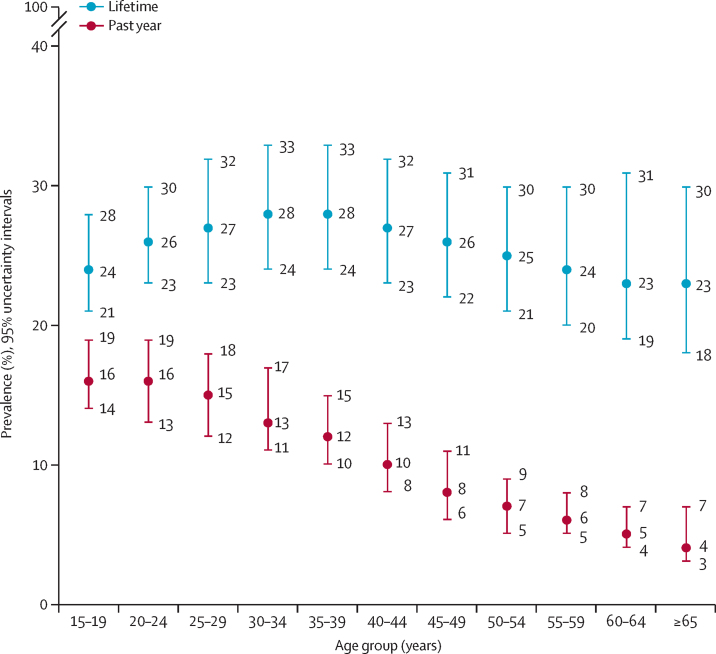
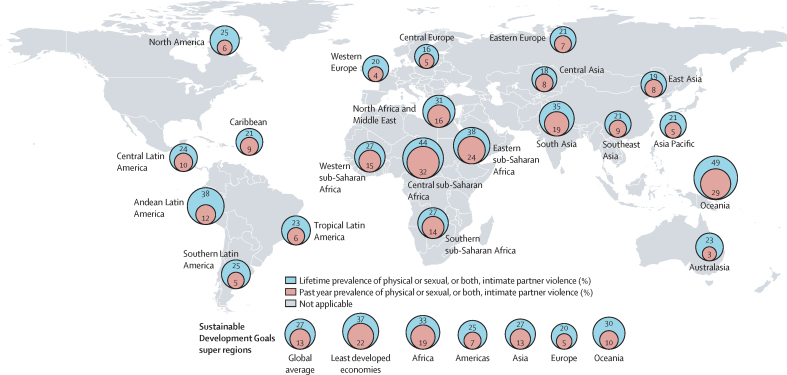
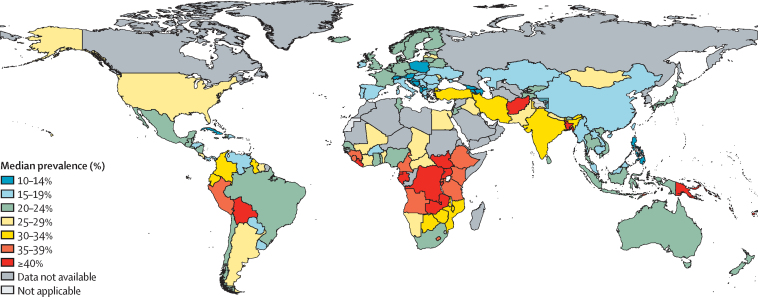
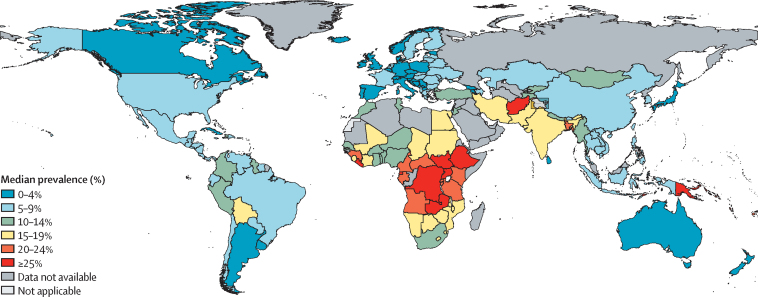
BACKGROUND: Intimate partner violence against women is a global public health problem with many short-term and long-term effects on the physical and mental health of women and their children. The Sustainable Development Goals (SDGs) call for its elimination in target 5.2. To monitor governments' progress towards SDG target 5.2, this study aimed to provide global, regional, and country baseline estimates of physical or sexual, or both, violence against women by male intimate partners. METHODS: This study developed global, regional, and country estimates, based on data from the WHO Global Database on Prevalence of Violence Against Women. These data were identified through a systematic literature review searching MEDLINE, Global Health, Embase, Social Policy, and Web of Science, and comprehensive searches of national statistics and other websites. A country consultation process identified additional studies. Included studies were conducted between 2000 and 2018, representative at the national or sub-national level, included women aged 15 years or older, and used act-based measures of physical or sexual, or both, intimate partner violence. Non-population-based data, including administrative data, studies not generalisable to the whole population, studies with outcomes that only provided the combined prevalence of physical or sexual, or both, intimate partner violence with other forms of violence, and studies with insufficient data to allow extrapolation or imputation were excluded. We developed a Bayesian multilevel model to jointly estimate lifetime and past year intimate partner violence by age, year, and country. This framework adjusted for heterogeneous age groups and differences in outcome definition, and weighted surveys depending on whether they were nationally or sub-nationally representative. This study is registered with PROSPERO (number CRD42017054100). FINDINGS: The database comprises 366 eligible studies, capturing the responses of 2 million women. Data were obtained from 161 countries and areas, covering 90% of the global population of women and girls (15 years or older). Globally, 27% (uncertainty interval [UI] 23-31%) of ever-partnered women aged 15-49 years are estimated to have experienced physical or sexual, or both, intimate partner violence in their lifetime, with 13% (10-16%) experiencing it in the past year before they were surveyed. This violence starts early, affecting adolescent girls and young women, with 24% (UI 21-28%) of women aged 15-19 years and 26% (23-30%) of women aged 19-24 years having already experienced this violence at least once since the age of 15 years. Regional variations exist, with low-income countries reporting higher lifetime and, even more pronouncedly, higher past year prevalence compared with high-income countries. INTERPRETATION: These findings show that intimate partner violence against women was already highly prevalent across the globe before the COVID-19 pandemic. Governments are not on track to meet the SDG targets on the elimination of violence against women and girls, despite robust evidence that intimate partner violence can be prevented. There is an urgent need to invest in effective multisectoral interventions, strengthen the public health response to intimate partner violence, and ensure it is addressed in post-COVID-19 reconstruction efforts. FUNDING: UK Department for International Development through the UN Women-WHO Joint Programme on Strengthening Violence against Women Data, and UNDP-UN Population Fund-UNICEF-WHO-World Bank Special Programme of Research, Development, and Research Training in Human Reproduction, a cosponsored programme executed by WHO.
Overview
The claims and statistics of this paper haven’t been checked yet.
Free: it reads the open-access text and checks the first 5 claims that cite a source we can check. Create a free account to check every claim.
Integrity signals
Registry
Cites
Statistics
Figures
Verification
Claims the paper makes
The claims and statistics of this paper haven’t been checked yet.
Free: it reads the open-access text and checks the first 5 claims that cite a source we can check. Create a free account to check every claim.
Claims other papers make about this one
Each is checked against this paper’s own text: does it say what the citing paper says it does?
The source backs part of the claim, not all of it — or backs it for a different population, condition or comparison.
In the citing paper
“These findings directly contrast another WHO study that estimated a lifetime prevalence between 21 and 25 per cent in high-income countries (Sardinha et al., 2022).”
From The Intergenerational Transmission of Emotional Intimate Partner Violence: a Systematic Review and Meta-Analysis (2025) · cites this paper as Sardinha et al., 2022
Experimental — accuracy not yet measuredThe source backs part of the claim, not all of it — or backs it for a different population, condition or comparison.
In the citing paper
“Lower global estimates were also highlighted by a recent study (L. Sardinha et al., 2022) where 26% of ever-partnered women aged 15 years and older were estimated to have experienced physical or sexual IPV, or both, at least once in their lifetime.”
From Global Prevalence and Mental Health Outcomes of Intimate Partner Violence Among Women: A Systematic Review and Meta-Analysis (2024) · cites this paper as L. Sardinha et al., 2022
Experimental — accuracy not yet measuredThe cited source says what the claim attributes to it.
In the citing paper
“Sardinha and colleagues’ study also reported much lower global rates of past year experience of physical or sexual violence, or both, by a partner among ever partnered women aged 15–49 years.”
From Global Prevalence and Mental Health Outcomes of Intimate Partner Violence Among Women: A Systematic Review and Meta-Analysis (2024) · cites this paper as L. Sardinha et al., 2022
The cited source says what the claim attributes to it.
In the citing paper
“Neither of these studies examined psychological IPV.”
From Global Prevalence and Mental Health Outcomes of Intimate Partner Violence Among Women: A Systematic Review and Meta-Analysis (2024) · cites this paper as L. Sardinha et al., 2022
Self-check
Percentages, sums and reported differences re-computed from the paper’s own numbers.
The self-check needs the paper’s full text.
Citations
Cites
The world report on violence and health
Krug, E. G., Mercy, J. A., Dahlberg, L. L., & Zwi, A. B. (2002) · The Lancet · doi:10.1016/s0140-6736(02)11133-0 · Cited by 9,110
Vos, T., Barber, R. M., Bell, B., Bertozzi-Villa, A., Biryukov, S., Bolliger, I., Charlson, F., Davis, A., Degenhardt, L., Dicker, D., et al. (2015) · The Lancet · doi:10.1016/s0140-6736(15)60692-4 · Cited by 6,414
Guidelines for accurate and transparent health estimates reporting: the GATHER statement
Stevens, G. A., Alkema, L., Black, R. E., Boerma, J. T., Collins, G. S., Ezzati, M., Grove, J. T., Hogan, D. R., Hogan, M. C., Horton, R., et al. (2016) · The Lancet · doi:10.1016/s0140-6736(16)30388-9 · Cited by 1,798
The Global Prevalence of Intimate Partner Violence Against Women
Devries, K. M., Mak, J. Y. T., García-Moreno, C., Petzold, M., Child, J. C., Falder, G., Lim, S., Bacchus, L. J., Engell, R. E., Rosenfeld, L., et al. (2013) · Science · doi:10.1126/science.1240937 · Cited by 1,460
The global prevalence of intimate partner homicide: a systematic review
Stöckl, H., Devries, K., Rotstein, A., Abrahams, N., Campbell, J., Watts, C., & Moreno, C. G. (2013) · The Lancet · doi:10.1016/s0140-6736(13)61030-2 · Cited by 955
Self-citationViolence against women during covid-19 pandemic restrictions
Roesch, E., Amin, A., Gupta, J., & García-Moreno, C. (2020) · BMJ · doi:10.1136/bmj.m1712 · Cited by 511
Self-citationAddressing violence against women: a call to action
García-Moreno, C., Zimmerman, C., Morris-Gehring, A., Heise, L., Amin, A., Abrahams, N., Montoya, O., Bhate-Deosthali, P., Kilonzo, N., & Watts, C. (2015) · The Lancet · doi:10.1016/s0140-6736(14)61830-4 · Cited by 483
Self-citationBacchus, L. J., Ranganathan, M., Watts, C., & Devries, K. (2018) · BMJ Open · doi:10.1136/bmjopen-2017-019995 · Cited by 464
Hamadani, J. D., Hasan, M. I., Baldi, A. J., Hossain, S. J., Shiraji, S., Bhuiyan, M. S. A., Mehrin, S. F., Fisher, J., Tofail, F., Tipu, S. M. M. U., et al. (2020) · The Lancet Global Health · doi:10.1016/s2214-109x(20)30366-1 · Cited by 463
Guidelines for accurate and transparent health estimates reporting: the GATHER statement
Stevens, G. A., Alkema, L., Black, R. E., Boerma, J. T., Collins, G. S., Ezzati, M., Grove, J. T., Hogan, D. R., Hogan, M. C., Horton, R., et al. (2016) · PLOS Medicine · doi:10.1371/journal.pmed.1002056 · Cited by 424
Research works printed but not linked: 2
- Flaxman AD Vos T Murray CJL An integrative metaregression framework for descriptive epidemiology 2015 University of Washington Press Seattle
- Jewkes R Willan S Heise L Effective design and implementation elements in interventions to prevent violence against women and girls https://www.whatworks.co.za/documents/publications/373-intervention-report19-02-20/file January, 2020 PMC8621962 34831885
Cited by
Items 701–800 of 999
Predictors of Early Marital Intimate Partner Violence Onset in India
Bhise, M. D., Kalokhe, A. S., Begum, S., & Prusty, R. K. (2025) · Journal of Interpersonal Violence · doi:10.1177/08862605251392272 · Cited by 1
Kwinana, N., Masilela, C. M., & Adeniyi, O. V. (2025) · BMJ Open · doi:10.1136/bmjopen-2024-093363 · Cited by 3
Zepro, N. B., Schüpbach, C., Paris, D. H., Abongomera, C., Maigetter, K., Medhanyie, A. A., Probst-Hensch, N. M., & Merten, S. (2025) · Reproductive Health · doi:10.1186/s12978-025-02197-6 · Cited by 4
“VAW impacts 4–6% of women in high income countries (HIC) like Europe and North America [16].”
Frosty climate, icy relationships: Cold and intimate partner violence in Peru
Bollman, K., Chakraborty, J., Lakdawala, L. K., & Nakasone, E. (2025) · Journal of Development Economics · doi:10.1016/j.jdeveco.2025.103710 · Cited by 2
Naved, R. T., Antu, J. F., Mamun, M. A., Parvin, K., & Ziaei, S. (2025) · BMJ Global Health · doi:10.1136/bmjgh-2024-018458 · Cited by 1
“Another gap in the literature lies in the fact that while prevalence of VAW happens to be relatively higher in LMICs, 1 38 most of the studies on risk and protective factors for VAW come from HICs.”
Daruwalla, N., Abas, M., Ahmad, A., Bentley, A., Bhatia, U., Datta, R., Devakumar, D., Gupta, D., Kiss, L., Lohia, P., et al. (2025) · Global Health Research · doi:10.3310/dhsu8843 · Cited by 1
GENÇ YETİŞKİN KADINLARDA ÖZ SAYGI, BEDEN İMAJI VE KADINSILIK ALGISININ FLÖRT ŞİDDETİ İLE İLİŞKİSİ
Temiz, A. E., & Uluyol, F. M. (2025) · Dokuz Eylül Üniversitesi Sosyal Bilimler Enstitüsü Dergisi · doi:10.16953/deusosbil.1643601 · Cited by 1
Chakrabarty, M., Singh, A., Singh, A., Sonowal, T., & Jain, U. (2026) · Victims & Offenders · doi:10.1080/15564886.2025.2611845 · Cited by 1
“It remains a major public health and human rights concern globally (Prince et al., 2007; Rioli et al., 2017; Sardinha et al., 2022).”
Domestic violence routine screening in a public dental hospital
Correy, C., Uthurralt, N., Day, C., Lovell, R. C., Kucera, A., & Ajwani, S. (2026) · BDJ Open · doi:10.1038/s41405-025-00386-w · Cited by 1
“IPV has detrimental impacts on a women ’ s physical and mental health [1 – 4 , 11].”
Anderson, K. D., Capozzi, E., Meyers‐Pantele, S. A., Karris, M., Mejia, F. C., Meyer, E., Nasr, M. A., Ghosh, M., & Stockman, J. K. (2026) · Viruses · doi:10.3390/v18010119 · Cited by 2
“Almost one-third of women globally experience intimate partner sexual violence in their lifetime [1], while almost 10% experience non-partner sexual violence [2].”
Şimşek, Ü., Özkök, A., KILIBOZ, T., Garbioğlu, A., & Karbeyaz, K. (2026) · Medicine · doi:10.1097/md.0000000000047158 · Cited by 1
“[1,2] Intimate Partner Violence (IPV), estimated to affect approximately 27% of women worldwide, is one of the most common forms of VAW and includes physically, sexually, and psychologically harmful behaviors, as well as emotional and economic abuse and controlling actions.”
Oo, P. P., Stenger, H., Gan, C. C. R., Davies, S. E., & True, J. (2026) · International Journal of Disaster Risk Reduction · doi:10.1016/j.ijdrr.2026.106027 · Cited by 4
Nalunkuuma, J., Ojiambo, D., Nangendo, J., Semitala, F. C., & Ouma, S. (2026) · BMC Public Health · doi:10.1186/s12889-026-26290-y · Cited by 1
“Global estimates indicate that approximately 27% of ever-part-nered women experience physical and/or sexual IPV in their lifetime [6].”
Noreña-Herrera, C. (2024) · Revista de Psicología Universidad de Antioquia · doi:10.17533/udea.rp.e356750 · Cited by 1
Cunha, O. S., Silva, T. P. E., Almeida, T. C., Gonçalves, R. A., Sousa, M., & Caridade, S. (2026) · International Journal of Offender Therapy and Comparative Criminology · doi:10.1177/0306624x251415371 · Cited by 1
Yu, P., Zhu, P., Kudiza, A., Kaburu, F. M., Intizar, M., Tong, C., Zhang, R., Jiang, J., Yu, X., Kuang, Q., et al. (2026) · Frontiers in Public Health · doi:10.3389/fpubh.2025.1687396 · Cited by 1
Kanougiya, S. (2026) · Archives of Women s Mental Health · doi:10.1007/s00737-025-01666-y · Cited by 1
Ahmad, J., Dassi, A., & Nasreen, A. (2026) · Global Social Welfare · doi:10.1007/s40609-026-00440-x · Cited by 1
Gorla, L., Rothenberg, W. A., & Jd, G. (2026) · Journal of Child Psychology and Psychiatry · doi:10.1111/jcpp.70133 · Cited by 1
Hui, V. C. C., Tian, L., Eby, M., Zhang, B., & Constantino, R. E. (2026) · Frontiers in Psychology · doi:10.3389/fpsyg.2026.1750050 · Cited by 2
“Globally, approximately one in four women have experienced physical or sexual IPV in their lifetime (Sardinha et al., 2022), and IPV is the leading cause of nonfatal injuries in women (Lutgendorf, 2019).”
Hu, R., Jones, J., Yang, Y., Bhuyan, R., Logan, J. R., & Mattoo, D. (2026) · The British Journal of Social Work · doi:10.1093/bjsw/bcag009 · Cited by 1
Mental health impact of drug-facilitated sexual assault on young women
Moya-García, P., Lopez-Fernandez, M., Sordo, L., Fernández-Velasco, R., & Prego-Meleiro, P. (2026) · Forensic Science Medicine and Pathology · doi:10.1007/s12024-026-01198-6 · Cited by 2
“However, DFSA encompasses a broad array of experiences that go beyond stereotypical spiking scenarios [1, 6].”
Stern, E., Washington, L., Mkhwanazi, S., Khoza, Z., Shahmanesh, M., Sikweyiya, Y., Jewkes, R., & Gibbs, A. (2026) · Culture, Health and Sexuality · doi:10.1080/13691058.2026.2637170 · Cited by 2
Davidson, N., Booij, A., & Ward, C. L. (2026) · Journal of Family Violence · doi:10.1007/s10896-026-01082-5 · Cited by 1
Marshall, R. A., Stranges, T. N., Merritt, N., Bartlett, S. T., Sawyer, S., & van Donkelaar, P. (2026) · PLoS ONE · doi:10.1371/journal.pone.0342542 · Cited by 1
“Further, reporting methodologies, stigma, and other factors contribute to the under-reporting of IPV prevalence [2,4].”
Carannante, A., Pitidis, A., Fondi, G., Fian, T., Alves, T., Valkenberg, H., Nijman, S. T. M., Giustini, M., Fian, T., Bauer, R., et al. (2026) · The Lancet Public Health · doi:10.1016/s2468-2667(26)00030-7 · Cited by 2
Traumatic brain injury-related stigma among intimate partner violence survivors
Fauza, S., Velasco, M. G., Valera, E. M., & Saadi, A. (2026) · Brain Injury · doi:10.1080/02699052.2026.2649542 · Cited by 1
The Effectiveness of Intervention with Intimate Partner Violence Perpetrators: An Umbrella Review
Sousa, M., Silva, T. P. E., Almeida, T. C., Santirso, F. A., Caridade, S., & Cunha, O. S. (2026) · Journal of Family Violence · doi:10.1007/s10896-026-01115-z · Cited by 1
Uluyol, F. M. (2026) · Akdeniz Kadın Çalışmaları ve Toplumsal Cinsiyet Dergisi · doi:10.33708/ktc.1861938 · Cited by 2
Apoyo social y violencia de pareja en los países hispanoparlantes: una revisión sistemática
Hernández, R. R., Viveros, N. C., & Esquivel-Santoveña, E. E. (2024) · Cuadernos Hispanoamericanos de Psicología · doi:10.18270/chps.4815 · Cited by 1
Bonafonte, M., García‐Sánchez, R., Rocha, K. B., & Argyriou, K. (2026) · Sexuality & Culture · doi:10.1007/s12119-026-10608-4 · Cited by 1
Tanyos, A., Willoughby, B., Hopkins, C. Q., Diress, G., Jiang, H., Jenkinson, R., MacLean, S. J., & Laslett, A. (2026) · Addiction · doi:10.1111/add.70540 · Cited by 4
“…given international differences in alcohol consumption patterns, policy contexts, social norms and IPV measurement/reporting practices [37 – 39]); (vi) reported harmful alcohol use by the IPV perpetrator in their model, whether assessed through self-report or partner report; and (vii)…”
Scheres, L. J. J., Weyand, A. C., Baldwin, M. K., Thachil, J. V., Othman, M., Middeldorp, S., Achebe, M., Kadir, R. A., Áinle, F. N., Akaba, G. O., et al. (2026) · The Lancet Haematology · doi:10.1016/s2352-3026(26)00079-7 · Cited by 3
Management of non-motor symptoms in Parkinson’s disease: Lessons through a cultural lens
Subramanian, I., Agarwal, P., & Bruno, M. K. (2026) · Parkinsonism & Related Disorders · doi:10.1016/j.parkreldis.2026.108439 · Cited by 1
Economic violence against women committed by intimate partners: a population-based study
PAPILE, M. D. C., Nogueira, S. C. M. R., Pàrada, C. M. G. D. L., Parenti, A. B. H., de Almeida, R. J., & Carvalheira, A. P. P. (2026) · Cogitare Enfermagem · doi:10.1590/ce.v31i0.101716en · Cited by 1
Doyle, K., Levtov, R., Rolleri, L., Stern, E. A., & Heise, L. (2026) · International Journal of Environmental Research and Public Health · doi:10.3390/ijerph23080989
“Globally, at least one in three women will experience physical or sexual violence from a male partner in their lifetime [1].”
Carter, A., Zhang, M., Trejo, B., Verma, M., Brewer, E. D., Lasher, D., He, J., Dominguez, R.-M. V., Movo, A., Ma, J., et al. (2026) · The Lancet HIV · doi:10.1016/s2352-3018(26)00147-5 · Cited by 2
An International Collection of Multidisciplinary Approaches to Violence and Aggression
Lewis, C. (2022) · IntechOpen eBooks · doi:10.5772/intechopen.100654 · Cited by 3
Conceitos e temas relacionados à saúde do adolescente na formação em enfermagem
Cassiani, S. H. D. B., Dias, B. M., Beltrán, M. P. B., Gualdrón, L. M. V., Pérez, T. R., Aguilar, G. M. V., Ponce, R. A. L., & Valdivia, A. R. C. (2022) · Revista Latino-Americana de Enfermagem · doi:10.1590/1518-8345.6166.3652 · Cited by 6
Hellman, A. N., & Hurley, S. (2023) · Journal of Radiology Nursing · doi:10.1016/j.jradnu.2022.12.007 · Cited by 5
Gender Theory and Global Public Health
Kavanagh, S. A., Haintz, G. L., McKenzie, H. J., Ong, T., & Adeleye, F. O. (2023) · Springer eBooks · doi:10.1007/978-3-030-96778-9_25-1 · Cited by 3
Lamela, D. J. P. D. V., & Jongenelen, I. (2023) · Journal of Interpersonal Violence · doi:10.1177/08862605231173434 · Cited by 2
James, S. L., Jorgensen-Wells, M. A., Gibby, A. L., Njue, J. R., Rarick, T. M., Vogrinec, W., & Rautenbach, J. V. (2023) · Social Sciences · doi:10.3390/socsci12060324 · Cited by 5
Ashady, S., Dudy, A. A., Taufik, Z., Nirmala, A. Z., & Rahmania, N. (2023) · Jurnal Risalah Kenotariatan · doi:10.29303/risalahkenotariatan.v4i1.114 · Cited by 1
Integrating health responses to family adversity and intimate partner violence is crucial
Fanslow, J. (2023) · The Lancet Public Health · doi:10.1016/s2468-2667(23)00124-x · Cited by 1
Gender Theory and Global Public Health
Kavanagh, S. A., Haintz, G. L., McKenzie, H. J., Ong, T., & Adeleye, F. O. (2023) · Springer eBooks · doi:10.1007/978-3-031-25110-8_25 · Cited by 3
The Influence of Victim Gender on Perception of Economic Abuse
Yamawaki, N., Green, J., Macias, Z., Umphress, R., Ulloa, S., Duran, E., & Hickey, M. (2023) · Psychology · doi:10.4236/psych.2023.149083 · Cited by 2
González-Almuiña, E., & Carcedo, R. J. (2023) · Edupsykhé Revista de Psicología y Educación · doi:10.57087/edupsykhe.v20i3.4477 · Cited by 1
KÜTAHYA İLİNDE GERÇEKLEŞEN "KADINA YÖNELİK ŞİDDET" VAKALARININ DEĞERLENDİRİLMESİ
Kılıçlı, Z. Ö., Gülekçi, Y., Şener, H., & Renders, D. P. (2023) · Ankara Barosu Dergisi · doi:10.30915/abd.1278376 · Cited by 1
Psychopathic Traits Partly Explained the Reduced Vagal Tone of Batterers Coping with Acute Stress
Sarrate‐Costa, C., Lila, M., Moya‐Albiol, L., & Romero‐Martínez, Á. (2023) · Journal of Aggression Maltreatment & Trauma · doi:10.1080/10926771.2023.2294917 · Cited by 1
“The analysis of data obtained from 161 countries revealed that approximately 27% of women over 15 years of age described having experienced some type of IPV (physical or sexual, or both) by their male partner at some point in their lifetime (Sardinha et al., 2022).”
MethodMoghimi, E., Godfrey, C. M., Hilton, N. Z., Wintermute, J., McKeown, S., Melvin, A., Rajack, N., Asadpour, K., & Duquette, M. M. (2024) · JBI Evidence Synthesis · doi:10.11124/jbies-23-00321 · Cited by 1
Intimate Partner Violence Webinar’s Public Health Implication
Pundhir, A., & Karthikeyan, V. (2024) · Indian Journal of Community Medicine · doi:10.4103/ijcm.ijcm_98_23 · Cited by 1
Sharps, P. W., Bullock, L., Perrin, N., Campbell, J. C., Hill, K., Kanu, I. K. A., Norling, M., & Russell, N. G. (2024) · Public Health Nursing · doi:10.1111/phn.13279 · Cited by 1
Romero‐Martínez, Á., Robles, M. B., Cerdá-Alberich, L., Aparici, F., Martí‐Bonmatí, L., Sarrate‐Costa, C., Lila, M., & Moya‐Albiol, L. (2024) · Scientific Reports · doi:10.1038/s41598-024-52443-3 · Cited by 2
“The estimated prevalence of intimate partner violence (IPV) across 161 countries indicates that approximately 27% of women, aged 15–49, have experienced some form of physical and/or sexual IPV, mostly from their male partner, throughout their lives 1 .”
Kusumaningsih, D. A., Shalaika, M. D., Nugrahani, F., & Susilo, J. (2024) · AMCA Journal of Community Development · doi:10.51773/ajcd.v4i1.323 · Cited by 1
“The song’s lyrics hide vulgar sentences in language metaphors (Sardinha, 2022).”
BackgroundMosiño, A., & Torres, S. L. C. (2024) · Acta Universitaria · doi:10.15174/au.2024.3996 · Cited by 3
The Association between Male Circumcision and Physical Intimate Partner/Spouse Violence in Kenya
Mukthar, V. K. (2024) · Journal of Medicine Nursing & Public Health · doi:10.53819/81018102t4256
Chadambuka, C., & Warria, A. R. (2024) · Affilia · doi:10.1177/08861099241237179 · Cited by 2
Montesanti, S. R., Sehgal, A., Zaeem, L., McManus, C., Squires, S., & Silverstone, P. H. (2024) · BMC Family Practice · doi:10.1186/s12875-024-02396-3 · Cited by 2
Violencia hacia mujeres con discapacidad: una revisión de la literatura
Gutiérrez, R. F., Álvarez, N. F., Morán, L., García, P. S., Gómez, Y. F., & Alcedo, M. Á. (2024) · Revista Española de Discapacidad · doi:10.5569/2340-5104.12.01.01 · Cited by 8
Oliveira, M. R., Madeiro, A. P., do Nascimento, F. F., Andrade, J. X., Rodrigues, M. T. P., & Mascarenhas, M. D. M. (2024) · Revista Brasileira de Epidemiologia · doi:10.1590/1980-549720240030.2 · Cited by 1
Wynhoven, I. B., & Alonso, C. Y. (2024) · Frontiers in Sociology · doi:10.3389/fsoc.2024.1419182 · Cited by 1
Zuckerman, M. K., Davenport, M. L., DeGaglia, C. M. S., Banks, P., Miller, D. S., & Siddiqui, S. N. (2024) · Bioarchaeology and social theory · doi:10.1007/978-3-031-49719-3_11 · Cited by 1
Blumrich, L., Sousa, B. L. A., Barbieri, M. A., Simões, V. M. F., da Sílva, A. A. M., Bettiol, H., & Ferraro, A. A. (2024) · Frontiers in Global Women s Health · doi:10.3389/fgwh.2024.1397194 · Cited by 2
Rodrigues, P. S., Alonso, J. S. C., de Souza, A. P., Sponchiado, V. B. Y., Vernasque, J. R. D. S., & Marín, M. J. S. (2024) · Cogitare Enfermagem · doi:10.1590/ce.v29i0.91959 · Cited by 1
Khouani, J., Desrues, A., Decloitre-Amiard, C., Landrin, M., Boulakia, R. C., Théry, D., Gentile, G., Auquier, P., & Jego-Sablier, M. (2024) · Journal of Migration and Health · doi:10.1016/j.jmh.2024.100254 · Cited by 1
Morgan, S. A., Scott, S., Chandan, J. S., Armitage, R., Culliford, D. J., Jolly, K. B., McGovern, R., McGovern, W., Roy, J., Thayakaran, R., et al. (2024) · NIHR Open Research · doi:10.3310/nihropenres.13609.1 · Cited by 1
Wellmann, A., & Costa, D. (2024) · PLoS ONE · doi:10.1371/journal.pone.0305992 · Cited by 2
Gender-based provisions in mental health legislation: a review of English language jurisdictions
Hoare, F., Murphy, N., O’Donoghue, A., Allen, S., & Duffy, R. M. (2024) · Irish Journal of Psychological Medicine · doi:10.1017/ipm.2024.48 · Cited by 2
Navigating Complexities: Confronting Family and Gendered Violence and Conflict Through Social Work
Sinha, R., Kandpal, S., Sharma, T., & Basu, P. (2024) · Social Work · doi:10.1007/978-3-031-42602-5_22-1 · Cited by 1
Neufeld, S. (2024) · The Lancet Psychiatry · doi:10.1016/s2215-0366(24)00373-0 · Cited by 2
Gender-Based Violence in Toledo, Belize: A Qualitative Study
Kirsch, J., Fabbri, M., Kerr, K., Bravo-Peterec, S., & Gomez, L. (2024) · Journal of Family Violence · doi:10.1007/s10896-024-00785-x · Cited by 1
“Gender Based Violence (GPV) is an ongoing public health and human rights concern both globally (Sardinha et al., 2022) and in the Americas (Bott et al., 2019).”
Fernández‐Férez, A., Fernández-Vargas, A., Dobarrio‐Sanz, I., Pineda, A. C. O., Abarca-Durán, X., Martínez-Abarca, A. L., Fernández‐Sola, C., & Hernández‐Padilla, J. M. (2024) · Journal of Nursing Management · doi:10.1155/jonm/9977927 · Cited by 1
“VAW is a phenomenon that persists despite societies’ attempts to eradicate it [3].”
Claire, P., Adisa, O., Herlitz, L., Bains, S., Clark, S. E., Deighton, J., Syed, S., Gilbert, R. E., Feder, G. S., & Howarth, E. (2024) · Children and Youth Services Review · doi:10.1016/j.childyouth.2024.108076 · Cited by 1
Kadına Yönelik Şiddet Üzerine Hemşirelik Araştırmaları: Bibliyometrik Bir Analiz
Emirza, E. G. (2024) · Gümüşhane Üniversitesi Sağlık Bilimleri Dergisi · doi:10.37989/gumussagbil.1561103 · Cited by 1
Domestic violence and pregnancy intendedness: A cross-sectional study in Nepal
Chalise, P., Infanti, J. J., Pun, K. D., Simpson, M. R., Henriksen, L., & Lukasse, M. (2025) · Sexual & Reproductive Healthcare · doi:10.1016/j.srhc.2025.101077 · Cited by 1
Magno, C. N., Snowden, A. J., & Udoko, P. (2025) · Violence and Victims · doi:10.1891/vv-2023-0155 · Cited by 1
“Infertility frightened me”: Violence among infertile couples in Jordan
Hall‐Clifford, R., Al‐Hamdan, Z. M., Bergenfeld, I., Bawadi, H. A., Mowla, W., Hamdaneh, J., Alsalem, H., & Clark, C. J. (2025) · Women s Health · doi:10.1177/17455057251322815 · Cited by 2
Calderon-Anyosa, R. J. C., Koski, A., Cárcamo, C., Garcia, P. J., Nandi, A., & Kaufman, J. S. (2025) · Journal of Epidemiology & Community Health · doi:10.1136/jech-2024-222140 · Cited by 2
Chan, Y. Y., Hairi, N. N., Choo, W. Y., Seman, Z., Omar, M. A., Khamal, N. R., Samad, S. A., Samad, A. A., & Othman, S. B. (2025) · BMC Family Practice · doi:10.1186/s12875-025-02793-2 · Cited by 4
“Globally, more than one in three women aged 15 years or older has experienced IPV in their lifetime [2].”
Kaya, M., Ulu, M., & Yıldırım, H. (2025) · Eurasian Journal of Family Medicine · doi:10.33880/ejfm.2025140103 · Cited by 1
Rivadeneira, M. F., Naranjo, M. D., Barrera, M. F., Montalvo, P. S. T., Montaluisa, M. A., Moncayo, A. L., Grijalva, D., & Torres-Castillo, A. L. (2025) · Maternal and Child Health Journal · doi:10.1007/s10995-025-04117-3 · Cited by 3
“The lifetime prevalence of IPV is highest among low-and middle-income countries, with it reaching 49% in Oceania, 44% in central and sub-Saharan Africa and 38% in Andean Latin America (Sardinha et al., 2022).”
Magne, H., Pereira, B., & Moisset, X. (2025) · The Journal of Headache and Pain · doi:10.1186/s10194-025-02094-0 · Cited by 1
Zhang, P., Hung, S. L., & Fung, K.-K. (2025) · Journal of Family Violence · doi:10.1007/s10896-025-00925-x · Cited by 1
Głomb, K., Sekulak, M., Augustyn, A., & Michałkiewicz, N. (2025) · Psychology Crime and Law · doi:10.1080/1068316x.2025.2529443 · Cited by 4
Kirschstein, M. A., Endrass, J., Rossegger, A., Graf, M., & Gerth, J. (2025) · Journal of Interpersonal Violence · doi:10.1177/08862605251357852 · Cited by 1
Metheny, N., Dusing, G. J., Essue, B. M., & O'Campo, P. J. (2025) · Violence Against Women · doi:10.1177/10778012251362231 · Cited by 3
“While the WHO estimates 27% of women globally have been affected by physical and/or sexual IPV, rates of psychological harm remain largely unaccounted for in global prevalence estimates (Sardinha et al., 2022).”
Violence against women and its preventive measures
Saba, N., Fatima, A., Mukhtar, M., Shoukat, I., & Shahzadi, M. (2024) · Integration of Mankind and Society · doi:10.56770/ims2024124 · Cited by 1
Hagos, A. K., Thain, E., Cox, S. L., Knight, L. G., Schofield, P. W., & Butler, T. G. (2025) · BMC Public Health · doi:10.1186/s12889-025-24056-6 · Cited by 2
“The Lancet’s global and regional estimates for IPV reported that 27% of women aged 15–49 have experienced physical or sexual intimate partner violence in their lifetime [4].”
Prevalence and Depiction of Gender-Based Violence in Spanish-Language Television Series
McClaran, N., Denneny, M., & Mundel, J. (2025) · Violence Against Women · doi:10.1177/10778012251372552 · Cited by 1
“Research has also found anywhere from 14% to 58% of Latin American women to have experienced some form of intimate partner violence in their lifetime (Bott et al., 2019; Sardinha et al., 2022).”
van Tuijl, C. J. W., van der Kwaak, A., Krugu, J. K., & Ndiaye, E. H. (2025) · Global Public Health · doi:10.1080/17441692.2025.2588852 · Cited by 1
“The urgency of this goal is highlighted by alarming statistics, with one in three women worldwide experiencing physical and/or sexual violence in their lifetime (Sardinha et al., 2022; World Health Organization, 2021).”
Effectiveness of intimate partner violence programs: an umbrella review
Bellanti, D. M., Boyd, C. C., Shank, L. M., Parisi, K., Cowansage, K. K., Morgan, M. A., Evatt, D. P., & Kelber, M. S. (2026) · Current Psychology · doi:10.1007/s12144-025-08978-3 · Cited by 1
“(Sardinha et al., 2022).”
Makhanya, B. M. T. B. (2022) · Pharos Journal of Theology · doi:10.46222/pharosjot.103.2026 · Cited by 2
“On average, between 23% and 31% of women between the ages of 15 and 49 who have ever been in a relationship have been physically or sexually abused by an intimate partner (Sardinha et al., 2022).”
BackgroundIntimate Partner Violence and Victims
Gopalan, R. T. (2022) · Springer eBooks · doi:10.1007/978-3-031-12930-8_5 · Cited by 2
Identifying and Managing Gender Violence and Aggression
Benagiano, G., Fathalla, M. F., & Schenker, J. (2022) · Springer eBooks · doi:10.1007/978-3-030-98711-4_101-1 · Cited by 2
Comprehensive Assistance System for Victims of Gender-Based Violence
Dominguez, M. A., Perez-Aloe, R., Pérez, B., Lozano, J., & Carrillo, J. M. (2023) · IntechOpen eBooks · doi:10.5772/intechopen.110562 · Cited by 1
Violência contra a mulher farmacêutica: um estudo descritivo
Santos, A. S. D. A., Gonçalves, M. C. G., Baptista, E. C. C., Vieira, Á. S. D. A., Oliveira, I. V., & do Nascimento, M. M. G. (2023) · Amazônia Science & Health · doi:10.18606/2318-1419/amazonia.sci.health.v11n2p97-111 · Cited by 1
Case Study: Screening and Reporting Orbital Floor Fractures in Intimate Partner Violence
Cohen, A. R., Renner, L. M., & Shriver, E. M. (2023) · Springer eBooks · doi:10.1007/978-3-031-31547-3_157 · Cited by 1
Rodney, R., Forde, A., Khan, A., & Bonilla-Damptey, J. (2024) · Violence Against Women · doi:10.1177/10778012241270276 · Cited by 4
“Given the high prevalence rates of GBV in Canada and globally (Government of Canada, 2021; Sardinha et al., 2022; National Inquiry into Missing and Murdered Indigenous Women and Girls, 2019), it is reasonable to assume that some women workers within the GBV sector, may also be survivors of violence…”
Santo, I. D. D. O., Gosangi, B., & Khurana, B. (2025) · Springer eBooks · doi:10.1007/978-3-030-44092-3_63-1 · Cited by 1
Metadata
- Authors
- Sardinha, L., Maheu-Giroux, M., Stöckl, H., Meyer, S. R., & García-Moreno, C.
- Affiliations
- World Health Organization (CH)
- London School of Hygiene & Tropical Medicine (GB)
- Venue
- The Lancet
- Publisher
- Elsevier BV
- Published
- 2022-02
- Volume
- 399
- Issue
- 10327
- Pages
- 803-813
- ISSN
- 0099-5355 (ISSN-L)
- 0140-6736
- PMC
- PMC8885817
- OpenAlex
- W4212796598
- Cited by
- 1,328
- References
- 20
- Citations by year
- 2026: 295 · 2025: 366 · 2024: 341 · 2023: 246 · 2022: 79
- FWCI
- 197.93
- Type
- journal article
- Language
- en
- Open access
- hybrid
- doi.org
- Licence
- cc-by-nc-nd
- www.elsevier.com/tdm/userlicense/1.0/ (tdm)
- www.elsevier.com/legal/tdmrep-license (tdm)
- creativecommons.org/licenses/by-nc-nd/3.0/igo/ (vor)
- Locations
- The Lancet (publishedVersion, cc-by-nc-nd)
- PubMed Central (publishedVersion, cc-by-nc-nd)
- PubMed (publishedVersion)
- Funders
- World Health Organization
- Topics
- Social Sciences › Health › Intimate Partner and Family Violence
- Health Sciences › Medicine › Geriatrics and Gerontology › Elder Abuse and Neglect
- Social Sciences › Sociology and Political Science › Gender, Violence, Rights in Latin America
- Keywords
- intimate partner violence, violence against women, physical violence, sexual violence, lifetime prevalence, global prevalence estimates, Bayesian hierarchical model, adolescent girls, young women, country-level estimates, gender-based violence
- MeSH terms
- Intimate Partner Violence, Sustainable Development, COVID-19, Adolescent, Adult, Female, Humans, Male, Public Health, Risk Factors, Sexual Partners, Global Health, World Health Organization, Prevalence, Databases, Factual, Young Adult
About these checks
Registry, retraction, Cites and statistics results are computed, not judged, with one exception: a printed reference that no index lists is read once by a model before it counts as a citation error. Claims are extracted by a model and kept only when their quote appears verbatim in the text; each cited source is then checked, with a model’s help, for whether it says what the claim relies on. Those verdicts can be wrong — read the claim’s quote and the cited source before relying on one.
Statistics and arithmetic are recomputed, not judged.
Confidence bands are shown only for fields calibrated on our annotated test set. None is calibrated yet, so no band is shown.
What counts as a claim ›How we measure confidence ›How we check this ›
Are you an author, or do you see a problem with this page? Request a review
Data sources
Bibliographic data: Semantic Scholar, OpenAlex, Crossref.
Contains information from the Semantic Scholar Academic Graph Datasets, made available under the ODC Attribution License (ODC-BY 1.0).
Semantic Scholar’s data is described in: Kinney, R., et al. (2023). The Semantic Scholar Open Data Platform. arXiv:2301.10140.
