

The 2024 report of the Lancet Countdown on health and climate change: facing record-breaking threats from delayed action
Open accessThe DOI matches its Crossref record; 270 of the 288 references it cites were found in a registry or an index, and 2 are not checked yet; 53 of the 215 sources its claims cite were checked for support.
Abstract
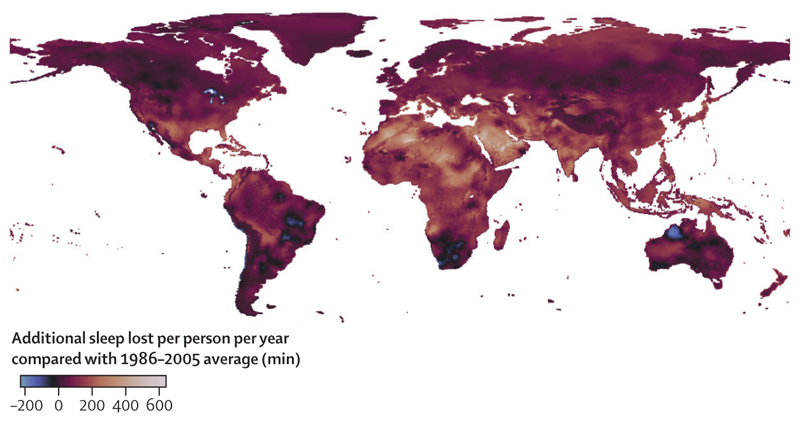
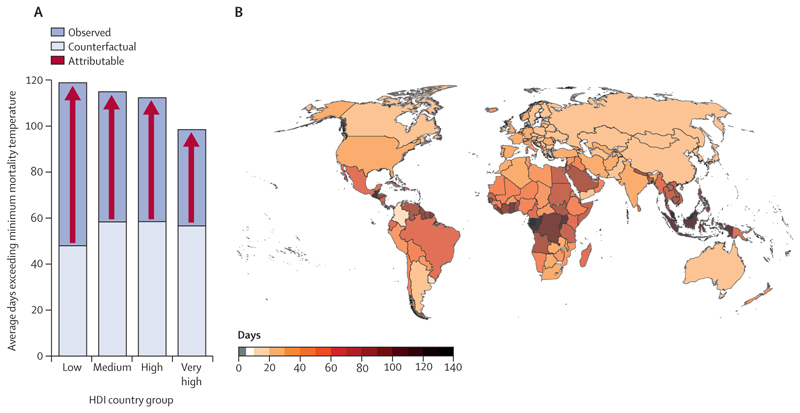
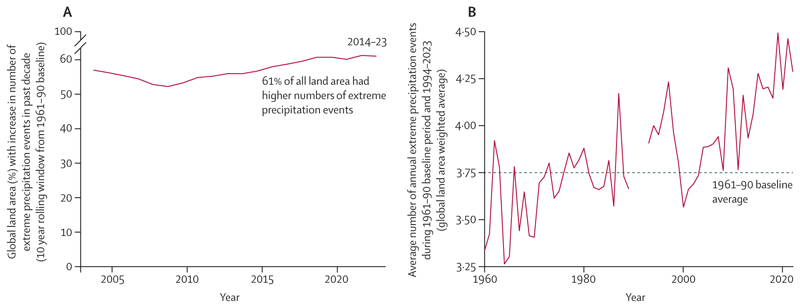
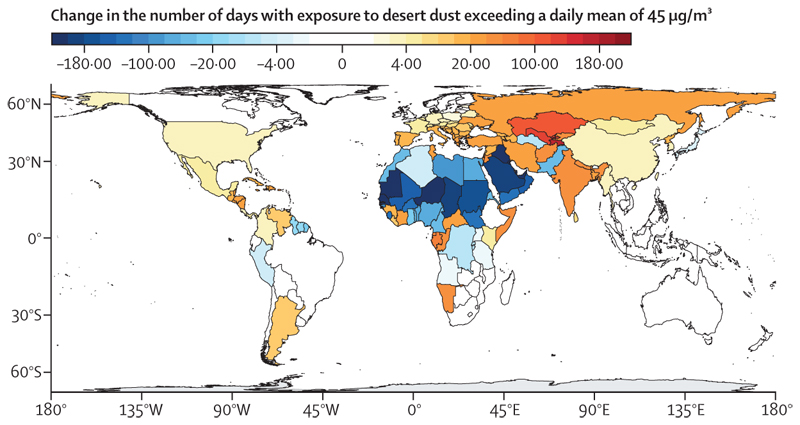
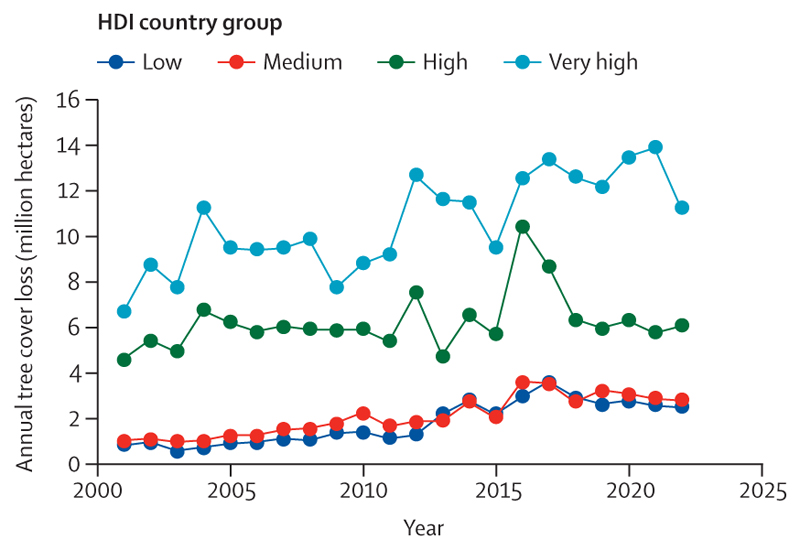
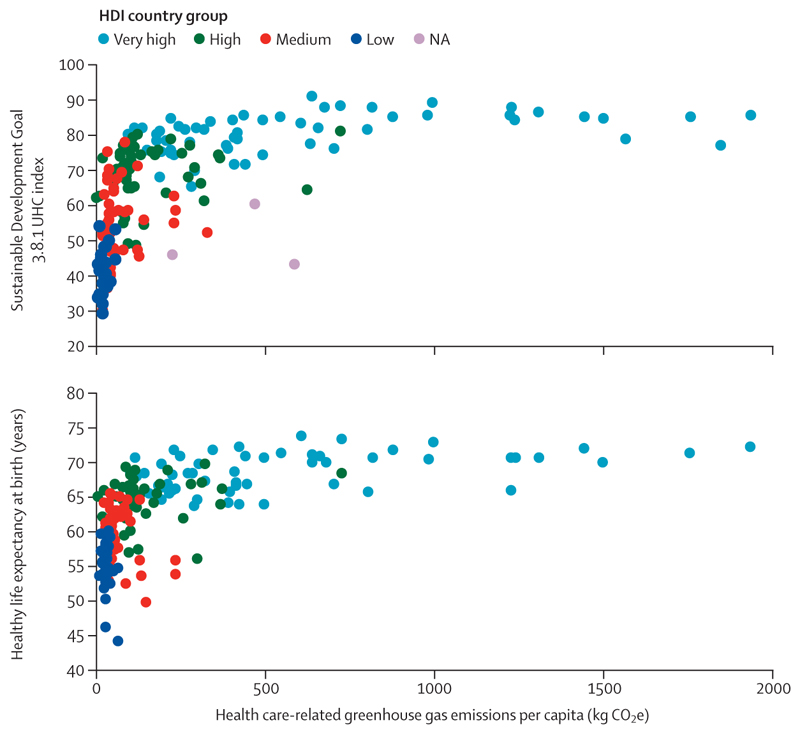
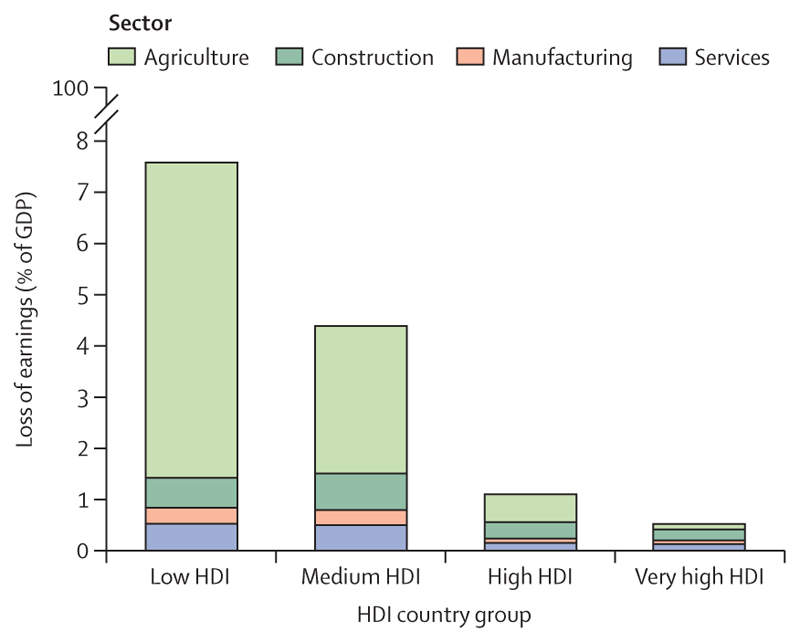
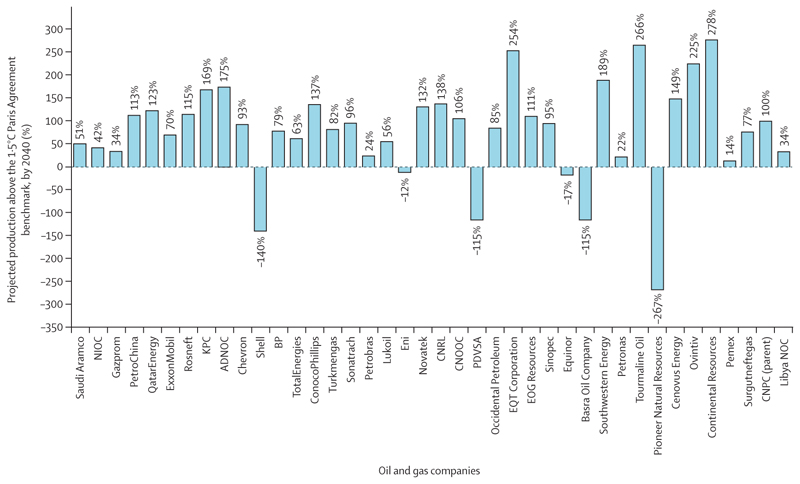
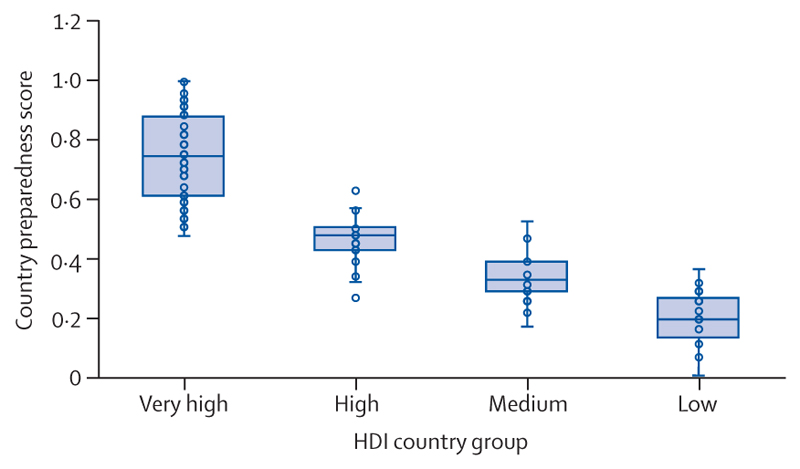
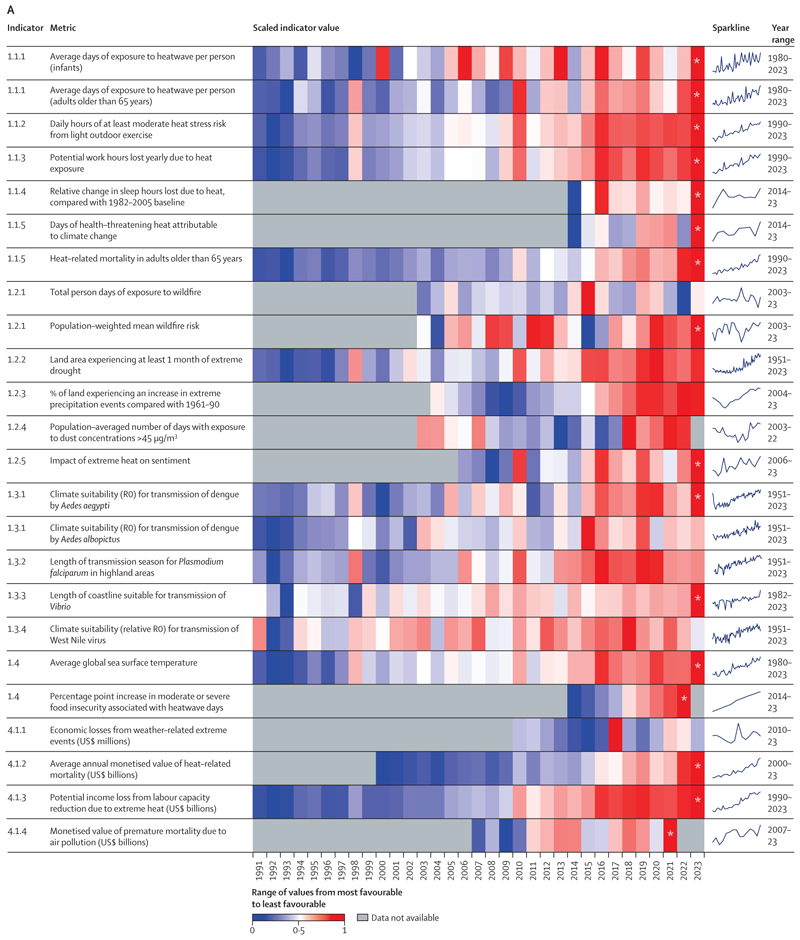
Executive summary Despite the initial hope inspired by the 2015 Paris Agreement, the world is now dangerously close to breaching its target of limiting global multiyear mean heating to 1·5°C. Annual mean surface temperature reached a record high of 1·45°C above the pre-industrial baseline in 2023, and new temperature highs were recorded throughout 2024. The resulting climatic extremes are increasingly claiming lives and livelihoods worldwide. The Lancet Countdown: tracking progress on health and climate change was established the same year the Paris Agreement entered into force, to monitor the health impacts and opportunities of the world’s response to this landmark agreement. Supported through strategic core funding from Wellcome, the collaboration brings together over 300 multidisciplinary researchers and health professionals from around the world to take stock annually of the evolving links between health and climate change at global, regional, and national levels. The 2024 report of the Lancet Countdown, building on the expertise of 122 leading researchers from UN agencies and academic institutions worldwide, reveals the most concerning findings yet in the collaboration’s 8 years of monitoring. The record-breaking human costs of climate change Data in this year’s report show that people all around the world are facing record-breaking threats to their wellbeing, health, and survival from the rapidly changing climate. Of the 15 indicators monitoring climate change-related health hazards, exposures, and impacts, ten reached concerning new records in their most recent year of data. Heat-related mortality of people older than 65 years increased by a record-breaking 167%, compared with the 1990s, 102 percentage points higher than the 65% that would have been expected without temperature rise (indicator 1.1.5). Heat exposure is also increasingly affecting physical activity and sleep quality, in turn affecting physical and mental health. In 2023, heat exposure put people engaging in outdoor physical activity at risk of heat stress (moderate or higher) for a record high of 27·7% more hours than on average in the 1990s (indicator 1.1.2) and led to a record 6% more hours of sleep lost in 2023 than the average during 1986–2005 (indicator 1.1.4). People worldwide are also increasingly at risk from life-threatening extreme weather events. Between 1961–90 and 2014–23, 61% of the global land area saw an increase in the number of days of extreme precipitation (indicator 1.2.3), which in turn increases the risk of flooding, infectious disease spread, and water contamination. In parallel, 48% of the global land area was affected by at least 1 month of extreme drought in 2023, the second largest affected area since 1951 (indicator 1.2.2). The increase in drought and heatwave events since 1981–2010 was, in turn, associated with 151 million more people experiencing moderate or severe food insecurity across 124 countries assessed in 2022, the highest recorded value (indicator 1.4.2). The hotter and drier weather conditions are increasingly favouring the occurrence of sand and dust storms. This weather-environmental phenomenon contributed to a 31% increase in the number of people exposed to dangerously high particulate matter concentrations between 2003–07 and 2018–22 (indicator 1.2.4). Meanwhile, changing precipitation patterns and rising temperatures are favouring the transmission of deadly infectious diseases such as dengue, malaria, West Nile virus-related illness, and vibriosis, putting people at risk of transmission in previously unaffected locations (indicators 1.3.1–1.3.4). Compounding these impacts, climate change is affecting the social and economic conditions on which health and wellbeing depend. The average annual economic losses from weather-related extreme events increased by 23% from 2010–14 to 2019–23, to US$227 billion (a value exceeding the gross domestic product [GDP] of about 60% of the world’s economies; indicator 4.1.1). Although 60·5% of losses in very high Human Development Index (HDI) countries were covered by insurance, the vast majority of those in countries with lower HDI levels were uninsured, with local communities bearing the brunt of the physical and economic losses (indicator 4.1.1). Extreme weather and climate change-related health impacts are also affecting labour productivity, with heat exposure leading to a record high loss of 512 billion potential labour hours in 2023, worth $835 billion in potential income losses (indicators 1.1.3 and 4.1.3). Low and medium HDI countries were most affected by these losses, which amounted to 7·6% and 4·4% of their GDP, respectively (indicator 4.1.3). With the most underserved communities most affected, these economic impacts further reduce their capacity to cope with and recover from the growing impacts of climate change, thereby amplifying global inequities. Concerningly, multiple hazards revealed by individual indicators are likely to have simultaneous compounding and cascading impacts on the complex and inter-connected human systems that sustain good health, disproportionately threatening people’s health and survival with every fraction of a degree of increase in global mean temperature. Despite years of monitoring exposing the imminent health threats of climate inaction, the health risks people face have been exacerbated by years of delays in adaptation, which have left people ill-protected from the growing threats of climate change. Only 68% of countries reported high-to-very-high implementation of legally mandated health emergency management capacities in 2023, of which just 11% were low HDI countries (indicator 2.2.5). Moreover, only 35% of countries reported having health early warning systems for heat-related illness, whereas 10% did so for mental and psychosocial conditions (indicator 2.2.1). Scarcity of financial resources was identified as a key barrier to adaptation, including by 50% of the cities that reported they were not planning to undertake climate change and health risk assessments (indicator 2.1.3). Indeed, adaptation projects with potential health benefits represented just 27% of all the Green Climate Fund’s adaptation funding in 2023, despite a 137% increase since 2021 (indicator 2.2.4). With universal health coverage still unattained in most countries, financial support is needed to strengthen health systems and ensure that they can protect people from growing climate change-related health hazards. The unequal distribution of financial resources and technical capacity is leaving the most vulnerable populations further unprotected from the growing health risks. Fuelling the fire As well as exposing the inadequacy of adaptation efforts to date, this year’s report reveals a world veering away from the goal of limiting temperature rise to 1·5°C, with concerning new records broken across indicators monitoring greenhouse gas emissions and the conditions that enable them. Far from declining, global energy-related CO2 emissions reached an all-time high in 2023 (indicator 3.1.1). Oil and gas companies are reinforcing the global dependence on fossil fuels and—partly fuelled by the high energy prices and windfall profits of the global energy crisis—most are further expanding their fossil fuel production plans. As of March, 2024, the 114 largest oil and gas companies were on track to exceed emissions consistent with 1·5°C of heating by 189% in 2040, up from 173% 1 year before (indicator 4.2.2). As a result, their strategies are pushing the world further off track from meeting the goals of the Paris Agreement, further threatening people’s health and survival. Although renewable energy could provide power to remote locations, its adoption is lagging, particularly in the most vulnerable countries. The consequences of this delay reflect the human impacts of an unjust transition. Globally, 745 million people still lack access to electricity and are facing the harms of energy poverty on health and wellbeing. The burning of polluting biomass (eg, wood or dung) still accounts for 92% of the energy used in the home by people in low HDI countries (indicator 3.1.2), and only 2·3% of electricity in these countries comes from clean renewables, compared with 11·6% in very high HDI countries (indicators 3.1.1). This persistent burning of fossil fuel and biomass led to at least 3·33 million deaths from outdoor fine particulate matter (PM2·5) air pollution globally in 2021 alone (indicator 3.2.1), and the domestic use of dirty solid fuels caused 2·3 million deaths from indoor air pollution in 2020 across 65 countries analysed (indicator 3.2.2). Compounding the growth in energy-related greenhouse gas emissions, almost 182 million hectares of forests were lost between 2016 and 2022 (indicator 3.4), reducing the world’s natural capacity to capture atmospheric CO2. In parallel, the consumption of red meat and dairy products, which contributed to 11·2 million deaths attributable to unhealthy diets in 2021 (indicator 3.3.2), has led to a 2·9% increase in agricultural greenhouse gas emissions since 2016 (indicator 3.3.1). Health systems themselves, although essential to protect people’s health, are also increasingly contributing to the problem. Greenhouse gas emissions from health care have increased by 36% since 2016, making health systems increasingly unprepared to operate in a net zero emissions future and pushing health care further from its guiding principle of doing no harm (indicator 3.5). The growing accumulation of greenhouse gases in the atmosphere is pushing the world to a future of increasingly dangerous health hazards and reducing the chances of survival of vulnerable people all around the globe. Health-threatening financial flows With the availability of financial resources a key barrier to tackling climate change, a rapid growth in predictable and equitable investment is urgently needed to avoid the most dangerous impacts of climate change. A growing body
Verified 2026-11-25 · 2 references not checked yet
Overview
CoChat Summary
## TL;DR
The report finds that climate change is already producing record-breaking harms to health, livelihoods, and economies, while mitigation and adaptation remain far too slow. It also finds some progress in engagement and planning, but concludes that countries are still broadly off track from Paris Agreement goals and from protecting health.
## Key findings
- Of the 15 indicators monitoring climate change-related health hazards, exposures, and impacts, 10 reached concerning new records in their most recent year of data.
- Heat impacts were especially severe: heat-related mortality among people older than 65 years increased by 167% compared with the 1990s, and in 2023 people were exposed to 50 more days of health-threatening heat than expected without climate change.
- Climate-related productivity and economic losses were also record-breaking: 512 billion potential work hours were lost to heat in 2023, and the global potential income loss from reduced labour capacity reached $835 billion.
- Mitigation and finance indicators show continued fossil-fuel dependence: global energy-related CO2 emissions reached an all-time high in 2023, oil and gas companies were on track to exceed their 1·5°C-consistent emissions share by 189% in 2040, and 84% of 86 countries reviewed had net-negative carbon prices in 2022, generating a $1·4 trillion net fossil-fuel subsidy.
## Methods
- This is an annual global indicator report from the Lancet Countdown, bringing together 122 researchers from UN agencies and academic institutions worldwide, within a broader collaboration of over 300 researchers and professionals.
- The report compiles and updates 56 indicators across five domains: health hazards/impacts, adaptation, mitigation and co-benefits, economics/finance, and public/political engagement.
- It uses a mix of observational data, surveys, administrative and policy data, satellite/reanalysis products, atmospheric and epidemiological models, regression analyses, and machine-learning classification of scientific and media outputs, depending on the indicator.
## Limitations
- The paper states that global scarcity of internationally standardised data limits monitoring of health impacts, assessment of progress, and evidence-based planning; it also notes that available data are rarely disaggregated by gender, age, indigeneity, ethnicity, or socioeconomic level.
- It states that important gaps remain in the Lancet Countdown’s monitoring, with several gaps due to technical difficulties and data scarcity, and that mental health impacts are especially hard to track because of the lack of standardised definitions and globally relevant data.
- Evident from the text: many indicators rely on cross-country aggregated estimates, modeled relationships, or proxy measures, so the reported figures may not capture local heterogeneity or causality for individual settings.
Model-written summary. Check it against the paper before relying on it.
Integrity signals
Registry
Cites
Statistics
Figures
Verification
Claims the paper makes
26 Valid · 9 Not valid · 103 Not checked · 419 Own results and interpretations
At least one cited source doesn’t support this claim or points to a different paper, and none confirmed it — see the verdicts below.
In the paper
“The extensively validated model used in this indicator suggests that exposure to fossil fuel-derived outdoor PM2·5 pollution contributed to 2·09 million of these deaths, with coal burning accounting for nearly 980 000 deaths.273”
§ The 2024 report of the Lancet Countdown on health and climate change: facing record-breaking threats from delayed action > Section 3: mitigation actions and health co-benefits > Air quality and health co-benefits
What the sources say
- Disputedcites [273] Lelieveld J Haines A Burnett R Air pollution deaths attributable to fossil fuels: observational and modelling study BMJ 2023 383 e077784 10.1136/bmj-2023-077784 38030155 PMC10686100 sourceExperimental — accuracy not yet measured
The Methods (Study design and data sources) say the model results are for 2019, not 2021. The Results (Mortality related to fossil fuels) estimate 5.13 million annual deaths attributable to fossil-fuel-related emissions, not 2.09 million. (LLM, conf=0.88)
Checked by a reasoning model — may be wrong.
hedgedstates a cause- Asserted: passes — The authors put it forward as true.
- Checkable: passes — It can be checked against evidence.
- Load-bearing: unclear — It is unclear whether the paper’s conclusions depend on it.
- Based: passes — The paper gives a reason why it holds.
- Disputed
The cited sources support only part of this claim — read each source’s verdict below.
In the paper
“High ambient temperatures are associated with worse sleep quantity and quality. 101–106”
§ The 2024 report of the Lancet Countdown on health and climate change: facing record-breaking threats from delayed action > section 1: health hazards, exposures, and impacts > Heat and health
What the sources say
- Partly supportedcites [101] Obradovich N Migliorini R Mednick SC Fowler JH temperature and human sleep loss in a changing climate Sci Adv 2017 3 e1601555 10.1126/sciadv.1601555 28560320 PMC5446217 sourceExperimental — accuracy not yet measured
The Results (Main effect; page unavailable) link warmer nighttime temperatures to more self-reported nights of insufficient sleep and describe the measure as relevant to sleep quality. The Discussion (page unavailable) cautions that the study did not measure nightly sleep duration and that reports of insufficient sleep may reflect fatigue rather than actual sleep loss. Thus, the source supports an association with perceived sleep insufficiency, but not a separate finding of worse sleep quantity. (LLM, conf=0.86)
- Could not verifycites [102] Mullins JT White C Temperature and mental health: evidence from the spectrum of mental health outcomes J Health Econ 2019 68 102240 31590065 sourceExperimental — accuracy not yet measured
The Results section discusses heat waves in relation to drought, mortality, and wildfires, but does not address sleep quantity or quality. Searches for sleep quality, insomnia, and sleep disturbance found no passage linking ambient temperature to sleep outcomes in our copy. (LLM, conf=0.75)
- Supportedcites [103] Chevance G Minor K Vielma C A systematic review of ambient heat and sleep in a warming climate Sleep Med Rev 2024 75 101915 38598988 source
The Findings (p. 2) state that higher outdoor or indoor ambient temperatures are negatively associated with sleep quality and quantity worldwide, and the Discussion (p. 31) and Conclusion (p. 35) repeat this across sleep indicators (quantity, timing, quality) and measurement methods. The narrative synthesis (p. 26) adds that 22 of 27 articles (80%) concluded higher temperatures were associated with poorer sleep, including reduced sleep duration and efficiency. (LLM, conf=0.95)
- Supportedcites [104] Rifkin DI Long MW Perry MJ Climate change and sleep: a systematic review of the literature and conceptual framework Sleep Med Rev 2018 42 3 9 30177247 source
The 'Temperature and sleep' section states that the systematic review yielded six studies on rising temperature effects on sleep and that 'All six studies reported negative effects of higher temperatures on sleep time and sleep quality,' directly matching the claim's quantity (sleep time/duration, e.g. Quante et al. reductions in nightly sleep duration, Obradovich et al. nights of insufficient sleep) and quality components. The Background section likewise notes the thermal environment as an important determinant of sleep quality and higher temperatures associated with diminished sleep quality. (LLM, conf=0.90)
- Not checked — no full text of the sourcecites [105] Obradovich N Migliorini R Sleep and the human impacts of climate change Sleep Med Rev 2018 42 1 2 30404727 source
- Not matchedcites [106] Minor K Bjerre-Nielsen A Jonasdottir SS Lehmann S Obradovich N Rising temperatures erode human sleep globally One Earth 2022 5 534 49
We searched by its title and found no matching paper.
plainstates an association- Asserted: passes — The authors put it forward as true.
- Checkable: passes — It can be checked against evidence.
- Load-bearing: passes — The paper’s conclusions depend on it.
- Based: passes — The paper gives a reason why it holds.
- Partly supported
Every source the paper cites for this claim was checked and supports it.
In the paper
“climate change-related extreme events are responsible for an estimated US$143 billion of annual losses”
§ The 2024 report of the Lancet Countdown on health and climate change: facing record-breaking threats from delayed action > Introduction
What the sources say
- Supportedcites [10] Newman R Noy I The global costs of extreme weather that are attributable to climate change Nat Commun 2023 14 6103 10.1038/s41467-023-41888-1 37775690 PMC10541421 source
The Results section (‘Extrapolated global climate change-related economic costs of extreme weather’) estimates climate change-attributed costs at an average of US$143 billion per year over 2000–2019. This total includes both economic damages and the statistical value of lives lost, so ‘losses’ is supported as a broad description of the total. (LLM, conf=0.94)
hedgedstates a cause- Asserted: passes — The authors put it forward as true.
- Checkable: passes — It can be checked against evidence.
- Load-bearing: unclear — It is unclear whether the paper’s conclusions depend on it.
- Based: passes — The paper gives a reason why it holds.
- Supported
The cited sources support only part of this claim — read each source’s verdict below.
In the paper
“The impacts are especially acute for subsistence farmers and Indigenous peoples, for whom food availability is particularly sensitive to local climatic changes.38,168–170”
§ The 2024 report of the Lancet Countdown on health and climate change: facing record-breaking threats from delayed action > section 1: health hazards, exposures, and impacts > Food security and undernutrition
What the sources say
- Not checked yetcites [38] Anderson I Robson B Connolly M Indigenous and tribal peoples’ health (The Lancet-Lowitja Institute Global Collaboration): a population study Lancet 2016 388 131 57 27108232 source
Checked before — its earlier verdict is held back until a new check runs.
- Could not verifycites [168] Hutchinson RN Shin S Systematic review of health disparities for cardiovascular diseases and associated factors among American Indian and Alaska Native populations PLoS One 2014 9 e80973 10.1371/journal.pone.0080973 24454685 PMC3893081 sourceExperimental — accuracy not yet measured
Our copy of Hutchinson, Newlin & Shin (2014) discusses food insecurity among AI/AN populations only in the Discussion (food insecurity passage), attributing it to low income, geographical isolation, food deserts on reservation land, a shift from under-nutrition to poor nutrition, and fast-food proliferation — with traditional agriculture constrained by limited water access, pest control and commercial-production regulation [50]. It never mentions climate change, climatic variability, or subsistence farmers, and its scope is US AI/AN cardiovascular risk factors, so the claim's climate-linkage cannot be checked against it. Searches for 'climate change impacts on food insecurity subsistence agriculture' and 'subsistence farming hunting food availability environmental change weather' returned only these semantic neighbours. (LLM, conf=0.68)
- Supportedcites [169] Ghosh-Jerath S Kapoor R Ghosh U Singh A Downs S Fanzo J Pathways of climate change impact on agroforestry, food consumption pattern, and dietary diversity among Indigenous subsistence farmers of Sauria Paharia Tribal community of India: a mixed methods study Front Sustain Food Syst 2021 5 667297 10.3389/fsufs.2021.667297 35811836 PMC7613000 source
The Introduction (p.1) states that rapid climate shifts have marginalized the livelihoods of already vulnerable indigenous populations globally, 'many of whom are predominantly smallholder subsistence farmers relying on rain-fed agriculture,' and that their location in environmentally fragile regions exposes them to temperature and rainfall variability, threatening their 'delicately balanced subsistence cycle,' increasing poor crop yields and reducing accessibility to culturally valued resources. The same Introduction notes studies reporting high climate vulnerability among indigenous farmer communities 'with specific impacts on their food sources and ecosystem services.' The Results (Climate Variability and Its Impacts on Agroforestry Systems and Dietary Diversity) confirm the food-availability link: climate variability 'led to poor availability of and accessibility to diverse foods,' with reduced farm and kitchen-garden productivity making produce 'insufficient and less diverse to meet the HH's needs.' This broad background paraphrase is thus carried by our copy at the same level of generality. (LLM, conf=0.85)
- Partly supportedcites [170] Shrestha RP Nepal N An assessment by subsistence farmers of the risks to food security attributable to climate change in Makwanpur, Nepal Food Secur 2016 8 415 25 sourceExperimental — accuracy not yet measured
Mbow et al. (2014) support the subsistence/smallholder-farmer half of the claim in an African context: the Introduction (Agroforestry's contribution / Introduction) notes that tree-based services 'are of particular importance in many low-income countries in Africa, where large proportions of the populations work in an agricultural sector', that projected climate change 'is almost certain to affect negatively the agricultural resource base in many parts of the continent', and that 'Climate change is likely to make it even harder for farmers to cope with these problems'; the framework figure is described as linking 'climate variability (current and future) and food (in) security'. However, no passage in our copy mentions Indigenous peoples at all, and the paper makes no comparative statement that impacts are 'especially acute' for subsistence farmers and Indigenous peoples or that their food availability is 'particularly sensitive to local climatic changes' — it discusses smallholders' vulnerability and land-tenure constraints generally (e.g. 'viable option for smallholder farmers with limited resources', 'especially for the poorest segments of...'). The Indigenous-peoples element of the attributed claim is therefore unsupported by this source. (LLM, conf=0.70)
plainstates a cause- Asserted: passes — The authors put it forward as true.
- Checkable: passes — It can be checked against evidence.
- Load-bearing: unclear — It is unclear whether the paper’s conclusions depend on it.
- Based: passes — The paper gives a reason why it holds.
- Not checked yet
The cited sources support only part of this claim — read each source’s verdict below.
In the paper
“Extreme heat can affect human mental health outcomes across a continuum of severity, from subclinical to life-altering.102,142–147”
§ The 2024 report of the Lancet Countdown on health and climate change: facing record-breaking threats from delayed action > section 1: health hazards, exposures, and impacts > Health and extreme weather-related events
What the sources say
- Could not verifycites [102] Mullins JT White C Temperature and mental health: evidence from the spectrum of mental health outcomes J Health Econ 2019 68 102240 31590065 sourceExperimental — accuracy not yet measured
The Results section discusses mental-health effects of prolonged drought, including distress, but does not attribute them to extreme heat. Its separate heat-wave discussion reports mortality, not mental-health outcomes. Searches for heat-related mental-health effects and the proposed range of severity found no passage addressing the claim. (LLM, conf=0.75)
- Could not verifycites [142] Thompson R Lawrance EL Roberts LF Ambient temperature and mental health: a systematic review and meta-analysis Lancet Planet Health 2023 7 e580 89 37437999 sourceExperimental — accuracy not yet measured
The Introduction and Conclusion and outlook discuss heat and climate change in relation to waterborne infections, not mental health. Searches for extreme heat, mental health, and psychological or psychiatric effects found no passage addressing the claimed range of mental health outcomes. (LLM, conf=0.76)
- Could not verifycites [143] Obradovich N Minor K Identifying and preparing for the mental health burden of climate change JAMA Psychiatry 2022 79 285 86 35195666 sourceExperimental — accuracy not yet measured
Our copy of Heidecke, Lavarello Schettini & Rocklöv (2023) is entirely a review of West Nile virus eco-epidemiology: its discussion of high temperature concerns vector biology and WNV transmission risk (Vectors and climate; Climate and land cover drivers of WNV, where R0 peaks at 23-26˚C and temperatures above the optimum reduce transmission), and its Introduction frames climate impacts on 'human, animal, and environmental health' only as changes in infectious disease epidemiology. No passage addresses extreme heat and human mental health outcomes, at any severity level (searched: mental health/psychological, heat waves and human morbidity/mortality, extreme heat). Since the paper simply does not speak to the claim's point, it can neither support nor contradict it. (LLM, conf=0.70)
- Supportedcites [144] Obradovich N Migliorini R Paulus MP Rahwan I Empirical evidence of mental health risks posed by climate change Proc Natl Acad Sci USA 2018 115 10953 58 10.1073/pnas.1801528115 30297424 PMC6205461 source
Obradovich et al. (2018) treats heat as acting on mental health at both ends of a severity range: the Introduction (p. 2) states that 'both heat and drought amplify the risk of suicide (28-30), and psychiatric hospital visits increase during hotter temperatures (31-33)', while the same section notes their outcome measure 'is likely able to capture both clinical and subclinical distress across a wide set of possible symptoms', and the Results (p. 3) show average maximum temperatures >30 °C raise the probability of reported mental health issues by over 1% point relative to 10-15 °C. The Discussion (p. 4) likewise distinguishes 'varied psychopathology, subclinical distress, and chronic stress'. The severe end (suicide, psychiatric admissions) is reported here as background from cited studies rather than as this paper's own estimate, and the explicit phrase 'continuum of severity' is the citing authors' framing, but the paper's content clearly supports the broad attributed statement. (LLM, conf=0.80)
- Not checked yetcites [145] Nori-Sarma A Sun S Sun Y Association between ambient heat and risk of emergency department visits for mental health among US adults, 2010 to 2019 JAMA Psychiatry 2022 79 341 49 10.1001/jamapsychiatry.2021.4369 35195664 PMC8867392 source
Checked before — its earlier verdict is held back until a new check runs.
- Not matchedcites [146] Burke M González F Baylis P Higher temperatures increase suicide rates in the United States and Mexico Nat Clim Chang 2018 8 723 29
We searched by its title and found no matching paper.
- Partly supportedcites [147] Baylis P Obradovich N Kryvasheyeu Y Weather impacts expressed sentiment PLoS One 2018 13 e0195750 10.1371/journal.pone.0195750 29694424 PMC5918636 sourceExperimental — accuracy not yet measured
The Results (All expressed sentiment; page unavailable) report that positive expressions decline at temperatures above 30°C, supporting an association between heat and a subclinical measure of mood. The Discussion (page unavailable) cautions that expressed sentiment is only a possible proxy for underlying emotions. The paper does not establish life-altering mental health outcomes or a continuum of severity. (LLM, conf=0.88)
plainstates a cause- Asserted: passes — The authors put it forward as true.
- Checkable: passes — It can be checked against evidence.
- Load-bearing: unclear — It is unclear whether the paper’s conclusions depend on it.
- Based: passes — The paper gives a reason why it holds.
- Could not verify
354 more claims · 7 with their cited sources checked
Create a free account to see all 557 claims and to verify the 91 references still open.
- It may state two separate claims as one. 177
- Probably not a substantial claim. 34
- The quote only partly states this claim. 1
Self-check
Percentages, sums and reported differences re-computed from the paper’s own numbers.
Self-check results appear here once an independent check has confirmed them.
Cited works that were retracted
Works this paper cites that were later retracted, from the retraction notices publishers deposit. Major when the notice came out before this paper was published.
A note, not an issue: for example, a cited work that was retracted only after this paper was published, which its authors could not have known.
In the paper
“Kotz, 2024, The economic commitment of climate change, Nature, 628, 551, 10.1038/s41586-024-07219-0”
Cited work 10.1038/s41586-024-07219-0 · retracted 2025-12-03 · notice 10.1038/s41586-025-09726-0 · this paper published 2024-11
A note, not an issue: for example, a cited work that was retracted only after this paper was published, which its authors could not have known.
In the paper
“91 However, heat stress can reduce the willingness to engage in physical activity and increase the health risks for those exercising outdoors.”
Cited work 10.1007/s11356-023-31267-0 · retracted 2025-05-29 · notice 10.1007/s11356-025-36576-0 · this paper published 2024-11
Citations
Cites
2 retracted
RETRACTED ARTICLE: The economic commitment of climate change
Kotz, M., Levermann, A., & Wenz, L. (2024) · Nature · doi:10.1038/s41586-024-07219-0 · Cited by 348
RetractedLi, Y., & Tian, C. (2023) · Environmental Science and Pollution Research · doi:10.1007/s11356-023-31267-0 · Cited by 4 · cited 1×
“91 However, heat stress can reduce the willingness to engage in physical activity and increase the health risks for those exercising outdoors.”
RetractedHersbach, H., Bell, B., Berrisford, P., Hirahara, S., Horányi, A., Muñoz‐Sabater, J., Nicolas, J., Peubey, C., Radu, R., Schepers, D., et al. (2020) · Quarterly Journal of the Royal Meteorological Society · doi:10.1002/qj.3803 · Cited by 31,882
High-Resolution Global Maps of 21st-Century Forest Cover Change
Hansen, M. C., Potapov, P. V., Moore, R., Hancher, M., Turubanova, S. A., Tyukavina, A., Thau, D., Stehman, S. V., Goetz, S. J., Loveland, T. R., et al. (2013) · Science · doi:10.1126/science.1244693 · Cited by 11,704
(IPCC), I. P. O. C. C. (2023) · doi:10.1017/9781009325844 · Cited by 10,921
Food in the Anthropocene: the EAT–Lancet Commission on healthy diets from sustainable food systems
Willett, W., Rockström, J., Loken, B., Springmann, M., Lang, T., Vermeulen, S., Garnett, T., Tilman, D., DeClerck, F., Wood, A., et al. (2019) · The Lancet · doi:10.1016/s0140-6736(18)31788-4 · Cited by 10,880
Self-citationThe global distribution and burden of dengue
Bhatt, S., Gething, P. W., Brady, O. J., Messina, J. P., Farlow, A. W., Moyes, C. L., Drake, J. M., Brownstein, J. S., Hoen, A. G., Sankoh, O., et al. (2013) · Nature · doi:10.1038/nature12060 · Cited by 10,037
Murray, C. J. L., Aravkin, A. Y., Zheng, P., Abbafati, C., Abbas, K. M., Abbasi-Kangevari, M., Abd-Allah, F., Abdelalim, A., Abdollahi, M., Abdollahpour, I., et al. (2020) · The Lancet · doi:10.1016/s0140-6736(20)30752-2 · Cited by 9,854
Self-citationThe metabolic phenotype in obesity: Fat mass, body fat distribution, and adipose tissue function
Goossens, G. H. (2017) · Obesity Facts · doi:10.1159/000471488 · Cited by 8,481
(IPCC), I. P. O. C. C. (2023) · doi:10.1017/9781009157896 · Cited by 6,972
Research works printed but not linked: 10
- United Nations Framework Convention on Climate Change Report of the Conference of the Parties serving as the meeting of the Parties to the Paris Agreement on its fifth session, held in the United Arab Emirates from 30 November to 13 December 2023 2024 March 15 accessed April 19, 2024 https://unfccc.int/sites/default/files/resource/cma2023_16a01_adv_.pdf
- Chambers J Global and cross-country analysis of exposure of vulnerable populations to heatwaves from 1980 to 2018 Clim Change 2020 163 539 58 · DOI · Paper page
- Allan RP Arias PA Armour K Intergovernmental Panel on Climate Change, 2021: summary for policymakers accessed March 24, 2024 https://www.ipcc.ch/report/ar6/wg1/chapter/summary-for-policymakers/
- Myers S Frumkin H Planetary health: protecting nature to protect ourselves Island Press 2020
- Ballard T Kepple A Cafiero C Better measurement of food insecurity in the context of enhancing nutrition Ernahr-Umsch 2014 61 38 41
- Vanos J Guzman-Echavarria G Baldwin JW Bongers C Ebi KL Jay O A physiological approach for assessing human survivability and liveability to heat in a changing climate Nat Commun 2023 14 1 14 38030628 PMC10687011 · DOI · Paper page
- Roundtable on Environmental Health Sciences, Research, and Medicine, Board on Population Health and Public Health Practice, Institute of Medicine Occupational health and biofuels production 2014 accessed May 13, 2024 https://www.ncbi.nlm.nih.gov/books/NBK196449/
- Organisation for Economic Co-operation and Development Reducing the health risks of the copper, rare earth and cobalt industries: transition to a circular low-carbon economy 2020 Jan 31 accessed April 19, 2024 https://www.oecd-ilibrary.org/content/paper/88ce1db4-en
- WHO WHO global air quality guidelines: particulate matter (PM2.5 and PM10), ozone, nitrogen dioxide, sulfur dioxide and carbon monoxide World Health Organization 2021 34662007
- Zhang N Pang J The economic impacts of introducing CCER trading and offset mechanism into the national carbon market of China Climate Change Research 2022 18 622 36
Cited by
Items 701–800 of 851
Liu, S. S., Zheng, J., Yang, F., Li, W., Zhou, Y., Shihan Lu, B. A., & Zhang, Y. (2026) · BMC Geriatrics · doi:10.1186/s12877-026-07828-6 · Cited by 2
“Beyond individual empowerment, preventive health service facilities often function as vital aid hubs, providing evidence-based guidance and coordinating with emergency services to ensure timely assistance for vulnerable populations [28, 29].”
Self-citationXue, M., Zhang, Y., Zhu, T., Zhao, X., Xin, H., Tan, S., Wu, Z., & Gu, H. (2026) · Sustainable Cities and Society · doi:10.1016/j.scs.2026.107619
Self-citationWu, R., Xu, G., Liu, S., et al. (2026) · Sustainable Cities and Society · doi:10.1016/j.scs.2026.107635
Leppold, C. (2026) · Current Opinion in Environmental Sustainability · doi:10.1016/j.cosust.2026.101680 · Cited by 1
Dou, Y., Zhu, J., Cui, L., Xiao, Y., Wu, J., Dai, Q., Zhao, X., Fu, P. F. P., Liu, C., & Yang, L. (2026) · Sustainable Horizons · doi:10.1016/j.horiz.2026.100201 · Cited by 1
Abaker, A. A., Aldriwish, K., Alzahrani, I. R., & Alotaibe, D. Z. (2026) · Algorithms · doi:10.3390/a19070506
Chiwanga, F. S., Sambalino, F., Sambaiga, R., von Woesik, F., Chiwanga, N., Makupa, E. E., & Murage, P. (2026) · Wellcome Open Research · doi:10.12688/wellcomeopenres.26338.1
Twomey, E., Arsy, F. F., Otok, R., & Chambaud, L. (2026) · International Journal of Public Health · doi:10.3389/ijph.2026.1609473 · Cited by 1
Sarker, M. N. I. (2026) · Progress in Disaster Science · doi:10.1016/j.pdisas.2026.100635 · Cited by 1
Are humans adapted to the world they have developed?
Thivel, D., & Tremblay, A. (2026) · Physiology & Behavior · doi:10.1016/j.physbeh.2026.115431
Maack, C., Daiber, A., Schneider, A. E., Lelieveld, J., & Hahad, O. (2026) · Herz · doi:10.1007/s00059-026-05384-8
Bentounsi, Z., Arman, İ. H., Cordovil, C., et al. (2026) · Family Practice · doi:10.1093/fampra/cmag047
“The health-care sector itself contributes an estimated 4%–5% of global greenhouse gas emissions and a comparable share of air pollutant emissions in many high-income countries [3, 4].”
Capturing the pace of extreme diurnal temperature change in climate-health assessment
Ma, X., & Wang, J. (2026) · Eco-Environment & Health · doi:10.1016/j.eehl.2026.100262
“The 2024 Lancet Countdown shows that climate-related health threats are reaching record-breaking levels worldwide [1].”
A Prognostic Algorithm for Heat-Related Mortality in Older Adults: Development in Milan
Russo, D., Tùnesi, S., Greco, T., & Russo, A. G. (2026) · Environments · doi:10.3390/environments13070370
“It can reveal meaningful disparities in both exposure and health outcomes and help public health agencies target interventions [13,14].”
Scoping review: climate change-related anxiety and worry in children, adolescents, and young adults
Rodney-Wolf, K., Eisenschmidt, P., & Schmitz, J. (2026) · European Child & Adolescent Psychiatry · doi:10.1007/s00787-026-03026-2 · Cited by 1
The heat exposure, aging trajectories, and Alzheimer’s disease (HEAT-AD) study protocol
O’Shea, D. M., Chang, L., Chowdhury, M., Cook, D. J., Cresswell, K., Minor, B., Mitsova, D., Tourelle, M., Galvin, J. E., & Besser, L. M. (2026) · PLoS ONE · doi:10.1371/journal.pone.0350611
Kesse‐Guyot, E., Berlivet, J., Meyer, E., Julia, C., Fezeu, L., Touvier, M., Herçberg, S., Meirhaeghe, A., & Baudry, J. (2026) · American Journal of Clinical Nutrition · doi:10.1016/j.ajcnut.2026.101430 · Cited by 1
Ota, H., Yamashiro, T., Kumamaru, K. K., Kumasaka, S., Kido, A., Ozaki, K., Kono, Y., Azuma, M., Fukuda, T., & Aida, N. (2026) · Japanese Journal of Radiology · doi:10.1007/s11604-026-02043-0
Li, M., Xu, R., Zhang, Y., Du, S., Xu, R., Zu, Q., Lv, Z., Zheng, W., Ye, W., & Xiang, J. (2026) · International Archives of Occupational and Environmental Health · doi:10.1007/s00420-026-02227-1
“The convergence of climate change and industrial pollution is reshaping occupational health risks worldwide and underscores the urgency of adopting integrated prevention strategies (Flouris et al. 2018; Levi et al. 2018; Romanello et al. 2024 ).”
Self-citationEpelde, F. (2026) · International Journal of Environmental Research and Public Health · doi:10.3390/ijerph23070902
The Triple Planetary Crisis and Health Effects Across the Lifespan
Kalogirou, M. R., Baumbusch, J., & Strus, J. A. (2026) · Nursing Clinics of North America · doi:10.1016/j.cnur.2026.06.002
Mendonça, I. F., do Vale, G. S., Balliano, T. L., Silveira, E. A., Dutra, R. C., de Oliveira, J. S., Suarez, P. A. Z., & Ghesti, G. F. (2026) · BioEnergy Research · doi:10.1007/s12155-026-11031-1
Jackson, T. W., Alewel, D. I., Vance, S. A., Gavett, S. H., Schladweiler, M. C. J., Evansky, P., Monsees, M., Freeborn, D. L., Martin, J., George, I. J., et al. (2026) · Inhalation Toxicology · doi:10.1080/08958378.2026.2697433
“In recent years, accelerated rates of natural disasters, wildfires, high ambient temperatures, and resultant changes in ambient physicochemistry have altered where, when, and how people encounter air pollution (Romanello et al. 2024).”
Sakamoto, H., Yamasaki, L., Abe, S. K., Ezoe, S., Egawa, S., Guinto, R., Hashimoto, H., Igarashi, A., Lekagul, A., Lwin, K. S., et al. (2026) · The Lancet Regional Health - Western Pacific · doi:10.1016/j.lanwpc.2026.101921 · Cited by 1
“79 System-building support should target nations with the most limited crisis-response capacity.”
Carrasco, S. D. C. Y., Peña, C. A. P., Ayón, M. A. C., et al. (2026) · Arandu-UTIC. · doi:10.69639/arandu.v13i2.2330
Japan's health system toward 2040: structural challenges and a renewed social contract
Yamasaki, L., Sakamoto, H., Hashimoto, H., Kondo, N., Kunii, O., Tsugawa, Y., Abe, S. K., Ezoe, S., Egawa, S., Guinto, R., et al. (2026) · The Lancet Regional Health - Western Pacific · doi:10.1016/j.lanwpc.2026.101920 · Cited by 4
“67 The data infrastructure described in the sections ‘Link health and social data to capture functional status and identify disparities’ and ‘Realign reimbursement with societal value and disease burden’ provides the foundation for such monitoring.”
Wang, Y., Wen, Q., Chen, J. S., Chang, Y., Cao, N., Sun, X., Hao, Y., Zhang, W., & Du, Z. (2026) · Tropical Medicine and Infectious Disease · doi:10.3390/tropicalmed11070201
“This non-significant temporal change may reflect that regional SDI can mask substantial within-region inequalities and local ecological heterogeneity [37,38].”
Loh, M. W.-P., Kon, M. W. R., Krishna, A., et al. (2026) · BMC Medical Education · doi:10.1186/s12909-026-09775-7
Tesfaye, A. H., Prior, J., Shifa, J. E., & McIntyre, E. (2026) · Journal of Public Health · doi:10.1007/s10389-026-02851-8
Choosing Wisely Canada climate-conscious recommendations for critical care medicine
Balan, M., Bodley, T. F., Montazeripouragha, A., Baharmand, I., Yu, A. C. M., Burns, K. E. A., Murthy, S., for the Canadian Critical Care Society (CCCS) and on behalf of the CCCS Choosing Wisely Canada Climate-Conscious Recommendations Working Group, Allard, K., Astell, A., et al. (2026) · Canadian Journal of Anesthesia/Journal canadien d anesthésie · doi:10.1007/s12630-026-03148-w
Man, Y., Zhao, S.-F., & Li, K. (2026) · Frontiers in Public Health · doi:10.3389/fpubh.2026.1815690
“…in urban resilience governance: when hazardous exposure time lengthens while safe windows shrink, public sports services, community health-promotion programming, and the operation of public spaces require more precise time-slot strategies and stronger continuity safeguards (2, 5, 12, 31, 32).”
InfluentialClimate change, environmental extremes, and human health
Yu, P., Liu, Y., Xing, Y., He, C., Huang, Y., Huang, L., Li, T., Alahmad, B., Phung, D. T., Chen, B., et al. (2026) · The Innovation Medicine · doi:10.59717/j.xinn-med.2026.100235
Self-citationApicella, A., Oliver, S. R., & Tripney, J. (2026) · Campbell Systematic Reviews · doi:10.1177/18911803261461576
“These disruptions not only drive rising global temperatures but also in turn exacerbate social inequalities, threaten livelihoods and un-dermine human well-being worldwide, with disproportionate impacts on resource-poor communities (IPCC, 2023; Romanello et al., 2024).”
Gao, J., Li, T., Cui, L., Wang, L., Ma, Z., Zhang, X., Bai, J., Liu, Y., Jia, S., Wu, S., et al. (2026) · Journal of Thermal Biology · doi:10.1016/j.jtherbio.2026.104545
Self-citationWang, H., Yang, L., Liu, C. J., et al. (2026) · Animals · doi:10.3390/ani16152281
Self-citationRhaman, A., Kardol, L. R., Maloney, S. K., Quintrell, E., Sorial, E., Morgan, S., Russell, D. J., Kelty, E. A., & Wyrwoll, C. S. (2026) · Acta Physiologica · doi:10.1111/apha.70281
Paulsen, L., Muth, H., Kallenbach, J., Reismann, L., Jochem, C., & Bucksch, J. (2026) · Frontiers in Public Health · doi:10.3389/fpubh.2026.1860395 · Cited by 1
Robinson, S., Barnes, M. L., Hoetker, G., & Bowen, K. (2026) · Health Policy · doi:10.1016/j.healthpol.2026.105720
de Castro, N. J. C., MELO, D. A., de Oliveira, B. L. C., et al. (2026) · Reme Revista Mineira de Enfermagem · doi:10.35699/2316-9389.2026.64312
Shin, S., Ham, D., Bae, S., & Song, M. (2026) · Journal of Korean Medical Science · doi:10.3346/jkms.2026.41.e294
İsa, A. K. A. R., & Tosun, İ. (2026) · Uluslararası Sağlık Bilimlerinde Disiplinler Arası Etkileşim Dergisi · doi:10.65349/qjpq2648
van der Giessen, J. L., Smale, E. M., Dangerman, N., Barendse, E., Ista, E., & Hunfeld, N. (2026) · Health Policy · doi:10.1016/j.healthpol.2026.105717
Climate change and heat waves: An emerging threat to human health
Kant, S. (2026) · Indian Journal of Allergy Asthma and Immunology · doi:10.4103/ijaai.ijaai_28_26
Dynamic feature-adaptive representation learning for spatiotemporal air pollution forecasting
Rana, R., & Kumar, N. (2026) · Environmental Technology · doi:10.1080/09593330.2026.2692045
“The Lancet Countdown 2024 report indicates that air pollution in India resulted in 1.6 million deaths during 2021, 38% of which were attributed to fossil fuels [5].”
InfluentialHeatwave exposure impairs airway epithelial repair via the Lkb1–Glut1 axis in juvenile mice
Zhang, J., Jian, X., Cheng, P., Wang, B., Miao, X., Yuan, P., Zhou, X., Chen, H., & Feng, F. (2026) · Environmental Pollution · doi:10.1016/j.envpol.2026.128862
Murray, A., Lesnikowski, A., Henstra, D., & Wachsmuth, D. (2026) · Regional Environmental Change · doi:10.1007/s10113-026-02647-2
“Globally, average annual economic losses from weather-related extreme events amount to $227 billion USD, and in Canada, they are equivalent to approximately 5% of annual GDP growth (Romanello et al. 2024; Sawyer et al. 2020).”
Karikari, A. A., Karikari, S. A., Amponsah, L. B., Agbeleseshie, E., Caesar, V., & Karikari, A. B. (2026) · medRxiv · doi:10.64898/2026.07.28.26359183
Die Forschungsmethoden der klinischen Psychologie in Zeiten der Klimakrise
Mundorf, A., Peterburs, J., & Ocklenburg, S. (2026) · Springer eBooks · doi:10.1007/978-3-662-73259-5_19
Niedzwiedz, C. L., Collery, A., Kibuchi, E., Orina, F., Meme, H., Odhiambo, M., Newton, C. R. J. C., Gray, C. M., & Kariuki, S. M. (2026) · Wellcome Open Research · doi:10.12688/wellcomeopenres.27258.1
Verfuerth, C., Bosangit, C., Knight, H. H., et al. (2026) · Journal of Marketing Management · doi:10.1080/0267257x.2026.2713195
The Impact of Heat and Bushfire Smoke on Health System Utilisation in Australia
Yoon, H., Boyle, J., Diouf, I., & Jayasena, R. (2026) · The Medical Journal of Australia · doi:10.5694/mja2.70261
Greening public health: embedding environmental sustainability in research and practice
Petit, P., & Vuillerme, N. (2026) · Frontiers in Public Health · doi:10.3389/fpubh.2026.1888689
“Raising this awareness at all levels (e.g., among clinicians, hospital administrators, health technology assessors, policymakers, and insurers) is a prerequisite for embedding environmental considerations into the decisions that shape how care is delivered, financed, and evaluated (4, 28, 64).”
InfluentialLiu, H., Li, B., Liu, Z., Li, Q., Wang, Y. M., Zhang, Z., & Leng, Y. (2026) · Results in Engineering · doi:10.1016/j.rineng.2026.112360
Self-citationJayaswal, R. P., Rana, A. K., Dayal, D., et al. (2026) · Medical Journal Armed Forces India · doi:10.1016/j.mjafi.2026.07.002
Prioritising climate action and sustainability in the UK Government’s health and social care reforms
Chenciner, L., Briggs, S., & SHAW, S. (2026) · Perspectives in Public Health · doi:10.1177/17579139261472736
Kokol, P., Blažun, H. V., Završnik, J., Žlahtič, G., & Žlahtič, B. (2026) · Research Square · doi:10.21203/rs.3.rs-9910414/v1
Regnoli, G. M., Parola, A., Zammitti, A., & Rosa, B. D. (2026) · European Journal of Investigation in Health Psychology and Education · doi:10.3390/ejihpe16080114
“…that emerging adults are exposed to, with potential consequences for their mental health and their capacity to orient themselves toward the future (e.g., Barchielli et al., 2022; Carta et al., 2022; Romanello et al., 2024; UNICEF, 2023; Kałwak et al., 2024; World Health Organization, 2023).”
Zangerl, K. E., Wasike, D., Cleary, C. W., et al. (2026) · AINS - Anästhesiologie · Intensivmedizin · Notfallmedizin · Schmerztherapie · doi:10.1055/a-2909-5435
Lian, S., Fan, J., Meng, X., et al. (2026) · Environmental Research · doi:10.1016/j.envres.2026.125443
Self-citationZangerl, K. E., Cleary, C. W., Andreas, M., Jungmann, M., Dalglish, S. L., Nilsson, M., Helldén, D., Alfvén, T., Phalkey, R. K., Solomon, A., et al. (2026) · PLOS Climate · doi:10.1371/journal.pclm.0001025
“Climate change poses a significant threat to human health, with children being particularly vulnerable [1].”
Self-citationWan, J., She, M., Wang, H., Zheng, L., Yu, X., Yuqian, S., Wang, Z., Li, M., Han, X., Zhou, H., et al. (2026) · International Journal of Hygiene and Environmental Health · doi:10.1016/j.ijheh.2026.114887
El-Ghannam, M., Hassanien, M. H., Ameen, Y. A., Turky, E. A., ELattar, G. M., Abu-Taleb, H. M., Ray, A. A. E., & Eltalkawy, M. D. (2026) · Exploration of Digestive Diseases · doi:10.37349/edd.2026.1005131
Katz, G. M., Kokorelias, K. M., Bhulabhai, M., Cohn, H., Rangrej, D., Wu, J., Born, K. B., Hatzifilalithis, S., McMahon, S. A., Rochon, P. A., et al. (2026) · The Lancet Healthy Longevity · doi:10.1016/j.lanhl.2026.100877 · Cited by 1
Beig, M. M., Ahmad, W., Hassnain, M., Zia, S., & Mehmood, S. (2026) · Disaster risk reduction · doi:10.1007/978-981-95-9709-3_3
Leadership for climate-resilient healthcare: insights from an ATACH technical meeting
Gohel, B., Dakin, T., Roschnik, S., et al. (2026) · BMJ Leader · doi:10.1136/leader-2026-001578
Lei, Y., Sha, W., Xu, C., et al. (2026) · Journal of Global Health · doi:10.7189/jogh.16.04239
Self-citationThe Role of Hospice and Palliative Care in Addressing Climate Change
Carlson, E. S., Shah, N., Denny, J., Schroll, A., Mahoney, D., Schear, S., Jennings, K., Uzuegbu, C., Harris, D., Chekuri, B., et al. (2026) · American Journal of Hospice and Palliative Medicine® · doi:10.1177/10499091261477656
Self-citationValuing the mortality burden of climate extremes and air pollution in Asia
Verma, P. K., & Giri, A. K. (2026) · Discover Public Health · doi:10.1186/s12982-026-02676-6
“The health and economic impacts of such conditions increase people’s vulnerability to these effects while reducing their capacity to act [2, 3].”
Çelik, C., Carus, M., & Gökdağ, E. (2026) · Research Square · doi:10.21203/rs.3.rs-10431687/v1
Li, C., Li, J., & Wang, Y. (2026) · Food Bioscience · doi:10.1016/j.fbio.2026.109770
Nachhaltigkeitsaspekte im Arzt-Patienten-Verhältnis
Katzenmeier, C., & Berweiler, T. (2026) · Veröffentlichungen des Instituts für Deutsches, Europäisches und Internationales Medizinrecht, Gesundheitsrecht und Bioethik der Universitäten Heidelberg und Mannheim · doi:10.1007/978-3-662-73150-5_3
Zou, Z., Wang, Z., Chen, X., et al. (2026) · Atmosphere · doi:10.3390/atmos17080787
Employee Green Behavior in Hospitals: A Scoping Review of Definitions and Influencing Factors
Lee, S. E., Lim, H., Shin, H., Park, S., & Jun, J. (2026) · International Journal of Health Policy and Management · doi:10.34172/ijhpm.9377
Association between ambient temperature and the risk of hospital admission for injury in South Korea
Yun, B., Lee, J., Ryoo, J., Oh, J., Park, H., Lee, J., & Yoon, J. (2026) · Environmental Epidemiology · doi:10.1097/ee9.0000000000000514
Self-citationHe, Z., Wu, M., Li, J., & Li, J. (2026) · SSRN Electronic Journal · doi:10.2139/ssrn.7314980
Tavella, R. A., de Moura, F. R., Bonifácio, A. D. S., Brum, R. D. L., Freitas, L. D. S., Rodrigues, J. D. L., Saes-Silva, E., Neves, R. G., Fernandes, R. C., Machado, R. A., et al. (2026) · Atmosphere · doi:10.3390/atmos17080797
Hamama‐Raz, Y., & Shinan‐Altman, S. (2026) · Frontiers in Public Health · doi:10.3389/fpubh.2026.1852635
“The current findings also align with emerging climate-health evidence indicating that adults and individuals with chronic illnesses tend to appraise greater risks, experience heightened worry, and express stronger preparedness needs when facing extreme weather events (6, 16, 31).”
Carrero, Y. N., & Mosquera, J. A. (2026) · Frontiers in Tropical Diseases · doi:10.3389/fitd.2026.1897086 · Cited by 1
Wind and white: the dual controls of cold waves on surface urban heat islands in China
Li, X., Zhan, W., Du, H., Wang, S. Q., Wang, C., Ji, Y., Wang, C., Liu, Z., Li, J., Li, L., et al. (2026) · ISPRS Journal of Photogrammetry and Remote Sensing · doi:10.1016/j.isprsjprs.2026.08.008
Self-citationBuilding an AI-Ready Evidence Base for Behavior Change
Michie, S., West, R., & Hastings, J. (2026) · NEJM AI · doi:10.1056/aip2600248
Gkargkavouzi, A., & Halkos, G. (2026) · Sustainability · doi:10.3390/su18168578
Ippolito-Shepherd, J., González, D. V., Gilardon, E. O. A., Hernández, A. J. B., Rentería, M. G. D., Muñoz, E. C., & Fernández‐Vergara, O. (2026) · Global Health Promotion · doi:10.1177/17579759261459111
Ionita, G., Mencucci, E., Guerri, G., Barash, A., Fattorini, L., Bruschi, M., Cosma, C., Fanfani, A., Verdi, S., Talini, D., et al. (2026) · Frontiers in Environmental Health · doi:10.3389/fenvh.2026.1886467
Li, Z., Sui, M., & Du, W. (2026) · Urban Climate · doi:10.1016/j.uclim.2026.103092
Liu, Q., Hou, L., Li, H., Wang, S., Liang, S., He, Z., & Chen, Q.-F. (2026) · Indoor Air · doi:10.1155/ina/8898458
Liu, H., Zhong, X., Du, P., Xie, Y., & Niu, J. (2026) · Sustainable Cities and Society · doi:10.1016/j.scs.2026.107853
Wong, L., Allen, M. S., Dyer, S., Salvia, J., Segal, L., Serino, E., & Steil, J. (2026) · Journal of Urban Health · doi:10.1007/s11524-026-01125-8
Towards reduced climate impact of ultrasound contrast agents
de Bock, E. J. E., Cohen, E. S., Juffermans, L. J. M., et al. (2026) · The Lancet Medical Imaging & Theranostics · doi:10.1016/j.lanmit.2026.100003
NS2A V89F mutation in a DENV1 clinical isolate enhances neurotropism and neuroinvasion
Zhao, Y., Wang, L., Lin, Y., et al. (2026) · Frontiers in Cellular and Infection Microbiology · doi:10.3389/fcimb.2026.1922765
“As the most widely distributed vector-borne virus globally, dengue poses an escalating transmission risk with climate warming and expanding mosquito ranges (Romanello et al., 2024).”
Self-citationLi, R., Liu, L., Chen, X., et al. (2026) · Journal of the Science of Food and Agriculture · doi:10.1002/jsfa.71011
Self-citationZhang, C., & Tao, Q. (2026) · Frontiers in Public Health · doi:10.3389/fpubh.2026.1921795 · Cited by 1
“…emphasized escalating risks involving heat, infectious disease, food security, and health-system capacity (24); the 2023 and 2024 reports called for health-centered responses as harms became harder to reverse (25, 26); and the 2025 report highlighted health gains from accelerated action (27).”
Self-citationZhang, C., & Yu, G. (2026) · Research Square · doi:10.21203/rs.3.rs-10496137/v1
Self-citationZhang, S., Wang, R., Weng, J., Li, M., Shi, M., Wei, J., Ye, L., Huang, X., Huang, W., & Qu, S. (2026) · World Allergy Organization Journal · doi:10.1016/j.waojou.2026.101458
Self-citationClimate Change as a Determinant of Mental and Physical Health: A Review
Sahay, A., Mishra, U., Sharma, A., Alam, B., Shekhar, R., & Mishra, A. K. (2026) · Journal of Psychosexual Health · doi:10.1177/26318318261479108
Du, P., Zhang, J., Liu, Y., Zhang, C., Ma, R., & Li, T. (2026) · The Lancet Planetary Health · doi:10.1016/j.lanplh.2026.101511
Self-citationLi, D., Liu, J., Sun, S., Chen, H., Shen, W., Wang, X., & Shen, C. (2026) · medRxiv · doi:10.64898/2026.08.31.26361864
Li, D., Miao, Y., Zhang, Y., Chen, H., Wang, X., & Shen, C. (2026) · medRxiv · doi:10.64898/2026.08.31.26361879
Self-citationAccorsi, T. A. D., Morbeck, R. A., da Luz, C. C., Racy, F. D. C. J., Moreira, F. T., Kohler, K. F., & Pedrotti, C. H. S. (2026) · Einstein (São Paulo) · doi:10.31744/einstein_journal/2026ao2192
Climate Change and Mental Health: What We Know and Required Actions
Izutsu, T., Kabasawa, I., & Tsutsumi, A. (2026) · Springer eBooks · doi:10.1007/978-3-319-70134-9_158-1
Metadata
- Authors
- Romanello, M., Walawender, M., Hsu, S.-C., Moskeland, A., Palmeiro-Silva, Y., Scamman, D., Ali, Z., Ameli, N., Angelova, D., Ayeb-Karlsson, S., Basart, S., Beagley, J., Beggs, P. J., Blanco-Villafuerte, L., Cai, W., Callaghan, M., Campbell-Lendrum, D., Chambers, J. D., Chicmana-Zapata, V., Chu, L., Cross, T. J., van Daalen, K. R., Dalin, C., Dasandi, N., Dasgupta, S., Davies, M., Dubrow, R., Eckelman, M. J., Ford, J. D., Freyberg, C., Gasparyan, O., Gordon-Strachan, G., Grubb, M., Gunther, S. H., Hamilton, I., Hang, Y., Hänninen, R., Hartinger, S., He, K., Heidecke, J., Hess, J. J., Jamart, L., Jankin, S., Jatkar, H., Jay, O., Kelman, I., Kennard, H., Kiesewetter, G., Kinney, P., Kniveton, D., Kouznetsov, R., Lampard, P., Lee, J. K. W., Lemke, B., Li, B., Liu, Y., Liu, Z., Llabrés-Brustenga, A., Lott, M., Lowe, R., Martinez-Urtaza, J., Maslin, M., McAllister, L., McMichael, C., Mi, Z., Milner, J., Minor, K., Minx, J., Mohajeri, N., Momen, N. C., Moradi-Lakeh, M., Morrisey, K., Munzert, S., Murray, K. A., Obradovich, N., O'Hare, M. B., Oliveira, C., Oreszczyn, T., Otto, M., Owfi, F., Pearman, O. L., Pega, F., Perishing, A. J., Pinho-Gomes, A.-C., Ponmattam, J., Rabbaniha, M., Rickman, J., Robinson, E., Rocklöv, J., Rojas-Rueda, D., Salas, R. N., Semenza, J. C., Sherman, J. D., Shumake-Guillemot, J., Singh, P., Sjödin, H., Slater, J., Sofiev, M., Sorensen, C., Springmann, M., Stalhandske, Z., Stowell, J. D., Tabatabaei, M., Taylor, J., Tong, D., Tonne, C., Treskova, M., Trinanes, J. A., Uppstu, A., Wagner, F., Warnecke, L., Whitcombe, H., Xian, P., Zavaleta-Cortijo, C., Zhang, C., Zhang, R., Zhang, S., Zhang, Y., Zhu, Q., Gong, P., Montgomery, H., & Costello, A.
- Affiliations
- University College London (GB)
- Energy Institute (GB)
- London School of Economics and Political Science (GB)
- London School of Hygiene & Tropical Medicine (GB)
- World Meteorological Organization (CH)
- Macquarie University (AU)
- Universidad Peruana Cayetano Heredia (PE)
- Tsinghua University (CN)
- Mercator Research Institute on Global Commons and Climate Change (DE)
- World Health Organization (CH)
- University of Geneva (CH)
- Yale University (US)
- The University of Sydney (AU)
- University of Birmingham (GB)
- CMCC Foundation - Euro-Mediterranean Center on Climate Change (IT)
- Northeastern University (US)
- University of Leeds (GB)
- Florida State University (US)
- University of the West Indies (JM)
- National University of Singapore (SG)
- The University of Texas Health Science Center at Houston (US)
- Finnish Meteorological Institute (FI)
- University of Hong Kong (HK)
- Heidelberg University (DE)
- University of Washington (US)
- Center on Global Energy Policy (US)
- International Institute for Applied Systems Analysis (AT)
- Boston University (US)
- University of Sussex (GB)
- University of York (GB)
- Nelson Marlborough Institute of Technology (NZ)
- Beijing Institute of Technology (CN)
- Emory University (US)
- Institució Catalana de Recerca i Estudis Avançats (ES)
- Denison University (US)
- The University of Melbourne (AU)
- Columbia University (US)
- Hertie School (DE)
- Laureate Institute for Brain Research (US)
- Iranian Fisheries Research Organization (IR)
- United States Geological Survey (US)
- Climate Central (US)
- Harvard University (US)
- Umeå University (SE)
- University of Oxford (GB)
- ETH Zurich (CH)
- Universiti Malaysia Terengganu (MY)
- Tampere University (FI)
- George Mason University (US)
- Barcelona Institute for Global Health (ES)
- Universidade de Santiago de Compostela (ES)
- United States Navy (US)
- University of Mannheim (DE)
- Corresponding author
- Romanello, Marina
- ORCID
- Romanello, Marina
- Walawender, Maria
- Hsu, Shih-Che
- Palmeiro-Silva, Yasna
- Scamman, Daniel
- Ali, Zakari
- Ameli, Nadia
- Angelova, Denitsa
- Basart, Sara
- Beagley, Jessica
- Beggs, Paul J
- Blanco-Villafuerte, Luciana
- Cai, Wenjia
- Callaghan, Max
- Campbell-Lendrum, Diarmid
- Chambers, Jonathan D
- Chicmana-Zapata, Victoria
- Chu, Lingzhi
- Cross, Troy J
- Dalin, Carole
- Dasandi, Niheer
- Dasgupta, Shouro
- Davies, Michael
- Dubrow, Robert
- Eckelman, Matthew J
- Ford, James D
- Gasparyan, Olga
- Gordon-Strachan, Georgiana
- Grubb, Michael
- Gunther, Samuel H
- Hamilton, Ian
- Hang, Yun
- Hänninen, Risto
- Hartinger, Stella
- He, Kehan
- Heidecke, Julian
- Hess, Jeremy J
- Jatkar, Harshavardhan
- Jay, Ollie
- Kelman, Ilan
- Kennard, Harry
- Kiesewetter, Gregor
- Kinney, Patrick
- Kniveton, Dominic
- Kouznetsov, Rostislav
- Lampard, Pete
- Lee, Jason K W
- Li, Bo
- Liu, Yang
- Liu, Zhao
- Lott, Melissa
- Lowe, Rachel
- Maslin, Mark
- McAllister, Lucy
- McMichael, Celia
- Mi, Zhifu
- Milner, James
- Minor, Kelton
- Minx, Jan
- Mohajeri, Nahid
- Momen, Natalie C
- Munzert, Simon
- Murray, Kris A
- Obradovich, Nick
- Oreszczyn, Tadj
- Owfi, Fereidoon
- Pega, Frank
- Ponmattam, Jamie
- Rabbaniha, Mahnaz
- Rickman, Jamie
- Robinson, Elizabeth
- Rocklöv, Joacim
- Salas, Renee N
- Semenza, Jan C
- Sherman, Jodi D
- Singh, Pratik
- Sjödin, Henrik
- Slater, Jessica
- Sofiev, Mikhail
- Sorensen, Cecilia
- Springmann, Marco
- Stalhandske, Zélie
- Stowell, Jennifer D
- Tabatabaei, Meisam
- Taylor, Jonathon
- Tong, Daniel
- Tonne, Cathryn
- Treskova, Marina
- Trinanes, Joaquin A
- Uppstu, Andreas
- Wagner, Fabian
- Xian, Peng
- Zavaleta-Cortijo, Carol
- Zhang, Chi
- Zhang, Ran
- Zhang, Shihui
- Zhang, Ying
- Zhu, Qiao
- Gong, Peng
- Montgomery, Hugh
- Costello, Anthony
- Venue
- The Lancet
- Publisher
- Elsevier BV
- Published
- 2024-11
- Volume
- 404
- Issue
- 10465
- Pages
- 1847-1896
- ISSN
- 0099-5355 (ISSN-L)
- 0140-6736
- PMC
- PMC7616816
- OpenAlex
- W4403899685
- Semantic Scholar
- 7740a8a92056a6953492fa86105e8e2e7d9d895f
- Cited by
- 897
- References
- 288
- Citations by year
- 2026: 463 · 2025: 411 · 2024: 22
- FWCI
- 38.09
- Type
- journal article
- Language
- en
- Open access
- bronze
- doi.org
- Licence
- www.elsevier.com/tdm/userlicense/1.0/ (tdm)
- www.elsevier.com/legal/tdmrep-license (tdm)
- www.elsevier.com/open-access/userlicense/1.0/ (am, 187 d)
- doi.org/10.15223/policy-017 (stm-asf)
- doi.org/10.15223/policy-037 (stm-asf)
- doi.org/10.15223/policy-012 (stm-asf)
- doi.org/10.15223/policy-029 (stm-asf)
- doi.org/10.15223/policy-004 (stm-asf)
- Locations
- The Lancet (acceptedVersion)
- PubMed (publishedVersion)
- University of Birmingham Research Portal (University of Birmingham) (publishedVersion, other-oa)
- White Rose Research Online (University of Leeds, The University of Sheffield, University of York) (acceptedVersion)
- PubMed Central (acceptedVersion, cc-by)
- IIASA PURE (International Institute of Applied Systems Analysis) (acceptedVersion)
- LSHTM Research Online (London School of Hygiene and Tropical Medicine) (acceptedVersion)
- London School of Economics and Political Science Research Online (London School of Economics and Political Science) (submittedVersion)
- UCL Discovery (University College London) (submittedVersion)
- London School of Economics and Political Science Theses Online (London School of Economics and Political Science) (submittedVersion)
- Digital Commons-TMC (Texas Medical Center) (submittedVersion)
- HAL (submittedVersion, other-oa)
- OPUS 4 (Zuse Institute Berlin) (submittedVersion)
- Publication Database PIK (Potsdam Institute for Climate Impact Research (PIK)) (submittedVersion)
- Research at the University of Copenhagen (University of Copenhagen) (submittedVersion)
- Technical University of Denmark, DTU Orbit (Technical University of Denmark, DTU) (submittedVersion)
- Funders
- Wellcome Trust (209734/Z/17/Z)
- Northeastern University
- International Energy Agency
- George Mason University
- National Aeronautics and Space Administration
- Tsinghua University
- Topics
- Physical Sciences › Environmental Science › Health, Toxicology and Mutagenesis › Climate Change and Health Impacts
- Physical Sciences › Environmental Science › Health, Toxicology and Mutagenesis › Air Quality and Health Impacts
- Physical Sciences › Environmental Science › Global and Planetary Change › Climate Change and Environmental Impact
- Keywords
- climate change, health impacts of climate change, climate change mitigation, climate change adaptation, health hazards, global health
About these checks
Registry, retraction, Cites and statistics results are computed, not judged, with one exception: a printed reference that no index lists is read once by a model before it counts as a citation error. Claims are extracted by a model and kept only when their quote appears verbatim in the text; each cited source is then checked, with a model’s help, for whether it says what the claim relies on. Those verdicts can be wrong — read the claim’s quote and the cited source before relying on one.
The claim verdicts this report counts are experimental: their accuracy is not yet measured.
A language model drew the claims from the paper on 2026-10-10, under version 3 of the claim definition (model deepseek-v4.1-flash, prompt extract-v3).
A second model labelled each claim on 2026-10-10 (model jev-1.13-20260917, definition revision gold-guideline-v0.2).
Cited sources are checked with a language model’s help (gpt-6-sol and qwen3.8-omni-flash).
Statistics and arithmetic are recomputed, not judged.
Confidence bands are shown only for fields calibrated on our annotated test set. None is calibrated yet, so no band is shown.
What counts as a claim ›How we measure confidence ›How we check this ›
Are you an author, or do you see a problem with this page? Request a review
Data sources
Bibliographic data: Semantic Scholar, OpenAlex, Crossref.
Contains information from the Semantic Scholar Academic Graph Datasets, made available under the ODC Attribution License (ODC-BY 1.0).
Semantic Scholar’s data is described in: Kinney, R., et al. (2023). The Semantic Scholar Open Data Platform. arXiv:2301.10140.
