

The economics of small business finance: The roles of private equity and debt markets in the financial growth cycle
Open accessThe DOI matches its Crossref record; 217 of the 230 references it cites were found in a registry or an index, and 1 are not checked yet; 24 of the 170 sources its claims cite were checked for support.
Abstract
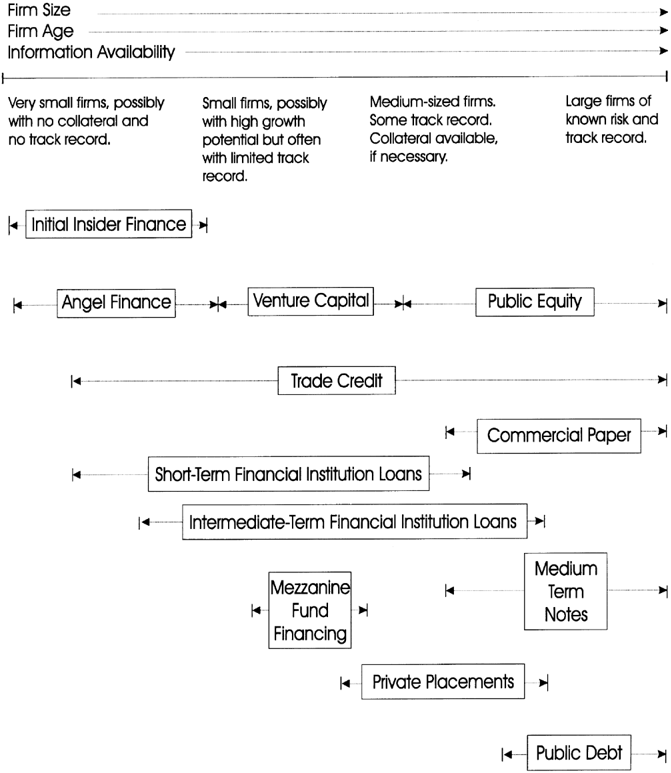
This article examines the economics of financing small business in private equity and debt markets. Firms are viewed through a financial growth cycle paradigm in which different capital structures are optimal at different points in the cycle. We show the sources of small business finance, and how capital structure varies with firm size and age. The interconnectedness of small firm finance is discussed along with the impact of the macroeconomic environment. We also analyze a number of research and policy issues, review the literature, and suggest topics for future research.
Verified 2026-11-25 · 1 reference not checked yet
Overview
CoChat Summary
TL;DR
This article reviews the economics of small business finance through a financial growth cycle paradigm, emphasizing informational opacity and the roles of private equity and debt markets. It documents US small business funding sources and contracts, and analyzes vulnerability to macroeconomic shocks, credit crunches, and bank consolidation.
Key findings
- US small business finance is split roughly evenly between equity (49.63%) and debt (50.37%); the largest sources are the principal owner, commercial banks, and trade creditors, together accounting for 70.10% of total funding. Commercial banks provide 18.75%, trade credit 15.78%, principal owner equity 31.33%, angel finance 3.59%, venture capital 1.85%, and credit card debt 0.14%.
- Financial institution debt is used by 54.23% of small businesses; 86.95% name a commercial bank as their primary financial institution. Average relationship length is 6.64 years overall and 9.01 years with the primary institution; 52.03% of financial institution debt is under lines of credit, 91.94% is secured, and 51.63% is guaranteed.
- The growth cycle paradigm predicts younger/more opaque firms rely on insider finance, trade credit, and angel finance, then venture capital and banks, and eventually public markets. However, 1993 NSSBF data show insider finance does not dominate external finance even for adolescents (upper bound 56.8% insider, roughly equal to external), and financial institution debt is important to very young firms, often based on personal guarantees or collateral.
- Macro vulnerability: the early-1990s credit crunch saw real C&I loans fall 23.2% ($596.7 billion to $458.2 billion) and estimated small business lending fall 38.5% ($143.7 billion to $88.4 billion). Banks with less than $100 million in assets held about 9% of portfolios in small business loans versus about 2% for banks over $10 billion; large banks charged about 100 basis points less and required collateral about 25% less often than small banks, other things equal.
Methods
- Design: review and synthesis organized around the financial growth cycle paradigm, covering theoretical and empirical literature on private equity and debt markets, contracts, and macroeconomic vulnerability.
- Data: primarily the 1993 National Survey of Small Business Finances (NSSBF) for US small business finance tables, plus other sources including NFIB, SCF, STBL, CALL, CRA, Venture Economics/VentureOne, and international data.
- Analysis: descriptive tabulations (Tables 1 and 2) and literature synthesis; the paper is a review rather than a new primary empirical study.
Limitations
- Paper-stated: Table 1 data are not completely accurate or consistent and should be considered rough estimates; angel finance estimates are imprecise (range $15 billion to $120 billion); 1993 data may not reflect current conditions; weighted averages mask considerable heterogeneity.
- Paper-stated: the growth cycle paradigm is not intended to fit all small businesses; firm size, age, and information availability are far from perfectly correlated, and the points at which different funding sources begin and end are not definitive.
- Evident from the text: informational opacity and the intertwining of personal and business finances make small business finance difficult to research, and data on owners’ finances are often unavailable; the paper relies heavily on existing literature and available data rather than new primary data collection.
Model-written summary. Check it against the paper before relying on it.
Integrity signals
Registry
Cites
Statistics
Figures
Verification
Claims the paper makes
22 Valid · 27 Not valid · 107 Not checked · 201 Own results and interpretations
Every source the paper cites for this claim was checked and supports it.
In the paper
“This use of personal assets to help with external ®nance also highlights another important aspect of small business ®nance ± the ®nancial intertwining of owners and their businesses (Ang, 1992).”
§ The economics of small business ®nance: The roles of private equity and debt markets in the ®nancial growth cycle > 2.3. The ®nancial growth cycle of small business
What the sources say
- Supportedcites Ang, 1992 matched to “On the Theory of Finance for Privately Held Firms” (1992) source
In “Integrating Personal and Business Accounts,” Ang says that personal guarantees or collateral make business risk inseparable from owners’ personal risk. “The Financing Decision” also identifies owners’ assets used for loan guarantees as contributions to the business. Together, these passages support the cited point that using personal assets to obtain external finance intertwines owners’ and businesses’ finances. (LLM, conf=0.94)
plainstates an association- Asserted: passes — The authors put it forward as true.
- Checkable: passes — It can be checked against evidence.
- Load-bearing: unclear — It is unclear whether the paper’s conclusions depend on it.
- Based: passes — The paper gives a reason why it holds.
- Supported
The cited sources support only part of this claim — read each source’s verdict below.
In the paper
“Costly state veri®cation (Townsend, 1979;Diamond, 1984) and adverse selection (Myers, 1984;Myers and Majluf, 1984;Nachman and Noe, 1994) arguments suggest the optimality of debt contracts after insider ®nance has been exhausted.”
§ The economics of small business ®nance: The roles of private equity and debt markets in the ®nancial growth cycle > 2.3. The ®nancial growth cycle of small business
What the sources say
- Partly supportedcites Townsend, 1979 matched to “Optimal contracts and competitive markets with costly state verification” (1979) sourceExperimental — accuracy not yet measured
Section 3 characterizes an optimal contract for a firm financing an investment project as a bond that defaults when returns fall below a threshold, supporting the costly-state-verification rationale for debt. The paper does not establish that debt becomes optimal only after insider finance has been exhausted. The adverse-selection citations in the sentence refer to other sources, not Townsend. (LLM, conf=0.85)
- Not checked — no full text of the sourcecites Diamond, 1984 matched to “Financial intermediation and delegated monitoring” (1984) source
- Not matchedcites Myers, 1984
More than one paper fits this citation.
hedgedstates a cause- Asserted: passes — The authors put it forward as true.
- Checkable: passes — It can be checked against evidence.
- Load-bearing: passes — The paper’s conclusions depend on it.
- Based: passes — The paper gives a reason why it holds.
- Partly supported
The cited sources support only part of this claim — read each source’s verdict below.
In the paper
“An agency problem arises in the relationship between the entrepreneur and the venture capitalist in which the entrepreneur may expend insucient eort, exhibit expense preference behavior, or lack sucient information or skill to make optimal production decisions.”
§ The economics of small business ®nance: The roles of private equity and debt markets in the ®nancial growth cycle > 3.2. The venture capital market
What the sources say
- Not checked — no full text of the sourcecites Cooper and Carleton, 1979 matched to “Dynamics of Borrower‐Lender Interaction: Partitioning Final Payoff in Venture Capital Finance” (1979) source
- Partly supportedcites Bergemann and Hege, 1998 matched to “Venture capital financing, moral hazard, and learning” (1998) sourceExperimental — accuracy not yet measured
Section 2.3, “Moral hazard and financing,” describes an entrepreneur who may reduce costly effort or divert investment funds to private ends, supporting the insufficient-effort and expense-preference parts of the claim. It does not identify a lack of the entrepreneur’s information or skill as a cause of poor production decisions; it instead says the entrepreneur and venture capitalists initially have the same assessment of the project. (LLM, conf=0.88)
hedgedstates a possible cause- Asserted: passes — The authors put it forward as true.
- Checkable: passes — It can be checked against evidence.
- Load-bearing: passes — The paper’s conclusions depend on it.
- Based: passes — The paper gives a reason why it holds.
Every source the paper cites for this claim was checked and supports it.
In the paper
“Since 1990, this share has about doubled to 30% (Fenn et al., 1997).”
§ The economics of small business ®nance: The roles of private equity and debt markets in the ®nancial growth cycle > 3. The role of private equity markets in small business ®nance
What the sources say
- Supportedcites Fenn et al., 1997 matched to “The Private Equity Market: An Overveiw” (1997) source
In “IPO Firms that Received Private Equity Backing,” the paper states that the share of IPOs with venture backing averaged 15% during the 1980s and doubled to 30% since 1990. This directly supports the cited claim. (LLM, conf=0.95)
plainstates an association- Asserted: passes — The authors put it forward as true.
- Checkable: passes — It can be checked against evidence.
- Load-bearing: unclear — It is unclear whether the paper’s conclusions depend on it.
- Based: passes — The paper gives a reason why it holds.
- Supported
The cited sources support only part of this claim — read each source’s verdict below.
In the paper
“During the 1980s, approximately 15% of all IPOs were backed by venture capital, well out of proportion to the fraction of all ®rms that received venture capital.”
§ The economics of small business ®nance: The roles of private equity and debt markets in the ®nancial growth cycle > 3. The role of private equity markets in small business ®nance
What the sources say
- Partly supportedcites Fenn et al., 1997 matched to “The Private Equity Market: An Overveiw” (1997) sourceExperimental — accuracy not yet measured
The section “IPO Firms that Received Private Equity Backing” states that venture-backed IPOs averaged 15% of IPOs during the 1980s. It does not give the fraction of all firms that received venture capital or make the claimed comparison with that fraction. (LLM, conf=0.84)
plainstates an association- Asserted: passes — The authors put it forward as true.
- Checkable: passes — It can be checked against evidence.
- Load-bearing: unclear — It is unclear whether the paper’s conclusions depend on it.
- Based: passes — The paper gives a reason why it holds.
- Partly supported
184 more claims · 6 with their cited sources checked
Create a free account to see all 357 claims and to verify the 12 references still open.
- Probably not a substantial claim. 94
- It may state two separate claims as one. 87
- Borderline: one of the tests for a substantial claim is unclear. 2
Claims other papers make about this one
Each is checked against this paper’s own text: does it say what the citing paper says it does?
The cited source says what the claim attributes to it.
In the citing paper
“SMEs are more dependent on external financing supplied by commercial banks (Berger and Udell 1998) because most of them are not qualified to raise money from the stock market.”
From Local Bank, Digital Financial Inclusion and SME Financing Constraints: Empirical Evidence from China (2022) · cites this paper as Berger and Udell 1998
Self-check
Percentages, sums and reported differences re-computed from the paper’s own numbers.
Rated minor: it would not touch a result — a value no result rests on, a p-value that stays on the same side of the significance level, or a conflict that is clerical, resolved elsewhere in the paper, or outside its own findings.
In the paper
“Non®nancial business/government debt provides 19.26% of small business funding (mostly trade credit)”
§ The economics of small business ®nance: The roles of private equity and debt markets in the ®nancial growth cycle > 4. The role of private debt markets in small business ®nance
Reported 19.26 · recomputed 18.01
Citations
Cites
Corporate financing and investment decisions when firms have information that investors do not have
Myers, S. C., & Majluf, N. S. (1984) · Journal of Financial Economics · doi:10.1016/0304-405x(84)90023-0 · Cited by 18,957
The Cost of Capital, Corporation Finance and the Theory of Investment
Miller, M. H. (1958) · American Economic Review · Cited by 14,574
Determinants of corporate borrowing
Myers, S. C. (1977) · Journal of Financial Economics · doi:10.1016/0304-405x(77)90015-0 · Cited by 13,169
Credit Rationing in Markets with Imperfect Information
Stiglitz, J. E., & Weiss, A. (1981) · Columbia University · doi:10.7916/d8v12ft1 · Cited by 12,769 · cited 1×
“…pledging outside collateral may help resolve adverse selection problems when the borrower has more information about the quality of the investment than the lender, and may help prevent credit rationing (Stiglitz and Weiss 1981, 1986, Bester 1985, Chan and Kanatas 1985, Besanko and Thakor 1987a,b).”
The cost of capital, corporation finance and the theory of investment
Terra, P. R. (2008) · Revista de Administração e Contabilidade da Unisinos · doi:10.4013/base.20082.07 · Cited by 8,615
Financial intermediation and delegated monitoring
Diamond, D. W. (1984) · The Review of Economic Studies · doi:10.2307/2297430 · Cited by 8,476 · cited 2×
“Costly state verification (Townsend 1979, Diamond 1984) and adverse selection (Myers 1984, Myers and Majluf 1984, Nachman and Noe 1994) arguments suggest the optimality of debt contracts after insider cFor example, there are generally accepted definitions of the stages of finance for the kind of…”
Corporate Financing and Investment Decisions When Firms Have InformationThat Investors Do Not Have
Myers, S., & Majluf, N. (1984) · doi:10.3386/w1396 · Cited by 6,745
The Benefits of Lending Relationships: Evidence from Small Business Data
PETERSEN, M. A., & RAJAN, R. G. (1994) · The Journal of Finance · doi:10.1111/j.1540-6261.1994.tb04418.x · Cited by 5,440 · cited 4×
“…whereas mortgages, equipment loans, motor vehicle loans, and other loans may more often be transactionsdriven .zs It was also found that dependence on trade credit decreased with the length of the banking relationship, supporting the value of relationship lending (Petersen and Rajan 1994, 1995).”
InfluentialInside the black box: the credit channel of monetary policy transmission
Bernanke, B. S., & Gertler, M. (1995) · Journal of Economic Perspectives · doi:10.1257/jep.9.4.27 · Cited by 4,211
Insiders and Outsiders: The Choice between Informed and Arm's‐Length Debt
RAJAN, R. G. (1992) · The Journal of Finance · doi:10.1111/j.1540-6261.1992.tb04662.x · Cited by 3,902 · cited 1×
“Some research suggests that these firms may try to reduce the control of their banks by issuing public debt, even though public debt may entail higher costs (Diamond 1991, 1993, Rajan 1992, Houston and James 1996).”
Research works printed but not linked: 11
- 66. Cook, L., 1997. Trade ®nance, bank ®nance, and capital market imperfections. Working paper. Harvard University, Cambridge, MA.
- 89. Freear, J., Sohl, J.E., Wetzel, W.E., Jr., 1994. The private investor market for venture capital. The Financier 1, 7±19.
- 112. Hancock, D., Wilcox, J.A., 1997. Bank capital, nonbank ®nance, and real estate activity. Journal of Housing Research 8, 75±105.
- 117. Hempel, G., Coleman, A., Simonson, D., 1986. Bank Management, Wiley, New York.
- 119. Ho, R., 1997. Credit-card use to ®nance small business is soaring, says survey of small ®rms. Wall Street Journal B2, Sept. 25.
- 153. Megginson, W.L., Weiss, K.A., 1991. Venture capitalist certi®cation in initial public oerings. Journal of Finance 46, 903±979.
- 162. Morsman Jr., E., 1986. Commercial loan structuring. Journal of Commercial Bank Lending 68, 2± 20.
- 187. Ravid, S.A., 1996. Debt maturity ± A survey. Financial Markets, Institutions and Instruments 5 (3), 1±68.
- 217. Wetzel Jr. W.E., 1994. Venture capital. In: Bygrave, W.D. (Ed.), Portable MBA in Entrepreneur- ship. Wiley, New York, pp. 172±194.
- 219. White, L.J., 1995. An analytical framework. In: Zahid, S.N. (Ed.), Financial Sector Development in Asia. Oxford University Press, New York, pp. 3±35.
- 222. McKean, R. (Ed.), Issues in Defense Economics. Columbia University Press, New York.
Cited by
Items 301–400 of 3,739
Mutual funds that invest in private equity? An analysis of labour-sponsored investment funds
Cumming, D. J., & MacIntosh, J. G. (2007) · Cambridge Journal of Economics · doi:10.1093/cje/bel041 · Cited by 107
M’ng, J. C. P., Rahman, M., & Sannacy, S. (2017) · Cogent Economics & Finance · doi:10.1080/23322039.2017.1418609 · Cited by 142
“Nevertheless, recent studies on international capital structure in the emerging countries observe that these core factors provide contradictory results such as Boyle and Eckhold (1997), Delcoure (2007), Hewa Wellalage and Locke (2012) and Fauzi, Basyith, and Idris (2013). Hatzinikolaou, Katsimbris, and Noulas (2002) s…”
ResultStart-ups, entrepreneurial networks and equity crowdfunding: A processual perspective
Brown, R., Mawson, S., & Rowe, A. (2018) · Industrial Marketing Management · doi:10.1016/j.indmarman.2018.02.003 · Cited by 154
“This problem is also exacerbated by the informational opacity in most start-ups (Berger and Udell, 1998).”
BackgroundHedging behavior in small and medium-sized enterprises: The role of unobserved heterogeneity
Pennings, J. M. E., & Garcia, P. (2003) · Journal of Banking & Finance · doi:10.1016/s0378-4266(03)00046-3 · Cited by 136
“Avery and Bostic (1998) and Berger and Udell (1998) show that private equity, bank loans, and personal commitments dominate the capital structure of SMEs.”
Determinants of Financial Literacy of Micro Entrepreneurs in Davao City
Sucuahi, W. T. (2013) · International Journal of Accounting Research · doi:10.12816/0001127 · Cited by 107
Longhofer, S. D., & Santos, J. A. C. (2003) · Financial Management · doi:10.2307/3666204 · Cited by 114
Cumming, D. J., Grilli, L., & Murtinu, S. (2013) · SSRN Electronic Journal · doi:10.2139/ssrn.2294746 · Cited by 99
What Affects New and Established Firms’ Expansion? Evidence from Small Firms in Russia
Hartarska, V., & González‐Vega, C. (2006) · Small Business Economics · doi:10.1007/s11187-006-0012-0 · Cited by 99
Crowdsourcing and Crowdfunding in the Manufacturing and Services Sectors
Allon, G., & Babich, V. (2020) · Manufacturing & Service Operations Management · doi:10.1287/msom.2019.0825 · Cited by 100
Financial Statement and Projection Preparation in Start-Up Ventures
Cassar, G. (2009) · The Accounting Review · doi:10.2308/accr.2009.84.1.27 · Cited by 115
Informed Lending and Security Design
Inderst, R., & Mueller, H. M. (2006) · The Journal of Finance · doi:10.1111/j.1540-6261.2006.01053.x · Cited by 100
A dynamic perspective on the determinants of accounts payable
García‐Teruel, P. J., & Solano, P. M. (2009) · Review of Quantitative Finance and Accounting · doi:10.1007/s11156-009-0124-0 · Cited by 137
“First, trade credit is especially important for SMEs given their greater difficulty in accessing capital markets (Petersen and Rajan, 1997; Berger and Udell, 1998; Fisman and Love, 2003).”
BackgroundCorporate board diversity and firm performance: Evidence from Nigeria
Ujunwa, A., Nwakoby, I. C., & Ugbam, C. O. (2012) · Corporate Ownership and Control · doi:10.22495/cocv9i2c1art6 · Cited by 134
“Therefore, equation (2) is modified as follows; Firm performance = α + βgender + βnationality +βethnicity + βduality + βskill + logTA + logAge + £ (3) Where; α is the intercept of the regression line; βgender is board gender; βnationality is board nationality; βduality is board duality; βethnicity is board ethnicity;…”
BackgroundResultInfluentialA Darker Side to Decentralized Banks: Market Power and Credit Rationing in SME LendingPreprint
Canales, R., & Nanda, R. (2010) · SSRN Electronic Journal · doi:10.2139/ssrn.1623445 · Cited by 98
“Bank credit is the most important source of external finance for young firms and small and medium enterprises (Berger and Udell, 1998; Robb and Robinson, 2009) and is often a key source of capital helping SMEs to substitute for expensive trade credit (Fisman and Love, 2003; Petersen and Rajan, 1997).”
The operation of the informal venture capital market in Scotland
Stuart, P., Whittam, G., & Johnston, J. B. (2003) · Venture Capital · doi:10.1080/1369106032000141931 · Cited by 97
“Berger and Udell (1998) report continuing disagreement on this issue while Reitan and Sørheim (2000) found that Norwegian informal investors were relatively passive in terms of the relations with the companies in which they invest.”
BackgroundHechavarria, D. M., Matthews, C. H., & Reynolds, P. D. (2015) · Small Business Economics · doi:10.1007/s11187-015-9680-y · Cited by 127
“…Delmar and Shane 2004).2 Third, we contribute to capital structure literature in entrepreneurship that focuses on privately held start-ups (e.g., see Berger and Udell 1998; Cassar 2004; Cole 2008; Cole and Sokolyk 2013; Robb and Robinson 2014; Frid 2009; Gartner et al. 2012; Paul et al. 2007).”
BackgroundGreen start-up finance – where do particular challenges lie?
Bergset, L. (2017) · International Journal of Entrepreneurial Behaviour & Research · doi:10.1108/ijebr-11-2015-0260 · Cited by 124
Lefebvre, V. (2020) · Journal of Small Business Management · doi:10.1080/00472778.2020.1735252 · Cited by 130
“Berger and Udell (1998) provide a theoretical explanation to these constraints based on information asymmetry.”
BackgroundInfluentialThe Impact of Venture Capital on Firm Growth: An Empirical InvestigationPreprint
Engel, D. (2002) · SSRN Electronic Journal · doi:10.2139/ssrn.319322 · Cited by 139
“Financing is one of the most critical obstacles of new firm growth (Moore 1994, Berger and Udell 1998).”
BackgroundWhen Can Government Venture Capital Funds Bridge the Equity Gap?Preprint
Alperovych, Y., Groh, A. P., & Quas, A. (2016) · SSRN Electronic Journal · doi:10.1016/j.respol.2020.104051 · Cited by 121
“In the absence of verifiable track records, weak tangible assets that could be pledged as collateral, high degrees of information asymmetry, and the typical uncertainty of the innovative commercial opportunities, YICs rarely qualify for “traditional” bank loans (Berger and Udell, 1998; Lerner, 2002).”
BackgroundSocial Capital and Access to Bank Financing: The Case of Chinese Entrepreneurs
Talavera, O., Xiong, L., & Xiong, X. (2012) · Emerging Markets Finance and Trade · doi:10.2753/ree1540-496x480103 · Cited by 115
“faced by small firms are observed in both developed and developing countries (Berger and Udell, 1998; Galindo and Schiantarelli, 2003), which also confirms the theory’s predictions (Beck and Demirgüç-Kunt, 2006).”
BackgroundResultCountries lending infrastructure and capital structure determination: The case of European SMEs
Namara, A. M., Murro, P., & O’Donohoe, S. (2016) · Journal of Corporate Finance · doi:10.1016/j.jcorpfin.2016.12.008 · Cited by 121
Financing preferences and practices of Indian SMEs
Kent Baker, H., Kumar, S., & Rao, P. (2020) · Global Finance Journal · doi:10.1016/j.gfj.2017.10.003 · Cited by 94
Bank's funding costs: Do ESG factors really matter?
Agnese, P., & Giacomini, E. (2022) · Finance research letters · doi:10.1016/j.frl.2022.103437 · Cited by 135
Credit rationing in small firm-bank relationships
Kirschenmann, K. (2015) · Journal of Financial Intermediation · doi:10.1016/j.jfi.2015.11.001 · Cited by 150
“Berger and Udell (1998) provide a financial growth cycle framework of small business finance based on firm age, size and information availability (e.”
InfluentialPyramidal ownership and the creation of new firms
Bena, J., & Ortiz‐Molina, H. (2013) · Journal of Financial Economics · doi:10.1016/j.jfineco.2013.01.009 · Cited by 117
“Our paper is also related to studies of small firms’ access to capital (e.g., Petersen and Rajan, 1994; Berger and Udell, 1995; Berger and Udell, 1998; Berkowitz and White, 2004), of how venture capitalists finance and monitor startups (e.g., Lerner, 1995; Gompers, 1995; Hellmann and Puri, 2000;…”
BackgroundUK credit and discouragement during the GFC
Cowling, M., Liu, W., Minniti, M., & Zhang, N. (2016) · Small Business Economics · doi:10.1007/s11187-016-9745-6 · Cited by 115
“(2009), Chakravarty and Xiang (2010), Chandler (2010), Cieply and Dejardin (2010) and Cole (2013) in their respective empirical studies.”
BackgroundColombo, M. G., & Murtinu, S. (2014) · Journal of Economics & Management Strategy · doi:10.1111/jems.12170 · Cited by 128
Do SMEs Benefit from Unconventional Monetary Policy and How? Microevidence from the Eurozone
Ferrando, A., Popov, A. A., & Udell, G. F. (2018) · Journal of money credit and banking · doi:10.1111/jmcb.12581 · Cited by 120
“…firms (i.e., non-subsidiaries) are more likely to be credit constrained, possibly because they are more opaque and/or have less collateral (e.g., Berger and Udell 1998, 2006); the youngest firms are more likely to be credit constrained, again possibily because of their opacity (Berger and…”
BackgroundSelf-citationHyytinen, A., & Väänänen, L. (2006) · Small Business Economics · doi:10.1007/s11187-005-0610-2 · Cited by 142
Baygan, G., & Freudenberg, M. (2000) · Cited by 95
Short-Term Loans and Long-Term Relationships: Relationship Lending in Early America
Bodenhorn, H. (2003) · Journal of money credit and banking · doi:10.1353/mcb.2003.0025 · Cited by 118
“Thus, guarantees secured by modest amounts of personal wealth may benefit the lender even if the guarantors’ personal assets represent only a small fraction of the value of the loan (Berger and Udell 1998, p. 639).”
BackgroundCash holdings in SMEs: speed of adjustment, growth and financing
Martínez‐Sola, C., García‐Teruel, P. J., & Solano, P. M. (2018) · Small Business Economics · doi:10.1007/s11187-018-9990-y · Cited by 125
Murray, A. M., Kotha, S. B., & Fisher, G. (2020) · Organization Science · doi:10.1287/orsc.2019.1339 · Cited by 103
An examination of capital structure in the restaurant industry
Upneja, A., & Dalbor, M. C. (2001) · International Journal of Contemporary Hospitality Management · doi:10.1108/09596110110381825 · Cited by 113
Environmental performance and bank lending: Evidence from unlisted firms
Wellalage, N. H., & Kumar, V. (2021) · Business Strategy and the Environment · doi:10.1002/bse.2804 · Cited by 110
Private company finance and financial reporting
Hope, O., & Vyas, D. (2017) · Accounting and Business Research · doi:10.1080/00014788.2017.1303963 · Cited by 116
“However, observers such as Berger and Udell (2006) note that state-owned financing institutions generally suffer from weaker monitoring incentives compared to private financiers, and 520 O.”
InfluentialWinning the crowd in online fundraising platforms: The roles of founder and project features
Kim, T.-K., Por, M. H., & Yang, S. (2017) · Electronic Commerce Research and Applications · doi:10.1016/j.elerap.2017.09.002 · Cited by 108
Thies, F., Huber, A., Bock, C., Benlian, A., & Kraus, S. (2018) · Journal of Small Business Management · doi:10.1111/jsbm.12447 · Cited by 106
“In case these funds are insufficient, debt or equity capital from external sources may serve as additional means of capital (Berger and Udell 1998; Hogan et al. 2017).”
BackgroundEntrepreneurial orientation and start-ups' external financing
Vaznyte, E., & Andries, P. (2019) · Journal of Business Venturing · doi:10.1016/j.jbusvent.2019.01.006 · Cited by 121
Access to finance among small and medium-sized enterprises and job creation in Africa
Brixiová, Z., Kangoye, T., & Yogo, U. T. (2020) · Structural Change and Economic Dynamics · doi:10.1016/j.strueco.2020.08.008 · Cited by 142
From Urban to Rural: Lessons for Microfinance from Argentina
Schreiner, M. J., & Colombet, H. H. (2001) · Development Policy Review · doi:10.1111/1467-7679.00138 · Cited by 93
“It turns out that mergers have not affected access to rural financial services in the United States, at least not much and not yet (Berger and Udell, 1998; Featherstone, 1996; Neff and Ellinger, 1996).”
BackgroundThe financing of small entrepreneurs in Italy
Magri, S. (2008) · Annals of Finance · doi:10.1007/s10436-008-0109-3 · Cited by 84
Digital finance and investment of micro and small enterprises: Evidence from China
Lin, A., Peng, Y., & Wu, X. (2022) · China Economic Review · doi:10.1016/j.chieco.2022.101846 · Cited by 102
The impact of private equity on firms׳ patenting activity
Amess, K., Stiebale, J., & Wright, M. (2015) · European Economic Review · doi:10.1016/j.euroecorev.2015.08.013 · Cited by 176
“PE is able to attenuate these capital market imperfections, leading to increased investment after an LBO (Berger and Udell, 1998; Engel and Stiebale, 2014).”
BackgroundDo Banks Value Innovation? Evidence from US Firms
Francis, B. B., Hasan, I., Huang, Y. S., & Sharma, Z. (2012) · Financial Management · doi:10.1111/j.1755-053x.2012.01181.x · Cited by 100
Newman, A., Gunessee, S., & Hilton, B. J. (2011) · International Small Business Journal Researching Entrepreneurship · doi:10.1177/0266242610370977 · Cited by 105
“These provide a means to mitigate the risks of information asymmetries between lender and borrower, and limit the costs of any detailed monitoring or extra risk acceptance required by debt holders with unsecured positions (Storey, 1994; Berger and Udell, 1998).”
BackgroundThe survival and success of Canadian penny stock IPOs
Carpentier, C., & Suret, J. (2009) · Small Business Economics · doi:10.1007/s11187-009-9190-x · Cited by 87
Lin, J. Y., Sun, X., & Ye, J. (2013) · Journal of Economic Policy Reform · doi:10.1080/17487870.2013.799035 · Cited by 97
“…2012).8 There is plenty of evidence that large banks tend to shun away from small businesses but rather focus on large businesses, while small banks specialize in lending to small businesses (Berger, Klapper, and Udell 2001; Berger and Udell 1995, 1998; Jayaratne and Wolken 1999; Nakamura 1994).”
BackgroundAre small firms really credit constrained? Empirical evidence from Kosova
Krasniqi, B. A. (2010) · International Entrepreneurship and Management Journal · doi:10.1007/s11365-010-0135-2 · Cited by 105
“In developed countries, banks use extensively the owner’s characteristics as a measure of borrower credibility and ability ( Berger and Udell 1998; Hartarska and Gonzales-Vega 2006).”
BackgroundLack of access to external finance and SME labor productivity: does project quality matter?
Motta, V. (2018) · Small Business Economics · doi:10.1007/s11187-018-0082-9 · Cited by 119
Scellato, G. (2006) · Cambridge Journal of Economics · doi:10.1093/cje/bel006 · Cited by 100
Short-Term Loans and Long-Term Relationships: Relationship Lending in Early America
Bodenhorn, H. (2001) · National Bureau of Economic Research · doi:10.3386/h0137 · Cited by 92
Resource-based model for small innovative enterprises
Maiti, M., Krakovich, V., Shams, S. M. R., & Vukovic, D. B. (2020) · Management Decision · doi:10.1108/md-06-2019-0725 · Cited by 106
A Dynamic Approach to Accounts Receivable: a Study of Spanish SME s
García‐Teruel, P. J., & Solano, P. M. (2010) · European Financial Management · doi:10.1111/j.1468-036x.2008.00461.x · Cited by 125
“Thus, trade credit is especially important for SMEs because of their greater difficulty in accessing capital markets (Petersen and Rajan, 1997; Berger and Udell, 1998).”
BackgroundAn Analysis of Shareholder Agreements
Chemla, G., Habib, M. A., & Ljungqvist, A. P. (2007) · Journal of the European Economic Association · doi:10.1162/jeea.2007.5.1.93 · Cited by 131
Cash holdings and SME performance in Europe: the role of firm-specific and macroeconomic moderators
Rocca, M. L., Staglianò, R., Rocca, T. L., Cariola, A., & Skatova, E. (2018) · Small Business Economics · doi:10.1007/s11187-018-0100-y · Cited by 100
“The financial strategies of SMEs differ from those of large companies in terms of higher informational opacity (Berger and Udell 1998) in the form of costly verification, adverse selection, and moral hazard; the difficulty in having access to the external capital market for funding suggests the potential relevant role…”
BackgroundInfluentialBusiness angels and love money investors: segments of the informal market for risk capital
Riding, A. (2008) · Venture Capital · doi:10.1080/13691060802351222 · Cited by 85
“The single most important source of equity capital for small- and medium-sized enterprises (SMEs) is the informal market (Reynolds, Hay, and Camp 1999; Berger and Udell 1998).”
BackgroundThe New Ways to Raise Capital: An Exploratory Study of Crowdfunding
Rossi, M. (2014) · International Journal of Financial Research · doi:10.5430/ijfr.v5n2p8 · Cited by 84
“However, startup companies cannot accede to debt finance, since they do not have the collateral nor stable cash flows to ensure their debt (Berger and Udell, 1998).”
BackgroundBerger, A. N., & Udell, G. F. (2001) · Finance and Economics Discussion Series · doi:10.17016/feds.2001.36 · Cited by 98
Self-citationOwnership concentration, contestability, family firms, and capital structure
Santos, M. S., Moreira, A. C., & Vieira, E. F. S. (2013) · Journal of Management & Governance · doi:10.1007/s10997-013-9272-7 · Cited by 107
A longitudinal study on the relationship between financial bootstrapping and new venture growth
Vanacker, T. R., Manigart, S., Meuleman, M. L. C. J., & Sels, L. (2011) · Entrepreneurship and Regional Development · doi:10.1080/08985626.2010.502250 · Cited by 127
“Yet, young ventures often experience limited access to external finance due to market imperfections, such as information asymmetries and high transaction costs (Berger and Udell 1998 ; Cassar 2004 ; Cosh, Cumming, and Hughes 2009 ).”
BackgroundCorporate Finance and the Monetary Transmission MechanismPreprint
Bolton, P. G. M., & Freixas, X. (2000) · SSRN Electronic Journal · doi:10.2139/ssrn.243914 · Cited by 82
Manigart, S., & Sapienza, H. J. (2017) · Wiley eBooks · doi:10.1002/9781405164214.ch12 · Cited by 98
Strapped for cash? Funding for UK high growth SMEs since the global financial crisis
Brown, R., & Lee, N. (2019) · Journal of Business Research · doi:10.1016/j.jbusres.2019.02.001 · Cited by 113
“Owing to this, SMEs are often required to issue loan security but are often denied finance owing to their lack of collateral (Berger and Udell, 1998; Comeig et al, 2015).”
BackgroundEspallardo, M. H., & Delgado‐Ballester, E. (2009) · European Journal of Innovation Management · doi:10.1108/14601060910996927 · Cited by 124
“Difficulties for SMEs to obtain financial resources in harsh environments, at least compared to larger firms, have empirical support (Berger and Udell, 1998).”
BackgroundBank Mergers and Small Firm Financing
Scott, J. A., & Dunkelberg, W. C. (2003) · Journal of money credit and banking · doi:10.1353/mcb.2003.0049 · Cited by 93
Entrepreneurial Fintech Clusters
Gazel, M., & Schwienbacher, A. (2018) · Small Business Economics · doi:10.1007/s11187-020-00331-1 · Cited by 108
The choice of formal or informal finance: Evidence from Chengdu, China
Zhang, G. (2008) · China Economic Review · doi:10.1016/j.chieco.2008.09.001 · Cited by 102
Firm bribery and credit access: evidence from Indian SMEs
Wellalage, N. H., Locke, S. M., & Samujh, H. (2019) · Small Business Economics · doi:10.1007/s11187-019-00161-w · Cited by 99
Manigart, S., Baeyens, K., & Verschueren, I. (2010) · SSRN Electronic Journal · doi:10.2139/ssrn.1691993 · Cited by 81
“The role of VCs is essentially to screen, contract, and monitor investments (Berger and Udell, 1998 ; Manigart and Sapienza, 1999) in order to minimize the costs of delegating decisions to entrepreneurs (agency and moral hazard costs) or to induce them to reveal critical information on their activities (reducing infor…”
Small and Medium‐Sized Enterprises, Bank Relationship Strength, and the Use of Venture Capital
Berger, A. N., & Schaeck, K. (2011) · Journal of money credit and banking · doi:10.1111/j.1538-4616.2010.00381.x · Cited by 95
“Third, Berger and Udell (1998) argue that venture capital is particularly needed in the presence of moral hazard.”
Self-citationForecasting distress in European SME portfolios
Filipe, S. F., Grammatikos, T., & Michala, D. (2016) · Journal of Banking & Finance · doi:10.1016/j.jbankfin.2015.12.007 · Cited by 81
Working capital management during the global financial crisis: Evidence from Japan
Tsuruta, D. (2019) · Japan and the World Economy · doi:10.1016/j.japwor.2019.01.002 · Cited by 103
Mendes‐Da‐Silva, W., Rossoni, L., Conte, B. S., Gattaz, C. C., & Francisco, E. R. (2015) · Journal of Cultural Economics · doi:10.1007/s10824-015-9248-3 · Cited by 102
“In finance, investors tend to demand relatively more information from embryonic businesses, given the high level of risk when dealing with new businesses (Berger and Udell 1998).”
Joint liability lending and the rise and fall of China's township and village enterprises
Park, A. F., & Shen, M. (2003) · Journal of Development Economics · doi:10.1016/s0304-3878(03)00038-5 · Cited by 81
“In the U.S., nearly all small business loans, including for working capital, are secured by capital (Berger and Udell, 1998). was paid off by the remaining solvent collective enterprises " " These firms paid, however, grudgingly, because their own future depended on the goodwill of the local…”
BackgroundCapital structure theory and new technology firms: is there a match?
Coleman, S., & Robb, A. (2012) · Management Research Review · doi:10.1108/01409171211195143 · Cited by 80
Patents as Quality Signals? The Implications for Financing Constraints on R&DPreprint
Czarnitzki, D., Hall, B. H., & Hottenrott, H. (2014) · SSRN Electronic Journal · doi:10.2139/ssrn.2426072 · Cited by 110
What patents are used as collateral?—An empirical analysis of patent reassignment data
Fischer, T., & Ringler, P. (2014) · Journal of Business Venturing · doi:10.1016/j.jbusvent.2014.04.002 · Cited by 89
Siqueira, A. C. O., Guenster, N. K., Vanacker, T. R., & Crucke, S. (2018) · Journal of Business Venturing · doi:10.1016/j.jbusvent.2017.12.006 · Cited by 106
“Importantly, by incorporating profitability and collateral, we also control for the creditworthiness of firms (a key determinant of the availability of bank debt) because lenders generally prefer to finance firms with sufficient internal funds and collateral (Berger and Udell, 1998).”
BackgroundHope, O., Thomas, W. B., & Vyas, D. (2016) · Journal of Accounting and Public Policy · doi:10.1016/j.jaccpubpol.2016.11.004 · Cited by 89
“Because capital providers of private firms often have direct access to inside information and continuous contact with management, they often rely less on formal communication through published accrual-based financial statements (Berger and Udell, 1998).”
When Trade Credit Facilitates Access to Bank Finance: Evidence from Us Small Business DataPreprint
Séverin, É., Alphonse, P., & Ducret, J. (2003) · SSRN Electronic Journal · doi:10.2139/ssrn.462660 · Cited by 94
Demand for Money in Hungary: An ARDL Approach
Dritsakis, N. (2011) · RePEc: Research Papers in Economics · Cited by 84
The Changing Geography of Banking and Finance
Zazzaro, A., Alessandrini, P., & Fratianni, M. U. (2009) · Springer eBooks · doi:10.1007/978-0-387-98078-2 · Cited by 39
Theory and practice of corporate finance: Evidence and distinctive features in Latin America
Maquieira, C. P., Preve, L. A., & Sarria‐Allende, V. (2011) · Emerging Markets Review · doi:10.1016/j.ememar.2011.11.001 · Cited by 88
Taken by Storm: Business Survival in the Aftermath of Hurricane Katrina
Basker, E., & Miranda, J. (2014) · Journal of Economic Geography · doi:10.1093/jeg/lbx023 · Cited by 111
Supplier Financing and Earnings Quality
García‐Teruel, P. J., Solano, P. M., & Sánchez‐Ballesta, J. P. (2014) · Journal of Business Finance & Accounting · doi:10.1111/jbfa.12090 · Cited by 92
The determinants of the costs of financial distress in SMEs
Keasey, K., Pindado, J., & Rodrigues, L. (2014) · International Small Business Journal Researching Entrepreneurship · doi:10.1177/0266242614529317 · Cited by 95
“A high degree of informational asymmetry makes the creditworthiness of SMEs particularly costly to assess and is associated with, among other things, high monitoring costs (Berger and Udell, 1998; Petersen and Rajan, 1997).”
BackgroundInfluentialA Multistage Model of Loans and the Role of Relationships
Chakravarty, S., & Yilmazer, T. (2009) · Financial Management · doi:10.1111/j.1755-053x.2009.01056.x · Cited by 90
“This is an important finding in light of policymakers’ (and some academics’) concerns about small businesses overall being squeezed out of the credit markets (Hancock and Wilcox, 1998; Berger and Udell, 1998, and Berger and Udell, 2002).”
Does Crowdfunding Benefit Entrepreneurs and Venture Capital Investors?
Babich, V., Marinesi, S., & Tsoukalas, G. (2020) · Manufacturing & Service Operations Management · doi:10.1287/msom.2019.0835 · Cited by 141
Firm Maturity and the Pecking Order TheoryPreprint
Bulan, L. T., & Yan, Z. (2011) · SSRN Electronic Journal · doi:10.2139/ssrn.1760505 · Cited by 106
“businesses, Berger and Udell (1998) find that firms rely more on debt financing as firms grow”
Luo, S. (2019) · Review of Economic Dynamics · doi:10.1016/j.red.2019.10.004 · Cited by 93
The debt-equity financing decisions of U.S. startup firms
Coleman, S., Cotei, C., & Farhat, J. B. (2014) · Journal of Economics and Finance · doi:10.1007/s12197-014-9293-3 · Cited by 116
“This result contradicts the theoretical predictions of Stiglitz and Weiss (1981) and Berger and Udell (1998) that firms are less likely to access debt financing in the startup year due to severe frictions in the debt markets.”
ResultFinancial performance of SMEs: impact of ownership structure and board composition
Lappalainen, J., & Niskanen, M. (2012) · Management Research Review · doi:10.1108/01409171211276954 · Cited by 76
“This debate is based on Berle and Means (1932), who suggested that ownership concentration should have a positive effect on firm value and performance.”
BackgroundDeterminants of the Incidence and Scale of Seed Capital Investments by Venture Capital Firms
Dimov, D. P., & Murray, G. C. (2007) · Small Business Economics · doi:10.1007/s11187-006-9008-z · Cited by 101
“uncertain and volatile circumstances, debt is rarely appropriate given that cash flows frequently remain negative for substantial periods of time after the conception of the firm ( Berger and Udell, 1998 ).”
BackgroundCapital structure of Chinese listed SMEs: an agency theory perspective
Huang, W., Boateng, A., & Newman, A. (2016) · Small Business Economics · doi:10.1007/s11187-016-9729-6 · Cited by 95
“This is important as access to adequate debt financing has been shown to improve performance outcomes among SMEs (Watson 2006; Berger and Udell 1998).”
BackgroundDiversification, risk, and returns in venture capital
Buchner, A., Mohamed, A., & Schwienbacher, A. (2017) · Journal of Business Venturing · doi:10.1016/j.jbusvent.2017.05.005 · Cited by 75
Inorganic Growth Strategies in Private Equity: Empirical Evidence on Add-On Acquisitions
Hammer, B., Knauer, A., Pflücke, M., & Schwetzler, B. (2013) · Journal of Corporate Finance · doi:10.1016/j.jcorpfin.2017.04.006 · Cited by 79
“Finally, larger firms have broader access to financing (e.g. Beck and Demirguc-Kunt, 2006; Berger and Udell, 1998).”
BackgroundHernández‐Cánovas, G., & Solano, P. M. (2006) · Small Business Economics · doi:10.1007/s11187-005-6704-z · Cited by 94
Hall, T. W., Mateus, C., & Mateus, I. B. (2013) · International Review of Financial Analysis · doi:10.1016/j.irfa.2013.11.002 · Cited by 87
Metadata
- Authors
- N. Berger, A., & F. Udell, G.
- Venue
- Journal of Banking & Finance
- Publisher
- Elsevier BV
- Published
- 1998-08
- Volume
- 22
- Issue
- 6-8
- Pages
- 613-673
- ISSN
- 0378-4266 (ISSN-L)
- OpenAlex
- W2119780569
- Semantic Scholar
- dfc06f7f7eb83d2c0e2a1d67ecb95b520a406843
- Cited by
- 3,690
- References
- 230
- Citations by year
- 2026: 136 · 2025: 148 · 2024: 144 · 2023: 193 · 2022: 155 · 2021: 211 · 2020: 200 · 2019: 156 · 2018: 208 · 2017: 174 · 2016: 186 · 2015: 187 · 2014: 168 · 2013: 177 · 2012: 171
- FWCI
- 169.26
- Type
- journal article
- Language
- en
- Open access
- hybrid
- doi.org
- Licence
- cc-by-nc-nd
- www.elsevier.com/tdm/userlicense/1.0/ (tdm)
- www.elsevier.com/legal/tdmrep-license (tdm)
- creativecommons.org/licenses/by-nc-nd/4.0/ (vor, 125 d)
- Locations
- Journal of Banking & Finance (publishedVersion, cc-by-nc-nd)
- RePEc: Research Papers in Economics (submittedVersion)
- Funders
- York University
- Topics
- Social Sciences › Economics, Econometrics and Finance › Finance › Private Equity and Venture Capital
- Social Sciences › Economics, Econometrics and Finance › Finance › Corporate Finance and Governance
- Social Sciences › Economics, Econometrics and Finance › Finance › Banking stability, regulation, efficiency
- Keywords
- small business financing, private equity, debt markets, capital structure, firm size, firm age, macroeconomic conditions
About these checks
Registry, retraction, Cites and statistics results are computed, not judged, with one exception: a printed reference that no index lists is read once by a model before it counts as a citation error. Claims are extracted by a model and kept only when their quote appears verbatim in the text; each cited source is then checked, with a model’s help, for whether it says what the claim relies on. Those verdicts can be wrong — read the claim’s quote and the cited source before relying on one.
The claim verdicts this report counts are experimental: their accuracy is not yet measured.
A language model drew the claims from the paper on 2026-10-10, under version 3 of the claim definition (model deepseek-v4.1-flash, prompt extract-v3).
A second model labelled each claim on 2026-10-10 (model jev-1.13-20260917, definition revision gold-guideline-v0.2).
Cited sources are checked with a language model’s help (gpt-6-sol).
Statistics and arithmetic are recomputed, not judged.
Confidence bands are shown only for fields calibrated on our annotated test set. None is calibrated yet, so no band is shown.
What counts as a claim ›How we measure confidence ›How we check this ›
Are you an author, or do you see a problem with this page? Request a review
Data sources
Bibliographic data: Semantic Scholar, OpenAlex, Crossref.
Contains information from the Semantic Scholar Academic Graph Datasets, made available under the ODC Attribution License (ODC-BY 1.0).
Semantic Scholar’s data is described in: Kinney, R., et al. (2023). The Semantic Scholar Open Data Platform. arXiv:2301.10140.
