

The economics of small business finance: The roles of private equity and debt markets in the financial growth cycle
Open accessThe DOI matches its Crossref record; 217 of the 230 references it cites were found in a registry or an index, and 1 are not checked yet; 24 of the 170 sources its claims cite were checked for support.
Abstract
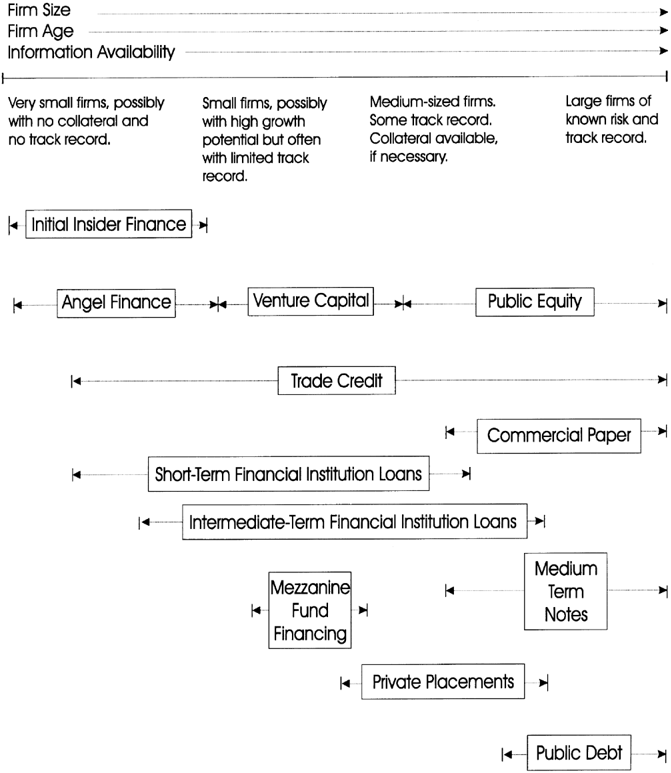
This article examines the economics of financing small business in private equity and debt markets. Firms are viewed through a financial growth cycle paradigm in which different capital structures are optimal at different points in the cycle. We show the sources of small business finance, and how capital structure varies with firm size and age. The interconnectedness of small firm finance is discussed along with the impact of the macroeconomic environment. We also analyze a number of research and policy issues, review the literature, and suggest topics for future research.
Verified 2026-11-25 · 1 reference not checked yet
Overview
CoChat Summary
TL;DR
This article reviews the economics of small business finance through a financial growth cycle paradigm, emphasizing informational opacity and the roles of private equity and debt markets. It documents US small business funding sources and contracts, and analyzes vulnerability to macroeconomic shocks, credit crunches, and bank consolidation.
Key findings
- US small business finance is split roughly evenly between equity (49.63%) and debt (50.37%); the largest sources are the principal owner, commercial banks, and trade creditors, together accounting for 70.10% of total funding. Commercial banks provide 18.75%, trade credit 15.78%, principal owner equity 31.33%, angel finance 3.59%, venture capital 1.85%, and credit card debt 0.14%.
- Financial institution debt is used by 54.23% of small businesses; 86.95% name a commercial bank as their primary financial institution. Average relationship length is 6.64 years overall and 9.01 years with the primary institution; 52.03% of financial institution debt is under lines of credit, 91.94% is secured, and 51.63% is guaranteed.
- The growth cycle paradigm predicts younger/more opaque firms rely on insider finance, trade credit, and angel finance, then venture capital and banks, and eventually public markets. However, 1993 NSSBF data show insider finance does not dominate external finance even for adolescents (upper bound 56.8% insider, roughly equal to external), and financial institution debt is important to very young firms, often based on personal guarantees or collateral.
- Macro vulnerability: the early-1990s credit crunch saw real C&I loans fall 23.2% ($596.7 billion to $458.2 billion) and estimated small business lending fall 38.5% ($143.7 billion to $88.4 billion). Banks with less than $100 million in assets held about 9% of portfolios in small business loans versus about 2% for banks over $10 billion; large banks charged about 100 basis points less and required collateral about 25% less often than small banks, other things equal.
Methods
- Design: review and synthesis organized around the financial growth cycle paradigm, covering theoretical and empirical literature on private equity and debt markets, contracts, and macroeconomic vulnerability.
- Data: primarily the 1993 National Survey of Small Business Finances (NSSBF) for US small business finance tables, plus other sources including NFIB, SCF, STBL, CALL, CRA, Venture Economics/VentureOne, and international data.
- Analysis: descriptive tabulations (Tables 1 and 2) and literature synthesis; the paper is a review rather than a new primary empirical study.
Limitations
- Paper-stated: Table 1 data are not completely accurate or consistent and should be considered rough estimates; angel finance estimates are imprecise (range $15 billion to $120 billion); 1993 data may not reflect current conditions; weighted averages mask considerable heterogeneity.
- Paper-stated: the growth cycle paradigm is not intended to fit all small businesses; firm size, age, and information availability are far from perfectly correlated, and the points at which different funding sources begin and end are not definitive.
- Evident from the text: informational opacity and the intertwining of personal and business finances make small business finance difficult to research, and data on owners’ finances are often unavailable; the paper relies heavily on existing literature and available data rather than new primary data collection.
Model-written summary. Check it against the paper before relying on it.
Integrity signals
Registry
Cites
Statistics
Figures
Verification
Claims the paper makes
22 Valid · 27 Not valid · 107 Not checked · 201 Own results and interpretations
Every source the paper cites for this claim was checked and supports it.
In the paper
“This use of personal assets to help with external ®nance also highlights another important aspect of small business ®nance ± the ®nancial intertwining of owners and their businesses (Ang, 1992).”
§ The economics of small business ®nance: The roles of private equity and debt markets in the ®nancial growth cycle > 2.3. The ®nancial growth cycle of small business
What the sources say
- Supportedcites Ang, 1992 matched to “On the Theory of Finance for Privately Held Firms” (1992) source
In “Integrating Personal and Business Accounts,” Ang says that personal guarantees or collateral make business risk inseparable from owners’ personal risk. “The Financing Decision” also identifies owners’ assets used for loan guarantees as contributions to the business. Together, these passages support the cited point that using personal assets to obtain external finance intertwines owners’ and businesses’ finances. (LLM, conf=0.94)
plainstates an association- Asserted: passes — The authors put it forward as true.
- Checkable: passes — It can be checked against evidence.
- Load-bearing: unclear — It is unclear whether the paper’s conclusions depend on it.
- Based: passes — The paper gives a reason why it holds.
- Supported
The cited sources support only part of this claim — read each source’s verdict below.
In the paper
“Costly state veri®cation (Townsend, 1979;Diamond, 1984) and adverse selection (Myers, 1984;Myers and Majluf, 1984;Nachman and Noe, 1994) arguments suggest the optimality of debt contracts after insider ®nance has been exhausted.”
§ The economics of small business ®nance: The roles of private equity and debt markets in the ®nancial growth cycle > 2.3. The ®nancial growth cycle of small business
What the sources say
- Partly supportedcites Townsend, 1979 matched to “Optimal contracts and competitive markets with costly state verification” (1979) sourceExperimental — accuracy not yet measured
Section 3 characterizes an optimal contract for a firm financing an investment project as a bond that defaults when returns fall below a threshold, supporting the costly-state-verification rationale for debt. The paper does not establish that debt becomes optimal only after insider finance has been exhausted. The adverse-selection citations in the sentence refer to other sources, not Townsend. (LLM, conf=0.85)
- Not checked — no full text of the sourcecites Diamond, 1984 matched to “Financial intermediation and delegated monitoring” (1984) source
- Not matchedcites Myers, 1984
More than one paper fits this citation.
hedgedstates a cause- Asserted: passes — The authors put it forward as true.
- Checkable: passes — It can be checked against evidence.
- Load-bearing: passes — The paper’s conclusions depend on it.
- Based: passes — The paper gives a reason why it holds.
- Partly supported
The cited sources support only part of this claim — read each source’s verdict below.
In the paper
“An agency problem arises in the relationship between the entrepreneur and the venture capitalist in which the entrepreneur may expend insucient eort, exhibit expense preference behavior, or lack sucient information or skill to make optimal production decisions.”
§ The economics of small business ®nance: The roles of private equity and debt markets in the ®nancial growth cycle > 3.2. The venture capital market
What the sources say
- Not checked — no full text of the sourcecites Cooper and Carleton, 1979 matched to “Dynamics of Borrower‐Lender Interaction: Partitioning Final Payoff in Venture Capital Finance” (1979) source
- Partly supportedcites Bergemann and Hege, 1998 matched to “Venture capital financing, moral hazard, and learning” (1998) sourceExperimental — accuracy not yet measured
Section 2.3, “Moral hazard and financing,” describes an entrepreneur who may reduce costly effort or divert investment funds to private ends, supporting the insufficient-effort and expense-preference parts of the claim. It does not identify a lack of the entrepreneur’s information or skill as a cause of poor production decisions; it instead says the entrepreneur and venture capitalists initially have the same assessment of the project. (LLM, conf=0.88)
hedgedstates a possible cause- Asserted: passes — The authors put it forward as true.
- Checkable: passes — It can be checked against evidence.
- Load-bearing: passes — The paper’s conclusions depend on it.
- Based: passes — The paper gives a reason why it holds.
Every source the paper cites for this claim was checked and supports it.
In the paper
“Since 1990, this share has about doubled to 30% (Fenn et al., 1997).”
§ The economics of small business ®nance: The roles of private equity and debt markets in the ®nancial growth cycle > 3. The role of private equity markets in small business ®nance
What the sources say
- Supportedcites Fenn et al., 1997 matched to “The Private Equity Market: An Overveiw” (1997) source
In “IPO Firms that Received Private Equity Backing,” the paper states that the share of IPOs with venture backing averaged 15% during the 1980s and doubled to 30% since 1990. This directly supports the cited claim. (LLM, conf=0.95)
plainstates an association- Asserted: passes — The authors put it forward as true.
- Checkable: passes — It can be checked against evidence.
- Load-bearing: unclear — It is unclear whether the paper’s conclusions depend on it.
- Based: passes — The paper gives a reason why it holds.
- Supported
The cited sources support only part of this claim — read each source’s verdict below.
In the paper
“During the 1980s, approximately 15% of all IPOs were backed by venture capital, well out of proportion to the fraction of all ®rms that received venture capital.”
§ The economics of small business ®nance: The roles of private equity and debt markets in the ®nancial growth cycle > 3. The role of private equity markets in small business ®nance
What the sources say
- Partly supportedcites Fenn et al., 1997 matched to “The Private Equity Market: An Overveiw” (1997) sourceExperimental — accuracy not yet measured
The section “IPO Firms that Received Private Equity Backing” states that venture-backed IPOs averaged 15% of IPOs during the 1980s. It does not give the fraction of all firms that received venture capital or make the claimed comparison with that fraction. (LLM, conf=0.84)
plainstates an association- Asserted: passes — The authors put it forward as true.
- Checkable: passes — It can be checked against evidence.
- Load-bearing: unclear — It is unclear whether the paper’s conclusions depend on it.
- Based: passes — The paper gives a reason why it holds.
- Partly supported
184 more claims · 6 with their cited sources checked
Create a free account to see all 357 claims and to verify the 12 references still open.
- Probably not a substantial claim. 94
- It may state two separate claims as one. 87
- Borderline: one of the tests for a substantial claim is unclear. 2
Claims other papers make about this one
Each is checked against this paper’s own text: does it say what the citing paper says it does?
The cited source says what the claim attributes to it.
In the citing paper
“SMEs are more dependent on external financing supplied by commercial banks (Berger and Udell 1998) because most of them are not qualified to raise money from the stock market.”
From Local Bank, Digital Financial Inclusion and SME Financing Constraints: Empirical Evidence from China (2022) · cites this paper as Berger and Udell 1998
Self-check
Percentages, sums and reported differences re-computed from the paper’s own numbers.
Rated minor: it would not touch a result — a value no result rests on, a p-value that stays on the same side of the significance level, or a conflict that is clerical, resolved elsewhere in the paper, or outside its own findings.
In the paper
“Non®nancial business/government debt provides 19.26% of small business funding (mostly trade credit)”
§ The economics of small business ®nance: The roles of private equity and debt markets in the ®nancial growth cycle > 4. The role of private debt markets in small business ®nance
Reported 19.26 · recomputed 18.01
Citations
Cites
Corporate financing and investment decisions when firms have information that investors do not have
Myers, S. C., & Majluf, N. S. (1984) · Journal of Financial Economics · doi:10.1016/0304-405x(84)90023-0 · Cited by 18,957
The Cost of Capital, Corporation Finance and the Theory of Investment
Miller, M. H. (1958) · American Economic Review · Cited by 14,574
Determinants of corporate borrowing
Myers, S. C. (1977) · Journal of Financial Economics · doi:10.1016/0304-405x(77)90015-0 · Cited by 13,169
Credit Rationing in Markets with Imperfect Information
Stiglitz, J. E., & Weiss, A. (1981) · Columbia University · doi:10.7916/d8v12ft1 · Cited by 12,769 · cited 1×
“…pledging outside collateral may help resolve adverse selection problems when the borrower has more information about the quality of the investment than the lender, and may help prevent credit rationing (Stiglitz and Weiss 1981, 1986, Bester 1985, Chan and Kanatas 1985, Besanko and Thakor 1987a,b).”
The cost of capital, corporation finance and the theory of investment
Terra, P. R. (2008) · Revista de Administração e Contabilidade da Unisinos · doi:10.4013/base.20082.07 · Cited by 8,615
Financial intermediation and delegated monitoring
Diamond, D. W. (1984) · The Review of Economic Studies · doi:10.2307/2297430 · Cited by 8,476 · cited 2×
“Costly state verification (Townsend 1979, Diamond 1984) and adverse selection (Myers 1984, Myers and Majluf 1984, Nachman and Noe 1994) arguments suggest the optimality of debt contracts after insider cFor example, there are generally accepted definitions of the stages of finance for the kind of…”
Corporate Financing and Investment Decisions When Firms Have InformationThat Investors Do Not Have
Myers, S., & Majluf, N. (1984) · doi:10.3386/w1396 · Cited by 6,745
The Benefits of Lending Relationships: Evidence from Small Business Data
PETERSEN, M. A., & RAJAN, R. G. (1994) · The Journal of Finance · doi:10.1111/j.1540-6261.1994.tb04418.x · Cited by 5,440 · cited 4×
“…whereas mortgages, equipment loans, motor vehicle loans, and other loans may more often be transactionsdriven .zs It was also found that dependence on trade credit decreased with the length of the banking relationship, supporting the value of relationship lending (Petersen and Rajan 1994, 1995).”
InfluentialInside the black box: the credit channel of monetary policy transmission
Bernanke, B. S., & Gertler, M. (1995) · Journal of Economic Perspectives · doi:10.1257/jep.9.4.27 · Cited by 4,211
Insiders and Outsiders: The Choice between Informed and Arm's‐Length Debt
RAJAN, R. G. (1992) · The Journal of Finance · doi:10.1111/j.1540-6261.1992.tb04662.x · Cited by 3,902 · cited 1×
“Some research suggests that these firms may try to reduce the control of their banks by issuing public debt, even though public debt may entail higher costs (Diamond 1991, 1993, Rajan 1992, Houston and James 1996).”
Research works printed but not linked: 11
- 66. Cook, L., 1997. Trade ®nance, bank ®nance, and capital market imperfections. Working paper. Harvard University, Cambridge, MA.
- 89. Freear, J., Sohl, J.E., Wetzel, W.E., Jr., 1994. The private investor market for venture capital. The Financier 1, 7±19.
- 112. Hancock, D., Wilcox, J.A., 1997. Bank capital, nonbank ®nance, and real estate activity. Journal of Housing Research 8, 75±105.
- 117. Hempel, G., Coleman, A., Simonson, D., 1986. Bank Management, Wiley, New York.
- 119. Ho, R., 1997. Credit-card use to ®nance small business is soaring, says survey of small ®rms. Wall Street Journal B2, Sept. 25.
- 153. Megginson, W.L., Weiss, K.A., 1991. Venture capitalist certi®cation in initial public oerings. Journal of Finance 46, 903±979.
- 162. Morsman Jr., E., 1986. Commercial loan structuring. Journal of Commercial Bank Lending 68, 2± 20.
- 187. Ravid, S.A., 1996. Debt maturity ± A survey. Financial Markets, Institutions and Instruments 5 (3), 1±68.
- 217. Wetzel Jr. W.E., 1994. Venture capital. In: Bygrave, W.D. (Ed.), Portable MBA in Entrepreneur- ship. Wiley, New York, pp. 172±194.
- 219. White, L.J., 1995. An analytical framework. In: Zahid, S.N. (Ed.), Financial Sector Development in Asia. Oxford University Press, New York, pp. 3±35.
- 222. McKean, R. (Ed.), Issues in Defense Economics. Columbia University Press, New York.
Cited by
Small and medium-size enterprises: Access to finance as a growth constraint
Beck, T., & Demirguc-Kunt, A. (2006) · Journal of Banking & Finance · doi:10.1016/j.jbankfin.2006.05.009 · Cited by 2,607
“There are mixed results concerning the effect of bank concentration and competitiveness on the availability of SME financing (Berger et al., 2004).”
ResultBerger, A. N., & Udell, G. F. (2002) · The Economic Journal · doi:10.1111/1468-0297.00682 · Cited by 1,882
“data from the 1993 National Survey of Small Business Finance (adapted from Berger and Udell, 1998,”
InfluentialSelf-citationBerger, A. N., Miller, N. H., Petersen, M. A., Rajan, R. G., & Stein, J. C. (2005) · Journal of Financial Economics · doi:10.1016/j.jfineco.2004.06.003 · Cited by 1,888
Self-citationBack to the Beginning: Persistence and the Cross‐Section of Corporate Capital Structure
LEMMON, M. L., ROBERTS, M. R., & ZENDER, J. F. (2008) · The Journal of Finance · doi:10.1111/j.1540-6261.2008.01369.x · Cited by 1,844
Berger, A. N., Demsetz, R. S., & Strahan, P. E. (1999) · Journal of Banking & Finance · doi:10.1016/s0378-4266(98)00125-3 · Cited by 1,477
“For a general review of small business finance, see Berger and Udell (1998).”
Self-citationEntrepreneurship and Economic Growth
Audretsch, D. B., Keilbach, M. C., & Lehmann, E. E. (2006) · doi:10.1093/acprof:oso/9780195183511.001.0001 · Cited by 1,370
Entrepreneurship and bank credit availability
Black, S. E., & Strahan, P. E. (2002) · The Journal of Finance · doi:10.1111/1540-6261.00513 · Cited by 1,140
The financing of business start-ups
Cassar, G. (2004) · Journal of Business Venturing · doi:10.1016/s0883-9026(03)00029-6 · Cited by 1,106
Trade Credit: Suppliers as Debt Collectors and Insurance Providers
Cuñat, V. (2007) · Review of Financial Studies · doi:10.1093/rfs/hhl015 · Cited by 976
The ability of banks to lend to informationally opaque small businesses
Berger, A. N., Klapper, L. F., & Udell, G. F. (2001) · Journal of Banking & Finance · doi:10.1016/s0378-4266(01)00189-3 · Cited by 976
Self-citationCapital Market Imperfections, High‐Tech Investment, and New Equity Financing
Carpenter, R. E., & Petersen, B. C. (2002) · The Economic Journal · doi:10.1111/1468-0297.00683 · Cited by 952
“9 Berger and Udell (1998) summarize the empirical findings on collateral and conclude that riskier firms are more likely to pledge collateral.”
Formal versus Informal Finance: Evidence from China
Ayyagari, M., Demirgüç-Kunt, A., & Maksimovic, V. (2010) · Review of Financial Studies · doi:10.1093/rfs/hhq030 · Cited by 897
“…financing in China overlaps with two commonly used definitions: the definition from the financial intermediation literature (e.g., Diamond 1984; Berger and Udell 1998) that informal financing is not associated with a delegated monitor, unlike formal financing,19 and the definition in the…”
The Capital Structure Decisions of New Firms
Robb, A. M., & Robinson, D. T. (2014) · Review of Financial Studies · doi:10.1093/rfs/hhs072 · Cited by 865
Capital Allocation and Productivity in South Europe*
Gopinath, G., Kalemli-Özcan, Ş., Karabarbounis, L., & Villegas-Sanchez, C. (2017) · The Quarterly Journal of Economics · doi:10.1093/qje/qjx024 · Cited by 848
“V ( a, k, z , z ,X ) = max a′,k′,`,p { U(c) + βEV ( a′, k′, z , (z )′,X′ )} , (19) Berger and Udell (1988) argue that small and young firms have lower access to finance because informational constraints cause investors to perceive them as more risky.”
BackgroundCrowdfunding of Small Entrepreneurial Ventures
Schwienbacher, A., & Larralde, B. (2010) · SSRN Electronic Journal · doi:10.2139/ssrn.1699183 · Cited by 846
Credit Risk in Two Institutional Regimes: Spanish Commercial and Savings Banks
Salas, V., & Saurina, J. (2002) · Journal of Financial Services Research · doi:10.1023/a:1019781109676 · Cited by 825
From market fixing to market-creating: a new framework for innovation policy
Mazzucato, M. (2016) · Industry and Innovation · doi:10.1080/13662716.2016.1146124 · Cited by 752
New Venture Growth: A Review and Extension
Gilbert, B. A., McDougall, P. P., & Audretsch, D. B. (2006) · Journal of Management · doi:10.1177/0149206306293860 · Cited by 744
“Although the initial financing needed to start a new venture may come from the entrepreneur’s personal funds or from monies borrowed from relatives (Berger & Udell, 1998), the amount of financing required to obtain growth is often beyond that which can be garnered from one’s own or network of…”
BackgroundCookie Cutter vs. Character: The Micro Structure of Small Business Lending by Large and Small Banks
Cole, R. A., Goldberg, L. G., & White, L. J. (2004) · Journal of Financial and Quantitative Analysis · doi:10.1017/s0022109000003057 · Cited by 696
Performance and governance in microfinance institutions
Mersland, R., & Øystein Strøm, R. (2009) · Journal of Banking & Finance · doi:10.1016/j.jbankfin.2008.11.009 · Cited by 702
“This can reduce outreach, and Berger and Udell (1998) confirm this for smaller firms, and McIntosh and Wydick (2005) do likewise for MFIs.”
BackgroundColombo, M. G., & Grilli, L. (2010) · Journal of Business Venturing · doi:10.1016/j.jbusvent.2009.01.005 · Cited by 686
The Value of Financial Statement Verification in Debt Financing: Evidence from Private U.S. Firms
MINNIS, M. (2011) · Journal of Accounting Research · doi:10.1111/j.1475-679x.2011.00411.x · Cited by 616
Capital structure decision making
Romano, C. A., Tanewski, G. A., & Smyrnios, K. X. (2001) · Journal of Business Venturing · doi:10.1016/s0883-9026(99)00053-1 · Cited by 648
“It is not uncommon for small business owners to use, at startup, formal business plans as a sales document to obtain debt or other external forms of finance (Berger and Udell 1998). In line with this proposition, Harvey and Evans (1995) found that when evaluating loans, banks emphasize the importance of effective busi…”
BackgroundInfluentialExplaining female and male entrepreneurship at the country level
Verheul, I., Stel, A. V., & Thurik, R. (2006) · Entrepreneurship & Regional Development · doi:10.1080/08985620500532053 · Cited by 647
“…reluctant to lend money to early-stage and seed businesses because of the high risks involved, the lack of a track record, the lack of information available on the profitability of small firms and the fixed cost element of transactions (Chittenden et al. 1996, Berger and Udell 1998, Cressy 2006).”
Financing and Advising: Optimal Financial Contracts with Venture Capitalists
Casamatta, C. (2003) · The Journal of Finance · doi:10.1111/1540-6261.00597 · Cited by 600
Start-Up Capital: "Does Gender Matter?"
Verheul, I., & Thurik, R. (2001) · Small Business Economics · doi:10.1023/a:1011178629240 · Cited by 623
“Banks are reluctant to lend to starting small businesses, because they do not possess audited financial statements, they do not have many business assets that can be easily evaluated or used as collateral and have little repayment history or records of profitability (Berger and Udell, 1998).”
BackgroundBanking deregulation and innovation
Chava, S., Oettl, A., Subramanian, A., & Subramanian, K. V. (2013) · Journal of Financial Economics · doi:10.1016/j.jfineco.2013.03.015 · Cited by 618
“Berger and Udell (1998) find that commercial bank loans provide 19% of all financing for small businesses in the National Survey of Small Business Finances sample.2 Cetorelli and Strahan (2006) document that 70% of the surveyed firms in the 1998 Survey of Small Business Finance (SSBF) use banks for…”
BackgroundBerger, A. N., Miller, N. H., Petersen, M. A., Rajan, R. G., & Stein, J. C. (2001) · SSRN Electronic Journal · doi:10.2139/ssrn.294660 · Cited by 576
Self-citationIs financial inclusion good for bank stability? International evidence
Ahamed, M. M., & Mallick, S. K. (2019) · Journal of Economic Behavior & Organization · doi:10.1016/j.jebo.2017.07.027 · Cited by 577
“Above all, since greater financial inclusion increases the supply of bank credits, which is always the vital and cheaper source of external finance for SMEs (e.g., Petersen and Rajan, 1997; Berger and Udell, 1998), it also aids in the growth of small firms, and firms that need external finances.”
BackgroundFinance and inequality: Channels and evidence
Claessens, S., & Perotti, E. (2007) · Journal of Comparative Economics · doi:10.1016/j.jce.2007.07.002 · Cited by 604
Credit constraints and firm export: Microeconomic evidence from Italy
Minetti, R., & Zhu, S. C. (2011) · Journal of International Economics · doi:10.1016/j.jinteco.2010.12.004 · Cited by 548
“According to Berger and Udell (1998), in 1993 all financial institutions accounted for 26.71%, and commercial banks 18.75%, of the financing of nonfarm, nonfinancial, and non-real estate U.S. firms.”
BackgroundInfluentialEntrepreneurship: Exploring the knowledge base
Landström, H., Harirchi, G., & Åström, F. (2012) · Research Policy · doi:10.1016/j.respol.2012.03.009 · Cited by 555
Entrepreneurs' gender and financial constraints: Evidence from international data
Muravyev, A., Talavera, O., & Schäfer, D. (2009) · Journal of Comparative Economics · doi:10.1016/j.jce.2008.12.001 · Cited by 536
“Among the different sources of external financing, we restrict our attention to bank loans as representing the most important overall source of external funds for small firms (Berger and Udell (1998)).”
BackgroundMason, C., & Stark, M. (2004) · International Small Business Journal: Researching Entrepreneurship · doi:10.1177/0266242604042377 · Cited by 524
“New businesses are the most informationally opaque on account of their lack of track record (Berger and Udell, 1998).”
BackgroundExternalities of public firm presence: Evidence from private firms' investment decisions
Badertscher, B., Shroff, N., & White, H. D. (2013) · Journal of Financial Economics · doi:10.1016/j.jfineco.2013.03.012 · Cited by 480
Deposits and Relationship Lending
Berlin, M., & Mester, L. J. (1999) · Review of Financial Studies · doi:10.1093/revfin/12.3.0579 · Cited by 498
House prices, collateral, and self-employment
Adelino, M., Schoar, A., & Severino, F. (2015) · Journal of Financial Economics · doi:10.1016/j.jfineco.2015.03.005 · Cited by 482
Local bias in venture capital investments
Cumming, D., & Dai, N. (2010) · Journal of Empirical Finance · doi:10.1016/j.jempfin.2009.11.001 · Cited by 507
Knowledge spillover in corporate financing networks: embeddedness and the firm's debt performance
Uzzi, B., & Gillespie, J. J. (2002) · Strategic Management Journal · doi:10.1002/smj.241 · Cited by 496
“To investigate network transitivity’s properties and consequences, we studied the core triad of organizational financing networks: firms, banks, and trade creditors ( Berger and Udell, 1998; Cook, 1999).”
BackgroundOutside Enterpreneurial Capital
Cosh, A., Cumming, D., & Hughes, A. (2009) · The Economic Journal · doi:10.1111/j.1468-0297.2009.02270.x · Cited by 476
Do R&D subsidies affect SMEs’ access to external financing?
Meuleman, M., & De Maeseneire, W. (2012) · Research Policy · doi:10.1016/j.respol.2012.01.001 · Cited by 479
Firm-level implications of early stage venture capital investment — An empirical investigation
Engel, D., & Keilbach, M. (2007) · Journal of Empirical Finance · doi:10.1016/j.jempfin.2006.03.004 · Cited by 466
Financial reporting quality, debt maturity and investment efficiency
Cutillas Gomariz, M. F., & Sánchez Ballesta, J. P. (2014) · Journal of Banking & Finance · doi:10.1016/j.jbankfin.2013.07.013 · Cited by 448
“Several papers also propose that shorter maturities of debt can be used to mitigate information asymmetry problems (Flannery, 1986; Berger and Udell, 1998; Ortiz-Molina and Penas, 2008): from the perspective of the borrower, because firms signal that they are good firms and may obtain better price…”
Collateral, type of lender and relationship banking as determinants of credit risk
Jiménez, G., & Saurina, J. (2004) · Journal of Banking & Finance · doi:10.1016/j.jbankfin.2003.09.002 · Cited by 434
Bank involvement with SMEs: Beyond relationship lending
de la Torre, A., Martínez Pería, M. S., & Schmukler, S. L. (2010) · Journal of Banking & Finance · doi:10.1016/j.jbankfin.2010.02.014 · Cited by 422
Crowdfunding social ventures: a model and research agenda
Lehner, O. M. (2013) · Venture Capital · doi:10.1080/13691066.2013.782624 · Cited by 426
“Typically, equity investments are legally linked with several rights, among the rights of information and control, and the right to participate in the earnings or added value of the company (Berger and Udell 1998).”
Managerial cognition, action and the business model of the firm
Tikkanen, H., Lamberg, J., Parvinen, P., & Kallunki, J. (2005) · Management Decision · doi:10.1108/00251740510603565 · Cited by 421
“many different sources (e.g. Berger and Udell, 1998 ).”
BackgroundLike milk or wine: Does firm performance improve with age?
Coad, A., Segarra, A., & Teruel, M. (2013) · Structural Change and Economic Dynamics · doi:10.1016/j.strueco.2012.07.002 · Cited by 420
“For instance, Berger and Udell (1998) classify firms in four periods: `Infant’ (0-2 years), `Adolescent’ (3-4 years), ´Middle-Aged’ (5-25 years) and ´Old´ (25 or more years). consistent with the ‘Pecking Order Theory’ of financial structure (Myers and Majluf, 1984)).”
BackgroundGovernment policy towards entrepreneurial finance: Innovation investment funds
Cumming, D. (2007) · Journal of Business Venturing · doi:10.1016/j.jbusvent.2005.12.002 · Cited by 388
Testing trade-off and pecking order theories financing SMEs
López-Gracia, J., & Sogorb-Mira, F. (2008) · Small Business Economics · doi:10.1007/s11187-007-9088-4 · Cited by 392
“This result coincides with a considerable number of previous studies on SMEs (e.g., Chittenden et al. 1996; Berger and Udell 1998; Michaelas et al. 1999) and means that even within this firm category, larger SMEs can access higher leverage.”
BackgroundResultThe financing of small innovative firms: the Italian case
Magri, S. (2009) · Economics of Innovation and New Technology · doi:10.1080/10438590701738016 · Cited by 409
“In this paper, a company is classified as small if it has a maximum of 20 employees, the first quartile of the size distribution in our initial sample of firms; Berger and Udell (1998) rely on the same threshold to define ‘smaller’ companies in the US.”
InfluentialTrade Credit, the Financial Crisis, and SME Access to Finance
CARBÓ-VALVERDE, S., RODRÍGUEZ-FERNÁNDEZ, F., & UDELL, G. F. (2016) · Journal of Money, Credit and Banking · doi:10.1111/jmcb.12292 · Cited by 407
Self-citationVerheul, I., Thurik, R., Grilo, I., & van der Zwan, P. (2012) · Journal of Economic Psychology · doi:10.1016/j.joep.2011.02.009 · Cited by 391
Eddleston, K. A., Ladge, J. J., Mitteness, C., & Balachandra, L. (2016) · Entrepreneurship Theory and Practice · doi:10.1111/etap.12117 · Cited by 389
Bank Market Power and SME Financing Constraints
Carbó-Valverde, S., Rodríguez-Fernández, F., & Udell, G. F. (2009) · Review of Finance · doi:10.1093/rof/rfp003 · Cited by 377
“less than four survey articles and studies have been published that are substantially or entirely devoted to the subject of relationship lending ( Berger and Udell, 1998; Boot, 2000; Ongena and Smith, 2000; and Elyasiani and Goldberg, 2004).”
Self-citationBerger, A., Miller, N., Petersen, M., Rajan, R., & Stein, J. (2002) · National Bureau of Economic Research · doi:10.3386/w8752 · Cited by 348
Self-citationA Terminal Assessment of Stages Theory: Introducing a Dynamic States Approach to Entrepreneurship
Levie, J., & Lichtenstein, B. B. (2010) · Entrepreneurship Theory and Practice · doi:10.1111/j.1540-6520.2010.00377.x · Cited by 383
Better Together? Signaling Interactions in New Venture Pursuit of Initial External Capital
Plummer, L. A., Allison, T. H., & Connelly, B. L. (2016) · Academy of Management Journal · doi:10.5465/amj.2013.0100 · Cited by 377
“Initial funding required for a startup may be sourced from the founding team, friends, or family (Berger & Udell, 1998), but the capital required for sustained growth often outstrips the abilities of this group (e.g., Cassar, 2004).”
BackgroundThe Past, Present, and Probable Future for Community Banks
DeYoung, R., Hunter, W. C., & Udell, G. F. (2004) · Journal of Financial Services Research · doi:10.1023/b:fina.0000020656.65653.79 · Cited by 362
Self-citationThe legislative road to Silicon Valley
Armour, J. (2006) · Oxford Economic Papers · doi:10.1093/oep/gpl007 · Cited by 386
Do women-owned businesses have equal access to angel capital?
Becker-Blease, J. R., & Sohl, J. E. (2007) · Journal of Business Venturing · doi:10.1016/j.jbusvent.2006.06.003 · Cited by 361
Can Sustainable Investing Save the World? Reviewing the Mechanisms of Investor Impact
Kölbel, J. F., Heeb, F., Paetzold, F., & Busch, T. (2020) · Organization & Environment · doi:10.1177/1086026620919202 · Cited by 360
Leiponen, A., & Byma, J. (2009) · Research Policy · doi:10.1016/j.respol.2009.06.003 · Cited by 366
Board characteristics and the financial performance of Nigerian quoted firms
Ujunwa, A. (2012) · Corporate Governance: The international journal of business in society · doi:10.1108/14720701211275587 · Cited by 362
Research on Crowdfunding: Reviewing the (Very Recent) past and Celebrating the Present
Short, J. C., Ketchen, D. J., McKenny, A. F., Allison, T. H., & Ireland, R. D. (2017) · Entrepreneurship Theory and Practice · doi:10.1111/etap.12270 · Cited by 358
“For example, many founders look to the three Fs—friends, family, and fools— as sources of capital (Berger & Udell, 1998; Kotha & George, 2012).”
BackgroundFinancial Integration and Firm Performance: Evidence from Foreign Bank Entry in Emerging Markets
Giannetti, M., & Ongena, S. (2009) · Review of Finance · doi:10.1093/rof/rfm019 · Cited by 404
The happy story of small business financing
Vos, E., Yeh, A. J.-Y., Carter, S., & Tagg, S. (2007) · Journal of Banking & Finance · doi:10.1016/j.jbankfin.2006.09.011 · Cited by 352
A Survey of Venture Capital Research
Rin, M. D., Hellmann, T., & Puri, M. (2013) · Handbook of the Economics of Finance · doi:10.1016/b978-0-44-453594-8.00008-2 · Cited by 415
Small business financing in the UK before and during the current financial crisis
Cowling, M., Liu, W., & Ledger, A. (2012) · International Small Business Journal: Researching Entrepreneurship · doi:10.1177/0266242611435516 · Cited by 348
“In addition, this choice of capital structure reflects the general belief that the unique characteristics of small businesses, such as small-scale and low expected return or high risk, may lead to limited use of equity-type finance (Berger and Udell, 1998; Scholtens, 1999).”
BackgroundDeYoung, R., Glennon, D., & Nigro, P. (2008) · Journal of Financial Intermediation · doi:10.1016/j.jfi.2007.07.002 · Cited by 335
How does working capital management affect the profitability of Spanish SMEs?
Baños-Caballero, S., García-Teruel, P. J., & Martínez-Solano, P. (2012) · Small Business Economics · doi:10.1007/s11187-011-9317-8 · Cited by 341
Relationship lending: a survey of the literature
Elyasiani, E., & Goldberg, L. G. (2004) · Journal of Economics and Business · doi:10.1016/j.jeconbus.2004.03.003 · Cited by 337
Determinants of capital structure in Irish SMEs
mac an Bhaird, C., & Lucey, B. (2010) · Small Business Economics · doi:10.1007/s11187-008-9162-6 · Cited by 336
“The approach commonly adopted in previous studies is to test hypotheses formulated from capital structure theories by testing static multivariate regression models on panel data (e.g. Michaelas et al. 1999; Chittenden et al. 1996; Hall et al. 2004; Sogorb Mira 2005; Esperanca et al. 2003; Fu et al.…”
BackgroundMethodResultInfluentialCumming, D. J., Grilli, L., & Murtinu, S. (2017) · Journal of Corporate Finance · doi:10.1016/j.jcorpfin.2014.10.016 · Cited by 364
“1 Capital market imperfections are due to some peculiar characteristics of young high-tech companies, such as: i) the technology-intensive nature of their business model; ii) their lack of reputation; iii) and the intangible nature of their assets, which cannot be used as collateral when bargaining with banks and othe…”
BackgroundGlobalization of Financial Institutions: Evidence from Cross-Border Banking Performance
Berger, A. N., DeYoung, R., Genay, H., & Udell, G. F. (2000) · SSRN Electronic Journal · doi:10.2139/ssrn.203509 · Cited by 328
Self-citationDiscovery and creation: alternative theories of entrepreneurial action
Alvarez, S. A., & Barney, J. B. (2007) · Strategic Entrepreneurship Journal · doi:10.1002/sej.4 · Cited by 2,086
“To examine some of these different implications, three entrepreneurial phenomena—how do entrepreneurs make decisions (Sarasvathy, 2001), how do they do their business planning (Kuratko, 1991), and how do they decide to finance their activities (Berger and Udell, 1998; Baeyens and Manigart, 2003)—have been identified a…”
BackgroundCroce, A., Martí, J., & Murtinu, S. (2013) · Journal of Business Venturing · doi:10.1016/j.jbusvent.2012.06.001 · Cited by 338
Owen, R., Brennan, G., & Lyon, F. (2018) · Current Opinion in Environmental Sustainability · doi:10.1016/j.cosust.2018.03.004 · Cited by 317
Working capital management in SMEs
Baños‐Caballero, S., García‐Teruel, P. J., & Martínez‐Solano, P. (2010) · Accounting & Finance · doi:10.1111/j.1467-629x.2009.00331.x · Cited by 317
Corruption, growth, and governance: Private vs. state-owned firms in Vietnam
Nguyen, T. T., & van Dijk, M. A. (2012) · Journal of Banking & Finance · doi:10.1016/j.jbankfin.2012.03.027 · Cited by 311
“, most private firms in Vietnam) generally have a harder time getting access to formal sources of capital than larger and more established firms (see, e.g., Ang, 1992; Berger and Udell, 1998).”
Debt Maturity Choice of Nonpublic Italian Firms
MAGRI, S. (2010) · Journal of Money, Credit and Banking · doi:10.1111/j.1538-4616.2009.00294.x · Cited by 305
Gorton, G., & Winton, A. (2003) · Handbook of the Economics of Finance · doi:10.1016/s1574-0102(03)01012-4 · Cited by 304
Brown, R., Rocha, A., & Cowling, M. (2020) · International Small Business Journal: Researching Entrepreneurship · doi:10.1177/0266242620937464 · Cited by 308
“However, owing to the informationally opaque nature of innovative growth-oriented start-ups, such firms are often deemed too risky and unsuitable for bank finance due to their lack of collateral and unstable cash-flows (Berger and Udell, 1998).”
BackgroundLending to small businesses: the role of loan maturity in addressing information problems
Ortiz-Molina, H., & Penas, M. F. (2008) · Small Business Economics · doi:10.1007/s11187-007-9053-2 · Cited by 291
Bank ownership type and banking relationships
Berger, A. N., Klapper, L. F., Martinez Peria, M. S., & Zaidi, R. (2008) · Journal of Financial Intermediation · doi:10.1016/j.jfi.2006.11.001 · Cited by 287
Self-citationVenture Capitalists’ Decision to Syndicate
Manigart, S., Lockett, A., Meuleman, M., Wright, M., Landström, H., Bruining, H., Desbrières, P., & Hommel, U. (2006) · Entrepreneurship Theory and Practice · doi:10.1111/j.1540-6520.2006.00115.x · Cited by 285
“Berger and Udell (1998) argue that startup firms are more informationally opaque.”
BackgroundWhat do we know about entrepreneurial finance and its relationship with growth?
Fraser, S., Bhaumik, S. K., & Wright, M. (2015) · International Small Business Journal: Researching Entrepreneurship · doi:10.1177/0266242614547827 · Cited by 293
“Importantly the selection effect by independent VCs appears to be small with growth mainly coming from the treatment effect shortly after the first VC investment (Bertoni et al., 2011; Bertoni et al., 2013).”
BackgroundInfluentialDoes the Identity of Engagement Partners Matter? An Analysis of Audit Partner Reporting Decisions
Robert Knechel, W., Vanstraelen, A., & Zerni, M. (2015) · Contemporary Accounting Research · doi:10.1111/1911-3846.12113 · Cited by 278
Funding Gaps? Access To Bank Loans By High-Tech Start-Ups
Colombo, M. G., & Grilli, L. (2007) · Small Business Economics · doi:10.1007/s11187-005-4067-0 · Cited by 282
“device to deter entrepreneurs’ opportunism (see Berger and Udell, 1998, for a survey).”
BackgroundInfluentialCredit Growth, Problem Loans and Credit Risk Provisioning in SpainPreprint
de Lis, S. F., Pagés, J. M., & Saurina, J. (2000) · RePEc: Research Papers in Economics · Cited by 303
Bank Involvement With SMES: Beyond Relationship Lending
Martínez Pería, M. S., de la Torre, A., & Schmukler, S. L. (2008) · World Bank, Washington, DC eBooks · doi:10.1596/1813-9450-4649 · Cited by 280
Clayton, P., Feldman, M., & Lowe, N. (2018) · Academy of Management Perspectives · doi:10.5465/amp.2016.0133 · Cited by 280
Capital Structure Decisions During a Firm's Life Cycle
La Rocca, M., La Rocca, T., & Cariola, A. (2011) · Small Business Economics · doi:10.1007/s11187-009-9229-z · Cited by 277
“In one of the most interesting studies on the capital structure of small business, Berger and Udell (1998) asserted that general financial theory is not applicable to all businesses.”
BackgroundInfluentialLocal Bank, Digital Financial Inclusion and SME Financing Constraints: Empirical Evidence from China
Lu, Z., Wu, J., Li, H., & Nguyen, D. K. (2022) · Emerging Markets Finance and Trade · doi:10.1080/1540496x.2021.1923477 · Cited by 274
“SMEs are more dependent on the external financing supplied by commercial banks (Berger and Udell 1998) because most of them are not qualified to raise money from the stock market.”
BackgroundWhat drives environmental practices of SMEs?
Hoogendoorn, B., Guerra, D., & van der Zwan, P. (2015) · Small Business Economics · doi:10.1007/s11187-014-9618-9 · Cited by 275
“…often do not have enough financial resources to support their activities and investments and mainly rely on internal sources such as personal savings and retained profits whereas large firms have access to a wider range of resources including equity finance and term loans (Berger and Udell 1998).”
BackgroundAllen, F., Chakrabarti, R., De, S., Qian, J. “., & Qian, M. (2012) · Journal of Financial Intermediation · doi:10.1016/j.jfi.2012.01.003 · Cited by 268
Socioemotional Wealth and Earnings Management in Private Family Firms
Stockmans, A., Lybaert, N., & Voordeckers, W. (2010) · Family Business Review · doi:10.1177/0894486510374457 · Cited by 264
“Private firms are usually characterized by informational opacity (Berger & Udell, 1998), that is, financial statements are often the only public source of information.”
BackgroundSmall and Medium-Sized Enterprises Financing: A Review of Literature
Abdulsaleh, A. M., & Worthington, A. C. (2013) · International Journal of Business and Management · doi:10.5539/ijbm.v8n14p36 · Cited by 266
“Nevertheless, Berger and Udell (2006) believe that in spite of some drawbacks, trade credit remains a crucial financing source for most SMEs, especially the young.”
BackgroundMethodInfluentialDegryse, H., & Ongena, S. (2008) · Handbook of Financial Intermediation and Banking · doi:10.1016/b978-044451558-2.50023-4 · Cited by 254
Individual–Level Resources and New Business Activity: The Contingent Role of Institutional Context
De Clercq, D., Lim, D. S. K., & Oh, C. H. (2013) · Entrepreneurship Theory and Practice · doi:10.1111/j.1540-6520.2011.00470.x · Cited by 263
“…typically lack reliable performance data, collateral, or legitimacy, which may make it difficult to secure financing from external sources such as banks, venture capitalists, or even informal investors (Berger & Udell, 1998; O’Gorman & Terjesen, 2006; Wright, Lockett, Clarysse, & Binks, 2006).”
Background
Metadata
- Authors
- N. Berger, A., & F. Udell, G.
- Venue
- Journal of Banking & Finance
- Publisher
- Elsevier BV
- Published
- 1998-08
- Volume
- 22
- Issue
- 6-8
- Pages
- 613-673
- ISSN
- 0378-4266 (ISSN-L)
- OpenAlex
- W2119780569
- Semantic Scholar
- dfc06f7f7eb83d2c0e2a1d67ecb95b520a406843
- Cited by
- 3,690
- References
- 230
- Citations by year
- 2026: 136 · 2025: 148 · 2024: 144 · 2023: 193 · 2022: 155 · 2021: 211 · 2020: 200 · 2019: 156 · 2018: 208 · 2017: 174 · 2016: 186 · 2015: 187 · 2014: 168 · 2013: 177 · 2012: 171
- FWCI
- 169.26
- Type
- journal article
- Language
- en
- Open access
- hybrid
- doi.org
- Licence
- cc-by-nc-nd
- www.elsevier.com/tdm/userlicense/1.0/ (tdm)
- www.elsevier.com/legal/tdmrep-license (tdm)
- creativecommons.org/licenses/by-nc-nd/4.0/ (vor, 125 d)
- Locations
- Journal of Banking & Finance (publishedVersion, cc-by-nc-nd)
- RePEc: Research Papers in Economics (submittedVersion)
- Funders
- York University
- Topics
- Social Sciences › Economics, Econometrics and Finance › Finance › Private Equity and Venture Capital
- Social Sciences › Economics, Econometrics and Finance › Finance › Corporate Finance and Governance
- Social Sciences › Economics, Econometrics and Finance › Finance › Banking stability, regulation, efficiency
- Keywords
- small business financing, private equity, debt markets, capital structure, firm size, firm age, macroeconomic conditions
About these checks
Registry, retraction, Cites and statistics results are computed, not judged, with one exception: a printed reference that no index lists is read once by a model before it counts as a citation error. Claims are extracted by a model and kept only when their quote appears verbatim in the text; each cited source is then checked, with a model’s help, for whether it says what the claim relies on. Those verdicts can be wrong — read the claim’s quote and the cited source before relying on one.
The claim verdicts this report counts are experimental: their accuracy is not yet measured.
A language model drew the claims from the paper on 2026-10-10, under version 3 of the claim definition (model deepseek-v4.1-flash, prompt extract-v3).
A second model labelled each claim on 2026-10-10 (model jev-1.13-20260917, definition revision gold-guideline-v0.2).
Cited sources are checked with a language model’s help (gpt-6-sol).
Statistics and arithmetic are recomputed, not judged.
Confidence bands are shown only for fields calibrated on our annotated test set. None is calibrated yet, so no band is shown.
What counts as a claim ›How we measure confidence ›How we check this ›
Are you an author, or do you see a problem with this page? Request a review
Data sources
Bibliographic data: Semantic Scholar, OpenAlex, Crossref.
Contains information from the Semantic Scholar Academic Graph Datasets, made available under the ODC Attribution License (ODC-BY 1.0).
Semantic Scholar’s data is described in: Kinney, R., et al. (2023). The Semantic Scholar Open Data Platform. arXiv:2301.10140.
