

Relation of cerebral vessel disease to Alzheimer's disease dementia and cognitive function in elderly people: a cross-sectional study
Open accessThe DOI matches its Crossref record; 37 of the 38 references it cites were found in a registry or an index.
Abstract
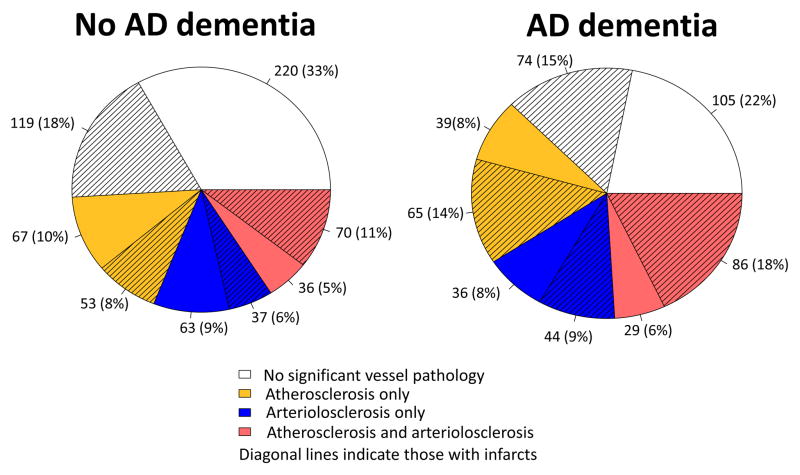
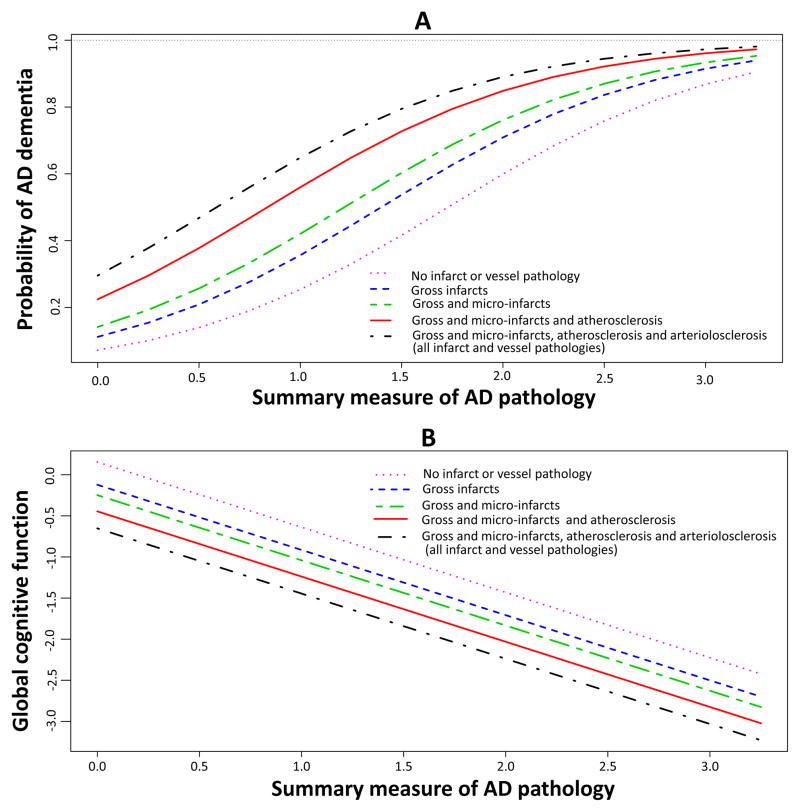
Background Few data on the pathology of cerebral vessel disease, dementia, and cognition are available. We examined the association of cerebral atherosclerosis and arteriolosclerosis neuropathology with probable and possible Alzheimer's disease dementia and cognitive function.Methods This cross-sectional study included men and women aged 65 years or older who had yearly clinical assessments and had agreed to brain autopsy at the time of death, as part of one of two cohort studies of ageing (The Religious Orders Study and the Rush Memory and Aging Project). Individuals without dementia or with Alzheimer's disease dementia, and with complete neuropathological data, are included in our analyses. We used neuropsychological data proximate to death to create summary measures of global cognition and cognitive domains. Clinical data recorded between 1994 and 2015 were used to determine presence of Alzheimer's disease dementia. Systematic neuropathological assessments documented the severity of cerebral large vessel (atherosclerosis) and small vessel (arteriolosclerosis) disease. By use of regression analyses adjusted for demographics, gross and microscopic infarcts, and Alzheimer's disease pathology, we examined associations of vessel disease severity (mild, moderate, and severe) with odds of probable and possible Alzheimer's disease dementia and cognitive function.Findings Study enrolment began in January, 1994, and two cohort studies are ongoing. 1143 individuals were included in our analyses (median age at death 88·8 years; 478 [42%] with Alzheimer's disease dementia). Moderate-to-severe atherosclerosis was present in 445 (39%) individuals, and arteriolosclerosis in 401 (35%) individuals. Each level increase in the severity of atherosclerosis or arteriolosclerosis was associated with significantly higher odds of Alzheimer's disease dementia (odds ratio [OR] for atherosclerosis 1·33, 95% CI 1·11-1·58; OR for arteriolosclerosis 1·20, 1·04-1·40). Atherosclerosis was associated with lower scores for global cognition (estimate -0·10 [SE 0·04], p=0·0096) and four cognitive domains (episodic memory -0·10 [0·04], p=0·017; semantic memory -0·11 [0·05], p=0·018; perceptual speed -0·14 [0·04], p=0·00080; and visuospatial abilities -0·13 [0·04], p=0·0080), but not working memory (-0·05 [0·04], p=0·21). Arteriolosclerosis was associated with lower scores for global cognition (estimate -0·10 [0·03], p=0·0015) and four domains (episodic memory -0·12 [0·04], p=0·00090; semantic memory -0·10 [0·04], p=0·013; working memory -0·07 [0·03], p=0·045; perceptual speed -0·12 [0·04], p=0·0012), and a non-significant association was noted for visuospatial abilities (-0·07 [0·03], p=0·052). Findings were unchanged in analyses controlling for the presence of APOE ε4 allele or vascular risk factors.Interpretation Cerebral atherosclerosis and arteriolosclerosis are associated with Alzheimer's disease dementia, and are also associated with low scores in most cognitive domains. Cerebral vessel pathology might be an under-recognised risk factor for Alzheimer's disease dementia.Funding US National Institutes of Health.
Overview
The claims and statistics of this paper haven’t been checked yet.
Free: it reads the open-access text and checks the first 5 claims that cite a source we can check. Create a free account to check every claim.
Integrity signals
Registry
Cites
Statistics
Figures
Verification
Claims the paper makes
The claims and statistics of this paper haven’t been checked yet.
Free: it reads the open-access text and checks the first 5 claims that cite a source we can check. Create a free account to check every claim.
Claims other papers make about this one
Each is checked against this paper’s own text: does it say what the citing paper says it does?
The source backs part of the claim, not all of it — or backs it for a different population, condition or comparison.
In the citing paper
“Moreover, neuropathological studies indicate that early cerebrovascular disorder increases risk for dementia including AD (29) and is associated with AD and other neurodegenerative disorders independently of mixed dementias including vascular dementia (593).”
From Blood-Brain Barrier: From Physiology to Disease and Back (2019) · cites this paper as [29]
Experimental — accuracy not yet measuredThe source backs part of the claim, not all of it — or backs it for a different population, condition or comparison.
In the citing paper
“In addition to the classic hallmark pathology, A 𝛃 plaques, hyperphosphorylated tau neurofibrillary tangles, and neuron loss, increasing evidence supports that early cerebrovascular dysfunction contributes to AD pathophysiology and cognitive impairment (29, 285, 418, 421, 429, 569, 571, 593, 682, 693).”
From Blood-Brain Barrier: From Physiology to Disease and Back (2019) · cites this paper as [29]
Experimental — accuracy not yet measuredThe source backs part of the claim, not all of it — or backs it for a different population, condition or comparison.
In the citing paper
“Both vascular dementia and non-vascular dementias, including Alzheimer Disease, have a recognized vascular component underlying their pathophysiology [14].”
From PCSK9 loss of function is protective against extra-coronary atherosclerotic cardiovascular disease in a large multi-ethnic cohort (2020) · cites this paper as [14]
Experimental — accuracy not yet measuredThe cited source says what the claim attributes to it.
In the citing paper
“Novel autopsy data show that both large- and small-artery disease are associated with AD dementia independent from infarcts. 106”
From Vascular Cognitive Impairment (2017) · cites this paper as [106]
The cited source says what the claim attributes to it.
In the citing paper
“With uniform data collection, it is feasible to combine data across the two cohorts to examine associations of clinical data with brain pathologies, as done in many of our prior studies [4,45].”
From Sex differences in Alzheimer’s disease and common neuropathologies of aging (2018) · cites this paper as [4]
2 more claims about this paper
Create a free account to see every claim other papers make about this one.
Self-check
Percentages, sums and reported differences re-computed from the paper’s own numbers.
The self-check needs the paper’s full text.
Citations
Cites
McKhann, G. M., Knopman, D. S., Chertkow, H., Hyman, B. T., Jack, C. R., Kawas, C. H., Klunk, W. E., Koroshetz, W. J., Manly, J. J., Mayeux, R., et al. (2011) · Alzheimer's & Dementia · doi:10.1016/j.jalz.2011.03.005 · Cited by 18,657
A simulation study of the number of events per variable in logistic regression analysis
Peduzzi, P., Concato, J., Kemper, E., Holford, T. R., & Feinstein, A. R. (1996) · Journal of Clinical Epidemiology · doi:10.1016/s0895-4356(96)00236-3 · Cited by 9,655
Hofman, A., Ott, A., Breteler, M. M., Bots, M. L., Slooter, A. J., van Harskamp, F., van Duijn, C. N., Van Broeckhoven, C., & Grobbee, D. E. (1997) · The Lancet · doi:10.1016/s0140-6736(96)09328-2 · Cited by 1,062
Overview and Findings from the Rush Memory and Aging Project
A. Bennett, D., A. Schneider, J., S. Buchman, A., L. Barnes, L., A. Boyle, P., & S. Wilson, R. (2012) · Current Alzheimer Research · doi:10.2174/156720512801322663 · Cited by 862
Self-citationIndividual differences in rates of change in cognitive abilities of older persons.
Wilson, R. S., Beckett, L. A., Barnes, L. L., Schneider, J. A., Bach, J., Evans, D. A., & Bennett, D. A. (2002) · Psychology and Aging · doi:10.1037/0882-7974.17.2.179 · Cited by 842
Self-citationOverview and Findings from the Religious Orders Study
A. Bennett, D., A. Schneider, J., Arvanitakis, Z., & S. Wilson, R. (2012) · Current Alzheimer Research · doi:10.2174/156720512801322573 · Cited by 672
Self-citationNewman, A. B., Fitzpatrick, A. L., Lopez, O., Jackson, S., Lyketsos, C., Jagust, W., Ives, D., DeKosky, S. T., & Kuller, L. H. (2005) · Journal of the American Geriatrics Society · doi:10.1111/j.1532-5415.2005.53360.x · Cited by 492
Microinfarct Pathology, Dementia, and Cognitive Systems
Arvanitakis, Z., Leurgans, S. E., Barnes, L. L., Bennett, D. A., & Schneider, J. A. (2011) · Stroke · doi:10.1161/strokeaha.110.595082 · Cited by 404
Self-citationThal, D. R., Ghebremedhin, E., Orantes, M., & Wiestler, O. D. (2003) · Journal of Neuropathology & Experimental Neurology · doi:10.1093/jnen/62.12.1287 · Cited by 384
Cerebrovascular Pathology and Dementia in Autopsied Honolulu‐Asia Aging Study Participants
WHITE, L., PETROVITCH, H., HARDMAN, J., NELSON, J., DAVIS, D. G., ROSS, G. W., MASAKI, K., LAUNER, L., & MARKESBERY, W. R. (2002) · Annals of the New York Academy of Sciences · doi:10.1111/j.1749-6632.2002.tb04794.x · Cited by 357
Research works printed but not linked: 1
- Hilbe JM. Chapman & Hall/CRC Texts in Statistical Science. CRC Press; 2009. Logistic Regression Models. Illustrated Edition. (publisher) [[Google Scholar](https://scholar.google.com/scholar_lookup?title=Chapman%20&%20Hall/CRC%20Texts%20in%20Statistical%20Science&author=JM%20Hilbe&publication_year=2009&)]
Cited by
Dementia prevention, intervention, and care
Livingston, G., Sommerlad, A., Orgeta, V., Costafreda, S. G., Huntley, J., Ames, D., Ballard, C., Banerjee, S., Burns, A., Cohen-Mansfield, J., et al. (2017) · The Lancet · doi:10.1016/s0140-6736(17)31363-6 · Cited by 6,072
Blood–brain barrier breakdown in Alzheimer disease and other neurodegenerative disorders
Sweeney, M. D., Sagare, A. P., & Zlokovic, B. V. (2018) · Nature Reviews Neurology · doi:10.1038/nrneurol.2017.188 · Cited by 3,076
Blood-Brain Barrier: From Physiology to Disease and Back
Sweeney, M. D., Zhao, Z., Montagne, A., Nelson, A. R., & Zlokovic, B. V. (2019) · Physiological Reviews · doi:10.1152/physrev.00050.2017 · Cited by 2,312
Blood–brain barrier breakdown is an early biomarker of human cognitive dysfunction
Nation, D. A., Sweeney, M. D., Montagne, A., Sagare, A. P., D’Orazio, L. M., Pachicano, M., Sepehrband, F., Nelson, A. R., Buennagel, D. P., Harrington, M. G., et al. (2019) · Nature Medicine · doi:10.1038/s41591-018-0297-y · Cited by 1,728
Cognitive decline and dementia in diabetes mellitus: mechanisms and clinical implications
Biessels, G. J., & Despa, F. (2018) · Nature Reviews Endocrinology · doi:10.1038/s41574-018-0048-7 · Cited by 1,454
Religious Orders Study and Rush Memory and Aging Project
Bennett, D. A., Buchman, A. S., Boyle, P. A., Barnes, L. L., Wilson, R. S., & Schneider, J. A. (2018) · Journal of Alzheimer's Disease · doi:10.3233/jad-179939 · Cited by 1,260
Self-citationCerebral blood flow regulation and neurovascular dysfunction in Alzheimer disease
Kisler, K., Nelson, A. R., Montagne, A., & Zlokovic, B. V. (2017) · Nature Reviews Neuroscience · doi:10.1038/nrn.2017.48 · Cited by 1,243
The role of brain vasculature in neurodegenerative disorders
Sweeney, M. D., Kisler, K., Montagne, A., Toga, A. W., & Zlokovic, B. V. (2018) · Nature Neuroscience · doi:10.1038/s41593-018-0234-x · Cited by 998
Molecular and cellular mechanisms underlying the pathogenesis of Alzheimer’s disease
Guo, T., Zhang, D., Zeng, Y., Huang, T. Y., Xu, H., & Zhao, Y. (2020) · Molecular Neurodegeneration · doi:10.1186/s13024-020-00391-7 · Cited by 994
Regulation of cerebral blood flow in humans: physiology and clinical implications of autoregulation
Claassen, J. A. H. R., Thijssen, D. H. J., Panerai, R. B., & Faraci, F. M. (2021) · Physiological Reviews · doi:10.1152/physrev.00022.2020 · Cited by 915
Vascular Cognitive Impairment and Dementia
Iadecola, C., Duering, M., Hachinski, V., Joutel, A., Pendlebury, S. T., Schneider, J. A., & Dichgans, M. (2019) · Journal of the American College of Cardiology · doi:10.1016/j.jacc.2019.04.034 · Cited by 801
“Interestingly, arteriolosclerosis and CAA also increase the odds of dementia in older persons, even after controlling for infarcts and hemorrhages (78).”
BackgroundInfluentialSelf-citationThe Epidemiology of Alzheimer's Disease Modifiable Risk Factors and Prevention
Zhang, X.-X., Tian, Y., Wang, Z.-T., Ma, Y.-H., Tan, L., & Yu, J.-T. (2021) · The Journal of Prevention of Alzheimer's Disease · doi:10.14283/jpad.2021.15 · Cited by 789
“Meanwhile, severe cerebral atherosclerosis (OR 1.33, 95% CI 1.11-1.58) and arteriolosclerosis (OR 1.20, 95% CI 1.04-1.40) were also regarded as strong risk factors for AD (55).”
InfluentialImpact of multiple pathologies on the threshold for clinically overt dementia
Kapasi, A., DeCarli, C., & Schneider, J. A. (2017) · Acta Neuropathologica · doi:10.1007/s00401-017-1717-7 · Cited by 739
Self-citationVascular dysfunction—The disregarded partner of Alzheimer's disease
Sweeney, M. D., Montagne, A., Sagare, A. P., Nation, D. A., Schneider, L. S., Chui, H. C., Harrington, M. G., Pa, J., Law, M., Wang, D. J. J., et al. (2019) · Alzheimer's & Dementia · doi:10.1016/j.jalz.2018.07.222 · Cited by 711
“[4] Arvanitakis Z, Capuano AW, Leurgans SE, Bennett DA, Schneider JA.”
Self-citationAlzheimer’s disease: A matter of blood–brain barrier dysfunction?
Montagne, A., Zhao, Z., & Zlokovic, B. V. (2017) · Journal of Experimental Medicine · doi:10.1084/jem.20171406 · Cited by 672
Pathogenic mechanisms following ischemic stroke
Khoshnam, S. E., Winlow, W., Farzaneh, M., Farbood, Y., & Moghaddam, H. F. (2017) · Neurological Sciences · doi:10.1007/s10072-017-2938-1 · Cited by 621
van der Flier, W. M., Skoog, I., Schneider, J. A., Pantoni, L., Mok, V., Chen, C. L. H., & Scheltens, P. (2018) · Nature Reviews Disease Primers · doi:10.1038/nrdp.2018.3 · Cited by 594
Self-citationDichgans, M., & Leys, D. (2017) · Circulation Research · doi:10.1161/circresaha.116.308426 · Cited by 581
“Novel autopsy data show that both large- and small-artery disease are associated with AD dementia independent from infarcts.(106)”
BackgroundFibrinogen in neurological diseases: mechanisms, imaging and therapeutics
Petersen, M. A., Ryu, J. K., & Akassoglou, K. (2018) · Nature reviews. Neuroscience · doi:10.1038/nrn.2018.13 · Cited by 527
Person-specific contribution of neuropathologies to cognitive loss in old age
Boyle, P. A., Yu, L., Wilson, R. S., Leurgans, S. E., Schneider, J. A., & Bennett, D. A. (2018) · Annals of Neurology · doi:10.1002/ana.25123 · Cited by 508
“Gross (chronic) infarcts were identified by visually examining slabs and pictures from both brain hemispheres and confirmed histologically, and microinfarcts (chronic) were identified under microscopy using hematoxylin and eosin stain.4,12 Moderate–severe arteriolar sclerosis was detected by use of hematoxylin and eos…”
MethodSelf-citationCerebral Vascular Disease and Neurovascular Injury in Ischemic Stroke
Hu, X., De Silva, T. M., Chen, J., & Faraci, F. M. (2017) · Circulation Research · doi:10.1161/circresaha.116.308427 · Cited by 441
“In addition to potential effects on hemodynamics and thrombosis, intracranial atherosclerosis has been linked to Alzheimer disease.(100,102) For example, the more severe the extent of atherosclerosis, the lesser the performance over a range of cognitive domains and the greater risk for dementia.”
BackgroundSantos, C. Y., Snyder, P. J., Wu, W., Zhang, M., Echeverria, A., & Alber, J. (2017) · Alzheimer's & Dementia: Diagnosis, Assessment & Disease Monitoring · doi:10.1016/j.dadm.2017.01.005 · Cited by 431
Brain Energy and Oxygen Metabolism: Emerging Role in Normal Function and Disease
Watts, M. E., Pocock, R., & Claudianos, C. (2018) · Frontiers in Molecular Neuroscience · doi:10.3389/fnmol.2018.00216 · Cited by 411
“Cerebrovascular disease, characterized by disrupted blood flow to the brain, significantly increases AD risk and occurs before Aβ accumulation and cognitive decline (Arvanitakis et al., 2016).”
BackgroundAlzheimer’s disease: insights into pathology, molecular mechanisms, and therapy
Zheng, Q., & Wang, X. (2025) · Protein & Cell · doi:10.1093/procel/pwae026 · Cited by 410
Alzheimer’s Disease and Vascular Aging
Cortes-Canteli, M., & Iadecola, C. (2020) · Journal of the American College of Cardiology · doi:10.1016/j.jacc.2019.10.062 · Cited by 400
“Amyloid-beta (1-40) peptide and subclinical cardiovascular disease.”
BackgroundPathogenesis, diagnostics, and therapeutics for Alzheimer's disease: Breaking the memory barrier
Kamatham, P. T., Shukla, R., Khatri, D. K., & Vora, L. K. (2024) · Ageing Research Reviews · doi:10.1016/j.arr.2024.102481 · Cited by 371
“Cerebral atherosclerosis, arteriosclerosis and cardiovascular diseases were found to increase the risk of AD (Arvanitakis et al., 2016; Kuller et al., 2016).”
BackgroundMontagne, A., Nikolakopoulou, A. M., Zhao, Z., Sagare, A. P., Si, G., Lazic, D., Barnes, S. R., Daianu, M., Ramanathan, A., Go, A., et al. (2018) · Nature Medicine · doi:10.1038/nm.4482 · Cited by 344
Self-citationRetractedSex differences in Alzheimer’s disease and common neuropathologies of aging
Oveisgharan, S., Arvanitakis, Z., Yu, L., Farfel, J., Schneider, J. A., & Bennett, D. A. (2018) · Acta Neuropathologica · doi:10.1007/s00401-018-1920-1 · Cited by 378
Self-citationAttributable risk of Alzheimer's dementia attributed to age-related neuropathologies
Boyle, P. A., Yu, L., Leurgans, S. E., Wilson, R. S., Brookmeyer, R., Schneider, J. A., & Bennett, D. A. (2019) · Annals of Neurology · doi:10.1002/ana.25380 · Cited by 318
“arteriolar sclerosis was detected by use of H&E-stained sections of the anterior basal ganglia and based on subjective ratings by the neuropathologists.(13) Moderate–severe atherosclerosis was detected by visual inspection of vessels in the circle of Willis, and semiquantitative ratings were based on the number of ves…”
MethodSelf-citationEducation and cognitive reserve in old age
Wilson, R. S., Yu, L., Lamar, M., Schneider, J. A., Boyle, P. A., & Bennett, D. A. (2019) · Neurology · doi:10.1212/wnl.0000000000007036 · Cited by 282
Self-citationHypertension, Neurovascular Dysfunction, and Cognitive Impairment
Santisteban, M. M., Iadecola, C., & Carnevale, D. (2023) · Hypertension · doi:10.1161/hypertensionaha.122.18085 · Cited by 279
Govindpani, K., McNamara, L. G., Smith, N. R., Vinnakota, C., Waldvogel, H. J., Faull, R. L., & Kwakowsky, A. (2019) · Journal of Clinical Medicine · doi:10.3390/jcm8050651 · Cited by 275
“Studies have found an association between AD and atherosclerosis at autopsy [25,386,387], and between intracranial atherosclerotic disease and mild cognitive impairment (MCI) and dementia [388].”
BackgroundHainsworth, A. H., Markus, H. S., & Schneider, J. A. (2024) · Hypertension · doi:10.1161/hypertensionaha.123.19943 · Cited by 247
Self-citationCellular senescence at the crossroads of inflammation and Alzheimer's disease
Guerrero, A., De Strooper, B., & Arancibia-Cárcamo, I. L. (2021) · Trends in Neurosciences · doi:10.1016/j.tins.2021.06.007 · Cited by 236
Zlokovic, B. V., Gottesman, R. F., Bernstein, K. E., Seshadri, S., McKee, A., Snyder, H., Greenberg, S. M., Yaffe, K., Schaffer, C. B., Yuan, C., et al. (2020) · Alzheimer's & Dementia · doi:10.1002/alz.12157 · Cited by 232
Self-citationTo what degree is late life cognitive decline driven by age-related neuropathologies?
Boyle, P. A., Wang, T., Yu, L., Wilson, R. S., Dawe, R., Arfanakis, K., Schneider, J. A., & Bennett, D. A. (2021) · Brain · doi:10.1093/brain/awab092 · Cited by 219
“limbic predominant age-related TDP-43 encephalopathy (LATE-NC), hippocampal sclerosis, other vascular conditions].(3,5,13) Further, we now have a much larger sample size and longer follow-up, which provide additional power.”
BackgroundSelf-citationYamazaki, Y., Shinohara, M., Shinohara, M., Yamazaki, A., Murray, M. E., Liesinger, A. M., Heckman, M. G., Lesser, E. R., Parisi, J. E., Petersen, R. C., et al. (2019) · Brain · doi:10.1093/brain/awz011 · Cited by 202
Blevins, B. L., Vinters, H. V., Love, S., Wilcock, D. M., Grinberg, L. T., Schneider, J. A., Kalaria, R. N., Katsumata, Y., Gold, B. T., Wang, D. J. J., et al. (2021) · Acta Neuropathologica · doi:10.1007/s00401-020-02235-6 · Cited by 200
Self-citationTian, Z., Ji, X., & Liu, J. (2022) · International Journal of Molecular Sciences · doi:10.3390/ijms23116224 · Cited by 195
Endothelial response to glucose: dysfunction, metabolism, and transport
Clyne, A. M. (2021) · Biochemical Society Transactions · doi:10.1042/bst20200611 · Cited by 156
Neuropathology and virus in brain of SARS-CoV-2 infected non-human primates
Rutkai, I., Mayer, M. G., Hellmers, L. M., Ning, B., Huang, Z., Monjure, C. J., Coyne, C., Silvestri, R., Golden, N., Hensley, K., et al. (2022) · Nature Communications · doi:10.1038/s41467-022-29440-z · Cited by 188
Litak, J., Mazurek, M., Kulesza, B., Szmygin, P., Litak, J., Kamieniak, P., & Grochowski, C. (2020) · International Journal of Molecular Sciences · doi:10.3390/ijms21249729 · Cited by 179
Alzheimer’s Disease: The Link Between Amyloid-β and Neurovascular Dysfunction
Solis, Hascup, K. N., & Hascup, E. R. (2020) · Journal of Alzheimer's Disease · doi:10.3233/jad-200473 · Cited by 178
“Other factors are known to correlate with cognitive deficits including stroke severity, hypertension, atherosclerosis, and arteriosclerosis [58, 59], while macroscopic cerebral infarcts increases the likelihood of AD diagnosis [60].”
Clinical Relevance of Cerebral Small Vessel Diseases
Pasi, M., & Cordonnier, C. (2019) · Stroke · doi:10.1161/strokeaha.119.024148 · Cited by 173
Vascular contributions to Alzheimer's disease
Eisenmenger, L. B., Peret, A., Famakin, B. M., Spahic, A., Roberts, G. S., Bockholt, J. H., Johnson, K. M., & Paulsen, J. S. (2023) · Translational Research · doi:10.1016/j.trsl.2022.12.003 · Cited by 169
Deery, H. A., Di Paolo, R., Moran, C., Egan, G. F., & Jamadar, S. D. (2023) · Psychophysiology · doi:10.1111/psyp.14159 · Cited by 166
“For example, alterations to brain network function and an increased risk of cognitive decline have been associated with metabolic diseases, such as diabetes and insulin resistance (Akintola & van Heemst, 2015; Arvanitakis et al., 2016; Bello-Chavolla et al., 2019; Ekblad et al., 2017).”
BackgroundCardiovascular Disease and Alzheimer's Disease: The Heart–Brain Axis
Saeed, A., Lopez, O., Cohen, A., & Reis, S. E. (2023) · Journal of the American Heart Association · doi:10.1161/jaha.123.030780 · Cited by 166
“17,20 At a molecular level, endothelial dysfunction, inflammation, and oxidation, which are precursors of atherosclerosis, 57 are associated with disequilibrium in A β clearance and degradation.”
BackgroundQuerques, G., Borrelli, E., Sacconi, R., Vitis, L. A. D., Leocani, L., Santangelo, R., Magnani, G., Comı, G., & Bandello, F. M. (2019) · Scientific Reports · doi:10.1038/s41598-018-37271-6 · Cited by 166
Moreno‐Grau, S., de Rojas, I., Hernández, I., Quintela, I., Montrreal, L., Alegret, M., Hernández‐Olasagarre, B., Madrid, L., González‐Perez, A., Maroñas, O., et al. (2019) · Alzheimer's & Dementia · doi:10.1016/j.jalz.2019.06.4950 · Cited by 163
“In fact, brain vascular pathology has been shown to be an important risk factor for AD that accelerates cognitive decline [5] and lowers the threshold for clinical diagnosis of AD [6].”
Shared proteomic effects of cerebral atherosclerosis and Alzheimer’s disease on the human brain
Wingo, A. P., Fan, W., Duong, D. M., Gerasimov, E. S., Dammer, E. B., Liu, Y., Harerimana, N. V., White, B., Thambisetty, M., Troncoso, J. C., et al. (2020) · Nature Neuroscience · doi:10.1038/s41593-020-0635-5 · Cited by 161
Self-citationProgression of Early Subclinical Atherosclerosis (PESA) Study
Ibanez, B., Fernández-Ortiz, A., Fernández-Friera, L., García-Lunar, I., Andrés, V., & Fuster, V. (2021) · Journal of the American College of Cardiology · doi:10.1016/j.jacc.2021.05.011 · Cited by 159
Suemoto, C. K., Ferretti-Rebustini, R. E. L., Rodriguez, R. D., Leite, R. E. P., Soterio, L., Brucki, S. M. D., Spera, R. R., Cippiciani, T. M., Farfel, J. M., Chiavegatto Filho, A., et al. (2017) · PLOS Medicine · doi:10.1371/journal.pmed.1002267 · Cited by 146
Cardiometabolic multimorbidity, genetic risk, and dementia: a prospective cohort study
Tai, X. Y., Veldsman, M., Lyall, D. M., Littlejohns, T. J., Langa, K. M., Husain, M., Ranson, J. M., & Llewellyn, D. J. (2022) · The Lancet Healthy Longevity · doi:10.1016/s2666-7568(22)00117-9 · Cited by 159
Knopman, D. S., Haeberlein, S. B., Carrillo, M. C., Hendrix, J. A., Kerchner, G., Margolin, R., Maruff, P., Miller, D. S., Tong, G., Tome, M. B., et al. (2018) · Alzheimer's & Dementia · doi:10.1016/j.jalz.2018.03.002 · Cited by 143
“[66] Arvanitakis Z, Capuano AW, Leurgans SE, Bennett DA, Schneider JA.”
BackgroundSelf-citationLi, J., Li, M., Ge, Y., Chen, J., Ma, J., Wang, C., Sun, M., Wang, L., Yao, S., & Yao, C. (2022) · Cell & Bioscience · doi:10.1186/s13578-022-00807-5 · Cited by 140
Varied effects of age-related neuropathologies on the trajectory of late life cognitive decline
Boyle, P. A., Yang, J., Yu, L., Leurgans, S. E., Capuano, A. W., Schneider, J. A., Wilson, R. S., & Bennett, D. A. (2017) · Brain · doi:10.1093/brain/aww341 · Cited by 129
“Arteriolar sclerosis was detected histologically by use of haematoxylin and eosin-stained sections of the anterior basal ganglia and rated as absent, mild, moderate or severe; for these analyses, arteriolar sclerosis was rated absent or present to facilitate interpretation of the results, with present including mild,…”
BackgroundMethodResultInfluentialSelf-citationArterial Stiffness in Aging: Does It Have a Place in Clinical Practice?
Mitchell, G. F. (2021) · Hypertension · doi:10.1161/hypertensionaha.120.14515 · Cited by 143
Pathological changes within the cerebral vasculature in Alzheimer’s disease: New perspectives
Fisher, R. A., Miners, J. S., & Love, S. (2022) · Brain Pathology · doi:10.1111/bpa.13061 · Cited by 131
“There is debate as to whether NA- SVD may increase the likelihood of developing AD [16].”
BackgroundBrain Renin–Angiotensin System at the Intersect of Physical and Cognitive Frailty
Cosarderelioglu, C., Nidadavolu, L. S., George, C. J., Oh, E. S., Bennett, D. A., Walston, J. D., & Abadir, P. M. (2020) · Frontiers in Neuroscience · doi:10.3389/fnins.2020.586314 · Cited by 134
Self-citationContributions of Aging to Cerebral Small Vessel Disease
De Silva, T. M., & Faraci, F. M. (2020) · Annual Review of Physiology · doi:10.1146/annurev-physiol-021119-034338 · Cited by 122
“Most humans with dementias exhibit features of mixed dementia (vascular disease and neurodegeneration), a combination of β-amyloid-, tau-, and vasculardependent mechanisms (5, 7, 11, 13, 17).”
BackgroundNutrients in the Prevention of Alzheimer’s Disease
Cremonini, A. L., Caffa, I., Cea, M., Nencioni, A., Odetti, P., & Monacelli, F. (2019) · Oxidative Medicine and Cellular Longevity · doi:10.1155/2019/9874159 · Cited by 114
“(BBB), play a part in disease pathogenesis and lead to neuronal and synaptic dysfunction, neurodegeneration, and cognitive impairment [91, 92].”
BackgroundGao, Q., Wang, Y., Wang, X., Fu, S., Zhang, X., Wang, R.-T., & Zhang, X. (2019) · Aging · doi:10.18632/aging.102352 · Cited by 117
“However, several studies showed that alterations of the vascular system and vascular disorders, including stroke [4], atherosclerosis [5], and hypertension [6] are also involved in AD.”
BackgroundTargeted brain proteomics uncover multiple pathways to Alzheimer's dementia
Yu, L., Petyuk, V. A., Gaiteri, C., Mostafavi, S., Young‐Pearse, T., Shah, R. C., Buchman, A. S., Schneider, J. A., Piehowski, P. D., Sontag, R. L., et al. (2018) · Annals of Neurology · doi:10.1002/ana.25266 · Cited by 124
“Severity of atherosclerosis was graded by gross examination of vessels in the circle of Willis, and arteriolosclerosis was graded on H&E-stained sections of basal ganglia.(18)”
Self-citationChoroidal Neovascularization: Mechanisms of Endothelial Dysfunction
Yeo, N. J. Y., Chan, E. J. J., & Cheung, C. (2019) · Frontiers in Pharmacology · doi:10.3389/fphar.2019.01363 · Cited by 123
Harmonizing brain magnetic resonance imaging methods for vascular contributions to neurodegeneration
Smith, E. E., Biessels, G. J., De Guio, F., de Leeuw, F. E., Duchesne, S., Düring, M., Frayne, R., Ikram, M. A., Jouvent, E., MacIntosh, B. J., et al. (2019) · Alzheimer's & Dementia: Diagnosis, Assessment & Disease Monitoring · doi:10.1016/j.dadm.2019.01.002 · Cited by 110
“J Neuropsychiatry Clin Neurosci 1998; 10(1): 78-84.”
BackgroundMethodInfluentialImplicating endothelial cell senescence to dysfunction in the ageing and diseased brain
Graves, S. I., & Baker, D. J. (2020) · Basic & Clinical Pharmacology & Toxicology · doi:10.1111/bcpt.13403 · Cited by 118
Outcomes after diagnosis of mild cognitive impairment in a large autopsy series
Abner, E. L., Kryscio, R. J., Schmitt, F. A., Fardo, D. W., Moga, D. C., Ighodaro, E. T., Jicha, G. A., Yu, L., Dodge, H. H., Xiong, C., et al. (2017) · Annals of Neurology · doi:10.1002/ana.24903 · Cited by 109
“Previously, autopsy-confirmed severe brain arteriolosclerosis was shown to be associated with impaired global cognition.(12,37) Taken together, these findings indicate that small vessel changes may have an important impact in terms of cognitive status.”
Self-citationCerebral Small Vessel Disease and Alzheimer's Disease: A Review
Kim, H. W., Hong, J., & Jeon, J. C. (2020) · Frontiers in Neurology · doi:10.3389/fneur.2020.00927 · Cited by 118
Alosco, M. L., Stein, T. D., Tripodis, Y., Chua, A. S., Kowall, N. W., Huber, B. R., Goldstein, L. E., Cantu, R. C., Katz, D. I., Palmisano, J. N., et al. (2019) · JAMA Neurology · doi:10.1001/jamaneurol.2019.2244 · Cited by 115
HDL from an Alzheimer's disease perspective
Button, E. B., Robert, J., Caffrey, T. M., Fan, J., Zhao, W., & Wellington, C. L. (2019) · Current Opinion in Lipidology · doi:10.1097/mol.0000000000000604 · Cited by 114
Cerebral small vessel disease and the risk of Alzheimer’s disease: A systematic review
Liu, Y., Braidy, N., Poljak, A., Chan, D. K. Y., & Sachdev, P. S. (2018) · Ageing Research Reviews · doi:10.1016/j.arr.2018.06.002 · Cited by 115
Zambach, S. A., Cai, C., Helms, H. C. C., Hald, B. O., Dong, Y., Fordsmann, J. C., Nielsen, R. M., Hu, J., Lønstrup, M., Brodin, B., et al. (2021) · Proceedings of the National Academy of Sciences · doi:10.1073/pnas.2023749118 · Cited by 113
Current Concepts of Mixed Pathologies in Neurodegenerative Diseases
Forrest, S. L., & Kovács, G. G. (2022) · Canadian Journal of Neurological Sciences / Journal Canadien des Sciences Neurologiques · doi:10.1017/cjn.2022.34 · Cited by 110
“…that each concomitant pathology contributes differently to specific cognitive domains and cognitive decline, and cognitive trajectories over time 42,63,84,86,88 – 91 and the number of mixed non-AD pathologies present have a cumulative effect on clinical progression rate of early-and late-onset AD.”
Normative Cognitive Decline in Old Age
Wilson, R. S., Wang, T., Yu, L., Bennett, D. A., & Boyle, P. A. (2020) · Annals of Neurology · doi:10.1002/ana.25711 · Cited by 91
“Assessment of arteriolar sclerosis was done histologically from hematoxylin and eosin–stained sections of the anterior basal ganglia.(29) Both artherosclerosis and arteriolar sclerosis were considered present if rated moderate or severe.”
MethodSelf-citationBlood will out: vascular contributions to Alzheimer’s disease
Strickland, S. (2018) · Journal of Clinical Investigation · doi:10.1172/jci97509 · Cited by 91
“amyloid-ss(1-40) peptide from brain by LDL”
Entorhinal cortex tau, amyloid-β, cortical thickness and memory performance in non-demented subjects
Knopman, D. S., Lundt, E. S., Therneau, T. M., Vemuri, P., Lowe, V. J., Kantarci, K., Gunter, J. L., Senjem, M. L., Mielke, M. M., Machulda, M. M., et al. (2019) · Brain · doi:10.1093/brain/awz025 · Cited by 97
Moving beyond amyloid and tau to capture the biological heterogeneity of Alzheimer’s disease
Young‐Pearse, T. L., Lee, H., Hsieh, Y., Chou, V., & Selkoe, D. J. (2023) · Trends in Neurosciences · doi:10.1016/j.tins.2023.03.005 · Cited by 107
Limbic-predominant age-related TDP-43 encephalopathy, ADNC pathology, and cognitive decline in aging
Kapasi, A., Yu, L., Boyle, P. A., Barnes, L. L., Bennett, D. A., & Schneider, J. A. (2020) · Neurology · doi:10.1212/wnl.0000000000010454 · Cited by 106
“The circle ofWillis at the base of the brain was evaluated for large vessel cerebral atherosclerosis, including evaluation of the vertebral, basilar, posterior, middle, and anterior cerebral arteries and their proximal branches.(24) Visual inspection used a semiquantitative 4-level grading system, and atherosclerosis…”
MethodSelf-citationJo, D., Yoon, G., Kim, O. Y., & Song, J. (2022) · Biomedicine & Pharmacotherapy · doi:10.1016/j.biopha.2022.112636 · Cited by 105
MIND Diet, Common Brain Pathologies, and Cognition in Community-Dwelling Older Adults
Dhana, K., James, B. D., Agarwal, P., Aggarwal, N. T., Cherian, L. J., Leurgans, S. E., Barnes, L. L., Bennett, D. A., & Schneider, J. A. (2021) · Journal of Alzheimer's Disease · doi:10.3233/jad-210107 · Cited by 93
“All rights reserved. tangles, initiate a series of molecular events leading to neuronal damage and, ultimately, to cognitive impairment [2–6].”
Self-citationLevit, A., Hachinski, V., & Whitehead, S. N. (2020) · GeroScience · doi:10.1007/s11357-020-00164-6 · Cited by 99
“The high co-occurrence of cerebrovascular disease and AD (Toledo et al. 2013; Arvanitakis et al. 2016; Smith 2017) has prompted research on whether the two diseases may have synergistic neuropathological and cognitive effects (Iadecola 2004; Zlokovic 2005, 2011; Kisler et al.”
BackgroundInfluentialWang, X., Zhao, Q., Tao, R., Lu, H., Xiao, Z., Zheng, L., Ding, D., Ding, S., Ma, Y., Lu, Z., et al. (2021) · Frontiers in Aging Neuroscience · doi:10.3389/fnagi.2020.572484 · Cited by 102
“A cross-sectional study involving 1,143 subjects showed that cerebral atherosclerosis and arteriosclerosis were associated with AD and dementia (Arvanitakis et al., 2016).”
BackgroundMehta, R. I., & Schneider, J. A. (2021) · Current Opinion in Neurology · doi:10.1097/wco.0000000000000912 · Cited by 84
Self-citationEnhancing face validity of mouse models of Alzheimer’s disease with natural genetic variation
Onos, K. D., Uyar, A., Keezer, K. J., Jackson, H. M., Preuss, C., Acklin, C. J., O’Rourke, R., Buchanan, R., Cossette, T. L., Sukoff Rizzo, S. J., et al. (2019) · PLOS Genetics · doi:10.1371/journal.pgen.1008155 · Cited by 93
Neural stem cell therapy for neurovascular injury in Alzheimer's disease
Boese, A. C., Hamblin, M. H., & Lee, J.-P. (2020) · Experimental Neurology · doi:10.1016/j.expneurol.2019.113112 · Cited by 86
Blood–brain barrier endothelial cells in neurodegenerative diseases: Signals from the “barrier”
Yuan, Y., Sun, J., Dong, Q., & Cui, M. (2023) · Frontiers in Neuroscience · doi:10.3389/fnins.2023.1047778 · Cited by 93
“Mounting evidence continues to highlight that brain vasculature dysfunction happens before symptomatic onset and accelerates the severity of neurodegeneration during its early stages (Toledo et al., 2013; Vemuri et al., 2015; Arvanitakis et al., 2016; Malek et al., 2016; Nation et al., 2019).”
BackgroundFreeze, W. M., Jacobs, H. I. L., de Jong, J. J., Verheggen, I. C. M., Gronenschild, E. H. B. M., Palm, W. M., Hoff, E. I., Wardlaw, J. M., Jansen, J. F. A., Verhey, F. R., et al. (2020) · Neurobiology of Aging · doi:10.1016/j.neurobiolaging.2019.09.017 · Cited by 87
Divecha, Y. A., Rampes, S., Tromp, S., Boyanova, S., Fleckney, A. L., Fidanboylu, M., & Thomas, S. A. (2025) · Pharmacological Reviews · doi:10.1016/j.pharmr.2025.100052 · Cited by 92
“Early involvement of cerebral vessel disease in AD is also supported by neuropathologic studies (Toledo et al, 2013; Arvanitakis et al, 2016).”
Brain injury-induced dysfunction of the blood brain barrier as a risk for dementia
Abrahamson, E. E., & Ikonomovic, M. D. (2020) · Experimental Neurology · doi:10.1016/j.expneurol.2020.113257 · Cited by 86
Chen, L., Mossa‐Basha, M., Balu, N., Cantón, G., Sun, J., Pimentel, K. D., Hatsukami, T. S., Hwang, J., & Yuan, C. (2017) · Magnetic Resonance in Medicine · doi:10.1002/mrm.26961 · Cited by 89
“Increasing evidence indicates that cerebrovascular disease is an underrecognized contributor to dementia, even in the absence of brain infarctions (1,2).”
BackgroundDimache, A.-M., Șalaru, D. L., Sascău, R. A., & Stătescu, C. (2021) · Nutrients · doi:10.3390/nu13062118 · Cited by 89
“In a study performed on 1143 subjects, the degree of cerebral atherosclerosis and arteriosclerosis was correlated with the severity of the cognitive impairment, including perceptual speed, which indicates a vascular cause, and episodic memory, which represents an important feature of AD [6].”
BackgroundVascular cognitive impairment – Past, present, and future challenges
Badji, A., Youwakim, J., Cooper, A., Westman, E., & Marseglia, A. (2023) · Ageing Research Reviews · doi:10.1016/j.arr.2023.102042 · Cited by 89
“Autopsy studies linked individual neuropathologies associated with CVDs, such as atherosclerosis, arteriolosclerosis, and cerebral amyloid angiopathy, to cognitive impairment (Arvanitakis et al., 2016; Boyle et al., 2017; Jansen et al., 2018).”
Caselli, R. J., Beach, T. G., Knopman, D. S., & Graff-Radford, N. R. (2017) · Mayo Clinic Proceedings · doi:10.1016/j.mayocp.2017.02.011 · Cited by 81
Patel, V., & Edison, P. (2024) · Journal of Neurology, Neurosurgery & Psychiatry · doi:10.1136/jnnp-2023-332661 · Cited by 80
“Renin leads to the production and secretion of angiotensin-II (Ang-II), which increases blood pressure by promoting vaso-constriction and salt retention in the kidneys.”
BackgroundButton, E. B., Boyce, G. K., Wilkinson, A., Stukas, S., Hayat, A., Fan, J., Wadsworth, B. J., Robert, J., Martens, K. M., & Wellington, C. L. (2019) · Alzheimer's Research & Therapy · doi:10.1186/s13195-019-0497-9 · Cited by 66
“The majority of AD patients have co-morbid vascular diseases and cerebrovascular pathologies including microinfarcts, cerebral atherosclerosis, and arteriolosclerosis [3, 4].”
BackgroundParodi-Rullán, R. M., Javadov, S., & Fossati, S. (2021) · Cells · doi:10.3390/cells10112903 · Cited by 73
“AD is a multifactorial disease and vascular dysfunction is one of the most common co-pathologies that may also be an important contributor to disease progression [6,7].”
BackgroundAutomatic segmentation, feature extraction and comparison of healthy and stroke cerebral vasculature
Deshpande, A., Jamilpour, N., Jiang, B., Michel, P., Eskandari, A., Kidwell, C. S., Wintermark, M., & Laksari, K. (2021) · NeuroImage Clinical · doi:10.1016/j.nicl.2021.102573 · Cited by 78
“…’ s disease, cerebral aneurysm, stroke and other CVD lead to or are preceded by changes in the vasculature (Kim et al., 2015; Govindpani et al., 2019; Arvanitakis et al., 2016; Kimmel et al., 1996; Horace, 1990), which could be quantified using our approach of analyzing the vascular features…”
Neuroinflammation: A Possible Link Between Chronic Vascular Disorders and Neurodegenerative Diseases
Moyse, E., Krantic, S. M., Djellouli, N., Roger, S., Angoulvant, D., Debacq, C., Leroy, V., Fougère, B., & Aïdoud, A. (2022) · Frontiers in Aging Neuroscience · doi:10.3389/fnagi.2022.827263 · Cited by 79
Vascular pathology and pathogenesis of cognitive impairment and dementia in older adults
Agrawal, S., & Schneider, J. A. (2022) · Cerebral Circulation - Cognition and Behavior · doi:10.1016/j.cccb.2022.100148 · Cited by 76
“cortical microinfarcts, white matter damage, and tissue microstructural changes [69,70].”
BackgroundSelf-citationJahouh, M., Gonzalez-Bernal, J. J., González‐Santos, J., Fernández‐Lázaro, D., Cámara, R. S., & Mielgo‐Ayuso, J. (2021) · International Journal of Environmental Research and Public Health · doi:10.3390/ijerph18041570 · Cited by 77
“An emerging line of research on exergames, a combination of exercise with electronic games, is the study of psychological variables, especially in their maintenance [11], since a decrease in cognitive functioning is closely related to increasing age and the appearance of depressive processes, which in turn are related…”
Background
Metadata
- Authors
- Arvanitakis, Z., Capuano, A. W., Leurgans, S. E., Bennett, D. A., & Schneider, J. A.
- Affiliations
- Rush University Medical Center (US)
- Corresponding author
- Arvanitakis, Zoe
- Venue
- The Lancet Neurology
- Publisher
- Elsevier BV
- Published
- 2016-08
- Volume
- 15
- Issue
- 9
- Pages
- 934-943
- ISSN
- 1474-4422 (ISSN-L)
- PMC
- PMC4969105
- OpenAlex
- W2427948242
- Semantic Scholar
- 7bbc1fd01b665a54c98583844279ee10381236db
- Cited by
- 581
- References
- 38
- Citations by year
- 2026: 45 · 2025: 73 · 2024: 65 · 2023: 59 · 2022: 63 · 2021: 67 · 2020: 68 · 2019: 52 · 2018: 38 · 2017: 37 · 2016: 12
- FWCI
- 41.16
- Type
- journal article
- Language
- en
- Open access
- green
- www.ncbi.nlm.nih.gov
- Licence
- cc-by-nc-nd
- www.elsevier.com/tdm/userlicense/1.0/ (tdm)
- Locations
- The Lancet Neurology (publishedVersion)
- PubMed (publishedVersion)
- Europe PMC (PubMed Central) (acceptedVersion, cc-by-nc-nd)
- PubMed Central (acceptedVersion, cc-by-nc-nd)
- Funders
- US National Institutes of Health (grants P30 AG10161, RF1 AG15819, R01 AG17917, R01 AG40039, R01 NS084965, R01AG042210, and R01 AG043379)
- Topics
- Health Sciences › Medicine › Psychiatry and Mental health › Dementia and Cognitive Impairment Research
- Life Sciences › Neuroscience › Neurology › Neurological Disease Mechanisms and Treatments
- Health Sciences › Medicine › Clinical Neurology › Cerebrovascular and genetic disorders
- Keywords
- Alzheimer's dementia, cerebral atherosclerosis, arteriolosclerosis, cerebral small vessel disease, large vessel disease, cognitive function, episodic memory, semantic memory, perceptual speed, older adults, vascular pathology, Religious Orders Study, Rush Memory and Aging Project, dementia risk factors, Alzheimer's disease pathology, white matter lesions, cerebral infarction, cerebral amyloid angiopathy
- MeSH terms
- Aged, Aged, 80 and over, Alzheimer Disease, Cerebrovascular Disorders, Cognition Disorders, Cross-Sectional Studies, Female, Humans, Male, Neuropsychological Tests, Residence Characteristics, Cohort Studies, Geriatric Assessment, PubMed, Religious Personnel
About these checks
Registry, retraction, Cites and statistics results are computed, not judged, with one exception: a printed reference that no index lists is read once by a model before it counts as a citation error. Claims are extracted by a model and kept only when their quote appears verbatim in the text; each cited source is then checked, with a model’s help, for whether it says what the claim relies on. Those verdicts can be wrong — read the claim’s quote and the cited source before relying on one.
Statistics and arithmetic are recomputed, not judged.
Confidence bands are shown only for fields calibrated on our annotated test set. None is calibrated yet, so no band is shown.
What counts as a claim ›How we measure confidence ›How we check this ›
Are you an author, or do you see a problem with this page? Request a review
Data sources
Bibliographic data: Semantic Scholar, OpenAlex, Crossref.
Contains information from the Semantic Scholar Academic Graph Datasets, made available under the ODC Attribution License (ODC-BY 1.0).
Semantic Scholar’s data is described in: Kinney, R., et al. (2023). The Semantic Scholar Open Data Platform. arXiv:2301.10140.
