

Global, regional, and national burden of multiple sclerosis 1990-2016: a systematic analysis for the Global Burden of Disease Study 2016
Open accessThe DOI matches its Crossref record; 55 of the 57 references it cites were found in a registry or an index; 5 of the 21 sources its claims cite were checked for support.
Abstract
BACKGROUND: Multiple sclerosis is the most common inflammatory neurological disease in young adults. The Global Burden of Diseases, Injuries, and Risk Factors Study (GBD) provides a systematic method of quantifying various effects of a given condition by demographic variables and geography. In this systematic analysis, we quantified the global burden of multiple sclerosis and its relationship with country development level. METHODS: We assessed the epidemiology of multiple sclerosis from 1990 to 2016. Epidemiological outcomes for multiple sclerosis were modelled with DisMod-MR version 2.1, a Bayesian meta-regression framework widely used in GBD epidemiological modelling. Assessment of multiple sclerosis as the cause of death was based on 13 110 site-years of vital registration data analysed in the GBD's cause of death ensemble modelling module, which is designed to choose the optimum combination of mathematical models and predictive covariates based on out-of-sample predictive validity testing. Data on prevalence and deaths are summarised in the indicator, disability-adjusted life-years (DALYs), which was calculated as the sum of years of life lost (YLLs) and years of life lived with a disability. We used the Socio-demographic Index, a composite indicator of income per person, years of education, and fertility, to assess relations with development level. FINDINGS: In 2016, there were 2 221 188 prevalent cases of multiple sclerosis (95% uncertainty interval [UI] 2 033 866-2 436 858) globally, which corresponded to a 10·4% (9·1 to 11·8) increase in the age-standardised prevalence since 1990. The highest age-standardised multiple sclerosis prevalence estimates per 100 000 population were in high-income North America (164·6, 95% UI, 153·2 to 177·1), western Europe (127·0, 115·4 to 139·6), and Australasia (91·1, 81·5 to 101·7), and the lowest were in eastern sub-Saharan Africa (3·3, 2·9-3·8), central sub-Saharan African (2·8, 2·4 to 3·1), and Oceania (2·0, 1·71 to 2·29). There were 18 932 deaths due to multiple sclerosis (95% UI 16 577 to 21 033) and 1 151 478 DALYs (968 605 to 1 345 776) due to multiple sclerosis in 2016. Globally, age-standardised death rates decreased significantly (change -11·5%, 95% UI -35·4 to -4·7), whereas the change in age-standardised DALYs was not significant (-4·2%, -16·4 to 0·8). YLLs due to premature death were greatest in the sixth decade of life (22·05, 95% UI 19·08 to 25·34). Changes in age-standardised DALYs assessed with the Socio-demographic Index between 1990 and 2016 were variable. INTERPRETATION: Multiple sclerosis is not common but is a potentially severe cause of neurological disability throughout adult life. Prevalence has increased substantially in many regions since 1990. These findings will be useful for resource allocation and planning in health services. Many regions worldwide have few or no epidemiological data on multiple sclerosis, and more studies are needed to make more accurate estimates. FUNDING: Bill & Melinda Gates Foundation.
Overview
CoChat Summary
TL;DR
This GBD 2016 systematic analysis estimated the global burden of multiple sclerosis from 1990 to 2016, finding 2,221,188 prevalent cases in 2016 and a 10.4% increase in age-standardised prevalence since 1990. Burden varied widely by geography and Socio-demographic Index, with the highest prevalence in high-income North America and the lowest in sub-Saharan Africa and Oceania.
Key findings
- In 2016, there were 2,221,188 prevalent cases of multiple sclerosis (95% UI 2,033,866–2,436,858), corresponding to 30.1 cases per 100,000 population; age-standardised prevalence increased by 10.4% (95% UI 9.1–11.8) between 1990 and 2016.
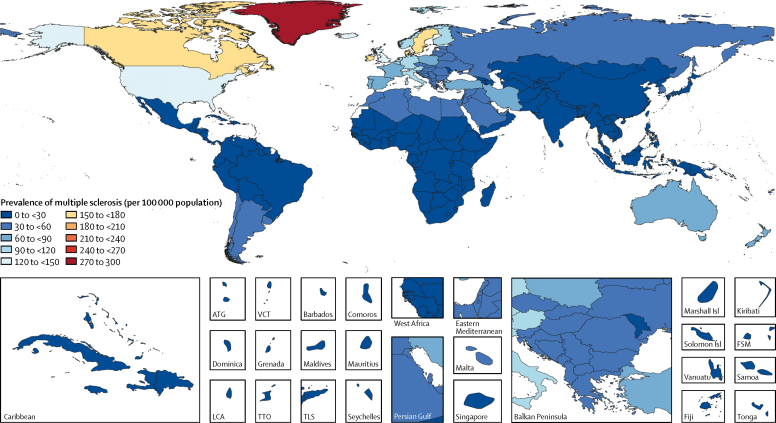
- The highest age-standardised prevalence estimates per 100,000 were in high-income North America (164.6, 95% UI 153.2–177.1), western Europe (127.0, 115.4–139.6), and Australasia (91.1, 81.5–101.7); the lowest were in eastern sub-Saharan Africa (3.3, 2.9–3.8), central sub-Saharan Africa (2.8, 2.4–3.1), and Oceania (2.0, 1.71–2.29).
- There were 18,932 deaths (95% UI 16,577–21,033) and 1,151,478 DALYs (968,605–1,345,776) due to multiple sclerosis in 2016; the global age-standardised death rate decreased significantly (−11.5%, 95% UI −35.4 to −4.7), whereas the change in age-standardised DALYs was not significant (−4.2%, −16.4 to 0.8).
- Smoking accounted for 99,076 DALYs (95% UI 62,164–140,650), or 8.6% (5.6–11.7) of global multiple sclerosis DALYs; prevalence increased with latitude (coefficient 1.03 per degree, 95% UI 1.03–1.04).
Methods
- GBD 2016 systematic analysis: mortality was modelled with CODEm using 13,110 site-years of vital registration data and predictive covariates; prevalence and incidence were modelled with DisMod-MR 2.1 using 167 unique sources (129 prevalence, 65 incidence) covering 13 of 21 GBD world regions, plus US medical claims data.
- Severity was classified into mild, moderate, severe, and asymptomatic states based on the Expanded Disability Status Scale; YLDs were derived from prevalence multiplied by disability weights and corrected for comorbidity; YLLs were calculated from deaths and remaining life expectancy; DALYs were the sum of YLLs and YLDs, with uncertainty propagated through 1,000 draws.
- The Socio-demographic Index was used to assess development level; smoking was the only environmental risk judged to have sufficient evidence for a causal relationship with multiple sclerosis, with population-attributable fractions estimated from exposure and relative risk data.
Limitations
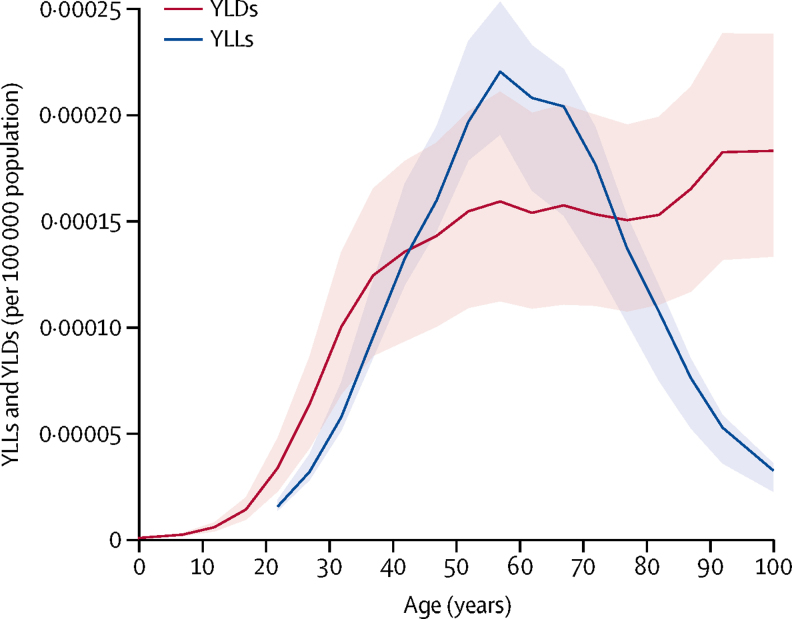
- Stated in the paper: data are absent or extremely sparse for many regions, including Latin America, sub-Saharan Africa, and Asia; the models used to predict prevalence, DALYs, and YLLs might lead to unusual changes in segments of the data, such as rapid prevalence increases in women older than 80 years and the YLD curve, which should be viewed with caution; underdiagnosis in less-developed countries cannot be excluded.
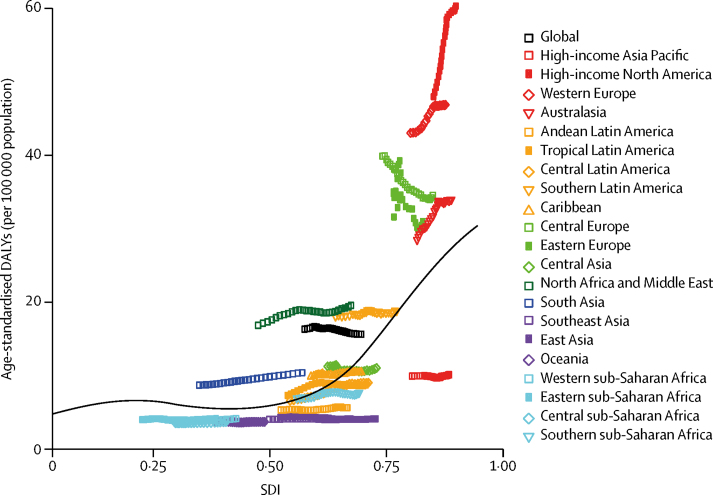
- Stated in the paper: there is a lack of robust predictive covariates for multiple sclerosis; including both SDI and latitude might have underestimated the effect of latitude because of collinearity, and inclusion of SDI might have spuriously led to increasing prevalence estimates over time; latitude remains a proxy and uncertain predictor, and measurement error cannot be excluded.
- Evident from the text: many country estimates rely on modelled predictions where no data were available; for example, the Greenland estimate was based on one small study of fewer than 2,000 inhabitants in which no cases were found between 1950 and 1974, and the uncertainty around that estimate is wide.
Model-written summary. Check it against the paper before relying on it.
Integrity signals
Registry
Cites
Statistics
Figures
Verification
Claims the paper makes
4 Valid · 1 Not valid · 12 Not checked · 85 Own results and interpretations
The cited sources support only part of this claim — read each source’s verdict below.
In the paper
“Geographical location before onset of multiple sclerosis remains a risk factor for acquisition.28”
§ Global, regional, and national burden of multiple sclerosis 1990–2016: a systematic analysis for the Global Burden of Disease Study 2016 > Discussion
What the sources say
- Partly supportedcites [28] Simpson S Blizzard L Otahal P Latitude is significantly associated with the prevalence of multiple sclerosis. A meta-analysis J Neurol Neurosurg Psychiatry 82 2011 1132 1141 21478203 sourceExperimental — accuracy not yet measured
The Global analyses section reports a significant association between latitude and MS prevalence, supporting a geographical pattern. But the paper does not establish that a person's location before onset is itself a risk factor for acquiring MS; it analyses population prevalence rather than individuals' pre-onset locations or acquisition risk. No page number was available in our copy. (LLM, conf=0.85)
plainstates a cause- Asserted: passes — The authors put it forward as true.
- Checkable: passes — It can be checked against evidence.
- Load-bearing: unclear — It is unclear whether the paper’s conclusions depend on it.
- Based: passes — The paper gives a reason why it holds.
- Partly supported
A result the paper states — it cites no source for it, so there is none to check. The quote shows it is in the paper.
In the paper
“YLDs begin to increase steeply early in the second decade of life.”
§ Global, regional, and national burden of multiple sclerosis 1990–2016: a systematic analysis for the Global Burden of Disease Study 2016 > Discussion
plainstates a cause- Asserted: passes — The authors put it forward as true.
- Checkable: passes — It can be checked against evidence.
- Load-bearing: unclear — It is unclear whether the paper’s conclusions depend on it.
- Based: passes — The paper gives a reason why it holds.
A result the paper reports from its own data — it cites no other source for it, so there is none to check. The quote shows it is in the paper.
In the paper
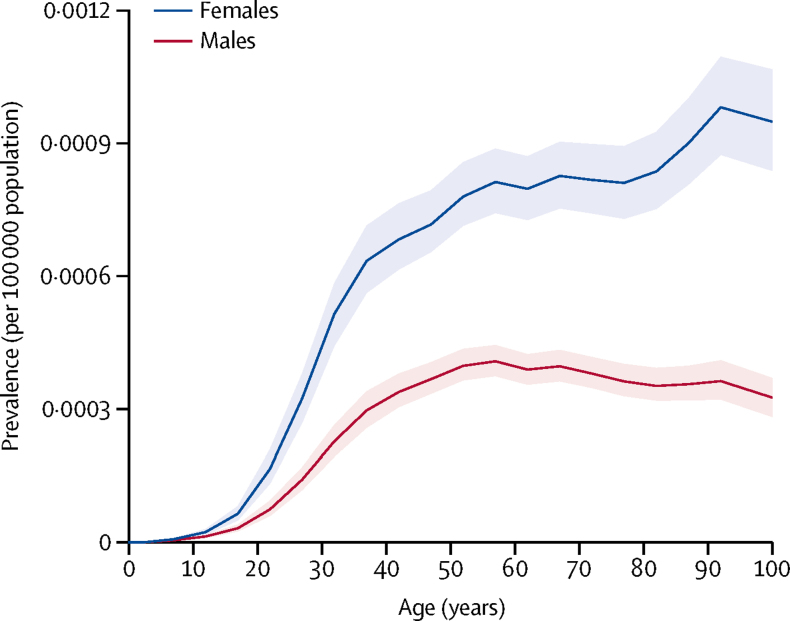
“The global prevalence of multiple sclerosis differs substantially by sex (figure 2).”
- Also stated in: § Discussion · plain
“Prevalence of multiple sclerosis differed substantially over the adult life of women and men.”
§ Global, regional, and national burden of multiple sclerosis 1990–2016: a systematic analysis for the Global Burden of Disease Study 2016 > Results
plainstates an association- Asserted: passes — The authors put it forward as true.
- Checkable: passes — It can be checked against evidence.
- Load-bearing: unclear — It is unclear whether the paper’s conclusions depend on it.
- Based: passes — The paper gives a reason why it holds.
- Also stated in: § Discussion · plain
A result the paper reports from its own data — it cites no other source for it, so there is none to check. The quote shows it is in the paper.
In the paper
“whereas the change in age-standardised DALYs was not significant (−4·2%, −16·4 to 0·8)”
- Also stated in: § Results · plain
“−4·2% (−16·4 to 0·8)”
§ Global, regional, and national burden of multiple sclerosis 1990–2016: a systematic analysis for the Global Burden of Disease Study 2016 > Abstract > Findings
plain- Asserted: passes — The authors put it forward as true.
- Checkable: passes — It can be checked against evidence.
- Load-bearing: unclear — It is unclear whether the paper’s conclusions depend on it.
- Based: passes — The paper gives a reason why it holds.
- Also stated in: § Results · plain
A result the paper reports from its own data — it cites no other source for it, so there is none to check. The quote shows it is in the paper.
In the paper
“In that year, prevalence was 10·4% higher than in 1990.”
§ Global, regional, and national burden of multiple sclerosis 1990–2016: a systematic analysis for the Global Burden of Disease Study 2016 > Discussion
plain- Asserted: passes — The authors put it forward as true.
- Checkable: passes — It can be checked against evidence.
- Load-bearing: unclear — It is unclear whether the paper’s conclusions depend on it.
- Based: passes — The paper gives a reason why it holds.
51 more claims
Create a free account to see all 102 claims and to verify the 1 reference still open.
- It may state two separate claims as one. 26
- Probably not a substantial claim. 29
Claims other papers make about this one
Each is checked against this paper’s own text: does it say what the citing paper says it does?
The cited source says what the claim attributes to it.
In the citing paper
“These 4 common UMNDs result in a significant decline in physical function5,7,8,17,18 and often develop secondary complications that affect their quality of life (QOL), including cognitive impairment,19–21 fatigue,22 chronic pain,23,24 depression,25–27 and anxiety.25–27”
From Feasibility, Acceptability, and Efficacy of Mindfulness Training in People With Upper Motor Neuron Disorders: A Systematic Review (2022) · cites this paper as [17]
Self-check
Percentages, sums and reported differences re-computed from the paper’s own numbers.
Each contradiction between two passages listed here was confirmed by an independent check.
Rated minor: it would not touch a result — a value no result rests on, a p-value that stays on the same side of the significance level, or a conflict that is clerical, resolved elsewhere in the paper, or outside its own findings.
In the paper
§ Global, regional, and national burden of multiple sclerosis 1990–2016: a systematic analysis for the Global Burden of Disease Study 2016 > Results
“Most deaths occurred in high SDI countries (10 021 95% UI 7358–10 873)”
§ Global, regional, and national burden of multiple sclerosis 1990–2016: a systematic analysis for the Global Burden of Disease Study 2016 > Results
“| High SDI | High SDI | 10 021 (7385 to 10 873) |”
Citations
Cites
Rating neurologic impairment in multiple sclerosis: An expanded disability status scale (EDSS)
Kurtzke, J. F. (1983) · Neurology · doi:10.1212/wnl.33.11.1444 · Cited by 15,011
Vos, T., Abajobir, A. A., Abate, K. H., Abbafati, C., Abbas, K. M., Abd-Allah, F., Abdulkader, R. S., Abdulle, A. M., Abebo, T. A., Abera, S. F., et al. (2017) · The Lancet · doi:10.1016/s0140-6736(17)32154-2 · Cited by 13,220
Self-citationDiagnosis of multiple sclerosis: 2017 revisions of the McDonald criteria
Thompson, A. J., Banwell, B. L., Barkhof, F., Carroll, W. M., Coetzee, T., Comi, G., Correale, J., Fazekas, F., Filippi, M., Freedman, M. S., et al. (2018) · The Lancet Neurology · doi:10.1016/s1474-4422(17)30470-2 · Cited by 9,476
Forouzanfar, M. H., Afshin, A., Alexander, L. T., Anderson, H. R., Bhutta, Z. A., Biryukov, S., Brauer, M., Burnett, R., Cercy, K., Charlson, F. J., et al. (2016) · The Lancet · doi:10.1016/s0140-6736(16)31679-8 · Cited by 7,698
Self-citationNew diagnostic criteria for multiple sclerosis: Guidelines for research protocols
Poser, C. M., Paty, D. W., Scheinberg, L., McDonald, W. I., Davis, F. A., Ebers, G. C., Johnson, K. P., Sibley, W. A., Silberberg, D. H., & Tourtellotte, W. W. (1983) · Annals of Neurology · doi:10.1002/ana.410130302 · Cited by 7,384
Vos, T., Allen, C., Arora, M., Barber, R. M., Bhutta, Z. A., Brown, A., Carter, A., Casey, D. C., Charlson, F. J., Chen, A. Z., et al. (2016) · The Lancet · doi:10.1016/s0140-6736(16)31678-6 · Cited by 7,253
Self-citationFeigin, V. L., Nichols, E., Alam, T., Bannick, M. S., Beghi, E., Blake, N., Culpepper, W. J., Dorsey, E. R., Elbaz, A., Ellenbogen, R. G., et al. (2019) · The Lancet Neurology · doi:10.1016/s1474-4422(18)30499-x · Cited by 5,644
Self-citationFood, nutrition, physical activity, and the prevention of cancer: a global perspective
(2008) · Choice Reviews Online · doi:10.5860/choice.45-5024 · Cited by 5,350
Diagnostic criteria for multiple sclerosis: 2005 revisions to the “McDonald Criteria”
Polman, C. H., Reingold, S. C., Edan, G., Filippi, M., Hartung, H., Kappos, L., Lublin, F. D., Metz, L. M., McFarland, H. F., O'Connor, P. W., et al. (2005) · Annals of Neurology · doi:10.1002/ana.20703 · Cited by 5,017
Reich, D. S., Lucchinetti, C. F., & Calabresi, P. A. (2018) · New England Journal of Medicine · doi:10.1056/nejmra1401483 · Cited by 2,491
Cited by
Items 901–1,000 of 1,078
Panisset, M. G., Lizama, L. E. C., Peng, L., & Galea, M. P. (2022) · medRxiv · doi:10.1101/2022.07.06.22277289
Saliutina, M. V. (2022) · S S Korsakov Journal of Neurology and Psychiatry · doi:10.17116/jnevro202212205157
ПАЛІАТИВНЕ ЛІКУВАННЯ ХВОРИХ НА РОЗСІЯНИЙ СКЛЕРОЗ
Растворов, О. (2022) · ГРААЛЬ НАУКИ · doi:10.36074/grail-of-science.17.06.2022.090
Maps for Health Metrics: An Epidemiology Resource Webliography
DeBoer, R., & Aber, S. W. (2022) · Issues in Science and Technology Librarianship · doi:10.29173/istl2694
Neuroinflammation in Multiple Sclerosis
Prasad, P., Roth, L., Ionescu, R.-B., Willis, C. M., Nicaise, A. M., Krzak, G., Peruzzotti‐Jametti, L., & Pluchino, S. (2022) · Elsevier eBooks · doi:10.1016/b978-0-12-821618-7.00267-4 · Cited by 1
Clinical and epidemiological features of multiple sclerosis in Republic of Ingushetia
Goncharova, Z. A., Uzhakhov, R. M., & Megeryan, V. A. (2022) · South Russian Journal of Therapeutic Practice · doi:10.21886/2712-8156-2022-3-3-76-84
Identification of significant modules and hub genes involved in fasting using WGCNAPreprint
Qiu, Z., Li, Y., Fu, Y., Yang, Y., & Zhong, J. (2022) · Research Square · doi:10.21203/rs.3.rs-2354254/v1
Physiotherapy for Neurogenic Lower Urinary Tract Dysfunction: Methods and Indications
Geraerts, I. (2022) · Springer eBooks · doi:10.1007/978-981-16-7939-1_79-1
Saliutina, M. V. (2023) · Neuroscience and Behavioral Physiology · doi:10.1007/s11055-023-01368-x
Neurologic Disease Burden in Asia Is Both Growing and Changing
Saylor, D. R. (2023) · Neurology · doi:10.1212/wnl.0000000000207361
“For example, in a previous publication on the global burden of multiple sclerosis (MS), strikingly disparate rates of prevalence and disability are reported by world region.(4) However, if one takes the time to read through the appendices, it becomes obvious that the precision of these estimates varies substantially.”
Background(2023) · Advances in magnetic resonance technology and applications · doi:10.1016/b978-0-323-91771-1.00006-x
(2023) · Journal of Population Therapeutics and Clinical Pharmacology · doi:10.47750/jptcp.2023.30.07.043
Identification of neuropathology-based subgroups in multiple sclerosis using a data-driven approachPreprint
de Boer, A., van den Bosch, A. M. R., Mekkes, N., Fransen, N. L., Hoekstra, E., Smolders, J., Hamann, J., Huitinga, I., & Holtman, I. R. (2023) · medRxiv · doi:10.1101/2023.05.15.23289980
“Multiple sclerosis (MS) is one of the most common neurological disorders in early adulthood, resulting from a combination of environmental, lifestyle and genetic factors [53, 55].”
BackgroundAraujo, L., Kyatham, S., Bzdek, K. G., Higuchi, K., & Greene, N. (2023) · ClinicoEconomics and Outcomes Research · doi:10.2147/ceor.s401687
“As MS is an incurable neurodegenerative disease, where disability can progress with time,(4,5) there is a significant impact on patients’ health-related quality of life and a substantial economic burden.(6,7) For example, the total economic burden of MS in 2019 was estimated at $85.”
BackgroundConsiderations on vitamin D supplementation in multiple sclerosis
Smolders, J., & Damoiseaux, J. G. M. C. (2023) · Elsevier eBooks · doi:10.1016/b978-0-323-89835-5.00012-0
Graneri, L., Mamo, J. C. L., Takechi, R., & Lam, V. (2023) · Elsevier eBooks · doi:10.1016/b978-0-323-89834-8.00018-0 · Cited by 2
Imaging characteristics of neuroimmunological disorders
Haralur, Y., & Nallani, S. (2023) · Elsevier eBooks · doi:10.1016/b978-0-323-85841-0.00006-7
The neuroimmunology of fatigue in multiple sclerosis
Ayache, S. S., & Chalah, M. A. (2023) · Elsevier eBooks · doi:10.1016/b978-0-443-18578-6.00004-0
Maple, P. A. C. (2023) · Elsevier eBooks · doi:10.1016/b978-0-443-18578-6.00006-4
Fehlhofer, J., Ries, J., Nickel, F. T., Rothhammer, V., Schwab, S., Kesting, M. R., & Buchbender, M. (2023) · Research Square · doi:10.21203/rs.3.rs-3063255/v1
El‐Horany, H. E., Alenezi, R., Alshammari, H. T., & Elghazally, N. M. (2023) · Medical Science · doi:10.54905/disssi/v27i136/e242ms3050
Almasi-turk, S., Hamidabadi, H. G., Farzadinia, P., Movahed, A., Salimipour, H., Nemati, R., Roozbehi, A., Bojnordi, M. N., Darabi, S., & Mojaverrostami, S. (2023) · Regenerative Engineering and Translational Medicine · doi:10.1007/s40883-022-00275-w
“In addition, the disease is the most important cause of neurological disabilities in adult life, such that its prevalence has increased in most of the world’s regions since 1990 [1].”
BackgroundClinical Epidemiological Studies for Improving Patient Care in Juvenile Idiopathic Arthritis
van Straalen, J. W. (2023) · Utrecht University Repository (Utrecht University) · doi:10.33540/1824
Kasbi, N. A., Ghadiri, F., Sahraian, M. A., Nahayati, M., Moghadasi, A. N., Langroodi, H. G., Poursadeghfard, M., Hosseini, S., Heidari, H., Baghbanian, S. M., et al. (2023) · Acta Neurologica Belgica · doi:10.1007/s13760-023-02366-z
Manfrini, E., Falcioni, L., Cavassa, V., Cocco, E. E., Sotgiu, S., & Saba, L. (2023) · Journal of Pediatric Neurology · doi:10.1055/s-0043-1772574
Role of microglia in the pathogenesis of multiple sclerosis and links to immunomodulatory therapy
Valiukevičius, P., Liutkevičienė, R., & Balnytė, R. (2023) · Neurologijos seminarai · doi:10.29014/ns.2022.26.14
Breaking Stereotypes: A Unique Presentation of New-Onset Multiple Sclerosis
Girgis, K., Brown, J. L., Lipat, K., & Bustillo, J. R. (2023) · Cureus · doi:10.7759/cureus.47584
Sclerosi multipla: epidemiologia
Leray, E. (2023) · EMC - Neurologia · doi:10.1016/s1634-7072(23)48431-0
Fehlhofer, J., Ries, J., Nickel, F. T., Rothhammer, V., Schwab, S., Kesting, M. R., & Buchbender, M. (2023) · Research Square · doi:10.21203/rs.3.rs-3573121/v1
Application of Proteomics in Alzheimer’s Disease: A Mini Review
Sukumaran, P., Bahardin, A. A., Razak, L. H. A., & Senik, M. H. (2023) · Malaysian Journal of Medicine and Health Sciences · doi:10.47836/mjmhs.19.5.38
Ahmed, A., Rawshan, A. E. M., Tishe, Z. H., Shawkat, S., Popy, M. N., Shohag, M. H., Hossain, M., & Mostaid, M. S. (2023) · Multiple Sclerosis and Related Disorders · doi:10.1016/j.msard.2023.105411 · Cited by 1
Deri, N. H., Barboza, A. G., Vrech, C., Rey, R., Burgos, M., Fiol, M. P., CalvoVildoso, C., Patrucco, L., José, G., Aliberti, P., et al. (2023) · Multiple Sclerosis and Related Disorders · doi:10.1016/j.msard.2023.105421
Early detection of celiac disease: an exploration of clinical features and molecular biomarkers
Tan, I. L. (2024) · University of Groningen research database (University of Groningen / Centre for Information Technology) · doi:10.33612/diss.864159868 · Cited by 1
PATHOGENESIS OF DEMYELINATING DISEASES IN TERMS OF ECOPATHOLOGY
Pataraia, G., Mermanishvili, T., & Tchatchia, G. (2023) · World Science · doi:10.31435/rsglobal_ws/30122023/8091
Influence of Age at Onset and Obesity on Pediatric Multiple Sclerosis
Huppke, B. (2024) · eDiss (Georg-August-Universität Göttingen) · doi:10.53846/goediss-10290
Immunological Underpinnings of Autoimmune Primary Ovarian Insufficiency
Brodeur, T. Y., & Esfandiari, N. (2024) · Current Obstetrics and Gynecology Reports · doi:10.1007/s13669-024-00376-z · Cited by 1
“This may include bone morphogenetic protein 15 ( BMP15 ), newborn ovary homeobox gene ( NOBOX ), and growth differentiation factor 9 ( GDF9 ) among others [18, 19].”
Different levels of physical activity and postural balance in women with multiple sclerosis
Machado, E. F. A., Moraes, A. G., Bueno, G. A. S., Mendes, F. A. D. S., & de David, A. C. (2023) · Brazilian Journal of Motor Behavior · doi:10.20338/bjmb.v17i5.377
A Review on Nonviral, Nonbacterial Infectious Agents Toxicity Involved in Neurodegenerative Diseases
Taheri, M., Bahrami, A., Asadi, K. K., Mohammadi, M., Molaei, P., Hashemi, M., & Nouri, F. (2023) · Neurodegenerative Disease Management · doi:10.2217/nmt-2023-0004
Ali, E. A., Afefy, H. M. E., & Abdallah, Z. A. (2022) · Egyptian Journal of Health Care · doi:10.21608/ejhc.2022.342704
“The finding is consistent Wallin, et al., (2019) about the "Global, regional, and national burden of multiple sclerosis" who mentioned that girls affected twice time than boys.”
ResultCastellón-Arias, J., Gazel-Meléndez, L., Guido-Villalobos, R., Jiménez-Díaz, A., Valera-Rangel, J., & Román, J. J. M. (2023) · Borneo Journal of Pharmacy · doi:10.33084/bjop.v6i4.5317
Vujosevic, S. (2024) · Elsevier eBooks · doi:10.1016/b978-0-443-15583-3.00028-7
Assessment of Quality of Life for Multiple Sclerosis among Adolescents
Mohamed, M. I., El-Naggar, N. S. M., & Fouad, M. M. (2024) · Egyptian Journal of Health Care · doi:10.21608/ejhc.2024.345814
“This finding was consistent with study by Wallin et al., (2019) who conducted study about " Global, regional, and national burden of multiple sclerosis 1990–2016" and reported that females more than twice as likely to be affected than males.”
ResultImpact of nutritional risk factors on the development of multiple sclerosis
Ильинична, Г. Л., & Balanova, Y. А. (2024) · Scientific Bulletin of the Omsk State Medical University · doi:10.61634/2782-3024-2024-13-64-74
Geoenvironmental variables as causal cofactors of diseases of unknown etiology
Davies, T. C. (2024) · Elsevier eBooks · doi:10.1016/b978-0-12-818748-7.00013-7
Konposatu kannabinoideak terapia gehigarri gisa esklerosi anizkoitzaren tratamendurako
Uribe-Irusta, A., Ortega-Álvarez, A., Baraibar, A. M., Mato, S., & Bernal‐Chico, A. (2024) · EKAIA Euskal Herriko Unibertsitateko Zientzi eta Teknologi Aldizkaria · doi:10.1387/ekaia.25872
Multiple Sclerosis and Women's Reproductive Health: From Conception to Postpartum
Shafti, V., Nateghi, M. R., & Karimi‐Mansoorabad, E. (2023) · ملیون. · doi:10.61186/sjrm.8.1.67
Application For Nanotechnology For the Treatment of Brain Diseases and Disorders
(2024) · Frontiers research topics · doi:10.3389/978-2-8325-5185-1
Investigation of neurogenic dysphagia in commonly seen neurological diseases
Tanrıverdi, M., Düzenli, S., Gündüz, M., Arslantürk, A., & Erekdağ, A. (2024) · Anadolu Kliniği Tıp Bilimleri Dergisi · doi:10.21673/anadoluklin.1432672
Hamm, N. C., Marrie, R. A., Jiang, D., Irani, P., & Lix, L. M. (2024) · BMJ Open · doi:10.1136/bmjopen-2023-083141 · Cited by 1
Zubedi, S., Al-Ali, H., Rabeh, N., Aljoudi, S., Dimassi, Z., & Hamdan, H. (2024) · Nutritional neurosciences · doi:10.1007/978-981-97-4673-6_2
Wang, K., Mao, W., Wu, Y., Song, Y., Zhang, Y., & Li, B. (2024) · Research Square · doi:10.21203/rs.3.rs-4933345/v1
Adult inflammatory leukoencephalopathies
Williams, T. E., John, N. A., Doshi, A., & Chataway, J. (2024) · Handbook of clinical neurology · doi:10.1016/b978-0-323-99209-1.00003-x
Spectrum of Cognitive Impairment in Patients with Multiple Sclerosis
Zabirova, A. K., Bakulin, I. S., Zakharova, M. N., Gnedovskaya, E. V., & Suponeva, N. A. (2024) · Annals of Clinical and Experimental Neurology · doi:10.17816/acen.1139
Multiple Sclerosis (MS) and its Treatment with Natural Products
Dönmez, C., Ayaz, F., & Eruygur, N. (2024) · doi:10.2174/9789815305005124010010
Gerymski, R., & Latusek-Mierzwa, M. (2024) · Brain Sciences · doi:10.3390/brainsci14121177
Vitamin D Levels and Clinical Outcomes in Saudi Multiple Sclerosis Patients: A Cross-Sectional Study
Babukur, R., Sayer, N. A. A., Alrudaini, S. H., Badi, A. A., Alotaibi, W., Azmi, N. S. A., Alkathem, J. A., Alawad, F. H., & Alhodibi, M. (2024) · Journal of Advanced Trends in Medical Research · doi:10.4103/atmr.atmr_101_24
Wegenko, C. M., Sitka, H., Czaja, M., Kuźniar, J., & Kozubek, P. (2024) · Journal of Education Health and Sport · doi:10.12775/jehs.2024.72.57295
On observing the standards of descriptive epidemiology: Comment on the article by Ozturk et al.
Taşçılar, K. (2024) · Multiple Sclerosis Journal · doi:10.1177/13524585241304969
IMMUNOLOGICAL DETECTION OF HUMAN HERPES VIRUS 6 IN SERA OF IRAQI PATIENTS WITH MULTIPLE SCLEROSIS
Saadoun, N. J., & Saady, R. A. (2024) · Eastern Ukrainian Medical Journal · doi:10.21272/eumj.2024;12(4):846-855
New Developments in the Treatment of Myasthenia Gravis
ERSOY, S. (2024) · Bidge Yayınları eBooks · doi:10.70269/10.70269/4439255712
Tendencia de la mortalidad por esclerosis múltiple según sexo: Chile 1997-2019
Opazo, J. A., González, V. F., Delgadillo, M. G., Núñez-Franz, L., Garcia, C. M., & Rodríguez, P. J. (2025) · Neurología · doi:10.1016/j.nrl.2023.04.008
Balmaceda-Meza, A., Sanabria‐Castro, A., Román, N., Rodríguez, V., Monterrey, P., Miranda-Loría, G., Echeverri-McCandless, A., Rojas-Chaves, S., Duarte-Ulloa, T., & Parajeles, A. (2025) · Acta Médica Costarricense · doi:10.51481/amc.v66i2.1407
Makarov, C., Donnachie, E., Hapfelmeier, A., Hemmer, B., & Gasperi, C. (2025) · Multiple Sclerosis Journal - Experimental Translational and Clinical · doi:10.1177/20552173251315458 · Cited by 3
Stölzer-Hutsch, H., Schriefer, D., Kügler, J., & Ziemssen, T. (2025) · Healthcare · doi:10.3390/healthcare13060646
“Worldwide, 2.8 million people suffer from MS—and the trend is rising [3,4].”
InfluentialZhang, N. J. (2025) · Evidence-Based Nursing · doi:10.1136/ebnurs-2024-104190
Omarova, М. А., Kozin, M. S., & Boyko, A. N. (2025) · Neurology neuropsychiatry Psychosomatics · doi:10.14412/2074-2711-2025-2-49-54
Al-Husban, H., Kastora, S. L., & Oduyoye, O. (2025) · Journal of Medical Case Reports · doi:10.1186/s13256-024-04985-3
Kulnik, S. T., Böhm, B., Höppchen, I., Lindner, A., Seiringer, L., Wurhofer, D., Otto, F., & Wipfler, P. (2025) · Studies in health technology and informatics · doi:10.3233/shti250151
Relationship of cranial bone signal intensity to multiple sclerosis clinical course and progression
Sarıdaş, F., Özpar, R., Özdemir, Ü., Dinç, Y., Akarsu, E. O., Koç, E. R., Özkaya, G., Hakyemez, B., & Turan, Ö. F. (2025) · Science Progress · doi:10.1177/00368504251336090
Driving Patient Data With AI for Patient Care Path Optimization: A Theoretical Framework
Khizzou, N. B., Aarabe, M., Bouizgar, M., Alla, L., & Benjelloun, A. S. (2025) · Advances in computational intelligence and robotics book series · doi:10.4018/979-8-3373-0918-7.ch003
Davis, C. (2025) · Open Access Victoria University of Wellington | Te Herenga Waka (Figshare) · doi:10.26686/wgtn.29333162 · Cited by 1
Cladribine effects on emotional awareness and reasoning: The CLEAR study
Henry, J. D., Coundouris, S. P., Gomes, L., Adams, A. G., Manchery, N., & Blum, S. (2025) · Multiple Sclerosis and Related Disorders · doi:10.1016/j.msard.2025.106566
Multiple sclerosis mortality trends in Spain from 1981 to 2020
Cayuela, L., de Albóniga-Chindurza, A., Gómez-Enjuto, S., Lapeña-Motilva, J., de la Maza, S. S., García, A. G., & Cayuela, A. (2025) · Neurología (English Edition) · doi:10.1016/j.nrleng.2025.06.006 · Cited by 1
Fawaz, A. M., Mokhtar, A., Hassan, M. A., Dora, O. E. E., Ibrahim, N. F., & Farrag, N. S. (2025) · Research Square · doi:10.21203/rs.3.rs-7000076/v1
Ocrelizumab in Multiple Sclerosis: Real-world Experience from Balochistan, Pakistan
Wali, A., Hameed, S., Khan, H., Ahmed, A., & Malik, M. (2025) · Pakistan Journal of Neurological Sciences · doi:10.56310/pjns.v19i02.366
Molecular pathway of neurodegenerative diseases: Allopathic and herbal approaches
Kombo, H. Z., Yesmin, S., Parnholia, M., & Singh, G. (2025) · AIP conference proceedings · doi:10.1063/5.0272895
Eslamifar, Z., Manucheri, F., Ghanbari, S., Zandi, M., & Sabbagh, S. (2025) · Irish Journal of Medical Science (1971 -) · doi:10.1007/s11845-025-04009-z
Jerčić, M., Vidaković, M. R., Markotić, A., & Mužinić, N. R. (2025) · BioMed · doi:10.3390/biomed5030020
“Multiple sclerosis (MS) is the most common inflammatory neurological disease in young adults, and its prevalence is increasing [1].”
EXPLORING THE VITAMIN D–MULTIPLE SCLEROSIS AXIS
ÇINKIR, U. (2025) · Bidge Yayınları eBooks · doi:10.70269/dsfg48a1xdby
Şengül, P., Baykal, A. T., & Serteser, M. (2025) · Journal of Molecular Neuroscience · doi:10.1007/s12031-025-02407-7 · Cited by 1
Multiple sclerosis mortality trends by sex in Chile, 1997–2019
Opazo, J. A., González, V. F., Delgadillo, M. G., Núñez-Franz, L., Garcia, C. M., & Rodríguez, P. J. (2025) · Neurología (English Edition) · doi:10.1016/j.nrleng.2025.10.003
Trends in prevalence and incidence of multiple sclerosis in the Israeli Jewish and Arab populations
Spierer, R., Hurani, M., Stein, N., Rawashdeh, A., Bloch, S., & Golan, D. (2025) · Journal of the Neurological Sciences · doi:10.1016/j.jns.2025.123721 · Cited by 1
Cai, Z.-L., Dong, F., Ma, J., Wang, D., Yi, W., Cao, L., & Cai, Z. (2026) · Immunologic Research · doi:10.1007/s12026-026-09821-y
“It shows an over-all decline in disease burden and reflects broad advances in diagnosis and treatment [35 ].”
Nascimento, L. N., Pereira, D. C., Fraga, É. D. C. M., Miranda, É. O. P., Cardoso, G. R., Souza, I. E. S., Morais, L. S., da Silva, N. M. M., & Maciel, R. G. A. (2025) · Research Society and Development · doi:10.33448/rsd-v14i10.49772
Moghadam, S., Khoshakhlagh, H., & Jamalouei, H. R. (2025) · مجله دانشگاه علوم پزشکی تربت حیدریه · doi:10.61882/jmsthums.13.2.40
Sulcebe, G., Shyti, E., Kurti-Prifti, M., Kasemi, D., Deda, A., Mikerezi, I., Nezaj, R., Verlaku, A., Likaj, S., & Kruja, J. (2025) · medRxiv · doi:10.64898/2025.12.01.25341397
Social Barriers Faced by Women with Multiple Sclerosis in Tehran: A Qualitative Content Analysis
kheftan, P., Arshi, M., Roghanchi, M., Moghanibashi‐Mansourieh, A., & Dalirian, S. (2025) · Journal of Qualitative Research in Health Sciences · doi:10.34172/jqr.1336 · Cited by 1
“In 2016, there were more than two million MS patients globally, with substantial country-specific disparities in prevalence and incidence, and a clear predominance of females (4,5).”
Computation of M-polynomial and Topological Indices of Hypergraphs with Linkages to Brain Functions
Anagha, P., & Selvakumar, R. (2025) · Malaysian Journal of Mathematical Sciences · doi:10.47836/mjms.19.4.14
Zhuo, Z., Zhao, Z., Yan, M., Tan, J., Gu, Y., Zhong, W., Zhang, Y., & Liu, H. (2025) · Frontiers in Pediatrics · doi:10.3389/fped.2025.1679340
Palakeeti, B., Reddy, K. V., Gobi, K. V., Rao, P. N., & Chinta, J. P. (2021) · Figshare · doi:10.6084/m9.figshare.14516612
Park, J.-W., Park, B., Lee, J.-S., Lee, E.-J., Ahn, Y.-C., & Son, C.-G. (2024) · Figshare · doi:10.6084/m9.figshare.25963060
Holz, A., Obi, N., Ahrens, W., Berger, K., Bohn, B., Brenner, H., Fischer, B., Fricke, J., Führer, A., Gastell, S., et al. (2024) · Figshare · doi:10.6084/m9.figshare.25599867
Habibi, M. A., Yazdan Panah, M., Vaheb, S., Olfatifar, M., Shaygannejad, A., Mokary, Y., Ghasemi, M., Thapa, S., Shaygannejad, V., & Mirmosayyeb, O. (2024) · Figshare · doi:10.6084/m9.figshare.26670657
Park, J.-W., Park, B., Lee, J.-S., Lee, E.-J., Ahn, Y.-C., & Son, C.-G. (2024) · Figshare · doi:10.6084/m9.figshare.26728981
Visser, L. A., Louapre, C., Uyl-de Groot, C. A., & Redekop, K. (2021) · Figshare · doi:10.6084/m9.figshare.14253891
Park, J.-W., Park, B., Lee, J.-S., Lee, E.-J., Ahn, Y.-C., & Son, C.-G. (2024) · Figshare · doi:10.6084/m9.figshare.26728978
Holz, A., Obi, N., Ahrens, W., Berger, K., Bohn, B., Brenner, H., Fischer, B., Fricke, J., Führer, A., Gastell, S., et al. (2024) · Figshare · doi:10.6084/m9.figshare.26706048
Park, J.-W., Park, B., Lee, J.-S., Lee, E.-J., Ahn, Y.-C., & Son, C.-G. (2024) · Figshare · doi:10.6084/m9.figshare.26728972
Park, J.-W., Park, B., Lee, J.-S., Lee, E.-J., Ahn, Y.-C., & Son, C.-G. (2024) · Figshare · doi:10.6084/m9.figshare.26728975
Metadata
- Authors
- Wallin, M. T., Culpepper, W. J., Nichols, E., Bhutta, Z. A., Gebrehiwot, T. T., Hay, S. I., Khalil, I. A., Krohn, K. J., Liang, X., Naghavi, M., Mokdad, A. H., Nixon, M. R., Reiner, R. C., Sartorius, B., Smith, M., Topor-Madry, R., Werdecker, A., Vos, T., Feigin, V. L., & Murray, C. J. L.
- Affiliations
- United States Department of Veterans Affairs (US)
- University of Maryland, Baltimore (US)
- George Washington University (US)
- ORCID
- Venue
- The Lancet Neurology
- Publisher
- Elsevier BV
- Published
- 2019-03
- Volume
- 18
- Issue
- 3
- Pages
- 269-285
- ISSN
- 1474-4422 (ISSN-L)
- PMC
- PMC6372756
- OpenAlex
- W2914720734
- Semantic Scholar
- 0b99adcd5f03f05530e9c57347dd9401bccca9b2
- Cited by
- 1,134
- References
- 57
- Citations by year
- 2026: 100 · 2025: 122 · 2024: 145 · 2023: 178 · 2022: 181 · 2021: 202 · 2020: 167 · 2019: 36
- FWCI
- 97.66
- Type
- journal article
- Language
- en
- Open access
- hybrid
- doi.org
- Licence
- cc-by
- www.elsevier.com/tdm/userlicense/1.0/ (tdm)
- www.elsevier.com/legal/tdmrep-license (tdm)
- creativecommons.org/licenses/by/4.0/ (vor)
- Locations
- The Lancet Neurology (publishedVersion, cc-by)
- Europe PMC (PubMed Central) (publishedVersion, other-oa)
- PubMed Central (publishedVersion, cc-by)
- PubMed (publishedVersion)
- Tuwhera (Auckland University of Technology) (publishedVersion, other-oa)
- LSHTM Research Online (London School of Hygiene and Tropical Medicine) (acceptedVersion)
- Tuwhera (Auckland University of Technology) (submittedVersion, cc-by)
- Funders
- Bill and Melinda Gates Foundation
- Topics
- Health Sciences › Medicine › Clinical Neurology › Multiple Sclerosis Research Studies
- Social Sciences › Economics, Econometrics and Finance › Economics and Econometrics › Health Systems, Economic Evaluations, Quality of Life
- Health Sciences › Health Professions › Physical Therapy, Sports Therapy and Rehabilitation › Musculoskeletal pain and rehabilitation
- Keywords
- multiple sclerosis, disease burden, disability-adjusted life years, years of life lost, years lived with disability, socio-demographic index, country development level, global epidemiology, neurological disorders, Global Burden of Disease Study 2016, vital registration data, sub-Saharan Africa
- MeSH terms
- Global Burden of Disease, Bayes Theorem, Cause of Death, Female, Humans, Life Expectancy, Male, Multiple Sclerosis, Risk Factors, Global Health, Prevalence, Quality-Adjusted Life Years
About these checks
Registry, retraction, Cites and statistics results are computed, not judged, with one exception: a printed reference that no index lists is read once by a model before it counts as a citation error. Claims are extracted by a model and kept only when their quote appears verbatim in the text; each cited source is then checked, with a model’s help, for whether it says what the claim relies on. Those verdicts can be wrong — read the claim’s quote and the cited source before relying on one.
The claim verdicts this report counts are experimental: their accuracy is not yet measured.
A language model drew the claims from the paper on 2026-10-22, under version 3 of the claim definition (model deepseek-v4.1-flash, prompt extract-v3).
A second model labelled each claim on 2026-10-22 (model jev-1.13-20260917, definition revision gold-guideline-v0.2).
Cited sources are checked with a language model’s help (gpt-6-sol).
Statistics and arithmetic are recomputed, not judged.
Confidence bands are shown only for fields calibrated on our annotated test set. None is calibrated yet, so no band is shown.
What counts as a claim ›How we measure confidence ›How we check this ›
Are you an author, or do you see a problem with this page? Request a review
Data sources
Bibliographic data: Semantic Scholar, OpenAlex, Crossref.
Contains information from the Semantic Scholar Academic Graph Datasets, made available under the ODC Attribution License (ODC-BY 1.0).
Semantic Scholar’s data is described in: Kinney, R., et al. (2023). The Semantic Scholar Open Data Platform. arXiv:2301.10140.
