

Global, regional, and national burden of multiple sclerosis 1990-2016: a systematic analysis for the Global Burden of Disease Study 2016
Open accessThe DOI matches its Crossref record; 55 of the 57 references it cites were found in a registry or an index; 5 of the 21 sources its claims cite were checked for support.
Abstract
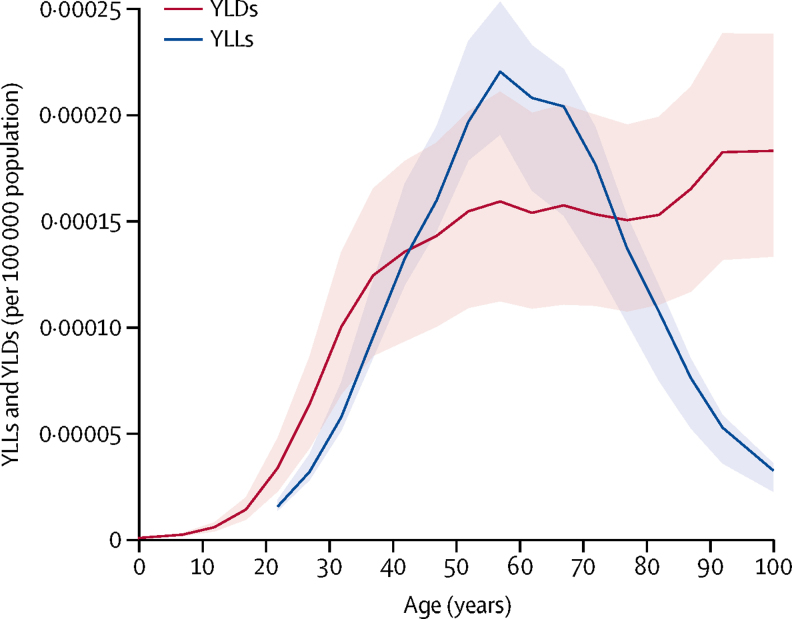
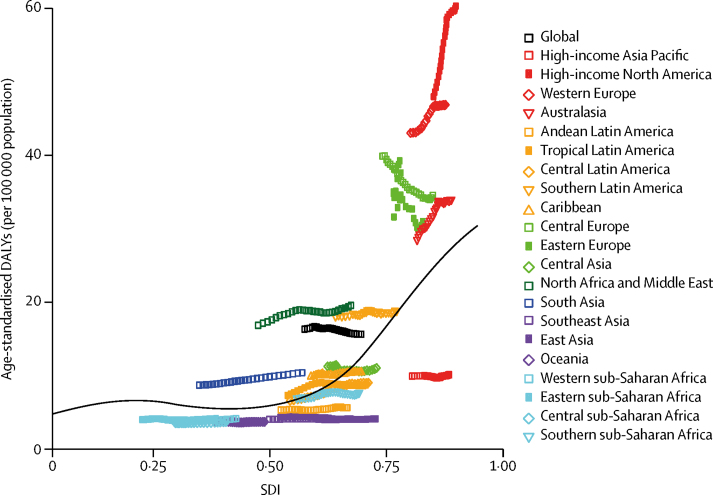
BACKGROUND: Multiple sclerosis is the most common inflammatory neurological disease in young adults. The Global Burden of Diseases, Injuries, and Risk Factors Study (GBD) provides a systematic method of quantifying various effects of a given condition by demographic variables and geography. In this systematic analysis, we quantified the global burden of multiple sclerosis and its relationship with country development level. METHODS: We assessed the epidemiology of multiple sclerosis from 1990 to 2016. Epidemiological outcomes for multiple sclerosis were modelled with DisMod-MR version 2.1, a Bayesian meta-regression framework widely used in GBD epidemiological modelling. Assessment of multiple sclerosis as the cause of death was based on 13 110 site-years of vital registration data analysed in the GBD's cause of death ensemble modelling module, which is designed to choose the optimum combination of mathematical models and predictive covariates based on out-of-sample predictive validity testing. Data on prevalence and deaths are summarised in the indicator, disability-adjusted life-years (DALYs), which was calculated as the sum of years of life lost (YLLs) and years of life lived with a disability. We used the Socio-demographic Index, a composite indicator of income per person, years of education, and fertility, to assess relations with development level. FINDINGS: In 2016, there were 2 221 188 prevalent cases of multiple sclerosis (95% uncertainty interval [UI] 2 033 866-2 436 858) globally, which corresponded to a 10·4% (9·1 to 11·8) increase in the age-standardised prevalence since 1990. The highest age-standardised multiple sclerosis prevalence estimates per 100 000 population were in high-income North America (164·6, 95% UI, 153·2 to 177·1), western Europe (127·0, 115·4 to 139·6), and Australasia (91·1, 81·5 to 101·7), and the lowest were in eastern sub-Saharan Africa (3·3, 2·9-3·8), central sub-Saharan African (2·8, 2·4 to 3·1), and Oceania (2·0, 1·71 to 2·29). There were 18 932 deaths due to multiple sclerosis (95% UI 16 577 to 21 033) and 1 151 478 DALYs (968 605 to 1 345 776) due to multiple sclerosis in 2016. Globally, age-standardised death rates decreased significantly (change -11·5%, 95% UI -35·4 to -4·7), whereas the change in age-standardised DALYs was not significant (-4·2%, -16·4 to 0·8). YLLs due to premature death were greatest in the sixth decade of life (22·05, 95% UI 19·08 to 25·34). Changes in age-standardised DALYs assessed with the Socio-demographic Index between 1990 and 2016 were variable. INTERPRETATION: Multiple sclerosis is not common but is a potentially severe cause of neurological disability throughout adult life. Prevalence has increased substantially in many regions since 1990. These findings will be useful for resource allocation and planning in health services. Many regions worldwide have few or no epidemiological data on multiple sclerosis, and more studies are needed to make more accurate estimates. FUNDING: Bill & Melinda Gates Foundation.
Overview
CoChat Summary
TL;DR
This GBD 2016 systematic analysis estimated the global burden of multiple sclerosis from 1990 to 2016, finding 2,221,188 prevalent cases in 2016 and a 10.4% increase in age-standardised prevalence since 1990. Burden varied widely by geography and Socio-demographic Index, with the highest prevalence in high-income North America and the lowest in sub-Saharan Africa and Oceania.
Key findings
- In 2016, there were 2,221,188 prevalent cases of multiple sclerosis (95% UI 2,033,866–2,436,858), corresponding to 30.1 cases per 100,000 population; age-standardised prevalence increased by 10.4% (95% UI 9.1–11.8) between 1990 and 2016.
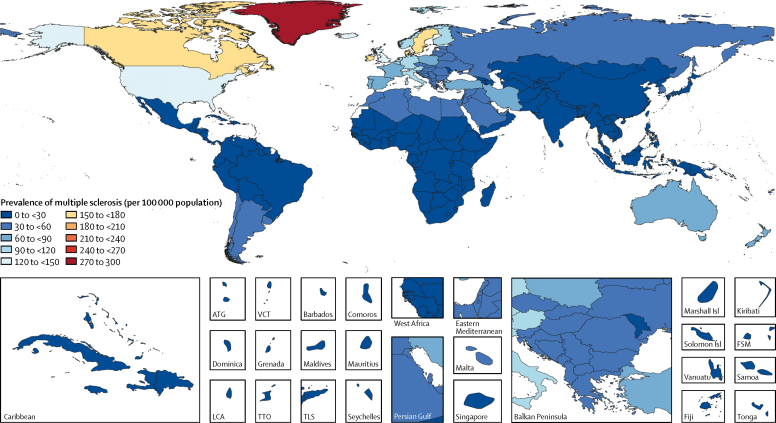
- The highest age-standardised prevalence estimates per 100,000 were in high-income North America (164.6, 95% UI 153.2–177.1), western Europe (127.0, 115.4–139.6), and Australasia (91.1, 81.5–101.7); the lowest were in eastern sub-Saharan Africa (3.3, 2.9–3.8), central sub-Saharan Africa (2.8, 2.4–3.1), and Oceania (2.0, 1.71–2.29).
- There were 18,932 deaths (95% UI 16,577–21,033) and 1,151,478 DALYs (968,605–1,345,776) due to multiple sclerosis in 2016; the global age-standardised death rate decreased significantly (−11.5%, 95% UI −35.4 to −4.7), whereas the change in age-standardised DALYs was not significant (−4.2%, −16.4 to 0.8).
- Smoking accounted for 99,076 DALYs (95% UI 62,164–140,650), or 8.6% (5.6–11.7) of global multiple sclerosis DALYs; prevalence increased with latitude (coefficient 1.03 per degree, 95% UI 1.03–1.04).
Methods
- GBD 2016 systematic analysis: mortality was modelled with CODEm using 13,110 site-years of vital registration data and predictive covariates; prevalence and incidence were modelled with DisMod-MR 2.1 using 167 unique sources (129 prevalence, 65 incidence) covering 13 of 21 GBD world regions, plus US medical claims data.
- Severity was classified into mild, moderate, severe, and asymptomatic states based on the Expanded Disability Status Scale; YLDs were derived from prevalence multiplied by disability weights and corrected for comorbidity; YLLs were calculated from deaths and remaining life expectancy; DALYs were the sum of YLLs and YLDs, with uncertainty propagated through 1,000 draws.
- The Socio-demographic Index was used to assess development level; smoking was the only environmental risk judged to have sufficient evidence for a causal relationship with multiple sclerosis, with population-attributable fractions estimated from exposure and relative risk data.
Limitations
- Stated in the paper: data are absent or extremely sparse for many regions, including Latin America, sub-Saharan Africa, and Asia; the models used to predict prevalence, DALYs, and YLLs might lead to unusual changes in segments of the data, such as rapid prevalence increases in women older than 80 years and the YLD curve, which should be viewed with caution; underdiagnosis in less-developed countries cannot be excluded.
- Stated in the paper: there is a lack of robust predictive covariates for multiple sclerosis; including both SDI and latitude might have underestimated the effect of latitude because of collinearity, and inclusion of SDI might have spuriously led to increasing prevalence estimates over time; latitude remains a proxy and uncertain predictor, and measurement error cannot be excluded.
- Evident from the text: many country estimates rely on modelled predictions where no data were available; for example, the Greenland estimate was based on one small study of fewer than 2,000 inhabitants in which no cases were found between 1950 and 1974, and the uncertainty around that estimate is wide.
Model-written summary. Check it against the paper before relying on it.
Integrity signals
Registry
Cites
Statistics
Figures
Verification
Claims the paper makes
4 Valid · 1 Not valid · 12 Not checked · 85 Own results and interpretations
The cited sources support only part of this claim — read each source’s verdict below.
In the paper
“Geographical location before onset of multiple sclerosis remains a risk factor for acquisition.28”
§ Global, regional, and national burden of multiple sclerosis 1990–2016: a systematic analysis for the Global Burden of Disease Study 2016 > Discussion
What the sources say
- Partly supportedcites [28] Simpson S Blizzard L Otahal P Latitude is significantly associated with the prevalence of multiple sclerosis. A meta-analysis J Neurol Neurosurg Psychiatry 82 2011 1132 1141 21478203 sourceExperimental — accuracy not yet measured
The Global analyses section reports a significant association between latitude and MS prevalence, supporting a geographical pattern. But the paper does not establish that a person's location before onset is itself a risk factor for acquiring MS; it analyses population prevalence rather than individuals' pre-onset locations or acquisition risk. No page number was available in our copy. (LLM, conf=0.85)
plainstates a cause- Asserted: passes — The authors put it forward as true.
- Checkable: passes — It can be checked against evidence.
- Load-bearing: unclear — It is unclear whether the paper’s conclusions depend on it.
- Based: passes — The paper gives a reason why it holds.
- Partly supported
A result the paper states — it cites no source for it, so there is none to check. The quote shows it is in the paper.
In the paper
“YLDs begin to increase steeply early in the second decade of life.”
§ Global, regional, and national burden of multiple sclerosis 1990–2016: a systematic analysis for the Global Burden of Disease Study 2016 > Discussion
plainstates a cause- Asserted: passes — The authors put it forward as true.
- Checkable: passes — It can be checked against evidence.
- Load-bearing: unclear — It is unclear whether the paper’s conclusions depend on it.
- Based: passes — The paper gives a reason why it holds.
A result the paper reports from its own data — it cites no other source for it, so there is none to check. The quote shows it is in the paper.
In the paper
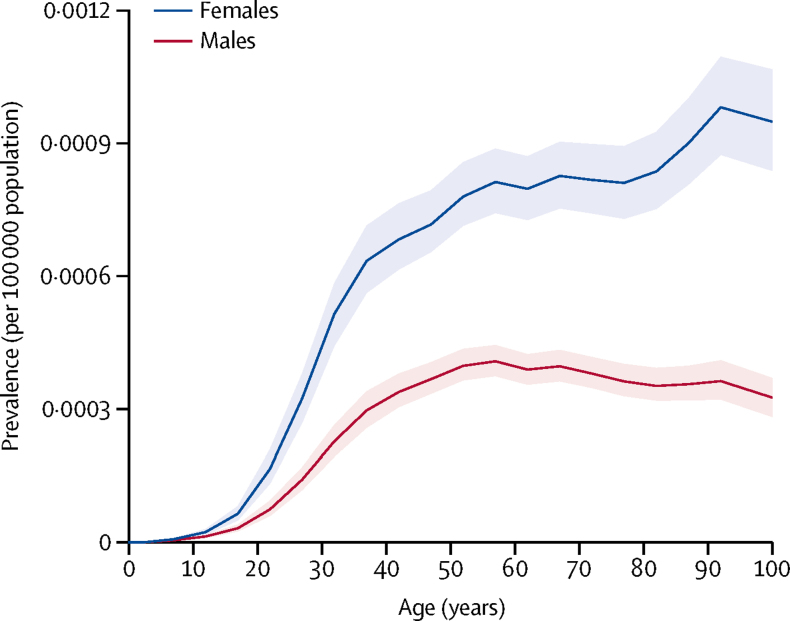
“The global prevalence of multiple sclerosis differs substantially by sex (figure 2).”
- Also stated in: § Discussion · plain
“Prevalence of multiple sclerosis differed substantially over the adult life of women and men.”
§ Global, regional, and national burden of multiple sclerosis 1990–2016: a systematic analysis for the Global Burden of Disease Study 2016 > Results
plainstates an association- Asserted: passes — The authors put it forward as true.
- Checkable: passes — It can be checked against evidence.
- Load-bearing: unclear — It is unclear whether the paper’s conclusions depend on it.
- Based: passes — The paper gives a reason why it holds.
- Also stated in: § Discussion · plain
A result the paper reports from its own data — it cites no other source for it, so there is none to check. The quote shows it is in the paper.
In the paper
“whereas the change in age-standardised DALYs was not significant (−4·2%, −16·4 to 0·8)”
- Also stated in: § Results · plain
“−4·2% (−16·4 to 0·8)”
§ Global, regional, and national burden of multiple sclerosis 1990–2016: a systematic analysis for the Global Burden of Disease Study 2016 > Abstract > Findings
plain- Asserted: passes — The authors put it forward as true.
- Checkable: passes — It can be checked against evidence.
- Load-bearing: unclear — It is unclear whether the paper’s conclusions depend on it.
- Based: passes — The paper gives a reason why it holds.
- Also stated in: § Results · plain
A result the paper reports from its own data — it cites no other source for it, so there is none to check. The quote shows it is in the paper.
In the paper
“In that year, prevalence was 10·4% higher than in 1990.”
§ Global, regional, and national burden of multiple sclerosis 1990–2016: a systematic analysis for the Global Burden of Disease Study 2016 > Discussion
plain- Asserted: passes — The authors put it forward as true.
- Checkable: passes — It can be checked against evidence.
- Load-bearing: unclear — It is unclear whether the paper’s conclusions depend on it.
- Based: passes — The paper gives a reason why it holds.
51 more claims
Create a free account to see all 102 claims and to verify the 1 reference still open.
- It may state two separate claims as one. 26
- Probably not a substantial claim. 29
Claims other papers make about this one
Each is checked against this paper’s own text: does it say what the citing paper says it does?
The cited source says what the claim attributes to it.
In the citing paper
“These 4 common UMNDs result in a significant decline in physical function5,7,8,17,18 and often develop secondary complications that affect their quality of life (QOL), including cognitive impairment,19–21 fatigue,22 chronic pain,23,24 depression,25–27 and anxiety.25–27”
From Feasibility, Acceptability, and Efficacy of Mindfulness Training in People With Upper Motor Neuron Disorders: A Systematic Review (2022) · cites this paper as [17]
Self-check
Percentages, sums and reported differences re-computed from the paper’s own numbers.
Each contradiction between two passages listed here was confirmed by an independent check.
Rated minor: it would not touch a result — a value no result rests on, a p-value that stays on the same side of the significance level, or a conflict that is clerical, resolved elsewhere in the paper, or outside its own findings.
In the paper
§ Global, regional, and national burden of multiple sclerosis 1990–2016: a systematic analysis for the Global Burden of Disease Study 2016 > Results
“Most deaths occurred in high SDI countries (10 021 95% UI 7358–10 873)”
§ Global, regional, and national burden of multiple sclerosis 1990–2016: a systematic analysis for the Global Burden of Disease Study 2016 > Results
“| High SDI | High SDI | 10 021 (7385 to 10 873) |”
Citations
Cites
Rating neurologic impairment in multiple sclerosis: An expanded disability status scale (EDSS)
Kurtzke, J. F. (1983) · Neurology · doi:10.1212/wnl.33.11.1444 · Cited by 15,011
Vos, T., Abajobir, A. A., Abate, K. H., Abbafati, C., Abbas, K. M., Abd-Allah, F., Abdulkader, R. S., Abdulle, A. M., Abebo, T. A., Abera, S. F., et al. (2017) · The Lancet · doi:10.1016/s0140-6736(17)32154-2 · Cited by 13,220
Self-citationDiagnosis of multiple sclerosis: 2017 revisions of the McDonald criteria
Thompson, A. J., Banwell, B. L., Barkhof, F., Carroll, W. M., Coetzee, T., Comi, G., Correale, J., Fazekas, F., Filippi, M., Freedman, M. S., et al. (2018) · The Lancet Neurology · doi:10.1016/s1474-4422(17)30470-2 · Cited by 9,476
Forouzanfar, M. H., Afshin, A., Alexander, L. T., Anderson, H. R., Bhutta, Z. A., Biryukov, S., Brauer, M., Burnett, R., Cercy, K., Charlson, F. J., et al. (2016) · The Lancet · doi:10.1016/s0140-6736(16)31679-8 · Cited by 7,698
Self-citationNew diagnostic criteria for multiple sclerosis: Guidelines for research protocols
Poser, C. M., Paty, D. W., Scheinberg, L., McDonald, W. I., Davis, F. A., Ebers, G. C., Johnson, K. P., Sibley, W. A., Silberberg, D. H., & Tourtellotte, W. W. (1983) · Annals of Neurology · doi:10.1002/ana.410130302 · Cited by 7,384
Vos, T., Allen, C., Arora, M., Barber, R. M., Bhutta, Z. A., Brown, A., Carter, A., Casey, D. C., Charlson, F. J., Chen, A. Z., et al. (2016) · The Lancet · doi:10.1016/s0140-6736(16)31678-6 · Cited by 7,253
Self-citationFeigin, V. L., Nichols, E., Alam, T., Bannick, M. S., Beghi, E., Blake, N., Culpepper, W. J., Dorsey, E. R., Elbaz, A., Ellenbogen, R. G., et al. (2019) · The Lancet Neurology · doi:10.1016/s1474-4422(18)30499-x · Cited by 5,644
Self-citationFood, nutrition, physical activity, and the prevention of cancer: a global perspective
(2008) · Choice Reviews Online · doi:10.5860/choice.45-5024 · Cited by 5,350
Diagnostic criteria for multiple sclerosis: 2005 revisions to the “McDonald Criteria”
Polman, C. H., Reingold, S. C., Edan, G., Filippi, M., Hartung, H., Kappos, L., Lublin, F. D., Metz, L. M., McFarland, H. F., O'Connor, P. W., et al. (2005) · Annals of Neurology · doi:10.1002/ana.20703 · Cited by 5,017
Reich, D. S., Lucchinetti, C. F., & Calabresi, P. A. (2018) · New England Journal of Medicine · doi:10.1056/nejmra1401483 · Cited by 2,491
Cited by
Items 201–300 of 1,078
Pereira, L. K. L., Núñez-Iglesias, M. J., Domínguez-Martís, E. M., López-Ares, D., González‐Peteiro, M., & Novío, S. (2020) · International Journal of Environmental Research and Public Health · doi:10.3390/ijerph17072492 · Cited by 34
Libner, C. D., Salapa, H. E., & Levin, M. C. (2020) · International Journal of Molecular Sciences · doi:10.3390/ijms21134571 · Cited by 24
Multiple sclerosis by phenotype in Germany
Engelhard, J., Oleske, D. M., Schmitting, S., Wells, K. E., Talapala, S., & Barbato, L. M. (2021) · Multiple Sclerosis and Related Disorders · doi:10.1016/j.msard.2021.103326 · Cited by 38
Huntemann, N., Vogelsang, A., Groeneweg, L., Willison, A., Herrmann, A. M., Meuth, S. G., & Eichler, S. (2022) · Journal of Neuroscience Methods · doi:10.1016/j.jneumeth.2021.109443 · Cited by 23
Defining the course of tumefactive multiple sclerosis: A large retrospective multicentre study
Gregorio, M. D., Clerici, V. T., Fenu, G., Gaetani, L., Gallo, A., Cavalla, P., Ragonese, P., Annovazzi, P. O. L., Gajofatto, A., Prosperini, L., et al. (2020) · European Journal of Neurology · doi:10.1111/ene.14672 · Cited by 25
Treatment Challenges in Multiple Sclerosis – A Continued Role for Glatiramer Acetate?
Mirabella, M., Annovazzi, P. O. L., Brownlee, W. J., Cohen, J. A., Kleinschnitz, C., & Wolf, C. (2022) · Frontiers in Neurology · doi:10.3389/fneur.2022.844873 · Cited by 28
Vasanthaprasad, V., Khurana, V., Vadapalle, S., Palace, J. A., & Adlard, N. (2022) · BMC Neurology · doi:10.1186/s12883-022-02820-0 · Cited by 23
“2 million people worldwide till 2016 [1].”
Helicobacter pylori infection and risk of multiple sclerosis: An updated meta‐analysis
Arjmandi, D., Abdollahi, A. A., Ardekani, A., Razavian, I., Razavian, E., Sartip, B., Mahjour, S., Parsa, H., Kyvanani, N. A., Marhoommirzabak, E., et al. (2022) · Helicobacter · doi:10.1111/hel.12927 · Cited by 24
“contain an appropriate control group; (2) had participants overlapping with other studies; (3) were experimental studies with animal models; (4) if not provided suitable data for calculation of odds ratios (OR) with 95% CIs; (5) were narrative reviews, systematic reviews, case reports, letters, or correspondence witho…”
ResultGranja-Domínguez, A., Sevilla, R. R., Alemán, A., Durán, C., Hochsprung, A., Navarro, G., Páramo, C., Venegas, A., Lladonosa, A., & Izquierdo‐Ayuso, G. (2023) · PLoS ONE · doi:10.1371/journal.pone.0272596 · Cited by 23
Crocco, M. C., Moyano, M. F. H., Annesi, F., Bruno, R., Pirritano, D., Giudice, F. D., Petrone, A., Condino, F., & Guzzi, R. (2023) · Scientific Reports · doi:10.1038/s41598-023-29617-6 · Cited by 25
Bugbee, E., Wang, A. A., & Gommerman, J. L. (2023) · Frontiers in Immunology · doi:10.3389/fimmu.2023.1188750 · Cited by 27
The role of miRNAs in multiple sclerosis pathogenesis, diagnosis, and therapeutic resistance
Doghish, A. S., Elazazy, O. E., Mohamed, H. H., Mansour, R. M., Ghanem, A., Faraag, A. H. I., Elballal, M. S., Elrebehy, M. A., Elesawy, A. E., Mageed, S. S. A., et al. (2023) · Pathology - Research and Practice · doi:10.1016/j.prp.2023.154880 · Cited by 24
The current status and challenges in multiple sclerosis management in the Philippines
Ignacio, K. H. D., Espiritu, A. I., & Jamora, R. D. G. (2020) · Multiple Sclerosis and Related Disorders · doi:10.1016/j.msard.2020.102510 · Cited by 23
Demirdöğen, B. C. (2020) · Multiple Sclerosis and Related Disorders · doi:10.1016/j.msard.2020.102675 · Cited by 25
Immunoengineering approaches for cytokine therapy
Mansurov, A., Lauterbach, A. L., Budina, E., Alpar, A. T., Hubbell, J. A., & Ishihara, J. (2021) · American Journal of Physiology-Cell Physiology · doi:10.1152/ajpcell.00515.2020 · Cited by 25
Alemtuzumab outcomes by age: Post hoc analysis from the randomized CARE-MS studies over 8 years
Bass, A. D.-D., Arroyo, R., Boster, A. L., Boyко, A., Eichau, S., Ionete, C., Limmroth, V., Navas, C., Pelletier, D., Pozzilli, C., et al. (2020) · Multiple Sclerosis and Related Disorders · doi:10.1016/j.msard.2020.102717 · Cited by 22
Cost of illness in multiple sclerosis by disease characteristics – A review of reviews
Schriefer, D., Haase, R., Neß, N.-H., & Ziemssen, T. (2021) · Expert Review of Pharmacoeconomics & Outcomes Research · doi:10.1080/14737167.2022.1987218 · Cited by 22
“standardized prevalence of 127 and 164 per 100,000 population, respectively), making these regions high-risk prevalence zones [2].”
BackgroundFinck, T., Li, H., Schlaeger, S., Grundl, L., Sollmann, N., Bender, B., Bürkle, E., Zimmer, C., Kirschke, J. S., Menze, B. H., et al. (2022) · Frontiers in Neuroscience · doi:10.3389/fnins.2022.889808 · Cited by 26
“Through numerous studies, the superiority of DIR compared to established MRI sequences such as T2w or fluid-attenuated inversion recovery (FLAIR) sequences in depicting inflammatory white matter lesions has been validated (Geurts et al., 2005; Wattjes et al., 2007).”
BackgroundSchoeps, V. A., Graves, J., Stern, W. A., Zhang, L., Nourbakhsh, B., Mowry, E. M., Henry, R. G., & Waubant, E. L. (2022) · Contemporary Clinical Trials · doi:10.1016/j.cct.2022.106941 · Cited by 24
Air Pollution and Its Adverse Effects on the Central Nervous System
Alhussaini, A. R., Aljabri, M. R., Alharbi, Z. T., Almohammadi, G. A., Al‐Harbi, T., & Bashir, S. (2023) · Cureus · doi:10.7759/cureus.38927 · Cited by 25
Francesco, M. A. D. (2024) · Viruses · doi:10.3390/v16010133 · Cited by 23
“At present, 80 autoimmune diseases are known to affect about 5% of the general population [109]; because most of them have unknown etiology, different factors such as genetics, environment, age, and viruses are considered to be triggers of aberrant immune responses [110,111].”
BackgroundBarzegar, M., Vaheb, S., Mirmosayyeb, O., Ashtari, F., Afshari-Safavi, A., Adibi, I., Shaygannejad, A., Mazaheri, S., Rahimi, M., & Shaygannejad, V. (2024) · Multiple Sclerosis and Related Disorders · doi:10.1016/j.msard.2024.105479 · Cited by 22
Imani, A., Gharibi, F., Khezri, A., Joudyian, N., & Dalal, K. (2020) · BMC Neurology · doi:10.1186/s12883-020-01790-5 · Cited by 22
Ponesimod for the treatment of relapsing multiple sclerosis
Baldin, E., & Lugaresi, A. (2020) · Expert Opinion on Pharmacotherapy · doi:10.1080/14656566.2020.1799977 · Cited by 24
Simone, M., Lucisano, G., Guerra, T., Paolicelli, D., Rocca, M. A., Morra, V. B., Patti, F., Annovazzi, P. O. L., Gasperini, C., Luca, G. D., et al. (2024) · Journal of Neurology · doi:10.1007/s00415-024-12638-0 · Cited by 21
“MS onset is typically in adults (adult onset – AOMS) between the ages of 20 and 40 years, while pediatric (POMS) and late-onset (LOMS) forms are less frequent but increasingly studied [6, 7].”
BackgroundRice, E. M., Thakolwiboon, S., & Avila, M. (2021) · Multiple Sclerosis and Related Disorders · doi:10.1016/j.msard.2021.103024 · Cited by 25
Klineova, S., Harel, A., Farber, R. S., DeAngelis, T. M., Zhang, Y., Hentz, R. C., Leung, T. M., Fong, K. T., Smith, T. E., Blanck, R., et al. (2021) · Multiple Sclerosis and Related Disorders · doi:10.1016/j.msard.2021.103153 · Cited by 21
Fernández, Ó., Costa‐Frossard, L., Martínez‐Ginés, M. L., Montero‐Escribano, P., Prieto-González, J. M., & Ramió‐Torrentà, L. (2021) · Frontiers in Neurology · doi:10.3389/fneur.2021.722801 · Cited by 21
“Finally, as a third exercise in this section, the experts ordered the symptoms from lowest (1) to highest (16) by treatment priority, considering both their frequency and the possibility of managing them effectively.”
BackgroundKanzler, C. M., Lamers, I., Feys, P., Gassert, R., & Lambercy, O. (2021) · Medical & Biological Engineering & Computing · doi:10.1007/s11517-021-02467-y · Cited by 25
“2 million worldwide [1].”
Serum-Based Biomarkers in Neurodegeneration and Multiple Sclerosis
LoPresti, P. (2022) · Biomedicines · doi:10.3390/biomedicines10051077 · Cited by 23
Seebacher, B., Reindl, M., & Kahraman, T. (2022) · Physiotherapy · doi:10.1016/j.physio.2022.09.005 · Cited by 25
Tisavipat, N., Jitpratoom, P., Siritho, S., Prayoonwiwat, N., Apiwattanakul, M., Boonyasiri, A., Rattanathamsakul, N., & Jitprapaikulsan, J. (2023) · Multiple Sclerosis and Related Disorders · doi:10.1016/j.msard.2023.104511 · Cited by 22
Self-Report Measures of Fatigue for People With Multiple Sclerosis: A Systematic Review
Cohen, E. T., Matsuda, P. N., Fritz, N. E., Allen, D. D., Yorke, A. M., Widener, G. L., Jewell, S., & Potter, K. (2023) · Neurology Report · doi:10.1097/npt.0000000000000452 · Cited by 27
AI-based detection of contrast-enhancing MRI lesions in patients with multiple sclerosis
Schlaeger, S., Shit, S., Eichinger, P., Hamann, M., Opfer, R., Krüger, J., Dieckmeyer, M., Schön, S., Mühlau, M., Zimmer, C., et al. (2023) · Insights into Imaging · doi:10.1186/s13244-023-01460-3 · Cited by 22
Highly Effective Therapy Versus Escalation Approaches in Early Multiple Sclerosis
Rjeily, N. B., Mowry, E. M., Ontaneda, D., & Carlson, A. K. (2023) · Neurologic Clinics · doi:10.1016/j.ncl.2023.06.004 · Cited by 24
Bakhshi, A., Eslami, N., Norouzi, N., Letafatkar, N., Amini‐Salehi, E., & Hassanipour, S. (2023) · Reviews in Medical Virology · doi:10.1002/rmv.2494 · Cited by 23
“2,3 There is still a lack of understanding concerning the underlying aetiology of MS. 4–6 Nevertheless, multiple factors, including those related to the environment, immunology, and genetics, may be relevant to the inflammation or pathogenesis of MS. 7,8 It has been widely agreed that autoimmune…”
BackgroundClinical and epidemiological characteristics of disabling neurological diseases (literature review)
Nesterenko, V. G., Shevchenko, A. S., Zelenska, K., & Hryhorov, M. M. (2024) · INTERNATIONAL NEUROLOGICAL JOURNAL · doi:10.22141/2224-0713.20.4.2024.1079 · Cited by 22
Impact of multiple sclerosis phenotypes on burden of disease in Finland
Purmonen, T. T., Hakkarainen, T., Tervomaa, M., & Ruutiainen, J. (2019) · Journal of Medical Economics · doi:10.1080/13696998.2019.1682004 · Cited by 26
Zhou, X., Xie, L., Altınel, Y., & Qiao, N. (2020) · Frontiers in Neurology · doi:10.3389/fneur.2020.00426 · Cited by 21
Prevalence of multiple sclerosis in rural and urban districts in Telemark county, Norway
Flemmen, H. Ø., Simonsen, C. S., Berg‐Hansen, P., Moen, S. M., Kersten, H., Heldal, K., & Celius, E. G. (2020) · Multiple Sclerosis and Related Disorders · doi:10.1016/j.msard.2020.102352 · Cited by 27
Perez, D. Q., Espiritu, A. I., & Jamora, R. D. G. (2020) · Neurodegenerative Disease Management · doi:10.2217/nmt-2020-0030 · Cited by 22
Investigating efficient CNN architecture for multiple sclerosis lesion segmentation
Fenneteau, A., Bourdon, P., Helbert, D., Fernández-Maloigne, C., Habas, C., & Guillevin, R. (2021) · Journal of medical imaging · doi:10.1117/1.jmi.8.1.014504 · Cited by 27
Stavropoulos, F., Georgiou, E., Sargiannidou, I., & Kleopa, K. A. (2021) · Pharmaceuticals · doi:10.3390/ph14070621 · Cited by 21
“2 million individuals worldwide from 1990 to 2016 [1].”
BackgroundTofacitinib enhances remyelination and improves myelin integrity in cuprizone-induced mice
Günaydın, C., Önger, M. E., Avcı, B., Bozkurt, A., Terzi, M., & Bilge, S. S. (2021) · Immunopharmacology and Immunotoxicology · doi:10.1080/08923973.2021.1986063 · Cited by 23
Replication analysis of variants associated with multiple sclerosis risk
Dashti, M., Ateyah, K., Alroughani, R., & Al-Temaimi, R. A. (2020) · Scientific Reports · doi:10.1038/s41598-020-64432-3 · Cited by 20
Lavrova, E., Lommers, É., Woodruff, H. C., Chatterjee, A., Maquet, P., Salmon, É., Lambin, P., & Phillips, C. L. M. (2021) · Frontiers in Neuroscience · doi:10.3389/fnins.2021.679941 · Cited by 25
Dong, X., Xu, G., Wang, J., Yin, N., & Meng, N. (2022) · Multiple Sclerosis and Related Disorders · doi:10.1016/j.msard.2022.103838 · Cited by 21
UV radiation and air pollution as drivers of major autoimmune conditions
Piovani, D., Brunetta, E., & Bonovas, S. (2023) · Environmental Research · doi:10.1016/j.envres.2023.115449 · Cited by 22
Li, H., Chen, K., Yang, L., Wang, Q.-L., Zhang, J., & He, J. (2023) · Frontiers in Endocrinology · doi:10.3389/fendo.2023.1107780 · Cited by 21
RIPK2 as a promising druggable target for autoimmune diseases
Zhao, W., Leng, R., & Ye, D. (2023) · International Immunopharmacology · doi:10.1016/j.intimp.2023.110128 · Cited by 22
Patterns of brain atrophy in recently-diagnosed relapsing-remitting multiple sclerosis
Meijboom, R., York, E. N., Kampaite, A., Harris, M. A., White, N., Hernández, M. V., Thrippleton, M. J., MacDougall, N., Connick, P., Hunt, D. P. J., et al. (2023) · PLoS ONE · doi:10.1371/journal.pone.0288967 · Cited by 25
Jacobs, B. M., Tank, P., Bestwick, J. P., Noyce, A. J., Marshall, C. R., Mathur, R., Giovannoni, G., & Dobson, R. (2022) · Journal of Neurology · doi:10.1007/s00415-023-11971-0 · Cited by 24
“Multiple sclerosis (MS) is an autoimmune disorder of the central nervous system (CNS) affecting over 2.2 million people worldwide [1].”
BackgroundInfluentialBranco, M., Alves, I., SILVA, A. C. F. D., Pinheiro, J., Sá, M. J., Correia, I., Sousa, L., Brandão, E., Veira, C., Gomes, B. M., et al. (2020) · BMC Neurology · doi:10.1186/s12883-020-01755-8 · Cited by 26
Moghaddam, V. K., Dickerson, A. S., Shahedi, F., Bazrafshan, E., Seyedhasani, S. N., & Sarmadi, M. (2021) · Environmental Science and Pollution Research · doi:10.1007/s11356-020-11761-5 · Cited by 22
“Both the incidence and prevalence of MS increase with distance from the equator (Simpson Jr et al. 2019; Wallin et al. 2019).”
BackgroundMethodInfluentialEpidemiology of familial multiple sclerosis in Iran: a national registry-based study
Salehi, Z., Almasi‐Hashiani, A., Sahraian, M. A., Ashtari, F., Baghbanian, S. M., Razazian, N., Moghadasi, A. N., Bayati, A., Azimi, A. R., Beladimoghadam, N., et al. (2022) · BMC Neurology · doi:10.1186/s12883-022-02609-1 · Cited by 20
Wigner, P., Dziedzic, A., Synowiec, E., Miller, E. D., Bijak, M., & Saluk, J. (2022) · Scientific Reports · doi:10.1038/s41598-022-14795-6 · Cited by 23
Moccia, M., Morra, V. B., Lanzillo, R., Loperto, I., Giordana, R., Fumo, M. G., Petruzzo, M., Capasso, N., Triassi, M., Sormani, M. P., et al. (2020) · International Journal of Environmental Research and Public Health · doi:10.3390/ijerph17103388 · Cited by 21
“Our estimate of 90 MS cases per 100,000 people perfectly falls within prevalence intervals for South European countries, as measured by the Global Burden of Diseases study (60–120 per 100,000) [1].”
BackgroundInfluentialWang, L.-Y., Wang, W., Hui, S.-Y., Yang, L., Liu, Y.-X., & Li, H.-J. (2025) · Frontiers in Neurology · doi:10.3389/fneur.2025.1616245 · Cited by 19
Simmatis, L. E. R., Jin, A. Y., Taylor, S. W., Bisson, E. J., Scott, S. H., & Baharnoori, M. (2020) · Multiple Sclerosis Journal - Experimental Translational and Clinical · doi:10.1177/2055217320964940 · Cited by 25
“lence in some countries such as Canada has increased substantially in the past decade.(1) The cur-”
BackgroundPrevalence of multiple sclerosis and its risks in Tehran, Iran, in 2019
Nasiri, M., Maroufi, H., Sahraian, M. A., & Eskandarieh, S. (2021) · Neurological Sciences · doi:10.1007/s10072-021-05064-x · Cited by 19
“It is more prevalent among females and young people [1].”
BackgroundResultEpidemiology of multiple sclerosis in the Sultanate of Oman: A hospital based study
Senani, M. A., Alsalti, A., Nandhagopal, R., Al-Zakwani, I. S., Al-Khabouri, J., Elyas, M. E., Gujjar, A. R., & Al-Asmi, A. R. (2021) · Multiple Sclerosis and Related Disorders · doi:10.1016/j.msard.2021.103034 · Cited by 19
Kazemi, S. M., Rakhshan, M., Rivaz, M., & Izadi, S. (2022) · BMC Medical Informatics and Decision Making · doi:10.1186/s12911-022-01785-x · Cited by 19
“MS significantly influences patients’ daily activities and quality of life [5, 6].”
BackgroundPersonality and its association with self-management in multiple sclerosis
Dietmaier, J.-M., Knesebeck, O. V. D., Heesen, C., & Kofahl, C. (2022) · Multiple Sclerosis and Related Disorders · doi:10.1016/j.msard.2022.103752 · Cited by 22
Riemenschneider, M., Hvid, L. G., Ringgaard, S., Nygaard, M. K. E., Eskildsen, S. F., Petersen, T., Stenager, E., & Dalgas, U. (2021) · BMJ Open · doi:10.1136/bmjopen-2020-043699 · Cited by 20
Abdollahpour, I., Nedjat, S., Almasi‐Hashiani, A., Nazemipour, M., Mansournia, M. A., & Luque-Fernández, M. Á. (2021) · American Journal of Epidemiology · doi:10.1093/aje/kwab036 · Cited by 20
Kołodziej, M., Chrabąszcz, K., Pięta, E., Piergies, N., Rudnicka-Czerwiec, J., Bartosik-Psujek, H., Paluszkiewicz, C., Cholewa, M., & Kwiatek, W. M. (2022) · Biochemical and Biophysical Research Communications · doi:10.1016/j.bbrc.2022.01.046 · Cited by 20
MORANTE-HERRERA, M. M., Martínez‐Linares, J. M., & López‐Medina, I. M. (2024) · Journal of Nursing Research · doi:10.1097/jnr.0000000000000635 · Cited by 19
“For all of these reasons, MS is the leading cause of progressive neurological disability in young adults (GBD 2016 Multiple Sclerosis Collaborators, 2019).”
Primary Progressive Multiple Sclerosis: New Therapeutic Approaches
Rajabi, M., Shafaeibajestan, S., Asadpour, S., Alyari, G., Taei, N., Kohkalani, M., Raoufinia, R., Afarande, H., & Saburi, E. (2025) · Neuropsychopharmacology Reports · doi:10.1002/npr2.70039 · Cited by 25
Multiple sclerosis prevalence and incidence in San Vicente del Raspeig, Spain
Pérez‐Carmona, N., Gimenez‐Martinez, J., Borrego-Honrubia, C., & Sempere, Á. P. (2019) · Multiple Sclerosis and Related Disorders · doi:10.1016/j.msard.2019.05.022 · Cited by 23
Duarte-Silva, E. P., Araújo, S. M. D. R., de Oliveira, W. H., Lós, D. B., Bonfanti, A. P., Peron, G., Thomaz, L. D. L., Verinaud, L. M. C., & Peixoto, C. A. (2021) · Frontiers in Immunology · doi:10.3389/fimmu.2021.671511 · Cited by 18
miRNAs in multiple sclerosis: A clinical approach
Minutti-Zanella, C., Bojalil-Álvarez, L., García-Villaseñor, E., López-Martínez, B., PÉREZ-TURRENT, M., Murrieta-Álvarez, I., Ruiz‐Delgado, G. J., & Ruiz-Argüelles, G. J. (2022) · Multiple Sclerosis and Related Disorders · doi:10.1016/j.msard.2022.103835 · Cited by 20
Schlaeger, S., Li, H., Baum, T. H., Zimmer, C., Moosbauer, J., Byas, S., Mühlau, M., Wiestler, B., & Finck, T. (2022) · Investigative Radiology · doi:10.1097/rli.0000000000000938 · Cited by 19
Palacio, P. L., Pleet, M. L., Reátegui, E., & Magaña, S. M. (2023) · Journal of Neuroimmunology · doi:10.1016/j.jneuroim.2023.578064 · Cited by 19
The controversial effect of smoking and nicotine in SARS-CoV-2 infection
Salehi, Z., Gh, B. F. N. M., Nourian, Y. H., Jamalkandi, S. A., & Ghanei, M. (2023) · Allergy Asthma and Clinical Immunology · doi:10.1186/s13223-023-00797-0 · Cited by 24
“5 million people worldwide are diagnosed with MS, and it follows an increasing pattern of prevalence [224].”
BackgroundEthnic disparities in the epidemiological and clinical characteristics of multiple sclerosis
Mallawaarachchi, G., Rog, D. J., & Das, J. (2023) · Multiple Sclerosis and Related Disorders · doi:10.1016/j.msard.2023.105153 · Cited by 19
Woo, H. G., Kim, H. J., Park, J., Lee, J., Lee, H., Kim, M. S., Koyanagi, A., Smith, L., Rahmati, M., Yeo, S. G., et al. (2024) · Journal of Medical Virology · doi:10.1002/jmv.29591 · Cited by 19
de Santiago, L., del Castillo, M. O., García‐Martín, E., Rodrigo, M. J., Sánchez‐Morla, E. M., Cavaliere-Ballesta, C., Ciordía, B. C., Miguel, J. M., López-Dorado, A., & Boquete, L. (2019) · Sensors · doi:10.3390/s20010007 · Cited by 19
Changes in multiple sclerosis epidemiology in Finland over five decades
Pirttisalo, A., Soilu‐Hänninen, M., Sumelahti, M., Krökki, O., Murtonen, A., Hänninen, K., & Sipilä, J. (2020) · Acta Neurologica Scandinavica · doi:10.1111/ane.13295 · Cited by 26
Iljicsov, A., Milanovich, D., Ajtay, A., Oberfrank, F., Bálint, M., Dobi, B., Bereczki, D., & Simó, M. (2020) · PLoS ONE · doi:10.1371/journal.pone.0236432 · Cited by 20
“Meanwhile, in MS Barometer 2015 [4] the Hungarian MS Society has reported that the estimated number of MS-patients countrywide was 8000, and in the review of Global Burden of MS [5] the number of subjects living with MS in Hungary is estimated to be between 5927 and 7480 in 2016, which both implicate a lower prevalenc…”
BackgroundPakpoor, J., Schmierer, K., Cuzick, J. M., Giovannoni, G., & Dobson, R. (2020) · International Journal of Epidemiology · doi:10.1093/ije/dyaa151 · Cited by 20
Autoimmune diseases of the brain, imaging and clinical review
Shadmani, G., Simkins, T., Assadsangabi, R., Apperson, M., Hacein‐Bey, L., Raslan, O. A. A., & Ivanović, V. (2021) · The Neuroradiology Journal · doi:10.1177/19714009211042879 · Cited by 19
“Common neurological manifestations of MS include optic neuritis, diplopia, sensory loss, limb weakness, gait ataxia, loss of bladder control, and cognitive dysfunction.(4) There are different clinical courses for MS, including clinically isolated syndrome (CIS), relapsingremitting (RR) MS, progressive MS, and radiolog…”
BackgroundScavenging the hidden impacts of non-coding RNAs in multiple sclerosis
Elkhodiry, A. A., & Tayebi, H. M. E. (2021) · Non-coding RNA Research · doi:10.1016/j.ncrna.2021.12.002 · Cited by 27
Nanotechnology‐empowered therapeutics targeting neurodegenerative diseases
Wang, Z., Gonzalez, K. M., Cordova, L. E., & Lu, J. (2023) · Wiley Interdisciplinary Reviews Nanomedicine and Nanobiotechnology · doi:10.1002/wnan.1907 · Cited by 19
Ferreira, A. M., Leal, B., Ferreira, I., Brás, S., Moreira, I., Samões, R., Sousa, A. P., Santos, E., Silva, B., Costa, P. P., et al. (2021) · Multiple Sclerosis and Related Disorders · doi:10.1016/j.msard.2021.102982 · Cited by 17
Wiegand, T. L. T., Jung, L., Gudera, J. A., Schuhmacher, L. S., Moehrle, P., Rischewski, J., Mehrzad, P., Jeong, S., Nguyen, L. H., Poeschla, M., et al. (2025) · npj Digital Medicine · doi:10.1038/s41746-025-01817-6 · Cited by 22
“…affecting males 48,49,65,66 , diseases predominantly affecting females 50,51,65,67 , diseases predominantly affecting White individuals 52,53,68,69 , diseases predominantly affecting Black or African American individuals 55,65,70,71 , stigmatizes infectious diseases 34,65,72 – 83 , stigmatized…”
Neuman, R. M., Shearin, S., McCain, K. J., & Fey, N. P. (2021) · Journal of NeuroEngineering and Rehabilitation · doi:10.1186/s12984-021-00891-7 · Cited by 17
Annesi, F., Hermoso‐Durán, S., Rizzuti, B., Bruno, R., Pirritano, D., Petrone, A., Giudice, F. D., Ojeda, J. L., Vega, S., Sanchez‐Gracia, O., et al. (2021) · Journal of Personalized Medicine · doi:10.3390/jpm11040295 · Cited by 19
“8 million people are believed to be currently affected), prevailing in more-developed countries, high-income people, and with women showing a greater propensity (female to male ratio is 3 to 1) to develop the disease [2,3].”
BackgroundPerrone, V., Veronesi, C., Giacomini, E., Citraro, R., Dell'orco, S., Lena, F., Paciello, A., Resta, A. M., Nica, M., Ritrovato, D., et al. (2022) · Clinical Epidemiology · doi:10.2147/clep.s376005 · Cited by 22
“Currently is estimated that MS affects more than 2 million people globally.(5) A recent report has shown that the MS prevalence in Europe averages 108 cases per 100,000 inhabitants, and in Italy, the prevalence is estimated to 113/100,000, with a ratio of women to men of 1.”
BackgroundMcKenna, O. J., Fakolade, A. O., Cardwell, K. L., & Pilutti, L. A. (2022) · International Journal of Qualitative Studies on Health and Well-Being · doi:10.1080/17482631.2022.2135480 · Cited by 20
“Due to its early age of onset and mild to advanced disability levels (Wallin et al., 2019), MS can impact families at all stages of life and in very different ways.”
BackgroundKohle, F., Dalakas, M. C., & Lehmann, H. C. (2023) · Therapeutic Advances in Neurological Disorders · doi:10.1177/17562864221137129 · Cited by 20
Lenz, F., & Harms, L. (2020) · Advances in Therapy · doi:10.1007/s12325-020-01349-3 · Cited by 17
A Scope of the Social Brain in Multiple Sclerosis: Insights From Neuroimaging Studies
Chalah, M. A., & Ayache, S. S. (2020) · Cognitive and Behavioral Neurology · doi:10.1097/wnn.0000000000000227 · Cited by 18
Moccia, M., Loperto, I., Lanzillo, R., Capacchione, A., Carotenuto, A., Triassi, M., Morra, V. B., & Palladino, R. (2020) · BMC Health Services Research · doi:10.1186/s12913-020-05664-x · Cited by 18
“Background Multiple sclerosis (MS) is an immune-mediated disease of the central nervous system, and represents the most common cause of neurological disability among young adults [1, 2].”
BackgroundBauer, B., Brockmeier, B., Devonshire, V. A., Charbonne, A., Wach, D., & Hendin, B. A. (2020) · Neurodegenerative Disease Management · doi:10.2217/nmt-2020-0034 · Cited by 17
A mathematical model of the multiple sclerosis plaque
Moise, N., & Friedman, A. (2020) · Journal of Theoretical Biology · doi:10.1016/j.jtbi.2020.110532 · Cited by 22
Second-generation immunotherapeutics in multiple sclerosis: can we discard their precursors?
Findling, O., & Sellner, J. (2020) · Drug Discovery Today · doi:10.1016/j.drudis.2020.11.022 · Cited by 17
Mohammadi, R., Aryan, A., Omrani, M. D., Ghaderian, S. M. H., & Fazeli, Z. (2021) · Biologics · doi:10.2147/btt.s267277 · Cited by 17
Immunogenetic Epidemiology of Multiple Sclerosis in 14 Continental Western European Countries
James, L. M., & Georgopoulos, A. P. (2021) · Journal of Immunological Sciences · doi:10.29245/2578-3009/2021/2.1216 · Cited by 18
“(2021); 5(2):40-46 Journal of Immunological Sciences”
Multiple sclerosis in Kenya: Demographic and clinical characteristics of a registry cohort
Jamal, I., Shah, J., Mativo, P., Hooker, J., Wallin, M. T., & Sokhi, D. S. (2021) · Multiple Sclerosis Journal - Experimental Translational and Clinical · doi:10.1177/20552173211022782 · Cited by 18
Self-citationMohseni, E., & Moghaddasi, S. M. (2022) · Computational Intelligence and Neuroscience · doi:10.1155/2022/5430528 · Cited by 18
Metadata
- Authors
- Wallin, M. T., Culpepper, W. J., Nichols, E., Bhutta, Z. A., Gebrehiwot, T. T., Hay, S. I., Khalil, I. A., Krohn, K. J., Liang, X., Naghavi, M., Mokdad, A. H., Nixon, M. R., Reiner, R. C., Sartorius, B., Smith, M., Topor-Madry, R., Werdecker, A., Vos, T., Feigin, V. L., & Murray, C. J. L.
- Affiliations
- United States Department of Veterans Affairs (US)
- University of Maryland, Baltimore (US)
- George Washington University (US)
- ORCID
- Venue
- The Lancet Neurology
- Publisher
- Elsevier BV
- Published
- 2019-03
- Volume
- 18
- Issue
- 3
- Pages
- 269-285
- ISSN
- 1474-4422 (ISSN-L)
- PMC
- PMC6372756
- OpenAlex
- W2914720734
- Semantic Scholar
- 0b99adcd5f03f05530e9c57347dd9401bccca9b2
- Cited by
- 1,134
- References
- 57
- Citations by year
- 2026: 100 · 2025: 122 · 2024: 145 · 2023: 178 · 2022: 181 · 2021: 202 · 2020: 167 · 2019: 36
- FWCI
- 97.66
- Type
- journal article
- Language
- en
- Open access
- hybrid
- doi.org
- Licence
- cc-by
- www.elsevier.com/tdm/userlicense/1.0/ (tdm)
- www.elsevier.com/legal/tdmrep-license (tdm)
- creativecommons.org/licenses/by/4.0/ (vor)
- Locations
- The Lancet Neurology (publishedVersion, cc-by)
- Europe PMC (PubMed Central) (publishedVersion, other-oa)
- PubMed Central (publishedVersion, cc-by)
- PubMed (publishedVersion)
- Tuwhera (Auckland University of Technology) (publishedVersion, other-oa)
- LSHTM Research Online (London School of Hygiene and Tropical Medicine) (acceptedVersion)
- Tuwhera (Auckland University of Technology) (submittedVersion, cc-by)
- Funders
- Bill and Melinda Gates Foundation
- Topics
- Health Sciences › Medicine › Clinical Neurology › Multiple Sclerosis Research Studies
- Social Sciences › Economics, Econometrics and Finance › Economics and Econometrics › Health Systems, Economic Evaluations, Quality of Life
- Health Sciences › Health Professions › Physical Therapy, Sports Therapy and Rehabilitation › Musculoskeletal pain and rehabilitation
- Keywords
- multiple sclerosis, disease burden, disability-adjusted life years, years of life lost, years lived with disability, socio-demographic index, country development level, global epidemiology, neurological disorders, Global Burden of Disease Study 2016, vital registration data, sub-Saharan Africa
- MeSH terms
- Global Burden of Disease, Bayes Theorem, Cause of Death, Female, Humans, Life Expectancy, Male, Multiple Sclerosis, Risk Factors, Global Health, Prevalence, Quality-Adjusted Life Years
About these checks
Registry, retraction, Cites and statistics results are computed, not judged, with one exception: a printed reference that no index lists is read once by a model before it counts as a citation error. Claims are extracted by a model and kept only when their quote appears verbatim in the text; each cited source is then checked, with a model’s help, for whether it says what the claim relies on. Those verdicts can be wrong — read the claim’s quote and the cited source before relying on one.
The claim verdicts this report counts are experimental: their accuracy is not yet measured.
A language model drew the claims from the paper on 2026-10-22, under version 3 of the claim definition (model deepseek-v4.1-flash, prompt extract-v3).
A second model labelled each claim on 2026-10-22 (model jev-1.13-20260917, definition revision gold-guideline-v0.2).
Cited sources are checked with a language model’s help (gpt-6-sol).
Statistics and arithmetic are recomputed, not judged.
Confidence bands are shown only for fields calibrated on our annotated test set. None is calibrated yet, so no band is shown.
What counts as a claim ›How we measure confidence ›How we check this ›
Are you an author, or do you see a problem with this page? Request a review
Data sources
Bibliographic data: Semantic Scholar, OpenAlex, Crossref.
Contains information from the Semantic Scholar Academic Graph Datasets, made available under the ODC Attribution License (ODC-BY 1.0).
Semantic Scholar’s data is described in: Kinney, R., et al. (2023). The Semantic Scholar Open Data Platform. arXiv:2301.10140.
