

Global, regional, and national burden of multiple sclerosis 1990-2016: a systematic analysis for the Global Burden of Disease Study 2016
Open accessThe DOI matches its Crossref record; 55 of the 57 references it cites were found in a registry or an index; 5 of the 21 sources its claims cite were checked for support.
Abstract
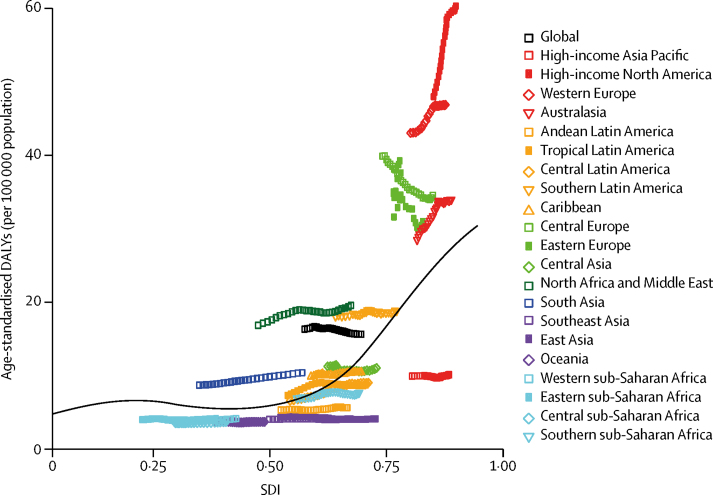
BACKGROUND: Multiple sclerosis is the most common inflammatory neurological disease in young adults. The Global Burden of Diseases, Injuries, and Risk Factors Study (GBD) provides a systematic method of quantifying various effects of a given condition by demographic variables and geography. In this systematic analysis, we quantified the global burden of multiple sclerosis and its relationship with country development level. METHODS: We assessed the epidemiology of multiple sclerosis from 1990 to 2016. Epidemiological outcomes for multiple sclerosis were modelled with DisMod-MR version 2.1, a Bayesian meta-regression framework widely used in GBD epidemiological modelling. Assessment of multiple sclerosis as the cause of death was based on 13 110 site-years of vital registration data analysed in the GBD's cause of death ensemble modelling module, which is designed to choose the optimum combination of mathematical models and predictive covariates based on out-of-sample predictive validity testing. Data on prevalence and deaths are summarised in the indicator, disability-adjusted life-years (DALYs), which was calculated as the sum of years of life lost (YLLs) and years of life lived with a disability. We used the Socio-demographic Index, a composite indicator of income per person, years of education, and fertility, to assess relations with development level. FINDINGS: In 2016, there were 2 221 188 prevalent cases of multiple sclerosis (95% uncertainty interval [UI] 2 033 866-2 436 858) globally, which corresponded to a 10·4% (9·1 to 11·8) increase in the age-standardised prevalence since 1990. The highest age-standardised multiple sclerosis prevalence estimates per 100 000 population were in high-income North America (164·6, 95% UI, 153·2 to 177·1), western Europe (127·0, 115·4 to 139·6), and Australasia (91·1, 81·5 to 101·7), and the lowest were in eastern sub-Saharan Africa (3·3, 2·9-3·8), central sub-Saharan African (2·8, 2·4 to 3·1), and Oceania (2·0, 1·71 to 2·29). There were 18 932 deaths due to multiple sclerosis (95% UI 16 577 to 21 033) and 1 151 478 DALYs (968 605 to 1 345 776) due to multiple sclerosis in 2016. Globally, age-standardised death rates decreased significantly (change -11·5%, 95% UI -35·4 to -4·7), whereas the change in age-standardised DALYs was not significant (-4·2%, -16·4 to 0·8). YLLs due to premature death were greatest in the sixth decade of life (22·05, 95% UI 19·08 to 25·34). Changes in age-standardised DALYs assessed with the Socio-demographic Index between 1990 and 2016 were variable. INTERPRETATION: Multiple sclerosis is not common but is a potentially severe cause of neurological disability throughout adult life. Prevalence has increased substantially in many regions since 1990. These findings will be useful for resource allocation and planning in health services. Many regions worldwide have few or no epidemiological data on multiple sclerosis, and more studies are needed to make more accurate estimates. FUNDING: Bill & Melinda Gates Foundation.
Overview
CoChat Summary
TL;DR
This GBD 2016 systematic analysis estimated the global burden of multiple sclerosis from 1990 to 2016, finding 2,221,188 prevalent cases in 2016 and a 10.4% increase in age-standardised prevalence since 1990. Burden varied widely by geography and Socio-demographic Index, with the highest prevalence in high-income North America and the lowest in sub-Saharan Africa and Oceania.
Key findings
- In 2016, there were 2,221,188 prevalent cases of multiple sclerosis (95% UI 2,033,866–2,436,858), corresponding to 30.1 cases per 100,000 population; age-standardised prevalence increased by 10.4% (95% UI 9.1–11.8) between 1990 and 2016.
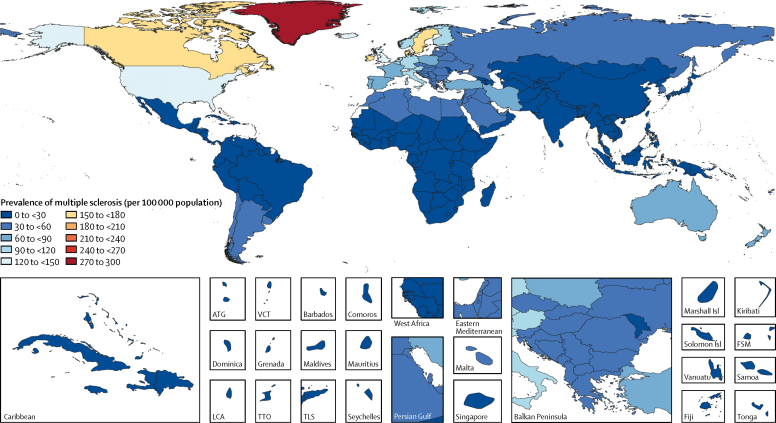
- The highest age-standardised prevalence estimates per 100,000 were in high-income North America (164.6, 95% UI 153.2–177.1), western Europe (127.0, 115.4–139.6), and Australasia (91.1, 81.5–101.7); the lowest were in eastern sub-Saharan Africa (3.3, 2.9–3.8), central sub-Saharan Africa (2.8, 2.4–3.1), and Oceania (2.0, 1.71–2.29).
- There were 18,932 deaths (95% UI 16,577–21,033) and 1,151,478 DALYs (968,605–1,345,776) due to multiple sclerosis in 2016; the global age-standardised death rate decreased significantly (−11.5%, 95% UI −35.4 to −4.7), whereas the change in age-standardised DALYs was not significant (−4.2%, −16.4 to 0.8).
- Smoking accounted for 99,076 DALYs (95% UI 62,164–140,650), or 8.6% (5.6–11.7) of global multiple sclerosis DALYs; prevalence increased with latitude (coefficient 1.03 per degree, 95% UI 1.03–1.04).
Methods
- GBD 2016 systematic analysis: mortality was modelled with CODEm using 13,110 site-years of vital registration data and predictive covariates; prevalence and incidence were modelled with DisMod-MR 2.1 using 167 unique sources (129 prevalence, 65 incidence) covering 13 of 21 GBD world regions, plus US medical claims data.
- Severity was classified into mild, moderate, severe, and asymptomatic states based on the Expanded Disability Status Scale; YLDs were derived from prevalence multiplied by disability weights and corrected for comorbidity; YLLs were calculated from deaths and remaining life expectancy; DALYs were the sum of YLLs and YLDs, with uncertainty propagated through 1,000 draws.
- The Socio-demographic Index was used to assess development level; smoking was the only environmental risk judged to have sufficient evidence for a causal relationship with multiple sclerosis, with population-attributable fractions estimated from exposure and relative risk data.
Limitations
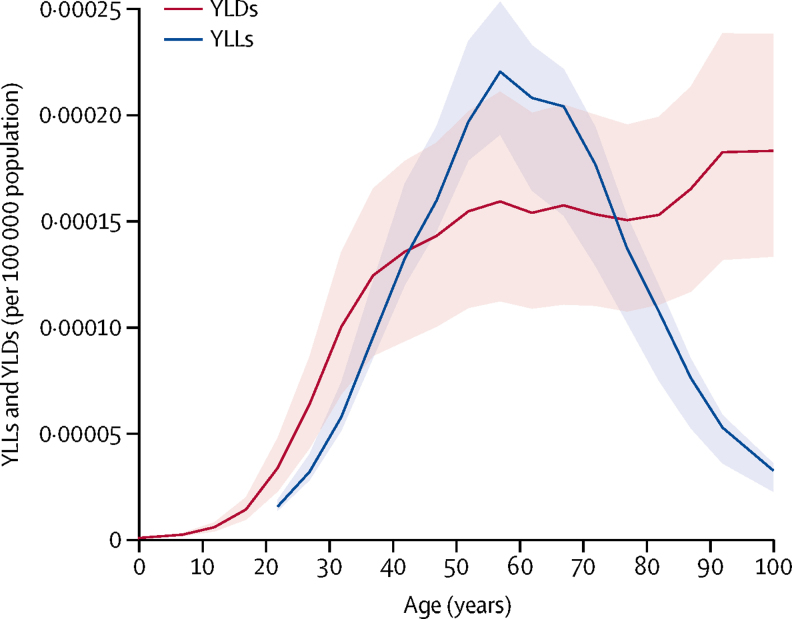
- Stated in the paper: data are absent or extremely sparse for many regions, including Latin America, sub-Saharan Africa, and Asia; the models used to predict prevalence, DALYs, and YLLs might lead to unusual changes in segments of the data, such as rapid prevalence increases in women older than 80 years and the YLD curve, which should be viewed with caution; underdiagnosis in less-developed countries cannot be excluded.
- Stated in the paper: there is a lack of robust predictive covariates for multiple sclerosis; including both SDI and latitude might have underestimated the effect of latitude because of collinearity, and inclusion of SDI might have spuriously led to increasing prevalence estimates over time; latitude remains a proxy and uncertain predictor, and measurement error cannot be excluded.
- Evident from the text: many country estimates rely on modelled predictions where no data were available; for example, the Greenland estimate was based on one small study of fewer than 2,000 inhabitants in which no cases were found between 1950 and 1974, and the uncertainty around that estimate is wide.
Model-written summary. Check it against the paper before relying on it.
Integrity signals
Registry
Cites
Statistics
Figures
Verification
Claims the paper makes
4 Valid · 1 Not valid · 12 Not checked · 85 Own results and interpretations
The cited sources support only part of this claim — read each source’s verdict below.
In the paper
“Geographical location before onset of multiple sclerosis remains a risk factor for acquisition.28”
§ Global, regional, and national burden of multiple sclerosis 1990–2016: a systematic analysis for the Global Burden of Disease Study 2016 > Discussion
What the sources say
- Partly supportedcites [28] Simpson S Blizzard L Otahal P Latitude is significantly associated with the prevalence of multiple sclerosis. A meta-analysis J Neurol Neurosurg Psychiatry 82 2011 1132 1141 21478203 sourceExperimental — accuracy not yet measured
The Global analyses section reports a significant association between latitude and MS prevalence, supporting a geographical pattern. But the paper does not establish that a person's location before onset is itself a risk factor for acquiring MS; it analyses population prevalence rather than individuals' pre-onset locations or acquisition risk. No page number was available in our copy. (LLM, conf=0.85)
plainstates a cause- Asserted: passes — The authors put it forward as true.
- Checkable: passes — It can be checked against evidence.
- Load-bearing: unclear — It is unclear whether the paper’s conclusions depend on it.
- Based: passes — The paper gives a reason why it holds.
- Partly supported
A result the paper states — it cites no source for it, so there is none to check. The quote shows it is in the paper.
In the paper
“YLDs begin to increase steeply early in the second decade of life.”
§ Global, regional, and national burden of multiple sclerosis 1990–2016: a systematic analysis for the Global Burden of Disease Study 2016 > Discussion
plainstates a cause- Asserted: passes — The authors put it forward as true.
- Checkable: passes — It can be checked against evidence.
- Load-bearing: unclear — It is unclear whether the paper’s conclusions depend on it.
- Based: passes — The paper gives a reason why it holds.
A result the paper reports from its own data — it cites no other source for it, so there is none to check. The quote shows it is in the paper.
In the paper
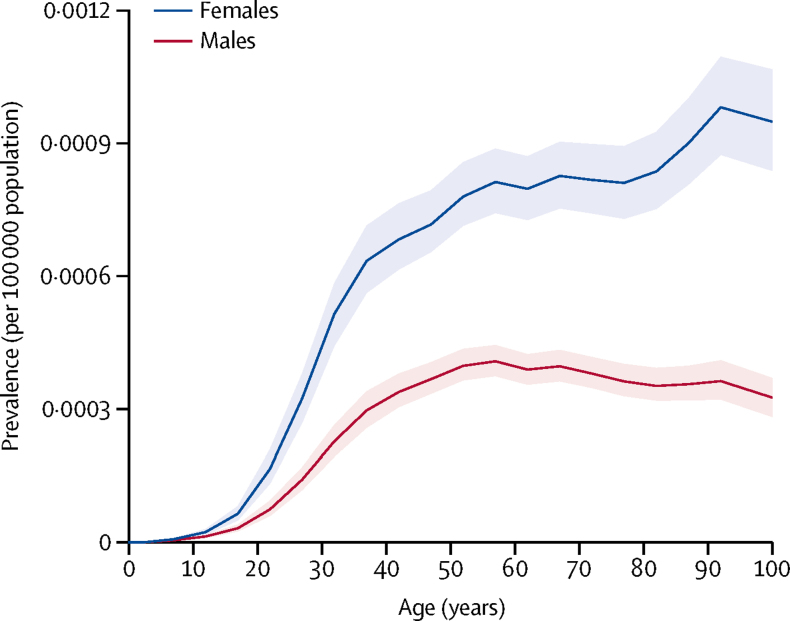
“The global prevalence of multiple sclerosis differs substantially by sex (figure 2).”
- Also stated in: § Discussion · plain
“Prevalence of multiple sclerosis differed substantially over the adult life of women and men.”
§ Global, regional, and national burden of multiple sclerosis 1990–2016: a systematic analysis for the Global Burden of Disease Study 2016 > Results
plainstates an association- Asserted: passes — The authors put it forward as true.
- Checkable: passes — It can be checked against evidence.
- Load-bearing: unclear — It is unclear whether the paper’s conclusions depend on it.
- Based: passes — The paper gives a reason why it holds.
- Also stated in: § Discussion · plain
A result the paper reports from its own data — it cites no other source for it, so there is none to check. The quote shows it is in the paper.
In the paper
“whereas the change in age-standardised DALYs was not significant (−4·2%, −16·4 to 0·8)”
- Also stated in: § Results · plain
“−4·2% (−16·4 to 0·8)”
§ Global, regional, and national burden of multiple sclerosis 1990–2016: a systematic analysis for the Global Burden of Disease Study 2016 > Abstract > Findings
plain- Asserted: passes — The authors put it forward as true.
- Checkable: passes — It can be checked against evidence.
- Load-bearing: unclear — It is unclear whether the paper’s conclusions depend on it.
- Based: passes — The paper gives a reason why it holds.
- Also stated in: § Results · plain
A result the paper reports from its own data — it cites no other source for it, so there is none to check. The quote shows it is in the paper.
In the paper
“In that year, prevalence was 10·4% higher than in 1990.”
§ Global, regional, and national burden of multiple sclerosis 1990–2016: a systematic analysis for the Global Burden of Disease Study 2016 > Discussion
plain- Asserted: passes — The authors put it forward as true.
- Checkable: passes — It can be checked against evidence.
- Load-bearing: unclear — It is unclear whether the paper’s conclusions depend on it.
- Based: passes — The paper gives a reason why it holds.
51 more claims
Create a free account to see all 102 claims and to verify the 1 reference still open.
- It may state two separate claims as one. 26
- Probably not a substantial claim. 29
Claims other papers make about this one
Each is checked against this paper’s own text: does it say what the citing paper says it does?
The cited source says what the claim attributes to it.
In the citing paper
“These 4 common UMNDs result in a significant decline in physical function5,7,8,17,18 and often develop secondary complications that affect their quality of life (QOL), including cognitive impairment,19–21 fatigue,22 chronic pain,23,24 depression,25–27 and anxiety.25–27”
From Feasibility, Acceptability, and Efficacy of Mindfulness Training in People With Upper Motor Neuron Disorders: A Systematic Review (2022) · cites this paper as [17]
Self-check
Percentages, sums and reported differences re-computed from the paper’s own numbers.
Each contradiction between two passages listed here was confirmed by an independent check.
Rated minor: it would not touch a result — a value no result rests on, a p-value that stays on the same side of the significance level, or a conflict that is clerical, resolved elsewhere in the paper, or outside its own findings.
In the paper
§ Global, regional, and national burden of multiple sclerosis 1990–2016: a systematic analysis for the Global Burden of Disease Study 2016 > Results
“Most deaths occurred in high SDI countries (10 021 95% UI 7358–10 873)”
§ Global, regional, and national burden of multiple sclerosis 1990–2016: a systematic analysis for the Global Burden of Disease Study 2016 > Results
“| High SDI | High SDI | 10 021 (7385 to 10 873) |”
Citations
Cites
Rating neurologic impairment in multiple sclerosis: An expanded disability status scale (EDSS)
Kurtzke, J. F. (1983) · Neurology · doi:10.1212/wnl.33.11.1444 · Cited by 15,011
Vos, T., Abajobir, A. A., Abate, K. H., Abbafati, C., Abbas, K. M., Abd-Allah, F., Abdulkader, R. S., Abdulle, A. M., Abebo, T. A., Abera, S. F., et al. (2017) · The Lancet · doi:10.1016/s0140-6736(17)32154-2 · Cited by 13,220
Self-citationDiagnosis of multiple sclerosis: 2017 revisions of the McDonald criteria
Thompson, A. J., Banwell, B. L., Barkhof, F., Carroll, W. M., Coetzee, T., Comi, G., Correale, J., Fazekas, F., Filippi, M., Freedman, M. S., et al. (2018) · The Lancet Neurology · doi:10.1016/s1474-4422(17)30470-2 · Cited by 9,476
Forouzanfar, M. H., Afshin, A., Alexander, L. T., Anderson, H. R., Bhutta, Z. A., Biryukov, S., Brauer, M., Burnett, R., Cercy, K., Charlson, F. J., et al. (2016) · The Lancet · doi:10.1016/s0140-6736(16)31679-8 · Cited by 7,698
Self-citationNew diagnostic criteria for multiple sclerosis: Guidelines for research protocols
Poser, C. M., Paty, D. W., Scheinberg, L., McDonald, W. I., Davis, F. A., Ebers, G. C., Johnson, K. P., Sibley, W. A., Silberberg, D. H., & Tourtellotte, W. W. (1983) · Annals of Neurology · doi:10.1002/ana.410130302 · Cited by 7,384
Vos, T., Allen, C., Arora, M., Barber, R. M., Bhutta, Z. A., Brown, A., Carter, A., Casey, D. C., Charlson, F. J., Chen, A. Z., et al. (2016) · The Lancet · doi:10.1016/s0140-6736(16)31678-6 · Cited by 7,253
Self-citationFeigin, V. L., Nichols, E., Alam, T., Bannick, M. S., Beghi, E., Blake, N., Culpepper, W. J., Dorsey, E. R., Elbaz, A., Ellenbogen, R. G., et al. (2019) · The Lancet Neurology · doi:10.1016/s1474-4422(18)30499-x · Cited by 5,644
Self-citationFood, nutrition, physical activity, and the prevention of cancer: a global perspective
(2008) · Choice Reviews Online · doi:10.5860/choice.45-5024 · Cited by 5,350
Diagnostic criteria for multiple sclerosis: 2005 revisions to the “McDonald Criteria”
Polman, C. H., Reingold, S. C., Edan, G., Filippi, M., Hartung, H., Kappos, L., Lublin, F. D., Metz, L. M., McFarland, H. F., O'Connor, P. W., et al. (2005) · Annals of Neurology · doi:10.1002/ana.20703 · Cited by 5,017
Reich, D. S., Lucchinetti, C. F., & Calabresi, P. A. (2018) · New England Journal of Medicine · doi:10.1056/nejmra1401483 · Cited by 2,491
Cited by
Items 501–600 of 1,078
Bučková, B. R., Kopál, J., Řasová, K., Tintěra, J., & Hlinka, J. (2021) · Frontiers in Neuroscience · doi:10.3389/fnins.2021.662784 · Cited by 8
“Multiple Sclerosis (MS) is a severe neurological condition, the incidence of which is growing on a global scale, reporting over 2.2 million cases worldwide in 2016 (Wallin et al., 2019).”
InfluentialSoler, B., Raats, J., Abasıyanık, Z., Lamers, I., Makshakov, G., & Feys, P. (2021) · International Journal of Rehabilitation Research · doi:10.1097/mrr.0000000000000501 · Cited by 10
Hajizadeh, M., Jabbari, A., Spotin, A., Hejazian, S. S., Galeh, T. M., Hassannia, H., Sahlolbei, M., Pagheh, A. S., & Ahmadpour, E. (2024) · Veterinary Sciences · doi:10.3390/vetsci11010034 · Cited by 7
“Industrialized countries are currently experiencing a rise in the incidence of multiple sclerosis (MS), which is likely attributed to a decline in parasitic infections [4,5].”
BackgroundRecommendations for essential medicines for multiple sclerosis in low-resource settings
Saylor, D. R., Rijke, N., McDonell, J., Laurson-Doube, J., Avasarala, J., Baldin, E., Banerjee, T. K., Bogdanovic, I., Bove, R. M., Chawla, D., et al. (2024) · Multiple Sclerosis Journal · doi:10.1177/13524585241308134 · Cited by 9
Curatoli, C., Marcassoli, A., Barbadoro, F., Fornari, A., Leonardi, M., Raggi, A., Schiavolin, S., Terragni, R., Antozzi, C. G., Brambilla, L., et al. (2025) · Behavioural Neurology · doi:10.1155/bn/2744955 · Cited by 8
“All these symptoms lead MS to be one of the most burdensome neurological diseases [6].”
Bayat, F., Negarandeh, R., & Pashaeypoor, S. (2025) · BMC Neurology · doi:10.1186/s12883-025-04148-x · Cited by 10
“The global average prevalence of MS is 33 per 100,000 individuals, although there is significant variance among different countries [5].”
Fatigue and its correlation with anxiety and depression in patients with multiple sclerosis in China
Wang, H., Wang, R., Zhao, R., Zhang, G., Zhang, G., & Zhao, X. (2025) · Frontiers in Neurology · doi:10.3389/fneur.2025.1604540 · Cited by 7
Liu, J., Fan, H., Wang, H., Xu, Y., Guo, Y., Han, P., & Shen, Y. (2025) · Medicine · doi:10.1097/md.0000000000045089 · Cited by 9
Saad, M. A., Eissa, N. M., Ahmed, M. A., ElMeshad, A. N., Laible, G., Attia, A. S., Al‐Ghobashy, M. A., Abdelsalam, R. M., & Al‐Shorbagy, M. Y. (2022) · International Journal of Nanomedicine · doi:10.2147/ijn.s359114 · Cited by 8
“Multiple sclerosis (MS) is an autoimmune neurodegenerative disease of the central nervous system (CNS) characterized by multifocal demyelination, inflammation and axonal destruction.1 According to a systematic analysis completed in 2016, it was estimated that over 2 million people worldwide are affected by this diseas…”
BackgroundInfluentialThe adaptation model of immunity: A new insight into aetiology and treatment of multiple sclerosis
Manjili, M. H. (2023) · Scandinavian Journal of Immunology · doi:10.1111/sji.13255 · Cited by 7
Mattos, F. G. M., Luciano, F., Lencioni, T., Gervasoni, E., Jonsdottir, J., Anastasi, D., Pavei, G., Clerici, M., & Cattaneo, D. (2023) · Scientific Reports · doi:10.1038/s41598-023-36916-5 · Cited by 11
Duarte-Silva, E. P., Oriá, A. C., Mendonça, I. P., de Paiva, I. H. R., dos Santos, K. L., Sales, A. J., de Souza, J. R. B., Maes, M. H. J., Meuth, S. G., & Peixoto, C. A. (2024) · Journal of Neuroimmune Pharmacology · doi:10.1007/s11481-024-10148-4 · Cited by 9
Ahmad, S. N. S., Shojaedin, S. S., & Tazji, M. K. (2025) · BMJ Open · doi:10.1136/bmjopen-2024-086941 · Cited by 7
Javadi, S. K. H. S., & Nouri, A. (2025) · Patient Education and Counseling · doi:10.1016/j.pec.2025.108673 · Cited by 9
Pharmacotherapeutic considerations in women with multiple sclerosis
Andersen, J. B., & Magyari, M. (2020) · Expert Opinion on Pharmacotherapy · doi:10.1080/14656566.2020.1774554 · Cited by 7
“3 million people worldwide [1] and two thirds of the MS population are women [2].”
BackgroundSuperlative use within news articles relating to therapies for multiple sclerosis
Ferrell, M. C., Ferrell, S. C., Ottwell, R., Johnson, J., & Vassar, M. B. (2021) · Multiple Sclerosis and Related Disorders · doi:10.1016/j.msard.2021.102736 · Cited by 7
Advances for the Development of In Vitro Immunosensors for Multiple Sclerosis Diagnosis
Guerrero, J. M., Aguirre-Tostado, F. S., González, M. D. L. L. M., & Carrillo, A. (2021) · BioChip Journal · doi:10.1007/s13206-021-00018-z · Cited by 8
Salehi, Z., Talebi, S., Maleknia, S., Palizban, F., Moghadasi, A. N., Kavousi, K., Sahraian, M. A., & Izad, M. H. (2021) · Journal of Molecular Neuroscience · doi:10.1007/s12031-021-01878-8 · Cited by 8
Ghosh, S., Huo, M., Shawkat, M. S. A., & McCalla, S. (2021) · Applied Sciences · doi:10.3390/app11188335 · Cited by 9
Maguire, R., McKeague, B., Kóka, N., Coffey, L., Maguire, P., & Desmond, D. M. (2021) · Multiple Sclerosis and Related Disorders · doi:10.1016/j.msard.2021.103293 · Cited by 10
Duddy, D., Doherty, R., Connolly, J., Loughrey, J., Condell, J. V., Hassan, D., & Faulkner, M. (2022) · International Journal of Environmental Research and Public Health · doi:10.3390/ijerph19106176 · Cited by 8
“7 million strokes occur annually [2], and associated disabilities often result in reduced gait function [3,4].”
BackgroundZhang, S., Zhang, J., Zhang, X., Lv, P., & Guo, S. (2022) · Immunobiology · doi:10.1016/j.imbio.2022.152313 · Cited by 9
New insights into the socio-economic aspects of multiple sclerosis in a cohort of Polish patients
Rzepiński, Ł., Zawadka‐Kunikowska, M., Kucharczuk, J., Newton, J. L., & Zalewski, P. (2020) · Annals of Agricultural and Environmental Medicine · doi:10.26444/aaem/117962 · Cited by 7
Ternák, G., Berényi, K., Márovics, G., Sümegi, A., Fodor, B., Németh, B., & Kiss, I. (2020) · In Vivo · doi:10.21873/invivo.12186 · Cited by 8
Botchorishvili, N., Shiukashvili, N., Mikeladze, N., Dzagnidze, A., Mikava, N., Tighashvili, M., & Janelidze, M. (2021) · Neurology Research International · doi:10.1155/2021/5591078 · Cited by 8
“According to estimates from the Global Burden of Disease Study, there were over two million MS patients in 2016 [2].”
MethodDemand with low supply: A pipeline for personalized integrative medicine in multiple sclerosis
Manglani, H. R., Healy, B. C., & Vranceanu, A. (2022) · Multiple Sclerosis and Related Disorders · doi:10.1016/j.msard.2022.103493 · Cited by 7
Estimation the medical cost of multiple sclerosis in Iran; 2019–2020
Asadollahi, M., Darvishi, A., Azimi, A., Annabi, M., Jafariazar, Z., & Heshmat, R. (2022) · BMC Health Services Research · doi:10.1186/s12913-022-07551-z · Cited by 7
“2016, 18,932 people worldwide died due to MS, and the number of disability-adjusted life years (DALYs) was estimated [11] at 115,148 units [12].”
BackgroundImage Domain Transfer by Deep Learning is Feasible in Multiple Sclerosis Clinical Practice
Hagiwara, A., Kamagata, K., & Aoki, S. (2020) · Investigative Radiology · doi:10.1097/rli.0000000000000665 · Cited by 7
Pandit, L. (2021) · Multiple Sclerosis Journal · doi:10.1177/13524585211028806 · Cited by 8
Sokołowski, I., Kucharska-Lusina, A., Miller, E. D., Popławski, T., & Majsterek, I. (2024) · Current Issues in Molecular Biology · doi:10.3390/cimb46100693 · Cited by 7
“Elevated HSP90 levels have been linked to disease severity in systemic lupus erythematosus (SLE) [2,27,28] and idiopathic inflammatory myopathies (IIM) [29].”
BackgroundMultiple Sclerosis After the Age of 50 Years: A Comparative Analysis of Late Onset and Adult Onset
Soares-dos-Reis, R., Silva, P., Ferreira, F., Seabra, M., Mendonça, T., Abreu, P., & Guimarães, J. (2025) · Journal of Clinical Neurology · doi:10.3988/jcn.2024.0302 · Cited by 6
“The number of relapses throughout the disease course was significantly lower in pwLOMS (1 [0–2]) than pwAOMS (3 [1–6], p 0.001).”
InfluentialLama, K., Bhutia, G. T., Deka, R., Beeraka, N. M., & Gupta, S. K. (2025) · International Immunopharmacology · doi:10.1016/j.intimp.2025.115467 · Cited by 6
Tan, J., & Han, D. (2026) · Multiple Sclerosis and Related Disorders · doi:10.1016/j.msard.2026.107027 · Cited by 8
Ultrasound in Women's Health: Mechanisms, Applications, and Emerging Opportunities
Ornellas, S. B., Kizilaslan, B., Shah, A., Hou, J. F., Shin, Y., Moyers, A. H., Lozano, C., & Dağdeviren, C. (2026) · Advanced Materials · doi:10.1002/adma.202520454 · Cited by 6
“Within this context, the prevalence of Alzheimer’s disease and overall dementia is two times bigger in women [105], and multiple sclerosis is diagnosed two to three times more frequently in women [106].”
King, R., Marrie, R. A., van der Mei, I. A. F., Banwell, B., Makaroff, L., Rijke, N., & Helme, A. E. (2026) · Multiple Sclerosis Journal · doi:10.1177/13524585261479954 · Cited by 8
Alroughani, R., Al-Kawi, Z., Hassan, A. A., Otaibi, H. A., Mujtaba, A., Atat, R. A., Riachi, N. J., Akkawi, N. M., Koussa, S., Inshasi, J. S. S., et al. (2021) · Clinical Neurology and Neurosurgery · doi:10.1016/j.clineuro.2021.106576 · Cited by 6
Hashemi, E., Yoseph, E., Tsai, H., Moreno, M. A., Yeh, L.-H., Mehta, S. B., Kono, M., Proia, R. L., & Han, M. H. (2022) · Cellular and Molecular Neurobiology · doi:10.1007/s10571-022-01245-0 · Cited by 7
Mavridis, T., Papagiannakis, N., Breza, M., Vavougios, G. D., Patas, K., Daponte, A., Laskaratos, A., Barakakis, P. A., Pantazopoulos, I. N., & Mitsikostas, D. D. (2022) · Journal of Personalized Medicine · doi:10.3390/jpm12091474 · Cited by 7
“Not only MS as a primary disease but also comorbidities frequently associated with MS, affect the quality of life of these patients, resulting in reduced productivity, as measured in disability-adjusted life years (DALYs) [7].”
BackgroundCalvillo-Robledo, A., Ramírez-Farías, C., Valdez‐Urias, F., Huerta-Carreón, E. P., & Quintanar‐Stephano, A. (2023) · Frontiers in Neuroscience · doi:10.3389/fnins.2023.1138627 · Cited by 7
“However, the onset and evolution of MS are clearly different between individuals (Reich et al., 2018; Wallin et al., 2019; Radandish et al., 2021).”
BackgroundMethodMaroufi, S. F., Shobeiri, P., Mohammadi, E., Azadnajafabad, S., Malekpour, M., Ghasemi, E., Rashidi, M., Moghaddam, S. S., Rezaei, N., Tehrani, Y. S., et al. (2023) · Neuroepidemiology · doi:10.1159/000533527 · Cited by 6
Piedrabuena, M. A., Correale, J. D., Fiol, M. P., Marrodán, M., Rojas, J. I., Alonso, M., Pappolla, A., Míguez, J., Patrucco, L., Cristiano, E., et al. (2024) · Journal of the Neurological Sciences · doi:10.1016/j.jns.2024.123052 · Cited by 4
Prevalence of multiple sclerosis in Spain. Estimates from the Primary Care Clinical Database (BDCAP)
Cayuela, L., García‐Muñoz, C., de la Maza, S. S., & Cayuela, A. (2024) · Neurología · doi:10.1016/j.nrl.2023.06.006 · Cited by 9
Sun, C., Jia, Y., Li, H., Qiao, X., Tang, M., Geng, M., Jones, E., Pike, J., Unsworth, M., & Hu, M. (2024) · Scientific Reports · doi:10.1038/s41598-024-64713-1 · Cited by 6
Adal, T. G. G., van der Mei, I. A. F., Taylor, B. V., de Graaff, B., Palmer, A. J., Chen, G., Henson, G. J., Roydhouse, J. K., & Campbell, J. A. (2024) · Social Science & Medicine · doi:10.1016/j.socscimed.2024.117405 · Cited by 7
Automated assessment of brain MRIs in multiple sclerosis patients significantly reduces reading time
Sieber, V., Rusche, T., Yang, S., Stieltjes, B., Fischer, U., Trebeschi, S., Cattin, P. C., Nguyen‐Kim, T. D. L., Psychogios, M., Lieb, J., et al. (2024) · Neuroradiology · doi:10.1007/s00234-024-03497-7 · Cited by 7
Faysal, M. F., Zehravi, M., Amin, M. A., Rab, S. O., Jahnavi, P., Arjun, U. V. N. V., Gupta, J. K., Billah, A. A. M., Vodeti, R., Prasad, P. D., et al. (2025) · Pathology - Research and Practice · doi:10.1016/j.prp.2025.156090 · Cited by 7
Epidemiology of Inflammation-Related Diseases
Selçuk, K. T. (2020) · Advances in medical diagnosis, treatment, and care (AMDTC) book series · doi:10.4018/978-1-7998-3594-3.ch002 · Cited by 7
Cianferotti, C., Barreca, G., Bollabathini, V., Carcone, L., Grainger, D. M., Staniland, S., & Taddei, M. (2021) · European Journal of Organic Chemistry · doi:10.1002/ejoc.202100058 · Cited by 6
Multiple sclerosis in Iran: An epidemiological update with focus on air pollution debate’
Amiri, M. (2021) · Journal of Clinical and Translational Research · doi:10.18053/jctres.07.202101.012 · Cited by 12
Wu, J., Luo, X., Huang, N., Li, Y., & Luo, Y. (2022) · Frontiers in Neurology · doi:10.3389/fneur.2022.809811 · Cited by 6
Brieva, L., Estruch, B. C., Merino, J. A. G., Meca‐Lallana, V., Río, J., Rodríguez-Antigüedad, A., Agüera, E., Ara, J. R., Luque, A. A., García, C. A., et al. (2022) · Multiple Sclerosis and Related Disorders · doi:10.1016/j.msard.2022.103805 · Cited by 8
Hu, L., Zhao, X., Li, P., Zeng, Y., Zhang, Y., Shen, Y., Wang, Y., Sun, X., Lai, B., & Zhong, C. (2022) · Frontiers in Immunology · doi:10.3389/fimmu.2022.864314 · Cited by 7
Nimodipine Exerts Beneficial Effects on the Rat Oligodendrocyte Cell Line OLN-93
Boltz, F., Enders, M., Feigenspan, A., Kirchner, P., Ekici, A. B., & Küerten, S. (2022) · Brain Sciences · doi:10.3390/brainsci12040476 · Cited by 8
“With over 2 million patients affected worldwide, MS is the most common neurological disorder in young adults [1].”
BackgroundZarobkiewicz, M. K., Morawska, I., Kowalska, W., Halczuk, P., Roliński, J., & Bojarska-Junak, A. A. (2022) · Journal of Clinical Medicine · doi:10.3390/jcm11113210 · Cited by 6
“MS is considered the most commonly diagnosed inflammatory neurological disorder in the young adult population [4].”
BackgroundEmery, H., Padgett, C. R., Ownsworth, T., & Honan, C. A. (2022) · Disability and Rehabilitation · doi:10.1080/09638288.2022.2121865 · Cited by 6
Sohrabi, P., Parnow, A., & Jalili, C. (2022) · Neuroscience Letters · doi:10.1016/j.neulet.2022.136936 · Cited by 6
Altmann, P., Ponleitner, M., Monschein, T., Krajnc, N., Zulehner, G., Zrzavy, T., Leutmezer, F., Rommer, P. S., Kornek, B., Berger, T., et al. (2022) · Digital Health · doi:10.1177/20552076221135387 · Cited by 7
“A progressing and chronic condition, MS can be considered a prime example of a disease that affects HRQoL throughout adulthood.(26) In the clinical context, there is a striking discrepancy between acknowledging impaired HRQoL as a burden for pwMS and adopting the monitoring of PROs into practice.”
BackgroundMotavallihaghi, S., Ghaemipanaeian, M., Asl, S. S., Foroughi-Parvar, F., & Maghsood, A. H. (2023) · International Immunopharmacology · doi:10.1016/j.intimp.2023.110379 · Cited by 6
Fang, X., Lu, Y., Fu, Y., Liu, Z., Kermode, A. G., Qiu, W., Ling, L., & Liu, C. (2023) · Brain Sciences · doi:10.3390/brainsci13060924 · Cited by 7
“RRMS causes the accumulation of irreversible disability over time, further increasing the burden on patients and society [5].”
BackgroundFingolimod-Associated Macular Edema in the Treatment of Multiple Sclerosis
Khan, A., Gutlapalli, S. D., Sohail, M., Patel, P., Midha, S., Shukla, S., Dhamija, D., Bello, A. O., & Elshaikh, A. O. (2023) · Cureus · doi:10.7759/cureus.41520 · Cited by 7
Characteristics of multiple sclerosis and demyelinating disease in an Asian American population
Fan, J. H., Alexander, J. R., Poole, S. T., Wijangco, J., Henson, L. J., Dobson, R., Guo, C., & Bove, R. M. (2023) · Multiple Sclerosis Journal · doi:10.1177/13524585231188486 · Cited by 6
Goulding, F. L., Evans, C. D., Knox, K. B., Lim, H. J., Levin, M. C., & Donkers, S. J. (2019) · Trials · doi:10.1186/s13063-019-3768-7 · Cited by 6
Hafshejani, A. K. (2020) · Journal of Biomedical Physics and Engineering · doi:10.31661/jbpe.v0i0.2007-1136 · Cited by 7
“Received: 5 July 2020 Accepted: 19 August 2020 Introduction Multiple sclerosis (MS) is a chronic autoimmune disease, leading to demyelination of the central nervous system (CNS) and severe neurological disability [1-3].”
BackgroundLearmonth, Y. C., & Heritage, B. (2020) · Archives of Physical Medicine and Rehabilitation · doi:10.1016/j.apmr.2020.10.138 · Cited by 6
Palakeeti, B., Reddy, K. V., Gobi, K. V., Rao, P. N., & Chinta, J. P. (2021) · Future Journal of Pharmaceutical Sciences · doi:10.1186/s43094-021-00239-x · Cited by 7
Multiple sclerosis in Peru: National prevalence study using capture-recapture analysis
Gonzales-Gamarra, O., Alva‐Díaz, C., Pacheco‐Barrios, K., Aguirre-Quispe, W., Málaga, M., Inca, J., Rojas, E., Zamalloa, C. C., Montalván, M., Salcedo, E., et al. (2021) · Multiple Sclerosis and Related Disorders · doi:10.1016/j.msard.2021.103147 · Cited by 9
Visser, L. A., Folcher, M., Simao, C. D., Gutierrez, B., Escudero, E., Groot, C. A. U., & Redekop, K. (2021) · PharmacoEconomics · doi:10.1007/s40273-021-01081-y · Cited by 7
“The disease has a prevalence in Europe of 60–120 per 100,000, and 120–150 per 100,000 in North America [1].”
BackgroundHunter, S. F., Bindra, J., Chopra, I., Niewoehner, J., Panaccio, M. P., & Wan, G. J. (2021) · ClinicoEconomics and Outcomes Research · doi:10.2147/ceor.s330118 · Cited by 6
Ocular manifestations of multiple sclerosis in patients from three countries: A Web-based survey
Zhao, R., Zhang, G., Zhang, W., Yu, W.-J., Du, L., Toledo, M. C., Leal, O., O’Farrill, Z. L., & Izquierdo, G. (2021) · European Journal of Ophthalmology · doi:10.1177/11206721211069457 · Cited by 6
The dynamics of relapses during treatment switch in relapsing-remitting multiple sclerosis
Frascoli, F., Roos, I., Malpas, C. B., & Kalinčík, T. (2022) · Journal of Theoretical Biology · doi:10.1016/j.jtbi.2022.111091 · Cited by 7
Clemens, S. A. C., Fortaleza, C. M. C. B., Crowe, M., Pollard, A. J., Tasca, K. I., Grotto, R. M. T., Martins, M. R., Spadaro, A. G., Barretti, P., Verstraeten, T., et al. (2022) · Vaccine · doi:10.1016/j.vaccine.2022.08.026 · Cited by 9
“The findings in our study corroborate the global epidemiology of MS; the prevalence is higher in females in general [20] and, in relation to relapses, the age-attenuation of MS relapses is delayed in females when compared to males [21].”
ResultThảo, N. T. (2023) · Tạp chí Kinh tế và Phát triển · doi:10.33301/jed.vi.1232 · Cited by 7
Cerebrospinal Fluid Testing for Multiple Sclerosis
Goldsmith, J. F., & Herskovits, A. Z. (2020) · Clinics in Laboratory Medicine · doi:10.1016/j.cll.2020.06.002 · Cited by 7
Mamoei, S., Jensen, H. B., Dalgas, U., Zijdewind, I., Pedersen, A. K., Nygaard, M. K. E., Eskildsen, S. F., & Stenager, E. (2020) · Journal of Clinical Neuroscience · doi:10.1016/j.jocn.2020.10.034 · Cited by 6
“[1] MS is the most common neuroinflammatory disorder and the leading cause of non-traumatic disability in young adults.[2] Symptoms are protean and consist of palsy, paresthesia, spasticity, diplopia, ataxia, dysphagia, cognitive dysfunction, and sphincter symptoms among others.”
BackgroundMiravalle, A. A., Katz, J., Robertson, D. S., Hayward, B., Harlow, D. E., Lebson, L. A., Sloane, J. A., Bass, A. D.-D., & Fox, E. (2021) · Neurodegenerative Disease Management · doi:10.2217/nmt-2020-0059 · Cited by 6
Epidemiological Evidence of the Recent Surge in MS in Asia and Australia: A Systematic Review
Eskandarieh, S., & Sahraian, M. A. (2021) · Journal of Kermanshah University of Medical Sciences · doi:10.5812/jkums.111028 · Cited by 8
Valenzuela, B., Gisleskog, P. O., Poggesi, I., Sidorenko, T., Burcklen, M., Kracker, H., & Ruixo, J. J. P. (2022) · CPT Pharmacometrics & Systems Pharmacology · doi:10.1002/psp4.12778 · Cited by 6
Daniel, E. C., Tirunagari, S., Batth, K., Windridge, D., & Balla, Y. (2024) · medRxiv · doi:10.1101/2024.07.18.24310578 · Cited by 7
Makkawi, S., Abulaban, A. A., Malik, Y. M. A., Alshehri, E., Althobaiti, A., Aljarallah, S., Elboghdady, A., AlHajjar, L. M., Shami, S., Bohlega, S., et al. (2025) · Neurology and Therapy · doi:10.1007/s40120-024-00707-5 · Cited by 5
Yu, M., Simpson, S., Lerede, A., Nicholas, R. S., Coe, S., Tektonidis, T. G., Solsona, E., Middleton, R., Probst, Y., Hampshire, A., et al. (2025) · Nutrients · doi:10.3390/nu17213326 · Cited by 6
Cuthbert, M., Lewandowska, M., Freeman, L., Devine, C., Lee, K. S., & Kassam, S. (2022) · American Journal of Lifestyle Medicine · doi:10.1177/15598276221141403 · Cited by 5
Saeedi, J. A., Al-Yafeai, R. H., AlAbdulSalam, A. M., Al-Dihan, A. Y., Aldwaihi, A., Harbi, A. A. A., Aljadhai, Y. I., Al-Jedai, A. H., Alkhawajah, N. M., Alluqmani, M. M., et al. (2023) · Clinical and Translational Neuroscience · doi:10.3390/ctn7010005 · Cited by 5
Socioeconomic and Regional Disparities in Industry-Sponsored Clinical Trials in Multiple Sclerosis
Marti, S., Hoepner, A. G. F., Hammer, H. N., Salmen, A., Chan, A., & Hoepner, R. (2023) · JAMA Network Open · doi:10.1001/jamanetworkopen.2023.45619 · Cited by 5
Stress and Quality of Life in Caregivers of Patients with Multiple Sclerosis
Kantanis, A., Pelantaki, M., Fountaki, M. L., Konstantopoulos, V., Paraskevas, T., Stavropoulou, E., Tsiamaki, E., Trimmis, N., & Plotas, P. (2024) · Medicina · doi:10.3390/medicina60071033 · Cited by 8
“This tendency continues until approximately the end of the sixth decade of life, when the gender ratio is 2:1 in favor of women [3].”
BackgroundInfluentialOreja‐Guevara, C., Meca-Lallana, J. E., Díaz-Díaz, J., Ara, J.-R., Pérez, M. Á. H., Gil, J. G., Alonso, A., de la Fuente, B. P., Ramió‐Torrentà, L., Eichau, S., et al. (2024) · Multiple Sclerosis and Related Disorders · doi:10.1016/j.msard.2024.105787 · Cited by 6
Nahayati, M., Dashtebayaz, A. H., Taghipour, A., & Baghaei, M. (2024) · Multiple Sclerosis and Related Disorders · doi:10.1016/j.msard.2024.106217 · Cited by 5
Brasanac, J., Heine, J., & Chien, C. (2025) · Neurodegenerative Diseases · doi:10.1159/000544813 · Cited by 6
Beczek, A., Roikjær, S. G., Simonÿ, C., Landt, E., Storr, L. K., Dahl, M., & Beck, M. (2025) · BMC Neurology · doi:10.1186/s12883-025-04106-7 · Cited by 6
“As life expectancy for people with MS increases, managing the growing population with greater disability and age-related comorbidities becomes essential [20, 21].”
Towards developing brain-computer interfaces for people with Multiple Sclerosis
Russo, J. S., Mahoney, T., Kokorin, K., Reynolds, A., Lin, C., John, S. E., & Grayden, D. B. (2025) · PLoS ONE · doi:10.1371/journal.pone.0319811 · Cited by 5
Aliyev, R. R., Mehtiyeva, S. N., & Shiraliyeva, R. К. (2025) · World of Medicine and Biology · doi:10.26724/2079-8334-2025-1-91-16-20 · Cited by 5
Pantoja‐Ruiz, C., Fawcett, C. B., Lacouture, I., Barrios-Bermúdez, H., Nariño, D., & Rosselli, D. (2025) · Seizure · doi:10.1016/j.seizure.2025.05.009 · Cited by 5
“This suggests that even in populations where MS is less common(40), the immunological and neuroinflammatory processes linking these conditions persist.”
Exome Sequencing Analysis of Familial Cases of Multiple Sclerosis and a Monozygotic Discordant Twin
Alkhateeb, A. M., Salman, D. S., & Al‐Hayk, K. (2021) · Arabian Journal for Science and Engineering · doi:10.1007/s13369-020-05242-7 · Cited by 5
“22 million affected worldwide, is considered the most common inflammatory disease affecting young adults [1].”
BackgroundUrodynamics in patients with multiple sclerosis: is it necessary? A randomized-controlled trial
Helou, E. E., Sarkis, J., Mjaess, G., Zalaket, J., Mouawad, C., Sayegh, N., Ghattas, S., Azar, C., Helou, J. E., Abboud, H., et al. (2021) · Scandinavian Journal of Urology · doi:10.1080/21681805.2021.1879930 · Cited by 5
“Multiple sclerosis (MS) is a frequent [1] and debilitating autoimmune neurological disease with various manifestations which often lead to major impairments in quality-of-life (QoL).”
BackgroundSiokas, V., Katsiardanis, K., Aloizou, A., Bakirtzis, C., Liampas, I., Koutlas, E., Rudolf, J., Ntinoulis, K., Kountouras, J., Dardiotis, E., et al. (2021) · Neurology International · doi:10.3390/neurolint13040051 · Cited by 8
“Epidemiologically, the prevalence of MS seems to vary geographically, and to increase with latitude; it is higher in countries of the northern hemisphere [7] and among developed countries [8].”
BackgroundConti, A., Treaba, C. A., Mehndiratta, A., Barletta, V. T., Mainero, C., & Toschi, N. (2021) · Annual International Conference of the IEEE Engineering in Medicine and Biology Society (EMBC) · doi:10.1109/embc46164.2021.9629526 · Cited by 6
“Multiple sclerosis (MS) is one of the most common causes of neurological disability in young adults in the Western world [1].”
BackgroundEffects of cigarette smoke exposure on a mouse model of multiple sclerosis
Ho, J., Koshibu, K., Xia, W., Luettich, K., Kondylis, A., Garcia, L., Phillips, B. W., Peitsch, M. C., & Hoeng, J. (2022) · Toxicology Reports · doi:10.1016/j.toxrep.2022.03.032 · Cited by 8
Rostami, A., Riahi, S. M., Mollalo, A., Razavian, I., Akbari, N., Marhoommirzabak, E., Mahjour, S., Sartip, B., Arshadi, M., Razavian, E., et al. (2022) · Transactions of the Royal Society of Tropical Medicine and Hygiene · doi:10.1093/trstmh/trac053 · Cited by 5
Zhang, X., Song, Y., Chen, X., Zhuang, X., Xie, Q., Wei, Z., & Li, Y. (2022) · Computational Intelligence and Neuroscience · doi:10.1155/2022/1661334 · Cited by 5
The position of geochemical variables as causal co-factors of diseases of unknown aetiology
Davies, T. C. (2022) · SN Applied Sciences · doi:10.1007/s42452-022-05113-w · Cited by 5
Longitudinal Changes of Deep Gray Matter Shape in Multiple Sclerosis
Tsagkas, C., Geiter, E., Gaetano, L., Naegelin, Y., Amann, M., Parmar, K., Papadopoulou, A., Wuerfel, J. T., Kappos, L., Sprenger, T., et al. (2022) · NeuroImage Clinical · doi:10.1016/j.nicl.2022.103137 · Cited by 6
Metadata
- Authors
- Wallin, M. T., Culpepper, W. J., Nichols, E., Bhutta, Z. A., Gebrehiwot, T. T., Hay, S. I., Khalil, I. A., Krohn, K. J., Liang, X., Naghavi, M., Mokdad, A. H., Nixon, M. R., Reiner, R. C., Sartorius, B., Smith, M., Topor-Madry, R., Werdecker, A., Vos, T., Feigin, V. L., & Murray, C. J. L.
- Affiliations
- United States Department of Veterans Affairs (US)
- University of Maryland, Baltimore (US)
- George Washington University (US)
- ORCID
- Venue
- The Lancet Neurology
- Publisher
- Elsevier BV
- Published
- 2019-03
- Volume
- 18
- Issue
- 3
- Pages
- 269-285
- ISSN
- 1474-4422 (ISSN-L)
- PMC
- PMC6372756
- OpenAlex
- W2914720734
- Semantic Scholar
- 0b99adcd5f03f05530e9c57347dd9401bccca9b2
- Cited by
- 1,134
- References
- 57
- Citations by year
- 2026: 100 · 2025: 122 · 2024: 145 · 2023: 178 · 2022: 181 · 2021: 202 · 2020: 167 · 2019: 36
- FWCI
- 97.66
- Type
- journal article
- Language
- en
- Open access
- hybrid
- doi.org
- Licence
- cc-by
- www.elsevier.com/tdm/userlicense/1.0/ (tdm)
- www.elsevier.com/legal/tdmrep-license (tdm)
- creativecommons.org/licenses/by/4.0/ (vor)
- Locations
- The Lancet Neurology (publishedVersion, cc-by)
- Europe PMC (PubMed Central) (publishedVersion, other-oa)
- PubMed Central (publishedVersion, cc-by)
- PubMed (publishedVersion)
- Tuwhera (Auckland University of Technology) (publishedVersion, other-oa)
- LSHTM Research Online (London School of Hygiene and Tropical Medicine) (acceptedVersion)
- Tuwhera (Auckland University of Technology) (submittedVersion, cc-by)
- Funders
- Bill and Melinda Gates Foundation
- Topics
- Health Sciences › Medicine › Clinical Neurology › Multiple Sclerosis Research Studies
- Social Sciences › Economics, Econometrics and Finance › Economics and Econometrics › Health Systems, Economic Evaluations, Quality of Life
- Health Sciences › Health Professions › Physical Therapy, Sports Therapy and Rehabilitation › Musculoskeletal pain and rehabilitation
- Keywords
- multiple sclerosis, disease burden, disability-adjusted life years, years of life lost, years lived with disability, socio-demographic index, country development level, global epidemiology, neurological disorders, Global Burden of Disease Study 2016, vital registration data, sub-Saharan Africa
- MeSH terms
- Global Burden of Disease, Bayes Theorem, Cause of Death, Female, Humans, Life Expectancy, Male, Multiple Sclerosis, Risk Factors, Global Health, Prevalence, Quality-Adjusted Life Years
About these checks
Registry, retraction, Cites and statistics results are computed, not judged, with one exception: a printed reference that no index lists is read once by a model before it counts as a citation error. Claims are extracted by a model and kept only when their quote appears verbatim in the text; each cited source is then checked, with a model’s help, for whether it says what the claim relies on. Those verdicts can be wrong — read the claim’s quote and the cited source before relying on one.
The claim verdicts this report counts are experimental: their accuracy is not yet measured.
A language model drew the claims from the paper on 2026-10-22, under version 3 of the claim definition (model deepseek-v4.1-flash, prompt extract-v3).
A second model labelled each claim on 2026-10-22 (model jev-1.13-20260917, definition revision gold-guideline-v0.2).
Cited sources are checked with a language model’s help (gpt-6-sol).
Statistics and arithmetic are recomputed, not judged.
Confidence bands are shown only for fields calibrated on our annotated test set. None is calibrated yet, so no band is shown.
What counts as a claim ›How we measure confidence ›How we check this ›
Are you an author, or do you see a problem with this page? Request a review
Data sources
Bibliographic data: Semantic Scholar, OpenAlex, Crossref.
Contains information from the Semantic Scholar Academic Graph Datasets, made available under the ODC Attribution License (ODC-BY 1.0).
Semantic Scholar’s data is described in: Kinney, R., et al. (2023). The Semantic Scholar Open Data Platform. arXiv:2301.10140.
