

Global, regional, and national burden of multiple sclerosis 1990-2016: a systematic analysis for the Global Burden of Disease Study 2016
Open accessThe DOI matches its Crossref record; 55 of the 57 references it cites were found in a registry or an index; 5 of the 21 sources its claims cite were checked for support.
Abstract
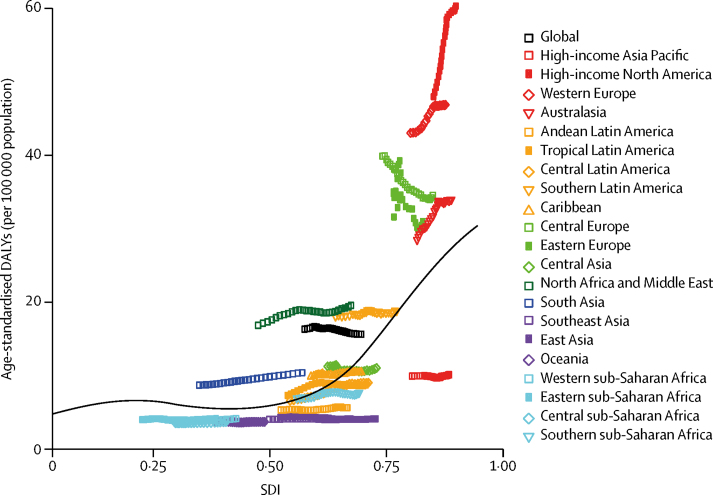
BACKGROUND: Multiple sclerosis is the most common inflammatory neurological disease in young adults. The Global Burden of Diseases, Injuries, and Risk Factors Study (GBD) provides a systematic method of quantifying various effects of a given condition by demographic variables and geography. In this systematic analysis, we quantified the global burden of multiple sclerosis and its relationship with country development level. METHODS: We assessed the epidemiology of multiple sclerosis from 1990 to 2016. Epidemiological outcomes for multiple sclerosis were modelled with DisMod-MR version 2.1, a Bayesian meta-regression framework widely used in GBD epidemiological modelling. Assessment of multiple sclerosis as the cause of death was based on 13 110 site-years of vital registration data analysed in the GBD's cause of death ensemble modelling module, which is designed to choose the optimum combination of mathematical models and predictive covariates based on out-of-sample predictive validity testing. Data on prevalence and deaths are summarised in the indicator, disability-adjusted life-years (DALYs), which was calculated as the sum of years of life lost (YLLs) and years of life lived with a disability. We used the Socio-demographic Index, a composite indicator of income per person, years of education, and fertility, to assess relations with development level. FINDINGS: In 2016, there were 2 221 188 prevalent cases of multiple sclerosis (95% uncertainty interval [UI] 2 033 866-2 436 858) globally, which corresponded to a 10·4% (9·1 to 11·8) increase in the age-standardised prevalence since 1990. The highest age-standardised multiple sclerosis prevalence estimates per 100 000 population were in high-income North America (164·6, 95% UI, 153·2 to 177·1), western Europe (127·0, 115·4 to 139·6), and Australasia (91·1, 81·5 to 101·7), and the lowest were in eastern sub-Saharan Africa (3·3, 2·9-3·8), central sub-Saharan African (2·8, 2·4 to 3·1), and Oceania (2·0, 1·71 to 2·29). There were 18 932 deaths due to multiple sclerosis (95% UI 16 577 to 21 033) and 1 151 478 DALYs (968 605 to 1 345 776) due to multiple sclerosis in 2016. Globally, age-standardised death rates decreased significantly (change -11·5%, 95% UI -35·4 to -4·7), whereas the change in age-standardised DALYs was not significant (-4·2%, -16·4 to 0·8). YLLs due to premature death were greatest in the sixth decade of life (22·05, 95% UI 19·08 to 25·34). Changes in age-standardised DALYs assessed with the Socio-demographic Index between 1990 and 2016 were variable. INTERPRETATION: Multiple sclerosis is not common but is a potentially severe cause of neurological disability throughout adult life. Prevalence has increased substantially in many regions since 1990. These findings will be useful for resource allocation and planning in health services. Many regions worldwide have few or no epidemiological data on multiple sclerosis, and more studies are needed to make more accurate estimates. FUNDING: Bill & Melinda Gates Foundation.
Overview
CoChat Summary
TL;DR
This GBD 2016 systematic analysis estimated the global burden of multiple sclerosis from 1990 to 2016, finding 2,221,188 prevalent cases in 2016 and a 10.4% increase in age-standardised prevalence since 1990. Burden varied widely by geography and Socio-demographic Index, with the highest prevalence in high-income North America and the lowest in sub-Saharan Africa and Oceania.
Key findings
- In 2016, there were 2,221,188 prevalent cases of multiple sclerosis (95% UI 2,033,866–2,436,858), corresponding to 30.1 cases per 100,000 population; age-standardised prevalence increased by 10.4% (95% UI 9.1–11.8) between 1990 and 2016.
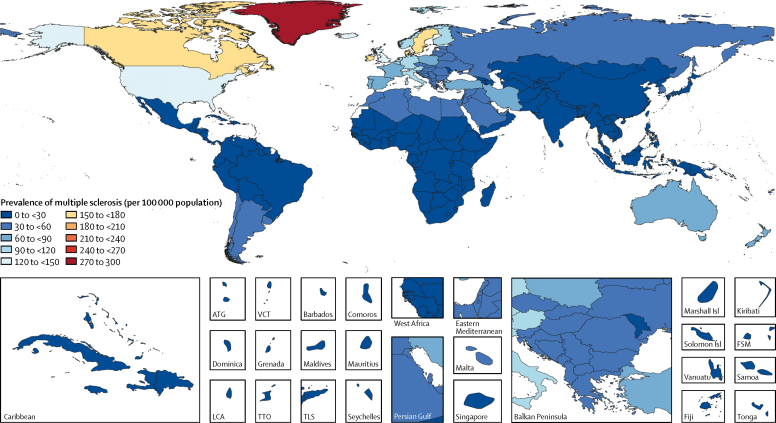
- The highest age-standardised prevalence estimates per 100,000 were in high-income North America (164.6, 95% UI 153.2–177.1), western Europe (127.0, 115.4–139.6), and Australasia (91.1, 81.5–101.7); the lowest were in eastern sub-Saharan Africa (3.3, 2.9–3.8), central sub-Saharan Africa (2.8, 2.4–3.1), and Oceania (2.0, 1.71–2.29).
- There were 18,932 deaths (95% UI 16,577–21,033) and 1,151,478 DALYs (968,605–1,345,776) due to multiple sclerosis in 2016; the global age-standardised death rate decreased significantly (−11.5%, 95% UI −35.4 to −4.7), whereas the change in age-standardised DALYs was not significant (−4.2%, −16.4 to 0.8).
- Smoking accounted for 99,076 DALYs (95% UI 62,164–140,650), or 8.6% (5.6–11.7) of global multiple sclerosis DALYs; prevalence increased with latitude (coefficient 1.03 per degree, 95% UI 1.03–1.04).
Methods
- GBD 2016 systematic analysis: mortality was modelled with CODEm using 13,110 site-years of vital registration data and predictive covariates; prevalence and incidence were modelled with DisMod-MR 2.1 using 167 unique sources (129 prevalence, 65 incidence) covering 13 of 21 GBD world regions, plus US medical claims data.
- Severity was classified into mild, moderate, severe, and asymptomatic states based on the Expanded Disability Status Scale; YLDs were derived from prevalence multiplied by disability weights and corrected for comorbidity; YLLs were calculated from deaths and remaining life expectancy; DALYs were the sum of YLLs and YLDs, with uncertainty propagated through 1,000 draws.
- The Socio-demographic Index was used to assess development level; smoking was the only environmental risk judged to have sufficient evidence for a causal relationship with multiple sclerosis, with population-attributable fractions estimated from exposure and relative risk data.
Limitations
- Stated in the paper: data are absent or extremely sparse for many regions, including Latin America, sub-Saharan Africa, and Asia; the models used to predict prevalence, DALYs, and YLLs might lead to unusual changes in segments of the data, such as rapid prevalence increases in women older than 80 years and the YLD curve, which should be viewed with caution; underdiagnosis in less-developed countries cannot be excluded.
- Stated in the paper: there is a lack of robust predictive covariates for multiple sclerosis; including both SDI and latitude might have underestimated the effect of latitude because of collinearity, and inclusion of SDI might have spuriously led to increasing prevalence estimates over time; latitude remains a proxy and uncertain predictor, and measurement error cannot be excluded.
- Evident from the text: many country estimates rely on modelled predictions where no data were available; for example, the Greenland estimate was based on one small study of fewer than 2,000 inhabitants in which no cases were found between 1950 and 1974, and the uncertainty around that estimate is wide.
Model-written summary. Check it against the paper before relying on it.
Integrity signals
Registry
Cites
Statistics
Figures
Verification
Claims the paper makes
4 Valid · 1 Not valid · 12 Not checked · 85 Own results and interpretations
The cited sources support only part of this claim — read each source’s verdict below.
In the paper
“Geographical location before onset of multiple sclerosis remains a risk factor for acquisition.28”
§ Global, regional, and national burden of multiple sclerosis 1990–2016: a systematic analysis for the Global Burden of Disease Study 2016 > Discussion
What the sources say
- Partly supportedcites [28] Simpson S Blizzard L Otahal P Latitude is significantly associated with the prevalence of multiple sclerosis. A meta-analysis J Neurol Neurosurg Psychiatry 82 2011 1132 1141 21478203 sourceExperimental — accuracy not yet measured
The Global analyses section reports a significant association between latitude and MS prevalence, supporting a geographical pattern. But the paper does not establish that a person's location before onset is itself a risk factor for acquiring MS; it analyses population prevalence rather than individuals' pre-onset locations or acquisition risk. No page number was available in our copy. (LLM, conf=0.85)
plainstates a cause- Asserted: passes — The authors put it forward as true.
- Checkable: passes — It can be checked against evidence.
- Load-bearing: unclear — It is unclear whether the paper’s conclusions depend on it.
- Based: passes — The paper gives a reason why it holds.
- Partly supported
A result the paper states — it cites no source for it, so there is none to check. The quote shows it is in the paper.
In the paper
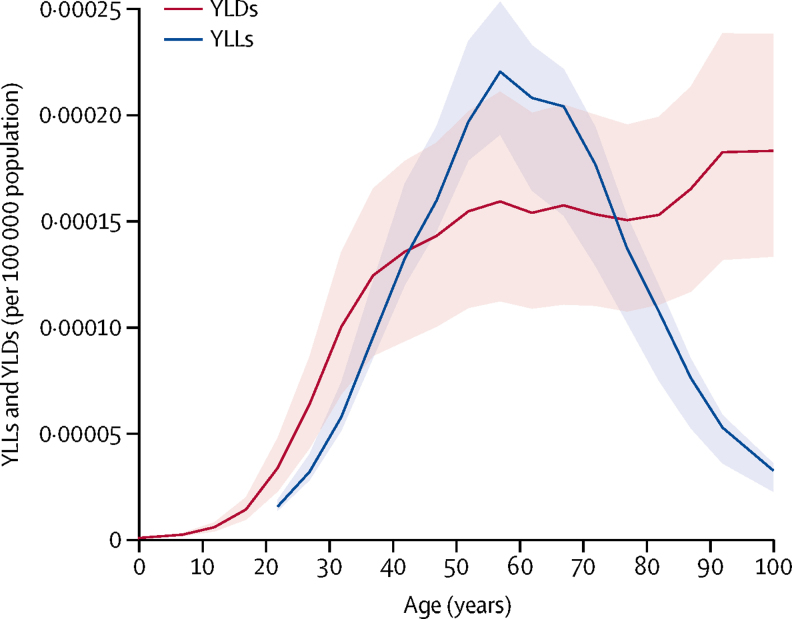
“YLDs begin to increase steeply early in the second decade of life.”
§ Global, regional, and national burden of multiple sclerosis 1990–2016: a systematic analysis for the Global Burden of Disease Study 2016 > Discussion
plainstates a cause- Asserted: passes — The authors put it forward as true.
- Checkable: passes — It can be checked against evidence.
- Load-bearing: unclear — It is unclear whether the paper’s conclusions depend on it.
- Based: passes — The paper gives a reason why it holds.
A result the paper reports from its own data — it cites no other source for it, so there is none to check. The quote shows it is in the paper.
In the paper
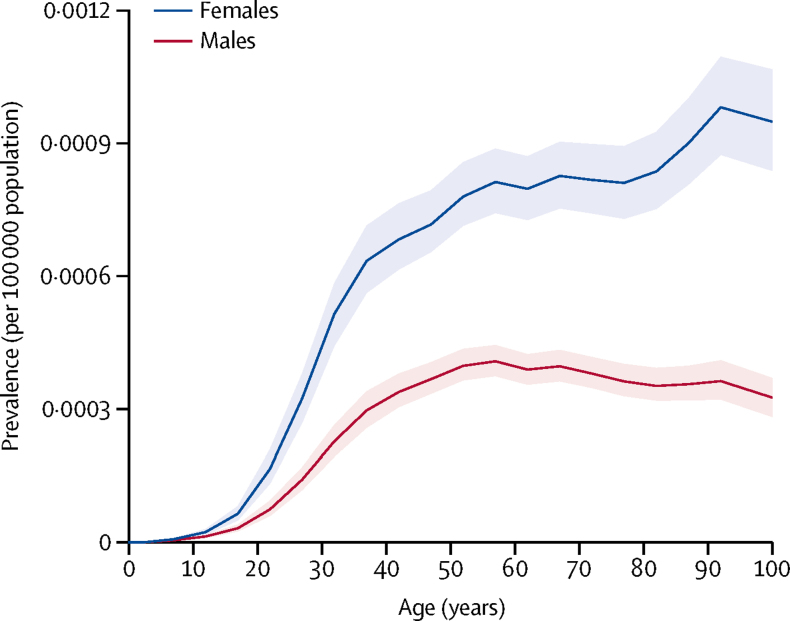
“The global prevalence of multiple sclerosis differs substantially by sex (figure 2).”
- Also stated in: § Discussion · plain
“Prevalence of multiple sclerosis differed substantially over the adult life of women and men.”
§ Global, regional, and national burden of multiple sclerosis 1990–2016: a systematic analysis for the Global Burden of Disease Study 2016 > Results
plainstates an association- Asserted: passes — The authors put it forward as true.
- Checkable: passes — It can be checked against evidence.
- Load-bearing: unclear — It is unclear whether the paper’s conclusions depend on it.
- Based: passes — The paper gives a reason why it holds.
- Also stated in: § Discussion · plain
A result the paper reports from its own data — it cites no other source for it, so there is none to check. The quote shows it is in the paper.
In the paper
“whereas the change in age-standardised DALYs was not significant (−4·2%, −16·4 to 0·8)”
- Also stated in: § Results · plain
“−4·2% (−16·4 to 0·8)”
§ Global, regional, and national burden of multiple sclerosis 1990–2016: a systematic analysis for the Global Burden of Disease Study 2016 > Abstract > Findings
plain- Asserted: passes — The authors put it forward as true.
- Checkable: passes — It can be checked against evidence.
- Load-bearing: unclear — It is unclear whether the paper’s conclusions depend on it.
- Based: passes — The paper gives a reason why it holds.
- Also stated in: § Results · plain
A result the paper reports from its own data — it cites no other source for it, so there is none to check. The quote shows it is in the paper.
In the paper
“In that year, prevalence was 10·4% higher than in 1990.”
§ Global, regional, and national burden of multiple sclerosis 1990–2016: a systematic analysis for the Global Burden of Disease Study 2016 > Discussion
plain- Asserted: passes — The authors put it forward as true.
- Checkable: passes — It can be checked against evidence.
- Load-bearing: unclear — It is unclear whether the paper’s conclusions depend on it.
- Based: passes — The paper gives a reason why it holds.
51 more claims
Create a free account to see all 102 claims and to verify the 1 reference still open.
- It may state two separate claims as one. 26
- Probably not a substantial claim. 29
Claims other papers make about this one
Each is checked against this paper’s own text: does it say what the citing paper says it does?
The cited source says what the claim attributes to it.
In the citing paper
“These 4 common UMNDs result in a significant decline in physical function5,7,8,17,18 and often develop secondary complications that affect their quality of life (QOL), including cognitive impairment,19–21 fatigue,22 chronic pain,23,24 depression,25–27 and anxiety.25–27”
From Feasibility, Acceptability, and Efficacy of Mindfulness Training in People With Upper Motor Neuron Disorders: A Systematic Review (2022) · cites this paper as [17]
Self-check
Percentages, sums and reported differences re-computed from the paper’s own numbers.
Each contradiction between two passages listed here was confirmed by an independent check.
Rated minor: it would not touch a result — a value no result rests on, a p-value that stays on the same side of the significance level, or a conflict that is clerical, resolved elsewhere in the paper, or outside its own findings.
In the paper
§ Global, regional, and national burden of multiple sclerosis 1990–2016: a systematic analysis for the Global Burden of Disease Study 2016 > Results
“Most deaths occurred in high SDI countries (10 021 95% UI 7358–10 873)”
§ Global, regional, and national burden of multiple sclerosis 1990–2016: a systematic analysis for the Global Burden of Disease Study 2016 > Results
“| High SDI | High SDI | 10 021 (7385 to 10 873) |”
Citations
Cites
Rating neurologic impairment in multiple sclerosis: An expanded disability status scale (EDSS)
Kurtzke, J. F. (1983) · Neurology · doi:10.1212/wnl.33.11.1444 · Cited by 15,011
Vos, T., Abajobir, A. A., Abate, K. H., Abbafati, C., Abbas, K. M., Abd-Allah, F., Abdulkader, R. S., Abdulle, A. M., Abebo, T. A., Abera, S. F., et al. (2017) · The Lancet · doi:10.1016/s0140-6736(17)32154-2 · Cited by 13,220
Self-citationDiagnosis of multiple sclerosis: 2017 revisions of the McDonald criteria
Thompson, A. J., Banwell, B. L., Barkhof, F., Carroll, W. M., Coetzee, T., Comi, G., Correale, J., Fazekas, F., Filippi, M., Freedman, M. S., et al. (2018) · The Lancet Neurology · doi:10.1016/s1474-4422(17)30470-2 · Cited by 9,476
Forouzanfar, M. H., Afshin, A., Alexander, L. T., Anderson, H. R., Bhutta, Z. A., Biryukov, S., Brauer, M., Burnett, R., Cercy, K., Charlson, F. J., et al. (2016) · The Lancet · doi:10.1016/s0140-6736(16)31679-8 · Cited by 7,698
Self-citationNew diagnostic criteria for multiple sclerosis: Guidelines for research protocols
Poser, C. M., Paty, D. W., Scheinberg, L., McDonald, W. I., Davis, F. A., Ebers, G. C., Johnson, K. P., Sibley, W. A., Silberberg, D. H., & Tourtellotte, W. W. (1983) · Annals of Neurology · doi:10.1002/ana.410130302 · Cited by 7,384
Vos, T., Allen, C., Arora, M., Barber, R. M., Bhutta, Z. A., Brown, A., Carter, A., Casey, D. C., Charlson, F. J., Chen, A. Z., et al. (2016) · The Lancet · doi:10.1016/s0140-6736(16)31678-6 · Cited by 7,253
Self-citationFeigin, V. L., Nichols, E., Alam, T., Bannick, M. S., Beghi, E., Blake, N., Culpepper, W. J., Dorsey, E. R., Elbaz, A., Ellenbogen, R. G., et al. (2019) · The Lancet Neurology · doi:10.1016/s1474-4422(18)30499-x · Cited by 5,644
Self-citationFood, nutrition, physical activity, and the prevention of cancer: a global perspective
(2008) · Choice Reviews Online · doi:10.5860/choice.45-5024 · Cited by 5,350
Diagnostic criteria for multiple sclerosis: 2005 revisions to the “McDonald Criteria”
Polman, C. H., Reingold, S. C., Edan, G., Filippi, M., Hartung, H., Kappos, L., Lublin, F. D., Metz, L. M., McFarland, H. F., O'Connor, P. W., et al. (2005) · Annals of Neurology · doi:10.1002/ana.20703 · Cited by 5,017
Reich, D. S., Lucchinetti, C. F., & Calabresi, P. A. (2018) · New England Journal of Medicine · doi:10.1056/nejmra1401483 · Cited by 2,491
Cited by
Items 601–700 of 1,078
Foshati, S., Poursadeghfard, M., Heidari, Z., & Amani, R. (2022) · Health Science Reports · doi:10.1002/hsr2.1004 · Cited by 5
“Therefore, this disease is considered to be the first cause of non‐traumatic disability in young adults leading to a severe reduction in patients' mental and physical quality of life.(7,8) In clinical practice, the disability status of patients with MS is quantified by the Expanded Disability Status Scale (EDSS).”
MethodAmiri, Z., Azmin, M., Amiri, S., Akbarisari, A., Sahraian, M. A., Farzadfar, F., & Soleymani, F. (2023) · Multiple Sclerosis and Related Disorders · doi:10.1016/j.msard.2023.104693 · Cited by 7
Ciplea, A. I., Kurzeja, A., Thiel, S., Haben, S., Adamus, E., & Hellwig, K. (2023) · Multiple Sclerosis and Related Disorders · doi:10.1016/j.msard.2023.104771 · Cited by 5
Shao, L., Fu, J., Xie, L., Cai, G., Cheng, Y., Zheng, N., Zeng, P., Yan, X., Ling, Z., & Ye, S. (2023) · Canadian Journal of Infectious Diseases and Medical Microbiology · doi:10.1155/2023/5602401 · Cited by 5
Recent advances in nanotechnology and its application for neuro-disease: a review
Radhakrishnan, K. G., Kumar, P. S., Rangasamy, G., Ankitha, K., Niyathi, V., Manivasagan, V., & Saranya, K. (2023) · Applied Nanoscience · doi:10.1007/s13204-023-02958-4 · Cited by 6
“Diagnosing MS is complicated by the fact that individual clinical tests and imaging studies may change dramatically over time (Wallin et al. 2019).”
BackgroundÇelik, N. G., Karabulut, A. K., Fazlıoğulları, Z., Gümüş, H., Cebeci, H., & Doğan, N. Ü. (2023) · Revista da Associação Médica Brasileira · doi:10.1590/1806-9282.20230949 · Cited by 5
The Role of the Intestinal Microbiome in Multiple Sclerosis—Lessons to Be Learned from Hippocrates
El-Sayed, M. M., Mohak, S., Gala, D., Fabian, R., Péterfi, Z., & Fábián, Z. (2023) · Biology · doi:10.3390/biology12121463 · Cited by 6
Hu, F., Zhu, Y., Tian, J., Xu, H., & Xue, Q. (2024) · Journal of Inflammation Research · doi:10.2147/jir.s442684 · Cited by 5
Osteoporosis in neurological disorders: Parkinson’s disease, stroke, and multiple sclerosis
Oleson, C. V. (2020) · Elsevier eBooks · doi:10.1016/b978-0-12-813073-5.00041-1 · Cited by 5
Iva, P., Fielding, J., Clough, M., White, O. B., Godic, B., Martin, R. L., & Rajan, R. (2020) · Frontiers in Neuroscience · doi:10.3389/fnins.2020.604991 · Cited by 7
Atypical inflammatory demyelinating syndrome with central and peripheral nerve involvement
Farag, M., Sibtain, N. A., Burge, J. A., Chaudhry, V., & Silber, E. (2021) · Multiple Sclerosis and Related Disorders · doi:10.1016/j.msard.2021.102926 · Cited by 5
Effect of Ponesimod Exposure on Total Lymphocyte Dynamics in Patients with Multiple Sclerosis
Valenzuela, B., Ruixo, J. J. P., Leirens, Q., Ouwerkerk‐Mahadevan, S., & Poggesi, I. (2021) · Clinical Pharmacokinetics · doi:10.1007/s40262-021-01019-9 · Cited by 5
Delahaye, C., Chaves, D., Congnard, F., Noury-Desvaux, B., de Müllenheim, P., & on behalf of the SOCOS Group (2021) · Sensors · doi:10.3390/s21093189 · Cited by 5
Different neuroinflammatory gene expression profiles in highly active and benign multiple sclerosis
Mv, I., Voronkova, A. S., Sukhorukov, V. S., & Zakharova, M. N. (2021) · Journal of Neuroimmunology · doi:10.1016/j.jneuroim.2021.577650 · Cited by 5
Smith, J. B., Li, B. H., Gonzales, E. G., & Langer-Gould, A. M. (2021) · Multiple Sclerosis and Related Disorders · doi:10.1016/j.msard.2021.103449 · Cited by 5
Ofatumumab subcutaneous injection for the treatment of relapsing forms of multiple sclerosis
Costa, G. D., Leocani, L., & Comi, G. (2022) · Expert Review of Clinical Immunology · doi:10.1080/1744666x.2022.2031982 · Cited by 6
Kassubek, R., & Mathieu, R. (2022) · Brain Sciences · doi:10.3390/brainsci12040499 · Cited by 5
“Treatments comprise acute relapse management and symptomatic treatments, and a rapidly growing number of disease-modifying medications are available to reduce the frequency of episodes of neurologic disability and limit the accumulation of focal lesions on magnetic resonance imaging [8,9].”
BackgroundBergamaschi, R., Beghi, E., Bosetti, C., Ponzio, M., Santucci, C., Lepore, V. L., Mosconi, P., Aguglia, U., Amato, M. P., Ancona, A. L., et al. (2022) · Neurological Sciences · doi:10.1007/s10072-022-06169-7 · Cited by 5
Stroke Outcomes and Hyperacute Treatment Utilization in Multiple Sclerosis
Schoeps, V. A., Waubant, E. L., & Singh, N. (2022) · Multiple Sclerosis and Related Disorders · doi:10.1016/j.msard.2022.104444 · Cited by 6
The prevalence of multiple sclerosis in Tehran, Iran, in 2020
Eskandarieh, S., Ayoubi, S., & Sahraian, M. A. (2023) · Current Journal of Neurology · doi:10.18502/cjn.v22i1.12619 · Cited by 5
Seifer, G., Arun, T., Capela, C., Laureys, G., Jones, E., Castro, P. D., la Rosa, R. S.-D., Hiltl, S., & Iaffaldano, P. (2023) · Multiple Sclerosis and Related Disorders · doi:10.1016/j.msard.2023.104770 · Cited by 7
Current and future trends in multiple sclerosis management: Near East perspective
Hatem, A. O., Ayoubi, N. K. E., Habahbeh, M., Ghanim, Z., Al-Naqshbandi, M., Raki, A., Joudi, H., & Sahraian, M. A. (2023) · Multiple Sclerosis and Related Disorders · doi:10.1016/j.msard.2023.104800 · Cited by 5
The social construction of multiple sclerosis in Israel: a cultural reading of illness narratives
Soffer, M. (2020) · Disability and Rehabilitation · doi:10.1080/09638288.2020.1860141 · Cited by 5
“cases per every 100,000 individuals) [3].”
BackgroundJacob, L., Smith, L., Koyanagi, A., Haro, J. M., Konrad, M., Tanislav, C., & Kostev, K. (2021) · Multiple Sclerosis Journal - Experimental Translational and Clinical · doi:10.1177/20552173211022784 · Cited by 5
State-of-the-Art Review: Demyelinating Diseases in Indonesia
Larassati, H., Estiasari, R., Yunus, R. E., & Parizel, P. M. (2021) · Multiple Sclerosis International · doi:10.1155/2021/1278503 · Cited by 6
“However, the Global Burden of Disease Study 2016 (GBD 2016) estimated the number of MS cases in Indonesia to be approximately 7056 cases [8].”
BackgroundMomtazmanesh, S., & Rezaei, N. (2020) · Elsevier eBooks · doi:10.1016/b978-0-12-818731-9.00032-x · Cited by 8
Precision Medicine for Brain Disorders: New and Emerging Approaches
Shan, Z., & Lagopoulos, J. (2023) · Journal of Personalized Medicine · doi:10.3390/jpm13050872 · Cited by 7
“The corollary of this increase in brain disorders is that governments will encounter mounting demands for new treatments, rehabilitation, and support services [1].”
BackgroundHelmlinger, B., Seebacher, B., Ropele, S., Hechenberger, S., Heschl, B., Reishofer, G., Jordan, S., Tinauer, C., Wurth, S., Valsasina, P., et al. (2025) · Journal of the Neurological Sciences · doi:10.1016/j.jns.2025.123426 · Cited by 4
Trekking Poles to Aid Multiple Sclerosis Walking Impairment
Cohen, E. T., Huser, S., Barone, K., & Barone, D. A. (2021) · International Journal of MS Care · doi:10.7224/1537-2073.2020-064 · Cited by 4
Salamatullah, H. K., Alkhiri, A., Ezzi, S., Alghamdi, G. A., Alharbi, G., Alzahrani, W. S. S., Alghaythee, H. K., Almaghrabi, A. A., Alturki, F., Alamri, A. F., et al. (2024) · Multiple Sclerosis and Related Disorders · doi:10.1016/j.msard.2024.105809 · Cited by 7
The Burden of Multiple Sclerosis in Mexico
Gómez‐Figueroa, E., Moreno-Bernardino, C. J., Alba-Sánchez, A. M. D., Guerrero-Udave, N., Orozco-Puga, P., Corona-Vázquez, C. P., Briseño‐Godínez, M. E., Cárdenas-Saénz, O., Jiménez‐Ruiz, A., Verboonen-Salgado, B. A., et al. (2025) · Neurology · doi:10.1212/wnl.0000000000213343 · Cited by 6
“…Civil de Guadalajara Fray Antonio Alcalde, Guadalajara, Mexico; 2 Hospital San Javier, Guadalajara, a striking uneven distribution across the globe. study 2,3 approximately 2.9 million people were living with MS worldwide, representing a 10.4% increase in age-standardized prevalence since 1990.”
InfluentialMultiple Sclerosis in the Emergency Department
Satish, S., Patel, A., Mastick, M. L., Lee, S. “., Hotan, G. C., Ham, A. S., & Mateen, F. J. (2025) · Neurology Neuroimmunology & Neuroinflammation · doi:10.1212/nxi.0000000000200445 · Cited by 4
Abbasi, H., Allogmanny, S., Khoshdooz, S., Asgarzadeh, A., & Probst, Y. (2025) · Neuroscience · doi:10.1016/j.neuroscience.2025.07.046 · Cited by 4
Fan, J., Zhang, J., Chen, J., Hu, Y., Ma, W., Yuan, Y., & Yu, B. (2025) · Journal of Clinical Neuroscience · doi:10.1016/j.jocn.2025.111671 · Cited by 4
Arshi, M., Sheybani, F., Eghlima, M., Shati, M., Moghanibashi‐Mansourieh, A., & Moshayyedi, M. (2020) · Social Work in Health Care · doi:10.1080/00981389.2020.1762148 · Cited by 4
“Multiple Sclerosis (MS) disease is one of the most common causes of disability (Tillery et al., 2017) and it is estimated that there are about 2.2 million MS patients worldwide (Wallin et al., 2019).”
BackgroundInfluentialJob considerations among individuals with multiple sclerosis
Krause, J. S., Iwanaga, K., Rumrill, P. D., Reed, K. S., Backus, D. A., & Chan, F. H. (2020) · Journal of Vocational Rehabilitation · doi:10.3233/jvr-201100 · Cited by 5
Pavelek, Z., Novotný, M., Klímová, B., Peterka, M., Potužník, P., Kövári, M., & Vališ, M. (2021) · Current Medical Research and Opinion · doi:10.1080/03007995.2021.1880886 · Cited by 4
“Patients had experience with Copaxone prefilled syringes (9), RebiJectiv (9), Avonex Pen (8), RebiSmart previous version (7), Rebif prefilled syringes (4), Avonex prefilled syringes (4), BetaJectv (1), ExtaviJectvi (1).”
BackgroundInfluentialRisk factors for relapse in relapsing remitting multiple sclerosis
Hill, J. E., Harrison, J., & Palmer, K. (2021) · British Journal of Neuroscience Nursing · doi:10.12968/bjnn.2021.17.sup1.s34 · Cited by 5
Özden, F., Özkeskin, M., & Yüceyar, N. (2022) · Clinical Neurology and Neurosurgery · doi:10.1016/j.clineuro.2022.107338 · Cited by 4
Healy, B. C., Casady, E. C., Chitnis, T., Weiner, H. L., & Glanz, B. I. (2022) · Multiple Sclerosis and Related Disorders · doi:10.1016/j.msard.2022.104006 · Cited by 4
Magid, H. S. A., Jin, S., Culpepper, W. J., Nelson, L. M., & Wallin, M. T. (2022) · Neurology Clinical Practice · doi:10.1212/cpj.0000000000200078 · Cited by 4
“Multiple sclerosis (MS) is the most common progressive neurologic disease of young adults with a course that can produce disability in all major CNS domains.(1) With 23 FDAapproved disease-modifying treatments (DMTs), the management has become more complex over the past 2 decades, requiring both specialty neurology an…”
BackgroundSelf-citationRadiological Association Between Multiple Sclerosis Lesions and Serum Vitamin D Levels
Akhtar, A., Neupane, R., Singh, A., & Khan, M. (2022) · Cureus · doi:10.7759/cureus.31824 · Cited by 4
Belveal, K., Gunkel, S., Hajare, A., Lambropoulos, A., Rogers, S., Hilton, C. L., & Armstead, A. B. (2023) · Multiple Sclerosis and Related Disorders · doi:10.1016/j.msard.2023.104576 · Cited by 4
Aungsumart, S., Turongkaravee, S., Youngkong, S., Apiwattanakul, M., Thakkinstian, A., & Chaikledkaew, U. (2023) · BMC Health Services Research · doi:10.1186/s12913-023-10099-1 · Cited by 4
“The incidence of MS is increasing worldwide, with two million cases reported in 2016 [2].”
BackgroundIncidence and prevalence of neurological disorders in the United Arab Emirates: a systematic review
Benamer, H. T. S., & Loney, T. (2023) · BMC Neurology · doi:10.1186/s12883-023-03446-6 · Cited by 4
Condino, F., Crocco, M. C., Pirritano, D., Petrone, A., Giudice, F. D., & Guzzi, R. (2023) · Journal of Personalized Medicine · doi:10.3390/jpm13111596 · Cited by 5
“The latest update on the prevalence of the disease reports that there are about 2.9 million people living with MS worldwide, with a higher prevalence in higher income areas [1,2].”
BackgroundInfluentialKuri, A., Henshall, D. E., Chaudhry, D., Ooi, S. Z. Y., Zhang, Q., Mathews, J., Thomson, A., Rog, D. J., Hobart, J. C., Dobson, R., et al. (2024) · BMC Neurology · doi:10.1186/s12883-024-03598-z · Cited by 5
“It is a leading cause of non-traumatic disability in young adults worldwide [1].”
BackgroundCujbă, L., Banc, A., Stan, C., Drugan, T., & Nicula, C. A. (2024) · Diagnostics · doi:10.3390/diagnostics14121221 · Cited by 4
“Multiple sclerosis (MS), the most common chronic inflammatory and immune-mediated disorder of the central nervous system (CNS), is a challenging condition in terms of diagnosis and monitoring [1,2].”
BackgroundSu, J., Liang, Y., & He, X. (2024) · Frontiers in Medicine · doi:10.3389/fmed.2024.1430741 · Cited by 6
Karampour, S., Masoudi, R., Shahraki, H. R., Etemadifar, S., & Bayati, A. (2024) · Journal of Education and Health Promotion · doi:10.4103/jehp.jehp_1294_23 · Cited by 4
Dyczkowska, K., & Kalinowska, A. (2024) · Neurologia i Neurochirurgia Polska · doi:10.5603/pjnns.103636 · Cited by 5
Khabazian, A., Koopaie, M., Khabazian, T., Manifar, S., Kolahdooz, S., & Tafakhori, A. (2025) · BMC Oral Health · doi:10.1186/s12903-025-05878-7 · Cited by 5
Aligned Expression of IFI16 and STING Genes in RRMS Patients’ Blood
Helbi, S., Ravanbakhsh, B., Karimi, M., Kooti, W., & Jivad, N. (2019) · Endocrine Metabolic & Immune Disorders - Drug Targets · doi:10.2174/1871530319666190729112246 · Cited by 4
Pregnancy does not modify the risk of MS in genetically susceptible women
Adams, C., Wu, S. L., Shao, X., Bradshaw, P. T., Gonzales, E. G., Smith, J. B., Xiang, A. H., Bellesis, K. H., Chinn, T., Bos, S. D., et al. (2020) · Neurology Neuroimmunology & Neuroinflammation · doi:10.1212/nxi.0000000000000898 · Cited by 4
“MS is more prevalent among females than males, and symptoms typically emerge during child-bearing ages, often soon after pregnancy.(2,3) This has led many to hypothesize that female-specific exposures, such as those related to reproduction, pregnancy, and lactation, have a role in MS.”
BackgroundDetection of NUCB2/nesfatin-1 in cerebrospinal fluid of multiple sclerosis patients
Shimizu, M., Manome, T., Kumami, M., Matsumura, K., Kanai, K., Shimomura, K., & Maejima, Y. (2020) · Aging · doi:10.18632/aging.202287 · Cited by 4
Moghaddam, V., Tamaddon, A., Nezhad, M. R., Abbasi, M., Seyedhasani, S. N., & Sarmadi, M. (2021) · International Archives of Health Sciences · doi:10.4103/iahs.iahs_142_20 · Cited by 4
Seitaridou, Y., Tsekov, I., Kamusheva, M., Dimitrova, M. J., & Petrova, G. I. (2021) · Expert Review of Pharmacoeconomics & Outcomes Research · doi:10.1080/14737167.2021.1981134 · Cited by 4
Hillen, J. B., Ward, M., Slee, M., Stanford, T., Roughead, E. E., Ellett, L. M. K., & Pratt, N. L. (2021) · Multiple Sclerosis and Related Disorders · doi:10.1016/j.msard.2021.103412 · Cited by 4
Local autoimmune encephalomyelitis model in a rat brain with precise control over lesion placement
Kalkowski, L., Gołubczyk, D., Kwiatkowska, J., Domżalska, M., Walczak, P., & Małysz‐Cymborska, I. (2022) · PLoS ONE · doi:10.1371/journal.pone.0262677 · Cited by 5
Burden of neurological disease
Ravindranath, V., Abhishek, M. L., & Wallin, M. T. (2022) · Elsevier eBooks · doi:10.1016/b978-0-323-85654-6.00019-8 · Cited by 4
Self-citationLehnert, T., Röver, C., Köpke, S., Río, J., Chard, D., Fittipaldo, V. A., Friede, T., Heesen, C., & Rahn, A. C. (2022) · Systematic Reviews · doi:10.1186/s13643-022-01997-2 · Cited by 4
“5 million people affected worldwide, MS is the most common neuroimmunological disorder and most frequent cause of non-traumatic disability in young adults [3, 4].”
BackgroundPalliative Care for Patients With Multiple Sclerosis
Wilder, C. A. (2022) · Journal of Hospice and Palliative Nursing · doi:10.1097/njh.0000000000000912 · Cited by 4
Amiri, M., Gerami, R., Shekarchi, B., Azimi, A., Asadi, B., & Bagheri, H. (2022) · European Journal of Radiology Open · doi:10.1016/j.ejro.2022.100465 · Cited by 6
Yazici, I., Krieger, B., Bellenberg, B., Ladopoulos, T., Gold, R., Schneider, R., & Lukas, C. (2023) · Neuroradiology · doi:10.1007/s00234-023-03264-0 · Cited by 4
Olsson, M., Bala, S., & Hagell, P. (2024) · BMC Nursing · doi:10.1186/s12912-024-01837-9 · Cited by 5
“For example, globally it has been estimated that more than 2 million people were living with MS and 6.1 million individuals had PD in 2016, and that these numbers will increase over time [13, 14].”
BackgroundInfluentialEl-Tantawy, N. L., Alzhrani, S. G., Alzahrani, S. A., Alzahrani, R. M., Alghamdi, R., Alghamdi, A. S., & Abouhussien, R. M. (2024) · Al-Azhar International Medical Journal /Al-Azhar International Medical Journal · doi:10.58675/2682-339x.2352 · Cited by 5
Eibner, C., Vardavas, R., Nowak, S. A., Liu, J., & Rao, P. (2019) · RAND Corporation eBooks · doi:10.7249/rr4246 · Cited by 4
Dennett, R., Hendrie, W., Jarrett, L., Creanor, S., Barton, A., Hawton, A., & Freeman, J. A. (2020) · BMJ Open · doi:10.1136/bmjopen-2020-037680 · Cited by 4
Torkildsen, Ø., Linker, R. A., Sesmero, J. M. M., Fantaccini, S., la Rosa, R. S.-D., Seze, J. D., Duddy, M., & Chan, A. (2020) · Neurodegenerative Disease Management · doi:10.2217/nmt-2020-0054 · Cited by 5
Wan, G. J., Chopra, I., Niewoehner, J., & Hunter, S. F. (2020) · Drugs in Context · doi:10.7573/dic.2020-9-4 · Cited by 4
Medicinal Plants in Uganda as Potential Therapeutics against Neurological Disorders
Asiimwe, S., Anywar, G., Kakudidi, E. K., & Tugume, P. (2021) · Springer eBooks · doi:10.1007/978-981-33-4141-8_17 · Cited by 4
Azimzadeh, M., Möhn, N., Ezabadi, S. G., Esfandabadi, Z. M., Soleimani, A., Ranjbar, E., Jahromi, M., Seyedebrahimi, R., Skripuletz, T., & Kasmaie, F. M. (2021) · Biomolecules · doi:10.3390/biom11091372 · Cited by 4
Sense of coherence among patients with multiple sclerosis and its relevant factors
Zadeh, N. H., Pirzadeh, F., & Monjazebi, F. (2022) · British Journal of Neuroscience Nursing · doi:10.12968/bjnn.2022.18.sup1.s26 · Cited by 4
Multiple Sclerosis Severity Score (MSSS) improves the accuracy of individualized prediction in MS
Kalinčík, T., Kister, I., Bacon, T. E., Malpas, C. B., Sharmin, S., Horáková, D., Havrdová, E., Patti, F., Izquierdo, G., Eichau, S., et al. (2022) · Multiple Sclerosis Journal · doi:10.1177/13524585221084577 · Cited by 5
Homayuni, A., & Hosseini, Z. (2023) · BMC Neurology · doi:10.1186/s12883-023-03078-w · Cited by 7
“The prevalence of MS varies worldwide and is highest in North America, Western Europe and Australia, and lowest in countries centered around the equator [5].”
BackgroundGhajarzadeh, M., Roman, S., Vega, L., & Nourbakhsh, B. (2023) · Contemporary Clinical Trials · doi:10.1016/j.cct.2023.107106 · Cited by 4
Achiron, A., Alonix, R., Croisile, B., Gurevich, M., Doniger, G., & Tarpin-Bernard, F. (2019) · SeGAH ... IEEE ... International Conference on Serious Games and Applications for Health/IEEE International Conference on Serious Games and Applications for Health · doi:10.1109/segah.2019.8882446 · Cited by 4
Thabit, M. N., Farouk, M. M., Awni, M., & Mohamed, A.-A. B. (2020) · The Egyptian Journal of Neurology Psychiatry and Neurosurgery · doi:10.1186/s41983-020-00204-0 · Cited by 6
Song, Z., Khaw, Y. M., Pacheco, L. A., Tseng, K.-Y., Tan, Z., Cai, K., Ponnusamy, E., Cheng, J., & Inoue, M. (2020) · Biomaterials Science · doi:10.1039/d0bm00957a · Cited by 5
Detection of Motor Endplates in Deep and Pennate Skeletal Muscles in-vivo using Ultrafast Ultrasound
Leitner, C., Vostrikov, S., Penasso, H., Hager, P. A., Cossettini, A., Benini, L., & Baumgärtner, C. (2020) · IEEE International Ultrasonics Symposium · doi:10.1109/ius46767.2020.9251756 · Cited by 5
“Neurodegenerative diseases, such as multiple sclerosis and sarcopenia [34]–[36], or injections of botulinum toxin”
BackgroundRommer, P. S., Weber, M. S., Illés, Z., & Zettl, U. K. (2020) · Frontiers in Immunology · doi:10.3389/fimmu.2020.00137 · Cited by 4
Baert, A. L. (2008) · Springer eBooks · doi:10.1007/978-3-540-35280-8_2671 · Cited by 4
Candiri, B., Ramazanoğlu, E., Talu, B., & Tecellioğlu, M. (2024) · Arquivos de Neuro-Psiquiatria · doi:10.1055/s-0044-1788273 · Cited by 3
The role of pregnancy in relapsing-remitting MS prognosis: A five-year study
Kaya, E., Aslan, T., Şimşek, Y., Özçelik, S., & Özakbaş, S. (2025) · Multiple Sclerosis and Related Disorders · doi:10.1016/j.msard.2025.106401 · Cited by 3
Holz, A., Obi, N., Pischon, T., Schulze, M. B., Ahrens, W., Berger, K., Bohn, B., Brenner, H., Emmel, C., Fischer, B., et al. (2025) · Deutsches Ärzteblatt international · doi:10.3238/arztebl.m2025.0069 · Cited by 3
Advances in the understanding and management of multiple sclerosis phenotypes
Msheik, A., Mokdad, Z. A., Hmede, R., & Atat, R. (2025) · Health Sciences Review · doi:10.1016/j.hsr.2025.100232 · Cited by 6
Prevalence of multiple sclerosis in Spain. Estimates from the Primary Care Clinical Database (BDCAP)
Cayuela, L., García-Muñoz, C., de la Maza, S. S., & Cayuela, A. (2025) · Neurología (English Edition) · doi:10.1016/j.nrleng.2025.04.010 · Cited by 9
The Current State of Diagnostics for Neuroimmunological Disorders in Africa
Sahu, M., Chomba, M., Duodu, F., Diaz, M. M., Sokhi, D. S., & Saylor, D. R. (2025) · Journal of Central Nervous System Disease · doi:10.1177/11795735251385319 · Cited by 5
“5,23,25 In this study, slightly more respondents indicated they had de fi nitively diagnosed more new cases of MS as compared to NMOSD in the past one year.”
Liao, H., Zhu, X., Chen, C., Dun, L., Huang, Y., Ma, Y., Wang, H., Yan, H., Li, G., & Zhou, Z. (2026) · Medicine · doi:10.1097/md.0000000000047260 · Cited by 5
“[2,40,41] Complementing these burden dynamics, our QCI‑based analysis highlights substantial improvements in care quality worldwide, with China showing particularly notable gains in elderly populations.”
Thirty-Year Trends in Multiple Sclerosis Prevalence, Lifestyle Factors, and Mortality in England
Palladino, R., Thompson, A. J., & Ciccarelli, O. (2026) · JAMA Neurology · doi:10.1001/jamaneurol.2026.0352 · Cited by 3
Santana, J. L. S., Themoteo, R. M., Allioni, G. A., Marzano, L. A. S., Bernal, H. D. M., Veiga, M. L., Sales, A. B. L., Apóstolos‐Pereira, S. L., Adoni, T., Callegaro, D., et al. (2026) · Multiple Sclerosis and Related Disorders · doi:10.1016/j.msard.2026.107330 · Cited by 4
Baulina, N., Сергеевич, К. И., Kozin, M. S., Кабаева, А. Р., Boyko, A. N., & Favorova, O. O. (2022) · Gene · doi:10.1016/j.gene.2022.146676 · Cited by 3
The Effects of Musical Therapy on Parkinson’s Patients
Fatma Sıla, A. Y. A. N. (2021) · Journal of Aging and Long-Term Care · doi:10.51819/jaltc.2021.1055522 · Cited by 3
Mi, F., Wang, Y., Chai, W., Chen, Y., & Yin, X. (2023) · Frontiers in Neurology · doi:10.3389/fneur.2023.1295904 · Cited by 4
Fehlhofer, J., Ries, J., Nickel, F. T., Rothhammer, V., Schwab, S., Kesting, M. R., & Buchbender, M. (2024) · Life · doi:10.3390/life14030367 · Cited by 4
“The prevalence of MS in Europe is 127 per 100,000 inhabitants [1].”
BackgroundKappos, L., Edan, G., Freedman, M. S., Hartung, H., Montalbán, X., Barkhof, F., Koelbach, R., MacManus, D. G., Wicklein, E., & Groups, F. T. B. A. B. 1. S. (2024) · Journal of Neurology · doi:10.1007/s00415-024-12417-x · Cited by 3
“[ 17] In 2017, a survey of 4590 working-age patients with MS in Germany (mean (SD) age: 51.8 (11.0) years; mean (SD) age at diagnosis: 36.3 (10.6) years) revealed that 51% were employed or self-employed [18].”
BackgroundInfluentialJahromi, A. S., Erfanian, S., Jahromi, M. S. S., & Roustazadeh, A. (2024) · Acta Neurologica Taiwanica · doi:10.4103/ant.33-1_111_0078 · Cited by 3
Samadzadeh, S., Havla, J. B., Lepka, K., Brinks, R., Meuth, S. G., Klotz, L., & Albrecht, P. (2024) · Frontiers in Immunology · doi:10.3389/fimmu.2024.1458458 · Cited by 3
Hynes, S. M., Dwyer, C. P., Alvarez‐Iglesias, A., Rogers, F., Joyce, R. A., Oglesby, M. H., Moses, A., Bane, E., Counihan, T. J., Charamba, B., et al. (2024) · Neurological Sciences · doi:10.1007/s10072-024-07757-5 · Cited by 5
“It is estimated that between 2.2 and 2.8 million people world-wide have multiple sclerosis (MS; [1, 2].”
InfluentialCan Multiple Sclerosis-Related Symptoms Determine Sleep Disorders?
Koçak, A. T., Uçar, A., Arslan, S., & Uca, A. U. (2024) · Journal of Neuroscience Nursing · doi:10.1097/jnn.0000000000000801 · Cited by 3
Metadata
- Authors
- Wallin, M. T., Culpepper, W. J., Nichols, E., Bhutta, Z. A., Gebrehiwot, T. T., Hay, S. I., Khalil, I. A., Krohn, K. J., Liang, X., Naghavi, M., Mokdad, A. H., Nixon, M. R., Reiner, R. C., Sartorius, B., Smith, M., Topor-Madry, R., Werdecker, A., Vos, T., Feigin, V. L., & Murray, C. J. L.
- Affiliations
- United States Department of Veterans Affairs (US)
- University of Maryland, Baltimore (US)
- George Washington University (US)
- ORCID
- Venue
- The Lancet Neurology
- Publisher
- Elsevier BV
- Published
- 2019-03
- Volume
- 18
- Issue
- 3
- Pages
- 269-285
- ISSN
- 1474-4422 (ISSN-L)
- PMC
- PMC6372756
- OpenAlex
- W2914720734
- Semantic Scholar
- 0b99adcd5f03f05530e9c57347dd9401bccca9b2
- Cited by
- 1,134
- References
- 57
- Citations by year
- 2026: 100 · 2025: 122 · 2024: 145 · 2023: 178 · 2022: 181 · 2021: 202 · 2020: 167 · 2019: 36
- FWCI
- 97.66
- Type
- journal article
- Language
- en
- Open access
- hybrid
- doi.org
- Licence
- cc-by
- www.elsevier.com/tdm/userlicense/1.0/ (tdm)
- www.elsevier.com/legal/tdmrep-license (tdm)
- creativecommons.org/licenses/by/4.0/ (vor)
- Locations
- The Lancet Neurology (publishedVersion, cc-by)
- Europe PMC (PubMed Central) (publishedVersion, other-oa)
- PubMed Central (publishedVersion, cc-by)
- PubMed (publishedVersion)
- Tuwhera (Auckland University of Technology) (publishedVersion, other-oa)
- LSHTM Research Online (London School of Hygiene and Tropical Medicine) (acceptedVersion)
- Tuwhera (Auckland University of Technology) (submittedVersion, cc-by)
- Funders
- Bill and Melinda Gates Foundation
- Topics
- Health Sciences › Medicine › Clinical Neurology › Multiple Sclerosis Research Studies
- Social Sciences › Economics, Econometrics and Finance › Economics and Econometrics › Health Systems, Economic Evaluations, Quality of Life
- Health Sciences › Health Professions › Physical Therapy, Sports Therapy and Rehabilitation › Musculoskeletal pain and rehabilitation
- Keywords
- multiple sclerosis, disease burden, disability-adjusted life years, years of life lost, years lived with disability, socio-demographic index, country development level, global epidemiology, neurological disorders, Global Burden of Disease Study 2016, vital registration data, sub-Saharan Africa
- MeSH terms
- Global Burden of Disease, Bayes Theorem, Cause of Death, Female, Humans, Life Expectancy, Male, Multiple Sclerosis, Risk Factors, Global Health, Prevalence, Quality-Adjusted Life Years
About these checks
Registry, retraction, Cites and statistics results are computed, not judged, with one exception: a printed reference that no index lists is read once by a model before it counts as a citation error. Claims are extracted by a model and kept only when their quote appears verbatim in the text; each cited source is then checked, with a model’s help, for whether it says what the claim relies on. Those verdicts can be wrong — read the claim’s quote and the cited source before relying on one.
The claim verdicts this report counts are experimental: their accuracy is not yet measured.
A language model drew the claims from the paper on 2026-10-22, under version 3 of the claim definition (model deepseek-v4.1-flash, prompt extract-v3).
A second model labelled each claim on 2026-10-22 (model jev-1.13-20260917, definition revision gold-guideline-v0.2).
Cited sources are checked with a language model’s help (gpt-6-sol).
Statistics and arithmetic are recomputed, not judged.
Confidence bands are shown only for fields calibrated on our annotated test set. None is calibrated yet, so no band is shown.
What counts as a claim ›How we measure confidence ›How we check this ›
Are you an author, or do you see a problem with this page? Request a review
Data sources
Bibliographic data: Semantic Scholar, OpenAlex, Crossref.
Contains information from the Semantic Scholar Academic Graph Datasets, made available under the ODC Attribution License (ODC-BY 1.0).
Semantic Scholar’s data is described in: Kinney, R., et al. (2023). The Semantic Scholar Open Data Platform. arXiv:2301.10140.
