

Global, regional, and national burden of multiple sclerosis 1990-2016: a systematic analysis for the Global Burden of Disease Study 2016
Open accessThe DOI matches its Crossref record; 55 of the 57 references it cites were found in a registry or an index; 5 of the 21 sources its claims cite were checked for support.
Abstract
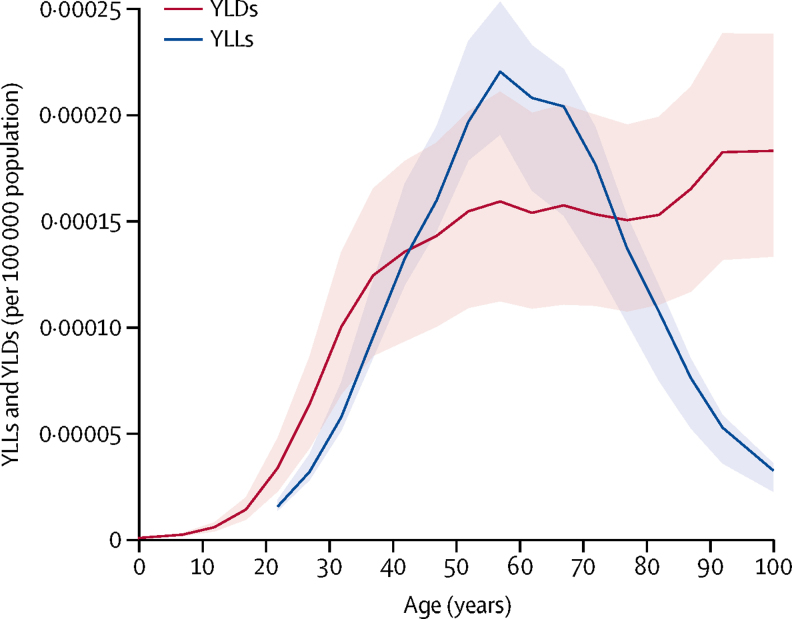
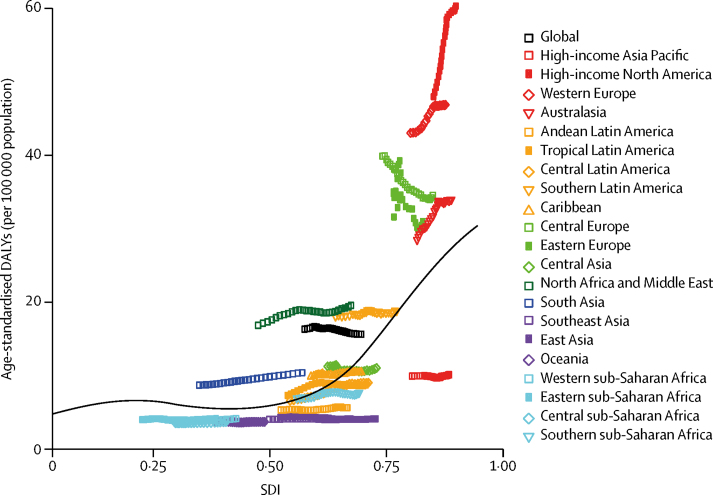
BACKGROUND: Multiple sclerosis is the most common inflammatory neurological disease in young adults. The Global Burden of Diseases, Injuries, and Risk Factors Study (GBD) provides a systematic method of quantifying various effects of a given condition by demographic variables and geography. In this systematic analysis, we quantified the global burden of multiple sclerosis and its relationship with country development level. METHODS: We assessed the epidemiology of multiple sclerosis from 1990 to 2016. Epidemiological outcomes for multiple sclerosis were modelled with DisMod-MR version 2.1, a Bayesian meta-regression framework widely used in GBD epidemiological modelling. Assessment of multiple sclerosis as the cause of death was based on 13 110 site-years of vital registration data analysed in the GBD's cause of death ensemble modelling module, which is designed to choose the optimum combination of mathematical models and predictive covariates based on out-of-sample predictive validity testing. Data on prevalence and deaths are summarised in the indicator, disability-adjusted life-years (DALYs), which was calculated as the sum of years of life lost (YLLs) and years of life lived with a disability. We used the Socio-demographic Index, a composite indicator of income per person, years of education, and fertility, to assess relations with development level. FINDINGS: In 2016, there were 2 221 188 prevalent cases of multiple sclerosis (95% uncertainty interval [UI] 2 033 866-2 436 858) globally, which corresponded to a 10·4% (9·1 to 11·8) increase in the age-standardised prevalence since 1990. The highest age-standardised multiple sclerosis prevalence estimates per 100 000 population were in high-income North America (164·6, 95% UI, 153·2 to 177·1), western Europe (127·0, 115·4 to 139·6), and Australasia (91·1, 81·5 to 101·7), and the lowest were in eastern sub-Saharan Africa (3·3, 2·9-3·8), central sub-Saharan African (2·8, 2·4 to 3·1), and Oceania (2·0, 1·71 to 2·29). There were 18 932 deaths due to multiple sclerosis (95% UI 16 577 to 21 033) and 1 151 478 DALYs (968 605 to 1 345 776) due to multiple sclerosis in 2016. Globally, age-standardised death rates decreased significantly (change -11·5%, 95% UI -35·4 to -4·7), whereas the change in age-standardised DALYs was not significant (-4·2%, -16·4 to 0·8). YLLs due to premature death were greatest in the sixth decade of life (22·05, 95% UI 19·08 to 25·34). Changes in age-standardised DALYs assessed with the Socio-demographic Index between 1990 and 2016 were variable. INTERPRETATION: Multiple sclerosis is not common but is a potentially severe cause of neurological disability throughout adult life. Prevalence has increased substantially in many regions since 1990. These findings will be useful for resource allocation and planning in health services. Many regions worldwide have few or no epidemiological data on multiple sclerosis, and more studies are needed to make more accurate estimates. FUNDING: Bill & Melinda Gates Foundation.
Overview
CoChat Summary
TL;DR
This GBD 2016 systematic analysis estimated the global burden of multiple sclerosis from 1990 to 2016, finding 2,221,188 prevalent cases in 2016 and a 10.4% increase in age-standardised prevalence since 1990. Burden varied widely by geography and Socio-demographic Index, with the highest prevalence in high-income North America and the lowest in sub-Saharan Africa and Oceania.
Key findings
- In 2016, there were 2,221,188 prevalent cases of multiple sclerosis (95% UI 2,033,866–2,436,858), corresponding to 30.1 cases per 100,000 population; age-standardised prevalence increased by 10.4% (95% UI 9.1–11.8) between 1990 and 2016.
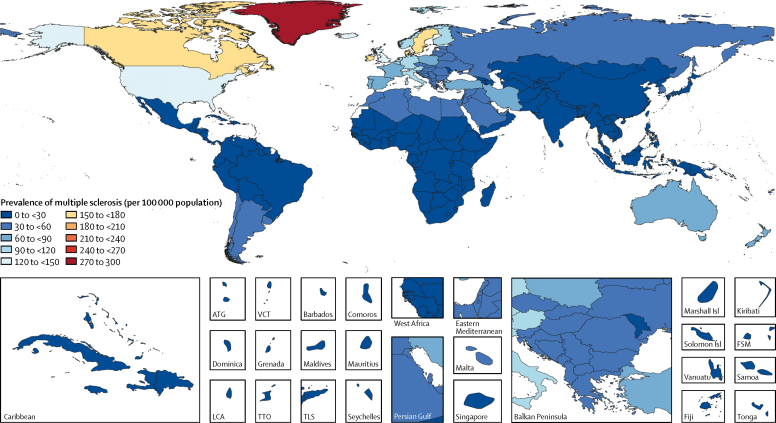
- The highest age-standardised prevalence estimates per 100,000 were in high-income North America (164.6, 95% UI 153.2–177.1), western Europe (127.0, 115.4–139.6), and Australasia (91.1, 81.5–101.7); the lowest were in eastern sub-Saharan Africa (3.3, 2.9–3.8), central sub-Saharan Africa (2.8, 2.4–3.1), and Oceania (2.0, 1.71–2.29).
- There were 18,932 deaths (95% UI 16,577–21,033) and 1,151,478 DALYs (968,605–1,345,776) due to multiple sclerosis in 2016; the global age-standardised death rate decreased significantly (−11.5%, 95% UI −35.4 to −4.7), whereas the change in age-standardised DALYs was not significant (−4.2%, −16.4 to 0.8).
- Smoking accounted for 99,076 DALYs (95% UI 62,164–140,650), or 8.6% (5.6–11.7) of global multiple sclerosis DALYs; prevalence increased with latitude (coefficient 1.03 per degree, 95% UI 1.03–1.04).
Methods
- GBD 2016 systematic analysis: mortality was modelled with CODEm using 13,110 site-years of vital registration data and predictive covariates; prevalence and incidence were modelled with DisMod-MR 2.1 using 167 unique sources (129 prevalence, 65 incidence) covering 13 of 21 GBD world regions, plus US medical claims data.
- Severity was classified into mild, moderate, severe, and asymptomatic states based on the Expanded Disability Status Scale; YLDs were derived from prevalence multiplied by disability weights and corrected for comorbidity; YLLs were calculated from deaths and remaining life expectancy; DALYs were the sum of YLLs and YLDs, with uncertainty propagated through 1,000 draws.
- The Socio-demographic Index was used to assess development level; smoking was the only environmental risk judged to have sufficient evidence for a causal relationship with multiple sclerosis, with population-attributable fractions estimated from exposure and relative risk data.
Limitations
- Stated in the paper: data are absent or extremely sparse for many regions, including Latin America, sub-Saharan Africa, and Asia; the models used to predict prevalence, DALYs, and YLLs might lead to unusual changes in segments of the data, such as rapid prevalence increases in women older than 80 years and the YLD curve, which should be viewed with caution; underdiagnosis in less-developed countries cannot be excluded.
- Stated in the paper: there is a lack of robust predictive covariates for multiple sclerosis; including both SDI and latitude might have underestimated the effect of latitude because of collinearity, and inclusion of SDI might have spuriously led to increasing prevalence estimates over time; latitude remains a proxy and uncertain predictor, and measurement error cannot be excluded.
- Evident from the text: many country estimates rely on modelled predictions where no data were available; for example, the Greenland estimate was based on one small study of fewer than 2,000 inhabitants in which no cases were found between 1950 and 1974, and the uncertainty around that estimate is wide.
Model-written summary. Check it against the paper before relying on it.
Integrity signals
Registry
Cites
Statistics
Figures
Verification
Claims the paper makes
4 Valid · 1 Not valid · 12 Not checked · 85 Own results and interpretations
The cited sources support only part of this claim — read each source’s verdict below.
In the paper
“Geographical location before onset of multiple sclerosis remains a risk factor for acquisition.28”
§ Global, regional, and national burden of multiple sclerosis 1990–2016: a systematic analysis for the Global Burden of Disease Study 2016 > Discussion
What the sources say
- Partly supportedcites [28] Simpson S Blizzard L Otahal P Latitude is significantly associated with the prevalence of multiple sclerosis. A meta-analysis J Neurol Neurosurg Psychiatry 82 2011 1132 1141 21478203 sourceExperimental — accuracy not yet measured
The Global analyses section reports a significant association between latitude and MS prevalence, supporting a geographical pattern. But the paper does not establish that a person's location before onset is itself a risk factor for acquiring MS; it analyses population prevalence rather than individuals' pre-onset locations or acquisition risk. No page number was available in our copy. (LLM, conf=0.85)
plainstates a cause- Asserted: passes — The authors put it forward as true.
- Checkable: passes — It can be checked against evidence.
- Load-bearing: unclear — It is unclear whether the paper’s conclusions depend on it.
- Based: passes — The paper gives a reason why it holds.
- Partly supported
A result the paper states — it cites no source for it, so there is none to check. The quote shows it is in the paper.
In the paper
“YLDs begin to increase steeply early in the second decade of life.”
§ Global, regional, and national burden of multiple sclerosis 1990–2016: a systematic analysis for the Global Burden of Disease Study 2016 > Discussion
plainstates a cause- Asserted: passes — The authors put it forward as true.
- Checkable: passes — It can be checked against evidence.
- Load-bearing: unclear — It is unclear whether the paper’s conclusions depend on it.
- Based: passes — The paper gives a reason why it holds.
A result the paper reports from its own data — it cites no other source for it, so there is none to check. The quote shows it is in the paper.
In the paper
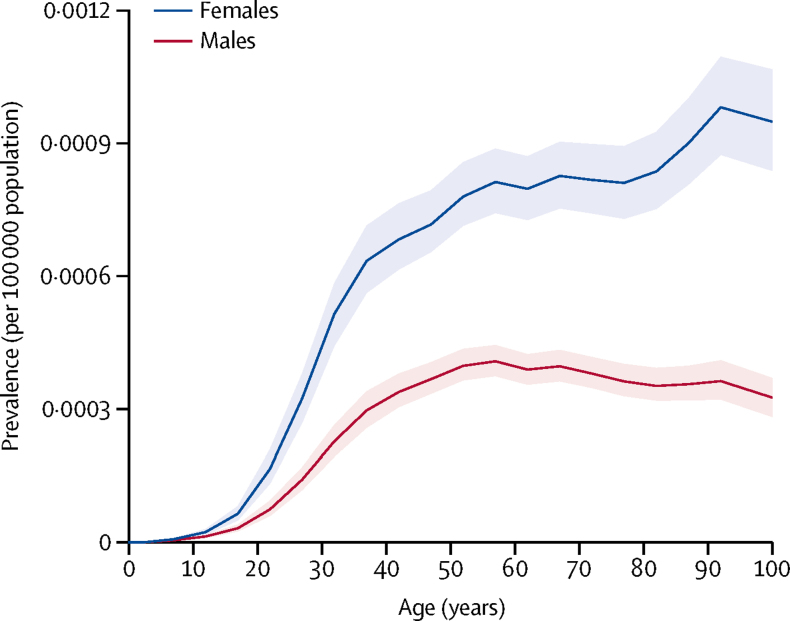
“The global prevalence of multiple sclerosis differs substantially by sex (figure 2).”
- Also stated in: § Discussion · plain
“Prevalence of multiple sclerosis differed substantially over the adult life of women and men.”
§ Global, regional, and national burden of multiple sclerosis 1990–2016: a systematic analysis for the Global Burden of Disease Study 2016 > Results
plainstates an association- Asserted: passes — The authors put it forward as true.
- Checkable: passes — It can be checked against evidence.
- Load-bearing: unclear — It is unclear whether the paper’s conclusions depend on it.
- Based: passes — The paper gives a reason why it holds.
- Also stated in: § Discussion · plain
A result the paper reports from its own data — it cites no other source for it, so there is none to check. The quote shows it is in the paper.
In the paper
“whereas the change in age-standardised DALYs was not significant (−4·2%, −16·4 to 0·8)”
- Also stated in: § Results · plain
“−4·2% (−16·4 to 0·8)”
§ Global, regional, and national burden of multiple sclerosis 1990–2016: a systematic analysis for the Global Burden of Disease Study 2016 > Abstract > Findings
plain- Asserted: passes — The authors put it forward as true.
- Checkable: passes — It can be checked against evidence.
- Load-bearing: unclear — It is unclear whether the paper’s conclusions depend on it.
- Based: passes — The paper gives a reason why it holds.
- Also stated in: § Results · plain
A result the paper reports from its own data — it cites no other source for it, so there is none to check. The quote shows it is in the paper.
In the paper
“In that year, prevalence was 10·4% higher than in 1990.”
§ Global, regional, and national burden of multiple sclerosis 1990–2016: a systematic analysis for the Global Burden of Disease Study 2016 > Discussion
plain- Asserted: passes — The authors put it forward as true.
- Checkable: passes — It can be checked against evidence.
- Load-bearing: unclear — It is unclear whether the paper’s conclusions depend on it.
- Based: passes — The paper gives a reason why it holds.
51 more claims
Create a free account to see all 102 claims and to verify the 1 reference still open.
- It may state two separate claims as one. 26
- Probably not a substantial claim. 29
Claims other papers make about this one
Each is checked against this paper’s own text: does it say what the citing paper says it does?
The cited source says what the claim attributes to it.
In the citing paper
“These 4 common UMNDs result in a significant decline in physical function5,7,8,17,18 and often develop secondary complications that affect their quality of life (QOL), including cognitive impairment,19–21 fatigue,22 chronic pain,23,24 depression,25–27 and anxiety.25–27”
From Feasibility, Acceptability, and Efficacy of Mindfulness Training in People With Upper Motor Neuron Disorders: A Systematic Review (2022) · cites this paper as [17]
Self-check
Percentages, sums and reported differences re-computed from the paper’s own numbers.
Each contradiction between two passages listed here was confirmed by an independent check.
Rated minor: it would not touch a result — a value no result rests on, a p-value that stays on the same side of the significance level, or a conflict that is clerical, resolved elsewhere in the paper, or outside its own findings.
In the paper
§ Global, regional, and national burden of multiple sclerosis 1990–2016: a systematic analysis for the Global Burden of Disease Study 2016 > Results
“Most deaths occurred in high SDI countries (10 021 95% UI 7358–10 873)”
§ Global, regional, and national burden of multiple sclerosis 1990–2016: a systematic analysis for the Global Burden of Disease Study 2016 > Results
“| High SDI | High SDI | 10 021 (7385 to 10 873) |”
Citations
Cites
Rating neurologic impairment in multiple sclerosis: An expanded disability status scale (EDSS)
Kurtzke, J. F. (1983) · Neurology · doi:10.1212/wnl.33.11.1444 · Cited by 15,011
Vos, T., Abajobir, A. A., Abate, K. H., Abbafati, C., Abbas, K. M., Abd-Allah, F., Abdulkader, R. S., Abdulle, A. M., Abebo, T. A., Abera, S. F., et al. (2017) · The Lancet · doi:10.1016/s0140-6736(17)32154-2 · Cited by 13,220
Self-citationDiagnosis of multiple sclerosis: 2017 revisions of the McDonald criteria
Thompson, A. J., Banwell, B. L., Barkhof, F., Carroll, W. M., Coetzee, T., Comi, G., Correale, J., Fazekas, F., Filippi, M., Freedman, M. S., et al. (2018) · The Lancet Neurology · doi:10.1016/s1474-4422(17)30470-2 · Cited by 9,476
Forouzanfar, M. H., Afshin, A., Alexander, L. T., Anderson, H. R., Bhutta, Z. A., Biryukov, S., Brauer, M., Burnett, R., Cercy, K., Charlson, F. J., et al. (2016) · The Lancet · doi:10.1016/s0140-6736(16)31679-8 · Cited by 7,698
Self-citationNew diagnostic criteria for multiple sclerosis: Guidelines for research protocols
Poser, C. M., Paty, D. W., Scheinberg, L., McDonald, W. I., Davis, F. A., Ebers, G. C., Johnson, K. P., Sibley, W. A., Silberberg, D. H., & Tourtellotte, W. W. (1983) · Annals of Neurology · doi:10.1002/ana.410130302 · Cited by 7,384
Vos, T., Allen, C., Arora, M., Barber, R. M., Bhutta, Z. A., Brown, A., Carter, A., Casey, D. C., Charlson, F. J., Chen, A. Z., et al. (2016) · The Lancet · doi:10.1016/s0140-6736(16)31678-6 · Cited by 7,253
Self-citationFeigin, V. L., Nichols, E., Alam, T., Bannick, M. S., Beghi, E., Blake, N., Culpepper, W. J., Dorsey, E. R., Elbaz, A., Ellenbogen, R. G., et al. (2019) · The Lancet Neurology · doi:10.1016/s1474-4422(18)30499-x · Cited by 5,644
Self-citationFood, nutrition, physical activity, and the prevention of cancer: a global perspective
(2008) · Choice Reviews Online · doi:10.5860/choice.45-5024 · Cited by 5,350
Diagnostic criteria for multiple sclerosis: 2005 revisions to the “McDonald Criteria”
Polman, C. H., Reingold, S. C., Edan, G., Filippi, M., Hartung, H., Kappos, L., Lublin, F. D., Metz, L. M., McFarland, H. F., O'Connor, P. W., et al. (2005) · Annals of Neurology · doi:10.1002/ana.20703 · Cited by 5,017
Reich, D. S., Lucchinetti, C. F., & Calabresi, P. A. (2018) · New England Journal of Medicine · doi:10.1056/nejmra1401483 · Cited by 2,491
Cited by
Items 1,001–1,078 of 1,078
Park, J.-W., Park, B., Lee, J.-S., Lee, E.-J., Ahn, Y.-C., & Son, C.-G. (2024) · Figshare · doi:10.6084/m9.figshare.26728984
Holz, A., Obi, N., Ahrens, W., Berger, K., Bohn, B., Brenner, H., Fischer, B., Fricke, J., Führer, A., Gastell, S., et al. (2024) · Figshare · doi:10.6084/m9.figshare.25599879
Park, J.-W., Park, B., Lee, J.-S., Lee, E.-J., Ahn, Y.-C., & Son, C.-G. (2024) · Figshare · doi:10.6084/m9.figshare.25963259
Park, J.-W., Park, B., Lee, J.-S., Lee, E.-J., Ahn, Y.-C., & Son, C.-G. (2024) · Figshare · doi:10.6084/m9.figshare.26728987
Kuri, A., Henshall, D. E., Chaudhry, D., Ooi, S. Z. Y., Zhang, Q., Mathews, J., Thomson, A., Rog, D. J., Hobart, J. C., & Dobson, R. (2024) · Figshare · doi:10.6084/m9.figshare.26698985
Moghaddam, V. K., Dickerson, A. S., Bazrafshan, E., Seyedhasani, S. N., Najafi, F., Hadei, M., Momeni, J., Moradi, G., & Sarmadi, M. (2021) · Figshare · doi:10.6084/m9.figshare.14361993
Pharmacology of Multiple Sclerosis Current Therapies and Emerging Trends
Kavyasudha, K., Sree, V. S., & Chandra, Y. P. (2025) · International Journal of Pharmaceutical Research and Applications · doi:10.35629/4494-1005465477
Impact of multiple sclerosis on life expectancy: a review
Lyutov, O. V., Kutlubaev, M. A., Kuzmina, U. S., Фанильевна, А. Н., Saitova, Y. A., & Bakhtiyarova, K. Z. (2025) · Neurology Bulletin · doi:10.17816/nb646588
Arrighi, E., Navas, C., Vázquez, N., León, A. P., Casillas, P. A., Cabrera, M., Echandi, G. C., Arambu, Z. D., Salgado, M. R., & Cruz, R. M. (2025) · Neurodegenerative Disease Management · doi:10.1080/17582024.2025.2608576
Lévy, J., Leilaz, A., Léotard, A., Joussain, C., Salga, M., Castro, J., Espagnacq, M., Heinzlef, O., & Bensmaïl, D. (2026) · Annals of Physical and Rehabilitation Medicine · doi:10.1016/j.rehab.2025.102075
Chinese neuroimmunological disease (NIDBase) cohort study: cohort profile
Zhang, M., Han, J., Xia, J., Lin, M. V., Chen, T., Ruan, S., Wang, Q., Men, Y., Gao, R., Zheng, H., et al. (2026) · BMJ Open · doi:10.1136/bmjopen-2025-099386
Xu, Y., & Niu, Y. (2026) · Neurological Sciences · doi:10.1007/s10072-026-08809-8
Rosato, R., Giordano, A., Biolzi, B., Chisari, C. G., Falautano, M., Grobberio, M., Niccolai, C., Pietrolongo, E., Quartuccio, M. E., Viterbo, R. G., et al. (2026) · Neurological Sciences · doi:10.1007/s10072-025-08776-6
Halboub, E. S., Al-Jamaei, A. A., Al-Amir, A., Al-Soneidar, W. A., Al‐Maweri, S. A., Al‐Mekhlafi, H. M., & Alhajj, M. N. (2026) · CRANIO® · doi:10.1080/08869634.2026.2619521
“Although MS is considered a relatively rare condition, the Years Lived with Disability (YLD) metric exhibits a significant increase during the second decade of patients’ lives [25].”
Exploring predictors of anxiety in patients with relapsing-remitting multiple sclerosis
Poprelka, K., Fasilis, T., Patrikelis, P., Stefanatou, M., Ntinopoulou, E., Verentzioti, A., Alexoudi, A., Stavrinou, L. C., Korfias, S. I., & Gatzonis, S. D. (2026) · Journal of Health Psychology · doi:10.1177/13591053261416350
“Although the etiology of MS remains unknown, it is hypothesized that it arises from an interplay between genetic susceptibility and environmental factors (GBD 2016 Multiple Sclerosis Collaborators, 2019).”
Multiple sclerosis and uveitis: Clinical characteristics and prognosis
Gil, W., Chacun, S., Androdias, G., Vasseneix, C., Kodjikian, L., Vukusic, S., Sève, P., & Jammal, T. E. (2026) · Multiple Sclerosis and Related Disorders · doi:10.1016/j.msard.2026.107047
Association between breastfeeding and multiple sclerosis: A literature review
Magaña-Maldonado, R., Sotelo, J., Hernandez-Zarate, A., & Ordóñez, G. (2026) · Multiple Sclerosis and Related Disorders · doi:10.1016/j.msard.2026.107064
Yang, H., Hamidi, B. L., Ekasari, E. N., Hartanto, K., & Ilhamsyah, R. (2026) · Magna Neurologica · doi:10.20961/magnaneurologica.v4i1.2417
Roe, A., Livingstone, A., Moore, F. R., & Turnbull, S. (2026) · Health Psychology and Behavioral Medicine · doi:10.1080/21642850.2026.2632444
“Multiple sclerosis (MS) is a chronic, inflammatory condition of the central nervous system (National Institute for Health and Care Excellence [NICE], 2024) and a leading cause of non-traumatic neurological disability within younger adults (Wallin et al., 2019).”
Esmailizadeh, R., Aghababaei, A., Mirzaei, S., Arian, R., & Kafieh, R. (2026) · International Conference on Machine Vision · doi:10.1117/12.3090443
Šabanagić-Hajrić, S., Mahmutbegović, N., Hadzagic, A., Maric, E., Unkic, M., & Zorlak-Čavčić, A. (2026) · Cureus · doi:10.7759/cureus.104670
Evaluating use of disease-modifying therapies for multiple sclerosis using claims data
Wang, X., Zhao, F.-L., Newby, D. E., & Li, S. (2026) · Frontiers in Health Services · doi:10.3389/frhs.2026.1714922
“Benefits include improved patient quality of life (29), reduced disability (30, 31), and delayed disease progression (32), contributing not only to the individual wellbeing of MS patients but also to reduced healthcare burdens through fewer hospitalisations and interventions (33, 34).”
The Role of T Cells in Multiple Sclerosis: Molecular Mechanisms, Drivers, and Therapeutic Targets
Potužník, P., Vejskal, J., Menkyová, I., Peterka, M., Vachová, M., & Šťastná, D. (2026) · Journal of Integrative Neuroscience · doi:10.31083/jin47729 · Cited by 1
Ischémie-reperfusion cérébrale : rôle de l’inflammation
Mechtouff, L. (2020) · theses.fr (ABES) · doi:10.70675/04bd3731zc4faz44a4z9efczc54a5502978f
The role of TLR7 in Sjögren's syndrome
Wang, Y. (2020) · theses.fr (ABES) · doi:10.70675/69155cbezc742z41b7za0f6z2b1f895a26dd
Resting-state dynamics in epilepsy : mechanistic insights from large-scale brain network modeling
Courtiol, J. (2020) · theses.fr (ABES) · doi:10.70675/0e102279zeb19z4f46zbf0ezbf7bdf9dd296
Bhatia, R., Khurana, D., Srivastava, M. V. P., Garg, A. K., Mohapatra, P., Netravathi, M., Nair, S. S., Ray, B. K., Appaswamy, P. T., Singh, G., et al. (2026) · The Lancet Regional Health - Southeast Asia · doi:10.1016/j.lansea.2026.100762 · Cited by 1
“24 The IMSRN data also reflected a higher SE status in the MS cohort.”
Rival, M., & Thouvenot, É. (2026) · Revue Neurologique · doi:10.1016/j.neurol.2026.03.010
Chudy, M., Bunganic, R., Novotná, A., Kovaľová, M., Bužga, M., Argalášová, Ľ., & Hradílek, P. (2026) · Bratislavské lekárske listy/Bratislava medical journal · doi:10.1007/s44411-026-00613-2
“It is estimated to affect more than 2.8 million people worldwide, and its incidence and prevalence continue to increase, including areas where it has traditionally been low [1, 2].”
InfluentialThe Use of Baseline Score in Cost-Effectiveness Modeling of Competing Interventions
Hamza, T., Chalkou, K., Pellegrini, F., Lorscheider, J., Kühle, J., Meier, N., Pletscher, M., Egger, M., Salanti, G., Manca, A., et al. (2026) · Value in Health · doi:10.1016/j.jval.2026.03.2245
So, T. Y., Wang, L., Chen, W., Choi, J. C. H., Ai, Q. Y. H., Yeung, D. K. W., Wáng, Y. X. J., Abrigo, J., King, A. D., & Lau, A. Y. (2026) · Academic Radiology · doi:10.1016/j.acra.2026.03.049
L-α-GPC in Cognitive Decline: Mechanisms and Clinical Evidence in Neurodegenerative Disorders
Putri, V., Hapsari, R., & Amalia, R. (2026) · Neuropsychiatric Disease and Treatment · doi:10.2147/ndt.s579603
Co, A. P., Paz, F. G. D. L., Aninang, M. T., Mundo, M. E. D., Nobleza, C. M. N., & Damian, L. F. (2026) · Cureus · doi:10.7759/cureus.109537
“These results align with the expanding global consensus regarding the high efficacy of B-cell-depleting therapies in managing MS pathophysiology, though they must be interpreted within the context of our study's observational nature [11,12].”
Jętasiewicz, I., Sapikowski, J., Juchniewicz, A., Jagodzińska, J., Janiszewska, M., Kuba, I., Idziński, J., Lubomska, A., Góralczyk, M., & Grześkowiak, M. (2026) · International Journal of Innovative Technologies in Social Science · doi:10.31435/ijitss.1(49).2026.5159
“Prevalence is highest in North America and Western Europe (e.g., Sweden: 219/100,000) and lowest in Asia and Africa, reflecting a pronounced latitude gradient strongly associated with sunlight exposure and vitamin D deficiency [12, 13].”
Lin, X., Wu, X., Guo, X., Zeng, Y., Ye, Q., & Zhang, J. (2026) · Molecular Neurobiology · doi:10.1007/s12035-026-05929-2
“Over recent decades, the global prevalence of MS has increased steadily [2].”
Campo-Prieto, P., González‐Suarez, I., Carral, J. M. C., & Fuentes, G. R. (2026) · Medicina · doi:10.3390/medicina62050968
“The clinical relevance of MS is reflected in its global prevalence, currently estimated at 35.9 individuals per 100,000 population—representing a 30% increase from 2013 to 2020 [3,4].”
InfluentialPERFIL EPIDEMIOLÓGICO E MANEJO TERAPÊUTICO DA ESCLEROSE MÚLTIPLA: ESTUDO MULTICÊNTRICO
de Araújo, R. C. G., Djulie Hellen Tolentino de, L. I. M. A., dos Santos, F. L., de Araújo, D. P. G., Silva, N. O., Cabral, K. B., de Paula, C. R., Dias, D. R., & de Lima, F. H. A. (2026) · Revista Multidisciplinar do Nordeste Mineiro · doi:10.66104/2je4b293
Atapour, M., Maghaminejad, F., Ghiyasvandian, S., & Rahimzadeh, M. (2026) · Neurodegenerative Disease Management · doi:10.1080/17582024.2026.2645607
Multiple Sclerosis Imaging Dataset (MSID): a standardized multi-center MRI resource
Shakor, M. Y., & Khaleel, M. I. (2026) · Cluster Computing · doi:10.1007/s10586-026-06127-4
“%) with a female-to-male ratio of 1.36:1, which aligns with global MS trends, though with slightly lower female representation than regional reports [30 ].”
InfluentialALqaraghuli, M. I. A., Sheaheed, N. M., Karim, A. K., Najim, M. I., & Mohammed, M. M. (2026) · Research Square · doi:10.21203/rs.3.rs-9626999/v1
Liu, W., Liu, P., Wang, Q., & Li, X. (2026) · Multiple Sclerosis and Related Disorders · doi:10.1016/j.msard.2026.107338
The effectiveness of islamic mathematical modules and the material environment of flat sided spaces
Purnama, A. D., Putra, R. W. Y., Negara, H. S., Ambarwati, R., & Risqa, A. (2026) · AIP conference proceedings · doi:10.1063/5.0330488
D’Souza, A. F., Natarajan, M., Jasti, D. B., Abdullahi, A., Al-Wardat, M., Ganesan, M., Garg, D., Prabhu, S. H., Ishwara, P. R. P., Lavoie, V., et al. (2026) · International Journal of Telerehabilitation · doi:10.63144/ijt.2026.6711
Mohanraj, S., & Sujatha, R. (2026) · PeerJ Computer Science · doi:10.7717/peerj-cs.3860
“MS accounts to 1.8 million with 22,439 deaths and 59,345 new cases ( Wallin et al., 2019 ).”
InfluentialNing, P., Mu, X. L., Zhang, X., Liu, Y., Yuan, R., Tang, P., & Li, R. (2026) · Immunity Inflammation and Disease · doi:10.1002/iid3.70475
Alluqmani, M. M. (2026) · Neurosciences · doi:10.17712/1658-3183.2808
“It is the most prevalent non-traumatic CNS disease among young people, causing lifelong impairment and reducing patients’ productivity and quality of life [1].”
Martín, C. S., Domic‐Siede, M., Soto, M., Pino-Ruy-Pérez, P., Pardo, L., Beltrán, R., Quezada-Scholz, V. E., Zegers, C., Zuniga, N., Osma, J., et al. (2026) · Multiple Sclerosis and Related Disorders · doi:10.1016/j.msard.2026.107375
Naydovich, L. R., & Berger, J. R. (2026) · Multiple Sclerosis and Related Disorders · doi:10.1016/j.msard.2026.107374
Yun, J.-J., Li, Y.-L., Qiu, J., Yang, Y., Han, D.-T., Yang, X.-H., Lv, C., & Ren, C. (2026) · Cellular and Molecular Neurobiology · doi:10.1007/s10571-026-01777-9
“It is the leading cause of non-traumatic neurologi - cal disability in young and middle-aged individuals, with a notably higher prevalence in women (Global, regional, and national burden of multiple sclerosis 1990-2016: a system - atic analysis for the Global Burden of Disease Study 2016 2019).”
Single, M., Mollà‐Casanova, S., Bruhin, L. C., Skaramagkas, V., Gerber, S. M., Chan, A., Nef, T., & Penner, I. (2026) · Sensors · doi:10.3390/s26144455
“An estimated 2.8 million people live with MS (35.9 per 100,000 population [1]), with Switzerland showing a higher and rising prevalence at approximately 110 per 100,000 individuals [2,3].”
InfluentialESTUDO EPIDEMIOLÓGICO DA MORTALIDADE POR ESCLEROSE MÚLTIPLA NO BRASIL, DE 2004 A 2023
Menezes, L. H. F., Martins, I. C., & Marques, C. P. C. (2026) · Revista Multidisciplinar do Nordeste Mineiro · doi:10.66104/4ktab351
Martínez, R., Thakur, K. T., Alviz, L. F., Gardner, W. M., Varela, F. J., Hennis, A. J. M., & Souza, R. O. E. (2026) · The Lancet Regional Health - Americas · doi:10.1016/j.lana.2026.101581 · Cited by 2
Treatment escalation after clinically silent MRI lesions in relapsing-remitting multiple sclerosis
Daruwalla, C., Kremler, C., Patti, F., Özakbaş, S., Boz, C., Js, L.-S., Surcinelli, A., Foschi, M., Sj, K., Butzkueven, H., et al. (2026) · Brain · doi:10.1093/brain/awag252
Klinische Grundlagen der Multiplen Sklerose
Müller, J., Derfuss, T. J., & Yaldizli, Ö. (2026) · Springer eBooks · doi:10.1007/978-3-662-72248-0_1
Elevated Corpus Callosum T1rho Reflects Disease Burden and Structural Atrophy in Multiple Sclerosis
Wang, L., So, T. Y., Yu, Z., Chen, W., Choi, J. C. H., Ai, Q. Y. H., Chan, Q., & Lau, A. Y. L. (2026) · Diagnostics · doi:10.3390/diagnostics16152368
“Multiple sclerosis (MS) is an immune-mediated disorder of the central nervous sys-tem [1], characterized by diverse clinical manifestations and variable courses of disease progression [2].”
Hamm‐Buiar, L., Gorski, D., Kagueiama, M. H., & Wiens, A. (2026) · British Journal of Clinical Pharmacology · doi:10.1002/bcp.70719 · Cited by 1
Hashemi, H., Jamali, A., Ahmad, M. A., Yekta, A., Shariati-Moghaddam, R., Razavi, M.-S., & Khabazkhoob, M. (2026) · Journal of Current Ophthalmology · doi:10.4103/joco.joco_294_25
Metabolomics reveals lipid and amino acid signatures of disease severity in multiple sclerosisPreprint
Rodin, R. E., Healy, B. C., Polgar‐Turcsanyi, M., Lokhande, H. A., & Chitnis, T. (2026) · bioRxiv (Cold Spring Harbor Laboratory) · doi:10.64898/2026.08.04.742797
Maal, A. B., Arki, M. K., Nabavi, S. M., Rezaei–Tavirani, M., Rismani, E., Vosough, M., Azizi, G., & Hossein‐Khannazer, N. (2026) · Neurological Sciences · doi:10.1007/s10072-026-09328-2
Gender differences among patients with multiple sclerosis in Kyrgyz Republic
Kadyrova, B., Jusupova, A., Kadyrov, R. M., & Кулукеев, У. К. (2026) · Neurology neuropsychiatry Psychosomatics · doi:10.14412/2074-2711-2026-4-40-43
Cruz-Cruz, A., Perez‐Villegas, J., Alvarado, E., Smith, E., & Dueñas-Pacheco, I. (2026) · Neurology International · doi:10.3390/neurolint18090160
“…disease of the central nervous system (CNS), with more than 2 million prevalent cases of MS globally in 2016, which corresponded to a 10.4% increase in the age-standardized prevalence since 1990 [1], and highest prevalence rates are traditionally reported in Northern Europe and North America [2].”
InfluentialEpidemiology of Relapsing Remitting Multiple Sclerosis in Chile
Valdés, J., Ortiz, J., Santibáñez, T., & Galleguillos, L. (2026) · Neurology Open Access · doi:10.1212/wn9.0000000000000174
Migrenli Bireylerde Öz Bakım Davranışlarının Desteklenmesinde Halk Sağlığı Hemşirelerinin Rolü
Ekici, E. (2026) · Halk Sağlığı Hemşireliği Dergisi · doi:10.54061/jphn.1865061
Murillo, E. R. M., Loyola, G., Santoyo-Medina, C., Janer, M., Arévalo, M. J., Nuic, D., Soriano, R., Aguilar, S., Pappolla, A., Fernández, V., et al. (2026) · Research Square · doi:10.21203/rs.3.rs-10619003/v1
O’Nions, E., Lewer, D., Cheung, R. W., Silva, E. C. M., Das, J., Dobson, R., Keravica, R., Moyo, F., Rog, D. J., Russell, M., et al. (2026) · BMJ Open · doi:10.1136/bmjopen-2025-114912
Vijayalakshmi, N., R, J. D., Sarkar, R., Nongthomba, U., P, P. K., Shankar, L. S., Vaishnavi, R., Rudraswami, N., & Sujith, S. (2026) · doi:10.14293/pr2199.004339.v1
Alatawi, A., Al-Dhahi, A. S., Alatawi, A., & Almaser, S. (2026) · Multiple Sclerosis and Related Disorders · doi:10.1016/j.msard.2026.107919
Sex Differences in Genetic Risk and Resilience Across Neurodegenerative Diseases
Adeleye, O. O., Akindokun, S. S., Olorunlowu, D. R., Muhammed, M. N., Adejobi, E. O., Sulaiman, Y. O., Yusuf, J. A., & Abdulmalik, N. I. (2026) · IntechOpen eBooks · doi:10.5772/intechopen.1017547
Fouad, A. M., Saad, A. A., El-Aziz, H. M. A., & Elelwany, D. A. (2026) · Multiple Sclerosis and Related Disorders · doi:10.1016/j.msard.2026.107923
Wang, D., Xu, D., Zhu, J., Wang, Z., Meng, Y., Guo, Z., Zhang, X., & He, C. (2026) · Frontiers in Pharmacology · doi:10.3389/fphar.2026.1837446
“Notably, the disease exhibits a striking geographic variation in prevalence, with the highest rates in Europe and America (111– 300 cases per 100,000) and the lowest in Africa and the Western Pacific region (5 per 100,000) (Jakimovski et al., 2024; GBD, 2016 Multiple Sclerosis Collaborators, 2019).”
Nakagawa, Y., & Yamada, S. (2026) · Molecular Neurobiology · doi:10.1007/s12035-026-06217-9
“The prevalence of multiple sclerosis significantly differs between sexes; overall, women are three times more likely to have the disease than men [8].”
Chromogranin B acts as a neuronal paracrine factor to trigger oligodendrocyte apoptosis
Yamada, N., Yamada, M., 小野, 鈴., Sasaki, B., Abe, S., Aoki, T., Yoshimoto, A., Ohkawa, R., & Suzuki, N. (2026) · PLoS ONE · doi:10.1371/journal.pone.0358362
“Currently, MS represents a significant global health burden, affecting over 2 million people worldwide [2].”
Liu, X., Yang, Y., Zhang, Z., Wanlin, Z., Xu, Q., Guo, A., Duan, Y., Tian, D., Jing, J., & Meng, X. (2026) · Multiple Sclerosis and Related Disorders · doi:10.1016/j.msard.2026.107940
Kleftogiannis, D., Gavasso, S., Eidem, L. E., Haugsøen, J. B., Holmøy, T., Steffensen, L., Wesnes, K., Rojewski, M., Barsnes, H., Al‐Sharabi, N., et al. (2026) · Fluids and Barriers of the CNS · doi:10.1186/s12987-026-00886-3
Deep Learning Based Diagnostic System for Early Detection of Multiple Sclerosis Using MRI & OCT Data
Karthik, S., Poovappa, M. S., Nayak, N. J., Mohith, & S, P. B. (2026) · doi:10.1109/incect72370.2026.11742962
Xiao, Y., Li, X.-Y., Ding, H., Wen, J.-X., Dai, Y.-X., Zhang, Y.-J., Li, S.-P., Wang, Y., Zhou, H.-J., Zhang, B.-M., et al. (2026) · Pharmacological Research · doi:10.1016/j.phrs.2026.109714
El-Gamal, F., Abdulqader, A., Bajaber, A., Jafar, S., & Alkaf, Z. (2026) · Journal of Family Medicine and Primary Care · doi:10.4103/jfmpc.jfmpc_455_25
Metadata
- Authors
- Wallin, M. T., Culpepper, W. J., Nichols, E., Bhutta, Z. A., Gebrehiwot, T. T., Hay, S. I., Khalil, I. A., Krohn, K. J., Liang, X., Naghavi, M., Mokdad, A. H., Nixon, M. R., Reiner, R. C., Sartorius, B., Smith, M., Topor-Madry, R., Werdecker, A., Vos, T., Feigin, V. L., & Murray, C. J. L.
- Affiliations
- United States Department of Veterans Affairs (US)
- University of Maryland, Baltimore (US)
- George Washington University (US)
- ORCID
- Venue
- The Lancet Neurology
- Publisher
- Elsevier BV
- Published
- 2019-03
- Volume
- 18
- Issue
- 3
- Pages
- 269-285
- ISSN
- 1474-4422 (ISSN-L)
- PMC
- PMC6372756
- OpenAlex
- W2914720734
- Semantic Scholar
- 0b99adcd5f03f05530e9c57347dd9401bccca9b2
- Cited by
- 1,134
- References
- 57
- Citations by year
- 2026: 100 · 2025: 122 · 2024: 145 · 2023: 178 · 2022: 181 · 2021: 202 · 2020: 167 · 2019: 36
- FWCI
- 97.66
- Type
- journal article
- Language
- en
- Open access
- hybrid
- doi.org
- Licence
- cc-by
- www.elsevier.com/tdm/userlicense/1.0/ (tdm)
- www.elsevier.com/legal/tdmrep-license (tdm)
- creativecommons.org/licenses/by/4.0/ (vor)
- Locations
- The Lancet Neurology (publishedVersion, cc-by)
- Europe PMC (PubMed Central) (publishedVersion, other-oa)
- PubMed Central (publishedVersion, cc-by)
- PubMed (publishedVersion)
- Tuwhera (Auckland University of Technology) (publishedVersion, other-oa)
- LSHTM Research Online (London School of Hygiene and Tropical Medicine) (acceptedVersion)
- Tuwhera (Auckland University of Technology) (submittedVersion, cc-by)
- Funders
- Bill and Melinda Gates Foundation
- Topics
- Health Sciences › Medicine › Clinical Neurology › Multiple Sclerosis Research Studies
- Social Sciences › Economics, Econometrics and Finance › Economics and Econometrics › Health Systems, Economic Evaluations, Quality of Life
- Health Sciences › Health Professions › Physical Therapy, Sports Therapy and Rehabilitation › Musculoskeletal pain and rehabilitation
- Keywords
- multiple sclerosis, disease burden, disability-adjusted life years, years of life lost, years lived with disability, socio-demographic index, country development level, global epidemiology, neurological disorders, Global Burden of Disease Study 2016, vital registration data, sub-Saharan Africa
- MeSH terms
- Global Burden of Disease, Bayes Theorem, Cause of Death, Female, Humans, Life Expectancy, Male, Multiple Sclerosis, Risk Factors, Global Health, Prevalence, Quality-Adjusted Life Years
About these checks
Registry, retraction, Cites and statistics results are computed, not judged, with one exception: a printed reference that no index lists is read once by a model before it counts as a citation error. Claims are extracted by a model and kept only when their quote appears verbatim in the text; each cited source is then checked, with a model’s help, for whether it says what the claim relies on. Those verdicts can be wrong — read the claim’s quote and the cited source before relying on one.
The claim verdicts this report counts are experimental: their accuracy is not yet measured.
A language model drew the claims from the paper on 2026-10-22, under version 3 of the claim definition (model deepseek-v4.1-flash, prompt extract-v3).
A second model labelled each claim on 2026-10-22 (model jev-1.13-20260917, definition revision gold-guideline-v0.2).
Cited sources are checked with a language model’s help (gpt-6-sol).
Statistics and arithmetic are recomputed, not judged.
Confidence bands are shown only for fields calibrated on our annotated test set. None is calibrated yet, so no band is shown.
What counts as a claim ›How we measure confidence ›How we check this ›
Are you an author, or do you see a problem with this page? Request a review
Data sources
Bibliographic data: Semantic Scholar, OpenAlex, Crossref.
Contains information from the Semantic Scholar Academic Graph Datasets, made available under the ODC Attribution License (ODC-BY 1.0).
Semantic Scholar’s data is described in: Kinney, R., et al. (2023). The Semantic Scholar Open Data Platform. arXiv:2301.10140.
