

Global, regional, and national burden of multiple sclerosis 1990-2016: a systematic analysis for the Global Burden of Disease Study 2016
Open accessThe DOI matches its Crossref record; 55 of the 57 references it cites were found in a registry or an index; 5 of the 21 sources its claims cite were checked for support.
Abstract
BACKGROUND: Multiple sclerosis is the most common inflammatory neurological disease in young adults. The Global Burden of Diseases, Injuries, and Risk Factors Study (GBD) provides a systematic method of quantifying various effects of a given condition by demographic variables and geography. In this systematic analysis, we quantified the global burden of multiple sclerosis and its relationship with country development level. METHODS: We assessed the epidemiology of multiple sclerosis from 1990 to 2016. Epidemiological outcomes for multiple sclerosis were modelled with DisMod-MR version 2.1, a Bayesian meta-regression framework widely used in GBD epidemiological modelling. Assessment of multiple sclerosis as the cause of death was based on 13 110 site-years of vital registration data analysed in the GBD's cause of death ensemble modelling module, which is designed to choose the optimum combination of mathematical models and predictive covariates based on out-of-sample predictive validity testing. Data on prevalence and deaths are summarised in the indicator, disability-adjusted life-years (DALYs), which was calculated as the sum of years of life lost (YLLs) and years of life lived with a disability. We used the Socio-demographic Index, a composite indicator of income per person, years of education, and fertility, to assess relations with development level. FINDINGS: In 2016, there were 2 221 188 prevalent cases of multiple sclerosis (95% uncertainty interval [UI] 2 033 866-2 436 858) globally, which corresponded to a 10·4% (9·1 to 11·8) increase in the age-standardised prevalence since 1990. The highest age-standardised multiple sclerosis prevalence estimates per 100 000 population were in high-income North America (164·6, 95% UI, 153·2 to 177·1), western Europe (127·0, 115·4 to 139·6), and Australasia (91·1, 81·5 to 101·7), and the lowest were in eastern sub-Saharan Africa (3·3, 2·9-3·8), central sub-Saharan African (2·8, 2·4 to 3·1), and Oceania (2·0, 1·71 to 2·29). There were 18 932 deaths due to multiple sclerosis (95% UI 16 577 to 21 033) and 1 151 478 DALYs (968 605 to 1 345 776) due to multiple sclerosis in 2016. Globally, age-standardised death rates decreased significantly (change -11·5%, 95% UI -35·4 to -4·7), whereas the change in age-standardised DALYs was not significant (-4·2%, -16·4 to 0·8). YLLs due to premature death were greatest in the sixth decade of life (22·05, 95% UI 19·08 to 25·34). Changes in age-standardised DALYs assessed with the Socio-demographic Index between 1990 and 2016 were variable. INTERPRETATION: Multiple sclerosis is not common but is a potentially severe cause of neurological disability throughout adult life. Prevalence has increased substantially in many regions since 1990. These findings will be useful for resource allocation and planning in health services. Many regions worldwide have few or no epidemiological data on multiple sclerosis, and more studies are needed to make more accurate estimates. FUNDING: Bill & Melinda Gates Foundation.
Overview
CoChat Summary
TL;DR
This GBD 2016 systematic analysis estimated the global burden of multiple sclerosis from 1990 to 2016, finding 2,221,188 prevalent cases in 2016 and a 10.4% increase in age-standardised prevalence since 1990. Burden varied widely by geography and Socio-demographic Index, with the highest prevalence in high-income North America and the lowest in sub-Saharan Africa and Oceania.
Key findings
- In 2016, there were 2,221,188 prevalent cases of multiple sclerosis (95% UI 2,033,866–2,436,858), corresponding to 30.1 cases per 100,000 population; age-standardised prevalence increased by 10.4% (95% UI 9.1–11.8) between 1990 and 2016.
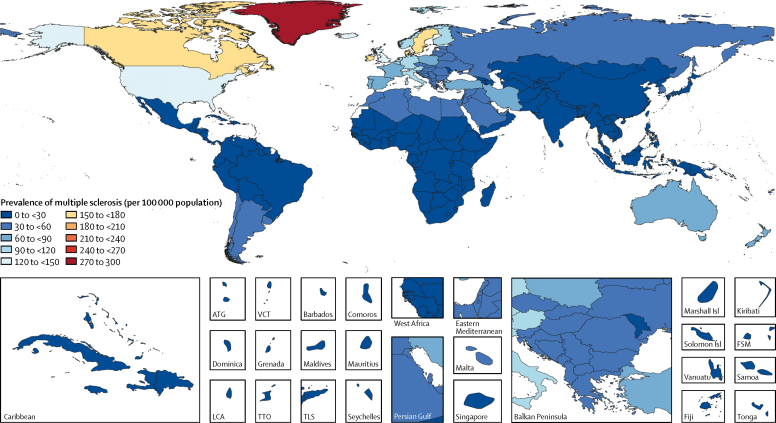
- The highest age-standardised prevalence estimates per 100,000 were in high-income North America (164.6, 95% UI 153.2–177.1), western Europe (127.0, 115.4–139.6), and Australasia (91.1, 81.5–101.7); the lowest were in eastern sub-Saharan Africa (3.3, 2.9–3.8), central sub-Saharan Africa (2.8, 2.4–3.1), and Oceania (2.0, 1.71–2.29).
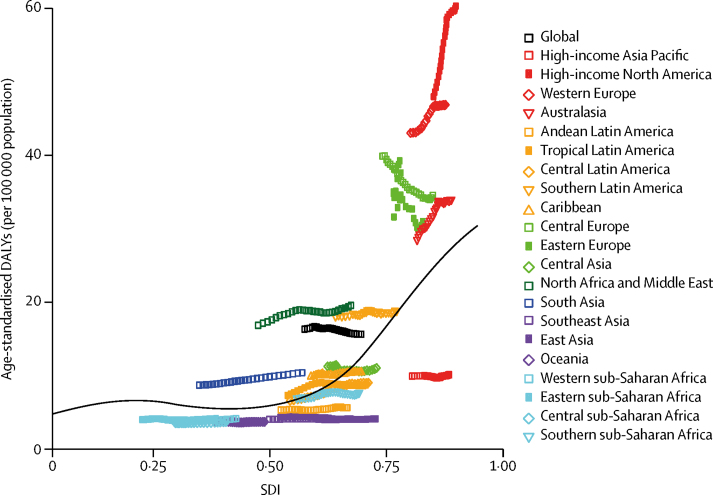
- There were 18,932 deaths (95% UI 16,577–21,033) and 1,151,478 DALYs (968,605–1,345,776) due to multiple sclerosis in 2016; the global age-standardised death rate decreased significantly (−11.5%, 95% UI −35.4 to −4.7), whereas the change in age-standardised DALYs was not significant (−4.2%, −16.4 to 0.8).
- Smoking accounted for 99,076 DALYs (95% UI 62,164–140,650), or 8.6% (5.6–11.7) of global multiple sclerosis DALYs; prevalence increased with latitude (coefficient 1.03 per degree, 95% UI 1.03–1.04).
Methods
- GBD 2016 systematic analysis: mortality was modelled with CODEm using 13,110 site-years of vital registration data and predictive covariates; prevalence and incidence were modelled with DisMod-MR 2.1 using 167 unique sources (129 prevalence, 65 incidence) covering 13 of 21 GBD world regions, plus US medical claims data.
- Severity was classified into mild, moderate, severe, and asymptomatic states based on the Expanded Disability Status Scale; YLDs were derived from prevalence multiplied by disability weights and corrected for comorbidity; YLLs were calculated from deaths and remaining life expectancy; DALYs were the sum of YLLs and YLDs, with uncertainty propagated through 1,000 draws.
- The Socio-demographic Index was used to assess development level; smoking was the only environmental risk judged to have sufficient evidence for a causal relationship with multiple sclerosis, with population-attributable fractions estimated from exposure and relative risk data.
Limitations
- Stated in the paper: data are absent or extremely sparse for many regions, including Latin America, sub-Saharan Africa, and Asia; the models used to predict prevalence, DALYs, and YLLs might lead to unusual changes in segments of the data, such as rapid prevalence increases in women older than 80 years and the YLD curve, which should be viewed with caution; underdiagnosis in less-developed countries cannot be excluded.
- Stated in the paper: there is a lack of robust predictive covariates for multiple sclerosis; including both SDI and latitude might have underestimated the effect of latitude because of collinearity, and inclusion of SDI might have spuriously led to increasing prevalence estimates over time; latitude remains a proxy and uncertain predictor, and measurement error cannot be excluded.
- Evident from the text: many country estimates rely on modelled predictions where no data were available; for example, the Greenland estimate was based on one small study of fewer than 2,000 inhabitants in which no cases were found between 1950 and 1974, and the uncertainty around that estimate is wide.
Model-written summary. Check it against the paper before relying on it.
Integrity signals
Registry
Cites
Statistics
Figures
Verification
Claims the paper makes
4 Valid · 1 Not valid · 12 Not checked · 85 Own results and interpretations
The cited sources support only part of this claim — read each source’s verdict below.
In the paper
“Geographical location before onset of multiple sclerosis remains a risk factor for acquisition.28”
§ Global, regional, and national burden of multiple sclerosis 1990–2016: a systematic analysis for the Global Burden of Disease Study 2016 > Discussion
What the sources say
- Partly supportedcites [28] Simpson S Blizzard L Otahal P Latitude is significantly associated with the prevalence of multiple sclerosis. A meta-analysis J Neurol Neurosurg Psychiatry 82 2011 1132 1141 21478203 sourceExperimental — accuracy not yet measured
The Global analyses section reports a significant association between latitude and MS prevalence, supporting a geographical pattern. But the paper does not establish that a person's location before onset is itself a risk factor for acquiring MS; it analyses population prevalence rather than individuals' pre-onset locations or acquisition risk. No page number was available in our copy. (LLM, conf=0.85)
plainstates a cause- Asserted: passes — The authors put it forward as true.
- Checkable: passes — It can be checked against evidence.
- Load-bearing: unclear — It is unclear whether the paper’s conclusions depend on it.
- Based: passes — The paper gives a reason why it holds.
- Partly supported
A result the paper states — it cites no source for it, so there is none to check. The quote shows it is in the paper.
In the paper
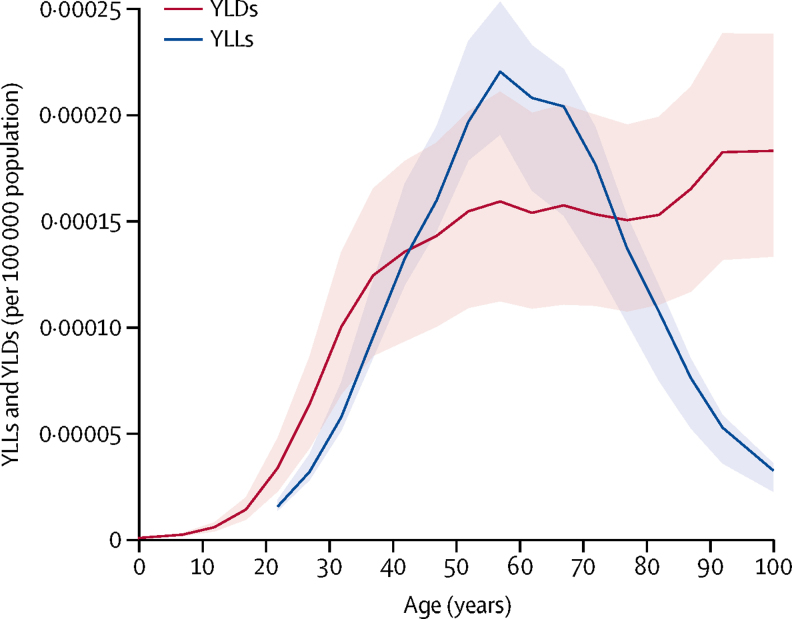
“YLDs begin to increase steeply early in the second decade of life.”
§ Global, regional, and national burden of multiple sclerosis 1990–2016: a systematic analysis for the Global Burden of Disease Study 2016 > Discussion
plainstates a cause- Asserted: passes — The authors put it forward as true.
- Checkable: passes — It can be checked against evidence.
- Load-bearing: unclear — It is unclear whether the paper’s conclusions depend on it.
- Based: passes — The paper gives a reason why it holds.
A result the paper reports from its own data — it cites no other source for it, so there is none to check. The quote shows it is in the paper.
In the paper
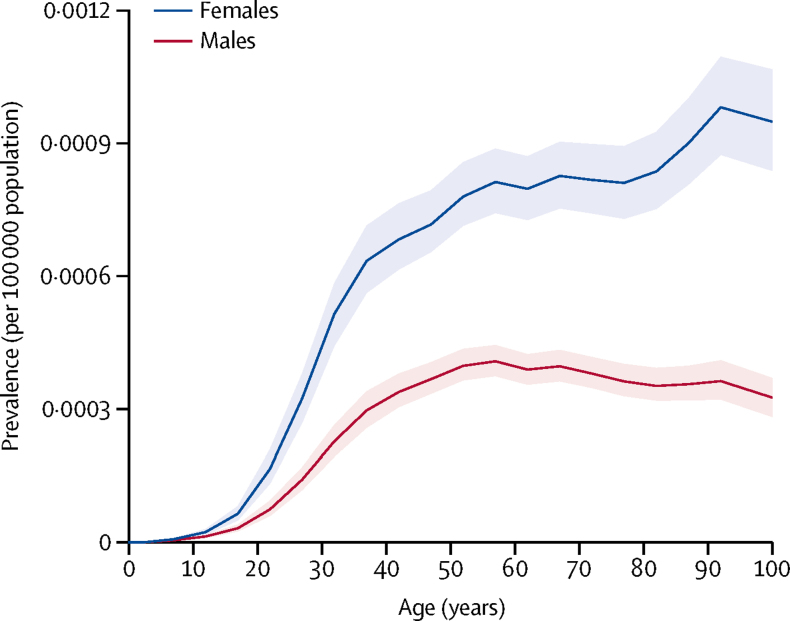
“The global prevalence of multiple sclerosis differs substantially by sex (figure 2).”
- Also stated in: § Discussion · plain
“Prevalence of multiple sclerosis differed substantially over the adult life of women and men.”
§ Global, regional, and national burden of multiple sclerosis 1990–2016: a systematic analysis for the Global Burden of Disease Study 2016 > Results
plainstates an association- Asserted: passes — The authors put it forward as true.
- Checkable: passes — It can be checked against evidence.
- Load-bearing: unclear — It is unclear whether the paper’s conclusions depend on it.
- Based: passes — The paper gives a reason why it holds.
- Also stated in: § Discussion · plain
A result the paper reports from its own data — it cites no other source for it, so there is none to check. The quote shows it is in the paper.
In the paper
“whereas the change in age-standardised DALYs was not significant (−4·2%, −16·4 to 0·8)”
- Also stated in: § Results · plain
“−4·2% (−16·4 to 0·8)”
§ Global, regional, and national burden of multiple sclerosis 1990–2016: a systematic analysis for the Global Burden of Disease Study 2016 > Abstract > Findings
plain- Asserted: passes — The authors put it forward as true.
- Checkable: passes — It can be checked against evidence.
- Load-bearing: unclear — It is unclear whether the paper’s conclusions depend on it.
- Based: passes — The paper gives a reason why it holds.
- Also stated in: § Results · plain
A result the paper reports from its own data — it cites no other source for it, so there is none to check. The quote shows it is in the paper.
In the paper
“In that year, prevalence was 10·4% higher than in 1990.”
§ Global, regional, and national burden of multiple sclerosis 1990–2016: a systematic analysis for the Global Burden of Disease Study 2016 > Discussion
plain- Asserted: passes — The authors put it forward as true.
- Checkable: passes — It can be checked against evidence.
- Load-bearing: unclear — It is unclear whether the paper’s conclusions depend on it.
- Based: passes — The paper gives a reason why it holds.
51 more claims
Create a free account to see all 102 claims and to verify the 1 reference still open.
- It may state two separate claims as one. 26
- Probably not a substantial claim. 29
Claims other papers make about this one
Each is checked against this paper’s own text: does it say what the citing paper says it does?
The cited source says what the claim attributes to it.
In the citing paper
“These 4 common UMNDs result in a significant decline in physical function5,7,8,17,18 and often develop secondary complications that affect their quality of life (QOL), including cognitive impairment,19–21 fatigue,22 chronic pain,23,24 depression,25–27 and anxiety.25–27”
From Feasibility, Acceptability, and Efficacy of Mindfulness Training in People With Upper Motor Neuron Disorders: A Systematic Review (2022) · cites this paper as [17]
Self-check
Percentages, sums and reported differences re-computed from the paper’s own numbers.
Each contradiction between two passages listed here was confirmed by an independent check.
Rated minor: it would not touch a result — a value no result rests on, a p-value that stays on the same side of the significance level, or a conflict that is clerical, resolved elsewhere in the paper, or outside its own findings.
In the paper
§ Global, regional, and national burden of multiple sclerosis 1990–2016: a systematic analysis for the Global Burden of Disease Study 2016 > Results
“Most deaths occurred in high SDI countries (10 021 95% UI 7358–10 873)”
§ Global, regional, and national burden of multiple sclerosis 1990–2016: a systematic analysis for the Global Burden of Disease Study 2016 > Results
“| High SDI | High SDI | 10 021 (7385 to 10 873) |”
Citations
Cites
Rating neurologic impairment in multiple sclerosis: An expanded disability status scale (EDSS)
Kurtzke, J. F. (1983) · Neurology · doi:10.1212/wnl.33.11.1444 · Cited by 15,011
Vos, T., Abajobir, A. A., Abate, K. H., Abbafati, C., Abbas, K. M., Abd-Allah, F., Abdulkader, R. S., Abdulle, A. M., Abebo, T. A., Abera, S. F., et al. (2017) · The Lancet · doi:10.1016/s0140-6736(17)32154-2 · Cited by 13,220
Self-citationDiagnosis of multiple sclerosis: 2017 revisions of the McDonald criteria
Thompson, A. J., Banwell, B. L., Barkhof, F., Carroll, W. M., Coetzee, T., Comi, G., Correale, J., Fazekas, F., Filippi, M., Freedman, M. S., et al. (2018) · The Lancet Neurology · doi:10.1016/s1474-4422(17)30470-2 · Cited by 9,476
Forouzanfar, M. H., Afshin, A., Alexander, L. T., Anderson, H. R., Bhutta, Z. A., Biryukov, S., Brauer, M., Burnett, R., Cercy, K., Charlson, F. J., et al. (2016) · The Lancet · doi:10.1016/s0140-6736(16)31679-8 · Cited by 7,698
Self-citationNew diagnostic criteria for multiple sclerosis: Guidelines for research protocols
Poser, C. M., Paty, D. W., Scheinberg, L., McDonald, W. I., Davis, F. A., Ebers, G. C., Johnson, K. P., Sibley, W. A., Silberberg, D. H., & Tourtellotte, W. W. (1983) · Annals of Neurology · doi:10.1002/ana.410130302 · Cited by 7,384
Vos, T., Allen, C., Arora, M., Barber, R. M., Bhutta, Z. A., Brown, A., Carter, A., Casey, D. C., Charlson, F. J., Chen, A. Z., et al. (2016) · The Lancet · doi:10.1016/s0140-6736(16)31678-6 · Cited by 7,253
Self-citationFeigin, V. L., Nichols, E., Alam, T., Bannick, M. S., Beghi, E., Blake, N., Culpepper, W. J., Dorsey, E. R., Elbaz, A., Ellenbogen, R. G., et al. (2019) · The Lancet Neurology · doi:10.1016/s1474-4422(18)30499-x · Cited by 5,644
Self-citationFood, nutrition, physical activity, and the prevention of cancer: a global perspective
(2008) · Choice Reviews Online · doi:10.5860/choice.45-5024 · Cited by 5,350
Diagnostic criteria for multiple sclerosis: 2005 revisions to the “McDonald Criteria”
Polman, C. H., Reingold, S. C., Edan, G., Filippi, M., Hartung, H., Kappos, L., Lublin, F. D., Metz, L. M., McFarland, H. F., O'Connor, P. W., et al. (2005) · Annals of Neurology · doi:10.1002/ana.20703 · Cited by 5,017
Reich, D. S., Lucchinetti, C. F., & Calabresi, P. A. (2018) · New England Journal of Medicine · doi:10.1056/nejmra1401483 · Cited by 2,491
Cited by
Items 801–900 of 1,078
James, L. M., & Georgopoulos, A. P. (2023) · Scientific Reports · doi:10.1038/s41598-023-45931-5 · Cited by 1
“MS is the most common neurological disorder among young adults and its global prevalence is increasing for unclear reasons 2,3 .”
BackgroundMethodRashed, A. B., Mostafa, S. S., Amer, N. A., Badawy, S. A., Hussein, A. A., & Nada, H. E. A. E.-R. (2023) · doi:10.56984/8zg20b3c3 · Cited by 1
Bahari, L. P. J., Sa’adah, N., Harry, R., & Baron, G. (2023) · World Psychology · doi:10.55849/wp.v2i3.396 · Cited by 2
Impact of visual discomfort symptoms on SDMT performance among persons with MS
Chen, M. H., Rich, T. J., Chiaravalloti, N. D., Goverover, Y., & Costa, S. L. (2025) · Frontiers in Neurology · doi:10.3389/fneur.2025.1569451 · Cited by 1
Brain Targeting Using Nanocolloids for the Management of Multiple Sclerosis
Jain, S., & Raza, K. (2025) · Current Drug Delivery · doi:10.2174/0115672018330624241125060045 · Cited by 2
Ali, A. S., Rammohan, K. W., Halper, J., Livingston, T., Murphy, S. M., Patton, L., Wilkerson, J., & Mao‐Draayer, Y. (2025) · NeuroSci · doi:10.3390/neurosci6030082 · Cited by 1
“Multiple sclerosis (MS) is the leading cause of non-traumatic neurological injury, with a prevalence of 112 per 100,000 people in the US [1].”
Vecchio, F., Alfieri, A., Ramirez, F., Favre, G., Maza, M., & Gonzalez, M. (2025) · Continence · doi:10.1016/j.cont.2025.102134 · Cited by 1
Saeed, T., Afzal, H., Aijaz, A., Ashfaq, A., Rehman, A., Ahmad, Z., Abid, F., Suleman, M., Waris, S., Afzal, A., et al. (2025) · Beni-Suef University Journal of Basic and Applied Sciences · doi:10.1186/s43088-025-00702-1 · Cited by 1
“MS causes severe symptoms, the most common of which are loss of balance and coordination, fatigue, vision impairment, and leads to bladder dysfunction, cognitive dysfunction, and numbness [3].”
Artificial Intelligence and Wearable Technologies for Upper Limb Neurorehabilitation
Siviero, I., Valè, N., Menegaz, G., Ramos‐Murguialday, A., & Storti, S. F. (2026) · IEEE Transactions on Neural Systems and Rehabilitation Engineering · doi:10.1109/tnsre.2026.3651949 · Cited by 3
“It is estimated that 94 million people live with stroke sequelae and 55.5 million people su ff er from the consequences of a traumatic brain injury [1], [2], while 2.2 million people live with multiple sclerosis [3].”
InfluentialAlhammad, S. A., Aldubayan, H. T., Albalawi, M. S., Mutawam, A. A., & AlAbdulwahab, S. S. (2026) · Medicina · doi:10.3390/medicina62020316 · Cited by 2
“It often affects individuals during their most productive years and is associated with reduced participation in work and social roles, as well as poorer quality of life (QoL) [3].”
Yang, B., Molton, I. R., Humbert, A. T., Baylor, C. R., Gregg, E., Ehde, D. M., Sullivan, J., Lanz, E., Schiller, M., Hurvitz, P. M., et al. (2026) · PLoS ONE · doi:10.1371/journal.pone.0342678 · Cited by 2
“Multiple Sclerosis (MS) is an inflammatory and neurodegenerative disease affecting approximately 2.2 million adults worldwide, including one million in the US [1,2].”
InfluentialAlaoui, O. M., Roze, E. F., Daubigney, A., Amieva, H., & Garcin, B. (2026) · Revue Neurologique · doi:10.1016/j.neurol.2026.02.147 · Cited by 1
Bae, Y., Kim, M., Wolde, H. M., Dong, J. J., Song, H., & Lee, S. W. (2026) · Neuroepidemiology · doi:10.1159/000552068 · Cited by 1
Sajjad, M., Sajjad, A., Amer, R., & Mirza, S. B. (2026) · Multiple Sclerosis and Related Disorders · doi:10.1016/j.msard.2026.107388 · Cited by 1
Al-Otaibi, K. M. (2026) · Journal of Integrative Neuroscience · doi:10.31083/jin52589 · Cited by 2
Cladribine for people with multiple sclerosis
Celani, M. G., Melis, M., Orso, M., Ercolani, M. V., & Cantisani, T. A. (2020) · Cochrane Database of Systematic Reviews · doi:10.1002/14651858.cd013524 · Cited by 1
Chemical Exchange Saturation Transfer (CEST) Imaging
Paech, D., & Loi, L. (2023) · Springer eBooks · doi:10.1007/978-3-031-10909-6_11 · Cited by 2
Advances in microfluidic chips targeting toxic aggregation proteins for neurodegenerative diseases
Li, L., Lei, T., Xing, C., & Du, H. (2023) · International Journal of Biological Macromolecules · doi:10.1016/j.ijbiomac.2023.128308 · Cited by 2
Doce, A. V., Delgado, L. G., Gómez, M. J. A., Rubio, M. P. S., Meca‐Lallana, V., Muñoz, B. D. R., Bosch-Martín, M. A., Doce, O. V., García, P. O., & Tapiador, N. (2024) · Neurorehabilitation · doi:10.3233/nre-240038 · Cited by 1
КЛИНИКО-ЭПИДЕМИОЛОГИЧЕСКАЯ ХАРАКТЕРИСТИКА И РЕЗУЛЬТАТЫ ЛЕЧЕНИЯ РАССЕЯННОГО СКЛЕРОЗА
Quliyeva, A. İ. (2024) · Azerbajdžanskij medicinskij žurnal · doi:10.34921/amj.2024.37.98.001 · Cited by 1
Tien-Smith, A. Z., Absar, S., Rogowski, C. B. B., Phillips, V., Andersen, Z. J., Bredell, C., Fung, K. W., Hong, L., Szybka, M., Sharp, S. J., et al. (2026) · Environment International · doi:10.1016/j.envint.2026.110377 · Cited by 1
Albaqshi, H., Alqattan, A., Alhadab, A. H., Al-Elaiwi, A. H., Alsaqer, H. S., & Alokley, A. A. (2025) · Journal of Family Medicine and Primary Care · doi:10.4103/jfmpc.jfmpc_1838_24 · Cited by 1
“[2,3] There is no single causative agent of MS; rather, a combination of environmental factors react with a genetically susceptible individual.”
Feys, P., Lamers, I., Kos, D., & Reebye, R. N. (2025) · Multiple Sclerosis Journal · doi:10.1177/13524585251356967 · Cited by 1
“19,43 Reports indicate that many individuals living with MS still lack access to coordinated professional rehabilitation support for managing their symptoms, and therefore do not reach their most optimal ‘lived experience’ yet.”
Javier-Ormazábal, A., González-Platas, M., & Trujillo, M. P. P. (2025) · Invasive Physiotherapy and Musculoskeletal Medicine · doi:10.63360/ipmm.v1.e5 · Cited by 1
Bortolotto, J. W., Altenhofen, S., Martins, G. M. D. M., Cognato, G. D. P., Leite, C. E., Kist, L. W., Bogo, M. R., & Bonan, C. D. (2025) · Fish Physiology and Biochemistry · doi:10.1007/s10695-025-01597-6 · Cited by 1
MS Fatigue Post High‐Efficacy Treatment
Sales, C., Patel, R., Wijeratne, T., Brüstle, A., & Cherbuin, N. (2025) · European Journal of Neurology · doi:10.1111/ene.70385 · Cited by 1
Alarming Global Rise in Adolescent Metabolic Dysfunction‐Associated Steatotic Liver Disease by 2030
Li, X., & Hua, Y. (2025) · Acta Paediatrica · doi:10.1111/apa.70373 · Cited by 1
“To address these potential biases, the GBD 2019 study used the DisMod-MR 2.1 meta-regression model, which incorporates Bayesian methods to adjust for diagnostic differences [20, 21].”
InfluentialEshraghi, Y., Bhuvaneswari, S. R., Bielawiec, T., Elmofty, D. H., & Wahezi, S. E. (2025) · International Anesthesiology Clinics · doi:10.1097/aia.0000000000000507 · Cited by 1
Cladribine for people with multiple sclerosis
Celani, M. G., Orso, M., Melis, M., Ercolani, M. V., & Cantisani, T. A. (2026) · Cochrane Database of Systematic Reviews · doi:10.1002/14651858.cd013524.pub2 · Cited by 3
Nygaard, S., Madsen, M. A. J., Wiggermann, V., Cabras, C., Christiansen, L., Svátková, A., Lundell, H., Chow, H. H., Christensen, J. R., Blinkenberg, M., et al. (2026) · Frontiers in Neurology · doi:10.3389/fneur.2026.1759679 · Cited by 1
Quevillon, T., Despault, P.-O., Duquette, P., Girard, M., Prat, A., Larochelle, C., Macaron, G., Cusson, A., & Ducruet, T. (2026) · Revue Neurologique · doi:10.1016/j.neurol.2026.02.154 · Cited by 1
Zhu, X.-X., Wang, P.-J., Liu, H.-X., Sun, P., Yu, L., & Yang, F. (2026) · Frontiers in Immunology · doi:10.3389/fimmu.2026.1766322 · Cited by 1
Fu, R., Wang, X., Shi, Z., Wang, R., & Zhou, H. (2026) · Frontiers in Immunology · doi:10.3389/fimmu.2026.1768709 · Cited by 1
Mohamed, R. M. (2026) · Egyptian journal of Immunology · doi:10.55133/eji.330205 · Cited by 1
Biswas, S. K., Vasireddy, S., Srivastava, Y., & Hamadttu, A. (2026) · BMC Neurology · doi:10.1186/s12883-026-04882-w · Cited by 1
“The Global Burden of Disease Study estimated 2.22 million prevalent cases and 1.15 million disability-adjusted life years (DALYs) attributable to MS, with the highest disease burden observed in North America and Western Europe [2].”
InfluentialUrodynamics assessment in patients with multiple sclerosis
Walker, N. F., Bacon, A., Teji, M., Solomon, E., Sahai, A., Stephens, R., Okpii, E., Dunford, C., Wood, S., Speck, E. J., et al. (2026) · BJUI Compass · doi:10.1002/bco2.70208 · Cited by 1
Cai, Z.-L., Dong, F., Fan, J., Chang, Y.-M., Ma, J.-Y., Wang, D., Yi, W., Cai, Z.-Y., & Cao, L. (2026) · Frontiers in Immunology · doi:10.3389/fimmu.2026.1677178 · Cited by 1
“The most Frontier analysis indicates that low-SDI countries (e.g., Papua New Guinea, Cambodia) achieve relatively ef fi cient MS control despite limited resources, potentially due to lower intrinsic incidence (35) and early intervention strategies (36).”
Wu, L., Wei, M., Gao, F., Zhang, H., Wang, J., Xiang, F., Gao, S., Liu, R., Yin, J., Guo, Y., et al. (2026) · Neurology and Therapy · doi:10.1007/s40120-026-00960-w · Cited by 1
“The reported incidence and prevalence rates are 0.029–0.73 per 100,000 person-years and 0.52–10 per 100,000 persons, respectively [3, 4].”
InfluentialAryl hydrocarbon receptor pharmacology—mechanisms, ligands, and therapeutic potential
Bobrovs, R., Olafsen, N. E., Åhrling, S. S., & Matthews, J. B. (2026) · Pharmacological Reviews · doi:10.1016/j.pharmr.2026.100146 · Cited by 5
Oreja‐Guevara, C., Meuth, S. G., Grigoriadis, N., Vermersch, P., Hartung, H. P., Sørensen, P. S., Leocani, L., Schmierer, K., Gold, R., & Fernandez, O. (2026) · Frontiers in Immunology · doi:10.3389/fimmu.2026.1832582 · Cited by 1
Hibner, B. A., Lima, N. S., Sherman, S. R., Motl, R. W., Chirinos, J. A., Phillips, S., Clifford, P. S., Reder, A. T., Baynard, T., & Fernhall, B. (2026) · Physiological Reports · doi:10.14814/phy2.71044 · Cited by 1
“The MS group was primarily female (80%), which is consistent with population trends (Wallin, Culpepper, Nichols, et al., 2019; Wallin, Culpepper, Campbell, et al., 2019).”
Llufriú, S., Agüera, E., Costa‐Frossard, L., Galán, V., Landete, L., Lourido, D., Meca-Lallana, J. E., Moral, E., Bravo-Rodríguez, F. A., Koren, L., et al. (2021) · Neurología · doi:10.1016/j.nrl.2021.01.012 · Cited by 1
Mitochondrial abnormalities in neurological disorders
Ferreira, A. F. F., Singulani, M. P., & de Britto, L. R. G. (2021) · Elsevier eBooks · doi:10.1016/b978-0-12-822416-8.00012-9 · Cited by 1
Badri, T., Arabfard, M., Najafi, A., Farnoosh, G., Heidari, R., Salehi, Z., Sehri, S. Y., & Hassanpour, K. (2022) · Gene Reports · doi:10.1016/j.genrep.2022.101604 · Cited by 1
Bilek, F., & Demir, C. F. (2022) · Balıkesır Health Sciences Journal · doi:10.53424/balikesirsbd.1022783 · Cited by 1
Research Progress of Nursing Intervention for Patients with Alzheimer’s Disease
许, 静. (2021) · Nursing Science · doi:10.12677/ns.2021.105076 · Cited by 1
Adoni, T., Armentano, F., Forestiero, F., & Lopes, N. (2022) · Revista Neurociências · doi:10.34024/rnc.2022.v30.13989 · Cited by 1
Immunomodulators and immunosuppressants for progressive multiple sclerosis: a network meta-analysis
Ridley, B., Minozzi, S., González‐Lorenzo, M., Giovane, C. D., Filippini, G., Peryer, G., Foschi, M., Tramacere, I., Baldin, E., & Nonino, F. (2022) · Cochrane Database of Systematic Reviews · doi:10.1002/14651858.cd015443 · Cited by 1
Noriega, A. A., Cardona, Á. M. S., Castro-Álvarez, J. F., Berruecos, J. F. Z., Vélez-Arroyave, J., & Rojas‐Gualdrón, D. F. (2022) · Revista Ecuatoriana de Neurologia · doi:10.46997/revecuatneurol31200019 · Cited by 2
Development of Bayesian Network for Multiple Sclerosis Risk Factor Interaction Analysis
Hartmann, M., Fenton, N., & Dobson, R. (2022) · Lecture notes in computer science · doi:10.1007/978-3-031-20837-9_2 · Cited by 1
Aungsumart, S., & Apiwattanakul, M. (2023) · Multiple Sclerosis and Related Disorders · doi:10.1016/j.msard.2023.104673 · Cited by 1
Non-HLA Genes and Multiple Sclerosis
Borjac, J., Matar, A., Merheb, M. M., Vazhappilly, C. G., & Matar, R. (2023) · The Open Biotechnology Journal · doi:10.2174/18740707-v17-e230316-2022-25 · Cited by 2
“2 million people globally, under different clinical forms and manifestations [2].”
BackgroundLiao, C.-M., Chen, C., Kung, P., Kuo, W.-Y., Chuang, H.-C., & Tsai, W. (2023) · Healthcare · doi:10.3390/healthcare11111551 · Cited by 1
“Epidemiological reports of MS in Taiwan and worldwide have indicated a decline in standard incidence and fatality rates in recent years [1,22].”
BackgroundMartínez‐Ginés, M. L., García‐Domínguez, J. M., Cuello, J. P., Meca‐Lallana, V., Aguirre, C., Costa‐Frossard, L., Monreal, E., de la Maza, S. S., Salgado-Cámara, P., Labiano-Fontcuberta, A., et al. (2023) · Neurology Perspectives · doi:10.1016/j.neurop.2023.100133 · Cited by 1
Neuman, R. M., & Fey, N. P. (2023) · International Conference on Rehabilitation Robotics · doi:10.1109/icorr58425.2023.10304731 · Cited by 1
“…embodiment of this device was used in an exploratory study to investigate the effects it had on people with multiple sclerosis (MS), a demyelinating disease that often causes gait impairments [4] and for which many people have trouble selecting and using appropriate assistive technology [5].”
MethodHabibi, M. A., Panah, M. Y., Vaheb, S., Olfatifar, M., Shaygannejad, A., Mokary, Y., Ghasemi, M., Thapa, S., Shaygannejad, V., & Mirmosayyeb, O. (2024) · BMC Neurology · doi:10.1186/s12883-024-03544-z · Cited by 1
“Recent statistics from the Global Burden Disease (GBD) report in 2016 show that the prevalence of MS has increased by 10.4% worldwide between 1990 and 2016, highlighting the growing socio-economic impact of MS over the past few decades [2].”
BackgroundInfluentialvan den Berg, L. N., Aardoom, J. J., Kiveron, L. E., Botterweg, R. D., van Marle, M. E. V. D. A. –., Chavannes, N. H., & Hoitsma, E. (2024) · Frontiers in Human Neuroscience · doi:10.3389/fnhum.2024.1379780 · Cited by 2
Cujbă, L., Banc, A., Drugan, T., Coadǎ, C. A., Cristea, A.-P., Stan, C., & Nicula, C. A. (2024) · Diagnostics · doi:10.3390/diagnostics14121255 · Cited by 2
“Multiple sclerosis (MS) is the most common inflammatory neurological disease in young adults with the average age of diagnosis around 30 years [1].”
BackgroundProjected number of people with multiple sclerosis in Germany between 2015 and 2040
Baginski, K., Voeltz, D., & Hoyer, A. (2024) · Multiple Sclerosis and Related Disorders · doi:10.1016/j.msard.2024.105774 · Cited by 1
Cavallo, C., Gatti, A., Pellino, V. C., Pirazzi, A., Ramat, S., Nunzio, A. M. D., Schmid, M., & Vandoni, M. (2024) · Mechanisms and machine science · doi:10.1007/978-3-031-63755-1_12 · Cited by 1
Bender, N., Rühli, F. J., & Henneberg, M. (2024) · Oxford University Press eBooks · doi:10.1093/med/9780197676592.003.0022 · Cited by 1
Katayouncheh, F. A., & Khoshakhlagh, H. (2024) · مجله علمی دانشگاه علوم پزشکی رفسنجان · doi:10.61186/jrums.23.5.321 · Cited by 1
Cutaneous Allodynia is already present in young adults with headache
Sousa, C. D. M. D. S., Júnior, J. F. D. S., Andrade, R. S., Alves, G. C. P., Cardoso, T. C., Filho, A. D., Rêgo, A. S., & Gonçalves, M. C. (2024) · Evidência · doi:10.18593/evid.34519 · Cited by 1
Economic and Disease Burden of Multiple Sclerosis in Colombia
Lozano, A. M., Gutiérrez-Clavijo, J. C., Pineda-Lozano, J. C., Cárdenas‐Robledo, S., Vanegas, A. C., & Alvis-Zakzuk, N. J. (2025) · Value in Health Regional Issues · doi:10.1016/j.vhri.2025.101096 · Cited by 3
A case of combined central and peripheral demyelination in Zambia
George, I. C., Kvalsund, M. P., & Saylor, D. R. (2020) · Multiple Sclerosis and Related Disorders · doi:10.1016/j.msard.2020.101943 · Cited by 1
Kabli, A. F., Bakry, S., Bakry, S., & Alkhotani, A. (2021) · International Journal of Medicine in Developing Countries · doi:10.24911/ijmdc.51-1613389457 · Cited by 1
“1047 vision impairment, loss of co-ordination and balance, fatigue, pain, bladder dysfunction, cognitive dysfunction, numbness, weakness, and mood changes [4,10].”
BackgroundBergien, S. O., Petersen, C. M., Lynning, M., Kristiansen, M., & Skovgaard, L. (2021) · BMC Complementary Medicine and Therapies · doi:10.1186/s12906-021-03377-0 · Cited by 1
Stojić-Vukanić, Z., Pilipović, I., Arsenović-Ranin, N., Dimitrijević, M., & Leposavić, G. (2021) · Immunology Letters · doi:10.1016/j.imlet.2021.08.003 · Cited by 1
Emerging data on the treatment of multiple sclerosis
Ciuhan, A., Perju‐Dumbravă, L., & Tohănean, N. (2021) · Romanian Journal of Neurology · doi:10.37897/rjn.2021.3.2 · Cited by 1
Herrera, M. C. D., Sánchez, M. D., Agüera, E., Muñoz, C., Alonso, A., Arnal, C., Dotor, J., Barrero, J., Gómez, M., Caballero-Villarraso, J., et al. (2022) · Neurology Perspectives · doi:10.1016/j.neurop.2022.06.001 · Cited by 1
Quality of Life and Cognitive Emotion Regulation Strategies in Multiple Sclerosis Patients
Eshaghzadeh, S., Abbaspour, S., Sarboozi-hoseinabadi, T., Eshaghzadeh, M., Tatari, M., Nezhad, M. R., Saravani, H., Hamidi, R., Aghabeigi, A., Rahimi, S., et al. (2022) · Journal of Rational-Emotive & Cognitive-Behavior Therapy · doi:10.1007/s10942-022-00474-y · Cited by 3
“8 million people with MS worldwide (Wallin et al., 2019; Walton et al., 2020).”
Štrosová, D., Tužil, J., Turková, B., Pilnackova, B., de Souza, L. L., Doležalová, H., Rašková, M., Dufek, M., & Doležal, T. (2022) · Pharmaceuticals · doi:10.3390/ph15101248 · Cited by 1
“The global prevalence of MS is estimated at 30 per 100,000; it is more frequent in females and those living at higher latitudes [1,2].”
BackgroundTabatabaei‐Jafari, H., Bagheri, N., Lueck, C. J., Furst, M. A., Salinas-Pérez, J. A., & Salvador‐Carulla, L. (2022) · International Journal of MS Care · doi:10.7224/1537-2073.2022-014 · Cited by 2
Hassoun, H. K., Al-Mahdawi, A., Al-Bajalan, S. J., Sheaheed, N. M., Kamil, M. A. S., Ridha, S. M. S., Al-Owath, M. M. H., Abd, M. F., Al-Khammasi, B., Hasan, Z., et al. (2023) · Heliyon · doi:10.1016/j.heliyon.2023.e13350 · Cited by 2
Kopteva, Y. P., Agafina, A. S., Труфанов, Г. Е., & Scherbak, S. G. (2023) · Russian Journal for Personalized Medicine · doi:10.18705/2782-3806-2023-3-1-43-53 · Cited by 2
Physiotherapy for Neurogenic Lower Urinary Tract Dysfunction: Methods and Indications
Geraerts, I. (2023) · Springer eBooks · doi:10.1007/978-981-99-1659-7_79 · Cited by 1
Aboofazeli, A., Sarrafzadeh, S., Najafabadi, A. Q., Hammami, B., Soheili, R., Sadeghi, A., & Letafati, A. (2023) · Archives of Neuroscience · doi:10.5812/ans-140959 · Cited by 2
World Brain Day 2021 campaign continue to gain the momentum; join us to stop multiple sclerosis
Wijeratne, T., Grisold, W., & Carroll, W. M. (2021) · Journal of the Neurological Sciences · doi:10.1016/j.jns.2021.117547 · Cited by 1
Multiple Sclerosis, Viruses, and New Vaccines
Maple, P. A. C. (2021) · Neurology International · doi:10.3390/neurolint13040068 · Cited by 1
Investigating Extended Linker Analogues of Risperidone for Treatment of Multiple Sclerosis
Bird, T. D. (2020) · Open Access Victoria University of Wellington | Te Herenga Waka (Figshare) · doi:10.26686/wgtn.17147636.v1 · Cited by 1
Chakraborty, S., Maiti, T., Bhowmick, S., & Sarkar, S. (2022) · bioRxiv (Cold Spring Harbor Laboratory) · doi:10.1101/2022.11.29.518394 · Cited by 1
“The symptoms of MS start at an early age and are more frequently seen in women than men (Wallin et al., 2019).”
BackgroundLindland, E. S. (2023) · European Radiology · doi:10.1007/s00330-023-10272-4 · Cited by 1
“…sclerosis: we need much more confidence than the chance of seeing a shooting star when looking up at the night sky Elisabeth S. Lindland 1,2* More than two million people live with multiple sclerosis worldwide [1], and imaging plays an important role in the diagnosis and follow-up of this disease.”
Hynes, S. M., Dwyer, C. P., Alvarez‐Iglesias, A., Rogers, F., Joyce, R. A., Oglesby, M. H., Moses, A., Bane, E., Counihan, T. J., Charamba, B., et al. (2024) · Research Square · doi:10.21203/rs.3.rs-4151380/v1 · Cited by 1
Palladino, R., & Monasta, L. (2024) · Neurology · doi:10.1212/wnl.0000000000209521 · Cited by 1
She, W., Li, R., Zou, Y., Yuan, L., Ma, Y., Chen, H., Wei, S., Wang, J., Tao, J., Sun, C., et al. (2025) · medRxiv · doi:10.1101/2025.04.17.25325986 · Cited by 1
Latent Tuberculosis Infection in Patients with Multiple SclerosisPreprint
Bandeira, I. P., da Silva, C. F., Martin, M. E. M., da Silva, G. F., Parolin, L. F., Melo, L. H., & Gonçalves, M. V. M. (2020) · Preprints.org · doi:10.20944/preprints202004.0305.v1 · Cited by 1
El rol del ejercicio físico en la nicturia de los pacientes con esclerosis múltiple
Sandoval, K. D., Sánchez, C. R., & Suárez-Sánchez, S. (2020) · Revista Medica Sinergia · doi:10.31434/rms.v5i8.419
Cholesterol metabolism in mouse models of Multiple Sclerosis
Berghoff, S. A. (2020) · eDiss (Georg-August-Universität Göttingen) · doi:10.53846/goediss-8239
Asendorf, T. (2021) · eDiss (Georg-August-Universität Göttingen) · doi:10.53846/goediss-8438
A hazai sclerosis multiplex betegpopuláció életkori és nemi megoszlása 2004 és 2016 között
Iljicsov, A., Bereczki, D., Dobi, B., Oberfrank, F., Bálint, M., Ajtay, A., Milanovich, D., & Simó, M. (2021) · Orvosi Hetilap · doi:10.1556/650.2021.32100
“Emellett – mivel a fiatal felnőtt kori rokkantságnak a traumás eredetű sérülés után ez a második leggyakoribb oka [1] – a kieső munkaerő, a betegek komplex kezelése és gondozása, esetleges otthoni vagy intézeti ápolása mind jelentős társadalmi és gazdasági ráfordítást igényel [2, 3].”
BackgroundDavidescu, E. I., Odajiu, I., Sandu, C. D., Ghergu, A., Luca, D., Muresanu, D. F., & Popescu, B. O. (2021) · CNS & Neurological Disorders - Drug Targets · doi:10.2174/1871527320666210827113733
Acute Visual Loss in Young Boy
Saeed, M. A., Mohiuddin, M., & Al-Sumaili, M. H. (2021) · National Journal of Health Sciences · doi:10.21089/njhs.61.0035
Reimbursement Team (2021) · Canadian Journal of Health Technologies · doi:10.51731/cjht.2021.200
(2021) · Elsevier eBooks · doi:10.1016/b978-3-437-22085-2.00028-8
Disability and mortality in a cohort of MS patients: how the real-world scenario is changed
Bergamaschi, R., Mallucci, G., Fusco, S., & Montomoli, C. (2022) · Journal of Neurology · doi:10.1007/s00415-021-10940-9
Multiple Sclerosis and Telerehabilitation
Backus, D. A., Ehde, D. M., & Wallin, M. T. (2022) · Elsevier eBooks · doi:10.1016/b978-0-323-82486-6.00009-5 · Cited by 1
Self-citationMultiple Sklerose: Immunbiologischer Einfluss von Sport
Proschinger, S., & Zimmer, P. (2020) · Deutsches Ärzteblatt · doi:10.3238/persneuro.2020.07.08.05
A INFLUÊNCIA DE MEDICAMENTOS ANTIRRETROVIRAIS NO TRATAMENTO SINTOMATOLÓGICO DA ESCLEROSE MÚLTIPLA
Jacociunas, L. V., & da Rosa, C. S. (2021) · Ciência em Movimento · doi:10.15602/1983-9480/cm.v23n47p68-85
Allergy and autoimmunity: Share of genetics and environment
Manibarathi, K., Lio, C. T., & Bose, T. (2022) · Elsevier eBooks · doi:10.1016/b978-0-323-85415-3.00016-7
Namazi, N., Ziaei, S., Afzal, G. S., Barati, S., Mohebbi, R., Mir, M., Esmaily, H., & Mehralian, G. (2020) · Research Square · doi:10.21203/rs.3.rs-110434/v1
Metadata
- Authors
- Wallin, M. T., Culpepper, W. J., Nichols, E., Bhutta, Z. A., Gebrehiwot, T. T., Hay, S. I., Khalil, I. A., Krohn, K. J., Liang, X., Naghavi, M., Mokdad, A. H., Nixon, M. R., Reiner, R. C., Sartorius, B., Smith, M., Topor-Madry, R., Werdecker, A., Vos, T., Feigin, V. L., & Murray, C. J. L.
- Affiliations
- United States Department of Veterans Affairs (US)
- University of Maryland, Baltimore (US)
- George Washington University (US)
- ORCID
- Venue
- The Lancet Neurology
- Publisher
- Elsevier BV
- Published
- 2019-03
- Volume
- 18
- Issue
- 3
- Pages
- 269-285
- ISSN
- 1474-4422 (ISSN-L)
- PMC
- PMC6372756
- OpenAlex
- W2914720734
- Semantic Scholar
- 0b99adcd5f03f05530e9c57347dd9401bccca9b2
- Cited by
- 1,134
- References
- 57
- Citations by year
- 2026: 100 · 2025: 122 · 2024: 145 · 2023: 178 · 2022: 181 · 2021: 202 · 2020: 167 · 2019: 36
- FWCI
- 97.66
- Type
- journal article
- Language
- en
- Open access
- hybrid
- doi.org
- Licence
- cc-by
- www.elsevier.com/tdm/userlicense/1.0/ (tdm)
- www.elsevier.com/legal/tdmrep-license (tdm)
- creativecommons.org/licenses/by/4.0/ (vor)
- Locations
- The Lancet Neurology (publishedVersion, cc-by)
- Europe PMC (PubMed Central) (publishedVersion, other-oa)
- PubMed Central (publishedVersion, cc-by)
- PubMed (publishedVersion)
- Tuwhera (Auckland University of Technology) (publishedVersion, other-oa)
- LSHTM Research Online (London School of Hygiene and Tropical Medicine) (acceptedVersion)
- Tuwhera (Auckland University of Technology) (submittedVersion, cc-by)
- Funders
- Bill and Melinda Gates Foundation
- Topics
- Health Sciences › Medicine › Clinical Neurology › Multiple Sclerosis Research Studies
- Social Sciences › Economics, Econometrics and Finance › Economics and Econometrics › Health Systems, Economic Evaluations, Quality of Life
- Health Sciences › Health Professions › Physical Therapy, Sports Therapy and Rehabilitation › Musculoskeletal pain and rehabilitation
- Keywords
- multiple sclerosis, disease burden, disability-adjusted life years, years of life lost, years lived with disability, socio-demographic index, country development level, global epidemiology, neurological disorders, Global Burden of Disease Study 2016, vital registration data, sub-Saharan Africa
- MeSH terms
- Global Burden of Disease, Bayes Theorem, Cause of Death, Female, Humans, Life Expectancy, Male, Multiple Sclerosis, Risk Factors, Global Health, Prevalence, Quality-Adjusted Life Years
About these checks
Registry, retraction, Cites and statistics results are computed, not judged, with one exception: a printed reference that no index lists is read once by a model before it counts as a citation error. Claims are extracted by a model and kept only when their quote appears verbatim in the text; each cited source is then checked, with a model’s help, for whether it says what the claim relies on. Those verdicts can be wrong — read the claim’s quote and the cited source before relying on one.
The claim verdicts this report counts are experimental: their accuracy is not yet measured.
A language model drew the claims from the paper on 2026-10-22, under version 3 of the claim definition (model deepseek-v4.1-flash, prompt extract-v3).
A second model labelled each claim on 2026-10-22 (model jev-1.13-20260917, definition revision gold-guideline-v0.2).
Cited sources are checked with a language model’s help (gpt-6-sol).
Statistics and arithmetic are recomputed, not judged.
Confidence bands are shown only for fields calibrated on our annotated test set. None is calibrated yet, so no band is shown.
What counts as a claim ›How we measure confidence ›How we check this ›
Are you an author, or do you see a problem with this page? Request a review
Data sources
Bibliographic data: Semantic Scholar, OpenAlex, Crossref.
Contains information from the Semantic Scholar Academic Graph Datasets, made available under the ODC Attribution License (ODC-BY 1.0).
Semantic Scholar’s data is described in: Kinney, R., et al. (2023). The Semantic Scholar Open Data Platform. arXiv:2301.10140.
