

Global, regional, and national burden of multiple sclerosis 1990-2016: a systematic analysis for the Global Burden of Disease Study 2016
Open accessThe DOI matches its Crossref record; 55 of the 57 references it cites were found in a registry or an index; 5 of the 21 sources its claims cite were checked for support.
Abstract
BACKGROUND: Multiple sclerosis is the most common inflammatory neurological disease in young adults. The Global Burden of Diseases, Injuries, and Risk Factors Study (GBD) provides a systematic method of quantifying various effects of a given condition by demographic variables and geography. In this systematic analysis, we quantified the global burden of multiple sclerosis and its relationship with country development level. METHODS: We assessed the epidemiology of multiple sclerosis from 1990 to 2016. Epidemiological outcomes for multiple sclerosis were modelled with DisMod-MR version 2.1, a Bayesian meta-regression framework widely used in GBD epidemiological modelling. Assessment of multiple sclerosis as the cause of death was based on 13 110 site-years of vital registration data analysed in the GBD's cause of death ensemble modelling module, which is designed to choose the optimum combination of mathematical models and predictive covariates based on out-of-sample predictive validity testing. Data on prevalence and deaths are summarised in the indicator, disability-adjusted life-years (DALYs), which was calculated as the sum of years of life lost (YLLs) and years of life lived with a disability. We used the Socio-demographic Index, a composite indicator of income per person, years of education, and fertility, to assess relations with development level. FINDINGS: In 2016, there were 2 221 188 prevalent cases of multiple sclerosis (95% uncertainty interval [UI] 2 033 866-2 436 858) globally, which corresponded to a 10·4% (9·1 to 11·8) increase in the age-standardised prevalence since 1990. The highest age-standardised multiple sclerosis prevalence estimates per 100 000 population were in high-income North America (164·6, 95% UI, 153·2 to 177·1), western Europe (127·0, 115·4 to 139·6), and Australasia (91·1, 81·5 to 101·7), and the lowest were in eastern sub-Saharan Africa (3·3, 2·9-3·8), central sub-Saharan African (2·8, 2·4 to 3·1), and Oceania (2·0, 1·71 to 2·29). There were 18 932 deaths due to multiple sclerosis (95% UI 16 577 to 21 033) and 1 151 478 DALYs (968 605 to 1 345 776) due to multiple sclerosis in 2016. Globally, age-standardised death rates decreased significantly (change -11·5%, 95% UI -35·4 to -4·7), whereas the change in age-standardised DALYs was not significant (-4·2%, -16·4 to 0·8). YLLs due to premature death were greatest in the sixth decade of life (22·05, 95% UI 19·08 to 25·34). Changes in age-standardised DALYs assessed with the Socio-demographic Index between 1990 and 2016 were variable. INTERPRETATION: Multiple sclerosis is not common but is a potentially severe cause of neurological disability throughout adult life. Prevalence has increased substantially in many regions since 1990. These findings will be useful for resource allocation and planning in health services. Many regions worldwide have few or no epidemiological data on multiple sclerosis, and more studies are needed to make more accurate estimates. FUNDING: Bill & Melinda Gates Foundation.
Overview
CoChat Summary
TL;DR
This GBD 2016 systematic analysis estimated the global burden of multiple sclerosis from 1990 to 2016, finding 2,221,188 prevalent cases in 2016 and a 10.4% increase in age-standardised prevalence since 1990. Burden varied widely by geography and Socio-demographic Index, with the highest prevalence in high-income North America and the lowest in sub-Saharan Africa and Oceania.
Key findings
- In 2016, there were 2,221,188 prevalent cases of multiple sclerosis (95% UI 2,033,866–2,436,858), corresponding to 30.1 cases per 100,000 population; age-standardised prevalence increased by 10.4% (95% UI 9.1–11.8) between 1990 and 2016.
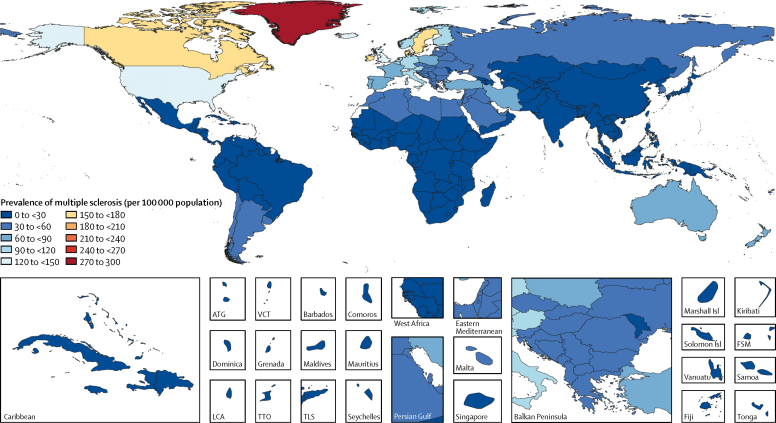
- The highest age-standardised prevalence estimates per 100,000 were in high-income North America (164.6, 95% UI 153.2–177.1), western Europe (127.0, 115.4–139.6), and Australasia (91.1, 81.5–101.7); the lowest were in eastern sub-Saharan Africa (3.3, 2.9–3.8), central sub-Saharan Africa (2.8, 2.4–3.1), and Oceania (2.0, 1.71–2.29).
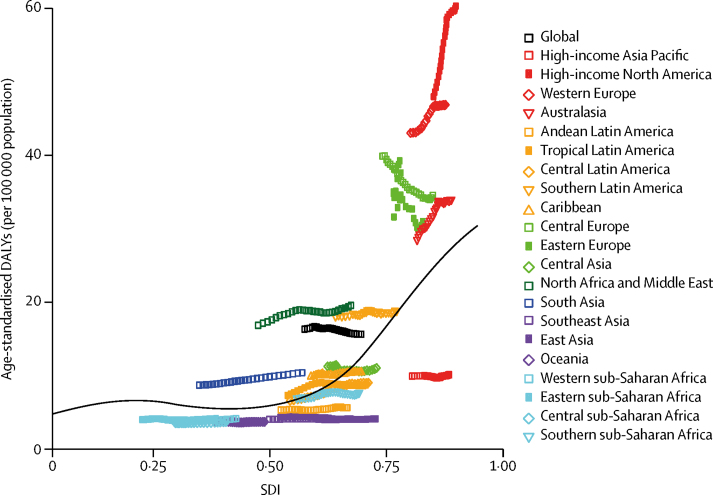
- There were 18,932 deaths (95% UI 16,577–21,033) and 1,151,478 DALYs (968,605–1,345,776) due to multiple sclerosis in 2016; the global age-standardised death rate decreased significantly (−11.5%, 95% UI −35.4 to −4.7), whereas the change in age-standardised DALYs was not significant (−4.2%, −16.4 to 0.8).
- Smoking accounted for 99,076 DALYs (95% UI 62,164–140,650), or 8.6% (5.6–11.7) of global multiple sclerosis DALYs; prevalence increased with latitude (coefficient 1.03 per degree, 95% UI 1.03–1.04).
Methods
- GBD 2016 systematic analysis: mortality was modelled with CODEm using 13,110 site-years of vital registration data and predictive covariates; prevalence and incidence were modelled with DisMod-MR 2.1 using 167 unique sources (129 prevalence, 65 incidence) covering 13 of 21 GBD world regions, plus US medical claims data.
- Severity was classified into mild, moderate, severe, and asymptomatic states based on the Expanded Disability Status Scale; YLDs were derived from prevalence multiplied by disability weights and corrected for comorbidity; YLLs were calculated from deaths and remaining life expectancy; DALYs were the sum of YLLs and YLDs, with uncertainty propagated through 1,000 draws.
- The Socio-demographic Index was used to assess development level; smoking was the only environmental risk judged to have sufficient evidence for a causal relationship with multiple sclerosis, with population-attributable fractions estimated from exposure and relative risk data.
Limitations
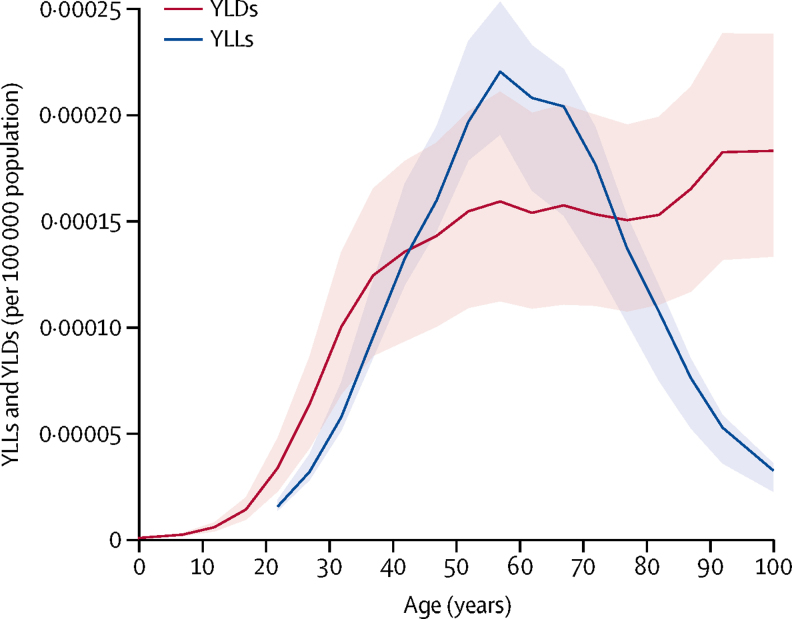
- Stated in the paper: data are absent or extremely sparse for many regions, including Latin America, sub-Saharan Africa, and Asia; the models used to predict prevalence, DALYs, and YLLs might lead to unusual changes in segments of the data, such as rapid prevalence increases in women older than 80 years and the YLD curve, which should be viewed with caution; underdiagnosis in less-developed countries cannot be excluded.
- Stated in the paper: there is a lack of robust predictive covariates for multiple sclerosis; including both SDI and latitude might have underestimated the effect of latitude because of collinearity, and inclusion of SDI might have spuriously led to increasing prevalence estimates over time; latitude remains a proxy and uncertain predictor, and measurement error cannot be excluded.
- Evident from the text: many country estimates rely on modelled predictions where no data were available; for example, the Greenland estimate was based on one small study of fewer than 2,000 inhabitants in which no cases were found between 1950 and 1974, and the uncertainty around that estimate is wide.
Model-written summary. Check it against the paper before relying on it.
Integrity signals
Registry
Cites
Statistics
Figures
Verification
Claims the paper makes
4 Valid · 1 Not valid · 12 Not checked · 85 Own results and interpretations
The cited sources support only part of this claim — read each source’s verdict below.
In the paper
“Geographical location before onset of multiple sclerosis remains a risk factor for acquisition.28”
§ Global, regional, and national burden of multiple sclerosis 1990–2016: a systematic analysis for the Global Burden of Disease Study 2016 > Discussion
What the sources say
- Partly supportedcites [28] Simpson S Blizzard L Otahal P Latitude is significantly associated with the prevalence of multiple sclerosis. A meta-analysis J Neurol Neurosurg Psychiatry 82 2011 1132 1141 21478203 sourceExperimental — accuracy not yet measured
The Global analyses section reports a significant association between latitude and MS prevalence, supporting a geographical pattern. But the paper does not establish that a person's location before onset is itself a risk factor for acquiring MS; it analyses population prevalence rather than individuals' pre-onset locations or acquisition risk. No page number was available in our copy. (LLM, conf=0.85)
plainstates a cause- Asserted: passes — The authors put it forward as true.
- Checkable: passes — It can be checked against evidence.
- Load-bearing: unclear — It is unclear whether the paper’s conclusions depend on it.
- Based: passes — The paper gives a reason why it holds.
- Partly supported
A result the paper states — it cites no source for it, so there is none to check. The quote shows it is in the paper.
In the paper
“YLDs begin to increase steeply early in the second decade of life.”
§ Global, regional, and national burden of multiple sclerosis 1990–2016: a systematic analysis for the Global Burden of Disease Study 2016 > Discussion
plainstates a cause- Asserted: passes — The authors put it forward as true.
- Checkable: passes — It can be checked against evidence.
- Load-bearing: unclear — It is unclear whether the paper’s conclusions depend on it.
- Based: passes — The paper gives a reason why it holds.
A result the paper reports from its own data — it cites no other source for it, so there is none to check. The quote shows it is in the paper.
In the paper
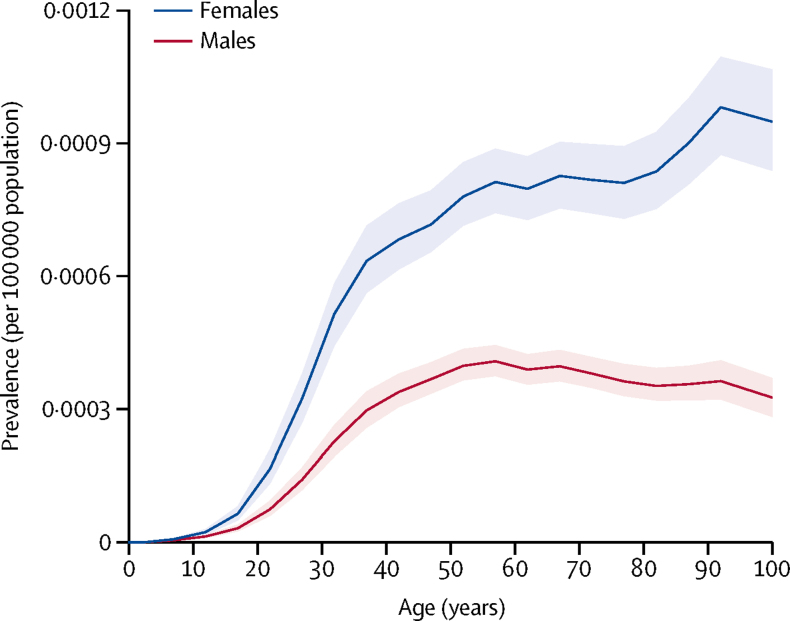
“The global prevalence of multiple sclerosis differs substantially by sex (figure 2).”
- Also stated in: § Discussion · plain
“Prevalence of multiple sclerosis differed substantially over the adult life of women and men.”
§ Global, regional, and national burden of multiple sclerosis 1990–2016: a systematic analysis for the Global Burden of Disease Study 2016 > Results
plainstates an association- Asserted: passes — The authors put it forward as true.
- Checkable: passes — It can be checked against evidence.
- Load-bearing: unclear — It is unclear whether the paper’s conclusions depend on it.
- Based: passes — The paper gives a reason why it holds.
- Also stated in: § Discussion · plain
A result the paper reports from its own data — it cites no other source for it, so there is none to check. The quote shows it is in the paper.
In the paper
“whereas the change in age-standardised DALYs was not significant (−4·2%, −16·4 to 0·8)”
- Also stated in: § Results · plain
“−4·2% (−16·4 to 0·8)”
§ Global, regional, and national burden of multiple sclerosis 1990–2016: a systematic analysis for the Global Burden of Disease Study 2016 > Abstract > Findings
plain- Asserted: passes — The authors put it forward as true.
- Checkable: passes — It can be checked against evidence.
- Load-bearing: unclear — It is unclear whether the paper’s conclusions depend on it.
- Based: passes — The paper gives a reason why it holds.
- Also stated in: § Results · plain
A result the paper reports from its own data — it cites no other source for it, so there is none to check. The quote shows it is in the paper.
In the paper
“In that year, prevalence was 10·4% higher than in 1990.”
§ Global, regional, and national burden of multiple sclerosis 1990–2016: a systematic analysis for the Global Burden of Disease Study 2016 > Discussion
plain- Asserted: passes — The authors put it forward as true.
- Checkable: passes — It can be checked against evidence.
- Load-bearing: unclear — It is unclear whether the paper’s conclusions depend on it.
- Based: passes — The paper gives a reason why it holds.
51 more claims
Create a free account to see all 102 claims and to verify the 1 reference still open.
- It may state two separate claims as one. 26
- Probably not a substantial claim. 29
Claims other papers make about this one
Each is checked against this paper’s own text: does it say what the citing paper says it does?
The cited source says what the claim attributes to it.
In the citing paper
“These 4 common UMNDs result in a significant decline in physical function5,7,8,17,18 and often develop secondary complications that affect their quality of life (QOL), including cognitive impairment,19–21 fatigue,22 chronic pain,23,24 depression,25–27 and anxiety.25–27”
From Feasibility, Acceptability, and Efficacy of Mindfulness Training in People With Upper Motor Neuron Disorders: A Systematic Review (2022) · cites this paper as [17]
Self-check
Percentages, sums and reported differences re-computed from the paper’s own numbers.
Each contradiction between two passages listed here was confirmed by an independent check.
Rated minor: it would not touch a result — a value no result rests on, a p-value that stays on the same side of the significance level, or a conflict that is clerical, resolved elsewhere in the paper, or outside its own findings.
In the paper
§ Global, regional, and national burden of multiple sclerosis 1990–2016: a systematic analysis for the Global Burden of Disease Study 2016 > Results
“Most deaths occurred in high SDI countries (10 021 95% UI 7358–10 873)”
§ Global, regional, and national burden of multiple sclerosis 1990–2016: a systematic analysis for the Global Burden of Disease Study 2016 > Results
“| High SDI | High SDI | 10 021 (7385 to 10 873) |”
Citations
Cites
Rating neurologic impairment in multiple sclerosis: An expanded disability status scale (EDSS)
Kurtzke, J. F. (1983) · Neurology · doi:10.1212/wnl.33.11.1444 · Cited by 15,011
Vos, T., Abajobir, A. A., Abate, K. H., Abbafati, C., Abbas, K. M., Abd-Allah, F., Abdulkader, R. S., Abdulle, A. M., Abebo, T. A., Abera, S. F., et al. (2017) · The Lancet · doi:10.1016/s0140-6736(17)32154-2 · Cited by 13,220
Self-citationDiagnosis of multiple sclerosis: 2017 revisions of the McDonald criteria
Thompson, A. J., Banwell, B. L., Barkhof, F., Carroll, W. M., Coetzee, T., Comi, G., Correale, J., Fazekas, F., Filippi, M., Freedman, M. S., et al. (2018) · The Lancet Neurology · doi:10.1016/s1474-4422(17)30470-2 · Cited by 9,476
Forouzanfar, M. H., Afshin, A., Alexander, L. T., Anderson, H. R., Bhutta, Z. A., Biryukov, S., Brauer, M., Burnett, R., Cercy, K., Charlson, F. J., et al. (2016) · The Lancet · doi:10.1016/s0140-6736(16)31679-8 · Cited by 7,698
Self-citationNew diagnostic criteria for multiple sclerosis: Guidelines for research protocols
Poser, C. M., Paty, D. W., Scheinberg, L., McDonald, W. I., Davis, F. A., Ebers, G. C., Johnson, K. P., Sibley, W. A., Silberberg, D. H., & Tourtellotte, W. W. (1983) · Annals of Neurology · doi:10.1002/ana.410130302 · Cited by 7,384
Vos, T., Allen, C., Arora, M., Barber, R. M., Bhutta, Z. A., Brown, A., Carter, A., Casey, D. C., Charlson, F. J., Chen, A. Z., et al. (2016) · The Lancet · doi:10.1016/s0140-6736(16)31678-6 · Cited by 7,253
Self-citationFeigin, V. L., Nichols, E., Alam, T., Bannick, M. S., Beghi, E., Blake, N., Culpepper, W. J., Dorsey, E. R., Elbaz, A., Ellenbogen, R. G., et al. (2019) · The Lancet Neurology · doi:10.1016/s1474-4422(18)30499-x · Cited by 5,644
Self-citationFood, nutrition, physical activity, and the prevention of cancer: a global perspective
(2008) · Choice Reviews Online · doi:10.5860/choice.45-5024 · Cited by 5,350
Diagnostic criteria for multiple sclerosis: 2005 revisions to the “McDonald Criteria”
Polman, C. H., Reingold, S. C., Edan, G., Filippi, M., Hartung, H., Kappos, L., Lublin, F. D., Metz, L. M., McFarland, H. F., O'Connor, P. W., et al. (2005) · Annals of Neurology · doi:10.1002/ana.20703 · Cited by 5,017
Reich, D. S., Lucchinetti, C. F., & Calabresi, P. A. (2018) · New England Journal of Medicine · doi:10.1056/nejmra1401483 · Cited by 2,491
Cited by
Feigin, V. L., Nichols, E., Alam, T., Bannick, M. S., Beghi, E., Blake, N., Culpepper, W. J., Dorsey, E. R., Elbaz, A., Ellenbogen, R. G., et al. (2019) · The Lancet Neurology · doi:10.1016/s1474-4422(18)30499-x · Cited by 5,644
Self-citationRising prevalence of multiple sclerosis worldwide: Insights from the Atlas of MS, third edition
Walton, C., King, R., Rechtman, L., Kaye, W., Leray, E., Marrie, R. A., Robertson, N., La Rocca, N., Uitdehaag, B., van der Mei, I., et al. (2020) · Multiple Sclerosis Journal · doi:10.1177/1352458520970841 · Cited by 2,653
Self-citationTreatment of Multiple Sclerosis: A Review
Hauser, S. L., & Cree, B. A. C. (2020) · The American Journal of Medicine · doi:10.1016/j.amjmed.2020.05.049 · Cited by 969
Blood GFAP as an emerging biomarker in brain and spinal cord disorders
Abdelhak, A., Foschi, M., Abu-Rumeileh, S., Yue, J. K., D’Anna, L., Huss, A., Oeckl, P., Ludolph, A. C., Kuhle, J., Petzold, A., et al. (2022) · Nature Reviews Neurology · doi:10.1038/s41582-021-00616-3 · Cited by 807
Jakimovski, D., Bittner, S., Zivadinov, R., Morrow, S. A., Benedict, R. H., Zipp, F., & Weinstock-Guttman, B. (2024) · The Lancet · doi:10.1016/s0140-6736(23)01473-3 · Cited by 597
Lim, E.-J., Ahn, Y.-C., Jang, E.-S., Lee, S.-W., Lee, S.-H., & Son, C.-G. (2020) · Journal of Translational Medicine · doi:10.1186/s12967-020-02269-0 · Cited by 481
Werneburg, S., Jung, J., Kunjamma, R. B., Ha, S.-K., Luciano, N. J., Willis, C. M., Gao, G., Biscola, N. P., Havton, L. A., Crocker, S. J., et al. (2020) · Immunity · doi:10.1016/j.immuni.2019.12.004 · Cited by 440
Gadhave, D. G., Sugandhi, V. V., Jha, S. K., Nangare, S. N., Gupta, G., Singh, S. K., Dua, K., Cho, H., Hansbro, P. M., & Paudel, K. R. (2024) · Ageing Research Reviews · doi:10.1016/j.arr.2024.102357 · Cited by 358
“In the year 2019, there were 59,345 newly diagnosed cases of MS and 22,439 deaths worldwide (Wallin et al., 2019).”
BackgroundThe impact of the gut microbiome on extra-intestinal autoimmune diseases
Miyauchi, E., Shimokawa, C., Steimle, A., Desai, M. S., & Ohno, H. (2023) · Nature Reviews Immunology · doi:10.1038/s41577-022-00727-y · Cited by 367
Locus for severity implicates CNS resilience in progression of multiple sclerosis
International Multiple Sclerosis Genetics Consortium, Harroud, A., Stridh, P., McCauley, J. L., Saarela, J., van den Bosch, A. M. R., Engelenburg, H. J., Beecham, A. H., Alfredsson, L., Alikhani, K., et al. (2023) · Nature · doi:10.1038/s41586-023-06250-x · Cited by 285
Prevalence and burden of multiple sclerosis-related fatigue: a systematic literature review
Oliva Ramirez, A., Keenan, A., Kalau, O., Worthington, E., Cohen, L., & Singh, S. (2021) · BMC Neurology · doi:10.1186/s12883-021-02396-1 · Cited by 257
“Approximately 2.3 million people worldwide have been diagnosed with MS, with the highest prevalence in North America, Western Europe, and Australasia [1, 2].”
BackgroundInfluentialMitrea, L., Nemeş, S.-A., Szabo, K., Teleky, B.-E., & Vodnar, D.-C. (2022) · Frontiers in Medicine · doi:10.3389/fmed.2022.813204 · Cited by 237
Zhang, S., Gong, T.-T., Liu, F.-H., Jiang, Y.-T., Sun, H., Ma, X.-X., Zhao, Y.-H., & Wu, Q.-J. (2019) · Frontiers in Oncology · doi:10.3389/fonc.2019.01440 · Cited by 229
You’ve got male: Sex and the microbiota-gut-brain axis across the lifespan
Jaggar, M., Rea, K., Spichak, S., Dinan, T. G., & Cryan, J. F. (2020) · Frontiers in Neuroendocrinology · doi:10.1016/j.yfrne.2019.100815 · Cited by 200
Singh, G., Sharma, M., Kumar, G. A., Rao, N. G., Prasad, K., Mathur, P., Pandian, J. D., Steinmetz, J. D., Biswas, A., Pal, P. K., et al. (2021) · The Lancet Global Health · doi:10.1016/s2214-109x(21)00164-9 · Cited by 179
Self-citationHittle, M., Culpepper, W. J., Langer-Gould, A., Marrie, R. A., Cutter, G. R., Kaye, W. E., Wagner, L., Topol, B., LaRocca, N. G., Nelson, L. M., et al. (2023) · JAMA Neurology · doi:10.1001/jamaneurol.2023.1135 · Cited by 183
Self-citationKoo, J., Lim, C., & Oh, K. T. (2024) · International Journal of Nanomedicine · doi:10.2147/ijn.s439181 · Cited by 174
Eitel, F., Soehler, E., Bellmann-Strobl, J., Brandt, A. U., Ruprecht, K., Giess, R. M., Kuchling, J., Asseyer, S., Weygandt, M., Haynes, J.-D., et al. (2019) · NeuroImage: Clinical · doi:10.1016/j.nicl.2019.102003 · Cited by 171
Early highly effective versus escalation treatment approaches in relapsing multiple sclerosis
Ontaneda, D., Tallantyre, E., Kalincik, T., Planchon, S. M., & Evangelou, N. (2019) · The Lancet Neurology · doi:10.1016/s1474-4422(19)30151-6 · Cited by 168
Schaffert, L.-N., & Carter, W. G. (2020) · Brain Sciences · doi:10.3390/brainsci10040232 · Cited by 169
Xia, Y., Wu, Q., Wang, H., Zhang, S., Jiang, Y., Gong, T., Xu, X., Chang, Q., Niu, K., & Zhao, Y. (2020) · Rheumatology · doi:10.1093/rheumatology/kez476 · Cited by 159
He, H., Pan, Z., Wu, J., Hu, C., Bai, L., & Lyu, J. (2022) · Nicotine & Tobacco Research · doi:10.1093/ntr/ntab265 · Cited by 153
Rising prevalence of multiple sclerosis in Saudi Arabia, a descriptive study
Aljumah, M., Bunyan, R., Otaibi, H. A., Towaijri, G. A., Karim, A., Malik, Y. M. A., Kalakatawi, M., al-Rajeh, S., Mejally, M. A. A., Algahtani, H. A., et al. (2020) · BMC Neurology · doi:10.1186/s12883-020-1629-3 · Cited by 172
Autoreactive lymphocytes in multiple sclerosis: Pathogenesis and treatment target
Liu, R., Du, S., Zhao, L., Jain, S., Sahay, K., Rizvanov, A. A., Lezhnyova, V., Хайбуллин, Т. И., Martynova, E. V., Khaiboullina, S. F., et al. (2022) · Frontiers in Immunology · doi:10.3389/fimmu.2022.996469 · Cited by 210
“It appears that populations with European ancestry (28) are at a higher risk, due to higher MS prevalence reported in Australia and New Zealand (27).”
BackgroundResultKhan, G., & Hashim, M. J. (2025) · Journal of Epidemiology and Global Health · doi:10.1007/s44197-025-00353-6 · Cited by 184
“It is estimated that 2–3 million people live with MS [21 , 22 ].”
Cano, A., Sánchez-López, E., Ettcheto, M., López-Machado, A., Espina, M., Souto, E. B., Galindo, R., Camins, A., García, M. L., & Turowski, P. (2020) · Nanomedicine · doi:10.2217/nnm-2019-0443 · Cited by 144
Clinical Features of Late-Onset Multiple Sclerosis: a Systematic Review and Meta-analysis
Naseri, A., Nasiri, E., Sahraian, M. A., Daneshvar, S., & Talebi, M. (2021) · Multiple Sclerosis and Related Disorders · doi:10.1016/j.msard.2021.102816 · Cited by 142
Race and ethnicity on MS presentation and disease course
Amezcua, L., & McCauley, J. L. (2020) · Multiple Sclerosis Journal · doi:10.1177/1352458519887328 · Cited by 154
Fang, A., Wang, Y., Guan, N., Zuo, Y., Lin, L., Guo, B., Mo, A., Wu, Y., Lin, X., Cai, W., et al. (2023) · Nature Communications · doi:10.1038/s41467-023-39745-2 · Cited by 151
He, H., Hu, C., Ren, Z., Bai, L., Gao, F., & Lyu, J. (2020) · Journal of Psychiatric Research · doi:10.1016/j.jpsychires.2020.03.015 · Cited by 143
The enigma and implications of brain hemispheric asymmetry in neurodegenerative diseases
Lubben, N., Ensink, E., Coetzee, G. A., & Labrie, V. (2021) · Brain Communications · doi:10.1093/braincomms/fcab211 · Cited by 153
“Likewise, ALS and MS, while comparatively less common, represent a significant health burden, with the latter also impacting young people, and case numbers have also been on the rise.(36,37) Despite years of dedicated research, these diseases are still not well understood, suggesting that new avenues of research may b…”
BackgroundRacial and Ethnic Disparities in Multiple Sclerosis Prevalence
Langer-Gould, A. M., Gonzales, E. G., Smith, J. B., Li, B. H., & Nelson, L. M. (2022) · Neurology · doi:10.1212/wnl.0000000000200151 · Cited by 123
Viral infections and their relationship to neurological disorders
Wouk, J., Rechenchoski, D. Z., Rodrigues, B. C. D., Ribelato, E. V., & Faccin-Galhardi, L. C. (2021) · Archives of Virology · doi:10.1007/s00705-021-04959-6 · Cited by 119
Thinking outside the box: non-canonical targets in multiple sclerosis
Bierhansl, L., Hartung, H.-P., Aktas, O., Ruck, T., Roden, M., & Meuth, S. G. (2022) · Nature Reviews Drug Discovery · doi:10.1038/s41573-022-00477-5 · Cited by 117
The neural stem cell secretome and its role in brain repair
Willis, C. M., Nicaise, A. M., Peruzzotti-Jametti, L., & Pluchino, S. (2020) · Brain Research · doi:10.1016/j.brainres.2019.146615 · Cited by 114
Cluster headache pathophysiology — insights from current and emerging treatments
Wei, D. Y., & Goadsby, P. J. (2021) · Nature Reviews Neurology · doi:10.1038/s41582-021-00477-w · Cited by 118
Caregiver Burden in Multiple Sclerosis: Recent Trends and Future Directions
Maguire, R., & Maguire, P. (2020) · Current Neurology and Neuroscience Reports · doi:10.1007/s11910-020-01043-5 · Cited by 127
New Promising Therapeutic Avenues of Curcumin in Brain Diseases
Benameur, T., Giacomucci, G., Panaro, M. A., Ruggiero, M., Trotta, T., Monda, V., Pizzolorusso, I., Lofrumento, D. D., Porro, C., & Messina, G. (2021) · Molecules · doi:10.3390/molecules27010236 · Cited by 118
Shobeiri, P., Kalantari, A., Teixeira, A. L., & Rezaei, N. (2022) · Biology of Sex Differences · doi:10.1186/s13293-022-00422-6 · Cited by 125
“The Global Burden of Disease Study reported that there were 2,221,188 prevalent cases of multiple sclerosis in 2016 globally (95% uncertainty interval [UI] 2 033 866–2 436 858) [325], which indicates that every 5 min, someone, somewhere in the world is diagnosed with MS [326].”
BackgroundAdvances in microfluidic in vitro systems for neurological disease modeling
Holloway, P. M., Willaime‐Morawek, S., Siow, R. C. M., Barber, M., Owens, R. M., Sharma, A. D., Rowan, W. C., Hill, E. J., & Zagnoni, M. (2021) · Journal of Neuroscience Research · doi:10.1002/jnr.24794 · Cited by 117
Age and the risks of high-efficacy disease modifying drugs in multiple sclerosis
Schweitzer, F., Laurent, S. A., Fink, G. R., Barnett, M. H., Reddel, S., Hartung, H., & Warnke, C. (2019) · Current Opinion in Neurology · doi:10.1097/wco.0000000000000701 · Cited by 105
Filippi, M., Danesi, R., Derfuss, T. J., Duddy, M., Gallo, P., Gold, R., Havrdová, E., Kornek, B., Saccà, F., Tintoré, M., et al. (2021) · Journal of Neurology · doi:10.1007/s00415-021-10836-8 · Cited by 102
Epidemiology of pediatric multiple sclerosis: A systematic literature review and meta-analysis
Yan, K., Balijepalli, C., Desai, K., Gullapalli, L., & Druyts, E. (2020) · Multiple Sclerosis and Related Disorders · doi:10.1016/j.msard.2020.102260 · Cited by 116
Occurrences and Functions of Ly6Chi and Ly6Clo Macrophages in Health and Disease
Li, Y., Zhang, Y., Pan, G., Xiang, L., Luo, D., & Shao, J. (2022) · Frontiers in Immunology · doi:10.3389/fimmu.2022.901672 · Cited by 128
Solomon, A. J., Marrie, R. A., Viswanathan, S., Correale, J. D., Magyari, M., Robertson, N. P., Saylor, D. R., Kaye, W., Rechtman, L., Bae, E., et al. (2023) · Neurology · doi:10.1212/wnl.0000000000207481 · Cited by 104
Alterations of the Fecal Microbiota in Chinese Patients With Multiple Sclerosis
Ling, Z., Cheng, Y., Yan, X., Shao, L., Liu, X., Zhou, D., Zhang, L., Yu, K., & Zhao, L. (2020) · Frontiers in Immunology · doi:10.3389/fimmu.2020.590783 · Cited by 89
Engen, P. A., Zaferiou, A., Rasmussen, H., Naqib, A., Green, S. J., Fogg, L. F., Forsyth, C. B., Raeisi, S., Hamaker, B., & Keshavarzian, A. (2020) · Frontiers in Neurology · doi:10.3389/fneur.2020.00978 · Cited by 88
Qian, Z., Li, Y., Guan, Z., Guo, P., Zheng, K., Du, Y., Yin, S., Chen, B., Wang, H., Jiang, J., et al. (2023) · Frontiers in Public Health · doi:10.3389/fpubh.2023.1073278 · Cited by 102
Multiple sclerosis incidence: A systematic review of change over time by geographical region
Lane, J., Ng, H. S., Poyser, C., Lucas, R. M., & Tremlett, H. L. (2022) · Multiple Sclerosis and Related Disorders · doi:10.1016/j.msard.2022.103932 · Cited by 108
Yeh, W. Z., Widyastuti, P. A., van der Walt, A., Stankovich, J. M., Havrdová, E., Horáková, D., Vodehnalová, K., Özakbaş, S., Eichau, S., Duquette, P., et al. (2021) · Neurology · doi:10.1212/wnl.0000000000012084 · Cited by 95
“Multiple sclerosis (MS) is a leading cause of neurologic disability among young people and is typically diagnosed in women in their 20s and 30s.(1) Pregnancy and family planning are important life events in this group and pose special challenges for MS treatment planning.”
BackgroundTwin study reveals non-heritable immune perturbations in multiple sclerosis
Ingelfinger, F., Gerdes, L. A., Kavaka, V., Krishnarajah, S., Friebel, E., Galli, E., Zwicky, P., Furrer, R., Peukert, C., Dutertre, C., et al. (2022) · Nature · doi:10.1038/s41586-022-04419-4 · Cited by 94
Wang, Y., Liang, J., Fang, Y., Yao, D., Zhang, L., Zhou, Y., Wang, Y., Hu, L., Lu, Z., Wang, Y., et al. (2023) · Neurology · doi:10.1212/wnl.0000000000207218 · Cited by 89
“Therefore, there may be an untrue increment in its incidence.(23) Smoking was positively correlated with MS, and there was a significant sex difference, with attributable DALYs of 21.”
BackgroundIncidence of multiple sclerosis in China: A nationwide hospital-based study
Tian, D., Zhang, C., Yuan, M., Yang, X., Gu, H., Li, Z., Wang, Y., & Shi, F. (2020) · The Lancet Regional Health - Western Pacific · doi:10.1016/j.lanwpc.2020.100010 · Cited by 93
Desborough, J., Brunoro, C., Parkinson, A., Chisholm, K., Elisha, M., Drew, J., Fanning, V., Lueck, C. J., Brüstle, A., Cook, M., et al. (2020) · Health Expectations · doi:10.1111/hex.13093 · Cited by 96
The role of the microbiome in gastrointestinal inflammation
Sanders, D. J., Inniss, S., Sebepos‐Rogers, G., Rahman, F. Z., & Smith, A. M. (2021) · Bioscience Reports · doi:10.1042/bsr20203850 · Cited by 91
Brisset, J., Kremer, S., Hannoun, S., Bonneville, F., Durand‐Dubief, F., Tourdias, T., Barillot, C., Guttmann, C. R. G., Vukusic, S., Dousset, V., et al. (2020) · Journal of Neuroradiology · doi:10.1016/j.neurad.2020.01.083 · Cited by 85
“Prevalence of MS has increased substantially in many regions since 1990 [20].”
Simkins, T., Duncan, G. J., & BOURDETTE, D. N. (2021) · Current Neurology and Neuroscience Reports · doi:10.1007/s11910-021-01110-5 · Cited by 82
Siponimod: A Review in Secondary Progressive Multiple Sclerosis
Scott, L. J. (2020) · CNS Drugs · doi:10.1007/s40263-020-00771-z · Cited by 89
Cortés‐Pérez, I., Sánchez-Alcalá, M., Nieto-Escámez, F. A., Castellote‐Caballero, Y., Obrero‐Gaitán, E., & Osuna‐Pérez, M. C. (2021) · Sensors · doi:10.3390/s21217389 · Cited by 81
“MS is the leading cause of disability by chronic neurological disease in young adults [3], affecting more than 2.”
BackgroundPolygenic risk score association with multiple sclerosis susceptibility and phenotype in Europeans
Shams, H., Shao, X., Santaniello, A., Kirkish, G., Harroud, A., Ma, Q., Isobe, N., Alexander, J., Bove, R. M., Baranzini, S. E., et al. (2022) · Brain · doi:10.1093/brain/awac092 · Cited by 81
Khalesi, Z., Tamrchi, V., Razizadeh, M. H., Letafati, A., Moradi, P., Habibi, A., Habibi, N., Heidari, J., Noori, M., Samiei, M. N., et al. (2023) · Microbial Pathogenesis · doi:10.1016/j.micpath.2023.106031 · Cited by 69
A global perspective on the burden of multiple sclerosis
Stenager, E. (2019) · The Lancet Neurology · doi:10.1016/s1474-4422(18)30498-8 · Cited by 72
The Application of Nanotechnology for the Diagnosis and Treatment of Brain Diseases and Disorders
Ngowi, E. E., Wang, Y., Qian, L., Helmy, Y. A. S. H., Anyomi, B. K., Li, T., Zheng, M., Jiang, E., Duan, S., Wei, J., et al. (2021) · Frontiers in Bioengineering and Biotechnology · doi:10.3389/fbioe.2021.629832 · Cited by 82
The Role of Osteopontin in Microglia Biology: Current Concepts and Future Perspectives
Rosmus, D.-D., Lange, C., Ludwig, F., Ajami, B., & Wieghofer, P. (2022) · Biomedicines · doi:10.3390/biomedicines10040840 · Cited by 67
“5 million afflicted people around the world, MS represents an important source of disease burden in neurology [94].”
BackgroundAsghari, K. M., Dolatkhah, N., Ayromlou, H., Mirnasiri, F., Dadfar, T., & Hashemian, M. (2023) · Scientific Reports · doi:10.1038/s41598-023-46047-6 · Cited by 77
“Approximately 2.5 million people worldwide are affected by MS. MS is a chronic central nervous system disorder caused by an autoimmune reaction 3 .”
BackgroundInfluentialFinck, T., Li, H., Grundl, L., Eichinger, P., Bussas, M., Mühlau, M., Menze, B. H., & Wiestler, B. (2020) · Investigative Radiology · doi:10.1097/rli.0000000000000640 · Cited by 73
Vaccinations in patients with multiple sclerosis: A Delphi consensus statement
Riva, A., Barcella, V., Benatti, S. V., Capobianco, M. A. N., Capra, R., Cinque, P. M., Comi, G., Fasolo, M., Franzetti, F., Galli, M., et al. (2020) · Multiple Sclerosis Journal · doi:10.1177/1352458520952310 · Cited by 69
Update on treatment in multiple sclerosis
Callegari, I., Derfuss, T. J., & Galli, E. (2021) · La Presse Médicale · doi:10.1016/j.lpm.2021.104068 · Cited by 87
Suhler, E. B., Jaffe, G. J., Fortin, É., Lim, L. L., Merrill, P. T., Dick, A. D., Brézin, A. P., Nguyen, Q. D., Thorne, J. E., Calster, J. V., et al. (2020) · Ophthalmology · doi:10.1016/j.ophtha.2020.10.036 · Cited by 62
Rammohan, K. W., Coyle, P. K., Sylvester, E., Galazka, A. R., Dangond, F., Grosso, M., & Leist, T. P. (2020) · Drugs · doi:10.1007/s40265-020-01422-9 · Cited by 70
Sex is a defining feature of neuroimaging phenotypes in major brain disorders
Salminen, L. E., Tubi, M. A., Bright, J. K., Thomopoulos, S. I., Wieand, A., & Thompson, P. M. (2021) · Human Brain Mapping · doi:10.1002/hbm.25438 · Cited by 69
Gharakhanlou, R., Wesselmann, L., Rademacher, A., Lampit, A., Negaresh, R., Kaviani, M., Oberste, M., Motl, R. W., Sandroff, B. M., Bansi, J., et al. (2020) · Multiple Sclerosis Journal · doi:10.1177/1352458520917935 · Cited by 67
“These test batteries were constructed (1) to assess cognitive outcomes relevant for daily living, (2) to assess cognitive performance in the primarily affected cognitive domains in pwMS, and (3) to obtain comparable results between studies.”
ResultCOVID-19 in people with multiple sclerosis: A global data sharing initiative
Peeters, L. M., Parciak, T., Walton, C., Geys, L., Moreau, Y., Brouwer, E. D., Raimondi, D., Pirmani, A., Kalinčík, T., Edan, G., et al. (2020) · Multiple Sclerosis Journal · doi:10.1177/1352458520941485 · Cited by 60
Glia: A major player in glutamate–GABA dysregulation‐mediated neurodegeneration
Sood, A., Kumari, P., Fernandes, V., Khatri, D. K., & Singh, S. B. (2021) · Journal of Neuroscience Research · doi:10.1002/jnr.24977 · Cited by 62
“These proteins include glutamate transporter EAAT2 (Bélanger et al., 2011), GS (Walls et al., 2015), and the glutamine transporter SNAT3 (Todd et al., 2017).”
BackgroundPasternak, J. J., & Lanier, W. L. (2009) · Journal of Neurosurgical Anesthesiology · doi:10.1097/ana.0000000000000048 · Cited by 62
Dumitrescu, L., Papathanasiou, A. I., Coclitu, C., Garjani, A., Evangelou, N., Constantinescu, C. S., Popescu, B. O., & Tănăsescu, R. (2023) · Expert Opinion on Pharmacotherapy · doi:10.1080/14656566.2023.2178898 · Cited by 61
“and MS remains a leading cause of neurological disability [4].”
BackgroundNeurological update: cognitive rehabilitation in multiple sclerosis
Chen, M. H., Chiaravalloti, N. D., & DeLuca, J. (2021) · Journal of Neurology · doi:10.1007/s00415-021-10618-2 · Cited by 74
Epidemiology of Ocular Manifestations in Autoimmune Disease
Glover, K., Mishra, D., & Singh, T. R. R. (2021) · Frontiers in Immunology · doi:10.3389/fimmu.2021.744396 · Cited by 63
CNS Inflammatory Demyelinating Disorders: MS, NMOSD and MOG Antibody Associated Disease
Rosenthal, J. F., Hoffman, B. M., & Tyor, W. R. (2020) · Journal of Investigative Medicine · doi:10.1136/jim-2019-001126 · Cited by 64
Cellular and Molecular Evidence of Multiple Sclerosis Diagnosis and Treatment Challenges
Khan, Z., Gupta, G. D., & Mehan, S. (2023) · Journal of Clinical Medicine · doi:10.3390/jcm12134274 · Cited by 62
The ageing central nervous system in multiple sclerosis: the imaging perspective
Filippi, M., Preziosa, P., Barkhof, F., Ciccarelli, O., Cossarizza, A., Stefano, N. D., Gasperini, C., Geraldes, R., Granziera, C., Haider, L., et al. (2024) · Brain · doi:10.1093/brain/awae251 · Cited by 56
“25 This implies that most patients reach an age at which age-related health problems may interfere with the disease process.”
Health-related quality of life of multiple sclerosis patients: a European multi-country study
Visser, L. A., Louapre, C., Groot, C. A. U., & Redekop, K. (2021) · Archives of Public Health · doi:10.1186/s13690-021-00561-z · Cited by 64
“While the survival of MS patients has improved [2], they still have lower health related quality of life (HRQOL) compared to the general population [3] and patients with other chronic diseases [4, 5].”
BackgroundGlycosylation Alterations in Multiple Sclerosis Show Increased Proinflammatory Potential
Cvetko, A., Kifer, D., Gornik, O., Klarić, L., Visser, E. M., Lauc, G., Wilson, J. F., & Štambuk, T. (2020) · Biomedicines · doi:10.3390/biomedicines8100410 · Cited by 62
“Detailed analysis revealed that plasma glycans GP14 (A2G2S1), GP5 (FA2[3]G1), GP25(A3G3S2) and GP6(FA2[6]BG1) contributed the most to the successful classification performance of the model (Figure S3).”
BackgroundInfluentialReview of indications for immunoglobulin (IG) use: Narrowing the gap between supply and demand
Brand, A., Angelis, V. D., Vuk, T., Garraud, O., Lozano, M., & Politis, D. (2020) · Transfusion Clinique et Biologique · doi:10.1016/j.tracli.2020.12.005 · Cited by 56
Guan, S., Zheng, J., Feng, X., Zhang, S.-X., Xu, S.-Z., Wang, P., & Pan, H. (2024) · Autoimmunity Reviews · doi:10.1016/j.autrev.2024.103674 · Cited by 61
Charabati, M., Grasmuck, C., Ghannam, S., Bourbonnière, L., Fournier, A. P., Lécuyer, M., Tastet, O., Kébir, H., Rébillard, R., Hoornaert, C., et al. (2022) · Science Translational Medicine · doi:10.1126/scitranslmed.abj0473 · Cited by 52
Postpartum relapse risk in multiple sclerosis: a systematic review and meta-analysis
Schubert, C., Steinberg, L., Peper, J., Ramien, C., Hellwig, K., Köpke, S., Solari, A., Giordano, A., Gold, S. M., Friede, T., et al. (2023) · Journal of Neurology Neurosurgery & Psychiatry · doi:10.1136/jnnp-2022-330533 · Cited by 59
Paraoxonase Role in Human Neurodegenerative Diseases
Reichert, C. O., Levy, D., & Bydlowski, S. P. (2020) · Antioxidants · doi:10.3390/antiox10010011 · Cited by 58
Global, regional, and national endometriosis trends from 1990 to 2017
Zhang, S., Gong, T., Wang, H., Zhao, Y., & Wu, Q. (2020) · Annals of the New York Academy of Sciences · doi:10.1111/nyas.14468 · Cited by 56
García‐Muñoz, C., González-García, P., Casuso-Holgado, M. J., Martínez-Calderón, J., & Heredia‐Rizo, A. M. (2022) · Complementary Therapies in Medicine · doi:10.1016/j.ctim.2022.102912 · Cited by 53
Change in pregnancy-associated multiple sclerosis relapse rates over time: a meta-analysis
Dobson, R., Jokubaitis, V., & Giovannoni, G. (2020) · Multiple Sclerosis and Related Disorders · doi:10.1016/j.msard.2020.102241 · Cited by 50
Therapeutic Effects of Catechins in Less Common Neurological and Neurodegenerative Disorders
Sebastiani, G., Almeida-Toledano, L., Serra-Delgado, M., Navarro‐Tapia, E., Sailer, S., Valverde, O., García‐Algar, Ó., & Andreu-Férnández, V. (2021) · Nutrients · doi:10.3390/nu13072232 · Cited by 52
Update on Optic Neuritis: An International View
Hickman, S. J., & Petzold, A. (2021) · Neuro-Ophthalmology · doi:10.1080/01658107.2021.1964541 · Cited by 49
Neurophysiological impairments in multiple sclerosis—Central and peripheral motor pathways
Mamoei, S., Hvid, L. G., Jensen, H. B., Zijdewind, I., Stenager, E., & Dalgas, U. (2020) · Acta Neurologica Scandinavica · doi:10.1111/ane.13289 · Cited by 49
Patients with multiple sclerosis: a burden and cost of illness study
Battaglia, M. A., Bezzini, D., Cecchini, I., Cordioli, C., Fiorentino, F., Manacorda, T., Nica, M., Ponzio, M., Ritrovato, D., Vassallo, C., et al. (2022) · Journal of Neurology · doi:10.1007/s00415-022-11169-w · Cited by 50
“In the second scenario, where results to the general MS population were extrapolated based on a different source [29], and the fourth scenario, where 80% adherence to the treatment with DMTs was considered, results varied by 7% (− 2,867€) and 8% (− 3,148€), respectively.”
BackgroundMethodCellular senescence in neuroinflammatory disease: new therapies for old cells?
Nelke, C., Schroeter, C. B., Pawlitzki, M., Meuth, S. G., & Ruck, T. (2022) · Trends in Molecular Medicine · doi:10.1016/j.molmed.2022.07.003 · Cited by 51
Dysphagia In Multiple Sclerosis Patients: Diagnostic And Evaluation Strategies
Ansari, N. N., Tarameshlu, M., & Ghelichi, L. (2020) · Degenerative Neurological and Neuromuscular Disease · doi:10.2147/dnnd.s198659 · Cited by 47
Keersmaecker, A. D., Doninck, E. V., Popescu, V., Willem, L., Cambron, M., Laureys, G., D’haeseleer, M., Bjerke, M., Roelant, E., Lemmerling, M. M., et al. (2024) · Frontiers in Immunology · doi:10.3389/fimmu.2024.1362629 · Cited by 46
Digital Technology in Clinical Trials for Multiple Sclerosis: Systematic Review
Angelis, M. D., Lavorgna, L., Carotenuto, A., Petruzzo, M., Lanzillo, R., Morra, V. B., & Moccia, M. (2021) · Journal of Clinical Medicine · doi:10.3390/jcm10112328 · Cited by 52
The need to incorporate aged animals into the preclinical modeling of neurological conditions
Sun, M., McDonald, S. J., Brady, R. D., Collins‐Praino, L. E., Yamakawa, G. R., Monif, M., O'Brien, T. J., CLOUD, G. C., Sobey, C. G., Mychasiuk, R., et al. (2019) · Neuroscience & Biobehavioral Reviews · doi:10.1016/j.neubiorev.2019.12.027 · Cited by 50
Metadata
- Authors
- Wallin, M. T., Culpepper, W. J., Nichols, E., Bhutta, Z. A., Gebrehiwot, T. T., Hay, S. I., Khalil, I. A., Krohn, K. J., Liang, X., Naghavi, M., Mokdad, A. H., Nixon, M. R., Reiner, R. C., Sartorius, B., Smith, M., Topor-Madry, R., Werdecker, A., Vos, T., Feigin, V. L., & Murray, C. J. L.
- Affiliations
- United States Department of Veterans Affairs (US)
- University of Maryland, Baltimore (US)
- George Washington University (US)
- ORCID
- Venue
- The Lancet Neurology
- Publisher
- Elsevier BV
- Published
- 2019-03
- Volume
- 18
- Issue
- 3
- Pages
- 269-285
- ISSN
- 1474-4422 (ISSN-L)
- PMC
- PMC6372756
- OpenAlex
- W2914720734
- Semantic Scholar
- 0b99adcd5f03f05530e9c57347dd9401bccca9b2
- Cited by
- 1,134
- References
- 57
- Citations by year
- 2026: 100 · 2025: 122 · 2024: 145 · 2023: 178 · 2022: 181 · 2021: 202 · 2020: 167 · 2019: 36
- FWCI
- 97.66
- Type
- journal article
- Language
- en
- Open access
- hybrid
- doi.org
- Licence
- cc-by
- www.elsevier.com/tdm/userlicense/1.0/ (tdm)
- www.elsevier.com/legal/tdmrep-license (tdm)
- creativecommons.org/licenses/by/4.0/ (vor)
- Locations
- The Lancet Neurology (publishedVersion, cc-by)
- Europe PMC (PubMed Central) (publishedVersion, other-oa)
- PubMed Central (publishedVersion, cc-by)
- PubMed (publishedVersion)
- Tuwhera (Auckland University of Technology) (publishedVersion, other-oa)
- LSHTM Research Online (London School of Hygiene and Tropical Medicine) (acceptedVersion)
- Tuwhera (Auckland University of Technology) (submittedVersion, cc-by)
- Funders
- Bill and Melinda Gates Foundation
- Topics
- Health Sciences › Medicine › Clinical Neurology › Multiple Sclerosis Research Studies
- Social Sciences › Economics, Econometrics and Finance › Economics and Econometrics › Health Systems, Economic Evaluations, Quality of Life
- Health Sciences › Health Professions › Physical Therapy, Sports Therapy and Rehabilitation › Musculoskeletal pain and rehabilitation
- Keywords
- multiple sclerosis, disease burden, disability-adjusted life years, years of life lost, years lived with disability, socio-demographic index, country development level, global epidemiology, neurological disorders, Global Burden of Disease Study 2016, vital registration data, sub-Saharan Africa
- MeSH terms
- Global Burden of Disease, Bayes Theorem, Cause of Death, Female, Humans, Life Expectancy, Male, Multiple Sclerosis, Risk Factors, Global Health, Prevalence, Quality-Adjusted Life Years
About these checks
Registry, retraction, Cites and statistics results are computed, not judged, with one exception: a printed reference that no index lists is read once by a model before it counts as a citation error. Claims are extracted by a model and kept only when their quote appears verbatim in the text; each cited source is then checked, with a model’s help, for whether it says what the claim relies on. Those verdicts can be wrong — read the claim’s quote and the cited source before relying on one.
The claim verdicts this report counts are experimental: their accuracy is not yet measured.
A language model drew the claims from the paper on 2026-10-22, under version 3 of the claim definition (model deepseek-v4.1-flash, prompt extract-v3).
A second model labelled each claim on 2026-10-22 (model jev-1.13-20260917, definition revision gold-guideline-v0.2).
Cited sources are checked with a language model’s help (gpt-6-sol).
Statistics and arithmetic are recomputed, not judged.
Confidence bands are shown only for fields calibrated on our annotated test set. None is calibrated yet, so no band is shown.
What counts as a claim ›How we measure confidence ›How we check this ›
Are you an author, or do you see a problem with this page? Request a review
Data sources
Bibliographic data: Semantic Scholar, OpenAlex, Crossref.
Contains information from the Semantic Scholar Academic Graph Datasets, made available under the ODC Attribution License (ODC-BY 1.0).
Semantic Scholar’s data is described in: Kinney, R., et al. (2023). The Semantic Scholar Open Data Platform. arXiv:2301.10140.
