

Scaling-up treatment of depression and anxiety: a global return on investment analysis
Open accessThe DOI matches its Crossref record; 38 of the 39 references it cites were found in a registry or an index.
Abstract
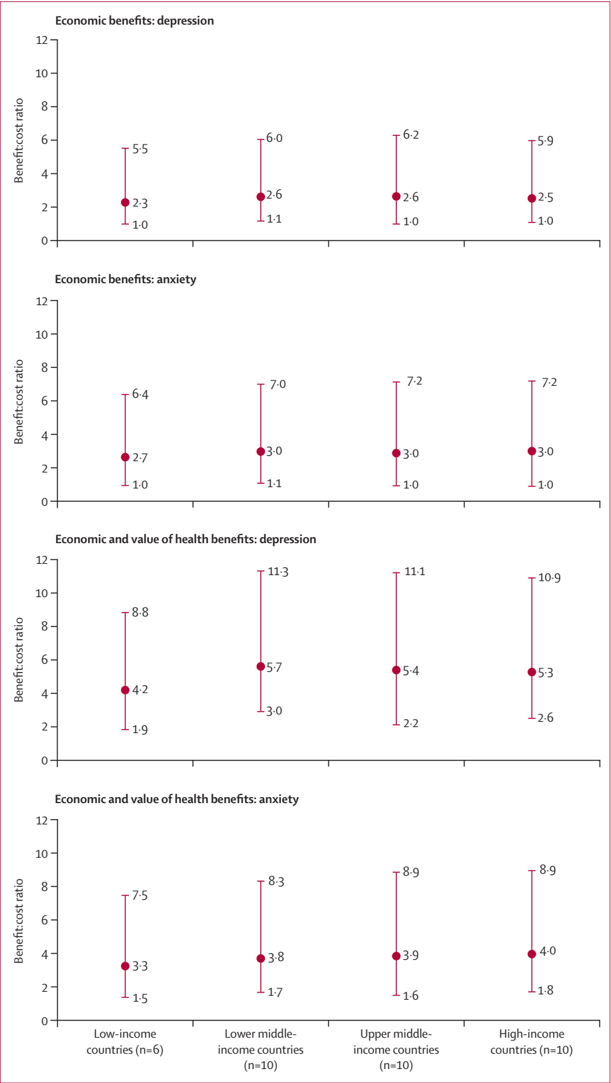
BACKGROUND: Depression and anxiety disorders are highly prevalent and disabling disorders, which result not only in an enormous amount of human misery and lost health, but also lost economic output. Here we propose a global investment case for a scaled-up response to the public health and economic burden of depression and anxiety disorders. METHODS: In this global return on investment analysis, we used the mental health module of the OneHealth tool to calculate treatment costs and health outcomes in 36 countries between 2016 and 2030. We assumed a linear increase in treatment coverage. We factored in a modest improvement of 5% in both the ability to work and productivity at work as a result of treatment, subsequently mapped to the prevailing rates of labour participation and gross domestic product (GDP) per worker in each country. FINDINGS: The net present value of investment needed over the period 2016-30 to substantially scale up effective treatment coverage for depression and anxiety disorders is estimated to be US$147 billion. The expected returns to this investment are also substantial. In terms of health impact, scaled-up treatment leads to 43 million extra years of healthy life over the scale-up period. Placing an economic value on these healthy life-years produces a net present value of $310 billion. As well as these intrinsic benefits associated with improved health, scaled-up treatment of common mental disorders also leads to large economic productivity gains (a net present value of $230 billion for scaled-up depression treatment and $169 billion for anxiety disorders). Across country income groups, resulting benefit to cost ratios amount to 2·3-3·0 to 1 when economic benefits only are considered, and 3·3-5·7 to 1 when the value of health returns is also included. INTERPRETATION: Return on investment analysis of the kind reported here can contribute strongly to a balanced investment case for enhanced action to address the large and growing burden of common mental disorders worldwide. FUNDING: Grand Challenges Canada.
Overview
The claims and statistics of this paper haven’t been checked yet.
Free: it reads the open-access text and checks the first 5 claims that cite a source we can check. Create a free account to check every claim.
Integrity signals
Registry
Cites
Statistics
Figures
Verification
Claims the paper makes
The claims and statistics of this paper haven’t been checked yet.
Free: it reads the open-access text and checks the first 5 claims that cite a source we can check. Create a free account to check every claim.
Claims other papers make about this one
Each is checked against this paper’s own text: does it say what the citing paper says it does?
The cited source says what the claim attributes to it.
In the citing paper
“Even in high-income countries, depression treatment rates are often below 30% (16, 17).”
From Personalised depression forecasting using mobile sensor data and ecological momentary assessment (2022) · cites this paper as [16]
The cited source says what the claim attributes to it.
In the citing paper
“Furthermore, the uptake of therapies is low, even in high-income countries (Chisholm et al. 2016), and one reason may be that therapies are not sufficiently acceptable to patients.”
From The Role of Common Factors in Psychotherapy Outcomes (2019) · cites this paper as Chisholm et al. 2016
The cited source says what the claim attributes to it.
In the citing paper
“Economic modelling work for the general population in all WHO regions indicates that investment in both pharmacological and psychological therapies can be costeffective even in the most resource-constrained regions of the world. 444,445”
From The Lancet Psychiatry Commission on youth mental health (2024) · cites this paper as [445]
In the citing paper
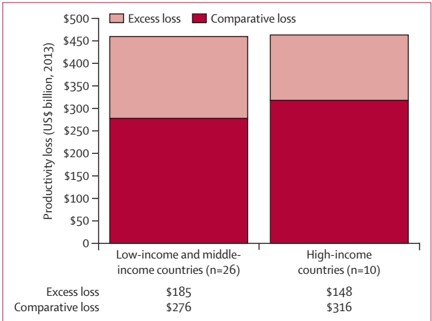
“NCDs also place a heavy economic burden on countries, with the annual lost productivity attributable to depression and anxiety disorders worldwide, for example, estimated in 2013 to be US$ 900 billion 6 .”
From Integrated care for people with long-term mental and physical health conditions in low-income and middle-income countries (2019) · cites this paper as [6]
Self-check
Percentages, sums and reported differences re-computed from the paper’s own numbers.
The self-check needs the paper’s full text.
Citations
Cites
Transforming Our World: The 2030 Agenda for Sustainable Development
(2018) · A New Era in Global Health · doi:10.1891/9780826190123.ap02 · Cited by 19,351
Awais, A. (2015) · Data Archiving and Networked Services (DANS) · doi:10.17632/zcvgc6m58h.1 · Cited by 6,707
Whiteford, H. A., Degenhardt, L., Rehm, J., Baxter, A. J., Ferrari, A. J., Erskine, H. E., Charlson, F. J., Norman, R. E., Flaxman, A. D., Johns, N., et al. (2013) · The Lancet · doi:10.1016/s0140-6736(13)61611-6 · Cited by 6,006
No health without mental health
Prince, M., Patel, V., Saxena, S., Maj, M., Maselko, J., Phillips, M. R., & Rahman, A. (2007) · The Lancet · doi:10.1016/s0140-6736(07)61238-0 · Cited by 3,753
Self-citationDisease control priorities in developing countries
(2006) · Choice Reviews Online · doi:10.5860/choice.44-0343 · Cited by 3,628
(2012) · RePEc: Research Papers in Economics · Cited by 1,951
Cost of disorders of the brain in Europe 2010
Gustavsson, A., Svensson, M., Jacobi, F., Allgulander, C., Alonso, J., Beghi, E., Dodel, R., Ekman, M., Faravelli, C., Fratiglioni, L., et al. (2011) · European Neuropsychopharmacology · doi:10.1016/j.euroneuro.2011.08.008 · Cited by 1,723
Disease control priorities in developing countries
Frenk, J. (2006) · Salud Pública de México · doi:10.1590/s0036-36342006000600011 · Cited by 1,599
Global prevalence of anxiety disorders: a systematic review and meta-regression
Baxter, A. J., Scott, K. M., Vos, T., & Whiteford, H. A. (2013) · Psychological Medicine · doi:10.1017/s003329171200147x · Cited by 1,537
Ferrari, A. J., Somerville, A. J., Baxter, A. J., Norman, R., Patten, S. B., Vos, T., & Whiteford, H. A. (2013) · Psychological Medicine · doi:10.1017/s0033291712001511 · Cited by 1,230
Cited by
Items 901–1,000 of 1,000
Hao, Y., Zhao, H., Bai, R., Xu, Z., Feng, Y., & Gu, H. M. (2025) · Healthcare · doi:10.3390/healthcare13121376 · Cited by 3
“At the economic level, anxiety disorders and depression are projected to result in more than 12 billion days of lost productivity annually, with global economic losses amounting to more than USD 1 trillion and continuing to increase over time [3].”
Zhang, R., Li, N., Zhang, D., Wang, M., Tuerhong, R., & Luo, Q. (2025) · Frontiers in Nutrition · doi:10.3389/fnut.2025.1558342 · Cited by 2
“It is anticipated that the economic cost of depression will almost quadruple by the year 2030 (3), with an estimated return of $4 for every dollar spent on treatment (4).”
Besada, D., Docrat, S., Blecher, M., & Lund, C. (2025) · South African Health Review · doi:10.61473/001c.141579 · Cited by 2
Giannios, P., Chainey, F., Degré, C., Pagé, S. B., & Hudon, A. (2025) · Healthcare · doi:10.3390/healthcare13222971 · Cited by 3
“Untreated mental illness also has substantial economic consequences, including lost productivity and increased healthcare utilization, costing the global economy nearly $1 trillion USD per year [4].”
Ma, C., Yang, Q., Li, X., Ji, W., & Qi, S. (2025) · Scientific Reports · doi:10.1038/s41598-025-24978-6 · Cited by 3
“Depression is a complex and heterogeneous condition that extends beyond low mood, with diverse clinical manifestations and long-term effects that often overlap with other disorders 6 .”
Pozuelo, J. R., Vigo, D., Kazdin, A. E., Harris, M., Stein, D. J., Viana, M. C., Hwang, I. H., Kessler, T. L., Manoukian, S. M., Sampson, N. A., et al. (2025) · International Journal of Mental Health Systems · doi:10.1186/s13033-025-00686-6 · Cited by 5
“The high prevalence, chronicity, and comorbidity of these disorders with other health problems impose significant economic and social burdens both on individuals with these disorders and on society and increase risk of early mortality [2–5].”
Kim, E., & Je, Y. (2025) · Nutrients · doi:10.3390/nu17243965 · Cited by 2
“Common mental disorders such as depression and anxiety are estimated to cost the global economy $1 trillion annually, mainly from lost productivity [2].”
Beliefs, information sharing, and mental health care use among university students
Batmanov, A., Grigoryeva, I., Calderón-Hernández, B., González-Téllez, R., & Guardiola-Ramírez, A. (2025) · Journal of Development Economics · doi:10.1016/j.jdeveco.2025.103646 · Cited by 3
Bradshaw, M., Shiba, K., Jang, S. J., Kent, B. V., Bonhag, R., Johnson, B. R., & VanderWeele, T. J. (2026) · Communications Medicine · doi:10.1038/s43856-025-01366-9 · Cited by 14
Wu, X., You, Z., Zhang, T., Zeng, J., Li, M., Yan, S., Li, J., Li, P., Shen, J., Liu, S., et al. (2026) · Metabolic Brain Disease · doi:10.1007/s11011-025-01785-6 · Cited by 4
“The World Health Organization predicts that by 2030, depression will become the leading global cause of disability, resulting in profound suffering for individuals and their families, as well as imposing a substantial socioeconomic burden (Chisholm et al. 2016 ).”
Climate adaptation policies in Central Asia overlook mental health
Ullah, A., Jakob, M., Bavorová, M., & Overland, I. (2026) · Scientific Reports · doi:10.1038/s41598-026-35198-x · Cited by 2
“Globally, mental health conditions are already responsible for economic losses exceeding US$2.5 trillion annually 61 , and returns on investment in mental health care can be as high as 4 to 1 62 , highlighting the economic imperative for proactive intervention.”
InfluentialUltrasonic vocal communication of negative affective states in laboratory mice
Inagaki, H., & Ushida, T. (2026) · Proceedings of the National Academy of Sciences · doi:10.1073/pnas.2523233123 · Cited by 2
“The high prevalence and functional disability caused by these disorders result in significant social and economic costs stemming from reduced patient productivity (3–5).”
Occupational and Psychosocial Risk Factors for Depression Among Truck Drivers: A Systematic Review
Cong, W., Ye, A., Zheng, M., Weng, S., Chen, X., Zhou, Z., & Tan, Y. (2026) · Issues in Mental Health Nursing · doi:10.1080/01612840.2026.2612955 · Cited by 2
“Beyond individual suffering, depression also imposes a heavy economic burden, estimated at hundreds of billions of dollars annually across multiple studies (Chisholm et al., 2016; König et al., 2019; Sobocki et al., 2006).”
Tornóczky, G. J., Nagy, H., Karsai, I., Conceição, A. T., Podstawski, R., & Szabó, A. (2026) · Complementary Therapies in Medicine · doi:10.1016/j.ctim.2026.103330 · Cited by 3
Sarwal, A., Singh, G., Prasad, P., Sharma, S., & Ali, W. (2020) · Springer eBooks · doi:10.1007/978-3-030-41858-8_9 · Cited by 2
Peterson, P. R., & Ho, R. (2021) · Physician Assistant Clinics · doi:10.1016/j.cpha.2021.03.002 · Cited by 2
Patients' perceptions and experiences of directly observed therapy for TB
Thomas, D. L., & Summers, R. H. (2022) · British Journal of Nursing · doi:10.12968/bjon.2022.31.13.680 · Cited by 2
The Relationship Between Major Depressive Disorder and Multiple Medical Conditions
Weir, R. A., & Rapaport, M. H. (2022) · The Journal of Clinical Psychiatry · doi:10.4088/jcp.22com14600 · Cited by 2
Absenteísmo e custos indiretos por transtornos mentais no serviço público federal brasileiro
dos Santos, D. P., Chaoubah, A., de Oliveira, H. N., Guerra, M. R., & Silva, P. (2022) · Jornal Brasileiro de Economia da Saúde · doi:10.21115/jbes.v14.suppl2.p155-61 · Cited by 2
Factors Associated with Psychotropic Medications Literacy among Community Pharmacists
Alqudah, A. M., Al‐Taani, G. M., Handal, D., Sharab, R. A., Shreideh, R. A., Al‐Smadi, A. M., Qnais, E. Y., & Gammoh, O. (2023) · Medicina · doi:10.3390/medicina59030618 · Cited by 3
“It has been calculated that the global economy loses about USD 1 trillion every year in productivity due to mood disorders [2].”
BackgroundChatterjee, S., Pathare, S., Funk, M., Drew, N., Das, P., Chauhan, A., Kalha, J., Krishnamoorthy, S., Sapag, J. C., Bobbili, S. J., et al. (2023) · International Journal of Microbiology Research · doi:10.4103/ijmr.ijmr_2449_19 · Cited by 2
The Relation Between Social Media, Cyberbullying and Depression
Chen, Y. (2023) · Lecture Notes in Education Psychology and Public Media · doi:10.54254/2753-7048/29/20231517 · Cited by 2
Costs of major depression covered / not covered in British Columbia, Canada
Cressman, S., Ghanbarian, S., Edwards, L., Peterson, S., Bunka, M., Hoens, A. M., Riches, L., Austin, J., Vijh, R., McGrail, K. M., et al. (2023) · BMC Health Services Research · doi:10.1186/s12913-023-10474-y · Cited by 3
“Since the condition has an adverse impact on productivity, it is forecast that every dollar invested in MDD treatment returns twice as much to the economy [4].”
BackgroundDesrosiers, A., Carrol, B., Ritsema, H., Higgins, W., Momoh, F., & Betancourt, T. S. (2024) · BMC Public Health · doi:10.1186/s12889-024-17928-w · Cited by 3
“Exploring schools as an alternative delivery setting for evidence-based mental health interventions delivered by a teacher workforce could improve the reach of mental health services for underserved youth and the ability of youth to actualize educational and employment opportunities [14–16].”
BackgroundMathisen, J., Nguyen, T., Madsen, I. E. H., Xu, T., Jensen, J. H., Sørensen, J. K., Rugulies, R., & Rod, N. H. (2024) · Epidemiology and Psychiatric Sciences · doi:10.1017/s2045796024000167 · Cited by 7
“Findings of (recurrent)depression (Chisholm et al. , 2016; Christensen et al. , 2020; Malhi and Mann, 2018).”
BackgroundComparing psychological versus pharmacological treatment in emotional disorders: A network analysis
Jurado-González, F. J., García‐Torres, F., Contreras, A., Muñoz‐Navarro, R., González‐Blanch, C., Medrano, L. A., Ruiz‐Rodríguez, P., Moreno, E. M., Dueñas, C. P., Vindel, A. C., et al. (2024) · PLoS ONE · doi:10.1371/journal.pone.0301675 · Cited by 5
Financing for mental health: A smart investment, not an expense
Kline, S., Sale, J., & Saxena, S. (2024) · Elsevier eBooks · doi:10.1016/b978-0-443-18529-8.00054-8 · Cited by 2
Self-citationOhta, T., Kojima, N., Osuka, Y., & Sasai, H. (2024) · Nutrients · doi:10.3390/nu16142179 · Cited by 2
“Although pharmacological approaches are widely employed in treating depression, the substantial increases in healthcare costs present a concern for the geriatric population undergoing pharmacotherapy for non-communicable diseases with high health-care expenses [4].”
BackgroundLimenih, G., MacDougall, A. G., Smith, M. W. J., & Nouvet, É. (2024) · International Journal of Social Psychiatry · doi:10.1177/00207640241280620 · Cited by 3
Lee, J.-H., Sato, N., Ogata, T., Yano, K., & Miyake, Y. (2024) · Behavioral Sciences · doi:10.3390/bs14111006 · Cited by 4
Depresión, ansiedad y microbiota intestinal: mecanismos neurobiológicos
Kransel, M. S. S., Zafra, J. J. J., Diago, I. O., & Becerra-Hernández, L. V. (2024) · Acta neurológica colombiana · doi:10.22379/anc.v40i3.1341 · Cited by 5
Reconfiguring Psy Expertise in the Digital Age: Two Cases from India
Lang, C. (2025) · Medicine Anthropology Theory · doi:10.17157/mat.12.1.9060 · Cited by 2
“Psy technologists embark on a vision of accelerated digital and future-oriented world-building in the context of mounting social and financial costs of mental disabilities (Chisholm et al. 2016).”
Providing digital mental health support and guidance across Colombia: An observational study
LaMonica, H. M., Niño, P. N. B., Gómez–Restrepo, C., Uribe-Restrepo, J. M., Llamas, T. C., Escobar-Altare, A., Naranjo-Bedoya, I. A., Morales-Zuluaga, L. T., Pavlich‐Mariscal, J. A., Pomares, A., et al. (2025) · Digital Health · doi:10.1177/20552076251330766 · Cited by 4
Xiao, J., Dong, X., Ding, M., Yang, Q., & Kong, T. (2025) · Frontiers in Public Health · doi:10.3389/fpubh.2025.1518255 · Cited by 3
Mental health innovation diplomacy: An under-recognised soft power
Eyre, H. A., Robb, A. J., Abbott, R. B., & Hopwood, M. (2019) · Australian & New Zealand Journal of Psychiatry · doi:10.1177/0004867419828488 · Cited by 2
“Tech companies of various sizes are now investing in mental health innovation (Chisholm et al., 2016).”
BackgroundCampetti, P. H. D. M. (2019) · Jornal Brasileiro de Economia da Saúde · doi:10.21115/jbes.v11.n3.p263-70 · Cited by 2
A Investigação e a Escrita: Publicar sem Perecer
Sequeiros, P., Carvalho, M. J., & Capinha, G. (2021) · Imprensa da Universidade de Coimbra eBooks · doi:10.14195/978-989-26-2156-2 · Cited by 4
Patients first: Getting youth mental health right…finally?
Silbernagel, L., & Davidson, S. I. (2017) · Paediatrics & Child Health · doi:10.1093/pch/pxx066 · Cited by 3
Razzouk, D. (2017) · Springer eBooks · doi:10.1007/978-3-319-55266-8_4 · Cited by 4
Mousavi, S. M., Shabahang, R., & Khodadadi‐Hassankiadeh, N. (2019) · Caspian Journal of Neurological Sciences · doi:10.32598/cjns.5.18.118 · Cited by 3
“Several other studies also reported the positive effects of ACT on QOL [3134], anxiety symptoms, psychological strains and distress [32-34], and depression [24].”
ResultFerreira, D., Melo, D., Santo, A., Silva, P., Soares, S. C., & Silva, S. (2020) · Lecture notes of the Institute for Computer Sciences, Social Informatics and Telecommunications Engineering · doi:10.1007/978-3-030-49289-2_9 · Cited by 2
The Association Between PHQ-9 and Fitness for Work Among Depressive Patients
Zack, O., Strul, I., Segal, N., Eden, I., Rinsky‐Halivni, L., & Moshe, S. (2020) · Journal of Occupational and Environmental Medicine · doi:10.1097/jom.0000000000001931 · Cited by 2
“According to the World Mental Health Survey, depression contributed 4 to 15 days out of role per year and an additional loss of 11 to 25 partial disability days due to presenteeism.(4) Several studies revealed that the incidence of functional impairment among psychiatric patients was significantly higher than among pa…”
BackgroundMorejón, A. J. V., Vázquez-Morejón, R., & Muñoz‐Fernández, N. (2020) · Ansiedad y Estrés · doi:10.1016/j.anyes.2020.05.001 · Cited by 2
“The high prevalence of GAD in the population (OMS, 2016), its association with healthcare service use frequency (Wittchen, 2002) and its notable cost to society (Chisholm et al., 2016) confer these psychological disorders enormous importance.”
BackgroundErim, D. (2020) · Value in Health · doi:10.1016/j.jval.2020.09.008 · Cited by 5
Vitamin B12 and Folic Acid in Depression and Anxiety: A Pilot Study
Erensoy, H. (2020) · The Journal of Neurobehavioral Sciences · doi:10.4103/jnbs.jnbs_32_20 · Cited by 6
“Therefore, the effective treatment of these disorders should be included as coherent chronic disease management (Chisholm et al., 2016).”
BackgroundAssociation between Arsenic and Generalized Anxiety Disorder: A Cross-Sectional Study
Wang, N., Zhang, L., Cao, M., Guo, L., & Wang, L. (2021) · Women Health Care and Issues · doi:10.31579/2642-9756/054 · Cited by 2
“Anxiety disorders are common psychiatric disorders among various people [1-4].”
BackgroundHeun‐Johnson, H., Zuluaga, K. V., Menchine, M. D., Starkey, S., David, R. F., & Seabury, S. A. (2022) · The Journal of Behavioral Health Services & Research · doi:10.1007/s11414-022-09794-4 · Cited by 3
Development of a Chatbot to Identify Depression Through a Questionnaire
Choi, S. N. J. H., Moreira, R. S. L., Costa, A. L. F. D. A., Regatieri, C. V., & dos Santos, V. R. (2022) · Journal of Psychiatry and Psychiatric Disorders · doi:10.26502/jppd.2572-519x0151 · Cited by 2
Depression Identification Through Tweet Clusters
Masand, A., Chauhan, S., & Jain, T. K. (2022) · International Journal of Software Innovation · doi:10.4018/ijsi.297916 · Cited by 2
Construct validation of measures of depression, anxiety, and functionality in Northern Haiti
Galvin, M., Scheunemann, A., Michel, G., Pierre, E., & Manguira, E. (2022) · SSM - Mental Health · doi:10.1016/j.ssmmh.2022.100106 · Cited by 3
Curtin, L., Moss, S. E., & Keefe, S. E. (2021) · Springer eBooks · doi:10.1007/978-981-15-6631-8_34 · Cited by 2
Gathering Health Perspectives of the Justice Involved: A Multisite Needs Assessment Survey
Diller, E., Kouame, G., Young, D. M., & Johnson, J. A. (2022) · Journal of Correctional Health Care · doi:10.1089/jchc.20.09.0082 · Cited by 3
“…et al. , 2015) and never-incarcerated individuals living in neighborhoods with high incarceration rates (Hatzenbuehler et al. , 2015) have an increased risk of generalized anxiety disorder and major depressive disorder, two diseases strongly associated with economic loss (Chisholm et al. , 2016).”
Ethical Issues in Psychiatric and Mental Health Care
Dunne, J. P., Blackwell, E. K., Ursini, E., & Milliken, A. B. (2022) · The International Library of Bioethics · doi:10.1007/978-94-024-2155-2_9 · Cited by 2
MKh, A. Z. (2021) · International Journal of Pharmacognosy & Chinese Medicine · doi:10.23880/ipcm-16000214 · Cited by 2
de Beurs, E., Jadnanansing, R., Etwaroo, K., Blankers, M., Bipat, R., Peen, J., & Dekker, J. (2023) · Frontiers in Psychiatry · doi:10.3389/fpsyt.2023.1088696 · Cited by 2
Pollard-Wright, H. (2023) · Communicative & Integrative Biology · doi:10.1080/19420889.2023.2260682 · Cited by 3
Vizioli, N. A. (2024) · Psychological Thought · doi:10.37708/psyct.v17i1.792 · Cited by 4
Xiaoxia, S., Zhao, Y., Wan, Q., Chai, P., & Ma, Y. (2024) · Frontiers in Public Health · doi:10.3389/fpubh.2024.1329596 · Cited by 4
Dienhart, C., Aigner, E. S., Iglseder, B., Frey, V., Gostner, I., Langthaler, P. B., Paulweber, B., Trinka, E., & Wernly, B. (2024) · Journal of Clinical Medicine · doi:10.3390/jcm13154492 · Cited by 2
Health economic analysis of service provision
Simon, J. (2020) · doi:10.1093/med/9780198713005.003.0136 · Cited by 2
Du, L. Z., Chen, Y., Xiu, J., Yuan, W., & Wang, J. (2020) · Medicine · doi:10.1097/md.0000000000022384 · Cited by 2
“15 trillion per year worldwide, and this amount is expected to increase 2-fold by 2030.([10]) The core clinical manifestations of depression symptoms include low mood, decreased interest or pleasure in most or all activities of the day, decreased motivation, increases or decreases in appetite and weight, insomnia or h…”
Mechanisms and Effects of Dietary Restriction on CNS and Affective Disorders
Haritov, E., Garalova, M., Tivcheva, Y., Angelov, T., & Stamenov, V. (2020) · Acta Medica Bulgarica · doi:10.2478/amb-2020-0025 · Cited by 2
“Due to the high occurrence of ordinary mental disorders, the social and heath load associated with these disorders is signifi cant, with up to $8 trillion in lost output ascribed to mental, neurological and substance use disorders [2].”
BackgroundSacardo, D. P., & Freitas, R. (2021) · Universidade Estadual de Campinas. Faculdade de Ciências eBooks · doi:10.20396/isbn9786587100074.cap12 · Cited by 2
"The Relationship between the Frequency of Physical Activity and the Level of Depression"
Čolović, M. (2022) · Research & Investigations in Sports Medicine · doi:10.31031/rism.2022.09.000707 · Cited by 3
Yearwood, E. L., & Meadows‐Oliver, M. (2012) · Wiley eBooks · doi:10.1002/9781118704660.ch9 · Cited by 2
Modelling Target Workforce Estimates For Community-Based Mental Health Services In LebanonPreprint
Kheir, W., Zoghbi, E., Bteich, R., Rady, A., & Chammay, R. E. (2021) · Research Square · doi:10.21203/rs.3.rs-1192774/v1 · Cited by 3
“The needed number of psychosocial care providers in Lebanon is similar to the number needed in middle-income countries of Europe or America (23).”
BackgroundMethodReliability and Validity of the Mental Health Quotient (MHQ)Preprint
Newson, J. J., Pastukh, V., & Thiagarajan, T. C. (2021) · PsyArXiv (OSF Preprints) · doi:10.31234/osf.io/n7e9p · Cited by 3
Quantifying the Global Burden of Mental Illness and its Economic ValuePreprint
Arias, D., Saxena, S., & Verguet, S. (2022) · SSRN Electronic Journal · doi:10.2139/ssrn.4103145 · Cited by 2
Self-citationHernández-Barrueta, T. (2022) · Wiley eBooks · doi:10.1002/9781119804055.ch2 · Cited by 2
Bertuol, C., Alves, D. K., & Duca, G. F. D. (2024) · Research Square · doi:10.21203/rs.3.rs-3888972/v1 · Cited by 2
Lund, C., Orkin, K., Witte, M., Walker, J., Davies, T., Haushofer, J., Murray, S. M., Bass, J., Murray, L. K., Tol, W. A., et al. (2024) · SSRN Electronic Journal · doi:10.2139/ssrn.4826030 · Cited by 3
Determining the Psychometric Properties of Siddiqui Anxiety Scale-Revised
Salim, S., & Siddiqui, S. (2021) · Pakistan Journal of Psychological Research · doi:10.33824/pjpr.2021.36.2.18 · Cited by 2
Metz, K. L., Figge, C. J., Alto, M. E., Kane, J. C., & Murray, L. K. (2021) · Springer eBooks · doi:10.1007/978-3-030-57296-9_145 · Cited by 2
Bridging the Global Mental Health Gap: National Suicide Prevention Strategies
Zyl, M. V., Fee, C., Burton, J., & Leon, E. (2022) · Springer eBooks · doi:10.1007/978-3-030-41319-4_63-1 · Cited by 1
Understanding the use of peers for mental health care: A meta-synthesis of qualitative evidence
Ahmad, I., Hanif, M., Waqas, A., Suleman, N., Atif, N., Bibi, A., Zulfiqar, S., Kayani, S. S., Khan, S. A., Khan, A., et al. (2023) · F1000Research · doi:10.12688/f1000research.124792.1 · Cited by 1
Watanabe, K., Hikichi, H., Imamura, K., Sakuraya, A., Yoshikawa, T., Izawa, S., Eguchi, H., Inoue, A., Yoshida, K., Orihashi, Y., et al. (2024) · BMC Public Health · doi:10.1186/s12889-024-18112-w · Cited by 2
“These mental health issues lead to poor quality of life (QOL) and well-being and increased sickness absence [12], and the global economic cost of mental health issues per year is estimated to be approximately 1 trillion USD, predominantly because of lost productivity [1, 13, 14].”
BackgroundInterpersonal Psychotherapy for Depression in Low- and Middle-Income Countries: A Meta-Analysis
Cuijpers, P. J. (2024) · Oxford University Press eBooks · doi:10.1093/oso/9780197652084.003.0004 · Cited by 2
Self-citationAkkayasamy, V. S., Panneer, S., Cherian, R. M., & Daniel, E. V. (2024) · Asian Social Work and Policy Review · doi:10.1111/aswp.12321 · Cited by 1
Bauer, A., Knapp, M. R. J., Weng, J. Y., Ndaferankhande, D., Stubbs, E., Grégoire, A., Chorwe‐Sungani, G., & Stewart, R. C. (2024) · PLoS ONE · doi:10.1371/journal.pone.0308667 · Cited by 2
Aggarwal, P., & Raval, V. V. (2024) · Journal of Affective Disorders Reports · doi:10.1016/j.jadr.2024.100851 · Cited by 3
Meling, H. M., Baste, V., Ruths, S., Anderssen, N., & Haukenes, I. (2025) · BMC Health Services Research · doi:10.1186/s12913-025-12406-4 · Cited by 1
“Optimizing depression care and promoting a sustainable return to work (SRTW) for workers suffering from depression offers several benefits, including increased productivity and healthy life-years [14].”
Sercombe, J., Henry, A., Leung, C., Sunderland, M., Marel, C., Barrett, E. L., Morse, A. K., Askovic, M., Fisher, A. C., Chatterton, M. L., et al. (2025) · Australian & New Zealand Journal of Psychiatry · doi:10.1177/00048674251324814 · Cited by 2
“Each year, depression and anxiety are estimated to cost the world economy over US$1 trillion, driven by workplace absence (Chisholm et al., 2016).”
From Sensors to Insight: A Review of Physiological Signal Processing for Stress Prediction
Madaan, A., & Singh, A. (2025) · AI-Driven Smart Healthcare for Society 5.0 · doi:10.1109/ieeeconf64992.2025.10962872 · Cited by 1
“With potential global returns of $230 billion for scaled-up depression treatment and $169 billion for anxiety disorders, research published in The Lancet Psychiatry highlights the crippling economic impact of stress-related mental health conditions[1].”
Rahim, F. O., Kannan, K., Katyal, M., Wang, V., Basrai, Z., Lartey, H. S. Q., Jain, B., Hammond, A., Patel, T. A., & Knettel, B. A. (2025) · Ethnicity & Disease · doi:10.18865/ethndis-2023-46 · Cited by 1
Kim, S., Kim, S. I., & Lim, W. (2025) · Journal of Affective Disorders · doi:10.1016/j.jad.2025.119452 · Cited by 3
Cost-effectiveness of brexpiprazole for the treatment of major depressive disorder in Japan
Zhang, Y., Sado, M., Yamato, K., Pochopień, M., & Górecki, M. (2025) · Journal of Affective Disorders · doi:10.1016/j.jad.2025.119532 · Cited by 1
Lam, H. A., Font, H., Petit, V., Ziadeh, S., Tine, J. M., Ndiaye, I., Ngom, N. F., Ndiaye, B., Sarr, D., Diouf, D., et al. (2025) · Cambridge Prisms Global Mental Health · doi:10.1017/gmh.2025.10029 · Cited by 1
“In low-and middle-income countries (LMICs), up to 79% – 93% of individuals with depression do not get access to treatment (Chisholm et al., 2016).”
Psychological Distress in Older Adults Living in Puerto Rico during COVID-19
Camacho, D., Morgan, M., Vazquez, J., Moxley, J. H., & Burnette, D. (2025) · Journal of Cross-Cultural Gerontology · doi:10.1007/s10823-025-09539-8 · Cited by 1
“…the presence of acute or chronic mood disorders that worsen quality of life (Canuto et al., 2018; Sivertsen et al., 2015 ) and cognitive functioning (Gulpers et al., 2019 ; Ruthirakuhan et al., 2019) and increase medical costs (Chisholm et al., 2016) and premature mortality (Wu et al., 2020).”
Eldeeb, S. Y., McKenna, B. G., Lake, M. T., Hoffman, N., Lussier, A. A., Walton, E., Simpkin, A. J., Smith, A. D. A. C., Zar, H. J., Stein, D. J., et al. (2026) · Journal of Child Psychology and Psychiatry · doi:10.1111/jcpp.70148 · Cited by 1
“The WHO estimates a roughly four-fold return of global investment in anxiety and depression treatments (Chisholm et al., 2016).”
Yin, Y.-Y., Wan, Z.-Z., & Wang, B. (2025) · Frontiers in Psychiatry · doi:10.3389/fpsyt.2025.1530615 · Cited by 2
Isnuwardana, R., Gibson, J., Maharani, A., Susanti, H., Brooks, H. L., Bee, P., & Anselmi, L. (2025) · BMJ Open · doi:10.1136/bmjopen-2024-095197 · Cited by 1
The Potential Economic and Public Health Impact of MDMA‐Assisted Group Therapy for PTSD in Ukraine
Marseille, E. A., Chernoloz, O., & Orlov, O. (2025) · World Medical & Health Policy · doi:10.1002/wmh3.70039 · Cited by 2
Андреевна, С. Д., Vasileva, A. V., Караваева, Т. А., Ляшковская, С. В., & Andrianova, A. E. (2025) · Psikhiatriya · doi:10.30629/2618-6667-2025-23-3-111-122 · Cited by 1
Grös, D. F., Hart, S. L., Pompei, M., & Acierno, R. E. (2025) · Behavioral Sciences · doi:10.3390/bs15091287 · Cited by 1
“These conditions are associated with occupational, educational, and social impairments (Hohls et al., 2021), with high societal costs (Chisholm et al., 2016).”
Fang, S., Kang, Y., & Zhang, J. (2025) · Annals of General Psychiatry · doi:10.1186/s12991-025-00588-4 · Cited by 1
“However, global investment in mental health remains insufficient, particularly in Asia [17].”
Flehr, A., Dowrick, C. F., Kaylor‐Hughes, C., & Gunn, J. M. (2025) · The Lancet Primary Care · doi:10.1016/j.lanprc.2025.100042 · Cited by 1
Beyond vision: economic toll of untreated mental health disorders in ophthalmic patients
Elgin, C. Y., & Elgin, C. (2025) · BJPsych Open · doi:10.1192/bjo.2025.10870 · Cited by 1
Vázquez-Morejón, R., Rubio, J. M. L., Rodríguez, A. M., & Morejón, A. J. V. (2025) · The Spanish Journal of Psychology · doi:10.1017/sjp.2025.10006 · Cited by 2
“This figure is particularly significant when considering that depression and anxiety collectively cost the global economy approximately one trillion dollars annually (Chisholm et al., 2016).”
Schlaglichter auf Psychotherapieversorgung in Österreich
Rieß, G. (2025) · Psychotherapie Forum · doi:10.1007/s00729-025-00291-5 · Cited by 1
Zhao, R., Lacuo, Y., Li, Z., Dawa, Z., & Wang, W. (2025) · International Journal for Equity in Health · doi:10.1186/s12939-025-02679-w · Cited by 1
“This conclusion is supported by multiple indices: a non-significant Hosmer-Lemeshow test result (χ² [8] = 8.80, p = 0.360) indicated excellent calibration between predicted probabilities and observed outcomes.”
Influential
Metadata
- Authors
- Chisholm, D., Sweeny, K., Sheehan, P., Rasmussen, B., Smit, F., Cuijpers, P., & Saxena, S.
- Affiliations
- World Health Organization (CH)
- Trimbos Institute (NL)
- Vrije Universiteit Amsterdam (NL)
- Corresponding author
- Chisholm, Dan
- Venue
- The Lancet Psychiatry
- Publisher
- Elsevier BV
- Published
- 2016-05
- Volume
- 3
- Issue
- 5
- Pages
- 415-424
- ISSN
- 2215-0366 (ISSN-L)
- OpenAlex
- W2340346722
- Semantic Scholar
- b0227cc7d9a20721ddfeb8ea60f16a1a7e4067ce
- Cited by
- 1,451
- References
- 39
- Citations by year
- 2026: 126 · 2025: 136 · 2024: 164 · 2023: 178 · 2022: 206 · 2021: 192 · 2020: 144 · 2019: 116 · 2018: 83 · 2017: 71 · 2016: 32
- FWCI
- 158.29
- Type
- journal article
- Language
- en
- Open access
- hybrid
- doi.org
- Licence
- cc-by
- www.elsevier.com/tdm/userlicense/1.0/ (tdm)
- creativecommons.org/licenses/by/4.0/ (vor)
- Locations
- The Lancet Psychiatry (publishedVersion, cc-by)
- PubMed (publishedVersion)
- Amsterdam UMC (VU Amsterdam) - Institutional Repository (publishedVersion)
- VU Research Portal (publishedVersion, other-oa)
- Pure Amsterdam UMC (submittedVersion, other-oa)
- Victoria University Research Repository (Victoria University) (submittedVersion)
- Data Archiving and Networked Services (DANS) (submittedVersion, other-oa)
- Data Archiving and Networked Services (DANS) (submittedVersion)
- Funders
- European Union under the 7th Framework programme (Grant agreement 305968)
- Topics
- Health Sciences › Medicine › Psychiatry and Mental health › Mental Health Treatment and Access
- Social Sciences › Economics, Econometrics and Finance › Economics and Econometrics › Health Systems, Economic Evaluations, Quality of Life
- Health Sciences › Medicine › Pharmacology (medical) › Treatment of Major Depression
- Keywords
- depression, anxiety disorders, common mental disorders, return on investment, mental health investment, economic burden of mental illness, productivity improvement, healthy life years, treatment coverage, benefit-cost ratio
- MeSH terms
- Anxiety, Cost-Benefit Analysis, Depression, Humans, Mental Health Services, Global Health, Health Care Costs, Cost of Illness
About these checks
Registry, retraction, Cites and statistics results are computed, not judged, with one exception: a printed reference that no index lists is read once by a model before it counts as a citation error. Claims are extracted by a model and kept only when their quote appears verbatim in the text; each cited source is then checked, with a model’s help, for whether it says what the claim relies on. Those verdicts can be wrong — read the claim’s quote and the cited source before relying on one.
Statistics and arithmetic are recomputed, not judged.
Confidence bands are shown only for fields calibrated on our annotated test set. None is calibrated yet, so no band is shown.
What counts as a claim ›How we measure confidence ›How we check this ›
Are you an author, or do you see a problem with this page? Request a review
Data sources
Bibliographic data: Semantic Scholar, OpenAlex, Crossref.
Contains information from the Semantic Scholar Academic Graph Datasets, made available under the ODC Attribution License (ODC-BY 1.0).
Semantic Scholar’s data is described in: Kinney, R., et al. (2023). The Semantic Scholar Open Data Platform. arXiv:2301.10140.
