

Scaling-up treatment of depression and anxiety: a global return on investment analysis
Open accessThe DOI matches its Crossref record; 38 of the 39 references it cites were found in a registry or an index.
Abstract
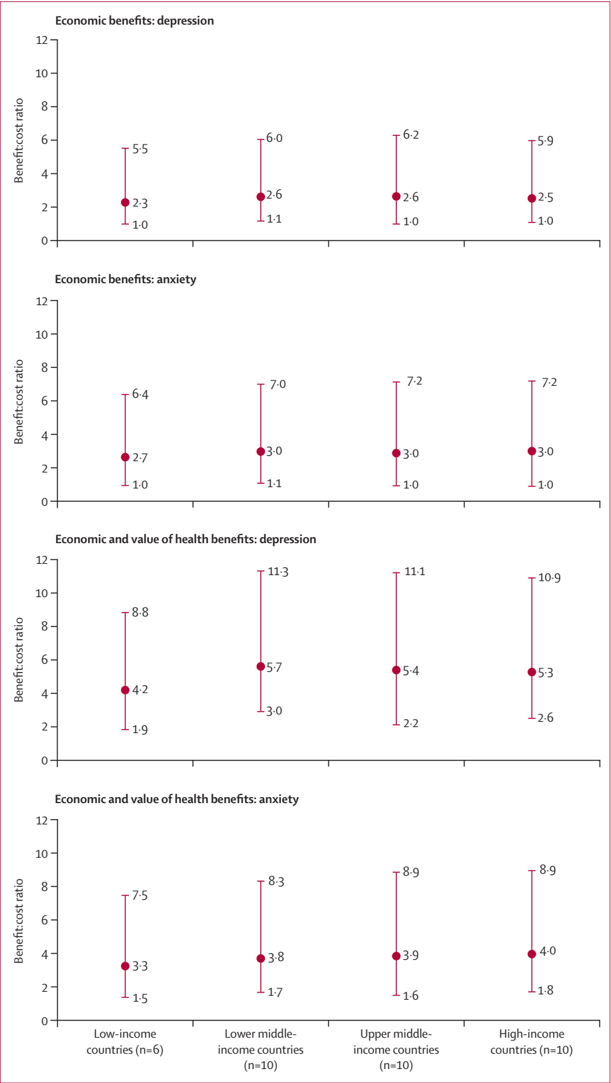
BACKGROUND: Depression and anxiety disorders are highly prevalent and disabling disorders, which result not only in an enormous amount of human misery and lost health, but also lost economic output. Here we propose a global investment case for a scaled-up response to the public health and economic burden of depression and anxiety disorders. METHODS: In this global return on investment analysis, we used the mental health module of the OneHealth tool to calculate treatment costs and health outcomes in 36 countries between 2016 and 2030. We assumed a linear increase in treatment coverage. We factored in a modest improvement of 5% in both the ability to work and productivity at work as a result of treatment, subsequently mapped to the prevailing rates of labour participation and gross domestic product (GDP) per worker in each country. FINDINGS: The net present value of investment needed over the period 2016-30 to substantially scale up effective treatment coverage for depression and anxiety disorders is estimated to be US$147 billion. The expected returns to this investment are also substantial. In terms of health impact, scaled-up treatment leads to 43 million extra years of healthy life over the scale-up period. Placing an economic value on these healthy life-years produces a net present value of $310 billion. As well as these intrinsic benefits associated with improved health, scaled-up treatment of common mental disorders also leads to large economic productivity gains (a net present value of $230 billion for scaled-up depression treatment and $169 billion for anxiety disorders). Across country income groups, resulting benefit to cost ratios amount to 2·3-3·0 to 1 when economic benefits only are considered, and 3·3-5·7 to 1 when the value of health returns is also included. INTERPRETATION: Return on investment analysis of the kind reported here can contribute strongly to a balanced investment case for enhanced action to address the large and growing burden of common mental disorders worldwide. FUNDING: Grand Challenges Canada.
Overview
The claims and statistics of this paper haven’t been checked yet.
Free: it reads the open-access text and checks the first 5 claims that cite a source we can check. Create a free account to check every claim.
Integrity signals
Registry
Cites
Statistics
Figures
Verification
Claims the paper makes
The claims and statistics of this paper haven’t been checked yet.
Free: it reads the open-access text and checks the first 5 claims that cite a source we can check. Create a free account to check every claim.
Claims other papers make about this one
Each is checked against this paper’s own text: does it say what the citing paper says it does?
The cited source says what the claim attributes to it.
In the citing paper
“Even in high-income countries, depression treatment rates are often below 30% (16, 17).”
From Personalised depression forecasting using mobile sensor data and ecological momentary assessment (2022) · cites this paper as [16]
The cited source says what the claim attributes to it.
In the citing paper
“Furthermore, the uptake of therapies is low, even in high-income countries (Chisholm et al. 2016), and one reason may be that therapies are not sufficiently acceptable to patients.”
From The Role of Common Factors in Psychotherapy Outcomes (2019) · cites this paper as Chisholm et al. 2016
The cited source says what the claim attributes to it.
In the citing paper
“Economic modelling work for the general population in all WHO regions indicates that investment in both pharmacological and psychological therapies can be costeffective even in the most resource-constrained regions of the world. 444,445”
From The Lancet Psychiatry Commission on youth mental health (2024) · cites this paper as [445]
In the citing paper
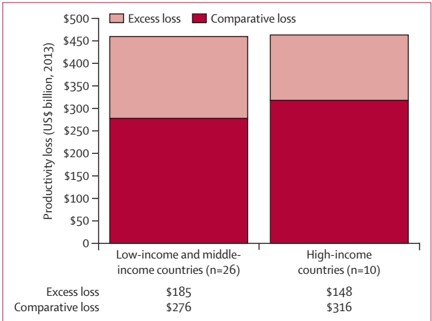
“NCDs also place a heavy economic burden on countries, with the annual lost productivity attributable to depression and anxiety disorders worldwide, for example, estimated in 2013 to be US$ 900 billion 6 .”
From Integrated care for people with long-term mental and physical health conditions in low-income and middle-income countries (2019) · cites this paper as [6]
Self-check
Percentages, sums and reported differences re-computed from the paper’s own numbers.
The self-check needs the paper’s full text.
Citations
Cites
Transforming Our World: The 2030 Agenda for Sustainable Development
(2018) · A New Era in Global Health · doi:10.1891/9780826190123.ap02 · Cited by 19,351
Awais, A. (2015) · Data Archiving and Networked Services (DANS) · doi:10.17632/zcvgc6m58h.1 · Cited by 6,707
Whiteford, H. A., Degenhardt, L., Rehm, J., Baxter, A. J., Ferrari, A. J., Erskine, H. E., Charlson, F. J., Norman, R. E., Flaxman, A. D., Johns, N., et al. (2013) · The Lancet · doi:10.1016/s0140-6736(13)61611-6 · Cited by 6,006
No health without mental health
Prince, M., Patel, V., Saxena, S., Maj, M., Maselko, J., Phillips, M. R., & Rahman, A. (2007) · The Lancet · doi:10.1016/s0140-6736(07)61238-0 · Cited by 3,753
Self-citationDisease control priorities in developing countries
(2006) · Choice Reviews Online · doi:10.5860/choice.44-0343 · Cited by 3,628
(2012) · RePEc: Research Papers in Economics · Cited by 1,951
Cost of disorders of the brain in Europe 2010
Gustavsson, A., Svensson, M., Jacobi, F., Allgulander, C., Alonso, J., Beghi, E., Dodel, R., Ekman, M., Faravelli, C., Fratiglioni, L., et al. (2011) · European Neuropsychopharmacology · doi:10.1016/j.euroneuro.2011.08.008 · Cited by 1,723
Disease control priorities in developing countries
Frenk, J. (2006) · Salud Pública de México · doi:10.1590/s0036-36342006000600011 · Cited by 1,599
Global prevalence of anxiety disorders: a systematic review and meta-regression
Baxter, A. J., Scott, K. M., Vos, T., & Whiteford, H. A. (2013) · Psychological Medicine · doi:10.1017/s003329171200147x · Cited by 1,537
Ferrari, A. J., Somerville, A. J., Baxter, A. J., Norman, R., Patten, S. B., Vos, T., & Whiteford, H. A. (2013) · Psychological Medicine · doi:10.1017/s0033291712001511 · Cited by 1,230
Cited by
Nature and mental health: An ecosystem service perspective
Bratman, G. N., Anderson, C. B., Berman, M. G., Cochran, B., de Vries, S., Flanders, J., Folke, C., Frumkin, H., Gross, J. J., Hartig, T., et al. (2019) · Science Advances · doi:10.1126/sciadv.aax0903 · Cited by 2,001
Physical Activity and Incident Depression: A Meta-Analysis of Prospective Cohort Studies
Schuch, F. B., Vancampfort, D., Firth, J., Rosenbaum, S., Ward, P. B., Silva, E. S., Hallgren, M., Ponce De Leon, A., Dunn, A. L., Deslandes, A. C., et al. (2018) · American Journal of Psychiatry · doi:10.1176/appi.ajp.2018.17111194 · Cited by 1,763
“128 Excluded were: (1) studies without primary data (reviews, commentaries, editorials); (2) 129 conference presentations without information about the methods or the outcomes; (3) studies in 130”
BackgroundMethodKandola, A., Ashdown-Franks, G., Hendrikse, J., Sabiston, C. M., & Stubbs, B. (2019) · Neuroscience & Biobehavioral Reviews · doi:10.1016/j.neubiorev.2019.09.040 · Cited by 1,309
Poverty, depression, and anxiety: Causal evidence and mechanisms
Ridley, M., Rao, G., Schilbach, F., & Patel, V. (2020) · Science · doi:10.1126/science.aay0214 · Cited by 1,220
Lund, C., Brooke-Sumner, C., Baingana, F., Baron, E. C., Breuer, E., Chandra, P., Haushofer, J., Herrman, H., Jordans, M., Kieling, C., et al. (2018) · The Lancet Psychiatry · doi:10.1016/s2215-0366(18)30060-9 · Cited by 1,147
Self-citationPsychological Treatments for the World: Lessons from Low- and Middle-Income Countries
Singla, D. R., Kohrt, B. A., Murray, L. K., Anand, A., Chorpita, B. F., & Patel, V. (2017) · Annual Review of Clinical Psychology · doi:10.1146/annurev-clinpsy-032816-045217 · Cited by 913
Karyotaki, E., Efthimiou, O., Miguel, C., Maas genannt Bermpohl, F., Furukawa, T. A., Cuijpers, P., Individual Patient Data Meta-Analyses for Depression (IPDMA-DE) Collaboration, Riper, H., Patel, V., Mira, A., et al. (2021) · JAMA Psychiatry · doi:10.1001/jamapsychiatry.2020.4364 · Cited by 866
Self-citationChallenges and opportunities in global mental health: a research-to-practice perspective
Wainberg, M. L., Scorza, P., Shultz, J. M., Helpman, L., Mootz, J. J., Johnson, K. A., Neria, Y., Bradford, J.-M. E., Oquendo, M. A., & Arbuckle, M. R. (2017) · Current Psychiatry Reports · doi:10.1007/s11920-017-0780-z · Cited by 875
The Economic Burden of Adults with Major Depressive Disorder in the United States (2010 and 2018)
Greenberg, P. E., Fournier, A.-A., Sisitsky, T., Simes, M., Berman, R., Koenigsberg, S. H., & Kessler, R. C. (2021) · PharmacoEconomics · doi:10.1007/s40273-021-01019-4 · Cited by 838
“Effectively treating MDD could reduce the economic burden in the workplace by reducing presenteeism and absenteeism [30].”
BackgroundRole of oxidative stress in depression
Bhatt, S., Nagappa, A. N., & Patil, C. R. (2020) · Drug Discovery Today · doi:10.1016/j.drudis.2020.05.001 · Cited by 821
Treatment of anxiety disorders
Bandelow, B., Michaelis, S., & Wedekind, D. (2017) · Dialogues in Clinical Neuroscience · doi:10.31887/dcns.2017.19.2/bbandelow · Cited by 811
Quantifying the global burden of mental disorders and their economic value
Arias, D., Saxena, S., & Verguet, S. (2022) · eClinicalMedicine · doi:10.1016/j.eclinm.2022.101675 · Cited by 771
Self-citationThe Role of Common Factors in Psychotherapy Outcomes
Cuijpers, P., Reijnders, M., & Huibers, M. J. H. (2019) · Annual Review of Clinical Psychology · doi:10.1146/annurev-clinpsy-050718-095424 · Cited by 748
“…(PTSD; Cusack et al. 2016, Gerger et al. 2014), obsessive–compulsive disorder (Olatunji et al. 2013), psychotic disorders (Velthorst et al. 2015), eating disorders (Godfrey et al. 2015), bipolar disorder (Chatterton et al. 2017, Oud et al. 2016), and personality disorders (Cristea et al. 2017).”
BackgroundSelf-citationNeuroplasticity in cognitive and psychological mechanisms of depression: an integrative model
Price, R. B., & Duman, R. (2020) · Molecular Psychiatry · doi:10.1038/s41380-019-0615-x · Cited by 739
Alonso, J., Liu, Z., Evans-Lacko, S., Sadikova, E., Sampson, N., Chatterji, S., Abdulmalik, J., Aguilar-Gaxiola, S., Al-Hamzawi, A., Andrade, L. H., et al. (2018) · Depression and Anxiety · doi:10.1002/da.22711 · Cited by 716
“Therefore anxiety disorders are among the conditions that have been identified by the WHO for scaling up interventions for mental disorders (WHO, 2017; Chisholm et al., 2016).”
Stubbs, B., Vancampfort, D., Rosenbaum, S., Firth, J., Cosco, T., Veronese, N., Salum, G. A., & Schuch, F. B. (2017) · Psychiatry Research · doi:10.1016/j.psychres.2016.12.020 · Cited by 666
The Lancet Psychiatry Commission on youth mental health
McGorry, P. D., Mei, C., Dalal, N., Alvarez-Jimenez, M., Blakemore, S.-J., Browne, V., Dooley, B., Hickie, I. B., Jones, P. B., McDaid, D., et al. (2024) · The Lancet Psychiatry · doi:10.1016/s2215-0366(24)00163-9 · Cited by 663
The Lancet Psychiatry Commission on psychological treatments research in tomorrow's science
Holmes, E. A., Ghaderi, A., Harmer, C. J., Ramchandani, P. G., Cuijpers, P., Morrison, A. P., Roiser, J. P., Bockting, C. L. H., O'Connor, R. C., Shafran, R., et al. (2018) · The Lancet Psychiatry · doi:10.1016/s2215-0366(17)30513-8 · Cited by 624
Self-citationCuijpers, P., Cristea, I. A., Karyotaki, E., Reijnders, M., & Huibers, M. J. H. (2016) · World Psychiatry · doi:10.1002/wps.20346 · Cited by 572
Self-citationJorm, A. F., Patten, S. B., Brugha, T. S., & Mojtabai, R. (2017) · World Psychiatry · doi:10.1002/wps.20388 · Cited by 556
McCarron, R. M., Shapiro, B., Rawles, J., & Luo, J. (2021) · Annals of Internal Medicine · doi:10.7326/aitc202105180 · Cited by 492
Nutritional psychiatry: The present state of the evidence
Marx, W., Moseley, G., Berk, M., & Jacka, F. (2017) · Proceedings of the Nutrition Society · doi:10.1017/s0029665117002026 · Cited by 469
“is supported by an NHMRC Career Development Fellowship (2) (1108125).”
The role of inflammation and the gut microbiome in depression and anxiety
Peirce, J. M., & Alviña, K. (2019) · Journal of Neuroscience Research · doi:10.1002/jnr.24476 · Cited by 466
“Finally, the economic case for further study is incredibly viable: investments in treatments for mental conditions such as depression and anxiety are likely to bring very high rates of return through increases in productivity and quality of life (Chisholm et al., 2016).”
BackgroundNature-based outdoor activities for mental and physical health: Systematic review and meta-analysis
Coventry, P. A., Brown, J. E., Pervin, J., Brabyn, S., Pateman, R., Breedvelt, J., Gilbody, S., Stancliffe, R., McEachan, R., & White, P. L. (2021) · SSM - Population Health · doi:10.1016/j.ssmph.2021.100934 · Cited by 453
Patel, V., Weobong, B., Weiss, H. A., Anand, A., Bhat, B., Katti, B., Dimidjian, S., Araya, R., Hollon, S. D., King, M., et al. (2017) · The Lancet · doi:10.1016/s0140-6736(16)31589-6 · Cited by 448
Standalone smartphone apps for mental health—a systematic review and meta-analysis
Weisel, K. K., Fuhrmann, L. M., Berking, M., Baumeister, H., Cuijpers, P., & Ebert, D. D. (2019) · npj Digital Medicine · doi:10.1038/s41746-019-0188-8 · Cited by 447
Self-citationAknin, L. B., De Neve, J.-E., Dunn, E. W., Fancourt, D. E., Goldberg, E., Helliwell, J. F., Jones, S. P., Karam, E., Layard, R., Lyubomirsky, S., et al. (2022) · Perspectives on Psychological Science · doi:10.1177/17456916211029964 · Cited by 418
Self-citationImpact of Ebola experiences and risk perceptions on mental health in Sierra Leone, July 2015
Jalloh, M. F., Li, W., Bunnell, R. E., Ethier, K. A., O’Leary, A., Hageman, K. M., Sengeh, P., Jalloh, M. B., Morgan, O., Hersey, S., et al. (2018) · BMJ Global Health · doi:10.1136/bmjgh-2017-000471 · Cited by 433
“50 An example of such effort is in progress in Sierra Leone wherein public health nurses are trained to screen patients for possible mental health needs.”
BackgroundPredicting responses to psychedelics: a prospective study
Haijen, E. C. H. M., Kaelen, M., Roseman, L., Timmermann, C., Kettner, H., Russ, S., Nutt, D., Daws, R. E., Hampshire, A. D. G., Lorenz, R., et al. (2018) · Frontiers in Pharmacology · doi:10.3389/fphar.2018.00897 · Cited by 417
“The importance of assessing the potential of psychedelics to treat major psychiatric disorders such as depression and addiction, that are highly prevalent, costly, and for which current treatments have significant limitations (Chisholm et al., 2016), is becoming increasingly well recognized (Carhart-Harris and Goodwin…”
BackgroundEconomics and mental health: the current scenario
Knapp, M., & Wong, G. (2020) · World Psychiatry · doi:10.1002/wps.20692 · Cited by 409
“In 2016, Chisholm et al 45 published an ROI analysis on scaling up treatment for depression and anxiety in 36 countries between 2016 and 2030.”
Physical Activity and Anxiety: A Systematic Review and Meta-analysis of Prospective Cohort Studies
McDowell, C. P., Dishman, R. K., Gordon, B. R., & Herring, M. P. (2019) · American Journal of Preventive Medicine · doi:10.1016/j.amepre.2019.05.012 · Cited by 385
Cuijpers, P., Miguel, C., Harrer, M., Plessen, C. Y., Ciharova, M., Ebert, D., & Karyotaki, E. (2023) · World Psychiatry · doi:10.1002/wps.21069 · Cited by 354
Self-citationMoitra, M., Santomauro, D., Collins, P. Y., Vos, T., Whiteford, H., Saxena, S., & Ferrari, A. J. (2022) · PLOS Medicine · doi:10.1371/journal.pmed.1003901 · Cited by 355
“MAT 3 [<1, 25] 18 [1, 48] 22 [3, 52] 11 [<1, 39] 2 [<1, 22]”
BackgroundSelf-citationPostpartum psychiatric disorders
Meltzer-Brody, S., Howard, L. M., Bergink, V., Vigod, S., Jones, I., Munk-Olsen, T., Honikman, S., & Milgrom, J. (2018) · Nature Reviews Disease Primers · doi:10.1038/nrdp.2018.22 · Cited by 357
Fu, Z., Burger, H., Arjadi, R., & Bockting, C. L. H. (2020) · The Lancet Psychiatry · doi:10.1016/s2215-0366(20)30256-x · Cited by 336
Karyotaki, E., Ebert, D. D., Donkin, L., Riper, H., Twisk, J., Burger, S., Rozental, A., Lange, A., Williams, A. D., Zarski, A. C., et al. (2018) · Clinical Psychology Review · doi:10.1016/j.cpr.2018.06.007 · Cited by 303
“These percentages are lower (7–21%) in low- and middle-income countries where mental health care facilities are scarce (Chisholm et al., 2016).”
BackgroundSelf-citationStein, D. J., Shoptaw, S. J., Vigo, D. V., Lund, C., Cuijpers, P., Bantjes, J., Sartorius, N., & Maj, M. (2022) · World Psychiatry · doi:10.1002/wps.20998 · Cited by 331
Self-citationPhysical activity and anxiety: A perspective from the World Health Survey
Stubbs, B., Koyanagi, A., Hallgren, M., Firth, J., Richards, J., Schuch, F., Rosenbaum, S., Mugisha, J., Veronese, N., Lahti, J., et al. (2017) · Journal of Affective Disorders · doi:10.1016/j.jad.2016.10.028 · Cited by 324
“Therefore, it is not a surprise that the global financial burden of anxiety is substantial, owing to lost work productivity and high medical resource use (Chisholm et al., 2016; Hoffman et al., 2008).”
BackgroundNi, M. Y., Yao, X. I., Leung, K. S. M., Yau, C., Leung, C. M. C., Lun, P., Flores, F. P., Chang, W. C., Cowling, B. J., & Leung, G. M. (2020) · The Lancet · doi:10.1016/s0140-6736(19)33160-5 · Cited by 286
Epidemiology of anxiety disorders: from surveys to nosology and back.
Stein, D. J., Scott, K. M., de Jonge, P., & Kessler, R. C. (2017) · Dialogues in Clinical Neuroscience · doi:10.31887/dcns.2017.19.2/dstein · Cited by 283
Dissecting diagnostic heterogeneity in depression by integrating neuroimaging and genetics
Buch, A. M., & Liston, C. (2021) · Neuropsychopharmacology · doi:10.1038/s41386-020-00789-3 · Cited by 274
“in 2018 [17] and costing the global economy 1 trillion USD in lost productivity annually [18].”
BackgroundThe Role of Exercise in Preventing and Treating Depression
Schuch, F. B., & Stubbs, B. (2019) · Current Sports Medicine Reports · doi:10.1249/jsr.0000000000000620 · Cited by 264
“15 trillion per year worldwide, and this amount is expected to increase twofold by 2030 (4).”
BackgroundRaviola, G., Naslund, J. A., Smith, S. L., & Patel, V. (2019) · Current Psychiatry Reports · doi:10.1007/s11920-019-1028-x · Cited by 258
Petersen, I., Marais, D., Abdulmalik, J., Ahuja, S., Alem, A., Chisholm, D., Egbe, C., Gureje, O., Hanlon, C., Lund, C., et al. (2017) · Health Policy and Planning · doi:10.1093/heapol/czx014 · Cited by 256
“Inaction will result in greater health expenditure and impact negatively on economic growth, with the global cost as a result of lost production due to CMDs alone being estimated to be greater than $1 trillion a year up to 2030, if ‘business as usual’ continues (Chisholm et al. 2016b).”
BackgroundInfluentialSelf-citationSheehan, P., Sweeny, K., Rasmussen, B., Wils, A., Friedman, H. S., Mahon, J., Patton, G. C., Sawyer, S. M., Howard, E., Symons, J., et al. (2017) · The Lancet · doi:10.1016/s0140-6736(17)30872-3 · Cited by 255
Self-citationUsing genetics to understand the causal influence of higher BMI on depression
Tyrrell, J., Mulugeta, A., Wood, A. R., Zhou, A., Beaumont, R. N., Tuke, M. A., Jones, S. E., Ruth, K. S., Yaghootkar, H., Sharp, S., et al. (2019) · International Journal of Epidemiology · doi:10.1093/ije/dyy223 · Cited by 256
“Obesity and depression are two global health problems, that are estimated to cost the global economy trillions of dollars per annum.(1,2) Higher body mass index (BMI) is observationally associated with higher odds of depression.”
BackgroundOligodendrocyte lineage cells and depression
Zhou, B., Zhu, Z., Ransom, B. R., & Tong, X. (2021) · Molecular Psychiatry · doi:10.1038/s41380-020-00930-0 · Cited by 242
Beijers, L., Wardenaar, K. J., van Loo, H. M., & Schoevers, R. A. (2019) · Molecular Psychiatry · doi:10.1038/s41380-019-0385-5 · Cited by 240
Brouwers, E. P. M. (2020) · BMC Psychology · doi:10.1186/s40359-020-00399-0 · Cited by 234
“Unemployment is associated with poverty, and the societal costs of lost productivity due to ill mental health are enormous [10, 11].”
BackgroundRugulies, R., Aust, B., Greiner, B. A., Arensman, E., Kawakami, N., LaMontagne, A. D., & Madsen, I. E. H. (2023) · The Lancet · doi:10.1016/s0140-6736(23)00869-3 · Cited by 217
Sporinova, B., Manns, B., Tonelli, M., Hemmelgarn, B., MacMaster, F., Mitchell, N., Au, F., Ma, Z., Weaver, R., & Quinn, A. (2019) · JAMA Network Open · doi:10.1001/jamanetworkopen.2019.9910 · Cited by 203
Johnson, A., Dey, S., Nguyen, H., Groth, M., Joyce, S., Tan, L., Glozier, N., & Harvey, S. B. (2020) · Australian Journal of Management · doi:10.1177/0312896220922292 · Cited by 198
“In Australia, the total economic cost is estimated to be AUD $60 billion each year (National Mental Health Commission, 2019) with costs to the global economy reaching an estimated US$1.15 trillion per annum in lost productivity (Chisholm et al., 2016).”
BackgroundInfluentialThe effects of air pollution on individual psychological distress
Sass, V., Kravitz-Wirtz, N., Karceski, S. M., Hajat, A., Crowder, K., & Takeuchi, D. (2017) · Health & Place · doi:10.1016/j.healthplace.2017.09.006 · Cited by 197
“This has profound implications for individual and population health (Moussavi et al., 2007), mental health care systems, and the economy (Chisholm et al., 2016).”
BackgroundPiqueras, J. A., Martín-Vivar, M., Sandin, B., San Luis, C., & Pineda, D. (2017) · Journal of Affective Disorders · doi:10.1016/j.jad.2017.04.022 · Cited by 194
Del Toro-Barbosa, M., Hurtado-Romero, A., Garcia-Amezquita, L. E., & García-Cayuela, T. (2020) · Nutrients · doi:10.3390/nu12123896 · Cited by 183
“Furthermore, they also affect the economic well-being of entire regions due to a considerable decrease in productivity at work, and both welfare and health expenses [1].”
BackgroundPublic mental health: required actions to address implementation failure in the context of COVID-19
Campion, J., Javed, A., Lund, C., Sartorius, N., Saxena, S., Marmot, M., Allan, J., & Udomratn, P. (2022) · The Lancet Psychiatry · doi:10.1016/s2215-0366(21)00199-1 · Cited by 177
Self-citationRoefs, A., Fried, E. I., Kindt, M., Martijn, C., Elzinga, B., Evers, A. W. M., Wiers, R. W., Borsboom, D., & Jansen, A. (2022) · Behaviour Research and Therapy · doi:10.1016/j.brat.2022.104096 · Cited by 185
“…for a larger burden of disease in developed countries than, for example, all forms of cancer put together (Layard & Clark, 2015), the amount of research funds and investments spent on researching psychological therapies is disproportionately small (Chisholm et al., 2016; ‘Therapy deficit ’ , 2012).”
BackgroundBarnett, M. L., Lau, A. S., & Miranda, J. (2018) · Annual Review of Clinical Psychology · doi:10.1146/annurev-clinpsy-050817-084825 · Cited by 182
“It has been estimated that in LMICs, 72–93% of individuals requiring care are not receiving it (Chisholm et al. 2016, WHO 2008).”
BackgroundThe Effects and Mechanisms of Exercise on the Treatment of Depression
Xie, Y., Wu, Z., Sun, L., Zhou, L., Wang, G., Xiao, L., & Wang, H. (2021) · Frontiers in Psychiatry · doi:10.3389/fpsyt.2021.705559 · Cited by 178
Dogan, E., Sander, C., Wagner, X., Hegerl, U., & Kohls, E. (2017) · Journal of Medical Internet Research · doi:10.2196/jmir.7006 · Cited by 177
“3% [3], and comorbidity [3] and mortality [4,5] are common; these disorders also incur a considerable economic burden [6].”
BackgroundBertram, M. Y., Sweeny, K., Lauer, J. A., Chisholm, D., Sheehan, P., Rasmussen, B., Upreti, S. R., Dixit, L. P., George, K., & Deane, S. (2018) · The Lancet · doi:10.1016/s0140-6736(18)30665-2 · Cited by 175
Self-citationLim, S. M., Shiau, C. W. C., Cheng, L. J., & Lau, Y. (2022) · Behavior Therapy · doi:10.1016/j.beth.2021.09.007 · Cited by 163
Abbas, J., Aqeel, M., Abbas, J., Shaher, B., A., J., Sundas, J., & Zhang, W. (2019) · Journal of Affective Disorders · doi:10.1016/j.jad.2018.07.071 · Cited by 173
Omega-3 fatty acids and mental health
Lange, K. W. (2020) · Global Health Journal · doi:10.1016/j.glohj.2020.01.004 · Cited by 171
Pauley, D., Cuijpers, P., Papola, D., Miguel, C., & Karyotaki, E. (2021) · Psychological Medicine · doi:10.1017/s0033291721001999 · Cited by 170
“Improving the balance and organization of treatment delivery could result in a considerable reduction in wait time, cost and overall disease burden (Chisholm et al., 2016; Cuijpers, Kleiboer, Karyotaki, & Riper, 2017).”
Self-citationThe Need for School-Based Mental Health Services and Recommendations for Implementation
Kern, L., Mathur, S. R., Albrecht, S. F., Poland, S., Rozalski, M., & Skiba, R. J. (2017) · School Mental Health · doi:10.1007/s12310-017-9216-5 · Cited by 168
Psychotherapies for depression in low- and middle-income countries: a meta-analysis
Cuijpers, P., Karyotaki, E., Reijnders, M., Purgato, M., & Barbui, C. (2018) · World Psychiatry · doi:10.1002/wps.20493 · Cited by 159
Self-citationEsponda, G. M., Hartman, S., Qureshi, O., Sadler, E., Cohen, A., & Kakuma, R. (2020) · The Lancet Psychiatry · doi:10.1016/s2215-0366(19)30125-7 · Cited by 165
Richards, D., Enrique, A., Eilert, N., Franklin, M., Palacios, J., Duffy, D., Earley, C., Chapman, J., Jell, G., Sollesse, S., et al. (2020) · npj Digital Medicine · doi:10.1038/s41746-020-0293-8 · Cited by 154
The P2X7 Receptor: Central Hub of Brain Diseases
Andrejew, R., Oliveira-Giacomelli, Á., Ribeiro, D. E., Glaser, T., Arnaud-Sampaio, V. F., Lameu, C., & Ulrich, H. (2020) · Frontiers in Molecular Neuroscience · doi:10.3389/fnmol.2020.00124 · Cited by 162
Dishman, R. K., McDowell, C. P., & Herring, M. P. (2021) · British Journal of Sports Medicine · doi:10.1136/bjsports-2020-103140 · Cited by 158
Cost estimation for the implementation of the Mental Healthcare Act 2017
Math, S., Gowda, G., Basavaraju, V., Manjunatha, N., Kumar, C., Enara, A., Gowda, M., & Thirthalli, J. (2019) · Indian Journal of Psychiatry · doi:10.4103/psychiatry.indianjpsychiatry_188_19 · Cited by 154
“7-1) benefits on investment in mental health-care services.[50] In other words, the present study also depicts that investing in implementation of MHCA, 2017 by the government will yield 6.”
BackgroundCuijpers, P., Pineda, B. S., Quero, S., Karyotaki, E., Struijs, S. Y., Figueroa, C. A., Llamas, J. A., Furukawa, T. A., & Muñoz, R. F. (2021) · Clinical Psychology Review · doi:10.1016/j.cpr.2020.101955 · Cited by 148
Self-citationCruz, J., White, P. C. L., Bell, A., & Coventry, P. A. (2020) · International Journal of Environmental Research and Public Health · doi:10.3390/ijerph17228581 · Cited by 147
“Globally, lost productivity associated with common mental health problems such as depression and anxiety is estimated at US $1 trillion each year [12].”
BackgroundHsieh, C., & Qin, X. (2017) · Health Economics · doi:10.1002/hec.3604 · Cited by 156
Social and Psychophysiological Consequences of the COVID-19 Pandemic: An Extensive Literature Review
Clemente-Suárez, V. J., Dalamitros, A. A., Beltran-Velasco, A. I., Mielgo-Ayuso, J., & Tornero-Aguilera, J. F. (2020) · Frontiers in Psychology · doi:10.3389/fpsyg.2020.580225 · Cited by 145
“Depression and anxiety cost the global economy more than one trillion dollars per year, and this was before the COVID-19 pandemic, and globally the ratio of mental health professionals per citizen is 1 to 10,000 (Chisholm et al., 2016).”
BackgroundOpportunities and challenges in modeling human brain disorders in transgenic primates
Jennings, C. G. B., Landman, R., Zhou, Y., Sharma, J., Hyman, J. B., Movshon, J. A., Qiu, Z., Roberts, A., Roe, A. W., Wang, X., et al. (2016) · Nature Neuroscience · doi:10.1038/nn.4362 · Cited by 151
Kirmayer, L. J., Gómez-Carrillo, A., & Veissière, S. P. L. (2017) · Social Science & Medicine · doi:10.1016/j.socscimed.2017.04.034 · Cited by 175
Thornicroft, G., Ahuja, S., Barber, S., Chisholm, D., Collins, P. Y., Docrat, S., Fairall, L., Lempp, H., Niaz, U., Ngo, V., et al. (2019) · The Lancet Psychiatry · doi:10.1016/s2215-0366(18)30298-0 · Cited by 138
Self-citationWeobong, B., Weiss, H. A., McDaid, D., Singla, D. R., Hollon, S. D., Nadkarni, A., Park, A.-L., Bhat, B., Katti, B., Anand, A., et al. (2017) · PLOS Medicine · doi:10.1371/journal.pmed.1002385 · Cited by 135
“Despite the well-documented health and economic consequences of depression [2,3], investments in mental health are inadequate, resulting in a large treatment gap [3].”
BackgroundAknin, L. B., De Neve, J. E., Dunn, E. W., Fancourt, D., Goldberg, E., Helliwell, J., Jones, S., Karam, E., Layard, R., Lyubomirsky, S., et al. (2021) · doi:10.31234/osf.io/zw93g · Cited by 131
Self-citationPhysical activity and the prevention of depression: A cohort study
Kim, S. Y., Park, J., Lee, M. Y., Oh, K., Shin, D., & Shin, Y.-C. (2019) · General Hospital Psychiatry · doi:10.1016/j.genhosppsych.2019.07.010 · Cited by 145
P2X7 Receptor Signaling in Stress and Depression
Ribeiro, D. E., Roncalho, A. L., Glaser, T., Ulrich, H., Wegener, G., & Joca, S. (2019) · International Journal of Molecular Sciences · doi:10.3390/ijms20112778 · Cited by 129
“Importantly, a recent global return on investment analysis estimated that appropriate treatment of depressive disorders could significantly improve health quality and decrease the growing economic burden attributed with the disease [9].”
BackgroundRichter, A., Sjunnestrand, M., Strandh, M. R., & Hasson, H. (2022) · International Journal of Environmental Research and Public Health · doi:10.3390/ijerph19063489 · Cited by 198
“In line with that, costbenefit analyses of mental health programs have found these programs result not only in economic productivity gains but also improved health [9,10].”
BackgroundRecchia, F., Leung, C. K., Chin, E. C., Fong, D. Y., Montero, D., Cheng, C. P., Yau, S. Y., & Siu, P. M. (2022) · British Journal of Sports Medicine · doi:10.1136/bjsports-2022-105964 · Cited by 117
Inflammation, insulin resistance and neuroprogression in depression
Leonard, B. E., & Wegener, G. (2020) · Acta Neuropsychiatrica · doi:10.1017/neu.2019.17 · Cited by 116
“Importantly, expected returns to investment in understanding and intervention are substantial (Chisholm et al., 2016).”
BackgroundGlobal research priorities for youth mental health
Mei, C., Fitzsimons, J., Allen, N., Alvarez‐Jimenez, M., Amminger, G. P., Browne, V., Cannon, M., Davis, M., Dooley, B., Hickie, I. B., et al. (2020) · Early Intervention in Psychiatry · doi:10.1111/eip.12878 · Cited by 117
“, 2016) despite the greater societal return on investment generated through mental health care (Chisholm et al., 2016; McGorry, 2017).”
BackgroundResultShabbir, U., Rubab, M., Tyagi, A., & Oh, D. (2020) · International Journal of Molecular Sciences · doi:10.3390/ijms22010196 · Cited by 127
“Due to their higher prevalence, mental problems are contributing to significant health, economic and social burden [3].”
BackgroundDiet, Sleep, and Mental Health: Insights from the UK Biobank Study
Hepsomali, P., & Groeger, J. A. (2021) · Nutrients · doi:10.3390/nu13082573 · Cited by 144
“The associated social, economic, and health burdens of sleep and mental health disorders cost governments trillions of dollars each year [10,11] due to their high prevalence.”
BackgroundKerling, A., Kück, M., Tegtbur, U., Grams, L., Weber-Spickschen, S., Hanke, A., Stubbs, B., & Kahl, K. G. (2017) · Journal of Affective Disorders · doi:10.1016/j.jad.2017.03.034 · Cited by 113
Schröder, J., Berger, T., Meyer, B., Lutz, W., Hautzinger, M., Späth, C., Eichenberg, C., Klein, J. P., & Moritz, S. (2017) · Cognitive Therapy and Research · doi:10.1007/s10608-017-9850-0 · Cited by 113
Internet and mobile interventions for depression: Opportunities and challenges: Cuijpers et al .
Cuijpers, P., Kleiboer, A., Karyotaki, E., & Riper, H. (2017) · Depression and Anxiety · doi:10.1002/da.22641 · Cited by 112
“If patients get treatment,thistypicallyconsistsofpharmacotherapy,whilethemajor-ity of patients prefer psychological treatment (Chisholm et al., 2016a).”
BackgroundSelf-citationBolton, P., West, J., Whitney, C., Jordans, M. J. D., Bass, J., Thornicroft, G., Murray, L., Snider, L., Eaton, J., Collins, P. Y., et al. (2023) · Cambridge Prisms: Global Mental Health · doi:10.1017/gmh.2023.5 · Cited by 110
“In Nigeria, a package of care for psychosis, depression, anxiety, alcohol use and epilepsy was estimated to produce one extra year of healthy life at a cost of less than US $320, which is the Nigerian average per capita income (Chisholm et al., 2016).”
BackgroundCabanas‐Sánchez, V., Esteban‐Cornejo, I., Parra-Soto, S. L., Petermann-Rocha, F. E., Gray, S. R., Rodríguez‐Artalejo, F., Ho, F. K. W., Pell, J. P., Martínez‐Gómez, D., & Celis-Morales, C. A. (2022) · Journal of Cachexia Sarcopenia and Muscle · doi:10.1002/jcsm.12963 · Cited by 124
“4 Therefore, given that traditional pharmacological treatments and psychotherapies offer limited effectiveness, 5 preventive strategies based on the identi fi cation of modi fi able factors merit exploration.”
BackgroundVancampfort, D., Koyanagi, A., Hallgren, M., Probst, M., & Stubbs, B. (2017) · General Hospital Psychiatry · doi:10.1016/j.genhosppsych.2016.11.002 · Cited by 108
“Moreover, the global financial burden of anxiety is substantial, owing to lost work productivity and high medical resource use [6, 7].”
BackgroundCzeisler, M. É., Wiley, J. F., Facer-Childs, E. R., Robbins, R., Weaver, M. D., Barger, L. K., Czeisler, C. A., Howard, M. E., & Rajaratnam, S. M. W. (2021) · Journal of Psychiatric Research · doi:10.1016/j.jpsychires.2021.05.080 · Cited by 107
Digital Therapeutic Alliance With Fully Automated Mental Health Smartphone Apps: A Narrative Review
Tong, F., Lederman, R., D'Alfonso, S., Berry, K., & Bucci, S. (2022) · Frontiers in Psychiatry · doi:10.3389/fpsyt.2022.819623 · Cited by 106
“Economists predict that by 2030, the global cost of treating common mental health problems, such as depression and anxiety, will scale up to US $147 billion (6).”
BackgroundGlobal priorities for climate change and mental health research
Charlson, F., Ali, S., Augustinavicius, J., Benmarhnia, T., Birch, S., Clayton, S., Fielding, K., Jones, L., Juma, D., Snider, L., et al. (2022) · Environment International · doi:10.1016/j.envint.2021.106984 · Cited by 103
Yan, G., Zhang, Y., Wang, S., Yan, Y., Liu, M., Tian, M., & Tian, W. (2024) · Psychiatry Research · doi:10.1016/j.psychres.2024.115958 · Cited by 138
Global Mental Health: Interdisciplinary challenges for a field in motion
Bemme, D., & Kirmayer, L. J. (2020) · Transcultural Psychiatry · doi:10.1177/1363461519898035 · Cited by 103
“In a nutshell, this logic aims to improve mental health as ‘‘human capital’’ and to achieve a ‘‘return on investment’’ (Chisholm et al., 2016), which commensurates mental well-being with economic value for countries.”
Background
Metadata
- Authors
- Chisholm, D., Sweeny, K., Sheehan, P., Rasmussen, B., Smit, F., Cuijpers, P., & Saxena, S.
- Affiliations
- World Health Organization (CH)
- Trimbos Institute (NL)
- Vrije Universiteit Amsterdam (NL)
- Corresponding author
- Chisholm, Dan
- Venue
- The Lancet Psychiatry
- Publisher
- Elsevier BV
- Published
- 2016-05
- Volume
- 3
- Issue
- 5
- Pages
- 415-424
- ISSN
- 2215-0366 (ISSN-L)
- OpenAlex
- W2340346722
- Cited by
- 1,451
- References
- 39
- Citations by year
- 2026: 126 · 2025: 136 · 2024: 164 · 2023: 178 · 2022: 206 · 2021: 192 · 2020: 144 · 2019: 116 · 2018: 83 · 2017: 71 · 2016: 32
- FWCI
- 158.29
- Type
- journal article
- Language
- en
- Open access
- hybrid
- doi.org
- Licence
- cc-by
- www.elsevier.com/tdm/userlicense/1.0/ (tdm)
- creativecommons.org/licenses/by/4.0/ (vor)
- Locations
- The Lancet Psychiatry (publishedVersion, cc-by)
- PubMed (publishedVersion)
- Amsterdam UMC (VU Amsterdam) - Institutional Repository (publishedVersion)
- VU Research Portal (publishedVersion, other-oa)
- Pure Amsterdam UMC (submittedVersion, other-oa)
- Victoria University Research Repository (Victoria University) (submittedVersion)
- Data Archiving and Networked Services (DANS) (submittedVersion, other-oa)
- Data Archiving and Networked Services (DANS) (submittedVersion)
- Funders
- European Union under the 7th Framework programme (Grant agreement 305968)
- Topics
- Health Sciences › Medicine › Psychiatry and Mental health › Mental Health Treatment and Access
- Social Sciences › Economics, Econometrics and Finance › Economics and Econometrics › Health Systems, Economic Evaluations, Quality of Life
- Health Sciences › Medicine › Pharmacology (medical) › Treatment of Major Depression
- Keywords
- depression, anxiety disorders, common mental disorders, return on investment, mental health investment, economic burden of mental illness, productivity improvement, healthy life years, treatment coverage, benefit-cost ratio
- MeSH terms
- Anxiety, Cost-Benefit Analysis, Depression, Humans, Mental Health Services, Global Health, Health Care Costs, Cost of Illness
About these checks
Registry, retraction, Cites and statistics results are computed, not judged, with one exception: a printed reference that no index lists is read once by a model before it counts as a citation error. Claims are extracted by a model and kept only when their quote appears verbatim in the text; each cited source is then checked, with a model’s help, for whether it says what the claim relies on. Those verdicts can be wrong — read the claim’s quote and the cited source before relying on one.
Statistics and arithmetic are recomputed, not judged.
Confidence bands are shown only for fields calibrated on our annotated test set. None is calibrated yet, so no band is shown.
What counts as a claim ›How we measure confidence ›How we check this ›
Are you an author, or do you see a problem with this page? Request a review
Data sources
Bibliographic data: Semantic Scholar, OpenAlex, Crossref.
Contains information from the Semantic Scholar Academic Graph Datasets, made available under the ODC Attribution License (ODC-BY 1.0).
Semantic Scholar’s data is described in: Kinney, R., et al. (2023). The Semantic Scholar Open Data Platform. arXiv:2301.10140.
