

Scaling-up treatment of depression and anxiety: a global return on investment analysis
Open accessThe DOI matches its Crossref record; 38 of the 39 references it cites were found in a registry or an index.
Abstract
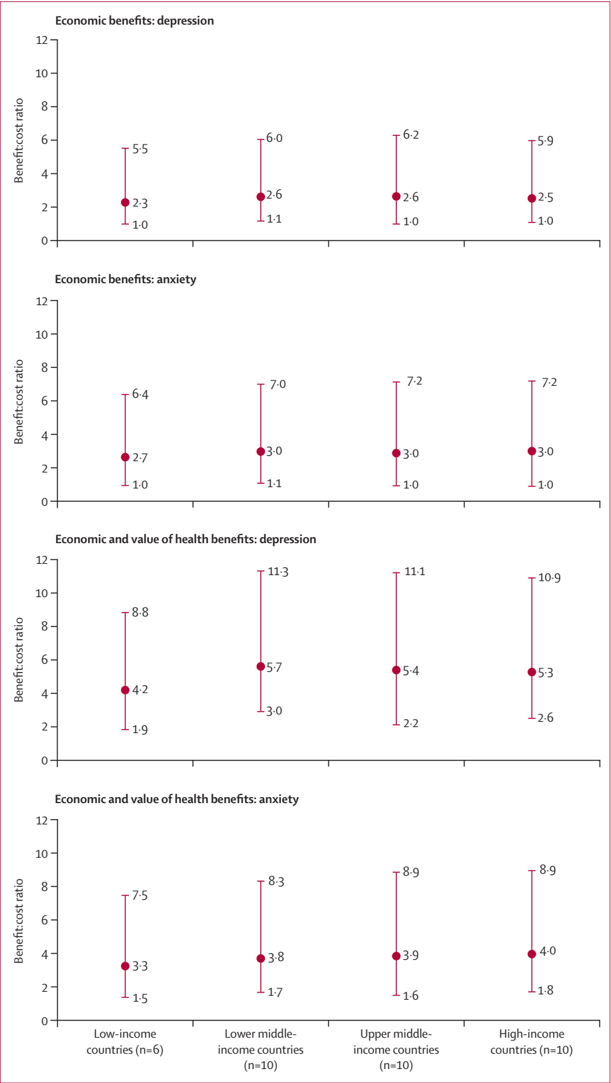
BACKGROUND: Depression and anxiety disorders are highly prevalent and disabling disorders, which result not only in an enormous amount of human misery and lost health, but also lost economic output. Here we propose a global investment case for a scaled-up response to the public health and economic burden of depression and anxiety disorders. METHODS: In this global return on investment analysis, we used the mental health module of the OneHealth tool to calculate treatment costs and health outcomes in 36 countries between 2016 and 2030. We assumed a linear increase in treatment coverage. We factored in a modest improvement of 5% in both the ability to work and productivity at work as a result of treatment, subsequently mapped to the prevailing rates of labour participation and gross domestic product (GDP) per worker in each country. FINDINGS: The net present value of investment needed over the period 2016-30 to substantially scale up effective treatment coverage for depression and anxiety disorders is estimated to be US$147 billion. The expected returns to this investment are also substantial. In terms of health impact, scaled-up treatment leads to 43 million extra years of healthy life over the scale-up period. Placing an economic value on these healthy life-years produces a net present value of $310 billion. As well as these intrinsic benefits associated with improved health, scaled-up treatment of common mental disorders also leads to large economic productivity gains (a net present value of $230 billion for scaled-up depression treatment and $169 billion for anxiety disorders). Across country income groups, resulting benefit to cost ratios amount to 2·3-3·0 to 1 when economic benefits only are considered, and 3·3-5·7 to 1 when the value of health returns is also included. INTERPRETATION: Return on investment analysis of the kind reported here can contribute strongly to a balanced investment case for enhanced action to address the large and growing burden of common mental disorders worldwide. FUNDING: Grand Challenges Canada.
Overview
The claims and statistics of this paper haven’t been checked yet.
Free: it reads the open-access text and checks the first 5 claims that cite a source we can check. Create a free account to check every claim.
Integrity signals
Registry
Cites
Statistics
Figures
Verification
Claims the paper makes
The claims and statistics of this paper haven’t been checked yet.
Free: it reads the open-access text and checks the first 5 claims that cite a source we can check. Create a free account to check every claim.
Claims other papers make about this one
Each is checked against this paper’s own text: does it say what the citing paper says it does?
The cited source says what the claim attributes to it.
In the citing paper
“Even in high-income countries, depression treatment rates are often below 30% (16, 17).”
From Personalised depression forecasting using mobile sensor data and ecological momentary assessment (2022) · cites this paper as [16]
The cited source says what the claim attributes to it.
In the citing paper
“Furthermore, the uptake of therapies is low, even in high-income countries (Chisholm et al. 2016), and one reason may be that therapies are not sufficiently acceptable to patients.”
From The Role of Common Factors in Psychotherapy Outcomes (2019) · cites this paper as Chisholm et al. 2016
The cited source says what the claim attributes to it.
In the citing paper
“Economic modelling work for the general population in all WHO regions indicates that investment in both pharmacological and psychological therapies can be costeffective even in the most resource-constrained regions of the world. 444,445”
From The Lancet Psychiatry Commission on youth mental health (2024) · cites this paper as [445]
In the citing paper
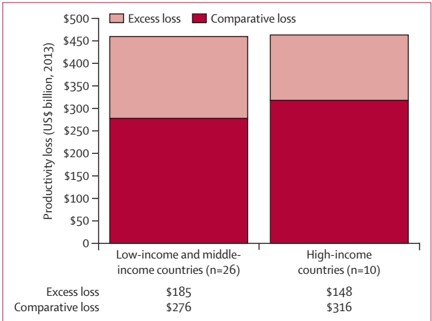
“NCDs also place a heavy economic burden on countries, with the annual lost productivity attributable to depression and anxiety disorders worldwide, for example, estimated in 2013 to be US$ 900 billion 6 .”
From Integrated care for people with long-term mental and physical health conditions in low-income and middle-income countries (2019) · cites this paper as [6]
Self-check
Percentages, sums and reported differences re-computed from the paper’s own numbers.
The self-check needs the paper’s full text.
Citations
Cites
Transforming Our World: The 2030 Agenda for Sustainable Development
(2018) · A New Era in Global Health · doi:10.1891/9780826190123.ap02 · Cited by 19,351
Awais, A. (2015) · Data Archiving and Networked Services (DANS) · doi:10.17632/zcvgc6m58h.1 · Cited by 6,707
Whiteford, H. A., Degenhardt, L., Rehm, J., Baxter, A. J., Ferrari, A. J., Erskine, H. E., Charlson, F. J., Norman, R. E., Flaxman, A. D., Johns, N., et al. (2013) · The Lancet · doi:10.1016/s0140-6736(13)61611-6 · Cited by 6,006
No health without mental health
Prince, M., Patel, V., Saxena, S., Maj, M., Maselko, J., Phillips, M. R., & Rahman, A. (2007) · The Lancet · doi:10.1016/s0140-6736(07)61238-0 · Cited by 3,753
Self-citationDisease control priorities in developing countries
(2006) · Choice Reviews Online · doi:10.5860/choice.44-0343 · Cited by 3,628
(2012) · RePEc: Research Papers in Economics · Cited by 1,951
Cost of disorders of the brain in Europe 2010
Gustavsson, A., Svensson, M., Jacobi, F., Allgulander, C., Alonso, J., Beghi, E., Dodel, R., Ekman, M., Faravelli, C., Fratiglioni, L., et al. (2011) · European Neuropsychopharmacology · doi:10.1016/j.euroneuro.2011.08.008 · Cited by 1,723
Disease control priorities in developing countries
Frenk, J. (2006) · Salud Pública de México · doi:10.1590/s0036-36342006000600011 · Cited by 1,599
Global prevalence of anxiety disorders: a systematic review and meta-regression
Baxter, A. J., Scott, K. M., Vos, T., & Whiteford, H. A. (2013) · Psychological Medicine · doi:10.1017/s003329171200147x · Cited by 1,537
Ferrari, A. J., Somerville, A. J., Baxter, A. J., Norman, R., Patten, S. B., Vos, T., & Whiteford, H. A. (2013) · Psychological Medicine · doi:10.1017/s0033291712001511 · Cited by 1,230
Cited by
Items 501–600 of 1,000
Cuijpers, P. J. (2022) · Psychotherapy Research · doi:10.1080/10503307.2022.2138792 · Cited by 23
“Apart from the personal suffering of patients and their relatives, depression, and anxiety alone cost nearly US$1 trillion per year because of lost productive workdays (Chisholm et al., 2016).”
BackgroundSelf-citationNavigating Mental Illness at Work Using Disengagement and Engagement Pathways
Rosado-Solomon, E., Thatcher, S. M. B., & Strizver, S. D. (2025) · Academy of Management Journal · doi:10.5465/amj.2023.0430 · Cited by 28
Li, X., Chen, W., Zhang, Z., Li, Z., Fan, X., Ma, T., Ding, S., Yang, F., & Lei, J. (2025) · EClinicalMedicine · doi:10.1016/j.eclinm.2025.103285 · Cited by 21
Community-based mental health services in Brazil
Razzouk, D., Caparroce, D. C., & Sousa, A. (2020) · Consortium Psychiatricum · doi:10.17650/2712-7672-2020-1-1-60-70 · Cited by 14
“Treatment for these disorders is efficacious, costeffective [41] and financially feasible [23], although mental disorders have not been a priority, despite the”
BackgroundThomassen, Å. G., Johnsen, B. H., Hystad, S. W., & Johnsen, G. E. (2021) · Scandinavian Journal of Psychology · doi:10.1111/sjop.12782 · Cited by 25
Enzing, J. J., van Krugten, F. C. W., Sabat, I., Neumann‐Böhme, S., Boer, B., Knies, S., Brouwer, W. B. F., Barros, P. P., van Exel, J. N. A., Schreyögg, J., et al. (2022) · Health and Quality of Life Outcomes · doi:10.1186/s12955-022-02041-6 · Cited by 16
Ofosu, E. F., Nys, L. D., Connelly, J., Ryde, G. C., & Phillips, A. C. (2023) · Journal of Aging and Physical Activity · doi:10.1123/japa.2022-0098 · Cited by 22
“…pharmaco-therapy and psychotherapy have been proven to be less ef fi cient and more costly, leading to the emergence and adoption of PA as a means to reduce the negative impact of anxiety symptoms and/or disorders in older adults (Chisholm et al., 2016; Kandola et al., 2018; Olthuis et al., 2016).”
BackgroundPaczos, W., Sawulski, J., & Leśniewicz, F. (2023) · International Review of Economics & Finance · doi:10.1016/j.iref.2023.07.010 · Cited by 22
Microbial metabolites tune amygdala neuronal hyperexcitability and anxiety-linked behaviors
Yu, W., Xiao, Y., Jayaraman, A., Yen, Y.-C., Lee, H. U., Pettersson, S., & Je, H. S. (2025) · EMBO Molecular Medicine · doi:10.1038/s44321-024-00179-y · Cited by 17
“Anxiety disorders are complex, heterogeneous, and the most common mental disorders (Bandelow and Michaelis, 2015; Chisholm et al, 2016; Remes et al, 2016).”
Working with monsters: counting the costs of workplace psychopaths and other toxic employees
Michalak, R., & Ashkanasy, N. M. (2018) · Accounting and Finance · doi:10.1111/acfi.12369 · Cited by 18
Mangeard-Lourme, J., de Arquer, G. R., Parasa, J., Singh, R. K., Satle, N., & Mamhidi, R. (2020) · Leprosy Review · doi:10.47276/lr.91.4.367 · Cited by 14
Young, P. A., Chow, V., Haslam, C. O., Wood, A. G., & Barker, J. B. (2022) · Journal of Rational-Emotive & Cognitive-Behavior Therapy · doi:10.1007/s10942-022-00475-x · Cited by 20
“Workplace stress and employee mental ill health within such settings is a known problem, and its human and economic cost is substantial and well documented (Chisholm et al., 2016).”
BackgroundZhang, S., Teng, J., Zeng, Y., Song, H., & Gu, Z. (2022) · Frontiers in Public Health · doi:10.3389/fpubh.2022.1042589 · Cited by 34
Nutrient Inadequacy in Korean Young Adults with Depression: A Case Control Study
Yoon, S.-I., Moon, H.-R., Lee, S. R., Zhang, J., Lee, S., & Cho, J. A. (2023) · Nutrients · doi:10.3390/nu15092195 · Cited by 15
“Furthermore, the negative physiological effects and expenses associated with the use of prescribed antidepressants remain a problem [6,7].”
BackgroundOlsen, J., Dundas, R., & Ellaway, A. (2017) · International Journal of Environmental Research and Public Health · doi:10.3390/ijerph14121473 · Cited by 16
“If a similar increase in diagnoses continued to 2030, the estimated global healthcare treatment costs would be US$147 billion [5].”
BackgroundMental Health First Aid as a tool for improving mental health and well-being
Richardson, R., Dale, H. E., Wellby, G., McMillan, D., & Churchill, R. C. (2018) · Cochrane Database of Systematic Reviews · doi:10.1002/14651858.cd013127 · Cited by 18
Lokkerbol, J., van Voorthuijsen, J. M., Geomini, A., Tiemens, B. G., van Straten, A., Smit, F., Risseeuw, A., van Balkom, A. J. L. M., & Hiligsmann, M. (2018) · Journal of Medical Economics · doi:10.1080/13696998.2018.1555403 · Cited by 17
Self-citationVancampfort, D., Stubbs, B., Sallis, J. F., Nabanoba, J., Basangwa, D., Oyeyemi, A. L., Kasoma, S. S., Binder, M. D., Myin‐Germeys, I., & Mugisha, J. (2019) · Journal of Physical Activity and Health · doi:10.1123/jpah.2018-0355 · Cited by 17
Kohlmann, S., Lehmann, M., Eisele, M., Braunschneider, L., Marx, G., Zapf, A., Wegscheider, K., Härter, M. C., König, H., Gallinat, J., et al. (2020) · BMJ Open · doi:10.1136/bmjopen-2019-035973 · Cited by 15
Mirea, D.-M., Martin-Key, N. A., Barton‐Owen, G., Olmert, T., Cooper, J. D., Han, S. Y. S., Farrag, L. P., Bell, E., Friend, L. V., Eljasz, P., et al. (2020) · JMIR Mental Health · doi:10.2196/23813 · Cited by 23
hAnrachtaigh, É. Ó., Brown, G. P., Beck, A. F., Conway, R., Jones, H. G., & Angelakis, I. (2024) · Depression and Anxiety · doi:10.1155/2024/5037662 · Cited by 17
“Rates of CMDs and NPD continue to rise internationally [8] and pose a signi fi cant economic burden estimated to be as high as US$ 1.15 trillion a year [9].”
InfluentialPreliminary effects of a digital mental health intervention for depression and anxiety
van Orden, M. L., Kraaijeveld, J. C., Spijker, A. T., Silven, A. V., Bonten, T. N., Chavannes, N. H., & van Dijke, A. (2022) · Clinical eHealth · doi:10.1016/j.ceh.2022.06.002 · Cited by 15
Current development of biosensing technologies towards diagnosis of mental diseases
Zheng, Y., Liu, C., Lai, N. Y. G., Wang, Q., Xia, Q., Sun, X., & Zhang, S. (2023) · Frontiers in Bioengineering and Biotechnology · doi:10.3389/fbioe.2023.1190211 · Cited by 20
“However, in developing countries, people with depression are often not detected as early as possible (Chisholm et al., 2016).”
BackgroundChisholm, D., Lee, Y. Y., Baral, P. P., Bhagwat, S., Dombrovskiy, V. S., Grafton, D., Васильевна, К. А., Huque, R., Kalani, K., Kulikov, A., et al. (2023) · Frontiers in Health Services · doi:10.3389/frhs.2023.1214885 · Cited by 18
Self-citationChen, W., Chen, Y., Aslam, M. S., Shen, J., Tong, T., Yan, S., Cheng, W., Huang, Z., Li, J., Liu, S., et al. (2023) · Behavioural Brain Research · doi:10.1016/j.bbr.2023.114627 · Cited by 16
Building systemic resilience, productivity and well-being: a Mental Wealth perspective
Occhipinti, J., Hynes, W. M., Geli, P., Eyre, H. A., Song, Y. J. C., Prodan, A., Skinner, A., Ujdur, G., Buchanan, J., Green, R., et al. (2023) · BMJ Global Health · doi:10.1136/bmjgh-2023-012942 · Cited by 21
Prioritizing Mental Health within HIV and Tuberculosis Services in PEPFAR
Fukunaga, R., Pierre, P., Williams, J. K., Briceno-Robaugh, R., Kalibala, S., Peterson, M., & Moonan, P. K. (2024) · Emerging infectious diseases · doi:10.3201/eid3004.231726 · Cited by 18
Abdullah, M. A., Shaikh, B. T., Sattar, N. Y., Sarwar, B., Ahmed, A. S., & Fatima, S. S. (2024) · PLOS Global Public Health · doi:10.1371/journal.pgph.0003463 · Cited by 17
Bennion, M., Blakemore, A., Lovell, K., & Bee, P. (2025) · BMC Psychiatry · doi:10.1186/s12888-025-06501-3 · Cited by 15
“Despite these challenges, effective and cost-efficient interventions exist, with evaluations demonstrating the substantial economic benefits of scaling up treatment for depression and anxiety [3].”
Hydroethanolic extract of Tropaeolum majus promotes anxiolytic effects on rats
Melo, A. D. C., Costa, S. C. A., de Castro, A. F., de Souza, A. N. V., Sato, S. W., Lívero, F. A. D. R., Lourenço, E. L. B., Baretta, I. P., & Lovato, E. C. W. (2018) · Revista Brasileira de Farmacognosia · doi:10.1016/j.bjp.2018.06.006 · Cited by 19
Genetic influences on treatment-seeking for common mental health problems in the UK biobank
Rayner, C., Coleman, J. R. I., Purves, K. L., Cheesman, R., Hübel, C., Gaspar, H. A., Glanville, K. P., Krebs, G., Morneau‐Vaillancourt, G., Breen, G. D., et al. (2019) · Behaviour Research and Therapy · doi:10.1016/j.brat.2019.103413 · Cited by 18
“A number of studies have estimated that as many as 75% of individuals who have a 12 month diagnosis of depression do not receive treatment (Chisholm et al. 2016; Thornicroft 2008; Thornicroft et al. 2017).”
BackgroundThe association between anxiety and depression with 25(OH)D and thyroid stimulating hormone levels
Erensoy, H. (2019) · Neurosciences · doi:10.17712/nsj.2019.4.20190028 · Cited by 14
Knapstad, M., Sæther, S. M. M., Hensing, G. K. E., & Smith, O. R. F. (2020) · BMC Health Services Research · doi:10.1186/s12913-020-4932-1 · Cited by 14
Martin-Key, N. A., Schei, T. S., Barker, E., Spadaro, B., Funnell, E. L., Benáček, J., Tomasik, J., & Bahn, S. (2020) · JMIR Research Protocols · doi:10.2196/25382 · Cited by 14
“Despite the well-documented economic and global burdens of mental disorders and the wide range of existing evidence-based treatments, mental health conditions remain largely underdiagnosed or misdiagnosed and undertreated [2,3], even in high-income countries [4,5].”
BackgroundZakaria, F., Akhtar, M. T., Ibrahim, W. N. W., Bakar, N. A., Muhamad, A., Shohaimi, S., Maulidiani, M., Ahmad, H., Ismail, I. S., & Shaari, K. (2021) · Zebrafish · doi:10.1089/zeb.2020.1895 · Cited by 16
Wu, Y., Zhao, D., Guo, J., Lai, Y., Chen, L., Jin, S., & Huang, Y. (2021) · International Journal of Environmental Research and Public Health · doi:10.3390/ijerph181910009 · Cited by 14
Johansson, K. A., Strand, K. B., Fekadu, A., & Chisholm, D. (2016) · Health Policy and Planning · doi:10.1093/heapol/czw134 · Cited by 16
“A recent global return on investment analysis estimated an economic return of US$2.3-3.0 in productivity gain per US$1 invested in treatment of depression and anxiety in 36 countries between 2016 and 2030 (Chisholm et al. 2016).”
BackgroundInfluentialSelf-citationCha, D. S., Luo, X., Ahmed, J., Becirovic, L., Cha, R. H., & McIntyre, R. S. (2019) · Expert Review of Neurotherapeutics · doi:10.1080/14737175.2019.1653759 · Cited by 13
“Furthermore, return on investment studies have suggested that treatments with modest benefits on patients’ ability to work and/or productivity could result in significant economic gains [9].”
BackgroundDenche-Zamorano, Á. M., Barrios-Fernández, S., Gómez-Galán, R., Franco-García, J. M., Carlos‐Vivas, J., Mendoza-Muñoz, M., Rojo-Ramos, J., Vega-Muñoz, A., Contreras-Barraza, N., Gianikellis, K., et al. (2022) · Healthcare · doi:10.3390/healthcare10081442 · Cited by 25
“the results of international and national studies have demonstrated their great economic and social impact [11,12].”
ResultPsychometric properties of the Revised Child Anxiety and Depression Scale in Greek Adolescents
Giannopoulou, I., Pasalari, E., Bali, P., Grammatikaki, D., & Ferentinos, P. P. (2021) · Clinical Child Psychology and Psychiatry · doi:10.1177/13591045211056502 · Cited by 15
“Given that both disorders are associated with impairments in youths’ psychosocial and academic functioning (Muris & Meesters, 2002), and if untreated, can be disabling and persistent into adulthood, both are considered to be a public health priority (Chisholm et al., 2016).”
BackgroundWhat twitter can tell us about user experiences of crisis text lines: A qualitative study
Coady, A., Lainchbury, K., Godard, R., & Holtzman, S. (2022) · Internet Interventions · doi:10.1016/j.invent.2022.100526 · Cited by 16
“These findings are consistent with stigma being a well-known barrier to seeking mental health support (Corrigan et al., 2014), and recent research demonstrating greater comfort with texting over calling, especially among youth (Trub and Barbot, 2020).”
ResultTrends in mental health service utilisation by Australia's older population
Bartholomaeus, J. D., Collier, L. R., Lang, C. E., Cations, M., Kellie, A. R., Inacio, M. C. S., & Caughey, G. E. (2022) · Australian Journal on Ageing · doi:10.1111/ajag.13118 · Cited by 12
Santos, A. C., Passos, A. F. F., Holzbach, L. C., Cardoso, B. R., dos Santos, M. A., Coelho, A. S. G., Cominetti, C., & de Almeida, G. M. (2022) · Nutrition Reviews · doi:10.1093/nutrit/nuac095 · Cited by 15
Dong, M., Lu, W., Zeng, X., Yang, Y., Liao, D., Hou, C., Zheng, H., & Wang, S. (2025) · Journal of Affective Disorders · doi:10.1016/j.jad.2025.03.026 · Cited by 19
Climate Change and Mental Health
Clark, T., & Zolnikov, T. R. (2020) · Springer eBooks · doi:10.1007/978-3-030-32811-5_2-1 · Cited by 13
Alanne, C., Heinonen, E., Knekt, P., Rissanen, J., Virtala, E. T., & Lindfors, O. (2021) · Journal of Clinical Psychology · doi:10.1002/jclp.23128 · Cited by 12
Relationship between Income and Mental Health during the COVID-19 Pandemic in China
Li, M., Zhou, B., & Hu, B. (2022) · International Journal of Environmental Research and Public Health · doi:10.3390/ijerph19158944 · Cited by 14
“The two most common mental health conditions, depression and anxiety [31,32], not only cause a great deal of suffering and health loss, but also lead to a loss of economic output [33].”
BackgroundSadeh‐Sharvit, S., Rego, S. A., Jefroykin, S., Peretz, G., & Kupershmidt, T. (2022) · JMIR Formative Research · doi:10.2196/39846 · Cited by 16
“In addition to the personal toll of these illnesses, they also cost the global economy US $1 trillion per year in lost productivity alone [2].”
BackgroundOlaya, B., Feltz-Cornelis, C. M. V. D., Roijen, L. H., Merecz‐Kot, D., Sinokki, M., Naumanen, P., Shepherd, J., van Krugten, F. C. W., de Mul, M., Staszewska, K., et al. (2022) · Digital Health · doi:10.1177/20552076221131145 · Cited by 14
“This approach is based on a reviewon the impact ofmental health programson presenteeism in the workplace.(66) This calculation also considers loss to early and late follow-ups (25%).”
MethodRelationship between objective cognitive functioning and work performance among Japanese workers
Shibaoka, M., Masuda, M., Iwasawa, S., Ikezawa, S., Eguchi, H., & Nakagome, K. (2023) · Journal of Occupational Health · doi:10.1002/1348-9585.12385 · Cited by 18
Harris, K. R., & Norton, P. J. (2019) · Journal of Behavior Therapy and Experimental Psychiatry · doi:10.1016/j.jbtep.2019.101487 · Cited by 13
Propuestas para ampliar la cobertura de salud mental infantil en Chile
Fajuri, A. Z., & Zúñiga-Fajuri, M. (2020) · Acta bioethica · doi:10.4067/s1726-569x2020000100073 · Cited by 12
Dobson, K. G., Vigod, S. N., Mustard, C., & Smith, P. M. (2021) · Journal of Affective Disorders · doi:10.1016/j.jad.2021.02.019 · Cited by 16
Chen, J., Liu, C., Xu, M., Zhu, J., & Xia, Z. (2022) · Neuropharmacology · doi:10.1016/j.neuropharm.2022.108951 · Cited by 12
Wang, H., Wang, M., Wang, X., Feng, T., Liu, X., & Xiao, W. (2025) · Frontiers in Psychiatry · doi:10.3389/fpsyt.2025.1502252 · Cited by 22
“They severely affect daily functioning, academic performance, and overall well-being (8, 9).”
Yu, W., Bo, T., Zhu, F., Gao, Z., Xiao, Y., Gong, Q., & Lui, S. (2025) · Translational Psychiatry · doi:10.1038/s41398-025-03424-1 · Cited by 17
Reavley, N. J., Ross, A., McNaught, G., Green, R., & Morgan, A. J. (2026) · Epidemiology and Psychiatric Sciences · doi:10.1017/s2045796026100456 · Cited by 11
“They may have their human rights violated and experience severe poverty, particularly in low-and middle-income countries (Chisholm et al. , 2016).”
Penev, T., Zhao, S., Lee, J. L., Chen, C., Metcalfe, L. N., & Ozminkowski, R. J. (2023) · Population Health Management · doi:10.1089/pop.2022.0240 · Cited by 15
“Providing appropriate mental health care to those in the workforce could help to alleviate these challenges and reduce suffering.(9) For many employees, mental health care services are provided through employer-sponsored health insurance.”
BackgroundShocks and mental health: Panel data evidence from South Africa
Alem, Y., & Tato, G. L. (2023) · World Development · doi:10.1016/j.worlddev.2023.106270 · Cited by 13
Blampied, M., Tylianakis, J. M., Bell, C., Gilbert, C., & Rucklidge, J. J. (2023) · Journal of Affective Disorders · doi:10.1016/j.jad.2023.05.077 · Cited by 13
Practical pathway for the management of depression in the workplace: a Canadian perspective
Chokka, P. R., Bender, A., Brennan, S., Ahmed, G., Corbière, M., Dozois, D. J. A., Habert, J., Harrison, J., Katzman, M. A., McIntyre, R. S., et al. (2023) · Frontiers in Psychiatry · doi:10.3389/fpsyt.2023.1207653 · Cited by 16
“A World Health Organization (WHO) study found that every dollar spent on treatment for depression and anxiety can result in as much as US$4.00 in better health and improved economic productivity (29).”
BackgroundInfluentialKazdin, A. E., Harris, M., Hwang, I. H., Sampson, N. A., Stein, D. J., Viana, M. C., Vigo, D., Wu, C., Aguilar‐Gaxiola, S., Alonso, J., et al. (2023) · Psychological Medicine · doi:10.1017/s0033291723002507 · Cited by 35
“The economic costs of major depression are enormous (Chisholm et al., 2016; Chiu, Lebebaum, Cheng, de Oliveira, & Kurdyak, 2017; Kessler, 2012; Tanner et al., 2020; Yamabe, Liebert, Flores, & Pashos, 2019).”
A conversational agent framework for mental health screening: design, implementation, and usability
Boian, R., Bucur, A.-M., Todea, D., Luca, A., Rebedea, T. E., & Podina, I. R. (2024) · Behaviour and Information Technology · doi:10.1080/0144929x.2024.2332934 · Cited by 14
“The prevalence of mental health problems and the burden they place on the lives of those a ff ected has become a global socio-economic problem with costs measured in trillions of dollars (Chisholm et al. 2016).”
Fukawa, Y., Mayumi, O. H. B. A., Akamatsu, N., Onoda, R., Ikeuchi, K., Minami, K., Takahashi, N., Watanabe, F., Iida, T., Kaneko, Y., et al. (2024) · Building and Environment · doi:10.1016/j.buildenv.2024.111827 · Cited by 12
Mental health: taking its place as an essential element of sustainable global development
Scorza, P., Poku, O. B., & Pike, K. M. (2018) · BJPsych International · doi:10.1192/bji.2017.22 · Cited by 12
Santos, J. D., Ihle, A., Peralta, M., Domingos, C., Gouveia, É. R., Ferrari, G., Werneck, A. O., Rodrigues, F. F., & Marques, A. (2022) · Frontiers in Public Health · doi:10.3389/fpubh.2021.799870 · Cited by 13
“Providing more opportunities for engaging in PA should be a priority for public authorities to reduce the individual and the economic burden associated with poor mental health (7).”
BackgroundSick leave duration as a potential marker of functionality and disease severity in depression
Volz, H., Bartečků, E., Bartova, L., Bessa, J. M., Berardis, D. D., Dragašek, J., Kozhuharov, H., Ladea, M., Lazáry, J., Roca, M., et al. (2022) · International Journal of Psychiatry in Clinical Practice · doi:10.1080/13651501.2022.2054350 · Cited by 13
“However, instigating effective treatments for depression has been shown to be an efficient way for governments and health authorities to spend their limited resources, with an appreciable return on investment (Chisholm et al., 2016).”
BackgroundChapdelaine, A., Vasiliadis, H., Provencher, M. D., Norton, P. J., & Roberge, P. (2023) · Psychological Medicine · doi:10.1017/s0033291722003920 · Cited by 12
“…of psychotherapy and CBT is needed to support decision making around the allocation of resources to overcome barriers to care for patients with anxiety disorders, which are among the most common (Kessler et al., 2005) and economically impactful (Chisholm et al., 2016) mental disorders globally.”
BackgroundGielis, K., Kennes, J., Dobbeleer, C. D., Puttemans, S., & Abeele, V. V. (2019) · IEEE International Conference on Healthcare Informatics (ICHI) · doi:10.1109/ichi.2019.8904511 · Cited by 12
“15 trillion dollars per year [4].”
Michalak, A., Wnorowski, A., Berardinelli, A., Zinato, S., Rusinek, J., & Budzyńska, B. (2020) · Neuropharmacology · doi:10.1016/j.neuropharm.2020.108302 · Cited by 12
Long-term outcomes of Prompt Mental Health Care: A randomized controlled trial
Sæther, S. M. M., Knapstad, M., Grey, N., Rognerud, M. A., & Smith, O. R. F. (2020) · Behaviour Research and Therapy · doi:10.1016/j.brat.2020.103758 · Cited by 14
Toledo‐Chávarri, A., Ramos‐García, V., Torres‐Castaño, A., Trujillo‐Martín, M. M., Castro, W. P., del Cura-González, I., Serrano‐Aguilar, P., & Perestelo‐Pérez, L. (2020) · BMC Family Practice · doi:10.1186/s12875-020-01307-6 · Cited by 15
Henson, S. J. S., Prescott, M., Corcoran, J. B., Pillai, S., Mattila, L., Mathur, S., Adkins, T., & Altman, M. (2022) · Telemedicine Journal and e-Health · doi:10.1089/tmj.2020.0555 · Cited by 14
“trillion each year in lost productivity, and that for every $1 spent on scaling mental health treatment, there is a $4 return in improved health and productivity.(10,11)”
BackgroundBursky, M., Egglefield, D. A., Schiff, S., Premnath, P. Y., & Sneed, J. R. (2022) · Brain Sciences · doi:10.3390/brainsci12050663 · Cited by 16
Mental Health Among Displaced People and Refugees
Marquez, P. V. (2016) · World Bank, Washington, DC eBooks · doi:10.1596/25854 · Cited by 15
Owens, M., Watkins, E. R., Bot, M., Brouwer, I. A., Roca, M., Kohls, E., Penninx, B. W. J. H., van Grootheest, G., Hegerl, U., Gili, M., et al. (2020) · Nutrition Bulletin · doi:10.1111/nbu.12447 · Cited by 15
“Depression is enormously detrimental economically with global annual associated costs estimated to stand at $1 trillion (Chisholm et al. 2016).”
BackgroundEconomic evaluations of workplace mental health interventions: a critical review
Nogues, S., & Finucan, J. (2018) · Canadian Journal of Administrative Sciences / Revue Canadienne des Sciences de l Administration · doi:10.1002/cjas.1502 · Cited by 10
Preventing the onset of depressive disorders in low-and middle-income countries: An overview
Cuijpers, P. J. (2023) · Cambridge Prisms Global Mental Health · doi:10.1017/gmh.2023.22 · Cited by 16
“Apart from the personal suffering of patients and their relatives, the economic costs are enormous, with an estimated 12 billion productive workdays lost every year to depressive and anxiety disorders, at a cost of nearly US$1 trillion (Chisholm et al., 2016).”
BackgroundSelf-citationBiju, A., Ivantsova, E., Souders, C. L., English, C. D., Avidan, L., & Martyniuk, C. J. (2024) · Neurotoxicology and Teratology · doi:10.1016/j.ntt.2023.107318 · Cited by 10
Banerjee, S., Agarwal, A., & Bar, A. K. (2024) · American Journal of Computer Science and Technology · doi:10.11648/j.ajcst.20240701.11 · Cited by 14
Cosgrove, L., Brhlíková, P., Lyus, R., Herrawi, F., D’Ambrozio, G., Abi‐Jaoude, E., & Pollock, A. M. (2024) · Community Mental Health Journal · doi:10.1007/s10597-024-01302-6 · Cited by 14
“For example, the Lancet Commission recently launched a proposal for scaling up the diagnosis and treatment of depression (Patel et al. 2018; see also, Chisholm et al., 2016).”
Follicle-stimulating hormone induces depression-like phenotype by affecting synaptic function
Huang, L., Sun, S., Jiang, G., Xie, G., Yang, Y., Chen, S., Luo, J., Lv, C., Li, X., Liao, J., et al. (2024) · Frontiers in Molecular Neuroscience · doi:10.3389/fnmol.2024.1459858 · Cited by 11
“In addition, given that depression and anxiety are often comorbid with each other and have a significant overlap in pathophysiology (Chisholm et al., 2016; Mulder et al., 2019), we also examined anxiety-like behavior in the mice.”
BackgroundMiafo, J. D., Nzebou, D., Stoll, B., Ngambia, J. C. Y., Ngamby, M. K., Ottino, S. V. O., & Moayedoddin, A. (2024) · Scientific Reports · doi:10.1038/s41598-024-79370-7 · Cited by 19
Personal Emotions and Family Financial Well-Being: Applying the Broaden and Build Theory
Enete, S., Seay, M. C., Asebedo, S. D., Wang, D., & McCoy, M. A. (2022) · Journal of Financial Counseling and Planning · doi:10.1891/jfcp-20-00030 · Cited by 10
“These results are consistent with Chisholm et al. (2016), which found that anxiety lowers the potential income of an individual.”
ResultLimei, C., Jifei, S., Chunlei, G., Li, X.-J., Zhi, W., Yang, H., & Jiliang, F. (2022) · PubMed Central · doi:10.19852/j.cnki.jtcm.2022.05.010 · Cited by 15
Porter, S. V., Lexén, A., & Bejerholm, U. (2019) · Journal of Vocational Rehabilitation · doi:10.3233/jvr-180997 · Cited by 15
Smith, M. M., Sherry, S., Ray, C. M., Lee‐Baggley, D., Hewitt, P. L., & Flett, G. L. (2019) · Journal of Psychoeducational Assessment · doi:10.1177/0734282919877777 · Cited by 16
“15 (US) trillion annually (Chisholm et al., 2016), is associated with a substantial loss of”
BackgroundInfluentialNguyen, A. J., Rykiel, N. A., Murray, L. K., Amin, A., Haroz, E. E., Lee, C., & Bolton, P. A. (2019) · International Journal of Mental Health Systems · doi:10.1186/s13033-019-0330-7 · Cited by 10
Vasileva, A. V. (2021) · V M BEKHTEREV REVIEW OF PSYCHIATRY AND MEDICAL PSYCHOLOGY · doi:10.31363/2313-7053-2021-1-91-101 · Cited by 11
“Анализируя базу проведенных исследований, нельзя среди антидепрессантов первой линии выделить какой-то один наиболее мощный препарат, чей терапевтический эффект в значительной степени превосходил бы действие других препаратов из этой группы [31].”
Yang, D., Hu, B., Ren, Z., & Li, M. (2022) · Frontiers in Psychology · doi:10.3389/fpsyg.2022.977609 · Cited by 11
Reframing the Challenge of Promoting Population Mental Health
Barry, M. M. (2019) · Springer eBooks · doi:10.1007/978-3-030-23455-3_2 · Cited by 12
Chen, L., Li, X., Zheng, G.-E., Xie, G., & Cheng, Y. (2019) · Neuroscience Letters · doi:10.1016/j.neulet.2019.134618 · Cited by 10
Kim, S., Oh, K., Shin, D., Lim, W., Jeon, S. W., Kim, E., Cho, S. J., & Shin, Y. C. (2020) · Journal of Affective Disorders · doi:10.1016/j.jad.2020.01.072 · Cited by 11
Pharmacy-based management for depression in adults
Sampson, S. J., Todd, A., Walton, N., Steele, R., Webster, L. A. D., Churchill, R. C., McMillan, D., Gilbody, S. M., & Ekers, D. (2019) · Cochrane Database of Systematic Reviews · doi:10.1002/14651858.cd013299 · Cited by 10
Scaling-up of treatment of depression and anxiety – Authors' reply
Chisholm, D., Sweeny, K., Sheehan, P. J., Rasmussen, B., Smit, F., Cuijpers, P. J., & Saxena, S. (2016) · The Lancet Psychiatry · doi:10.1016/s2215-0366(16)30131-6 · Cited by 14
Self-citationTur, C., Campos, D., Herrero, R., Mor, S., López-Montoyo, A., Castilla, D., & Quero, S. (2021) · BMJ Open · doi:10.1136/bmjopen-2020-046477 · Cited by 9
Abas, M., Müller, M., Gibson, L. J., Derveeuw, S., Dissanayake, N., Smith, P. A., Verhey, R., Danese, A., & Chibanda, D. (2023) · BJPsych Open · doi:10.1192/bjo.2022.621 · Cited by 9
The burden of major depressive disorder in the Middle East and North Africa region, 1990–2019
Safiri, S., Mousavi, S. E., Nejadghaderi, S. A., Noori, M., Sullman, M. J. M., Kolahi, A., & Shekarriz‐Foumani, R. (2023) · Acta Neuropsychiatrica · doi:10.1017/neu.2023.42 · Cited by 14
Wipfli, H. L., Guy, K., Kim, A., Tumuhimbise, P., Odur, K., Ambassadors, L. Y. P. H., Susan, A., Stephen, A., Rebecca, A., Nancy, A., et al. (2023) · Conflict and Health · doi:10.1186/s13031-023-00549-2 · Cited by 13
Guldager, M. B., Biojone, C., da Silva, N. R., Godoy, L. D., & Joca, S. R. L. (2024) · Progress in Neuro-Psychopharmacology and Biological Psychiatry · doi:10.1016/j.pnpbp.2024.111029 · Cited by 12
“…leading causes of disability worldwide, affecting especially the most productive sector of society (15 – 49 years of age), resulting in a huge economic burden with an estimated global annual loss of US$1 trillion associated with direct and indirect costs (Vos et al., 2020; Chisholm et al., 2016).”
Background
Metadata
- Authors
- Chisholm, D., Sweeny, K., Sheehan, P., Rasmussen, B., Smit, F., Cuijpers, P., & Saxena, S.
- Affiliations
- World Health Organization (CH)
- Trimbos Institute (NL)
- Vrije Universiteit Amsterdam (NL)
- Corresponding author
- Chisholm, Dan
- Venue
- The Lancet Psychiatry
- Publisher
- Elsevier BV
- Published
- 2016-05
- Volume
- 3
- Issue
- 5
- Pages
- 415-424
- ISSN
- 2215-0366 (ISSN-L)
- OpenAlex
- W2340346722
- Cited by
- 1,451
- References
- 39
- Citations by year
- 2026: 126 · 2025: 136 · 2024: 164 · 2023: 178 · 2022: 206 · 2021: 192 · 2020: 144 · 2019: 116 · 2018: 83 · 2017: 71 · 2016: 32
- FWCI
- 158.29
- Type
- journal article
- Language
- en
- Open access
- hybrid
- doi.org
- Licence
- cc-by
- www.elsevier.com/tdm/userlicense/1.0/ (tdm)
- creativecommons.org/licenses/by/4.0/ (vor)
- Locations
- The Lancet Psychiatry (publishedVersion, cc-by)
- PubMed (publishedVersion)
- Amsterdam UMC (VU Amsterdam) - Institutional Repository (publishedVersion)
- VU Research Portal (publishedVersion, other-oa)
- Pure Amsterdam UMC (submittedVersion, other-oa)
- Victoria University Research Repository (Victoria University) (submittedVersion)
- Data Archiving and Networked Services (DANS) (submittedVersion, other-oa)
- Data Archiving and Networked Services (DANS) (submittedVersion)
- Funders
- European Union under the 7th Framework programme (Grant agreement 305968)
- Topics
- Health Sciences › Medicine › Psychiatry and Mental health › Mental Health Treatment and Access
- Social Sciences › Economics, Econometrics and Finance › Economics and Econometrics › Health Systems, Economic Evaluations, Quality of Life
- Health Sciences › Medicine › Pharmacology (medical) › Treatment of Major Depression
- Keywords
- depression, anxiety disorders, common mental disorders, return on investment, mental health investment, economic burden of mental illness, productivity improvement, healthy life years, treatment coverage, benefit-cost ratio
- MeSH terms
- Anxiety, Cost-Benefit Analysis, Depression, Humans, Mental Health Services, Global Health, Health Care Costs, Cost of Illness
About these checks
Registry, retraction, Cites and statistics results are computed, not judged, with one exception: a printed reference that no index lists is read once by a model before it counts as a citation error. Claims are extracted by a model and kept only when their quote appears verbatim in the text; each cited source is then checked, with a model’s help, for whether it says what the claim relies on. Those verdicts can be wrong — read the claim’s quote and the cited source before relying on one.
Statistics and arithmetic are recomputed, not judged.
Confidence bands are shown only for fields calibrated on our annotated test set. None is calibrated yet, so no band is shown.
What counts as a claim ›How we measure confidence ›How we check this ›
Are you an author, or do you see a problem with this page? Request a review
Data sources
Bibliographic data: Semantic Scholar, OpenAlex, Crossref.
Contains information from the Semantic Scholar Academic Graph Datasets, made available under the ODC Attribution License (ODC-BY 1.0).
Semantic Scholar’s data is described in: Kinney, R., et al. (2023). The Semantic Scholar Open Data Platform. arXiv:2301.10140.
