

Scaling-up treatment of depression and anxiety: a global return on investment analysis
Open accessThe DOI matches its Crossref record; 38 of the 39 references it cites were found in a registry or an index.
Abstract
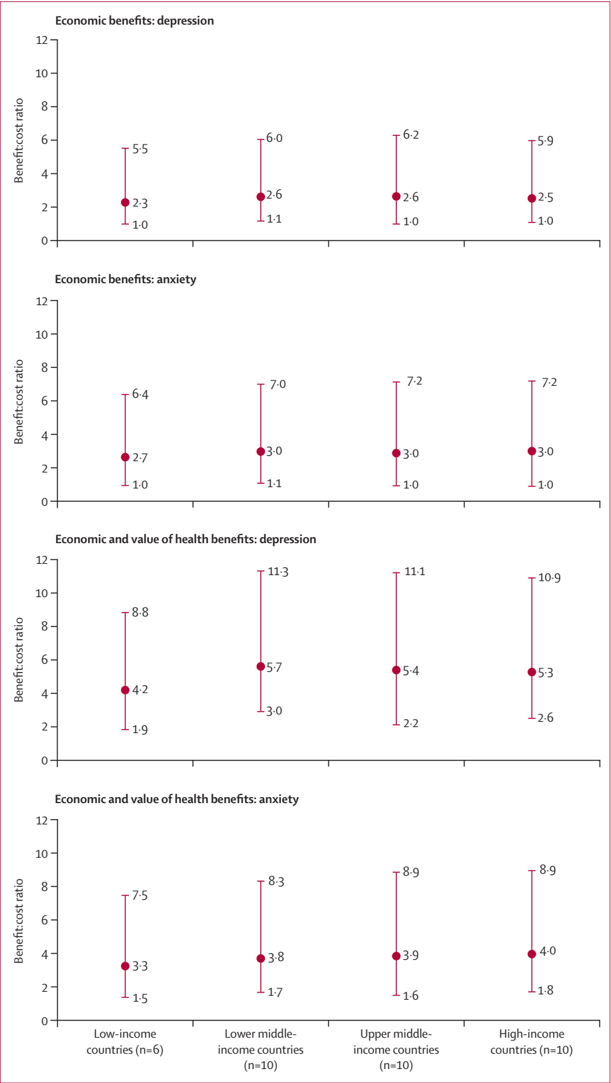
BACKGROUND: Depression and anxiety disorders are highly prevalent and disabling disorders, which result not only in an enormous amount of human misery and lost health, but also lost economic output. Here we propose a global investment case for a scaled-up response to the public health and economic burden of depression and anxiety disorders. METHODS: In this global return on investment analysis, we used the mental health module of the OneHealth tool to calculate treatment costs and health outcomes in 36 countries between 2016 and 2030. We assumed a linear increase in treatment coverage. We factored in a modest improvement of 5% in both the ability to work and productivity at work as a result of treatment, subsequently mapped to the prevailing rates of labour participation and gross domestic product (GDP) per worker in each country. FINDINGS: The net present value of investment needed over the period 2016-30 to substantially scale up effective treatment coverage for depression and anxiety disorders is estimated to be US$147 billion. The expected returns to this investment are also substantial. In terms of health impact, scaled-up treatment leads to 43 million extra years of healthy life over the scale-up period. Placing an economic value on these healthy life-years produces a net present value of $310 billion. As well as these intrinsic benefits associated with improved health, scaled-up treatment of common mental disorders also leads to large economic productivity gains (a net present value of $230 billion for scaled-up depression treatment and $169 billion for anxiety disorders). Across country income groups, resulting benefit to cost ratios amount to 2·3-3·0 to 1 when economic benefits only are considered, and 3·3-5·7 to 1 when the value of health returns is also included. INTERPRETATION: Return on investment analysis of the kind reported here can contribute strongly to a balanced investment case for enhanced action to address the large and growing burden of common mental disorders worldwide. FUNDING: Grand Challenges Canada.
Overview
The claims and statistics of this paper haven’t been checked yet.
Free: it reads the open-access text and checks the first 5 claims that cite a source we can check. Create a free account to check every claim.
Integrity signals
Registry
Cites
Statistics
Figures
Verification
Claims the paper makes
The claims and statistics of this paper haven’t been checked yet.
Free: it reads the open-access text and checks the first 5 claims that cite a source we can check. Create a free account to check every claim.
Claims other papers make about this one
Each is checked against this paper’s own text: does it say what the citing paper says it does?
The cited source says what the claim attributes to it.
In the citing paper
“Even in high-income countries, depression treatment rates are often below 30% (16, 17).”
From Personalised depression forecasting using mobile sensor data and ecological momentary assessment (2022) · cites this paper as [16]
The cited source says what the claim attributes to it.
In the citing paper
“Furthermore, the uptake of therapies is low, even in high-income countries (Chisholm et al. 2016), and one reason may be that therapies are not sufficiently acceptable to patients.”
From The Role of Common Factors in Psychotherapy Outcomes (2019) · cites this paper as Chisholm et al. 2016
The cited source says what the claim attributes to it.
In the citing paper
“Economic modelling work for the general population in all WHO regions indicates that investment in both pharmacological and psychological therapies can be costeffective even in the most resource-constrained regions of the world. 444,445”
From The Lancet Psychiatry Commission on youth mental health (2024) · cites this paper as [445]
In the citing paper
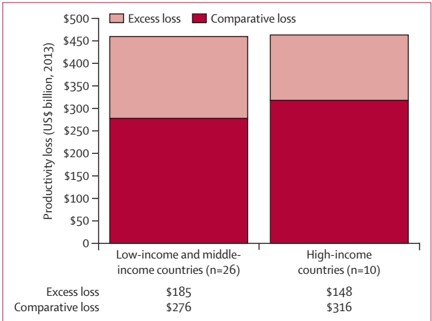
“NCDs also place a heavy economic burden on countries, with the annual lost productivity attributable to depression and anxiety disorders worldwide, for example, estimated in 2013 to be US$ 900 billion 6 .”
From Integrated care for people with long-term mental and physical health conditions in low-income and middle-income countries (2019) · cites this paper as [6]
Self-check
Percentages, sums and reported differences re-computed from the paper’s own numbers.
The self-check needs the paper’s full text.
Citations
Cites
Transforming Our World: The 2030 Agenda for Sustainable Development
(2018) · A New Era in Global Health · doi:10.1891/9780826190123.ap02 · Cited by 19,351
Awais, A. (2015) · Data Archiving and Networked Services (DANS) · doi:10.17632/zcvgc6m58h.1 · Cited by 6,707
Whiteford, H. A., Degenhardt, L., Rehm, J., Baxter, A. J., Ferrari, A. J., Erskine, H. E., Charlson, F. J., Norman, R. E., Flaxman, A. D., Johns, N., et al. (2013) · The Lancet · doi:10.1016/s0140-6736(13)61611-6 · Cited by 6,006
No health without mental health
Prince, M., Patel, V., Saxena, S., Maj, M., Maselko, J., Phillips, M. R., & Rahman, A. (2007) · The Lancet · doi:10.1016/s0140-6736(07)61238-0 · Cited by 3,753
Self-citationDisease control priorities in developing countries
(2006) · Choice Reviews Online · doi:10.5860/choice.44-0343 · Cited by 3,628
(2012) · RePEc: Research Papers in Economics · Cited by 1,951
Cost of disorders of the brain in Europe 2010
Gustavsson, A., Svensson, M., Jacobi, F., Allgulander, C., Alonso, J., Beghi, E., Dodel, R., Ekman, M., Faravelli, C., Fratiglioni, L., et al. (2011) · European Neuropsychopharmacology · doi:10.1016/j.euroneuro.2011.08.008 · Cited by 1,723
Disease control priorities in developing countries
Frenk, J. (2006) · Salud Pública de México · doi:10.1590/s0036-36342006000600011 · Cited by 1,599
Global prevalence of anxiety disorders: a systematic review and meta-regression
Baxter, A. J., Scott, K. M., Vos, T., & Whiteford, H. A. (2013) · Psychological Medicine · doi:10.1017/s003329171200147x · Cited by 1,537
Ferrari, A. J., Somerville, A. J., Baxter, A. J., Norman, R., Patten, S. B., Vos, T., & Whiteford, H. A. (2013) · Psychological Medicine · doi:10.1017/s0033291712001511 · Cited by 1,230
Cited by
Items 801–900 of 1,000
Papola, D., Karyotaki, E., Purgato, M., Sijbrandij, M., Tedeschi, F., Cuijpers, P. J., Orestis, E., Furukawa, T. A., Patel, V., & Barbui, C. (2023) · BMJ Open · doi:10.1136/bmjopen-2023-077037 · Cited by 4
Self-citationCheng, F., Wu, Y., Yao, M., Wang, X., & Li, L. (2024) · Journal of Affective Disorders · doi:10.1016/j.jad.2024.01.194 · Cited by 4
Thielecke, J., Kuper, P., Lehr, D., Schuurmans, L., Harrer, M., Ebert, D. D., Cuijpers, P. J., Behrendt, D., Brückner, H., Horvath, H., et al. (2024) · Psychological Medicine · doi:10.1017/s0033291724000527 · Cited by 7
“However, the uptake of psychological interventions remains low, even in high-income countries, where only 28% of individuals in need of treat-ment receiving it (Chisholm et al., 2016) and less than 1% use indicated preventive interventions (Cuijpers, van Straten, Warmerdam, & van Rooy, 2010).”
Self-citationA population health approach to workplace mental health: rationale, implementation and engagement
Woodard, K. T., Bailey, A. M., Esagoff, A. I., Fragala, M. S., Hayward, J. I., Hunter, J. L., Hsu, Y., Kim, P. M., Peters, M. E., & Carr, S. M. (2024) · Frontiers in Public Health · doi:10.3389/fpubh.2024.1336898 · Cited by 8
“Proactive efforts may prevent expensive acute episodes of care such as emergency room visits or inpatient hospitalizations, as well as improving employee performance via reduced absenteeism and increased presenteeism (36).”
BackgroundTherapeutic potential of cannabidiol in depression
Guldager, M. B., Filho, A. M. C., Biojone, C., & Joca, S. R. L. (2024) · International review of neurobiology · doi:10.1016/bs.irn.2024.06.001 · Cited by 7
Zhang, Z., Xuan, X., Zheng, Y., & Zhou, N. (2024) · Journal of Building Engineering · doi:10.1016/j.jobe.2024.110786 · Cited by 8
Cecagno, P. O. M., Polesello, N. D., Duque-Cartagena, T., Luz, P. M., Mundstock, E., Dalla, M. D. B., Sato, D. K., & Mattiello, R. (2025) · Telemedicine Journal and e-Health · doi:10.1089/tmj.2024.0297 · Cited by 6
Hough, C. M., Kruse, J. L., Espinoza, R. T., Brooks, J. O., Congdon, E. L., Norris, V., Craske, M. G., & Narr, K. L. (2024) · Brain Behavior & Immunity - Health · doi:10.1016/j.bbih.2024.100925 · Cited by 7
Chen, K., Xie, M., Deng, M., & Pan, Q. (2025) · Journal of Building Engineering · doi:10.1016/j.jobe.2025.112159 · Cited by 4
Chau, L. W., Murphy, J., Nguyen, V. C., Tran, H., Minas, H., Lam, R. W. M., Hayashi, K., Nguyen, T. T. X., Krebs, E., & O’Neil, J. (2025) · JMIR Formative Research · doi:10.2196/68297 · Cited by 6
Ramadan, M. M., Aboalola, D. A., Alsiary, R., & Batwa, Y. F. (2025) · BMC Psychiatry · doi:10.1186/s12888-025-07041-6 · Cited by 6
“Additionally, reducing the disease burden of mental and substance use disorders can have significant social and economic benefits, such as reducing the number of days lost due to illness and increasing productivity [12, 13].”
APEC digital hub for mental health
Ng, C. H., Goodenow, M. M., Greenshaw, A. J., Upshall, P., & Lam, R. W. M. (2017) · The Lancet Psychiatry · doi:10.1016/s2215-0366(17)30034-2 · Cited by 4
Mental health indicators in APEC
Kron, M., Grewal, R., Idso, J. M., Prough, M., Sundaram, C., Klein, S., Nida, J., Jumbam, D. T., & Garringer, K. (2018) · International Journal of Social Psychiatry · doi:10.1177/0020764018819631 · Cited by 4
Results of a clinical study of a new anxiolytic, a blocker of central cholecystokinin receptors
Незнамов, Г. Г., Дорофеева, О. А., Метлина, М. В., Syunyakov, T., Minaev, S. V., Ivashkina, N. Y., Martyanov, V. A., & Середенин, С. Б. (2019) · S S Korsakov Journal of Neurology and Psychiatry · doi:10.17116/jnevro201911908153 · Cited by 4
“, свидетельствуют о том, что тревожные расстройства, так же как и депрессии, часто приводят к социальной и профессиональной дезадаптации, вплоть до инвалидизации, и являются значимой медицинской и социально-экономической проблемой [2].”
Bedi, R. P., & Bassi, M. (2020) · Ethical Human Psychology and Psychiatry · doi:10.1891/ehpp-d-20-00005 · Cited by 5
Corpas, J., Moriana, J. A., Martínez, J. F. V., & Gálvez‐Lara, M. (2021) · Journal of Mental Health · doi:10.1080/09638237.2021.1922651 · Cited by 6
“They have been increasing since the last decade (Chisholm et al., 2016), and with the recent COVID-19 pandemic their prevalence is even higher (Huang & Zhao, 2020).”
BackgroundWorld Bank Group (2018) · World Bank, Washington, DC eBooks · doi:10.1596/29681 · Cited by 4
Yoon, H., Lee, E., Hwang, S.-T., Hong, S.-H., & Kim, J. (2022) · The Korean Journal of Clinical Psychology · doi:10.15842/kjcp.2022.41.2.001 · Cited by 4
Anxiety and Stress among Day Traders in Saudi Arabia
Abdulrahman, K. A. B., Alsharif, A. Y., Alotaibi, A. B., Alajaji, A. A., Alhubaysh, A. A., Alsubaihi, A. I., & Alsubaie, N. E. (2022) · International Journal of Environmental Research and Public Health · doi:10.3390/ijerph191811252 · Cited by 4
“Anxiety disorders are the most common psychiatric disorders [6].”
BackgroundRiedl, D., Labek, K., Gstrein, I., Rothmund, M., Sperner‐Unterweger, B., & Kantner-Rumplmair, W. (2022) · Neuropsychiatrie · doi:10.1007/s40211-022-00449-6 · Cited by 11
“5 trillion US dollars in lost output could be attributed to mental health issues [4] and that anxiety and depression alone lead to a worldwide loss of more than 12 billion days of productivity each year [5].”
BackgroundDobson, K. G., Vigod, S. N., Mustard, C., & Smith, P. M. (2022) · Social Psychiatry and Psychiatric Epidemiology · doi:10.1007/s00127-022-02398-5 · Cited by 6
Gliske, K., Ballard, J., Berry, K. R., Killian, M., Kroll, E., & Fenkel, C. (2023) · JMIR Formative Research · doi:10.2196/47895 · Cited by 8
“The potential benefits to society of services that meet the acute mental health needs of youth and young adults are far greater, including improved quality of life [44] and earnings [58], as well as reduced absenteeism [59].”
BackgroundVasiliadis, H., Spagnolo, J., Bartram, M. H., Fleury, M., Gouin, J., Grenier, S., Roberge, P., Shen‐Tu, G., Vena, J. E., Lamoureux‐Lamarche, C., et al. (2023) · Canadian Journal of Public Health · doi:10.17269/s41997-023-00832-y · Cited by 6
“Depression and anxiety disorders are associated with increased functional limitations and decreased quality of life and loss in productivity (Chisholm et al., 2016; COVID-19 Mental Disorders Collaborators, 2021; Hohls et al., 2021).”
BackgroundPollok, J., van Agteren, J. E., Chong, A., Carson‐Chahhoud, K., & Smith, B. J. (2018) · Australian Journal of Psychology · doi:10.1111/ajpy.12204 · Cited by 5
“Epidemiological studies show that the benefits of treating depression far outweigh the treatment costs and lead to improvements not only in health but also in economic outcomes such as large economic productivity gains (Chisholm et al., 2016).”
BackgroundCosmetic psychopharmacology in a global context
Palk, A. C., & Stein, D. J. (2020) · Elsevier eBooks · doi:10.1016/b978-0-12-815063-4.00007-1 · Cited by 5
Finding therapeutic music for anxiety using scoring model
Chen, G., Hu, Z., Guan, N., & Wang, X. (2021) · International Journal of Intelligent Systems · doi:10.1002/int.22460 · Cited by 4
The outcomes of adolescent mental disorders
Borschmann, R., & Patton, G. C. (2017) · Acta Psychiatrica Scandinavica · doi:10.1111/acps.12833 · Cited by 6
“Indeed, analyses of return on investment data regarding the scaling-up of treatments for depression and anxiety worldwide indicate that considerable economic benefits are likely to be gained from such investments (15).”
BackgroundNeeds in Mental Health and Research
Mazzaia, M. C. (2018) · Revista Brasileira de Enfermagem · doi:10.1590/0034-7167-2018-0363 · Cited by 4
Knowles, C., Paradis, K. F., Shannon, S., Breslin, G., & Carlin, A. (2023) · medRxiv · doi:10.1101/2023.06.28.23292009 · Cited by 6
Li, J., Zhou, X., Huang, Z., & Shao, T. (2023) · Journal of Affective Disorders · doi:10.1016/j.jad.2023.10.044 · Cited by 5
RetractedMelo-Carrillo, A., Rodriguez, R., Ashina, S., Lipinski, B., Hart, P., & Burstein, R. (2023) · Psychology Research and Behavior Management · doi:10.2147/prbm.s388042 · Cited by 4
“It affects more women than men,(27) mostly those younger than 50 y/o, and it carries with it a high burden of illness.(28,29) Pathophysiologically, it is thought to be maintained by cognitive biases toward events/stimuli that are potentially threatening or worrisome and the development of overly cautious behavior aime…”
BackgroundNew pharmacological strategies for augmenting extinction learning in anxiety disorders
Sartori, S. B., & Singewald, N. (2017) · e-Neuroforum · doi:10.1515/nf-2017-a011 · Cited by 3
“However, the treated patients’ labour participation and contribution to gross domestic product are about four times as much as costs for therapy (Chisholm et al., 2016).”
BackgroundHodge, D. R. (2021) · Spiritual Psychology and Counseling · doi:10.37898/spc.2021.6.3.154 · Cited by 3
“On a global level, the economic cost of untreated mental health challenges is estimated to be approximately $1 trillion USD per year (Chisholm et al., 2016).”
BackgroundRoss, V., Brijs, K., Dirix, H., Wets, G., Neven, A., Vanrompay, Y., Claes, N., & Jacobs, N. (2023) · Journal of Evidence-Based Psychotherapies · doi:10.24193/jebp.2023.1.5 · Cited by 3
Güilgüiruca, M., Quiñones, M., & Zúñiga, C. (2023) · Revista Iberoamericana de Diagnóstico y Evaluación - e Avaliação Psicológica · doi:10.21865/ridep70.4.03 · Cited by 11
Shibaoka, M., Masuda, M., Iwasawa, S., Ikezawa, S., Eguchi, H., & Nakagome, K. (2024) · Frontiers in Psychology · doi:10.3389/fpsyg.2024.1404518 · Cited by 4
Zhang, Y., Gan, X., Zhou, C., Ye, Z., He, P., Liu, M., Zhang, Y., Yang, S., & Qin, X. (2024) · Depression and Anxiety · doi:10.1155/2024/6863037 · Cited by 4
“Depression is a substantial global health concern that severely limits psychosocial functioning, reduces quality of life, and is a leading cause of disability and premature mortality world-wide [1 – 3].”
Liu, S., Xiang, Y., & Li, X. (2025) · Journal of Mental Health · doi:10.1080/09638237.2024.2426996 · Cited by 4
“Envy and anxiety, central topics in mental health, have long been researched (Chisholm et al., 2016; Haslam et al., 2005; Konnopka & König, 2020; Mavranezouli et al., 2015; Ridley et al., 2020).”
Bauer, A., Grégoire, A., Salehi, N., Weng, J. Y., & Knapp, M. R. J. (2025) · Value in Health · doi:10.1016/j.jval.2025.01.016 · Cited by 7
Associations Between Sleep, Nutrition, and Health
Hepsomali, P., & Groeger, J. A. (2025) · Nutrients · doi:10.3390/nu17081360 · Cited by 3
Pozuelo, J. R., Lahiri, A., Singh, R. S. P., Kushwah, A., Khanduri, M., Shukla, A., Khan, A., Sruthi, G., Shende, V., Parashar, Y., et al. (2025) · BMC Psychiatry · doi:10.1186/s12888-025-07030-9 · Cited by 4
“These challenges are particularly acute in low-resource settings, in which ineffective first-line treatment carries high opportunity costs and diverts scarce mental health resources from more effective uses [3, 4, 24].”
Self-citationLuo, M., Wang, K., Yue, Y., & Chen, C. (2025) · Asian Nursing Research · doi:10.1016/j.anr.2025.07.007 · Cited by 3
Sasaki, N., Takae, A., Asaoka, H., Kuroda, N., Yatsuya, H., Nishio, N., Tabuchi, T., & Nishi, D. (2025) · Journal of Affective Disorders · doi:10.1016/j.jad.2025.120398 · Cited by 5
Marano, G., Marzo, E. M., Sfratta, G., Traversi, G., Capristo, E., Gaetani, E., & Mazza, M. (2026) · Life · doi:10.3390/life16010146 · Cited by 3
“Mental illness ranks among the leading causes of disability worldwide, accounting for 18.9% of years lived with disability [21], with an estimated $8.5 trillion in lost economic output attributed to mental, neurological, and substance use disorders [22].”
Influentialvon Boros, L., Schaubruch, L. M., Arnold, M., Rigotti, T., Helmreich, I., Lieb, K., Wessa, M., Tüscher, O., & Schäfer, S. K. (2026) · Work & Stress · doi:10.1080/02678373.2026.2618071 · Cited by 3
“Globally, these conditions account for an estimated 12 billion lost workdays annually across the 36 largest economies, largely through absentee-ism, presenteeism, and turnover – imposing major costs on individuals and organisations (Chisholm et al., 2016).”
Neue pharmakologische Strategien zur Augmentation von Extinktionslernen in der Angsttherapie
Sartori, S. B., & Singewald, N. (2017) · e-Neuroforum · doi:10.1515/nf-2017-0011 · Cited by 2
Chatukuta, M., Groce, N. E., Mindell, J. S., & Kett, M. E. (2021) · PLoS ONE · doi:10.1371/journal.pone.0258197 · Cited by 4
Assessment of antidepressant and anxiolytic activities of aqueous extract of Daucus carota Peel
Nisha, P., Mishra, V. K., & Nema, N. (2021) · Asian Journal of Pharmacy and Pharmacology · doi:10.31024/ajpp.2021.7.3.6 · Cited by 3
Resilience, loneliness, and anxiety during COVID-19 pandemic in the U.S.
Mahapatra, N., Yoon, S., Ojha, M. U., & Okine, L. (2024) · Journal of Human Behavior in the Social Environment · doi:10.1080/10911359.2023.2293972 · Cited by 4
“…intervention levels, and this could potentially help to offset the development of anxiety symptoms related to social isolation and can be used as a mitigation measures as mental health issues not only have consequences for individuals but also cause serious economic losses (Chisholm et al., 2016).”
Wang, N., Yu, B., Liu, J., & Lan, W. (2024) · Current Medicinal Chemistry · doi:10.2174/0109298673297253240316101649 · Cited by 5
Willemsen, R. F., Versluis, A., Aardoom, J. J., Petrus, A. H. J., Silven, A. V., Chavannes, N. H., & van Dijke, A. (2024) · International Journal of Medical Informatics · doi:10.1016/j.ijmedinf.2024.105485 · Cited by 3
Causal relationship between narcolepsy and anxiety: A two-sample Mendelian randomization study
Geng, C., & Chen, C. (2024) · Journal of Psychosomatic Research · doi:10.1016/j.jpsychores.2024.111802 · Cited by 3
Getahun, M., Mathai, M., Rota, G., Allen, A. B., Burger, R. L., Opiyo, E., Oluoch, D., Wangia, J., Wambura, R., Mbwayo, A., et al. (2024) · PLOS Global Public Health · doi:10.1371/journal.pgph.0002685 · Cited by 3
Progresión posparto de los niveles de ansiedad y depresión en madres de recién nacidos prematuros
Giménez, Y., Fatjó, F., Mallorquí, A., Sanvicente, A., Figueras, F., & Arranz, Á. (2024) · Atención Primaria · doi:10.1016/j.aprim.2024.103085 · Cited by 6
Women’s brain health and brain capital
Castro‐Aldrete, L., Greenfield, M., Smith, E., Eyre, H. A., Barbato, M., Pérez, L., & Chadha, A. S. (2025) · Nature Mental Health · doi:10.1038/s44220-025-00406-6 · Cited by 6
Todowede, O. O., Nisar, Z., Afaq, S., Kanan, S., Ayub, A., Huque, R., Hussain, A., Shehzad, M., & Siddiqi, N. (2025) · International Journal of Mental Health Systems · doi:10.1186/s13033-025-00670-0 · Cited by 5
“Economic evaluation studies indicate that every dollar invested in addressing depression and anxiety, generates a substantial global return on investment, emphasizing the compelling cost-effectiveness of integrating mental health and TB services [12, 13].”
Da, W., Kang, M., Wang, H., Qin, L., Che, Y., Li, Y., Mao, T., Feng, J., Cheng, B., Liu, H., et al. (2025) · Journal of Affective Disorders · doi:10.1016/j.jad.2025.120271 · Cited by 5
Coxon, C., Rufeger, M., Hollamby, G., Ashtree, D. N., Orr, R., Lane, M. M., & Hepsomali, P. (2025) · Health Science Reports · doi:10.1002/hsr2.71666 · Cited by 4
Norton, J. L., Engberink, A. O., Gandubert, C., Ritchie, K. A., MANN, A. H., David, M., & Capdevielle, D. (2017) · The Canadian Journal of Psychiatry · doi:10.1177/0706743716686918 · Cited by 4
“This highlights the importance of improving detection as a crucial first step in tackling the growing public health and economic burden of CMDs.61 Further research is needed to better understand what interventions could help improve detection and patient management.”
BackgroundInfluentialMental health innovations in Africa: lessons from Ethiopia and Zimbabwe
Lund, C. (2017) · Epidemiology and Psychiatric Sciences · doi:10.1017/s2045796016001219 · Cited by 3
“Efforts have been directed at making the clinical and economic arguments that will enable substantial investment from governments and development agencies, to narrow the treatment gap and improve the lives of people living with mental disorders in LMIC (Chisholm et al. 2016).”
BackgroundWomen with Anxiety and Depression: Out of the Darkness and into the Light
Zavos, P. M. (2017) · MOJ Women s Health · doi:10.15406/mojwh.2017.04.00107 · Cited by 4
India’s NITI Aayog’s Health Index: Where Is the Mental Health?
Das, S., Malathesh, B. C., & Manjunatha, N. (2022) · Indian Journal of Psychological Medicine · doi:10.1177/02537176211057411 · Cited by 3
Karwehl, L. J., & Kauffeld, S. (2022) · Work · doi:10.3233/wor-211261 · Cited by 3
“Asmentalhealthistheleadingcauseforreduced Asmentalhealthistheleadingcauseforreduced workperformance[11],the36largestcountriesface anestimatedlossof12billiondaysoflostproductiv-ity(whichisestimatedtobeUS$925billion)dueto anxietyanddepressiondisorderseachyear–while theratesaregrowingfurther[12,13].”
Sato, R., Jamison, J., McGee, K., Oseni, G., Perng, J., & Tanaka, T. (2022) · Medicine Conflict & Survival · doi:10.1080/13623699.2022.2095963 · Cited by 4
Martinelli, V., & Gatt, C. (2022) · Journal of Education and Training Studies · doi:10.11114/jets.v10i4.5701 · Cited by 4
“Such self-rating scales that screen for adolescent anxiety can contribute to the identification of students with anxiety and those who may need additional assessments and/or treatments (Vasey & Lonigan, 2000; Kendall & Flannery-Schroeder, 1998; Chisholm et al., 2016).”
BackgroundCouple Classes of Depressive Symptom Trajectories and Associations with Relationship Satisfaction
Morgan, P. C., & Wittenborn, A. K. (2022) · Journal of Social and Personal Relationships · doi:10.1177/02654075221138112 · Cited by 3
“15 trillion annual global economic burden (Chisholm et al., 2016).”
BackgroundInfluentialYang, H., Gu, Y., Zhang, B., Meng, G., Zhang, Q., Liu, L., Wu, H., Zhang, S., Zhang, T., Wang, X., et al. (2023) · Food & Function · doi:10.1039/d2fo01640k · Cited by 3
Dobrescu, A. I., Chapman, A. L., Affengruber, L., Persad, E., Toromanova, A., Wagner, G., Klerings, I., Emprechtinger, R., & Gartlehner, G. (2023) · Annals of Internal Medicine · doi:10.7326/m22-1872 · Cited by 3
“Effective treatments such as secondgeneration antidepressants (SGAs) or psychotherapies can decrease MDD costs by reducing symptoms, improving functional capacity, and decreasing the burden on health care resources (2).”
BackgroundBiswas, R. K., Choudhary, S., & Kumar, V. (2023) · Journal of Psychosexual Health · doi:10.1177/26318318231157242 · Cited by 3
“Normal 17 (17) Mild 18 (18) Moderate 34 (34) Severe 28 (28) Very severe 3 (3)”
BackgroundFrança, M. H., Bharat, C., Novello, E., Hwang, I. H., Medina‐Mora, M. E., Benjet, C. L., Andrade, L. H., Vigo, D., & Viana, M. C. (2023) · International Journal of Mental Health Systems · doi:10.1186/s13033-023-00583-w · Cited by 7
“Considering the financial burden of depression [5, 6] as well as the cost-effectiveness of pharmacotherapy and psychotherapy in the world [51], especially in Brazil, this huge unmet need in the availability and quality of treatment coverage for MDD in Brazil can be explained, in part, by structural deficiencies, such…”
BackgroundZhao, T., Tang, C., Huang, Y., Wang, H., & Guo, M. (2023) · PLoS ONE · doi:10.1371/journal.pone.0287445 · Cited by 4
Yao, C., & Hong, H. (2023) · Healthcare · doi:10.3390/healthcare12010051 · Cited by 3
“Despite the proven cost-effectiveness of preventative measures for mental illnesses, the allocation of resources for mental health remains a relatively low priority in the healthcare sector [16].”
BackgroundCha, D. S., Kleine, N., Teopiz, K. M., Vincenzo, J. D. D., Ho, R., Galibert, S. L., Samra, A., Zilm, S. P. M., Cha, R. H., d’Andrea, G., et al. (2024) · Expert Opinion on Pharmacotherapy · doi:10.1080/14656566.2023.2298340 · Cited by 4
“…even modest benefits on patients’ depressive symptomatology in a shorter time span could result in not only significant improvement in healthrelated quality of life (HRQoL), productivity, and overall function, but also has the potential to alleviate the economic burden associated with MDD [17,20].”
BackgroundMethodTan, X. W., Singh, H. K. G., Koh, J. Z. J., Tan, R. S. Y., & Tor, P. C. (2024) · Singapore Medical Journal · doi:10.4103/singaporemedj.smj-2024-133 · Cited by 3
“Treatment of depression is estimated to give a benefit‑to‑cost ratio of 5.7‑to‑1, [5] while the current mean annual cost of treatment for depression in Singapore is USD 7638.”
InfluentialGlobal Mental Health: Costs, Poverty, Violence, and Socioeconomic Determinants of Health
Sabariego, C., Miret, M., & Coenen, M. (2017) · Springer eBooks · doi:10.1007/978-3-319-55266-8_24 · Cited by 4
Neves, L. M., Silva‐Batista, C., Marquesini, R., Cunha, T. F., Dimateo, E., do Nascimento, L. M. L., Moreira‐Neto, A., Miliatto, A. C. D. L., Mendes, S. D. C., Saad, F., et al. (2018) · Trials · doi:10.1186/s13063-018-2906-y · Cited by 7
Shao, Y., Wang, K., Jiang, Z., Yu, X., An, W., Han, Y., & Wang, Z. (2020) · Medicine · doi:10.1097/md.0000000000023199 · Cited by 4
“15 trillion per year.([12]) Currently, antidepressants such as trazodone and monoamine oxidase inhibitors (MAOIs), selective serotonin reuptake inhibitors (SSRIs) and serotonin-norepinephrine reuptake inhibitors (SNRIs) are widely used to treat MDD.”
BackgroundWang, Z., An, J., Zhao, Y., Wang, Z., Yu, Y., Jiang, T., & Wu, J. (2021) · Lecture notes in networks and systems · doi:10.1007/978-3-030-80091-8_34 · Cited by 3
Mutyambizi-Mafunda, V., MYERS, B. J., Sorsdahl, K. R., Chanakira, E., Lund, C., & Cleary, S. (2021) · Global Health Action · doi:10.1080/16549716.2021.1972561 · Cited by 3
“Such evidence is essential to support the delivery and implementation of psychological treatments at scale [19].”
BackgroundWeb-Based Psychotherapy and Exercise Interventions for Depressive and Anxiety Disorders
Carneiro, L. S. R. D. S. F., Afonso, J. R., Clemente, F. M., & Frontini, R. (2021) · Advances in psychology, mental health, and behavioral studies (APMHBS) book series · doi:10.4018/978-1-7998-8634-1.ch005 · Cited by 3
Ruívo, M., Frontini, R., & Pernencar, C. A. D. C. (2023) · Procedia Computer Science · doi:10.1016/j.procs.2023.01.400 · Cited by 5
Qin, X., & Hsieh, C. (2023) · Applied economics and policy studies · doi:10.1007/978-981-99-4209-1_3 · Cited by 4
Hofman, J., Pollitt, A., Broeks, M., Stewart, K., & Stolk, C. V. (2016) · Rand health quarterly · doi:10.7249/rhq-06-04-12 · Cited by 3
Jorm, A. F. (2017) · Epidemiology and Psychiatric Sciences · doi:10.1017/s2045796017000439 · Cited by 5
“The dominance of categorical thinking when studying the mental health of populations has led to a focus on reducing the treatment gap through the expansion of treatment services (Chisholm et al. 2016).”
BackgroundMental health policies tackling violation of children's human rights in Chile
Fajuri, A. Z., & Zúñiga-Fajuri, M. (2019) · The Lancet Child & Adolescent Health · doi:10.1016/s2352-4642(19)30061-6 · Cited by 3
Zippelius, T., Matziolis, G., Röhner, E., Windisch, C., Lindemann, C., & Strube, P. (2019) · Annals of Translational Medicine · doi:10.21037/atm.2019.09.115 · Cited by 2
Adu, M. K., Shalaby, R., Eboreime, E., Sapara, A. O., Nkire, N., Chawla, R., Chima, C., Achor, M., Osiogo, F., Chue, P. S., et al. (2021) · JMIR Research Protocols · doi:10.2196/29495 · Cited by 3
Nutritional Psychiatry: The Present State of the Evidence
Baklola, M. I. (2024) · Nutritional neurosciences · doi:10.1007/978-981-97-2681-3_22 · Cited by 4
Investment in mental health services urgently needed in Nepal
Khanal, V., & Mishra, S. R. (2016) · The Lancet Psychiatry · doi:10.1016/s2215-0366(16)30187-0 · Cited by 4
Implementation of the mental health care act in psychiatric hospitals
Mulutsi, N. E. (2017) · Cited by 5
Daza, X. D. P. L., & Ascue, D. B. C. A. T. (2020) · Universidad Peruana de Ciencias Aplicadas (UPC) · doi:10.19083/tesis/654732 · Cited by 8
Walsh, A. E. L., Naughton, G., Sharpe, T., Zajkowska, Z., Malys, M. K., van Heerden, A. C., & Mondelli, V. (2022) · medRxiv · doi:10.1101/2022.06.16.22276510 · Cited by 3
Tesler, R., Ihle, A., & Marques, A. (2022) · Frontiers in Public Health · doi:10.3389/fpubh.2022.1027395 · Cited by 6
“Thus, an increased economic burden is expected due to treatment costs and productivity loss (7).”
BackgroundLiu, S., Hu, X., Jiang, M., Huang, N., Liang, H., Zheng, R., Wang, S., Qin, J., Zhang, Z., Huang, T., et al. (2024) · npj Cardiovascular Health · doi:10.1038/s44325-024-00023-9 · Cited by 9
Promoting quality mental healthcare across India: The potential of the QualityRights programme
Ghosh, S., Bhaskar, R., Ghosh, S. K., & Sinha, J. K. (2024) · The Indian Journal of Medical Research · doi:10.25259/ijmr_1466_23 · Cited by 2
“Thirdly, the QualityRights programme emphasizes the importance Indian J Med Res 160, August 2024, pp 176-178 DOI: 10.25259/ijmr_1466_23 of community engagement and participation in mental health care.”
BackgroundInfluentialFlores‐Burgess, A., Millón, C., Cantero-García, N., Pineda-Gómez, J. P., Flores-Gómez, M., & Díaz-Cabiale, Z. (2024) · Current Neuropharmacology · doi:10.2174/1570159x23666241003125019 · Cited by 4
“It accounts for 15% of the disease burden, and in 2030, it will become the leading cause of global incapacity [2].”
Therapeutic Effect of Exercise on Mental Health
Parlakyıldız, S. (2025) · Psikiyatride Guncel Yaklasimlar - Current Approaches in Psychiatry · doi:10.18863/pgy.1458867 · Cited by 3
Araújo, A. I., Pereira, A. T., Duarte, I. C., Cardoso, R., Castelo-Branco, M. S., & Macedo, A. (2025) · Actas Españolas de Psiquiatría · doi:10.62641/aep.v53i1.1715 · Cited by 2
“A positive impact on health systems’ accessibility and economic viability is also expected [25–27].”
Fukuda, Y., Taguchi, A., Futami, A., Umegaki, Y., Quy, P. N., Nakajima, T., & Uezato, A. (2025) · BMC Public Health · doi:10.1186/s12889-025-21615-9 · Cited by 5
“Depression is a common mental health issue that can lead to disability and suicide as well as negative economic impacts on society [1, 2].”
RCT of post-conflict trauma interventions in the Central African Republic
Froming, W. J., Zyl, M. V., Froming, K. B., Bouche, V. A. E., & Patel, S. G. (2025) · Cambridge Prisms Global Mental Health · doi:10.1017/gmh.2025.10015 · Cited by 2
“The cycles of conflict-inflicted poverty and trauma have been well-documented (Lund et al., 2011; Patel, 2012; Chisholm et al., 2016; Patel et al., 2018) regarding the broad community burdens.”
Metadata
- Authors
- Chisholm, D., Sweeny, K., Sheehan, P., Rasmussen, B., Smit, F., Cuijpers, P., & Saxena, S.
- Affiliations
- World Health Organization (CH)
- Trimbos Institute (NL)
- Vrije Universiteit Amsterdam (NL)
- Corresponding author
- Chisholm, Dan
- Venue
- The Lancet Psychiatry
- Publisher
- Elsevier BV
- Published
- 2016-05
- Volume
- 3
- Issue
- 5
- Pages
- 415-424
- ISSN
- 2215-0366 (ISSN-L)
- OpenAlex
- W2340346722
- Cited by
- 1,451
- References
- 39
- Citations by year
- 2026: 126 · 2025: 136 · 2024: 164 · 2023: 178 · 2022: 206 · 2021: 192 · 2020: 144 · 2019: 116 · 2018: 83 · 2017: 71 · 2016: 32
- FWCI
- 158.29
- Type
- journal article
- Language
- en
- Open access
- hybrid
- doi.org
- Licence
- cc-by
- www.elsevier.com/tdm/userlicense/1.0/ (tdm)
- creativecommons.org/licenses/by/4.0/ (vor)
- Locations
- The Lancet Psychiatry (publishedVersion, cc-by)
- PubMed (publishedVersion)
- Amsterdam UMC (VU Amsterdam) - Institutional Repository (publishedVersion)
- VU Research Portal (publishedVersion, other-oa)
- Pure Amsterdam UMC (submittedVersion, other-oa)
- Victoria University Research Repository (Victoria University) (submittedVersion)
- Data Archiving and Networked Services (DANS) (submittedVersion, other-oa)
- Data Archiving and Networked Services (DANS) (submittedVersion)
- Funders
- European Union under the 7th Framework programme (Grant agreement 305968)
- Topics
- Health Sciences › Medicine › Psychiatry and Mental health › Mental Health Treatment and Access
- Social Sciences › Economics, Econometrics and Finance › Economics and Econometrics › Health Systems, Economic Evaluations, Quality of Life
- Health Sciences › Medicine › Pharmacology (medical) › Treatment of Major Depression
- Keywords
- depression, anxiety disorders, common mental disorders, return on investment, mental health investment, economic burden of mental illness, productivity improvement, healthy life years, treatment coverage, benefit-cost ratio
- MeSH terms
- Anxiety, Cost-Benefit Analysis, Depression, Humans, Mental Health Services, Global Health, Health Care Costs, Cost of Illness
About these checks
Registry, retraction, Cites and statistics results are computed, not judged, with one exception: a printed reference that no index lists is read once by a model before it counts as a citation error. Claims are extracted by a model and kept only when their quote appears verbatim in the text; each cited source is then checked, with a model’s help, for whether it says what the claim relies on. Those verdicts can be wrong — read the claim’s quote and the cited source before relying on one.
Statistics and arithmetic are recomputed, not judged.
Confidence bands are shown only for fields calibrated on our annotated test set. None is calibrated yet, so no band is shown.
What counts as a claim ›How we measure confidence ›How we check this ›
Are you an author, or do you see a problem with this page? Request a review
Data sources
Bibliographic data: Semantic Scholar, OpenAlex, Crossref.
Contains information from the Semantic Scholar Academic Graph Datasets, made available under the ODC Attribution License (ODC-BY 1.0).
Semantic Scholar’s data is described in: Kinney, R., et al. (2023). The Semantic Scholar Open Data Platform. arXiv:2301.10140.
