

Scaling-up treatment of depression and anxiety: a global return on investment analysis
Open accessThe DOI matches its Crossref record; 38 of the 39 references it cites were found in a registry or an index.
Abstract
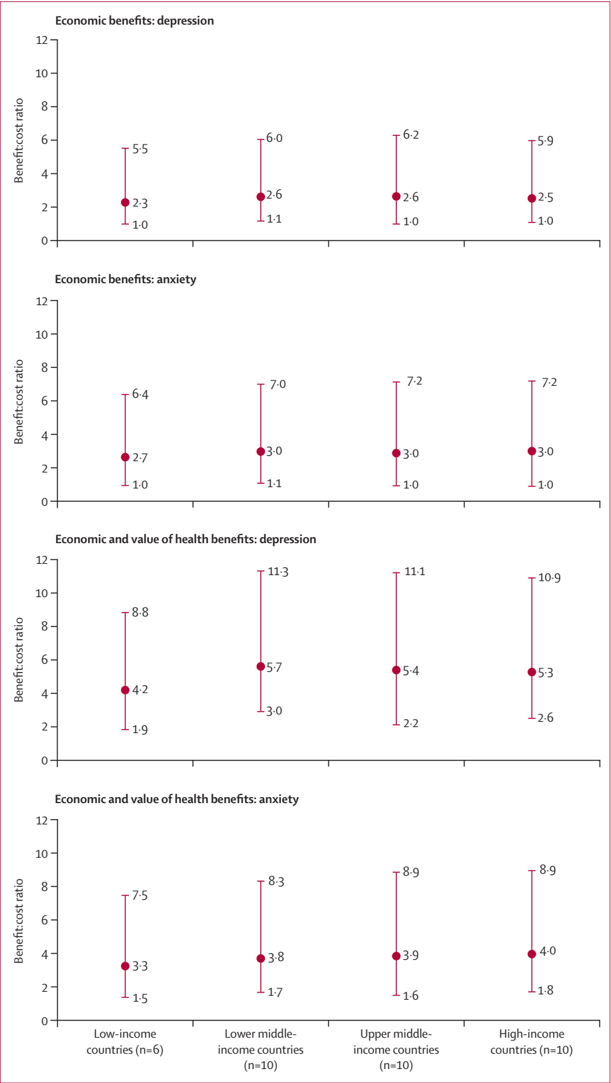
BACKGROUND: Depression and anxiety disorders are highly prevalent and disabling disorders, which result not only in an enormous amount of human misery and lost health, but also lost economic output. Here we propose a global investment case for a scaled-up response to the public health and economic burden of depression and anxiety disorders. METHODS: In this global return on investment analysis, we used the mental health module of the OneHealth tool to calculate treatment costs and health outcomes in 36 countries between 2016 and 2030. We assumed a linear increase in treatment coverage. We factored in a modest improvement of 5% in both the ability to work and productivity at work as a result of treatment, subsequently mapped to the prevailing rates of labour participation and gross domestic product (GDP) per worker in each country. FINDINGS: The net present value of investment needed over the period 2016-30 to substantially scale up effective treatment coverage for depression and anxiety disorders is estimated to be US$147 billion. The expected returns to this investment are also substantial. In terms of health impact, scaled-up treatment leads to 43 million extra years of healthy life over the scale-up period. Placing an economic value on these healthy life-years produces a net present value of $310 billion. As well as these intrinsic benefits associated with improved health, scaled-up treatment of common mental disorders also leads to large economic productivity gains (a net present value of $230 billion for scaled-up depression treatment and $169 billion for anxiety disorders). Across country income groups, resulting benefit to cost ratios amount to 2·3-3·0 to 1 when economic benefits only are considered, and 3·3-5·7 to 1 when the value of health returns is also included. INTERPRETATION: Return on investment analysis of the kind reported here can contribute strongly to a balanced investment case for enhanced action to address the large and growing burden of common mental disorders worldwide. FUNDING: Grand Challenges Canada.
Overview
The claims and statistics of this paper haven’t been checked yet.
Free: it reads the open-access text and checks the first 5 claims that cite a source we can check. Create a free account to check every claim.
Integrity signals
Registry
Cites
Statistics
Figures
Verification
Claims the paper makes
The claims and statistics of this paper haven’t been checked yet.
Free: it reads the open-access text and checks the first 5 claims that cite a source we can check. Create a free account to check every claim.
Claims other papers make about this one
Each is checked against this paper’s own text: does it say what the citing paper says it does?
The cited source says what the claim attributes to it.
In the citing paper
“Even in high-income countries, depression treatment rates are often below 30% (16, 17).”
From Personalised depression forecasting using mobile sensor data and ecological momentary assessment (2022) · cites this paper as [16]
The cited source says what the claim attributes to it.
In the citing paper
“Furthermore, the uptake of therapies is low, even in high-income countries (Chisholm et al. 2016), and one reason may be that therapies are not sufficiently acceptable to patients.”
From The Role of Common Factors in Psychotherapy Outcomes (2019) · cites this paper as Chisholm et al. 2016
The cited source says what the claim attributes to it.
In the citing paper
“Economic modelling work for the general population in all WHO regions indicates that investment in both pharmacological and psychological therapies can be costeffective even in the most resource-constrained regions of the world. 444,445”
From The Lancet Psychiatry Commission on youth mental health (2024) · cites this paper as [445]
In the citing paper
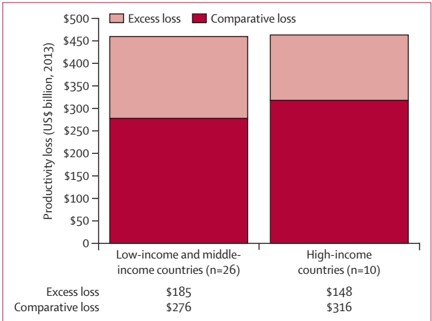
“NCDs also place a heavy economic burden on countries, with the annual lost productivity attributable to depression and anxiety disorders worldwide, for example, estimated in 2013 to be US$ 900 billion 6 .”
From Integrated care for people with long-term mental and physical health conditions in low-income and middle-income countries (2019) · cites this paper as [6]
Self-check
Percentages, sums and reported differences re-computed from the paper’s own numbers.
The self-check needs the paper’s full text.
Citations
Cites
Transforming Our World: The 2030 Agenda for Sustainable Development
(2018) · A New Era in Global Health · doi:10.1891/9780826190123.ap02 · Cited by 19,351
Awais, A. (2015) · Data Archiving and Networked Services (DANS) · doi:10.17632/zcvgc6m58h.1 · Cited by 6,707
Whiteford, H. A., Degenhardt, L., Rehm, J., Baxter, A. J., Ferrari, A. J., Erskine, H. E., Charlson, F. J., Norman, R. E., Flaxman, A. D., Johns, N., et al. (2013) · The Lancet · doi:10.1016/s0140-6736(13)61611-6 · Cited by 6,006
No health without mental health
Prince, M., Patel, V., Saxena, S., Maj, M., Maselko, J., Phillips, M. R., & Rahman, A. (2007) · The Lancet · doi:10.1016/s0140-6736(07)61238-0 · Cited by 3,753
Self-citationDisease control priorities in developing countries
(2006) · Choice Reviews Online · doi:10.5860/choice.44-0343 · Cited by 3,628
(2012) · RePEc: Research Papers in Economics · Cited by 1,951
Cost of disorders of the brain in Europe 2010
Gustavsson, A., Svensson, M., Jacobi, F., Allgulander, C., Alonso, J., Beghi, E., Dodel, R., Ekman, M., Faravelli, C., Fratiglioni, L., et al. (2011) · European Neuropsychopharmacology · doi:10.1016/j.euroneuro.2011.08.008 · Cited by 1,723
Disease control priorities in developing countries
Frenk, J. (2006) · Salud Pública de México · doi:10.1590/s0036-36342006000600011 · Cited by 1,599
Global prevalence of anxiety disorders: a systematic review and meta-regression
Baxter, A. J., Scott, K. M., Vos, T., & Whiteford, H. A. (2013) · Psychological Medicine · doi:10.1017/s003329171200147x · Cited by 1,537
Ferrari, A. J., Somerville, A. J., Baxter, A. J., Norman, R., Patten, S. B., Vos, T., & Whiteford, H. A. (2013) · Psychological Medicine · doi:10.1017/s0033291712001511 · Cited by 1,230
Cited by
Items 101–200 of 1,000
Ormel (2019) · doi:10.1097/yco.0000000000000505 · Cited by 102
“Narrowing the gaps will be cost-effective [75].”
Joyce, S., Shand, F., Lal, T. J., Mott, B., Bryant, R. A., & Harvey, S. B. (2019) · Journal of Medical Internet Research · doi:10.2196/12894 · Cited by 101
“Poor mental health is the leading cause of absenteeism and long-term disability worldwide [1-3], costing the global economy an estimated US $1 trillion each year in lost productivity [4].”
Impact of gut microbiota on neurological diseases: Diet composition and novel treatments
Larroya-García, A., Navas-Carrillo, D., & Orenes-Piñero, E. (2019) · Critical Reviews in Food Science and Nutrition · doi:10.1080/10408398.2018.1484340 · Cited by 99
Transforming mental health for all
Osborn, T. L., Wasanga, C., & Ndetei, D. M. (2022) · BMJ · doi:10.1136/bmj.o1593 · Cited by 157
Serrano-Ripoll, M. J., Zamanillo-Campos, R., Fiol-DeRoque, M. A., Castro, A., & Ricci-Cabello, I. (2022) · JMIR mHealth and uHealth · doi:10.2196/29621 · Cited by 96
“Even in high-income countries, most patients with depression do not receive treatment [10].”
BackgroundSilote, G. P., Sartim, A. G., Sales, A. J., Eskelund, A., Guimarães, F. S., Wegener, G., & Joca, S. R. L. (2019) · Journal of Chemical Neuroanatomy · doi:10.1016/j.jchemneu.2019.04.006 · Cited by 103
Kandola, A. A., del Pozo Cruz, B., Osborn, D. P. J., Stubbs, B., Choi, K. W., & Hayes, J. F. (2021) · BMC Medicine · doi:10.1186/s12916-021-02007-3 · Cited by 91
Topooco, N., Byléhn, S., Dahlström Nysäter, E., Holmlund, J., Lindegaard, J., Johansson, S., Åberg, L., Bergman Nordgren, L., Zetterqvist, M., & Andersson, G. (2019) · Journal of Medical Internet Research · doi:10.2196/13393 · Cited by 90
“Despite the high level of disability, only a small fraction of young people in need have access to any kind of intervention [10,11].”
BackgroundGuemghar, I., Padilha, P. P. D. O., Abdel‐Baki, A., Jutras‐Aswad, D., Paquette, J., & Pomey, M. (2022) · JMIR Mental Health · doi:10.2196/36094 · Cited by 128
Tayeb, A. E. K. A., Poinsignon, V., Chappell, K., Bouligand, J., Becquemont, L., & Verstuyft, C. (2023) · Antioxidants · doi:10.3390/antiox12040942 · Cited by 134
“5% of years lived with disability (YLD) across the globe at an estimated annual cost of over $US 1 trillion [2,4].”
BackgroundMills, C. (2018) · Development and Change · doi:10.1111/dech.12397 · Cited by 87
Tao, J., Vermund, S. H., & Qian, H. (2017) · AIDS and Behavior · doi:10.1007/s10461-017-1776-8 · Cited by 92
“Although cost-effective treatments are available for depression, a substantial proportion of depressed individuals are never been diagnosed and treated [2].”
BackgroundFirth, J. A., Smith, L., Sarris, J. J., Vancampfort, D., Schuch, F. B., Carvalho, A. F., Solmi, M., Yung, A. R., Stubbs, B., & Firth, J. (2019) · Psychosomatic Medicine · doi:10.1097/psy.0000000000000753 · Cited by 90
“G lobally, major depressive disorder (MDD) is a leading cause of disability (1) and is associated with profound economic burden on health and social care systems (2).”
BackgroundEffect of Inadequate Sleep on Frequent Mental Distress
Blackwelder, A. J., Hoskins, M., & Huber, L. R. B. (2021) · Preventing Chronic Disease · doi:10.5888/pcd18.200573 · Cited by 107
“Furthermore, an estimated 50% of all Americans will be diagnosed with a mental illness or disorder at some point in their life (1,2).”
Chisholm, D., Docrat, S., Abdulmalik, J., Alem, A., Gureje, O., Gurung, D., Hanlon, C., Jordans, M. J. D., Kangere, S., Kigozi, F., et al. (2019) · BJPsych Open · doi:10.1192/bjo.2019.24 · Cited by 84
Self-citationBhattacharya, S., Goicoechea, C., Heshmati, S., Carpenter, J. K., & Hofmann, S. G. (2023) · Current Psychiatry Reports · doi:10.1007/s11920-022-01402-8 · Cited by 82
A Brain Capital Grand Strategy: toward economic reimagination
Smith, E., Ali, D., Wilkerson, B., Dawson, W. D., Sobowale, K., Reynolds, C., Berk, M., Lavretsky, H., Jeste, D., Ng, C. H., et al. (2021) · Molecular Psychiatry · doi:10.1038/s41380-020-00918-w · Cited by 81
“Brain health disorders account for >US$3 trillion of lost productivity every year [4].”
BackgroundMental health and the global climate crisis
Corvalán, C., Gray, B., Prats, E. V., de Sena, A. R. M., Hanna, F., & Campbell-Lendrum, D. H. (2022) · Epidemiology and Psychiatric Sciences · doi:10.1017/s2045796022000361 · Cited by 110
“worldwide are living with a mental disorder (IHME, 2021); the annual cost of common mental disorders is around $1 trillion (Chisholm et al., 2016); only 2% of Governments health budgets are spent on mental health (WHO, 2021a).”
Gaigg, S. B., Flaxman, P. E., McLaven, G., Shah, R., Bowler, D. M., Meyer, B., Roestorf, A., Haenschel, C., Rodgers, J., & South, M. (2020) · Autism · doi:10.1177/1362361320909184 · Cited by 80
“…cognitive-behavioural therapy, online, mindfulness health services would return substantial savings for governments over the longer term (e.g. Chisholm et al., 2016; Layard et al., 2007), it is unrealistic to expect that significant investment will be forthcoming in the near future…”
BackgroundMitchell, L. M., Joshi, U., Patel, V., Lu, C., & Naslund, J. A. (2021) · Journal of Affective Disorders · doi:10.1016/j.jad.2021.01.092 · Cited by 80
“15 trillion per year (Chisholm et al., 2016), and healthcare spending”
BackgroundThe Potential of Game-Based Digital Biomarkers for Modeling Mental Health
Mandryk, R. L., & Birk, M. V. (2019) · JMIR Mental Health · doi:10.2196/13485 · Cited by 80
“Untreated mental illness has serious consequences; the estimated US $2.5-8.5 trillion globally in lost output attributed to mental, neurological, and substance use disorders is expected to almost double by 2030 [106].”
InfluentialTime for mental health to come out of the shadows
Kleinman, A., Estrin, G. L., Usmani, S., Chisholm, D., Marquez, P. V., Evans, T. G., & Saxena, S. (2016) · The Lancet · doi:10.1016/s0140-6736(16)30655-9 · Cited by 79
Self-citationMiR-218: a molecular switch and potential biomarker of susceptibility to stress
Torres-Berrío, A., Nouel, D., Cuesta, S., Parise, E. M., Restrepo-Lozano, J. M., Larochelle, P., Nestler, E. J., & Flores, C. (2020) · Molecular Psychiatry · doi:10.1038/s41380-019-0421-5 · Cited by 79
Resilience of sub-Saharan children and adolescents: A scoping review
Theron, L. C. (2020) · Transcultural Psychiatry · doi:10.1177/1363461520938916 · Cited by 97
“…health, impaired mental health is associated with deleterious public health and workforce impacts that are likely to undermine the fiscal benefits associated with a growing African youth population (Bloom, Canning, & Sevilla, 2003; Chisholm et al., 2016; O’Malley, Wardlaw, You, Hug, & Anthony, 2014).”
BackgroundSindermann, L., Redlich, R., Opel, N., Böhnlein, J., Dannlowski, U., & Leehr, E. J. (2021) · Journal of Psychiatric Research · doi:10.1016/j.jpsychires.2021.07.022 · Cited by 85
Stelmach, R. D., Kocher, E. L., Kataria, I., Jackson-Morris, A. M., Saxena, S., & Nugent, R. A. (2022) · BMJ Global Health · doi:10.1136/bmjgh-2021-007759 · Cited by 100
Self-citationPoverty, Depression, and Anxiety: Causal Evidence and Mechanisms
Ridley, M., Rao, G., Schilbach, F., & Patel, V. (2020) · National Bureau of Economic Research · doi:10.3386/w27157 · Cited by 138
Murphy, A., McGowan, C. R., McKee, M., Suhrcke, M., & Hanson, K. (2019) · BMJ Global Health · doi:10.1136/bmjgh-2019-001475 · Cited by 95
Posttraumatic Stress Disorder in Refugees
Bryant, R. A., Nickerson, A., Morina, N., & Liddell, B. J. (2023) · Annual Review of Clinical Psychology · doi:10.1146/annurev-clinpsy-080921-080359 · Cited by 105
Veronese, N., Stubbs, B., Solmi, M., Ajnakina, O., Carvalho, A. F., & Maggi, S. (2017) · Psychosomatic Medicine · doi:10.1097/psy.0000000000000537 · Cited by 83
The WHO World Mental Health Report: a call for action
Cuijpers, P. J., Javed, A., & Bhui, K. S. (2023) · The British Journal of Psychiatry · doi:10.1192/bjp.2023.9 · Cited by 78
Self-citationSchuster, R., Topooco, N., Keller, A., Radvogin, E., & Laireiter, A.-R. (2020) · Internet Interventions · doi:10.1016/j.invent.2020.100326 · Cited by 77
Purtle, J., Lê‐Scherban, F., Wang, X., Shattuck, P. T., Proctor, E. K., & Brownson, R. C. (2018) · Implementation Science · doi:10.1186/s13012-018-0816-8 · Cited by 82
Twomey, C., O’Reilly, G., Bültmann, O., & Meyer, B. (2020) · PLOS ONE · doi:10.1371/journal.pone.0228100 · Cited by 76
Shi, W., Li, T., Zhang, Y., Sun, Q., Chen, C., Wang, J., Fang, J., Zhao, F., Du, P., & Shi, X. (2020) · Environmental Science & Technology · doi:10.1021/acs.est.0c05331 · Cited by 78
Medicinal herbs for the treatment of anxiety: a systematic review and network meta-analysis
Zhang, W., Yan, Y., Wu, Y., Yang, H., Zhu, P., Yan, F., Zhao, R., Tian, P., Wang, T., Fan, Q., et al. (2022) · Pharmacological Research · doi:10.1016/j.phrs.2022.106204 · Cited by 75
Acharya, B., Maru, D., Schwarz, R., Citrin, D., Tenpa, J., Hirachan, S., Basnet, M., Thapa, P., Swar, S., Halliday, S., et al. (2017) · Globalization and Health · doi:10.1186/s12992-016-0226-0 · Cited by 74
“global mental health [54, 55] and the inclusion of mental health in the Sustainable Development Goals [56], practitioners and national governments are being urged to adapt and scale-up mental healthcare services.”
BackgroundPurtle, J., Nelson, K. L., Bruns, E. J., & Hoagwood, K. (2020) · Psychiatric Services · doi:10.1176/appi.ps.201900527 · Cited by 84
Adewuyi, E. O., Mehta, D., Sapkota, Y., International Endogene Consortium, Sapkota, Y., Yoshihara, K., Nyegaard, M., Steinthorsdottir, V., Morris, A. P., Fassbender, A., et al. (2021) · Human Genetics · doi:10.1007/s00439-020-02223-6 · Cited by 80
Kim, J., Aryee, L. M. D., Bang, H., Prajogo, S., Choi, Y. K., Hoch, J. S., & Prado, E. L. (2023) · JMIR Mental Health · doi:10.2196/43066 · Cited by 106
“This large treatment gap could lead to detrimental consequences for the overall health of individuals with mental disorders, social and economic burden on their families, and large-scale societal loss in terms of decreased economic productivity owing to missed work (absenteeism) or reduced efficiency at work (presente…”
BackgroundLinardon, J., Messer, M., Goldberg, S. B., & Fuller-Tyszkiewicz, M. (2024) · Clinical Psychology Review · doi:10.1016/j.cpr.2023.102370 · Cited by 74
Zhang, Z., Chen, X., Wu, S., Chen, X., Wang, X., Liu, C., Zeng, N., Liu, Y., Huo, T., Liu, X., et al. (2025) · Journal of Affective Disorders · doi:10.1016/j.jad.2025.120299 · Cited by 120
Making Mental Health a Global Priority.
Marquez, P. V., & Saxena, S. (2016) · PubMed Central · Cited by 96
Self-citationChatbot-Based Assessment of Employees’ Mental Health: Design Process and Pilot Implementation
Hungerbuehler, I., Daley, K., Cavanagh, K., Garcia Claro, H., & Kapps, M. (2021) · JMIR Formative Research · doi:10.2196/21678 · Cited by 73
“A recent WHO-led study estimates that depression and anxiety disorders cost the global economy US$ 1 trillion each year in lost productivity [4].”
BackgroundA review on recognizing depression in social networks: challenges and opportunities
Giuntini, F. T., Cazzolato, M. T., dos Reis, M. D. J. D., Campbell, A. T., Traina, A. J. M., & Ueyama, J. (2020) · Journal of Ambient Intelligence and Humanized Computing · doi:10.1007/s12652-020-01726-4 · Cited by 84
“In a study about the economic return of investment in the treatment of depression, Chisholm et al. (2016) have shown that in countries such as Brazil, it would be necessary a contribution of 86% or more of the current investment to deal with this issue.”
BackgroundXie, X., Shen, Q., Yu, C., Xiao, Q., Zhou, J., Xiong, Z., Li, Z., & Fu, Z. (2020) · The Journal of Steroid Biochemistry and Molecular Biology · doi:10.1016/j.jsbmb.2020.105607 · Cited by 77
Kohls, E., Coppens, E., Hug, J., Wittevrongel, E., Audenhove, C. V., Koburger, N., Arensman, E., Székely, A., Gusmão, R., & Hegerl, U. (2017) · Journal of Affective Disorders · doi:10.1016/j.jad.2017.04.006 · Cited by 84
“Depression has high life time prevalence within the international range of 6.3–10.3%, a large comorbidity (Baumeister and Härter, 2007), mortality (Ustün et al., 2004; Thomson, 2011) and a considerable economic impact (Chisholm et al., 2016).”
BackgroundInfluentialBonadiman, C. S. C., Passos, V. M. D. A., Mooney, M., Naghavi, M., & Melo, A. P. S. (2017) · Revista Brasileira de Epidemiologia · doi:10.1590/1980-5497201700050016 · Cited by 123
Gokhale, R. H., Weiser, J. K., Sullivan, P. S., Luo, Q., Shu, F., & Bradley, H. M. (2019) · AIDS and Behavior · doi:10.1007/s10461-019-02613-6 · Cited by 81
DeGroot, S. R., Zhao-Shea, R., Chung, L., Klenowski, P. M., Sun, F., Molas, S., Gardner, P. D., Li, Y., & Tapper, A. R. (2020) · Biological Psychiatry · doi:10.1016/j.biopsych.2020.06.018 · Cited by 87
Social Determinants of Mental Health
Carod-Artal, F. J. (2017) · Springer eBooks · doi:10.1007/978-3-319-59123-0_4 · Cited by 99
Epidemiology and costs of depressive disorder in Spain: the EPICO study
Vieta, E., Alonso, J., Pérez-Sola, V., Roca, M., Hernando, T., Sicras-Mainar, A., Sicras-Navarro, A., Herrera, B., & Gabilondo, A. (2021) · European Neuropsychopharmacology · doi:10.1016/j.euroneuro.2021.04.022 · Cited by 70
Birk, M. V., & Mandryk, R. L. (2019) · Journal of Medical Internet Research · doi:10.2196/10133 · Cited by 70
Kim, K. Y., Messersmith, J. G., Pieper, J. R., Baik, K., & Fu, S. (2022) · Human Resource Management · doi:10.1002/hrm.22160 · Cited by 89
Tokarev, A., Phillips, A. R., Hughes, D. J., & Irwing, P. (2017) · Journal of Abnormal Psychology · doi:10.1037/abn0000299 · Cited by 101
Kutcher, S., Perkins, K., Gilberds, H., Udedi, M. M., Ubuguyu, O., Njau, T., Chapota, R., & Hashish, M. (2019) · Frontiers in Psychiatry · doi:10.3389/fpsyt.2019.00542 · Cited by 83
Modeling anxiety in healthy humans: a key intermediate bridge between basic and clinical sciences
Grillon, C., Robinson, O. J., Cornwell, B., & Ernst, M. (2019) · Neuropsychopharmacology · doi:10.1038/s41386-019-0445-1 · Cited by 82
Epidemiology of common mental disorders
Jayasankar, P., Manjunatha, N., Rao, G. N., Gururaj, G., Varghese, M., & Benegal, V. (2022) · Indian Journal of Psychiatry · doi:10.4103/indianjpsychiatry.indianjpsychiatry_865_21 · Cited by 79
“[5] This return-on-investment underscores the strong recommendation for greater investment in mental health services for CMDs in every country.”
Zhang, X., Du, J., & Chow, D. H. C. (2023) · Building and Environment · doi:10.1016/j.buildenv.2023.110985 · Cited by 86
Toward Game-Based Digital Mental Health Interventions: Player Habits and Preferences
Mandryk, R. L., & Birk, M. V. (2017) · Journal of Medical Internet Research · doi:10.2196/jmir.6906 · Cited by 67
“The cost of depression and anxiety alone is estimated at US $1 trillion per year [5].”
What is needed to eradicate the depression epidemic, and why
Ormel, J., Cuijpers, P., Jorm, A., & Schoevers, R. A. (2020) · Mental Health & Prevention · doi:10.1016/j.mhp.2019.200177 · Cited by 67
Self-citationDoroszkiewicz, C. C., Gold, D. A., Green, R., Tartaglia, M. C., Ma, J., & Tator, C. H. (2021) · Journal of Neurotrauma · doi:10.1089/neu.2020.7313 · Cited by 82
“31 With regard to quality of life (QOL), only a small number of studies have examined this outcome to date in PCS patients.”
Achieving universal health coverage for mental disorders
Patel, V., & Saxena, S. (2019) · BMJ · doi:10.1136/bmj.l4516 · Cited by 66
Self-citationCulturally adapted psychotherapies for depressed adults: A systematic review and meta-analysis
Anik, E., West, R. M., Cardno, A. G., & Mir, G. (2021) · Journal of Affective Disorders · doi:10.1016/j.jad.2020.09.051 · Cited by 65
“patient suffering, increase economic productivity, and decrease healthcare expenses (Chisholm et al., 2016)”
BackgroundNishi, D., Susukida, R., Usuda, K., Mojtabai, R., & Yamanouchi, Y. (2018) · Journal of Affective Disorders · doi:10.1016/j.jad.2018.07.016 · Cited by 64
Interleukin-6 and depressive symptom severity in response to physical exercise
Lavebratt, C., Herring, M. P., Liu, J. J., Wei, Y. B., Bossoli, D., Hallgren, M. Å., & Forsell, Y. (2017) · Psychiatry Research · doi:10.1016/j.psychres.2017.03.012 · Cited by 72
Pavlova, A., & Berkers, P. (2020) · Social Science & Medicine · doi:10.1016/j.socscimed.2020.113250 · Cited by 94
Natural language processing for structuring clinical text data on depression using UK-CRIS
Vaci, N., Liu, Q., Kormilitzin, A., De Crescenzo, F., Kurtulmus, A., Harvey, J., O'Dell, B., Innocent, S., Tomlinson, A., Cipriani, A., et al. (2020) · Evidence Based Mental Health · doi:10.1136/ebmental-2019-300134 · Cited by 63
Nitric oxide signalling and antidepressant action revisited
Joca, S. R. L., Sartim, A. G., Roncalho, A. L., Diniz, C. F. A., & Wegener, G. (2019) · Cell and Tissue Research · doi:10.1007/s00441-018-02987-4 · Cited by 63
Sweetland, A. C., Jaramillo, E., Wainberg, M. L., Chowdhary, N., Oquendo, M. A., Medina-Marino, A., & Dua, T. (2018) · The Lancet Psychiatry · doi:10.1016/s2215-0366(18)30347-x · Cited by 63
Depressive disorders in Brazil: results from the Global Burden of Disease Study 2017
Bonadiman, C. S. C., Malta, D. C., Passos, V. M. D. A., Naghavi, M., & Melo, A. P. S. (2020) · Population Health Metrics · doi:10.1186/s12963-020-00204-5 · Cited by 86
Insomnia, sleep duration, and risk of anxiety: A two-sample Mendelian randomization study
Zhou, F., Li, S., & Xu, H. (2022) · Journal of Psychiatric Research · doi:10.1016/j.jpsychires.2022.08.012 · Cited by 66
Sithey, G., Li, M., Wen, L. M., Kelly, P. J., & Clarke, K. (2018) · BMJ Open · doi:10.1136/bmjopen-2017-018202 · Cited by 62
Tao, J., Qian, H.-Z., Kipp, A. M., Ruan, Y., Shepherd, B. E., Amico, K. R., Shao, Y., Lu, H., & Vermund, S. H. (2016) · AIDS · doi:10.1097/qad.0000000000001287 · Cited by 67
“Scaling-up treatment of depression and anxiety is a cost-effective global strategy with multiple health benefits [18], and our research addresses the extent to which benefits on ART adherence might accrue among newly diagnosed HIV-infected Chinese MSM.”
BackgroundUppsala Longitudinal Adolescent Depression Study (ULADS)
Alaie, I., Philipson, A., Ssegonja, R., Hagberg, L., Feldman, I., Sampaio, F., Möller, M., Arinell, H., Ramklint, M., Päären, A., et al. (2019) · BMJ Open · doi:10.1136/bmjopen-2018-024939 · Cited by 64
Knapstad, M., Lervik, L. V., Sæther, S. M. M., Aarø, L. E., & Smith, O. R. F. (2020) · Psychotherapy and Psychosomatics · doi:10.1159/000504453 · Cited by 61
The Current State and Validity of Digital Assessment Tools for Psychiatry: Systematic Review
Martin-Key, N. A., Spadaro, B., Funnell, E. L., Barker, E., Schei, T. S., Tomasik, J., & Bahn, S. (2021) · JMIR Mental Health · doi:10.2196/32824 · Cited by 71
Air pollution, genetic factors and the risk of depression
Fu, Z., Liu, Q., Liang, J., Weng, Z., Li, W., Xu, J., Zhang, X., Xu, C. Y., Huang, T., & Gu, A. (2022) · The Science of The Total Environment · doi:10.1016/j.scitotenv.2022.158001 · Cited by 68
Kogan, L. R., Hellyer, P. W., Duncan, C., & Schoenfeld-Tacher, R. M. (2017) · Computers in Human Behavior · doi:10.1016/j.chb.2017.07.043 · Cited by 71
Vigo, D., Haro, J. M., Hwang, I., Aguilar-Gaxiola, S., Alonso, J., Borges, G., Bruffaerts, R., Caldas-de-Almeida, J. M., de Girolamo, G., Florescu, S., et al. (2022) · Psychological Medicine · doi:10.1017/s0033291720003797 · Cited by 60
Self-citationFendt-Newlin, M., Jagannathan, A., & Webber, M. (2020) · International Journal of Social Psychiatry · doi:10.1177/0020764019879943 · Cited by 60
“There is an even greater knowledge gap in applying psychosocial interventions in low-resource settings where the prevalence of mental health conditions is highest and the need for services is greatest (Chisholm et al., 2016; Eaton et al., 2011).”
BackgroundWiley, R. E., Khoury, C. P., Snihur, A. W. K., Williams, M., Page, D., Graham, N., Laudenbach, L., Milne‐Wren, C., & Stoffman, J. M. (2019) · Haemophilia · doi:10.1111/hae.13754 · Cited by 60
“All participants noted that it is challenging early on to estab‐ lish and maintain a consistent treatment schedule, leading to TA B L E 2 Demographic characteristics for each of the 20 study participants Participant type Disease severitya Age categoryb (Actual age) Province Treatment regimen Settingc Person with haemo…”
InfluentialKensbock, J. M., Alkærsig, L., & Lomberg, C. (2021) · Administrative Science Quarterly · doi:10.1177/00018392211014819 · Cited by 76
“Reducing the occurrence of mental disorders and fostering individual health and well-being should be not only societal and political goals but also key management objectives (Chisholm et al., 2016; George et al., 2016).”
BackgroundTeepe, G. W., Fonseca, A. D., Kleim, B., Jacobson, N. C., Salamanca-Sanabria, A., Car, L. T., Fleisch, E., & Kowatsch, T. (2021) · Journal of Medical Internet Research · doi:10.2196/29412 · Cited by 74
“Individuals otherwise not reachable could receive treatment [15] and interventions could be delivered in economies with limited resources for mental health [16].”
“Mental Health” as Defined by Twitter: Frames, Emotions, Stigma
Pavlova, A., & Berkers, P. (2020) · Health Communication · doi:10.1080/10410236.2020.1862396 · Cited by 84
“These disorders often receive the most critique in respect to the difficulty of classification and diagnosis within the DSM-5 (American Psychiatric Association, 2013) and “no sound evidence for a discrete pathophysiological basis” (Cohen, 2016; Dowrick, 2013, p. 229).”
BackgroundBreathwork Interventions for Adults with Clinically Diagnosed Anxiety Disorders: A Scoping Review
Banushi, B., Brendle, M., Ragnhildstveit, A., Murphy, T., Moore, C., Egberts, J., & Robison, R. (2023) · Brain Sciences · doi:10.3390/brainsci13020256 · Cited by 58
“Yet, the financial burden of these interventions is staggering, with a predicted cost of USD 56 billion from 2016 to 2030 [18].”
BackgroundHanlon, C. (2017) · Epidemiology and Psychiatric Sciences · doi:10.1017/s2045796016001013 · Cited by 57
“…is highly prevalent and thus makes a larger contribution to population-level disease burden and lost economic productivity compared with SMI (Chisholm et al. 2016), even though it is often less disabling for the individual, (2) treatment for depression more often restores a person to full…”
BackgroundSantomauro, D. F., Vos, T., Whiteford, H. A., Chisholm, D., Saxena, S., & Ferrari, A. J. (2024) · The Lancet Psychiatry · doi:10.1016/s2215-0366(24)00317-1 · Cited by 57
“21 Similar analyses investigating lifelong impacts of addressing anxiety, depression, bipolar disorder, and suicide in young people aged 10–19 years across 36 countries estimated a return of US$24 in health and economic benefits to the economy over 80 years, for each $1 spent on the required…”
Self-citationMiguel, C., Amarnath, A., Akhtar, A., Malik, A., Baranyi, G., Barbui, C., Karyotaki, E., & Cuijpers, P. (2023) · Occupational and Environmental Medicine · doi:10.1136/oemed-2022-108698 · Cited by 55
Self-citationLange, K. W. (2021) · Global Health Journal · doi:10.1016/j.glohj.2021.07.001 · Cited by 68
Investing for population mental health in low and middle income countries—where and why?
Freeman, M. C. (2022) · International Journal of Mental Health Systems · doi:10.1186/s13033-022-00547-6 · Cited by 70
“Results of economic modeling show that for every unit spent on treatment of depression the cost-benefit ratios amount to 2·3–3·0 to 1 when economic benefits only are considered, and 3·3–5·7 to 1 when the value of health returns is also included, with the highest rewards being in lower-middle income countries [32].”
BackgroundHuang, X., Liang, J., Zhang, J., Fu, J., Xie, W., & Zheng, F. (2024) · Psychological Medicine · doi:10.1017/s0033291724002381 · Cited by 64
“…and anxiety are both prevalent mental illnesses that commonly coexist and are linked to an increased hazard of mortality, as well as an elevated risk of disability, poorer quality of life, and greater financial burden (Chisholm et al., 2016; Druss, Rosenheck, & Sledge, 2000; Machado et al., 2018).”
Tomlinson, A., Furukawa, T. A., Efthimiou, O., Salanti, G., De Crescenzo, F., Singh, I., & Cipriani, A. (2020) · Evidence Based Mental Health · doi:10.1136/ebmental-2019-300118 · Cited by 54
Antidepressants surveillance in wastewater: Overview extraction and detection
Melchor-Martínez, E. M., Jiménez-Rodríguez, M. G., Martínez-Ruiz, M., Peña‐Benavides, S. A., Iqbal, H. M. N., Parra‐Saldívar, R., & Sosa‐Hernández, J. E. (2020) · Case Studies in Chemical and Environmental Engineering · doi:10.1016/j.cscee.2020.100074 · Cited by 73
“Effects of depression are associated with more impairment in occupational and interpersonal functioning in comparison to several common medical illnesses, the cost of depression is greater than others common medical illnesses, as more than 264 million people suffer from depression worldwide and, together with anxiety…”
Mougharbel, F., Chaput, J., Sampasa‐Kanyinga, H., Colman, I., Leatherdale, S. T., Patte, K. A., & Goldfield, G. S. (2023) · Frontiers in Public Health · doi:10.3389/fpubh.2023.1101594 · Cited by 80
The future of psychological treatments: The Marburg Declaration
Rief, W., Asmundson, G. J. G., Bryant, R. A., Clark, D. M., Ehlers, A., Holmes, E. A., McNally, R. J., Neufeld, C. B., Wilhelm, S., Jaroszewski, A. C., et al. (2024) · Clinical Psychology Review · doi:10.1016/j.cpr.2024.102417 · Cited by 54
Osma, J., Suso-Ribera, C., García-Palacios, A., Crespo-Delgado, E., Robert-Flor, C., Sánchez-Guerrero, A., Ferreres-Galan, V., Pérez-Ayerra, L., Malea-Fernández, A., & Torres-Alfosea, M. Á. (2018) · Health and Quality of Life Outcomes · doi:10.1186/s12955-018-0866-2 · Cited by 54
“For instance, a study conducted in 36 countries estimated that the annual treatment cost of depressive disorders and anxiety problems amounted to $91 billion and $56 billion, respectively [6].”
BackgroundAmare, A. T., Caughey, G. E., Whitehead, C., Lang, C. E., Bray, S. C., Corlis, M., Visvanathan, R., Wesselingh, S., & Inacio, M. C. (2020) · Australian & New Zealand Journal of Psychiatry · doi:10.1177/0004867420945367 · Cited by 53
“Studies found that investing in mental health care and ensuring appropriate interventions has a substantial return by reducing disability, delaying the transition to high-level aged care packages and improving life expectancy (Chisholm et al., 2016; Rockwood, 2016).”
BackgroundThornicroft, G., & Semrau, M. (2019) · BJPsych Open · doi:10.1192/bjo.2019.9 · Cited by 53
Qin, X., & Hsieh, C. (2020) · INQUIRY The Journal of Health Care Organization Provision and Financing · doi:10.1177/0046958020950566 · Cited by 67
Metadata
- Authors
- Chisholm, D., Sweeny, K., Sheehan, P., Rasmussen, B., Smit, F., Cuijpers, P., & Saxena, S.
- Affiliations
- World Health Organization (CH)
- Trimbos Institute (NL)
- Vrije Universiteit Amsterdam (NL)
- Corresponding author
- Chisholm, Dan
- Venue
- The Lancet Psychiatry
- Publisher
- Elsevier BV
- Published
- 2016-05
- Volume
- 3
- Issue
- 5
- Pages
- 415-424
- ISSN
- 2215-0366 (ISSN-L)
- OpenAlex
- W2340346722
- Cited by
- 1,451
- References
- 39
- Citations by year
- 2026: 126 · 2025: 136 · 2024: 164 · 2023: 178 · 2022: 206 · 2021: 192 · 2020: 144 · 2019: 116 · 2018: 83 · 2017: 71 · 2016: 32
- FWCI
- 158.29
- Type
- journal article
- Language
- en
- Open access
- hybrid
- doi.org
- Licence
- cc-by
- www.elsevier.com/tdm/userlicense/1.0/ (tdm)
- creativecommons.org/licenses/by/4.0/ (vor)
- Locations
- The Lancet Psychiatry (publishedVersion, cc-by)
- PubMed (publishedVersion)
- Amsterdam UMC (VU Amsterdam) - Institutional Repository (publishedVersion)
- VU Research Portal (publishedVersion, other-oa)
- Pure Amsterdam UMC (submittedVersion, other-oa)
- Victoria University Research Repository (Victoria University) (submittedVersion)
- Data Archiving and Networked Services (DANS) (submittedVersion, other-oa)
- Data Archiving and Networked Services (DANS) (submittedVersion)
- Funders
- European Union under the 7th Framework programme (Grant agreement 305968)
- Topics
- Health Sciences › Medicine › Psychiatry and Mental health › Mental Health Treatment and Access
- Social Sciences › Economics, Econometrics and Finance › Economics and Econometrics › Health Systems, Economic Evaluations, Quality of Life
- Health Sciences › Medicine › Pharmacology (medical) › Treatment of Major Depression
- Keywords
- depression, anxiety disorders, common mental disorders, return on investment, mental health investment, economic burden of mental illness, productivity improvement, healthy life years, treatment coverage, benefit-cost ratio
- MeSH terms
- Anxiety, Cost-Benefit Analysis, Depression, Humans, Mental Health Services, Global Health, Health Care Costs, Cost of Illness
About these checks
Registry, retraction, Cites and statistics results are computed, not judged, with one exception: a printed reference that no index lists is read once by a model before it counts as a citation error. Claims are extracted by a model and kept only when their quote appears verbatim in the text; each cited source is then checked, with a model’s help, for whether it says what the claim relies on. Those verdicts can be wrong — read the claim’s quote and the cited source before relying on one.
Statistics and arithmetic are recomputed, not judged.
Confidence bands are shown only for fields calibrated on our annotated test set. None is calibrated yet, so no band is shown.
What counts as a claim ›How we measure confidence ›How we check this ›
Are you an author, or do you see a problem with this page? Request a review
Data sources
Bibliographic data: Semantic Scholar, OpenAlex, Crossref.
Contains information from the Semantic Scholar Academic Graph Datasets, made available under the ODC Attribution License (ODC-BY 1.0).
Semantic Scholar’s data is described in: Kinney, R., et al. (2023). The Semantic Scholar Open Data Platform. arXiv:2301.10140.
