

Scaling-up treatment of depression and anxiety: a global return on investment analysis
Open accessThe DOI matches its Crossref record; 38 of the 39 references it cites were found in a registry or an index.
Abstract
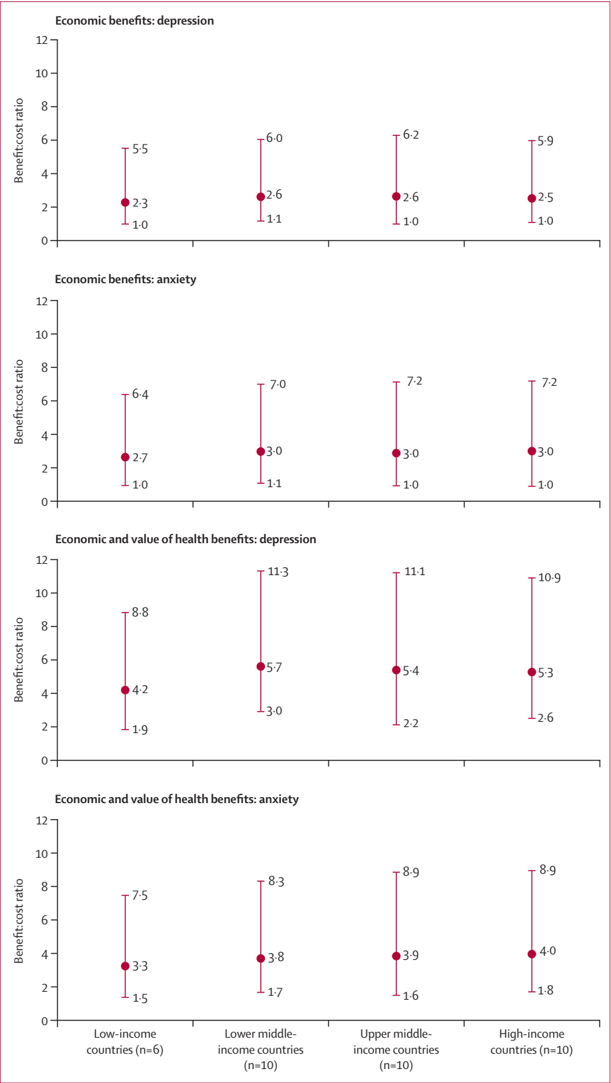
BACKGROUND: Depression and anxiety disorders are highly prevalent and disabling disorders, which result not only in an enormous amount of human misery and lost health, but also lost economic output. Here we propose a global investment case for a scaled-up response to the public health and economic burden of depression and anxiety disorders. METHODS: In this global return on investment analysis, we used the mental health module of the OneHealth tool to calculate treatment costs and health outcomes in 36 countries between 2016 and 2030. We assumed a linear increase in treatment coverage. We factored in a modest improvement of 5% in both the ability to work and productivity at work as a result of treatment, subsequently mapped to the prevailing rates of labour participation and gross domestic product (GDP) per worker in each country. FINDINGS: The net present value of investment needed over the period 2016-30 to substantially scale up effective treatment coverage for depression and anxiety disorders is estimated to be US$147 billion. The expected returns to this investment are also substantial. In terms of health impact, scaled-up treatment leads to 43 million extra years of healthy life over the scale-up period. Placing an economic value on these healthy life-years produces a net present value of $310 billion. As well as these intrinsic benefits associated with improved health, scaled-up treatment of common mental disorders also leads to large economic productivity gains (a net present value of $230 billion for scaled-up depression treatment and $169 billion for anxiety disorders). Across country income groups, resulting benefit to cost ratios amount to 2·3-3·0 to 1 when economic benefits only are considered, and 3·3-5·7 to 1 when the value of health returns is also included. INTERPRETATION: Return on investment analysis of the kind reported here can contribute strongly to a balanced investment case for enhanced action to address the large and growing burden of common mental disorders worldwide. FUNDING: Grand Challenges Canada.
Overview
The claims and statistics of this paper haven’t been checked yet.
Free: it reads the open-access text and checks the first 5 claims that cite a source we can check. Create a free account to check every claim.
Integrity signals
Registry
Cites
Statistics
Figures
Verification
Claims the paper makes
The claims and statistics of this paper haven’t been checked yet.
Free: it reads the open-access text and checks the first 5 claims that cite a source we can check. Create a free account to check every claim.
Claims other papers make about this one
Each is checked against this paper’s own text: does it say what the citing paper says it does?
The cited source says what the claim attributes to it.
In the citing paper
“Even in high-income countries, depression treatment rates are often below 30% (16, 17).”
From Personalised depression forecasting using mobile sensor data and ecological momentary assessment (2022) · cites this paper as [16]
The cited source says what the claim attributes to it.
In the citing paper
“Furthermore, the uptake of therapies is low, even in high-income countries (Chisholm et al. 2016), and one reason may be that therapies are not sufficiently acceptable to patients.”
From The Role of Common Factors in Psychotherapy Outcomes (2019) · cites this paper as Chisholm et al. 2016
The cited source says what the claim attributes to it.
In the citing paper
“Economic modelling work for the general population in all WHO regions indicates that investment in both pharmacological and psychological therapies can be costeffective even in the most resource-constrained regions of the world. 444,445”
From The Lancet Psychiatry Commission on youth mental health (2024) · cites this paper as [445]
In the citing paper
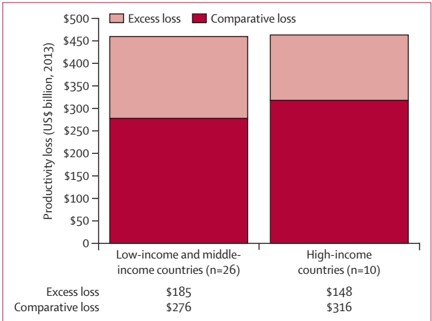
“NCDs also place a heavy economic burden on countries, with the annual lost productivity attributable to depression and anxiety disorders worldwide, for example, estimated in 2013 to be US$ 900 billion 6 .”
From Integrated care for people with long-term mental and physical health conditions in low-income and middle-income countries (2019) · cites this paper as [6]
Self-check
Percentages, sums and reported differences re-computed from the paper’s own numbers.
The self-check needs the paper’s full text.
Citations
Cites
Transforming Our World: The 2030 Agenda for Sustainable Development
(2018) · A New Era in Global Health · doi:10.1891/9780826190123.ap02 · Cited by 19,351
Awais, A. (2015) · Data Archiving and Networked Services (DANS) · doi:10.17632/zcvgc6m58h.1 · Cited by 6,707
Whiteford, H. A., Degenhardt, L., Rehm, J., Baxter, A. J., Ferrari, A. J., Erskine, H. E., Charlson, F. J., Norman, R. E., Flaxman, A. D., Johns, N., et al. (2013) · The Lancet · doi:10.1016/s0140-6736(13)61611-6 · Cited by 6,006
No health without mental health
Prince, M., Patel, V., Saxena, S., Maj, M., Maselko, J., Phillips, M. R., & Rahman, A. (2007) · The Lancet · doi:10.1016/s0140-6736(07)61238-0 · Cited by 3,753
Self-citationDisease control priorities in developing countries
(2006) · Choice Reviews Online · doi:10.5860/choice.44-0343 · Cited by 3,628
(2012) · RePEc: Research Papers in Economics · Cited by 1,951
Cost of disorders of the brain in Europe 2010
Gustavsson, A., Svensson, M., Jacobi, F., Allgulander, C., Alonso, J., Beghi, E., Dodel, R., Ekman, M., Faravelli, C., Fratiglioni, L., et al. (2011) · European Neuropsychopharmacology · doi:10.1016/j.euroneuro.2011.08.008 · Cited by 1,723
Disease control priorities in developing countries
Frenk, J. (2006) · Salud Pública de México · doi:10.1590/s0036-36342006000600011 · Cited by 1,599
Global prevalence of anxiety disorders: a systematic review and meta-regression
Baxter, A. J., Scott, K. M., Vos, T., & Whiteford, H. A. (2013) · Psychological Medicine · doi:10.1017/s003329171200147x · Cited by 1,537
Ferrari, A. J., Somerville, A. J., Baxter, A. J., Norman, R., Patten, S. B., Vos, T., & Whiteford, H. A. (2013) · Psychological Medicine · doi:10.1017/s0033291712001511 · Cited by 1,230
Cited by
Items 701–800 of 1,000
Qiu, S.-Y., Yin, X., Yang, Y., Li, T., Lu, D., Li, J., Yang, W., Wen, G., Zhang, J., Zhang, Y., et al. (2024) · Frontiers in Psychology · doi:10.3389/fpsyg.2024.1290310 · Cited by 9
Mostert, C. M., Aballa, A. O., Khakali, L., Njoroge, W., Shah, J., Hasham, S., Merali, Z., & Atwoli, L. (2024) · Value in Health Regional Issues · doi:10.1016/j.vhri.2023.11.012 · Cited by 6
Liu, J., & Zhang, Y. (2024) · Humanities and Social Sciences Communications · doi:10.1057/s41599-024-02943-4 · Cited by 9
“…economic and social burden (e.g., reduced productivity, absenteeism, and staff turnover) associated with mental disorders to employees and employers (Chisholm et al., 2016), it is essential that we understand the risk factors of workplace mental disorders and how we can prevent an epidemic of…”
Silima, M., Christofides, N. J., Franchino-Olsen, H., Woollett, N., & Meinck, F. (2024) · BMJ Open · doi:10.1136/bmjopen-2024-086478 · Cited by 7
“36 In addition, people living in poverty may engage in risky sexual behaviours to meet their basic needs, which can elevate their risk of contracting HIV.”
Jiang, L., Zhou, C.-H., Liu, Z., Guo, H., Liang, J., & Zhang, Y. (2025) · Journal of Affective Disorders · doi:10.1016/j.jad.2025.01.076 · Cited by 6
Clergy-Provided Mental Health Services: A Strategy for Addressing Disparities in Scale-up Efforts
Hooley, C., Wang, Y., & Hodge, D. R. (2021) · Advances in Social Work · doi:10.18060/23975 · Cited by 11
“This has led to calls to scale-up care (Chisholm et al., 2016).”
BackgroundIntelligence and academic achievement in inpatient adolescents with comorbid anxiety and depression
Schrack, A. P., Joyce‐Beaulieu, D., MacInnes, J. W., Kranzler, J. H., Zaboski, B. A., & McNamara, J. P. H. (2021) · Bulletin of the Menninger Clinic · doi:10.1521/bumc.2021.85.1.23 · Cited by 9
Prevalence Of Major Depressive Disorder In Portoviejo, Ecuador.
Herdoíza, J. P. M., Perero, M., Portalanza, D. E., Camargo, A., & Siteneski, A. (2021) · Revista Ecuatoriana de Neurologia · doi:10.46997/revecuatneurol30100057 · Cited by 9
Sandin, K., Shields, G., Gjengedal, R. G. H., Osnes, K., Bjørndal, M. T., & Hjemdal, O. (2021) · Frontiers in Psychology · doi:10.3389/fpsyg.2021.655151 · Cited by 9
Turan, N., & Çetintaş, Ş. (2021) · Journal of Evidence-Based Psychotherapies · doi:10.24193/jebp.2021.2.11 · Cited by 7
Axon, D. R., & Chien, J. (2022) · BMJ Open · doi:10.1136/bmjopen-2021-049727 · Cited by 6
Beyond Response: Aiming for Quality Remission in Depression
Kennedy, S. H. (2022) · Advances in Therapy · doi:10.1007/s12325-021-02030-z · Cited by 14
“According to one estimate, each dollar invested in effective treatment of depression and anxiety yields between US$3 and $6 in total economic gains, with improved occupational productivity contributing about half of these benefits [31].”
BackgroundKnowledge and practice of depression management among primary healthcare physicians
Alanazi, A., Alsharif, S., Alzahrani, Z. Y. A., & Alanazi, A. A. (2022) · Journal of Family Medicine and Primary Care · doi:10.4103/jfmpc.jfmpc_2083_21 · Cited by 8
“[6] Although effective depression management strategies occur,[7] most of the depressed individuals do not receive the timely evidence‐based, high‐quality care they need,[8] causing a higher risk of recurrence and worse results.”
BackgroundPredictors of outcome after a time-limited psychosocial intervention for adolescent depression
Parhiala, P., MARTTUNEN, M. J., Gergov, V., Torppa, M., & Ranta, K. (2022) · Frontiers in Psychology · doi:10.3389/fpsyg.2022.955261 · Cited by 10
“Research suggests that intervening early to symptoms of depression is associated with higher effectiveness (Horowitz and Garber, 2006, Bertha and Balázs, 2013) and cost-effectiveness (Chisholm et al., 2016) of interventions.”
BackgroundSelf-Reported Chronic Back Pain and Current Depression in Brazil: A National Level Study
Norris, R. J., Oancea, S. C., & Nucci, L. B. (2023) · International Journal of Environmental Research and Public Health · doi:10.3390/ijerph20085501 · Cited by 6
“Brazilian public health officials and healthcare professionals need to be aware of the significant association between CBP and SRCD, along with physical limitation due to CPB and SRCD in their country in order to develop policies to minimize the potential long-term effects of back pain and depression [73,75,76].”
BackgroundYamamoto, A., Tsukuda, B., Minami, S., Hayamizu, S., Naito, M., Koshikawa, Y., Funatsuki, T., Takano, C., Ogata, H., Takekita, Y., et al. (2023) · Neuropsychobiology · doi:10.1159/000531487 · Cited by 14
Astrocyte-Ablation of Mtnr1b Increases Anxiety-Like Behavior in Adult Male Mice
Meng, Z., Guo, S., Dong, X., Wang, Q., Hu, D., Liu, X., Jiang, Y., Ji, L., Zhang, J., Zhu, W., et al. (2023) · Journal of Integrative Neuroscience · doi:10.31083/j.jin2206154 · Cited by 6
“It refers to the response of the mind and body to stress, danger, or unfamiliar situations [1].”
BackgroundJorge, M. H. P. D. M., & Gianvecchio, V. (2021) · Universidade Estadual de Campinas. Faculdade de Ciências eBooks · doi:10.20396/isbn9786587100074.cap11 · Cited by 6
Kutcher, S. (2016) · Archives of Depression and Anxiety · doi:10.17352/2455-5460.000011 · Cited by 6
“This is particularly important since Depression often onsets early in life (about half of all Depression diagnoses occur prior to age 25 years), and there is substantial evidence that proper treatment early on has significant short and long-term health/mental health and economic benefits [25].”
BackgroundPayghan, P. V., Bera, I., Bhattacharyya, D., & Ghoshal, N. (2018) · Frontiers in Physics · doi:10.3389/fphy.2018.00052 · Cited by 9
“The investment cost needed over the period of 2016–30 to substantially scale up effective treatment coverage for depression and anxiety disorders is estimated to be US$147 billion [56].”
BackgroundSimpson, J., Brown, H., Bell, Z., Albani, V., & Bambra, C. L. (2020) · BMJ Open · doi:10.1136/bmjopen-2019-035993 · Cited by 10
Ending HIV and Tuberculosis—What Has Mental Health Got to Do with It?
Collins, P. Y., Sweetland, A. C., & Wagenaar, B. H. (2020) · JAMA Health Forum · doi:10.1001/jamahealthforum.2020.0852 · Cited by 6
Depressive symptoms and inflammatory markers following acute myocardial infarction: A scoping review
Mensour, E., Liblik, K., Mantella, L. E., & Johri, A. M. (2022) · Health Sciences Review · doi:10.1016/j.hsr.2022.100020 · Cited by 7
Measuring Primary Health Care Clinicians’ Skills for Depression Management
Martínez, P., Rojas, G., Martínez, V., Marín, R., Cornejo, J. P., & Gómez, V. (2019) · Frontiers in Psychiatry · doi:10.3389/fpsyt.2019.00570 · Cited by 8
“Although effective depression management strategies exist (11, 12), the research-to-practice gap in the provision of mental health services has prevented a vast majority of depressed people from receiving the timely evidence-based, high quality care they need (13), leading to a higher risk of recurrence and worse outc…”
BackgroundDual task in healthy elderly, depressive and Alzheimer’s disease patients
Ferreira, J. V., de Araújo, N. B., Silva, F. D. O., Plácido, J. D. S. S., Anna, P. S., Monteiro-Júnior, R. S., Marinho, V., Laks, J., & Deslandes, A. C. (2019) · Jornal Brasileiro de Psiquiatria · doi:10.1590/0047-2085000000247 · Cited by 6
“Sit Chair Stand (rep)* 12 (8-21) 11 (8-18) 11 (8-18) 12 (7-17) 6.”
Judging Mental Health Disorders Using Decision Tree Models
Roy, S., Aithal, P. S., & Bose, R. (2021) · International Journal of Health Sciences and Pharmacy · doi:10.47992/ijhsp.2581.6411.0058 · Cited by 9
Digital Technology, Including Telemedicine, in the Management of Mental Illness
Naslund, J. A., Bartels, S. M., & Marsch, L. A. (2019) · Wiley eBooks · doi:10.1002/9781119282686.ch29 · Cited by 6
Neurotechnology and society: Strengthening responsible innovation in brain science
OECD (2017) · OECD science, technology and industry policy papers · doi:10.1787/f31e10ab-en · Cited by 17
Kargarandehkordi, A., & Washington, P. Y. (2023) · medRxiv · doi:10.1101/2023.04.28.23289168 · Cited by 10
“Despite this large burden on the health system, chronic stress and anxiety are largely left undertreated [ 4 , 5 ].”
BackgroundA Network Analysis of GAD, MDD, and OCD: Symptom Overlap and Shared Risk/Maintenance Factors
Milgram, L., & Timpano, K. R. (2024) · Journal of Psychopathology and Behavioral Assessment · doi:10.1007/s10862-024-10156-x · Cited by 8
“Anxiety and mood disorders are the most prevalent and commonly comorbid mental health disorders (Kaufman & Charney, 2000; Kessler et al., 2005), leading to marked personal distress, functional impairment, and public health costs (Chisholm et al., 2016).”
Montero‐Marín, J., Hinze, V., Maloney, S., van der Velden, A. M., Hayes, R. A., Watkins, E. R., Byford, S., Dalgleish, T., & Kuyken, W. (2024) · The British Journal of Psychiatry · doi:10.1192/bjp.2024.178 · Cited by 9
Socioeconomic inequalities in depression and the role of job conditions in China
Ma, J., Wu, J., & Marois, G. (2024) · Frontiers in Public Health · doi:10.3389/fpubh.2024.1464187 · Cited by 6
Preferences of patients with depression for exercises: a discrete choice experiment
Li, H., Xie, P. P., Hou, Y., Jiang, W., Gong, S., & Jin, S. (2025) · BMC Public Health · doi:10.1186/s12889-025-22404-0 · Cited by 5
“The economic burden imposed by depression on both families and societies is substantial, with anxiety and depression collectively estimated to result in an annual global productivity loss of approximately US $1.15 trillion [12].”
InfluentialJopling, R., Attah, D., Abas, M., Adde, K. S., Goldsmith, K., Bere, T., Nyamayaro, P., Aborigo, R. A., Barrett, B., Owusu, L., et al. (2025) · PLOS ONE · doi:10.1371/journal.pone.0319462 · Cited by 5
Deng, R., Wu, Y., Huang, S. J., He, Y., Liu, C., Ziyun, Z., Wu, K., Fong, L. M., Wu, K., & Li, H. (2026) · Frontiers in Psychiatry · doi:10.3389/fpsyt.2025.1744877 · Cited by 9
Krause, L., & Askew, C. (2021) · Behaviour Research and Therapy · doi:10.1016/j.brat.2021.103992 · Cited by 10
Workforce estimate to treat mental disorders in the Kingdom of Saudi Arabia
Lee, E., Bruckner, T. A., Alluhidan, M., Alamri, A., Alhabeeb, A. A., Nakshabandi, Z., Alqahtani, M. M. J., Herbst, C. H., Hamza, M. M., & Alazemi, N. (2024) · Human Resources for Health · doi:10.1186/s12960-024-00929-6 · Cited by 5
“Sources : a [57] b [78] c [59] d [60] e [35] f Taken from level attainable in developed countries [56, 61] g Chisholm et al. [58] Fig.”
BackgroundMethodAssociation between lifestyle factors and mental health in apparently healthy young men
Feng, Y., Jia, Y., Jiang, J., Wang, R., Liu, C., Liu, W., & Wang, R. (2024) · BMC Public Health · doi:10.1186/s12889-024-19584-6 · Cited by 10
“The global cost of depression and anxiety is expected to reach $1 trillion a year and double by the year 2030 [3, 4].”
BackgroundSun, X., Wu, Y., Miao, J., Wang, X., Ma, Y., & Zang, S. (2025) · BMC Public Health · doi:10.1186/s12889-025-21794-5 · Cited by 7
“Prolonged Anxiety can contribute to decline to the quality of life [6], compromising immune function [7], and leading to a range of diseases [8–10], ultimately imposing social and economic burdens [11].”
Mukherjee, A., Paikrao, P. D., Ghosh, U., & Namazi, H. (2024) · Globecom · doi:10.1109/globecom52923.2024.10901643 · Cited by 6
“Affective computing, which aims to develop computational models for recognizing and responding to human emotions, has emerged as a promising approach for monitoring mental health [2].”
Thomas, A. J., Reavley, N. J., Wickramaarachchi, W. P. T. M., Sweeny, K., Erskine, H. E., Husin, H. M., Azzopardi, P. S., Sawyer, S. M., & Scott, N. (2025) · Australian & New Zealand Journal of Psychiatry · doi:10.1177/00048674251370449 · Cited by 5
“…specific prevention interventions for common mental disorders (CMDs, depression and anxiety) in children and adolescents (Abou Jaoude et al., 2024; Chisholm et al., 2016; Le et al., 2021a; National Mental Health Commission, 2020), with estimated benefit– cost ratios ranging from 1.19 to 3.06 for…”
InfluentialSelf-citationIntellectual disability in South Africa: Addressing a crisis in mental health services
Stein, D. J., Sorsdahl, K. R., & Lund, C. (2018) · South African Medical Journal · doi:10.7196/samj.2017.v108i3.13171 · Cited by 9
Peer counseling in depression care: A pilot study in a psychiatric inpatient setting
Kohls, E., Hug, J., Stahl, M., Driessen, P., Roemer, C., Wollschlaeger, E., Moldenhauer, K., & Rummel‐Kluge, C. (2018) · Psychiatry Research · doi:10.1016/j.psychres.2018.10.058 · Cited by 7
Forum on Video Games for Mental Health
Birk, M., Abeele, V. V., Wadley, G., & Torous, J. (2018) · ACM SIGCHI Annual Symposium on Computer-Human Interaction in Play · doi:10.1145/3270316.3271551 · Cited by 4
“Accumulated, the tangible and intangible costs of depression and anxiety alone are estimated at $1 trillion USD per year [5]; projections suggest that similar costs can be expected for neurodegenerative diseases such as Alzheimer’s or Parkinson’s [26].”
BackgroundDocrat, S., Cleary, S., Chisholm, D., & Lund, C. (2019) · PLoS ONE · doi:10.1371/journal.pone.0224799 · Cited by 5
Self-citationGrech, M., Turnbull, D. A., Wittert, G., Tully, P. J., & the CHAMPS Investigators (2019) · Frontiers in Psychology · doi:10.3389/fpsyg.2019.02829 · Cited by 7
“The presence of depression and anxiety disorders results in substantial individual, societal and economic cost worldwide, disability, and a reduction in quality of life (Scott et al., 2009; Dickens et al., 2012; Vos et al., 2012; Baumeister et al., 2015; Chisholm et al., 2016).”
BackgroundHavsteen-Franklin, D., Oley, M., Sellors, S. J., & Eagles, D. (2021) · Frontiers in Psychology · doi:10.3389/fpsyg.2021.588661 · Cited by 8
“For example, coronary heart disease, substance use disorders, hypertension, diabetes, kidney failure have all been identified as having a significant bidirectional influence (Chisholm et al., 2016).”
BackgroundPutative effects of cannabidiol in depression and synaptic plasticity
Joca, S. R. L., Silote, G. P., Sartim, A. G., Sales, A. J., Guimarães, F. S., & Wegener, G. (2021) · Elsevier eBooks · doi:10.1016/b978-0-12-817933-8.00052-9 · Cited by 7
Climate Change and Mental Health
Clark, T., & Zolnikov, T. R. (2021) · Springer eBooks · doi:10.1007/978-3-030-42462-6_2 · Cited by 6
OGDHL Variant rs2293239: A Potential Genetic Driver of Chinese Familial Depressive Disorder
Pan, Z. Z., Tian, H., Fang, T., Liu, Z., Liu, X., Dou, G., Huang, G., Zhang, Z., Chen, G., Wang, W., et al. (2022) · Frontiers in Psychiatry · doi:10.3389/fpsyt.2022.771950 · Cited by 5
“They are also a leading cause of disability, and place heavy economic burdens on both patients’ families and society (2).”
BackgroundMethodPublic mental health: An opportunity to address implementation failure
Campion, J., Javed, A., Saxena, S., & Sharan, P. (2022) · Indian Journal of Psychiatry · doi:10.4103/indianjpsychiatry.indianjpsychiatry_87_22 · Cited by 8
“This is important due to the substantial national and regional [16,17] to inform: • Policy and strategy development in different sectors • Transparent agreement about acceptable levels of coverage of different PMH interventions which should involve a broad range of stakeholders including patients…”
Self-citationShadli, S. M., Delany, R. G., Glue, P., & McNaughton, N. (2022) · Frontiers in Neuroscience · doi:10.3389/fnins.2022.900105 · Cited by 5
Ceolin, G., Rockenbach, G., Confortin, S. C., d’Orsi, E., & Moreira, J. D. (2022) · Cadernos de Saúde Pública · doi:10.1590/0102-311xen011422 · Cited by 6
Rowe, E., Harris, C. D., Dzafic, I., & Garrido, M. I. (2023) · Human Brain Mapping · doi:10.1002/hbm.26230 · Cited by 4
Gabriel, F. C., de Melo, D. O., Stein, A. T., Fontes-Mota, G. C. H., dos Santos, I. B., Rodrigues, C. D. S., Rodrigues, M. C., Ribeiro, T. B., Fráguas, R., Flórez, I. D., et al. (2023) · BMJ Open · doi:10.1136/bmjopen-2022-067390 · Cited by 9
Priyadi, S. (2023) · Psychopolytan Jurnal Psikologi · doi:10.36341/psi.v6i2.3130 · Cited by 6
Zhu, W., Zhang, W., Yang, F., Cai, M., Li, X., Xiang, Y., Xiang, J. Y., Yang, Y., & Cai, D.-F. (2023) · Frontiers in Neurology · doi:10.3389/fneur.2023.1108494 · Cited by 5
Thompson, E. J., Krebs, G., Zavos, H. M. S., Steves, C. J., & Eley, T. C. (2023) · Psychological Medicine · doi:10.1017/s0033291723002155 · Cited by 6
“Obesity and depressive symptoms, including depression and anxiety, contribute significantly to the global disease burden, with an estimated global cost of trillions of dollars per annum (Chisholm et al., 2016; Tremmel, Gerdtham, Nilsson, & Saha, 2017; Whiteford et al., 2013).”
Danylova, T. V., Vovk, A., Hoian, I., Kholodynska, S., Гончаренко, К. С., Іщенко, О., & Bezhnar, A. (2023) · Wiadomości Lekarskie · doi:10.36740/wlek202308122 · Cited by 6
Gerczuk, M., Amiriparian, S., Kathan, A., Bauer, J., Berking, M., & Schuller, B. W. (2023) · Annual International Conference of the IEEE Engineering in Medicine and Biology Society (EMBC) · doi:10.1109/embc40787.2023.10340985 · Cited by 6
“Even in high-income countries, less than 30 % of people suffering from depression receive appropriate treatment [10].”
BackgroundSzulęcka, B. (2024) · Social Science & Medicine · doi:10.1016/j.socscimed.2024.116649 · Cited by 9
Hepsomali, P., Costabile, A., Schoemaker, M. H., Imakulata, F., & Allen, P. (2024) · Nutritional Neuroscience · doi:10.1080/1028415x.2024.2355603 · Cited by 7
Fuel poverty and mental health in a COVID-19 context
Charlier, D., & Legendre, B. (2024) · Economics & Human Biology · doi:10.1016/j.ehb.2024.101404 · Cited by 5
Ding, C., Kong, Z., Cheng, J., & Huang, R. (2024) · Heliyon · doi:10.1016/j.heliyon.2024.e38615 · Cited by 6
“The World Health Organization (WHO) projected that by 2019, roughly 280 million individuals would be affected by depression, with a higher prevalence among women [2].”
BackgroundShortage of psychiatric medications in South Africa
Sunkel, C., & Viljoen, M. (2016) · The Lancet Psychiatry · doi:10.1016/s2215-0366(16)30422-9 · Cited by 5
Schools and Mental Health: Is Some Necessary Reexamining in Order?
Kutcher, S., Wei, Y., & Hashish, M. (2018) · Plenum series on human exceptionality · doi:10.1007/978-3-319-89842-1_6 · Cited by 8
Quenza, C. J. P., Mendoza, Z. C. U., & Herazo, E. (2018) · Gerencia y Políticas de Salud · doi:10.11144/javeriana.rgps17-34.ilpn · Cited by 8
“El costo de no tratar estos problemas que implican una carga de enfermedad alta es signicativo, como también lo es el retorno de la inversión en su tratamiento [12].”
BackgroundHealthy Minds at Work: Challenges and Strategies for Businesses
Greden, J. F., Garcia-Tosi, R., & Harrington, A. W. (2019) · Integrating psychiatry and primary care · doi:10.1007/978-3-030-04266-0_1 · Cited by 5
Improving the mental health of low- and middle-income countries
Bryant, R. A. (2019) · Nature Human Behaviour · doi:10.1038/s41562-019-0598-2 · Cited by 5
Ogunwale, A. (2019) · International Journal of Law and Psychiatry · doi:10.1016/j.ijlp.2019.101451 · Cited by 5
Demyanov, I. A., Олеговна, Б. Е., Zaitceva, O. G., & Pogodina, M. G. (2019) · S S Korsakov Journal of Neurology and Psychiatry · doi:10.17116/jnevro201911908132 · Cited by 9
Martínez‐González, A. E., Veas, A., & Piqueras, J. A. (2020) · Current Psychology · doi:10.1007/s12144-020-00934-7 · Cited by 7
Curtin, L., Moss, S. E., & Keefe, S. E. (2020) · Springer eBooks · doi:10.1007/978-981-10-5012-1_34-1 · Cited by 5
Owens, M., Watkins, E. R., Bot, M., Brouwer, I. A., Roca, M., Kohls, E., Penninx, B. W. J. H., van Grootheest, G., Hegerl, U., Gili, M., et al. (2021) · Clinical Psychological Science · doi:10.1177/2167702620979785 · Cited by 6
Power dynamics of the healthcare field: seeking mental care in Lithuania
Doblytė, S. (2021) · Journal of Baltic Studies · doi:10.1080/01629778.2021.1934053 · Cited by 8
Wallén, H., Lindfors, P., Andersson, E., Hedman‐Lagerlöf, E., Hesser, H., Lindefors, N., Svanborg, C., & Ljótsson, B. (2021) · BMC Gastroenterology · doi:10.1186/s12876-021-01867-6 · Cited by 7
Shyman, L., Sukhorukov, R., Barbic, D., Mathias, S., Chau, S., Leon, A., & Barbic, S. P. (2021) · Canadian Family Physician · doi:10.46747/cfp.6712e337 · Cited by 10
“• Moderately severe (15-20) 44 (28) 24 (26) 19 (33) 1 (20)”
Revisiting Offsets of Psychotherapy CoveragePreprint
Serena, B. L. (2021) · SSRN Electronic Journal · doi:10.2139/ssrn.3797764 · Cited by 16
“…termed the Offset Hypothesis, predicts that each dollar spent on psychotherapy coverage saves up to 4 dollars through (i) reductions in other mental health services, (ii) reductions in physical health services and (iii) improvements in labor market outcomes (Layard, 2016; Chisholm et al., 2016).”
BackgroundKleinau, E., Lamba, T., Jaskiewicz, W., Gorentz, K., Hungerbuehler, I., Rahimi, D., Kokota, D., Maliwichi, L., Jamu, E. S., Zumazuma, A., et al. (2023) · medRxiv · doi:10.1101/2023.01.24.23284959 · Cited by 5
Waleriańczyk, W., Lisek, G., WÓJCIK, K., Konopka, K., Iwaszkiewicz, E., Krzywański, J., Krysztofiak, H., & Poczwardowski, A. (2026) · British Journal of Sports Medicine · doi:10.1136/bjsports-2025-111155 · Cited by 7
Association between early childhood outdoor activity and anxiety symptoms in preschoolers
Wu, J., Zhang, Y., Yang, Y., Qiu, S.-Y., Zhou, Q., Li, J., Zhang, J.-Y., Xian, D., Zhou, F., Zhao, Z., et al. (2025) · BMC Psychiatry · doi:10.1186/s12888-025-06831-2 · Cited by 10
“Globally, anxiety-related productivity losses are estimated at approximately $1 trillion per year [11].”
Shao, X., Liu, L., Zhu, X., Tian, C., Li, D., Zhang, L., Liu, X., Liu, Y., Zhu, G., & Li, L. (2025) · npj Mental Health Research · doi:10.1038/s44184-025-00141-x · Cited by 7
“The importance of addressing depression and anxiety lies not only in their high prevalence but also in their potential consequences, including lower quality oflife,increasedriskofsuicide,andeconomicburdenonsociety 5 .”
Integration of mental health services with HIV prevention, treatment and care
Ferenchick, E. K., Hijazi, Z., Bains, A., Brar, S. K., Shakarishvili, A., Bolton, P. A., Chowdhary, N., Dua, T., Galea, J. T., Zuñiga, Y. M. H., et al. (2025) · Bulletin of the World Health Organization · doi:10.2471/blt.25.293646 · Cited by 6
Gjengedal, R. G. H., Hannisdal, M., Osnes, K., Rème, S. E., Adrian Wells, A., Blonk, R. W. B., Lending, H. D., Johnson, S. U., Lagerveld, S. E., Anyan, F., et al. (2025) · EClinicalMedicine · doi:10.1016/j.eclinm.2025.103613 · Cited by 4
Reavley, N. J., Ross, A., Green, R., McNaught, G., & Morgan, A. J. (2026) · Social Science & Medicine · doi:10.1016/j.socscimed.2026.119215 · Cited by 4
Fréel, S., Punski‐Hoogervorst, J. L., Hoeboer, C. M., Ruzek, J. I., Beardmore, L., Olff, M., & Javakhishvili, J. D. (2026) · BMJ Global Health · doi:10.1136/bmjgh-2025-022708 · Cited by 8
Global economic burden of depression in 154 countries from 2025 to 2050
Cao, Z., Luo, Y., Jiao, L., Chen, W., Prettner, K., Kühn, M., Bloom, D. E., Jamison, D. T. T., Bärnighausen, T., & Chen, S. (2026) · Nature Medicine · doi:10.1038/s41591-026-04548-7 · Cited by 9
“Studies have shown that every US$1 invested in scaling up treatment for depression and anxiety yields a return of US$4 in improved health and productivity 34 .”
InfluentialWong, V. W.-H., Tong, J. T.-Y., Shi, N.-K., Ng, C. H., Sarris, J. J., & Ho, F. Y. (2024) · Frontiers in Public Health · doi:10.3389/fpubh.2023.1231981 · Cited by 5
“Additionally, the economic burden of CMDs is significant, with estimated costs exceeding US$1 trillion globally each year (4).”
BackgroundChompoopan, W., Eungpinichpong, W., Arunpongpaisal, S., & Chompoopan, W. (2024) · Health Promotion Perspectives · doi:10.34172/hpp.42625 · Cited by 4
Ramadan, B., & Waes, V. V. (2025) · Neurophysiologie Clinique · doi:10.1016/j.neucli.2025.103055 · Cited by 5
“These mental illnesses are the leading contributors of the global economic-related burden [28,31,32,59].”
Watanabe, K., Sato, M., Okusa, S., & Tsutsumi, A. (2025) · JMIR mhealth and uhealth · doi:10.2196/70473 · Cited by 6
“The global economic burden of mental health conditions is estimated at approximately US $1 trillion annually, primarily due to productivity losses [1,6,7].”
Herbener, A. B., Klincewicz, M., Frank, L. E., & Damholdt, M. F. (2025) · Computers in Human Behavior Artificial Humans · doi:10.1016/j.chbah.2025.100182 · Cited by 6
“Nevertheless, investment in mental health care yields significant economic returns; for every U.S. dollar invested in the treatment of depression and anxiety, there is an estimated return of four dollars in improved health outcomes and enhanced productivity (Chisholm et al., 2016).”
Hong, M., Ho, C., Zhang, X., Zhang, R., & Liu, Y. (2021) · International Journal of Food Science & Technology · doi:10.1111/ijfs.14986 · Cited by 4
Collier, S. A., Meyen, R., Smith, S. L., Valentin, C., & Eustache, F. E. (2021) · Harvard Review of Psychiatry · doi:10.1097/hrp.0000000000000313 · Cited by 4
“Neuropsychiatric disorders account for approximately one-quarter of the global burden of disability,(1) yet in most low-income countries, the extreme shortage of mental health specialists has led to a gap of up to 90% between treatment need and available mental health services.(2,3)”
BackgroundAn evaluation of Anxiety UK's psychological therapy service outcomes
Tham, S.-G., Lidbetter, N., Pedley, R., Smithson, D., Lukoseviciute, B., & Gooding, P. A. (2022) · Journal of Affective Disorders · doi:10.1016/j.jad.2022.01.016 · Cited by 7
Kader, N. I. A., Yusof, U. K., Khalid, M. N. A., & Husain, N. R. N. (2022) · Journal of Environmental and Public Health · doi:10.1155/2022/1803401 · Cited by 4
“According to Lancet Psychiatry research, the total cost of treatment for depressive disorder (including anxiety) in 36 countries worldwide is expected to be 147 billion by 2030 [22].”
BackgroundParedes-Mealla, M., Martínez‐Borba, V., Miragall, M., García‐Palacios, A., Baños, R. M., & Suso‐Ribera, C. (2022) · Current Psychology · doi:10.1007/s12144-022-03884-4 · Cited by 6
“The global net present value of investment needed to treat depression and anxiety over the period 2016–30 has been estimated to be US$147 billion (Chisholm et al., 2016).”
BackgroundFélez-Nóbrega, M., & Koyanagi, A. (2023) · International Journal of Social Psychiatry · doi:10.1177/00207640231157253 · Cited by 7
“…(LMICs) (World Health Organization, 2017), and although recent evidence has shown that psychotherapies for depression developed in Western countries may be effectively used in LMICs (Cuijpers et al., 2018), only between 7% and 21% of patients are treated in such countries (Chisholm et al., 2016).”
BackgroundPoor access to health services for depression treatment in Brazil
Bezerra, H. D. S., & Barbosa, I. R. (2023) · Revista de Saúde Pública · doi:10.11606/s1518-8787.2023057004654 · Cited by 6
Hijazi, B. M., Popovici, I., Nusair, M. B., & Alvarez, G. (2023) · Journal of Pharmaceutical Health Services Research · doi:10.1093/jphsr/rmad041 · Cited by 4
Metadata
- Authors
- Chisholm, D., Sweeny, K., Sheehan, P., Rasmussen, B., Smit, F., Cuijpers, P., & Saxena, S.
- Affiliations
- World Health Organization (CH)
- Trimbos Institute (NL)
- Vrije Universiteit Amsterdam (NL)
- Corresponding author
- Chisholm, Dan
- Venue
- The Lancet Psychiatry
- Publisher
- Elsevier BV
- Published
- 2016-05
- Volume
- 3
- Issue
- 5
- Pages
- 415-424
- ISSN
- 2215-0366 (ISSN-L)
- OpenAlex
- W2340346722
- Cited by
- 1,451
- References
- 39
- Citations by year
- 2026: 126 · 2025: 136 · 2024: 164 · 2023: 178 · 2022: 206 · 2021: 192 · 2020: 144 · 2019: 116 · 2018: 83 · 2017: 71 · 2016: 32
- FWCI
- 158.29
- Type
- journal article
- Language
- en
- Open access
- hybrid
- doi.org
- Licence
- cc-by
- www.elsevier.com/tdm/userlicense/1.0/ (tdm)
- creativecommons.org/licenses/by/4.0/ (vor)
- Locations
- The Lancet Psychiatry (publishedVersion, cc-by)
- PubMed (publishedVersion)
- Amsterdam UMC (VU Amsterdam) - Institutional Repository (publishedVersion)
- VU Research Portal (publishedVersion, other-oa)
- Pure Amsterdam UMC (submittedVersion, other-oa)
- Victoria University Research Repository (Victoria University) (submittedVersion)
- Data Archiving and Networked Services (DANS) (submittedVersion, other-oa)
- Data Archiving and Networked Services (DANS) (submittedVersion)
- Funders
- European Union under the 7th Framework programme (Grant agreement 305968)
- Topics
- Health Sciences › Medicine › Psychiatry and Mental health › Mental Health Treatment and Access
- Social Sciences › Economics, Econometrics and Finance › Economics and Econometrics › Health Systems, Economic Evaluations, Quality of Life
- Health Sciences › Medicine › Pharmacology (medical) › Treatment of Major Depression
- Keywords
- depression, anxiety disorders, common mental disorders, return on investment, mental health investment, economic burden of mental illness, productivity improvement, healthy life years, treatment coverage, benefit-cost ratio
- MeSH terms
- Anxiety, Cost-Benefit Analysis, Depression, Humans, Mental Health Services, Global Health, Health Care Costs, Cost of Illness
About these checks
Registry, retraction, Cites and statistics results are computed, not judged, with one exception: a printed reference that no index lists is read once by a model before it counts as a citation error. Claims are extracted by a model and kept only when their quote appears verbatim in the text; each cited source is then checked, with a model’s help, for whether it says what the claim relies on. Those verdicts can be wrong — read the claim’s quote and the cited source before relying on one.
Statistics and arithmetic are recomputed, not judged.
Confidence bands are shown only for fields calibrated on our annotated test set. None is calibrated yet, so no band is shown.
What counts as a claim ›How we measure confidence ›How we check this ›
Are you an author, or do you see a problem with this page? Request a review
Data sources
Bibliographic data: Semantic Scholar, OpenAlex, Crossref.
Contains information from the Semantic Scholar Academic Graph Datasets, made available under the ODC Attribution License (ODC-BY 1.0).
Semantic Scholar’s data is described in: Kinney, R., et al. (2023). The Semantic Scholar Open Data Platform. arXiv:2301.10140.
