

Scaling-up treatment of depression and anxiety: a global return on investment analysis
Open accessThe DOI matches its Crossref record; 38 of the 39 references it cites were found in a registry or an index.
Abstract
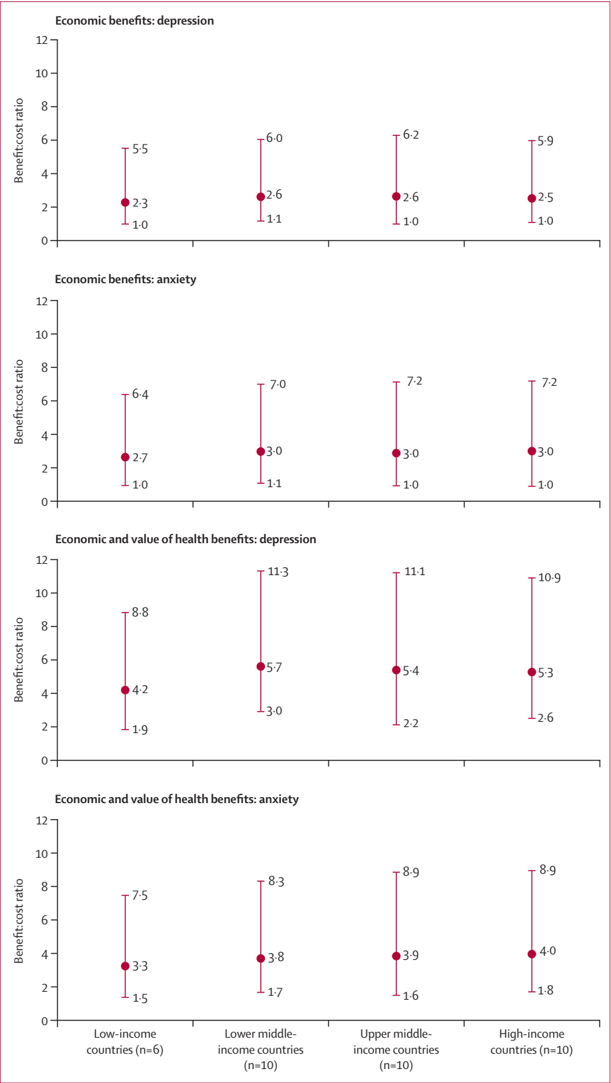
BACKGROUND: Depression and anxiety disorders are highly prevalent and disabling disorders, which result not only in an enormous amount of human misery and lost health, but also lost economic output. Here we propose a global investment case for a scaled-up response to the public health and economic burden of depression and anxiety disorders. METHODS: In this global return on investment analysis, we used the mental health module of the OneHealth tool to calculate treatment costs and health outcomes in 36 countries between 2016 and 2030. We assumed a linear increase in treatment coverage. We factored in a modest improvement of 5% in both the ability to work and productivity at work as a result of treatment, subsequently mapped to the prevailing rates of labour participation and gross domestic product (GDP) per worker in each country. FINDINGS: The net present value of investment needed over the period 2016-30 to substantially scale up effective treatment coverage for depression and anxiety disorders is estimated to be US$147 billion. The expected returns to this investment are also substantial. In terms of health impact, scaled-up treatment leads to 43 million extra years of healthy life over the scale-up period. Placing an economic value on these healthy life-years produces a net present value of $310 billion. As well as these intrinsic benefits associated with improved health, scaled-up treatment of common mental disorders also leads to large economic productivity gains (a net present value of $230 billion for scaled-up depression treatment and $169 billion for anxiety disorders). Across country income groups, resulting benefit to cost ratios amount to 2·3-3·0 to 1 when economic benefits only are considered, and 3·3-5·7 to 1 when the value of health returns is also included. INTERPRETATION: Return on investment analysis of the kind reported here can contribute strongly to a balanced investment case for enhanced action to address the large and growing burden of common mental disorders worldwide. FUNDING: Grand Challenges Canada.
Overview
The claims and statistics of this paper haven’t been checked yet.
Free: it reads the open-access text and checks the first 5 claims that cite a source we can check. Create a free account to check every claim.
Integrity signals
Registry
Cites
Statistics
Figures
Verification
Claims the paper makes
The claims and statistics of this paper haven’t been checked yet.
Free: it reads the open-access text and checks the first 5 claims that cite a source we can check. Create a free account to check every claim.
Claims other papers make about this one
Each is checked against this paper’s own text: does it say what the citing paper says it does?
The cited source says what the claim attributes to it.
In the citing paper
“Even in high-income countries, depression treatment rates are often below 30% (16, 17).”
From Personalised depression forecasting using mobile sensor data and ecological momentary assessment (2022) · cites this paper as [16]
The cited source says what the claim attributes to it.
In the citing paper
“Furthermore, the uptake of therapies is low, even in high-income countries (Chisholm et al. 2016), and one reason may be that therapies are not sufficiently acceptable to patients.”
From The Role of Common Factors in Psychotherapy Outcomes (2019) · cites this paper as Chisholm et al. 2016
The cited source says what the claim attributes to it.
In the citing paper
“Economic modelling work for the general population in all WHO regions indicates that investment in both pharmacological and psychological therapies can be costeffective even in the most resource-constrained regions of the world. 444,445”
From The Lancet Psychiatry Commission on youth mental health (2024) · cites this paper as [445]
In the citing paper
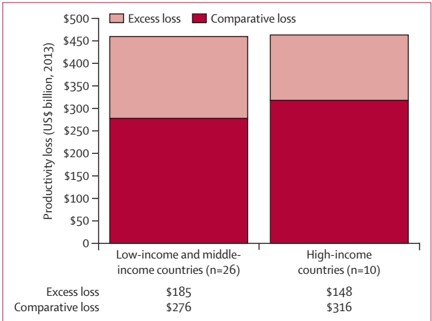
“NCDs also place a heavy economic burden on countries, with the annual lost productivity attributable to depression and anxiety disorders worldwide, for example, estimated in 2013 to be US$ 900 billion 6 .”
From Integrated care for people with long-term mental and physical health conditions in low-income and middle-income countries (2019) · cites this paper as [6]
Self-check
Percentages, sums and reported differences re-computed from the paper’s own numbers.
The self-check needs the paper’s full text.
Citations
Cites
Transforming Our World: The 2030 Agenda for Sustainable Development
(2018) · A New Era in Global Health · doi:10.1891/9780826190123.ap02 · Cited by 19,351
Awais, A. (2015) · Data Archiving and Networked Services (DANS) · doi:10.17632/zcvgc6m58h.1 · Cited by 6,707
Whiteford, H. A., Degenhardt, L., Rehm, J., Baxter, A. J., Ferrari, A. J., Erskine, H. E., Charlson, F. J., Norman, R. E., Flaxman, A. D., Johns, N., et al. (2013) · The Lancet · doi:10.1016/s0140-6736(13)61611-6 · Cited by 6,006
No health without mental health
Prince, M., Patel, V., Saxena, S., Maj, M., Maselko, J., Phillips, M. R., & Rahman, A. (2007) · The Lancet · doi:10.1016/s0140-6736(07)61238-0 · Cited by 3,753
Self-citationDisease control priorities in developing countries
(2006) · Choice Reviews Online · doi:10.5860/choice.44-0343 · Cited by 3,628
(2012) · RePEc: Research Papers in Economics · Cited by 1,951
Cost of disorders of the brain in Europe 2010
Gustavsson, A., Svensson, M., Jacobi, F., Allgulander, C., Alonso, J., Beghi, E., Dodel, R., Ekman, M., Faravelli, C., Fratiglioni, L., et al. (2011) · European Neuropsychopharmacology · doi:10.1016/j.euroneuro.2011.08.008 · Cited by 1,723
Disease control priorities in developing countries
Frenk, J. (2006) · Salud Pública de México · doi:10.1590/s0036-36342006000600011 · Cited by 1,599
Global prevalence of anxiety disorders: a systematic review and meta-regression
Baxter, A. J., Scott, K. M., Vos, T., & Whiteford, H. A. (2013) · Psychological Medicine · doi:10.1017/s003329171200147x · Cited by 1,537
Ferrari, A. J., Somerville, A. J., Baxter, A. J., Norman, R., Patten, S. B., Vos, T., & Whiteford, H. A. (2013) · Psychological Medicine · doi:10.1017/s0033291712001511 · Cited by 1,230
Cited by
Items 201–300 of 1,000
Trends in Child and Adolescent Mental Health Prevalence, Outcomes, and Inequalities
Collishaw, S., & Sellers, R. (2020) · Mental health and illness worldwide · doi:10.1007/978-981-10-2348-4_9 · Cited by 70
Bondar, J., Babich Morrow, C., Gueorguieva, R., Brown, M., Hawrilenko, M., Krystal, J. H., Corlett, P. R., & Chekroud, A. M. (2022) · JAMA Network Open · doi:10.1001/jamanetworkopen.2022.16349 · Cited by 53
Tao, J., Vermund, S. H., Lu, H., Ruan, Y., Shepherd, B. E., Kipp, A. M., Amico, K. R., Zhang, X., Shao, Y., & Qian, H.-Z. (2017) · AIDS Patient Care and STDs · doi:10.1089/apc.2016.0214 · Cited by 53
“Treatment of depression and anxiety is costeffective even in low- and middle-income countries, and could bring benefits in multiple health outcomes.(16) Depression has been reported to be associated with delayed initiation of ART among PLWH.”
Evaluation of a teacher-led, life-skills intervention for secondary school students in Uganda
McMullen, J. D., & McMullen, N. (2018) · Social Science & Medicine · doi:10.1016/j.socscimed.2018.09.041 · Cited by 65
Jin, Y., Zhu, D., & He, P. (2020) · Social Science & Medicine · doi:10.1016/j.socscimed.2020.112848 · Cited by 61
Effects of depression on employment and social outcomes: a Mendelian randomisation study
Campbell, D., Green, M. J., Davies, N., Demou, E., Howe, L. D., Harrison, S., Smith, D. J., Howard, D. M., McIntosh, A. M., Munafò, M., et al. (2022) · Journal of Epidemiology and Community Health · doi:10.1136/jech-2021-218074 · Cited by 51
“48 Our finding that depression liability increased sickness/ disability risk raises the potential that early intervention through effective healthcare could mitigate the adverse societal impacts of depression by increasing working capacity within the population.”
BackgroundWang, Z., Li, Y., An, J., Dong, W., Li, H., Ma, H., Wang, J., Wu, J., Jiang, T., & Wang, G. (2022) · International Journal of Environmental Research and Public Health · doi:10.3390/ijerph19137878 · Cited by 51
Voinescu, A., Petrini, K., Fraser, D. S., Lazarovicz, R.-A., Papavă, I., Fodor, L. A., & David, D. (2021) · Virtual Reality · doi:10.1007/s10055-021-00520-7 · Cited by 54
Álvarez‐Pérez, Y., Rivero, F., Herrero, M., Viña, C. M., Fumero, A., Betancort, M., & Castro, W. P. (2021) · Journal of Clinical Medicine · doi:10.3390/jcm10163505 · Cited by 62
“It is one of the most common and prevalent anxiety disorders present in middle- and high-income countries [5], being less frequent in adults (3–5%) than in children and adolescents (11%) [1].”
BackgroundMartínez, P., Rojas, G., Martínez, V., Lara, M. A., & Pérez, J. C. (2018) · Journal of Affective Disorders · doi:10.1016/j.jad.2018.02.079 · Cited by 51
“Although effective and low-cost strategies for the prevention and treatment of depression exist (Patel, 2017), the current treatment gap for this disorder has been estimated to be between 72% and 93% of all depressed people, with those from the poorest countries receiving less coverage (Chisholm et al., 2016).”
BackgroundZhang, H., Zhang, A., Liu, C., Xiao, J., & Wang, K. (2021) · Mindfulness · doi:10.1007/s12671-021-01618-4 · Cited by 50
“For example, previous studies indicate that psychological distress is related to increased risk of severe mental disorders, such as major depressive disorder (Chisholm et al., 2016; Nishi et al., 2018), further highlighting the significance of timely intervention for psychological distress to support the general popul…”
BackgroundAdvances in the mechanisms of polysaccharides in alleviating depression and its complications
Guo, Y., Chen, X., Gong, P., Li, Z., Wu, Y., Zhang, J., Wang, J., Yao, W., Yang, W., & Chen, F. (2022) · Phytomedicine · doi:10.1016/j.phymed.2022.154566 · Cited by 56
Acharya, B., Ekstrand, M., Rimal, P., Ali, M. K., Swar, S., Srinivasan, K., Mohan, V., Unützer, J., & Chwastiak, L. (2017) · Psychiatric Services · doi:10.1176/appi.ps.201700232 · Cited by 42
“Because mental health services often receive inadequate budgetary allocation, we emphasize the fourfold economic return on investment (6).”
Tomita, A. M., Ramlall, S., Naidu, T., Mthembu, S. S., Padayatchi, N., & Burns, J. K. (2019) · Social Psychiatry and Psychiatric Epidemiology · doi:10.1007/s00127-019-01669-y · Cited by 57
The Potential for Outdoor Nature-Based Interventions in the Treatment and Prevention of Depression
Owens, M., & Bunce, H. L. I. (2022) · Frontiers in Psychology · doi:10.3389/fpsyg.2022.740210 · Cited by 60
Santini, Z. I., Koyanagi, A., Tyrovolas, S., Haro, J. M., Donovan, R. J., Nielsen, L., & Koushede, V. (2017) · Experimental Gerontology · doi:10.1016/j.exger.2017.02.074 · Cited by 49
“Globally, while the burden of mental and neurological disorders continue to grow, investments in mental health are sparse [1].”
Wallert, J., Boberg, J., Kaldo, V., Mataix-Cols, D., Flygare, O., Crowley, J. J., Halvorsen, M., Ben Abdesslem, F., Boman, M., Andersson, E., et al. (2022) · Translational Psychiatry · doi:10.1038/s41398-022-02133-3 · Cited by 48
“Adequate treatment accessibility for MDD would produce an estimated net benefit of ~230 billion USD in productivity gains worldwide [4].”
BackgroundZahid, J. A., Grummedal, O., Madsen, M. T., & Gögenur, I. (2020) · Journal of Psychiatric Research · doi:10.1016/j.jpsychires.2019.10.009 · Cited by 48
Personalised depression forecasting using mobile sensor data and ecological momentary assessment
Kathan, A., Harrer, M., Küster, L., Triantafyllopoulos, A., He, X., Milling, M., Gerczuk, M., Yan, T., Rajamani, S. T., Heber, E., et al. (2022) · Frontiers in Digital Health · doi:10.3389/fdgth.2022.964582 · Cited by 47
The impact of income on mental health
Shields‐Zeeman, L., & Smit, F. (2022) · The Lancet Public Health · doi:10.1016/s2468-2667(22)00094-9 · Cited by 55
Self-citationShisana, O., Stein, D. J., Zungu, N. P., & Wolvaardt, G. G. (2024) · Comprehensive Psychiatry · doi:10.1016/j.comppsych.2024.152458 · Cited by 69
Introduction: Social Return On Investment (SROI)
Yates, B. T., & Marra, M. (2016) · Evaluation and Program Planning · doi:10.1016/j.evalprogplan.2016.10.013 · Cited by 47
Khan, W. U., Michelini, G., & Battaglia, M. (2020) · Neuroscience & Biobehavioral Reviews · doi:10.1016/j.neubiorev.2020.01.015 · Cited by 50
Alaie, I., Ssegonja, R., Philipson, A., von Knorring, A., Möller, M., von Knorring, L., Ramklint, M., Bohman, H., Feldman, I., Hagberg, L., et al. (2021) · Social Psychiatry and Psychiatric Epidemiology · doi:10.1007/s00127-021-02056-2 · Cited by 57
“Scaling up healthcare services for depression has demonstrated good returns on investment in a scenario-based analysis [69].”
BackgroundJackson, P. P. J., Wijeyesekera, A., Williams, C. M., Theis, S., Harsselaar, J. V., & Rastall, R. A. (2023) · American Journal of Clinical Nutrition · doi:10.1016/j.ajcnut.2023.08.016 · Cited by 54
“Anxiety and depression are the 2 biggest mental health disorders recorded worldwide, costing health services in excess of 1 trillion USD per year [13,14].”
BackgroundDigital psychiatry in low-and-middle-income countries: New developments and the way forward
Chakrabarti, S. (2024) · World Journal of Psychiatry · doi:10.5498/wjp.v14.i3.350 · Cited by 59
Ribeiro, D. E., Müller, H. K., Elfving, B., Eskelund, A., Joca, S. R., & Wegener, G. (2019) · Journal of Psychopharmacology · doi:10.1177/0269881119872173 · Cited by 45
Spadaro, B., Martin-Key, N. A., & Bahn, S. (2021) · Journal of Medical Internet Research · doi:10.2196/27507 · Cited by 45
Audet, C. M., Wainberg, M. L., Oquendo, M. A., Yu, Q., Blevins Peratikos, M., Duarte, C. S., Martinho, S., Green, A. F., González-Calvo, L., & Moon, T. D. (2018) · Journal of Affective Disorders · doi:10.1016/j.jad.2017.10.022 · Cited by 45
“, 2014; Institute of Medicine (US) Forum on Neuroscience and Nervous System Disorders and Uganda National Academy of Sciences Forum on Health and Nutrition, 2010); these studies show only 7–14% of those affected by mental health illnesses in SSA are accessing services (Chisholm et al., 2016; Demyttenaere et al., 2004).”
BackgroundBedi, R. P. (2018) · Archives of Scientific Psychology · doi:10.1037/arc0000047 · Cited by 87
“It is estimated that 75% to 90% of individuals in the world who can benefit from clinical mental health treatment do not receive it (Chisholm et al., 2016; Kohn, Saxena, Levav, & Saraceno, 2004).”
BackgroundShan, W., Peng, X., Tan, W., Zhou, Z., Xie, H., & Wang, S. (2024) · Sleep Medicine · doi:10.1016/j.sleep.2024.01.023 · Cited by 48
Charlson, F. J., Dieleman, J., Singh, L., & Whiteford, H. A. (2017) · PLOS ONE · doi:10.1371/journal.pone.0169384 · Cited by 44
The Economic Impact of Mental Disorders and Mental Health Problems in the Workplace
Pinheiro, M., Ivandić, I., & Razzouk, D. (2017) · Springer eBooks · doi:10.1007/978-3-319-55266-8_28 · Cited by 67
Integrating mental health into HIV prevention and care: a call to action
Remien, R. H., Patel, V., Chibanda, D., & Abas, M. (2021) · Journal of the International AIDS Society · doi:10.1002/jia2.25748 · Cited by 50
“return of US$ 4 in better health and capacity to work [26].”
BackgroundThe Demography of Mental Health Among Mature Adults in a Low-Income, High-HIV-Prevalence Context
Kohler, I. V., Payne, C., Bandawe, C., & Kohler, H. (2017) · Demography · doi:10.1007/s13524-017-0596-9 · Cited by 51
“Scholars and NGOs have argued that health research and health policies in SSA low-income countries devote far too few resources to DA and poor mental health (Chisholm et al. 2016; Jack et al. 2014).”
InfluentialIndirect prevention and treatment of depression: an emerging paradigm?
Cuijpers, P. (2021) · Clinical Psychology in Europe · doi:10.32872/cpe.6847 · Cited by 44
“This uptake is low in the general population, with rates that are often lower than 30%, even in high income countries (Chisholm et al., 2016).”
BackgroundSelf-citationMental Health First Aid as a tool for improving mental health and well-being
Richardson, R., Dale, H. E., Robertson, L., Meader, N., Wellby, G., McMillan, D., & Churchill, R. C. (2023) · Cochrane Database of Systematic Reviews · doi:10.1002/14651858.cd013127.pub2 · Cited by 64
Exploring the gut-brain Axis: Potential therapeutic impact of Psychobiotics on mental health
Cocean, A.-M., & Vodnar, D. C. (2024) · Progress in Neuro-Psychopharmacology and Biological Psychiatry · doi:10.1016/j.pnpbp.2024.111073 · Cited by 58
“Furthermore, they substantially influence the economic performance of whole areas, causing a marked drop in productivity and leading to increased spending on social and healthcare (Chisholm et al., 2016).”
BackgroundEffectiveness of psychotherapeutic consultation in the workplace: a controlled observational trial
Rothermund, E., Gündel, H., Rottler, E., Holzer, M. S., Mayer, D., Rieger, M. A., & Kilian, R. (2016) · BMC Public Health · doi:10.1186/s12889-016-3567-y · Cited by 47
“The treatment gap for CMD is estimated at 55 % globally while the improvement of treating CMD effectively has been considered to be very encouraging [11, 12].”
BackgroundSchröder, J., Berger, T., Meyer, B., Lutz, W., Späth, C., Michel, P., Rose, M., Hautzinger, M., Hohagen, F., Klein, J. P., et al. (2018) · Depression and Anxiety · doi:10.1002/da.22727 · Cited by 43
“Depression is among the most common forms of human psychological sufferingworldwide (Chisholm et al., 2016).”
BackgroundWadden, K. P., Snow, N. J., Sande, P., Slawson, S., Waller, T., & Boyd, L. A. (2018) · Frontiers in Integrative Neuroscience · doi:10.3389/fnint.2018.00060 · Cited by 46
Roberge, P., Provencher, M. D., Gaboury, I., Gosselin, P., Vasiliadis, H., Benoît, A., Carrier, N., Antony, M. M., Chaillet, N., Houle, J., et al. (2020) · Psychological Medicine · doi:10.1017/s0033291720004316 · Cited by 53
“Anxiety disorders account for reduced health-related quality of life, work participation and productivity, and increased social welfare and health service expenditures (Chisholm et al., 2016; Olatunji, Cisler, & Tolin, 2007; Sherbourne et al., 2010).”
BackgroundOsborn, T. L., Kleinman, A., & Weisz, J. R. (2021) · Transcultural Psychiatry · doi:10.1177/13634615211000555 · Cited by 50
“Epidemiological studies show high prevalence rates of depression around the world (Ferrari et al., 2013), and have increasingly identified it as the leading mental health cause of the global disease burden (Chisholm et al., 2016; Patel et al., 2016; Rehm & Sheild, 2019).”
Chisholm, D., Docrat, S., Abdulmalik, J. O., Alem, A., Gureje, O., Gurung, D., Hanlon, C., Jordans, M. J. D., Kangere, S., Kigozi, F. N., et al. (2021) · BJPsych Open · doi:10.1192/bjo.2021.948 · Cited by 44
Self-citationPhysical inactivity amplifies the negative association between sleep quality and depressive symptoms
Cheval, B., Maltagliati, S., Sieber, S., Cullati, S., Sander, D., & Boisgontier, M. P. (2022) · Preventive Medicine · doi:10.1016/j.ypmed.2022.107233 · Cited by 47
“Moreover, depression is associated with cognitive and functional impairment, as well as social dysfunction (Chisholm et al., 2016).”
BackgroundPorter, S. V., Lexén, A., Johanson, S., & Bejerholm, U. (2018) · Work · doi:10.3233/wor-182737 · Cited by 55
Pharmacy-based management for depression in adults
Brown, J. V. E., Walton, N., Meader, N., Todd, A., Webster, L. A. D., Steele, R., Sampson, S. J., Churchill, R. C., McMillan, D., Gilbody, S. M., et al. (2019) · Cochrane Database of Systematic Reviews · doi:10.1002/14651858.cd013299.pub2 · Cited by 45
Rose‐Clarke, K., Pradhan, I., Shrestha, P., Prakash, B. K., Magar, J., Luitel, N. P., Devakumar, D., Rafaeli, A. K., Clougherty, K. F., Kohrt, B. A., et al. (2020) · BMC Psychology · doi:10.1186/s40359-020-00452-y · Cited by 63
Muñoz‐Navarro, R., Medrano, L. A., Limonero, J. T., González‐Blanch, C., Moriana, J. A., Ruiz‐Rodríguez, P., & Vindel, A. C. (2022) · Journal of Affective Disorders · doi:10.1016/j.jad.2022.01.029 · Cited by 59
Kingslake, J., Dias, R., Dawson, G. R., Simon, J., Goodwin, G. M., Harmer, C. J., Morriss, R., Brown, S., Guo, B., Dourish, C. T., et al. (2017) · Trials · doi:10.1186/s13063-017-2247-2 · Cited by 42
“It is associated with significant socioeconomic costs and has been predicted to become the greatest cause of disability worldwide by 2030 [2, 3].”
BackgroundTomita, A. M., Cuadros, D. F., Mabhaudhi, T., Sartorius, B. K. D., Ncama, B. P., Dangour, A. D., Tanser, F. C., Modi, A. T., Slotow, R., & Burns, J. K. (2020) · Scientific Reports · doi:10.1038/s41598-020-70647-1 · Cited by 48
van't Hof, E., Dawson, K. S., Schafer, A., Chiumento, A., Harper Shehadeh, M., Sijbrandij, M., Bryant, R. A., Anjuri, D., Koyiet, P., Ndogoni, L., et al. (2018) · Global Mental Health · doi:10.1017/gmh.2017.26 · Cited by 40
“Recent return on investment research could provide compelling evidence of the potential gains from investing in mental health care (Chisholm et al. 2016).”
Default mode network activity in depression subtypes
Borserio, B. J., Sharpley, C. F., Bitsika, V., Sarmukadam, K., Fourie, P. J., & Agnew, L. L. (2021) · Reviews in the Neurosciences · doi:10.1515/revneuro-2020-0132 · Cited by 45
Quantitative Electroencephalography in Guiding Treatment of Major Depression
Schiller, M. J. (2019) · Frontiers in Psychiatry · doi:10.3389/fpsyt.2018.00779 · Cited by 45
Tünneßen, M., Hiligsmann, M., Stock, S., & Vennedey, V. (2020) · Journal of Medical Economics · doi:10.1080/13696998.2020.1725022 · Cited by 49
Burchert, S., Kerber, A., Zimmermann, J., & Knaevelsrud, C. (2021) · PLoS ONE · doi:10.1371/journal.pone.0244955 · Cited by 48
Deep Learning for Mobile Mental Health: Challenges and recent advances
Han, J., Zhang, Z., Mascolo, C., André, E., Tao, J., Zhao, Z., & Schuller, B. W. (2021) · IEEE Signal Processing Magazine · doi:10.1109/msp.2021.3099293 · Cited by 49
“Taking depression and anxiety disorders (affecting more than 10 % of the global population [15]) as an example, DL might be applied in different M2Health applications to address a variety of technical issues.”
MethodAntidepressant use in low- middle- and high-income countries: a World Mental Health Surveys report
Kazdin, A. E., Wu, C., Hwang, I. H., Puac‐Polanco, V., Sampson, N. A., Al-Hamzawi, A., Alonso, J., Andrade, L. H., Benjet, C. L., Caldas-de-Almeida, J. M., et al. (2021) · Psychological Medicine · doi:10.1017/s0033291721003160 · Cited by 49
“The economic costs of MDD are enormous, including lost income and productivity, high utilization of health-care services, and high use of social services (Chisholm et al., 2016).”
The Relationship Between Greenspace Exposure and Psychopathology Symptoms: A Systematic Review
Tran, I., Sabol, O., & Mote, J. (2022) · Biological Psychiatry Global Open Science · doi:10.1016/j.bpsgos.2022.01.004 · Cited by 50
“Mental health diagnoses account for the highest rates of global disability, with loss of productivity costs averaging $310 billion worldwide (23).”
BackgroundHutton, D. W., Mustafa, A., Patil, S., Rathod, S., Shrikhande, G., Advincula, A. P., Drummond, J., Gregersen, P. K., Hall, J. F., Metz, C. N., et al. (2023) · PLoS ONE · doi:10.1371/journal.pone.0269828 · Cited by 48
“The associated costs of depression and anxiety across 36 large countries is calculated to be $925 billion due to the estimated time of 50 million days of work lost due to the onset of depression and anxiety [27].”
BackgroundKim, S. Y., Jeon, S. W., Lee, M. Y., Shin, D., Lim, W., Shin, Y. C., & Oh, K. (2019) · Psychiatry Investigation · doi:10.30773/pi.2019.0078 · Cited by 46
Twelve‐month treatment of mental disorders in the Saudi National Mental Health Survey
Alhabeeb, A. A., Altwaijri, Y. A., Al‐Subaie, A. S., Bilal, L., Almeharish, A., Sampson, N. A., Liu, H., & Kessler, R. C. (2020) · International Journal of Methods in Psychiatric Research · doi:10.1002/mpr.1832 · Cited by 48
“Fortunately, treatments exist that can restore this functioning for many patients (Andrews, Issakidis, Sanderson, Corry, & Lapsley, 2004; Chisholm et al., 2016; World Health Organization, 2010), making it costeffective from a societal perspective to provide evidence-based This is an open access…”
BackgroundChavez, L. J., Kelleher, K. J., Slesnick, N., Holowacz, E., Luthy, E., Moore, L., & Ford, J. L. (2020) · JMIR Mental Health · doi:10.2196/18244 · Cited by 48
“Reducing anxiety among homeless youth could have numerous health benefits given that anxiety and mood disorders are the leading causes of disability worldwide [9,10].”
BackgroundUsing Acoustic Speech Patterns From Smartphones to Investigate Mood Disorders: Scoping Review
Flanagan, O., Chan, A. H. Y., Roop, P. S., & Sundram, F. (2021) · JMIR mhealth and uhealth · doi:10.2196/24352 · Cited by 42
“Mood disorders are common with 12-month prevalence rates ranging between 6.6% and 11.9% [1] and represent significant personal, social, and economic burden [2,3].”
BackgroundInfluentialStrain-, Sex-, and Time-Dependent Antidepressant-like Effects of Cannabidiol
Silote, G. P., Gatto, M. C., Eskelund, A., Guimarães, F. S., Wegener, G., & Joca, S. R. L. (2021) · Pharmaceuticals · doi:10.3390/ph14121269 · Cited by 42
Matthews, N. R., Porter, G. J., Varghese, M., Sapkota, N., Khan, M. M., Lukose, A., Paddick, S., Dissanayake, M. P., Khan, N. Z., & Walker, R. W. (2022) · Global Health Action · doi:10.1080/16549716.2022.2110198 · Cited by 53
Depression and Global Mental Health in the Global South: A Critical Analysis of Policy and Discourse
Limenih, G., MacDougall, A. G., Wedlake, M., & Nouvet, É. (2023) · International Journal of Social Determinants of Health and Health Services · doi:10.1177/27551938231220230 · Cited by 64
“In fact, the mhGAP-IG has since come to be used in the production of metrics, such as for economic modeling (highlighting the economic burden of depression) and to make a case for the “ return on investment ” of interventions, 3, p. 415 .”
BackgroundMethodShigdel, R., Stubbs, B., Sui, X., & Ernstsen, L. (2019) · Journal of Affective Disorders · doi:10.1016/j.jad.2019.04.016 · Cited by 43
Tran, B. X., Ha, G. H., Vu, G. T., Nguyen, L. H., Latkin, C. A., Nathan, K., McIntyre, R. S., Ho, C. S. H., Tam, W., & Ho, R. (2019) · International Journal of Environmental Research and Public Health · doi:10.3390/ijerph16132255 · Cited by 38
Docrat, S., Lund, C., & Chisholm, D. (2019) · International Journal of Mental Health Systems · doi:10.1186/s13033-019-0260-4 · Cited by 37
Self-citationKessler, R. C., Kazdin, A. E., Aguilar‐Gaxiola, S., Al‐Hamzawi, A., Alonso, J., Altwaijri, Y. A., Andrade, L. H., Benjet, C., Bharat, C., Borges, G., et al. (2022) · World Psychiatry · doi:10.1002/wps.20971 · Cited by 37
Segal, L., Twizeyemariya, A., Zarnowiecki, D., Niyonsenga, T., Bogomolova, S., Wilson, A., O’Dea, K., & Parletta, N. (2020) · Nutritional Neuroscience · doi:10.1080/1028415x.2018.1556896 · Cited by 37
“leading cause of disease burden globally, depressive disorders are an urgent public health priority for identifying effective and cost-effective treatments [3,4].”
BackgroundAttention bias modification for depression: A systematic review and meta-analysis
Xia, H., Li, Y., Zhang, Q., Zhong, D., Liu, X.-B., Gou, X.-Y., Fan, J., Zhao, J., Zhang, Y., Ai, S., et al. (2023) · Frontiers in Psychiatry · doi:10.3389/fpsyt.2023.1098610 · Cited by 44
“2 workdays per patient with depression a year (4), which brought a significant financial burden to patients, families, and society (5).”
BackgroundMethodvan Rensburg, A. J., & Fourie, P. (2016) · International Journal of Mental Health Systems · doi:10.1186/s13033-016-0081-7 · Cited by 47
“7 to 1 when considering the value of both economic and health benefits [10].”
BackgroundØverland, S., Grasdal, A. L., & Reme, S. E. (2018) · Occupational and Environmental Medicine · doi:10.1136/oemed-2018-105137 · Cited by 22
Marques, A., Gaspar de Matos, M., Bordado, J., Gouveia, É. R., Peralta, M., & Gomez‐Baya, D. (2021) · European Journal of Sport Science · doi:10.1080/17461391.2020.1795273 · Cited by 36
“…lung disease, angina and stroke (Lotfaliany et al., 2018), and other major groups of mental disorders (Plana- Ripoll et al., 2019), health costs (Chisholm et al., 2016), poor adherence to medical treatment (Saz & Dewey, 2001), risk of suicide (Ferrari et al., 2013), and premature mortality…”
BackgroundWang, Q., Ding, F., Chen, D., Zhang, X., Shen, K., Fan, Y., & Li, L. (2020) · The Arts in Psychotherapy · doi:10.1016/j.aip.2020.101661 · Cited by 55
Skinner, A., Occhipinti, J., Song, Y. J. C., & Hickie, I. B. (2022) · BMC Psychiatry · doi:10.1186/s12888-022-04352-w · Cited by 42
Thusini, S., Milenova, M., Nahabedian, N., Grey, B., Soukup, T., Chua, K., & Henderson, C. (2022) · BMC Health Services Research · doi:10.1186/s12913-022-08832-3 · Cited by 69
“Incremental benefits using ROI of new QI programmes have been compared by some researchers [156, 157].”
MethodNature-Based Meditation, Rumination and Mental Wellbeing
Owens, M., & Bunce, H. L. I. (2022) · International Journal of Environmental Research and Public Health · doi:10.3390/ijerph19159118 · Cited by 43
“Furthermore, there are huge economic costs attached to mental health difficulties [16].”
BackgroundSsegonja, R., Alaie, I., Philipson, A., Hagberg, L., Sampaio, F., Möller, M., von Knorring, L., Sarkadi, A., Langenskiöld, S., von Knorring, A., et al. (2019) · Journal of Affective Disorders · doi:10.1016/j.jad.2019.07.077 · Cited by 41
Traditional and biomedical care pathways for mental well‐being in rural Nepal
Pham, T. V., Koirala, R., & Kohrt, B. A. (2021) · International Journal of Mental Health Systems · doi:10.1186/s13033-020-00433-z · Cited by 45
“community standing [5] or psychosocial intervention [6, 7], offers a partial, but compelling answer to the mental health treatment gap in LMICs, wherein western treatments and explanations can run counter to local notions of wellness [8, 9] and 75% to 90% of the mentally ill forego treatment [10, 11].”
BackgroundRyu, J., Jeong, A., Min, J., Lee, D. H., Lee, J., Song, I. H., & Jeon, J. Y. (2022) · Journal of Affective Disorders · doi:10.1016/j.jad.2022.01.097 · Cited by 37
Chang, B., Liu, Y., Hu, J., Tang, Z., Qiu, Z., Song, Z., Jia, A., & Zhang, Y. (2022) · Journal of Ethnopharmacology · doi:10.1016/j.jep.2022.115034 · Cited by 37
Prevalence and predictors of nomophobia among the general population in two middle eastern countries
Alwafi, H. H., Naser, A. Y., Aldhahir, A. M., Fatani, A. I., Alharbi, R. A., Alharbi, K., Almutwakkil, B. A., Salawati, E. M., Ekram, R., Samannodi, M. S., et al. (2022) · BMC Psychiatry · doi:10.1186/s12888-022-04168-8 · Cited by 52
Sampaio, F., Nystrand, C., Feldman, I., & Mihalopoulos, C. (2022) · European Child & Adolescent Psychiatry · doi:10.1007/s00787-022-01969-w · Cited by 44
de León, B. G., Sacks, A. A., Acosta, F. J., del Pino‐Sedeño, T., Ramos‐García, V., Álvarez, C. R., Bejarano‐Quisoboni, D., & Trujillo‐Martín, M. M. (2022) · International Journal of Environmental Research and Public Health · doi:10.3390/ijerph192416788 · Cited by 51
Exploring Large-Scale Language Models to Evaluate EEG-Based Multimodal Data for Mental Health
Hu, Y. '., Zhang, S., Dang, T., Jia, H., Salim, F. D., Hu, W. S., & Quigley, A. J. (2024) · ACM International Joint Conference on Pervasive and Ubiquitous Computing (UbiComp) · doi:10.1145/3675094.3678494 · Cited by 56
“Mental health issues are increasingly impacting the global economy [11], with conditions such as depression and anxiety estimated to cost trillions of dollars in lost productivity annually [8].”
BackgroundMcDowell, C. P., Gordon, B. R., Andrews, K. L., MacDonncha, C., & Herring, M. P. (2019) · Epidemiology and Psychiatric Sciences · doi:10.1017/s204579601800001x · Cited by 34
“Although themajorityof thosewho suffer fromanxiety donot seek treatment (Demyttenaere et al.2004),maladaptive anxiety symptoms are costly because of direct psychiatric and non-psychiatric treatment costs (Chisholm et al. 2016).”
BackgroundKoenig, L. R., Blum, R. W., Shervington, D. O., Green, J., Li, M., Tabana, H., & Moreau, C. (2021) · Journal of Adolescent Health · doi:10.1016/j.jadohealth.2021.01.023 · Cited by 46
“Depression carries with it lifelong ramifications for educational and economic trajectories [5,6].”
BackgroundInvesting in global mental health: the time for action is now
D, P. S. M. (2016) · The Lancet Psychiatry · doi:10.1016/s2215-0366(16)30031-1 · Cited by 34
Costs of common perinatal mental health problems in South Africa
Bauer, A., Garman, E. C., Besada, D., Field, S., Knapp, M. R. J., & Honikman, S. (2022) · Cambridge Prisms Global Mental Health · doi:10.1017/gmh.2022.48 · Cited by 43
“While the urgent need to address perinatal https://doi.org/10.1017/gmh.2022.48 Published online by Cambridge University Press depression as a key risk factor for child development has been highlighted by bodies such as the World Health Organization (WHO) (Fisher, 2011), this has not yet led to adequate policies or inv…”
BackgroundMethodInfluentialTian, S., Liang, Z., Qui, F., Yu, Y., Wang, C., Zhang, M., & Wang, X. (2024) · Journal of Psychiatric Research · doi:10.1016/j.jpsychires.2024.06.031 · Cited by 42
Asp, M., Lindqvist, D., Fernström, J., Ambrus, L., Tuninger, E., Reis, M., & Westrin, Å. (2020) · PLoS ONE · doi:10.1371/journal.pone.0227364 · Cited by 41
“Moreover, the economic burden of depression is very high, with an estimated global cost of US$ 1 trillion per year due to lost productivity [2, 3].”
BackgroundShin, D., Kim, N. W., Kim, M. J., Rhee, S. J., Park, C. H. K., Kim, H.-Y., Yang, B. R., Kim, M.-S., Choi, G., Koh, M., et al. (2020) · BMC Health Services Research · doi:10.1186/s12913-020-05153-1 · Cited by 34
“Background Globally, major depressive disorder is an increasingly common disease with more than 300 million people suffering from it, according to the World Health Organization [1].”
BackgroundAthreya, A. P., Brückl, T. M., Binder, E. B., Rush, A. J., Biernacka, J. M., Frye, M. A., Neavin, D. R., Skime, M. K., Monrad, D., Iyer, R. K., et al. (2021) · Neuropsychopharmacology · doi:10.1038/s41386-020-00943-x · Cited by 34
“INTRODUCTION Major depressive disorder (MDD) is a complex disease comprising several symptoms related to mood, capacity to derive pleasure, physical status, and cognitive functioning [1].”
BackgroundMoriana, J. A., Jurado-González, F. J., García‐Torres, F., Contreras, A., Muñoz‐Navarro, R., González‐Blanch, C., Medrano, L. A., Ruiz‐Rodríguez, P., & Vindel, A. C. (2021) · Journal of Clinical Psychology · doi:10.1002/jclp.23217 · Cited by 41
Kleinau, E., Lamba, T., Jaskiewicz, W., Gorentz, K., Hungerbuehler, I., Rahimi, D., Kokota, D., Maliwichi, L., Jamu, E. S., Zumazuma, A., et al. (2024) · PLoS ONE · doi:10.1371/journal.pone.0303370 · Cited by 54
“A World Health Organization (WHO)-led study, well before the COVID-19 65 pandemic, found that depression and anxiety disorders cost the global economy US$1 trillion each year 66 [8].”
Zhao, T., Markevych, I., Standl, M., Schulte‐Körne, G., Schikowski, T., Berdel, D., Koletzko, S., Bauer, C., Berg, A. V., Nowak, D., et al. (2018) · Environmental Research · doi:10.1016/j.envres.2018.12.014 · Cited by 35
Anxiety and Fear-Related Disorders in the ICD-11: Results from a Global Case-controlled Field Study
Rebello, T. J., Keeley, J. W., Kogan, C. S., Sharan, P., Matsumoto, C., Kuligyna, M., Domínguez‐Martínez, T., Stona, A., Grenier, J., Huang, J., et al. (2019) · Archives of Medical Research · doi:10.1016/j.arcmed.2019.12.012 · Cited by 40
Metadata
- Authors
- Chisholm, D., Sweeny, K., Sheehan, P., Rasmussen, B., Smit, F., Cuijpers, P., & Saxena, S.
- Affiliations
- World Health Organization (CH)
- Trimbos Institute (NL)
- Vrije Universiteit Amsterdam (NL)
- Corresponding author
- Chisholm, Dan
- Venue
- The Lancet Psychiatry
- Publisher
- Elsevier BV
- Published
- 2016-05
- Volume
- 3
- Issue
- 5
- Pages
- 415-424
- ISSN
- 2215-0366 (ISSN-L)
- OpenAlex
- W2340346722
- Cited by
- 1,451
- References
- 39
- Citations by year
- 2026: 126 · 2025: 136 · 2024: 164 · 2023: 178 · 2022: 206 · 2021: 192 · 2020: 144 · 2019: 116 · 2018: 83 · 2017: 71 · 2016: 32
- FWCI
- 158.29
- Type
- journal article
- Language
- en
- Open access
- hybrid
- doi.org
- Licence
- cc-by
- www.elsevier.com/tdm/userlicense/1.0/ (tdm)
- creativecommons.org/licenses/by/4.0/ (vor)
- Locations
- The Lancet Psychiatry (publishedVersion, cc-by)
- PubMed (publishedVersion)
- Amsterdam UMC (VU Amsterdam) - Institutional Repository (publishedVersion)
- VU Research Portal (publishedVersion, other-oa)
- Pure Amsterdam UMC (submittedVersion, other-oa)
- Victoria University Research Repository (Victoria University) (submittedVersion)
- Data Archiving and Networked Services (DANS) (submittedVersion, other-oa)
- Data Archiving and Networked Services (DANS) (submittedVersion)
- Funders
- European Union under the 7th Framework programme (Grant agreement 305968)
- Topics
- Health Sciences › Medicine › Psychiatry and Mental health › Mental Health Treatment and Access
- Social Sciences › Economics, Econometrics and Finance › Economics and Econometrics › Health Systems, Economic Evaluations, Quality of Life
- Health Sciences › Medicine › Pharmacology (medical) › Treatment of Major Depression
- Keywords
- depression, anxiety disorders, common mental disorders, return on investment, mental health investment, economic burden of mental illness, productivity improvement, healthy life years, treatment coverage, benefit-cost ratio
- MeSH terms
- Anxiety, Cost-Benefit Analysis, Depression, Humans, Mental Health Services, Global Health, Health Care Costs, Cost of Illness
About these checks
Registry, retraction, Cites and statistics results are computed, not judged, with one exception: a printed reference that no index lists is read once by a model before it counts as a citation error. Claims are extracted by a model and kept only when their quote appears verbatim in the text; each cited source is then checked, with a model’s help, for whether it says what the claim relies on. Those verdicts can be wrong — read the claim’s quote and the cited source before relying on one.
Statistics and arithmetic are recomputed, not judged.
Confidence bands are shown only for fields calibrated on our annotated test set. None is calibrated yet, so no band is shown.
What counts as a claim ›How we measure confidence ›How we check this ›
Are you an author, or do you see a problem with this page? Request a review
Data sources
Bibliographic data: Semantic Scholar, OpenAlex, Crossref.
Contains information from the Semantic Scholar Academic Graph Datasets, made available under the ODC Attribution License (ODC-BY 1.0).
Semantic Scholar’s data is described in: Kinney, R., et al. (2023). The Semantic Scholar Open Data Platform. arXiv:2301.10140.
