

Scaling-up treatment of depression and anxiety: a global return on investment analysis
Open accessThe DOI matches its Crossref record; 38 of the 39 references it cites were found in a registry or an index.
Abstract
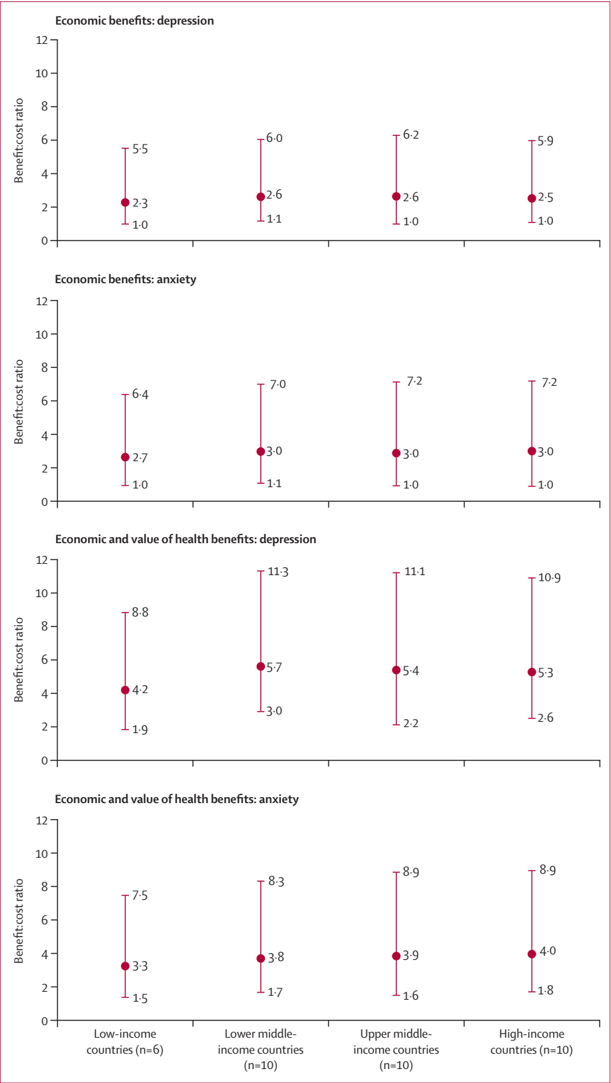
BACKGROUND: Depression and anxiety disorders are highly prevalent and disabling disorders, which result not only in an enormous amount of human misery and lost health, but also lost economic output. Here we propose a global investment case for a scaled-up response to the public health and economic burden of depression and anxiety disorders. METHODS: In this global return on investment analysis, we used the mental health module of the OneHealth tool to calculate treatment costs and health outcomes in 36 countries between 2016 and 2030. We assumed a linear increase in treatment coverage. We factored in a modest improvement of 5% in both the ability to work and productivity at work as a result of treatment, subsequently mapped to the prevailing rates of labour participation and gross domestic product (GDP) per worker in each country. FINDINGS: The net present value of investment needed over the period 2016-30 to substantially scale up effective treatment coverage for depression and anxiety disorders is estimated to be US$147 billion. The expected returns to this investment are also substantial. In terms of health impact, scaled-up treatment leads to 43 million extra years of healthy life over the scale-up period. Placing an economic value on these healthy life-years produces a net present value of $310 billion. As well as these intrinsic benefits associated with improved health, scaled-up treatment of common mental disorders also leads to large economic productivity gains (a net present value of $230 billion for scaled-up depression treatment and $169 billion for anxiety disorders). Across country income groups, resulting benefit to cost ratios amount to 2·3-3·0 to 1 when economic benefits only are considered, and 3·3-5·7 to 1 when the value of health returns is also included. INTERPRETATION: Return on investment analysis of the kind reported here can contribute strongly to a balanced investment case for enhanced action to address the large and growing burden of common mental disorders worldwide. FUNDING: Grand Challenges Canada.
Overview
The claims and statistics of this paper haven’t been checked yet.
Free: it reads the open-access text and checks the first 5 claims that cite a source we can check. Create a free account to check every claim.
Integrity signals
Registry
Cites
Statistics
Figures
Verification
Claims the paper makes
The claims and statistics of this paper haven’t been checked yet.
Free: it reads the open-access text and checks the first 5 claims that cite a source we can check. Create a free account to check every claim.
Claims other papers make about this one
Each is checked against this paper’s own text: does it say what the citing paper says it does?
The cited source says what the claim attributes to it.
In the citing paper
“Even in high-income countries, depression treatment rates are often below 30% (16, 17).”
From Personalised depression forecasting using mobile sensor data and ecological momentary assessment (2022) · cites this paper as [16]
The cited source says what the claim attributes to it.
In the citing paper
“Furthermore, the uptake of therapies is low, even in high-income countries (Chisholm et al. 2016), and one reason may be that therapies are not sufficiently acceptable to patients.”
From The Role of Common Factors in Psychotherapy Outcomes (2019) · cites this paper as Chisholm et al. 2016
The cited source says what the claim attributes to it.
In the citing paper
“Economic modelling work for the general population in all WHO regions indicates that investment in both pharmacological and psychological therapies can be costeffective even in the most resource-constrained regions of the world. 444,445”
From The Lancet Psychiatry Commission on youth mental health (2024) · cites this paper as [445]
In the citing paper
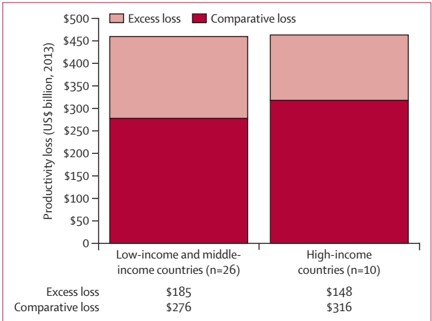
“NCDs also place a heavy economic burden on countries, with the annual lost productivity attributable to depression and anxiety disorders worldwide, for example, estimated in 2013 to be US$ 900 billion 6 .”
From Integrated care for people with long-term mental and physical health conditions in low-income and middle-income countries (2019) · cites this paper as [6]
Self-check
Percentages, sums and reported differences re-computed from the paper’s own numbers.
The self-check needs the paper’s full text.
Citations
Cites
Transforming Our World: The 2030 Agenda for Sustainable Development
(2018) · A New Era in Global Health · doi:10.1891/9780826190123.ap02 · Cited by 19,351
Awais, A. (2015) · Data Archiving and Networked Services (DANS) · doi:10.17632/zcvgc6m58h.1 · Cited by 6,707
Whiteford, H. A., Degenhardt, L., Rehm, J., Baxter, A. J., Ferrari, A. J., Erskine, H. E., Charlson, F. J., Norman, R. E., Flaxman, A. D., Johns, N., et al. (2013) · The Lancet · doi:10.1016/s0140-6736(13)61611-6 · Cited by 6,006
No health without mental health
Prince, M., Patel, V., Saxena, S., Maj, M., Maselko, J., Phillips, M. R., & Rahman, A. (2007) · The Lancet · doi:10.1016/s0140-6736(07)61238-0 · Cited by 3,753
Self-citationDisease control priorities in developing countries
(2006) · Choice Reviews Online · doi:10.5860/choice.44-0343 · Cited by 3,628
(2012) · RePEc: Research Papers in Economics · Cited by 1,951
Cost of disorders of the brain in Europe 2010
Gustavsson, A., Svensson, M., Jacobi, F., Allgulander, C., Alonso, J., Beghi, E., Dodel, R., Ekman, M., Faravelli, C., Fratiglioni, L., et al. (2011) · European Neuropsychopharmacology · doi:10.1016/j.euroneuro.2011.08.008 · Cited by 1,723
Disease control priorities in developing countries
Frenk, J. (2006) · Salud Pública de México · doi:10.1590/s0036-36342006000600011 · Cited by 1,599
Global prevalence of anxiety disorders: a systematic review and meta-regression
Baxter, A. J., Scott, K. M., Vos, T., & Whiteford, H. A. (2013) · Psychological Medicine · doi:10.1017/s003329171200147x · Cited by 1,537
Ferrari, A. J., Somerville, A. J., Baxter, A. J., Norman, R., Patten, S. B., Vos, T., & Whiteford, H. A. (2013) · Psychological Medicine · doi:10.1017/s0033291712001511 · Cited by 1,230
Cited by
Items 301–400 of 1,000
Stoll, R. D., Piña, A., & Schleider, J. L. (2020) · Journal of Clinical Child & Adolescent Psychology · doi:10.1080/15374416.2020.1738237 · Cited by 32
“…cost, exceeding 17 USD billion per year, largely due to health-care expenditures, school absenteeism, and lost productivity due to parents or primary caregivers missing work (e.g., therapy appointments, staying home with the child, medical visits) (Bodden et al., 2008; Chisholm et al., 2016).”
BackgroundMental health: The burden of social stigma
Zweifel, P. S. (2021) · The International Journal of Health Planning and Management · doi:10.1002/hpm.3122 · Cited by 46
Maia, W. M. N., de Andrade, F. D. C. P., Filgueiras, L. A., Mendes, A. N., Assunção, A. F. C., Rodrigues, N. D. S., Marques, R. B., Filho, A. L. M. M., de Sousa, D. P., & Lopes, L. D. S. (2021) · Heliyon · doi:10.1016/j.heliyon.2021.e06620 · Cited by 36
Tang, N., Sun, C., Wang, Y., Li, X., Liu, J., Chen, Y., Sun, L., Rao, Y., Li, S., Qi, S., et al. (2021) · Frontiers in Psychiatry · doi:10.3389/fpsyt.2021.768819 · Cited by 39
Marques, A., Ihle, A., Souza, A., Peralta, M., & de Matos, M. G. (2022) · Journal of Affective Disorders · doi:10.1016/j.jad.2022.04.126 · Cited by 43
Olorocisimo, J. P., Diaz, L. A., Co, D. E., Carag, H. M., Ibana, J. A., & Velarde, M. C. (2022) · Neuropharmacology · doi:10.1016/j.neuropharm.2022.109401 · Cited by 40
O’Loughlin, J., Casanova, F., Fairhurst-Hunter, Z., Hughes, A., Bowden, J., Watkins, E. R., Freathy, R. M., Millwood, I. Y., Lin, K., Chen, Z., et al. (2023) · BMC Medicine · doi:10.1186/s12916-023-02735-8 · Cited by 40
“Background Obesity and depression are global health challenges and leading causes of disease burden and disability, estimated to cost the global economy billions of dollars per annum [1, 2].”
BackgroundZhao, Z., Xiao, G., Xia, J., Guo, H., Yang, X., Jiang, Q., Wang, H., Hu, J., & Zhang, C. (2023) · Journal of Affective Disorders · doi:10.1016/j.jad.2023.09.018 · Cited by 41
Exposure to work stress and use of psychotropic medications: a systematic review and meta-analysis
Milner, A. J., Scovelle, A. J., King, T. L., & Madsen, I. E. H. (2019) · Journal of Epidemiology & Community Health · doi:10.1136/jech-2018-211752 · Cited by 44
Establishing political priority for global mental health: a qualitative policy analysis
Iemmi, V. (2022) · Health Policy and Planning · doi:10.1093/heapol/czac046 · Cited by 31
“Over the past decade, mental disorders have also been presented as a development issue (Patel et al., 2018), a cost-effective investment (Chisholm et al., 2016) and a major cause of unhappiness (Layard et al., 2013) (interview 4).”
BackgroundInfluentialCuijpers, P., Miguel, C., Harrer, M., Ciharova, M., & Karyotaki, E. (2024) · Journal of Affective Disorders · doi:10.1016/j.jad.2024.05.019 · Cited by 30
Self-citationHamilton, M. P., Hetrick, S. E., Mihalopoulos, C., Baker, D., Browne, V., Chanen, A. M., Pennell, K., Purcell, R., Stavely, H., & McGorry, P. D. (2017) · Medical Journal of Australia · doi:10.5694/mja17.00972 · Cited by 30
Alur-Gupta, S., Lee, I. T., Chemerinski, A., Liu, C., Lipson, J., Allison, K. C., Gallop, R., & Dokras, A. (2021) · F&S Reports · doi:10.1016/j.xfre.2021.03.003 · Cited by 44
Mu, T., Xu, R., Xu, J.-Y., Dong, D., Zhou, Z.-N., Dai, J.-N., & Shen, C. (2022) · PLoS ONE · doi:10.1371/journal.pone.0266950 · Cited by 38
Wang, J., Xu, J., Nie, Y., Pan, P., Zhang, X., Li, Y., Liu, H., Liang, L., Gao, L., Wu, Q., et al. (2022) · Frontiers in Psychiatry · doi:10.3389/fpsyt.2022.825460 · Cited by 34
“15 trillion is attributable to depression (9).”
Association between Daily Pattern of Physical Activity and Depression: A Systematic Review
Gianfredi, V., Ferrara, P., Pennisi, F., Casu, G., Amerio, A., Odone, A., Nucci, D., & Dinu, M. (2022) · International Journal of Environmental Research and Public Health · doi:10.3390/ijerph19116505 · Cited by 34
Curriculum in Psychiatry and Neurology for Pharmacy Programs
Dopheide, J. A., Bostwick, J. R., Goldstone, L. W., Thomas, K. L. H., Nemire, R. E., Gable, K. N., Cates, M. E., Caballero, J., Smith, T. L., & Bainbridge, J. L. (2017) · American Journal of Pharmaceutical Education · doi:10.5688/ajpe8175925 · Cited by 31
“A 2016 global return on investment (ROI) analysis showed significant value in treating depression and anxiety with an ROI of 3-6 to 1, in dollars saved through improved productivity and health outcomes.(7) Recognizing the societal impact of one of the most common neuropsychiatric disorders, depression, the U.”
BackgroundoVRcome – Self-guided virtual reality for specific phobias: A randomised controlled trial
Lacey, C. J., Frampton, C. M., & Beaglehole, B. (2022) · Australian & New Zealand Journal of Psychiatry · doi:10.1177/00048674221110779 · Cited by 37
“The low cost of the app has the potential to address the treatment gap for people with symptoms of specific phobia (Chisholm et al., 2016) and could be delivered at scale.”
BackgroundAdolescent depression and adult labor market marginalization: a longitudinal cohort study
Alaie, I., Philipson, A., Ssegonja, R., Copeland, W., Ramklint, M., Bohman, H., & Jonsson, U. (2021) · European Child & Adolescent Psychiatry · doi:10.1007/s00787-021-01825-3 · Cited by 35
Su, Q., Li, T., Li, T., Zhang, Y., Guo, J., Wang, Z.-J., Wu, M.-N., & Qi, J.-S. (2022) · Neural Regeneration Research · doi:10.4103/1673-5374.353479 · Cited by 33
“According to Chisholm et al. (2016), depression and anxiety disorders cost the global economy USD1.15 trillion each year.”
BackgroundA Systematic Review of Location Data for Depression Prediction
Shin, J., & Bae, S. (2023) · International Journal of Environmental Research and Public Health · doi:10.3390/ijerph20115984 · Cited by 33
“Depression is often accompanied by physical illness, loss of occupational functioning, and low quality-of-life problems [2].”
BackgroundThe emotional brain: Fundamental questions and strategies for future research
Shackman, A. J., & Wager, T. D. (2018) · Neuroscience Letters · doi:10.1016/j.neulet.2018.10.012 · Cited by 41
“economy and existing treatments are far from curative [109,17,22,29,32,53,55,58,94,131,138], underscoring the importance of accelerating efforts to understand the basic neuroscience of emotion.”
BackgroundDou, G., Li, G., Yuan, Y., Liu, B., & Yang, L. (2022) · International Journal of Environmental Research and Public Health · doi:10.3390/ijerph192114454 · Cited by 28
“At the moment, promoting personal health and well-being should be not only a social and political goal but also a key management goal [7,8].”
BackgroundPlanetary Health and Mental Health Nexus: Benefit of Environmental Management
Kumar, P., Brander, L., Kumar, M., & Cuijpers, P. J. (2023) · Annals of Global Health · doi:10.5334/aogh.4079 · Cited by 39
Self-citationCuijpers, P. J., Harrer, M., & Furukawa, T. A. (2026) · World Psychiatry · doi:10.1002/wps.70002 · Cited by 37
“Even in high income coun tries, only a minority of patients receive adequate care 24 .”
Self-citationNLRs as Helpline in the Brain: Mechanisms and Therapeutic Implications
Singh, S., & Jha, S. (2018) · Molecular Neurobiology · doi:10.1007/s12035-018-0957-4 · Cited by 30
Geriatric Depression and its Correlates among South Indian Urbans
Konda, P. R., Sharma, P. K., Gandhi, A. R., & Ganguly, E. (2018) · Journal of Depression & Anxiety · doi:10.4172/2167-1044.1000314 · Cited by 35
“While the current burden of global depression accounts for approximately 12% of years lived with disability worldwide [9], amounting to approximately US$925 billion, where about 17% of the burden is shared by older adults [10]; it is estimated that the costs may double by 2030 [11].”
BackgroundSCHOFIELD, D. J., Cunich, M. M., Shrestha, R. N., Tanton, R., Veerman, L. J., Kelly, S., & Passey, M. E. (2019) · BJPsych Open · doi:10.1192/bjo.2019.26 · Cited by 30
Hutchinson, B. W., Small, R., Acquah, J., Sandoval, R. C., Nugent, R. A., Davidson, T., Belausteguigoitia, I., Banatvala, N., Webb, D., Tarlton, D., et al. (2019) · PLoS ONE · doi:10.1371/journal.pone.0223412 · Cited by 37
Gender, income and mental health: The Turkish case
Köse, T. (2020) · PLoS ONE · doi:10.1371/journal.pone.0232344 · Cited by 38
“Prevalences of mental disorders lead to massive economic burden [1, 2, 3].”
BackgroundMental Health in Patients Undergoing Orthopaedic Surgery: Diagnosis, Management, and Outcomes
Sharma, A. K., Elbuluk, A. M., Gkiatas, I. S., Kim, J. M., Sculco, P. K., & Vigdorchik, J. M. (2021) · JBJS Reviews · doi:10.2106/jbjs.rvw.20.00169 · Cited by 35
Chitale, V., Baghaei, N., Playne, D. P., Liang, H., Zhao, Y., Erensoy, A., & Ahmad, Y. (2022) · Games for Health Journal · doi:10.1089/g4h.2021.0227 · Cited by 28
Mitrou, F., Nguyen, H. T., Le, H., & Zubrick, S. R. (2023) · Empirical Economics · doi:10.1007/s00181-023-02483-x · Cited by 30
“Mental health disorders and addictive behaviours 1 are two public health issues that are estimated to impose significant socio-economic costs to the global economy (OECD 2014; Chisholm et al. 2016; Prochaska et al. 2017; WHO 2017).”
Gjengedal, R. G. H., Rème, S. E., Osnes, K., Lagerfeld, S. E., Blonk, R. W. B., Sandin, K., Berge, T., & Hjemdal, O. (2020) · Work · doi:10.3233/wor-203208 · Cited by 30
Mechanisms Underlying the Antidepressant Effect of Acupuncture via the CaMK Signaling Pathway
Bai, L., Zhang, D., Cui, T.-T., Li, J.-F., Gao, Y.-Y., Wang, N.-Y., Jia, P.-L., Zhang, H.-Y., Sun, Z.-R., Zou, W., et al. (2020) · Frontiers in Behavioral Neuroscience · doi:10.3389/fnbeh.2020.563698 · Cited by 27
Xu, C., Dong, Z., Zhang, P., Chang, G., Xiang, Q., Zhang, M., Zhou, J., Qiao, C., Yang, Q., Qin, Y., et al. (2021) · Diabetic Medicine · doi:10.1111/dme.14491 · Cited by 27
Wei, D., Zhao, Y., Zhang, M., Zhu, L., Wang, L., Yuan, X., & Wu, C. (2021) · Drug Design Development and Therapy · doi:10.2147/dddt.s281575 · Cited by 28
Chen, W., Chen, Y., Cheng, W., Li, P., Shen, J., Tong, T., Lai, L., Yan, S., Huang, Z., Li, J., et al. (2023) · Biochemical and Biophysical Research Communications · doi:10.1016/j.bbrc.2023.01.046 · Cited by 32
Astrocyte-derived lactate in stress disorders
Chamaa, F., Magistretti, P. J., & Fiumelli, H. (2024) · Neurobiology of Disease · doi:10.1016/j.nbd.2024.106417 · Cited by 32
“The widespread impact of stress and mental illness manifests as a considerable strain, positioning these issues as primary contributors to disability on a global scale (Chisholm et al., 2016; Whiteford et al., 2015).”
Araya, R., Pedro Zitko, M., & Markkula, N. (2018) · Administration and Policy in Mental Health and Mental Health Services Research · doi:10.1007/s10488-018-0864-z · Cited by 28
Built for expansion': The 'social life' of the WHO's mental health GAP Intervention Guide
Mills, C., & Hilberg, E. (2019) · Sociology of Health & Illness · doi:10.1111/1467-9566.12870 · Cited by 27
Bizzotto, N., Marciano, L., de Bruijn, G., & Schulz, P. J. (2023) · Journal of Medical Internet Research · doi:10.2196/36964 · Cited by 32
“However, despite the availability of different treatments, the treatment gap (ie, the difference between the number of people who need care and those who receive care) is 72%-93% [2].”
Maternal stress and early-onset colorectal cancer
Zhang, Q., Berger, F. G., Love, B. L., Banister, C. E., Murphy, E. A., & Hofseth, L. J. (2018) · Medical Hypotheses · doi:10.1016/j.mehy.2018.09.035 · Cited by 29
Daniel, K. E., Daros, A. R., Beltzer, M. L., Boukhechba, M., Barnes, L. E., & Teachman, B. A. (2020) · Cognitive Therapy and Research · doi:10.1007/s10608-020-10088-2 · Cited by 26
Omega-3 fatty acids and anxiety: A systematic review of the possible mechanisms at play
Polokowski, A. R., Shakil, H., Carmichael, C. L., & Reigada, L. C. (2018) · Nutritional Neuroscience · doi:10.1080/1028415x.2018.1525092 · Cited by 32
Bogaers, R. I., Geuze, E., van Weeghel, J., Leijten, F., van de Mheen, D., Varis, P., Rozema, A. D., & Brouwers, E. P. M. (2020) · BJPsych Open · doi:10.1192/bjo.2020.136 · Cited by 26
“6 In order to reduce the treatment gap, it is essential to examine causes of non-treatment-seeking.”
Bonauto, S. M., Greuel, O. M., & Honeycutt, J. A. (2023) · Neuroscience & Biobehavioral Reviews · doi:10.1016/j.neubiorev.2023.105396 · Cited by 31
“Anxiety disorders are relatively common and have substantial long-term consequences and a high burden on society and those who suffer from them (Chisholm et al., 2016; McLean et al., 2011).”
Acute and repetitive fronto-cerebellar tDCS stimulation improves mood in non-depressed participants
Newstead, S., Young, H. A., Benton, D., Jiga‐Boy, G. M., Sienz, M. L. A., Clement, R. M., & Boy, F. (2017) · Experimental Brain Research · doi:10.1007/s00221-017-5109-y · Cited by 28
Hall, S. S., & Mills, D. S. (2019) · Frontiers in Veterinary Science · doi:10.3389/fvets.2019.00138 · Cited by 42
Electroconvulsive practice in Singapore: a cross-sectional national survey
Tor, P. C., Gálvez, V., Ang, A., Fam, J., Chan, H., Tan, S. V., & Loo, C. K. A. (2019) · Singapore Medical Journal · doi:10.11622/smedj.2019064 · Cited by 27
Marques, A., Peralta, M., Gouveia, É. R., Martins, J., Sarmento, H., & Gómez‐Baya, D. (2019) · European Journal of Sport Science · doi:10.1080/17461391.2019.1701716 · Cited by 36
Bernecker, S. L., Zuromski, K. L., Curry, J. C., Kim, J. J., Gutierrez, P. M., Joiner, T. E., Kessler, R. C., Nock, M. K., Rudd, M. D., & Bryan, C. J. (2020) · JAMA Psychiatry · doi:10.1001/jamapsychiatry.2019.3639 · Cited by 25
Challenges and opportunities in global mental health: a perspective from WHO
Saxena, S. (2016) · Epidemiology and Psychiatric Sciences · doi:10.1017/s2045796016000536 · Cited by 30
“It has also published cost-effectiveness of services (Chisholm & Saxena, 2012) and return on investment estimates (Chisholm et al. 2016).”
BackgroundSelf-citationGarrido, F. A. S., Tamiya, N., Lloyd-Sherlock, P. G., & Noguchi, H. (2019) · Psychogeriatrics · doi:10.1111/psyg.12438 · Cited by 32
PM2.5 exposure and anxiety in China: evidence from the prefectures
Chen, B., Ma, W., Pan, Y., Guo, W., & Chen, Y. (2021) · BMC Public Health · doi:10.1186/s12889-021-10471-y · Cited by 25
“Its impacts on health, physical function, and economic output are highly detrimental [4].”
BackgroundWeisel, K. K., Zarski, A.-C., Berger, T., Krieger, T., Moser, C. T., Schaub, M. P., Görlich, D., Berking, M., & Ebert, D. D. (2020) · Journal of Medical Internet Research · doi:10.2196/16450 · Cited by 25
“The fact that the majority of individuals who suffer from a mental disorder do not receive treatment is a demanding public health issue [11].”
BackgroundInvestment case for small and sick newborn care in Tanzania: systematic analyses
Kamuyu, R., Tarus, A., Bundala, F. A., Msemo, G., Shamba, D., Paul, C., Tillya, R., Murless-Collins, S., Odén, M., Richards-Kortum, R. R., et al. (2023) · BMC Pediatrics · doi:10.1186/s12887-023-04414-2 · Cited by 25
“%) and this is consistent with an investment case for Primary Health Care in Kenya [21, 28], indicating the imperative for a workforce planning to implement interventions once infrastructure is in place.”
InfluentialGaspar, F. W., Zaidel, C. S., & Dewa, C. S. (2019) · Psychiatric Services · doi:10.1176/appi.ps.201800275 · Cited by 24
Nishi, D., Imamura, K., Watanabe, K., Ishikawa, H., Tachimori, H., Takeshima, T., & Kawakami, N. (2019) · Journal of Affective Disorders · doi:10.1016/j.jad.2019.11.089 · Cited by 24
Rajan, S., Rathod, S. D., Luitel, N. P., Murphy, A., Roberts, T., & Jordans, M. J. D. (2020) · BMC Health Services Research · doi:10.1186/s12913-020-05094-9 · Cited by 31
Ceolin, G., Matsuo, L. H., Confortin, S. C., d’Orsi, E., Rieger, D. K., & Moreira, J. D. (2020) · Nutrition Journal · doi:10.1186/s12937-020-00638-5 · Cited by 28
“Depression in older adults living in low- and middleincome countries is associated with a higher risk of suicide and excess mortality, more frequent medical consultations and hospitalization, and a significant family burden, even though the number of depressive older adults is similar to that of adults [3, 5, 6].”
BackgroundResultCorpas, J., Moriana, J. A., Martínez, J. F. V., & Gálvez‐Lara, M. (2021) · Psychotherapy Research · doi:10.1080/10503307.2021.1952331 · Cited by 31
“In fact, health systems face an alarmingly increase of them (Chisholm et al., 2016).”
BackgroundAutomatic Detection and Classification of Mental Illnesses from General Social Media Texts
Dinu, A. D., & Moldovan, A.-C. (2021) · International conference Recent advances in natural language processing · doi:10.26615/978-954-452-072-4_041 · Cited by 39
“An analysis performed by Chisholm et al. (2016) estimates that approximately 10% of the world’s population is living with a mental illness. The Global Burden of Disease Study (2017) states that depression is a very common illness and there are more than 264 million people affected by it.”
BackgroundInfluentialLiu, Y., Qu, H., Mentch, F. D., Qu, J., Chang, X., Nguyen, K., Tian, L., Glessner, J., Abou‐Sleiman, P. M., & Hakonarson, H. H. (2022) · Molecular Psychiatry · doi:10.1038/s41380-021-01418-1 · Cited by 27
“INTRODUCTION Mental disorders are a global health concerns with depression and anxiety disorders costing the global economy of $1 trillion in lost productivity each year [1].”
BackgroundPrefrontal cortical circuits in anxiety and fear: an overview
Chen, Y., Hu, N.-Y., Yang, J., & Gao, T. (2022) · Frontiers of Medicine · doi:10.1007/s11684-022-0941-2 · Cited by 32
Ogunwale, A., Fadipe, B., & Bifarin, O. O. (2023) · Frontiers in Public Health · doi:10.3389/fpubh.2023.1122396 · Cited by 32
Porter, S. V., & Bejerholm, U. (2018) · Nordic Journal of Psychiatry · doi:10.1080/08039488.2018.1432685 · Cited by 25
Reflections on the next ten years of research, policy and implementation in global mental health
Lund, C. (2020) · Epidemiology and Psychiatric Sciences · doi:10.1017/s204579601900074x · Cited by 23
Carneiro, L., Rosenbaum, S., Ward, P. B., Clemente, F. M., Ramirez-Campillo, R., Monteiro-Júnior, R. S., Martins, A., & Afonso, J. (2022) · Brazilian Journal of Psychiatry · doi:10.1590/1516-4446-2021-2026 · Cited by 23
Roberge, P., Provencher, M. D., Gosselin, P., Vasiliadis, H., Gaboury, I., Benoît, A., Antony, M. M., Chaillet, N., Houle, J., Hudon, C., et al. (2018) · BMC Psychiatry · doi:10.1186/s12888-018-1898-1 · Cited by 34
Sacramento, B. O., dos Anjos, T. L., Barbosa, A. G. L., Tavares, C. F., & Dias, J. P. (2021) · Revista Brasileira de Educação Médica · doi:10.1590/1981-5271v45.1-20200394.ing · Cited by 107
Bravo-Escobar, R., González-Represas, A., Gómez-González, A. M., & Heredia-Torres, Á. (2021) · Scientific Reports · doi:10.1038/s41598-021-83231-y · Cited by 28
Goldstein‐Piekarski, A. N., Wielgosz, J., Xiao, L., Stetz, P. C., Correa, C. G., Chang, S. E., Lv, N., Rosas, L. G., Lavori, P. W., Snowden, M. B., et al. (2020) · EBioMedicine · doi:10.1016/j.ebiom.2021.103387 · Cited by 25
“Depression commonly co-occurs with obesity [2 (cid:1) 4] and this comorbidity imposes especially high disease burden and dif fi culties with depression management [5 (cid:1) 8].”
InfluentialMeng, Y., Luo, Y., Qin, S., Chen, X., Yue, J., Nie, M., & Fan, L. (2021) · Journal of Affective Disorders · doi:10.1016/j.jad.2021.08.142 · Cited by 27
Economic downturns and mental health in Germany
Avdic, D., de New, S. C., & Kamhöfer, D. A. (2021) · European Economic Review · doi:10.1016/j.euroecorev.2021.103915 · Cited by 47
Kim, S., & Lee, K. (2021) · Neuropsychiatric Disease and Treatment · doi:10.2147/ndt.s339412 · Cited by 27
“Depression is treated with evidence-based therapeutic approaches; however, only 7% of low-income countries and 28% of high-income countries provide interventions for depressed patients.(17) In addition, the early diagnosis of depression with early intervention and treatment is associated with a better prognosis.”
BackgroundEnhanced top-down sensorimotor processing in somatic anxiety
Bouziane, I., Das, M., Friston, K. J., Caballero‐Gaudes, C., & Ray, D. (2022) · Translational Psychiatry · doi:10.1038/s41398-022-02061-2 · Cited by 26
“INTRODUCTION Anxiety disorders are among the most prevalent psychiatric disorders worldwide [1, 2].”
BackgroundSalad, A. M., Malik, S. M. M. R., Ndithia, J. M., Noor, Z., Madeo, M., & Ibrahim, M. (2023) · Frontiers in Public Health · doi:10.3389/fpubh.2023.1219992 · Cited by 30
Faria, M., Zin, S. T. P., Chestnov, R., Novak, A. M., Lev‐Ari, S., & Snyder, M. P. (2023) · Journal of Clinical Medicine · doi:10.3390/jcm12216735 · Cited by 35
“…the effect of maternal depression on early childhood development and educational outcomes, the financial strain of caregiving and unemployment, and the cost of treating physical health conditions for which depression and anxiety are risk factors (e.g., hypertension, stroke, heart disease) [39].”
BackgroundPapola, D., Barbui, C., & Patel, V. (2023) · Mental Health & Prevention · doi:10.1016/j.mhp.2023.200317 · Cited by 28
Hallgren, M. Å., Nguyen, T.-T.-D., Herring, M. P., McDowell, C. P., Gordon, B. R., Stubbs, B., Bellocco, R., & Lagerros, Y. T. (2019) · General Hospital Psychiatry · doi:10.1016/j.genhosppsych.2019.03.001 · Cited by 31
Gałecki, P., & Bliźniewska-Kowalska, K. M. (2019) · Psychiatria Polska · doi:10.12740/pp/onlinefirst/115208 · Cited by 30
“Mental disorders lead to reduced work efficiency and an increase in health and social care costs [25].”
BackgroundCrombach, A., & Siehl, S. (2018) · BMC Psychiatry · doi:10.1186/s12888-018-1799-3 · Cited by 29
Levy, R., Mathai, M., Chatterjee, P., Ongeri, L., Njuguna, S., Onyango, D., Akena, D. H., Rota, G., Otieno, A., Neylan, T. C., et al. (2019) · BMC Psychiatry · doi:10.1186/s12888-019-2395-x · Cited by 26
Ssegonja, R., Sampaio, F., Alaie, I., Philipson, A., Hagberg, L., Murray, K., Sarkadi, A., Langenskiöld, S., Jonsson, U., & Feldman, I. (2020) · Journal of Affective Disorders · doi:10.1016/j.jad.2020.08.076 · Cited by 30
“These interventions have not been widely adopted despite the demonstrated benefits of increasing provision and access of such preventive interventions or early treatment of depression and the return on investment (Chisholm et al., 2016).”
BackgroundPitchik, H. O., Chung, E. O., & Fernald, L. C. H. (2020) · Current Opinion in Behavioral Sciences · doi:10.1016/j.cobeha.2020.07.013 · Cited by 25
“However, treatment access and availability is limited in many LMICs, where an estimated 79–93% of people with depression cannot access mental health services [27].”
BackgroundSuicide prevention: A multisectorial public health concern
Henry, M. (2021) · Preventive Medicine · doi:10.1016/j.ypmed.2021.106772 · Cited by 30
“A global return on investment analysis (Chisholm et al., 2016) evaluating costs of increased mental health treatment for anxiety”
Kwatra, M., Ahmed, S., Gangipangi, V. K., Panda, S. R., Gupta, N., Shantanu, P. A., Gawali, B., & Naidu, V. G. M. (2021) · Journal of Psychiatric Research · doi:10.1016/j.jpsychires.2021.10.021 · Cited by 24
Validation of the intolerance of uncertainty scale as a screening tool for perinatal anxiety
Furtado, M., Frey, B. N., & Green, S. M. (2021) · BMC Pregnancy and Childbirth · doi:10.1186/s12884-021-04296-1 · Cited by 26
“Anxiety, together with depression, accounts for over $1 trillion per year in healthcare and lost productivity [4], with anxiety disorders in Canada alone costing the economy $17.”
BackgroundScalable interventions for refugees
Bryant, R. A. (2023) · Cambridge Prisms Global Mental Health · doi:10.1017/gmh.2022.59 · Cited by 30
“Depending on a country ’ s income level, between country income, between 7% and 28% of people with depression receive treatment; overall, about one-third of cases in LMICs receive treatment compared to more than half of cases in high-income countries (Chisholm et al., 2016).”
Climate change in Kazakhstan: implications to population health
Oladejo, T. O., Balogun, F. O., Haruna, U. A., Olayemi, A. H., Almazan, J. U., Musa, S., Adedayo, I. S., Temirbolatkyzy, E. Z., Sarria-Santamerra, A., & Eliseo, D. L.-P. (2023) · Bulletin of the National Research Centre/Bulletin of the National Research Center · doi:10.1186/s42269-023-01122-w · Cited by 31
“For example, the worldwide economy loses almost one trillion US dollars annually due to lost productivity brought on by depression and anxiety, two of the most prevalent mental illnesses (Chisholm et al. 2016).”
BackgroundKaminer, D., Booysen, D. D., Ellis, K., Kristensen, C. H., Patel, A., Robjant, K., & Sardana, S. M. (2024) · Journal of Traumatic Stress · doi:10.1002/jts.23031 · Cited by 26
Meeuwissen, J. A. C., Feenstra, T., Smit, F., Blankers, M., Spijker, J., Bockting, C., van Balkom, A. J. L. M., & Buskens, E. (2018) · Journal of Affective Disorders · doi:10.1016/j.jad.2018.08.024 · Cited by 25
Self-citationMcCarron, R. M., Vanderlip, E. R., & Rado, J. T. (2016) · Annals of Internal Medicine · doi:10.7326/aitc201610040 · Cited by 29
Sierk, A., Travers, E., Economides, M., Loe, B. S., Sun, L., & Bolton, H. (2022) · JMIR Mental Health · doi:10.2196/34103 · Cited by 21
“With evidence that many mental health problems are preventable or treatable [4-6], there is a strong business case for employers to invest in preventative mental health solutions for their workforces [7,8].”
BackgroundDonegan, C. J., Daldegan‐Bueno, D., Sumner, R. L., Menkes, D. B., Evans, W., Hoeh, N. R., Sundram, F., Reynolds, L., Ponton, R., Cavadino, A., et al. (2023) · Pilot and Feasibility Studies · doi:10.1186/s40814-023-01399-8 · Cited by 26
“Depressive disorders cause significant detriment for the individual, their family (whānau), and society as a whole with significant social and economic impacts [2–4].”
BackgroundPerceived Support Profiles in the Workplace: A Longitudinal Perspective
Caesens, G., Morin, A. J. S., Gillet, N., & Stinglhamber, F. (2021) · Group & Organization Management · doi:10.1177/10596011211044581 · Cited by 33
“Chisholm et al. (2016) also suggested that the annual loss of productivity resulting from psychological difficulties approximates $925 billion.”
BackgroundTadi, N. F., Pillay, K., Ejoke, U. P., & Khumalo, I. P. (2022) · Frontiers in Psychology · doi:10.3389/fpsyg.2022.873292 · Cited by 20
Byansi, W., Ssewamala, F. M., Neilands, T. B., Bahar, O. S., Nabunya, P., Namuwonge, F., & McKay, M. M. (2022) · Journal of Adolescent Health · doi:10.1016/j.jadohealth.2022.04.008 · Cited by 24
The lifetime costs of perinatal depression and anxiety in Brazil
Bauer, A., Knapp, M. R. J., Matijasevich, A., Osório, A., & Paula, C. S. (2022) · Journal of Affective Disorders · doi:10.1016/j.jad.2022.09.102 · Cited by 34
Metadata
- Authors
- Chisholm, D., Sweeny, K., Sheehan, P., Rasmussen, B., Smit, F., Cuijpers, P., & Saxena, S.
- Affiliations
- World Health Organization (CH)
- Trimbos Institute (NL)
- Vrije Universiteit Amsterdam (NL)
- Corresponding author
- Chisholm, Dan
- Venue
- The Lancet Psychiatry
- Publisher
- Elsevier BV
- Published
- 2016-05
- Volume
- 3
- Issue
- 5
- Pages
- 415-424
- ISSN
- 2215-0366 (ISSN-L)
- OpenAlex
- W2340346722
- Cited by
- 1,451
- References
- 39
- Citations by year
- 2026: 126 · 2025: 136 · 2024: 164 · 2023: 178 · 2022: 206 · 2021: 192 · 2020: 144 · 2019: 116 · 2018: 83 · 2017: 71 · 2016: 32
- FWCI
- 158.29
- Type
- journal article
- Language
- en
- Open access
- hybrid
- doi.org
- Licence
- cc-by
- www.elsevier.com/tdm/userlicense/1.0/ (tdm)
- creativecommons.org/licenses/by/4.0/ (vor)
- Locations
- The Lancet Psychiatry (publishedVersion, cc-by)
- PubMed (publishedVersion)
- Amsterdam UMC (VU Amsterdam) - Institutional Repository (publishedVersion)
- VU Research Portal (publishedVersion, other-oa)
- Pure Amsterdam UMC (submittedVersion, other-oa)
- Victoria University Research Repository (Victoria University) (submittedVersion)
- Data Archiving and Networked Services (DANS) (submittedVersion, other-oa)
- Data Archiving and Networked Services (DANS) (submittedVersion)
- Funders
- European Union under the 7th Framework programme (Grant agreement 305968)
- Topics
- Health Sciences › Medicine › Psychiatry and Mental health › Mental Health Treatment and Access
- Social Sciences › Economics, Econometrics and Finance › Economics and Econometrics › Health Systems, Economic Evaluations, Quality of Life
- Health Sciences › Medicine › Pharmacology (medical) › Treatment of Major Depression
- Keywords
- depression, anxiety disorders, common mental disorders, return on investment, mental health investment, economic burden of mental illness, productivity improvement, healthy life years, treatment coverage, benefit-cost ratio
- MeSH terms
- Anxiety, Cost-Benefit Analysis, Depression, Humans, Mental Health Services, Global Health, Health Care Costs, Cost of Illness
About these checks
Registry, retraction, Cites and statistics results are computed, not judged, with one exception: a printed reference that no index lists is read once by a model before it counts as a citation error. Claims are extracted by a model and kept only when their quote appears verbatim in the text; each cited source is then checked, with a model’s help, for whether it says what the claim relies on. Those verdicts can be wrong — read the claim’s quote and the cited source before relying on one.
Statistics and arithmetic are recomputed, not judged.
Confidence bands are shown only for fields calibrated on our annotated test set. None is calibrated yet, so no band is shown.
What counts as a claim ›How we measure confidence ›How we check this ›
Are you an author, or do you see a problem with this page? Request a review
Data sources
Bibliographic data: Semantic Scholar, OpenAlex, Crossref.
Contains information from the Semantic Scholar Academic Graph Datasets, made available under the ODC Attribution License (ODC-BY 1.0).
Semantic Scholar’s data is described in: Kinney, R., et al. (2023). The Semantic Scholar Open Data Platform. arXiv:2301.10140.
