

Scaling-up treatment of depression and anxiety: a global return on investment analysis
Open accessThe DOI matches its Crossref record; 38 of the 39 references it cites were found in a registry or an index.
Abstract
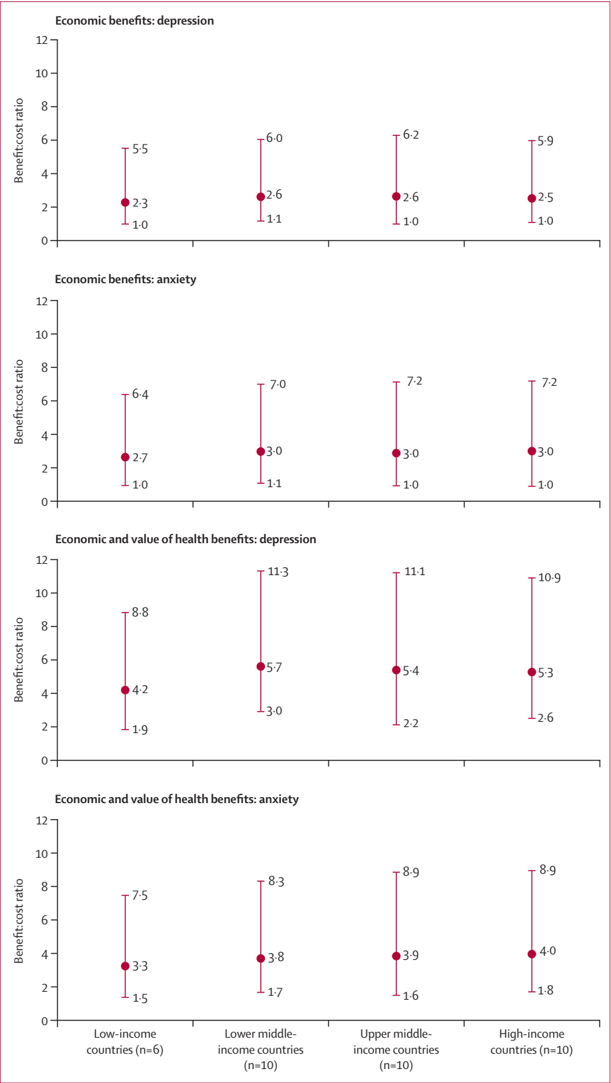
BACKGROUND: Depression and anxiety disorders are highly prevalent and disabling disorders, which result not only in an enormous amount of human misery and lost health, but also lost economic output. Here we propose a global investment case for a scaled-up response to the public health and economic burden of depression and anxiety disorders. METHODS: In this global return on investment analysis, we used the mental health module of the OneHealth tool to calculate treatment costs and health outcomes in 36 countries between 2016 and 2030. We assumed a linear increase in treatment coverage. We factored in a modest improvement of 5% in both the ability to work and productivity at work as a result of treatment, subsequently mapped to the prevailing rates of labour participation and gross domestic product (GDP) per worker in each country. FINDINGS: The net present value of investment needed over the period 2016-30 to substantially scale up effective treatment coverage for depression and anxiety disorders is estimated to be US$147 billion. The expected returns to this investment are also substantial. In terms of health impact, scaled-up treatment leads to 43 million extra years of healthy life over the scale-up period. Placing an economic value on these healthy life-years produces a net present value of $310 billion. As well as these intrinsic benefits associated with improved health, scaled-up treatment of common mental disorders also leads to large economic productivity gains (a net present value of $230 billion for scaled-up depression treatment and $169 billion for anxiety disorders). Across country income groups, resulting benefit to cost ratios amount to 2·3-3·0 to 1 when economic benefits only are considered, and 3·3-5·7 to 1 when the value of health returns is also included. INTERPRETATION: Return on investment analysis of the kind reported here can contribute strongly to a balanced investment case for enhanced action to address the large and growing burden of common mental disorders worldwide. FUNDING: Grand Challenges Canada.
Overview
The claims and statistics of this paper haven’t been checked yet.
Free: it reads the open-access text and checks the first 5 claims that cite a source we can check. Create a free account to check every claim.
Integrity signals
Registry
Cites
Statistics
Figures
Verification
Claims the paper makes
The claims and statistics of this paper haven’t been checked yet.
Free: it reads the open-access text and checks the first 5 claims that cite a source we can check. Create a free account to check every claim.
Claims other papers make about this one
Each is checked against this paper’s own text: does it say what the citing paper says it does?
The cited source says what the claim attributes to it.
In the citing paper
“Even in high-income countries, depression treatment rates are often below 30% (16, 17).”
From Personalised depression forecasting using mobile sensor data and ecological momentary assessment (2022) · cites this paper as [16]
The cited source says what the claim attributes to it.
In the citing paper
“Furthermore, the uptake of therapies is low, even in high-income countries (Chisholm et al. 2016), and one reason may be that therapies are not sufficiently acceptable to patients.”
From The Role of Common Factors in Psychotherapy Outcomes (2019) · cites this paper as Chisholm et al. 2016
The cited source says what the claim attributes to it.
In the citing paper
“Economic modelling work for the general population in all WHO regions indicates that investment in both pharmacological and psychological therapies can be costeffective even in the most resource-constrained regions of the world. 444,445”
From The Lancet Psychiatry Commission on youth mental health (2024) · cites this paper as [445]
In the citing paper
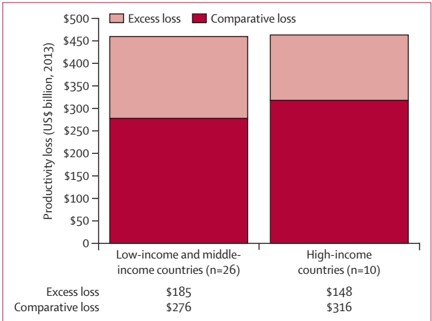
“NCDs also place a heavy economic burden on countries, with the annual lost productivity attributable to depression and anxiety disorders worldwide, for example, estimated in 2013 to be US$ 900 billion 6 .”
From Integrated care for people with long-term mental and physical health conditions in low-income and middle-income countries (2019) · cites this paper as [6]
Self-check
Percentages, sums and reported differences re-computed from the paper’s own numbers.
The self-check needs the paper’s full text.
Citations
Cites
Transforming Our World: The 2030 Agenda for Sustainable Development
(2018) · A New Era in Global Health · doi:10.1891/9780826190123.ap02 · Cited by 19,351
Awais, A. (2015) · Data Archiving and Networked Services (DANS) · doi:10.17632/zcvgc6m58h.1 · Cited by 6,707
Whiteford, H. A., Degenhardt, L., Rehm, J., Baxter, A. J., Ferrari, A. J., Erskine, H. E., Charlson, F. J., Norman, R. E., Flaxman, A. D., Johns, N., et al. (2013) · The Lancet · doi:10.1016/s0140-6736(13)61611-6 · Cited by 6,006
No health without mental health
Prince, M., Patel, V., Saxena, S., Maj, M., Maselko, J., Phillips, M. R., & Rahman, A. (2007) · The Lancet · doi:10.1016/s0140-6736(07)61238-0 · Cited by 3,753
Self-citationDisease control priorities in developing countries
(2006) · Choice Reviews Online · doi:10.5860/choice.44-0343 · Cited by 3,628
(2012) · RePEc: Research Papers in Economics · Cited by 1,951
Cost of disorders of the brain in Europe 2010
Gustavsson, A., Svensson, M., Jacobi, F., Allgulander, C., Alonso, J., Beghi, E., Dodel, R., Ekman, M., Faravelli, C., Fratiglioni, L., et al. (2011) · European Neuropsychopharmacology · doi:10.1016/j.euroneuro.2011.08.008 · Cited by 1,723
Disease control priorities in developing countries
Frenk, J. (2006) · Salud Pública de México · doi:10.1590/s0036-36342006000600011 · Cited by 1,599
Global prevalence of anxiety disorders: a systematic review and meta-regression
Baxter, A. J., Scott, K. M., Vos, T., & Whiteford, H. A. (2013) · Psychological Medicine · doi:10.1017/s003329171200147x · Cited by 1,537
Ferrari, A. J., Somerville, A. J., Baxter, A. J., Norman, R., Patten, S. B., Vos, T., & Whiteford, H. A. (2013) · Psychological Medicine · doi:10.1017/s0033291712001511 · Cited by 1,230
Cited by
Items 401–500 of 1,000
Association of Cardiovascular Health With Risk of Incident Depression and Anxiety
Huang, X., Zhang, J., Liang, J., Duan, Y., Xie, W., & Zheng, F. (2023) · American Journal of Geriatric Psychiatry · doi:10.1016/j.jagp.2023.10.017 · Cited by 24
A collaborative realist review of remote measurement technologies for depression in young people
Walsh, A. E. L., Naughton, G., Sharpe, T., Zajkowska, Z., Malys, M. K., van Heerden, A. C., & Mondelli, V. (2024) · Nature Human Behaviour · doi:10.1038/s41562-023-01793-5 · Cited by 31
“depression receive treatment, which decreases to just 7–14% in low-and middle-income countries (LMICs) 9 where almost 90% of the global adolescent population reside 10 .”
Cohort Profile Update: Mental Health Online Survey in the Estonian Biobank (EstBB MHoS)
Ojalo, T., Haan, E., Kõiv, K., Kariis, H. M., Krebs, K., Uusberg, H., Sedman, T., Võsa, U., Puusepp, M., Lind, S., et al. (2024) · International Journal of Epidemiology · doi:10.1093/ije/dyae017 · Cited by 31
Epigenetic mechanisms linking early-life adversities and mental health
Cánepa, E. T., & Berardino, B. G. (2024) · Biochemical Journal · doi:10.1042/bcj20230306 · Cited by 25
Mutamba, B. B., Kohrt, B. A., Okello, J., Nakigudde, J., Opar, B. T., Musisi, S., Bazeyo, W., & de Jong, J. T. V. M. (2018) · Implementation Science · doi:10.1186/s13012-018-0785-y · Cited by 23
Guo, X., McCutcheon, R. A., Pillinger, T., Mizuno, Y., Natesan, S., Brown, K., & Howes, O. D. (2020) · Journal of Affective Disorders · doi:10.1016/j.jad.2020.07.102 · Cited by 25
Jeannotte, A. M., Hutchinson, D. M., & Kellerman, G. R. (2021) · Journal of Medical Internet Research · doi:10.2196/27774 · Cited by 28
“In the workplace, poor mental health, and its clinical counterpart mental illness, can present significant challenges to individual, team, and organizational functioning, with approximately 19% of working adults in developed countries suffering from a behavioral health disorder [2,3] and almost US $1 trillion dollars…”
Murphy, L., Jack, H. E., Concepcion, T. L., & Collins, P. Y. (2020) · Frontiers in Psychiatry · doi:10.3389/fpsyt.2020.00044 · Cited by 24
Corpas, J., Moriana, J. A., Martínez, J. F. V., & Gálvez‐Lara, M. (2020) · International Journal of Clinical and Health Psychology · doi:10.1016/j.ijchp.2020.11.002 · Cited by 27
Liu, Q., Wangqing, P., Baima, Y., Wang, S., Shen, Z., Zhou, J., Song, H., Liu, Y., Liu, X., Luo, P., et al. (2021) · Frontiers in Public Health · doi:10.3389/fpubh.2021.783687 · Cited by 24
“, drought or flood); (10) loss of the source of income/living in debt (24).”
BackgroundAvanceña, A. L. V., Kahn, J. G., & Marseille, E. A. (2022) · Clinical Drug Investigation · doi:10.1007/s40261-022-01122-0 · Cited by 29
“Our approach in constructing these treatment targets is based on previous modeling studies on the costs and benefits of scaling up mental health treatment services [29, 30].”
MethodKleynhans, D. J., Heyns, M. M., & Stander, M. W. (2022) · Frontiers in Psychology · doi:10.3389/fpsyg.2022.955300 · Cited by 38
GABA A and serotonergic receptors participation in anxiolytic effect of chalcones in adult zebrafish
Mendes, F. R. D. S., da Silva, A. W., Ferreira, M. K. A., Rebouças, E. D. L., Barbosa, I. M., da Rocha, M. N., Ribeiro, W. H. F., de Menezes, R. R. P. P. B., Magalhães, E. P., Marinho, E. M., et al. (2023) · Journal of Biomolecular Structure and Dynamics · doi:10.1080/07391102.2023.2167116 · Cited by 22
“Anxiety is a major public health problem (Chisholm et al., 2016).”
BackgroundProcess model of emotion regulation-based digital intervention for emotional problems
Qu, D., Liu, D., Cai, C., Yu, J., Zhang, Q., Liu, K., Zhang, X., Wei, Z., Tan, J., Cui, Z., et al. (2023) · Digital Health · doi:10.1177/20552076231187476 · Cited by 20
Spatial transcriptomic analysis of the mouse brain following chronic social defeat stress
Wang, T., Song, Z., Zhao, X., Wu, Y., Wu, L., Haghparast, A., & Wu, H. (2023) · Exploration · doi:10.1002/exp.20220133 · Cited by 28
Games for the Assessment and Treatment of Mental Health
Mandryk, R. L., Birk, M. V., Lobel, A., van Rooij, M. M. J. W., Granic, I., & Abeele, V. V. (2017) · Annual Symposium on Computer-Human Interaction in Play · doi:10.1145/3130859.3131445 · Cited by 20
Asplund, R. P., Jäderlind, A., Björk, I. H., Ljótsson, B., Carlbring, P., & Andersson, G. (2019) · Internet Interventions · doi:10.1016/j.invent.2019.100282 · Cited by 22
Rismawan, W., Marchira, C. R., & Rahmat, I. (2020) · Journal of Psychosocial Nursing and Mental Health Services · doi:10.3928/02793695-20201104-02 · Cited by 25
Rango, P. D. (2015) · European Journal of Vascular and Endovascular Surgery · doi:10.1016/j.ejvs.2015.09.021 · Cited by 25
The neurobiological mechanisms and therapeutic prospect of extracellular ATP in depression
Wang, K., Huang, S., Fu, D., Yang, X., Ma, L., Zhang, T., Zhao, W., Deng, D., Ding, Y., Zhang, Y., et al. (2024) · CNS Neuroscience & Therapeutics · doi:10.1111/cns.14536 · Cited by 22
Costos asociados con la salud mental
Torres, Y. (2018) · Revista Ciencias de la Salud · doi:10.12804/revistas.urosario.edu.co/revsalud/a.6761 · Cited by 19
Sveinsdóttir, H., Zoëga, S., Ingadóttir, B., & Blöndal, K. (2020) · Nursing Open · doi:10.1002/nop2.620 · Cited by 29
“** *p < .0 01 . the adverse health (Ghio et al. 2014) and economic (Chisholm et al., 2016) outcome if general depression is not timely treated the benefits from a follow-up may be substantial in terms of decreased suffering, medical cost and even chronic disability.”
BackgroundMacLellan, A., & Derakshan, N. (2021) · Cognitive Therapy and Research · doi:10.1007/s10608-020-10183-4 · Cited by 27
Sandin, K., Anyan, F., Osnes, K., Gjengedal, R. G. H., Leversen, J. S. R., Rème, S. E., & Hjemdal, O. (2021) · BMJ Open · doi:10.1136/bmjopen-2020-046336 · Cited by 20
“Growth mixture modelling is, therefore, exploratory, and as such more research is needed in replicating the classes that were identified in this study.”
ResultKaryotaki, E., Tordrup, D., Buntrock, C., Bertollini, R., & Cuijpers, P. J. (2016) · Epidemiology and Psychiatric Sciences · doi:10.1017/s2045796016000421 · Cited by 20
“This database has been used in a recently submitted paper, reporting a global return on investment analysis on mental health for depression and anxiety disorders (Chisholm et al. 2016).”
MethodSelf-citationRisk correlates for physical-mental multimorbidities in South Africa: a cross-sectional study
Petersen, I., Rathod, S. D., Kathree, T., Selohilwe, O., & Bhana, A. (2017) · Epidemiology and Psychiatric Sciences · doi:10.1017/s2045796017000737 · Cited by 22
“population is of concern given the negative impact, locally and globally, that CMDs have in terms of lost productivity (Mall et al. 2015; Chisholm et al. 2016).”
BackgroundMarkkula, N., Lehti, V., Adhikari, P., Peña, S., Heliste, J., Mikkonen, E., RAUTANEN, M. T., Salama, E. S. S., & Guragain, B. (2019) · Cambridge Prisms Global Mental Health · doi:10.1017/gmh.2019.15 · Cited by 21
“To increase the coverage to 30%, along with treatment coverage of other more severe psychiatric problems and including both psychosocial treatment and medications, is estimated to cost 0.56 USD per capita (Chisholm et al., 2016a).”
BackgroundInfluentialLund, C., Orkin, K., Witte, M., Walker, J., Davies, T., Haushofer, J., Murray, S. M., Bass, J., Murray, L. K., Tol, W. A., et al. (2024) · National Bureau of Economic Research · doi:10.3386/w32423 · Cited by 41
Timulak, L., Richards, D., Bhandal-Griffin, L., Healy, P., Azevedo, J., Connon, G., Martin, E., Kearney, A., O’Kelly, C., Enrique, A., et al. (2022) · Trials · doi:10.1186/s13063-022-06551-y · Cited by 19
“depression), sometimes referred to as emotional disorders (ED) [1], account for the highest prevalence of psychological disorders on a global scale [2].”
BackgroundMcDermott, R., & Dozois, D. J. A. (2019) · Journal of Experimental Psychopathology · doi:10.1177/2043808719842502 · Cited by 18
“Major depressive disorder (MDD) is one of the most common and costliest psychological disorders (Chisholm et al., 2016; Kessler et al., 2007).”
BackgroundEconomic costs of perinatal depression and anxiety in a lower middle income country: Pakistan
Bauer, A., Knapp, M. R. J., Alvi, M. H., Chaudhry, N., Grégoire, A., Malik, A., Sikander, S., Tayyaba, K., Waqas, A., & Husain, N. (2024) · Journal of Affective Disorders · doi:10.1016/j.jad.2024.04.061 · Cited by 27
A Health System–Based Investment Case for Adolescent Health
Sweeny, K., Friedman, H. S., Sheehan, P. J., Fridman, M., & Shi, H. (2019) · Journal of Adolescent Health · doi:10.1016/j.jadohealth.2019.03.023 · Cited by 22
Self-citationPromoting Mental Health on Social Media: A Content Analysis of Organizational Tweets
Ju, R., Jia, M., & Cheng, J. (2021) · Health Communication · doi:10.1080/10410236.2021.2018834 · Cited by 27
“These studies also found that mental health presented in news articles is associated with stigma instead of focusing on promoting the awareness of mental health (Chisholm et al., 2016).”
BackgroundInfluentialMwangala, P. N., Nasambu, C., Wagner, R. G., Newton, C. R. J. C., & Abubakar, A. A. (2022) · Journal of the International AIDS Society · doi:10.1002/jia2.25977 · Cited by 23
Rad, M. S., Moohebati, M., & Mohajeri, S. A. (2022) · Inflammopharmacology · doi:10.1007/s10787-022-01083-y · Cited by 22
“Many health problems mainly psychiatric ones are affected by anxiety (Chisholm et al. 2016; Kessler et al. 2012).”
BackgroundWhitfield, J., Owens, S., Bhat, A. S., Felker, B. L., Jewell, T. E., & Chwastiak, L. (2023) · Cambridge Prisms Global Mental Health · doi:10.1017/gmh.2022.60 · Cited by 33
“In low-and middle-income countries (LMICs), it has been estimated that 79 – 93% of people with depression and 85 – 95% of people with anxiety do not have access to treatment (Chisholm et al., 2016; Evans-Lacko et al., 2018).”
Pozuelo, J. R., Bradenbrink, R., Stierna, M. F., & Sterck, O. C. (2023) · BMJ Mental Health · doi:10.1136/bmjment-2023-300773 · Cited by 38
“25 They are also more likely to have worse socioeconomic outcomes.”
Background(2023) · doi:10.2196/47350 · Cited by 18
“Several studies ha ve shown the immense economic challenge these disorders pose to communities and society at large as a result of health and social care expenditures [7,8].”
Watanabe, K., Okusa, S., Sato, M., Miura, H., Morimoto, M., & Tsutsumi, A. (2023) · JMIR Formative Research · doi:10.2196/51334 · Cited by 19
“Moreover, the annual global economic cost attributed to mental health issues is estimated to reach approximately USD 1 trillion, primarily due to reduced productivity [1,6,7].”
BackgroundResearch progress on antidepressant effects and mechanisms of berberine
Gao, Y., Nie, K., Wang, H., Dong, H., & Tang, Y. (2024) · Frontiers in Pharmacology · doi:10.3389/fphar.2024.1331440 · Cited by 25
Lin, F., Chen, X., Cai, Y., Shi, Y., Wang, Y.-Q., Zeng, Y., Ye, Q., Chen, X., Wu, X., Shi, Y., et al. (2024) · Journal of Affective Disorders · doi:10.1016/j.jad.2024.03.135 · Cited by 18
Psychotherapy for depression and anxiety in low- and middle-income countries
Cuijpers, P., Eylem, O., Karyotaki, E., Zhou, X., & Sijbrandij, M. (2019) · Global Mental Health and Psychotherapy · doi:10.1016/b978-0-12-814932-4.00008-2 · Cited by 15
Self-citationEn busca de nuestra mejor versión: pericia y excelencia en Psicología Clínica
Prado-Abril, J., Sánchez-Reales, S., & Inchausti, F. (2017) · Ansiedad y Estrés · doi:10.1016/j.anyes.2017.06.001 · Cited by 24
Cued Fear Conditioning in Carioca High- and Low-Conditioned Freezing Rats
Macêdo-Souza, C., Maisonnette, S. S., Filgueiras, C. C., Landeira-Fernández, J., & Krahe, T. E. (2020) · Frontiers in Behavioral Neuroscience · doi:10.3389/fnbeh.2019.00285 · Cited by 19
Global mental health in low and middle income, especially African countries
Freeman, M. (2016) · Epidemiology and Psychiatric Sciences · doi:10.1017/s2045796016000482 · Cited by 18
“Chisholm and others show that for each dollar invested in depression and anxiety disorders there will be a return of around $4 (Chisholm et al. 2016), and though this is extremely relevant from a cost-effectiveness point of view the initial investment has to come from somewhere and hence may never…”
Background(2023) · doi:10.2196/preprints.47350 · Cited by 18
García-Durán, L., Flores‐Burgess, A., Cantero-García, N., Puigcerver, A., Narváez, J. Á., Fuxé, K., Santín, L. J., Millón, C., & Díaz-Cabiale, Z. (2021) · International Journal of Molecular Sciences · doi:10.3390/ijms221910848 · Cited by 23
Youth Mental Health Screening and Linkage to Care
Karcher, N. R., Hicks, R. R., Schiffman, J. E., Asarnow, J. R., Calkins, M. E., Dauberman, J. L., Garrett, C., Koli, R. L., Larrauri, C. A., Loewy, R. L., et al. (2023) · Psychiatric Services · doi:10.1176/appi.ps.202200008 · Cited by 19
“Other considerations for scaling up the linkage-to-care program include having uniform training procedures and adequate resources; monitoring outcomes, including cost-effectiveness of the program; and attending to unique barriers encountered at individual sites (Table 1) (see the online supplement for additional consi…”
BackgroundTong, A. C. Y., Ho, F. S., Chu, O. H., & Mak, W. W. S. (2023) · Journal of Medical Internet Research · doi:10.2196/39029 · Cited by 21
“At the macro level, they have tremendous economic costs worldwide [7,8].”
Wu, K.-G., Chen, S., Hu, Y.-N., Mei, S., Chen, W.-C., Huang, X., Xu, Z., Li, M., Zhong, B., & Liu, X. (2023) · Frontiers in Psychiatry · doi:10.3389/fpsyt.2023.1179417 · Cited by 20
Burden and Indirect Costs of Mental Disorders
Razzouk, D. (2017) · Springer eBooks · doi:10.1007/978-3-319-55266-8_25 · Cited by 19
Caro, D. C., Rivera, D. E., Ocampo, Y. C., Franco, L. A., & Salas, R. D. (2018) · Evidence-based Complementary and Alternative Medicine · doi:10.1155/2018/5921514 · Cited by 28
Lifetime treatment of DSM‐IV mental disorders in the Saudi National Mental Health Survey
Al‐Subaie, A. S., Altwaijri, Y. A., Alhabeeb, A. A., Bilal, L., Almeharish, A., Sampson, N. A., Liu, H., & Kessler, R. C. (2020) · International Journal of Methods in Psychiatric Research · doi:10.1002/mpr.1837 · Cited by 19
Bubolz, S., Mayer, G., Gronewold, N., Hilbel, T., & Schultz, J. (2020) · Journal of Medical Internet Research · doi:10.2196/16136 · Cited by 23
“Additionally, the economic consequences of depression are extensive, and the treatment costs are increasing [8].”
Norton, P. J., Provencher, M. D., Kilby, C. J., & Roberge, P. (2021) · Depression and Anxiety · doi:10.1002/da.23184 · Cited by 23
The cultural politics of mental illness: toward a rights-based approach to global mental health
Cosgrove, L., Morrill, Z., Karter, J. M., Valdes, E., & Cheng, C.-P. (2021) · Community Mental Health Journal · doi:10.1007/s10597-020-00720-6 · Cited by 16
Olisaeloka, L., Udokanma, E. E., & Ashraf, A. (2024) · International Journal of Mental Health Systems · doi:10.1186/s13033-024-00642-w · Cited by 23
“Lack of treatment despite increasing prevalence results not only in disability but also productivity losses, which cost the global economy $1trillion annually [10].”
BackgroundBellón, J. Á., Cerón, S. C., Rodríguez-Bayón, A., Ballesta-Rodríguez, M. I., Mendive, J. M., & Moreno-Peral, P. (2020) · Gaceta Sanitaria · doi:10.1016/j.gaceta.2020.05.013 · Cited by 44
Maestas-Olguin, C. R., Fennelly, J. W., & Pentkowski, N. S. (2021) · Neuroscience Letters · doi:10.1016/j.neulet.2021.135777 · Cited by 18
Feng, L., Li, Z., Gu, X., Jiang, J., & Liu, X. (2021) · Gastroenterology Research and Practice · doi:10.1155/2021/6637084 · Cited by 17
Park, S. J., Wai, A., Pavithran, K., Kunheri, B., & Valsraj, K. M. (2021) · Psycho-Oncology · doi:10.1002/pon.5796 · Cited by 17
“therefore have greater impact functionally and economically at a population level.(40) Severe mental illness sufferers in low‐ and middle‐income countries face greater health disparities than the general population with little access to mental health treatment.”
BackgroundVorobyeva, N. S., & Kozlova, A. A. (2022) · Frontiers in Pharmacology · doi:10.3389/fphar.2022.927984 · Cited by 24
“However, the current treatment approaches for psychiatric conditions have limitations (Chisholm et al., 2016; Dell’osso and Lader, 2013).”
BackgroundMa, R., Romano, E., Vancampfort, D., Firth, J., Stubbs, B., & Koyanagi, A. (2022) · Journal of Affective Disorders · doi:10.1016/j.jad.2022.10.002 · Cited by 22
Mercedes, B. P. D. C., da Silva, E. N., Carregaro, R. L., & Miasso, A. I. (2022) · Expert Review of Pharmacoeconomics & Outcomes Research · doi:10.1080/14737167.2023.2154659 · Cited by 17
“In low- and middleincome countries, investment in mental health is less than 1% of the health expenditure and only 20 to 40% of people receive treatment [3].”
BackgroundAssociation between niacin intake and depression: A nationwide cross-sectional study
Zhao, L., Guo, S., Yang, J., Wang, Q., & Lu, X. (2023) · Journal of Affective Disorders · doi:10.1016/j.jad.2023.08.053 · Cited by 17
Wijnen, B. F. M., ten Have, M., de Graaf, R., van der Hoek, H. J., Lokkerbol, J., & Smit, F. (2023) · The European Journal of Health Economics · doi:10.1007/s10198-023-01634-2 · Cited by 20
“…have a substantial impact at both the individual level (e.g., lower quality of life, not being able to achieve full potential in life) as well as the societal level (e.g., productivity losses and healthcare costs), creating a pressing need to address this staggering and costly burden [4, 5].”
Self-citationWeisler, R. H., Ota, A., Tsuneyoshi, K., Perry, P. P., Weiller, E., Baker, R. A., & Sheehan, D. V. (2016) · Journal of Affective Disorders · doi:10.1016/j.jad.2016.06.001 · Cited by 18
Scorza, P., Masyn, K. E., Salomon, J. A., & Betancourt, T. S. (2018) · PLoS ONE · doi:10.1371/journal.pone.0198429 · Cited by 17
Accessible and Cost-Effective Mental Health Care Using E-Mental Health (EMH)
Krausz, R. M., Ramsey, D., Wetterlin, F. M., Tabiova, K., & Thapliyal, A. (2018) · Springer eBooks · doi:10.1007/978-3-319-70554-5_8 · Cited by 20
Depression and economic status: evidence for non-linear patterns in women from Mexico
Anand, P., Esposito, L., & Villaseñor, A. (2018) · Journal of Mental Health · doi:10.1080/09638237.2018.1521918 · Cited by 18
“As a result, investments in the treatment of depression could yield substantial social returns (Chisholm et al 2016), though only a minority of affected individuals currently receive adequate treatment (Thornicroft et al 2017).”
Hodge, D. R. (2018) · Social Work Education · doi:10.1080/02615479.2018.1557630 · Cited by 16
“The global economic costs of untreated mental health problems is estimated to be approximately $1 trillion USD per year (Chisholm et al., 2016).”
BackgroundAre There Heterogeneous Impacts of National Income on Mental Health?
Huang, Z., Li, T., & Xu, M. (2020) · International Journal of Environmental Research and Public Health · doi:10.3390/ijerph17207530 · Cited by 18
“Two of the most common mental health conditions, depression and anxiety [3,4], which are highly prevalent and disabling disorders, result not only in an enormous amount of human misery and loss of health, but also in a reduction in economic output [5].”
BackgroundSex differences in specific aspects of two animal tests of anxiety-like behavior
Sergio, T. D. O., Wetherill, L. F., Kwok, C., Khoyloo, F., & Hopf, F. W. (2021) · Psychopharmacology · doi:10.1007/s00213-021-05893-w · Cited by 19
Sultana, S., Zaman, S., Chowdhury, A. A., Hasan, I., Haque, M. I., Hossain, M. K., Ahmed, K. R., Chakraborty, P. A., & Hawlader, M. D. H. (2021) · Heliyon · doi:10.1016/j.heliyon.2021.e07493 · Cited by 16
“Apart from health consequences, depression and anxiety have severe financial implications with an estimated annual cost of US$1trillion [9].”
BackgroundAkhtar, A., Koyiet, P., Rahman, A., Schafer, A., Hamdani, S. U., Cuijpers, P., Sijbrandij, M., & Bryant, R. A. (2022) · Depression and Anxiety · doi:10.1002/da.23221 · Cited by 15
“Despite the prevalence of mental health problems in LMICs, including people living in humanitarian contexts, it is estimated that at least 90% of adults with mental health needs do not receive minimum adequate care (Chisholm et al., 2016).”
BackgroundSelf-citationScaling up public mental health care in Sub-Saharan Africa: insights from infectious disease
Meffert, S. M., Lawhorn, C., Ongeri, L., Bukusi, E. A., Campbell, H. R., Goosby, E., Bertozzi, S., & Njuguna, S. (2021) · Cambridge Prisms Global Mental Health · doi:10.1017/gmh.2021.41 · Cited by 18
“Mental disorders, particularly depression, are well known to negatively impact economic productivity and absenteeism (Chisholm et al., 2016).”
BackgroundInfluentialAssessment of Population Well-being With the Mental Health Quotient: Validation Study
Newson, J. J., Pastukh, V., & Thiagarajan, T. C. (2022) · JMIR Mental Health · doi:10.2196/34105 · Cited by 23
“For example, evidence suggests a clear relationship between mental health and well-being and productivity, resulting in both absenteeism and presenteeism [19-25], an increased prevalence of burnout [26,27], and significant personal and economic loss [28-32].”
BackgroundEffects of Mirabegron on Anxiety and Depression in Female Patients with Overactive Bladder
Kinjo, M., Yamaguchi, T., Tambo, M., Okegawa, T., & Fukuhara, H. (2019) · Urologia Internationalis · doi:10.1159/000497282 · Cited by 17
Iemmi, V. (2021) · The Lancet Psychiatry · doi:10.1016/s2215-0366(20)30511-3 · Cited by 17
Child and Youth Mental Health: Investing in the Front End
Kutcher, S. (2017) · The Canadian Journal of Psychiatry · doi:10.1177/0706743717698670 · Cited by 23
“Early identification, followed by rapid access to effective interventions, can be expected to lessen the burden of illness significantly, with substantial return on initial investments in the delivery of care.(3) Early investment in treatment for young people can also be expected to pay a population dividend, because…”
BackgroundSikorski, F., König, H.-H., Wegscheider, K., Zapf, A., Löwe, B., & Kohlmann, S. (2021) · Internet Interventions · doi:10.1016/j.invent.2021.100435 · Cited by 15
“Untreated depression leads to rising healthcare costs, has an increased likelihood of a chronic course and treatment resistance and, most importantly, results in an increased disease burden (Chisholm et al., 2016; Fichter et al., 2010; Ghio et al., 2014).”
BackgroundHuang, C., He, X., & Zhang, X. (2024) · Frontiers in Psychology · doi:10.3389/fpsyg.2024.1410422 · Cited by 17
Smith, O. R. F., Clark, D. M., Hensing, G. K. E., Layard, R., & Knapstad, M. (2025) · Psychological Medicine · doi:10.1017/s003329172500025x · Cited by 15
“Scaled to annual national numbers illustrate that small gains can have a large societal, health economic impact (Chisholm et al., 2016; Layard & Clark, 2015); Even if one conservatively assumes a 50% lower real life effect size due to possible overestimation in underpowered studies (Button et al.,…”
Huang, X., Chen, Z., Xu, Z. N., Liu, X., Lv, Y., & Yu, L. (2025) · Brain Sciences · doi:10.3390/brainsci15080875 · Cited by 22
Zubieta, C. S., Lichtl, A. J., Trautman, K., Mentor, S., Cagliero, D., Mensa‐Kwao, A., Paige, O., McCarthy, S. H., Walmer, D. K., & Kaiser, B. N. (2019) · Culture Medicine and Psychiatry · doi:10.1007/s11013-019-09640-x · Cited by 17
Logan, J., & Karter, J. M. (2022) · Frontiers in Sociology · doi:10.3389/fsoc.2022.784390 · Cited by 19
Suter, J., Irvine, A. L., & Howorth, C. (2022) · International Small Business Journal Researching Entrepreneurship · doi:10.1177/02662426221084252 · Cited by 23
Rosario-Hernández, E., Rovira-Millán, L. V., Merino‐Soto, C., & Angulo-Ramos, M. (2023) · Frontiers in Psychiatry · doi:10.3389/fpsyt.2023.1024676 · Cited by 20
Factor structure of the Depression, Anxiety and Stress Scale among caregivers in Southeastern Europe
Murphy, H., Prandstetter, K., Ward, C. L., Hutchings, J., Kunovski, I., Tăut, D., & Foran, H. M. (2023) · Family Relations · doi:10.1111/fare.12882 · Cited by 18
Lopes, R. D. C. T., da Rocha, G. C., Svacina, M. A., Meyer, B., Šipka, D., & Berger, T. (2023) · JMIR Formative Research · doi:10.2196/46326 · Cited by 15
“The current treatment coverage for upper middle–income countries, such as Brazil, is estimated to be only 21% of people with depression, which results in a treatment gap of 79% of people with untreated depression [8].”
Factors Influencing the Health Care Utilization Among People With Depression and/or Anxiety Symptoms
Lee, Y. J., Palmer, J. E., Cline, A. C., & Lee, H. (2023) · Journal of the American Psychiatric Nurses Association · doi:10.1177/10783903231197655 · Cited by 16
“A pertinent systematic review posits that providing appropriate treatment for depression and anxiety could yield an additional 43 million years of healthy life from 2016 to 2030, potentially contributing $310 billion to society (Chisholm et al., 2016).”
Murphy, J., Noble, J. M., Chakraborty, P. A., Michlig, G. J., Michalak, E. E., Greenshaw, A. J., & Lam, R. W. M. (2023) · PLoS ONE · doi:10.1371/journal.pone.0283057 · Cited by 20
Löwe, B., Scherer, M., Braunschneider, L., Marx, G., Eisele, M., Mallon, T., Schneider, A., Linde, K., Allwang, C., Joos, S., et al. (2024) · The Lancet Psychiatry · doi:10.1016/s2215-0366(24)00035-x · Cited by 19
It’s a long shot, but it just might work! Perspectives on the future of medicine
Wicks, P. J., Hotopf, M. H., Narayan, V. A., Basch, E., Weatherall, J., & Gray, M. (2016) · BMC Medicine · doi:10.1186/s12916-016-0727-y · Cited by 16
“Amongst these, neuropsychiatric and neurodegenerative conditions place the maximum burden on societies and individuals as measured by years lived with disability, care-giver burden, and productivity loss [20, 21].”
BackgroundTrends in Child and Adolescent Mental Health Prevalence, Outcomes, and Inequalities
Collishaw, S., & Sellers, R. (2020) · Mental health and illness worldwide · doi:10.1007/978-981-10-0753-8_9-1 · Cited by 26
Aydın, S., Crone, M. R., Siebelink, B. M., Vermeiren, R. R. J. M., Numans, M. E., & Westenberg, P. M. (2020) · BMJ Open · doi:10.1136/bmjopen-2019-035799 · Cited by 20
Doblytė, S. (2020) · Qualitative Health Research · doi:10.1177/1049732320918531 · Cited by 21
Aguilera‐Martín, Á., Gálvez‐Lara, M., Cuadrado, F., Moreno, E. M., García‐Torres, F., Martínez, J. F. V., Corpas, J., Jurado-González, F. J., Muñoz‐Navarro, R., González‐Blanch, C., et al. (2022) · BMC Psychiatry · doi:10.1186/s12888-022-03726-4 · Cited by 24
“[10], an increase in investment in care for depression and anxiety disorders would achieve very positive, long-term, costbenefit ratios, substantially reducing the number of cases and increasing the number of healthy life-years.”
BackgroundBushnell, G., Gaynes, B. N., Compton, S. N., Dusetzina, S. B., Brookhart, M. A., & Stürmer, T. (2018) · Depression and Anxiety · doi:10.1002/da.22849 · Cited by 16
“As pediatric anxiety disorders can be chronic and persistent (Wehry, Beesdo-Baum, Hennelly, Connolly, & Strawn, 2015) and management of anxiety disorders can positively impact health outcomes and economic production (Chisholm et al., 2016), future research should examine when and how to optimize care to reduce event o…”
BackgroundTopooco, N. (2018) · doi:10.3384/diss.diva-148016 · Cited by 19
“As a result, there is currently a crisis in mental health care, where public care systems worldwide are grossly underpowered to manage the burden of depression (Chisholm et al., 2016).”
BackgroundInfluential
Metadata
- Authors
- Chisholm, D., Sweeny, K., Sheehan, P., Rasmussen, B., Smit, F., Cuijpers, P., & Saxena, S.
- Affiliations
- World Health Organization (CH)
- Trimbos Institute (NL)
- Vrije Universiteit Amsterdam (NL)
- Corresponding author
- Chisholm, Dan
- Venue
- The Lancet Psychiatry
- Publisher
- Elsevier BV
- Published
- 2016-05
- Volume
- 3
- Issue
- 5
- Pages
- 415-424
- ISSN
- 2215-0366 (ISSN-L)
- OpenAlex
- W2340346722
- Cited by
- 1,451
- References
- 39
- Citations by year
- 2026: 126 · 2025: 136 · 2024: 164 · 2023: 178 · 2022: 206 · 2021: 192 · 2020: 144 · 2019: 116 · 2018: 83 · 2017: 71 · 2016: 32
- FWCI
- 158.29
- Type
- journal article
- Language
- en
- Open access
- hybrid
- doi.org
- Licence
- cc-by
- www.elsevier.com/tdm/userlicense/1.0/ (tdm)
- creativecommons.org/licenses/by/4.0/ (vor)
- Locations
- The Lancet Psychiatry (publishedVersion, cc-by)
- PubMed (publishedVersion)
- Amsterdam UMC (VU Amsterdam) - Institutional Repository (publishedVersion)
- VU Research Portal (publishedVersion, other-oa)
- Pure Amsterdam UMC (submittedVersion, other-oa)
- Victoria University Research Repository (Victoria University) (submittedVersion)
- Data Archiving and Networked Services (DANS) (submittedVersion, other-oa)
- Data Archiving and Networked Services (DANS) (submittedVersion)
- Funders
- European Union under the 7th Framework programme (Grant agreement 305968)
- Topics
- Health Sciences › Medicine › Psychiatry and Mental health › Mental Health Treatment and Access
- Social Sciences › Economics, Econometrics and Finance › Economics and Econometrics › Health Systems, Economic Evaluations, Quality of Life
- Health Sciences › Medicine › Pharmacology (medical) › Treatment of Major Depression
- Keywords
- depression, anxiety disorders, common mental disorders, return on investment, mental health investment, economic burden of mental illness, productivity improvement, healthy life years, treatment coverage, benefit-cost ratio
- MeSH terms
- Anxiety, Cost-Benefit Analysis, Depression, Humans, Mental Health Services, Global Health, Health Care Costs, Cost of Illness
About these checks
Registry, retraction, Cites and statistics results are computed, not judged, with one exception: a printed reference that no index lists is read once by a model before it counts as a citation error. Claims are extracted by a model and kept only when their quote appears verbatim in the text; each cited source is then checked, with a model’s help, for whether it says what the claim relies on. Those verdicts can be wrong — read the claim’s quote and the cited source before relying on one.
Statistics and arithmetic are recomputed, not judged.
Confidence bands are shown only for fields calibrated on our annotated test set. None is calibrated yet, so no band is shown.
What counts as a claim ›How we measure confidence ›How we check this ›
Are you an author, or do you see a problem with this page? Request a review
Data sources
Bibliographic data: Semantic Scholar, OpenAlex, Crossref.
Contains information from the Semantic Scholar Academic Graph Datasets, made available under the ODC Attribution License (ODC-BY 1.0).
Semantic Scholar’s data is described in: Kinney, R., et al. (2023). The Semantic Scholar Open Data Platform. arXiv:2301.10140.
