

Scaling-up treatment of depression and anxiety: a global return on investment analysis
Open accessThe DOI matches its Crossref record; 38 of the 39 references it cites were found in a registry or an index.
Abstract
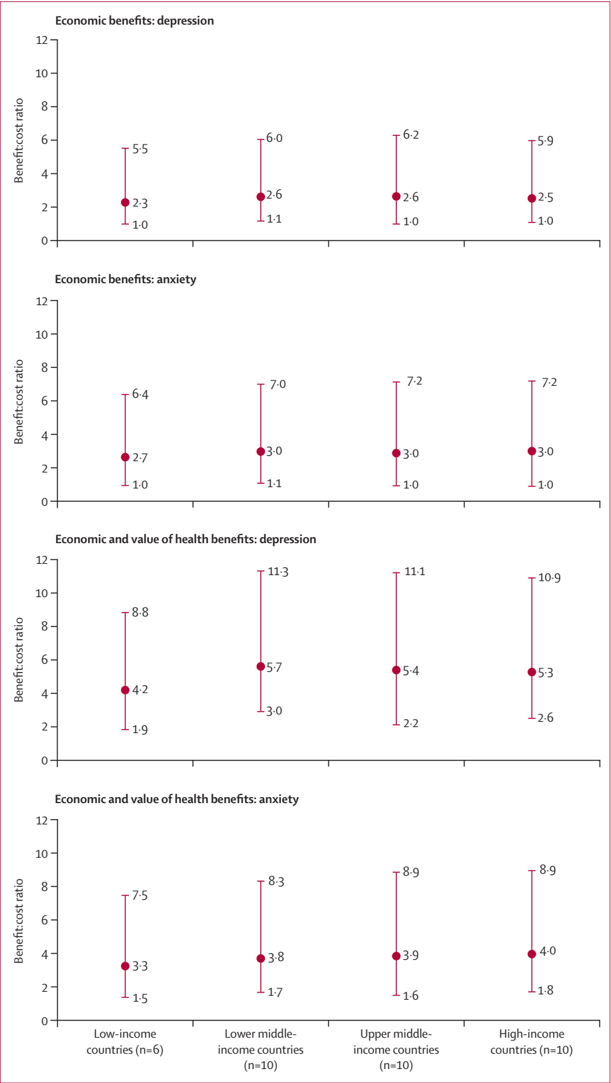
BACKGROUND: Depression and anxiety disorders are highly prevalent and disabling disorders, which result not only in an enormous amount of human misery and lost health, but also lost economic output. Here we propose a global investment case for a scaled-up response to the public health and economic burden of depression and anxiety disorders. METHODS: In this global return on investment analysis, we used the mental health module of the OneHealth tool to calculate treatment costs and health outcomes in 36 countries between 2016 and 2030. We assumed a linear increase in treatment coverage. We factored in a modest improvement of 5% in both the ability to work and productivity at work as a result of treatment, subsequently mapped to the prevailing rates of labour participation and gross domestic product (GDP) per worker in each country. FINDINGS: The net present value of investment needed over the period 2016-30 to substantially scale up effective treatment coverage for depression and anxiety disorders is estimated to be US$147 billion. The expected returns to this investment are also substantial. In terms of health impact, scaled-up treatment leads to 43 million extra years of healthy life over the scale-up period. Placing an economic value on these healthy life-years produces a net present value of $310 billion. As well as these intrinsic benefits associated with improved health, scaled-up treatment of common mental disorders also leads to large economic productivity gains (a net present value of $230 billion for scaled-up depression treatment and $169 billion for anxiety disorders). Across country income groups, resulting benefit to cost ratios amount to 2·3-3·0 to 1 when economic benefits only are considered, and 3·3-5·7 to 1 when the value of health returns is also included. INTERPRETATION: Return on investment analysis of the kind reported here can contribute strongly to a balanced investment case for enhanced action to address the large and growing burden of common mental disorders worldwide. FUNDING: Grand Challenges Canada.
Overview
The claims and statistics of this paper haven’t been checked yet.
Free: it reads the open-access text and checks the first 5 claims that cite a source we can check. Create a free account to check every claim.
Integrity signals
Registry
Cites
Statistics
Figures
Verification
Claims the paper makes
The claims and statistics of this paper haven’t been checked yet.
Free: it reads the open-access text and checks the first 5 claims that cite a source we can check. Create a free account to check every claim.
Claims other papers make about this one
Each is checked against this paper’s own text: does it say what the citing paper says it does?
The cited source says what the claim attributes to it.
In the citing paper
“Even in high-income countries, depression treatment rates are often below 30% (16, 17).”
From Personalised depression forecasting using mobile sensor data and ecological momentary assessment (2022) · cites this paper as [16]
The cited source says what the claim attributes to it.
In the citing paper
“Furthermore, the uptake of therapies is low, even in high-income countries (Chisholm et al. 2016), and one reason may be that therapies are not sufficiently acceptable to patients.”
From The Role of Common Factors in Psychotherapy Outcomes (2019) · cites this paper as Chisholm et al. 2016
The cited source says what the claim attributes to it.
In the citing paper
“Economic modelling work for the general population in all WHO regions indicates that investment in both pharmacological and psychological therapies can be costeffective even in the most resource-constrained regions of the world. 444,445”
From The Lancet Psychiatry Commission on youth mental health (2024) · cites this paper as [445]
In the citing paper
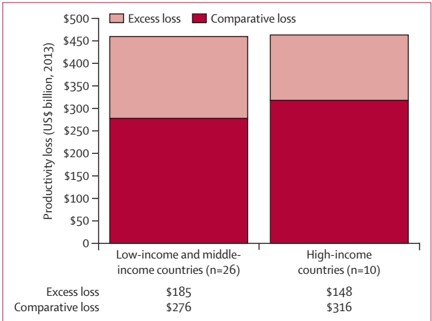
“NCDs also place a heavy economic burden on countries, with the annual lost productivity attributable to depression and anxiety disorders worldwide, for example, estimated in 2013 to be US$ 900 billion 6 .”
From Integrated care for people with long-term mental and physical health conditions in low-income and middle-income countries (2019) · cites this paper as [6]
Self-check
Percentages, sums and reported differences re-computed from the paper’s own numbers.
The self-check needs the paper’s full text.
Citations
Cites
Transforming Our World: The 2030 Agenda for Sustainable Development
(2018) · A New Era in Global Health · doi:10.1891/9780826190123.ap02 · Cited by 19,351
Awais, A. (2015) · Data Archiving and Networked Services (DANS) · doi:10.17632/zcvgc6m58h.1 · Cited by 6,707
Whiteford, H. A., Degenhardt, L., Rehm, J., Baxter, A. J., Ferrari, A. J., Erskine, H. E., Charlson, F. J., Norman, R. E., Flaxman, A. D., Johns, N., et al. (2013) · The Lancet · doi:10.1016/s0140-6736(13)61611-6 · Cited by 6,006
No health without mental health
Prince, M., Patel, V., Saxena, S., Maj, M., Maselko, J., Phillips, M. R., & Rahman, A. (2007) · The Lancet · doi:10.1016/s0140-6736(07)61238-0 · Cited by 3,753
Self-citationDisease control priorities in developing countries
(2006) · Choice Reviews Online · doi:10.5860/choice.44-0343 · Cited by 3,628
(2012) · RePEc: Research Papers in Economics · Cited by 1,951
Cost of disorders of the brain in Europe 2010
Gustavsson, A., Svensson, M., Jacobi, F., Allgulander, C., Alonso, J., Beghi, E., Dodel, R., Ekman, M., Faravelli, C., Fratiglioni, L., et al. (2011) · European Neuropsychopharmacology · doi:10.1016/j.euroneuro.2011.08.008 · Cited by 1,723
Disease control priorities in developing countries
Frenk, J. (2006) · Salud Pública de México · doi:10.1590/s0036-36342006000600011 · Cited by 1,599
Global prevalence of anxiety disorders: a systematic review and meta-regression
Baxter, A. J., Scott, K. M., Vos, T., & Whiteford, H. A. (2013) · Psychological Medicine · doi:10.1017/s003329171200147x · Cited by 1,537
Ferrari, A. J., Somerville, A. J., Baxter, A. J., Norman, R., Patten, S. B., Vos, T., & Whiteford, H. A. (2013) · Psychological Medicine · doi:10.1017/s0033291712001511 · Cited by 1,230
Cited by
Items 601–700 of 1,000
Ezawa, I. D., Robinson, N., & Hollon, S. D. (2024) · Annual Review of Clinical Psychology · doi:10.1146/annurev-clinpsy-080822-040442 · Cited by 11
Barbic, S. P., Cano, S., & Mathias, S. (2018) · Journal of Physics Conference Series · doi:10.1088/1742-6596/1044/1/012069 · Cited by 10
Ibrahim, M., Malik, M. R., & Noor, Z. (2022) · Cambridge Prisms Global Mental Health · doi:10.1017/gmh.2022.4 · Cited by 9
“A 2016 cost–benefit analysis of investing in mental health treatment for depression and anxiety in 36 low/middle- and high-income countries for the 15 years from 2016 to 2030 concluded that there would be a fourfold return on investment for every dollar spent (Chisholm et al., 2016).”
BackgroundInfluentialTrait anxiety affects attentional bias to emotional stimuli across time: A growth curve analysis
Xing, C., Zhang, Y., Lü, H., Zhu, X., & Miao, D. (2022) · Frontiers in Neuroscience · doi:10.3389/fnins.2022.972892 · Cited by 10
“Anxiety disorders are the most prevalent mental disorders, accompanied by a high medical burden (Wittchen et al., 2011; Kessler et al., 2012; Chisholm et al., 2016).”
BackgroundBoshe, J., Brtek, V., Beima‐Sofie, K., Braitstein, P. K. A., Brooks, M. J., Denison, J. A., Donenberg, G. R., Kemigisha, E., Memiah, P. T. N., Njuguna, I. N., et al. (2022) · AIDS and Behavior · doi:10.1007/s10461-022-03876-2 · Cited by 15
High School Students’ Depression Literacy about Interventions and Prevention: A Survey in Tehran
Khorrami, Z., Sayarifard, A., Ghahari, S., Memaryan, N., Pirmoradi, M., & Ghadirian, L. (2023) · Depression Research and Treatment · doi:10.1155/2023/8540614 · Cited by 13
How mentally healthy we are during the pandemic? Findings from changed travel behavior
Yang, X., Chen, P., & Zhang, Y. (2023) · Journal of Transport & Health · doi:10.1016/j.jth.2023.101587 · Cited by 11
“Mental health is a crucial, significant, and under-supported aspect of general well-being (Chisholm et al., 2016; Layard, 2013; Patel et al., 2018), which has a greater influence on human activity than any other non-communicable illness and is associated with higher mortality rates (Chida and…”
BackgroundWu, C., Davis, M. C., Collis, H., Hughes, H. P. N., & Fang, L. (2023) · Personnel Review · doi:10.1108/pr-01-2023-0011 · Cited by 13
Frasier, R. M., Sergio, T. D. O., Starski, P. A., Grippo, A. J., & Hopf, F. W. (2023) · Frontiers in Psychiatry · doi:10.3389/fpsyt.2023.1244389 · Cited by 14
Li, G., Ji, H., Jiang, Q., Cao, H., Wang, Z., & Liu, S. (2024) · General Hospital Psychiatry · doi:10.1016/j.genhosppsych.2024.03.005 · Cited by 11
Martin, M. S., Wells, G. A., Crocker, A. G., Potter, B. K., & Colman, I. (2017) · International Journal of Methods in Psychiatric Research · doi:10.1002/mpr.1601 · Cited by 9
“A recent simulation model estimated that increasing treatment rates for depression and anxiety disorders by 20–30% would a return up to four dollars for every dollar spent on treatment (Chisholm et al., 2016).”
BackgroundCognitive behavioral therapy around the globe
Kuo, C. (2019) · Elsevier eBooks · doi:10.1016/b978-0-12-814932-4.00005-7 · Cited by 11
Ramos, S. C., & Ramos, J. A. (2019) · The Family Journal · doi:10.1177/1066480719868706 · Cited by 12
“…of depression, whose economic costs in terms of production losses, health expenditures, and social assistance (in 2010, globally) were estimated at US$2.5 trillion (Chisholm et al., 2016; Gustavsson et al., 2011; Hu, 2006) and an increase to US$6 trillion is expected by 2030 (Bloom et al., 2011).”
BackgroundInfluentialdos Santos, É. N., Molina, M. L., Mondin, T. C., Cardoso, T. D. A., da Silva, R. A., Souza, L. D. D. M., & Jansen, K. (2020) · Psychiatry Research · doi:10.1016/j.psychres.2020.112804 · Cited by 14
Yilmaz, S. K., & Bohara, A. K. (2021) · Frontiers in Public Health · doi:10.3389/fpubh.2021.563515 · Cited by 11
“00 for every $1 invested in prevention and treatment (127).”
BackgroundThe Impact of Mental Health Status on Health Consumption of the Elderly in China
Liu, W., Han, G., Yan, X., Zhang, X., Ning, G., Akhmedov, A. R., & Hunter, W. C. (2021) · International Journal of Environmental Research and Public Health · doi:10.3390/ijerph18126622 · Cited by 10
“Leaders in healthcare should pay special attention to strengthening the existing family support networks [25].”
BackgroundKarwehl, L. J., Frischkorn, J., Walter, L., & Kauffeld, S. (2022) · Work · doi:10.3233/wor-211262 · Cited by 9
Gálvez‐Lara, M., Corpas, J., Martínez, J. F. V., & Moriana, J. A. (2019) · Frontiers in Psychology · doi:10.3389/fpsyg.2018.02674 · Cited by 9
“Common mental health disorders, also called emotional disorders (EDs), are growing exponentially in recent decades (Vos et al., 2015; Chisholm et al., 2016).”
BackgroundSpirituality in the Workplace: Mindfulness-Inspired Strategies for Productivity and Self-Management
Bianchi, S. (2019) · Advances in religious and cultural studies (ARCS) book series · doi:10.4018/978-1-5225-9893-0.ch009 · Cited by 9
Feijó, J. A. F. (2021) · Universidade Estadual de Campinas. Faculdade de Ciências eBooks · doi:10.20396/isbn9786587100074.cap16 · Cited by 8
Towards mental health as a human right: The key role of lived experience
Gaynor, L. M., & Editors, O. B. O. T. P. M. (2023) · PLoS Medicine · doi:10.1371/journal.pmed.1004307 · Cited by 12
“Whilst these are undoubtedly promising developments, commitments by governments across the globe to provide the investment needed to fully implement mental health policies lag behind, despite evidence demonstrating net economic benefits of approximately three-fold returns for every $1 invested in mental healthcare [9].”
BackgroundNgo, V. K., Vu, T. T., Vu, Q. A., McBain, R. K., Yu, G., Nguyen, N. B., Nguyen, H. M. T., Ho, H. T., & Hoang, M. V. (2023) · BMC Public Health · doi:10.1186/s12889-023-16312-4 · Cited by 11
“Remarkably, the burden of depression—if unaddressed—will result in crippling economic costs, with more than 12 billion days of lost productivity every year at an estimated cost of US$925 billion [12].”
BackgroundGrocott, B. B., Battaglini, A. M., Jopling, E. N., Tracy, A., Rnic, K., Sánchez-López, Á., & LeMoult, J. (2023) · Journal of Adolescence · doi:10.1002/jad.12231 · Cited by 12
“This condition is not only common but costly; a recent study estimated that internalizing disorders cost the global economy US $1 trillion each year in lost productivity (Chisolm et al., 2016).”
BackgroundThe effect of hurricanes on mental health over the long term
Civelek, Y. (2023) · Economics & Human Biology · doi:10.1016/j.ehb.2023.101312 · Cited by 11
Islam, M. M., Siyad, A. A., & Malik, S. M. M. R. (2024) · Tropical Medicine and Health · doi:10.1186/s41182-024-00618-z · Cited by 10
“%) affect low-and middle-income countries [2–4].”
BackgroundClimate change distress and impairment in Germany
König, L., Breves, P. L., Linnemann, G. A., Hamer, T., & Suhr, R. (2024) · Frontiers in Public Health · doi:10.3389/fpubh.2024.1432881 · Cited by 12
“Besides the individual suffering of those affected, mental disorders can cause enormous economic losses (14–16).”
BackgroundLacey, C. J., Frampton, C., & Beaglehole, B. (2024) · Journal of Psychiatric Research · doi:10.1016/j.jpsychires.2024.10.032 · Cited by 10
Shan, Y., Liyuan, L., Wang, F., Lixiang, Y., Dongxu, L., Zheng, C., Qiufeng, H., Li, C., Li, S., & Zhi-gang, Y. (2025) · Journal of Affective Disorders · doi:10.1016/j.jad.2025.03.094 · Cited by 9
de Almeida, J. R. V., Barros, G. V. D. S., Valente, V. J. M. B. D. S., Santana, W. L., dos Santos, E. C. F., Aguiar, J. L. P., Farah, B. Q., & Lins-Filho, O. (2025) · Sleep Science · doi:10.1055/s-0045-1806954 · Cited by 12
“50 The literature shows that the mechanisms behind the improvement of symptoms with the antidepressant effect of structured and planned physical activity may be attributed to the regulation of physiological factors.”
Steinman, L. E., Phal, O., Srou, R., Ung, K., LoGerfo, J. P., Veith, R. C., & Harachi, T. W. (2025) · PLOS mental health. · doi:10.1371/journal.pmen.0000228 · Cited by 11
“Common mental health disorders like depression and anxiety impact one in four people around the world, resulting in lost health, misery, early death, and economic burden [2].”
South Africa’s mental health human resources dilemma: from shortage to solution
Wolvaardt, G. G., Stein, D. J., & Mumbauer, A. E. (2025) · South African Health Review · doi:10.61473/001c.142351 · Cited by 11
Influence of the inflammasome complex on psychiatric disorders: clinical and preclinical studies
Kwon, S., & Cheon, S. Y. (2021) · Expert Opinion on Therapeutic Targets · doi:10.1080/14728222.2021.2005027 · Cited by 9
Vitamin D and depression in older adults: lessons learned from observational and clinical studies
Ceolin, G., Antunes, L. D. C., Moretti, M., Rieger, D. K., & Moreira, J. D. (2022) · Nutrition Research Reviews · doi:10.1017/s0954422422000026 · Cited by 12
Tadesse, E., Merdassa, E., Abdisa, E., & Tolossa, T. (2022) · PLoS ONE · doi:10.1371/journal.pone.0260920 · Cited by 13
Trait and symptom change in group cognitive behaviour therapy for anxiety and depression
Niemeijer, M., Reinholt, N., Poulsen, S., Bach, B., Christensen, A. B., Eskildsen, A., Hvenegaard, M., Arendt, M. C. B. B., & Arnfred, S. (2023) · Clinical Psychology & Psychotherapy · doi:10.1002/cpp.2857 · Cited by 15
Tang, Y., Gierc, M. S. H., Whiteford, V., Rhodes, R. E., & Faulkner, G. (2023) · International Journal of Sport and Exercise Psychology · doi:10.1080/1612197x.2023.2225515 · Cited by 12
“The two most common mental disorders, depression and anxiety, have been estimated at a global cost of $1 trillion US dollars annually (Chisholm et al., 2016).”
Chau, L. W., Murphy, J., Nguyen, V. C., Xie, H. W., Lam, R. W. M., Minas, H., Zheng, Y., Krebs, E., Hayashi, K., Anh, S. D., et al. (2023) · PLoS ONE · doi:10.1371/journal.pone.0290328 · Cited by 9
Xie, P., Li, H.-Q., Peng, W.-L., & Yang, H. (2024) · Patient Preference and Adherence · doi:10.2147/ppa.s444800 · Cited by 8
Holsboer, F., & Ising, M. (2024) · Pharmacopsychiatry · doi:10.1055/a-2372-3549 · Cited by 9
Prado-Abril, J., Fernández‐García, X., Pérez, P. B., Rodríguez, I. D. L. V., Vilagrá, R., & Fernández-Jiménez, E. (2025) · Human Resources for Health · doi:10.1186/s12960-025-01017-z · Cited by 11
“Anxiety disorders are clinical problems that respond well to evidence-based psychological treatments [16,”
InfluentialAwareness of treatment history in family and friends, and mental health care seeking propensity
Thériault, F. L., & Colman, I. (2017) · Social Psychiatry and Psychiatric Epidemiology · doi:10.1007/s00127-017-1349-1 · Cited by 11
“3, given expected economic and health returns [9].”
BackgroundThe Economic Impact of Depression in the Workplace
Grazier, K. L. (2019) · Integrating psychiatry and primary care · doi:10.1007/978-3-030-04266-0_2 · Cited by 10
Berman, S., Mischoulon, D., & Naidoo, U. (2020) · Psychosomatics · doi:10.1016/j.psym.2020.04.010 · Cited by 13
Dowrick, C. F., Kassai, R., Lam, C. L. K., Lam, R. W. M., Manning, G., Murphy, J., Ng, C. H., & Thuraisingham, C. (2020) · Journal of Multidisciplinary Healthcare · doi:10.2147/jmdh.s271070 · Cited by 8
SHARMA, G., GUJRAL, J. S., AGARWAL, A., Jat, M. S., MOHANTY, S., & PANDEY, R. M. (2022) · The National Medical Journal of India · doi:10.25259/nmji_11_20 · Cited by 8
Fanous, M., & Daniels, J. (2020) · The Cognitive Behaviour Therapist · doi:10.1017/s1754470x20000045 · Cited by 8
“Whilst treatment provision is only one aspect of calculating cost-effectiveness at a health-service level or wider (Chisholm et al., 2016), with the assumption of five patients per group, gCBT can produce the same improvement with 60% of the time consumed in individual treatment (Burlingame et al.”
BackgroundZhang, H., Li, X., Pang, J., Zhao, X., Cao, S., Wang, X., Wang, X., & Li, H. (2020) · Frontiers in Psychiatry · doi:10.3389/fpsyt.2020.00493 · Cited by 8
Owens, M., Watkins, E. R., Bot, M., Brouwer, I. A., Roca, M., Kohls, E., Penninx, B. W. J. H., van Grootheest, G., Cabout, M., Hegerl, U., et al. (2020) · BMJ Open · doi:10.1136/bmjopen-2019-034025 · Cited by 9
Money and my mind: Maternal cash transfers and mental health
Okeke, E. N. (2021) · Health Economics · doi:10.1002/hec.4398 · Cited by 11
“It has been estimated that the global economy loses about $1 trillion each year in productivity due to depression and anxiety (Chisholm et al., 2016).”
BackgroundScaling-up of treatment of depression and anxiety
Jorm, A. F., Patten, S. B., Brugha, T. S., & Mojtabai, R. (2016) · The Lancet Psychiatry · doi:10.1016/s2215-0366(16)30095-5 · Cited by 9
Eaton, J., & Ryan, G. (2017) · Epidemiology and Psychiatric Sciences · doi:10.1017/s2045796016001001 · Cited by 7
“…the profile of mental health on the international health agenda (Patel et al. 2013), and a meeting hosted by the WHO and the World Bank, which brought together key institutions in global development highlighted the economic case for increased investment in mental health (Chisholm et al. 2016).”
BackgroundMcDowell, C. P., Gordon, B. R., MacDonncha, C., & Herring, M. P. (2019) · General Hospital Psychiatry · doi:10.1016/j.genhosppsych.2019.04.012 · Cited by 7
Die psychische Gesundheitskompetenz der Bevölkerung in Deutschland
König, L., Hamer, T., & Suhr, R. (2023) · Prävention und Gesundheitsförderung · doi:10.1007/s11553-023-01079-8 · Cited by 9
“Nebendenindividuel-len Beeinträchtigungen der Betroffenen verursachen psychische Erkrankungen zudem enorme wirtschaftliche Schäden [3, 12, 26].”
Beeman, C., Davis, E. B., Voytenko, V. L., McConnell, J. R., Lemke, A. W., Douce, T., Walk, T., Mills, N. D., Phillips, K. P., Marseilles, R., et al. (2024) · Journal of Affective Disorders Reports · doi:10.1016/j.jadr.2023.100709 · Cited by 14
Bauer, A., Grégoire, A., Tinelli, M., & Knapp, M. R. J. (2024) · International Journal of Nursing Studies · doi:10.1016/j.ijnurstu.2024.104733 · Cited by 11
Doh, D., Dahwa, R., & Renzaho, A. M. N. (2024) · International Journal of Environmental Research and Public Health · doi:10.3390/ijerph21091143 · Cited by 10
“Some NCDs are associated with stigma and discrimination at workplaces; this in turn negatively affects mental health, including increasing the risks of depression and anxiety disorders, leading to enormous levels of human misery, poor health, and lower economic output [76,80].”
BackgroundDreaming big with little therapy devices: automated therapy from India
Lang, C. (2024) · Anthropology and Medicine · doi:10.1080/13648470.2024.2378727 · Cited by 9
“Psy technologists embark on a vision of accelerated digital and future-oriented world-building, making mental health and wellbeing both a social and economic good in the light of mounting social and financial costs of mental disabilities (Chisholm et al. 2016).”
Wang, Q., Xu, F., Wang, X., Wu, S., Ren, L., & Liu, X. (2025) · Brain Sciences · doi:10.3390/brainsci15030262 · Cited by 13
Barbani, S. M. (2025) · Journal of Public Health · doi:10.1007/s10389-025-02513-1 · Cited by 10
Kumar, A., Sloane, D. M., Aiken, L. H., & McHugh, M. D. (2022) · BMC Geriatrics · doi:10.1186/s12877-022-03348-1 · Cited by 9
Stakeholder identified research priorities for early intervention in psychosis
Renwick, L., McWilliams, C., Schaff, O., Russell, L., Ramsdale, S., & Morris, R. (2022) · Health Expectations · doi:10.1111/hex.13604 · Cited by 7
“Comprehensive economic analysis of evidence‐based treatments for mental health problems shows that funding spent on mental health research yields observable benefits in direct patient care and wider socioeconomic gains.(11) Researchers are beginning to acknowledge that scientifically important questions may not be dir…”
BackgroundMcDaid, D., & Park, A. (2023) · Cambridge Prisms Global Mental Health · doi:10.1017/gmh.2023.1 · Cited by 11
“This compares the costs of any action with any costs that may be avoided as a result of favourable outcomes and is being used to help make the long-term case for global mental health interventions (Chisholm et al., 2016).”
InfluentialPotential strategies to optimize the efficacy of antidepressants: Beyond the monoamine theory
Gammoh, O., & Bashatwah, R. M. (2023) · Electronic Journal of General Medicine · doi:10.29333/ejgm/13295 · Cited by 7
“According to literature, depression is associated with health and economic burdens on individuals and countries as it is directly related to work and social disability therefore leading to global economy loses [5, 6].”
BackgroundMachine Learning-Based Forecasting of Mental Health Issues Among Employees in the Workplace
Almaleh, A. (2023) · IEEE International Conference on Industry 4.0, Artificial Intelligence, and Communications Technology (IAICT) · doi:10.1109/iaict59002.2023.10205620 · Cited by 7
“On a global scale, the annual costs of depression and anxiety disorders surpass $1 trillion, primarily due to productivity losses and other indirect expenses [2].”
BackgroundForman‐Hoffman, V. L., Flom, M., Montgomery, R. M., & Robinson, A. H. (2024) · Journal of Occupational and Environmental Medicine · doi:10.1097/jom.0000000000003038 · Cited by 7
Blanchet, C., Peralta, M., Nascimento, M. D. M., Gouveia, É. R., Ferrari, G., Ribeiro, T., & Marques, A. (2024) · Archives of Gerontology and Geriatrics · doi:10.1016/j.archger.2024.105391 · Cited by 8
Credit Market Conditions and Mental Health
Hu, Q., Levine, R. E., Lin, C., & Tai, M. (2024) · Management Science · doi:10.1287/mnsc.2023.00194 · Cited by 11
Nguyen, T. T., Sweeny, K., Tran, T. D., Luchters, S. M. F., Hipgrave, D. B., Hanieh, S., Tran, T., Tran, H., Biggs, B., & Fisher, J. (2019) · BMJ Open · doi:10.1136/bmjopen-2019-031721 · Cited by 8
Self-citationOrmel, J., & VonKorff, M. (2021) · Child and Adolescent Mental Health · doi:10.1111/camh.12445 · Cited by 8
Penedo, J. M. G., Areas, M., Manubens, R. T., Babl, A., Challú, L., Juan, S., Muiños, R., Fernández-Álvarez, J., Alalú, N., Roussos, A., et al. (2021) · Revista Evaluar · doi:10.35670/1667-4545.v21.n2.34393 · Cited by 11
Quarshie, E. N., Davies, P. A., & Otoo, P. A. (2021) · Challenges · doi:10.3390/challe12020022 · Cited by 12
“Against this backdrop, the WHO [2,10,11] and key global mental health researchers and stakeholders [3,4,9] have strongly advocated a review of this imbalanced trend in order to scale up mental healthcare, as there can be “no health without mental health” [5].”
BackgroundNadai, A. S. D., Quast, T. C., Little, T. B., Westerberg, K., Patyk, K. C., Monahan, M. F., Storch, E. A., & Gregory, S. T. (2021) · Journal of Affective Disorders · doi:10.1016/j.jad.2021.10.127 · Cited by 7
Tozan, Y., Capasso, A., Namatovu, P., Kiyingi, J., Damulira, C., Nabayinda, J., Bahar, O. S., McKay, M. M., Hoagwood, K., & Ssewamala, F. M. (2022) · American Journal of Tropical Medicine and Hygiene · doi:10.4269/ajtmh.21-0895 · Cited by 10
Stewart, S. L., & Toohey, A. (2022) · Plenum series on human exceptionality · doi:10.1007/978-3-030-97208-0_4 · Cited by 11
Psychiatrization in mental health care: The emergency department
Beeker, T. (2022) · Frontiers in Sociology · doi:10.3389/fsoc.2022.793836 · Cited by 11
“On a global scale, there have been claims of consistently high or even rising incidences of mental disorders over the last decades (World Health Organization, 2019), resulting in an increasing financial burden on the global economy (Chisholm et al., 2016; World Health Organization, 2016).”
BackgroundByansi, W., Ssewamala, F. M., Neilands, T. B., Mwebembezi, A., & Nakigozi, G. F. (2023) · Journal of Adolescent Health · doi:10.1016/j.jadohealth.2022.09.037 · Cited by 9
Young, P. A., Chow, V., Haslam, C. O., & Barker, J. B. (2023) · Journal of Occupational and Environmental Medicine · doi:10.1097/jom.0000000000002969 · Cited by 10
Krisher, L. K., Boeldt, D. L., Sigmon, C. A. N., Rimel, S. E., & Newman, L. S. (2024) · American Journal of Public Health · doi:10.2105/ajph.2023.307505 · Cited by 8
de Deus, M., Petit, C., & Schwitzer, T. (2024) · Neuroscience & Biobehavioral Reviews · doi:10.1016/j.neubiorev.2024.105833 · Cited by 7
“Major work incapacities are the lost productivity (K ¨ onig et al., 2019; Chisholm et al., 2016) and illness-related absence which is the highest among all chronic medical diseases (Simon et al., 2001).”
Disparity between burden and budget for mental health
Saxena, S. (2018) · The Lancet Public Health · doi:10.1016/s2468-2667(18)30238-x · Cited by 7
Self-citationCleary, M. L., Visentin, D. C., West, S., Hills, A. P., & Kornhaber, R. A. (2019) · Issues in Mental Health Nursing · doi:10.1080/01612840.2018.1534477 · Cited by 8
“In addition, the cost of treating and preventing mental illness has been shown to be a valuable investment, with societal productivity more than outweighing these costs (Chisholm et al., 2016; Wainberg et al., 2017).”
BackgroundTreatment for perinatal depression: movement towards scalability
Nillni, Y. I., & Gutner, C. A. (2019) · The Lancet Psychiatry · doi:10.1016/s2215-0366(19)30002-1 · Cited by 11
Drivers of and Solutions for the Overuse of Antidepressant Medication in Pediatric Populations
Cosgrove, L., Morrill, Z., Yusif, M., Vaswani, A., Cathcart, S. C., Troeger, R., & Karter, J. M. (2020) · Frontiers in Psychiatry · doi:10.3389/fpsyt.2020.00017 · Cited by 9
“Calls to dramatically scale up depression care are made by appealing to economics and parity: The WHO estimates that there will be a loss of a trillion dollars, every year, between 2016 and 2030 because of the lost productivity and economic burden of mental illness (44, 45).”
BackgroundThe role of psychotherapy as a medical specialty in public health
Незнанов, Н. Г., Vasilyeva, A. V., & Salagay, O. О. (2022) · Public Health · doi:10.21045/2782-1676-2022-2-2-40-57 · Cited by 13
Mikoška, P., Novák, L., Pilárik, Ľ., Bok, T., Fülep, M., & Kořínek, R. (2022) · BMC Psychiatry · doi:10.1186/s12888-022-04365-5 · Cited by 9
“Such an increase in the prevalence of anxiety disorders suggests that their treatment might not only improve population health [6, 7] but can also significantly increase economic productivity [8].”
BackgroundХалиуллин, Ф. А., Никитина, И. Л., Клен, Е. Э., Gaisina, G. G., & Makarova, N. N. (2020) · Pharmaceutical Chemistry Journal · doi:10.1007/s11094-020-02131-z · Cited by 7
Mentally Spent: Credit Conditions and Mental Health
Hu, Q., Levine, R. E., Lin, C., & Tai, M. (2019) · National Bureau of Economic Research · doi:10.3386/w25584 · Cited by 12
Lipids in the Treatment of Mental Disorders
Lange, K. W. (2020) · Wiley eBooks · doi:10.1002/047167849x.bio120 · Cited by 7
The Case for Accelerating Integrated Mental Health Care in the Cancer Setting
Deshields, T. L., & Asvat, Y. (2023) · JCO Oncology Practice · doi:10.1200/op.22.00840 · Cited by 7
Nicolaou, M., Shields-Zeeman, L. S., van der Wal, J. M., & Stronks, K. (2025) · PLOS One · doi:10.1371/journal.pone.0323378 · Cited by 7
Girard, A., Ellefsen, É., Roberge, P., Bernard‐Hamel, J., & Hudon, C. (2021) · Journal of Psychiatric and Mental Health Nursing · doi:10.1111/jpm.12788 · Cited by 12
Siteneski, A., Mieles, V. S. G., Riaño, P. A. R., Escobar, K. M., Lapo‐Talledo, G. J., Dueñas-Rodriguez, A. V., Cedeño, M. A. P., Lascano, Y. C. V., & Zurita, L. (2024) · International Journal of Social Psychiatry · doi:10.1177/00207640241260017 · Cited by 8
“Generalized Anxiety Disorders (GAD) are the most prevalent disorders and are linked to a high burden of disease (Chisholm et al., 2016; Kessler et al., 2012).”
A new pharmacological strategy against treatment-resistant depression
Pineda-Gómez, J. P., Millón, C., Cantero-García, N., Flores-Gómez, M., de Guevara‐Miranda, D. L., Flores‐Burgess, A., & Díaz-Cabiale, Z. (2024) · Progress in Neuro-Psychopharmacology and Biological Psychiatry · doi:10.1016/j.pnpbp.2024.111191 · Cited by 8
Li, Z., Shu, Y., Liu, Q., Liu, D., Xie, S., Wei, M., Lan, L., & Yang, X. (2024) · Neuroscience Letters · doi:10.1016/j.neulet.2024.138091 · Cited by 8
Bjarke, J., Gjestad, R., & Nordgreen, T. (2025) · JMIR Mental Health · doi:10.2196/68165 · Cited by 7
“Broadly accessible treatment is required to reduce this burden [3], yet a significant treatment gap remains between the need for and access to adequate care [4].”
Yang, M., Qin, X., & Liu, X. (2025) · Neuroscience & Biobehavioral Reviews · doi:10.1016/j.neubiorev.2025.106087 · Cited by 8
Nature-Based Meditation Reduces Depressive Rumination and Stress in Adolescents and Young Adults
Owens, M., & Bunce, H. L. I. (2025) · Psychiatry International · doi:10.3390/psychiatryint6020036 · Cited by 8
Khanlari, P., NoorbalaTafti, A., Ghasemi, F., Ghiyasvandian, S., Azam, K., & Zakerian, S. A. (2025) · BMC Public Health · doi:10.1186/s12889-025-22840-y · Cited by 12
“It is estimated that the most common mental health conditions (such as depression and anxiety) cost the global economy one trillion dollars annually, primarily due to decreased productivity [4].”
Tadesse, A., & Huang, J. X. (2022) · Global Social Welfare · doi:10.1007/s40609-022-00251-w · Cited by 8
Singla, D. R., de Oliveira, C., Murphy, S. M., Patel, V., Charlebois, J., Davis, W. N., Dennis, C., Kim, J., Kurdyak, P. A., Lawson, A., et al. (2023) · BMC Psychiatry · doi:10.1186/s12888-023-05318-2 · Cited by 7
“Benefit-to-cost ratios of 2.3–3.0 to 1 have been shown when considering only the economic benefits of enhanced labor productivity, and substantially more (3.3–5.7 to 1) when the intrinsic value of improved health returns is also included [17].”
BackgroundInfluential
Metadata
- Authors
- Chisholm, D., Sweeny, K., Sheehan, P., Rasmussen, B., Smit, F., Cuijpers, P., & Saxena, S.
- Affiliations
- World Health Organization (CH)
- Trimbos Institute (NL)
- Vrije Universiteit Amsterdam (NL)
- Corresponding author
- Chisholm, Dan
- Venue
- The Lancet Psychiatry
- Publisher
- Elsevier BV
- Published
- 2016-05
- Volume
- 3
- Issue
- 5
- Pages
- 415-424
- ISSN
- 2215-0366 (ISSN-L)
- OpenAlex
- W2340346722
- Cited by
- 1,451
- References
- 39
- Citations by year
- 2026: 126 · 2025: 136 · 2024: 164 · 2023: 178 · 2022: 206 · 2021: 192 · 2020: 144 · 2019: 116 · 2018: 83 · 2017: 71 · 2016: 32
- FWCI
- 158.29
- Type
- journal article
- Language
- en
- Open access
- hybrid
- doi.org
- Licence
- cc-by
- www.elsevier.com/tdm/userlicense/1.0/ (tdm)
- creativecommons.org/licenses/by/4.0/ (vor)
- Locations
- The Lancet Psychiatry (publishedVersion, cc-by)
- PubMed (publishedVersion)
- Amsterdam UMC (VU Amsterdam) - Institutional Repository (publishedVersion)
- VU Research Portal (publishedVersion, other-oa)
- Pure Amsterdam UMC (submittedVersion, other-oa)
- Victoria University Research Repository (Victoria University) (submittedVersion)
- Data Archiving and Networked Services (DANS) (submittedVersion, other-oa)
- Data Archiving and Networked Services (DANS) (submittedVersion)
- Funders
- European Union under the 7th Framework programme (Grant agreement 305968)
- Topics
- Health Sciences › Medicine › Psychiatry and Mental health › Mental Health Treatment and Access
- Social Sciences › Economics, Econometrics and Finance › Economics and Econometrics › Health Systems, Economic Evaluations, Quality of Life
- Health Sciences › Medicine › Pharmacology (medical) › Treatment of Major Depression
- Keywords
- depression, anxiety disorders, common mental disorders, return on investment, mental health investment, economic burden of mental illness, productivity improvement, healthy life years, treatment coverage, benefit-cost ratio
- MeSH terms
- Anxiety, Cost-Benefit Analysis, Depression, Humans, Mental Health Services, Global Health, Health Care Costs, Cost of Illness
About these checks
Registry, retraction, Cites and statistics results are computed, not judged, with one exception: a printed reference that no index lists is read once by a model before it counts as a citation error. Claims are extracted by a model and kept only when their quote appears verbatim in the text; each cited source is then checked, with a model’s help, for whether it says what the claim relies on. Those verdicts can be wrong — read the claim’s quote and the cited source before relying on one.
Statistics and arithmetic are recomputed, not judged.
Confidence bands are shown only for fields calibrated on our annotated test set. None is calibrated yet, so no band is shown.
What counts as a claim ›How we measure confidence ›How we check this ›
Are you an author, or do you see a problem with this page? Request a review
Data sources
Bibliographic data: Semantic Scholar, OpenAlex, Crossref.
Contains information from the Semantic Scholar Academic Graph Datasets, made available under the ODC Attribution License (ODC-BY 1.0).
Semantic Scholar’s data is described in: Kinney, R., et al. (2023). The Semantic Scholar Open Data Platform. arXiv:2301.10140.
