

Psilocybin with psychological support for treatment-resistant depression: an open-label feasibility study
Open accessThe DOI matches its Crossref record; 30 of the 30 references it cites were found in a registry or an index.
Abstract
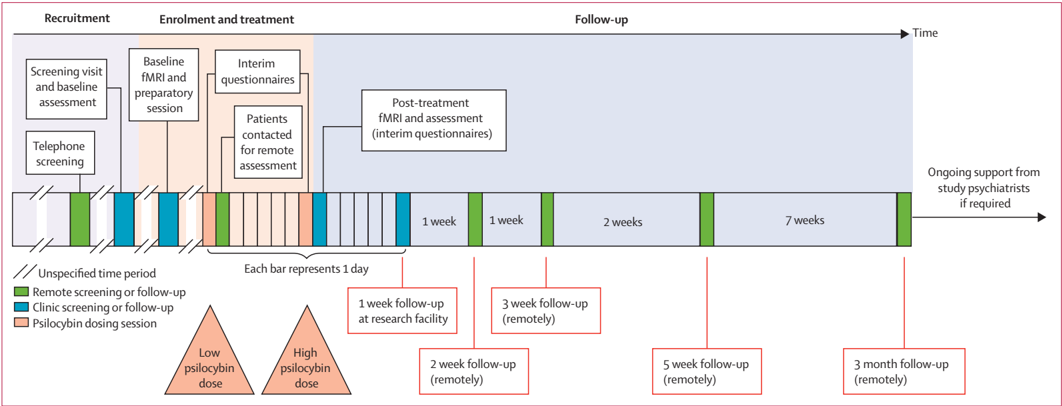
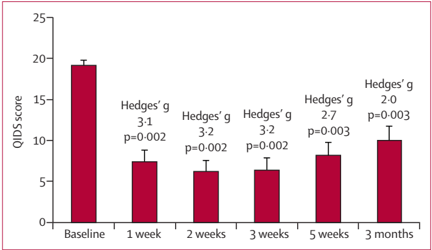
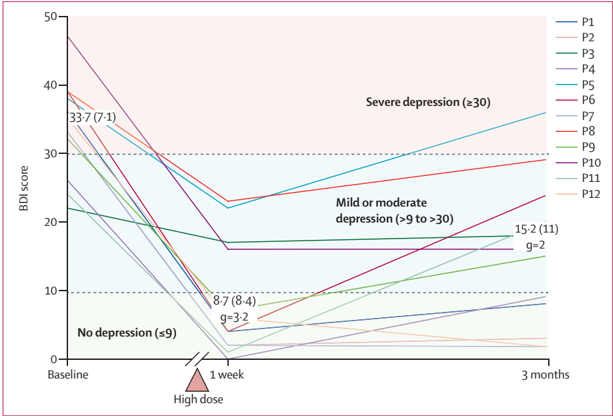
BACKGROUND: Psilocybin is a serotonin receptor agonist that occurs naturally in some mushroom species. Recent studies have assessed the therapeutic potential of psilocybin for various conditions, including end-of-life anxiety, obsessive-compulsive disorder, and smoking and alcohol dependence, with promising preliminary results. Here, we aimed to investigate the feasibility, safety, and efficacy of psilocybin in patients with unipolar treatment-resistant depression. METHODS: In this open-label feasibility trial, 12 patients (six men, six women) with moderate-to-severe, unipolar, treatment-resistant major depression received two oral doses of psilocybin (10 mg and 25 mg, 7 days apart) in a supportive setting. There was no control group. Psychological support was provided before, during, and after each session. The primary outcome measure for feasibility was patient-reported intensity of psilocybin's effects. Patients were monitored for adverse reactions during the dosing sessions and subsequent clinic and remote follow-up. Depressive symptoms were assessed with standard assessments from 1 week to 3 months after treatment, with the 16-item Quick Inventory of Depressive Symptoms (QIDS) serving as the primary efficacy outcome. This trial is registered with ISRCTN, number ISRCTN14426797. FINDINGS: Psilocybin's acute psychedelic effects typically became detectable 30-60 min after dosing, peaked 2-3 h after dosing, and subsided to negligible levels at least 6 h after dosing. Mean self-rated intensity (on a 0-1 scale) was 0·51 (SD 0·36) for the low-dose session and 0·75 (SD 0·27) for the high-dose session. Psilocybin was well tolerated by all of the patients, and no serious or unexpected adverse events occurred. The adverse reactions we noted were transient anxiety during drug onset (all patients), transient confusion or thought disorder (nine patients), mild and transient nausea (four patients), and transient headache (four patients). Relative to baseline, depressive symptoms were markedly reduced 1 week (mean QIDS difference -11·8, 95% CI -9·15 to -14·35, p=0·002, Hedges' g=3·1) and 3 months (-9·2, 95% CI -5·69 to -12·71, p=0·003, Hedges' g=2) after high-dose treatment. Marked and sustained improvements in anxiety and anhedonia were also noted. INTERPRETATION: This study provides preliminary support for the safety and efficacy of psilocybin for treatment-resistant depression and motivates further trials, with more rigorous designs, to better examine the therapeutic potential of this approach. FUNDING: Medical Research Council.
Overview
The claims and statistics of this paper haven’t been checked yet.
Free: it reads the open-access text and checks the first 5 claims that cite a source we can check. Create a free account to check every claim.
Integrity signals
Registry
Cites
Statistics
Figures
Verification
Claims the paper makes
The claims and statistics of this paper haven’t been checked yet.
Free: it reads the open-access text and checks the first 5 claims that cite a source we can check. Create a free account to check every claim.
Claims other papers make about this one
Each is checked against this paper’s own text: does it say what the citing paper says it does?
The source backs part of the claim, not all of it — or backs it for a different population, condition or comparison.
In the citing paper
“Both methods have shown potential for reducing psychopathology and both, psychedelic-assisted therapy with psilocybin and MBIs, in particular MBCT have preliminary evidence for effectiveness in chronic, treatment-resistant depression [94].”
From Mindfulness meditation and psychedelics: potential synergies and commonalities (2023) · cites this paper as [94]
Experimental — accuracy not yet measuredThe source backs part of the claim, not all of it — or backs it for a different population, condition or comparison.
In the citing paper
“Randomised clinical trials (RCTs) of psilocybin-assisted therapy demonstrated a significant reduction of depressive symptoms in terminally ill cancer patients, as well as in treatment-resistant depression (29, 30, 38).”
From Examining the Potential Synergistic Effects Between Mindfulness Training and Psychedelic-Assisted Therapy (2021) · cites this paper as [29]
Experimental — accuracy not yet measuredThe source backs part of the claim, not all of it — or backs it for a different population, condition or comparison.
In the citing paper
“Most of these studies however suffer from low methodological validity and are mostly open-label, yet they have yielded preliminary evidence for the capacity of psychedelic substances for treating addiction, depression, anxiety, and eating disorders (29–35).”
From Examining the Potential Synergistic Effects Between Mindfulness Training and Psychedelic-Assisted Therapy (2021) · cites this paper as [29]
Experimental — accuracy not yet measuredThe source backs part of the claim, not all of it — or backs it for a different population, condition or comparison.
In the citing paper
“Remarkably, these benefits were incurred even after only a single psychedelic administration and were maintained for as long as 6 months.”
From Examining the Potential Synergistic Effects Between Mindfulness Training and Psychedelic-Assisted Therapy (2021) · cites this paper as [29]
Experimental — accuracy not yet measuredThe cited source says what the claim attributes to it.
In the citing paper
“Amelioration of symptomatic depression in pilot studies of major depressive disorder, including those that compared psilocybin with escitalopram 8,9 and that investigated its use in treatment-resistant depression, 10 has suggested therapeutic potential for this agent.”
From Single-Dose Psilocybin for a Treatment-Resistant Episode of Major Depression (2022) · cites this paper as [10]
11 more claims about this paper
Create a free account to see every claim other papers make about this one.
Self-check
Percentages, sums and reported differences re-computed from the paper’s own numbers.
The self-check needs the paper’s full text.
Citations
Cites
Rush, A. J., Trivedi, M. H., Ibrahim, H. M., Carmody, T. J., Arnow, B., Klein, D. N., Markowitz, J. C., Ninan, P. T., Kornstein, S., Manber, R., et al. (2003) · Biological Psychiatry · doi:10.1016/s0006-3223(02)01866-8 · Cited by 3,829
The Economic Burden of Adults With Major Depressive Disorder in the United States (2005 and 2010)
Greenberg, P. E., Fournier, A.-A., Sisitsky, T., Pike, C. T., & Kessler, R. C. (2015) · The Journal of Clinical Psychiatry · doi:10.4088/jcp.14m09298 · Cited by 1,779
Pilot Study of Psilocybin Treatment for Anxiety in Patients With Advanced-Stage Cancer
Grob, C. S., Danforth, A. L., Chopra, G. S., Hagerty, M., McKay, C. R., Halberstadt, A. L., & Greer, G. R. (2011) · Archives of General Psychiatry · doi:10.1001/archgenpsychiatry.2010.116 · Cited by 1,206 · cited 1×
“…cantly decreased anxiety and depression scores were observed 3 and 6 months after a single dose of psilocybin in patients with anxiety related to end-stage cancer, 15 and improve ments in wellbeing lasting for more than 1 year were observed in healthy individuals given a single dose of psilocybin.”
BackgroundHuman hallucinogen research: guidelines for safety
Johnson, M., Richards, W., & Griffiths, R. (2008) · Journal of Psychopharmacology · doi:10.1177/0269881108093587 · Cited by 1,203
Neural correlates of the psychedelic state as determined by fMRI studies with psilocybin
Carhart-Harris, R. L., Erritzoe, D., Williams, T., Stone, J. M., Reed, L. J., Colasanti, A., Tyacke, R. J., Leech, R., Malizia, A. L., Murphy, K., et al. (2012) · Proceedings of the National Academy of Sciences · doi:10.1073/pnas.1119598109 · Cited by 1,172 · cited 1×
“10 Moreover, data obtained from large-scale population studies have recently challenged the view that psychedelics negatively aff ect mental health, 11–13 with one study’s fi ndings showing lower rates of psychological distress and suicidality among people who had used”
BackgroundSelf-citationPsilocybin-assisted treatment for alcohol dependence: A proof-of-concept study
Bogenschutz, M. P., Forcehimes, A. A., Pommy, J. A., Wilcox, C. E., Barbosa, P., & Strassman, R. J. (2015) · Journal of Psychopharmacology · doi:10.1177/0269881114565144 · Cited by 1,151 · cited 1×
“19 Signifi cantly decreased anxiety and depression scores were observed 3 and 6 months after a single dose of psilocybin in patients with anxiety related to end-stage cancer, 15 and improve ments in wellbeing lasting for more than 1 year were observed in healthy individuals given a single dose of…”
BackgroundPilot study of the 5-HT 2A R agonist psilocybin in the treatment of tobacco addiction
Johnson, M. W., Garcia-Romeu, A., Cosimano, M. P., & Griffiths, R. R. (2014) · Journal of Psychopharmacology · doi:10.1177/0269881114548296 · Cited by 914
Griffiths, R., Richards, W., Johnson, M., McCann, U., & Jesse, R. (2008) · Journal of Psychopharmacology · doi:10.1177/0269881108094300 · Cited by 905
Safety, tolerability, and efficacy of psilocybin in 9 patients with obsessive-compulsive disorder
Moreno, F. A., Wiegand, C. B., Taitano, E. K., & Delgado, P. L. (2006) · The Journal of Clinical Psychiatry · doi:10.4088/jcp.v67n1110 · Cited by 789
(2001) · PubMed · Cited by 780
Cited by
Items 901–1,000 of 1,006
Therapeutic Use of Hallucinogens
Wiltenburg, V. D., Prado, D. D. R., & Mendes, F. R. (2021) · Springer eBooks · doi:10.1007/978-3-030-62855-0_35 · Cited by 8
Jiang, H., & Yin, X. (2022) · Frontiers in Psychology · doi:10.3389/fpsyg.2022.918274 · Cited by 7
“Due to the complexity of ontology, a very simple implementation of one tag (Carhart-Harris et al., 2016) is often adopted in engineering so as to use the collection of tags to represent user portraits.”
BackgroundThal, S. B., Wieberneit, M., Sharbanee, J. M., Skeffington, P., Bruno, R., Wenge, T., & Bright, S. J. (2023) · Journal of Humanistic Psychology · doi:10.1177/00221678231168516 · Cited by 10
Ethical considerations for psychedelic-assisted therapy in military clinical settings
Hoener, S., Wolfgang, A. S., Nissan, D. A., & Howe, E. G. (2023) · Journal of Medical Ethics · doi:10.1136/jme-2023-108943 · Cited by 8
Haye, W. D. L., Walcott, G. O., Eaton, J., Beckford, J., & Greene, J. (2023) · Frontiers in Psychiatry · doi:10.3389/fpsyt.2023.1136990 · Cited by 8
The zebrafish for preclinical psilocybin research
Syed, O. A., Tsang, B., & Gerlai, R. T. (2023) · Neuroscience & Biobehavioral Reviews · doi:10.1016/j.neubiorev.2023.105381 · Cited by 10
Psychedelics and Hallucinogens in Psychiatry: Finding New Pharmacological Targets
de Sousa, T. R., Rema, J., Machado, S. E. D. C., & Novais, F. (2021) · Current Topics in Medicinal Chemistry · doi:10.2174/1568026621666211201145800 · Cited by 8
Erhan, E., Külahlı, İ., Kandemir, O., Cemiloglu, R., Yigitbasi, O. G., & Cüreoğlu, S. (1996) · PubMed · Cited by 8
Altered trajectories in the dynamical repertoire of functional network states under psilocybinPreprint
Lord, L.-D., Expert, P., Atasoy, S., Roseman, L., Rapuano, K. M., Lambiotte, R., Nutt, D. J., Deco, G., Carhart-Harris, R. L., Kringelbach, M. L., et al. (2018) · bioRxiv (Cold Spring Harbor Laboratory) · doi:10.1101/376491 · Cited by 7
“improved understanding of the neural correlates underlying the experience of unconstrained cognition and enhanced mind-wandering reported by many subjects under the influence of psilocybin may provide insights into the drug’s action at the systems level and perhaps inform on its therapeutic action for the treatment of…”
BackgroundSelf-citationDearnley, B., Dervinis, M., Shaw, M., & Okun, M. (2021) · bioRxiv (Cold Spring Harbor Laboratory) · doi:10.1101/2021.08.22.457198 · Cited by 9
“…states of wakefulness and consciousness (Vollenweider and Geyer, 2001; Foster et al., 2016; Brecier et al., 2021) and by the therapeutic potential of this class of compounds (Carhart-Harris et al., 2016b, 2017; Johnson and Griffiths, 2017; Roseman et al., 2018; Carhart-Harris et al., 2021).”
BackgroundMuir, O. S., Shinozuka, K., Beutler, B. D., Arenas, A., Cherian, K. N., Evans, V. D., Fasano, C., & Tabaac, B. J. (2024) · American Journal of Therapeutics · doi:10.1097/mjt.0000000000001720 · Cited by 7
Pendse, S. R., Kumar, N., & Choudhury, M. D. (2024) · CHI Conference on Human Factors in Computing Systems · doi:10.1145/3613904.3642477 · Cited by 12
“The most discussed health condition is depression , appearing in 1.42% of posts, in line with the past research done around treatment-resistant depression and psilocybin therapy [16].”
InfluentialRamos, L., & Vicente, S. (2024) · Journal of Clinical and Experimental Neuropsychology · doi:10.1080/13803395.2024.2363343 · Cited by 8
“Based on research that points to an effective and sustained reduction in depressive symptoms (Carhart-Harris et al., 2016, 2018; Davis et al., 2021; Goodwin et al., 2022; Griffiths et al., 2016; Gukasyan et al., 2022; Ross et al., 2016; von Rotz et al., 2022), psilocybin has been granted status by…”
Miranda, P., Castro, A., Díaz, P., Minini, L., Ferraro, F., Paulsen, E., Faccio, R., & Pardo, H. (2024) · Polymers · doi:10.3390/polym16152148 · Cited by 8
Irrmischer, M., Puxty, D. J., Yıldırım, B. O., Deijen, J. B., & Engelbregt, H. (2025) · Psychopharmacology · doi:10.1007/s00213-024-06733-3 · Cited by 9
“These findings are in line with previous studies (e.g., (Carhart-Harris et al. 2016, 2018; Erritzoe et al. 2018; Grif-fiths et al. 2016; MacLean et al. 2011) and show that these positive effects could be replicated in an open-label, naturalistic setting.”
InfluentialJasemi, E., Razmi, A., Vaseghi, S., Amiri, S., & Najafi, S. M. A. (2025) · Behavioural Pharmacology · doi:10.1097/fbp.0000000000000813 · Cited by 7
Gaughan, S. J., Wootton, A. R., Krantz, D., Davis, A. K., James, J. E., Rinaldi-Rose, R., Lancelotta, R., & Sevelius, J. M. (2025) · International Journal of Transgender Health · doi:10.1080/26895269.2025.2478112 · Cited by 8
“…are also consistent with data that suggests that sometimes mental health benefits take time to manifest following psychedelic experiences and that psychedelic experiences are not without risks and challenges (Carhart-Harris et al., 2016; Mans et al., 2021; Nayak et al., 2023; Nygart et al., 2022).”
Forsberg, S., Downey, A. E., Bruett, L. D., Hail, L., Fernandes‐Osterhold, G., Woolley, J. D., Lafrance, A., & Raymond‐Flesch, M. (2025) · Child and Adolescent Psychiatry and Mental Health · doi:10.1186/s13034-025-00930-4 · Cited by 6
Galdino, T. P., de Oliveira, L. C., da Luz, M. A., Barbosa, R. C., Torres, M. D. C. D. M., Sivieri, K., Fernandes, P. A., dos Santos, M. L., de Lima, A. G. B., Silva, S. M. D. L., et al. (2025) · ACS Omega · doi:10.1021/acsomega.5c02751 · Cited by 7
Toward Standardized Products Containing Biomass of Psilocybe Cubensis Fungi
Foster, K., Morrison, I., Daniel, S., Antoine, J. M. R., Thankappan, B. M., Haye, W. D. L., Tyler, M. W., Grant, C. N., & Delgoda, R. (2025) · Journal of AOAC International · doi:10.1093/jaoacint/qsaf072 · Cited by 6
Cheng, B.-F., Liang, Y., & Wu, Q. (2025) · World Journal of Psychiatry · doi:10.5498/wjp.v15.i11.107604 · Cited by 8
Breaking the chains of depression: A systematic review and meta-analysis of psilocybin therapy
Khan, F. A., Pandupuspitasari, N. S., Tencomnao, T., & Chuchawankul, S. (2025) · Journal of Affective Disorders · doi:10.1016/j.jad.2025.120882 · Cited by 8
Kupriyanova, O. V., Shevyrin, V. A., & Shafran, Y. (2022) · Drug Testing and Analysis · doi:10.1002/dta.3232 · Cited by 7
Psychedelika in der Psychiatrie – Entwicklungen und die Stellung in Deutschland
Herwig, U., Mertens, L. J., Rosal, S. P., Koller, G., Jungaberle, A., Borgwardt, S., & Gründer, G. (2023) · Fortschritte der Neurologie · Psychiatrie · doi:10.1055/a-1981-3152 · Cited by 7
“derzeitige Studien fokussieren vor allem auf dem Einsatz von Psychedelika bei depressionen [1, 17, 18, 52, 53].”
BackgroundThe Key Role of Intracellular 5-HT2A Receptors: A Turning Point in Psychedelic Research?
Sapienza, J. (2023) · Psychoactives · doi:10.3390/psychoactives2040018 · Cited by 7
“Nowadays, the antidepressant properties of psilocybin are widely reported by randomized clinical trials (RCTs) and confirmed by meta-analyses [2–6].”
Is music a drug? How music listening may trigger neurochemical responses in the brain
Reybrouck, M., & Dyck, E. V. (2024) · Musicae Scientiae · doi:10.1177/10298649241236770 · Cited by 17
“…that underlie music perception, psychoactive drug use, and their mutual relationship, relying upon recent developments in the domains of psychedelic therapy (Carhart-Harris et al., 2012, 2014, 2016; Griffiths et al., 2016; Johnson et al., 2016) and neuropsychopharmacology (Halberstadt, 2015).”
InfluentialZhu, X., Zhang, C., Hellerstein, D. J., Feusner, J. D., Wheaton, M. G., Gomez, G. J., & Schneier, F. R. (2024) · Psychedelics. · doi:10.61373/pp024r.0028 · Cited by 7
Immersive exposure to simulated visual hallucinations modulates high-level human cognition
Greco, A., Rastelli, C., Ubaldi, A., & Riva, G. (2025) · Consciousness and Cognition · doi:10.1016/j.concog.2025.103808 · Cited by 9
Classic Psychedelics for the Treatment of Depression: Potential Benefits and Challenges
Ghaznavi, S., & Richter, S. G. (2025) · Drugs · doi:10.1007/s40265-025-02172-2 · Cited by 10
“The first psilocybin study for TRD was an open-label pilot study in which participants ( N = 12) received two doses of psilocybin (10 mg and 25 mg) seven days apart, with psychological support provided before, during, and after each session [45].”
Psychedelic therapy in the Czech Republic: A theoretical concept or a realistic goal?
Postránecká, Z., Vejmola, Č., & Tylš, F. (2019) · Journal of Psychedelic Studies · doi:10.1556/2054.2019.003 · Cited by 8
Forstmann, M., & Sagioglou, C. (2021) · European Psychologist · doi:10.1027/1016-9040/a000447 · Cited by 9
Shafi, S., & Mallinson, D. J. (2022) · Policy Studies Yearbook · doi:10.18278/psy.12.1.4 · Cited by 7
“Psilocybin mushrooms, LSD, and MDMA—like cannabis—are Schedule I drugs, but show potential for treating several psychiatric disorders (Vollenweider and Preller 2020; Carhart-Harris et al. 2016; Fuentes et al. 2020).”
BackgroundButler, M., Seynaeve, M., Bradley‐Westguard, A., Bao, J., Crawshaw, A. A., Pick, S., Edwards, M. J., Nicholson, T. R., & Rucker, J. (2022) · Journal of Neuropsychiatry · doi:10.1176/appi.neuropsych.21080213 · Cited by 7
Self-citationPsychedelic assisted therapy for major depressive disorder: Recent work and clinical directions
McCartney, A., McGovern, H. T., & Foe, A. D. (2022) · Journal of Psychedelic Studies · doi:10.1556/2054.2022.00211 · Cited by 13
Neural Network Modulation of Ayahuasca: A Systematic Review of Human Studies
Santos, G. H. D. M., Rodrigues, L. S., Rocha, J. M., Rossi, G. N., Oña, G., Bouso, J. C., Hallak, J. E. C., & SANTOS, R. G. D. (2023) · Psychoactives · doi:10.3390/psychoactives2010006 · Cited by 9
Gold, N. D., Mallard, A. J., Hermann, J. C., Zeifman, R. J., Pagni, B. A., Bogenschutz, M. P., & Ross, S. (2023) · Journal of Palliative Medicine · doi:10.1089/jpm.2022.0604 · Cited by 6
Psilocybin‐assisted psychotherapy for treatment‐resistant depression: Which psychotherapy?
Crowe, M., Manuel, J., Carlyle, D., & Lacey, C. J. (2023) · International Journal of Mental Health Nursing · doi:10.1111/inm.13214 · Cited by 8
Hovmand, O. R., Jensen, M. E., Juul, T. S., Madsen, M. K., Fisher, P. M., & Stenbæk, D. S. (2024) · Journal of Psychoactive Drugs · doi:10.1080/02791072.2024.2302186 · Cited by 8
Enriquez‐Geppert, S., Krc, J., O'Higgins, F., & Lietz, M. P. (2024) · Philosophical Transactions of the Royal Society B Biological Sciences · doi:10.1098/rstb.2023.0095 · Cited by 6
“Interestingly, psychedelics like psilocybin and LSD have shown rapid and long-lasting clinical benefits even after only a few doses, notably in conditions such as treatment-resistant depression [61–64].”
Treatment resistant depression
Vaccarino, S. R., & Kennedy, S. H. (2020) · Elsevier eBooks · doi:10.1016/b978-0-12-821033-8.00003-4 · Cited by 8
Advancing elite athlete mental health treatment with psychedelic-assisted psychotherapy
Walton, C. C., & Liknaitzky, P. (2020) · Journal of Applied Sport Psychology · doi:10.1080/10413200.2020.1848941 · Cited by 6
“Large reductions in recurrent depression have been shown using one low and one full psilocybin dose in an open-label pilot trial (Carhart-Harris et al., 2016) with over half of the mean clinical effect sustained at six months (Carhart-Harris et al., 2018).”
Psychedelic Medicines in Major Depression: Progress and Future Challenges
Bouso, J. C., Oña, G., SANTOS, R. G. D., & Hallak, J. E. C. (2021) · Advances in experimental medicine and biology · doi:10.1007/978-981-33-6044-0_26 · Cited by 11
Future directions for clinical psilocybin research: The relaxed symptom network.
Lewis-Healey, E., Laukkonen, R., & van Elk, M. (2022) · Psychology & Neuroscience · doi:10.1037/pne0000290 · Cited by 8
Stocker, K., Hartmann, M., Reissmann, S., Kist, A., & Liechti, M. E. (2022) · Frontiers in Pharmacology · doi:10.3389/fphar.2022.916641 · Cited by 8
“…et al., 2006; Murrough et al., 2013; Nagele et al., 2015), 5-HT2A receptor agonists (classic or serotonergic psychedelics) have also shown rapid antidepressant responses Frontiers in Pharmacology frontiersin.org09 in patients with depression (Carhart-Harris et al., 2016; Griffiths et al., 2016).”
BackgroundThe molecular basis of the antidepressant action of the magic mushroom extract, psilocin
Zanjani, A. A. H., Nguyen, T. Q. T., Jacobsen, L., & Khandelia, H. (2023) · Biochimica et Biophysica Acta (BBA) - Proteins and Proteomics · doi:10.1016/j.bbapap.2023.140914 · Cited by 7
Dangerous plants in dermatology: Legal and controlled
Singh, D., Fisher, J., Shagalov, D. R., Varma, A., & Siegel, D. M. (2018) · Clinics in Dermatology · doi:10.1016/j.clindermatol.2018.03.013 · Cited by 7
Psilocybin-Assisted Supportive Psychotherapy in the Treatment of Major Depression—Quo Vadis?
Reynolds, C. F. (2020) · JAMA Psychiatry · doi:10.1001/jamapsychiatry.2020.2901 · Cited by 11
Conn, K., Milton, L. K., Huang, K., Munguba, H., Ruuska, J., Lemus, M. B., Greaves, E., Homman‐Ludiye, J., Oldfield, B. J., & Foldi, C. J. (2023) · bioRxiv (Cold Spring Harbor Laboratory) · doi:10.1101/2023.12.12.571374 · Cited by 6
Downey, A. E., Bradley, E., Lerche, A. S., O’Donovan, A., Krystal, A. D., & Woolley, J. D. (2024) · Psychedelic Medicine · doi:10.1089/psymed.2023.0051 · Cited by 6
“3,5 Again, rates of relevant family histories were not reported so the lack of serious adverse events does not necessarily clarify the safety of dosing people with a family history of BD.”
Kim, V., Wilson, S. M., & Woesner, M. E. (2024) · Journal of Clinical Psychopharmacology · doi:10.1097/jcp.0000000000001941 · Cited by 11
Psilocybin has a narrow therapeutic window as an antidepressant treatment
Seillier, L., Čechová, B., Seillier, A., & Šlamberová, R. (2025) · Progress in Neuro-Psychopharmacology and Biological Psychiatry · doi:10.1016/j.pnpbp.2025.111368 · Cited by 6
Can the gut-brain axis provide insight into psilocybin's therapeutic value in reducing stress?
Kit, A., Conway, K., Makarowski, S., O'Regan, G., Allen, J., Shultz, S. R., Bodnar, T. S., & Christie, B. R. (2025) · Neurobiology of Stress · doi:10.1016/j.ynstr.2025.100732 · Cited by 6
The Potential Role of Psilocybin in Traumatic Brain Injury Recovery: A Narrative Review
Palmer, C., Ferber, A. T., & Greenwald, B. D. (2025) · Brain Sciences · doi:10.3390/brainsci15060572 · Cited by 6
Blanton, A. M., Parikh, P., Zhou, S., Mohamed, M., Ufret-Vincenty, R. L., & Mancini, R. (2025) · American Journal of Ophthalmology Case Reports · doi:10.1016/j.ajoc.2025.102359 · Cited by 7
“58 On the other hand, Shalit et al. 59 mentioned that lifetime use of a hallucinogen, including psilocybin, was associated with an increased likelihood of lifetime suicide attempt (OR = 1.49, 95 % CI 1.21 (cid:0) 1.85).”
InfluentialEllis, S., Bostian, C. M., Donnelly, A. J., Feng, W., Eisen, K., Lean, M., Conlan, E., Ostacher, M. J., Aaronson, S. T., & Suppes, T. M. (2025) · Journal of Affective Disorders · doi:10.1016/j.jad.2025.119655 · Cited by 11
Examining the potential of psilocybin and 5-MeO-DMT as therapeutics for traumatic brain injury
Plummer, Z., Allen, J., Brand, J., Mayo, L. M., Shultz, S. R., & Christie, B. R. (2025) · Progress in Neuro-Psychopharmacology and Biological Psychiatry · doi:10.1016/j.pnpbp.2025.111448 · Cited by 6
Bukovsky, D., Amaev, A., Song, J., Kyte, S., Carmona-Torres, E., Ueno, F., Luca, V. D., Strafella, A. P., Husain, M. I., Graff‐Guerrero, A., et al. (2025) · Progress in Neuro-Psychopharmacology and Biological Psychiatry · doi:10.1016/j.pnpbp.2025.111541 · Cited by 10
Vollebregt, R., Storm, A. E. M., Lucassen, P. J., & Somers, M. (2025) · Neuroscience & Biobehavioral Reviews · doi:10.1016/j.neubiorev.2025.106529 · Cited by 11
Single-dose psilocybin promotes cell-type-specific changes of neurons in the orbitofrontal cortex
Huang, Z., Wei, X., Wang, Y., Tian, J., Dong, J., Liang, B., Lu, L., & Zhang, W. (2026) · Neurotherapeutics · doi:10.1016/j.neurot.2026.e00841 · Cited by 8
“A single dose of psilocybin promoted a quick and long-lasting anti-depressant effect in both animal and clinical studies [8,21,44,71,72].”
Hervig, M. E.-S., Zühlsdorff, K., Olesen, S. F., Phillips, B. U., Božič, T., Dalley, J. W., Cardinal, R. N., Alsiö, J., & Robbins, T. W. (2024) · Psychopharmacology · doi:10.1007/s00213-024-06586-w · Cited by 7
“…understanding of mechanisms under - lying cognitive flexibility and RL. Psilocybin and other psychedelics are receiving increased attention for their therapeutic potential in treating neuropsy - chiatric disorders such as MDD and anxiety (Carhart-Harris et al. 2016, 2021 ; Goldberg et al. 2020 ).”
BackgroundArgento, E., Goldenberg, S. M., Deering, K., Lavalley, J., Braschel, M. C., Bingham, B., & Shannon, K. (2022) · Drug and Alcohol Dependence Reports · doi:10.1016/j.dadr.2022.100044 · Cited by 7
Using Psychedelics in Clinical Practice: Comparing Therapeutic Uses and Potential Harms
Tariq, R. (2022) · Current Clinical Pharmacology · doi:10.2174/2772432817666220321142707 · Cited by 5
Psilocybin increases brain network integration in patients with depression
(2022) · Nature Medicine · doi:10.1038/s41591-022-01769-4 · Cited by 5
Bormann, N. L., Weber, A. N., Miskle, B., Woodson-DeFauw, N., Arndt, S. V., & Lynch, A. C. (2023) · Social Psychiatry and Psychiatric Epidemiology · doi:10.1007/s00127-023-02448-6 · Cited by 8
Abrams, S. K., Rabinovitch, B. S., Zafar, R. R., Aziz, A. S., Cherup, N. P., McMillan, D. W., Nielson, J. L., & Lewis, E. C. (2023) · Neurotrauma Reports · doi:10.1089/neur.2023.0022 · Cited by 7
“However, given that psychedelics also act on the 5HT2A-R within the spinal cord, this may explain inadvertent physiological effects reported, which include shaking/ trembling,(33) nausea,(33,34) discomfort,(33) increased heart rate,(33) and disorientation.(34) The constellation of these unwanted symptoms and signs are…”
BackgroundExpectancies for Subjective and Antidepressant Effects in Psilocybin Users
Earleywine, M., Mian, M. N., & Leo, J. A. D. (2023) · Journal of Humanistic Psychology · doi:10.1177/00221678231194798 · Cited by 6
Evaluating the value and risks of psychedelics for psychiatric medicine: a clinical perspective
Marazziti, D., Weiss, F., Gurrieri, R., Russomanno, G., Gambini, M., Magnesa, A., Coccoglioniti, A., & Perugi, G. (2024) · Expert Review of Neurotherapeutics · doi:10.1080/14737175.2024.2445016 · Cited by 5
Dleštíková, T. (2025) · Psychoactives · doi:10.3390/psychoactives4030034 · Cited by 5
“The incentive for the legal reform stems from scientific studies demonstrating the efficacy of psilocybin particularly in patients suffering from treatment-resistant depression, where conventional pharmacological interventions have failed [7–9].”
Psilocybin in end of life care: Implications for further research
D, P. S. M. (2016) · Journal of Psychopharmacology · doi:10.1177/0269881116675758 · Cited by 5
Metabotropic glutamate receptors, 5 years on
Collingridge, G. L., Manahan‐Vaughan, D., Nicoletti, F., & Schoepp, D. D. (2016) · Neuropharmacology · doi:10.1016/j.neuropharm.2016.09.029 · Cited by 5
“It will be interesting to examine whether other hallucinogens producing antidepressant effects, such as ketamine (Murrough, 2016) and psylocybin (Carhart-Harris et al., 2016), act synergistically with mGlu2/3 receptor antagonists.”
Dream over life: Psychedelic terphenyl derivative induce hallucination via cannabinoid receptor 1
Fauzi, F. A., Goh, M. S., Johari, S. A. T. T., Hashim, F., & Hassim, M. F. N. (2018) · IOP Conference Series Materials Science and Engineering · doi:10.1088/1757-899x/440/1/012045 · Cited by 5
Seminars in the Psychotherapies
(2021) · Cambridge University Press eBooks · doi:10.1017/9781108686976 · Cited by 6
Einstellungen von Expertinnen und Experten für psychische Gesundheit gegenüber Psilocybin
Schmidt, C., Wolff, M., Gründer, G., & Jungaberle, H. (2022) · Fortschritte der Neurologie · Psychiatrie · doi:10.1055/a-1846-1161 · Cited by 6
“1177/0269881114565144 [4] Carhart-Harris RL, Bolstridge M, Rucker J et al.”
BackgroundEmploying Synergistic Interactions of Virtual Reality and Psychedelics in Neuropsychopharmacology
Moroz, M., & Carhart-Harris, R. L. (2018) · doi:10.1109/var4good.2018.8576882 · Cited by 7
Self-citationVitkauskas, M., & Mathuru, A. S. (2020) · International Journal of Molecular Sciences · doi:10.3390/ijms21186525 · Cited by 5
Vilca-Melendez, S., Uthaug, M. V., & Griffin, J. L. (2021) · Frontiers in Psychiatry · doi:10.3389/fpsyt.2021.742856 · Cited by 5
Bioactive Molecules in Edible and Medicinal Mushrooms for Human Wellness
Phan, C., Tan, E. Y.-Y., & Sabaratnam, V. (2018) · Reference series in phytochemistry · doi:10.1007/978-3-319-54528-8_83-1 · Cited by 9
Heads, Seekers, Psychonauts, and One-Timers: Patterns in Stories of Psychedelic Consumption
Dollar, C. B. (2022) · Journal of Drug Issues · doi:10.1177/00220426221128191 · Cited by 7
Should addiction researchers be interested in psychedelic science?
Bright, S. J., Williams, M. L., & Caldicott, D. G. E. (2017) · Drug and Alcohol Review · doi:10.1111/dar.12544 · Cited by 5
“In Europe and the USA, studies have been conducted into lysergic acid diethylamide (LSD) that have improved our understanding of brain function [3] and reduced existential anxiety associated with dying [4], while psilocybin-assisted psychotherapy has shown promise as an intervention for treatment of refractory depress…”
BackgroundSleep-like state during wakefulness induced by psychedelic 5-MeO-DMT in micePreprint
Bréant, B. J. B., Prius-Mengual, J., Hoerder-Suabedissen, A., Patel, J., Bannerman, D. M., Sharp, T., & Vyazovskiy, V. V. (2022) · bioRxiv (Cold Spring Harbor Laboratory) · doi:10.1101/2022.12.11.519886 · Cited by 5
Pogorelov, V. M., Rodriguiz, R. M., Roth, B. L., & Wetsel, W. C. (2023) · bioRxiv (Cold Spring Harbor Laboratory) · doi:10.1101/2023.06.01.543310 · Cited by 5
Rodan, S.-C., Meez, N., Lloyd-Hurwitz, S., Bedoya‐Pérez, M. A., Suraev, A. S., Sommer, N., Greenstien, K., Maguire, S., & McGregor, I. S. (2025) · Journal of Eating Disorders · doi:10.1186/s40337-025-01328-5 · Cited by 5
Bevione, F., Lacidogna, M. C., Lavalle, R., Daga, G. A., & Preti, A. (2025) · Eating and Weight Disorders - Studies on Anorexia Bulimia and Obesity · doi:10.1007/s40519-025-01771-y · Cited by 7
“Authors suggest that psyche-delic-assisted therapy (PAT) could help persons who suffer from AN leave negative beliefs regarding body image, regulate the reward system, reduce pathological avoidance of social situations, and surpass traumatic experiences [32, 33, 42–48].”
Galdino, T. P., Bisneto, A. B. M., Pedro, M. D. S., de Oliveira, L. C., da Luz, M. A., de Lima, A. G. B., Silva, S. M. D. L., & Fook, M. V. L. (2025) · ACS Omega · doi:10.1021/acsomega.5c05606 · Cited by 4
Microdosing Psychedelics to Restore Synaptic Density in Schizophrenia
Sapienza, J., Spangaro, M., Comai, S., Sabé, M., Torre, J. T. L., Buonarroti, M., Cavallaro, R., & Bosia, M. (2025) · International Journal of Molecular Sciences · doi:10.3390/ijms26188949 · Cited by 8
“Indeed, antidepressant properties of psilocybin are widely reported by several randomized clinical trials (RCTs) [63–65].”
Horato, N., Dalvi-Garcia, F., Dutra, P. E. P., & Nardi, A. E. (2026) · Journal of Clinical Psychopharmacology · doi:10.1097/jcp.0000000000002122 · Cited by 5
Barlattani, T., D’Amelio, C., Baschieri, A., Trebbi, E., Trebbi, F., Rossi, A., Martiadis, V., Ricci, V., Tomasetti, C., Berardis, D. D., et al. (2026) · Journal of Integrative Neuroscience · doi:10.31083/jin51052 · Cited by 5
Kryskow, P., Stamets, P. E., Torre, J. T. L., Sattler, K., Tsang, V. W. L., & Williams, M. T. (2024) · Journal of Psychedelic Studies · doi:10.1556/2054.2024.00379 · Cited by 12
Fischman, L. G. (2025) · Frontiers in Psychology · doi:10.3389/fpsyg.2025.1469559 · Cited by 8
Exploring Gender-Themed Lysergic Acid Diethylamide Experiences: A Subreddit Analysis
Katkar, R., Perez, A. M., Altinay, M. I., & Barnett, B. S. (2025) · Psychedelic Medicine · doi:10.1089/psymed.2024.0025 · Cited by 4
“…of psychedelics has revealed early evidence for therapeutic potential for psychedelic-assisted therapy (PAT) for a number of psychiatric conditions including alcohol use disorder, 15 anxiety, 16 depression, 17 – 20 opioid use disorder, 21 social anxiety disorder, 22 and tobacco use disorder.”
Tudorancea, I.-M., Stanciu, G. D., Torrent, C., Madero, S., Hriţcu, L., & Tamba, B.-I. (2025) · Dialogues in Clinical Neuroscience · doi:10.1080/19585969.2025.2499458 · Cited by 4
Feasibility of a Hypnosis Intervention for a Mystical Experience
Corlett, C. E., Alldredge, C. T., & Elkins, G. R. (2025) · International Journal of Clinical and Experimental Hypnosis · doi:10.1080/00207144.2025.2491352 · Cited by 5
“Finally, ayahuasca and psilocy-bin have been used as treatment for major depressive disorder (Carhart-Harris et al., 2016, 2018; Osório et al., 2015).”
LSD: Mechanisms and relevance to the treatment of depression
Bouloufa, A., Delcourte, S., Delannay, T., Rovera, R., Lau, T., Moulédous, L., Dkhissi‐Benyahya, O., Guiard, B. P., & Haddjeri, N. (2025) · Neuroscience & Biobehavioral Reviews · doi:10.1016/j.neubiorev.2025.106407 · Cited by 5
Burt, I. (2023) · Journal of Creativity in Mental Health · doi:10.1080/15401383.2023.2237868 · Cited by 4
“Of upmost importance for group counselors is the neurotransmitter’s impact on happiness, mood, sexual desires, and sleep cycles (Carhart-Harris et al., 2016, 2018).”
BackgroundJohansen, L., Liknaitzky, P., Nedeljkovic, M., & Murray, G. (2023) · Frontiers in Psychiatry · doi:10.3389/fpsyt.2023.1265910 · Cited by 6
“(1) anonymity, enabling the expression of opinions without influence of the group; (2) feedback, allowing experts to clarify or alter their opinions from previous rounds; (3) iteration, permitting the refinement on views based on feedback from prior rounds; and (4) statistical analysis of responses (22).”
BackgroundSchuitmaker, N. (2023) · Research Society and Development · doi:10.33448/rsd-v12i9.43308 · Cited by 5
“Clinical trials have demonstrated the efficacy of psychedelics for the treatment of various mental disorders (Carhart-Harris et al., 2016; Grob et al., 2011), as well as prompting positive personality changes (Bouso et al., 2018), stimulating significant mystical experiences (Johnson et al., 2008),…”
BackgroundIlyin, N. P., Nabiullin, A. D., Kozlova, A. D., Kupriyanova, O. V., Shevyrin, V. A., Gloriozova, T. A., Filimonov, D. A., Lagunin, A. A., Galstyan, D. S., Kolesnikova, T. O., et al. (2024) · ACS Chemical Neuroscience · doi:10.1021/acschemneuro.4c00017 · Cited by 5
Poulin, J. M., Bigford, G. E., Lanctôt, K. L., Giacobbe, P., Schaffer, A., Sinyor, M., Rabin, J. S., Masellis, M., Singnurkar, A., Pople, C. B., et al. (2024) · Trials · doi:10.1186/s13063-024-08268-6 · Cited by 7
“Several phase I and II trials report high dose (25 mg) of psilocy-bin as having a robust antidepressant effect [23, 79].”
BackgroundBelief change and agnostic frames in psychedelic research and clinical contexts
Yaden, D. B., Nayak, S. M., & Griffiths, R. R. (2024) · Oxford University Press eBooks · doi:10.1093/oso/9780192898371.003.0008 · Cited by 5
Metadata
- Authors
- Carhart-Harris, R. L., Bolstridge, M., Rucker, J., Day, C. M. J., Erritzoe, D., Kaelen, M., Bloomfield, M., Rickard, J. A., Forbes, B., Feilding, A., Taylor, D., Pilling, S., Curran, V. H., & Nutt, D. J.
- Affiliations
- Imperial College London (GB)
- University College London (GB)
- Barts Health NHS Trust (GB)
- King's College London (GB)
- Beckley Foundation (GB)
- South London and Maudsley NHS Foundation Trust (GB)
- Corresponding author
- Carhart-Harris, Robin L
- ORCID
- Venue
- The Lancet Psychiatry
- Publisher
- Elsevier BV
- Published
- 2016-07
- Volume
- 3
- Issue
- 7
- Pages
- 619-627
- ISSN
- 2215-0366 (ISSN-L)
- OpenAlex
- W2396675581
- Semantic Scholar
- 006d3597cc21e0200eb70aab18a11379644d48b8
- Cited by
- 1,540
- References
- 30
- Citations by year
- 2026: 137 · 2025: 189 · 2024: 225 · 2023: 207 · 2022: 205 · 2021: 192 · 2020: 128 · 2019: 78 · 2018: 71 · 2017: 70 · 2016: 36
- FWCI
- 113.68
- Type
- journal article
- Language
- en
- Open access
- hybrid
- doi.org
- Licence
- cc-by
- www.elsevier.com/tdm/userlicense/1.0/ (tdm)
- creativecommons.org/licenses/by/4.0/ (vor)
- Locations
- The Lancet Psychiatry (publishedVersion, cc-by)
- PubMed (publishedVersion)
- Research Bank (Australian Catholic University) (submittedVersion, cc-by)
- UCL Discovery (University College London) (submittedVersion)
- Research Portal (King's College London) (submittedVersion, cc-by)
- Spiral (Imperial College London) (submittedVersion, other-oa)
- Funders
- MRC clinical development (MR/J00460X/1)
- Topics
- Social Sciences › Psychology › Clinical Psychology › Psychedelics and Drug Studies
- Health Sciences › Medicine › Pharmacology (medical) › Treatment of Major Depression
- Social Sciences › Psychology › Clinical Psychology › Psychotherapy Techniques and Applications
- Keywords
- psilocybin, treatment-resistant depression, unipolar major depression, psychedelic therapy, psychological support, adverse effects, depressive symptom reduction, serotonin receptor agonists, feasibility and safety, dose comparison, remote follow-up, end-of-life anxiety, obsessive-compulsive disorder, transdiagnostic treatment, psychedelic-assisted psychotherapy
- MeSH terms
- Adult, Feasibility Studies, Female, Humans, Male, Middle Aged, Psilocybin, Social Support, Treatment Outcome, Serotonin Receptor Agonists, Depressive Disorder, Treatment-Resistant
About these checks
Registry, retraction, Cites and statistics results are computed, not judged, with one exception: a printed reference that no index lists is read once by a model before it counts as a citation error. Claims are extracted by a model and kept only when their quote appears verbatim in the text; each cited source is then checked, with a model’s help, for whether it says what the claim relies on. Those verdicts can be wrong — read the claim’s quote and the cited source before relying on one.
Statistics and arithmetic are recomputed, not judged.
Confidence bands are shown only for fields calibrated on our annotated test set. None is calibrated yet, so no band is shown.
What counts as a claim ›How we measure confidence ›How we check this ›
Are you an author, or do you see a problem with this page? Request a review
Data sources
Bibliographic data: Semantic Scholar, OpenAlex, Crossref.
Contains information from the Semantic Scholar Academic Graph Datasets, made available under the ODC Attribution License (ODC-BY 1.0).
Semantic Scholar’s data is described in: Kinney, R., et al. (2023). The Semantic Scholar Open Data Platform. arXiv:2301.10140.
