

Psilocybin with psychological support for treatment-resistant depression: an open-label feasibility study
Open accessThe DOI matches its Crossref record; 30 of the 30 references it cites were found in a registry or an index.
Abstract
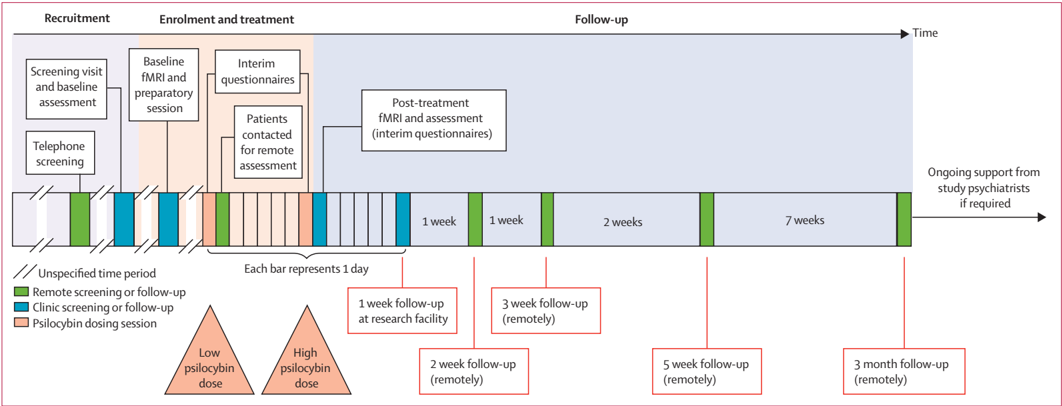
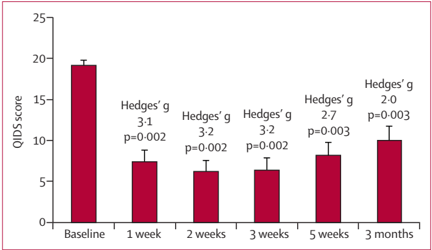
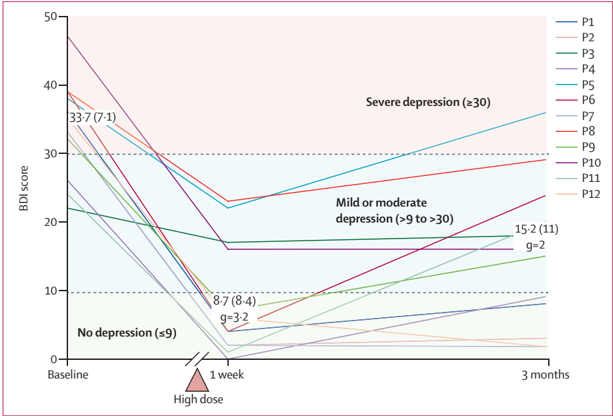
BACKGROUND: Psilocybin is a serotonin receptor agonist that occurs naturally in some mushroom species. Recent studies have assessed the therapeutic potential of psilocybin for various conditions, including end-of-life anxiety, obsessive-compulsive disorder, and smoking and alcohol dependence, with promising preliminary results. Here, we aimed to investigate the feasibility, safety, and efficacy of psilocybin in patients with unipolar treatment-resistant depression. METHODS: In this open-label feasibility trial, 12 patients (six men, six women) with moderate-to-severe, unipolar, treatment-resistant major depression received two oral doses of psilocybin (10 mg and 25 mg, 7 days apart) in a supportive setting. There was no control group. Psychological support was provided before, during, and after each session. The primary outcome measure for feasibility was patient-reported intensity of psilocybin's effects. Patients were monitored for adverse reactions during the dosing sessions and subsequent clinic and remote follow-up. Depressive symptoms were assessed with standard assessments from 1 week to 3 months after treatment, with the 16-item Quick Inventory of Depressive Symptoms (QIDS) serving as the primary efficacy outcome. This trial is registered with ISRCTN, number ISRCTN14426797. FINDINGS: Psilocybin's acute psychedelic effects typically became detectable 30-60 min after dosing, peaked 2-3 h after dosing, and subsided to negligible levels at least 6 h after dosing. Mean self-rated intensity (on a 0-1 scale) was 0·51 (SD 0·36) for the low-dose session and 0·75 (SD 0·27) for the high-dose session. Psilocybin was well tolerated by all of the patients, and no serious or unexpected adverse events occurred. The adverse reactions we noted were transient anxiety during drug onset (all patients), transient confusion or thought disorder (nine patients), mild and transient nausea (four patients), and transient headache (four patients). Relative to baseline, depressive symptoms were markedly reduced 1 week (mean QIDS difference -11·8, 95% CI -9·15 to -14·35, p=0·002, Hedges' g=3·1) and 3 months (-9·2, 95% CI -5·69 to -12·71, p=0·003, Hedges' g=2) after high-dose treatment. Marked and sustained improvements in anxiety and anhedonia were also noted. INTERPRETATION: This study provides preliminary support for the safety and efficacy of psilocybin for treatment-resistant depression and motivates further trials, with more rigorous designs, to better examine the therapeutic potential of this approach. FUNDING: Medical Research Council.
Overview
The claims and statistics of this paper haven’t been checked yet.
Free: it reads the open-access text and checks the first 5 claims that cite a source we can check. Create a free account to check every claim.
Integrity signals
Registry
Cites
Statistics
Figures
Verification
Claims the paper makes
The claims and statistics of this paper haven’t been checked yet.
Free: it reads the open-access text and checks the first 5 claims that cite a source we can check. Create a free account to check every claim.
Claims other papers make about this one
Each is checked against this paper’s own text: does it say what the citing paper says it does?
The source backs part of the claim, not all of it — or backs it for a different population, condition or comparison.
In the citing paper
“Both methods have shown potential for reducing psychopathology and both, psychedelic-assisted therapy with psilocybin and MBIs, in particular MBCT have preliminary evidence for effectiveness in chronic, treatment-resistant depression [94].”
From Mindfulness meditation and psychedelics: potential synergies and commonalities (2023) · cites this paper as [94]
Experimental — accuracy not yet measuredThe source backs part of the claim, not all of it — or backs it for a different population, condition or comparison.
In the citing paper
“Randomised clinical trials (RCTs) of psilocybin-assisted therapy demonstrated a significant reduction of depressive symptoms in terminally ill cancer patients, as well as in treatment-resistant depression (29, 30, 38).”
From Examining the Potential Synergistic Effects Between Mindfulness Training and Psychedelic-Assisted Therapy (2021) · cites this paper as [29]
Experimental — accuracy not yet measuredThe source backs part of the claim, not all of it — or backs it for a different population, condition or comparison.
In the citing paper
“Most of these studies however suffer from low methodological validity and are mostly open-label, yet they have yielded preliminary evidence for the capacity of psychedelic substances for treating addiction, depression, anxiety, and eating disorders (29–35).”
From Examining the Potential Synergistic Effects Between Mindfulness Training and Psychedelic-Assisted Therapy (2021) · cites this paper as [29]
Experimental — accuracy not yet measuredThe source backs part of the claim, not all of it — or backs it for a different population, condition or comparison.
In the citing paper
“Remarkably, these benefits were incurred even after only a single psychedelic administration and were maintained for as long as 6 months.”
From Examining the Potential Synergistic Effects Between Mindfulness Training and Psychedelic-Assisted Therapy (2021) · cites this paper as [29]
Experimental — accuracy not yet measuredThe cited source says what the claim attributes to it.
In the citing paper
“Amelioration of symptomatic depression in pilot studies of major depressive disorder, including those that compared psilocybin with escitalopram 8,9 and that investigated its use in treatment-resistant depression, 10 has suggested therapeutic potential for this agent.”
From Single-Dose Psilocybin for a Treatment-Resistant Episode of Major Depression (2022) · cites this paper as [10]
11 more claims about this paper
Create a free account to see every claim other papers make about this one.
Self-check
Percentages, sums and reported differences re-computed from the paper’s own numbers.
The self-check needs the paper’s full text.
Citations
Cites
Rush, A. J., Trivedi, M. H., Ibrahim, H. M., Carmody, T. J., Arnow, B., Klein, D. N., Markowitz, J. C., Ninan, P. T., Kornstein, S., Manber, R., et al. (2003) · Biological Psychiatry · doi:10.1016/s0006-3223(02)01866-8 · Cited by 3,829
The Economic Burden of Adults With Major Depressive Disorder in the United States (2005 and 2010)
Greenberg, P. E., Fournier, A.-A., Sisitsky, T., Pike, C. T., & Kessler, R. C. (2015) · The Journal of Clinical Psychiatry · doi:10.4088/jcp.14m09298 · Cited by 1,779
Pilot Study of Psilocybin Treatment for Anxiety in Patients With Advanced-Stage Cancer
Grob, C. S., Danforth, A. L., Chopra, G. S., Hagerty, M., McKay, C. R., Halberstadt, A. L., & Greer, G. R. (2011) · Archives of General Psychiatry · doi:10.1001/archgenpsychiatry.2010.116 · Cited by 1,206 · cited 1×
“…cantly decreased anxiety and depression scores were observed 3 and 6 months after a single dose of psilocybin in patients with anxiety related to end-stage cancer, 15 and improve ments in wellbeing lasting for more than 1 year were observed in healthy individuals given a single dose of psilocybin.”
BackgroundHuman hallucinogen research: guidelines for safety
Johnson, M., Richards, W., & Griffiths, R. (2008) · Journal of Psychopharmacology · doi:10.1177/0269881108093587 · Cited by 1,203
Neural correlates of the psychedelic state as determined by fMRI studies with psilocybin
Carhart-Harris, R. L., Erritzoe, D., Williams, T., Stone, J. M., Reed, L. J., Colasanti, A., Tyacke, R. J., Leech, R., Malizia, A. L., Murphy, K., et al. (2012) · Proceedings of the National Academy of Sciences · doi:10.1073/pnas.1119598109 · Cited by 1,172 · cited 1×
“10 Moreover, data obtained from large-scale population studies have recently challenged the view that psychedelics negatively aff ect mental health, 11–13 with one study’s fi ndings showing lower rates of psychological distress and suicidality among people who had used”
BackgroundSelf-citationPsilocybin-assisted treatment for alcohol dependence: A proof-of-concept study
Bogenschutz, M. P., Forcehimes, A. A., Pommy, J. A., Wilcox, C. E., Barbosa, P., & Strassman, R. J. (2015) · Journal of Psychopharmacology · doi:10.1177/0269881114565144 · Cited by 1,151 · cited 1×
“19 Signifi cantly decreased anxiety and depression scores were observed 3 and 6 months after a single dose of psilocybin in patients with anxiety related to end-stage cancer, 15 and improve ments in wellbeing lasting for more than 1 year were observed in healthy individuals given a single dose of…”
BackgroundPilot study of the 5-HT 2A R agonist psilocybin in the treatment of tobacco addiction
Johnson, M. W., Garcia-Romeu, A., Cosimano, M. P., & Griffiths, R. R. (2014) · Journal of Psychopharmacology · doi:10.1177/0269881114548296 · Cited by 914
Griffiths, R., Richards, W., Johnson, M., McCann, U., & Jesse, R. (2008) · Journal of Psychopharmacology · doi:10.1177/0269881108094300 · Cited by 905
Safety, tolerability, and efficacy of psilocybin in 9 patients with obsessive-compulsive disorder
Moreno, F. A., Wiegand, C. B., Taitano, E. K., & Delgado, P. L. (2006) · The Journal of Clinical Psychiatry · doi:10.4088/jcp.v67n1110 · Cited by 789
(2001) · PubMed · Cited by 780
Cited by
Items 601–700 of 1,006
Investigation of the 2,5-Dimethoxy Motif in Phenethylamine Serotonin 2A Receptor Agonists
Märcher-Rørsted, E., Halberstadt, A. L., Klein, A. K., Chatha, M., Jademyr, S., Jensen, A. A., & Kristensen, J. L. (2020) · ACS Chemical Neuroscience · doi:10.1021/acschemneuro.0c00129 · Cited by 22
Psychedelics and Psychedelic-Assisted Psychotherapy
Reiff, C. M., Richman, E. E., Nemeroff, C. B., Carpenter, L. L., Widge, A. S., Rodríguez, C. I., Kalin, N. H., & McDonald, W. M. (2021) · FOCUS The Journal of Lifelong Learning in Psychiatry · doi:10.1176/appi.focus.19104 · Cited by 28
Beyond the death drive: Entropy and free energy
Rabeyron, T. (2021) · The International Journal of Psychoanalysis · doi:10.1080/00207578.2021.1932514 · Cited by 26
“In this connection it is worth pointing out that depression is a pathology for which the theories of free energy and entropy are also associated with therapies assisted by psychedelic drugs (Carhart-Harris et al. 2016; Zeifman et al. 2020).”
BackgroundDemin, K. A., Kupriyanova, O. V., Shevyrin, V. A., Derzhavina, K. A., Krotova, N. A., Ilyin, N. P., Kolesnikova, T. O., Galstyan, D. S., Kositsyn, Y. M., Khaybaev, A.-A. S., et al. (2022) · ACS Chemical Neuroscience · doi:10.1021/acschemneuro.2c00123 · Cited by 23
Scoping Review of Experiential Measures from Psychedelic Research and Clinical Trials
Herrmann, Z. M., Earleywine, M., Leo, J. A. D., Slabaugh, S., Kenny, T., & Rush, A. J. (2022) · Journal of Psychoactive Drugs · doi:10.1080/02791072.2022.2125467 · Cited by 21
“Indeed, recent publications have reported a correlation between higher scores on measures of “mystical experiences” and outcomes in MDD and TUD (Davis et al. 2020; Garcia-Romeu, Griffiths, and Johnson 2014).”
BackgroundInfluentialJensen, M. E., Stenbæk, D. S., Juul, T. S., Fisher, P. M., Ekstrøm, C. T., Knudsen, G. M., & Fink‐Jensen, A. (2022) · BMJ Open · doi:10.1136/bmjopen-2022-066019 · Cited by 30
Psychedelic renaissance: Revitalized potential therapies for psychiatric disorders
Rhee, T. G., Davoudian, P. A., Sanacora, G., & Wilkinson, S. T. (2023) · Drug Discovery Today · doi:10.1016/j.drudis.2023.103818 · Cited by 24
The psychedelic effects of cannabis: A review of the literature
Wolinsky, D., Barrett, F. S., & Vandrey, R. G. (2023) · Journal of Psychopharmacology · doi:10.1177/02698811231209194 · Cited by 28
“…episodic memory, theory of mind, and self-referential processing—represents another popular theory regarding classic psychedelics’ mechanism of action (Carhart-Harris et al., 2012, 2016b; Carhart-Harris and Friston, 2019), although evidence from psychedelic studies for this mechanism has been…”
BackgroundŠabanović, M., Lazari, A., Blanco-Pozo, M., Tisca, C., Tachrount, M., Martins-Bach, A. B., Lerch, J. P., Walton, M. E., & Bannerman, D. M. (2024) · Molecular Psychiatry · doi:10.1038/s41380-024-02439-2 · Cited by 28
Is it now time to prepare psychiatry for a psychedelic future?
Nutt, D. J., CROME, I. B., & Young, A. H. (2024) · The British Journal of Psychiatry · doi:10.1192/bjp.2024.76 · Cited by 21
Self-citationPharmacological and non-pharmacological predictors of the LSD experience in healthy participants
Vizeli, P., Studerus, E., Holze, F., Schmid, Y., Dolder, P. C., Ley, L., Straumann, I., Becker, A., Müller, F., Arikci, D., et al. (2024) · Translational Psychiatry · doi:10.1038/s41398-024-03074-9 · Cited by 27
“This supports the use of ascending dosing regimens which have already been implemented and tested in some studies with classical psychedelic but also MDMA ([65 – 69], and upcoming trials with LSD: NCT03866252, NCT05883540).”
MethodCeremonial ‘Plant Medicine’ use and its relationship to recreational drug use: an exploratory study
Dorsen, C. G., Palamar, J. J., & Shedlin, M. G. (2018) · Addiction Research & Theory · doi:10.1080/16066359.2018.1455187 · Cited by 25
“…results for depression, anxiety, PTSD, addiction, OCD, and headaches (Moreno et al. 2006; Griffiths and Grob 2010; Grob et al. 2011; Loizaga-Velder and Verres 2014; Bogenschutz et al. 2015; Carhart-Harris et al. 2016; Davenport 2016; Johnson et al. 2016; Ross et al. 2016; Morgan et al. 2017).”
BackgroundResultInfluentialCan Psychedelic Drugs Attenuate Age-Related Changes in Cognition and Affect?
Aday, J. S., Bloesch, E. K., & Davoli, C. C. (2019) · Journal of Cognitive Enhancement · doi:10.1007/s41465-019-00151-6 · Cited by 27
Skepticism about Recent Evidence That Psilocybin “Liberates” Depressed Minds
Doss, M. K., Barrett, F. S., & Corlett, P. R. (2022) · ACS Chemical Neuroscience · doi:10.1021/acschemneuro.2c00461 · Cited by 22
Werle, I., & Bertoglio, L. J. (2024) · Neuroscience & Biobehavioral Reviews · doi:10.1016/j.neubiorev.2024.105899 · Cited by 26
Singh, N., Hazari, P. P., Mittal, P., Yadav, S. K., Kumar, N., Mishra, G., Dahiya, S., & Mishra, A. K. (2025) · European Journal of Pharmacology · doi:10.1016/j.ejphar.2025.177737 · Cited by 24
Laabi, S., LeMmon, C., Vogel, C., Chacon, M., & Jimenez, V. M. (2025) · International Immunopharmacology · doi:10.1016/j.intimp.2025.114940 · Cited by 23
Depression as a Disorder of Consciousness
Whiteley, C. M. K. (2021) · The British Journal for the Philosophy of Science · doi:10.1086/716838 · Cited by 29
Chronic Treatment With Psilocybin Decreases Changes in Body Weight in a Rodent Model of Obesity
Huang, J. Y., Pham, M. M., Panenka, W. J., Honer, W. G., & Barr, A. M. (2022) · Frontiers in Psychiatry · doi:10.3389/fpsyt.2022.891512 · Cited by 20
Moreton, S. G., Burden-Hill, A., & Menzies, R. E. (2022) · Clinical Psychologist · doi:10.1080/13284207.2022.2086793 · Cited by 20
Experiences of psilocybin treatment for clinical conditions: A qualitative meta‐synthesis
Crowe, M., Manuel, J., Carlyle, D., & Lacey, C. J. (2023) · International Journal of Mental Health Nursing · doi:10.1111/inm.13127 · Cited by 26
Not in the drug, not in the brain: Causality in psychedelic experiences from an enactive perspective
Meling, D., & Scheidegger, M. (2023) · Frontiers in Psychology · doi:10.3389/fpsyg.2023.1100058 · Cited by 24
“On a more experiential level, psychedelics are associated with transient but significant alterations in perception, cognition, emotion, and the sense of self (Griffiths et al., 2016; Carhart-Harris et al., 2016a,b; Muttoni et al., 2019).”
BackgroundComparing Neural Correlates of Consciousness: From Psychedelics to Hypnosis and Meditation
Moujaes, F., Rieser, N. M., Phillips, C. L. M., de Matos, N. M. P., Brügger, M., Duerler, P., Smigielski, L., Stämpfli, P., Seifritz, E., Vollenweider, F. X., et al. (2023) · Biological Psychiatry Cognitive Neuroscience and Neuroimaging · doi:10.1016/j.bpsc.2023.07.003 · Cited by 33
James, E., Erritzøe, D., Benway, T. A., Joel, Z., Timmermann, C., Good, M., Agnorelli, C., Weiss, B., Barba, T., Campbell, G., et al. (2024) · Frontiers in Psychiatry · doi:10.3389/fpsyt.2023.1305796 · Cited by 26
Germann, C. B. (2019) · Medical Hypotheses · doi:10.1016/j.mehy.2019.109406 · Cited by 22
Cardiovascular effects and safety of classic psychedelics
Nahlawi, A., Ptaszek, L. M., & Ruskin, J. N. (2025) · Nature Cardiovascular Research · doi:10.1038/s44161-025-00608-2 · Cited by 25
Erkizia-Santamaría, I., Horrillo, I., Martínez-Álvarez, N., Pérez-Martínez, D., Rivero, G., Erdozain, A. M., Meana, J. J., & Ortega, J. E. (2025) · Translational Psychiatry · doi:10.1038/s41398-025-03421-4 · Cited by 26
“According to various clinical trials, psilocybin improves symptoms associated to affective disorders after single or double exposure to the drug [5 – 10].”
InfluentialBeyond LSD: A Broader Psychedelic Zeitgeist during the Early to Mid-20thCentury
Aday, J. S., Bloesch, E. K., & Davoli, C. C. (2019) · Journal of Psychoactive Drugs · doi:10.1080/02791072.2019.1581961 · Cited by 23
“…the midst of a renaissance into research of psychedelic drugs such as lysergic acid diethylamide-25 (LSD; Carhart-Harris et al. 2016b), psilocybin (Carhart-Harris et al. 2016a; Griffiths et al. 2017), N,N-dimethyltryptamine (DMT; Strassman 1996), methylenedioxymethamphetamine (MDMA; Oehen et al.…”
BackgroundInfluentialPsychedelic drug use and schizotypy in young adults
Lebedev, A. V., Acar, K., Garzón, B., Almeida, R., Raback, J., Åberg, A., Martinsson, S., Olsson, A., Louzolo, A., Pärnamets, P., et al. (2021) · Scientific Reports · doi:10.1038/s41598-021-94421-z · Cited by 21
Lysergic acid diethylamide induces increased signalling entropy in rats’ prefrontal cortex
Savino, A., & Nichols, C. D. (2021) · Journal of Neurochemistry · doi:10.1111/jnc.15534 · Cited by 22
Insular Stimulation Produces Mental Clarity and Bliss
Nencha, U., Spinelli, L., Vulliémoz, S., Seeck, M., & Picard, F. (2021) · Annals of Neurology · doi:10.1002/ana.26282 · Cited by 21
“This could constitute an alternative to the current novel therapeutic field of psychedelic drugs in severe depression, on the assumption that a transitory mystical-type altered state of consciousness may induce long-lasting positive therapeutic effects.(18,19) To sum up, it is the first time a causal link has been rep…”
BackgroundMacrodosing to microdosing with psychedelics: Clinical, social, and cultural perspectives
Kaypak, A. C., & Raz, A. (2022) · Transcultural Psychiatry · doi:10.1177/13634615221119386 · Cited by 24
“In this second coming of psychedelic research, contemporary studies have examined the clinical benefits of psychedelics in the treatment of depression (R. Carhart-Harris et al., 2018; Carhart-Harris et al., 2016; Osório et al., 2015; Palhano-Fontes et al., 2019; Sanches et al., 2016), end-of-life distress with termina…”
BackgroundMarchetta, E., Mancini, G. F., Morena, M., & Campolongo, P. (2022) · Current Neuropharmacology · doi:10.2174/1570159x21666221207162750 · Cited by 20
Perkins, D., Opaleye, E. S., Bouso, J. C., Tófoli, L. F., Sarris, J. J., Schubert, V., Ruffell, S., & Šimonová, H. (2023) · Psychoactives · doi:10.3390/psychoactives2040017 · Cited by 22
“Acute insights have also been correlated with enduring therapeutic outcomes, including reduced symptoms of depression, anxiety and stress [54,80,83], with the diminishing of negative biases and increased psychological flexibility proposed as a possible pathway for such effects [54,84].”
Kervadec, E., Fauvel, B., Strika-Bruneau, L., Amirouche, A., Verroust, V., Piolino, P., Roméo, B., & Benyamina, A. (2023) · Alcohol and Alcoholism · doi:10.1093/alcalc/agad078 · Cited by 23
Molecular and Medical Aspects of Psychedelics
Wojtas, A., & Gołembiowska, K. (2023) · International Journal of Molecular Sciences · doi:10.3390/ijms25010241 · Cited by 27
Solaja, I., Haldane, K., Mason, N. L., Weiss, B., Xu, X., Xu, M., Nikolin, S., Jayasena, T., Millard, M., Brett, J., et al. (2024) · Neuroscience & Biobehavioral Reviews · doi:10.1016/j.neubiorev.2024.105570 · Cited by 23
5-HT2A Agonists: A Novel Therapy for Functional Neurological Disorders?
Bryson, A., Carter, O. L., Norman, T. R., & Kanaan, R. (2017) · The International Journal of Neuropsychopharmacology · doi:10.1093/ijnp/pyx011 · Cited by 23
Psilocybin-assisted therapy for depression: How do we advance the field?
Meikle, S. E., Liknaitzky, P., Rossell, S. L., Ross, M., Strauss, N. H. M., Thomas, N., Murray, G., Williams, M. L., & Castle, D. J. (2019) · Australian & New Zealand Journal of Psychiatry · doi:10.1177/0004867419888575 · Cited by 21
“At the same time, psychedelics increase synchrony between higher-order modules (e.g. DMN) and lower-order, task-positive networks, structures that are usually anti-correlated (Carhart-Harris et al., 2016b).”
BackgroundNutt, D. J. (2016) · Journal of Psychopharmacology · doi:10.1177/0269881116675754 · Cited by 22
“…Vollenweider et al., 1998), imaging (Carhart-Harris, Erritzoe, et al., 2012a; Carhart-Harris, Leech, et al., 2012b; Carhart-Harris et al., 2013) and small pilot clinical studies (Bogenschutz et al., 2015; Carhart-Harris et al., 2016; Grob et al., 2011; Johnson et al., 2014; Moreno et al., 2006).”
BackgroundSelf-citationSome Comments on Psychedelic Research
Schatzberg, A. F. (2020) · American Journal of Psychiatry · doi:10.1176/appi.ajp.2020.20030272 · Cited by 21
Kalkman, H. O. (2023) · Biomedicines · doi:10.3390/biomedicines11030806 · Cited by 18
Psychedelics and Evidence-based Psychotherapy
Leone, L., McSpadden, B., DeMarco, A., Enten, L., Kline, R., & Fonzo, G. A. (2024) · Psychiatric Clinics of North America · doi:10.1016/j.psc.2024.02.006 · Cited by 19
Psychedelic risks and benefits: A cross-sectional survey study
Goldy, S. P., Du, B. A., Rohde, J. S., Nayak, S. M., Strickland, J. C., Ehrenkranz, R. C., Levine, M., Barrett, F. S., & Yaden, D. B. (2024) · Journal of Psychopharmacology · doi:10.1177/02698811241292951 · Cited by 19
“Studies of these substances have demonstrated preliminary evidence of potential benefits for several conditions, including major depressive disorder (Carhart-Harris et al., 2016, 2021; Davis et al., 2021; D’Souza et al., 2022; Goodwin et al., 2023; Raison et al., 2023), end-of-life anxiety and…”
Barrett, F. S., Zhou, Y., Carbonaro, T. M., Roberts, J., Smith, G. S., Griffiths, R. R., & Wong, D. F. (2022) · Frontiers in Neuroergonomics · doi:10.3389/fnrgo.2021.784576 · Cited by 21
Association between Lifetime Classic Psychedelic Use and Sick Leave in a Population-Based Sample
Mellner, C., Dahlén, M., & Simonsson, O. (2022) · International Journal of Environmental Research and Public Health · doi:10.3390/ijerph191811353 · Cited by 18
Role of interaction of mGlu2 and 5-HT2A receptors in antipsychotic effects
Ibi, D. (2022) · Pharmacology Biochemistry and Behavior · doi:10.1016/j.pbb.2022.173474 · Cited by 21
Heal, D. J., Gosden, J., Smith, S. L., & Atterwill, C. K. (2022) · Neuropharmacology · doi:10.1016/j.neuropharm.2022.109375 · Cited by 20
“These compounds have much more profound potentiating effects on monoaminergic signalling than reuptake inhibitors, and because of their intraneuronal site of action, have the potential to produce neurotoxicity (O’Hearn et al., 1988; Heal et al., 1998, 2013; Cheetham et al., 2000).”
BackgroundThe development of psilocybin therapy for treatment-resistant depression: an update
Borissova, A., & Rucker, J. (2023) · BJPsych Bulletin · doi:10.1192/bjb.2023.25 · Cited by 23
“34 One participant in the Carhart-Harris 2016 study 13 continued a serotonin – noradrenaline reuptake inhibitor (SNRI) throughout the trial and experienced a remission in their depression symptoms.”
Self-citationRieser, N. M., Gubser, L. P., Moujaes, F., Duerler, P., Lewis, C. R., Michels, L., Vollenweider, F. X., & Preller, K. H. (2023) · Scientific Reports · doi:10.1038/s41598-023-44153-z · Cited by 22
Liu, G., Ma, L., Qu, Y., Wan, X., Xu, D., Zhao, M., Murayama, R., & Hashimoto, K. (2023) · Pharmacology Biochemistry and Behavior · doi:10.1016/j.pbb.2023.173659 · Cited by 19
Wang, S., Kim, S., Choi, W.-S., Lim, H. K., Woo, Y. S., Pae, C., & Bahk, W. (2023) · Clinical Psychopharmacology and Neuroscience · doi:10.9758/cpn.23.1134 · Cited by 21
“One open label study showed that psilocybin, in conjunction with psychotherapy, can effectively reduce depression symptoms in patients with TRD [29].”
BackgroundMethodInfluentialDeciphering psilocybin: Cytotoxicity, anti-inflammatory effects, and mechanistic insights
Laabi, S., LeMmon, C., Vogel, C., Chacon, M., & Jimenez, V. M. (2024) · International Immunopharmacology · doi:10.1016/j.intimp.2024.111753 · Cited by 20
Campanale, A., Inserra, A., & Comai, S. (2024) · Progress in Neuro-Psychopharmacology and Biological Psychiatry · doi:10.1016/j.pnpbp.2024.111058 · Cited by 20
Concurrent stress modulates the acute and post-acute effects of psilocybin in a sex-dependent manner
Farinha‐Ferreira, M., Miranda‐Lourenço, C., Galipeau, C., Lenkei, Z., & Sebastião, A. M. (2024) · Neuropharmacology · doi:10.1016/j.neuropharm.2024.110280 · Cited by 20
It’s time to take psilocybin seriously as a possible treatment for substance use disorders
Bogenschutz, M. P. (2016) · The American Journal of Drug and Alcohol Abuse · doi:10.1080/00952990.2016.1200060 · Cited by 20
“The harms associated with illicit use of classic hallucinogens are modest relative to most other illicit substances (7).”
BackgroundAn Ecology of Transformative Learning: A Shift From the Ego to the Eco
Bainbridge, A., & Negro, G. D. (2019) · Journal of Transformative Education · doi:10.1177/1541344619864670 · Cited by 25
Social Work and Psychedelic-Assisted Therapies: Practice Considerations for Breakthrough Treatments
Hutchison, C. A., & Bressi, S. (2020) · Clinical Social Work Journal · doi:10.1007/s10615-019-00743-x · Cited by 28
Scheidegger, M. (2021) · Springer eBooks · doi:10.1007/978-3-030-55688-4_3 · Cited by 25
Anhedonia: Current and future treatments
Serretti, A. (2025) · Psychiatry and Clinical Neurosciences Reports · doi:10.1002/pcn5.70088 · Cited by 39
Set and setting of psychedelics for therapeutic use in psychiatry: A systematic review
Estric, C., Duron, T., Kabani, S., & López‐Castromán, J. (2025) · Journal of Psychopharmacology · doi:10.1177/02698811251338214 · Cited by 19
“For some studies, the post-session interventions were telephone calls beginning the day after the session (Carhart-Harris et al., 2016; D’Souza et al., 2022; Griffiths et al., 2016); weekly for 2 weeks (Carhart-Harris et al., 2021; Murphy et al., 2022); or monthly for 6 months (Grob et al., 2011)…”
InfluentialKittur, M. E., M, L. A. B., Jones, B. D. M., Blumberger, D. M., Mulsant, B. H., Rosenblat, J. D., & Husain, M. I. (2025) · Journal of Affective Disorders · doi:10.1016/j.jad.2025.119952 · Cited by 19
Artru, E., & Rabeyron, T. (2021) · L Évolution Psychiatrique · doi:10.1016/j.evopsy.2021.03.013 · Cited by 22
Watanabe, K., Fujimoto, S., Marumoto, T., Kitagawa, T., Ishida, K., Nakajima, T., Moriguchi, Y., Fujikawa, K., & Inoue, T. (2022) · Neuropsychiatric Disease and Treatment · doi:10.2147/ndt.s340281 · Cited by 21
“31,32 40 It has also been suggested that the involvement of indirect modulation of the dopaminergic circuit by antidepressants without dopaminergic affinity could improve anhedonia in patients with MDD. 41,42 It is hypothesized that vortioxetine may have a distinct effect on anhedonia owing to the…”
BackgroundNovel Perspective of Medicinal Mushroom Cultivations: A Review Case for ‘Magic’ Mushrooms
Sommano, S. R., Suksathan, R., Sombat, T., Seehanam, P., Sirilun, S., Ruksiriwanich, W., Wangtueai, S., & Leksawasdi, N. (2022) · Agronomy · doi:10.3390/agronomy12123185 · Cited by 20
Impact of a Naturalistic Psychedelic Experience on Smoking: A Retrospective Survey
Roméo, B., Fauvel, B., Dejean, S., Strika-Bruneau, L., Amirouche, A., Verroust, V., Piolino, P., & Benyamina, A. (2023) · Journal of Psychoactive Drugs · doi:10.1080/02791072.2023.2227171 · Cited by 17
“Studies have been conducted in the field of treatment-resistant depression (Carhart-Harris et al. 2016, 2021; Palhano-Fontes et al. 2019), but also of addiction, such as tobacco (Johnson et al. 2014; Johnson, Garcia-Romeu, and Griffiths 2017) or alcohol use disorder (Bogenschutz et al. 2015, 2022).”
Nordin, M., Hlynsson, J. I., Eklund, J. H., & Carlbring, P. (2024) · Journal of Psychedelic Studies · doi:10.1556/2054.2024.00337 · Cited by 27
Mind over matter: the microbial mindscapes of psychedelics and the gut-brain axis
Caspani, G., Ruffell, S., Tsang, W., Netzband, N., Rohani-Shukla, C., Swann, J. R., & Jefferies, W. A. (2024) · Pharmacological Research · doi:10.1016/j.phrs.2024.107338 · Cited by 21
“A wealth of studies has since shown the remarkable therapeutic potential of these drugs for the treatment of several disorders, including treatment-resistant depression [26], anxiety [67,77], obsessive-compulsive disorder (OCD) [132] and addiction [17, 91].”
Meling, D., Egger, K., Aicher, H., Redondo, J. J., Mueller, J., Dornbierer, J., Temperli, E., Vasella, E. A., Caflisch, L., Pfeiffer, D., et al. (2024) · Journal of Psychopharmacology · doi:10.1177/02698811241282637 · Cited by 24
“Psychedelics, on the other hand, are a broad class of psycho-active substances that induce altered states of consciousness, including alterations in perception, cognition, emotion, and sense of self (Carhart-Harris et al., 2016a, 2016b; Griffiths et al., 2006, 2016; Muttoni et al., 2019).”
BackgroundPsilocybin for depression and anxiety associated with life-threatening illnesses
McCorvy, J. D., Olsen, R. H. J., & Roth, B. L. (2016) · Journal of Psychopharmacology · doi:10.1177/0269881116675771 · Cited by 21
N-Methyl-N-propyltryptamine (MPT)
Chadeayne, A. R., Golen, J. A., & Manke, D. R. (2019) · IUCrData · doi:10.1107/s2414314619009623 · Cited by 17
“Naturally occurring tryptamines (e.g. DMT, psilocybin, 5- methoxy-N,N-dimethyltryptamine) and their synthetic derivatives (e.g. psilacetin, MPT) have garnered considerable attention of late due to new evidence demonstrating their efficacy in treating mood (e.g. anxiety and depression) and post traumatic stress disorde…”
BackgroundRediscovering Psilocybin as an Antidepressive Treatment Strategy
Zeiss, R., Gahr, M., & Graf, H. (2021) · Pharmaceuticals · doi:10.3390/ph14100985 · Cited by 32
“7, indicating an improvement from moderate/severe to mild depression, although the study also included psychological support prior, during, and after the psilocybin sessions [78].”
ResultOut of the box: A psychedelic model to study the creative mind
Kuypers, K. P. C. (2018) · Medical Hypotheses · doi:10.1016/j.mehy.2018.03.010 · Cited by 26
Natural Psychoplastogens As Antidepressant Agents
Benko, J., & Vranková, S. (2020) · Molecules · doi:10.3390/molecules25051172 · Cited by 19
“, 2016, 2017, 2018 [76,79,88] psilocybin 10 and 25 mg p.”
BackgroundEffects of LSD on music-evoked brain activityPreprint
Kaelen, M., Lorenz, R., Barrett, F. S., Roseman, L., Orbán, C., Ribeiro, A., Wall, M. B., Feilding, A., Nutt, D. J., Muthukumaraswamy, S. D., et al. (2017) · bioRxiv (Cold Spring Harbor Laboratory) · doi:10.1101/153031 · Cited by 23
“…temporale and IFG) (Alluri et al., 2012, 2013; Griffiths and Warren, 2002; Zatorre and Salimpoor, 2013) and regions previously associated with the subjective effects of psychedelics (precuneus and insula) (Carhart-Harris et al., 2016a; Muthukumaraswamy et al., 2013a; Tagliazucchi et al., 2016).”
BackgroundInfluentialSelf-citationSANTOS, R. G. D., Bouso, J. C., & Hallak, J. E. C. (2019) · BMC Psychiatry · doi:10.1186/s12888-019-2288-z · Cited by 23
Gill, H., Puramat, P., Patel, P., Gill, B., Marks, C. A., Rodrigues, N. B., Castle, D., Cha, D. S., Mansur, R. B., Rosenblat, J. D., et al. (2022) · Psychiatry Research · doi:10.1016/j.psychres.2022.114577 · Cited by 16
Sabucedo, P. (2017) · International Journal of Culture and Mental Health · doi:10.1080/17542863.2017.1323935 · Cited by 16
“…increasingly turning its attention towards the clinical potential of psychedelic-induced altered states of consciousness for conditions such as depression (Carhart-Harris et al., 2016), obsessive-compulsive disorder (Moreno, Wiegand, Taitano, & Delgado, 2006) and addiction (Krebs & Johansen, 2012).”
BackgroundA systematic review of income and education reporting in psychedelic clinical trials
Grossman, D. H., Madden, K. R., Mehtani, N. J., Anderson, B. T., Davis, L. L., Mitchell, J., & Hendricks, P. S. (2025) · Nature Mental Health · doi:10.1038/s44220-025-00417-3 · Cited by 17
Hultgren, J., Hafsteinsson, M. H., & Brulin, J. G. (2025) · General Hospital Psychiatry · doi:10.1016/j.genhosppsych.2025.07.020 · Cited by 17
Basedow, L. A., Riemer, T., Reiche, S., Kreutz, R. H., & Majić, T. (2021) · Frontiers in Pharmacology · doi:10.3389/fphar.2021.739966 · Cited by 20
“Additionally, SPs have been associated with persisting changes in traits such as openness to experience, neuroticism, mindfulness, and optimism (Carhart-Harris et al., 2016; Erritzoe et al., 2018; Griffiths et al., 2018; Polito and Stevenson, 2019; Madsen et al., 2020).”
BackgroundVorobyeva, N. S., & Kozlova, A. A. (2022) · Frontiers in Pharmacology · doi:10.3389/fphar.2022.927984 · Cited by 24
“, 2016), and an open-label trial of psilocybin for TRD was accomplished (Carhart-Harris et al., 2016).”
BackgroundBody mass index (BMI) does not predict responses to psilocybin
Spriggs, M. J., Giribaldi, B., Lyons, T., Rosas, F. E., Kärtner, L., Buchborn, T., Douglass, H. M., Roseman, L., Timmermann, C., Erritzøe, D., et al. (2022) · Journal of Psychopharmacology · doi:10.1177/02698811221131994 · Cited by 22
Self-citationAcute psilocybin increased cortical activities in rats
Liu, J., Wang, Y., Xia, K., Wu, J., Zheng, D., Cai, A., Yan, H., & Su, R. (2023) · Frontiers in Neuroscience · doi:10.3389/fnins.2023.1168911 · Cited by 19
RetractedLow, F., & Earleywine, M. (2023) · Journal of Psychoactive Drugs · doi:10.1080/02791072.2023.2228303 · Cited by 22
“Recent clinical trials point to the efficacy of psy-chedelic-assisted therapy for MDD and PTSD (Carhart-Harris et al. 2016; Davis et al. 2021; Jerome et al. 2020; Mithoefer et al. 2018), suggesting the potential for comparable benefits in grieving persons.”
BackgroundSalvetti, G., Saccenti, D., Moro, A. S., Lamanna, J., & Ferro, M. (2024) · Brain Sciences · doi:10.3390/brainsci14080829 · Cited by 18
Psilocybin: From Psychiatric Pariah to Perceived Panacea
Fonzo, G. A., Wolfgang, A. S., Barksdale, B. R., Krystal, J. H., Carpenter, L. L., Kraguljac, N. V., Grzenda, A. L., McDonald, W. M., Widge, A. S., Rodríguez, C. I., et al. (2025) · American Journal of Psychiatry · doi:10.1176/appi.ajp.20230682 · Cited by 20
An approach to the new psychoactive drugs phenomenon
Dolengevich-Segal, H., Madrid., F. P., Rodríguez-Salgado, B., Gómez-Arnau, J., & Sánchez-Mateos, D. (2017) · Salud Mental · doi:10.17711/sm.0185-3325.2017.010 · Cited by 24
Ayahuasca: what mental health professionals need to know
SANTOS, R. G. D., Bouso, J. C., & Hallak, J. E. C. (2017) · Archives of Clinical Psychiatry (São Paulo) · doi:10.1590/0101-60830000000130 · Cited by 25
Psychedelic science in post-COVID-19 psychiatry
Kelly, J. R., Crockett, M. T., Alexander, L., Haran, M., Baker, A., Burke, L., Brennan, C., & O’Keane, V. (2021) · Irish Journal of Psychological Medicine · doi:10.1017/ipm.2020.94 · Cited by 16
“Accumulating clinical data shows that psilocybin therapy may be an effective therapeutic strategy across a range of disorders, including depression (Carhart-Harris et al. 2016, Davis et al. 2019), obsessive compulsive disorder (Moreno et al. 2006) and addiction disorders (Garcia-Romeu et al. 2019,…”
BackgroundBridging the gap between single receptor type activity and whole‐brain dynamics
Jancke, D., Herlitze, S., Kringelbach, M. L., & Deco, G. (2021) · FEBS Journal · doi:10.1111/febs.15855 · Cited by 17
Psilocybin for the Treatment of Depression: A Promising New Pharmacotherapy Approach
Agin-Liebes, G., & Davis, A. K. (2021) · Current topics in behavioral neurosciences · doi:10.1007/7854_2021_282 · Cited by 23
Pouyan, N., Khankahdani, Z. H., Sisi, F. Y., Lee, Y. L., Rosenblat, J. D., Teopiz, K. M., Lui, L. M. W., Subramaniapillai, M., Lin, K., Nasri, F., et al. (2022) · CNS Drugs · doi:10.1007/s40263-022-00944-y · Cited by 18
“In addition to healthy volunteers, this profile is also seen in patients with a variety of Diagnostic and Statistical Manual of Mental Disorders categories, such as cancer-related anxiety, SUD, and major depressive disorder [54, 64, 67, 69].”
Ledwos, N., Rosenblat, J. D., Blumberger, D. M., Castle, D. J., McIntyre, R. S., Mulsant, B. H., & Husain, M. I. (2022) · Journal of Clinical Psychopharmacology · doi:10.1097/jcp.0000000000001608 · Cited by 20
Making Use of Genomic Information to Explore the Biotechnological Potential of Medicinal Mushrooms
Kües, U., & Badalyan, S. М. (2017) · Medicinal and aromatic plants of the world · doi:10.1007/978-981-10-5978-0_13 · Cited by 24
Weiss, B., Sleep, C., Miller, J. D., & Campbell, W. K. (2023) · Journal of Personality Disorders · doi:10.1521/pedi.2023.37.2.131 · Cited by 15
Blinding and expectancy confounds in psychedelic randomised controlled trials
Muthukumaraswamy, S., Forsyth, A., & Lumley, T. (2021) · doi:10.31234/osf.io/q2hzm · Cited by 15
What is Psychological Support in the Context of Psychedelic Clinical Trials?
Richard, J., & Levine, M. A. (2025) · Psychedelic Medicine · doi:10.1089/psymed.2024.0026 · Cited by 15
“6,8,15,28 Whether or not there is adequate fi delity with regards to how psychological support as implemented resembles the claims made by the investigators in the procedures for these trials, they are descriptively consistent.”
Berkovitch, L., Fauvel, B., Preller, K. H., & Gaillard, R. (2025) · Neuroscience & Biobehavioral Reviews · doi:10.1016/j.neubiorev.2025.106239 · Cited by 17
Moderators of ayahuasca’s biological antidepressant action
de Sousa, G. M., Tavares, V. D. D. O., Galvão, A. C. D. M., de Almeida, R. N., Palhano-Fontes, F., Soares, B. L., Freire, F. A. D. M., Nunes, E. A., Maia‐de‐Oliveira, J. P., Perkins, D., et al. (2022) · Frontiers in Psychiatry · doi:10.3389/fpsyt.2022.1033816 · Cited by 26
Metadata
- Authors
- Carhart-Harris, R. L., Bolstridge, M., Rucker, J., Day, C. M. J., Erritzoe, D., Kaelen, M., Bloomfield, M., Rickard, J. A., Forbes, B., Feilding, A., Taylor, D., Pilling, S., Curran, V. H., & Nutt, D. J.
- Affiliations
- Imperial College London (GB)
- University College London (GB)
- Barts Health NHS Trust (GB)
- King's College London (GB)
- Beckley Foundation (GB)
- South London and Maudsley NHS Foundation Trust (GB)
- Corresponding author
- Carhart-Harris, Robin L
- ORCID
- Venue
- The Lancet Psychiatry
- Publisher
- Elsevier BV
- Published
- 2016-07
- Volume
- 3
- Issue
- 7
- Pages
- 619-627
- ISSN
- 2215-0366 (ISSN-L)
- OpenAlex
- W2396675581
- Semantic Scholar
- 006d3597cc21e0200eb70aab18a11379644d48b8
- Cited by
- 1,540
- References
- 30
- Citations by year
- 2026: 137 · 2025: 189 · 2024: 225 · 2023: 207 · 2022: 205 · 2021: 192 · 2020: 128 · 2019: 78 · 2018: 71 · 2017: 70 · 2016: 36
- FWCI
- 113.68
- Type
- journal article
- Language
- en
- Open access
- hybrid
- doi.org
- Licence
- cc-by
- www.elsevier.com/tdm/userlicense/1.0/ (tdm)
- creativecommons.org/licenses/by/4.0/ (vor)
- Locations
- The Lancet Psychiatry (publishedVersion, cc-by)
- PubMed (publishedVersion)
- Research Bank (Australian Catholic University) (submittedVersion, cc-by)
- UCL Discovery (University College London) (submittedVersion)
- Research Portal (King's College London) (submittedVersion, cc-by)
- Spiral (Imperial College London) (submittedVersion, other-oa)
- Funders
- MRC clinical development (MR/J00460X/1)
- Topics
- Social Sciences › Psychology › Clinical Psychology › Psychedelics and Drug Studies
- Health Sciences › Medicine › Pharmacology (medical) › Treatment of Major Depression
- Social Sciences › Psychology › Clinical Psychology › Psychotherapy Techniques and Applications
- Keywords
- psilocybin, treatment-resistant depression, unipolar major depression, psychedelic therapy, psychological support, adverse effects, depressive symptom reduction, serotonin receptor agonists, feasibility and safety, dose comparison, remote follow-up, end-of-life anxiety, obsessive-compulsive disorder, transdiagnostic treatment, psychedelic-assisted psychotherapy
- MeSH terms
- Adult, Feasibility Studies, Female, Humans, Male, Middle Aged, Psilocybin, Social Support, Treatment Outcome, Serotonin Receptor Agonists, Depressive Disorder, Treatment-Resistant
About these checks
Registry, retraction, Cites and statistics results are computed, not judged, with one exception: a printed reference that no index lists is read once by a model before it counts as a citation error. Claims are extracted by a model and kept only when their quote appears verbatim in the text; each cited source is then checked, with a model’s help, for whether it says what the claim relies on. Those verdicts can be wrong — read the claim’s quote and the cited source before relying on one.
Statistics and arithmetic are recomputed, not judged.
Confidence bands are shown only for fields calibrated on our annotated test set. None is calibrated yet, so no band is shown.
What counts as a claim ›How we measure confidence ›How we check this ›
Are you an author, or do you see a problem with this page? Request a review
Data sources
Bibliographic data: Semantic Scholar, OpenAlex, Crossref.
Contains information from the Semantic Scholar Academic Graph Datasets, made available under the ODC Attribution License (ODC-BY 1.0).
Semantic Scholar’s data is described in: Kinney, R., et al. (2023). The Semantic Scholar Open Data Platform. arXiv:2301.10140.
