

Psilocybin with psychological support for treatment-resistant depression: an open-label feasibility study
Open accessThe DOI matches its Crossref record; 30 of the 30 references it cites were found in a registry or an index.
Abstract
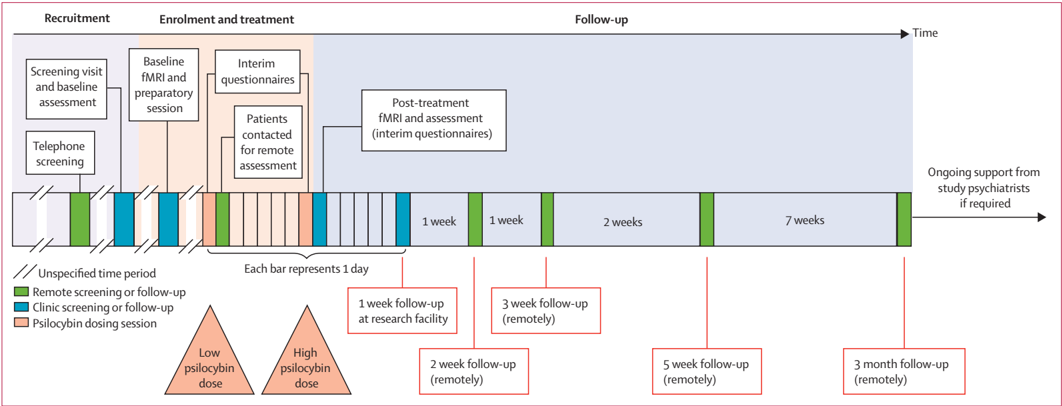
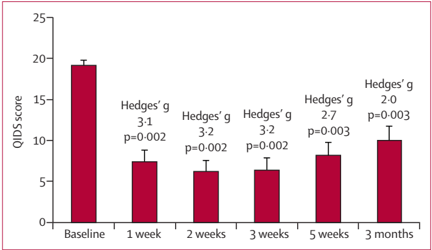
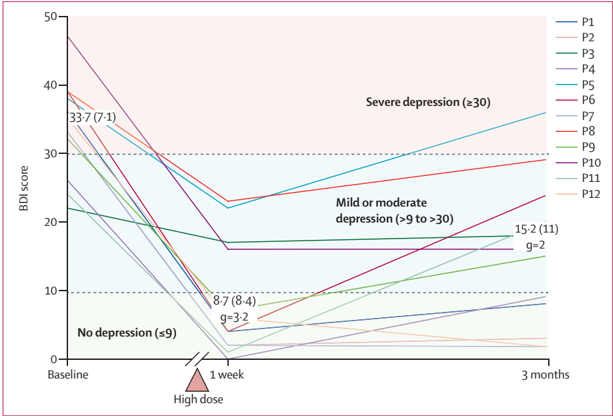
BACKGROUND: Psilocybin is a serotonin receptor agonist that occurs naturally in some mushroom species. Recent studies have assessed the therapeutic potential of psilocybin for various conditions, including end-of-life anxiety, obsessive-compulsive disorder, and smoking and alcohol dependence, with promising preliminary results. Here, we aimed to investigate the feasibility, safety, and efficacy of psilocybin in patients with unipolar treatment-resistant depression. METHODS: In this open-label feasibility trial, 12 patients (six men, six women) with moderate-to-severe, unipolar, treatment-resistant major depression received two oral doses of psilocybin (10 mg and 25 mg, 7 days apart) in a supportive setting. There was no control group. Psychological support was provided before, during, and after each session. The primary outcome measure for feasibility was patient-reported intensity of psilocybin's effects. Patients were monitored for adverse reactions during the dosing sessions and subsequent clinic and remote follow-up. Depressive symptoms were assessed with standard assessments from 1 week to 3 months after treatment, with the 16-item Quick Inventory of Depressive Symptoms (QIDS) serving as the primary efficacy outcome. This trial is registered with ISRCTN, number ISRCTN14426797. FINDINGS: Psilocybin's acute psychedelic effects typically became detectable 30-60 min after dosing, peaked 2-3 h after dosing, and subsided to negligible levels at least 6 h after dosing. Mean self-rated intensity (on a 0-1 scale) was 0·51 (SD 0·36) for the low-dose session and 0·75 (SD 0·27) for the high-dose session. Psilocybin was well tolerated by all of the patients, and no serious or unexpected adverse events occurred. The adverse reactions we noted were transient anxiety during drug onset (all patients), transient confusion or thought disorder (nine patients), mild and transient nausea (four patients), and transient headache (four patients). Relative to baseline, depressive symptoms were markedly reduced 1 week (mean QIDS difference -11·8, 95% CI -9·15 to -14·35, p=0·002, Hedges' g=3·1) and 3 months (-9·2, 95% CI -5·69 to -12·71, p=0·003, Hedges' g=2) after high-dose treatment. Marked and sustained improvements in anxiety and anhedonia were also noted. INTERPRETATION: This study provides preliminary support for the safety and efficacy of psilocybin for treatment-resistant depression and motivates further trials, with more rigorous designs, to better examine the therapeutic potential of this approach. FUNDING: Medical Research Council.
Overview
The claims and statistics of this paper haven’t been checked yet.
Free: it reads the open-access text and checks the first 5 claims that cite a source we can check. Create a free account to check every claim.
Integrity signals
Registry
Cites
Statistics
Figures
Verification
Claims the paper makes
The claims and statistics of this paper haven’t been checked yet.
Free: it reads the open-access text and checks the first 5 claims that cite a source we can check. Create a free account to check every claim.
Claims other papers make about this one
Each is checked against this paper’s own text: does it say what the citing paper says it does?
The source backs part of the claim, not all of it — or backs it for a different population, condition or comparison.
In the citing paper
“Both methods have shown potential for reducing psychopathology and both, psychedelic-assisted therapy with psilocybin and MBIs, in particular MBCT have preliminary evidence for effectiveness in chronic, treatment-resistant depression [94].”
From Mindfulness meditation and psychedelics: potential synergies and commonalities (2023) · cites this paper as [94]
Experimental — accuracy not yet measuredThe source backs part of the claim, not all of it — or backs it for a different population, condition or comparison.
In the citing paper
“Randomised clinical trials (RCTs) of psilocybin-assisted therapy demonstrated a significant reduction of depressive symptoms in terminally ill cancer patients, as well as in treatment-resistant depression (29, 30, 38).”
From Examining the Potential Synergistic Effects Between Mindfulness Training and Psychedelic-Assisted Therapy (2021) · cites this paper as [29]
Experimental — accuracy not yet measuredThe source backs part of the claim, not all of it — or backs it for a different population, condition or comparison.
In the citing paper
“Most of these studies however suffer from low methodological validity and are mostly open-label, yet they have yielded preliminary evidence for the capacity of psychedelic substances for treating addiction, depression, anxiety, and eating disorders (29–35).”
From Examining the Potential Synergistic Effects Between Mindfulness Training and Psychedelic-Assisted Therapy (2021) · cites this paper as [29]
Experimental — accuracy not yet measuredThe source backs part of the claim, not all of it — or backs it for a different population, condition or comparison.
In the citing paper
“Remarkably, these benefits were incurred even after only a single psychedelic administration and were maintained for as long as 6 months.”
From Examining the Potential Synergistic Effects Between Mindfulness Training and Psychedelic-Assisted Therapy (2021) · cites this paper as [29]
Experimental — accuracy not yet measuredThe cited source says what the claim attributes to it.
In the citing paper
“Amelioration of symptomatic depression in pilot studies of major depressive disorder, including those that compared psilocybin with escitalopram 8,9 and that investigated its use in treatment-resistant depression, 10 has suggested therapeutic potential for this agent.”
From Single-Dose Psilocybin for a Treatment-Resistant Episode of Major Depression (2022) · cites this paper as [10]
11 more claims about this paper
Create a free account to see every claim other papers make about this one.
Self-check
Percentages, sums and reported differences re-computed from the paper’s own numbers.
The self-check needs the paper’s full text.
Citations
Cites
Rush, A. J., Trivedi, M. H., Ibrahim, H. M., Carmody, T. J., Arnow, B., Klein, D. N., Markowitz, J. C., Ninan, P. T., Kornstein, S., Manber, R., et al. (2003) · Biological Psychiatry · doi:10.1016/s0006-3223(02)01866-8 · Cited by 3,829
The Economic Burden of Adults With Major Depressive Disorder in the United States (2005 and 2010)
Greenberg, P. E., Fournier, A.-A., Sisitsky, T., Pike, C. T., & Kessler, R. C. (2015) · The Journal of Clinical Psychiatry · doi:10.4088/jcp.14m09298 · Cited by 1,779
Pilot Study of Psilocybin Treatment for Anxiety in Patients With Advanced-Stage Cancer
Grob, C. S., Danforth, A. L., Chopra, G. S., Hagerty, M., McKay, C. R., Halberstadt, A. L., & Greer, G. R. (2011) · Archives of General Psychiatry · doi:10.1001/archgenpsychiatry.2010.116 · Cited by 1,206 · cited 1×
“…cantly decreased anxiety and depression scores were observed 3 and 6 months after a single dose of psilocybin in patients with anxiety related to end-stage cancer, 15 and improve ments in wellbeing lasting for more than 1 year were observed in healthy individuals given a single dose of psilocybin.”
BackgroundHuman hallucinogen research: guidelines for safety
Johnson, M., Richards, W., & Griffiths, R. (2008) · Journal of Psychopharmacology · doi:10.1177/0269881108093587 · Cited by 1,203
Neural correlates of the psychedelic state as determined by fMRI studies with psilocybin
Carhart-Harris, R. L., Erritzoe, D., Williams, T., Stone, J. M., Reed, L. J., Colasanti, A., Tyacke, R. J., Leech, R., Malizia, A. L., Murphy, K., et al. (2012) · Proceedings of the National Academy of Sciences · doi:10.1073/pnas.1119598109 · Cited by 1,172 · cited 1×
“10 Moreover, data obtained from large-scale population studies have recently challenged the view that psychedelics negatively aff ect mental health, 11–13 with one study’s fi ndings showing lower rates of psychological distress and suicidality among people who had used”
BackgroundSelf-citationPsilocybin-assisted treatment for alcohol dependence: A proof-of-concept study
Bogenschutz, M. P., Forcehimes, A. A., Pommy, J. A., Wilcox, C. E., Barbosa, P., & Strassman, R. J. (2015) · Journal of Psychopharmacology · doi:10.1177/0269881114565144 · Cited by 1,151 · cited 1×
“19 Signifi cantly decreased anxiety and depression scores were observed 3 and 6 months after a single dose of psilocybin in patients with anxiety related to end-stage cancer, 15 and improve ments in wellbeing lasting for more than 1 year were observed in healthy individuals given a single dose of…”
BackgroundPilot study of the 5-HT 2A R agonist psilocybin in the treatment of tobacco addiction
Johnson, M. W., Garcia-Romeu, A., Cosimano, M. P., & Griffiths, R. R. (2014) · Journal of Psychopharmacology · doi:10.1177/0269881114548296 · Cited by 914
Griffiths, R., Richards, W., Johnson, M., McCann, U., & Jesse, R. (2008) · Journal of Psychopharmacology · doi:10.1177/0269881108094300 · Cited by 905
Safety, tolerability, and efficacy of psilocybin in 9 patients with obsessive-compulsive disorder
Moreno, F. A., Wiegand, C. B., Taitano, E. K., & Delgado, P. L. (2006) · The Journal of Clinical Psychiatry · doi:10.4088/jcp.v67n1110 · Cited by 789
(2001) · PubMed · Cited by 780
Cited by
Items 501–600 of 1,006
Müller, F., Zaczek, H., Becker, A., Ley, L., Borgwardt, S., de Jesus, J. S., Loh, N., Kohut, J., Auernig, M., Boehlke, C. S., et al. (2025) · Med · doi:10.1016/j.medj.2025.100725 · Cited by 37
Psychedelics and hypnosis: Commonalities and therapeutic implications
Lemercier, C. E., & Terhune, D. (2018) · Journal of Psychopharmacology · doi:10.1177/0269881118780714 · Cited by 26
Hupli, A., Berning, M., Zhuparris, A., & Fadiman, J. (2019) · Performance Enhancement & Health · doi:10.1016/j.peh.2019.01.001 · Cited by 35
Dimethyltryptamine: Endogenous Role and Therapeutic Potential
Rodrigues, A. V., Almeida, F., & Vieira‐Coelho, M. A. (2019) · Journal of Psychoactive Drugs · doi:10.1080/02791072.2019.1602291 · Cited by 38
“Interestingly, research on other classic psychedelic drugs, such as psilocybin, show growing evidence in the treatment of psychiatric disorders (Carhart-Harris et al. 2016; Johnson and Griffiths 2017).”
BackgroundPsilocybin occasioned mystical‐type experiences
James, E., Robertshaw, T. L., Hoskins, M. D., & Sessa, B. (2020) · Human Psychopharmacology Clinical and Experimental · doi:10.1002/hup.2742 · Cited by 44
“, 2015), tobacco addiction (Garcia-Romeu, Griffiths, & Johnson, 2014), depression (Carhart-Harris et al., 2016) and existential anxiety in palliative”
BackgroundEfficacité des psychédéliques en psychiatrie, une revue systématique
Berkovitch, L., Roméo, B., Karila, L., Gaillard, R., & Benyamina, A. (2021) · L Encéphale · doi:10.1016/j.encep.2020.12.002 · Cited by 37
Lyubomirsky, S. (2022) · Perspectives on Psychological Science · doi:10.1177/17456916211055369 · Cited by 35
Psychedelics and Anti-inflammatory Activity in Animal Models
Flanagan, T. W., & Nichols, C. D. (2022) · Current topics in behavioral neurosciences · doi:10.1007/7854_2022_367 · Cited by 32
DellaCrosse, M., Pleet, M., Morton, E., Ashtari, A., Sakai, K., Woolley, J., & Michalak, E. (2022) · PLOS ONE · doi:10.1371/journal.pone.0279073 · Cited by 28
Kucsera, A., Suppes, T. M., & Haug, N. A. (2023) · Clinical Psychology & Psychotherapy · doi:10.1002/cpp.2880 · Cited by 37
Dougherty, R. F., Clarke, P., Atli, M., Kuc, J., Schlosser, D. A., Dunlop, B. W., Hellerstein, D. J., Aaronson, S. T., Zisook, S., Young, A. H., et al. (2023) · Psychopharmacology · doi:10.1007/s00213-023-06432-5 · Cited by 35
Self-citationA role for the serotonin 2A receptor in the expansion and functioning of human transmodal cortex
Luppi, A. I., Girn, M., Rosas, F. E., Timmermann, C., Roseman, L., Erritzøe, D., Nutt, D. J., Stamatakis, E. A., Spreng, R. N., Xing, L., et al. (2023) · Brain · doi:10.1093/brain/awad311 · Cited by 35
Self-citationA Comprehensive Review of the Current Status of the Cellular Neurobiology of Psychedelics
Banushi, B., & Polito, V. (2023) · Biology · doi:10.3390/biology12111380 · Cited by 37
Safety pharmacology of acute psilocybin administration in healthy participants
Straumann, I., Holze, F., Becker, A., Ley, L., Halter, N., & Liechti, M. E. (2024) · Neuroscience Applied · doi:10.1016/j.nsa.2024.104060 · Cited by 32
Psychedelic experiences and long-term spiritual growth: a systematic review
Schutt, W. A., Exline, J. J., Pait, K. C., & Wilt, J. A. (2024) · Current Psychology · doi:10.1007/s12144-024-06272-2 · Cited by 32
“shown that psychedelics have the power to reduce symptoms of depression (Carhart-Harris et al., 2016 ; Griffiths et al., 2016), addiction (Bogenschutz & Johnson, 2016; Garcia-Romeu et al., 2014), obsessive–compulsive disorder (Moreno et al., 2006 ), death anxiety (Griffiths et al., 2016; Ross et…”
Mertens, L. J., Koslowski, M., Betzler, F., Brand, M., Evens, R., Kärtner, L., Jungaberle, A., Jungaberle, H., Majić, T., Schmitz, C. N., et al. (2026) · JAMA Psychiatry · doi:10.1001/jamapsychiatry.2026.0132 · Cited by 49
Return of the psychedelics: Psilocybin for treatment resistant depression
Patra, S. (2016) · Asian Journal of Psychiatry · doi:10.1016/j.ajp.2016.08.010 · Cited by 39
Jones, G. M. (2022) · Journal of Psychopharmacology · doi:10.1177/02698811221127304 · Cited by 33
“In modern Western science, a number of trials have demonstrated that psilocybin can act as an effective treatment for severe depression when used in therapeutic contexts (Carhart-Harris et al., 2016, 2021; Davis et al., 2020; Goldberg et al., 2020; Griffiths et al., 2016).”
BackgroundMason, N. L., & Kuypers, K. P. C. (2018) · Journal of Psychedelic Studies · doi:10.1556/2054.2018.006 · Cited by 34
Jensen, A. A., Halberstadt, A. L., Märcher-Rørsted, E., Odland, A. U., Chatha, M., Speth, N., Liebscher, G., Hansen, M., Bräuner-Osborne, H., Palner, M., et al. (2020) · Biochemical Pharmacology · doi:10.1016/j.bcp.2020.113979 · Cited by 28
When the Trial Ends: The Case for Post-Trial Provisions in Clinical Psychedelic Research
Jacobs, E., Murphy-Beiner, A., Rouiller, I., Nutt, D. J., & Spriggs, M. J. (2023) · Neuroethics · doi:10.1007/s12152-023-09536-z · Cited by 35
“However, this description of the results occludes an ethically significant dimension of the trial from the perspective of a relapsed participant.”
BackgroundSelf-citationThal, S. B., Baker, P., Marinis, J., Wieberneit, M., Sharbanee, J. M., Bruno, R., Skeffington, P., & Bright, S. J. (2023) · Clinical Psychology & Psychotherapy · doi:10.1002/cpp.2945 · Cited by 38
Psilocybin for the treatment of Alzheimer’s disease
Zheng, S., Ma, R., Yang, Y., & Li, G. (2024) · Frontiers in Neuroscience · doi:10.3389/fnins.2024.1420601 · Cited by 28
Ayahuasca for the Treatment of Depression
Palhano-Fontes, F., Soares, B. L., Coelho, N. L. G., Arcoverde, E., & de Araújo, D. B. (2021) · Current topics in behavioral neurosciences · doi:10.1007/7854_2021_277 · Cited by 35
Effects of classic psychedelic drugs on turbulent signatures in brain dynamics
Cruzat, J., Perl, Y. S., Escrichs, A., Vohryzek, J., Timmermann, C., Roseman, L., Luppi, A. I., Ibáñez, A. M., Nutt, D. J., Carhart-Harris, R. L., et al. (2022) · Network Neuroscience · doi:10.1162/netn_a_00250 · Cited by 33
Self-citationKaup, K., Vasser, M., Tulver, K., Munk, M., Pikamäe, J., & Aru, J. (2023) · Frontiers in Psychiatry · doi:10.3389/fpsyt.2023.1088896 · Cited by 33
“Preliminary results regarding the efficacy of such methods have been promising (24, 25, 27, 29) and have even shown strong effects in patients whose ailment has not responded to conventional methods (11, 12, 15) [see also (6–10)].”
BackgroundFlower, J. E., Gibbons, W. J., Adams, A. M., Wang, X., Broude, C. N., & Jones, J. A. (2023) · Biotechnology and Bioengineering · doi:10.1002/bit.28480 · Cited by 31
Medical student attitudes and perceptions of psychedelic-assisted therapies
Li, I., Fong, R., Hagen, M. M., & Tabaac, B. J. (2023) · Frontiers in Psychiatry · doi:10.3389/fpsyt.2023.1190507 · Cited by 37
Kelly, T. J., Bonniwell, E. M., Mu, L., Liu, X., Hu, Y., Friedman, V., Yu, H., Su, W., McCorvy, J. D., & Liu, Q.-S. (2023) · Neuropsychopharmacology · doi:10.1038/s41386-023-01744-8 · Cited by 35
“A single dose of psilocybin confers a reduction in depression and anxiety symptoms for weeks to months [13, 14] with comparable ef fi cacy to the selective-serotonin reuptake inhibitor escitalopram [11].”
Pogorelov, V. M., Rodriguiz, R. M., Roth, B. L., & Wetsel, W. C. (2023) · Frontiers in Molecular Biosciences · doi:10.3389/fmolb.2023.1233743 · Cited by 36
Kiraga, M. K., Kuypers, K. P. C., Uthaug, M. V., Ramaekers, J. G., & Mason, N. L. (2022) · Frontiers in Psychiatry · doi:10.3389/fpsyt.2022.883869 · Cited by 26
“In contrast with other studies (20, 43), we did not observe meaningful changes in openness.”
BackgroundResultPsychedelics and sexual functioning: a mixed-methods study
Barba, T., Kettner, H., Radu, C., Peill, J. M., Roseman, L., Nutt, D. J., Erritzøe, D., Carhart-Harris, R. L., & Giribaldi, B. (2024) · Scientific Reports · doi:10.1038/s41598-023-49817-4 · Cited by 30
Self-citationProtocols and practices in psilocybin assisted psychotherapy for depression: A systematic review
Chisamore, N., Johnson, D. E., Chen, M. J. Q., Offman, H., Chen-Li, D. C. J., Kaczmarek, E. S., Doyle, Z., McIntyre, R. S., & Rosenblat, J. D. (2024) · Journal of Psychiatric Research · doi:10.1016/j.jpsychires.2024.05.051 · Cited by 34
A rapid narrative review of the clinical evolution of psychedelic treatment in clinical trials
Kishon, R., Modlin, N. L., Cycowicz, Y. M., Mourtada, H., Wilson, T., Williamson, V., Cleare, A. J., & Rucker, J. (2024) · npj Mental Health Research · doi:10.1038/s44184-024-00068-9 · Cited by 34
Self-citationAddressing blinding in classic psychedelic studies with innovative active placebos
Aday, J. S., Simonsson, O., Schindler, E. A. D., & D’Souza, D. C. (2025) · The International Journal of Neuropsychopharmacology · doi:10.1093/ijnp/pyaf023 · Cited by 33
“9,10 However, open-label design studies cannot definitively prove the efficacy or safety of the novel intervention because of factors such as regression to the mean and the placebo effect.”
Kimmey, B. A., Ostroumov, A., & Dani, J. A. (2019) · Proceedings of the National Academy of Sciences · doi:10.1073/pnas.1911446116 · Cited by 26
Psilocybin as a Treatment for Psychiatric Illness: A Meta-Analysis
Irizarry, R., Winczura, A., Dimassi, O., Dhillon, N., Minhas, A., & Larice, J. (2022) · Cureus · doi:10.7759/cureus.31796 · Cited by 37
Bernal, A. M. O., Raison, C. L., Lancelotta, R., & Davis, A. K. (2022) · Frontiers in Psychiatry · doi:10.3389/fpsyt.2022.1049643 · Cited by 35
Nikolaidis, A., Lancelotta, R., Gukasyan, N., Griffiths, R. R., Barrett, F. S., & Davis, A. K. (2022) · Journal of Affective Disorders · doi:10.1016/j.jad.2022.12.042 · Cited by 28
Ketamine induces multiple individually distinct whole-brain functional connectivity signatures
Moujaes, F., Ji, J. L., Rahmati, M., Burt, J. B., Schleifer, C. H., Adkinson, B. D., Savić, A., Santamauro, N. P., Tamayo, Z., Diehl, C., et al. (2024) · eLife · doi:10.7554/elife.84173 · Cited by 34
Tófoli, L. F., & de Araújo, D. B. (2016) · International review of neurobiology · doi:10.1016/bs.irn.2016.06.005 · Cited by 44
Comparison of the behavioral effects of mescaline analogs using the head twitch response in mice
Halberstadt, A. L., Chatha, M., Chapman, S. J., & Brandt, S. D. (2019) · Journal of Psychopharmacology · doi:10.1177/0269881119826610 · Cited by 27
A multi-institutional investigation of psilocybin’s effects on mouse behavior
Lu, O., White, K., Raymond, K. B., Liu, C. J., Klein, A. S., Green, N., Vaillancourt, S., Gallagher, A. J., Shindy, L., Li, A., et al. (2026) · Nature Neuroscience · doi:10.1101/2025.04.08.647810 · Cited by 34
Psilocybin-induced default mode network hypoconnectivity is blunted in alcohol-dependent rats
Reinwald, J., Schmitz, C. N., Skorodumov, I., Kuchař, M., Weber‐Fahr, W., Spanagel, R., & Meinhardt, M. W. (2023) · Translational Psychiatry · doi:10.1038/s41398-023-02690-1 · Cited by 28
“While again Carhart-Harris et al. [15] found an LSD-induced decrease of rs-FC between retrosplenium and hippocampus, which they put in context of ego dissolution, the group described strongly increased visual cortex connectivity at the same time, in contrast to our study.”
(2024) · doi:10.1177/02698811231215420 · Cited by 25
“Fourteen of the identified studies used psilocybin (Anderson et al., 2020; Bogenschutz et al., 2015, 2022; Carhart-Harris et al., 2016, 2021; Davis et al., 2021; Goodwin et al., 2022; Griffiths et al., 2016; Grob et al., 2011; Johnson et al., 2014; Moreno et al., 2006; Ross et al., 2016; Schneier…”
BackgroundMortaheb, S., Fort, L. D., Mason, N. L., Mallaroni, P., Ramaekers, J. G., & Demertzi, A. (2024) · Biological Psychiatry Cognitive Neuroscience and Neuroimaging · doi:10.1016/j.bpsc.2024.04.001 · Cited by 42
Wall, M. B., Demetriou, L., Giribaldi, B., Roseman, L., Ertl, N., Erritzøe, D., Nutt, D. J., & Carhart-Harris, R. L. (2025) · American Journal of Psychiatry · doi:10.1176/appi.ajp.20230751 · Cited by 27
Self-citationBeyond serotonin: newer antidepressants in the future
Rakesh, G., Pae, C., & Masand, P. S. (2017) · Expert Review of Neurotherapeutics · doi:10.1080/14737175.2017.1341310 · Cited by 29
“with psychological support, showing promising reduction of patient-reported depressive symptoms [153].”
BackgroundThe ethics of psychedelic research in disorders of consciousness
Peterson, A. H., Tagliazucchi, E., & Weijer, C. (2019) · Neuroscience of Consciousness · doi:10.1093/nc/niz013 · Cited by 28
“To address this, Scott and Carhart-Harris describe a phase II psilocybin trial involving patients with treatment-resistant depression (Carhart-Harris et al. 2016; Carhart-Harris et al. 2018).”
Compassionate use of psychedelics
Greif, A., & Šurkala, M. (2020) · Medicine Health Care and Philosophy · doi:10.1007/s11019-020-09958-z · Cited by 34
New agents and perspectives in the pharmacological treatment of major depressive disorder
Sanches, M., Quevedo, J., & Soares, J. C. (2020) · Progress in Neuro-Psychopharmacology and Biological Psychiatry · doi:10.1016/j.pnpbp.2020.110157 · Cited by 31
“In an open label study(Carhart-Harris et al., 2016), 12 patients with treatment-resistant depression were treated with an initial safety low dose of psilocybin (10 mg) and, one week later, a higher, therapeutic dose (25 mg), associated with psychological support.”
Background25CN‐NBOH: A Selective Agonist for in vitro and in vivo Investigations of the Serotonin 2A Receptor
Märcher-Rørsted, E., Jensen, A. A., & Kristensen, J. L. (2021) · ChemMedChem · doi:10.1002/cmdc.202100395 · Cited by 26
Rucker, J., Jafari, H., Mantingh, T., Bird, C., Modlin, N. L., Knight, G., Reinholdt, F., Day, C., Carter, B., & Young, A. H. (2021) · BMJ Open · doi:10.1136/bmjopen-2021-056091 · Cited by 30
Self-citationVasiliu, O. (2022) · Frontiers in Pharmacology · doi:10.3389/fphar.2022.884143 · Cited by 35
“Anhedonia and anxiety were markedly improved and these changes were maintained for long periods (Carhart-Harris et al., 2016).”
BackgroundInfluentialPsychedelic innovations and the crisis of psychopharmacology
Langlitz, N. (2022) · BioSocieties · doi:10.1057/s41292-022-00294-4 · Cited by 28
Hibicke, M., Kramer, H. M., & Nichols, C. D. (2023) · Psychedelic Medicine · doi:10.1089/psymed.2022.0012 · Cited by 29
“1,2 Psychedelics have been shown to have rapid persistent antidepressant and anxiolytic effects in humans from only one or two doses, 3–8 and antidepressant-like effects in rats 9–11 and fruit flies.”
Simonsson, O., Carlbring, P., Carhart-Harris, R. L., Davis, A. K., Nutt, D. J., Griffiths, R. R., Erritzøe, D., & Goldberg, S. B. (2023) · Psychiatry Research · doi:10.1016/j.psychres.2023.115349 · Cited by 27
Self-citationPsychedelic therapy in depression and substance use disorders
Korkmaz, N. D., Çıkrıkçılı, U., Akan, M., & Yücesan, E. (2024) · European Journal of Neuroscience · doi:10.1111/ejn.16421 · Cited by 32
“Among these, especially the use of LSD and psilocybin in psychedelic-assisted therapy in disorders such as depression, anxiety and substance use disorders (SUDs) constitutes a strong research area (Carhart-Harris et al., 2016; Davis et al., 2021; Gasser et al., 2015; Griffiths et al., 2016).”
Okano, L., Jones, G., Deyo, B., Brandenburg, A., & Hale, W. (2022) · Frontiers in Psychiatry · doi:10.3389/fpsyt.2022.965641 · Cited by 24
Villiger, D. (2024) · International Review of Psychiatry · doi:10.1080/09540261.2024.2357669 · Cited by 31
Psilocybin for major depressive disorder: a systematic review of randomized controlled studies
Li, L., Mo, Y., Shi, Z.-M., Huang, X., Ning, Y.-P., Wu, H., Yang, X.-H., & Zheng, W. (2024) · Frontiers in Psychiatry · doi:10.3389/fpsyt.2024.1416420 · Cited by 30
Psychedelics for the Treatment of Obsessive–Compulsive Disorder: Efficacy and Proposed Mechanisms
Collins, H. M. (2024) · The International Journal of Neuropsychopharmacology · doi:10.1093/ijnp/pyae057 · Cited by 29
Zhao, X., Ozols, A. B., Meyers, K. T., Campbell, J. M., McBride, A., Marballi, K. K., Maple, A. M., Raskin, C., Mishra, A. P., Noss, S., et al. (2022) · Molecular Psychiatry · doi:10.1038/s41380-021-01390-w · Cited by 26
“Investigations of drugs that act as agonists at 5-HT 2A Rs have recently experienced a resurgence in the search for treatments for severe psychiatric symptoms ranging from depression 55 to anxiety disorders such as PTSD 56–58 .”
Meade, E., Hehir, S., Rowan, N. J., & Garvey, M. (2022) · Journal of Fungi · doi:10.3390/jof8030290 · Cited by 37
“Ef fic ac y Acute experiences of psychological insight during mescaline use are associated with self-reported improvements in anxiety disorders, depression, and substance abuse [78,84] Therapeutic efficacy in treating mood and anxiety disorders, depression, cluster headaches, chronic pain, intractable phantom pain, ob…”
BackgroundThal, S. B., Wieberneit, M., Sharbanee, J. M., Skeffington, P., Baker, P., Bruno, R., Wenge, T., & Bright, S. J. (2022) · Journal of Psychopharmacology · doi:10.1177/02698811221127954 · Cited by 26
Music programming for psilocybin-assisted therapy: Guided Imagery and Music-informed perspectives
Messell, C., Summer, L., Bonde, L. O., Beck, B. D., & Stenbæk, D. S. (2022) · Frontiers in Psychology · doi:10.3389/fpsyg.2022.873455 · Cited by 35
Current and future directions of drug delivery for the treatment of mental illnesses
Brewster, P. R., Bari, S. M. I., Walker, G. M., & Werfel, T. A. (2023) · Advanced Drug Delivery Reviews · doi:10.1016/j.addr.2023.114824 · Cited by 30
Kaminski, D., & Reinert, J. P. (2023) · Annals of Pharmacotherapy · doi:10.1177/10600280231205645 · Cited by 31
“29 One study explicitly reported a mean peak systolic blood pressure reading in the psilocybin session, defined at the time point with the highest mean blood pressure reading, which was 138.6 mm Hg. 28 Another study reported a mean peak blood pressure reading as the mean of each participant’s highest blood pressure re…”
InfluentialPsilocybin, an Effective Treatment for Major Depressive Disorder in Adults - A Systematic Review
Watford, T., & Masood, N. (2024) · Clinical Psychopharmacology and Neuroscience · doi:10.9758/cpn.23.1120 · Cited by 23
“These effects can be seen in Table 2, with the mean difference in self-reported depressive symptoms persisting for at least 3 months post-intervention [33].”
BackgroundConverging circuits between pain and depression: the ventral tegmental area as a therapeutic hub
Flores-García, M., Rizzo, A., Garçon-Poca, M. Z., Fernández‐Dueñas, V., & Bonaventura, J. (2023) · Frontiers in Pharmacology · doi:10.3389/fphar.2023.1278023 · Cited by 29
“More recently, psychedelic drugs, which may also act through the serotonergic system but targeting serotonin receptors instead of serotonin reuptake or degradation, have been proposed as novel treatments for depression (Carhart-Harris et al., 2016; Griffiths et al., 2016; Reiff et al., 2020; Carhart-Harris et al., 202…”
BackgroundPsychological effects of psychedelics in adolescents
Izmi, N., Carhart-Harris, R. L., & Kettner, H. (2024) · Frontiers in Child and Adolescent Psychiatry · doi:10.3389/frcha.2024.1364617 · Cited by 31
Self-citationCo-design of Guidance for Patient and Public Involvement in Psychedelic Research
Close, J. B., Bornemann, J., Piggin, M., Jayacodi, S., Luan, L. X., Carhart-Harris, R. L., & Spriggs, M. J. (2021) · Frontiers in Psychiatry · doi:10.3389/fpsyt.2021.727496 · Cited by 27
Self-citationRossi, G. N., Hallak, J. E. C., Bouso, J. C., & SANTOS, R. G. D. (2022) · Expert Opinion on Drug Safety · doi:10.1080/14740338.2022.2066650 · Cited by 29
“Two studies administered psilocybin to patients with depression [24,27] and one to long-term AIDS survivor self-identified gay men with moderate-to-severe demoralization [26].”
BackgroundPsychedelic drugs for psychiatric disorders
da Costa, S. C., Oesterle, T., Rummans, T. A., Richelson, E., & Gold, M. S. (2022) · Journal of the Neurological Sciences · doi:10.1016/j.jns.2022.120332 · Cited by 38
Lewis, B. R., Byrne, K., Hendrick, J., Garland, E. L., Thielking, P. D., & Beck, A. C. (2023) · Journal of Psychedelic Studies · doi:10.1556/2054.2022.00222 · Cited by 26
Wong, S., Kwan, A. T. H., Teopiz, K. M., Le, G. H., Meshkat, S., Ho, R., d’Andrea, G., Cao, B., Vincenzo, J. D. D., Rosenblat, J. D., et al. (2024) · Journal of Affective Disorders · doi:10.1016/j.jad.2024.01.142 · Cited by 26
Sepeda, N. D., Clifton, J. M., Doyle, L. Y., Lancelotta, R., Griffiths, R. R., & Davis, A. K. (2019) · Journal of Psychedelic Studies · doi:10.1556/2054.2019.033 · Cited by 31
Guo, Q., Guo, L., Yong, W., & Shang, S. (2024) · Psychiatry Research · doi:10.1016/j.psychres.2024.116018 · Cited by 30
The safety of psilocybin-assisted psychotherapy: A systematic review
de Freitas, R. R., Gotsis, E. S., Gallo, A. T., Fitzgibbon, B. M., Bailey, N. W., & Fitzgerald, P. B. (2024) · Australian & New Zealand Journal of Psychiatry · doi:10.1177/00048674241289024 · Cited by 29
“In addition, some studies used ambiguous terminology, for example ‘altered mood’ and ‘abnormal thinking’ (Carhart-Harris et al., 2016), or ‘physical/psychological discomfort of any type’.”
Williams, Z. J., Barnett, H., & Szigeti, B. (2026) · JAMA Psychiatry · doi:10.1001/jamapsychiatry.2025.4809 · Cited by 29
Amazonian Medicine and the Psychedelic Revival: Considering the “Dieta”
O’Shaughnessy, D. M., & Berlowitz, I. (2021) · Frontiers in Pharmacology · doi:10.3389/fphar.2021.639124 · Cited by 36
“To the contrary, in the last decade impressive clinical outcomes for a range of conditions (Grob et al., 2011; Murrough et al., 2013; Oehen et al., 2013; Bogenschutz et al., 2015; Carhart-Harris et al., 2016; Johnson et al., 2016; Ross et al., 2016; Roseman et al., 2018; Fuentes et al., 2020) have spurred growing medi…”
BackgroundSewell, F. R., Waterson, I., Jones, D., Tricklebank, M. D., & Ragan, I. (2021) · Regulatory Toxicology and Pharmacology · doi:10.1016/j.yrtph.2021.105002 · Cited by 23
Pharmacological Treatments for Anhedonia
Klein, M. E., Grice, A. B., Sheth, S., Go, M., & Murrough, J. W. (2022) · Current topics in behavioral neurosciences · doi:10.1007/7854_2022_357 · Cited by 29
Tackling the Electro-Topography of the Selves Through the Sphere Model of Consciousness
Paoletti, P., Leshem, R., PELLEGRINO, M. A., & Ben‐Soussan, T. D. (2022) · Frontiers in Psychology · doi:10.3389/fpsyg.2022.836290 · Cited by 23
Dworkin, R. H., Anderson, B. T., Andrews, N., Edwards, R. R., Grob, C. S., Ross, S., Satterthwaite, T. D., & Strain, E. C. (2022) · Journal of Pain · doi:10.1016/j.jpain.2022.05.003 · Cited by 27
The illusion of knowledge in the emerging field of psychedelic research
Oña, G., Kohek, M., & Bouso, J. C. (2022) · New Ideas in Psychology · doi:10.1016/j.newideapsych.2022.100967 · Cited by 28
The use of classic psychedelics among adults: a Danish online survey study
Juul, T. S., Jensen, M. E., & Fink‐Jensen, A. (2022) · Nordic Journal of Psychiatry · doi:10.1080/08039488.2022.2125069 · Cited by 30
Rankaduwa, S., & Owen, A. M. (2023) · Neuroscience of Consciousness · doi:10.1093/nc/niad001 · Cited by 31
“In their initial paper, Carhart-Harris et al. (2014) put forth their EBT by weaving together findings from various brain imaging and neuropharmacological studies, which have all investigated psychedelic drugs and their effects on brain communication (within and between specific brain networks). These processes are bel…”
BackgroundInfluentialRaithatha, S. A., Hagel, J. M., Matinkhoo, K., Yu, L. X., Press, D., Cook, S. G., Sharma, G., Dhananjaya, D., Jensen, G., Lee, J. B., et al. (2023) · Journal of Medicinal Chemistry · doi:10.1021/acs.jmedchem.3c01225 · Cited by 24
Hruby, H., Schmidt, S., Feinstein, J. S., & Wittmann, M. (2024) · Scientific Reports · doi:10.1038/s41598-024-59642-y · Cited by 30
“For example, the application of psych-edelics as an additional treatment option for patients with anxiety and depressive disorders is being researched and has had positive preliminary results 63,64 .”
BackgroundHowland, R. H. (2016) · Journal of Psychosocial Nursing and Mental Health Services · doi:10.3928/02793695-20160616-09 · Cited by 25
Sargin, D., Chottekalapanda, R. U., Perit, K. E., Yao, V., Chu, D. T., Sparks, D. W., Kalik, S., Power, S. K., Troyanskaya, O. G., Schmidt, E. F., et al. (2019) · Molecular Psychiatry · doi:10.1038/s41380-019-0473-6 · Cited by 24
Rostral Anterior Cingulate Thickness Predicts the Emotional Psilocybin Experience
Lewis, C. R., Preller, K. H., Braden, B. B., Riecken, C., & Vollenweider, F. X. (2020) · Biomedicines · doi:10.3390/biomedicines8020034 · Cited by 23
Hübner, S., Haijen, E., Kaelen, M., Carhart-Harris, R. L., & Kettner, H. (2021) · Journal of Medical Internet Research · doi:10.2196/25973 · Cited by 22
“…aid in the 1950s and 1960s, classical psychedelics, defined here as psychoactive compounds eliciting their effects on cognition and perception through agonistic action at the serotonin 2A receptor, have been policed restrictively in most Western countries, largely prohibiting academic research [3].”
Self-citationTagliazucchi, E., Zamberlán, F., Cavanna, F., de la Fuente, L., Romero, C., Perl, Y. S., & Pallavicini, C. (2021) · Frontiers in Psychiatry · doi:10.3389/fpsyt.2021.720066 · Cited by 34
Lomas, C. (2024) · Journal of Addictive Diseases · doi:10.1080/10550887.2024.2440184 · Cited by 27
Aday, J. S., McAfee, J., Conroy, D. A., Hosanagar, A., Tarnal, V., Weston, C. L., Scott, K., Horowitz, D., Geller, J. A., Harte, S. E., et al. (2025) · Frontiers in Pain Research · doi:10.3389/fpain.2025.1527783 · Cited by 27
The future of psychiatry: clinical practice, diagnosis, and treatment
Turner, S., Yadav, P., Morrin, H., & Bhat, A. (2025) · International Review of Psychiatry · doi:10.1080/09540261.2025.2594523 · Cited by 23
The science of psychedelic medicine
Siegel, J. S., Liston, C. M., Nicol, G. E., Carhart-Harris, R. L., & Bogenschutz, M. P. (2026) · Nature Medicine · doi:10.1038/s41591-025-04194-5 · Cited by 29
Self-citationThe psychedelic renaissance: the next trip for psychiatry?
Kelly, J. R., Baker, A., Babiker, M., Burke, L., Brennan, C., & O’Keane, V. (2022) · Irish Journal of Psychological Medicine · doi:10.1017/ipm.2019.39 · Cited by 21
Metadata
- Authors
- Carhart-Harris, R. L., Bolstridge, M., Rucker, J., Day, C. M. J., Erritzoe, D., Kaelen, M., Bloomfield, M., Rickard, J. A., Forbes, B., Feilding, A., Taylor, D., Pilling, S., Curran, V. H., & Nutt, D. J.
- Affiliations
- Imperial College London (GB)
- University College London (GB)
- Barts Health NHS Trust (GB)
- King's College London (GB)
- Beckley Foundation (GB)
- South London and Maudsley NHS Foundation Trust (GB)
- Corresponding author
- Carhart-Harris, Robin L
- ORCID
- Venue
- The Lancet Psychiatry
- Publisher
- Elsevier BV
- Published
- 2016-07
- Volume
- 3
- Issue
- 7
- Pages
- 619-627
- ISSN
- 2215-0366 (ISSN-L)
- OpenAlex
- W2396675581
- Semantic Scholar
- 006d3597cc21e0200eb70aab18a11379644d48b8
- Cited by
- 1,540
- References
- 30
- Citations by year
- 2026: 137 · 2025: 189 · 2024: 225 · 2023: 207 · 2022: 205 · 2021: 192 · 2020: 128 · 2019: 78 · 2018: 71 · 2017: 70 · 2016: 36
- FWCI
- 113.68
- Type
- journal article
- Language
- en
- Open access
- hybrid
- doi.org
- Licence
- cc-by
- www.elsevier.com/tdm/userlicense/1.0/ (tdm)
- creativecommons.org/licenses/by/4.0/ (vor)
- Locations
- The Lancet Psychiatry (publishedVersion, cc-by)
- PubMed (publishedVersion)
- Research Bank (Australian Catholic University) (submittedVersion, cc-by)
- UCL Discovery (University College London) (submittedVersion)
- Research Portal (King's College London) (submittedVersion, cc-by)
- Spiral (Imperial College London) (submittedVersion, other-oa)
- Funders
- MRC clinical development (MR/J00460X/1)
- Topics
- Social Sciences › Psychology › Clinical Psychology › Psychedelics and Drug Studies
- Health Sciences › Medicine › Pharmacology (medical) › Treatment of Major Depression
- Social Sciences › Psychology › Clinical Psychology › Psychotherapy Techniques and Applications
- Keywords
- psilocybin, treatment-resistant depression, unipolar major depression, psychedelic therapy, psychological support, adverse effects, depressive symptom reduction, serotonin receptor agonists, feasibility and safety, dose comparison, remote follow-up, end-of-life anxiety, obsessive-compulsive disorder, transdiagnostic treatment, psychedelic-assisted psychotherapy
- MeSH terms
- Adult, Feasibility Studies, Female, Humans, Male, Middle Aged, Psilocybin, Social Support, Treatment Outcome, Serotonin Receptor Agonists, Depressive Disorder, Treatment-Resistant
About these checks
Registry, retraction, Cites and statistics results are computed, not judged, with one exception: a printed reference that no index lists is read once by a model before it counts as a citation error. Claims are extracted by a model and kept only when their quote appears verbatim in the text; each cited source is then checked, with a model’s help, for whether it says what the claim relies on. Those verdicts can be wrong — read the claim’s quote and the cited source before relying on one.
Statistics and arithmetic are recomputed, not judged.
Confidence bands are shown only for fields calibrated on our annotated test set. None is calibrated yet, so no band is shown.
What counts as a claim ›How we measure confidence ›How we check this ›
Are you an author, or do you see a problem with this page? Request a review
Data sources
Bibliographic data: Semantic Scholar, OpenAlex, Crossref.
Contains information from the Semantic Scholar Academic Graph Datasets, made available under the ODC Attribution License (ODC-BY 1.0).
Semantic Scholar’s data is described in: Kinney, R., et al. (2023). The Semantic Scholar Open Data Platform. arXiv:2301.10140.
