

Psilocybin with psychological support for treatment-resistant depression: an open-label feasibility study
Open accessThe DOI matches its Crossref record; 30 of the 30 references it cites were found in a registry or an index.
Abstract
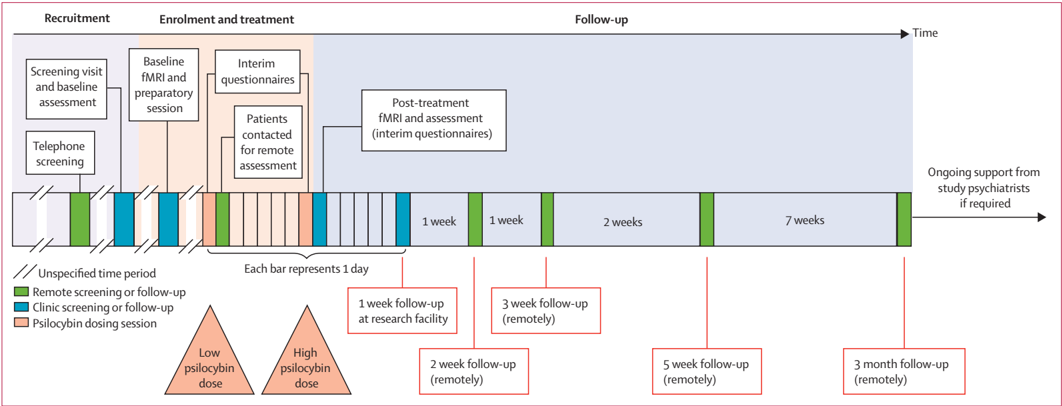
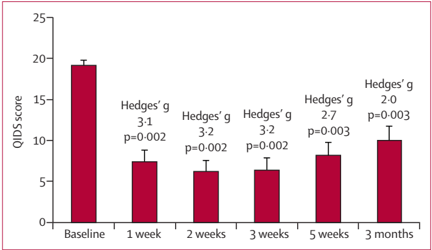
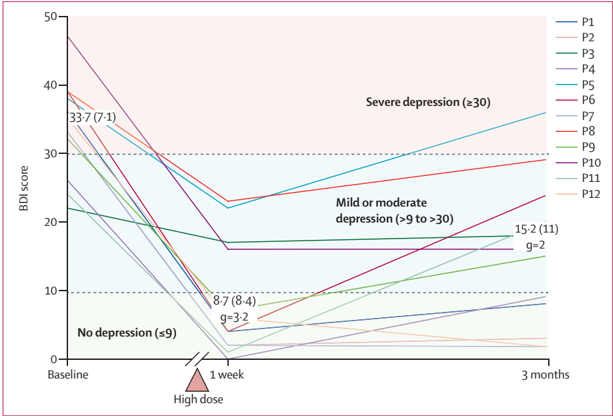
BACKGROUND: Psilocybin is a serotonin receptor agonist that occurs naturally in some mushroom species. Recent studies have assessed the therapeutic potential of psilocybin for various conditions, including end-of-life anxiety, obsessive-compulsive disorder, and smoking and alcohol dependence, with promising preliminary results. Here, we aimed to investigate the feasibility, safety, and efficacy of psilocybin in patients with unipolar treatment-resistant depression. METHODS: In this open-label feasibility trial, 12 patients (six men, six women) with moderate-to-severe, unipolar, treatment-resistant major depression received two oral doses of psilocybin (10 mg and 25 mg, 7 days apart) in a supportive setting. There was no control group. Psychological support was provided before, during, and after each session. The primary outcome measure for feasibility was patient-reported intensity of psilocybin's effects. Patients were monitored for adverse reactions during the dosing sessions and subsequent clinic and remote follow-up. Depressive symptoms were assessed with standard assessments from 1 week to 3 months after treatment, with the 16-item Quick Inventory of Depressive Symptoms (QIDS) serving as the primary efficacy outcome. This trial is registered with ISRCTN, number ISRCTN14426797. FINDINGS: Psilocybin's acute psychedelic effects typically became detectable 30-60 min after dosing, peaked 2-3 h after dosing, and subsided to negligible levels at least 6 h after dosing. Mean self-rated intensity (on a 0-1 scale) was 0·51 (SD 0·36) for the low-dose session and 0·75 (SD 0·27) for the high-dose session. Psilocybin was well tolerated by all of the patients, and no serious or unexpected adverse events occurred. The adverse reactions we noted were transient anxiety during drug onset (all patients), transient confusion or thought disorder (nine patients), mild and transient nausea (four patients), and transient headache (four patients). Relative to baseline, depressive symptoms were markedly reduced 1 week (mean QIDS difference -11·8, 95% CI -9·15 to -14·35, p=0·002, Hedges' g=3·1) and 3 months (-9·2, 95% CI -5·69 to -12·71, p=0·003, Hedges' g=2) after high-dose treatment. Marked and sustained improvements in anxiety and anhedonia were also noted. INTERPRETATION: This study provides preliminary support for the safety and efficacy of psilocybin for treatment-resistant depression and motivates further trials, with more rigorous designs, to better examine the therapeutic potential of this approach. FUNDING: Medical Research Council.
Overview
The claims and statistics of this paper haven’t been checked yet.
Free: it reads the open-access text and checks the first 5 claims that cite a source we can check. Create a free account to check every claim.
Integrity signals
Registry
Cites
Statistics
Figures
Verification
Claims the paper makes
The claims and statistics of this paper haven’t been checked yet.
Free: it reads the open-access text and checks the first 5 claims that cite a source we can check. Create a free account to check every claim.
Claims other papers make about this one
Each is checked against this paper’s own text: does it say what the citing paper says it does?
The source backs part of the claim, not all of it — or backs it for a different population, condition or comparison.
In the citing paper
“Both methods have shown potential for reducing psychopathology and both, psychedelic-assisted therapy with psilocybin and MBIs, in particular MBCT have preliminary evidence for effectiveness in chronic, treatment-resistant depression [94].”
From Mindfulness meditation and psychedelics: potential synergies and commonalities (2023) · cites this paper as [94]
Experimental — accuracy not yet measuredThe source backs part of the claim, not all of it — or backs it for a different population, condition or comparison.
In the citing paper
“Randomised clinical trials (RCTs) of psilocybin-assisted therapy demonstrated a significant reduction of depressive symptoms in terminally ill cancer patients, as well as in treatment-resistant depression (29, 30, 38).”
From Examining the Potential Synergistic Effects Between Mindfulness Training and Psychedelic-Assisted Therapy (2021) · cites this paper as [29]
Experimental — accuracy not yet measuredThe source backs part of the claim, not all of it — or backs it for a different population, condition or comparison.
In the citing paper
“Most of these studies however suffer from low methodological validity and are mostly open-label, yet they have yielded preliminary evidence for the capacity of psychedelic substances for treating addiction, depression, anxiety, and eating disorders (29–35).”
From Examining the Potential Synergistic Effects Between Mindfulness Training and Psychedelic-Assisted Therapy (2021) · cites this paper as [29]
Experimental — accuracy not yet measuredThe source backs part of the claim, not all of it — or backs it for a different population, condition or comparison.
In the citing paper
“Remarkably, these benefits were incurred even after only a single psychedelic administration and were maintained for as long as 6 months.”
From Examining the Potential Synergistic Effects Between Mindfulness Training and Psychedelic-Assisted Therapy (2021) · cites this paper as [29]
Experimental — accuracy not yet measuredThe cited source says what the claim attributes to it.
In the citing paper
“Amelioration of symptomatic depression in pilot studies of major depressive disorder, including those that compared psilocybin with escitalopram 8,9 and that investigated its use in treatment-resistant depression, 10 has suggested therapeutic potential for this agent.”
From Single-Dose Psilocybin for a Treatment-Resistant Episode of Major Depression (2022) · cites this paper as [10]
11 more claims about this paper
Create a free account to see every claim other papers make about this one.
Self-check
Percentages, sums and reported differences re-computed from the paper’s own numbers.
The self-check needs the paper’s full text.
Citations
Cites
Rush, A. J., Trivedi, M. H., Ibrahim, H. M., Carmody, T. J., Arnow, B., Klein, D. N., Markowitz, J. C., Ninan, P. T., Kornstein, S., Manber, R., et al. (2003) · Biological Psychiatry · doi:10.1016/s0006-3223(02)01866-8 · Cited by 3,829
The Economic Burden of Adults With Major Depressive Disorder in the United States (2005 and 2010)
Greenberg, P. E., Fournier, A.-A., Sisitsky, T., Pike, C. T., & Kessler, R. C. (2015) · The Journal of Clinical Psychiatry · doi:10.4088/jcp.14m09298 · Cited by 1,779
Pilot Study of Psilocybin Treatment for Anxiety in Patients With Advanced-Stage Cancer
Grob, C. S., Danforth, A. L., Chopra, G. S., Hagerty, M., McKay, C. R., Halberstadt, A. L., & Greer, G. R. (2011) · Archives of General Psychiatry · doi:10.1001/archgenpsychiatry.2010.116 · Cited by 1,206 · cited 1×
“…cantly decreased anxiety and depression scores were observed 3 and 6 months after a single dose of psilocybin in patients with anxiety related to end-stage cancer, 15 and improve ments in wellbeing lasting for more than 1 year were observed in healthy individuals given a single dose of psilocybin.”
BackgroundHuman hallucinogen research: guidelines for safety
Johnson, M., Richards, W., & Griffiths, R. (2008) · Journal of Psychopharmacology · doi:10.1177/0269881108093587 · Cited by 1,203
Neural correlates of the psychedelic state as determined by fMRI studies with psilocybin
Carhart-Harris, R. L., Erritzoe, D., Williams, T., Stone, J. M., Reed, L. J., Colasanti, A., Tyacke, R. J., Leech, R., Malizia, A. L., Murphy, K., et al. (2012) · Proceedings of the National Academy of Sciences · doi:10.1073/pnas.1119598109 · Cited by 1,172 · cited 1×
“10 Moreover, data obtained from large-scale population studies have recently challenged the view that psychedelics negatively aff ect mental health, 11–13 with one study’s fi ndings showing lower rates of psychological distress and suicidality among people who had used”
BackgroundSelf-citationPsilocybin-assisted treatment for alcohol dependence: A proof-of-concept study
Bogenschutz, M. P., Forcehimes, A. A., Pommy, J. A., Wilcox, C. E., Barbosa, P., & Strassman, R. J. (2015) · Journal of Psychopharmacology · doi:10.1177/0269881114565144 · Cited by 1,151 · cited 1×
“19 Signifi cantly decreased anxiety and depression scores were observed 3 and 6 months after a single dose of psilocybin in patients with anxiety related to end-stage cancer, 15 and improve ments in wellbeing lasting for more than 1 year were observed in healthy individuals given a single dose of…”
BackgroundPilot study of the 5-HT 2A R agonist psilocybin in the treatment of tobacco addiction
Johnson, M. W., Garcia-Romeu, A., Cosimano, M. P., & Griffiths, R. R. (2014) · Journal of Psychopharmacology · doi:10.1177/0269881114548296 · Cited by 914
Griffiths, R., Richards, W., Johnson, M., McCann, U., & Jesse, R. (2008) · Journal of Psychopharmacology · doi:10.1177/0269881108094300 · Cited by 905
Safety, tolerability, and efficacy of psilocybin in 9 patients with obsessive-compulsive disorder
Moreno, F. A., Wiegand, C. B., Taitano, E. K., & Delgado, P. L. (2006) · The Journal of Clinical Psychiatry · doi:10.4088/jcp.v67n1110 · Cited by 789
(2001) · PubMed · Cited by 780
Cited by
Items 701–800 of 1,006
Effect of psilocybin on decision-making and motivation in the healthy rat
Roberts, B. F., Zylko, A. L., Waters, C. E., Crowder, J. D., Gibbons, W. J., Sen, A. K., Jones, J. A., & McMurray, M. S. (2022) · Behavioural Brain Research · doi:10.1016/j.bbr.2022.114262 · Cited by 14
Pilozzi, A. R., Foster, S. L., Mischoulon, D., Fava, M., & Huang, X. (2023) · International Journal of Molecular Sciences · doi:10.3390/ijms241512513 · Cited by 17
Muthukumaraswamy, S. D. (2023) · Expert Review of Clinical Pharmacology · doi:10.1080/17512433.2023.2279736 · Cited by 20
Psychedelic Therapy: A Primer for Primary Care Clinicians—Psilocybin
Tabaac, B. J., Shinozuka, K., Arenas, A., Beutler, B. D., Cherian, K. N., Evans, V. D., Fasano, C., & Muir, O. S. (2024) · American Journal of Therapeutics · doi:10.1097/mjt.0000000000001724 · Cited by 17
Singer, B., Meling, D., Hirsch‐Hoffmann, M., Michels, L., Kometer, M., Smigielski, L., Dornbierer, D., Seifritz, E., Vollenweider, F. X., & Scheidegger, M. (2024) · Scientific Reports · doi:10.1038/s41598-024-55726-x · Cited by 23
Psychedelics and schizophrenia: a double-edged sword
Sapienza, J., Martini, F., Comai, S., Cavallaro, R., Spangaro, M., Gregorio, D. D., & Bosia, M. (2024) · Molecular Psychiatry · doi:10.1038/s41380-024-02743-x · Cited by 20
“…that should be tested fi rst we suggest psilocybin due to the large use in several treatment protocols, its safety and manageability (low potency compared to LSD) emerged in clinical trials on depression [9, 11, 12], and the pharmacodynamic pro fi le similar to the other psychedelic compounds [58].”
Kinderlehrer, D. A. (2025) · Neuropsychiatric Disease and Treatment · doi:10.2147/ndt.s500337 · Cited by 18
Becker, A., Humbert‐Droz, M., Mueller, L., Jelušić, A., Tolev, A., Straumann, I., Avedisian, I., Erne, L., Thomann, J., Luethi, D., et al. (2025) · Clinical Pharmacology & Therapeutics · doi:10.1002/cpt.3618 · Cited by 17
“46,47 The combined administration of an SSRI and LSD or psilocybin in patients could be favorable because the risk of SSRI discontinuation symptoms is eliminated, while the therapeutic effects of both substances appear to be maintained.”
Psychedelics align brain activity with context
Stoliker, D., Novelli, L., Khajehnejad, M. A., Biabani, M., Greaves, M. D., Barta, T., Williams, M., Chopra, S., Bazin, O., Simonsson, O., et al. (2026) · Nature · doi:10.1038/s41586-026-10910-z · Cited by 27
Self-citationA dangerous method? Psychedelic therapy at Modum Bad, Norway, 1961–76
Johnstad, P. G. (2020) · History of Psychiatry · doi:10.1177/0957154x19894537 · Cited by 16
Hearn, B. (2021) · The Journal of Humanistic Counseling · doi:10.1002/johc.12164 · Cited by 20
Psilocybin for Depression: From Credibility to Feasibility, What’s Missing?
Munafò, A., Arillotta, D., Mannaioni, G., Schifano, F., Bernardini, R., & Cantarella, G. (2022) · Pharmaceuticals · doi:10.3390/ph16010068 · Cited by 15
“Indeed, an open-label, single-arm feasibility study assessed the effects of two sessions of psilocybin-assisted psychotherapy, separated by one week, in 12 participants with TRD [37].”
BackgroundInfluentialLarsen, J. K. (2017) · Nordic Journal of Psychiatry · doi:10.1080/08039488.2017.1336251 · Cited by 16
“and (2) experimental studies on the nature of psychoses; by”
BackgroundResultInfluentialPsychedelic drugs in the treatment of anxiety, depression and addiction
Kvam, T.-M., Stewart, L. H., & Andreassen, O. A. (2018) · Tidsskrift for Den norske legeforening · doi:10.4045/tidsskr.17.1110 · Cited by 20
van den Berg, M., Magaraggia, I., Schreiber, R., Hillhouse, T. M., & Porter, J. H. (2022) · Psychopharmacology · doi:10.1007/s00213-022-06106-8 · Cited by 13
“In these trials, when administered under close supervision, single or double doses of psilocybin or the DMT-containing brew ayahuasca were able to induce rapid and long-lasting improvements in depressive symptoms, that in some cases even lasted up to several months after administration (Carhart-Harris et al. 2016).”
BackgroundPostpartum depression: A role for psychedelics?
Jairaj, C., & Rucker, J. (2022) · Journal of Psychopharmacology · doi:10.1177/02698811221093793 · Cited by 17
“…after dosing, with enduring lower scores up to An open-label study evaluating the feasibility of psilocybin assisted psychotherapy in 12 patients with moderate to severe treatment-resistant depression was the first modern-day depression trial conducted with psilocybin (Carhart-Harris et al., 2016).”
BackgroundSelf-citationNon-hallucinogenic Psychedelic Analog Design: A Promising Direction for Depression Treatment
Yin, Y., & Gao, T. (2022) · Neuroscience Bulletin · doi:10.1007/s12264-022-00933-7 · Cited by 16
Bibliometric Analysis of Academic Journal Articles Reporting Results of Psychedelic Clinical Studies
Weleff, J., Akiki, T. J., & Barnett, B. S. (2022) · Journal of Psychoactive Drugs · doi:10.1080/02791072.2022.2133757 · Cited by 14
Promising new pharmacological targets for depression: The search for efficacy
Tsugiyama, L. E., de Moraes, R. C. M., Moraes, Y. A. C., & de Oliveira, J. F. (2023) · Drug Discovery Today · doi:10.1016/j.drudis.2023.103804 · Cited by 17
Psychedelics, epilepsy, and seizures: a review
Freidel, N., Kreuder, L., Rabinovitch, B. S., Chen, F. Y., Huang, R. S., & Lewis, E. C. (2024) · Frontiers in Pharmacology · doi:10.3389/fphar.2023.1326815 · Cited by 18
Autism, youth suicide, and psychedelics: A review of the 21st century evidence
Chen, M., Su, T., Hsu, J.-W., & Tsai, S. (2024) · Journal of the Chinese Medical Association · doi:10.1097/jcma.0000000000001150 · Cited by 16
“35 Carhart-Harris et al 35,36 reported that, relative to baseline, depressive and anxiety symptoms decreased significantly at 1 week and 3 months, as well as even 6 months, after high-dose (25 mg psilocybin) treatment, with fair tolerability and without serious or unexpected adverse events.”
Larsen, K., Lindberg, U., Ozenne, B., McCulloch, D. E.-W., Armand, S., Madsen, M. K., Johansen, A., Stenbæk, D. S., Knudsen, G. M., & Fisher, P. M. (2025) · Journal of Cerebral Blood Flow & Metabolism · doi:10.1177/0271678x251323364 · Cited by 15
Jonsson, K., & Kjellgren, A. (2017) · European Journal of Integrative Medicine · doi:10.1016/j.eujim.2017.04.011 · Cited by 19
Self-Experiments with Psychoactive Substances: A Historical Perspective
Passie, T., & Brandt, S. D. (2018) · Handbook of experimental pharmacology · doi:10.1007/164_2018_177 · Cited by 18
Psilocybin for depression: Considerations for clinical trial design
O’Donnell, K. C., Mennenga, S. E., & Bogenschutz, M. P. (2019) · Journal of Psychedelic Studies · doi:10.1556/2054.2019.026 · Cited by 18
Posttraumatic Stress Disorder After a Psychedelic Experience, a Case Report
Rubin-Kahana, D. S., Hassan, A. N., & Foll, B. L. (2020) · Journal of Addiction Medicine · doi:10.1097/adm.0000000000000734 · Cited by 14
Dynamic regulation of the extracellular matrix in reward memory processes: a question of time
Valeri, J., Gisabella, B., & Pantazopoulos, H. (2023) · Frontiers in Cellular Neuroscience · doi:10.3389/fncel.2023.1208974 · Cited by 14
Psilocybin and palliative end-of-life care
Shelton, R. C., & Hendricks, P. S. (2016) · Journal of Psychopharmacology · doi:10.1177/0269881116675764 · Cited by 15
Lessons to be learned from early psychedelic therapy in Denmark
Erritzoe, D., & Richards, W. A. (2017) · Nordic Journal of Psychiatry · doi:10.1080/08039488.2017.1336252 · Cited by 14
“treatment-resistant severe depression (1).”
Stewart, B., Dean, J. G., Koek, A. Y., Chua, J. P., Wabl, R., Martin, K., Davoodian, N., Becker, C. J., Himedan, M., Kim, A., et al. (2020) · Pharmacology Research & Perspectives · doi:10.1002/prp2.688 · Cited by 16
Borgland, S. L., & Neyens, D. M. (2022) · Journal of Psychiatry and Neuroscience · doi:10.1503/jpn.220090 · Cited by 16
Scala, M., Fabbri, C., Fusar-Poli, P., Di Lorenzo, G., Ferrara, M., Amerio, A., Fusar-Poli, L., Pichiecchio, A., Asteggiano, C., Menchetti, M., et al. (2024) · CNS Spectrums · doi:10.1017/s1092852924002268 · Cited by 13
“, 60, 73-77 73-77 Open-label studies 25,39,57,78-81 and two follow-up analyses 61, 62 supported the overall positive findings RCTs.”
Barnett (2024) · doi:10.1089/psymed.2023.0010 · Cited by 13
The effect of low-dose psilocybin on brain neurotransmission and rat behavior
Bysiek, A., Wojtas, A., Szpręgiel, I., Wawrzczak‐Bargieła, A., Maćkowiak, M., & Gołembiowska, K. (2025) · Progress in Neuro-Psychopharmacology and Biological Psychiatry · doi:10.1016/j.pnpbp.2025.111347 · Cited by 15
Brouns, E. J., Ekins, T. G., & Ahmed, O. J. (2025) · Psychedelics. · doi:10.61373/pp025r.0002 · Cited by 16
Jastrzębski, M. K., Wójcik, P., Grudzińska, A., Andreozzi, G., Vetrò, T., Asim, A., Mudgal, A., Czapiński, J., Wróbel, T. M., Bartuzi, D., et al. (2025) · Acta Pharmaceutica Sinica B · doi:10.1016/j.apsb.2025.07.002 · Cited by 15
“Studies have shown that compounds like psilocybin can significantly reduce depressive symptoms 113 .”
Strauss, D., Ghosh, S. B., Murray, Z., & Gryzenhout, M. (2022) · 3 Biotech · doi:10.1007/s13205-022-03355-4 · Cited by 18
Entheogenic Spirituality: Characteristics of Spiritually Motivated Psychedelics Use
Johnstad, P. G. (2022) · International Journal for the Psychology of Religion · doi:10.1080/10508619.2022.2148060 · Cited by 15
“…however, where there is now a rapidly growing literature on the therapeutic effect of entheogens on medical conditions such as depression (Carhart-Harris et al., 2016, 2018; Davis et al., 2021; Griffiths et al., 2016; Roseman et al., 2018; Ross et al., 2016), anxiety (Gasser et al.,…”
BackgroundMethodUnblinding and demand characteristics in the treatment of depression
Goodwin, G. M., Croal, M., Marwood, L., & Malievskaia, E. (2023) · Journal of Affective Disorders · doi:10.1016/j.jad.2023.02.030 · Cited by 15
Therapeutic role of psilocybin and 3,4-methylenedioxymethamphetamine in trauma: A literature review
Fonseka, L. N., & Woo, B. K. P. (2023) · World Journal of Psychiatry · doi:10.5498/wjp.v13.i5.182 · Cited by 15
Rossi, G. N., Rocha, J. M., Osório, F. D. L., Bouso, J. C., Oña, G., Silveira, G. D. O., Yonamine, M., Bertozi, G., Crevelin, E. J., Queiroz, M. E. C., et al. (2023) · Journal of Clinical Psychopharmacology · doi:10.1097/jcp.0000000000001691 · Cited by 13
Ecstatic or Mystical Experience through Epilepsy
Picard, F. (2023) · Journal of Cognitive Neuroscience · doi:10.1162/jocn_a_02031 · Cited by 16
“Mystical experiences induced by psychedelics have been an active area of research these last years, because of their recent medical acceptance as short-term guided treatment, for instance in severe depression (Tullis, 2021; Carhart-Harris et al., 2016).”
BackgroundArmstrong, S. B., Levin, A. W., Xin, Y., Horan, J., Luoma, J. B., Nagib, P. B., Pilecki, B. C., & Davis, A. K. (2023) · Journal of Psychedelic Studies · doi:10.1556/2054.2023.00245 · Cited by 20
Pouyan, N., Sisi, F. Y., Kargar, A., Scheidegger, M., McIntyre, R. S., & Morrow, J. D. (2023) · CNS Drugs · doi:10.1007/s40263-023-01044-1 · Cited by 13
“An increasing number of clinical studies support the therapeutic potential of classical psychedelics as a novel class of rapid-acting serotonergic drugs with a potentially unique clinical efficacy across diagnostic categories, and especially in treatment-resistant conditions [10, 11].”
BackgroundMethodAtiq, M. A., Baker, M. R., Voort, J. L. V., Vargas, M. V., & Choi, D. (2024) · Psychopharmacology · doi:10.1007/s00213-024-06599-5 · Cited by 18
“…even if implicitly, in producing the enduring therapeutic outcomes across a spectrum of neuropsychiatric conditions (Bogenschutz et al. 2022; Carhart-Harris et al. 2016; Davis et al. 2021; Ehrmann et al. 2022; Gasser et al. 2015; Griffiths et al. 2016; Johnson et al. 2017; Lee & Shlain…”
Harnessing Pharmacogenomics in Clinical Research on Psychedelic‐Assisted Therapy
Halman, A., Conyers, R. K., Moore, C., Khatri, D., Sarris, J. J., & Perkins, D. (2024) · Clinical Pharmacology & Therapeutics · doi:10.1002/cpt.3459 · Cited by 19
Rose, J. R. (2024) · Journal of Psychedelic Studies · doi:10.1556/2054.2024.00363 · Cited by 23
Pain and Perception: Exploring Psychedelics as Novel Therapeutic Agents in Chronic Pain Management
Strand, N. H., Whitney, M. A., Johnson, B. W., Dunn, T., Attanti, S., Maloney, J. A., Misra, L., Gomez, D., Viswanath, O., Emami, E., et al. (2025) · Current Pain and Headache Reports · doi:10.1007/s11916-024-01353-0 · Cited by 15
“According to Carhart-Harris et al., transient unpleasant reactions such as anxiety, panic, para - noia, and confusion do not diminish the therapeutic benefits of psychedelics in reducing depressive symptoms [117].”
Elfrink, S., & Bergin, L. (2025) · Frontiers in Psychology · doi:10.3389/fpsyg.2025.1528253 · Cited by 20
Adebo, M., Bonnet, M., Laouej, O., Defaix, C., McGowan, J. C., Butlen‐Ducuing, F., David, D. J. P., Poupon, E., Tritschler, L., & Gardier, A. M. (2025) · Fundamental and Clinical Pharmacology · doi:10.1111/fcp.70038 · Cited by 14
“Potential therapeutic effects of psi-locybin were then analyzed in patients with moderate- to-severe unipolar TRD receiving two oral doses of psilocybin (10 and 25 mg, 7 days apart) in a supportive setting [3, 26].”
Influential5-Methoxy-N,N-dimethyltryptamine: An Ego-Dissolving Endogenous Neurochemical Catalyst of Creativity
Germann, C. B. (2019) · Activitas Nervosa Superior · doi:10.1007/s41470-019-00063-y · Cited by 17
Earleywine, M., Mian, M. N., Altman, B. R., & Leo, J. A. D. (2022) · Cannabis · doi:10.26828/cannabis/2022.02.02 · Cited by 12
“…improved cancer-related distress, posttraumatic stress disorder, and drug problems for relevant sessions, for example (Bogenschutz et al., 2015; Carhart-Harris et al., 2016; Garcia-Romeu et al., 2014; Griffiths et al., 2016; Johnson et al., 2017; Klavetter & Mogar, 1967; Kurland et al., 1972;…”
BackgroundKoning, E., & Brietzke, E. M. (2024) · Trends in Psychiatry and Psychotherapy · doi:10.47626/2237-6089-2022-0597 · Cited by 22
“27,28 More recently, clinical research has provided evidence of beneficial outcomes following psychedelic-assisted psychotherapy (PAP) in a range of mental disorders, including treatment-resistant depression, posttraumatic stress disorder, and substance use disorders.”
A transdiagnostic meta-analysis of acute augmentations to psychological therapy
Nord, C. L., Longley, B. F., Dercon, Q., Phillips, V., Funk, J., Gormley, S., Knight, R., Smith, A., & Dalgleish, T. (2023) · Nature Mental Health · doi:10.1038/s44220-023-00048-6 · Cited by 16
Bayesian analysis of real‐world data as evidence for drug approval: Remembering Sir Michael Rawlins
Szigeti, B., Phillips, L. D., & Nutt, D. J. (2023) · British Journal of Clinical Pharmacology · doi:10.1111/bcp.15841 · Cited by 13
Self-citationAltered states: psilocybin for treatment-resistant depression
Cowen, P. J. (2016) · The Lancet Psychiatry · doi:10.1016/s2215-0366(16)30087-6 · Cited by 14
Mason, N. L., Dolder, P. C., & Kuypers, K. P. C. (2020) · Drug Science Policy and Law · doi:10.1177/2050324519900068 · Cited by 17
“…of psilocybin has been found to induce long-lasting positive psychological changes, such as symptom remission and enhance- ment of well-being (Carhart-Harris et al., 2016; Griffiths et al., 2016; Johnson et al., 2017), and decrease neuroticism scores after treatment (Erritzoe et al., 2018).”
BackgroundResultInfluentialThe Potential Role of Serotonergic Hallucinogens in Depression Treatment
Psiuk, D., Nowak, E., Cholewa, K., Łopuszańska, U., & Samardakiewicz, M. (2021) · Life · doi:10.3390/life11080765 · Cited by 16
“Abbreviations: BDI—Beck Depression Inventory; CBF—Cerebral Blood Flow; DASS-21—Depression, Anxiety, Stress Scale 21; fMRI—functional Magnetic Resonance Imaging; QIDS—Quick Inventory of Depressive Symptoms; QIDS-SR16—16item Quick Inventory of Depressive Symptoms; SHAPS—Snaith-Hamilton Pleasure Scale; STAI-T—State-Trait…”
BackgroundMethodInfluentialA potential effect of psilocybin on anxiety in neurotic personality structures in adolescents
Bogadi, M., & Kaštelan, S. (2021) · Croatian Medical Journal · doi:10.3325/cmj.2021.62.528 · Cited by 14
Human behavioral pharmacology of psychedelics
Strickland, J. C., & Johnson, M. W. (2022) · Advances in pharmacology · doi:10.1016/bs.apha.2021.10.003 · Cited by 16
A mechanistic model of the neural entropy increase elicited by psychedelic drugsPreprint
Herzog, R. A., Mediano, P. A. M., Rosas, F. E., Carhart-Harris, R. L., Perl, Y. S., Tagliazucchi, E., & Cofré, R. (2020) · bioRxiv (Cold Spring Harbor Laboratory) · doi:10.1101/2020.05.13.093732 · Cited by 13
Self-citationGaldino, T. P., Oliveira, L. C., Luz, M. A., Jesus, R. A., Lima, E. P. N., Torres, M. C. M., Sivieri, K., Afonso, V. I., Delgado, J. M. P. Q., Lima, A. G. B., et al. (2025) · Pharmaceuticals · doi:10.3390/ph18030380 · Cited by 12
Psychedelic Microdosing, Mindfulness, and Anxiety: A Cross-Sectional Mediation Study
Hartong, V., & van Emmerik, A. (2023) · Journal of Psychoactive Drugs · doi:10.1080/02791072.2022.2080616 · Cited by 11
“…in the treatment of anxiety (Gasser et al. 2014; Griffiths et al. 2016; Grob et al. 2011; Ross et al. 2016) and treatment resistant depression (Carhart-Harris et al. 2018, 2016; Osório et al. 2015), and some early reports suggest the same for microdosing (Hutten et al. 2019; Johnstad 2018),…”
BackgroundPsychedelic medicines for mood disorders: current evidence and clinical considerations.
Sarris, J. J., Rubiano, D. P., Day, K., Coelho, N. L. G., & Perkins, D. (2022) · PubMed · doi:10.1097/yco.0000000000000759 · Cited by 12
“A prominent study for treatment-resistant depression was conducted at the Imperial College London [39].”
BackgroundIncremental efficacy systematic review and meta-analysis of psilocybin-for-depression RCTs
Borgogna, N. C., Owen, T., Petrovitch, D., Vaughn, J., Johnson, D. A., Pagano, L. A., Aita, S. L., & Hill, B. D. (2025) · Psychopharmacology · doi:10.1007/s00213-025-06788-w · Cited by 20
“Initial modern clinical trials have demonstrated interest for psilocybin as a possible depression intervention (Carhart-Harris et al. 2016; Grob et al. 2011), particularly for those suffering from treat-ment resistant depression (Carhart-Harris et al. 2016).”
Schedule 1 barriers to research in the UK: An in-depth qualitative analysis
Howard, A., Neill, J. C., Schlag, A. K., & Lennox, C. (2021) · Drug Science Policy and Law · doi:10.1177/20503245211049313 · Cited by 15
“…a clinically controlled environment has been found to be safe and effective in reducing the symptoms of severe and treatment-resistant depression (Carhart-Harris et al., 2016; Carhart-Harris et al., 2018; Gonda et al., 2021), obsessive-compulsive disorder-OCD (Moreno et al., 2006), and recently,…”
BackgroundResearch on Xiaoyao Powder in the treatment of depression based on epigenetics and quality markers
Wang, J., Wu, Q., Ou, C., Lu, G., & Yu, H. (2023) · Frontiers in Neuroscience · doi:10.3389/fnins.2023.1223451 · Cited by 12
“However, they have a slow onset, low remission rate, and different degrees of side effects such as dry mouth, blurred vision and memory loss, anxiety, transient headaches, and so on (Carhart-Harris et al., 2016).”
BackgroundKaufmann, A., Parmigiani, S., Kawagoe, T., Zabaroff, E., & Wells, B. (2023) · European Journal of Neuroscience · doi:10.1111/ejn.16164 · Cited by 11
“By combining subjective reports with neuroimaging techniques like fMRI and EEG (Carhart-Harris et al., 2016), insights into the neural correlates and cognitive underpinnings of mind blanking during altered states can be explored.”
BackgroundEffect of a single psilocybin treatment on Fos protein expression in male rat brain
Funk, D. R., Araujo, J. A., Slassi, M., Lanthier, J., Atkinson, J., Feng, D., Lau, W., Lê, A., & Higgins, G. A. (2024) · Neuroscience · doi:10.1016/j.neuroscience.2024.01.001 · Cited by 16
Psychedelic Therapy: A Primer for Primary Care Clinicians—Historical Perspective and Overview
Tabaac, B. J., Shinozuka, K., Arenas, A., Beutler, B. D., Cherian, K. N., Evans, V. D., Fasano, C., & Muir, O. S. (2024) · American Journal of Therapeutics · doi:10.1097/mjt.0000000000001727 · Cited by 15
Krupp, K. T., Yaeger, J. D. W., Ledesma, L. J., Withanage, M. H. H., Gale, J., Howe, C. B., Allen, T. J., Sathyanesan, M., Newton, S. S., & Summers, C. H. (2024) · Neuropharmacology · doi:10.1016/j.neuropharm.2024.109949 · Cited by 13
Sakai, K., Bradley, E., Zamaria, J. A., Agin-Liebes, G., Kelley, D. P., Fish, A., Martini, V., Ferris, M. C., Morton, E. E., Michalak, E. E., et al. (2024) · Psychopharmacology · doi:10.1007/s00213-024-06585-x · Cited by 17
“…symptom improvement among people with a variety of neuropsychiatric illnesses, including depressive and anxiety disorders (Anderson et al. 2020; Carhart-Harris et al. 2016; Davis et al. 2020; Griffiths et al. 2016; Moreno et al. 2006), headache disorders (Schindler 2022; Schindler et al.…”
Szafoni, S., Gręblowski, P., Grabowska, K., & Więckiewicz, G. (2024) · Frontiers in Psychiatry · doi:10.3389/fpsyt.2024.1406888 · Cited by 18
Psychedelic use and psychological flexibility: The role of meaningful intention and decentering
Campo, W. M., & Yali, A. M. (2024) · Journal of Psychedelic Studies · doi:10.1556/2054.2024.00350 · Cited by 16
Efficacy, Safety, and Tolerability of Psychedelics in Treatment-Resistant Depression (TRD)
Olivier, B., & Olivier, J. D. A. (2024) · Advances in experimental medicine and biology · doi:10.1007/978-981-97-4402-2_3 · Cited by 14
Less is more? A review of psilocybin microdosing
Savides, I. A., & Outhoff, K. (2024) · Journal of Psychopharmacology · doi:10.1177/02698811241278769 · Cited by 15
“…patients, TRD as well as obsessive-compulsive disorder (OCD) and substance use disorders including nicotine and alcohol (Bogenschutz et al., 2022; Carhart-Harris et al., 2016, 2021; Goodwin et al., 2023; Grob et al., 2011; Johnson et al., 2014; Kelmendi et al., 2022; Raison et al., 2023; Yu et…”
Psychedelics and Consciousness: Expanding the Horizons of Mind and Therapy
Zhang, M., Wang, Y., Gao, T., & Wang, X. (2024) · Research · doi:10.34133/research.0495 · Cited by 17
Preclinical models for evaluating psychedelics in the treatment of major depressive disorder
Alexander, L., Anderson, D., Baxter, L., Claydon, M. D. B., Rucker, J., & Robinson, E. S. J. (2024) · British Journal of Pharmacology · doi:10.1111/bph.17370 · Cited by 16
“In depressed patients, psilocybin has been shown to improve symptoms associated with deficits in reward processing (Carhart-Harris et al., 2016).”
InfluentialSelf-citationAghajanian, S., Shafiee, A., Omran, S. P., Nejad, A. R., Jafarabady, K., Gargari, O. K., Firouzabadi, S. R., Mohammadi, I., Babaheidari, T. B., & Bakhtiyari, M. (2024) · Journal of Psychopharmacology · doi:10.1177/02698811241287542 · Cited by 15
“Nonetheless, concerns arise regarding the long-term efficacy, as instances of relapse after 3 months have been reported (Carhart-Harris et al., 2016).”
Psychedelic neuroplasticity of cortical neurons lacking 5-HT2A receptors
Ekins, T. G., Rybicki-Kler, C., Deng, T., Brooks, I. A. W., Jedrasiak‐Cape, I., Donoho, E., & Ahmed, O. J. (2025) · Molecular Psychiatry · doi:10.1038/s41380-025-03257-w · Cited by 22
The serotonin 1B receptor is required for some of the behavioral effects of psilocybin in mice
Fleury, S., & Nautiyal, K. M. (2025) · Molecular Psychiatry · doi:10.1038/s41380-025-03387-1 · Cited by 16
Bioactive Molecules in Edible and Medicinal Mushrooms for Human Wellness
Phan, C., Tan, E. Y.-Y., & Sabaratnam, V. (2019) · Reference series in phytochemistry · doi:10.1007/978-3-319-78030-6_83 · Cited by 14
King, F., & Hammond, R. (2021) · FOCUS The Journal of Lifelong Learning in Psychiatry · doi:10.1176/appi.focus.20200047 · Cited by 14
Physical Disability and Psychedelic Therapies: An Agenda for Inclusive Research and Practice
Mintz, K. T., Gammer, B., Khan, A. J., Shaub, G., Levine, S., & Sisti, D. A. (2022) · Frontiers in Psychiatry · doi:10.3389/fpsyt.2022.914458 · Cited by 14
“Psilocybin is currently under investigation for treating a range of conditions from treatment-resistant depression (3, 4) (TRD) to phantom limb pain (5).”
In silico characterization of the psilocybin biosynthesis pathway
Irvine, W. A., Tyler, M. W., & Delgoda, R. (2023) · Computational Biology and Chemistry · doi:10.1016/j.compbiolchem.2023.107854 · Cited by 14
Exploring the effect of microdosing psychedelics on creativity in an open-label natural settingPreprint
Prochazkova, L., Lippelt, D. P., Colzato, L. S., Kuchař, M., Sjoerds, Z., & Hommel, B. (2018) · bioRxiv (Cold Spring Harbor Laboratory) · doi:10.1101/384412 · Cited by 12
Psychiatry might need some psychedelic therapy
Johnson, M. W. (2018) · International Review of Psychiatry · doi:10.1080/09540261.2018.1509544 · Cited by 17
“, 2016), treatment-resistant depression (Carhart-Harris et al., 2016; Palhano-Fontes et al., 2018), tobacco addiction (Johnson, Garcia-Romeu, Cosimano, & Griffiths, 2014; Johnson, Garcia-Romeu, & Griffiths, 2017), and alcohol addiction (Bogenschutz et al.”
de la Fuente Revenga, M., Zhu, B., Guevara, C. A., Naler, L. B., Saunders, J. M., Zhou, Z., Toneatti, R., Sierra, S., Wolstenholme, J. T., Beardsley, P. M., et al. (2021) · doi:10.1101/2021.02.24.432725 · Cited by 11
Assessing potential of psilocybin for depressive disorders
Kozak, Z., Johnson, M. W., & Aaronson, S. T. (2023) · Expert Opinion on Investigational Drugs · doi:10.1080/13543784.2023.2273493 · Cited by 11
“In 2016, Carhart-Harris et al. [11] published an open-label, single-arm pilot study investigating the feasibility of psilocybin for TRD. Participants received two oral doses of psilocybin, 10 and 25 mg, 7 days apart with psychological support.”
BackgroundJohansen, L., Liknaitzky, P., Nedeljkovic, M., Mastin-Purcell, L., & Murray, G. (2022) · Systematic Reviews · doi:10.1186/s13643-022-01930-7 · Cited by 11
“Several trials have reported psilocybin to produce signi cant and long-lasting improvements for those with treatment resistant depression (15, 16) and depression associated with life threatening cancer (17, 18).”
BackgroundHosein, M., Reid, M. J., Walser, S. A., Charney, S., Fonzo, G. A., Lewis, B. R., Yaden, D. B., Suppes, T. M., Cordner, Z. A., & Barrett, F. S. (2025) · EClinicalMedicine · doi:10.1016/j.eclinm.2025.103517 · Cited by 17
Graham, O. J., Rojas, G. S., & Politi, M. (2022) · Anthropology of Consciousness · doi:10.1111/anoc.12170 · Cited by 20
Kvam, T.-M., Goksøyr, I. W., Stewart, L. H., Repantis, D., Røssberg, J. I., & Andreassen, O. A. (2022) · Frontiers in Psychiatry · doi:10.3389/fpsyt.2022.954388 · Cited by 13
Psychedelic-Induced Serotonin 2A Receptor Downregulation Does Not Predict Swim Stress Coping in Mice
Pędzich, B. D., Medrano, M., Buckinx, A., Smolders, I. J., & Bundel, D. D. (2022) · International Journal of Molecular Sciences · doi:10.3390/ijms232315284 · Cited by 12
Gao, B., Qu, Y., Cai, M., Zhang, Y.-Y., Lu, H., Li, H.-X., Tang, Y., & Shen, H. (2023) · Journal of Chinese Integrative Medicine · doi:10.1016/j.joim.2023.06.006 · Cited by 12
Tylš, F., Vejmola, Č., Koudelka, V., Piorecká, V., Kadeřábek, L., Bochin, M., Novák, T., Kuchař, M., Bendová, Z., Brunovský, M., et al. (2023) · Frontiers in Neuroscience · doi:10.3389/fnins.2023.1152578 · Cited by 12
Yao, H., Wang, X., Chi, J., Chen, H., Liu, Y., Jiayi, Y., Yu, J., Ruan, Y., Xiang, X., Pi, J., et al. (2024) · Molecules · doi:10.3390/molecules29050964 · Cited by 12
Psychedelics, OCD and related disorders: A systematic review
Graziosi, M., Rohde, J. S., Tiwari, P., Siev, J., & Yaden, D. B. (2024) · Journal of Obsessive-Compulsive and Related Disorders · doi:10.1016/j.jocrd.2024.100873 · Cited by 23
Thaoboonruang, N., Lohitnavy, M., & Lohitnavy, O. (2024) · Journal of Psychoactive Drugs · doi:10.1080/02791072.2024.2399128 · Cited by 12
“Recent clinical studies showed promising results for psilocybin in treating treatment-resistant depression (Carhart-Harris et al. 2016, 2018; Castro Santos and Gama Marques 2021; Griffiths et al. 2016; Ross et al. 2016).”
Evaluating the potential for psilocybin as a treatment for post-traumatic stress disorder
Miller, C., & Zoladz, P. R. (2024) · Journal of Pharmacology and Experimental Therapeutics · doi:10.1124/jpet.124.002237 · Cited by 13
Metadata
- Authors
- Carhart-Harris, R. L., Bolstridge, M., Rucker, J., Day, C. M. J., Erritzoe, D., Kaelen, M., Bloomfield, M., Rickard, J. A., Forbes, B., Feilding, A., Taylor, D., Pilling, S., Curran, V. H., & Nutt, D. J.
- Affiliations
- Imperial College London (GB)
- University College London (GB)
- Barts Health NHS Trust (GB)
- King's College London (GB)
- Beckley Foundation (GB)
- South London and Maudsley NHS Foundation Trust (GB)
- Corresponding author
- Carhart-Harris, Robin L
- ORCID
- Venue
- The Lancet Psychiatry
- Publisher
- Elsevier BV
- Published
- 2016-07
- Volume
- 3
- Issue
- 7
- Pages
- 619-627
- ISSN
- 2215-0366 (ISSN-L)
- OpenAlex
- W2396675581
- Semantic Scholar
- 006d3597cc21e0200eb70aab18a11379644d48b8
- Cited by
- 1,540
- References
- 30
- Citations by year
- 2026: 137 · 2025: 189 · 2024: 225 · 2023: 207 · 2022: 205 · 2021: 192 · 2020: 128 · 2019: 78 · 2018: 71 · 2017: 70 · 2016: 36
- FWCI
- 113.68
- Type
- journal article
- Language
- en
- Open access
- hybrid
- doi.org
- Licence
- cc-by
- www.elsevier.com/tdm/userlicense/1.0/ (tdm)
- creativecommons.org/licenses/by/4.0/ (vor)
- Locations
- The Lancet Psychiatry (publishedVersion, cc-by)
- PubMed (publishedVersion)
- Research Bank (Australian Catholic University) (submittedVersion, cc-by)
- UCL Discovery (University College London) (submittedVersion)
- Research Portal (King's College London) (submittedVersion, cc-by)
- Spiral (Imperial College London) (submittedVersion, other-oa)
- Funders
- MRC clinical development (MR/J00460X/1)
- Topics
- Social Sciences › Psychology › Clinical Psychology › Psychedelics and Drug Studies
- Health Sciences › Medicine › Pharmacology (medical) › Treatment of Major Depression
- Social Sciences › Psychology › Clinical Psychology › Psychotherapy Techniques and Applications
- Keywords
- psilocybin, treatment-resistant depression, unipolar major depression, psychedelic therapy, psychological support, adverse effects, depressive symptom reduction, serotonin receptor agonists, feasibility and safety, dose comparison, remote follow-up, end-of-life anxiety, obsessive-compulsive disorder, transdiagnostic treatment, psychedelic-assisted psychotherapy
- MeSH terms
- Adult, Feasibility Studies, Female, Humans, Male, Middle Aged, Psilocybin, Social Support, Treatment Outcome, Serotonin Receptor Agonists, Depressive Disorder, Treatment-Resistant
About these checks
Registry, retraction, Cites and statistics results are computed, not judged, with one exception: a printed reference that no index lists is read once by a model before it counts as a citation error. Claims are extracted by a model and kept only when their quote appears verbatim in the text; each cited source is then checked, with a model’s help, for whether it says what the claim relies on. Those verdicts can be wrong — read the claim’s quote and the cited source before relying on one.
Statistics and arithmetic are recomputed, not judged.
Confidence bands are shown only for fields calibrated on our annotated test set. None is calibrated yet, so no band is shown.
What counts as a claim ›How we measure confidence ›How we check this ›
Are you an author, or do you see a problem with this page? Request a review
Data sources
Bibliographic data: Semantic Scholar, OpenAlex, Crossref.
Contains information from the Semantic Scholar Academic Graph Datasets, made available under the ODC Attribution License (ODC-BY 1.0).
Semantic Scholar’s data is described in: Kinney, R., et al. (2023). The Semantic Scholar Open Data Platform. arXiv:2301.10140.
