

Psilocybin with psychological support for treatment-resistant depression: an open-label feasibility study
Open accessThe DOI matches its Crossref record; 30 of the 30 references it cites were found in a registry or an index.
Abstract
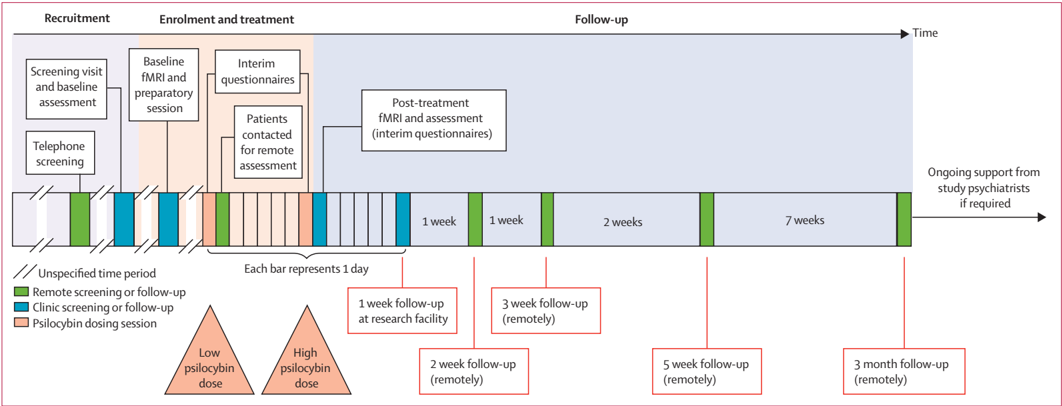
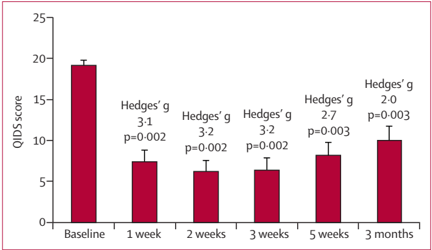
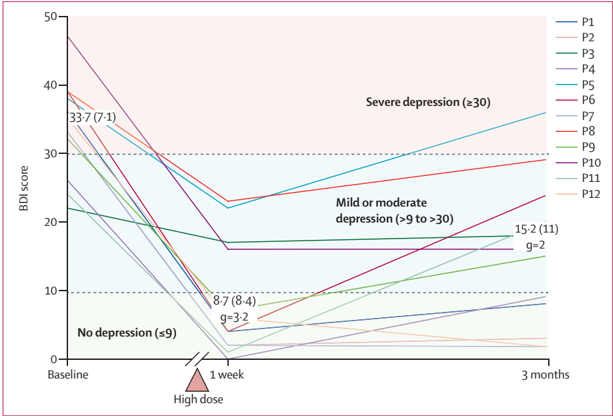
BACKGROUND: Psilocybin is a serotonin receptor agonist that occurs naturally in some mushroom species. Recent studies have assessed the therapeutic potential of psilocybin for various conditions, including end-of-life anxiety, obsessive-compulsive disorder, and smoking and alcohol dependence, with promising preliminary results. Here, we aimed to investigate the feasibility, safety, and efficacy of psilocybin in patients with unipolar treatment-resistant depression. METHODS: In this open-label feasibility trial, 12 patients (six men, six women) with moderate-to-severe, unipolar, treatment-resistant major depression received two oral doses of psilocybin (10 mg and 25 mg, 7 days apart) in a supportive setting. There was no control group. Psychological support was provided before, during, and after each session. The primary outcome measure for feasibility was patient-reported intensity of psilocybin's effects. Patients were monitored for adverse reactions during the dosing sessions and subsequent clinic and remote follow-up. Depressive symptoms were assessed with standard assessments from 1 week to 3 months after treatment, with the 16-item Quick Inventory of Depressive Symptoms (QIDS) serving as the primary efficacy outcome. This trial is registered with ISRCTN, number ISRCTN14426797. FINDINGS: Psilocybin's acute psychedelic effects typically became detectable 30-60 min after dosing, peaked 2-3 h after dosing, and subsided to negligible levels at least 6 h after dosing. Mean self-rated intensity (on a 0-1 scale) was 0·51 (SD 0·36) for the low-dose session and 0·75 (SD 0·27) for the high-dose session. Psilocybin was well tolerated by all of the patients, and no serious or unexpected adverse events occurred. The adverse reactions we noted were transient anxiety during drug onset (all patients), transient confusion or thought disorder (nine patients), mild and transient nausea (four patients), and transient headache (four patients). Relative to baseline, depressive symptoms were markedly reduced 1 week (mean QIDS difference -11·8, 95% CI -9·15 to -14·35, p=0·002, Hedges' g=3·1) and 3 months (-9·2, 95% CI -5·69 to -12·71, p=0·003, Hedges' g=2) after high-dose treatment. Marked and sustained improvements in anxiety and anhedonia were also noted. INTERPRETATION: This study provides preliminary support for the safety and efficacy of psilocybin for treatment-resistant depression and motivates further trials, with more rigorous designs, to better examine the therapeutic potential of this approach. FUNDING: Medical Research Council.
Overview
The claims and statistics of this paper haven’t been checked yet.
Free: it reads the open-access text and checks the first 5 claims that cite a source we can check. Create a free account to check every claim.
Integrity signals
Registry
Cites
Statistics
Figures
Verification
Claims the paper makes
The claims and statistics of this paper haven’t been checked yet.
Free: it reads the open-access text and checks the first 5 claims that cite a source we can check. Create a free account to check every claim.
Claims other papers make about this one
Each is checked against this paper’s own text: does it say what the citing paper says it does?
The source backs part of the claim, not all of it — or backs it for a different population, condition or comparison.
In the citing paper
“Both methods have shown potential for reducing psychopathology and both, psychedelic-assisted therapy with psilocybin and MBIs, in particular MBCT have preliminary evidence for effectiveness in chronic, treatment-resistant depression [94].”
From Mindfulness meditation and psychedelics: potential synergies and commonalities (2023) · cites this paper as [94]
Experimental — accuracy not yet measuredThe source backs part of the claim, not all of it — or backs it for a different population, condition or comparison.
In the citing paper
“Randomised clinical trials (RCTs) of psilocybin-assisted therapy demonstrated a significant reduction of depressive symptoms in terminally ill cancer patients, as well as in treatment-resistant depression (29, 30, 38).”
From Examining the Potential Synergistic Effects Between Mindfulness Training and Psychedelic-Assisted Therapy (2021) · cites this paper as [29]
Experimental — accuracy not yet measuredThe source backs part of the claim, not all of it — or backs it for a different population, condition or comparison.
In the citing paper
“Most of these studies however suffer from low methodological validity and are mostly open-label, yet they have yielded preliminary evidence for the capacity of psychedelic substances for treating addiction, depression, anxiety, and eating disorders (29–35).”
From Examining the Potential Synergistic Effects Between Mindfulness Training and Psychedelic-Assisted Therapy (2021) · cites this paper as [29]
Experimental — accuracy not yet measuredThe source backs part of the claim, not all of it — or backs it for a different population, condition or comparison.
In the citing paper
“Remarkably, these benefits were incurred even after only a single psychedelic administration and were maintained for as long as 6 months.”
From Examining the Potential Synergistic Effects Between Mindfulness Training and Psychedelic-Assisted Therapy (2021) · cites this paper as [29]
Experimental — accuracy not yet measuredThe cited source says what the claim attributes to it.
In the citing paper
“Amelioration of symptomatic depression in pilot studies of major depressive disorder, including those that compared psilocybin with escitalopram 8,9 and that investigated its use in treatment-resistant depression, 10 has suggested therapeutic potential for this agent.”
From Single-Dose Psilocybin for a Treatment-Resistant Episode of Major Depression (2022) · cites this paper as [10]
11 more claims about this paper
Create a free account to see every claim other papers make about this one.
Self-check
Percentages, sums and reported differences re-computed from the paper’s own numbers.
The self-check needs the paper’s full text.
Citations
Cites
Rush, A. J., Trivedi, M. H., Ibrahim, H. M., Carmody, T. J., Arnow, B., Klein, D. N., Markowitz, J. C., Ninan, P. T., Kornstein, S., Manber, R., et al. (2003) · Biological Psychiatry · doi:10.1016/s0006-3223(02)01866-8 · Cited by 3,829
The Economic Burden of Adults With Major Depressive Disorder in the United States (2005 and 2010)
Greenberg, P. E., Fournier, A.-A., Sisitsky, T., Pike, C. T., & Kessler, R. C. (2015) · The Journal of Clinical Psychiatry · doi:10.4088/jcp.14m09298 · Cited by 1,779
Pilot Study of Psilocybin Treatment for Anxiety in Patients With Advanced-Stage Cancer
Grob, C. S., Danforth, A. L., Chopra, G. S., Hagerty, M., McKay, C. R., Halberstadt, A. L., & Greer, G. R. (2011) · Archives of General Psychiatry · doi:10.1001/archgenpsychiatry.2010.116 · Cited by 1,206 · cited 1×
“…cantly decreased anxiety and depression scores were observed 3 and 6 months after a single dose of psilocybin in patients with anxiety related to end-stage cancer, 15 and improve ments in wellbeing lasting for more than 1 year were observed in healthy individuals given a single dose of psilocybin.”
BackgroundHuman hallucinogen research: guidelines for safety
Johnson, M., Richards, W., & Griffiths, R. (2008) · Journal of Psychopharmacology · doi:10.1177/0269881108093587 · Cited by 1,203
Neural correlates of the psychedelic state as determined by fMRI studies with psilocybin
Carhart-Harris, R. L., Erritzoe, D., Williams, T., Stone, J. M., Reed, L. J., Colasanti, A., Tyacke, R. J., Leech, R., Malizia, A. L., Murphy, K., et al. (2012) · Proceedings of the National Academy of Sciences · doi:10.1073/pnas.1119598109 · Cited by 1,172 · cited 1×
“10 Moreover, data obtained from large-scale population studies have recently challenged the view that psychedelics negatively aff ect mental health, 11–13 with one study’s fi ndings showing lower rates of psychological distress and suicidality among people who had used”
BackgroundSelf-citationPsilocybin-assisted treatment for alcohol dependence: A proof-of-concept study
Bogenschutz, M. P., Forcehimes, A. A., Pommy, J. A., Wilcox, C. E., Barbosa, P., & Strassman, R. J. (2015) · Journal of Psychopharmacology · doi:10.1177/0269881114565144 · Cited by 1,151 · cited 1×
“19 Signifi cantly decreased anxiety and depression scores were observed 3 and 6 months after a single dose of psilocybin in patients with anxiety related to end-stage cancer, 15 and improve ments in wellbeing lasting for more than 1 year were observed in healthy individuals given a single dose of…”
BackgroundPilot study of the 5-HT 2A R agonist psilocybin in the treatment of tobacco addiction
Johnson, M. W., Garcia-Romeu, A., Cosimano, M. P., & Griffiths, R. R. (2014) · Journal of Psychopharmacology · doi:10.1177/0269881114548296 · Cited by 914
Griffiths, R., Richards, W., Johnson, M., McCann, U., & Jesse, R. (2008) · Journal of Psychopharmacology · doi:10.1177/0269881108094300 · Cited by 905
Safety, tolerability, and efficacy of psilocybin in 9 patients with obsessive-compulsive disorder
Moreno, F. A., Wiegand, C. B., Taitano, E. K., & Delgado, P. L. (2006) · The Journal of Clinical Psychiatry · doi:10.4088/jcp.v67n1110 · Cited by 789
(2001) · PubMed · Cited by 780
Cited by
Items 801–900 of 1,006
Beyond psychedelics: set and setting in general psychiatric practice
Kozak, Z., & Miller, C. W. T. (2024) · International Review of Psychiatry · doi:10.1080/09540261.2024.2419662 · Cited by 14
“…factors for treatment response including high levels of education, gainful employment, and enough financial stability to be able to participate in lengthy clinical trials (Carhart-Harris et al., 2016; Carhart-Harris et al., 2021; Davis et al., 2021; Ross et al., 2016; Thrul & Garcia-Romeu, 2021).”
Psilocybin for disorders of consciousness: A case-report study
Cardone, P., Nùñez, P., Alnagger, N., Martial, C., van der Lande, G., Sandell, R., Carhart-Harris, R. L., & Gosseries, O. (2025) · Clinical Neurophysiology · doi:10.1016/j.clinph.2025.02.264 · Cited by 13
Self-citationLapid, M. I., Pagali, S. R., Randall, A., Donovan, K. A., Bronars, C. A., Gauthier, T. A., Bock, J., Lim, S. D., Carey, E. C., Sokolowski, E. I., et al. (2025) · Palliative & Supportive Care · doi:10.1017/s147895152500032x · Cited by 13
“In non-cancer patients with depression, psilocybin has shown promise in reducing symptoms of depression and anxiety, contributing to improved emotional and psychological well-being (Carhart-Harris et al. 2016, 2018).”
Extending ketamine’s antidepressant effects
Hashimoto, K. (2025) · Science · doi:10.1126/science.adx4559 · Cited by 12
Elsilä, L. V., Korhonen, N., Hyytiä, P., & Korpi, E. R. (2020) · Frontiers in Pharmacology · doi:10.3389/fphar.2020.602770 · Cited by 12
“This is mainly due to the interesting results from recent clinical studies suggesting that psychedelic drugs may have both rapid and long-lasting therapeutic effects in patients with psychiatric disorders, especially in those with major depression (Carhart-Harris et al., 2016; Griffiths et al., 2016), addiction (Johns…”
BackgroundA continuum hypothesis of psychotomimetic rapid antidepressants
Haarsma, J., Harmer, C. J., & Tamm, S. (2021) · Brain and Neuroscience Advances · doi:10.1177/23982128211007772 · Cited by 13
“Indeed, psychedelics, and to some extent ketamine, are often used in combination with psychotherapy, supporting this view (Carhart-Harris et al., 2016, 2018a; de Osório et al., 2015; Dore et al., 2019; Reiff et al., 2020).”
BackgroundShaw, L., Rea, K., Lachowsky, N. J., & Roth, E. A. (2022) · Journal of Psychoactive Drugs · doi:10.1080/02791072.2022.2054746 · Cited by 12
Longo, M. S. C., Bienemann, B., Multedo, M., Negreiros, M. A., Schenberg, E. E., & Mograbi, D. C. (2022) · Journal of Psychoactive Drugs · doi:10.1080/02791072.2022.2112788 · Cited by 15
“Both have been shown effective for treatment-resistant depression in open-label studies (Carhart-harris et al. 2016,; Osório et al. 2015; Sanches et al. 2016) and randomized controlled trials against placebo (Davis et al. 2020; Palhano-Fontes et al. 2019).”
MethodTheories of consciousness and psychiatric disorders – A comparative analysis
Stefanelli, R. (2023) · Neuroscience & Biobehavioral Reviews · doi:10.1016/j.neubiorev.2023.105204 · Cited by 15
The possible place for psychedelics in pharmacotherapy of mental disorders
Wojtas, A. (2023) · Pharmacological Reports · doi:10.1007/s43440-023-00550-9 · Cited by 14
“…of psilocybin (first with a low dose of 10 mg and a higher dose of 25 mg 7 days later) produced significant effects in 67% of patients with treatment-resistant depression in the first week after the treatment, in a 3-month follow-up, 47% of treated individuals stayed in remission [144].”
BackgroundThe role of psychedelics in palliative care reconsidered: A case for psilocybin
Kelmendi, B., Corlett, P. R., Ranganathan, M., D’Souza, C., & Krystal, J. H. (2016) · Journal of Psychopharmacology · doi:10.1177/0269881116675781 · Cited by 11
“Furthermore, Carhart-Harris et al. (2016) recently investigated the safety and efficacy of psilocybin in treatment-resistant depression, and showed that a higher dose correlated with a better treatment outcome.”
BackgroundBiological foundations and beneficial effects of trance
Hove, M. J., & Stelzer, J. (2018) · Behavioral and Brain Sciences · doi:10.1017/s0140525x17002072 · Cited by 13
Stenbæk, D. S., Kristiansen, S., Burmester, D., Madsen, M. K., Frokjaer, V. G., Knudsen, G. M., & Fisher, P. M. (2019) · Human Brain Mapping · doi:10.1002/hbm.24511 · Cited by 11
van der Gronde, T., Los, L., Herremans, A. H. J., Oosting, R. S., Zorzanelli, R., & Pieters, T. (2020) · Frontiers in Psychiatry · doi:10.3389/fpsyt.2020.00412 · Cited by 13
“The classic psychedelics, compounds such as LSD, psilocybin, and Ayahuasca, have diverse pharmacological profiles, including robust effects on the serotonergic system (67, 69, 72, 75).”
BackgroundArgento, E., Christie, D., Mackay, L., Callon, C., & Walsh, Z. (2021) · Frontiers in Psychiatry · doi:10.3389/fpsyt.2021.716593 · Cited by 13
Bright, S. J., & Williams, M. L. (2018) · Australian Psychologist · doi:10.1111/ap.12345 · Cited by 12
Focusing on the negative: cases of long-term negative psychological responses to psychedelicsPreprint
Bremler, R., Katati, N., Shergill, P., Erritzøe, D., & Carhart-Harris, R. L. (2023) · doi:10.31234/osf.io/yzmcj · Cited by 11
Self-citationSelf-Care Practices with Psychedelics–A Qualitative Study of Users’ Perspectives
Soares, C. M., Leite, Â., & Pinto, M. (2023) · Journal of Psychoactive Drugs · doi:10.1080/02791072.2022.2071134 · Cited by 10
Have Norwegians tried psilocybin, and do they accept it as a medicine?
Jacobsen, H. B., Stubhaug, A., Holmøy, B., Kvam, T.-M., & Rème, S. E. (2021) · Journal of Psychedelic Studies · doi:10.1556/2054.2021.00167 · Cited by 12
Psilocybin Conspectus: Status, Production Methods, and Considerations
Plotnik, L., Gibbs, G., & Graham, T. (2021) · International journal of medicinal mushrooms · doi:10.1615/intjmedmushrooms.2021041921 · Cited by 11
Race and ethnicity moderate the associations between lifetime psilocybin use and crime arrests
Jones, G. M., Al‐Suwaidi, M., Castro‐Ramirez, F., McGuire, T. C., Mair, P., & Nock, M. K. (2023) · Frontiers in Psychiatry · doi:10.3389/fpsyt.2023.1169692 · Cited by 10
Therapeutic potential of psychedelics: History, advancements, and unexplored frontiers
Maia, J. M., de Oliveira, B. S. A., Branco, L. G. S., & Soriano, R. N. (2024) · Progress in Neuro-Psychopharmacology and Biological Psychiatry · doi:10.1016/j.pnpbp.2024.110951 · Cited by 12
Yaden, D. B., Graziosi, M., Owen, A. M., Agin-Liebes, G., Aaronson, S. T., Allen, K. E., Barrett, F. S., Bogenschutz, M. P., Carhart-Harris, R. L., Ching, T. H. W., et al. (2025) · Psychedelic Medicine · doi:10.1089/psymed.2024.0019 · Cited by 13
“Psilocybin has been shown to improve mood disorders, 24 – 33 smoking and drinking behavior in substance use disorders, 34 – 36 and increase well-being, 28,37 – 41 all with very few serious adverse events attributable to the psychedelic (but they can and do occur).”
Self-citationFrom anxiety to depression: A longitudinal investigation into the role of anhedonia
Collins, A. C., Gallagher, M. R., Calafiore, C., Jordan, D. G., & Winer, E. S. (2025) · Journal of Affective Disorders · doi:10.1016/j.jad.2025.03.074 · Cited by 14
The phenomenology of psilocybin: transformative insights for research and clinical practice
Metastasio, A., Prevete, E., Venturini, S., Garofalo, A., Cecconello, B., Pisapia, N. D., & Corazza, O. (2025) · Frontiers in Psychology · doi:10.3389/fpsyg.2025.1455902 · Cited by 15
“…particularly among patients with life-threatening conditions (Goldberg et al., 2020), major depressive disorders (Carhart-Harris et al., 2018; Carhart-Harris et al., 2016; Davis et al., 2021), treatment-resistant depression (Johnson and Griffiths, 2017; Roseman et al., 2018), and nicotine…”
Lashgari, N., Khalaji, M., Rana, P., Badrabadi, F., Rahnama, M., Nasoori, H., Roudsari, N. M., Nia, M. M. K., & Shafaroodi, H. (2025) · Molecular Neurobiology · doi:10.1007/s12035-025-05097-9 · Cited by 10
Classic psychedelics as therapeutics for psychiatric disorders
Nichols, C. D., & Hendricks, P. S. (2020) · Handbook of behavioral neuroscience · doi:10.1016/b978-0-444-64125-0.00049-9 · Cited by 18
5-HT2A and 5-HT2C receptors as potential targets for the treatment of nicotine use and dependence
Higgins, G. A., & Sellers, E. M. (2021) · Progress in brain research · doi:10.1016/bs.pbr.2021.01.007 · Cited by 10
Fissler, P., Vandersmissen, A., Filippi, M., Mavioğlu, R. N., Scholkmann, F., Karabatsiakis, A., & Krähenmann, R. (2023) · Journal of Psychopharmacology · doi:10.1177/02698811231164707 · Cited by 11
“Email: patrick.fissler@stgag.ch has been shown for depression (Carhart-Harris et al., 2016, 2018, 2021; Galvão-Coelho et al., 2021; Nygart et al., 2022; Palhano-Fontes et al., 2019), anxiety in life-threatening diseases such as cancer (Gasser et al., 2015; Griffiths et al., 2016; Grob et al., 2011;…”
MethodEffect of LSD and music on the time-varying brain dynamics
Adamska-Stolarczyk, I., & Finc, K. (2023) · Psychopharmacology · doi:10.1007/s00213-023-06394-8 · Cited by 12
“…(Lebedev et al. 2015; Lord et al. 2019; Luppi et al. 2021; Petri et al. 2014; Preller et al. 2019, 2020; Tagliazucchi et al. 2014; Varley et al. 2020), especially regarding the DMN and the visual regions (Carhart-Harris et al. 2012a; Carhart-Harris et al. 2016a; Palhano-Fontes et al. 2015).”
BackgroundMethodInfluentialAlternative beliefs in psychedelic drug users
Lebedev, A. V., Acar, K., Horntvedt, O., Cabrera, A. E., Simonsson, O., Osika, W., Ingvar, M., & Petrović, P. (2023) · Scientific Reports · doi:10.1038/s41598-023-42444-z · Cited by 16
“The focus was to examine potential associations between psychedelic exposure and the inclination to affirm alternative views related to three distinct epistemic beliefs, as measured by the Epistemic Belief System (EBS): (1) reliance on intuition for fact formation (Faith in intuition for facts), (2) tendency to corrob…”
BackgroundJones, N., Wagner, L., Pellitteri-Hahn, M. C., Scarlett, C. O., & Wenthur, C. J. (2024) · Frontiers in Psychiatry · doi:10.3389/fpsyt.2023.1303365 · Cited by 12
Psychedelic research in Australia: Breaking through the stigma
Puspanathan, P. (2017) · Australian & New Zealand Journal of Psychiatry · doi:10.1177/0004867417701580 · Cited by 14
“…the positive results in the psychedelic research literature such as for psilocybin-assisted psychotherapy for treatment-resistant depression (Carhart-Harris et al., 2016) and for, perhaps not treatment resistant but at least treatment resistive conditions, such as psilocybin in obsessive…”
BackgroundDesigning Consciousness: Psychedelics as Ontological Design Tools for Decolonizing Consciousness
Falcon, J. (2020) · Design and Culture · doi:10.1080/17547075.2020.1826182 · Cited by 19
“…it has now been established that psychedelics can reliably provoke “mystical experiences” which study participants rank among the most meaningful of their lives (McCorvy, Olsen, and Roth 2016; Johnson, Garcia-Romeu, and Griffiths 2017; Noorani et al. 2018; Carhart-Harris et al. 2016, 2017).”
BackgroundPsilocybin as a Novel Pharmacotherapy for Treatment-Refractory Anorexia Nervosa
Rodan, S.-C., Aouad, P., McGregor, I. S., & Maguire, S. (2021) · OBM Neurobiology · doi:10.21926/obm.neurobiol.2102102 · Cited by 13
“Similarly, Carhart-Harris et al. (2018) reported reduced suicidal ideation at 6 months follow-up in TRD patients treated with psilocybin [105].”
BackgroundInfluentialMajić, T., Jungaberle, H., Schmidt, T. T., Zeuch, A., Hermle, L., & Gallinat, J. (2017) · Fortschritte der Neurologie · Psychiatrie · doi:10.1055/s-0043-103085 · Cited by 15
Earleywine, M., Altman, B. R., & De Leo, J. (2022) · Journal of Psychoactive Drugs · doi:10.1080/02791072.2021.1912863 · Cited by 9
“…work to other psychedelic-assisted therapies, including ayahuasca (Palhano-Fontes et al. 2019), MDMA (Vermetten and Yehuda 2020), and psilocybin (Carhart-Harris et al. 2016) for depression, might illuminate the credibility of these alternative treatments for depression and other refractory…”
BackgroundFang, Q., Chan, V. K. Y., Chan, S. S. M., Jiao, Y., Wang, J., & Li, X. (2024) · Psychiatry Research · doi:10.1016/j.psychres.2024.115960 · Cited by 9
Desai, S. R., Jain, V., Xavier, S., & Du, W. (2022) · Children · doi:10.3390/children9121906 · Cited by 10
“Multiple studies have found that hallucinogen use in a controlled setting was associated with a decrease in psychological distress in cancer patients [6–8], decreased depressive symptoms in treatment-resistant depression [9] and recurrent major depressive”
BackgroundContext is a Critical for Psychoactive Drug Effects
Greenway, K. T. (2023) · CNS Drugs · doi:10.1007/s40263-023-01053-0 · Cited by 10
“The assessment of social settings and cultural factors is inherently multifaceted and complex, for example, whereas reporting preparatory protocols and compositions of musical playlists are both feasible and already becoming common practice [4, 12, 37].”
BackgroundBrockett, A. T., & Francis, N. A. (2024) · Journal of Neurophysiology · doi:10.1152/jn.00124.2024 · Cited by 12
Efthimiou, A. A., Cardinale, A. M., & Kepa, A. (2024) · Psychedelic Medicine · doi:10.1089/psymed.2023.0058 · Cited by 11
“41 In a study with hallucinogen-naive adults, psychedelics used among 36 healthy volunteers showed marked improvements in mental well-being and optimism and, in 14-month follow-ups, was framed by participants as some of the most spiritually meaningful experiences of their lives.”
Chen, M., Cheng, S.-L., Kao, Y., Tseng, P., Hsu, C., Yu, C., Yang, F., Thompson, T., Hsu, T., & Liang, C. (2024) · Frontiers in Psychiatry · doi:10.3389/fpsyt.2024.1439347 · Cited by 11
Psychoactive substances for the treatment of neuropsychiatric disorders
Zhen, Z., Sun, X., Yuan, S., & Zhang, J. (2024) · Asian Journal of Psychiatry · doi:10.1016/j.ajp.2024.104193 · Cited by 12
Existential feelings as a phenomenological framework for psychedelic therapy
Tijhuis, F. B., Coninx, S., & de Bruin, L. C. (2024) · Philosophical Psychology · doi:10.1080/09515089.2024.2412195 · Cited by 10
“…clinical trials have shown significant antidepressant or anxiolytic effects of psychedelic therapy at various time scales (Agin-Liebes et al., 2020; Carhart-Harris et al., 2016, 2021; Davis et al., 2021; Gasser et al., 2014, 2015; Goodwin et al., 2022; Griffiths et al., 2016; Grob et al., 2011;…”
Masking Influences: A Systematic Review of Placebo Control and Masking in Psychedelic Studies
Barstowe, A., & Kajonius, P. (2024) · Journal of Psychoactive Drugs · doi:10.1080/02791072.2024.2424272 · Cited by 12
Clinical and preclinical evidence of psilocybin as antidepressant. A narrative review
Erkizia-Santamaría, I., Horrillo, I., Meana, J. J., & Ortega, J. E. (2025) · Progress in Neuro-Psychopharmacology and Biological Psychiatry · doi:10.1016/j.pnpbp.2025.111249 · Cited by 13
Serotonergic Psychedelics Rapidly Modulate Evoked Glutamate Release in Cultured Cortical Neurons
Petrušková, A., Guhathakurta, D., Akdaş, E. Y., Perelló‐Amorós, B., Frischknecht, R., Weiss, E., Páleníček, T., & Fejtová, A. (2025) · Journal of Neurochemistry · doi:10.1111/jnc.70020 · Cited by 11
“…onset of action, which occurs within hours after treatment, and their long-lasting effects, which can last for months after one or two sessions (Goodwin et al. 2023, 2022; Kopra et al. 2023; Galvão-Coelho et al. 2021; Andersen et al. 2021; Gregorio et al. 2021; Carhart-Harris et al. 2016, 2018).”
Chahal, J. S., Saini, S., Bansal, P., Arora, J., Bansal, P. D., & Saini, B. (2025) · The International Journal of Psychiatry in Medicine · doi:10.1177/00912174251326009 · Cited by 9
“26 The fi ndings of this meta-analysis have important clinical implications.”
Amaev, A., Song, J., Kambari, Y., Carmona-Torres, E., Abdolizadeh, A., Ueno, F., Koizumi, T., Strafella, A. P., Husain, M. I., Graff‐Guerrero, A., et al. (2025) · Journal of Psychiatric Research · doi:10.1016/j.jpsychires.2025.03.022 · Cited by 11
Neurobiology of psilocybin: a comprehensive overview and comparative analysis of experimental models
Adeyinka, D. A., Forsyth, D., Currie, S., & Faraone, N. (2025) · Frontiers in Systems Neuroscience · doi:10.3389/fnsys.2025.1585367 · Cited by 12
Have Effective Antidepressants Finally Arrived? Developments in Major Depressive Disorder Therapy
Thase, M. E. (2023) · The Journal of Clinical Psychiatry · doi:10.4088/jcp.mulmdd3048sho · Cited by 9
Nicholas, C. R. N., Horton, D. M., Malicki, J., Baltes, A., Hutson, P. R., & Brown, R. (2023) · Psychedelic Medicine · doi:10.1089/psymed.2023.0012 · Cited by 10
Märcher-Rørsted, E., Jensen, A. A., Šmits, G., Frydenvang, K., & Kristensen, J. L. (2024) · Journal of Medicinal Chemistry · doi:10.1021/acs.jmedchem.4c00082 · Cited by 11
Smith, F. N., Neill, J. C., & Wainwright, V. (2022) · Drug Science Policy and Law · doi:10.1177/20503245221124117 · Cited by 13
“Psilocybin assisted therapy has also been effective in reducing symptoms in individuals with treatment-resistant depression (Carhart-Harris et al., 2016), an effect sustained for up to six months (Carhart-Harris et al., 2018).”
BackgroundPsychedelics and fNIRS neuroimaging: exploring new opportunities
Scholkmann, F., & Vollenweider, F. X. (2022) · Neurophotonics · doi:10.1117/1.nph.10.1.013506 · Cited by 9
Classic psychedelics do not affect T cell and monocyte immune responses
Rudin, D., Areesanan, A., Liechti, M. E., & Gründemann, C. (2023) · Frontiers in Psychiatry · doi:10.3389/fpsyt.2023.1042440 · Cited by 16
Nguyen, T. M. L., Jollant, F., Tritschler, L., Colle, R., Corruble, E., & Gardier, A. M. (2023) · Pharmaceuticals · doi:10.3390/ph16040634 · Cited by 11
d-Lysergic acid diethylamide has major potential as a cognitive enhancerPreprint
da Silva, F. A. C., Ornelas, I. M., Marcos, E., Goto‐Silva, L., Nascimento, J. M., Ruschi, S., Salerno, J. A., Karmirian, K., Costa, M., Sequerra, E. B., et al. (2019) · bioRxiv (Cold Spring Harbor Laboratory) · doi:10.1101/866814 · Cited by 10
Self-citationThe psychedelic escape from depression
Eisenstein, M. (2022) · Nature · doi:10.1038/d41586-022-02872-9 · Cited by 8
Hovmand, O. R., Madsen, M. K., Fisher, P. M., & Stenbæk, D. S. (2024) · Journal of Psychopharmacology · doi:10.1177/02698811241269669 · Cited by 10
“…such as alcohol use disorder (Bogenschutz et al., 2015, 2022), obsessive-compulsive disorder (Moreno et al., 2006), anxiety, and depression (Carhart-Harris et al., 2016, 2021; Davis et al., 2021; Goodwin et al., 2022; Grob et al., 2011; Raison et al., 2023; Ross et al., 2016; von Rotz et…”
Clarkson, R. D. O., Jabbour, M., Pelayo, D. A., Lara, D., Croix, S. L., Mumman, M., Stukas, S., Anderson, R., Meraz, D., Bangura, A., et al. (2024) · Progress in Neuro-Psychopharmacology and Biological Psychiatry · doi:10.1016/j.pnpbp.2024.111155 · Cited by 8
Godfrey, K., Weiss, B., Zhang, X., Spriggs, M. J., Peill, J. M., Lyons, T., Carhart-Harris, R. L., & Erritzøe, D. (2024) · Neuroscience Applied · doi:10.1016/j.nsa.2024.104092 · Cited by 12
Self-citationDissociable effects of psilocybin and escitalopram for depression on processing of musical surprises
Harding, R., Singer, N., Wall, M. B., Hendler, T., Erritzøe, D., Nutt, D. J., Carhart-Harris, R. L., & Roseman, L. (2025) · Molecular Psychiatry · doi:10.1038/s41380-025-03035-8 · Cited by 12
Self-citationAre we hallucinating or can psychedelic drugs modulate the immune system to control inflammation?
Qureshi, O., Cowley, J., Pegg, A., Cooper, A. J., Gordon, J., Brady, C., Belli, A., Butterworth, S., Upthegrove, R., Andrews, N., et al. (2025) · British Journal of Pharmacology · doi:10.1111/bph.70138 · Cited by 13
“…action that perhaps mirrors the relatively long-term clinical effect to reduce, for example, symptoms of depression after acute drug administration (Carhart-Harris et al., 2016; Carhart-Harris et al., 2021; Davis et al., 2021; Goodwin et al., 2022; Griffiths et al., 2016; von Rotz et al., 2022;…”
Age- and estrous-dependent effects of psilocybin in rats
Zylko, A. L., Rakoczy, R. J., Roberts, B. F., Wilson, M., Powell, A., Page, A., Heitkamp, M., Feist, D., Jones, J. A., & McMurray, M. S. (2025) · Neuropharmacology · doi:10.1016/j.neuropharm.2025.110619 · Cited by 13
Caraccio, M., Cheung, K., Mann, S. P., Bruce, L., Jacobs, E., Villiger, D., Sandbrink, J. D., Register, C., Hannikainen, I. R., Høeg, M. L., et al. (2025) · Philosophical Psychology · doi:10.1080/09515089.2025.2532761 · Cited by 11
“A small open-label study on psilocybin for treatment-resistant depression reported anxiety as one of most prevalent adverse events, most often of mild to moderate severity (Carhart-Harris et al., 2016).”
Psilocybin with psychotherapeutic support for treatment-resistant depression: a pilot clinical trial
Meikle, S. E., Carter, O. L., Liknaitzky, P., Johansen, L., Iyer, R., Strauss, N. H. M., Williams, M. L., Castle, D. J., & Rossell, S. L. (2025) · Therapeutic Advances in Psychopharmacology · doi:10.1177/20451253251377187 · Cited by 10
“14,18,20 Examining individual patterns of response across all timepoints could provide valuable information for tailoring therapies to individual needs.”
Palhas, M. L. C., Corne, R., & Mongeau, R. (2025) · Progress in Neuro-Psychopharmacology and Biological Psychiatry · doi:10.1016/j.pnpbp.2025.111533 · Cited by 12
Augmenting Human Selves Through Artificial Agents – Lessons From the Brain
Northoff, G., Fraser, M., Griffiths, J. D., Pinotsis, D. A., Panangaden, P., Moran, R., & Friston, K. J. (2022) · Frontiers in Computational Neuroscience · doi:10.3389/fncom.2022.892354 · Cited by 9
EMBARK Psychedelic Therapy for Depression: A New Approach for the Whole Person
Brennan, B., & Belser, A. (2024) · doi:10.1093/9780197762622.001.0001 · Cited by 8
The Contribution Good as the Foundation of the Industrial Revolution
Kealey, T., & Ricketts, M. J. (2021) · Cambridge University Press eBooks · doi:10.1017/9781108692915.003 · Cited by 12
Sind Psychedelika schnell wirksame Antidepressiva?
Gründer, G., Brand, M., Kärtner, L., Scharf, D., Schmitz, C. N., Spangemacher, M., & Mertens, L. J. (2022) · Der Nervenarzt · doi:10.1007/s00115-021-01255-1 · Cited by 8
“(2016; [5]) verabreichten in einer offenen Pilotstudie zwei Dosen von Psilocybin (10 und 25mg) im Wochenabstand an zwölf Patienten mit einer therapieresistenten Depression.”
BackgroundInfluentialThe Pharmacology and Clinical Applications of Psychedelic Medicines Within Midwifery Practice
Stein, C. A., Penn, A., Hope, S., Dorsen, C. G., & Mangini, M. (2022) · Journal of Midwifery & Women s Health · doi:10.1111/jmwh.13371 · Cited by 10
Yao, S., Wei, C., Lin, H. P., Zhang, P., Liu, Y., Deng, Y., Huang, Q., & Xie, B. (2022) · Journal of Fungi · doi:10.3390/jof8080870 · Cited by 8
“[7] found the depressive symptoms of patients were significantly reduced after psilocybin treatment, and psilocybin”
BackgroundSelf-administration of Psilocybin in the Setting of Treatment-resistant Depression.
Lyons, A. (2022) · PubMed Central · Cited by 8
A suicide attempt following psilocybin ingestion in a patient with no prior psychiatric history
Kramer, E. N., Reddy, K., & Shapiro, B. B. (2023) · Psychiatry Research Case Reports · doi:10.1016/j.psycr.2023.100118 · Cited by 11
Can Psychedelics be the Treatment for the Crisis in Psychopharmacology?Preprint
Oña, G., & Bouso, J. C. (2019) · Preprints.org · doi:10.20944/preprints201901.0249.v1 · Cited by 8
Psilocybin Combines Rapid Synaptogenic And Anti-Inflammatory Effects In VitroPreprint
Smedfors, G., Glotfelty, E. J., Kalani, N., Hjelle, C. P., Horntvedt, O., Wellfelt, K., Brodin, A., von Kieseritzky, F., Olson, L., & Karlsson, T. E. (2022) · Research Square · doi:10.21203/rs.3.rs-1321542/v1 · Cited by 8
Vohryzek, J., Luppi, A. I., Atasoy, S., Deco, G., Timmermann, C., Carhart-Harris, R. L., & Kringelbach, M. L. (2024) · bioRxiv (Cold Spring Harbor Laboratory) · doi:10.1101/2024.05.30.596410 · Cited by 8
Self-citationProtective Behavioral Strategies for Psychedelic Use: A Mini Review of the Evidence
Piercey, C. J., Gray, B. A., Sung, A., Henry, D., & Karoly, H. C. (2024) · Psychedelic Medicine · doi:10.1089/psymed.2023.0052 · Cited by 7
“24,27 Moreover, given profound alterations in psychological processes that can occur during and following a psychedelic trip, 28 – 31 identifying PBS for successful integration of these experiences may be an important consideration for PBS FOR PSYCHEDELIC USE psychedelic harm reduction.”
Anxiety and Affective Symptoms Related to the Use of Classic Psychedelics: A Systematic Review
Viljoen, G., & Betzler, F. (2024) · Current topics in behavioral neurosciences · doi:10.1007/7854_2024_534 · Cited by 11
Amid magic and menace: psychiatrists’ attitudes to psilocybin therapy
Gribben, A. D., Burke, T., Harrington, C., Husein, A., Murnane, K. S., Hendricks, P. S., Tobin, K., Ivers, J., Thuery, G., Harkin, A., et al. (2024) · Irish Journal of Psychological Medicine · doi:10.1017/ipm.2024.49 · Cited by 7
“…et al., 2021; Davis et al., 2021; Raison et al., 2023; von Rotz et al., 2023), treatment-resistant depression (TRD) (Carhart-Harris et al., 2018; Carhart-Harris et al., 2016; Goodwin et al., 2022, 2023a, 2023b) and substance use disorders (Bogenschutz et al., 2022; Pagni et al., 2024; Yaden et…”
Thaoboonruang, N., Lohitnavy, O., Ya, K., & Lohitnavy, M. (2025) · Scientific Reports · doi:10.1038/s41598-025-98202-w · Cited by 8
Roseby, W., Kettner, H., Roseman, L., Spriggs, M. J., Lyons, T., Peill, J., Giribaldi, B., Erritzøe, D., Nutt, D. J., & Carhart-Harris, R. L. (2025) · Frontiers in Psychology · doi:10.3389/fpsyg.2025.1580663 · Cited by 11
Self-citationThe therapeutic potential of psilocybin beyond psychedelia through shared mechanisms with ketamine
Park, D., Lee, G., Lee, W.-G., Kim, B. S., Lee, Y., & Kim, J. (2025) · Molecular Psychiatry · doi:10.1038/s41380-025-03100-2 · Cited by 14
“An open-label study also found that sequential administration (10 mg followed by 25 mg after one week) led to full remission in 67% of patients with TRD, with 42% remaining in remission for three months [40].”
Landscape analysis of pre-registered clinical trials involving classical psychedelics
Uyar, A., Forbrich, L., Lueken, U., & Evens, R. (2025) · Journal of Psychopharmacology · doi:10.1177/02698811251371690 · Cited by 7
“…among healthy participants (Carhart-Harris et al., 2012; Griffiths et al., 2006), and later in conditions such as nicotine dependence (Johnson et al., 2014), anxiety and depression in patients with life-threatening illnesses (Ross et al., 2016), or depression (Carhart-Harris et al., 2016).”
Marsden, J., Kelleher, M., Dunbar, F., Ermakova, A. O., Mitcheson, L., Roberts, C., Rucker, J., Scott, G., Saeger, I., Small, F., et al. (2025) · Addiction · doi:10.1111/add.70260 · Cited by 10
Self-citationGoodwin, G. M., Aaronson, S. T., Alvarez, O., Carhart-Harris, R. L., Croal, M., Feifel, D., Hellerstein, D. J., Husain, M. I., Kelly, J. R., Kirlić, N., et al. (2026) · Journal of Affective Disorders · doi:10.1016/j.jad.2026.121662 · Cited by 8
Self-citationYngwe, H., Plavén‐Sigray, P., Ekman, C. J., Henje, E., Berglund, A., Tiger, M., Beckman, M., & Lundberg, J. O. (2026) · JAMA Network Open · doi:10.1001/jamanetworkopen.2026.12589 · Cited by 12
Brandt, J. (2023) · Drug Science Policy and Law · doi:10.1177/20503245231170340 · Cited by 9
Escamilla-Orozco, R. I., González-Trujano, M. E., Mariscal, J. M. G., Torres-Valencia, J. M., Guzmán-González, H., Vega, J. L., & Loizaga-Velder, A. K. (2023) · Journal of Psychoactive Drugs · doi:10.1080/02791072.2023.2246459 · Cited by 8
“…2020), the major depressive disorder of moderate-non resistant severity (Carhart-Harris et al. 2021; Davis et al. 2021; Dawood Hristova and Pérez-Jover 2023; Ko et al. 2023), and patients with depression resistant to conventional treatment (Carhart-Harris et al. 2016, 2018; Goodwin et al. 2022).”
BackgroundTyagi, R., Saraf, T. S., & Canal, C. E. (2023) · ACS Pharmacology & Translational Science · doi:10.1021/acsptsci.3c00137 · Cited by 8
Biscoe, N., Bonson, A., Slavin, M., Busuttil, W., MacManus, D., Cox, A., & Murphy, D. (2023) · European Journal of Trauma & Dissociation · doi:10.1016/j.ejtd.2023.100359 · Cited by 8
Gupta, P., Muneshwar, K. N., Juganavar, A., & Shegekar, T. (2023) · Cureus · doi:10.7759/cureus.48251 · Cited by 10
Psychedelic Microdosing among Young Adults from Southern California
Harlow, A. F., Hendricks, P. S., Leventhal, A. M., & Barrington‐Trimis, J. L. (2024) · Journal of Psychoactive Drugs · doi:10.1080/02791072.2024.2313684 · Cited by 9
“…positive effects of larger psychedelic doses (combined with psychological support) of MDMA (Mitchell et al. 2021; Varker et al. 2021), psilocybin (Carhart-Harris et al. 2016, 2021; Griffiths et al. 2016; Grob et al. 2011; Ross et al. 2016), and LSD (Fuentes et al. 2020) on treatment of substance…”
Psychedelic intimacy: Altered states of consciousness in romantic relationships
Neubert, J. J., Anderson, K., & Mason, N. L. (2024) · Journal of Psychedelic Studies · doi:10.1556/2054.2024.00319 · Cited by 12
Lancelotta, R., DellaCrosse, M. A., Quinn, D., Saniyah, S., Saniyah, M., Gukasyan, N., Narayan, S. K., Nikolaidis, A., Sevelius, J. M., & Davis, A. K. (2025) · Journal of Psychoactive Drugs · doi:10.1080/02791072.2025.2520224 · Cited by 8
“These findings are consistent with studies showing the efficacy of psychedelic-assisted therapy for mental health conditions (Carhart-Harris et al. 2016; Davis et al. 2021; Hasler 2023; Ross et al. 2016), as well as survey data on naturalistic psychedelic use (Raison et al. 2022).”
Analysis of the source of aggressiveness in gamecocks
Komiyama, T., Yoshikawa, M., Yokoyama, K., & Kobayashi, H. (2020) · Scientific Reports · doi:10.1038/s41598-020-63961-1 · Cited by 8
Metadata
- Authors
- Carhart-Harris, R. L., Bolstridge, M., Rucker, J., Day, C. M. J., Erritzoe, D., Kaelen, M., Bloomfield, M., Rickard, J. A., Forbes, B., Feilding, A., Taylor, D., Pilling, S., Curran, V. H., & Nutt, D. J.
- Affiliations
- Imperial College London (GB)
- University College London (GB)
- Barts Health NHS Trust (GB)
- King's College London (GB)
- Beckley Foundation (GB)
- South London and Maudsley NHS Foundation Trust (GB)
- Corresponding author
- Carhart-Harris, Robin L
- ORCID
- Venue
- The Lancet Psychiatry
- Publisher
- Elsevier BV
- Published
- 2016-07
- Volume
- 3
- Issue
- 7
- Pages
- 619-627
- ISSN
- 2215-0366 (ISSN-L)
- OpenAlex
- W2396675581
- Semantic Scholar
- 006d3597cc21e0200eb70aab18a11379644d48b8
- Cited by
- 1,540
- References
- 30
- Citations by year
- 2026: 137 · 2025: 189 · 2024: 225 · 2023: 207 · 2022: 205 · 2021: 192 · 2020: 128 · 2019: 78 · 2018: 71 · 2017: 70 · 2016: 36
- FWCI
- 113.68
- Type
- journal article
- Language
- en
- Open access
- hybrid
- doi.org
- Licence
- cc-by
- www.elsevier.com/tdm/userlicense/1.0/ (tdm)
- creativecommons.org/licenses/by/4.0/ (vor)
- Locations
- The Lancet Psychiatry (publishedVersion, cc-by)
- PubMed (publishedVersion)
- Research Bank (Australian Catholic University) (submittedVersion, cc-by)
- UCL Discovery (University College London) (submittedVersion)
- Research Portal (King's College London) (submittedVersion, cc-by)
- Spiral (Imperial College London) (submittedVersion, other-oa)
- Funders
- MRC clinical development (MR/J00460X/1)
- Topics
- Social Sciences › Psychology › Clinical Psychology › Psychedelics and Drug Studies
- Health Sciences › Medicine › Pharmacology (medical) › Treatment of Major Depression
- Social Sciences › Psychology › Clinical Psychology › Psychotherapy Techniques and Applications
- Keywords
- psilocybin, treatment-resistant depression, unipolar major depression, psychedelic therapy, psychological support, adverse effects, depressive symptom reduction, serotonin receptor agonists, feasibility and safety, dose comparison, remote follow-up, end-of-life anxiety, obsessive-compulsive disorder, transdiagnostic treatment, psychedelic-assisted psychotherapy
- MeSH terms
- Adult, Feasibility Studies, Female, Humans, Male, Middle Aged, Psilocybin, Social Support, Treatment Outcome, Serotonin Receptor Agonists, Depressive Disorder, Treatment-Resistant
About these checks
Registry, retraction, Cites and statistics results are computed, not judged, with one exception: a printed reference that no index lists is read once by a model before it counts as a citation error. Claims are extracted by a model and kept only when their quote appears verbatim in the text; each cited source is then checked, with a model’s help, for whether it says what the claim relies on. Those verdicts can be wrong — read the claim’s quote and the cited source before relying on one.
Statistics and arithmetic are recomputed, not judged.
Confidence bands are shown only for fields calibrated on our annotated test set. None is calibrated yet, so no band is shown.
What counts as a claim ›How we measure confidence ›How we check this ›
Are you an author, or do you see a problem with this page? Request a review
Data sources
Bibliographic data: Semantic Scholar, OpenAlex, Crossref.
Contains information from the Semantic Scholar Academic Graph Datasets, made available under the ODC Attribution License (ODC-BY 1.0).
Semantic Scholar’s data is described in: Kinney, R., et al. (2023). The Semantic Scholar Open Data Platform. arXiv:2301.10140.
