

Psilocybin with psychological support for treatment-resistant depression: an open-label feasibility study
Open accessThe DOI matches its Crossref record; 30 of the 30 references it cites were found in a registry or an index.
Abstract
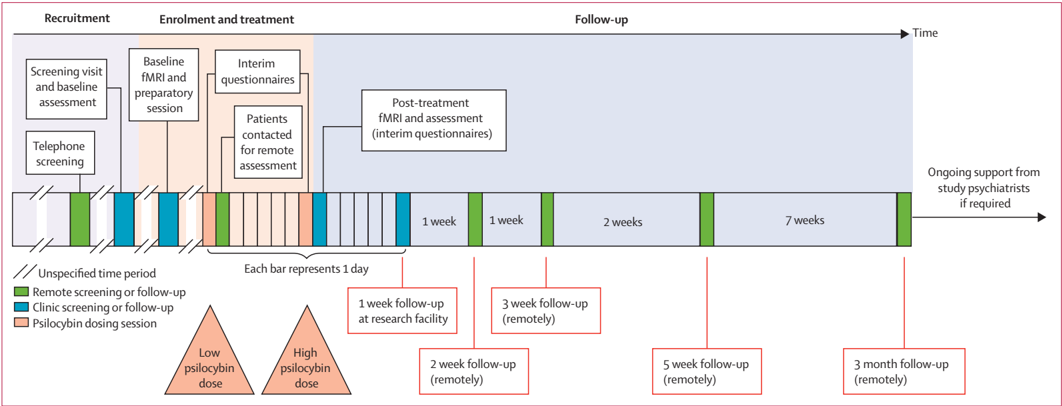
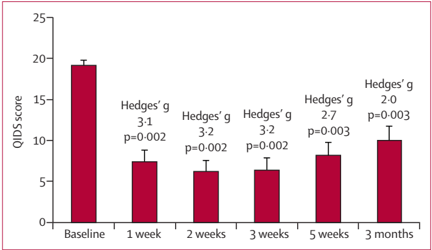
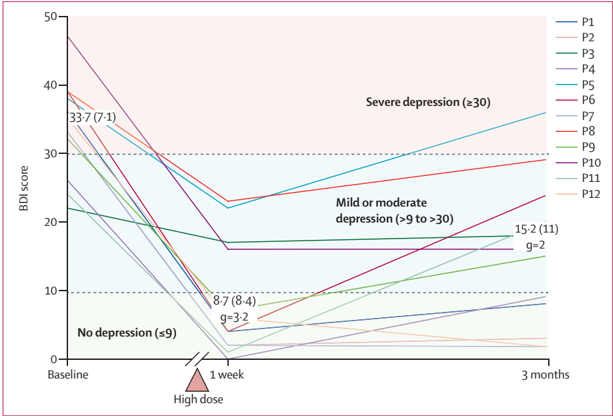
BACKGROUND: Psilocybin is a serotonin receptor agonist that occurs naturally in some mushroom species. Recent studies have assessed the therapeutic potential of psilocybin for various conditions, including end-of-life anxiety, obsessive-compulsive disorder, and smoking and alcohol dependence, with promising preliminary results. Here, we aimed to investigate the feasibility, safety, and efficacy of psilocybin in patients with unipolar treatment-resistant depression. METHODS: In this open-label feasibility trial, 12 patients (six men, six women) with moderate-to-severe, unipolar, treatment-resistant major depression received two oral doses of psilocybin (10 mg and 25 mg, 7 days apart) in a supportive setting. There was no control group. Psychological support was provided before, during, and after each session. The primary outcome measure for feasibility was patient-reported intensity of psilocybin's effects. Patients were monitored for adverse reactions during the dosing sessions and subsequent clinic and remote follow-up. Depressive symptoms were assessed with standard assessments from 1 week to 3 months after treatment, with the 16-item Quick Inventory of Depressive Symptoms (QIDS) serving as the primary efficacy outcome. This trial is registered with ISRCTN, number ISRCTN14426797. FINDINGS: Psilocybin's acute psychedelic effects typically became detectable 30-60 min after dosing, peaked 2-3 h after dosing, and subsided to negligible levels at least 6 h after dosing. Mean self-rated intensity (on a 0-1 scale) was 0·51 (SD 0·36) for the low-dose session and 0·75 (SD 0·27) for the high-dose session. Psilocybin was well tolerated by all of the patients, and no serious or unexpected adverse events occurred. The adverse reactions we noted were transient anxiety during drug onset (all patients), transient confusion or thought disorder (nine patients), mild and transient nausea (four patients), and transient headache (four patients). Relative to baseline, depressive symptoms were markedly reduced 1 week (mean QIDS difference -11·8, 95% CI -9·15 to -14·35, p=0·002, Hedges' g=3·1) and 3 months (-9·2, 95% CI -5·69 to -12·71, p=0·003, Hedges' g=2) after high-dose treatment. Marked and sustained improvements in anxiety and anhedonia were also noted. INTERPRETATION: This study provides preliminary support for the safety and efficacy of psilocybin for treatment-resistant depression and motivates further trials, with more rigorous designs, to better examine the therapeutic potential of this approach. FUNDING: Medical Research Council.
Overview
The claims and statistics of this paper haven’t been checked yet.
Free: it reads the open-access text and checks the first 5 claims that cite a source we can check. Create a free account to check every claim.
Integrity signals
Registry
Cites
Statistics
Figures
Verification
Claims the paper makes
The claims and statistics of this paper haven’t been checked yet.
Free: it reads the open-access text and checks the first 5 claims that cite a source we can check. Create a free account to check every claim.
Claims other papers make about this one
Each is checked against this paper’s own text: does it say what the citing paper says it does?
The source backs part of the claim, not all of it — or backs it for a different population, condition or comparison.
In the citing paper
“Both methods have shown potential for reducing psychopathology and both, psychedelic-assisted therapy with psilocybin and MBIs, in particular MBCT have preliminary evidence for effectiveness in chronic, treatment-resistant depression [94].”
From Mindfulness meditation and psychedelics: potential synergies and commonalities (2023) · cites this paper as [94]
Experimental — accuracy not yet measuredThe source backs part of the claim, not all of it — or backs it for a different population, condition or comparison.
In the citing paper
“Randomised clinical trials (RCTs) of psilocybin-assisted therapy demonstrated a significant reduction of depressive symptoms in terminally ill cancer patients, as well as in treatment-resistant depression (29, 30, 38).”
From Examining the Potential Synergistic Effects Between Mindfulness Training and Psychedelic-Assisted Therapy (2021) · cites this paper as [29]
Experimental — accuracy not yet measuredThe source backs part of the claim, not all of it — or backs it for a different population, condition or comparison.
In the citing paper
“Most of these studies however suffer from low methodological validity and are mostly open-label, yet they have yielded preliminary evidence for the capacity of psychedelic substances for treating addiction, depression, anxiety, and eating disorders (29–35).”
From Examining the Potential Synergistic Effects Between Mindfulness Training and Psychedelic-Assisted Therapy (2021) · cites this paper as [29]
Experimental — accuracy not yet measuredThe source backs part of the claim, not all of it — or backs it for a different population, condition or comparison.
In the citing paper
“Remarkably, these benefits were incurred even after only a single psychedelic administration and were maintained for as long as 6 months.”
From Examining the Potential Synergistic Effects Between Mindfulness Training and Psychedelic-Assisted Therapy (2021) · cites this paper as [29]
Experimental — accuracy not yet measuredThe cited source says what the claim attributes to it.
In the citing paper
“Amelioration of symptomatic depression in pilot studies of major depressive disorder, including those that compared psilocybin with escitalopram 8,9 and that investigated its use in treatment-resistant depression, 10 has suggested therapeutic potential for this agent.”
From Single-Dose Psilocybin for a Treatment-Resistant Episode of Major Depression (2022) · cites this paper as [10]
11 more claims about this paper
Create a free account to see every claim other papers make about this one.
Self-check
Percentages, sums and reported differences re-computed from the paper’s own numbers.
The self-check needs the paper’s full text.
Citations
Cites
Rush, A. J., Trivedi, M. H., Ibrahim, H. M., Carmody, T. J., Arnow, B., Klein, D. N., Markowitz, J. C., Ninan, P. T., Kornstein, S., Manber, R., et al. (2003) · Biological Psychiatry · doi:10.1016/s0006-3223(02)01866-8 · Cited by 3,829
The Economic Burden of Adults With Major Depressive Disorder in the United States (2005 and 2010)
Greenberg, P. E., Fournier, A.-A., Sisitsky, T., Pike, C. T., & Kessler, R. C. (2015) · The Journal of Clinical Psychiatry · doi:10.4088/jcp.14m09298 · Cited by 1,779
Pilot Study of Psilocybin Treatment for Anxiety in Patients With Advanced-Stage Cancer
Grob, C. S., Danforth, A. L., Chopra, G. S., Hagerty, M., McKay, C. R., Halberstadt, A. L., & Greer, G. R. (2011) · Archives of General Psychiatry · doi:10.1001/archgenpsychiatry.2010.116 · Cited by 1,206 · cited 1×
“…cantly decreased anxiety and depression scores were observed 3 and 6 months after a single dose of psilocybin in patients with anxiety related to end-stage cancer, 15 and improve ments in wellbeing lasting for more than 1 year were observed in healthy individuals given a single dose of psilocybin.”
BackgroundHuman hallucinogen research: guidelines for safety
Johnson, M., Richards, W., & Griffiths, R. (2008) · Journal of Psychopharmacology · doi:10.1177/0269881108093587 · Cited by 1,203
Neural correlates of the psychedelic state as determined by fMRI studies with psilocybin
Carhart-Harris, R. L., Erritzoe, D., Williams, T., Stone, J. M., Reed, L. J., Colasanti, A., Tyacke, R. J., Leech, R., Malizia, A. L., Murphy, K., et al. (2012) · Proceedings of the National Academy of Sciences · doi:10.1073/pnas.1119598109 · Cited by 1,172 · cited 1×
“10 Moreover, data obtained from large-scale population studies have recently challenged the view that psychedelics negatively aff ect mental health, 11–13 with one study’s fi ndings showing lower rates of psychological distress and suicidality among people who had used”
BackgroundSelf-citationPsilocybin-assisted treatment for alcohol dependence: A proof-of-concept study
Bogenschutz, M. P., Forcehimes, A. A., Pommy, J. A., Wilcox, C. E., Barbosa, P., & Strassman, R. J. (2015) · Journal of Psychopharmacology · doi:10.1177/0269881114565144 · Cited by 1,151 · cited 1×
“19 Signifi cantly decreased anxiety and depression scores were observed 3 and 6 months after a single dose of psilocybin in patients with anxiety related to end-stage cancer, 15 and improve ments in wellbeing lasting for more than 1 year were observed in healthy individuals given a single dose of…”
BackgroundPilot study of the 5-HT 2A R agonist psilocybin in the treatment of tobacco addiction
Johnson, M. W., Garcia-Romeu, A., Cosimano, M. P., & Griffiths, R. R. (2014) · Journal of Psychopharmacology · doi:10.1177/0269881114548296 · Cited by 914
Griffiths, R., Richards, W., Johnson, M., McCann, U., & Jesse, R. (2008) · Journal of Psychopharmacology · doi:10.1177/0269881108094300 · Cited by 905
Safety, tolerability, and efficacy of psilocybin in 9 patients with obsessive-compulsive disorder
Moreno, F. A., Wiegand, C. B., Taitano, E. K., & Delgado, P. L. (2006) · The Journal of Clinical Psychiatry · doi:10.4088/jcp.v67n1110 · Cited by 789
(2001) · PubMed · Cited by 780
Cited by
Items 301–400 of 1,006
Treatment-Resistant Bipolar Depression: Therapeutic Trends, Challenges and Future Directions
Elsayed, O. H., Ercis, M., Pahwa, M., & Singh, B. (2022) · Neuropsychiatric Disease and Treatment · doi:10.2147/ndt.s273503 · Cited by 75
“There is preliminary evidence suggesting psilocybin-assisted psychotherapy’s efficacy in treatment-resistant major depression.(119,120) The inclusion criteria for both ongoing psilocybin trials is Table 6 Ongoing Bipolar Depression Trials Registered on ClinicalTrials.”
BackgroundCardiovascular safety of psychedelic medicine: current status and future directions
Wsół, A. (2023) · Pharmacological Reports · doi:10.1007/s43440-023-00539-4 · Cited by 76
Zhao, X., Du, Y., Yao, Y., Dai, W., Yin, Y., Wang, G., Li, Y., & Zhang, L. (2024) · Journal of Psychopharmacology · doi:10.1177/02698811241249436 · Cited by 71
“It should be noted that psilocy-bin has hallucinogenic effects within 8 h (Carhart-Harris et al., 2016); thus, in our present study, all behavioural tests were performed at least 12 h after psilocybin treatment.”
BackgroundPsychedelic use and intimate partner violence: The role of emotion regulation
Thiessen, M. S., Walsh, Z., Bird, B. M., & Lafrance, A. (2018) · Journal of Psychopharmacology · doi:10.1177/0269881118771782 · Cited by 60
Neuropharmacological modulation of the aberrant bodily self through psychedelics
Ho, J. T., Preller, K. H., & Lenggenhager, B. (2020) · Neuroscience & Biobehavioral Reviews · doi:10.1016/j.neubiorev.2019.12.006 · Cited by 59
The Emerging Field of Psychedelic Psychotherapy
Barber, G., & Aaronson, S. T. (2022) · Current Psychiatry Reports · doi:10.1007/s11920-022-01363-y · Cited by 74
Kopra, E. I., Ferris, J., WINSTOCK, A. R., Kuypers, K. P. C., Young, A. H., & Rucker, J. (2023) · Journal of Psychopharmacology · doi:10.1177/02698811231158245 · Cited by 68
“In two clinical trials on psilocybin-assisted therapy for depression, an initial moderate dose was administered first to familiarise participants with the drug effects before a high-dose session a few weeks afterwards (Carhart-Harris et al., 2016; Davis et al., 2021a).”
BackgroundSelf-citationPotential Differences in Psychedelic Actions Based on Biological Sex
Shadani, S., Conn, K., Andrews, Z. B., & Foldi, C. J. (2024) · Endocrinology · doi:10.1210/endocr/bqae083 · Cited by 66
“Regardless, psilocybin shows promise in terms of safety and efficacy in patients facing end-of-life anxiety as well as those suffering from treatment-resistant depression, with notable reductions in depressive mood and anxiety observed both in the short-and long-term (67-71).”
BackgroundWolff, M., Mertens, L. J., Walter, M., Enge, S., & Evens, R. (2022) · Journal of Psychopharmacology · doi:10.1177/02698811211073758 · Cited by 58
Breeksema, J. J., Niemeijer, A., Krediet, E., Karsten, T., Kamphuis, J., Vermetten, E., van den Brink, W., & Schoevers, R. (2024) · Scientific Reports · doi:10.1038/s41598-024-53188-9 · Cited by 58
Hersey, M., Samaranayake, S., Berger, S. N., Tavakoli, N. S., Mena, S., Nijhout, H. F., Reed, M. C., Best, J. A., Blakely, R., Reagan, L. P., et al. (2021) · Journal of Neuroscience · doi:10.1523/jneurosci.2618-20.2021 · Cited by 59
Day trip to hell: A mixed methods study of challenging psychedelic experiences
Johnstad, P. G. (2021) · Journal of Psychedelic Studies · doi:10.1556/2054.2021.00155 · Cited by 69
“…taken up again during the past decade, with preliminary results indicating therapeutic effect from psychedelics on conditions such as depression (Carhart-Harris et al., 2016, 2018; Grif fi ths et al., 2016; Ross et al., 2016), anxiety (Gasser et al., 2013; Grif fi ths et al., 2016; Grob et al.,…”
Identification of ω-N-Methyl-4-hydroxytryptamine (Norpsilocin) as a Psilocybe Natural Product
Lenz, C., Wick, J., & Hoffmeister, D. (2017) · Journal of Natural Products · doi:10.1021/acs.jnatprod.7b00407 · Cited by 57
Varker, T., Watson, L., Gibson, K., Forbes, D., & O'Donnell, M. L. (2020) · Journal of Psychoactive Drugs · doi:10.1080/02791072.2020.1817639 · Cited by 74
“Like LSD, psilocybin acts on the serotonergic system after it is metabolized to psilocin (Carhart-Harris et al. 2016).”
BackgroundUpdate on GPCR-based targets for the development of novel antidepressants
Mantas, I., Saarinen, M., Xu, Q., & Svenningsson, P. (2021) · Molecular Psychiatry · doi:10.1038/s41380-021-01040-1 · Cited by 61
Psychedelic-induced mystical experiences: An interdisciplinary discussion and critique
Mosurinjohn, S. C., Roseman, L., & Girn, M. (2023) · Frontiers in Psychiatry · doi:10.3389/fpsyt.2023.1077311 · Cited by 75
“Making these comparisons can do two crucial things: (1) give us clues about the specificity of what psychedelic molecules are doing; and (2) build more robust models of what psychedelic experiences are doing.”
BackgroundErritzøe, D., Barba, T., Greenway, K. T., Murphy, R., Martell, J., Giribaldi, B., Timmermann, C., Murphy-Beiner, A., Baker-Jones, M., Nutt, D. J., et al. (2024) · EClinicalMedicine · doi:10.1016/j.eclinm.2024.102799 · Cited by 73
Self-citationCarrillo, F., Sigman, M., Slezak, D. F., Ashton, P., Fitzgerald, L., Stroud, J., Nutt, D. J., & Carhart-Harris, R. L. (2018) · Journal of Affective Disorders · doi:10.1016/j.jad.2018.01.006 · Cited by 64
Self-citationLuoma, J. B., Sabucedo, P., Eriksson, J., Gates, N., & Pilecki, B. C. (2019) · Journal of Contextual Behavioral Science · doi:10.1016/j.jcbs.2019.10.003 · Cited by 56
5-MeO-DMT modifies innate behaviors and promotes structural neural plasticity in mice
Jefferson, S. J., Gregg, I., Dibbs, M., Liao, C., Wu, H., Davoudian, P. A., Woodburn, S. C., Wehrle, P. H., Sprouse, J. S., Sherwood, A. M., et al. (2023) · Neuropsychopharmacology · doi:10.1038/s41386-023-01572-w · Cited by 65
“The most notable outcome from these trials is the enduring nature of the beneficial effect: after one or two dosing sessions, reduction of depressive symptoms could still be observed after 4 weeks [7] or, in another case, after 3 months [8].”
A whole-brain model of the neural entropy increase elicited by psychedelic drugs
Herzog, R. A., Mediano, P. A. M., Rosas, F. E., Lodder, P., Carhart-Harris, R. L., Perl, Y. S., Tagliazucchi, E., & Cofré, R. (2023) · Scientific Reports · doi:10.1038/s41598-023-32649-7 · Cited by 66
Self-citationRisk of bias in randomized clinical trials on psychedelic medicine: A systematic review
Hovmand, O. R., Poulsen, E. D., Arnfred, S., & Storebø, O. J. (2023) · Journal of Psychopharmacology · doi:10.1177/02698811231180276 · Cited by 72
“…that suggests that psychedelic microdosing has any clinical effect (Szigeti et al., 2021), but, as was pointed out by Muthukumaraswamy et al. (2021), the open-label trial of psilocybin for depression by Carhart-Harris et al. (2016) showed an effect from administration of only 10 mg psilocybin.”
Mechanisms and molecular targets surrounding the potential therapeutic effects of psychedelics
Jaster, A. M., & González‐Maeso, J. (2023) · Molecular Psychiatry · doi:10.1038/s41380-023-02274-x · Cited by 61
“…currently being tested as a treatment for several psychiatric conditions including major depression [199 – 201] and treatment-resistant depression [23, 202, 203], generalized [204] and end-of-life anxiety [22, 205], post-traumatic stress disorder [206], smoking cessation [207, 208], and alcohol…”
dos Santos, R. G., & Hallak, J. E. C. (2021) · Epilepsy & Behavior · doi:10.1016/j.yebeh.2019.04.053 · Cited by 56
dos Santos, R. G., Hallak, J. E., Baker, G., & Dursun, S. (2021) · Journal of Psychopharmacology · doi:10.1177/0269881120986422 · Cited by 55
“Indeed, in the open-label (Sanches et al., 2016) and controlled (Palhano-Fontes et al., 2019) trials with ayahuasca and TRD no psychotherapy was used, and the open-label trial with psilocybin and TRD (Carhart-Harris et al., 2016) only used ‘psychological support’.”
BackgroundMethodInfluentialA Qualitative Exploration of Relational Ethical Challenges and Practices in Psychedelic Healing
Brennan, B., Jackson, M. A., MacLean, K. A., & Ponterotto, J. G. (2021) · Journal of Humanistic Psychology · doi:10.1177/00221678211045265 · Cited by 66
Solmi, M., Chen, C., Dauré, C., Buot, A., Ljuslin, M., Verroust, V., Mallet, L., Khazaal, Y., Rothen, S., Thorens, G., et al. (2022) · European Neuropsychopharmacology · doi:10.1016/j.euroneuro.2022.09.004 · Cited by 66
Psychedelic pleasures: An affective understanding of the joys of tripping
Bøhling, F. (2017) · International Journal of Drug Policy · doi:10.1016/j.drugpo.2017.07.017 · Cited by 66
Psychedelic-assisted psychotherapy: Where is the psychotherapy research
Aday, J. S., Horton, D., Fernandes-Osterhold, G., O’Donovan, A., Bradley, E. R., Rosen, R. C., & Woolley, J. D. (2024) · Psychopharmacology · doi:10.1007/s00213-024-06620-x · Cited by 54
Close, J. B., Hajien, E. C., Watts, R., Roseman, L., & Carhart-Harris, R. L. (2020) · Journal of Contextual Behavioral Science · doi:10.1016/j.jcbs.2020.01.005 · Cited by 54
Self-citationHashimoto, K. (2024) · European Archives of Psychiatry and Clinical Neuroscience · doi:10.1007/s00406-024-01770-7 · Cited by 63
“Like ketamine, psychedelics such as psilocybin can produce rapid and sustained antidepressant actions in TRD patients, including MDD and BD [35–39].”
Understanding brain states across spacetime informed by whole-brain modelling
Vohryzek, J., Cabral, J., Vuust, P., Deco, G., & Kringelbach, M. L. (2022) · Philosophical Transactions of the Royal Society A Mathematical Physical and Engineering Sciences · doi:10.1098/rsta.2021.0247 · Cited by 67
“To this date, studies have investigated brain activity under the influence of psilocybin—in both healthy [75] and depressed populations [76,77], LSD [78], ayahuasca [79] and DMT [80].”
BackgroundRiga, M. S., Lladó-Pelfort, L., Artigas, F., & Celada, P. (2018) · Neuropharmacology · doi:10.1016/j.neuropharm.2017.11.049 · Cited by 53
“…NMDA-R antagonist such as ketamine (Monteggia and Zarate, 2015; Zarate et al., 2006) and serotonergic hallucinogens such as psilocybin (Carhart-Harris et al., 2016a) show clinical efficacy in depressed patients resistant to other forms of treatment (Baumeister et al., 2014;…”
Doss, M. K., May, D. G., Johnson, M. W., Clifton, J. M., Hedrick, S. L., Prisinzano, T. E., Griffiths, R. R., & Barrett, F. S. (2020) · Scientific Reports · doi:10.1038/s41598-020-73216-8 · Cited by 52
Skosnik, P. D., Sloshower, J., Safi-Aghdam, H., Pathania, S., Syed, S., Pittman, B., & D’Souza, D. C. (2023) · Journal of Psychopharmacology · doi:10.1177/02698811231179800 · Cited by 51
“…of early phase trials have suggested that psilocybin-assisted psychotherapy may have rapid-acting and long-lasting therapeutic effects in depression, anxiety, substance use, smoking cessation, migraine, and other disorders (Carhart-Harris et al., 2016; Griffiths et al., 2016; Ross et al., 2016).”
Carhart-Harris, R. L., Wagner, A. C., Agrawal, M., Kettner, H., Rosenbaum, J. F., Gazzaley, A., Nutt, D. J., & Erritzoe, D. (2022) · Journal of Psychopharmacology · doi:10.1177/02698811211008567 · Cited by 51
“Data on use among healthy individuals can be supplemented by data from individuals seeking psychedelic therapy treatment for depression, particularly as safety is being established in this population (Carhart-Harris et al., 2016; Davis et al., 2020).”
BackgroundSelf-citationFoldi, C. J., Liknaitzky, P., Williams, M., & Oldfield, B. J. (2020) · Frontiers in Neuroscience · doi:10.3389/fnins.2020.00043 · Cited by 51
Whelan, A., & Johnson, M. I. (2018) · Pain Management · doi:10.2217/pmt-2017-0068 · Cited by 51
Spontaneous electrical low-frequency oscillations: a possible role in Hydra and all living systems
Hanson, A. J. (2021) · Philosophical Transactions of the Royal Society B Biological Sciences · doi:10.1098/rstb.2019.0763 · Cited by 57
Husain, M. I., Ledwos, N., Fellows, E., Baer, J., Rosenblat, J. D., Blumberger, D. M., Mulsant, B. H., & Castle, D. J. (2023) · Frontiers in Psychiatry · doi:10.3389/fpsyt.2022.1076459 · Cited by 50
Experience of Music Used With Psychedelic Therapy: A Rapid Review and Implications
O’Callaghan, C. C., Hubik, D. J., Dwyer, J. L., Williams, M. L., & Ross, M. (2020) · Journal of Music Therapy · doi:10.1093/jmt/thaa006 · Cited by 58
Yaden, D. B., Berghella, A. P., Regier, P. S., Garcia‐Romeu, A., Johnson, M. W., & Hendricks, P. S. (2021) · International Journal of Drug Policy · doi:10.1016/j.drugpo.2021.103380 · Cited by 59
Conn, K., Milton, L. K., Huang, K., Munguba, H., Ruuska, J., Lemus, M. B., Greaves, E., Homman‐Ludiye, J., Oldfield, B. J., & Foldi, C. J. (2024) · Molecular Psychiatry · doi:10.1038/s41380-024-02575-9 · Cited by 68
Tolerance and Tachyphylaxis to Head Twitches Induced by the 5-HT2A Agonist 25CN-NBOH in Mice
Buchborn, T., Lyons, T., & Knöpfel, T. (2018) · Frontiers in Pharmacology · doi:10.3389/fphar.2018.00017 · Cited by 51
“…with potential implications of both agonists and antagonists in the treatment of various psychiatric conditions, including depression and anxiety (Mascher, 1967; Quesseveur et al., 2012; Buchborn et al., 2014; Carhart-Harris et al., 2016; Ross et al., 2016; Carhart-Harris and Goodwin, 2017).”
BackgroundMagaraggia, I., Kuiperes, Z., & Schreiber, R. (2021) · Neurobiology of Learning and Memory · doi:10.1016/j.nlm.2021.107467 · Cited by 49
RETRACTED ARTICLE: A mechanistic model of the neural entropy increase elicited by psychedelic drugs
Herzog, R., Mediano, P. A. M., Rosas, F. E., Carhart-Harris, R., Perl, Y. S., Tagliazucchi, E., & Cofre, R. (2020) · Scientific Reports · doi:10.1038/s41598-020-74060-6 · Cited by 49
Self-citationRetractedHodge, A. T., Sukpraprut‐Braaten, S., Narlesky, M. R., & Strayhan, R. C. (2022) · Journal of Psychoactive Drugs · doi:10.1080/02791072.2022.2044096 · Cited by 51
Review of otential sychedelic reatments for PTSD
Henner, R. L., Keshavan, M. S., & Hill, K. P. (2022) · Journal of the Neurological Sciences · doi:10.1016/j.jns.2022.120302 · Cited by 67
Psychedelic therapies reconsidered: compounds, clinical indications, and cautious optimism
Mitchell, J., & Anderson, B. T. (2023) · Neuropsychopharmacology · doi:10.1038/s41386-023-01656-7 · Cited by 57
“Clinical indications under investigation currently include major depression [48], treatment-resistant depression [49], alcohol and other substance use disorders [50], smoking cessation [51], and OCD [52].”
BackgroundEthnoracial inclusion in clinical trials of psychedelics: a systematic review
Hughes, M. E., & Garcia‐Romeu, A. (2024) · EClinicalMedicine · doi:10.1016/j.eclinm.2024.102711 · Cited by 52
Sweat, N. W., Bates, L. W., & Hendricks, P. S. (2016) · Journal of Psychoactive Drugs · doi:10.1080/02791072.2016.1234090 · Cited by 48
“2014), relieve treatment-resistant major depression (Carhart-Harris et al. 2016), and trigger durable positive changes to personality and affect among healthy volunteers (Griffiths”
BackgroundPsychedelics in the treatment of eating disorders: Rationale and potential mechanisms
Calder, A. E., Mock, S., Friedli, N., Pasi, P., & Hasler, G. (2023) · European Neuropsychopharmacology · doi:10.1016/j.euroneuro.2023.05.008 · Cited by 55
Song, X., Gaascht, F., Schmidt‐Dannert, C., & Salomon, C. E. (2020) · Molecules · doi:10.3390/molecules25040963 · Cited by 51
“For example, psilocybin and psilocin from a wide range of mushroom species are being clinically tested for treatment-resistant depression and anxiety disorders [7,8].”
BackgroundToxicology and Analysis of Psychoactive Tryptamines
Malaca, S., Faro, A. F. L., Tamborra, A., Pichini, S., Busardò, F. P., & Huestis, M. A. (2020) · International Journal of Molecular Sciences · doi:10.3390/ijms21239279 · Cited by 52
Effect of lysergic acid diethylamide (LSD) on reinforcement learning in humans
Kanen, J. W., Luo, Q., Kandroodi, M. R., Cardinal, R. N., Robbins, T. W., Nutt, D. J., Carhart-Harris, R. L., & den Ouden, H. E. M. (2022) · Psychological Medicine · doi:10.1017/s0033291722002963 · Cited by 51
“Whereas 20 participants were included in the original study (Carhart-Harris et al., 2016b), one participant did not complete the PRL task; therefore, 19 participants are reported here.”
BackgroundSelf-citationWeiss, B., Nygart, V., Pommerencke, L. M., Carhart-Harris, R. L., & Erritzoe, D. (2021) · Frontiers in Psychology · doi:10.3389/fpsyg.2021.749788 · Cited by 47
Self-citationBrennan, B., Kelman, A. R., & Belser, A. (2023) · Psychedelic Medicine · doi:10.1089/psymed.2023.0007 · Cited by 52
Roméo, B., Kervadec, E., Fauvel, B., Strika-Bruneau, L., Amirouche, A., Bezo, A., Piolino, P., & Benyamina, A. (2025) · Neuroscience & Biobehavioral Reviews · doi:10.1016/j.neubiorev.2025.106086 · Cited by 68
Schindler, E. A. D., Wallace, R. M., Sloshower, J. A., & D’Souza, D. C. (2018) · Frontiers in Pharmacology · doi:10.3389/fphar.2018.00177 · Cited by 47
“There are ongoing studies investigating the effects of psychedelics in depression, drug and alcohol addiction, and headache disorders (Ross, 2012; Carhart-Harris et al., 2016).”
BackgroundPolítica de drogas e Saúde Coletiva: diálogos necessários
Gomes-Medeiros, D., de Faria, P. H., Campos, G. W. D. S., & Tófoli, L. F. (2019) · Cadernos de Saúde Pública · doi:10.1590/0102-311x00242618 · Cited by 114
Psychedelics and virtual reality: parallels and applications
Aday, J. S., Davoli, C. C., & Bloesch, E. K. (2020) · Therapeutic Advances in Psychopharmacology · doi:10.1177/2045125320948356 · Cited by 47
Sexton, J. D., Nichols, C. D., & Hendricks, P. S. (2020) · Frontiers in Psychiatry · doi:10.3389/fpsyt.2019.00896 · Cited by 48
Rodrigues, L. S., Rossi, G. N., Rocha, J. M., Osório, F. D. L., Bouso, J. C., Hallak, J. E. C., & SANTOS, R. G. D. (2021) · European Archives of Psychiatry and Clinical Neuroscience · doi:10.1007/s00406-021-01267-7 · Cited by 51
Rantamäki, T., & Kohtala, S. (2020) · Pharmacological Reviews · doi:10.1124/pr.119.018697 · Cited by 45
“…al., 2017; see also Park et al., 2019) and psychedelic drugs (Scruggs et al., 2003;Muschamp et al., 2004; Vollenweider andKometer, 2010; Kometer et al., 2013; Carhart-Harris et al., 2016, 2018), acutely increase cortical excitation and glutamate activity despite obvious pharmacological differences.”
BackgroundPotential benefits and harms: a review of poisonous mushrooms in the world
He, M.-Q., Wang, M.-Q., Chen, Z., Deng, W.-Q., Li, T., Vizzini, A., Jeewon, R., Hyde, K. D., & Zhao, R.-L. (2022) · Fungal Biology Reviews · doi:10.1016/j.fbr.2022.06.002 · Cited by 53
Naturalistic Psychedelic Use: A World Apart from Clinical Care
Glynos, N. G., Fields, C. W., Barron, J., Herberholz, M., Kruger, D. J., & Boehnke, K. F. (2022) · Journal of Psychoactive Drugs · doi:10.1080/02791072.2022.2108356 · Cited by 59
Kałużna, A., Schlosser, M., Craste, E. G., Stroud, J., & Cooke, J. E. (2022) · Journal of Psychedelic Studies · doi:10.1556/2054.2022.00199 · Cited by 61
The costs and benefits of psychedelics on cognition and mood
Sayalı, C., & Barrett, F. S. (2023) · Neuron · doi:10.1016/j.neuron.2022.12.031 · Cited by 48
Witkin, J. M., Knutson, D. E., Rodriguez, G. J., & Shi, S. (2018) · Current Pharmaceutical Design · doi:10.2174/1381612824666180730104707 · Cited by 44
Donovan, L. L., Johansen, J. V., Ros, N. F., Jaberi, E., Línnet, K., Johansen, S. S., Ozenne, B., Issazadeh‐Navikas, S., Hansen, H. D., & Knudsen, G. M. (2020) · European Neuropsychopharmacology · doi:10.1016/j.euroneuro.2020.11.013 · Cited by 50
Jaster, A. M., Elder, H., Marsh, S. A., Revenga, M. D. L. F., Negus, S. S., & González‐Maeso, J. (2022) · Psychopharmacology · doi:10.1007/s00213-022-06092-x · Cited by 51
“2016; Nutt 2016; Ly et al.”
BackgroundMindfulness meditation and psychedelics: potential synergies and commonalities
Holas, P., & Kamińska, J. (2023) · Pharmacological Reports · doi:10.1007/s43440-023-00551-8 · Cited by 43
“Both methods have shown potential for reducing psychopathology and both, psychedelic-assisted therapy with psilo-cybin and MBIs, in particular MBCT have preliminary evidence for effectiveness in chronic, treatment-resistant depression [94].”
MethodThe Place of Philosophy in Bioethics Today
Blumenthal‐Barby, J., Aas, S., Brudney, D., Flanigan, J., Liao, S. M., London, A. J., Sumner, W., & Savulescu, J. (2021) · The American Journal of Bioethics · doi:10.1080/15265161.2021.1940355 · Cited by 47
The need for establishing best practices and gold standards in psychedelic medicine
Feduccia, A., Agin-Liebes, G., Price, C. M., Grinsell, N., Paradise, S., & Rabin, D. M. (2023) · Journal of Affective Disorders · doi:10.1016/j.jad.2023.03.083 · Cited by 43
Sakloth, F., Leggett, E., Moerke, M. J., Townsend, E. A., Banks, M. L., & Negus, S. S. (2019) · Experimental and Clinical Psychopharmacology · doi:10.1037/pha0000253 · Cited by 50
Direct Phosphorylation of Psilocin Enables Optimized cGMP Kilogram-Scale Manufacture of Psilocybin
Kargbo, R. B., Sherwood, A. M., Walker, A., Cozzi, N. V., Dagger, R. E., Sable, J., O’Hern, K., Kaylo, K. W., Patterson, T., Tarpley, G., et al. (2020) · ACS Omega · doi:10.1021/acsomega.0c02387 · Cited by 45
Vejmola, Č., Tylš, F., Piorecká, V., Koudelka, V., Kadeřábek, L., Novák, T., & Páleníček, T. (2021) · Translational Psychiatry · doi:10.1038/s41398-021-01603-4 · Cited by 41
Studies with psychedelic drugs in human volunteers
Sellers, E. M., Romach, M. K., & Leiderman, D. B. (2018) · Neuropharmacology · doi:10.1016/j.neuropharm.2017.11.029 · Cited by 42
Penn, A., Phelps, J., Rosa, W. E., & Watson, J. (2021) · Journal of Humanistic Psychology · doi:10.1177/00221678211011013 · Cited by 48
“Carhart-Harris et al. (2016) demonstrated rapid antidepressant effects of a single psilocybin treatment in an open label trial that was recently replicated in a study by Davis et al. (2020) showing significant antidepressant effects of psilocybin assisted therapy at 1 and 4 weeks posttreatment.”
BackgroundShukuroglou, M., Roseman, L., Wall, M. B., Nutt, D. J., Kaelen, M., & Carhart-Harris, R. L. (2022) · Journal of Psychopharmacology · doi:10.1177/02698811221125354 · Cited by 52
“Psychedelic therapy is presently gaining traction as a mental health intervention in diverse populations (Nutt and CarhartHarris, 2020), including in samples of individuals with unipolar depression (Carhart-Harris et al., 2016; Davis et al., 2020; Osorio et al., 2015).”
BackgroundInfluentialSelf-citationHusain, M. I., Blumberger, D. M., Castle, D. J., Ledwos, N., Fellows, E., Jones, B. D. M., Ortiz, A., Kloiber, S. M., Wang, W., Rosenblat, J. D., et al. (2023) · BJPsych Open · doi:10.1192/bjo.2023.535 · Cited by 57
Neuroimaging in psychedelic drug development: past, present, and future
Wall, M. B., Harding, R., Zafar, R. R., Rabiner, E. A., Nutt, D. J., & Erritzøe, D. (2023) · Molecular Psychiatry · doi:10.1038/s41380-023-02271-0 · Cited by 46
“The fi rst open-label study in treatment-resistant depression patients [42] showed that changes in cerebral blood fl ow (measured with arterial spin-labelling MRI) in the amygdala were correlated with changes in depression scores [45].”
MethodSelf-citationEffects of DMT on mental health outcomes in healthy volunteers
Timmermann, C., Zeifman, R. J., Erritzøe, D., Nutt, D. J., & Carhart-Harris, R. L. (2024) · Scientific Reports · doi:10.1038/s41598-024-53363-y · Cited by 55
“While studies employing structurally-similar compounds are showing promising results in clinical populations 8,10,11,13,41,42 , it is important to note that there might be additional challenges with the employment of DMT for clinical purposes.”
BackgroundSelf-citationBrain dynamics predictive of response to psilocybin for treatment-resistant depression
Vohryzek, J., Cabral, J., Lord, L.-D., Fernandes, H. M., Roseman, L., Nutt, D. J., Carhart-Harris, R. L., Deco, G., & Kringelbach, M. L. (2024) · Brain Communications · doi:10.1093/braincomms/fcae049 · Cited by 49
Self-citationYu, Z., Burback, L., Winkler, O., Xu, L., Dennett, L., Vermetten, E. H. G. J. M., Greenshaw, A. J., Li, X., Milne, M., Wang, F., et al. (2024) · Frontiers in Psychiatry · doi:10.3389/fpsyt.2024.1386321 · Cited by 53
The structural diversity of psychedelic drug actions revealed
Gumpper, R. H., Jain, M. K., Kim, K., Sun, R., Sun, N., Xu, Z., DiBerto, J. F., Krumm, B. E., Kapolka, N. J., Kanıskan, H. Ü., et al. (2025) · Nature Communications · doi:10.1038/s41467-025-57956-7 · Cited by 46
“Due to a recent resurgence in interest for utilizing psychedelic compounds as intermittently dosed therapeutics to treat depression, anxiety, addiction, cluster headaches, and many other neuropsychiatric disorders 2 – 6, 8”
Brenner, P., Brandt, L., Li, G., DiBernardo, A., Bodén, R., & Reutfors, J. (2019) · Addiction · doi:10.1111/add.14596 · Cited by 47
Brenner, P., Brandt, L., Li, G., DiBernardo, A., Bodén, R., & Reutfors, J. (2019) · Addiction · doi:10.1111/add.14866 · Cited by 49
Targeting the 5-HT system: Potential side effects
Hoyer, D. (2020) · Neuropharmacology · doi:10.1016/j.neuropharm.2020.108233 · Cited by 45
CE: Psychedelic-Assisted Therapy
Penn, A., Dorsen, C. G., Hope, S., & Rosa, W. E. (2021) · AJN American Journal of Nursing · doi:10.1097/01.naj.0000753464.35523.29 · Cited by 45
“These included anxiety during drug onset, which could be managed with reassurance from study therapists, as well as confusion, nausea, and headache.(31) In October 2018 and November 2019, the FDA granted COMPASS Pathways and the Usona Institute, respectively, breakthrough designation to conduct phase 2 clinical trials…”
BackgroundMertens, L. J., Koslowski, M., Betzler, F., Evens, R., Gilles, M., Jungaberle, A., Jungaberle, H., Majić, T., Ströhle, A., Wolff, M., et al. (2022) · Neuroscience Applied · doi:10.1016/j.nsa.2022.100104 · Cited by 41
Orłowski, P., Ruban, A., Szczypiński, J., Hobot, J., Bielecki, M., & Bola, M. (2022) · Journal of Psychopharmacology · doi:10.1177/02698811221089034 · Cited by 41
Qu, Y., Chang, L., Ma, L., Wan, X., & Hashimoto, K. (2022) · Pharmacology Biochemistry and Behavior · doi:10.1016/j.pbb.2022.173500 · Cited by 48
Psychotherapy with Psilocybin for Depression: Systematic Review
Dawood-Hristova, J. J., & Pérez‐Jover, V. (2023) · Behavioral Sciences · doi:10.3390/bs13040297 · Cited by 56
Personality change in a trial of psilocybin therapy v. escitalopram treatment for depression
Weiss, B., Ginige, I., Shannon, L., Giribaldi, B., Murphy-Beiner, A., Murphy, R., Baker-Jones, M., Martell, J., Nutt, D. J., Carhart-Harris, R. L., et al. (2024) · Psychological Medicine · doi:10.1017/s0033291723001514 · Cited by 40
“…interventions, controlled laboratory studies, involving supportive monitoring from clinicians, have observed increases in openness in healthy subjects (Barrett & Griffiths, 2017; Carhart-Harris et al., 2016b; Griffiths et al., 2018; MacLean, Johnson, & Griffiths, 2011; Madsen et al., 2020).”
Self-citationClinical specificity profile for novel rapid acting antidepressant drugs
Scala, M., Fanelli, G., De Ronchi, D., Serretti, A., & Fabbri, C. (2023) · International Clinical Psychopharmacology · doi:10.1097/yic.0000000000000488 · Cited by 41
Morgan, C., McAndrew, A., Stevens, T., Nutt, D., & Lawn, W. (2017) · Current Opinion in Behavioral Sciences · doi:10.1016/j.cobeha.2016.10.009 · Cited by 40
“In healthy humans, individuals have reported long-term increases in optimism following LSD [43] and increases in wellbeing and openness following psilocybin administration [44,45].”
BackgroundSelf-citationKuc, J., Kettner, H., Rosas, F. E., Erritzøe, D., Haijen, E. C. H. M., Kaelen, M., Nutt, D. J., & Carhart-Harris, R. L. (2021) · Psychopharmacology · doi:10.1007/s00213-021-05999-1 · Cited by 41
Self-citationLafrance, A., Strahan, E., Bird, B. M., St. Pierre, M., & Walsh, Z. (2021) · Journal of Humanistic Psychology · doi:10.1177/00221678211048049 · Cited by 40
Johnstad, P. G. (2020) · Nordic Studies on Alcohol and Drugs · doi:10.1177/1455072520963787 · Cited by 49
“…early 20s, whereas the studies that found an absence of negative consequences or some positive consequences usually had more mature participants (Carhart-Harris et al., 2016; Griffiths et al., 2016; Griffiths et al., 2006; Grob et al., 2011; Hoshi et al., 2007; Ross et al., 2016; Schmid &…”
Background
Metadata
- Authors
- Carhart-Harris, R. L., Bolstridge, M., Rucker, J., Day, C. M. J., Erritzoe, D., Kaelen, M., Bloomfield, M., Rickard, J. A., Forbes, B., Feilding, A., Taylor, D., Pilling, S., Curran, V. H., & Nutt, D. J.
- Affiliations
- Imperial College London (GB)
- University College London (GB)
- Barts Health NHS Trust (GB)
- King's College London (GB)
- Beckley Foundation (GB)
- South London and Maudsley NHS Foundation Trust (GB)
- Corresponding author
- Carhart-Harris, Robin L
- ORCID
- Venue
- The Lancet Psychiatry
- Publisher
- Elsevier BV
- Published
- 2016-07
- Volume
- 3
- Issue
- 7
- Pages
- 619-627
- ISSN
- 2215-0366 (ISSN-L)
- OpenAlex
- W2396675581
- Semantic Scholar
- 006d3597cc21e0200eb70aab18a11379644d48b8
- Cited by
- 1,540
- References
- 30
- Citations by year
- 2026: 137 · 2025: 189 · 2024: 225 · 2023: 207 · 2022: 205 · 2021: 192 · 2020: 128 · 2019: 78 · 2018: 71 · 2017: 70 · 2016: 36
- FWCI
- 113.68
- Type
- journal article
- Language
- en
- Open access
- hybrid
- doi.org
- Licence
- cc-by
- www.elsevier.com/tdm/userlicense/1.0/ (tdm)
- creativecommons.org/licenses/by/4.0/ (vor)
- Locations
- The Lancet Psychiatry (publishedVersion, cc-by)
- PubMed (publishedVersion)
- Research Bank (Australian Catholic University) (submittedVersion, cc-by)
- UCL Discovery (University College London) (submittedVersion)
- Research Portal (King's College London) (submittedVersion, cc-by)
- Spiral (Imperial College London) (submittedVersion, other-oa)
- Funders
- MRC clinical development (MR/J00460X/1)
- Topics
- Social Sciences › Psychology › Clinical Psychology › Psychedelics and Drug Studies
- Health Sciences › Medicine › Pharmacology (medical) › Treatment of Major Depression
- Social Sciences › Psychology › Clinical Psychology › Psychotherapy Techniques and Applications
- Keywords
- psilocybin, treatment-resistant depression, unipolar major depression, psychedelic therapy, psychological support, adverse effects, depressive symptom reduction, serotonin receptor agonists, feasibility and safety, dose comparison, remote follow-up, end-of-life anxiety, obsessive-compulsive disorder, transdiagnostic treatment, psychedelic-assisted psychotherapy
- MeSH terms
- Adult, Feasibility Studies, Female, Humans, Male, Middle Aged, Psilocybin, Social Support, Treatment Outcome, Serotonin Receptor Agonists, Depressive Disorder, Treatment-Resistant
About these checks
Registry, retraction, Cites and statistics results are computed, not judged, with one exception: a printed reference that no index lists is read once by a model before it counts as a citation error. Claims are extracted by a model and kept only when their quote appears verbatim in the text; each cited source is then checked, with a model’s help, for whether it says what the claim relies on. Those verdicts can be wrong — read the claim’s quote and the cited source before relying on one.
Statistics and arithmetic are recomputed, not judged.
Confidence bands are shown only for fields calibrated on our annotated test set. None is calibrated yet, so no band is shown.
What counts as a claim ›How we measure confidence ›How we check this ›
Are you an author, or do you see a problem with this page? Request a review
Data sources
Bibliographic data: Semantic Scholar, OpenAlex, Crossref.
Contains information from the Semantic Scholar Academic Graph Datasets, made available under the ODC Attribution License (ODC-BY 1.0).
Semantic Scholar’s data is described in: Kinney, R., et al. (2023). The Semantic Scholar Open Data Platform. arXiv:2301.10140.
