

Psilocybin with psychological support for treatment-resistant depression: an open-label feasibility study
Open accessThe DOI matches its Crossref record; 30 of the 30 references it cites were found in a registry or an index.
Abstract
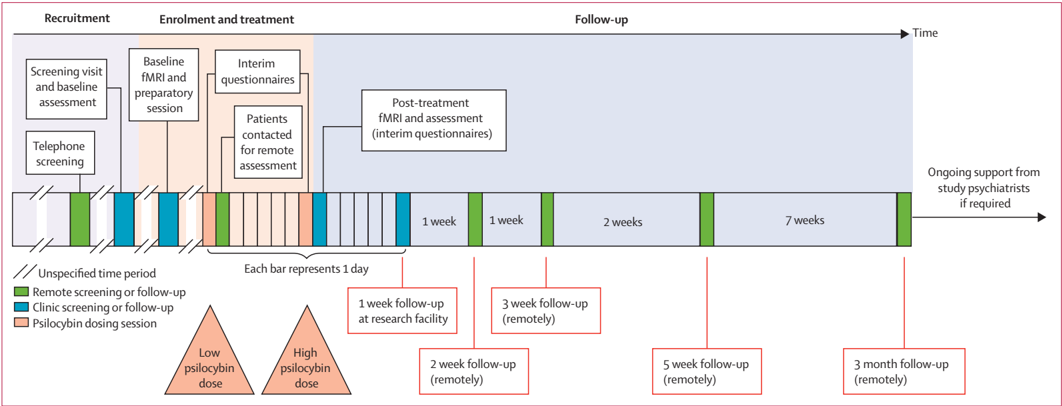
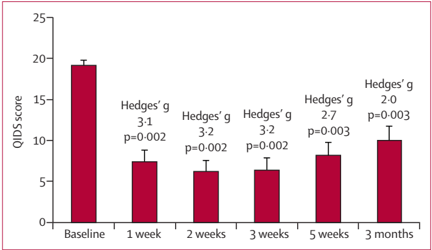
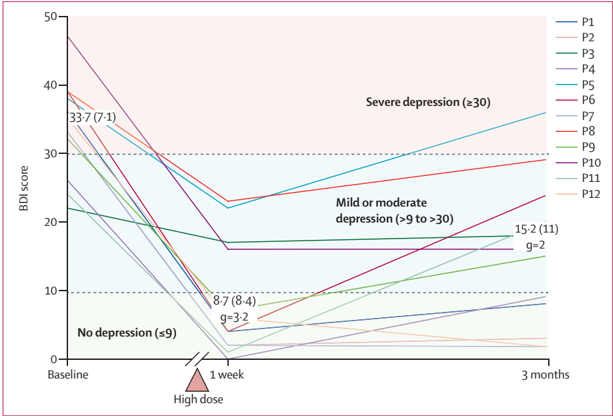
BACKGROUND: Psilocybin is a serotonin receptor agonist that occurs naturally in some mushroom species. Recent studies have assessed the therapeutic potential of psilocybin for various conditions, including end-of-life anxiety, obsessive-compulsive disorder, and smoking and alcohol dependence, with promising preliminary results. Here, we aimed to investigate the feasibility, safety, and efficacy of psilocybin in patients with unipolar treatment-resistant depression. METHODS: In this open-label feasibility trial, 12 patients (six men, six women) with moderate-to-severe, unipolar, treatment-resistant major depression received two oral doses of psilocybin (10 mg and 25 mg, 7 days apart) in a supportive setting. There was no control group. Psychological support was provided before, during, and after each session. The primary outcome measure for feasibility was patient-reported intensity of psilocybin's effects. Patients were monitored for adverse reactions during the dosing sessions and subsequent clinic and remote follow-up. Depressive symptoms were assessed with standard assessments from 1 week to 3 months after treatment, with the 16-item Quick Inventory of Depressive Symptoms (QIDS) serving as the primary efficacy outcome. This trial is registered with ISRCTN, number ISRCTN14426797. FINDINGS: Psilocybin's acute psychedelic effects typically became detectable 30-60 min after dosing, peaked 2-3 h after dosing, and subsided to negligible levels at least 6 h after dosing. Mean self-rated intensity (on a 0-1 scale) was 0·51 (SD 0·36) for the low-dose session and 0·75 (SD 0·27) for the high-dose session. Psilocybin was well tolerated by all of the patients, and no serious or unexpected adverse events occurred. The adverse reactions we noted were transient anxiety during drug onset (all patients), transient confusion or thought disorder (nine patients), mild and transient nausea (four patients), and transient headache (four patients). Relative to baseline, depressive symptoms were markedly reduced 1 week (mean QIDS difference -11·8, 95% CI -9·15 to -14·35, p=0·002, Hedges' g=3·1) and 3 months (-9·2, 95% CI -5·69 to -12·71, p=0·003, Hedges' g=2) after high-dose treatment. Marked and sustained improvements in anxiety and anhedonia were also noted. INTERPRETATION: This study provides preliminary support for the safety and efficacy of psilocybin for treatment-resistant depression and motivates further trials, with more rigorous designs, to better examine the therapeutic potential of this approach. FUNDING: Medical Research Council.
Overview
The claims and statistics of this paper haven’t been checked yet.
Free: it reads the open-access text and checks the first 5 claims that cite a source we can check. Create a free account to check every claim.
Integrity signals
Registry
Cites
Statistics
Figures
Verification
Claims the paper makes
The claims and statistics of this paper haven’t been checked yet.
Free: it reads the open-access text and checks the first 5 claims that cite a source we can check. Create a free account to check every claim.
Claims other papers make about this one
Each is checked against this paper’s own text: does it say what the citing paper says it does?
The source backs part of the claim, not all of it — or backs it for a different population, condition or comparison.
In the citing paper
“Both methods have shown potential for reducing psychopathology and both, psychedelic-assisted therapy with psilocybin and MBIs, in particular MBCT have preliminary evidence for effectiveness in chronic, treatment-resistant depression [94].”
From Mindfulness meditation and psychedelics: potential synergies and commonalities (2023) · cites this paper as [94]
Experimental — accuracy not yet measuredThe source backs part of the claim, not all of it — or backs it for a different population, condition or comparison.
In the citing paper
“Randomised clinical trials (RCTs) of psilocybin-assisted therapy demonstrated a significant reduction of depressive symptoms in terminally ill cancer patients, as well as in treatment-resistant depression (29, 30, 38).”
From Examining the Potential Synergistic Effects Between Mindfulness Training and Psychedelic-Assisted Therapy (2021) · cites this paper as [29]
Experimental — accuracy not yet measuredThe source backs part of the claim, not all of it — or backs it for a different population, condition or comparison.
In the citing paper
“Most of these studies however suffer from low methodological validity and are mostly open-label, yet they have yielded preliminary evidence for the capacity of psychedelic substances for treating addiction, depression, anxiety, and eating disorders (29–35).”
From Examining the Potential Synergistic Effects Between Mindfulness Training and Psychedelic-Assisted Therapy (2021) · cites this paper as [29]
Experimental — accuracy not yet measuredThe source backs part of the claim, not all of it — or backs it for a different population, condition or comparison.
In the citing paper
“Remarkably, these benefits were incurred even after only a single psychedelic administration and were maintained for as long as 6 months.”
From Examining the Potential Synergistic Effects Between Mindfulness Training and Psychedelic-Assisted Therapy (2021) · cites this paper as [29]
Experimental — accuracy not yet measuredThe cited source says what the claim attributes to it.
In the citing paper
“Amelioration of symptomatic depression in pilot studies of major depressive disorder, including those that compared psilocybin with escitalopram 8,9 and that investigated its use in treatment-resistant depression, 10 has suggested therapeutic potential for this agent.”
From Single-Dose Psilocybin for a Treatment-Resistant Episode of Major Depression (2022) · cites this paper as [10]
11 more claims about this paper
Create a free account to see every claim other papers make about this one.
Self-check
Percentages, sums and reported differences re-computed from the paper’s own numbers.
The self-check needs the paper’s full text.
Citations
Cites
Rush, A. J., Trivedi, M. H., Ibrahim, H. M., Carmody, T. J., Arnow, B., Klein, D. N., Markowitz, J. C., Ninan, P. T., Kornstein, S., Manber, R., et al. (2003) · Biological Psychiatry · doi:10.1016/s0006-3223(02)01866-8 · Cited by 3,829
The Economic Burden of Adults With Major Depressive Disorder in the United States (2005 and 2010)
Greenberg, P. E., Fournier, A.-A., Sisitsky, T., Pike, C. T., & Kessler, R. C. (2015) · The Journal of Clinical Psychiatry · doi:10.4088/jcp.14m09298 · Cited by 1,779
Pilot Study of Psilocybin Treatment for Anxiety in Patients With Advanced-Stage Cancer
Grob, C. S., Danforth, A. L., Chopra, G. S., Hagerty, M., McKay, C. R., Halberstadt, A. L., & Greer, G. R. (2011) · Archives of General Psychiatry · doi:10.1001/archgenpsychiatry.2010.116 · Cited by 1,206 · cited 1×
“…cantly decreased anxiety and depression scores were observed 3 and 6 months after a single dose of psilocybin in patients with anxiety related to end-stage cancer, 15 and improve ments in wellbeing lasting for more than 1 year were observed in healthy individuals given a single dose of psilocybin.”
BackgroundHuman hallucinogen research: guidelines for safety
Johnson, M., Richards, W., & Griffiths, R. (2008) · Journal of Psychopharmacology · doi:10.1177/0269881108093587 · Cited by 1,203
Neural correlates of the psychedelic state as determined by fMRI studies with psilocybin
Carhart-Harris, R. L., Erritzoe, D., Williams, T., Stone, J. M., Reed, L. J., Colasanti, A., Tyacke, R. J., Leech, R., Malizia, A. L., Murphy, K., et al. (2012) · Proceedings of the National Academy of Sciences · doi:10.1073/pnas.1119598109 · Cited by 1,172 · cited 1×
“10 Moreover, data obtained from large-scale population studies have recently challenged the view that psychedelics negatively aff ect mental health, 11–13 with one study’s fi ndings showing lower rates of psychological distress and suicidality among people who had used”
BackgroundSelf-citationPsilocybin-assisted treatment for alcohol dependence: A proof-of-concept study
Bogenschutz, M. P., Forcehimes, A. A., Pommy, J. A., Wilcox, C. E., Barbosa, P., & Strassman, R. J. (2015) · Journal of Psychopharmacology · doi:10.1177/0269881114565144 · Cited by 1,151 · cited 1×
“19 Signifi cantly decreased anxiety and depression scores were observed 3 and 6 months after a single dose of psilocybin in patients with anxiety related to end-stage cancer, 15 and improve ments in wellbeing lasting for more than 1 year were observed in healthy individuals given a single dose of…”
BackgroundPilot study of the 5-HT 2A R agonist psilocybin in the treatment of tobacco addiction
Johnson, M. W., Garcia-Romeu, A., Cosimano, M. P., & Griffiths, R. R. (2014) · Journal of Psychopharmacology · doi:10.1177/0269881114548296 · Cited by 914
Griffiths, R., Richards, W., Johnson, M., McCann, U., & Jesse, R. (2008) · Journal of Psychopharmacology · doi:10.1177/0269881108094300 · Cited by 905
Safety, tolerability, and efficacy of psilocybin in 9 patients with obsessive-compulsive disorder
Moreno, F. A., Wiegand, C. B., Taitano, E. K., & Delgado, P. L. (2006) · The Journal of Clinical Psychiatry · doi:10.4088/jcp.v67n1110 · Cited by 789
(2001) · PubMed · Cited by 780
Cited by
Items 101–200 of 1,006
Barrett, F. S., Krimmel, S. R., Griffiths, R. R., Seminowicz, D. A., & Mathur, B. N. (2020) · NeuroImage · doi:10.1016/j.neuroimage.2020.116980 · Cited by 188
The Neurobiology of Depression: an Integrated Overview from Biological Theories to Clinical Evidence
Ferrari, F., & Villa, R. F. (2017) · Molecular Neurobiology · doi:10.1007/s12035-016-0032-y · Cited by 186
Psychedelics: Where we are now, why we got here, what we must do
Belouin, S. J., & Henningfield, J. E. (2018) · Neuropharmacology · doi:10.1016/j.neuropharm.2018.02.018 · Cited by 187
Psilocybin for treatment resistant depression in patients taking a concomitant SSRI medication
Goodwin, G. M., Croal, M., Feifel, D., Kelly, J. R., Marwood, L., Mistry, S., O’Keane, V., Peck, S. K., Simmons, H., Sisa, C., et al. (2023) · Neuropsychopharmacology · doi:10.1038/s41386-023-01648-7 · Cited by 187
“The resulting safety profile is comparable to that of psilocybin monotherapy in an open-label or controlled design [5, 47] and suggests that the safety of psilocybin in this context is Table 2.”
BackgroundMadsen, M. K., Fisher, P. M., Stenbæk, D. S., Kristiansen, S., Burmester, D., Lehel, S., Páleníček, T., Kuchař, M., Svarer, C., Ozenne, B., et al. (2020) · European Neuropsychopharmacology · doi:10.1016/j.euroneuro.2020.02.001 · Cited by 183
Forstmann, M., Yudkin, D. A., Prosser, A. M. B., Heller, S. M., & Crockett, M. J. (2020) · Proceedings of the National Academy of Sciences · doi:10.1073/pnas.1918477117 · Cited by 185
Psilocybin Induces Time-Dependent Changes in Global Functional Connectivity
Preller, K. H., Duerler, P., Burt, J. B., Ji, J. L., Adkinson, B., Stämpfli, P., Seifritz, E., Repovš, G., Krystal, J. H., Murray, J. D., et al. (2020) · Biological Psychiatry · doi:10.1016/j.biopsych.2019.12.027 · Cited by 183
Becker, A. M., Holze, F., Grandinetti, T., Klaiber, A., Toedtli, V. E., Kolaczynska, K. E., Duthaler, U., Varghese, N., Eckert, A., Grünblatt, E., et al. (2022) · Clinical Pharmacology & Therapeutics · doi:10.1002/cpt.2487 · Cited by 184
Unifying Theories of Psychedelic Drug Effects
Swanson, L. R. (2018) · Frontiers in Pharmacology · doi:10.3389/fphar.2018.00172 · Cited by 181
“Precise characterization of cognitive psychedelic effects has proven enigmatic and paradoxical (Shanon, 2002; Carhart-Harris et al., 2016b).”
BackgroundInfluentialSmigielski, L., Kometer, M., Scheidegger, M., Krähenmann, R., Huber, T., & Vollenweider, F. X. (2019) · Scientific Reports · doi:10.1038/s41598-019-50612-3 · Cited by 176
Lyons, T., & Carhart-Harris, R. L. (2018) · Journal of Psychopharmacology · doi:10.1177/0269881117748902 · Cited by 178
Self-citationAwe: a putative mechanism underlying the effects of classic psychedelic-assisted psychotherapy
Hendricks, P. S. (2018) · International Review of Psychiatry · doi:10.1080/09540261.2018.1474185 · Cited by 179
Breeksema, J. J., Kuin, B. W., Kamphuis, J., van den Brink, W., Vermetten, E., & Schoevers, R. A. (2022) · Journal of Psychopharmacology · doi:10.1177/02698811221116926 · Cited by 178
“Open-label studies investigated the treatment of treatment-resistant depression (TRD; Carhart-Harris et al., 2016, 2018), AUD (Bogenschutz et al., 2015), tobacco smoking (Johnson et al., 2014), and demoralization in older AIDSsurvivors (Anderson et al., 2020).”
BackgroundExploring the effect of microdosing psychedelics on creativity in an open-label natural setting
Prochazkova, L., Lippelt, D. P., Colzato, L. S., Kuchar, M., Sjoerds, Z., & Hommel, B. (2018) · Psychopharmacology · doi:10.1007/s00213-018-5049-7 · Cited by 177
Cao, B., Zhu, J., Zuckerman, H., Rosenblat, J. D., Brietzke, E., Pan, Z., Subramanieapillai, M., Park, C., Lee, Y., & McIntyre, R. S. (2019) · Progress in Neuro-Psychopharmacology and Biological Psychiatry · doi:10.1016/j.pnpbp.2019.01.002 · Cited by 175
“Psilocybin is a psychedelic that primarily acts on the serotonergic system, but has been shown to alter dopaminergic and glutamatergic signalling via actions on various 5-HT receptors (Carhart-Harris et al., 2016).”
BackgroundGoodwin, G. M., Aaronson, S. T., Alvarez, O., Atli, M., Bennett, J. C., Croal, M., DeBattista, C., Dunlop, B. W., Feifel, D., Hellerstein, D. J., et al. (2023) · Journal of Affective Disorders · doi:10.1016/j.jad.2023.01.108 · Cited by 173
Sub-Acute Effects of Psilocybin on Empathy, Creative Thinking, and Subjective Well-Being
Mason, N. L., Mischler, E., Uthaug, M. V., & Kuypers, K. P. C. (2019) · Journal of Psychoactive Drugs · doi:10.1080/02791072.2019.1580804 · Cited by 172
“…clinical studies have found that administration of psilocybin can induce long-lasting positive psychological changes, such as symptom remission and enhancement of well-being, in clinical populations (Carhart-Harris et al. 2016; Griffiths et al. 2016; Johnson, GarciaRomeu, and Griffiths 2017).”
BackgroundEffects of N,N-Dimethyltryptamine on Rat Behaviors Relevant to Anxiety and Depression
Cameron, L. P., Benson, C. J., Dunlap, L. E., & Olson, D. E. (2018) · ACS Chemical Neuroscience · doi:10.1021/acschemneuro.8b00134 · Cited by 171
Sloshower, J., Guss, J., Krause, R., Wallace, R. M., Williams, M. T., Reed, S., & Skinta, M. D. (2020) · Journal of Contextual Behavioral Science · doi:10.1016/j.jcbs.2019.11.002 · Cited by 171
“” Some large-scale clinical trials of psilocybin treatment for major depressive disorder currently being implemented are employing nonspecific models of “psychological support” (Carhart-Harris et al., 2016).”
BackgroundPimavanserin: An Inverse Agonist Antipsychotic Drug
Howland, R. H. (2016) · Journal of Psychosocial Nursing and Mental Health Services · doi:10.3928/02793695-20160523-01 · Cited by 171
Psychedelic-Assisted Psychotherapy—A Systematic Review of Associated Psychological Interventions
Cavarra, M., Falzone, A., Ramaekers, J. G., Kuypers, K. P. C., & Mento, C. (2022) · Frontiers in Psychology · doi:10.3389/fpsyg.2022.887255 · Cited by 171
“, 2007); MDMA-AP reviews trauma history (Mithoefer, 2016); PSI and KPT/KET for TRD encourage patients to talk about their hypotheses concerning the origin of their depression, anxiety or addiction (Krupitsky and Grinenko, 1997; Carhart-Harris et al., 2016; Stroud et al., 2018); finally, all adapted approaches include…”
BackgroundMethodInfluentialWatts, R., Kettner, H., Geerts, D., Gandy, S., Kartner, L., Mertens, L., Timmermann, C., Nour, M. M., Kaelen, M., Nutt, D., et al. (2022) · Psychopharmacology · doi:10.1007/s00213-022-06187-5 · Cited by 164
“2017) done with twenty participants from a psilocybin therapy for treatment resistant depression open-label trial (Carhart-Harris et al. 2016).”
BackgroundSelf-citationSloshower, J., Skosnik, P. D., Safi-Aghdam, H., Pathania, S., Syed, S., Pittman, B., & D’Souza, D. C. (2023) · Journal of Psychopharmacology · doi:10.1177/02698811231154852 · Cited by 165
“…that 18 participants may in fact provide sufficient power for this purpose, given that an open-label study of psilocybin therapy for treatment-resistant depression detected significant and large clinical effects (Hedges’ g = 3.1 at 1 week) with just 12 participants (Carhart-Harris et al., 2016).”
BackgroundInfluentialD’Souza, D. C., Syed, S. A., Flynn, L. T., Safi-Aghdam, H., Cozzi, N. V., & Ranganathan, M. (2022) · Neuropsychopharmacology · doi:10.1038/s41386-022-01344-y · Cited by 162
Mushroom-Derived Indole Alkaloids
Homer, J. A., & Sperry, J. (2017) · Journal of Natural Products · doi:10.1021/acs.jnatprod.7b00390 · Cited by 159
Psilocybin therapy for females with anorexia nervosa: a phase 1, open-label feasibility study
Peck, S. K., Shao, S., Gruen, T., Yang, K., Babakanian, A., Trim, J., Finn, D. M., & Kaye, W. (2023) · Nature Medicine · doi:10.1038/s41591-023-02455-9 · Cited by 144
Garcia-Romeu, A., Davis, A. K., Erowid, E., Erowid, F., Griffiths, R. R., & Johnson, M. W. (2020) · Frontiers in Psychiatry · doi:10.3389/fpsyt.2019.00955 · Cited by 157
Forstmann, M., & Sagioglou, C. (2017) · Journal of Psychopharmacology · doi:10.1177/0269881117714049 · Cited by 156
“…psychotherapeutic interventions, revealing marked reduction of anxiety in patients who suffer from various life-threatening conditions (Gasser et al., 2014), as well as reduction of depressive symptoms and anhedonia in patients with treatment-resistant depression (e.g. Carhart-Harris et al., 2016).”
BackgroundPsychedelic Drugs in Biomedicine
Kyzar, E. J., Nichols, C. D., Gainetdinov, R. R., Nichols, D. E., & Kalueff, A. V. (2017) · Trends in Pharmacological Sciences · doi:10.1016/j.tips.2017.08.003 · Cited by 155
Madsen, M. K., Stenbæk, D. S., Arvidsson, A., Armand, S., Marstrand-Joergensen, M. R., Johansen, S. S., Linnet, K., Ozenne, B., Knudsen, G. M., & Fisher, P. M. (2021) · European Neuropsychopharmacology · doi:10.1016/j.euroneuro.2021.06.001 · Cited by 151
Esketamine for treatment resistant depression
Swainson, J., Thomas, R. K., Archer, S., Chrenek, C., MacKay, M.-A., Baker, G., Dursun, S., Klassen, L. J., Chokka, P., & Demas, M. L. (2019) · Expert Review of Neurotherapeutics · doi:10.1080/14737175.2019.1640604 · Cited by 151
Brouwer, A., & Carhart-Harris, R. L. (2021) · Journal of Psychopharmacology · doi:10.1177/0269881120959637 · Cited by 143
“Under psychedelics, the normal functional segregation or specialization in the brain is instead replaced by a globally interconnected profile (Carhart-Harris et al., 2012a, 2016c; Lord et al., 2019; Petri et al., 2014; Preller et al., 2018; Smigielski et al., 2019; Tagliazucchi et al., 2014).”
BackgroundInfluentialSelf-citationGukasyan, N., & Nayak, S. M. (2022) · Transcultural Psychiatry · doi:10.1177/1363461520983684 · Cited by 150
“An open-label study of psilocybin for treatment-resistant depression showed similar decreases in depressive symptoms at 1 week and 3 months (Carhart-Harris et al., 2016).”
BackgroundAnhedonia and Depressive Disorders
Serretti, A. (2023) · Clinical Psychopharmacology and Neuroscience · doi:10.9758/cpn.23.1086 · Cited by 182
“Agomelatine [42,77-81] *** Vortioxetine [82-86] *** Ketamine [50,90] *** Transcranial magnetic stimulation [94-98] *** Psylocibine [92] ** Bupropion (with or without dextromethorphan) [66,67,70] ** Sertraline and fluoxetine [74,75] ** Venlafaxine [76] ** Methylphenidate [93] ** Cognitive-behavioral therapy, behavioral…”
Timmermann, C., Bauer, P. R., Gosseries, O., Vanhaudenhuyse, A., Vollenweider, F., Laureys, S., Singer, T., Antonova, E., & Lutz, A. (2023) · Trends in Cognitive Sciences · doi:10.1016/j.tics.2022.11.006 · Cited by 150
Psychedelic therapy for depressive symptoms: A systematic review and meta-analysis
Ko, K., Kopra, E. I., Cleare, A. J., & Rucker, J. J. (2023) · Journal of Affective Disorders · doi:10.1016/j.jad.2022.09.168 · Cited by 150
Self-citationEthics and ego dissolution: the case of psilocybin
Smith, W. R., & Sisti, D. (2021) · Journal of Medical Ethics · doi:10.1136/medethics-2020-106070 · Cited by 146
Positive expectations predict improved mental-health outcomes linked to psychedelic microdosing
Kaertner, L. S., Steinborn, M. B., Kettner, H., Spriggs, M. J., Roseman, L., Buchborn, T., Balaet, M., Timmermann, C., Erritzoe, D., & Carhart-Harris, R. L. (2021) · Scientific Reports · doi:10.1038/s41598-021-81446-7 · Cited by 145
Yao, Y., Guo, D., Lu, T., Liu, F.-L., Huang, S., Diao, M.-Q., Li, S., Zhang, X.-J., Kosten, T. R., Shi, J., et al. (2024) · Psychiatry Research · doi:10.1016/j.psychres.2024.115886 · Cited by 175
DARK Classics in Chemical Neuroscience: Psilocybin
Geiger, H. A., Wurst, M. G., & Daniels, R. N. (2018) · ACS Chemical Neuroscience · doi:10.1021/acschemneuro.8b00186 · Cited by 141
Davis, A. K., So, S., Lancelotta, R., Barsuglia, J. P., & Griffiths, R. R. (2019) · The American Journal of Drug and Alcohol Abuse · doi:10.1080/00952990.2018.1545024 · Cited by 142
Family, N., Maillet, E. L., Williams, L. T. J., Krediet, E., Carhart-Harris, R. L., Williams, T. M., Nichols, C. D., Goble, D. J., & Raz, S. (2020) · Psychopharmacology · doi:10.1007/s00213-019-05417-7 · Cited by 140
Self-citationA non-hallucinogenic LSD analog with therapeutic potential for mood disorders
Lewis, V., Bonniwell, E. M., Lanham, J. K., Ghaffari, A., Sheshbaradaran, H., Cao, A. B., Calkins, M. M., Bautista-Carro, M. A., Arsenault, E., Telfer, A., et al. (2023) · Cell Reports · doi:10.1016/j.celrep.2023.112203 · Cited by 168
“16,17,61,99 LSD has also been shown to produce antidepressant effects in humans, 44 enhance neuroplasticity in rat neuronal cultures, and promote hippocampal neuronal proliferation and spinogenesis.”
BackgroundIncreased thalamic resting‐state connectivity as a core driver of LSD‐induced hallucinations
Müller, F., Lenz, C., Dolder, P., Lang, U., Schmidt, A., Liechti, M., & Borgwardt, S. (2017) · Acta Psychiatrica Scandinavica · doi:10.1111/acps.12818 · Cited by 137
Galvão-Coelho, N. L., Marx, W., Gonzalez, M., Sinclair, J., de Manincor, M., Perkins, D., & Sarris, J. (2021) · Psychopharmacology · doi:10.1007/s00213-020-05719-1 · Cited by 137
The History of Psychedelics in Psychiatry
Nichols, D. E., & Walter, H. (2021) · Pharmacopsychiatry · doi:10.1055/a-1310-3990 · Cited by 133
“An abbreviated list of that research includes a study of psilocybin administration to normal subjects at Johns Hopkins University (JHU) [78], studies of psilocybin-assisted psychotherapy in cancer patients at JHU [67] and at New York University [79], psilocybin-assisted therapy for the treatment of alcohol use disorde…”
MethodPsychedelic drugs—a new era in psychiatry?
Nutt, D. J. (2019) · Dialogues in Clinical Neuroscience · doi:10.31887/dcns.2019.21.2/dnutt · Cited by 180
Self-citationDavoudian, P. A., Shao, L.-X., & Kwan, A. C. (2023) · ACS Chemical Neuroscience · doi:10.1021/acschemneuro.2c00637 · Cited by 129
Biochemical Mechanisms Underlying Psychedelic-Induced Neuroplasticity
Olson, D. E. (2022) · Biochemistry · doi:10.1021/acs.biochem.1c00812 · Cited by 129
Changes in inflammatory biomarkers are related to the antidepressant effects of Ayahuasca
Galvão-Coelho, N. L., de Menezes Galvão, A. C., de Almeida, R. N., Palhano-Fontes, F., Campos Braga, I., Lobão Soares, B., Maia-de-Oliveira, J. P., Perkins, D., Sarris, J., & de Araujo, D. B. (2020) · Journal of Psychopharmacology · doi:10.1177/0269881120936486 · Cited by 128
“…interest in the use of classic serotonergic psychedelics for treatment of MDD (ayahuasca: Almeida et al., 2019; Galvão et al., 2018; Osório et al., 2015; Palhano-Fontes et al., 2015, 2018; Sanches et al., 2016; psilocybin: Carhart-Harris et al., 2016; Griffiths et al., 2016; Ross et al., 2016).”
BackgroundBogenschutz, M. P., Podrebarac, S. K., Duane, J. H., Amegadzie, S. S., Malone, T. C., Owens, L. T., Ross, S., & Mennenga, S. E. (2018) · Frontiers in Pharmacology · doi:10.3389/fphar.2018.00100 · Cited by 128
“, 2016), and an open-label trial showed improvement in treatment resistant depression following psilocybin treatment (Carhart-Harris et al., 2016).”
Molecular aspects of depression: A review from neurobiology to treatment
Villas Boas, G. R., Boerngen de Lacerda, R., Paes, M. M., Gubert, P., Almeida, W. L. D. C., Rescia, V. C., de Carvalho, P. M. G., de Carvalho, A. A. V., & Oesterreich, S. A. (2019) · European Journal of Pharmacology · doi:10.1016/j.ejphar.2019.02.024 · Cited by 128
Updating the dynamic framework of thought: Creativity and psychedelics
Girn, M., Mills, C., Roseman, L., Carhart-Harris, R. L., & Christoff, K. (2020) · NeuroImage · doi:10.1016/j.neuroimage.2020.116726 · Cited by 128
Self-citationJefsen, O. H., Elfving, B., Wegener, G., & Müller, H. K. (2021) · Journal of Psychopharmacology · doi:10.1177/0269881120959614 · Cited by 127
Acute effects of LSD on amygdala activity during processing of fearful stimuli in healthy subjects
Mueller, F., Lenz, C., Dolder, P. C., Harder, S., Schmid, Y., Lang, U. E., Liechti, M. E., & Borgwardt, S. (2017) · Translational Psychiatry · doi:10.1038/tp.2017.54 · Cited by 127
Molecular Mechanisms of Psilocybin and Implications for the Treatment of Depression
Ling, S., Ceban, F., Lui, L. M. W., Lee, Y., Teopiz, K. M., Rodrigues, N. B., Lipsitz, O., Gill, H., Subramaniapillai, M., Mansur, R. B., et al. (2022) · CNS Drugs · doi:10.1007/s40263-021-00877-y · Cited by 127
“Psilocybin is a naturally occurring psychedelic found in the Psilocybe genus of mushrooms [30].”
BackgroundAmerican Trip: Set, Setting, and the Psychedelic Experience in the Twentieth Century
Hartogsohn, I. (2020) · The MIT Press eBooks · doi:10.7551/mitpress/11888.001.0001 · Cited by 185
Harmonic brain modes: a unifying framework for linking space and time in brain dynamics
Atasoy, S., Deco, G., Kringelbach, M. L., & Pearson, J. (2018) · The Neuroscientist · doi:10.1177/1073858417728032 · Cited by 124
Transient stimulation with psychoplastogens is sufficient to initiate neuronal growth
Ly, C., Greb, A. C., Vargas, M. V., Duim, W. C., Grodzki, A. C. G., Lein, P. J., & Olson, D. E. (2021) · ACS Pharmacology & Translational Science · doi:10.1021/acsptsci.0c00065 · Cited by 123
Reiche, S., Hermle, L., Gutwinski, S., Jungaberle, H., Gasser, P., & Majić, T. (2018) · Progress in Neuro-Psychopharmacology and Biological Psychiatry · doi:10.1016/j.pnpbp.2017.09.012 · Cited by 122
“, 2006) and treatment-resistant depression (Carhart-Harris et al., 2016).”
BackgroundInfluentialGirn, M., Roseman, L., Bernhardt, B. C., Smallwood, J., Carhart-Harris, R. L., & Spreng, R. N. (2022) · NeuroImage · doi:10.1016/j.neuroimage.2022.119220 · Cited by 144
Self-citationPharmacokinetics and Pharmacodynamics of Oral Psilocybin Administration in Healthy Participants
Holze, F., Becker, A. M., Kolaczynska, K. E., Duthaler, U., & Liechti, M. E. (2023) · Clinical Pharmacology & Therapeutics · doi:10.1002/cpt.2821 · Cited by 119
Subacute effects of the psychedelic ayahuasca on the salience and default mode networks
Pasquini, L., Palhano-Fontes, F., & Araujo, D. B. (2020) · Journal of Psychopharmacology · doi:10.1177/0269881120909409 · Cited by 119
“…studies have explored the acute effects of psychedelics on functional organization of human brain networks (Carhart-Harris et al., 2012; Carhart-Harris et al., 2016b; Palhano-Fontes et al., 2015; Roseman et al., 2014; Viol et al., 2017, 2019), with reports of increased functional…”
BackgroundInfluentialRosenblat, J. D., Meshkat, S., Doyle, Z., Kaczmarek, E. S., Brudner, R. M., Kratiuk, K., Mansur, R. B., Schulz-Quach, C., Sethi, R., Abate, A., et al. (2024) · Med · doi:10.1016/j.medj.2024.01.005 · Cited by 154
A Survey of American Psychiatrists' Attitudes Toward Classic Hallucinogens
Barnett, B. S., Siu, W. O., & Pope, H. G. (2018) · Journal of Nervous & Mental Disease · doi:10.1097/nmd.0000000000000828 · Cited by 116
#MyDepressionLooksLike: Examining Public Discourse About Depression on Twitter
Lachmar, E. M., Wittenborn, A. K., Bogen, K. W., & McCauley, H. L. (2017) · JMIR Mental Health · doi:10.2196/mental.8141 · Cited by 116
“In addition to data provided in the description of the seeking relief theme, Twitter users shared information about exploratory treatments undergoing testing, including messages about the magic mushroom compound [59].”
BackgroundEfficacy of psychedelic treatments on depressive symptoms: A meta-analysis
Romeo, B., Karila, L., Martelli, C., & Benyamina, A. (2020) · Journal of Psychopharmacology · doi:10.1177/0269881120919957 · Cited by 113
“Five studies included in this meta-analysis used psilocybin (Carhart-Harris et al., 2018, 2016; Griffiths et al., 2016; Grob et al., 2011; Ross et al., 2016), two studies used ayahuasca (Palhano-Fontes et al., 2019; Sanches et al., 2016) and one study used LSD (Gasser et al., 2014).”
BackgroundInfluentialHorizontal gene cluster transfer increased hallucinogenic mushroom diversity
Reynolds, H. T., Vijayakumar, V., Gluck-Thaler, E., Korotkin, H. B., Matheny, P. B., & Slot, J. C. (2018) · Evolution Letters · doi:10.1002/evl3.42 · Cited by 111
Vargas, A. S., Luís, Â., Barroso, M., Gallardo, E., & Pereira, L. (2020) · Biomedicines · doi:10.3390/biomedicines8090331 · Cited by 113
“…evaluation and four of them were excluded (Stroud et al., 2018 [21], Lyons and Carhart-Harris, 2018 [22], Carhart-Harris et al., 2017 [23] and Carhart-Harris et al., 2016 [24]), because they were secondary analyses of the same data, and as such none was eligible since a true control group…”
BackgroundTryptophan Synthase: Biocatalyst Extraordinaire
Watkins‐Dulaney, E. J., Straathof, S., & Arnold, F. H. (2020) · ChemBioChem · doi:10.1002/cbic.202000379 · Cited by 114
Reckweg, J. T., Uthaug, M. V., Szabo, A., Davis, A. K., Lancelotta, R., Mason, N. L., & Ramaekers, J. G. (2022) · Journal of Neurochemistry · doi:10.1111/jnc.15587 · Cited by 110
dos Santos, R. G., & Hallak, J. E. C. (2020) · Neuroscience & Biobehavioral Reviews · doi:10.1016/j.neubiorev.2019.12.001 · Cited by 111
A Deep-Dream Virtual Reality Platform for Studying Altered Perceptual Phenomenology
Suzuki, K., Roseboom, W., Schwartzman, D. J., & Seth, A. K. (2017) · Scientific Reports · doi:10.1038/s41598-017-16316-2 · Cited by 109
“These studies attempt to understand the neural under-pinnings that cause altered conscious experience 11–13 as well as investigating the potential psychotherapeutic applications of these drugs 4,12,14 .”
BackgroundPsychedelics and psychotherapy: Cognitive-behavioral approaches as default
Yaden, D. B., Earp, D., Graziosi, M., Friedman-Wheeler, D., Luoma, J. B., & Johnson, M. W. (2022) · Frontiers in Psychology · doi:10.3389/fpsyg.2022.873279 · Cited by 110
Barrett, F. S., Carbonaro, T. M., Hurwitz, E., Johnson, M. W., & Griffiths, R. R. (2018) · Psychopharmacology · doi:10.1007/s00213-018-4981-x · Cited by 109
Case analysis of long-term negative psychological responses to psychedelics
Bremler, R., Katati, N., Shergill, P., Erritzøe, D., & Carhart-Harris, R. L. (2023) · Scientific Reports · doi:10.1038/s41598-023-41145-x · Cited by 137
Self-citationGalvão, A. C. D. M., de Almeida, R. N., Silva, E. A. D. S., Freire, F. A. M., Palhano-Fontes, F., Onias, H., Arcoverde, E., Maia-de-Oliveira, J. P., de Araújo, D. B., Lobão-Soares, B., et al. (2018) · Frontiers in Psychiatry · doi:10.3389/fpsyt.2018.00185 · Cited by 108
Psychedelics in Psychiatry—Keeping the Renaissance From Going Off the Rails
Yaden, D. B., Yaden, M. E., & Griffiths, R. R. (2020) · JAMA Psychiatry · doi:10.1001/jamapsychiatry.2020.3672 · Cited by 113
Novel drug developmental strategies for treatment‐resistant depression
Borbély, É., Simon, M., Fuchs, E., Wiborg, O., Czéh, B., & Helyes, Z. (2022) · British Journal of Pharmacology · doi:10.1111/bph.15753 · Cited by 106
“…and anxiety symptoms, and therefore, it is considered to be a promising and safe agent, even relevant for first-line treatment (2013-003196-35, Carhart-Harris et al., 2016, 2018; Vargas et al., 2020), where a psychological support therapy comprising three parts (preparation, acute and…”
BackgroundErkizia-Santamaría, I., Alles-Pascual, R., Horrillo, I., Meana, J. J., & Ortega, J. E. (2022) · Biomedicine & Pharmacotherapy · doi:10.1016/j.biopha.2022.113612 · Cited by 121
Zeifman, R. J., Wagner, A. C., Watts, R., Kettner, H., Mertens, L. J., & Carhart-Harris, R. L. (2020) · Frontiers in Psychiatry · doi:10.3389/fpsyt.2020.00782 · Cited by 106
Self-citationRucker, J. J., Marwood, L., Ajantaival, R.-L. J., Bird, C., Eriksson, H., Harrison, J., Lennard-Jones, M., Mistry, S., Saldarini, F., Stansfield, S., et al. (2022) · Journal of Psychopharmacology · doi:10.1177/02698811211064720 · Cited by 104
“The first effects of psilocybin are seen about 20–30 min after administration, are most intense in the first 90–120 min and then gradually subside, typically resolving in ~5–6 h after administration (Carhart-Harris et al., 2016).”
BackgroundResultInfluentialSelf-citationA Dendrite-Focused Framework for Understanding the Actions of Ketamine and Psychedelics
Savalia, N. K., Shao, L.-X., & Kwan, A. C. (2021) · Trends in Neurosciences · doi:10.1016/j.tins.2020.11.008 · Cited by 104
“Clinical trials examining psilocybin, for example, are still underway, although a few studies with small sample sizes have suggested that the compound relieves symptoms of depression and anxiety with rapid onset and perhaps longer duration (weeks if not months) [8,9].”
BackgroundBecker, A., Klaiber, A., Holze, F., Istampoulouoglou, I., Duthaler, U., Varghese, N., Eckert, A., & Liechti, M. E. (2022) · The International Journal of Neuropsychopharmacology · doi:10.1093/ijnp/pyac075 · Cited by 120
“This is one reason why psilocybin has been used in most recent clinical trials that evaluated the efficacy of psychedelics to assist psychotherapy (Grob et al., 2011; Carhart-Harris et al., 2016; Griffiths et al., 2016; Ross et al., 2016; Carhart-Harris et al., 2018).”
Stroud, J. B., Freeman, T. P., Leech, R., Hindocha, C., Lawn, W., Nutt, D. J., Curran, H. V., & Carhart-Harris, R. L. (2018) · Psychopharmacology · doi:10.1007/s00213-017-4754-y · Cited by 101
Self-citationBehavioral Neurobiology of Psychedelic Drugs
(2018) · Current topics in behavioral neurosciences · doi:10.1007/978-3-662-55880-5 · Cited by 118
Therapeutic use of psilocybin: Practical considerations for dosing and administration
MacCallum, C. A., Lo, L. A., Pistawka, C. A., & Deol, J. K. (2022) · Frontiers in Psychiatry · doi:10.3389/fpsyt.2022.1040217 · Cited by 102
Williams, M. T., Davis, A. K., Xin, Y., Sepeda, N. D., Grigas, P. C., Sinnott, S., & Haeny, A. M. (2021) · Drugs: Education, Prevention and Policy · doi:10.1080/09687637.2020.1854688 · Cited by 101
“Similarly, two studies with a population of individuals with depression and treatmentresistant depression showed decreased depression and anxiety after two doses of psilocybin in the context of supportive psychotherapy (Carhart-Harris et al., 2016; Davis et al., 2020).”
BackgroundNeuroticism is associated with challenging experiences with psilocybin mushrooms
Barrett, F. S., Johnson, M. W., & Griffiths, R. R. (2017) · Personality and Individual Differences · doi:10.1016/j.paid.2017.06.004 · Cited by 98
“…conditions, and with proper screening, preparation, and integration, psychedelic experiences may have therapeutic effects (Bogenschutz et al., 2015; Carhart-Harris et al., 2016; Griffiths et al., 2016; Grob et al., 2011; Johnson, Garcia-Romeu, Cosimano, & Griffiths, 2014; Ross et al., 2016).”
Garcia-Romeu, A., Barrett, F. S., Carbonaro, T. M., Johnson, M. W., & Griffiths, R. R. (2021) · Journal of Psychopharmacology · doi:10.1177/0269881121991822 · Cited by 96
“Our findings are also consistent with results showing that fixed oral doses of 25 mg psilocybin were associated with decreased treatmentresistant depression symptoms, although participant body weight or BMI data for this trial were not reported (Carhart-Harris et al., 2016, 2018).”
BackgroundResultInfluentialDoes Psychedelic Therapy Have a Transdiagnostic Action and Prophylactic Potential?
Kočárová, R., Horáček, J., & Carhart-Harris, R. (2021) · Frontiers in Psychiatry · doi:10.3389/fpsyt.2021.661233 · Cited by 96
Self-citationChi, T., & Gold, J. A. (2020) · Journal of the Neurological Sciences · doi:10.1016/j.jns.2020.116715 · Cited by 95
The acute effects of classic psychedelics on memory in humans
Healy, C. J. (2021) · Psychopharmacology · doi:10.1007/s00213-020-05756-w · Cited by 108
Greenway, K. T., Garel, N., Jerome, L., & Feduccia, A. A. (2020) · Expert Review of Clinical Pharmacology · doi:10.1080/17512433.2020.1772054 · Cited by 94
“psychotherapy in 2006 for OCD [208], promising results have been published for applications in end of life anxiety [148,187,209], smoking cessation [210], treatment-resistant depression [211], as well as to initiate meditation/spiritual”
BackgroundHadar, A. A., David, J., Shalit, N., Roseman, L., Gross, R., Sessa, B., & Lev‐Ran, S. (2022) · Journal of Psychoactive Drugs · doi:10.1080/02791072.2021.2022254 · Cited by 115
Hendricks, P. S., Crawford, M. S., Cropsey, K. L., Copes, H., Sweat, N. W., Walsh, Z., & Pavela, G. (2018) · Journal of Psychopharmacology · doi:10.1177/0269881117735685 · Cited by 93
Dose–response relationships of psilocybin-induced subjective experiences in humans
Hirschfeld, T., & Schmidt, T. T. (2021) · Journal of Psychopharmacology · doi:10.1177/0269881121992676 · Cited by 93
“…reporting data on patients with cancer-related psychiatric distress (Ross et al., 2016), one study reporting data on patients with major depressive disorder (Davis et al., 2020) and two studies reporting data on patients with treatment-resistant major depression (Carhart-Harris et al., 2016, 2018).”
BackgroundResultInfluentialSystematized Review of Psychotherapeutic Components of Psilocybin-Assisted Psychotherapy
Horton, D. M., Morrison, B., & Schmidt, J. (2021) · American Journal of Psychotherapy · doi:10.1176/appi.psychotherapy.20200055 · Cited by 93
Nayak, S. M., Jackson, H., Sepeda, N. D., Mathai, D. S., So, S., Yaffe, A., Zaki, H., Brasher, T. J., Lowe, M. X., Jolly, D. R. P., et al. (2023) · Frontiers in Psychiatry · doi:10.3389/fpsyt.2023.1199642 · Cited by 112
“These findings suggest psilocybin may have a time-limited window of antidepressant effects, consistent with clinical trial data (14, 15, 61), and imply that some individuals may require repeated psilocybin dosing for continued antidepressant benefits.”
ResultEfficacy of psilocybin for treating symptoms of depression: systematic review and meta-analysis
Metaxa, A.-M., & Clarke, M. J. (2024) · BMJ · doi:10.1136/bmj-2023-078084 · Cited by 121
“11-13 16-18 These studies reported only minimal adverse effects, however, and drug harm assessments in healthy volunteers indicated that psilocybin does not induce physiological toxicity, is not addictive, and does not lead to withdrawal.”
Background
Metadata
- Authors
- Carhart-Harris, R. L., Bolstridge, M., Rucker, J., Day, C. M. J., Erritzoe, D., Kaelen, M., Bloomfield, M., Rickard, J. A., Forbes, B., Feilding, A., Taylor, D., Pilling, S., Curran, V. H., & Nutt, D. J.
- Affiliations
- Imperial College London (GB)
- University College London (GB)
- Barts Health NHS Trust (GB)
- King's College London (GB)
- Beckley Foundation (GB)
- South London and Maudsley NHS Foundation Trust (GB)
- Corresponding author
- Carhart-Harris, Robin L
- ORCID
- Venue
- The Lancet Psychiatry
- Publisher
- Elsevier BV
- Published
- 2016-07
- Volume
- 3
- Issue
- 7
- Pages
- 619-627
- ISSN
- 2215-0366 (ISSN-L)
- OpenAlex
- W2396675581
- Semantic Scholar
- 006d3597cc21e0200eb70aab18a11379644d48b8
- Cited by
- 1,540
- References
- 30
- Citations by year
- 2026: 137 · 2025: 189 · 2024: 225 · 2023: 207 · 2022: 205 · 2021: 192 · 2020: 128 · 2019: 78 · 2018: 71 · 2017: 70 · 2016: 36
- FWCI
- 113.68
- Type
- journal article
- Language
- en
- Open access
- hybrid
- doi.org
- Licence
- cc-by
- www.elsevier.com/tdm/userlicense/1.0/ (tdm)
- creativecommons.org/licenses/by/4.0/ (vor)
- Locations
- The Lancet Psychiatry (publishedVersion, cc-by)
- PubMed (publishedVersion)
- Research Bank (Australian Catholic University) (submittedVersion, cc-by)
- UCL Discovery (University College London) (submittedVersion)
- Research Portal (King's College London) (submittedVersion, cc-by)
- Spiral (Imperial College London) (submittedVersion, other-oa)
- Funders
- MRC clinical development (MR/J00460X/1)
- Topics
- Social Sciences › Psychology › Clinical Psychology › Psychedelics and Drug Studies
- Health Sciences › Medicine › Pharmacology (medical) › Treatment of Major Depression
- Social Sciences › Psychology › Clinical Psychology › Psychotherapy Techniques and Applications
- Keywords
- psilocybin, treatment-resistant depression, unipolar major depression, psychedelic therapy, psychological support, adverse effects, depressive symptom reduction, serotonin receptor agonists, feasibility and safety, dose comparison, remote follow-up, end-of-life anxiety, obsessive-compulsive disorder, transdiagnostic treatment, psychedelic-assisted psychotherapy
- MeSH terms
- Adult, Feasibility Studies, Female, Humans, Male, Middle Aged, Psilocybin, Social Support, Treatment Outcome, Serotonin Receptor Agonists, Depressive Disorder, Treatment-Resistant
About these checks
Registry, retraction, Cites and statistics results are computed, not judged, with one exception: a printed reference that no index lists is read once by a model before it counts as a citation error. Claims are extracted by a model and kept only when their quote appears verbatim in the text; each cited source is then checked, with a model’s help, for whether it says what the claim relies on. Those verdicts can be wrong — read the claim’s quote and the cited source before relying on one.
Statistics and arithmetic are recomputed, not judged.
Confidence bands are shown only for fields calibrated on our annotated test set. None is calibrated yet, so no band is shown.
What counts as a claim ›How we measure confidence ›How we check this ›
Are you an author, or do you see a problem with this page? Request a review
Data sources
Bibliographic data: Semantic Scholar, OpenAlex, Crossref.
Contains information from the Semantic Scholar Academic Graph Datasets, made available under the ODC Attribution License (ODC-BY 1.0).
Semantic Scholar’s data is described in: Kinney, R., et al. (2023). The Semantic Scholar Open Data Platform. arXiv:2301.10140.
