

Psilocybin with psychological support for treatment-resistant depression: an open-label feasibility study
Open accessThe DOI matches its Crossref record; 30 of the 30 references it cites were found in a registry or an index.
Abstract
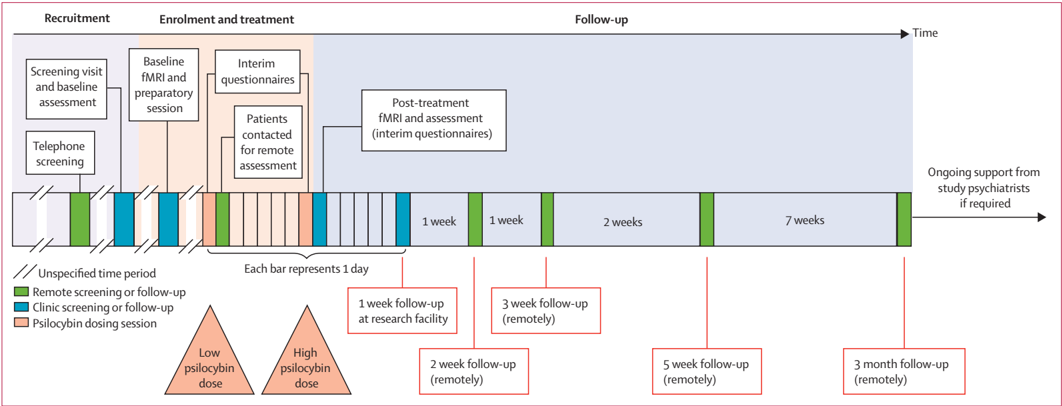
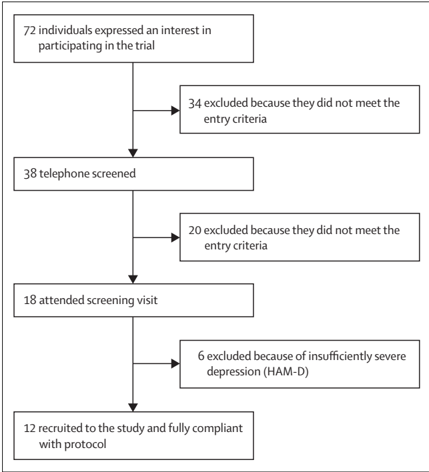
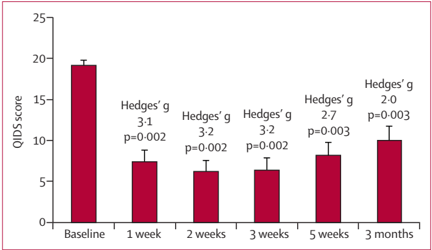
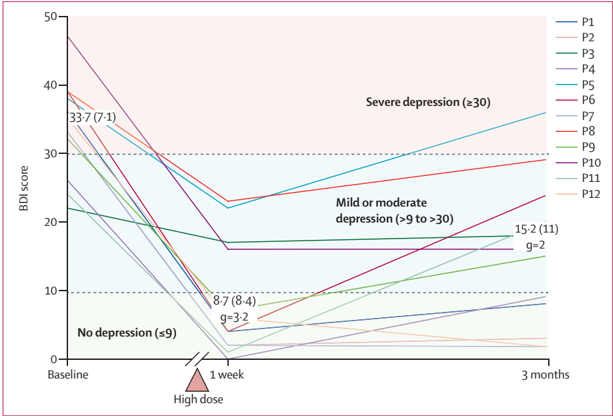
BACKGROUND: Psilocybin is a serotonin receptor agonist that occurs naturally in some mushroom species. Recent studies have assessed the therapeutic potential of psilocybin for various conditions, including end-of-life anxiety, obsessive-compulsive disorder, and smoking and alcohol dependence, with promising preliminary results. Here, we aimed to investigate the feasibility, safety, and efficacy of psilocybin in patients with unipolar treatment-resistant depression. METHODS: In this open-label feasibility trial, 12 patients (six men, six women) with moderate-to-severe, unipolar, treatment-resistant major depression received two oral doses of psilocybin (10 mg and 25 mg, 7 days apart) in a supportive setting. There was no control group. Psychological support was provided before, during, and after each session. The primary outcome measure for feasibility was patient-reported intensity of psilocybin's effects. Patients were monitored for adverse reactions during the dosing sessions and subsequent clinic and remote follow-up. Depressive symptoms were assessed with standard assessments from 1 week to 3 months after treatment, with the 16-item Quick Inventory of Depressive Symptoms (QIDS) serving as the primary efficacy outcome. This trial is registered with ISRCTN, number ISRCTN14426797. FINDINGS: Psilocybin's acute psychedelic effects typically became detectable 30-60 min after dosing, peaked 2-3 h after dosing, and subsided to negligible levels at least 6 h after dosing. Mean self-rated intensity (on a 0-1 scale) was 0·51 (SD 0·36) for the low-dose session and 0·75 (SD 0·27) for the high-dose session. Psilocybin was well tolerated by all of the patients, and no serious or unexpected adverse events occurred. The adverse reactions we noted were transient anxiety during drug onset (all patients), transient confusion or thought disorder (nine patients), mild and transient nausea (four patients), and transient headache (four patients). Relative to baseline, depressive symptoms were markedly reduced 1 week (mean QIDS difference -11·8, 95% CI -9·15 to -14·35, p=0·002, Hedges' g=3·1) and 3 months (-9·2, 95% CI -5·69 to -12·71, p=0·003, Hedges' g=2) after high-dose treatment. Marked and sustained improvements in anxiety and anhedonia were also noted. INTERPRETATION: This study provides preliminary support for the safety and efficacy of psilocybin for treatment-resistant depression and motivates further trials, with more rigorous designs, to better examine the therapeutic potential of this approach. FUNDING: Medical Research Council.
Overview
The claims and statistics of this paper haven’t been checked yet.
Free: it reads the open-access text and checks the first 5 claims that cite a source we can check. Create a free account to check every claim.
Integrity signals
Registry
Cites
Statistics
Figures
Verification
Claims the paper makes
The claims and statistics of this paper haven’t been checked yet.
Free: it reads the open-access text and checks the first 5 claims that cite a source we can check. Create a free account to check every claim.
Claims other papers make about this one
Each is checked against this paper’s own text: does it say what the citing paper says it does?
The source backs part of the claim, not all of it — or backs it for a different population, condition or comparison.
In the citing paper
“Both methods have shown potential for reducing psychopathology and both, psychedelic-assisted therapy with psilocybin and MBIs, in particular MBCT have preliminary evidence for effectiveness in chronic, treatment-resistant depression [94].”
From Mindfulness meditation and psychedelics: potential synergies and commonalities (2023) · cites this paper as [94]
Experimental — accuracy not yet measuredThe source backs part of the claim, not all of it — or backs it for a different population, condition or comparison.
In the citing paper
“Randomised clinical trials (RCTs) of psilocybin-assisted therapy demonstrated a significant reduction of depressive symptoms in terminally ill cancer patients, as well as in treatment-resistant depression (29, 30, 38).”
From Examining the Potential Synergistic Effects Between Mindfulness Training and Psychedelic-Assisted Therapy (2021) · cites this paper as [29]
Experimental — accuracy not yet measuredThe source backs part of the claim, not all of it — or backs it for a different population, condition or comparison.
In the citing paper
“Most of these studies however suffer from low methodological validity and are mostly open-label, yet they have yielded preliminary evidence for the capacity of psychedelic substances for treating addiction, depression, anxiety, and eating disorders (29–35).”
From Examining the Potential Synergistic Effects Between Mindfulness Training and Psychedelic-Assisted Therapy (2021) · cites this paper as [29]
Experimental — accuracy not yet measuredThe source backs part of the claim, not all of it — or backs it for a different population, condition or comparison.
In the citing paper
“Remarkably, these benefits were incurred even after only a single psychedelic administration and were maintained for as long as 6 months.”
From Examining the Potential Synergistic Effects Between Mindfulness Training and Psychedelic-Assisted Therapy (2021) · cites this paper as [29]
Experimental — accuracy not yet measuredThe cited source says what the claim attributes to it.
In the citing paper
“Amelioration of symptomatic depression in pilot studies of major depressive disorder, including those that compared psilocybin with escitalopram 8,9 and that investigated its use in treatment-resistant depression, 10 has suggested therapeutic potential for this agent.”
From Single-Dose Psilocybin for a Treatment-Resistant Episode of Major Depression (2022) · cites this paper as [10]
11 more claims about this paper
Create a free account to see every claim other papers make about this one.
Self-check
Percentages, sums and reported differences re-computed from the paper’s own numbers.
The self-check needs the paper’s full text.
Citations
Cites
Rush, A. J., Trivedi, M. H., Ibrahim, H. M., Carmody, T. J., Arnow, B., Klein, D. N., Markowitz, J. C., Ninan, P. T., Kornstein, S., Manber, R., et al. (2003) · Biological Psychiatry · doi:10.1016/s0006-3223(02)01866-8 · Cited by 3,829
The Economic Burden of Adults With Major Depressive Disorder in the United States (2005 and 2010)
Greenberg, P. E., Fournier, A.-A., Sisitsky, T., Pike, C. T., & Kessler, R. C. (2015) · The Journal of Clinical Psychiatry · doi:10.4088/jcp.14m09298 · Cited by 1,779
Pilot Study of Psilocybin Treatment for Anxiety in Patients With Advanced-Stage Cancer
Grob, C. S., Danforth, A. L., Chopra, G. S., Hagerty, M., McKay, C. R., Halberstadt, A. L., & Greer, G. R. (2011) · Archives of General Psychiatry · doi:10.1001/archgenpsychiatry.2010.116 · Cited by 1,206 · cited 1×
“…cantly decreased anxiety and depression scores were observed 3 and 6 months after a single dose of psilocybin in patients with anxiety related to end-stage cancer, 15 and improve ments in wellbeing lasting for more than 1 year were observed in healthy individuals given a single dose of psilocybin.”
BackgroundHuman hallucinogen research: guidelines for safety
Johnson, M., Richards, W., & Griffiths, R. (2008) · Journal of Psychopharmacology · doi:10.1177/0269881108093587 · Cited by 1,203
Neural correlates of the psychedelic state as determined by fMRI studies with psilocybin
Carhart-Harris, R. L., Erritzoe, D., Williams, T., Stone, J. M., Reed, L. J., Colasanti, A., Tyacke, R. J., Leech, R., Malizia, A. L., Murphy, K., et al. (2012) · Proceedings of the National Academy of Sciences · doi:10.1073/pnas.1119598109 · Cited by 1,172 · cited 1×
“10 Moreover, data obtained from large-scale population studies have recently challenged the view that psychedelics negatively aff ect mental health, 11–13 with one study’s fi ndings showing lower rates of psychological distress and suicidality among people who had used”
BackgroundSelf-citationPsilocybin-assisted treatment for alcohol dependence: A proof-of-concept study
Bogenschutz, M. P., Forcehimes, A. A., Pommy, J. A., Wilcox, C. E., Barbosa, P., & Strassman, R. J. (2015) · Journal of Psychopharmacology · doi:10.1177/0269881114565144 · Cited by 1,151 · cited 1×
“19 Signifi cantly decreased anxiety and depression scores were observed 3 and 6 months after a single dose of psilocybin in patients with anxiety related to end-stage cancer, 15 and improve ments in wellbeing lasting for more than 1 year were observed in healthy individuals given a single dose of…”
BackgroundPilot study of the 5-HT 2A R agonist psilocybin in the treatment of tobacco addiction
Johnson, M. W., Garcia-Romeu, A., Cosimano, M. P., & Griffiths, R. R. (2014) · Journal of Psychopharmacology · doi:10.1177/0269881114548296 · Cited by 914
Griffiths, R., Richards, W., Johnson, M., McCann, U., & Jesse, R. (2008) · Journal of Psychopharmacology · doi:10.1177/0269881108094300 · Cited by 905
Safety, tolerability, and efficacy of psilocybin in 9 patients with obsessive-compulsive disorder
Moreno, F. A., Wiegand, C. B., Taitano, E. K., & Delgado, P. L. (2006) · The Journal of Clinical Psychiatry · doi:10.4088/jcp.v67n1110 · Cited by 789
(2001) · PubMed · Cited by 780
Cited by
Items 201–300 of 1,006
Dreams and Psychedelics: Neurophenomenological Comparison and Therapeutic Implications
Kraehenmann, R. (2017) · Current Neuropharmacology · doi:10.2174/1573413713666170619092629 · Cited by 92
The 21st century psychedelic renaissance: heroic steps forward on the back of an elephant
Sessa, B. (2017) · Psychopharmacology · doi:10.1007/s00213-017-4713-7 · Cited by 106
Gregorio, D. D., Enns, J. P., Núñez, N. A., Posa, L., & Gobbi, G. (2018) · Progress in brain research · doi:10.1016/bs.pbr.2018.07.008 · Cited by 105
Livne, O., Shmulewitz, D., Walsh, C. A., & Hasin, D. S. (2022) · Addiction · doi:10.1111/add.15987 · Cited by 107
Arketamine, a new rapid-acting antidepressant: A historical review and future directions
Zhang, J.-C., Yao, W., & Hashimoto, K. (2022) · Neuropharmacology · doi:10.1016/j.neuropharm.2022.109219 · Cited by 99
Tai, S. J., Nielson, E. M., Lennard-Jones, M., Johanna Ajantaival, R.-L., Winzer, R., Richards, W. A., Reinholdt, F., Richards, B. D., Gasser, P., & Malievskaia, E. (2021) · Frontiers in Psychiatry · doi:10.3389/fpsyt.2021.586682 · Cited by 90
Brennan, W., & Belser, A. B. (2022) · Frontiers in Psychology · doi:10.3389/fpsyg.2022.866018 · Cited by 90
Leonard, J. B., Anderson, B., & Klein-Schwartz, W. (2018) · Journal of Psychopharmacology · doi:10.1177/0269881118793086 · Cited by 88
Perez, N., Langlest, F., Mallet, L., De Pieri, M., Sentissi, O., Thorens, G., Seragnoli, F., Zullino, D., Kirschner, M., Kaiser, S., et al. (2023) · European Neuropsychopharmacology · doi:10.1016/j.euroneuro.2023.07.011 · Cited by 88
Bender, D., & Hellerstein, D. J. (2022) · Psychopharmacology · doi:10.1007/s00213-021-06049-6 · Cited by 88
Two dose investigation of the 5-HT-agonist psilocybin on relative and global cerebral blood flow
Lewis, C. R., Preller, K. H., Kraehenmann, R., Michels, L., Staempfli, P., & Vollenweider, F. X. (2017) · NeuroImage · doi:10.1016/j.neuroimage.2017.07.020 · Cited by 102
“Additionally, to allow for comparability with previous studies and current clinical trials (Grof et al., 1973; Grob et al., 2011; Gasser et al., 2014; Carhart-Harris et al., 2016; Ross et al., 2016) we chose a lower medium and a higher medium dose for this first neuroimaging dose comparison study.”
Psychedelics and the science of self-experience
Nour, M. M., & Carhart-Harris, R. L. (2017) · British Journal of Psychiatry · doi:10.1192/bjp.bp.116.194738 · Cited by 87
“15 The precise mechanism by which psychedelics can occasion positive and lasting changes in mood, attitudes and behaviours is deserving of further investigation.”
Self-citationThe impact of Ayahuasca on suicidality: results from a randomized controlled trial
Zeifman, R. J., Palhano-Fontes, F., Hallak, J., Arcoverde, E., Maia-Oliveira, J. P., & Araujo, D. B. (2019) · Frontiers in Pharmacology · doi:10.3389/fphar.2019.01325 · Cited by 87
Psychedelics and music: neuroscience and therapeutic implications
Barrett, F. S., Preller, K. H., & Kaelen, M. (2018) · International Review of Psychiatry · doi:10.1080/09540261.2018.1484342 · Cited by 86
“…of psychiatric disorders, such as addiction (Bogenschutz et al., 2015; Johnson, GarciaRomeu, Cosimano, & Griffiths, 2014), end-of-life distress (Griffiths et al., 2016; Grob et al., 2011; Ross et al., 2016), and depression (Carhart-Harris et al., 2016a; Os orio et al., 2015; Sanches et al., 2016).”
BackgroundInfluentialSelf-citationHeuschkel, K., & Kuypers, K. P. C. (2020) · Frontiers in Psychiatry · doi:10.3389/fpsyt.2020.00224 · Cited by 86
A narrative synthesis of research with 5-MeO-DMT
Ermakova, A. O., Dunbar, F., Rucker, J., & Johnson, M. W. (2022) · Journal of Psychopharmacology · doi:10.1177/02698811211050543 · Cited by 86
“…and encouraging early phase clinical trials assessing psilocybin-assisted psychotherapy have been reported in unipolar mood disorders and anxiety (Carhart-Harris et al., 2016, 2018; Griffiths et al., 2016; Grob et al., 2011; Ross et al., 2016) and substance use disorders (Bogenschutz et al.,…”
BackgroundSelf-citationEffects of External Stimulation on Psychedelic State Neurodynamics
Mediano, P. A. M., Rosas, F. E., Timmermann, C., Roseman, L., Nutt, D. J., Feilding, A., Kaelen, M., Kringelbach, M. L., Barrett, A. B., Seth, A. K., et al. (2024) · ACS Chemical Neuroscience · doi:10.1021/acschemneuro.3c00289 · Cited by 102
Self-citationGuss, J., Krause, R., & Sloshower, J. (2020) · doi:10.31234/osf.io/u6v9y · Cited by 86
Dark Classics in Chemical Neuroscience: Mescaline
Cassels, B. K., & Sáez-Briones, P. (2018) · ACS Chemical Neuroscience · doi:10.1021/acschemneuro.8b00215 · Cited by 85
Kiraga, M. K., Mason, N. L., Uthaug, M. V., van Oorsouw, K. I. M., Toennes, S. W., Ramaekers, J. G., & Kuypers, K. P. C. (2021) · Frontiers in Pharmacology · doi:10.3389/fphar.2021.721537 · Cited by 85
Acute subjective effects in LSD- and MDMA-assisted psychotherapy
Schmid, Y., Gasser, P., Oehen, P., & Liechti, M. E. (2021) · Journal of Psychopharmacology · doi:10.1177/0269881120959604 · Cited by 85
“Recent preliminary data suggest that hallucinogenic drugs may reduce depressive symptoms in patients with unipolar depression (Carhart-Harris et al., 2016a, 2017; Osorio et al., 2015), improve anxiety and depressive symptoms associated with life-threatening somatic diseases (Gasser et al., 2014,…”
BackgroundNeural Mechanisms and Psychology of Psychedelic Ego Dissolution
Stoliker, D., Egan, G. F., Friston, K. J., & Razi, A. (2022) · Pharmacological Reviews · doi:10.1124/pharmrev.121.000508 · Cited by 81
Therapeutic Applications of Classic Hallucinogens
Bogenschutz, M. P., & Ross, S. (2016) · Current topics in behavioral neurosciences · doi:10.1007/7854_2016_464 · Cited by 112
An analog of psychedelics restores functional neural circuits disrupted by unpredictable stress
Lu, J., Tjia, M., Mullen, B., Cao, B., Lukasiewicz, K., Shah-Morales, S., Weiser, S., Cameron, L. P., Olson, D. E., Chen, L., et al. (2021) · Molecular Psychiatry · doi:10.1038/s41380-021-01159-1 · Cited by 84
Psychedelic perceptions: mental health service user attitudes to psilocybin therapy
Corrigan, K., Haran, M., McCandliss, C., McManus, R., Cleary, S., Trant, R., Kelly, Y., Ledden, K., Rush, G., O’Keane, V., et al. (2022) · Irish Journal of Medical Science (1971 -) · doi:10.1007/s11845-021-02668-2 · Cited by 84
High dose psilocybin is associated with positive subjective effects in healthy volunteers
Nicholas, C. R., Henriquez, K. M., Gassman, M. C., Cooper, K. M., Muller, D., Hetzel, S., Brown, R. T., Cozzi, N. V., Thomas, C., & Hutson, P. R. (2018) · Journal of Psychopharmacology · doi:10.1177/0269881118780713 · Cited by 83
In vivo production of psilocybin in E. coli
Adams, A. M., Kaplan, N. A., Wei, Z., Brinton, J. D., Monnier, C. S., Enacopol, A. L., Ramelot, T. A., & Jones, J. A. (2019) · Metabolic Engineering · doi:10.1016/j.ymben.2019.09.009 · Cited by 90
Levin, A. W., Lancelotta, R., Sepeda, N. D., Gukasyan, N., Nayak, S., Wagener, T. L., Barrett, F. S., Griffiths, R. R., & Davis, A. K. (2024) · PLoS ONE · doi:10.1371/journal.pone.0300501 · Cited by 82
Psilocybin facilitates fear extinction in mice by promoting hippocampal neuroplasticity
Du, Y., Li, Y., Zhao, X., Yao, Y., Wang, B., Zhang, L., & Wang, G. (2023) · Chinese Medical Journal · doi:10.1097/cm9.0000000000002647 · Cited by 94
“[31] Hence, fear extinction testing was performed in the same context used for fear extinction training (context B) at 24 h after psilocybin administration (i.e., in a drug-free state).”
MethodSchneier, F. R., Feusner, J., Wheaton, M. G., Gomez, G. J., Cornejo, G., Naraindas, A. M., & Hellerstein, D. J. (2023) · Journal of Psychiatric Research · doi:10.1016/j.jpsychires.2023.03.031 · Cited by 81
Lower-dose psycholytic therapy – A neglected approach
Passie, T., Guss, J., & Krähenmann, R. (2022) · Frontiers in Psychiatry · doi:10.3389/fpsyt.2022.1020505 · Cited by 81
Hutten, N. R. P. W., Mason, N. L., Dolder, P. C., & Kuypers, K. P. C. (2019) · Frontiers in Psychiatry · doi:10.3389/fpsyt.2019.00672 · Cited by 77
“Recent clinical studies have suggested that LSD (13), psilocybin (14), ayahuasca (15), and methylenedioxymethamphetamine (MDMA) (16, 17), in combination with psychological support, can provide therapeutic relief for those suffering from post-traumatic stress disorder (PTSD), anxiety, and depression.”
BackgroundSelf-reported negative outcomes of psilocybin users: A quantitative textual analysis
Bienemann, B., Ruschel, N. S., Campos, M. L. P., Negreiros, M. A., & Mograbi, D. C. (2020) · PLoS ONE · doi:10.1371/journal.pone.0229067 · Cited by 85
“Psilocybin (4-phosphoryloxy-N,N-dimethyltryptamine), the active ingredient in “magic mushrooms”, has been investigated in relation to its medicinal properties, in particular for conditions such as treatment-resistant depression (TRD) [5], with suggestions that psychedelic research may lead to a paradigm shift in psych…”
BackgroundPsilocybin and MDMA for the treatment of trauma-related psychopathology
Bird, C. I. V., Modlin, N. L., & Rucker, J. J. H. (2021) · International Review of Psychiatry · doi:10.1080/09540261.2021.1919062 · Cited by 80
“2021; Davis et al., 2020) and treatment-resistant depression (Carhart-Harris et al., 2016, 2018).”
Self-citationRaison, C. L., Jain, R., Penn, A., Cole, S. P., & Jain, S. (2022) · Frontiers in Psychiatry · doi:10.3389/fpsyt.2022.831092 · Cited by 100
Aust, S., Brakemeier, E., Spies, J., Herrera-Meléndez, A. L., Kaiser, T., Fallgatter, A. J., Plewnia, C., Mayer, S. V., Dechantsreiter, E., Burkhardt, G., et al. (2022) · JAMA Psychiatry · doi:10.1001/jamapsychiatry.2022.0696 · Cited by 100
Magnesium–ibogaine therapy in veterans with traumatic brain injuries
Cherian, K. N., Keynan, J. N., Anker, L. A., Faerman, A., Brown, R. E., Shamma, A., Keynan, O., Coetzee, J. P., Batail, J.-M. V., Phillips, A., et al. (2024) · Nature Medicine · doi:10.1038/s41591-023-02705-w · Cited by 99
“In addition, our sample size was modest, although we note that it compares favorably with a number of other pilot studies of relevance 78–84 .”
The Psychedelic Future of Post-Traumatic Stress Disorder Treatment
Zaretsky, T. G., Jagodnik, K. M., Barsic, R., Antonio, J. H., Bonanno, P. A., MacLeod, C., Pierce, C., Carney, H., Morrison, M. T., Saylor, C., et al. (2024) · Current Neuropharmacology · doi:10.2174/1570159x22666231027111147 · Cited by 85
5-HT2A receptors: Pharmacology and functional selectivity
Cummins, B. R., Billac, G. B., Nichols, D. E., & Nichols, C. D. (2025) · Pharmacological Reviews · doi:10.1016/j.pharmr.2025.100059 · Cited by 86
Combining Psychedelic and Mindfulness Interventions: Synergies to Inform Clinical Practice
Payne, J. E., Chambers, R., & Liknaitzky, P. (2021) · ACS Pharmacology & Translational Science · doi:10.1021/acsptsci.1c00034 · Cited by 78
Morton, E., Sakai, K., Ashtari, A., Pleet, M., Michalak, E. E., & Woolley, J. (2023) · Journal of Psychopharmacology · doi:10.1177/02698811221131997 · Cited by 78
“Email: josh.woolley@ucsf.edu mental health conditions including major-depressive disorder and treatment-resistant unipolar depression (Carhart-Harris et al., 2016, 2018, 2021; Davis et al., 2021a,b; Gukasyan et al., 2022), substance use disorders (Bogenschutz and Johnson, 2016; Johnson et al.,…”
BackgroundStenbæk, D. S., Madsen, M. K., Ozenne, B., Kristiansen, S., Burmester, D., Erritzoe, D., Knudsen, G. M., & Fisher, P. M. (2021) · Journal of Psychopharmacology · doi:10.1177/0269881120959609 · Cited by 78
“Results from a series of recent clinical trials provide evidence that psilocybin can be used therapeutically for, for example, major depression (Carhart-Harris et al., 2016, 2018), obsessive compulsive disorder (Moreno et al., 2006), anxiety and depression associated with life-threatening cancer…”
BackgroundDuan, W., Cao, D., Wang, S., & Cheng, J. (2023) · Chemical Reviews · doi:10.1021/acs.chemrev.3c00375 · Cited by 85
Harmine produces antidepressant-like effects via restoration of astrocytic functions
Liu, F., Wu, J., Gong, Y. L., Wang, P., Zhu, L., Tong, L., Chen, X., Ling, Y., & Huang, C. (2017) · Progress in Neuro-Psychopharmacology and Biological Psychiatry · doi:10.1016/j.pnpbp.2017.06.012 · Cited by 82
“…of the mutual interaction between astrocytes and antidepressant targets would promote the understanding about the role of harmine and other hallucinogens, such as lysergic acid diethylamide (LSD) (Dos Santos et al., 2016) and psilocybin (Carhart-Harris et al., 2016), in depression regulation.”
Thrul, J., & Garcia‐Romeu, A. (2021) · Drugs Education Prevention and Policy · doi:10.1080/09687637.2021.1897331 · Cited by 92
“Preliminary findings suggest substantial benefits of psilocybin-assisted treatment in major depression (Carhart-Harris et al., 2016; Davis et al., 2020), alcohol and tobacco dependence (Bogenschutz et al.”
BackgroundMore Realistic Forecasting of Future Life Events After Psilocybin for Treatment-Resistant Depression
Lyons, T., & Carhart-Harris, R. L. (2018) · Frontiers in Psychology · doi:10.3389/fpsyg.2018.01721 · Cited by 77
Self-citationReplication and extension of a model predicting response to psilocybin
Russ, S. L., Carhart-Harris, R. L., Maruyama, G. M., & Elliott, M. S. (2019) · Psychopharmacology · doi:10.1007/s00213-019-05279-z · Cited by 85
Self-citationRomeo, B., Hermand, M., Pétillion, A., Karila, L., & Benyamina, A. (2021) · Journal of Psychiatric Research · doi:10.1016/j.jpsychires.2021.03.002 · Cited by 76
Timmermann, C., Spriggs, M. J., Kaelen, M., Leech, R., Nutt, D. J., Moran, R. J., Carhart-Harris, R. L., & Muthukumaraswamy, S. D. (2018) · Neuropharmacology · doi:10.1016/j.neuropharm.2017.10.039 · Cited by 76
Self-citationMicrodosing psychedelics: Demographics, practices, and psychiatric comorbidities
Rosenbaum, D., Weissman, C., Anderson, T., Petranker, R., Dinh-Williams, L.-A., Hui, K., & Hapke, E. (2020) · Journal of Psychopharmacology · doi:10.1177/0269881120908004 · Cited by 76
“Psychotropic medication prescription is generally an exclusion criterion of contemporary studies involving high-dose psychedelics (see for instance Carhart-Harris et al., 2016; Ross et al., 2016).”
BackgroundInfluentialThe influence of ketamine on drug discovery in depression
Kraus, C., Wasserman, D., Henter, I. D., Acevedo-Diaz, E., Kadriu, B., & Zarate, C. A. (2019) · Drug Discovery Today · doi:10.1016/j.drudis.2019.07.007 · Cited by 75
“Psilocybin was found to be safe and well-tolerated and to rapidly reduce depressive, anxiety and anhedonia symptoms within 1 week of administration; strikingly, these effects persisted at a 3-month follow-up [99].”
BackgroundStudy Protocol for “Psilocybin as a Treatment for Anorexia Nervosa: A Pilot Study”
Spriggs, M. J., Douglass, H. M., Park, R. J., Read, T., Danby, J. L., de Magalhães, F. J. C., Alderton, K. L., Williams, T. M., Blemings, A., Lafrance, A., et al. (2021) · Frontiers in Psychiatry · doi:10.3389/fpsyt.2021.735523 · Cited by 75
Self-citationMoreton, S. G., Szalla, L., Menzies, R. E., & Arena, A. F. A. (2019) · Psychopharmacology · doi:10.1007/s00213-019-05391-0 · Cited by 93
“The majority of recent psychedelic research has investigated the effects of psilocybin, in part because it does not have the same cultural baggage as LSD (Pollan 2018).”
BackgroundResultInfluentialWitkin, J. M., Martin, A. E., Golani, L. K., Xu, N. Z., & Smith, J. L. (2019) · Advances in Pharmacology · doi:10.1016/bs.apha.2019.03.002 · Cited by 72
Psilocybin-Assisted Therapy: A Review of a Novel Treatment for Psychiatric Disorders
Thomas, K., Malcolm, B., & Lastra, D. (2017) · Journal of Psychoactive Drugs · doi:10.1080/02791072.2017.1320734 · Cited by 75
“The mean differences on other rating scales after one week were as follows: BDI −25.0 (95% CI: −20.1 to −29.9; Hedges’ g = 3.2), HAM-D −14.0 (95% CI: −9.6 to −18.4; Hedges’ g = 2.4), STAI-T −29.5 (95%CI: −22.03 to −36.97; Hedges’ g = 2.7).”
BackgroundMethodInfluentialThe therapeutic potential of psilocybin: a systematic review
van Amsterdam, J., & van den Brink, W. (2022) · Expert Opinion on Drug Safety · doi:10.1080/14740338.2022.2047929 · Cited by 74
“Table 1 shows that the positive outcomes generally occurred very quickly and clinical improvements after the last psilocybin session lasted up to 4–6 weeks [24,25], 3 months [18,26], 6 months [27–30], or even 12 months [31].”
Investigational drugs in recent clinical trials for treatment-resistant depression
Garay, R. P., Zarate, C. A., Charpeaud, T., Citrome, L., Correll, C. U., Hameg, A., & Llorca, P.-M. (2017) · Expert Review of Neurotherapeutics · doi:10.1080/14737175.2017.1283217 · Cited by 74
“[100] conducted an open-label trial of adjunctive psilocybin in 12 patients with MDD who had failed to respond to at least”
BackgroundInfluentialAssociations between lifetime classic psychedelic use and markers of physical health
Simonsson, O., Sexton, J. D., & Hendricks, P. S. (2021) · Journal of Psychopharmacology · doi:10.1177/0269881121996863 · Cited by 79
“…2020; Nutt et al., 2010; Rucker et al., 2018); and can be effective in the treatment of depression, anxiety and addiction (Aday et al., 2020; Carhart-Harris et al., 2016, 2018; Davis et al., 2020; Goldberg et al., 2020; Johnson et al., 2014; Krebs and Johansen, 2012; Luoma et al., 2020).”
BackgroundNayak, S. M., Gukasyan, N., Barrett, F. S., Erowid, E., Erowid, F., & Griffiths, R. R. (2021) · Pharmacopsychiatry · doi:10.1055/a-1524-2794 · Cited by 74
“After more than 6 decades of research into and popular use of classic psychedelics (defined here as a class of drugs that produce a unique profile of subjective effects and have a principal site of action at the 5HT2A receptor, such as LSD or psilocybin), recent promising trials investigating the effects of psilocybin…”
BackgroundPsychedelics as a treatment for disorders of consciousness
Scott, G., & Carhart-Harris, R. L. (2019) · Neuroscience of Consciousness · doi:10.1093/nc/niz003 · Cited by 74
“In our Phase 2 study in treatment-resistant depression, psychologically supported administration of oral psilocybin (10–25 mg) was well-tolerated by all patients, with the most common adverse events being mild transient anxiety just prior to as well as during drug onset (Carhart-Harris et al. 2016).”
BackgroundSelf-citationMatisz, C. E., & Gruber, A. J. (2021) · Neuroscience & Biobehavioral Reviews · doi:10.1016/j.neubiorev.2021.12.020 · Cited by 74
Oehen, P., & Gasser, P. (2022) · Frontiers in Psychiatry · doi:10.3389/fpsyt.2022.863552 · Cited by 73
Antidepressant effects of a psychedelic experience in a large prospective naturalistic sample
Nygart, V. A., Pommerencke, L. M., Haijen, E., Kettner, H., Kaelen, M., Mortensen, E. L., Nutt, D. J., Carhart-Harris, R. L., & Erritzoe, D. (2022) · Journal of Psychopharmacology · doi:10.1177/02698811221101061 · Cited by 73
Self-citationTreatment-resistant depression: molecular mechanisms and management
Kajumba, M. M., Kakooza‐Mwesige, A., Nakasujja, N., Attix, D. K., & Canli, T. (2024) · Molecular Biomedicine · doi:10.1186/s43556-024-00205-y · Cited by 106
“Through activation of 5-HT 1A Rs and 5-HT 2A Rs in humans, psilocybin induces an increase in DA levels, psychotic-like symptoms [272], and an antidepressant effect [274].”
BackgroundLi, N.-X., Hu, Y.-R., Chen, W.-N., & Zhang, B. (2022) · Journal of Affective Disorders · doi:10.1016/j.jad.2021.09.041 · Cited by 72
Tulver, K., Kaup, K., Laukkonen, R., & Aru, J. (2023) · Consciousness and Cognition · doi:10.1016/j.concog.2023.103494 · Cited by 99
Modulation of Social Cognition via Hallucinogens and “Entactogens”
Preller, K. H., & Vollenweider, F. X. (2019) · Frontiers in Psychiatry · doi:10.3389/fpsyt.2019.00881 · Cited by 71
“Furthermore, psilocybin has been shown to have beneficial effects in an open-label feasibility study in patients suffering from treatment-resistant depression (16).”
BackgroundResultPsychedelics and psychotherapy
Nayak, S., & Johnson, M. W. (2021) · Pharmacopsychiatry · doi:10.1055/a-1312-7297 · Cited by 71
Therapeutic mechanisms of psychedelics and entactogens
Heifets, B. D., & Olson, D. E. (2023) · Neuropsychopharmacology · doi:10.1038/s41386-023-01666-5 · Cited by 80
“For classical psychedelics, controlled human studies have enrolled patients with depression [3, 4, 6, 8, 83], alcohol use disorder [84, 85] or tobacco use disorder [86] — all of which are associated with cortical atrophy and dysfunction [17].”
BackgroundHiggins, G. A., Carroll, N. K., Brown, M., MacMillan, C., Silenieks, L. B., Thevarkunnel, S., Izhakova, J., Magomedova, L., DeLannoy, I., & Sellers, E. M. (2021) · Frontiers in Pharmacology · doi:10.3389/fphar.2021.640241 · Cited by 69
“At psychotomimetic doses, psilocybin has been reported to produce a rapid relief of depressive symptoms in patients with treatment resistant, moderate to severe depression (Carhart-Harris et al., 2016) and also in patients with life-threatening cancer (Griffiths et al.”
BackgroundPsychedelic therapy's transdiagnostic effects: A research domain criteria (RDoC) perspective
Kelly, J. R., Gillan, C. M., Prenderville, J., Kelly, C., Harkin, A., Clarke, G., & O'Keane, V. (2021) · Frontiers in Psychiatry · doi:10.3389/fpsyt.2021.800072 · Cited by 69
“An open-label feasibility study of psilocybin therapy (10mg) then 7 days later 25mg, of 12 people diagnosed with treatmentresistant depression (TRD) showed that 67% of participants had significantly reduced depression symptoms (measured by MADRS) at 1 week, with 40% of participants showing a sustained response at 3 mo…”
BackgroundGiluk (2009) · doi:10.1017/s003329172000389x · Cited by 68
Davis, A. K., Xin, Y., Sepeda, N. D., Garcia-Romeu, A., & Williams, M. T. (2021) · Chronic Stress · doi:10.1177/24705470211035607 · Cited by 67
Johnston, J. N., Kadriu, B., Allen, J., Gilbert, J. R., Henter, I. D., & Zarate, C. A. (2023) · Neuropharmacology · doi:10.1016/j.neuropharm.2023.109422 · Cited by 76
Walsh, Z., & Thiessen, M. S. (2018) · International Review of Psychiatry · doi:10.1080/09540261.2018.1474088 · Cited by 66
“A recent pilot study using psilocybin to treat depression produced promising results (Carhart-Harris et al., 2016), and a systematic review of 19 studies of psychedelic use and unipolar depression reported improvement in over 75% of participants, and concluded that further clinical trials are strongly warranted (Rucke…”
BackgroundSloshower, J., Zeifman, R. J., Guss, J., Krause, R., Safi-Aghdam, H., Pathania, S., Pittman, B., & D’Souza, D. C. (2024) · Scientific Reports · doi:10.1038/s41598-024-58318-x · Cited by 65
“…treatment studies have found that positive clinical outcomes were correlated with or partially-mediated by mystical-type subjective experiences 12–14, 17, Given that multiple potential mechanisms may contribute to the therapeutic effects of psilocybin-assisted therapy, it remains unclear which…”
BackgroundMertens, L. J., & Preller, K. H. (2021) · Pharmacopsychiatry · doi:10.1055/a-1341-1907 · Cited by 65
Uthaug, M. V., Davis, A. K., Haas, T. F., Davis, D., Dolan, S. B., Lancelotta, R., Timmermann, C., & Ramaekers, J. G. (2022) · Journal of Psychopharmacology · doi:10.1177/02698811211013583 · Cited by 65
“…and clinical research that demonstrated subjective and objective improvements in mental health-related variables, following the use of psychedelics (Carhart-Harris et al., 2016; Davis et al., 2019, 2020b; Palhano-Fontes et al., 2015; Roseman et al., 2018; Uthaug et al., 2018a, 2019a, 2019b),…”
MethodA unified model of ketamine’s dissociative and psychedelic properties
Marguilho, M., Figueiredo, I., & Castro-Rodrigues, P. (2022) · Journal of Psychopharmacology · doi:10.1177/02698811221140011 · Cited by 78
“We hope this manuscript paves the way for more research on KAP, particularly stimulating RCTs which can generate the approval of ketamine as a treatment for TRD and other disorders.”
BackgroundInfluentialGandy, S., Forstmann, M., Carhart-Harris, R. L., Timmermann, C., Luke, D., & Watts, R. (2020) · Health Psychology Open · doi:10.1177/2055102920978123 · Cited by 63
“Similarly, psychedelics appear to reduce modular activity, while enhancing global connectivity in the brain (Carhart-Harris et al., 2016c; Tagliazucchi et al., 2016), with effects extending at least a month after the psychedelic session (Barrett et al., 2020).”
BackgroundInfluentialSelf-citationPsychedelic‐inspired approaches for treating neurodegenerative disorders
Saeger, H. N., & Olson, D. E. (2021) · Journal of Neurochemistry · doi:10.1111/jnc.15544 · Cited by 74
Clinically relevant acute subjective effects of psychedelics beyond mystical experience
Yaden, D. B., Goldy, S. P., Weiss, B., & Griffiths, R. R. (2024) · Nature Reviews Psychology · doi:10.1038/s44159-024-00345-6 · Cited by 72
Jensen, A. A., McCorvy, J. D., Leth‐Petersen, S., Bundgaard, C., Liebscher, G., Kenakin, T., Bräuner‐Osborne, H., Kehler, J., & Kristensen, J. L. (2017) · Journal of Pharmacology and Experimental Therapeutics · doi:10.1124/jpet.117.239905 · Cited by 73
Psilocybin lacks antidepressant-like effect in the Flinders Sensitive Line rat
Jefsen, O., Højgaard, K., Christiansen, S. L., Elfving, B., Nutt, D. J., Wegener, G., & Müller, H. K. (2019) · Acta Neuropsychiatrica · doi:10.1017/neu.2019.15 · Cited by 63
“…a psychedelic serotonin receptor agonist found in ‘magic mushrooms’, has shown a promising therapeutic potential for treatment-resistant depression (Carhart-Harris et al., 2016), end-oflife anxiety (Griffiths et al., 2016; Ross et al., 2016), and addiction (Johnson et al., 2014; Bogenschutz et…”
BackgroundSelf-citationRosenblat, J. D., Husain, M. I., Lee, Y. L., McIntyre, R. S., Mansur, R. B., Castle, D. J., Offman, H., Parikh, S. V., Frey, B. N., Schaffer, A., et al. (2022) · The Canadian Journal of Psychiatry · doi:10.1177/07067437221111371 · Cited by 77
“003) after the second (high dose; 25 mg) session.(66) At follow-up, QIDS-SR scores remained low at 3 and 6 months (Cohen’s d = 1.”
BackgroundPsychedelic Commercialization: A Wide-Spanning Overview of the Emerging Psychedelic Industry
Aday, J. S., Barnett, B. S., Grossman, D., Murnane, K. S., Nichols, C. D., & Hendricks, P. S. (2023) · Psychedelic Medicine · doi:10.1089/psymed.2023.0013 · Cited by 68
“62 The drop in stock valuations may have been due to questions around the durability and robustness of psilocy-bin-related mood improvement in the trial (e.g., 29% remission rate at 3 weeks as opposed to 67% and 42% at 1 week and 3 months, respectively, seen in a previous smaller open-label trial of psilocybin-assiste…”
Influentialvan Mulukom, V., Patterson, R. E., & van Elk, M. (2020) · Psychopharmacology · doi:10.1007/s00213-020-05568-y · Cited by 62
The emerging role of psilocybin and MDMA in the treatment of mental illness
Gill, H., Gill, B., Chen-Li, D., El-Halabi, S., Rodrigues, N. B., Cha, D. S., Lipsitz, O., Lee, Y., Rosenblat, J. D., Majeed, A., et al. (2020) · Expert Review of Neurotherapeutics · doi:10.1080/14737175.2020.1826931 · Cited by 61
Corneille, J. S., & Luke, D. P. (2021) · Frontiers in Psychology · doi:10.3389/fpsyg.2021.720579 · Cited by 81
Mans, K., Kettner, H., Erritzøe, D., Haijen, E. C. H. M., Kaelen, M., & Carhart-Harris, R. L. (2021) · Frontiers in Psychiatry · doi:10.3389/fpsyt.2021.647909 · Cited by 67
Self-citationUnderstanding the effects of serotonin in the brain through its role in the gastrointestinal tract
Shine, J. M., O’Callaghan, C., Walpola, I. C., Wainstein, G., Taylor, N. L., Aru, J., Huebner, B., & John, Y. J. (2022) · Brain · doi:10.1093/brain/awac256 · Cited by 73
Atasoy, S., Vohryzek, J., Deco, G., Carhart-Harris, R. L., & Kringelbach, M. L. (2018) · Progress in brain research · doi:10.1016/bs.pbr.2018.08.009 · Cited by 65
Self-citationDARK Classics in Chemical Neuroscience: NBOMes
Poulie, C. B. M., Jensen, A. A., Halberstadt, A. L., & Kristensen, J. L. (2020) · ACS Chemical Neuroscience · doi:10.1021/acschemneuro.9b00528 · Cited by 61
Prognosis and Improved Outcomes in Major Depression: A Review
Kraus, C., Kadriu, B., Lanzenberger, R., Zarate, C. A., & Kasper, S. (2020) · Focus · doi:10.1176/appi.focus.18205 · Cited by 62
Barrett, F. S., Robbins, H., Smooke, D., Brown, J. L., & Griffiths, R. R. (2017) · Frontiers in Psychology · doi:10.3389/fpsyg.2017.01238 · Cited by 82
Medicinal mushrooms: Clinical perspective and challenges
Panda, S. K., & Luyten, W. H. M. L. (2021) · Drug Discovery Today · doi:10.1016/j.drudis.2021.11.017 · Cited by 75
Rieser, N. M., Bitar, R., Halm, S., Rossgoderer, C., Gubser, L. P., Thévenaz, M., Kreis, Y., von Rotz, R., Nordt, C., Visentini, M., et al. (2025) · EClinicalMedicine · doi:10.1016/j.eclinm.2025.103149 · Cited by 69
Argento, E., Strathdee, S. A., Tupper, K., Braschel, M., Wood, E., & Shannon, K. (2017) · BMJ Open · doi:10.1136/bmjopen-2017-016025 · Cited by 61
Psychiatric risks for worsened mental health after psychedelic use
Marrocu, A., Kettner, H., Weiss, B., Zeifman, R. J., Erritzoe, D., & Carhart-Harris, R. L. (2024) · Journal of Psychopharmacology · doi:10.1177/02698811241232548 · Cited by 60
“In accordance with the current exclusion criteria of psy-chedelic clinical trials (Carhart-Harris et al., 2016, 2021b), we found that the highest proportion of negative responders was in a group of individuals with a history of PD diagnosis (31%, i.e., 5 cases of 16, Table 2).”
BackgroundSelf-citationSmausz, R., Neill, J. C., & Gigg, J. (2022) · Journal of Psychopharmacology · doi:10.1177/02698811221092508 · Cited by 70
“Moreover, Carhart-Harris et al., 2016 found that administration of two oral doses (10 and 25 mg 7 days apart) of psilocybin improved symptoms in patients with treatment-resistant depression 1 week, 3 months and even 6 months later (Carhart-Harris et al., 2018).”
Background
Metadata
- Authors
- Carhart-Harris, R. L., Bolstridge, M., Rucker, J., Day, C. M. J., Erritzoe, D., Kaelen, M., Bloomfield, M., Rickard, J. A., Forbes, B., Feilding, A., Taylor, D., Pilling, S., Curran, V. H., & Nutt, D. J.
- Affiliations
- Imperial College London (GB)
- University College London (GB)
- Barts Health NHS Trust (GB)
- King's College London (GB)
- Beckley Foundation (GB)
- South London and Maudsley NHS Foundation Trust (GB)
- Corresponding author
- Carhart-Harris, Robin L
- ORCID
- Venue
- The Lancet Psychiatry
- Publisher
- Elsevier BV
- Published
- 2016-07
- Volume
- 3
- Issue
- 7
- Pages
- 619-627
- ISSN
- 2215-0366 (ISSN-L)
- OpenAlex
- W2396675581
- Semantic Scholar
- 006d3597cc21e0200eb70aab18a11379644d48b8
- Cited by
- 1,540
- References
- 30
- Citations by year
- 2026: 137 · 2025: 189 · 2024: 225 · 2023: 207 · 2022: 205 · 2021: 192 · 2020: 128 · 2019: 78 · 2018: 71 · 2017: 70 · 2016: 36
- FWCI
- 113.68
- Type
- journal article
- Language
- en
- Open access
- hybrid
- doi.org
- Licence
- cc-by
- www.elsevier.com/tdm/userlicense/1.0/ (tdm)
- creativecommons.org/licenses/by/4.0/ (vor)
- Locations
- The Lancet Psychiatry (publishedVersion, cc-by)
- PubMed (publishedVersion)
- Research Bank (Australian Catholic University) (submittedVersion, cc-by)
- UCL Discovery (University College London) (submittedVersion)
- Research Portal (King's College London) (submittedVersion, cc-by)
- Spiral (Imperial College London) (submittedVersion, other-oa)
- Funders
- MRC clinical development (MR/J00460X/1)
- Topics
- Social Sciences › Psychology › Clinical Psychology › Psychedelics and Drug Studies
- Health Sciences › Medicine › Pharmacology (medical) › Treatment of Major Depression
- Social Sciences › Psychology › Clinical Psychology › Psychotherapy Techniques and Applications
- Keywords
- psilocybin, treatment-resistant depression, unipolar major depression, psychedelic therapy, psychological support, adverse effects, depressive symptom reduction, serotonin receptor agonists, feasibility and safety, dose comparison, remote follow-up, end-of-life anxiety, obsessive-compulsive disorder, transdiagnostic treatment, psychedelic-assisted psychotherapy
- MeSH terms
- Adult, Feasibility Studies, Female, Humans, Male, Middle Aged, Psilocybin, Social Support, Treatment Outcome, Serotonin Receptor Agonists, Depressive Disorder, Treatment-Resistant
About these checks
Registry, retraction, Cites and statistics results are computed, not judged, with one exception: a printed reference that no index lists is read once by a model before it counts as a citation error. Claims are extracted by a model and kept only when their quote appears verbatim in the text; each cited source is then checked, with a model’s help, for whether it says what the claim relies on. Those verdicts can be wrong — read the claim’s quote and the cited source before relying on one.
Statistics and arithmetic are recomputed, not judged.
Confidence bands are shown only for fields calibrated on our annotated test set. None is calibrated yet, so no band is shown.
What counts as a claim ›How we measure confidence ›How we check this ›
Are you an author, or do you see a problem with this page? Request a review
Data sources
Bibliographic data: Semantic Scholar, OpenAlex, Crossref.
Contains information from the Semantic Scholar Academic Graph Datasets, made available under the ODC Attribution License (ODC-BY 1.0).
Semantic Scholar’s data is described in: Kinney, R., et al. (2023). The Semantic Scholar Open Data Platform. arXiv:2301.10140.
