

Psilocybin with psychological support for treatment-resistant depression: an open-label feasibility study
Open accessThe DOI matches its Crossref record; 30 of the 30 references it cites were found in a registry or an index.
Abstract
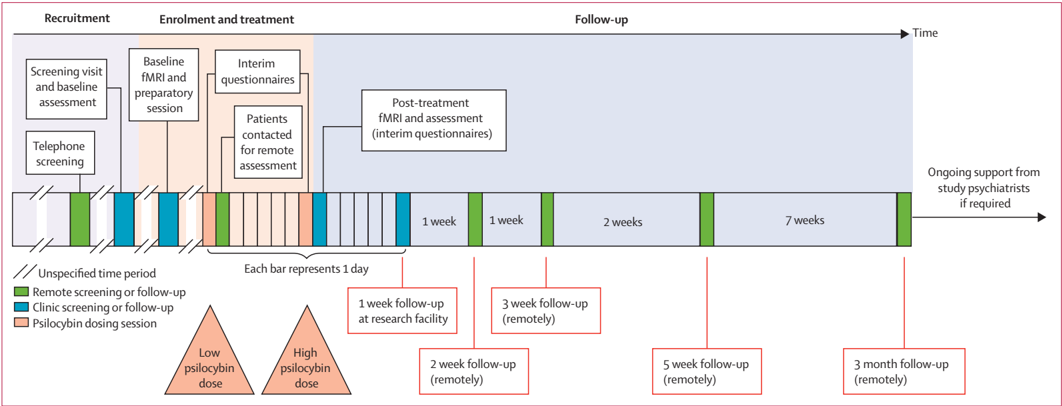
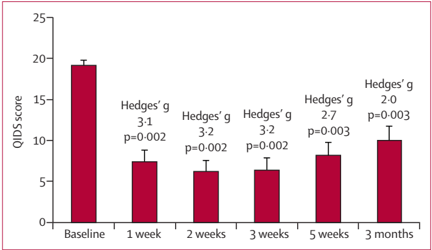
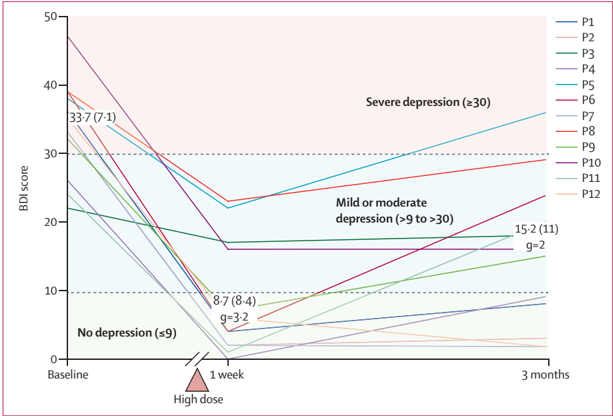
BACKGROUND: Psilocybin is a serotonin receptor agonist that occurs naturally in some mushroom species. Recent studies have assessed the therapeutic potential of psilocybin for various conditions, including end-of-life anxiety, obsessive-compulsive disorder, and smoking and alcohol dependence, with promising preliminary results. Here, we aimed to investigate the feasibility, safety, and efficacy of psilocybin in patients with unipolar treatment-resistant depression. METHODS: In this open-label feasibility trial, 12 patients (six men, six women) with moderate-to-severe, unipolar, treatment-resistant major depression received two oral doses of psilocybin (10 mg and 25 mg, 7 days apart) in a supportive setting. There was no control group. Psychological support was provided before, during, and after each session. The primary outcome measure for feasibility was patient-reported intensity of psilocybin's effects. Patients were monitored for adverse reactions during the dosing sessions and subsequent clinic and remote follow-up. Depressive symptoms were assessed with standard assessments from 1 week to 3 months after treatment, with the 16-item Quick Inventory of Depressive Symptoms (QIDS) serving as the primary efficacy outcome. This trial is registered with ISRCTN, number ISRCTN14426797. FINDINGS: Psilocybin's acute psychedelic effects typically became detectable 30-60 min after dosing, peaked 2-3 h after dosing, and subsided to negligible levels at least 6 h after dosing. Mean self-rated intensity (on a 0-1 scale) was 0·51 (SD 0·36) for the low-dose session and 0·75 (SD 0·27) for the high-dose session. Psilocybin was well tolerated by all of the patients, and no serious or unexpected adverse events occurred. The adverse reactions we noted were transient anxiety during drug onset (all patients), transient confusion or thought disorder (nine patients), mild and transient nausea (four patients), and transient headache (four patients). Relative to baseline, depressive symptoms were markedly reduced 1 week (mean QIDS difference -11·8, 95% CI -9·15 to -14·35, p=0·002, Hedges' g=3·1) and 3 months (-9·2, 95% CI -5·69 to -12·71, p=0·003, Hedges' g=2) after high-dose treatment. Marked and sustained improvements in anxiety and anhedonia were also noted. INTERPRETATION: This study provides preliminary support for the safety and efficacy of psilocybin for treatment-resistant depression and motivates further trials, with more rigorous designs, to better examine the therapeutic potential of this approach. FUNDING: Medical Research Council.
Overview
The claims and statistics of this paper haven’t been checked yet.
Free: it reads the open-access text and checks the first 5 claims that cite a source we can check. Create a free account to check every claim.
Integrity signals
Registry
Cites
Statistics
Figures
Verification
Claims the paper makes
The claims and statistics of this paper haven’t been checked yet.
Free: it reads the open-access text and checks the first 5 claims that cite a source we can check. Create a free account to check every claim.
Claims other papers make about this one
Each is checked against this paper’s own text: does it say what the citing paper says it does?
The source backs part of the claim, not all of it — or backs it for a different population, condition or comparison.
In the citing paper
“Both methods have shown potential for reducing psychopathology and both, psychedelic-assisted therapy with psilocybin and MBIs, in particular MBCT have preliminary evidence for effectiveness in chronic, treatment-resistant depression [94].”
From Mindfulness meditation and psychedelics: potential synergies and commonalities (2023) · cites this paper as [94]
Experimental — accuracy not yet measuredThe source backs part of the claim, not all of it — or backs it for a different population, condition or comparison.
In the citing paper
“Randomised clinical trials (RCTs) of psilocybin-assisted therapy demonstrated a significant reduction of depressive symptoms in terminally ill cancer patients, as well as in treatment-resistant depression (29, 30, 38).”
From Examining the Potential Synergistic Effects Between Mindfulness Training and Psychedelic-Assisted Therapy (2021) · cites this paper as [29]
Experimental — accuracy not yet measuredThe source backs part of the claim, not all of it — or backs it for a different population, condition or comparison.
In the citing paper
“Most of these studies however suffer from low methodological validity and are mostly open-label, yet they have yielded preliminary evidence for the capacity of psychedelic substances for treating addiction, depression, anxiety, and eating disorders (29–35).”
From Examining the Potential Synergistic Effects Between Mindfulness Training and Psychedelic-Assisted Therapy (2021) · cites this paper as [29]
Experimental — accuracy not yet measuredThe source backs part of the claim, not all of it — or backs it for a different population, condition or comparison.
In the citing paper
“Remarkably, these benefits were incurred even after only a single psychedelic administration and were maintained for as long as 6 months.”
From Examining the Potential Synergistic Effects Between Mindfulness Training and Psychedelic-Assisted Therapy (2021) · cites this paper as [29]
Experimental — accuracy not yet measuredThe cited source says what the claim attributes to it.
In the citing paper
“Amelioration of symptomatic depression in pilot studies of major depressive disorder, including those that compared psilocybin with escitalopram 8,9 and that investigated its use in treatment-resistant depression, 10 has suggested therapeutic potential for this agent.”
From Single-Dose Psilocybin for a Treatment-Resistant Episode of Major Depression (2022) · cites this paper as [10]
11 more claims about this paper
Create a free account to see every claim other papers make about this one.
Self-check
Percentages, sums and reported differences re-computed from the paper’s own numbers.
The self-check needs the paper’s full text.
Citations
Cites
Rush, A. J., Trivedi, M. H., Ibrahim, H. M., Carmody, T. J., Arnow, B., Klein, D. N., Markowitz, J. C., Ninan, P. T., Kornstein, S., Manber, R., et al. (2003) · Biological Psychiatry · doi:10.1016/s0006-3223(02)01866-8 · Cited by 3,829
The Economic Burden of Adults With Major Depressive Disorder in the United States (2005 and 2010)
Greenberg, P. E., Fournier, A.-A., Sisitsky, T., Pike, C. T., & Kessler, R. C. (2015) · The Journal of Clinical Psychiatry · doi:10.4088/jcp.14m09298 · Cited by 1,779
Pilot Study of Psilocybin Treatment for Anxiety in Patients With Advanced-Stage Cancer
Grob, C. S., Danforth, A. L., Chopra, G. S., Hagerty, M., McKay, C. R., Halberstadt, A. L., & Greer, G. R. (2011) · Archives of General Psychiatry · doi:10.1001/archgenpsychiatry.2010.116 · Cited by 1,206 · cited 1×
“…cantly decreased anxiety and depression scores were observed 3 and 6 months after a single dose of psilocybin in patients with anxiety related to end-stage cancer, 15 and improve ments in wellbeing lasting for more than 1 year were observed in healthy individuals given a single dose of psilocybin.”
BackgroundHuman hallucinogen research: guidelines for safety
Johnson, M., Richards, W., & Griffiths, R. (2008) · Journal of Psychopharmacology · doi:10.1177/0269881108093587 · Cited by 1,203
Neural correlates of the psychedelic state as determined by fMRI studies with psilocybin
Carhart-Harris, R. L., Erritzoe, D., Williams, T., Stone, J. M., Reed, L. J., Colasanti, A., Tyacke, R. J., Leech, R., Malizia, A. L., Murphy, K., et al. (2012) · Proceedings of the National Academy of Sciences · doi:10.1073/pnas.1119598109 · Cited by 1,172 · cited 1×
“10 Moreover, data obtained from large-scale population studies have recently challenged the view that psychedelics negatively aff ect mental health, 11–13 with one study’s fi ndings showing lower rates of psychological distress and suicidality among people who had used”
BackgroundSelf-citationPsilocybin-assisted treatment for alcohol dependence: A proof-of-concept study
Bogenschutz, M. P., Forcehimes, A. A., Pommy, J. A., Wilcox, C. E., Barbosa, P., & Strassman, R. J. (2015) · Journal of Psychopharmacology · doi:10.1177/0269881114565144 · Cited by 1,151 · cited 1×
“19 Signifi cantly decreased anxiety and depression scores were observed 3 and 6 months after a single dose of psilocybin in patients with anxiety related to end-stage cancer, 15 and improve ments in wellbeing lasting for more than 1 year were observed in healthy individuals given a single dose of…”
BackgroundPilot study of the 5-HT 2A R agonist psilocybin in the treatment of tobacco addiction
Johnson, M. W., Garcia-Romeu, A., Cosimano, M. P., & Griffiths, R. R. (2014) · Journal of Psychopharmacology · doi:10.1177/0269881114548296 · Cited by 914
Griffiths, R., Richards, W., Johnson, M., McCann, U., & Jesse, R. (2008) · Journal of Psychopharmacology · doi:10.1177/0269881108094300 · Cited by 905
Safety, tolerability, and efficacy of psilocybin in 9 patients with obsessive-compulsive disorder
Moreno, F. A., Wiegand, C. B., Taitano, E. K., & Delgado, P. L. (2006) · The Journal of Clinical Psychiatry · doi:10.4088/jcp.v67n1110 · Cited by 789
(2001) · PubMed · Cited by 780
Cited by
Griffiths, R. R., Johnson, M. W., Carducci, M. A., Umbricht, A., Richards, W. A., Richards, B. D., Cosimano, M. P., & Klinedinst, M. A. (2016) · Journal of Psychopharmacology · doi:10.1177/0269881116675513 · Cited by 2,201
“Also relevant, a recent open-label pilot study in 12 patients with treatment-resistant depression showed marked reductions in depressive symptoms 1 week and 3 months after administration of 10 and 25 mg of psilocybin in two sessions separated by 7 days (Carhart-Harris et al., 2016).”
BackgroundRoss, S., Bossis, A., Guss, J., Agin-Liebes, G., Malone, T., Cohen, B., Mennenga, S. E., Belser, A., Kalliontzi, K., Babb, J., et al. (2016) · Journal of Psychopharmacology · doi:10.1177/0269881116675512 · Cited by 1,698
“In two recently published open-label trials, one using a single dose of ayahuasca (Osorio et al., 2015) and the other using two doses of oral psilocybin (Carhart-Harris et al., 2016), acute and enduring anti-depressant effects were reported.”
BackgroundResultTrial of Psilocybin versus Escitalopram for Depression
Carhart-Harris, R., Giribaldi, B., Watts, R., Baker-Jones, M., Murphy-Beiner, A., Murphy, R., Martell, J., Blemings, A., Erritzoe, D., & Nutt, D. J. (2021) · New England Journal of Medicine · doi:10.1056/nejmoa2032994 · Cited by 1,391
Self-citationEffects of Psilocybin-Assisted Therapy on Major Depressive Disorder: A Randomized Clinical Trial
Davis, A. K., Barrett, F. S., May, D. G., Cosimano, M. P., Sepeda, N. D., Johnson, M. W., Finan, P. H., & Griffiths, R. R. (2021) · JAMA Psychiatry · doi:10.1001/jamapsychiatry.2020.3285 · Cited by 1,301
Psychedelics promote structural and functional neural plasticity
Ly, C., Greb, A. C., Cameron, L. P., Wong, J. M., Barragan, E. V., Wilson, P. C., Burbach, K. F., Soltanzadeh Zarandi, S., Sood, A., Paddy, M. R., et al. (2018) · Cell Reports · doi:10.1016/j.celrep.2018.05.022 · Cited by 1,207
REBUS and the anarchic brain: Toward a unified model of the brain action of psychedelics
Carhart-Harris, R. L., & Friston, K. J. (2019) · Pharmacological Reviews · doi:10.1124/pr.118.017160 · Cited by 1,180
“It has previously been suggested and demonstrated (Gouzoulis et al., 1994; Carhart-Harris et al., 2016b) that the acute psychedelic experience is a much better model of the early (and perhaps acute) symptoms of an incipient psychosis than symptoms associated with chronic schizophrenia, presumably…”
BackgroundResultInfluentialSingle-Dose Psilocybin for a Treatment-Resistant Episode of Major Depression
Goodwin, G. M., Aaronson, S. T., Alvarez, O., Arden, P. C., Baker, A., Bennett, J. C., Bird, C., Blom, R. E., Brennan, C., Brusch, D., et al. (2022) · New England Journal of Medicine · doi:10.1056/nejmoa2206443 · Cited by 1,167
“of participants (%) 16 (20) 4 (5) 8 (10)”
Self-citationPsilocybin with psychological support for treatment-resistant depression: six-month follow-up
Carhart-Harris, R. L., Bolstridge, M., Day, C. M. J., Rucker, J., Watts, R., Erritzoe, D. E., Kaelen, M., Giribaldi, B., Bloomfield, M., Pilling, S., et al. (2018) · Psychopharmacology · doi:10.1007/s00213-017-4771-x · Cited by 970
“Recent studies (Griffiths et al. 2016; Ross et al. 2016; Carhart-Harris et al. 2016), including the present one, help demonstrate the feasibility of treating patients with major depressive disorder with psilocybin plus psychological support.”
BackgroundMethodResultInfluentialSelf-citationPalhano-Fontes, F., Barreto, D., Onias, H., Andrade, K. C., Novaes, M. M., Pessoa, J. A., Mota-Rolim, S. A., Osório, F. L., Sanches, R., dos Santos, R. G., et al. (2019) · Psychological Medicine · doi:10.1017/s0033291718001356 · Cited by 852
“substances affect the brain, and also probing their potential in treating different psychiatric conditions, including mood disorders (Grob et al., 2011; Osório et al., 2015; Carhart-Harris et al., 2016; Griffiths et al., 2016; Ross et al., 2016; Sanches et al., 2016).”
BackgroundResultInfluentialRoseman, L., Nutt, D. J., & Carhart-Harris, R. L. (2018) · Frontiers in Pharmacology · doi:10.3389/fphar.2017.00974 · Cited by 808
Self-citationSerotonin and brain function: a tale of two receptors
Carhart-Harris, R., & Nutt, D. (2017) · Journal of Psychopharmacology · doi:10.1177/0269881117725915 · Cited by 739
“SSRIs are established evidence-based treatments for anxiety and major depression (Baldwin et al., 2016; Hieronymus et al., 2016), whereas psychedelics are experimental medicines in an early phase of development (Carhart-Harris and Goodwin, 2017; Carhart-Harris et al., 2016).”
BackgroundMethodResultInfluentialSelf-citationBogenschutz, M. P., Ross, S., Bhatt, S., Baron, T., Forcehimes, A. A., Laska, E., Mennenga, S. E., O’Donnell, K., Owens, L. T., Podrebarac, S., et al. (2022) · JAMA Psychiatry · doi:10.1001/jamapsychiatry.2022.2096 · Cited by 711
The Therapeutic Potential of Psychedelic Drugs: Past, Present, and Future
Carhart-Harris, R. L., & Goodwin, G. M. (2017) · Neuropsychopharmacology · doi:10.1038/npp.2017.84 · Cited by 706
“…clinical development of psychedelics, RLC-H sees it as a potentially exploitable component—especially as it has been shown to be predictive of long-term clinical outcomes (eg, in Johnson et al, 2014; Bogenschutz et al, 2015; Griffiths et al, 2016; Ross et al, 2016; Carhart-Harris et al, 2016a,b).”
BackgroundInfluentialSelf-citationPsychedelics and Psychedelic-Assisted Psychotherapy
Reiff, C. M., Richman, E. E., Nemeroff, C. B., Carpenter, L. L., Widge, A. S., Rodriguez, C. I., Kalin, N. H., McDonald, W. M., & and the Work Group on Biomarkers and Novel Treatments, A. D. O. T. A. P. A. C. O. R. (2020) · American Journal of Psychiatry · doi:10.1176/appi.ajp.2019.19010035 · Cited by 649
“(23) conducted an openlabel pilot study evaluating the feasibility and efficacy of”
BackgroundPsilocybin induces rapid and persistent growth of dendritic spines in frontal cortex in vivo
Shao, L.-X., Liao, C., Gregg, I., Davoudian, P. A., Savalia, N. K., Delagarza, K., & Kwan, A. C. (2021) · Neuron · doi:10.1016/j.neuron.2021.06.008 · Cited by 626
Psychedelic drugs: neurobiology and potential for treatment of psychiatric disorders
Vollenweider, F. X., & Preller, K. H. (2020) · Nature Reviews Neuroscience · doi:10.1038/s41583-020-0367-2 · Cited by 570
Watts, R., Day, C., Krzanowski, J., Nutt, D., & Carhart-Harris, R. (2017) · Journal of Humanistic Psychology · doi:10.1177/0022167817709585 · Cited by 589
Self-citationPsilocybin for treatment-resistant depression: fMRI-measured brain mechanisms
Carhart-Harris, R. L., Roseman, L., Bolstridge, M., Demetriou, L., Pannekoek, J. N., Wall, M. B., Tanner, M., Kaelen, M., McGonigle, J., Murphy, K., et al. (2017) · Scientific Reports · doi:10.1038/s41598-017-13282-7 · Cited by 587
“…accompanying psychological support can be used safely to treat a range of psychiatric conditions 1 , including: end-of-life anxiety and depression 3– 5 , alcohol and tobacco addiction 6,7 , obsessive compulsive disorder 8 , and most recently from our group, treatment-resistant major depression 9 .”
Self-citationThe subjective effects of psychedelics are necessary for their enduring therapeutic effects
Yaden, D. B., & Griffiths, R. R. (2021) · ACS Pharmacology & Translational Science · doi:10.1021/acsptsci.0c00194 · Cited by 541
Single-Dose Psilocybin Treatment for Major Depressive Disorder: A Randomized Clinical Trial
Raison, C. L., Sanacora, G., Woolley, J., Heinzerling, K., Dunlop, B. W., Brown, R. T., Kakar, R., Hassman, M., Trivedi, R. P., Robison, R., et al. (2023) · JAMA · doi:10.1001/jama.2023.14530 · Cited by 545
Johnson, M. W., Hendricks, P. S., Barrett, F. S., & Griffiths, R. R. (2019) · Pharmacology & Therapeutics · doi:10.1016/j.pharmthera.2018.11.010 · Cited by 506
The entropic brain - revisited
Carhart-Harris, R. L. (2018) · Neuropharmacology · doi:10.1016/j.neuropharm.2018.03.010 · Cited by 522
Self-citationMadsen, M. K., Fisher, P. M., Burmester, D., Dyssegaard, A., Stenbæk, D. S., Kristiansen, S., Johansen, S. S., Lehel, S., Linnet, K., Svarer, C., et al. (2019) · Neuropsychopharmacology · doi:10.1038/s41386-019-0324-9 · Cited by 517
“Recent clinical trials have shown that psilocybin may be an effective treatment for neuropsychiatric disorders, including treatment-resistant major depressive disorder (MDD) [3], cancerrelated anxiety and depression [4, 5], and for addiction to nicotine [6] and alcohol [7].”
BackgroundHartogsohn, I. (2016) · Journal of Psychopharmacology · doi:10.1177/0269881116677852 · Cited by 483
Prognosis and improved outcomes in major depression: a review
Kraus, C., Kadriu, B., Lanzenberger, R., Zarate, C. A., & Kasper, S. (2019) · Translational Psychiatry · doi:10.1038/s41398-019-0460-3 · Cited by 482
Structure of a Hallucinogen-Activated Gq-Coupled 5-HT2A Serotonin Receptor
Kim, K., Che, T., Panova, O., DiBerto, J. F., Lyu, J., Krumm, B. E., Wacker, D., Robertson, M. J., Seven, A. B., Nichols, D. E., et al. (2020) · Cell · doi:10.1016/j.cell.2020.08.024 · Cited by 481
“Psilocybin and LSD have emerged as potential therapeutics for a number of neuropsychiatric conditions including depression, anxiety, substance abuse, and cluster headaches (Carhart-Harris et al., 2016; Bogenschutz, 2013; Gasser et al., 2015; Sewell et al., 2006; Nutt et al., 2020).”
BackgroundManagement of Treatment-Resistant Depression: Challenges and Strategies
Voineskos, D., Daskalakis, Z. J., & Blumberger, D. M. (2020) · Neuropsychiatric Disease and Treatment · doi:10.2147/ndt.s198774 · Cited by 446
“…an initial low dose to assess safety and a subsequent high dose (25mg) one week later, despite the psychedelic effects lasting approximately 6 hrs. 16 In this study the substance was relatively well tolerated, although transient anxiety was frequently experienced, as was mild tachycardia.”
Preller, K. H., Burt, J. B., Ji, J. L., Schleifer, C. H., Adkinson, B. D., Stämpfli, P., Seifritz, E., Repovs, G., Krystal, J. H., Murray, J. D., et al. (2018) · eLife · doi:10.7554/elife.35082 · Cited by 390
“However, renewed interest in the potentially beneficial clinical effects of psychedelics (Carhart-Harris et al., 2016a; Gasser et al., 2014; Griffiths et al., 2016) warrants a better understanding of their underlying neuropharmacology.”
BackgroundDavis, A. K., Barrett, F. S., & Griffiths, R. R. (2020) · Journal of Contextual Behavioral Science · doi:10.1016/j.jcbs.2019.11.004 · Cited by 375
Emotions and brain function are altered up to one month after a single high dose of psilocybin.
Barrett, F. S., Doss, M. K., Sepeda, N. D., Pekar, J. J., & Griffiths, R. R. (2020) · Scientific Reports · doi:10.1038/s41598-020-59282-y · Cited by 375
Psychedelics as Medicines: An Emerging New Paradigm
Nichols, D., Johnson, M., & Nichols, C. (2017) · Clinical Pharmacology & Therapeutics · doi:10.1002/cpt.557 · Cited by 370
Barrett, F. S., Bradstreet, M. P., Leoutsakos, J.-M. S., Johnson, M. W., & Griffiths, R. R. (2016) · Journal of Psychopharmacology · doi:10.1177/0269881116678781 · Cited by 366
Doss, M. K., Považan, M., Rosenberg, M. D., Sepeda, N. D., Davis, A. K., Finan, P. H., Smith, G. S., Pekar, J. J., Barker, P. B., Griffiths, R. R., et al. (2021) · Translational Psychiatry · doi:10.1038/s41398-021-01706-y · Cited by 356
“, lasting weeks to months after the acute effects [2, 3] and at least as effective as a SSRI [7]).”
BackgroundJohnson, M. W., Griffiths, R. R., Hendricks, P. S., & Henningfield, J. E. (2018) · Neuropharmacology · doi:10.1016/j.neuropharm.2018.05.012 · Cited by 354
von Rotz, R., Schindowski, E. M., Jungwirth, J., Schuldt, A., Rieser, N. M., Zahoranszky, K., Seifritz, E., Nowak, A., Nowak, P., Jäncke, L., et al. (2023) · eClinicalMedicine · doi:10.1016/j.eclinm.2022.101809 · Cited by 354
Andersen, K. A. A., Carhart‐Harris, R., Nutt, D. J., & Erritzoe, D. (2021) · Acta Psychiatrica Scandinavica · doi:10.1111/acps.13249 · Cited by 347
Self-citationPsychiatry & the psychedelic drugs. Past, present & future
Rucker, J. J. H., Iliff, J., & Nutt, D. J. (2018) · Neuropharmacology · doi:10.1016/j.neuropharm.2017.12.040 · Cited by 343
“…headache responsive to simple analgesia No increases in objective bothersome visual effects at 6 months volunteers focussing on neuroimaging (Carhart-Harris et al., 2012, 2016b; Daumann et al., 2010; Muthukumaraswamy et al., 2013; Palhano-Fontes et al., 2015; Preller et al., 2017; Riba et…”
BackgroundSelf-citationAdverse effects of psychedelics: From anecdotes and misinformation to systematic science
Schlag, A. K., Aday, J., Salam, I., Neill, J. C., & Nutt, D. J. (2022) · Journal of Psychopharmacology · doi:10.1177/02698811211069100 · Cited by 325
“…treatment (combined with psychotherapy) for obsessive compulsive disorder (OCD) (Moreno et al., 2006), treatment-resistant depression (TRD) (Carhart-Harris et al., 2016), smoking cessation (Johnson et al., 2014) and alcoholism (Bogenschutz et al., 2015), leading to an increasing body of…”
BackgroundInfluentialSelf-citationBlinding and expectancy confounds in psychedelic randomized controlled trials
Muthukumaraswamy, S. D., Forsyth, A., & Lumley, T. (2021) · Expert Review of Clinical Pharmacology · doi:10.1080/17512433.2021.1933434 · Cited by 324
Holze, F., Gasser, P., Müller, F., Dolder, P. C., & Liechti, M. E. (2023) · Biological Psychiatry · doi:10.1016/j.biopsych.2022.08.025 · Cited by 318
“org/journal sizes were comparable to this study, whereas very high and higher effect sizes than those herein were reported for reductions in depression in studies that used psilocybin without a placebo control group (17,18).”
Belser, A. B., Agin-Liebes, G., Swift, T. C., Terrana, S., Devenot, N., Friedman, H. L., Guss, J., Bossis, A., & Ross, S. (2017) · Journal of Humanistic Psychology · doi:10.1177/0022167817706884 · Cited by 311
“…levels of anxiety among cancer patients (Grob et al., 2011), reductions in depressive symptoms among patients with treatment-resistant depression (Carhart-Harris et al., 2016), positive changes in personality, such as increases in openness to new experience (MacLean, Johnson, & Griffiths, 2011),…”
Psychedelics, mystical experience, and therapeutic efficacy: a systematic review
Ko, K., Knight, G., Rucker, J. J., & Cleare, A. J. (2022) · Frontiers in Psychiatry · doi:10.3389/fpsyt.2022.917199 · Cited by 306
Self-citationPotential Therapeutic Effects of Psilocybin
Johnson, M. W., & Griffiths, R. R. (2017) · Neurotherapeutics · doi:10.1007/s13311-017-0542-y · Cited by 296
“The single open-label study of treatment-resistant depression outside the context of cancer provides initial preliminary evidence that persisting antidepressant effects of psilocybin might not be limited to those with cancer [42].”
BackgroundEffective connectivity changes in LSD-induced altered states of consciousness in humans
Preller, K. H., Razi, A., Zeidman, P., Stämpfli, P., Friston, K. J., & Vollenweider, F. X. (2019) · Proceedings of the National Academy of Sciences · doi:10.1073/pnas.1815129116 · Cited by 292
“Because it has been reported that patients suffering from major depression disorder show increased thalamo-temporal connectivity (53), attenuating effective connectivity from the thalamus to the Temp might additionally represent a neurobiological mechanism by which psychedelics potentially exert their antidepressive p…”
BackgroundDynamic coupling of whole-brain neuronal and neurotransmitter systems
Kringelbach, M. L., Cruzat, J., Cabral, J., Knudsen, G. M., Carhart-Harris, R., Whybrow, P. C., Logothetis, N. K., & Deco, G. (2020) · Proceedings of the National Academy of Sciences · doi:10.1073/pnas.1921475117 · Cited by 284
Self-citationNeuroplasticity as a convergent mechanism of ketamine and classical psychedelics
Aleksandrova, L. R., & Phillips, A. G. (2021) · Trends in Pharmacological Sciences · doi:10.1016/j.tips.2021.08.003 · Cited by 276
Psilocybin desynchronizes the human brain
Siegel, J. S., Subramanian, S., Perry, D., Kay, B. P., Gordon, E. M., Laumann, T. O., Reneau, T. R., Metcalf, N. V., Chacko, R. V., Gratton, C., et al. (2024) · Nature · doi:10.1038/s41586-024-07624-5 · Cited by 269
Self-citationClassic Hallucinogens and Mystical Experiences: Phenomenology and Neural Correlates
Barrett, F. S., & Griffiths, R. R. (2017) · Current Topics in Behavioral Neurosciences · doi:10.1007/7854_2017_474 · Cited by 273
“…classic hallucinogens, BOLD and electrocortical data show decreased activity and low-frequency power localized to DMN areas (Riba et al. 2002, 2004; Carhart-Harris et al. 2012, 2016; Muthukumaraswamy et al. 2013), which may be related to a decrease in long-range neural communication between these…”
InfluentialThe hidden therapist: evidence for a central role of music in psychedelic therapy
Kaelen, M., Giribaldi, B., Raine, J., Evans, L., Timmerman, C., Rodriguez, N., Roseman, L., Feilding, A., Nutt, D., & Carhart-Harris, R. (2018) · Psychopharmacology · doi:10.1007/s00213-017-4820-5 · Cited by 267
“This studywas part of a larger study assessing safety and efficacy for using psilocybin to treat depression (Carhart-Harris et al. 2016a).”
BackgroundInfluentialSelf-citationThe use of the psychological flexibility model to support psychedelic assisted therapy
Watts, R., & Luoma, J. B. (2020) · Journal of Contextual Behavioral Science · doi:10.1016/j.jcbs.2019.12.004 · Cited by 269
The future of rodent models in depression research
Gururajan, A., Reif, A., Cryan, J. F., & Slattery, D. A. (2019) · Nature Reviews Neuroscience · doi:10.1038/s41583-019-0221-6 · Cited by 269
Psychedelics as anti-inflammatory agents
Flanagan, T. W., & Nichols, C. D. (2018) · International Review of Psychiatry · doi:10.1080/09540261.2018.1481827 · Cited by 267
“This study, however, was smaller and open label, with no placebo-control group (Carhart-Harris et al., 2016a, 2017a).”
BackgroundMethodEffects of psilocybin therapy on personality structure
Erritzoe, D., Roseman, L., Nour, M. M., MacLean, K., Kaelen, M., Nutt, D. J., & Carhart‐Harris, R. L. (2018) · Acta Psychiatrica Scandinavica · doi:10.1111/acps.12904 · Cited by 267
“TRD affects about 30% of patients with major depression and up to 60% if TRD is defined as absence of remission (7, 10).”
BackgroundMethodInfluentialSelf-citationBarnes, N. M., Ahern, G. P., Becamel, C., Bockaert, J., Camilleri, M., Chaumont-Dubel, S., Claeysen, S., Cunningham, K. A., Fone, K. C., Gershon, M., et al. (2021) · Pharmacological Reviews · doi:10.1124/pr.118.015552 · Cited by 263
Inclusion of people of color in psychedelic-assisted psychotherapy: a review of the literature.
Michaels, T. I., Purdon, J., Collins, A., & Williams, M. T. (2018) · BMC Psychiatry · doi:10.1186/s12888-018-1824-6 · Cited by 265
Psychedelics and connectedness
Carhart-Harris, R. L., Erritzoe, D., Haijen, E., Kaelen, M., & Watts, R. (2018) · Psychopharmacology · doi:10.1007/s00213-017-4701-y · Cited by 265
“To our knowledge, the concept was first given clear emphasis in psychedelic therapy by Watts et al. 2017, in a qualitative research paper linked to our recent psilocybin for treatmentresistant depression (TRD) clinical trial (Carhart-Harris et al. 2016)—see also (Belser et al. 2017).”
BackgroundSelf-citationDe Gregorio, D., Aguilar-Valles, A., Preller, K. H., Heifets, B. D., Hibicke, M., Mitchell, J., & Gobbi, G. (2021) · The Journal of Neuroscience · doi:10.1523/jneurosci.1659-20.2020 · Cited by 259
“Research has also suggested potential antidepressant and mood-modulating properties of psilocybin and LSD, respectively, as well as the ability of these compounds to modulate functional brain connectivity (Carhart-Harris et al., 2016a, 2017).”
Reviewing the Potential of Psychedelics for the Treatment of PTSD
Krediet, E., Bostoen, T., Breeksema, J., van Schagen, A., Passie, T., & Vermetten, E. (2020) · International Journal of Neuropsychopharmacology · doi:10.1093/ijnp/pyaa018 · Cited by 260
“Psilocybin has been studied for the treatment of depression (Carhart-Harris et al., 2016, 2017), tobacco and alcohol addiction (Johnson et al., 2014, 2017; Bogenschutz et al., 2015, 2018), obsessive-compulsive disorder (Moreno et al., 2006), and depression and anxiety in patients with…”
BackgroundMason, N. L., Kuypers, K. P. C., Müller, F., Reckweg, J., Tse, D. H. Y., Toennes, S. W., Hutten, N. R. P. W., Jansen, J. F. A., Stiers, P., Feilding, A., et al. (2020) · Neuropsychopharmacology · doi:10.1038/s41386-020-0718-8 · Cited by 258
“There is growing evidence that psychedelics can provide therapeutic relief for individuals suffering from increasingly common and difficult to treat disorders such as depression, anxiety, addiction, and post-traumatic stress disorders [4, 9, 11, 88, 89].”
BackgroundSelf-citationLong-term effects of psychedelic drugs: A systematic review
Aday, J. S., Mitzkovitz, C. M., Bloesch, E. K., Davoli, C. C., & Davis, A. K. (2020) · Neuroscience & Biobehavioral Reviews · doi:10.1016/j.neubiorev.2020.03.017 · Cited by 257
Classical psychedelics for the treatment of depression and anxiety: A systematic review
Muttoni, S., Ardissino, M., & John, C. (2019) · Journal of Affective Disorders · doi:10.1016/j.jad.2019.07.076 · Cited by 256
Therapeutic alliance and rapport modulate responses to psilocybin assisted therapy for depression
Murphy, R., Kettner, H., Zeifman, R., Giribaldi, B., Kartner, L., Martell, J., Read, T., Murphy-Beiner, A., Baker-Jones, M., Nutt, D., et al. (2022) · Frontiers in Pharmacology · doi:10.3389/fphar.2021.788155 · Cited by 250
Self-citationPsychedelic-Assisted Psychotherapy: A Paradigm Shift in Psychiatric Research and Development
Schenberg, E. E. (2018) · Frontiers in Pharmacology · doi:10.3389/fphar.2018.00733 · Cited by 240
The Therapeutic Potential of Psilocybin
Lowe, H., Toyang, N., Steele, B., Valentine, H., Grant, J., Ali, A., Ngwa, W., & Gordon, L. (2021) · Molecules · doi:10.3390/molecules26102948 · Cited by 242
“Subjective effects may last between 3 and 6 h [5], after which effects subside to negligible levels [41].”
BackgroundSartori, S. B., & Singewald, N. (2019) · Pharmacology & Therapeutics · doi:10.1016/j.pharmthera.2019.107402 · Cited by 236
Modern clinical research on LSD
Liechti, M. E. (2017) · Neuropsychopharmacology · doi:10.1038/npp.2017.86 · Cited by 236
“The intravenous dose of 75 μg LSD that was used in the London studies likely corresponds to the oral dose of 100 μg that was used in the Basel and Zurich studies, based on the comparable effects on the 5D-ASC (Carhart-Harris et al, 2016b; Liechti et al, 2017) (Figure 1).”
BackgroundMethodResultInfluentialIncreased amygdala responses to emotional faces after psilocybin for treatment-resistant depression
Roseman, L., Demetriou, L., Wall, M. B., Nutt, D. J., & Carhart-Harris, R. L. (2018) · Neuropharmacology · doi:10.1016/j.neuropharm.2017.12.041 · Cited by 230
“(Two patients’ testimonies from recent psilocybin for TRD trial) (Carhart-Harris et al., 2016; Watts et al., 2017).”
Self-citationCentral 5-HT receptors and their function; present and future
Sharp, T., & Barnes, N. M. (2020) · Neuropharmacology · doi:10.1016/j.neuropharm.2020.108155 · Cited by 231
Psychedelics in Psychiatry: Neuroplastic, Immunomodulatory, and Neurotransmitter Mechanisms
Inserra, A., De Gregorio, D., & Gobbi, G. (2021) · Pharmacological Reviews · doi:10.1124/pharmrev.120.000056 · Cited by 232
George, J. R., Michaels, T. I., Sevelius, J., & Williams, M. T. (2019) · Journal of Psychedelic Studies · doi:10.1556/2054.2019.015 · Cited by 230
“Psilocybin-assisted therapy has been demonstrated to decrease symptoms of depression (Carhart-Harris, 2015; Carhart-Harris et al., 2016; Ross et al., 2016) and anxiety (Grob et al., 2011; Moreno, Wiegand, Taitano, & Delgado, 2006) and assist in the treatment of addiction (Bogenschutz et al., 2015;…”
BackgroundThe experimental effects of psilocybin on symptoms of anxiety and depression: A meta-analysis
Goldberg, S. B., Pace, B. T., Nicholas, C. R., Raison, C. L., & Hutson, P. R. (2020) · Psychiatry Research · doi:10.1016/j.psychres.2020.112749 · Cited by 229
Psychedelics alter metaphysical beliefs
Timmermann, C., Kettner, H., Letheby, C., Roseman, L., Rosas, F. E., & Carhart-Harris, R. L. (2021) · Scientific Reports · doi:10.1038/s41598-021-01209-2 · Cited by 218
Self-citationdos Santos, R. G., Bouso, J. C., Alcázar-Córcoles, M. Á., & Hallak, J. E. C. (2018) · Expert Review of Clinical Pharmacology · doi:10.1080/17512433.2018.1511424 · Cited by 227
“Indeed, a recent open-label study showed that a single dose of psilocybin induced rapid (1 week) and sustained (3 months) antidepressive and anxiolytic effects in 12 patients with unipolar treatment-resistant depression [76].”
BackgroundHolze, F., Ley, L., Müller, F., Becker, A. M., Straumann, I., Vizeli, P., Kuehne, S. S., Roder, M. A., Duthaler, U., Kolaczynska, K. E., et al. (2022) · Neuropsychopharmacology · doi:10.1038/s41386-022-01297-2 · Cited by 226
“dosing is likely to be used in therapeutic settings [2, 41].”
BackgroundPsychedelics, personality and political perspectives.
Nour, M. M., Evans, L., & Carhart-Harris, R. L. (2017) · Journal of Psychoactive Drugs · doi:10.1080/02791072.2017.1312643 · Cited by 226
Self-citationCessation and reduction in alcohol consumption and misuse after psychedelic use
Garcia-Romeu, A., Davis, A. K., Erowid, F., Erowid, E., Griffiths, R. R., & Johnson, M. W. (2019) · Journal of Psychopharmacology · doi:10.1177/0269881119845793 · Cited by 225
“…initial clinical trials have shown robust and rapid-acting anxiolytic and antidepressant effects in individuals with treatment-resistant depression (Carhart-Harris et al., 2016, 2017; dos Santos et al., 2016; Palhano-Fontes et al., 2019), as well as patients with symptoms of anxiety or depression…”
BackgroundBreeksema, J. J., Niemeijer, A. R., Krediet, E., Vermetten, E., & Schoevers, R. A. (2020) · CNS Drugs · doi:10.1007/s40263-020-00748-y · Cited by 224
Dynamical exploration of the repertoire of brain networks at rest is modulated by psilocybin
Lord, L.-D., Expert, P., Atasoy, S., Roseman, L., Rapuano, K., Lambiotte, R., Nutt, D. J., Deco, G., Carhart-Harris, R. L., Kringelbach, M. L., et al. (2019) · NeuroImage · doi:10.1016/j.neuroimage.2019.05.060 · Cited by 224
“…the recently demonstrated therapeutic potential of psilocybin (and other indolealkylamines) for disorders including depression, anxiety and addiction (McKenna et al., 1990; Griffiths et al., 2006; Grob et al., 2011; Meltzer et al., 2012; Johnson et al., 2014; Carhart-Harris et al., 2016).”
BackgroundSelf-citationde la Fuente Revenga, M., Zhu, B., Guevara, C. A., Naler, L. B., Saunders, J. M., Zhou, Z., Toneatti, R., Sierra, S., Wolstenholme, J. T., Beardsley, P. M., et al. (2021) · Cell Reports · doi:10.1016/j.celrep.2021.109836 · Cited by 224
“However, recent pilot clinical trials suggest that psychedelics may represent a promising long-lasting treatment for patients with depression and other psychiatric conditions (Carhart-Harris et al., 2016; Griffiths et al., 2016; Davis et al., 2021; Carhart-Harris et al., 2021).”
The Current Status of Psychedelics in Psychiatry
Nutt, D., & Carhart-Harris, R. (2021) · JAMA Psychiatry · doi:10.1001/jamapsychiatry.2020.2171 · Cited by 223
Self-citationPharmacological, neural, and psychological mechanisms underlying psychedelics: A critical review
van Elk, M., & Yaden, D. B. (2022) · Neuroscience & Biobehavioral Reviews · doi:10.1016/j.neubiorev.2022.104793 · Cited by 221
DMT Models the Near-Death Experience
Timmermann, C., Roseman, L., Williams, L., Erritzoe, D., Martial, C., Cassol, H., Laureys, S., Nutt, D., & Carhart-Harris, R. (2018) · Frontiers in Psychology · doi:10.3389/fpsyg.2018.01424 · Cited by 220
“, 2017) and nature relatedness (Lyons and Carhart-Harris, 2018), significant clinical improvements in depressed patients (Osório et al., 2015; Carhart-Harris et al., 2016; Palhano-Fontes et al., 2018) and recovering addicts (Johnson et al.”
BackgroundSelf-citationThe role of dissociation in ketamine’s antidepressant effects
Ballard, E. D., & Zarate, C. A. (2020) · Nature Communications · doi:10.1038/s41467-020-20190-4 · Cited by 220
Kettner, H., Rosas, F. E., Timmermann, C., Kärtner, L., Carhart-Harris, R. L., & Roseman, L. (2021) · Frontiers in Pharmacology · doi:10.3389/fphar.2021.623985 · Cited by 221
“, 2013), depression (Carhart-Harris et al., 2016; Palhano-Fontes et al., 2018), and end-of-life anxiety (Grob et al.”
BackgroundSelf-citationKuypers, K. P., Ng, L., Erritzoe, D., Knudsen, G. M., Nichols, C. D., Nichols, D. E., Pani, L., Soula, A., & Nutt, D. (2019) · Journal of Psychopharmacology · doi:10.1177/0269881119857204 · Cited by 215
Self-citationAtasoy, S., Roseman, L., Kaelen, M., Kringelbach, M. L., Deco, G., & Carhart-Harris, R. L. (2017) · Scientific Reports · doi:10.1038/s41598-017-17546-0 · Cited by 214
“Such an action may explain the increasing body of evidence supporting the therapeutic potential of psychedelic drugs for treating disorders such as OCD (65), depression (66, 67) and addictions (68).”
Self-citationMertens, L. J., Wall, M. B., Roseman, L., Demetriou, L., Nutt, D. J., & Carhart-Harris, R. L. (2020) · Journal of Psychopharmacology · doi:10.1177/0269881119895520 · Cited by 208
“The full study procedure is reported in Carhart-Harris et al. (2016a, 2018a) and Roseman et al. (2018).”
BackgroundMethodSelf-citationHibicke, M., Landry, A. N., Kramer, H. M., Talman, Z. K., & Nichols, C. D. (2020) · ACS Chemical Neuroscience · doi:10.1021/acschemneuro.9b00493 · Cited by 205
Clinical applications of hallucinogens: a review
Garcia-Romeu, A., Kersgaard, B., & Addy, P. H. (2016) · Experimental and Clinical Psychopharmacology · doi:10.1037/pha0000084 · Cited by 201
“%) participants at 3 months after high-dose psilocybin administration, suggesting psilocybin may function as a rapid acting antidepressant with sustained therapeutic benefits (Carhart-Harris et al., 2016).”
BackgroundMethodInfluentialRaval, N. R., Johansen, A., Donovan, L. L., Ros, N. F., Ozenne, B., Hansen, H. D., & Knudsen, G. M. (2021) · International Journal of Molecular Sciences · doi:10.3390/ijms22020835 · Cited by 200
“A follow-up seven days after a psilocybin intervention is done because this is when depressive scores have been reported to be the lowest [6].”
InfluentialSampedro, F., de la Fuente Revenga, M., Valle, M., Roberto, N., Domínguez-Clavé, E., Elices, M., Luna, L. E., Crippa, J. A. S., Hallak, J. E. C., de Araujo, D. B., et al. (2017) · International Journal of Neuropsychopharmacology · doi:10.1093/ijnp/pyx036 · Cited by 200
Self-citationRaval, N. R., Johansen, A., Donovan, L. L., Ros, N. F., Ozenne, B., Hansen, H. D., & Knudsen, G. M. (2020) · doi:10.20944/preprints202011.0742.v1 · Cited by 200
Models of psychedelic drug action: modulation of cortical-subcortical circuits
Doss, M. K., Madden, M. B., Gaddis, A., Nebel, M. B., Griffiths, R. R., Mathur, B. N., & Barrett, F. S. (2022) · Brain · doi:10.1093/brain/awab406 · Cited by 199
Alterations of consciousness and mystical-type experiences after acute LSD in humans
Liechti, M. E., Dolder, P. C., & Schmid, Y. (2017) · Psychopharmacology · doi:10.1007/s00213-016-4453-0 · Cited by 198
Learning to Let Go: A Cognitive-Behavioral Model of How Psychedelic Therapy Promotes Acceptance
Wolff, M., Evens, R., Mertens, L. J., Koslowski, M., Betzler, F., Gründer, G., & Jungaberle, H. (2020) · Frontiers in Psychiatry · doi:10.3389/fpsyt.2020.00005 · Cited by 194
The promises and perils of psychedelic pharmacology for psychiatry
McClure-Begley, T. D., & Roth, B. L. (2022) · Nature Reviews Drug Discovery · doi:10.1038/s41573-022-00421-7 · Cited by 194
Must Psilocybin Always “Assist Psychotherapy”?
Goodwin, G. M., Malievskaia, E., Fonzo, G. A., & Nemeroff, C. B. (2024) · American Journal of Psychiatry · doi:10.1176/appi.ajp.20221043 · Cited by 189
Garcia-Romeu, A., & Richards, W. A. (2018) · International Review of Psychiatry · doi:10.1080/09540261.2018.1486289 · Cited by 189
Pharmacokinetics of Escalating Doses of Oral Psilocybin in Healthy Adults
Brown, R. T., Nicholas, C. R., Cozzi, N. V., Gassman, M. C., Cooper, K. M., Muller, D., Thomas, C. D., Hetzel, S. J., Henriquez, K. M., Ribaudo, A. S., et al. (2017) · Clinical Pharmacokinetics · doi:10.1007/s40262-017-0540-6 · Cited by 188
“reported similar results in an open-label trial of patients with treatment-resistant depression in which two oral doses of psilocybin 1 week apart resulted in an improvement in depression in all subjects, with a sustained benefit measured 3 months after treatment in 67% of these previously refractory patients [5].”
Barrett, F. S., Krimmel, S. R., Griffiths, R. R., Seminowicz, D. A., & Mathur, B. N. (2020) · NeuroImage · doi:10.1016/j.neuroimage.2020.116980 · Cited by 188
Metadata
- Authors
- Carhart-Harris, R. L., Bolstridge, M., Rucker, J., Day, C. M. J., Erritzoe, D., Kaelen, M., Bloomfield, M., Rickard, J. A., Forbes, B., Feilding, A., Taylor, D., Pilling, S., Curran, V. H., & Nutt, D. J.
- Affiliations
- Imperial College London (GB)
- University College London (GB)
- Barts Health NHS Trust (GB)
- King's College London (GB)
- Beckley Foundation (GB)
- South London and Maudsley NHS Foundation Trust (GB)
- Corresponding author
- Carhart-Harris, Robin L
- ORCID
- Venue
- The Lancet Psychiatry
- Publisher
- Elsevier BV
- Published
- 2016-07
- Volume
- 3
- Issue
- 7
- Pages
- 619-627
- ISSN
- 2215-0366 (ISSN-L)
- OpenAlex
- W2396675581
- Semantic Scholar
- 006d3597cc21e0200eb70aab18a11379644d48b8
- Cited by
- 1,540
- References
- 30
- Citations by year
- 2026: 137 · 2025: 189 · 2024: 225 · 2023: 207 · 2022: 205 · 2021: 192 · 2020: 128 · 2019: 78 · 2018: 71 · 2017: 70 · 2016: 36
- FWCI
- 113.68
- Type
- journal article
- Language
- en
- Open access
- hybrid
- doi.org
- Licence
- cc-by
- www.elsevier.com/tdm/userlicense/1.0/ (tdm)
- creativecommons.org/licenses/by/4.0/ (vor)
- Locations
- The Lancet Psychiatry (publishedVersion, cc-by)
- PubMed (publishedVersion)
- Research Bank (Australian Catholic University) (submittedVersion, cc-by)
- UCL Discovery (University College London) (submittedVersion)
- Research Portal (King's College London) (submittedVersion, cc-by)
- Spiral (Imperial College London) (submittedVersion, other-oa)
- Funders
- MRC clinical development (MR/J00460X/1)
- Topics
- Social Sciences › Psychology › Clinical Psychology › Psychedelics and Drug Studies
- Health Sciences › Medicine › Pharmacology (medical) › Treatment of Major Depression
- Social Sciences › Psychology › Clinical Psychology › Psychotherapy Techniques and Applications
- Keywords
- psilocybin, treatment-resistant depression, unipolar major depression, psychedelic therapy, psychological support, adverse effects, depressive symptom reduction, serotonin receptor agonists, feasibility and safety, dose comparison, remote follow-up, end-of-life anxiety, obsessive-compulsive disorder, transdiagnostic treatment, psychedelic-assisted psychotherapy
- MeSH terms
- Adult, Feasibility Studies, Female, Humans, Male, Middle Aged, Psilocybin, Social Support, Treatment Outcome, Serotonin Receptor Agonists, Depressive Disorder, Treatment-Resistant
About these checks
Registry, retraction, Cites and statistics results are computed, not judged, with one exception: a printed reference that no index lists is read once by a model before it counts as a citation error. Claims are extracted by a model and kept only when their quote appears verbatim in the text; each cited source is then checked, with a model’s help, for whether it says what the claim relies on. Those verdicts can be wrong — read the claim’s quote and the cited source before relying on one.
Statistics and arithmetic are recomputed, not judged.
Confidence bands are shown only for fields calibrated on our annotated test set. None is calibrated yet, so no band is shown.
What counts as a claim ›How we measure confidence ›How we check this ›
Are you an author, or do you see a problem with this page? Request a review
Data sources
Bibliographic data: Semantic Scholar, OpenAlex, Crossref.
Contains information from the Semantic Scholar Academic Graph Datasets, made available under the ODC Attribution License (ODC-BY 1.0).
Semantic Scholar’s data is described in: Kinney, R., et al. (2023). The Semantic Scholar Open Data Platform. arXiv:2301.10140.
