

Psilocybin with psychological support for treatment-resistant depression: an open-label feasibility study
Open accessThe DOI matches its Crossref record; 30 of the 30 references it cites were found in a registry or an index.
Abstract
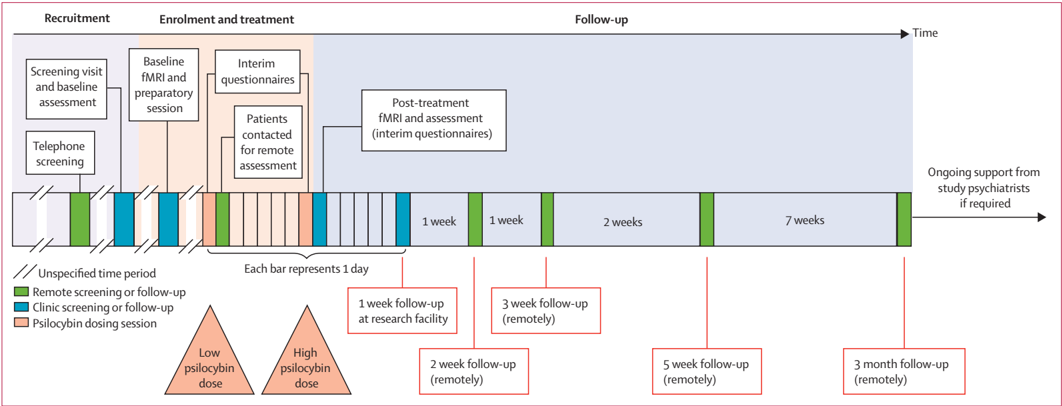
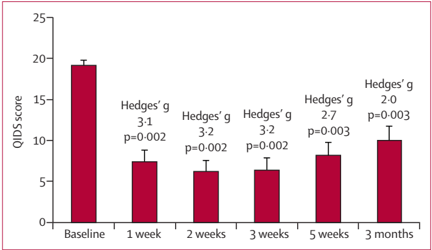
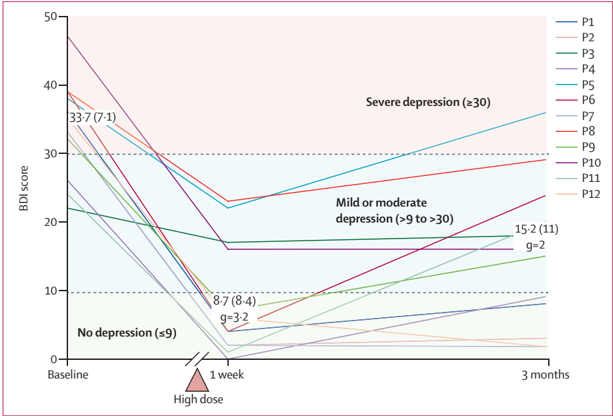
BACKGROUND: Psilocybin is a serotonin receptor agonist that occurs naturally in some mushroom species. Recent studies have assessed the therapeutic potential of psilocybin for various conditions, including end-of-life anxiety, obsessive-compulsive disorder, and smoking and alcohol dependence, with promising preliminary results. Here, we aimed to investigate the feasibility, safety, and efficacy of psilocybin in patients with unipolar treatment-resistant depression. METHODS: In this open-label feasibility trial, 12 patients (six men, six women) with moderate-to-severe, unipolar, treatment-resistant major depression received two oral doses of psilocybin (10 mg and 25 mg, 7 days apart) in a supportive setting. There was no control group. Psychological support was provided before, during, and after each session. The primary outcome measure for feasibility was patient-reported intensity of psilocybin's effects. Patients were monitored for adverse reactions during the dosing sessions and subsequent clinic and remote follow-up. Depressive symptoms were assessed with standard assessments from 1 week to 3 months after treatment, with the 16-item Quick Inventory of Depressive Symptoms (QIDS) serving as the primary efficacy outcome. This trial is registered with ISRCTN, number ISRCTN14426797. FINDINGS: Psilocybin's acute psychedelic effects typically became detectable 30-60 min after dosing, peaked 2-3 h after dosing, and subsided to negligible levels at least 6 h after dosing. Mean self-rated intensity (on a 0-1 scale) was 0·51 (SD 0·36) for the low-dose session and 0·75 (SD 0·27) for the high-dose session. Psilocybin was well tolerated by all of the patients, and no serious or unexpected adverse events occurred. The adverse reactions we noted were transient anxiety during drug onset (all patients), transient confusion or thought disorder (nine patients), mild and transient nausea (four patients), and transient headache (four patients). Relative to baseline, depressive symptoms were markedly reduced 1 week (mean QIDS difference -11·8, 95% CI -9·15 to -14·35, p=0·002, Hedges' g=3·1) and 3 months (-9·2, 95% CI -5·69 to -12·71, p=0·003, Hedges' g=2) after high-dose treatment. Marked and sustained improvements in anxiety and anhedonia were also noted. INTERPRETATION: This study provides preliminary support for the safety and efficacy of psilocybin for treatment-resistant depression and motivates further trials, with more rigorous designs, to better examine the therapeutic potential of this approach. FUNDING: Medical Research Council.
Overview
The claims and statistics of this paper haven’t been checked yet.
Free: it reads the open-access text and checks the first 5 claims that cite a source we can check. Create a free account to check every claim.
Integrity signals
Registry
Cites
Statistics
Figures
Verification
Claims the paper makes
The claims and statistics of this paper haven’t been checked yet.
Free: it reads the open-access text and checks the first 5 claims that cite a source we can check. Create a free account to check every claim.
Claims other papers make about this one
Each is checked against this paper’s own text: does it say what the citing paper says it does?
The source backs part of the claim, not all of it — or backs it for a different population, condition or comparison.
In the citing paper
“Both methods have shown potential for reducing psychopathology and both, psychedelic-assisted therapy with psilocybin and MBIs, in particular MBCT have preliminary evidence for effectiveness in chronic, treatment-resistant depression [94].”
From Mindfulness meditation and psychedelics: potential synergies and commonalities (2023) · cites this paper as [94]
Experimental — accuracy not yet measuredThe source backs part of the claim, not all of it — or backs it for a different population, condition or comparison.
In the citing paper
“Randomised clinical trials (RCTs) of psilocybin-assisted therapy demonstrated a significant reduction of depressive symptoms in terminally ill cancer patients, as well as in treatment-resistant depression (29, 30, 38).”
From Examining the Potential Synergistic Effects Between Mindfulness Training and Psychedelic-Assisted Therapy (2021) · cites this paper as [29]
Experimental — accuracy not yet measuredThe source backs part of the claim, not all of it — or backs it for a different population, condition or comparison.
In the citing paper
“Most of these studies however suffer from low methodological validity and are mostly open-label, yet they have yielded preliminary evidence for the capacity of psychedelic substances for treating addiction, depression, anxiety, and eating disorders (29–35).”
From Examining the Potential Synergistic Effects Between Mindfulness Training and Psychedelic-Assisted Therapy (2021) · cites this paper as [29]
Experimental — accuracy not yet measuredThe source backs part of the claim, not all of it — or backs it for a different population, condition or comparison.
In the citing paper
“Remarkably, these benefits were incurred even after only a single psychedelic administration and were maintained for as long as 6 months.”
From Examining the Potential Synergistic Effects Between Mindfulness Training and Psychedelic-Assisted Therapy (2021) · cites this paper as [29]
Experimental — accuracy not yet measuredThe cited source says what the claim attributes to it.
In the citing paper
“Amelioration of symptomatic depression in pilot studies of major depressive disorder, including those that compared psilocybin with escitalopram 8,9 and that investigated its use in treatment-resistant depression, 10 has suggested therapeutic potential for this agent.”
From Single-Dose Psilocybin for a Treatment-Resistant Episode of Major Depression (2022) · cites this paper as [10]
11 more claims about this paper
Create a free account to see every claim other papers make about this one.
Self-check
Percentages, sums and reported differences re-computed from the paper’s own numbers.
The self-check needs the paper’s full text.
Citations
Cites
Rush, A. J., Trivedi, M. H., Ibrahim, H. M., Carmody, T. J., Arnow, B., Klein, D. N., Markowitz, J. C., Ninan, P. T., Kornstein, S., Manber, R., et al. (2003) · Biological Psychiatry · doi:10.1016/s0006-3223(02)01866-8 · Cited by 3,829
The Economic Burden of Adults With Major Depressive Disorder in the United States (2005 and 2010)
Greenberg, P. E., Fournier, A.-A., Sisitsky, T., Pike, C. T., & Kessler, R. C. (2015) · The Journal of Clinical Psychiatry · doi:10.4088/jcp.14m09298 · Cited by 1,779
Pilot Study of Psilocybin Treatment for Anxiety in Patients With Advanced-Stage Cancer
Grob, C. S., Danforth, A. L., Chopra, G. S., Hagerty, M., McKay, C. R., Halberstadt, A. L., & Greer, G. R. (2011) · Archives of General Psychiatry · doi:10.1001/archgenpsychiatry.2010.116 · Cited by 1,206 · cited 1×
“…cantly decreased anxiety and depression scores were observed 3 and 6 months after a single dose of psilocybin in patients with anxiety related to end-stage cancer, 15 and improve ments in wellbeing lasting for more than 1 year were observed in healthy individuals given a single dose of psilocybin.”
BackgroundHuman hallucinogen research: guidelines for safety
Johnson, M., Richards, W., & Griffiths, R. (2008) · Journal of Psychopharmacology · doi:10.1177/0269881108093587 · Cited by 1,203
Neural correlates of the psychedelic state as determined by fMRI studies with psilocybin
Carhart-Harris, R. L., Erritzoe, D., Williams, T., Stone, J. M., Reed, L. J., Colasanti, A., Tyacke, R. J., Leech, R., Malizia, A. L., Murphy, K., et al. (2012) · Proceedings of the National Academy of Sciences · doi:10.1073/pnas.1119598109 · Cited by 1,172 · cited 1×
“10 Moreover, data obtained from large-scale population studies have recently challenged the view that psychedelics negatively aff ect mental health, 11–13 with one study’s fi ndings showing lower rates of psychological distress and suicidality among people who had used”
BackgroundSelf-citationPsilocybin-assisted treatment for alcohol dependence: A proof-of-concept study
Bogenschutz, M. P., Forcehimes, A. A., Pommy, J. A., Wilcox, C. E., Barbosa, P., & Strassman, R. J. (2015) · Journal of Psychopharmacology · doi:10.1177/0269881114565144 · Cited by 1,151 · cited 1×
“19 Signifi cantly decreased anxiety and depression scores were observed 3 and 6 months after a single dose of psilocybin in patients with anxiety related to end-stage cancer, 15 and improve ments in wellbeing lasting for more than 1 year were observed in healthy individuals given a single dose of…”
BackgroundPilot study of the 5-HT 2A R agonist psilocybin in the treatment of tobacco addiction
Johnson, M. W., Garcia-Romeu, A., Cosimano, M. P., & Griffiths, R. R. (2014) · Journal of Psychopharmacology · doi:10.1177/0269881114548296 · Cited by 914
Griffiths, R., Richards, W., Johnson, M., McCann, U., & Jesse, R. (2008) · Journal of Psychopharmacology · doi:10.1177/0269881108094300 · Cited by 905
Safety, tolerability, and efficacy of psilocybin in 9 patients with obsessive-compulsive disorder
Moreno, F. A., Wiegand, C. B., Taitano, E. K., & Delgado, P. L. (2006) · The Journal of Clinical Psychiatry · doi:10.4088/jcp.v67n1110 · Cited by 789
(2001) · PubMed · Cited by 780
Cited by
Items 401–500 of 1,006
Koslowski, M., Johnson, M. W., Gründer, G., & Betzler, F. (2021) · Current Addiction Reports · doi:10.1007/s40429-021-00401-8 · Cited by 45
“In the mentioned studies, there were different control conditions applied, ranging from non-controlled openlabel [14, 15, 32] to randomized controlled trials, the latter with low-dose psilocybin or LSD [35], niacin [36–38, 40], a specially designed placebo [31] or methylphenidate as active placebo.”
Toward Mapping Neurobehavioral Heterogeneity of Psychedelic Neurobiology in Humans
Moujaes, F., Preller, K. H., Ji, J. L., Murray, J. D., Berkovitch, L., Vollenweider, F. X., & Anticevic, A. (2022) · Biological Psychiatry · doi:10.1016/j.biopsych.2022.10.021 · Cited by 40
Villiger, D., & Trachsel, M. (2023) · Journal of Medical Ethics · doi:10.1136/jme-2022-108816 · Cited by 45
The effect of lysergic acid diethylamide (LSD) on whole-brain functional and effective connectivity
Bedford, P., Hauke, D. J., Wang, Z., Röth, V., Nagy-Huber, M., Holze, F., Ley, L., Vizeli, P., Liechti, M. E., Borgwardt, S., et al. (2023) · Neuropsychopharmacology · doi:10.1038/s41386-023-01574-8 · Cited by 47
“Since psilocybin led to lasting positive changes in mood in healthy volunteers (Griffiths et al., 2006), it was recently investigated as a treatment for patients with depression (Carhart-Harris et al., 2016a, 2018; Davis et al., 2021).”
BackgroundInfluentialThe fibrinolytic system: A new target for treatment of depression with psychedelics
Idell, R. D., Florova, G., Komissarov, A. A., Shetty, S., Girard, R., & Idell, S. (2017) · Medical Hypotheses · doi:10.1016/j.mehy.2017.01.013 · Cited by 41
“cacious treatment for refractory depression [91].”
Increased low-frequency brain responses to music after psilocybin therapy for depression
Wall, M. B., Lam, C., Ertl, N., Kaelen, M., Roseman, L., Nutt, D. J., & Carhart-Harris, R. L. (2023) · Journal of Affective Disorders · doi:10.1016/j.jad.2023.04.081 · Cited by 49
Self-citationPsilocybin in Treatment-Resistant Depression
Madras, B. K. (2022) · New England Journal of Medicine · doi:10.1056/nejme2210975 · Cited by 45
Eleftheriou, M. E., & Thomas, E. (2021) · Frontiers in Psychiatry · doi:10.3389/fpsyt.2021.707057 · Cited by 39
“Randomised clinical trials (RCTs) of psilocybin-assisted therapy demonstrated a significant reduction of depressive symptoms in terminally ill cancer patients, as well as in treatmentresistant depression (29, 30, 38).”
BackgroundCurrent Perspective on the Therapeutic Preset for Substance-Assisted Psychotherapy
Thal, S. B., Bright, S. J., Sharbanee, J. M., Wenge, T., & Skeffington, P. (2021) · Frontiers in Psychology · doi:10.3389/fpsyg.2021.617224 · Cited by 41
Psilocin acutely alters sleep-wake architecture and cortical brain activity in laboratory mice
Thomas, C. W., Blanco‐Duque, C., Bréant, B. J. B., Goodwin, G. M., Sharp, T., Bannerman, D. M., & Vyazovskiy, V. V. (2022) · Translational Psychiatry · doi:10.1038/s41398-022-01846-9 · Cited by 53
Trunnell, E. R., Baines, J., Farghali, S., Jackson, T. A., Jayne, K., Smith, R., & Stibbe, T. (2024) · Regulatory Toxicology and Pharmacology · doi:10.1016/j.yrtph.2024.105666 · Cited by 46
Adams, W. K., Barkus, C., Ferland, J. N., Sharp, T., & Winstanley, C. A. (2017) · Psychopharmacology · doi:10.1007/s00213-017-4696-4 · Cited by 45
Backing into the future: pharmacological approaches to the management of resistant depression
Cowen, P. J. (2017) · Psychological Medicine · doi:10.1017/s003329171700068x · Cited by 40
“Carhart-Harris et al. (2016) carried out an open- label study in 12 patients with resistant depression who received two psilocybin doses administered 1 week apart.”
BackgroundAndersson, M., & Kjellgren, A. (2019) · Harm Reduction Journal · doi:10.1186/s12954-019-0333-3 · Cited by 39
Psychedelic treatment of functional neurological disorder: a systematic review
Butler, M., Seynaeve, M., Nicholson, T. R., Pick, S., Kanaan, R. A., Lees, A., Young, A. H., & Rucker, J. (2020) · Therapeutic Advances in Psychopharmacology · doi:10.1177/2045125320912125 · Cited by 39
Self-citationYu, C., Liang, C., Yang, F., Tu, Y., Hsu, C., Carvalho, A. F., Stubbs, B., Thompson, T., Tsai, C., Yeh, T., et al. (2022) · Journal of Clinical Medicine · doi:10.3390/jcm11040938 · Cited by 44
“Among studies that reported two-dose psilocybin administration, four had a treatment interval of 7 days [21,22,28,29], while one had an average treatment interval of 1.”
BackgroundDo psychedelics change beliefs?
McGovern, H. T., Leptourgos, P., Hutchinson, B. T., & Corlett, P. R. (2022) · Psychopharmacology · doi:10.1007/s00213-022-06153-1 · Cited by 41
Historic psychedelic drug trials and the treatment of anxiety disorders.
Weston, N. M., Gibbs, D., Bird, C. I. V., Daniel, A., Jelen, L. A., Knight, G., Goldsmith, D., Young, A. H., & Rucker, J. J. (2020) · Depression and Anxiety · doi:10.1002/da.23065 · Cited by 38
“Recent, well designed studies exploring the safety of these substances suggest that psychedelics may impact on depressive symptoms as well as anxiety associated with life‐threatening diseases (Carhart‐Harris et al., 2016; Gasser et al., 2014; Griffiths et al., 2016; Grob et al., 2011; Palhano‐Fontes et al., 2019; Ross…”
BackgroundSingle-Dose Psilocybin for Depression With Severe Treatment Resistance: An Open-Label Trial
Aaronson, S. T., van der Vaart, A. D., Miller, T. L., LaPratt, J., Swartz, K., Shoultz, A., Lauterbach, M. D., Suppes, T. M., & Sackeïm, H. A. (2025) · American Journal of Psychiatry · doi:10.1176/appi.ajp.20231063 · Cited by 46
Role of psilocybin in the treatment of depression
Mahapatra, A., & Gupta, R. G. (2016) · Therapeutic Advances in Psychopharmacology · doi:10.1177/2045125316676092 · Cited by 46
Barsuglia, J. P., Polanco, M., Palmer, R., Malcolm, B. J., Kelmendi, B., & Calvey, T. (2018) · Progress in Brain Research · doi:10.1016/bs.pbr.2018.08.002 · Cited by 38
Catalysts for change: the cellular neurobiology of psychedelics
Banks, M. I., Zahid, Z., Jones, N. T., Sultan, Z. W., & Wenthur, C. J. (2021) · Molecular Biology of the Cell · doi:10.1091/mbc.e20-05-0340 · Cited by 37
Kozell, L. B., Eshleman, A. J., Swanson, T. L., Bloom, S. H., Wolfrum, K. M., Schmachtenberg, J. L., Olson, R. J., Janowsky, A. J., & Abbas, A. I. (2023) · Journal of Pharmacology and Experimental Therapeutics · doi:10.1124/jpet.122.001454 · Cited by 37
Castro Santos, H., & Gama Marques, J. (2021) · Porto Biomedical Journal · doi:10.1097/j.pbj.0000000000000128 · Cited by 37
Bortolozzi, A., Manashirov, S., Chen, A., & Artigas, F. (2021) · Pharmacology & Therapeutics · doi:10.1016/j.pharmthera.2021.107873 · Cited by 37
Psychedelics for acquired brain injury: a review of molecular mechanisms and therapeutic potential
Allen, J., Dames, S., Foldi, C. J., & Shultz, S. R. (2024) · Molecular Psychiatry · doi:10.1038/s41380-023-02360-0 · Cited by 47
“However, these reactions are often outweighed by the reported improvements in well-being [162, 263, 267].”
Diniz, T. C., Pinto, T. C. C., Menezes, P. D. P., Silva, J. C., Teles, R. B. D. A., Ximenes, R. C. C., Guimarães, A. G., Serafini, M. R., Araújo, A. A. D. S., Quintans‐Júnior, L. J., et al. (2017) · Expert Opinion on Therapeutic Patents · doi:10.1080/13543776.2017.1384816 · Cited by 41
Dean, J. G. (2018) · Frontiers in Neuroscience · doi:10.3389/fnins.2018.00232 · Cited by 37
“…(Grob et al., 1996; Johnson et al., 2014; Mithoefer et al., 2016), as well as comorbid disease states such as depression (Osório et al., 2015; Carhart-Harris et al., 2016, 2017) in which self-medicating is a hallmark (Markou et al., 1998), wherein the degree of the positive therapeutic…”
BackgroundPsilocybin and MDMA reduce costly punishment in the Ultimatum Game
Gabay, A. S., Carhart-Harris, R. L., Mazibuko, N., Kempton, M. J., Morrison, P. D., Nutt, D. J., & Mehta, M. A. (2018) · Scientific Reports · doi:10.1038/s41598-018-26656-2 · Cited by 37
“1038/s41598-018-26656-2 of subscale (F(5,90) = 207.”
Self-citationArgento, E., Braschel, M., Walsh, Z., Socias, M. E., & Shannon, K. (2018) · Journal of Psychopharmacology · doi:10.1177/0269881118798610 · Cited by 37
“Re-emerging evidence demonstrates that use of psychedelics – chemical compounds such as lysergic acid diethylamide (LSD), psilocybin, mescaline, methylenedioxymethamphetamine (MDMA), and dimethyltryptamine (DMT) – may be associated with improvements in mental wellbeing and addiction issues (dos Santos et al., 2016; He…”
InfluentialThe Effects of Daytime Psilocybin Administration on Sleep: Implications for Antidepressant Action
Dudysová, D., Janků, K., Šmotek, M., Saifutdinová, E., Kopřivová, J., Bušková, J., Mander, B. A., Brunovský, M., Zach, P., Korčák, J., et al. (2020) · Frontiers in Pharmacology · doi:10.3389/fphar.2020.602590 · Cited by 42
“, 2014) and clinical (Carhart-Harris et al., 2016; Bogenschutz and Ross, 2018) evidence for the antidepressant potential of psilocybin.”
BackgroundAssociation Between Lifetime Classic Psychedelic Use and Hypertension in the Past Year
Simonsson, O., Hendricks, P. S., Carhart-Harris, R. L., Kettner, H., & Osika, W. (2021) · Hypertension · doi:10.1161/hypertensionaha.120.16715 · Cited by 39
Self-citationCannabis-induced oceanic boundlessness
Earleywine, M., Ueno, L. F., Mian, M. N., & Altman, B. R. (2021) · Journal of Psychopharmacology · doi:10.1177/0269881121997099 · Cited by 37
“…consciousness) have reported improvement in various mental health conditions such as anxiety, depression, and addictions (Bogenschutz et al., 2015, Carhart-Harris et al., 2016; Garcia-Romeu et al., 2014; Griffiths et al., 2016; Johnson et al., 2017; Klavetter and Mogar, 1967; Maclean et al.,…”
BackgroundPsilocybin: From Serendipity to Credibility?
Rucker, J. J., & Young, A. H. (2021) · Frontiers in Psychiatry · doi:10.3389/fpsyt.2021.659044 · Cited by 37
Self-citationSeeking the Psilocybiome: Psychedelics meet the microbiota-gut-brain axis
Kelly, J. R., Clarke, G. A., Harkin, A., Corr, S. C., Galvin, S. D., Pradeep, V., Cryan, J. F., O’Keane, V., & Dinan, T. G. (2022) · International Journal of Clinical and Health Psychology · doi:10.1016/j.ijchp.2022.100349 · Cited by 45
“reported improvements in diet and exercise, and reductions in alcohol consumption (Carhart-Harris et al., 2016; Watts et al., 2017).”
BackgroundGarel, N., Drury, J., Lévesque, J. T., Goyette, N., Lehmann, A., Looper, K. J., Erritzøe, D., Dames, S., Turecki, G., Rej, S., et al. (2023) · Frontiers in Psychiatry · doi:10.3389/fpsyt.2023.1268832 · Cited by 41
“Building momentum: rolling preparation, treatment, and integration Our model’s six intravenous ketamine treatments provide patients with a similar amount of time experiencing an altered state of consciousness as two doses of psilocybin (91, 124, 125).”
BackgroundPsychedelics for treatment resistant depression: are they game changers?
Kalfas, M., Taylor, R. H., Tsapekos, D., & Young, A. H. (2023) · Expert Opinion on Pharmacotherapy · doi:10.1080/14656566.2023.2281582 · Cited by 40
“Specifically, Carhatt-Harris et al. [103] is an updated and extended 6-month follow-up to Carhart-Harris et al. [30], with an increased sample size.”
BackgroundMethodInfluentialThe History of Psychedelics in Medicine
Sessa, B. (2016) · Springer eBooks · doi:10.1007/978-3-642-55214-4_96-1 · Cited by 65
“A large grant follows, kick-starting an investigation into psilocybin-assisted psychotherapy for treatment-resistant depression (Carhart-Harris et al. 2016b).”
BackgroundMethodTorrens-Spence, M. P., Liu, C., Pluskal, T., Chung, Y. K., & Weng, J. (2018) · ACS Chemical Biology · doi:10.1021/acschembio.8b00821 · Cited by 37
Gard, D. E., Pleet, M. M., Bradley, E. R., Penn, A. D., Gallenstein, M. L., Riley, L. S., DellaCrosse, M., Garfinkle, E. M., Michalak, E. E., & Woolley, J. D. (2021) · Journal of Affective Disorders Reports · doi:10.1016/j.jadr.2021.100240 · Cited by 36
“…single dose of psilocybin in a treatment context may dramatically improve symptoms in major depressive disorder and treatment resistant depression (Carhart-Harris et al., 2016; Galvão-Coelho et al., 2021; Ross et al., 2016), obsessive-compulsive disorder (Moreno et al., 2006), anxiety (Grob et…”
BackgroundNootropic effects of LSD: Behavioral, molecular and computational evidence
Ornelas, I. M., da Silva, F. A. C., Wießner, I., Marcos, E., de Araújo, D. B., Goto‐Silva, L., Nascimento, J. M., Silva, S. R. B., Costa, M., Falchi-Carvalho, M., et al. (2022) · Experimental Neurology · doi:10.1016/j.expneurol.2022.114148 · Cited by 38
“…treatmentresistant depression have consistently shown rapid and long-lasting antidepressant effects, typically starting one day after dosing and lasting for at least one week (Carhart-Harris et al., 2016; Davis et al., 2020; Osório et al., 2015; Palhano-Fontes et al., 2018; Sanches et al., 2016).”
BackgroundResultSelf-citationUse of plant-based hallucinogens and dissociative agents: U.S. Time Trends, 2002–2019
Walsh, C. A., Livne, O., Shmulewitz, D., Stohl, M., & Hasin, D. S. (2022) · Addictive Behaviors Reports · doi:10.1016/j.abrep.2022.100454 · Cited by 43
Psilocybin and Other Classic Psychedelics in Depression
Nutt, D. J., Peill, J. M., Weiss, B., Godfrey, K., Carhart-Harris, R. L., & Erritzøe, D. (2023) · Current topics in behavioral neurosciences · doi:10.1007/7854_2023_451 · Cited by 43
Self-citationBraun, D., Rosenberg, A. M., Rabaniam, E., Haruvi, R., Malamud, D., Barbara, R., Aiznkot, T., Levavi‐Sivan, B., & Kawashima, T. (2024) · Molecular Psychiatry · doi:10.1038/s41380-023-02391-7 · Cited by 41
“Psilocybin is effective for clinical cases of treatment-resistant depression [8], and only a few doses can have lasting effects on depression symptoms for months or even up to a year [9, 10].”
BackgroundRichardson, E., Patterson, R., Meltzer-Brody, S. E., McClure, R. W., & Tow, A. C. (2024) · Annual Review of Medicine · doi:10.1146/annurev-med-050423-095712 · Cited by 52
Hyde, A. J., May, B. H., Dong, L., Feng, M., Liu, S., Guo, X., Zhang, A. L., Lu, C., & Xue, C. C. (2016) · Journal of Psychopharmacology · doi:10.1177/0269881116675515 · Cited by 41
“Plant compounds continue to provide novel pharmacology for leads towards development of new interventions for management of behavioural, mood and cognitive symptoms (Carhart-Harris et al., 2016; Mattioli et al., 2009).”
BackgroundOdland, A. U., Jessen, L., Kristensen, J. L., Fitzpatrick, C. M., & Andreasen, J. T. (2019) · Neuropharmacology · doi:10.1016/j.neuropharm.2019.107838 · Cited by 37
Trends in the Top-Cited Articles on Classic Psychedelics
Lawrence, D. W., Sharma, B., Griffiths, R. R., & Carhart-Harris, R. (2021) · Journal of Psychoactive Drugs · doi:10.1080/02791072.2021.1874573 · Cited by 35
Self-citationJahn, Z. W., Lopez, J., de la Salle, S., Faber, S. C., & Williams, M. T. (2021) · Journal of Psychedelic Studies · doi:10.1556/2054.2021.00166 · Cited by 40
“, 2018), depression (Carhart-Harris et al., 2016; Davis et al., 2020), OCD (Moreno, Wiegand, Taitano, & Delgado, 2006), end-of-life anxiety (Griffiths et al.”
BackgroundCastelhano, J., Lima, G., Teixeira, M., Soares, C., Pais, M. L., & Castelo-Branco, M. S. (2021) · Frontiers in Pharmacology · doi:10.3389/fphar.2021.739053 · Cited by 48
“…to our main results, studies have reported visual hallucinations caused by neuronal stimulation of PFC (Blanke et al., 2000), temporal areas (Mégevand et al., 2014; Aminoff et al., 2016) and increased functional connectivity between PFC and primary visual cortex (Carhart-Harris et al., 2016b).”
BackgroundResultInfluentialLiechti, M. E., & Holze, F. (2021) · Current topics in behavioral neurosciences · doi:10.1007/7854_2021_270 · Cited by 44
Søndergaard, A., Madsen, M. K., Ozenne, B., Armand, S., Knudsen, G. M., Fisher, P. M., & Stenbæk, D. S. (2022) · Frontiers in Psychology · doi:10.3389/fpsyg.2022.948729 · Cited by 38
“, 2011) in healthy volunteers, as well as improvements in symptoms in psychiatric patient populations (Bogenschutz et al., 2015; Carhart-Harris et al., 2016; Griffiths et al., 2016; Ross et al., 2016; Roseman et al., 2018; Garcia-Romeu et al., 2019).”
BackgroundInfluentialBradshaw, A. J., Ramírez-Cruz, V., Awan, A. R., Furci, G., Guzmán‐Dávalos, L., Stamets, P. E., & Dentinger, B. T. M. (2024) · Proceedings of the National Academy of Sciences · doi:10.1073/pnas.2311245121 · Cited by 44
“In fact, nausea is commonly reported in human clinical trials (62).”
BackgroundChing, T. H. W., Davis, A. K., Xin, Y., & Williams, M. T. (2022) · Journal of Psychoactive Drugs · doi:10.1080/02791072.2022.2025960 · Cited by 38
“Psilocybin-assisted psychotherapy has been shown to be efficacious in reducing depressive and anxiety symptoms among cancer patients (Griffiths et al. 2016; Ross et al. 2016), as well as alleviating difficult-totreat depression (Carhart-Harris et al. 2016; Davis et al. 2021a).”
BackgroundPsychedelics in the treatment of unipolar and bipolar depression
Bosch, O. G., Halm, S., & Seifritz, E. (2022) · International Journal of Bipolar Disorders · doi:10.1186/s40345-022-00265-5 · Cited by 41
“all transient and included initial anxiety, confusion and thought disorder, nausea, and headache, while symptom reduction was rapid and sustained up to 3 months after high-dose treatment (Carhart-Harris et al., 2016).”
BackgroundDiscovery of β-Arrestin-Biased 25CN-NBOH-Derived 5-HT2AReceptor Agonists
Poulie, C. B. M., Pottie, E., Simon, Í. A., Harpsøe, K., D’Andrea, L., Komarov, I. V., Gloriam, D. E. I., Jensen, A. A., Stove, C. P., & Kristensen, J. L. (2022) · Journal of Medicinal Chemistry · doi:10.1021/acs.jmedchem.2c00702 · Cited by 34
Kurtz, J. S., Patel, N., Gendreau, J. L., Yang, C., Brown, N. J., Bui, N., Picton, B., Harris, M., Hatter, M. J., Beyer, R. S., et al. (2022) · Cureus · doi:10.7759/cureus.29167 · Cited by 48
Single-dose psilocybin for treatment-resistant obsessive-compulsive disorder: A case report
Kelmendi, B., Kichuk, S. A., DePalmer, G., Maloney, G. K., Ching, T. H. W., Belser, A., & Pittenger, C. (2022) · Heliyon · doi:10.1016/j.heliyon.2022.e12135 · Cited by 45
“Recent controlled studies suggest benefit after one or two doses of psilocybin in major depressive disorder (Davis et al., 2021; Carhart-Harris et al., 2016, 2021) and in depressive and anxiety endi).”
BackgroundResultHow do serotonergic psychedelics treat depression: The potential role of neuroplasticity
Artin, H., Zisook, S., & Ramanathan, D. (2021) · World Journal of Psychiatry · doi:10.5498/wjp.v11.i6.201 · Cited by 33
Psilocybin-Assisted Compassion Focused Therapy for Depression
Pots, W. T. M., & Chakhssi, F. (2022) · Frontiers in Psychology · doi:10.3389/fpsyg.2022.812930 · Cited by 36
Role of Psychedelics in Treatment-Resistant Depression
Kamal, S., Jha, M. K., & Radhakrishnan, R. (2023) · Psychiatric Clinics of North America · doi:10.1016/j.psc.2023.02.004 · Cited by 38
A Brief Historical Overview of Psychedelic Research
Geyer, M. A. (2023) · Biological Psychiatry Cognitive Neuroscience and Neuroimaging · doi:10.1016/j.bpsc.2023.11.003 · Cited by 53
Exploring mechanisms of psychedelic action using neuroimaging
Erritzøe, D., Timmermann, C., Godfrey, K., Castro-Rodrigues, P., Peill, J. M., Carhart-Harris, R. L., Nutt, D. J., & Wall, M. B. (2024) · Nature Mental Health · doi:10.1038/s44220-023-00172-3 · Cited by 42
“68) and 25 and 25 mg (ref.”
Self-citationCopa, D., Erritzøe, D., Giribaldi, B., Nutt, D. J., Carhart-Harris, R. L., & Tagliazucchi, E. (2024) · Journal of Affective Disorders · doi:10.1016/j.jad.2024.02.089 · Cited by 40
Self-citationAn Improved, Practical, and Scalable Five-Step Synthesis of Psilocybin
Kargbo, R. B., Sherwood, A. M., Meisenheimer, P. L., & Tarpley, G. (2020) · Synthesis · doi:10.1055/s-0039-1691565 · Cited by 36
Strauss, D., Ghosh, S. B., Murray, Z., & Gryzenhout, M. (2022) · Frontiers in Forests and Global Change · doi:10.3389/ffgc.2022.813998 · Cited by 33
Classic Psychedelics in Addiction Treatment: The Case for Psilocybin in Tobacco Smoking Cessation
Johnson, M. W. (2022) · Current topics in behavioral neurosciences · doi:10.1007/7854_2022_327 · Cited by 49
Psilocybin Efficacy and Mechanisms of Action in Major Depressive Disorder: a Review
Prouzeau, D., Conejero, I., Voyvodic, P. L., Bécamel, C., Abbar, M., & López‐Castromán, J. (2022) · Current Psychiatry Reports · doi:10.1007/s11920-022-01361-0 · Cited by 40
Prevalence and therapeutic impact of adverse life event reexperiencing under ceremonial ayahuasca
Weiss, B., Wingert, A., Erritzoe, D., & Campbell, W. K. (2023) · Scientific Reports · doi:10.1038/s41598-023-36184-3 · Cited by 33
Roberts, C. A., Osborne-Miller, I., Cole, J. C., Gage, S. H., & Christiansen, P. (2020) · Journal of Psychopharmacology · doi:10.1177/0269881120936508 · Cited by 39
“Psilocybin is also the subject of open-label feasibility work as an adjunct to psychological support for treatment-resistant depression (Carhart-Harris et al., 2016, 2018).”
BackgroundArgento, E., Socias, M. E., Hayashi, K., Choi, J., Mackay, L., Christie, D., Milloy, M., & DeBeck, K. (2021) · International Journal of Drug Policy · doi:10.1016/j.drugpo.2021.103518 · Cited by 37
“…awe and ego-dissolution, hich appear to mediate therapeutic impacts ( Bogenschutz et al., 2018 ; arcia-Romeu, Griffiths & Johnson, 2014 ; Griffiths, Richards, McCann, Jesse, 2006 ; Hartogsohn, 2018 ; Hendricks, 2018a ; MacLean, Johnson, Griffiths, 2011 ; Nour, Evans, Nutt, & Carhart-Harris, 2016 ).”
How Important Is a Guide Who Has Taken Psilocybin in Psilocybin-Assisted Therapy for Depression?
Earleywine, M., Low, F., Altman, B. R., & Leo, J. A. D. (2022) · Journal of Psychoactive Drugs · doi:10.1080/02791072.2022.2047842 · Cited by 34
“Increased mental health problems have inspired a reemergence of the Psilocybin-Assisted Therapy (PAT) paradigm, a combined pharmacological and psychological intervention (Carhart-Harris et al. 2018, 2016; Schenberg 2018).”
BackgroundTakaba, R., Ibi, D., Yoshida, K., Hosomi, E., Kawase, R., Kitagawa, H., Goto, H., Achiwa, M., Mizutani, K., Maeda, K., et al. (2023) · Naunyn-Schmiedeberg s Archives of Pharmacology · doi:10.1007/s00210-023-02778-x · Cited by 39
“Patients with TRD are more likely to attempt suicide than treatment responders (Nelsen and Dunner 1995).”
InfluentialSexton, J. D., Crawford, M. S., Sweat, N. W., Varley, A. L., Green, E. E., & Hendricks, P. S. (2019) · Journal of Psychopharmacology · doi:10.1177/0269881119827796 · Cited by 39
Dynamic Brain Connectivity in Resting State Functional MR Imaging
Jalilianhasanpour, R., Ryan, D. H., Agarwal, S., Beheshtian, E., Gujar, S. K., Pillai, J. J., & Sair, H. I. (2020) · Neuroimaging Clinics of North America · doi:10.1016/j.nic.2020.09.004 · Cited by 37
Nkadimeng, S. M., Steinmann, C. M. L., & Eloff, J. N. (2020) · Scientific Reports · doi:10.1038/s41598-020-79328-5 · Cited by 32
Psychedelics as Novel Therapeutics in Alzheimer’s Disease: Rationale and Potential Mechanisms
Garcia‐Romeu, A., Darcy, S., Jackson, H., White, T., & Rosenberg, P. B. (2021) · Current topics in behavioral neurosciences · doi:10.1007/7854_2021_267 · Cited by 36
“…illness (Gasser et al. 2014), as well as rapid, sustained antidepressant effects of psilocybin in patients with treatment-resistant major depression lasting 3 months (Carhart-Harris et al. 2016), and rapid antidepressant effects of ayahuasca lasting at least 7 days (Palhano-Fontes et al. 2019).”
Wulff, A. B., Nichols, C. D., & Thompson, S. M. (2023) · Neuropharmacology · doi:10.1016/j.neuropharm.2023.109504 · Cited by 42
“In treatment-resistant depression, for example, Carhart-Harris et al. (2016) reported a 50% decrease in self-reported depression symptoms within one week of open label psilocybin administration (12 patients) which was sustained for three months afterwards (Fig.”
Giving Consent to the Ineffable
Villiger, D. (2024) · Neuroethics · doi:10.1007/s12152-024-09545-6 · Cited by 32
“1 So far, the results are promising, suggesting effectiveness in treating cancer-related depression and anxiety [6–10], (treatment-resistant) depression [6, 11–17], and alcohol and smoking cessation [18–23].”
BackgroundCavanna, F., Pallavicini, C., Milano, V., Cuiule, J. I., Tella, R. D., González, P., & Tagliazucchi, E. (2021) · Journal of Psychedelic Studies · doi:10.1556/2054.2021.00172 · Cited by 35
Siva, J. B., Barba, T., Kettner, H., Kuc, J., Nutt, D. J., Carhart-Harris, R. L., & Erritzøe, D. (2024) · Journal of Psychopharmacology · doi:10.1177/02698811231224217 · Cited by 39
“While it is common practice to stop taking SRIs at least 2 weeks before the psychedelic experience in recent clinical trials (Carhart-Harris et al., 2016, 2021; Davis et al., 2021; Malcolm & Thomas, 2022), we previously found that discontinuing SRIs before trial start negatively impacted the…”
BackgroundSelf-citationErritzøe, D., Barba, T., Spriggs, M. J., Rosas, F. E., Nutt, D. J., & Carhart-Harris, R. L. (2024) · Journal of Psychopharmacology · doi:10.1177/02698811241237870 · Cited by 43
“A growing number of clinical trials have found prolonged reductions in the clinical symptoms of MDD following the administration of one-to-three doses of psilocybin in a therapeutic setting (Carhart-Harris et al., 2021, 2016; Davis et al., 2021; Gukasyan et al., 2022).”
BackgroundInfluentialSelf-citationMind the Psychedelic Hype: Characterizing the Risks and Benefits of Psychedelics for Depression
Meling, D., Ehrenkranz, R. C., Nayak, S. M., Aicher, H., Funk, X., van Elk, M., Graziosi, M., Bauer, P. R., Scheidegger, M., & Yaden, D. B. (2024) · Psychoactives · doi:10.3390/psychoactives3020014 · Cited by 35
The renaissance in psychedelic research: What do preclinical models have to offer
Murnane, K. S. (2018) · Progress in brain research · doi:10.1016/bs.pbr.2018.08.003 · Cited by 39
Pearson, C. S., Siegel, J. S., & Gold, J. A. (2021) · Journal of the Neurological Sciences · doi:10.1016/j.jns.2021.120096 · Cited by 36
Analysis of recreational psychedelic substance use experiences classified by substance
Hase, A., Erdmann, M., Limbach, V., & Hasler, G. (2022) · Psychopharmacology · doi:10.1007/s00213-022-06062-3 · Cited by 35
Coppola, M., Bevione, F., & Mondola, R. (2022) · Journal of Xenobiotics · doi:10.3390/jox12010004 · Cited by 41
“Most commonly reported side effects were: anxiety, headache, nausea, confusion, vomiting and slight sympathomimetic symptoms [67-69, 72, 73, 81].”
BackgroundPopik, P., Hogendorf, A. S., Bugno, R., Khoo, S. Y., Zajdel, P., Malikowska‐Racia, N., Nikiforuk, A., & Gołębiowska, J. (2022) · Psychopharmacology · doi:10.1007/s00213-021-06020-5 · Cited by 30
Psychedelic-Assisted Therapy for People with Eating Disorders
Gukasyan, N., Schreyer, C. C., Griffiths, R. R., & Guarda, Á. S. (2022) · Current Psychiatry Reports · doi:10.1007/s11920-022-01394-5 · Cited by 35
Psychedelics alter metaphysical beliefsPreprint
Timmermann, C., Kettner, H., Letheby, C., Roseman, L., Rosas, F. E., & Carhart-Harris, R. L. (2021) · PsyArXiv (OSF Preprints) · doi:10.31234/osf.io/f6sjk · Cited by 37
Self-citationFrymann, T., Whitney, S., Yaden, D. B., & Lipson, J. (2022) · Frontiers in Psychology · doi:10.3389/fpsyg.2022.863247 · Cited by 30
“…the experience of intense emotions, distortion of sensory awareness, and even a sense of death and rebirth (Griffiths et al., 2006, 2008, 2011, 2016, 2018; Johnson et al., 2008; Cook, 2014; Hendricks et al., 2015; Carhart-Harris et al., 2016; Richards, 2016; Yaden and Griffiths, 2020).”
BackgroundPsychedelic Cognition—The Unreached Frontier of Psychedelic Science
Bălăeţ, M. (2022) · Frontiers in Neuroscience · doi:10.3389/fnins.2022.832375 · Cited by 39
Ellis, S., Bostian, C. M., Feng, W., Fischer, E. G., Schwartz, G., Eisen, K., Lean, M., Conlan, E., Ostacher, M. J., Aaronson, S. T., et al. (2024) · Journal of Affective Disorders · doi:10.1016/j.jad.2024.09.133 · Cited by 38
Tricklebank, M. D., Robbins, T. W., Simmons, C., & Wong, E. H. F. (2021) · Psychopharmacology · doi:10.1007/s00213-021-05787-x · Cited by 35
Więckiewicz, G., Stokłosa, I., Piegza, M. J., Gorczyca, P. W., & Pudło, R. (2021) · Pharmaceuticals · doi:10.3390/ph14080793 · Cited by 39
“In three studies the sample was composed of subjects with major depressive disorder [26,27,29], and in the other three studies the sample was composed of subjects with depression and anxiety in the course of life-threatening cancer [24,25,28].”
BackgroundResultMolecular targets of psychedelic‐induced plasticity
Jaster, A. M., Revenga, M. D. L. F., & González‐Maeso, J. (2021) · Journal of Neurochemistry · doi:10.1111/jnc.15536 · Cited by 36
Psychedelics and dissociative substances
WINSTOCK, A. R., & Rucker, J. (2020) · doi:10.1093/med/9780198713005.003.0054 · Cited by 29
Self-citationWhitfield, H. J. (2021) · Frontiers in Psychiatry · doi:10.3389/fpsyt.2021.727572 · Cited by 33
“Psychoeducation and experiential exercises are often employed to help the participant trust and enter the process with an open attitude (7, 11, 12).”
BackgroundNew Paradigms of Old Psychedelics in Schizophrenia
Mahmood, D., Alenezi, S. K., Anwar, M. J., Azam, F., Qureshi, K. A., & Jaremko, M. (2022) · Pharmaceuticals · doi:10.3390/ph15050640 · Cited by 29
“In patients of drug resistant depression, a recent phase II clinical study reported that Hamilton Depression Rating Scale scores improved following treatment with psilocybin [76] indicating therapeutic efficacy in depression.”
ResultImpact of psilocybin on cognitive function: A systematic review
Meshkat, S., Tello-Gerez, T. J., Gholaminezhad, F., Dunkley, B. T., Reichelt, A. C., Erritzøe, D., Vermetten, E. H. G. J. M., Zhang, Y., Greenshaw, A. J., Burback, L., et al. (2024) · Psychiatry and Clinical Neurosciences · doi:10.1111/pcn.13741 · Cited by 37
Metadata
- Authors
- Carhart-Harris, R. L., Bolstridge, M., Rucker, J., Day, C. M. J., Erritzoe, D., Kaelen, M., Bloomfield, M., Rickard, J. A., Forbes, B., Feilding, A., Taylor, D., Pilling, S., Curran, V. H., & Nutt, D. J.
- Affiliations
- Imperial College London (GB)
- University College London (GB)
- Barts Health NHS Trust (GB)
- King's College London (GB)
- Beckley Foundation (GB)
- South London and Maudsley NHS Foundation Trust (GB)
- Corresponding author
- Carhart-Harris, Robin L
- ORCID
- Venue
- The Lancet Psychiatry
- Publisher
- Elsevier BV
- Published
- 2016-07
- Volume
- 3
- Issue
- 7
- Pages
- 619-627
- ISSN
- 2215-0366 (ISSN-L)
- OpenAlex
- W2396675581
- Semantic Scholar
- 006d3597cc21e0200eb70aab18a11379644d48b8
- Cited by
- 1,540
- References
- 30
- Citations by year
- 2026: 137 · 2025: 189 · 2024: 225 · 2023: 207 · 2022: 205 · 2021: 192 · 2020: 128 · 2019: 78 · 2018: 71 · 2017: 70 · 2016: 36
- FWCI
- 113.68
- Type
- journal article
- Language
- en
- Open access
- hybrid
- doi.org
- Licence
- cc-by
- www.elsevier.com/tdm/userlicense/1.0/ (tdm)
- creativecommons.org/licenses/by/4.0/ (vor)
- Locations
- The Lancet Psychiatry (publishedVersion, cc-by)
- PubMed (publishedVersion)
- Research Bank (Australian Catholic University) (submittedVersion, cc-by)
- UCL Discovery (University College London) (submittedVersion)
- Research Portal (King's College London) (submittedVersion, cc-by)
- Spiral (Imperial College London) (submittedVersion, other-oa)
- Funders
- MRC clinical development (MR/J00460X/1)
- Topics
- Social Sciences › Psychology › Clinical Psychology › Psychedelics and Drug Studies
- Health Sciences › Medicine › Pharmacology (medical) › Treatment of Major Depression
- Social Sciences › Psychology › Clinical Psychology › Psychotherapy Techniques and Applications
- Keywords
- psilocybin, treatment-resistant depression, unipolar major depression, psychedelic therapy, psychological support, adverse effects, depressive symptom reduction, serotonin receptor agonists, feasibility and safety, dose comparison, remote follow-up, end-of-life anxiety, obsessive-compulsive disorder, transdiagnostic treatment, psychedelic-assisted psychotherapy
- MeSH terms
- Adult, Feasibility Studies, Female, Humans, Male, Middle Aged, Psilocybin, Social Support, Treatment Outcome, Serotonin Receptor Agonists, Depressive Disorder, Treatment-Resistant
About these checks
Registry, retraction, Cites and statistics results are computed, not judged, with one exception: a printed reference that no index lists is read once by a model before it counts as a citation error. Claims are extracted by a model and kept only when their quote appears verbatim in the text; each cited source is then checked, with a model’s help, for whether it says what the claim relies on. Those verdicts can be wrong — read the claim’s quote and the cited source before relying on one.
Statistics and arithmetic are recomputed, not judged.
Confidence bands are shown only for fields calibrated on our annotated test set. None is calibrated yet, so no band is shown.
What counts as a claim ›How we measure confidence ›How we check this ›
Are you an author, or do you see a problem with this page? Request a review
Data sources
Bibliographic data: Semantic Scholar, OpenAlex, Crossref.
Contains information from the Semantic Scholar Academic Graph Datasets, made available under the ODC Attribution License (ODC-BY 1.0).
Semantic Scholar’s data is described in: Kinney, R., et al. (2023). The Semantic Scholar Open Data Platform. arXiv:2301.10140.
