

Climate anxiety in children and young people and their beliefs about government responses to climate change: a global survey
Open accessThe DOI matches its Crossref record; 27 of the 30 references it cites were found in a registry or an index, and 1 are not checked yet; 14 of the 48 sources its claims cite were checked for support.
Abstract
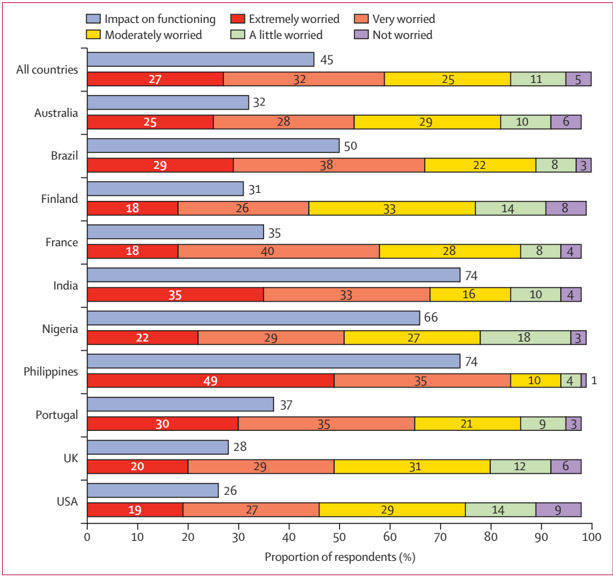
Background Climate change has important implications for the health and futures of children and young people, yet they have little power to limit its harm, making them vulnerable to climate anxiety. This is the first large-scale investigation of climate anxiety in children and young people globally and its relationship with perceived government response. Methods We surveyed 10 000 children and young people (aged 16-25 years) in ten countries (Australia, Brazil, Finland, France, India, Nigeria, Philippines, Portugal, the UK, and the USA; 1000 participants per country). Invitations to complete the survey were sent via the platform Kantar between May 18 and June 7, 2021. Data were collected on participants' thoughts and feelings about climate change, and government responses to climate change. Descriptive statistics were calculated for each aspect of climate anxiety, and Pearson's correlation analysis was done to evaluate whether climate-related distress, functioning, and negative beliefs about climate change were linked to thoughts and feelings about government response. Findings Respondents across all countries were worried about climate change (59% were very or extremely worried and 84% were at least moderately worried). More than 50% reported each of the following emotions: sad, anxious, angry, powerless, helpless, and guilty. More than 45% of respondents said their feelings about climate change negatively affected their daily life and functioning, and many reported a high n…
Verified 2026-11-25 · 1 reference not checked yet
Overview
CoChat Summary
TL;DR
This global survey of 10,000 people aged 16–25 across ten countries found widespread climate anxiety and distress, with many reporting negative functional impacts. Climate distress was correlated with negative perceptions of government responses and feelings of betrayal.
Key findings
- 59% were very or extremely worried about climate change and 84% were at least moderately worried; more than 50% reported feeling sad, anxious, angry, powerless, helpless, and guilty.
- More than 45% said their feelings about climate change negatively affected their daily life and functioning; 75% said the future is frightening and 83% said people have failed to take care of the planet.
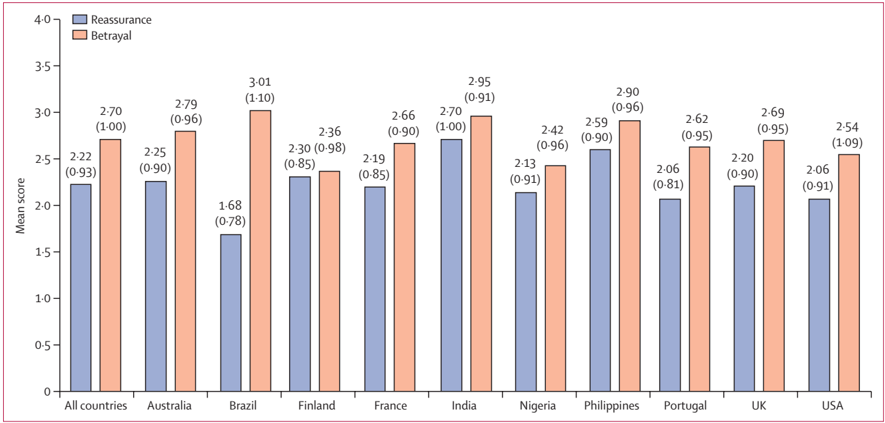
- Respondents rated government responses negatively (mean 14.96 on a 9–18 scale, SD 2.57) and reported greater betrayal (mean 2.7, SD 1.0) than reassurance (mean 2.22, SD 0.93; p<0.0001).
- Climate anxiety and distress were correlated with perceived inadequate government response and associated feelings of betrayal.
Methods
- Cross-sectional online survey of 10,000 children and young people aged 16–25 years in ten countries (Australia, Brazil, Finland, France, India, Nigeria, Philippines, Portugal, the UK, and the USA; 1000 per country), recruited via Kantar between May 18 and June 7, 2021.
- Quota sampling was based on age, gender, and region, with data weighted to OECD statistics for each country by age group, gender, and region.
- Descriptive statistics were calculated for climate anxiety constructs, and Pearson’s correlation analysis explored links between climate-related distress, functioning, negative beliefs, and thoughts/feelings about government response; findings significant at p≤0.001 are reported.
Limitations
- The paper states that non-standardised measures were used because no appropriate standardised measures existed; the study cannot indicate severity compared with normative samples, did not measure mental health outcomes, and used a yes/no/prefer-not-to-say response scale.
- The paper states that equal sample sizes per country were not weighted by population size, so aggregated results are not globally representative; online polling required internet access and sometimes English, and gender was recorded only as male or female.
- Evident from the text: the cross-sectional design cannot establish causality between perceived government response and climate distress.
Model-written summary. Check it against the paper before relying on it.
Integrity signals
Registry
Cites
Statistics
Figures
Verification
Claims the paper makes
12 Valid · 0 Not valid · 19 Not checked · 99 Own results and interpretations
Every source the paper cites for this claim was checked and supports it.
In the paper
“Children are now turning to legal action based on government failure to protect ecosystems, young citizens, and their futures. 26”
What the sources say
- Supportedcites [26] 26 Salas RN, Jacobs W, Perera F. The case of Juliana v. US-children and the health burdens of climate change. N Engl J Med 2019; 380: 2085-87 . source
The supplied Abstract passages describe children filing suit over federal inaction on climate change, which they say violates their constitutional rights. They also connect that inaction to threats to children’s safe environment and to future generations, supporting the citing sentence’s paraphrase. (LLM, conf=0.88)
plainstates a cause- Asserted: passes — The authors put it forward as true.
- Checkable: passes — It can be checked against evidence.
- Load-bearing: unclear — It is unclear whether the paper’s conclusions depend on it.
- Based: passes — The paper gives a reason why it holds.
- Supported
A result the paper reports from its own data — it cites no other source for it, so there is none to check. The quote shows it is in the paper.
In the paper
“in the Global North, Portugal (which had dramatic increases in wildfires since 2017) showed the highest level of worry.”
plainn = 1,000- Asserted: passes — The authors put it forward as true.
- Checkable: passes — It can be checked against evidence.
- Load-bearing: unclear — It is unclear whether the paper’s conclusions depend on it.
- Based: passes — The paper gives a reason why it holds.
A result the paper reports from its own data — it cites no other source for it, so there is none to check. The quote shows it is in the paper.
In the paper
“Respondents rated governmental responses to climate change negatively”
plain- Asserted: passes — The authors put it forward as true.
- Checkable: passes — It can be checked against evidence.
- Load-bearing: passes — The paper’s conclusions depend on it.
- Based: passes — The paper gives a reason why it holds.
A result the paper reports from its own data — it cites no other source for it, so there is none to check. The quote shows it is in the paper.
In the paper
“This distress was associated with beliefs about inadequate governmental response and feelings of betrayal.”
plainstates an association- Asserted: passes — The authors put it forward as true.
- Checkable: passes — It can be checked against evidence.
- Load-bearing: passes — The paper’s conclusions depend on it.
- Based: passes — The paper gives a reason why it holds.
A result the paper reports from its own data — it cites no other source for it, so there is none to check. The quote shows it is in the paper.
In the paper
“More than 45% of respondents said their feelings about climate change negatively affected their daily life and functioning”
- Also stated in: § Results · p. 5 · plain
“More than 45% of respondents said their feelings about climate change negatively affected their daily lives”
plainn = 10- Asserted: passes — The authors put it forward as true.
- Checkable: passes — It can be checked against evidence.
- Load-bearing: passes — The paper’s conclusions depend on it.
- Based: passes — The paper gives a reason why it holds.
- Also stated in: § Results · p. 5 · plain
50 more claims
Create a free account to see all 130 claims and to verify the 1 reference still open.
- Probably not a substantial claim. 51
- It may state two separate claims as one. 41
- The quote only partly states this claim. 6
Claims other papers make about this one
Each is checked against this paper’s own text: does it say what the citing paper says it does?
The source backs part of the claim, not all of it — or backs it for a different population, condition or comparison.
In the citing paper
“Investigations into anxiety about climate change have revealed that it is increasingly common for many people across the globe [9], with large-scale international studies identifying growing concern about climate change [10–12].”
From The relationship between climate change and mental health: a systematic review of the association between eco-anxiety, psychological distress, and symptoms of major affective disorders (2024) · cites this paper as [10]
Experimental — accuracy not yet measuredThe source backs part of the claim, not all of it — or backs it for a different population, condition or comparison.
In the citing paper
“The high prevalence of eco-anxiety [10] - be it at clinical or subclinical levels - underscores the need for broader level changes related to climate change.”
From The relationship between climate change and mental health: a systematic review of the association between eco-anxiety, psychological distress, and symptoms of major affective disorders (2024) · cites this paper as [10]
Experimental — accuracy not yet measuredThe source backs part of the claim, not all of it — or backs it for a different population, condition or comparison.
In the citing paper
“and varied understandings and experiences of climate change have differing impacts on the relationship with mental health [10, 12].”
From The relationship between climate change and mental health: a systematic review of the association between eco-anxiety, psychological distress, and symptoms of major affective disorders (2024) · cites this paper as [10]
Experimental — accuracy not yet measuredThe source backs part of the claim, not all of it — or backs it for a different population, condition or comparison.
In the citing paper
“A global survey of 10,000 young people (16-25) across 10 countries found: (1) 75% were frightened about the future; (2) 84% were moderately worried; (3) 59% were very or extremely worried; and (4) 45%+ reported climate change-related feelings negatively affected their daily life and functioning [21].”
From Climate Distress: A Review of Current Psychological Research and Practice (2023) · cites this paper as [21]
Experimental — accuracy not yet measuredThe source backs part of the claim, not all of it — or backs it for a different population, condition or comparison.
In the citing paper
“An overall lack of trust in government was also identified, with a wide belief that the government response to climate change will continue to be inadequate [21].”
From Climate Distress: A Review of Current Psychological Research and Practice (2023) · cites this paper as [21]
Experimental — accuracy not yet measured
21 more claims about this paper
Create a free account to see every claim other papers make about this one.
Self-check
Percentages, sums and reported differences re-computed from the paper’s own numbers.
Rated minor: it would not touch a result — a value no result rests on, a p-value that stays on the same side of the significance level, or a conflict that is clerical, resolved elsewhere in the paper, or outside its own findings.
In the paper
“15 543 people began the survey and 10 000 (68%) completed it.”
Reported 68 · recomputed 64.337644
Citations
Cites
Mental health of young people: A global public-health challenge
Patel, V., Flisher, A. J., Hetrick, S., & McGorry, P. (2007) · The Lancet · doi:10.1016/s0140-6736(07)60368-7 · Cited by 3,126 · cited 2×
“23 Children facing a future severely damaged by climate change will need support.”
Stress and Health: Psychological, Behavioral, and Biological Determinants
Schneiderman, N., Ironson, G., & Siegel, S. D. (2005) · Annual Review of Clinical Psychology · doi:10.1146/annurev.clinpsy.1.102803.144141 · Cited by 2,252 · cited 2×
“22 Exposure to chronic stress in childhood has a long-lasting impact and increases the risk of developing mental health problems.”
Development and validation of a measure of climate change anxiety
Clayton, S., & Karazsia, B. T. (2020) · Journal of Environmental Psychology · doi:10.1016/j.jenvp.2020.101434 · Cited by 1,196
Self-citationAnxiety and the Ecological Crisis: An Analysis of Eco-Anxiety and Climate Anxiety
Pihkala, P. (2020) · Sustainability · doi:10.3390/su12197836 · Cited by 978 · cited 2×
“In threatening and uncertain situations such as the climate crisis, this response can be seen as what is sometimes referred to as practical anxiety 1,4 because it has the beneficial effect of leading people to reassess their behaviour in order to respond appropriately.”
Self-citationMoral Injury: An Integrative Review
Griffin, B. J., Purcell, N., Burkman, K., Litz, B. T., Bryan, C. J., Schmitz, M., Villierme, C., Walsh, J., & Maguen, S. (2019) · Journal of Traumatic Stress · doi:10.1002/jts.22362 · Cited by 752 · cited 2×
“28 This might include an awareness of or failure to prevent harmful unethical behaviour.”
Stanley, S. K., Hogg, T. L., Leviston, Z., & Walker, I. (2021) · The Journal of Climate Change and Health · doi:10.1016/j.joclim.2021.100003 · Cited by 715
Anxiety, worry, and grief in a time of environmental and climate crisis: a narrative review
Ojala, M., Cunsolo, A., Ogunbode, C. A., & Middleton, J. (2021) · Annual Review of Environment and Resources · doi:10.1146/annurev-environ-012220-022716 · Cited by 670
The case for systems thinking about climate change and mental health
Berry, H. L., Waite, T. D., Dear, K. B. G., Capon, A. G., & Murray, V. (2018) · Nature Climate Change · doi:10.1038/s41558-018-0102-4 · Cited by 485 · cited 2×
“Changing climate and weather-related disasters have diverse impacts, both direct (eg, destruction and trauma) and indirect (eg, strained personal and public resources, interrupted community functioning), 2 as well as resulting in climate anxiety.”
Eco-Anxiety and Environmental Education
Pihkala, P. (2020) · Sustainability · doi:10.3390/su122310149 · Cited by 475
Self-citationThe Hogg Eco-Anxiety Scale: Development and Validation of a Multidimensional Scale
(2021) · doi:10.31219/osf.io/rxudb · Cited by 465
Research works printed but not linked: 4
- 11 Jensen T. Ecologies of guilt in environmental rhetorics. Cham: Palgrave Macmillan, 2019.
- 18 UNICEF. One billion children at 'extremely high risk' of the impacts of the climate crisis. Aug 20, 2021. https://www.unicef.org. uk/press-releases/onebillion-children-at-extremely-high-risk-of-theimpacts-of-the-climate-crisis-unicef (accessed Sept 5, 2021).
- 27 Weintrobe S. Psychological roots of the climate crisis: neoliberal exceptionalism and the culture of uncare. New York, NY: Bloomsbury Academic, 2021.
- 32 Mavronicola N. Torture, inhumanity and degradation under article 3 of the ECHR: absolute rights and absolute wrongs. Oxford: Bloomsbury Publishing, 2021.
Cited by
Items 1,801–1,900 of 2,164
Karacan, E., Kuşlu, S., & Gungormus, Z. (2026) · Psychology Health & Medicine · doi:10.1080/13548506.2026.2643801 · Cited by 1
Navigating climate knowledge and anxiety in Ghana: insights from urban and peri-urban Greater Accra
Bawakyillenuo, S., Agbelie, I. S. K., & Danquah, S. K. (2026) · Climate and Development · doi:10.1080/17565529.2026.2642093 · Cited by 1
Intergenerational Justice and Young Adult Climate Literature
Echterling, C. (2026) · Oxford University Press eBooks · doi:10.1093/9780191945540.003.0022
Canova, L., Bobbio, A., Frosini, E., & Manganelli, A. M. (2026) · Food Ethics · doi:10.1007/s41055-026-00202-7 · Cited by 1
“For example, young people are increasingly worried about climate change (Hopwood et al. 2021c ), and a large majority of them believe that people have failed to take care of the planet and are at the forefront of the reduction of resource use (Hickman et al. 2021 ).”
Fostering environmental competence through student-led climate action in elementary education
Baek, S. (2026) · Applied Environmental Education & Communication · doi:10.1080/1533015x.2026.2614457
“International frameworks such as UNESCO’s them as responsible for solving the crisis (Hickman et al., 2021; Ojala, 2012b).”
Yaşar, S. D., & Alagöz, E. (2026) · Journal of Health Sciences and Medicine · doi:10.32322/jhsm.1831083
Against the climate clock: Pedagogical journey mapping and learner voice for climate-just education
White, L. A. (2026) · Journal of Curriculum and Pedagogy · doi:10.1080/15505170.2026.2632628
Sustainable behaviours within music therapy: A view from the United Kingdom
Watson, T., & Davey-Hewins, J. (2026) · British Journal of Music Therapy · doi:10.1177/13594575261424466
“A study by Hickman et al. (2021) demonstrated that 83% of 10,000 children and young people from across the world report concerns about climate change, and we can predict that this is only likely to increase as the effects become more and more obvious and devastating.”
Tyson, L. S., Stockwell, L., & Ward, S. H. (2026) · Ethics and Education · doi:10.1080/17449642.2026.2642939
“…have also highlighted the need for participatory, intergenerational, and affective pedagogies that centre learners’ lived experiences in light of increasing and widespread anxiety about the climate and their futures (Hickman et al. 2021; Ogunbode et al. 2019; Olsen et al. 2024; Pihkala 2020).”
Appolloni, S., Furlong, M., Harley, A., Scharper, N., & Zhang, C. (2026) · Journal of Environmental Studies and Sciences · doi:10.1007/s13412-026-01107-x · Cited by 1
Awareness of Climate Change and Environmental Issues among Individuals Affected by Floods in Sharjah
Al-Darmaki, A., Alomosh, A. F., & Sallam, A. (2026) · Al-Adab Journal · doi:10.31973/7vd7xe82
Climate Change and Children’s Health: A Global Perspective
Marwah, H. K., McShane, M., & Schapiro, L. H. (2026) · Pediatric Clinics of North America · doi:10.1016/j.pcl.2026.02.003
Transformative Education in Geography: Conceptual Trajectories and Teaching Practices
Nöthen, E., & Schreiber, V. (2026) · Journal of Geography · doi:10.1080/00221341.2026.2640021
“…to current crisis, responding with stress, anger, or despair due to limited opportunities for active participation, along with negative emotions such as worry, guilt, hopeless-ness, and powerlessness (e.g., Clayton and Karaszia 2020; Hickman et al. 2021; Rieken et al. 2021; Asbrand et al. 2023).”
Jha, S., & Sharma, P. (2026) · Geopsychiatry · doi:10.1016/j.geopsy.2026.100072
Stigmatization of Childfree Choice in Response to Climate Change
Ozoganyova, M., & Žilinská, M. (2026) · Human Ecology · doi:10.1007/s10745-026-00678-1 · Cited by 2
“A comprehensive study by Hickman et al. (2021) found that 39.1% of respondents hesitated to have children because of climate change.”
InfluentialBarraclough, L., & Zurba, M. (2026) · Human Ecology · doi:10.1007/s10745-026-00684-3
“Many young people experience depres - sion, anxiety, and grief, and recent surveys show widespread concern, worry, and fear about it (Galway & Field, 2023; Hickman et al., 2021 ; Majeed & Lee, 2017; Sanson et al., 2019).”
Perceived credibility of green influencers among young people in four European countries
Banász, Z., Szűcs, Á., Formádi, K., & Kővári, E. (2026) · Discover Sustainability · doi:10.1007/s43621-026-03032-z · Cited by 2
The Impact of Climate Change on Pediatric Mental and Behavioral Health
Milazzo, S., Clarke, C., Moon, C., & Sheffield, P. E. (2026) · Pediatric Clinics of North America · doi:10.1016/j.pcl.2026.01.004
A cross-institutional survey of undergraduate students knowledge about climate change
Nyarko, S. C., Yager, S. L., Adjesah, M., Ibrahim, K., & Ademodi, A. S. (2026) · The Journal of Environmental Education · doi:10.1080/00958964.2026.2618249 · Cited by 1
Beckers, M.-C., Gärtner, C., & Herdramm, H. (2026) · Journal of Religious Education · doi:10.1007/s40839-026-00292-9
Feeling better off? A multidimensional approach to perceived mobility across life domains
Gugushvili, A., & Jarosz, E. (2026) · Wellbeing Space and Society · doi:10.1016/j.wss.2026.100392 · Cited by 2
Change with the Earth in Mind: Clay as Medium and Metaphor for Listening to the Earth
Kukkonen, T., McGregor, H. E., Flavin, M., & Karn, S. (2026) · Australian Journal of Environmental Education · doi:10.1017/aee.2026.10149 · Cited by 1
“In a global survey of over 10,000 students between the ages of 16 – 25, 59% reported being “ extremely worried ” (Hickman et al., 2021, p. e866) about the future of the planet (see also Galway & Field, 2023).”
Kroufek, R., & Petříčková, M. (2026) · EduPort · doi:10.21062/edp.2026.002
Joseph, A., & Abraham, J. D. (2026) · International Journal of Research in Medical Sciences · doi:10.18203/2320-6012.ijrms20260998
Shahid, M. M. (2026) · Qlantic Journal of Social Sciences and Humanities · doi:10.55737/qjssh.vii-i.26480
Bunpapanpong, S., & Ketpichainarong, W. (2026) · Lecture notes in computer science · doi:10.1007/978-3-032-20129-4_17
Education for Sustainability and Equity in Research
Janmaat, J., Groenewegen, A., Dobbelaere, J., & Dekkers, F. (2026) · Royal Society of Chemistry eBooks · doi:10.1039/9781837672202-00339
Factor structure of the Climate Change Anxiety Scale: An individual participant data meta-analysis
Morris, S., Gago, T., & Milfont, T. L. (2026) · Personality and Individual Differences · doi:10.1016/j.paid.2026.113795
Maqbool, T., Shakeel, S., Ishaq, H., Ali, M., Rehman, H., Naeem, H., Naveed, S., Sadia, H., Mumtaz, N., Azhar, S., et al. (2026) · BMC Public Health · doi:10.1186/s12889-026-27194-7
“Climate change has been related to psychological suffering, notably in children during the phases of their physical, psychological, social, and neurological development, and in adults physical, psychological, and emotional after-effects of climate change are also observed [12].”
Scheffer, M. (2026) · Cambridge University Press eBooks · doi:10.1017/9781009699785.013
Lightfoot, K., Pickavance, J., Cheung, R. W., Yang, T., Lewer, D., & McEachan, R. (2026) · Wellcome Open Research · doi:10.12688/wellcomeopenres.25576.1
Fostering Children’s Embodied Wisdom as Education for Ecological Civilizations
Malone, K., & Corcoran, P. B. (2026) · Springer international handbooks of education · doi:10.1007/978-981-95-2173-9_71
Al-Rabaani, A. H., & Junaibi, A. A. (2026) · SN Social Sciences · doi:10.1007/s43545-026-01421-9
“Instructional activities within these apps further strengthen agency and reduce eco-anxiety, which can otherwise limit young learners’ engagement with global crises (Hickman et al. 2021).”
The Contribution of Religion(s) to Education for Sustainable Development
Gärtner, C. (2026) · Springer eBooks · doi:10.1007/978-3-032-02890-7_7
Ayhan, B., Gövez, N. E., Bilici, S., Köksal, E., & Tekin, N. (2026) · Nutrients · doi:10.3390/nu18071132
“Since 2017, ecological concerns, which have been heavily featured in visual media, have gained popularity among teenagers and young adults [30–32].”
Daly, Z., Jenkins, E., Adair, S., Howard, A. F., & Barbic, S. P. (2026) · The Journal of Climate Change and Health · doi:10.1016/j.joclim.2026.100650 · Cited by 1
“To assess climate worry and daily life impacts due to feelings about climate change, we used two separate items drawn from a prior 10-coun-try survey of youth [11]; these items have also been used in research in Brazil [50] and with Canadian youth [13].”
The politics of perpetual chronic crises
Rubin, O. (2026) · Oxford University Press eBooks · doi:10.1093/9780197786475.003.0007
Paralysis or empowerment: climate anxiety, hope and action in planning education
Garrison, J. D., & Houston, D. (2026) · Planning Practice and Research · doi:10.1080/02697459.2026.2649277
Devilliers, W. (2022) · theses.fr (ABES) · doi:10.70675/a6a40511z0b8cz45afz8ce1z4032d9394f3f
Narula, B., Kiran, U. V., & Gautam, S. (2026) · Elsevier eBooks · doi:10.1016/b978-0-443-43986-5.00010-2
Believing Is Creating: Intelligent Machines for Systemic Transformation
Wahlström, M. (2026) · Springer eBooks · doi:10.1007/978-3-032-00729-2_9
The relationship between women climate change anxiety and sexual quality of life
Aygör, H., TUNALI, N. Ş., & BAYAR, Y. (2026) · Medicine · doi:10.1097/md.0000000000046973
“[6] Moreover, many people have environmental concerns that may affect their sexual health.”
Surveys and Experiments in Environmental and Sustainability Education Research
Rudd, J. A. (2026) · Emerald Group Publishing Limited eBooks · doi:10.1108/978-1-83549-063-120261007
Mannan, P. M., & Basu, S. (2026) · The Journal of Climate Change and Health · doi:10.1016/j.joclim.2025.100629 · Cited by 4
“Existing literature posits incidental emotional responses to climate change can develop from deficits in emotion regulation skills [24].”
Climate anxiety among nursing students: a scoping review
wuyaqi, Wan, H., Zhao, L., Liu, J., Zhang, L., Mao, J., Sun, H., Zhao, Z., (91924), X. W., & Jing, X. (2026) · BMC Nursing · doi:10.1186/s12912-026-04656-2
“Although studies on climate anxiety in the general population have been growing [12, 13], and discussions on sustainable development in nursing education already exist, evidence specifically focusing on nursing students’ experiences of climate anxiety, its influencing factors, and professional…”
Wiedebusch, S., & Rietmann, S. (2026) · Kontext · doi:10.13109/kont.2026.57.1.25
Aytur, S., Smith, S. L., Humphreys, B. P., Corvini, M., Thompson, E., Schneider, O., & Kershaw, A. (2026) · The Journal of Climate Change and Health · doi:10.1016/j.joclim.2025.100632
Climate change perspectives and associations with mental health in a population-based study
Ridder, D. D., Dumont, R., Bouhet, A. R., Lamour, J., Mechoullam, S., Baysson, H., Joost, S., Stringhini, S., Guessous, I., & Nehme, M. (2026) · npj Climate Action · doi:10.1038/s44168-026-00377-z · Cited by 1
Thomas, R. L., Saghir, F., Valenzuela, F. R., & Redner, T. (2026) · Journal of Policy Practice and Research · doi:10.1007/s42972-026-00150-w
Hebammen als Planetary Health Agents?
Nieting, A. (2026) · Hebamme · doi:10.1055/a-2812-0441
“Auch Zecken übertragen durch steigende Temperaturen vermehrt Borreliose [24, 25].”
Rawson, A. J., Mansfield, B., Cid, C. R., Kulesza, A. E., & Miriti, M. N. (2026) · Ecosphere · doi:10.1002/ecs2.70625
Climate crisis and mental well-being: view from South Asia
Aggarwal, S., Chawla, N., & Chadda, R. K. (2026) · BJPsych International · doi:10.1192/bji.2026.10104
Arts-based approaches to climate change, mental health and (un)natural disasters: a scoping review
Watfern, C., Vaughan, P., Boydell, K., Luk, M., & Vercammen, A. (2026) · Arts & Health · doi:10.1080/17533015.2026.2663005
Reid, M. J. A., & Goosby, E. P. (2026) · Elsevier eBooks · doi:10.1016/b978-0-443-23617-4.00008-3
Santos, D., & da Silva, R. (2026) · Global Society · doi:10.1080/13600826.2026.2657356
“…stems from multiple interrelated factors, including perceptions of governmental inade-quacy, youth alienation from institutional politics, and an emotional complex of anger, anxiety, and frustration (Campos and Martins 2023, 2024; Hickman et al. 2021; Martinskainen et al. 2020; Pickard 2019, 2022).”
Halms, T., Grimmer, J., Hindermayr, S., Leucht, S., Sonntag, N., Gensichen, J., Kumar, M., Xue, S., Luykx, J. J., & Hasan, A. (2026) · Psychiatry Research · doi:10.1016/j.psychres.2026.117190
Ghostly Futures and Organization Studies
Fleming, P. J., & Rhodes, C. (2026) · Organization Studies · doi:10.1177/01708406261447713
Why public health needs creative and arts-based futures thinking
Velez, C., Guichenal, E., Dimitropoulos, G., et al. (2026) · Perspectives in Public Health · doi:10.1177/17579139261430638
Implications of Climate Change for Mental Health
Thomas, S. P. (2026) · Issues in Mental Health Nursing · doi:10.1080/01612840.2026.2649712
“The literature on eco-anxiety has rapidly grown, particularly focusing on youth, whose serious climate-related concerns are often dismissed by parents and other adults (Godden et al., 2021; Hickman et al., 2021; Thompson et al., 2022).”
Bieniek-Majka, M., Gródek-Szostak, Z., Prusinowski, M., Szczepańska, M., Szczepkowska-Flis, A., & Urbanowicz, Z. (2026) · Przedsiębiorczość Międzynarodowa · doi:10.15678/ier.2026.1201.08
The Emotional Labour of Climate Education: Addressing Eco-Anxiety in Australian Classrooms
MacNeil, R. (2026) · Australian Journal of Education · doi:10.1177/00049441261447991
“Building on earlier concepts such as Albrecht ’ s (2005) notion of solastalgia, the term has since gained traction among psychologists, educators, and public health researchers as a key affective response to ecological decline (Hickman et al., 2021).”
InfluentialPacific Youth Activists Encountering Climate Change: Implications for Education
Glasgow, A. (2026) · Youth · doi:10.3390/youth6020054
Hennemann, S., Schröder, Y. J., Witthöft, M., & Zeier, P. (2026) · Global Environmental Psychology · doi:10.5964/gep.16205 · Cited by 1
Wooten, Z. C., Brown, J., Miller, E., & Straw, C. (2026) · The Journal of Environmental Education · doi:10.1080/00958964.2026.2631972
Climate literacy for a just future: Agency, action, and partnerships
Dani, D. E., Salloum, S., & Penn, J. I. (2026) · Middle School Journal · doi:10.1080/00940771.2026.2645497
“…joyful, hopeful, substantive, and constructive ways of coping with the range of emotions that middle school students can experience —anger, despair, grief, helplessness—as they learn about the threats and impacts of climate change (Clayton, 2020; Hickman et al., 2021; Stevenson & Peterson, 2015).”
Climate Change Anxiety: Drivers, Impact, and Mitigation Interventions—A Multi-Country Survey
Deji-Oloruntoba, O. O., Oloruntoba, A., Binang, H. B., & Olaseinde, O. (2026) · Sustainability · doi:10.3390/su18094436 · Cited by 1
Kiling, I. Y., Seda, E. K., Libu, A. A. J., Amri, A., Tebe, Y., Julianto, V., & Lassa, J. A. (2026) · Children s Geographies · doi:10.1080/14733285.2026.2663501 · Cited by 1
“Research shows that many children report intense worry, sadness, and anger about climate change, alongside frustration and feelings of betrayal when adults and policymakers fail to act (Burke, Sanson, and Van Hoorn 2018; Hickman et al. 2021).”
Environmental and Sustainability Education
Ruíz-Mallén, I., Corres, A., & Boada, M. (2026) · Springer eBooks · doi:10.1007/978-3-031-93377-6_24 · Cited by 1
‘I’m mad at the people who could have solved the problem’: what kids told us about eco-anxiety
Kirk, H., & Samarawickrama, S. K. (2026) · doi:10.64628/aa.n5cfnmmd7
Nature‐Based and Community‐Level Responses to Climate Distress in Young People: A Systematic Review
Bhupati, M., Alexander, N., Perry, Y., & Farrugia, J. (2026) · Journal of Adolescence · doi:10.1002/jad.70171
“While climate distress often arises from feelings of isolation and helplessness (Hickman et al. 2021), the programs examined here suggest that collective engagement may transform these emotions into solidarity, agency, and hope.”
InfluentialFrom Climate Change to Global Change
Martín‐Díaz, J., & Oliva, M. (2026) · Springer eBooks · doi:10.1007/978-3-031-93377-6_1
Risks and Benefits in ‘Wilding’ Children’s Play
Ward, K. S., Troung, S., & Dobia, B. (2026) · Springer eBooks · doi:10.1007/978-981-95-5275-7_18 · Cited by 1
U.S. climate change policy must include vector-borne disease prevention
Dumas, S. E., O'Brien, K. R., Rao, M. M., & Holtz, T. H. (2026) · Frontiers in Public Health · doi:10.3389/fpubh.2026.1792352
Bizzotto, L. M., Kraftl, P., Giatti, L. L., Andres, L., Matamanda, A. R., & Musumeci, L. (2026) · Geoforum · doi:10.1016/j.geoforum.2026.104678
Climate Pedagogy in Higher Education
Donkor, P. B. K., Sedofia, J., Anku, J. S. A., & Asomah, R. K. (2026) · IGI Global eBooks · doi:10.4018/979-8-3373-6975-4.ch001
Burns, J., Masterson, E. M., & Zachariah, J. P. V. (2026) · Current Atherosclerosis Reports · doi:10.1007/s11883-026-01412-4
“A large, multi-national cohort of teenagers and young adults reported high levels of distress, functional implications, and feelings of governmental betrayal with respect to climate change, highlighting the scale of mental health impacts on younger generations [79].”
Determinants and Challenges of Metrology 5.0
Wieczorowski, M., Kurkiewicz, A., Bigerelle, M., Pereira, A., Krolczyk, G., Berkmans, F., & Gapiński, B. (2026) · Lecture notes in mechanical engineering · doi:10.1007/978-3-032-23038-6_1
Utopian Creative Writing 2022: Limits Included
Borg, C. B. (2026) · Creativity, education and the arts. · doi:10.1007/978-3-032-05412-8_6
Nerlinger, A., Ragavan, M. I., Patel, M. S., et al. (2026) · Pediatric Research · doi:10.1038/s41390-026-05008-1
Rodney-Wolf, K., Bauch, J., Greiner, F., Saalbach, H., Heitz, K., Baumann, E., Köhler, H. E., Tucholski, N., & Schmitz, J. (2026) · Kindheit und Entwicklung · doi:10.1026/0942-5403/a000518
Wagonfeld, A., Bowers, A. W., & Ardoin, N. M. (2026) · Climatic Change · doi:10.1007/s10584-026-04204-6
“As a multigenerational research team, we are witnessing firsthand the documented emotional toll climate change is having on young people (Brophy et al. 2023; Hickman et al. 2021; Ramadan et al. 2023).”
Sustainable food consumption in times of crisis
Nolte, K., Kruse, H., & Tuitjer, L. (2026) · Ecological Economics · doi:10.1016/j.ecolecon.2026.109085 · Cited by 1
Steinacher, F., Huber, A., & von Kotzebue, L. (2026) · Journal of Biological Education · doi:10.1080/00219266.2026.2669486
Relational-Cultural Therapy as a Framework for Addressing Climate Anxiety in Youth
Sturm, D. C., Staton, A. R., & Rose, K. (2026) · Journal of Creativity in Mental Health · doi:10.1080/15401383.2026.2674626
“In a survey of over 10,000 youth in eight countries, Hickman et al. (2021) discovered that 60% of respondents felt “very” or “extremely” worried about climate change and more than 45% of children and youth said these feelings negatively impacted their daily lives.”
InfluentialBendo, D., Gooch, G., & Maggi, S. (2026) · Children s Geographies · doi:10.1080/14733285.2026.2673856
“These risks are further exacerbated when young people perceive that adults in decision making positions do not adequately respond to their concerns about climate change (Hickman et al. 2021).”
Improving Student Engagement & Comprehension
Kim, H. J., & Dell, C. L. A. (2026) · The American Biology Teacher · doi:10.1525/abt.2026.88.4-5.224
Muñoz, E. T., Schindel, A., Fano, E., Henderson, J. A., Blecher, S., Braverman, R., Buck, S. H., Chen, C., Cruz, M. D. C., Grabowski, K., et al. (2026) · Palgrave studies in education and the environment · doi:10.1007/978-3-032-14426-3_8
Torres, A. M., Scowcroft, G., Martinez, M., & Piña, G. (2026) · Palgrave studies in education and the environment · doi:10.1007/978-3-032-14426-3_51
Maintaining Mental Health Amid Ongoing Eco-Anxiety and Climate Grief: Being the Rock in the Stream
Rost, S. (2026) · SpringerBriefs in social work · doi:10.1007/978-3-032-24604-2_8
Climate Action Projects Connect Youth to Communities
Monroe, M. C., Odom, A., & Ennes, M. E. (2026) · Palgrave studies in education and the environment · doi:10.1007/978-3-032-14426-3_43
The Climate Future Humanity Faces
Rost, S. (2026) · SpringerBriefs in social work · doi:10.1007/978-3-032-24604-2_2
Educating for Climate Futures: Connecting Research to Practice and Policy
Schindel, A. (2026) · Palgrave studies in education and the environment · doi:10.1007/978-3-032-14426-3_3
Introduction: Why Is Climate Change a Social Work Issue?
Rost, S. (2026) · SpringerBriefs in social work · doi:10.1007/978-3-032-24604-2_1
Critical Thinking in Climate Change Education
Mauriz, B. P., & Evagorou, M. (2026) · Palgrave studies in education and the environment · doi:10.1007/978-3-032-14426-3_14
Poirier, S., & Kamenetz, A. (2026) · Palgrave studies in education and the environment · doi:10.1007/978-3-032-14426-3_49
Resilience of adolescents and young adults towards climate-related stressors - a systematic review
Schiechtl, E., Deisenrieder, V., Bader, M., Marke, T., Keller, L., Hüfner, K., Wintner, L., & Abdoli, M. (2026) · BMC Public Health · doi:10.1186/s12889-026-27728-z
“As climate change presents an ongoing threat with long-term consequences throughout their lives, adolescents and young adults face heightened concern about the future, amplifying feelings of uncertainty [6].”
InfluentialIntroduction: Climate Communication Through Media—Challenges, Opportunities, and Hope
Takeuchi, L. M., & Santiago, A. (2026) · Palgrave studies in education and the environment · doi:10.1007/978-3-032-14426-3_47
Preferences of young people reshape modeled national energy system designs toward offshore wind
Javed, M. S., Fossheim, K., Roithner, M., et al. (2026) · Communications Sustainability · doi:10.1038/s44458-026-00094-y
“Despite growing evidence of climate-related psychological distress among youth worldwide 16 , there remains a lack of large-scale, meaningful engagement with them.”
Metadata
- Authors
- Hickman, C., Marks, E., Pihkala, P., Clayton, S., Lewandowski, R. E., Mayall, E. E., Wray, B., Mellor, C., & van Susteren, L.
- Affiliations
- University of Bath (GB)
- University of Helsinki (FI)
- College of Wooster (US)
- NYU Langone Health (US)
- University of East Anglia (GB)
- London School of Hygiene & Tropical Medicine (GB)
- Oxford Health NHS Foundation Trust (GB)
- Corresponding author
- Hickman, Caroline
- Venue
- The Lancet Planetary Health
- Publisher
- Elsevier BV
- Published
- 2021-12
- Volume
- 5
- Issue
- 12
- Pages
- e863-e873
- ISSN
- 2542-5196 (ISSN-L)
- OpenAlex
- W4200005759
- Semantic Scholar
- 4a876cc35863ba593aacf58fe6a24773b3cb9c29
- Cited by
- 2,324
- References
- 27
- Citations by year
- 2026: 566 · 2025: 652 · 2024: 566 · 2023: 364 · 2022: 170 · 2021: 4
- FWCI
- 382.19
- Type
- journal article
- Language
- en
- Open access
- gold
- doi.org
- Licence
- cc-by-nc-nd
- www.elsevier.com/tdm/userlicense/1.0/ (tdm)
- www.elsevier.com/legal/tdmrep-license (tdm)
- creativecommons.org/licenses/by-nc-nd/4.0/ (vor)
- Locations
- The Lancet Planetary Health (publishedVersion, cc-by-nc-nd)
- PubMed (publishedVersion)
- DOAJ (DOAJ: Directory of Open Access Journals) (submittedVersion, cc-by-sa)
- Työväentutkimus Vuosikirja (submittedVersion)
- Topics
- Social Sciences › Sociology and Political Science › Climate Change Communication and Perception
- Physical Sciences › Environmental Science › Health, Toxicology and Mutagenesis › Climate Change and Health Impacts
- Social Sciences › Psychology › Clinical Psychology › COVID-19 and Mental Health
- Keywords
- climate anxiety, children and young people, climate change, betrayal, climate change beliefs, daily functioning, global survey
- MeSH terms
- Adolescent, Adult, Anxiety, Australia, Child, Government, Humans, Surveys and Questionnaires, Young Adult, Climate Change
About these checks
Registry, retraction, Cites and statistics results are computed, not judged, with one exception: a printed reference that no index lists is read once by a model before it counts as a citation error. Claims are extracted by a model and kept only when their quote appears verbatim in the text; each cited source is then checked, with a model’s help, for whether it says what the claim relies on. Those verdicts can be wrong — read the claim’s quote and the cited source before relying on one.
The claim verdicts this report counts are experimental: their accuracy is not yet measured.
A language model drew the claims from the paper on 2026-10-10, under version 3 of the claim definition (model deepseek-v4.1-flash, prompt extract-v3).
A second model labelled each claim on 2026-10-10 (model jev-1.13-20260917, definition revision gold-guideline-v0.2).
Cited sources are checked with a language model’s help (gpt-6-sol).
Statistics and arithmetic are recomputed, not judged.
Confidence bands are shown only for fields calibrated on our annotated test set. None is calibrated yet, so no band is shown.
What counts as a claim ›How we measure confidence ›How we check this ›
Are you an author, or do you see a problem with this page? Request a review
Data sources
Bibliographic data: Semantic Scholar, OpenAlex, Crossref.
Contains information from the Semantic Scholar Academic Graph Datasets, made available under the ODC Attribution License (ODC-BY 1.0).
Semantic Scholar’s data is described in: Kinney, R., et al. (2023). The Semantic Scholar Open Data Platform. arXiv:2301.10140.
