

Climate anxiety in children and young people and their beliefs about government responses to climate change: a global survey
Open accessThe DOI matches its Crossref record; 27 of the 30 references it cites were found in a registry or an index, and 1 are not checked yet; 14 of the 48 sources its claims cite were checked for support.
Abstract
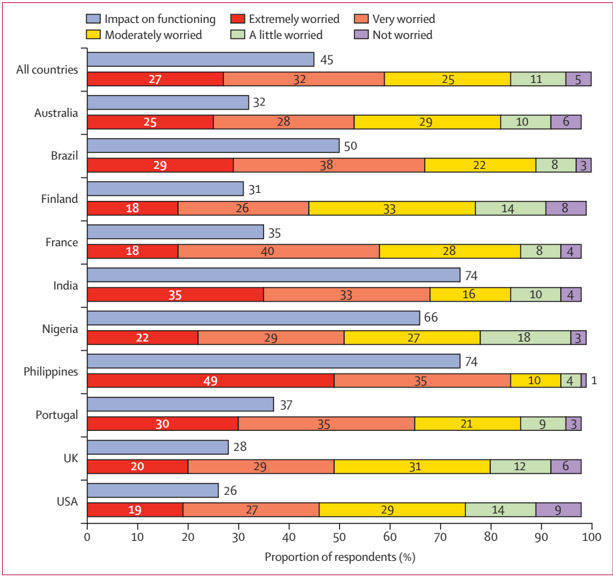
Background Climate change has important implications for the health and futures of children and young people, yet they have little power to limit its harm, making them vulnerable to climate anxiety. This is the first large-scale investigation of climate anxiety in children and young people globally and its relationship with perceived government response. Methods We surveyed 10 000 children and young people (aged 16-25 years) in ten countries (Australia, Brazil, Finland, France, India, Nigeria, Philippines, Portugal, the UK, and the USA; 1000 participants per country). Invitations to complete the survey were sent via the platform Kantar between May 18 and June 7, 2021. Data were collected on participants' thoughts and feelings about climate change, and government responses to climate change. Descriptive statistics were calculated for each aspect of climate anxiety, and Pearson's correlation analysis was done to evaluate whether climate-related distress, functioning, and negative beliefs about climate change were linked to thoughts and feelings about government response. Findings Respondents across all countries were worried about climate change (59% were very or extremely worried and 84% were at least moderately worried). More than 50% reported each of the following emotions: sad, anxious, angry, powerless, helpless, and guilty. More than 45% of respondents said their feelings about climate change negatively affected their daily life and functioning, and many reported a high n…
Verified 2026-11-25 · 1 reference not checked yet
Overview
CoChat Summary
TL;DR
This global survey of 10,000 people aged 16–25 across ten countries found widespread climate anxiety and distress, with many reporting negative functional impacts. Climate distress was correlated with negative perceptions of government responses and feelings of betrayal.
Key findings
- 59% were very or extremely worried about climate change and 84% were at least moderately worried; more than 50% reported feeling sad, anxious, angry, powerless, helpless, and guilty.
- More than 45% said their feelings about climate change negatively affected their daily life and functioning; 75% said the future is frightening and 83% said people have failed to take care of the planet.
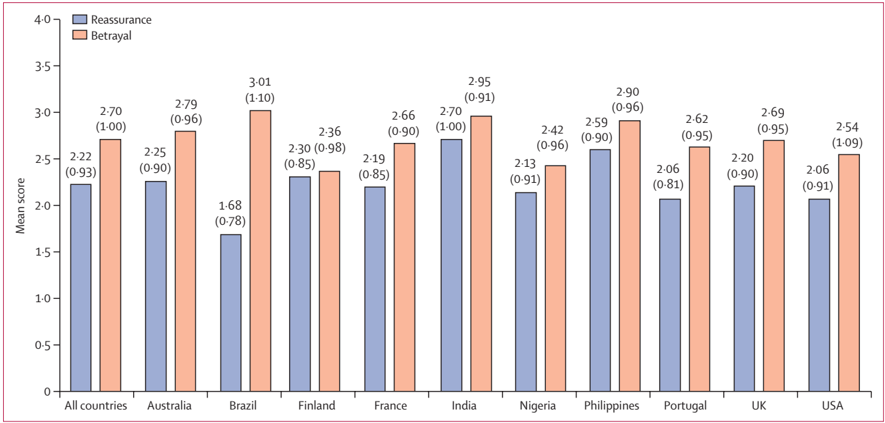
- Respondents rated government responses negatively (mean 14.96 on a 9–18 scale, SD 2.57) and reported greater betrayal (mean 2.7, SD 1.0) than reassurance (mean 2.22, SD 0.93; p<0.0001).
- Climate anxiety and distress were correlated with perceived inadequate government response and associated feelings of betrayal.
Methods
- Cross-sectional online survey of 10,000 children and young people aged 16–25 years in ten countries (Australia, Brazil, Finland, France, India, Nigeria, Philippines, Portugal, the UK, and the USA; 1000 per country), recruited via Kantar between May 18 and June 7, 2021.
- Quota sampling was based on age, gender, and region, with data weighted to OECD statistics for each country by age group, gender, and region.
- Descriptive statistics were calculated for climate anxiety constructs, and Pearson’s correlation analysis explored links between climate-related distress, functioning, negative beliefs, and thoughts/feelings about government response; findings significant at p≤0.001 are reported.
Limitations
- The paper states that non-standardised measures were used because no appropriate standardised measures existed; the study cannot indicate severity compared with normative samples, did not measure mental health outcomes, and used a yes/no/prefer-not-to-say response scale.
- The paper states that equal sample sizes per country were not weighted by population size, so aggregated results are not globally representative; online polling required internet access and sometimes English, and gender was recorded only as male or female.
- Evident from the text: the cross-sectional design cannot establish causality between perceived government response and climate distress.
Model-written summary. Check it against the paper before relying on it.
Integrity signals
Registry
Cites
Statistics
Figures
Verification
Claims the paper makes
12 Valid · 0 Not valid · 19 Not checked · 99 Own results and interpretations
Every source the paper cites for this claim was checked and supports it.
In the paper
“Children are now turning to legal action based on government failure to protect ecosystems, young citizens, and their futures. 26”
What the sources say
- Supportedcites [26] 26 Salas RN, Jacobs W, Perera F. The case of Juliana v. US-children and the health burdens of climate change. N Engl J Med 2019; 380: 2085-87 . source
The supplied Abstract passages describe children filing suit over federal inaction on climate change, which they say violates their constitutional rights. They also connect that inaction to threats to children’s safe environment and to future generations, supporting the citing sentence’s paraphrase. (LLM, conf=0.88)
plainstates a cause- Asserted: passes — The authors put it forward as true.
- Checkable: passes — It can be checked against evidence.
- Load-bearing: unclear — It is unclear whether the paper’s conclusions depend on it.
- Based: passes — The paper gives a reason why it holds.
- Supported
A result the paper reports from its own data — it cites no other source for it, so there is none to check. The quote shows it is in the paper.
In the paper
“in the Global North, Portugal (which had dramatic increases in wildfires since 2017) showed the highest level of worry.”
plainn = 1,000- Asserted: passes — The authors put it forward as true.
- Checkable: passes — It can be checked against evidence.
- Load-bearing: unclear — It is unclear whether the paper’s conclusions depend on it.
- Based: passes — The paper gives a reason why it holds.
A result the paper reports from its own data — it cites no other source for it, so there is none to check. The quote shows it is in the paper.
In the paper
“Respondents rated governmental responses to climate change negatively”
plain- Asserted: passes — The authors put it forward as true.
- Checkable: passes — It can be checked against evidence.
- Load-bearing: passes — The paper’s conclusions depend on it.
- Based: passes — The paper gives a reason why it holds.
A result the paper reports from its own data — it cites no other source for it, so there is none to check. The quote shows it is in the paper.
In the paper
“This distress was associated with beliefs about inadequate governmental response and feelings of betrayal.”
plainstates an association- Asserted: passes — The authors put it forward as true.
- Checkable: passes — It can be checked against evidence.
- Load-bearing: passes — The paper’s conclusions depend on it.
- Based: passes — The paper gives a reason why it holds.
A result the paper reports from its own data — it cites no other source for it, so there is none to check. The quote shows it is in the paper.
In the paper
“More than 45% of respondents said their feelings about climate change negatively affected their daily life and functioning”
- Also stated in: § Results · p. 5 · plain
“More than 45% of respondents said their feelings about climate change negatively affected their daily lives”
plainn = 10- Asserted: passes — The authors put it forward as true.
- Checkable: passes — It can be checked against evidence.
- Load-bearing: passes — The paper’s conclusions depend on it.
- Based: passes — The paper gives a reason why it holds.
- Also stated in: § Results · p. 5 · plain
50 more claims
Create a free account to see all 130 claims and to verify the 1 reference still open.
- Probably not a substantial claim. 51
- It may state two separate claims as one. 41
- The quote only partly states this claim. 6
Claims other papers make about this one
Each is checked against this paper’s own text: does it say what the citing paper says it does?
The source backs part of the claim, not all of it — or backs it for a different population, condition or comparison.
In the citing paper
“Investigations into anxiety about climate change have revealed that it is increasingly common for many people across the globe [9], with large-scale international studies identifying growing concern about climate change [10–12].”
From The relationship between climate change and mental health: a systematic review of the association between eco-anxiety, psychological distress, and symptoms of major affective disorders (2024) · cites this paper as [10]
Experimental — accuracy not yet measuredThe source backs part of the claim, not all of it — or backs it for a different population, condition or comparison.
In the citing paper
“The high prevalence of eco-anxiety [10] - be it at clinical or subclinical levels - underscores the need for broader level changes related to climate change.”
From The relationship between climate change and mental health: a systematic review of the association between eco-anxiety, psychological distress, and symptoms of major affective disorders (2024) · cites this paper as [10]
Experimental — accuracy not yet measuredThe source backs part of the claim, not all of it — or backs it for a different population, condition or comparison.
In the citing paper
“and varied understandings and experiences of climate change have differing impacts on the relationship with mental health [10, 12].”
From The relationship between climate change and mental health: a systematic review of the association between eco-anxiety, psychological distress, and symptoms of major affective disorders (2024) · cites this paper as [10]
Experimental — accuracy not yet measuredThe source backs part of the claim, not all of it — or backs it for a different population, condition or comparison.
In the citing paper
“A global survey of 10,000 young people (16-25) across 10 countries found: (1) 75% were frightened about the future; (2) 84% were moderately worried; (3) 59% were very or extremely worried; and (4) 45%+ reported climate change-related feelings negatively affected their daily life and functioning [21].”
From Climate Distress: A Review of Current Psychological Research and Practice (2023) · cites this paper as [21]
Experimental — accuracy not yet measuredThe source backs part of the claim, not all of it — or backs it for a different population, condition or comparison.
In the citing paper
“An overall lack of trust in government was also identified, with a wide belief that the government response to climate change will continue to be inadequate [21].”
From Climate Distress: A Review of Current Psychological Research and Practice (2023) · cites this paper as [21]
Experimental — accuracy not yet measured
21 more claims about this paper
Create a free account to see every claim other papers make about this one.
Self-check
Percentages, sums and reported differences re-computed from the paper’s own numbers.
Rated minor: it would not touch a result — a value no result rests on, a p-value that stays on the same side of the significance level, or a conflict that is clerical, resolved elsewhere in the paper, or outside its own findings.
In the paper
“15 543 people began the survey and 10 000 (68%) completed it.”
Reported 68 · recomputed 64.337644
Citations
Cites
Mental health of young people: A global public-health challenge
Patel, V., Flisher, A. J., Hetrick, S., & McGorry, P. (2007) · The Lancet · doi:10.1016/s0140-6736(07)60368-7 · Cited by 3,126 · cited 2×
“23 Children facing a future severely damaged by climate change will need support.”
Stress and Health: Psychological, Behavioral, and Biological Determinants
Schneiderman, N., Ironson, G., & Siegel, S. D. (2005) · Annual Review of Clinical Psychology · doi:10.1146/annurev.clinpsy.1.102803.144141 · Cited by 2,252 · cited 2×
“22 Exposure to chronic stress in childhood has a long-lasting impact and increases the risk of developing mental health problems.”
Development and validation of a measure of climate change anxiety
Clayton, S., & Karazsia, B. T. (2020) · Journal of Environmental Psychology · doi:10.1016/j.jenvp.2020.101434 · Cited by 1,196
Self-citationAnxiety and the Ecological Crisis: An Analysis of Eco-Anxiety and Climate Anxiety
Pihkala, P. (2020) · Sustainability · doi:10.3390/su12197836 · Cited by 978 · cited 2×
“In threatening and uncertain situations such as the climate crisis, this response can be seen as what is sometimes referred to as practical anxiety 1,4 because it has the beneficial effect of leading people to reassess their behaviour in order to respond appropriately.”
Self-citationMoral Injury: An Integrative Review
Griffin, B. J., Purcell, N., Burkman, K., Litz, B. T., Bryan, C. J., Schmitz, M., Villierme, C., Walsh, J., & Maguen, S. (2019) · Journal of Traumatic Stress · doi:10.1002/jts.22362 · Cited by 752 · cited 2×
“28 This might include an awareness of or failure to prevent harmful unethical behaviour.”
Stanley, S. K., Hogg, T. L., Leviston, Z., & Walker, I. (2021) · The Journal of Climate Change and Health · doi:10.1016/j.joclim.2021.100003 · Cited by 715
Anxiety, worry, and grief in a time of environmental and climate crisis: a narrative review
Ojala, M., Cunsolo, A., Ogunbode, C. A., & Middleton, J. (2021) · Annual Review of Environment and Resources · doi:10.1146/annurev-environ-012220-022716 · Cited by 670
The case for systems thinking about climate change and mental health
Berry, H. L., Waite, T. D., Dear, K. B. G., Capon, A. G., & Murray, V. (2018) · Nature Climate Change · doi:10.1038/s41558-018-0102-4 · Cited by 485 · cited 2×
“Changing climate and weather-related disasters have diverse impacts, both direct (eg, destruction and trauma) and indirect (eg, strained personal and public resources, interrupted community functioning), 2 as well as resulting in climate anxiety.”
Eco-Anxiety and Environmental Education
Pihkala, P. (2020) · Sustainability · doi:10.3390/su122310149 · Cited by 475
Self-citationThe Hogg Eco-Anxiety Scale: Development and Validation of a Multidimensional Scale
(2021) · doi:10.31219/osf.io/rxudb · Cited by 465
Research works printed but not linked: 4
- 11 Jensen T. Ecologies of guilt in environmental rhetorics. Cham: Palgrave Macmillan, 2019.
- 18 UNICEF. One billion children at 'extremely high risk' of the impacts of the climate crisis. Aug 20, 2021. https://www.unicef.org. uk/press-releases/onebillion-children-at-extremely-high-risk-of-theimpacts-of-the-climate-crisis-unicef (accessed Sept 5, 2021).
- 27 Weintrobe S. Psychological roots of the climate crisis: neoliberal exceptionalism and the culture of uncare. New York, NY: Bloomsbury Academic, 2021.
- 32 Mavronicola N. Torture, inhumanity and degradation under article 3 of the ECHR: absolute rights and absolute wrongs. Oxford: Bloomsbury Publishing, 2021.
Cited by
The Lancet Psychiatry Commission on youth mental health
McGorry, P. D., Mei, C., Dalal, N., Alvarez-Jimenez, M., Blakemore, S.-J., Browne, V., Dooley, B., Hickie, I. B., Jones, P. B., McDaid, D., et al. (2024) · The Lancet Psychiatry · doi:10.1016/s2215-0366(24)00163-9 · Cited by 663
Ogunbode, C. A., Doran, R., Hanss, D., Ojala, M., Salmela-Aro, K., van den Broek, K. L., Bhullar, N., Aquino, S. D., Marot, T., Schermer, J. A., et al. (2022) · Journal of Environmental Psychology · doi:10.1016/j.jenvp.2022.101887 · Cited by 549
“Research suggests that climate anxiety is especially prevalent among young people (Clayton & Karazsia, 2020; Hickman et al., 2021).”
Lawrance, E. L., Thompson, R., Newberry Le Vay, J., Page, L., & Jennings, N. (2022) · International Review of Psychiatry · doi:10.1080/09540261.2022.2128725 · Cited by 500
“By this metric, the self-reported daily life impacts of climate worry in 45% of children and young people surveyed globally (65) is indicative of challenges relevant for mental health support services.”
BackgroundInfluentialToward a taxonomy of climate emotions
Pihkala, P. (2022) · Frontiers in Climate · doi:10.3389/fclim.2021.738154 · Cited by 471
“A few existing, broad surveys of climate emotions are used as references to the existence of many of these climate emotions (especially Hyry, 2019; Hickman et al., 2021), but it was not possible in this research to evaluate the prevalence or statistics related to these emotions.”
BackgroundInfluentialClimate change, fossil-fuel pollution, and children's health
Perera, F., & Nadeau, K. (2022) · New England Journal of Medicine · doi:10.1056/nejmra2117706 · Cited by 420
Climate anxiety: What predicts it and how is it related to climate action?
Whitmarsh, L., Player, L., Jiongco, A., James, M., Williams, M., Marks, E., & Kennedy-Williams, P. (2022) · Journal of Environmental Psychology · doi:10.1016/j.jenvp.2022.101866 · Cited by 401
Self-citationFear for the future: Eco-anxiety and health implications, a systematic review
Boluda-Verdú, I., Senent-Valero, M., Casas-Escolano, M., Matijasevich, A., & Pastor-Valero, M. (2022) · Journal of Environmental Psychology · doi:10.1016/j.jenvp.2022.101904 · Cited by 306
A social–ecological perspective on climate anxiety in children and adolescents
Crandon, T. J., Scott, J. G., Charlson, F. J., & Thomas, H. J. (2022) · Nature Climate Change · doi:10.1038/s41558-021-01251-y · Cited by 306
Léger-Goodes, T., Malboeuf-Hurtubise, C., Mastine, T., Généreux, M., Paradis, P.-O., & Camden, C. (2022) · Frontiers in Psychology · doi:10.3389/fpsyg.2022.872544 · Cited by 299
Eco-anxiety: What it is and why it matters
Kurth, C., & Pihkala, P. (2022) · Frontiers in Psychology · doi:10.3389/fpsyg.2022.981814 · Cited by 289
“Overall, this review builds on extensive earlier research about eco-anxiety and eco-emotions by the second author: for example, reviews of definitions of eco-anxiety in various disciplines (Pihkala, 2020a), explorations of various climate emotions (Pihkala, 2022), and empirical survey research about young people’s cli…”
BackgroundSelf-citationKeyes, K. M., & Platt, J. M. (2024) · Journal of Child Psychology and Psychiatry · doi:10.1111/jcpp.13864 · Cited by 253
Ágoston, C., Csaba, B., Nagy, B., Kőváry, Z., Dúll, A., Rácz, J., & Demetrovics, Z. (2022) · International Journal of Environmental Research and Public Health · doi:10.3390/ijerph19042461 · Cited by 242
“Worry about climate change is very common among children and young people (84% of them expressed at least moderate worry in a large-scale study) [10].”
BackgroundHope and climate-change engagement from a psychological perspective
Ojala, M. (2023) · Current Opinion in Psychology · doi:10.1016/j.copsyc.2022.101514 · Cited by 214
Clayton, S. D., Pihkala, P., Wray, B., & Marks, E. (2023) · Sustainability · doi:10.3390/su15043540 · Cited by 191
Self-citationThe Process of Eco-Anxiety and Ecological Grief: A Narrative Review and a New Proposal
Pihkala, P. (2022) · Sustainability · doi:10.3390/su142416628 · Cited by 184
Self-citationThe youth mental health crisis: analysis and solutions
McGorry, P., Gunasiri, H., Mei, C., Rice, S., & Gao, C. X. (2025) · Frontiers in Psychiatry · doi:10.3389/fpsyt.2024.1517533 · Cited by 175
Heeren, A., Mouguiama-Daouda, C., & Contreras, A. (2022) · Climatic Change · doi:10.1007/s10584-022-03402-2 · Cited by 166
Climate anxiety: Conceptual considerations, and connections with climate hope and action
Sangervo, J., Jylhä, K. M., & Pihkala, P. (2022) · Global Environmental Change · doi:10.1016/j.gloenvcha.2022.102569 · Cited by 159
Self-citationClimate change, mental health, and reproductive decision-making: A systematic review
Dillarstone, H., Brown, L. J., & Flores, E. C. (2023) · PLOS Climate · doi:10.1371/journal.pclm.0000236 · Cited by 162
Eco‐anxiety in youth: An integrative literature review
Brophy, H., Olson, J., & Paul, P. (2022) · International Journal of Mental Health Nursing · doi:10.1111/inm.13099 · Cited by 223
Climate change anxiety in China, India, Japan, and the United States
Tam, K.-P., Chan, H.-W., & Clayton, S. (2023) · Journal of Environmental Psychology · doi:10.1016/j.jenvp.2023.101991 · Cited by 152
Self-citationThe Regenerative Lens: A conceptual framework for regenerative social-ecological systems
Buckton, S. J., Fazey, I., Sharpe, B., Om, E. S., Doherty, B., Ball, P. D., Denby, K., Bryant, M., Lait, R., Bridle, S., et al. (2023) · One Earth · doi:10.1016/j.oneear.2023.06.006 · Cited by 241
Justice in climate change education: a systematic review
Trott, C. D., Lam, S., Roncker, J., Gray, E.-S., Courtney, R. H., & Even, T. L. (2023) · Environmental Education Research · doi:10.1080/13504622.2023.2181265 · Cited by 239
“…change—an issue that is increasingly and understandably associated with mental health consequences, such as climate anxiety, grief, and despair (Hickman et al. 2021; Sciberras and Fernando 2022). indeed, a recent study found that most students reported feeling disem-powered by their education…”
BackgroundA call to action: the second Lancet Commission on adolescent health and wellbeing
Baird, S., Choonara, S., Azzopardi, P. S., Banati, P., Bessant, J., Biermann, O., Capon, A. G., Claeson, M., Collins, P. Y., Wet, N. D., et al. (2025) · The Lancet · doi:10.1016/s0140-6736(25)00503-3 · Cited by 245
Barchielli, B., Cricenti, C., Gallè, F., Sabella, E. A., Liguori, F., Da Molin, G., Liguori, G., Orsi, G. B., Giannini, A. M., Ferracuti, S., et al. (2022) · International Journal of Environmental Research and Public Health · doi:10.3390/ijerph191911929 · Cited by 146
“Previous studies have focused primarily on young adults and adolescents, showing that climate anxiety and other distressing emotions and thoughts about Climate Change impact their daily lives, similarly to our findings [9,18,78].”
ResultMental Health Impacts of Climate Change Among Vulnerable Populations Globally: An Integrative Review
White, B. P., Breakey, S., Brown, M. J., Smith, J. R., Tarbet, A., Nicholas, P. K., & Ros, A. M. V. (2023) · Annals of Global Health · doi:10.5334/aogh.4105 · Cited by 141
Climate emotions and anxiety among young people in Canada: A national survey and call to action
Galway, L. P., & Field, E. (2023) · The Journal of Climate Change and Health · doi:10.1016/j.joclim.2023.100204 · Cited by 227
Cosh, S. M., Ryan, R., Fallander, K., Robinson, K., Tognela, J., Tully, P. J., & Lykins, A. D. (2024) · BMC Psychiatry · doi:10.1186/s12888-024-06274-1 · Cited by 138
Educational Research and Innovation
OECD, & Centre for Educational Research and Innovation (2009) · Educational research and innovation · doi:10.1787/20769679 · Cited by 134
Lawrance, E. L., Jennings, N., Kioupi, V., Thompson, R., Diffey, J., & Vercammen, A. (2022) · The Lancet Planetary Health · doi:10.1016/s2542-5196(22)00172-3 · Cited by 123
Choices for climate action: A review of the multiple roles individuals play
Hampton, S., & Whitmarsh, L. E. (2023) · One Earth · doi:10.1016/j.oneear.2023.08.006 · Cited by 189
Marczak, M., Wierzba, M., Zaremba, D., Kulesza, M., Szczypiński, J., Kossowski, B., Budziszewska, M., Michałowski, J. M., Klöckner, C. A., & Marchewka, A. (2023) · Global Environmental Change · doi:10.1016/j.gloenvcha.2023.102764 · Cited by 151
Generational differences in climate-related beliefs, risk perceptions and emotions in the UK
Poortinga, W., Demski, C., & Steentjes, K. (2023) · Communications Earth & Environment · doi:10.1038/s43247-023-00870-x · Cited by 155
“The Boomer II group are however more than two-and-a-half times more likely than the Generation Z group to think “ we are already feeling the effects ” of climate change (OR = 2.70, 95%CI [1.24, 5.84]).”
BackgroundInfluentialClimate change and disorders of the nervous system
Sisodiya, S. M., Gulcebi, M. I., Fortunato, F., Mills, J. D., Haynes, E., Bramon, E., Chadwick, P., Ciccarelli, O., David, A. S., De Meyer, K., et al. (2024) · The Lancet Neurology · doi:10.1016/s1474-4422(24)00087-5 · Cited by 105
Knowledge and self-efficacy of youth to take action on climate change
Baldwin, C. L., Pickering, G. J., & Dale, G. (2022) · Environmental Education Research · doi:10.1080/13504622.2022.2121381 · Cited by 158
“More recently, Hickman et al. (2021) found that over 50% of their international sample of 10,000 young people (aged 16–25 years) felt sad, anxious, angry, powerless, helpless, and guilty in relation to CC.”
BackgroundOK Boomer: A decade of generational differences in feelings about climate change
Swim, J. K., Aviste, R., Lengieza, M. L., & Fasano, C. J. (2022) · Global Environmental Change · doi:10.1016/j.gloenvcha.2022.102479 · Cited by 143
Putting climate change at the heart of education: Is England's strategy a placebo for policy?
Dunlop, L., & Rushton, E. A. C. (2022) · British Educational Research Journal · doi:10.1002/berj.3816 · Cited by 126
“In a large-scale ( > 10,000 participants) international study of climate anxiety, Hickman et al. (2021) found that the majority of young people worried about climate change, with governmental responses to climate change rated negatively and associated with feelings of betrayal rather than…”
BackgroundQin, Z., Wu, Q., Bi, C., Deng, Y., & Hu, Q. (2024) · BMC Psychology · doi:10.1186/s40359-024-01746-1 · Cited by 99
“…by the fact that young and frail teenagers may subjectively think that they have no responsibility to protect the environment, and are more willing to believe that some more capable people or institutions, such as the government, should take action to deal with the threat of climate change [1].”
BackgroundFinnegan, W. (2022) · Environmental Education Research · doi:10.1080/13504622.2022.2120963 · Cited by 117
“…under 18 years old believe climate change is an emergency, compared to 58% of the respondents over 60 years old, and a large international study of youth reporting that 84% of respondents were worried about climate change, with 59% very or extremely worried (Flynn et al. 2021; Hickman et al. 2021).”
BackgroundResultLass‐Hennemann, J., Sopp, M. R., Ruf, N., Equit, M., Schäfer, S. K., Wirth, B. E., & Michael, T. (2023) · European Child & Adolescent Psychiatry · doi:10.1007/s00787-023-02300-x · Cited by 146
“As a basis for the questionnaires, we used previously established questionnaires on climate anxiety [10], fear of war [30] and burden during the COVID-19 pandemic [7].”
BackgroundMethodResultOjala, M. (2022) · European Journal of Developmental Psychology · doi:10.1080/17405629.2022.2108396 · Cited by 108
Kiviruusu, O. H., Ranta, K., Lindgren, M., Haravuori, H., Silén, Y., Therman, S., Lehtonen, J., Sares‐Jäske, L., Aalto‐Setälä, T., MARTTUNEN, M. J., et al. (2024) · The Lancet Psychiatry · doi:10.1016/s2215-0366(24)00108-1 · Cited by 149
Yang, P., Ju, Y., He, J., Xia, Z., Chen, L., & Tang, S. (2024) · Advanced Fiber Materials · doi:10.1007/s42765-024-00444-2 · Cited by 101
“With the intensification of global warming, there is an increased risk of people being exposed to hot environments and suffering from heat-related illnesses [3–5].”
The clinical implications of climate change for mental health
Crandon, T. J., Dey, C., Scott, J. G., Thomas, H. J., Ali, S., & Charlson, F. J. (2022) · Nature Human Behaviour · doi:10.1038/s41562-022-01477-6 · Cited by 88
A network approach to climate change anxiety and its key related features
Heeren, A., Mouguiama-Daouda, C., & McNally, R. J. (2023) · Journal of Anxiety Disorders · doi:10.1016/j.janxdis.2022.102625 · Cited by 88
School strike for climate: A reckoning for education
Verlie, B., & Flynn, A. (2022) · Australian Journal of Environmental Education · doi:10.1017/aee.2022.5 · Cited by 90
Ecological Sorrow: Types of Grief and Loss in Ecological Grief
Pihkala, P. (2024) · Sustainability · doi:10.3390/su16020849 · Cited by 125
“The first feature explicitly links loss and grief with anxiety, and the fourth feature focuses on feelings of helplessness and powerlessness, which have been found to be very common eco-emotions (e.g., [121]).”
BackgroundSelf-citationThe Anthropocene condition: evolving through social–ecological transformations
Ellis, E. C. (2023) · Philosophical Transactions of the Royal Society B Biological Sciences · doi:10.1098/rstb.2022.0255 · Cited by 115
Lewandowski, R. E., Clayton, S. D., Olbrich, L., Sakshaug, J. W., Wray, B., Schwartz, S. E. O., Augustinavicius, J., Howe, P. D., Parnes, M., Wright, S., et al. (2024) · The Lancet Planetary Health · doi:10.1016/s2542-5196(24)00229-8 · Cited by 91
Self-citationPortus, R., Aarnio‐Linnanvuori, E., Dillon, B., Fahy, F., Gopinath, D., Mansikka‐aho, A., Williams, S., Reilly, K., & McEwen, L. J. (2024) · Environmental Education Research · doi:10.1080/13504622.2024.2314060 · Cited by 140
“…environmental disaster (Glavovic, Smith, and White 2021), coupled with mounting feelings of concern amongst the public at a global level (ONS 2021; Hickman et al. 2021), extensive international research highlights that the value-action gap remains a stubbornly persistent challenge (Grandin,…”
BackgroundMental health and the global climate crisis
Corvalán, C., Gray, B., Prats, E. V., de Sena, A. R. M., Hanna, F., & Campbell-Lendrum, D. H. (2022) · Epidemiology and Psychiatric Sciences · doi:10.1017/s2045796022000361 · Cited by 110
Wullenkord, M. C., & Ojala, M. (2023) · Journal of Environmental Psychology · doi:10.1016/j.jenvp.2023.102093 · Cited by 105
Diffey, J., Wright, S., Uchendu, J. O., Masithi, S., Olude, A., Juma, D. O., Anya, L. H., Salami, T., Mogathala, P. R., Agarwal, H., et al. (2022) · International Review of Psychiatry · doi:10.1080/09540261.2022.2126297 · Cited by 102
“…and mental health impacts (e.g. fear- Ojala et al., 2021; grief- Cunsolo and Ellis, 2018; sorrow- Hamilton, 2022; guilt- Jensen, 2019; powerlessness- Wullenkord et al., 2021; betrayal- Hickman et al., 2021; vicarious trauma- Pihkala, 2019b; post-traumatic stress disorder- Sharpe and Davison, 2021).”
BackgroundInfluentialThe Sociology of Futurelessness
Tutton, R. (2022) · Sociology · doi:10.1177/00380385221122420 · Cited by 111
Education for Environmental Sustainability and the Emotions: Implications for Educational Practice
Dunlop, L., & Rushton, E. A. C. (2022) · Sustainability · doi:10.3390/su14084441 · Cited by 99
“[34] argue that protection from mental health problems can come from having feelings heard, validated, respected, and acted on by those in power as well as from proenvironmental action.”
BackgroundRamadan, R., Randell, A., Lavoie, S., Gao, C. X., Manrique, P. C., Anderson, R., McDowell, C., & Zbukvic, I. (2023) · Early Intervention in Psychiatry · doi:10.1111/eip.13374 · Cited by 76
“Five studies included a range of different negative emotions such as anger, stress, sadness and boredom (Hickman et al., 2021; MacDonald et al., 2015; Ogunbode et al., 2021; Scafuto, 2021; Searle & Gow, 2010; Stevenson & Peterson, 2015), while one investigated self-described feelings (Strife, 2012).”
BackgroundInfluentialSynthesising psychometric evidence for the Climate Anxiety Scale and Hogg Eco-Anxiety Scale
Hogg, T. L., Stanley, S. K., & O’Brien, L. V. (2023) · Journal of Environmental Psychology · doi:10.1016/j.jenvp.2023.102003 · Cited by 99
Contreras, A., Blanchard, M. A., Mouguiama-Daouda, C., & Heeren, A. (2023) · Journal of Anxiety Disorders · doi:10.1016/j.janxdis.2023.102822 · Cited by 116
Beyond colonial futurities in climate education
Stein, S. E., Andreotti, V., Ahenakew, C., Suša, R., Valley, W., Kui, N. H., Tremembé, M., Taylor, L., Siwek, D., Cardoso, C., et al. (2023) · Teaching in Higher Education · doi:10.1080/13562517.2023.2193667 · Cited by 103
Climate Anxiety: A Research Agenda Inspired by Emotion Research
van Valkengoed, A. M., Steg, L., & de Jonge, P. (2023) · Emotion Review · doi:10.1177/17540739231193752 · Cited by 77
“…to address climate change (Dodds, 2021), the lack of collective progress in solving the problem (Hickman, 2020), and perceiving the consequences of climate change (and the lack of response in addressing it) as violating moral principles (e.g., protecting nature and people; Hickman et al., 2021).”
BackgroundParmentier, M.-L., Weiss, K., Aroua, A., Betry, C., Rivière, M., & Navarro, O. (2024) · Journal of Anxiety Disorders · doi:10.1016/j.janxdis.2023.102799 · Cited by 73
Heeren, A., & Asmundson, G. J. G. (2023) · Journal of Anxiety Disorders · doi:10.1016/j.janxdis.2022.102654 · Cited by 71
Thomas, I., Martin, A., Wicker, A., & Benoit, L. (2022) · Child and Adolescent Psychiatry and Mental Health · doi:10.1186/s13034-022-00551-1 · Cited by 97
Anderson, T., Valiauga, R., Tallo, C., Hong, C. B., Manoranjithan, S., Domingo, C. N., Paudel, M., Untaroiu, A., Barr, S., & Goldhaber, K. (2024) · Journal of Child and Adolescent Psychiatric Nursing · doi:10.1111/jcap.70009 · Cited by 143
Patwary, M. M., Bardhan, M., Haque, M. A., Moniruzzaman, S., Gustavsson, J., Khan, M. M. H., Koivisto, J. E., Salwa, M., Mashreky, S. R., Rahman, A., et al. (2024) · Environmental Research · doi:10.1016/j.envres.2024.118436 · Cited by 83
Green teens: Understanding and promoting adolescents’ sustainable engagement
Thomaes, S. C. E., Grapsas, S., van de Wetering, J., Spitzer, J. E., & Poorthuis, A. M. G. (2023) · One Earth · doi:10.1016/j.oneear.2023.02.006 · Cited by 87
“30 32 Second, the climate crisis is consequential for today’s young people.”
BackgroundVercammen, A., Kioupi, V., & Daeninck, C. (2023) · Frontiers in Psychology · doi:10.3389/fpsyg.2023.1126031 · Cited by 108
“Climate anxiety is expected to increase in prevalence and certain populations, including young people, individuals who feel most closely connected to nature and those who work in environmental protection or related careers, remain disproportionately burdened (Fraser et al., 2013; Clayton, 2018; Coffey et al., 2021; Hi…”
BackgroundInfluentialClimate Change and Substance-Use Behaviors: A Risk-Pathways Framework
Vergunst, F., Berry, H. L., Minor, K., & Chadi, N. (2023) · Perspectives on Psychological Science · doi:10.1177/17456916221132739 · Cited by 63
Sutcliffe, K., Ball, J., Clark, T. C., Archer, D. J., Peiris-John, R. J., Crengle, S. M., & Fleming, T. M. (2022) · Australian & New Zealand Journal of Psychiatry · doi:10.1177/00048674221138503 · Cited by 85
“Other proposed drivers include increases in perfectionism (Curran and Hill, 2019), school pressure (Cosma et al., 2020) and future concerns such as climate anxiety (Hickman et al., 2021), although these do not provide a strong rationale for the rapid pace of change.”
BackgroundSampaio, F., Costa, T. F. O., Teixeira-Santos, L., de Pinho, L. G., Sequeira, C., Luís, S., Loureiro, A., Soro, J. C., Roldán-Merino, J. F., Moreno‐Poyato, A. R., et al. (2023) · BMC Public Health · doi:10.1186/s12889-023-16816-z · Cited by 92
“Hickman and colleagues [3] found that most young people in Portugal are either extremely or very worried about climate change, and this anxiety impacts most of their daily lives.”
BackgroundInfluentialPong, V., & Tam, K. (2023) · Frontiers in Psychology · doi:10.3389/fpsyg.2023.1033564 · Cited by 93
Martin, G., Cosma, A. P., Roswell, T., Anderson, M. P., Treble, M., Leslie, K., Card, K. G., Closson, K., Kennedy, A. M., & Gislason, M. (2023) · Social Science & Medicine · doi:10.1016/j.socscimed.2023.116008 · Cited by 79
Climate change and pregnancy complications: From hormones to the immune response
Yüzen, D., Graf, I., Diemert, A., & Arck, P. C. (2023) · Frontiers in Endocrinology · doi:10.3389/fendo.2023.1149284 · Cited by 61
Psychometric properties of the climate change anxiety scale
Cruz, S. M., & High, A. C. (2022) · Journal of Environmental Psychology · doi:10.1016/j.jenvp.2022.101905 · Cited by 82
Holst, J., Grund, J., & Brock, A. (2024) · Sustainability Science · doi:10.1007/s11625-024-01506-5 · Cited by 133
“…UNESCO 2020; United Nations General Assembly 2015), motivation to contribute to sustainability (e.g., Brundiers et al. 2021; Grund and Brock 2019; Haan 2010; Hickman et al. 2021), as well as knowledge and behaviors (e.g., Brundiers et al. 2021; Rieckmann et al. 2017; Sass et al. 2023; UNESCO 2020).”
Mainstreaming regenerative dynamics for sustainability
Fischer, J., Farny, S., Abson, D. J., Zeidler, V. Z., von Salisch, M., Schaltegger, S., Martín‐López, B., Temperton, V. M., & Kümmerer, K. (2024) · Nature Sustainability · doi:10.1038/s41893-024-01368-w · Cited by 77
“…problems in contexts of both the environment and human well-being; widespread degeneration has been observed across different contexts, for example, in ecosystems 14 , mental health (that is, climate anxiety 15 ), community cohesion 16 , food security 17 and agricultural soil quality 18 .”
Léger‐Goodes, T., Malboeuf‐Hurtubise, C., Hurtubise, K., Simons, K., Boucher, A., Paradis, P.-O., Herba, C. M., Camden, C., & Généreux, M. (2023) · PLoS ONE · doi:10.1371/journal.pone.0284774 · Cited by 88
“Inversely, in the context of climate change, the perspective of managing or dismissing children’s eco-anxiety can be detrimental to their mental health, as research with youth suggests [25].”
BackgroundInfluentialOlsen, E. K., Lawson, D. F., McClain, L. R., & Plummer, J. D. (2024) · Environmental Education Research · doi:10.1080/13504622.2024.2315572 · Cited by 93
“Physical and mental health are interconnected in an individual and can be used to determine community health and well-being (Clayton et al. 2021).”
InfluentialCOP28: ambitions, realities, and future
Arora, P. (2024) · Environmental Sustainability · doi:10.1007/s42398-024-00304-0 · Cited by 64
“According to a study by Hickman et al. (2021), 61.8% of the young adults globally feel anxious due to climate change, 38% are suffering from depression, and more than half of them blame governments for these feelings.”
InfluentialClimate change anxiety: A meta-analysis
Kühner, C., Gemmecke, C., Hüffmeier, J., & Zacher, H. (2025) · Global Environmental Change · doi:10.1016/j.gloenvcha.2025.103015 · Cited by 100
Parsons, E. S., Jowell, A. H., Veidis, E. M., Barry, M., & Israni, S. T. (2024) · Pediatric Research · doi:10.1038/s41390-024-03153-z · Cited by 119
Predicting climate change anxiety
Asgarizadeh, Z., Gifford, R., & Colborne, L. (2023) · Journal of Environmental Psychology · doi:10.1016/j.jenvp.2023.102087 · Cited by 56
The Impact of Climate Change, Pollution, and Biodiversity Loss on Digestive Health and Disease
Leddin, D. J. (2024) · Gastro Hep Advances · doi:10.1016/j.gastha.2024.01.018 · Cited by 73
Agache, I. O., Akdiş, C. A., Akdiş, M., Al-Hemoud, A. M., Annesi‐Maesano, I., Balmes, J. R., Cecchi, L., Damialis, A., Haahtela, T., Haber, A. L., et al. (2024) · Frontiers in Science · doi:10.3389/fsci.2024.1279192 · Cited by 72
Hope, Health, and the Climate Crisis
Frumkin, H. (2022) · The Journal of Climate Change and Health · doi:10.1016/j.joclim.2022.100115 · Cited by 79
“…75% endorsed the statement that the future is frightening, 56% that humanity is doomed, 55% that what they most value will be destroyed, and 52% that their family security will be threatened; majorities ranging as high as 68% reported feeling sad, afraid, anxious, powerless, and help-less [90].”
‘Listen to me!’: Young people’s experiences of talking about emotional impacts of climate change
Jones, C. A., & Lucas, C. H. (2023) · Global Environmental Change · doi:10.1016/j.gloenvcha.2023.102744 · Cited by 75
The rise of eco-anxiety: scientists wake up to the mental-health toll of climate change
Pearson, H. (2024) · Nature · doi:10.1038/d41586-024-00998-6 · Cited by 88
Field, E., Spiropoulos, G., Nguyen, A. T., & Grewal, R. K. (2023) · Canadian Journal of Educational Administration and Policy · doi:10.7202/1099989ar · Cited by 73
Eco-Anxiety in Children and Young People – A Rational Response, Irreconcilable Despair, or Both?
Hickman, C. (2024) · The Psychoanalytic Study of the Child · doi:10.1080/00797308.2023.2287381 · Cited by 72
“Research tells us about the impact of the climate and biodiversity crises on children and young people worldwide as it examines how these crises affect children emotionally, cognitively, in their daily lives, and their trust and faith in government action (Hickman et al. 2021).”
BackgroundSelf-citationThe climate crisis as a driver for pedagogical renewal in higher education
McCowan, T. (2023) · Teaching in Higher Education · doi:10.1080/13562517.2023.2197113 · Cited by 98
“Naturally, some of these are disturbing topics and have to be dealt with in delicate ways, particularly in the context of widespread anxiety amongst young people (Hickman et al. 2021; Ojala 2016).”
BackgroundHeinzel, S., Tschorn, M., Schulte-Hutner, M., Schäfer, F., Reese, G., Pohle, C., Peter, F., Neuber, M., Liu, S., Keller, J., et al. (2023) · Frontiers in Psychology · doi:10.3389/fpsyg.2023.1239425 · Cited by 50
“Moderate correlations between eco-anxiety and other negative, but not positive emotions suggest that engaging with the climate and environmental crises simultaneously evokes a variety of negative emotions, as proposed by other studies (Hickman et al., 2021; Ojala et al., 2021).”
BackgroundResultLeveraging neuroscience for climate change research
Doell, K. C., Berman, M. G., Bratman, G. N., Knutson, B. D., Kühn, S., Lamm, C., Pahl, S., Sawe, N. A., Bavel, J. J. V., White, M. P., et al. (2023) · Nature Climate Change · doi:10.1038/s41558-023-01857-4 · Cited by 61
“There are multiple ways in which climate change will impact living environments and ultimately affect the brain.”
BackgroundResultInfluentialWang, H., Safer, D. L., Cosentino, M., Cooper, R., Susteren, L. V., Coren, E., Nosek, G., Lertzman, R., & Sutton, S. (2023) · The Journal of Climate Change and Health · doi:10.1016/j.joclim.2023.100211 · Cited by 79
Self-citationCurrent evidence and opportunities in child and adolescent public mental health: a research review
Fazel, M. S., & Soneson, E. (2023) · Journal of Child Psychology and Psychiatry · doi:10.1111/jcpp.13889 · Cited by 66
Becht, A., Spitzer, J. E., Grapsas, S., van de Wetering, J., Poorthuis, A. M. G., Smeekes, A., & Thomaes, S. C. E. (2024) · Journal of Child Psychology and Psychiatry · doi:10.1111/jcpp.14035 · Cited by 77
Wu, J., Long, D., Hafez, N., Maloney, J., Lim, Y., & Samji, H. (2023) · International Journal of Mental Health Nursing · doi:10.1111/inm.13201 · Cited by 49
A theoretical model of climate anxiety and coping
Crandon, T., Scott, J. G., Charlson, F., & Thomas, H. J. (2024) · Discover Psychology · doi:10.1007/s44202-024-00212-8 · Cited by 76
“For example, learning about ineffectual government responses or how corpo-rations contribute to emissions, may provoke anger, frustration, and feelings of betrayal [33].”
Assaraf, O. B., Dawson, V., Eilam, E., Gokpinar, T., Goldman, D., Naugauker, N., Putri, I. G. A. P. E., Subiantoro, A. W., Tolppanen, S., White, P., et al. (2024) · International Journal of Science Education · doi:10.1080/09500693.2024.2314572 · Cited by 65
“This supports a similar finding by Clayton et al. (2023) among teachers and parallels a global concern of increasing youth ecoanxiety and the need for adults to be responsive to this (Hickman et. al., 2021).”
Smith, D. M., Sales, J., Williams, A., & Munro, S. B. (2023) · BMC Public Health · doi:10.1186/s12889-023-15674-z · Cited by 63
“The term “eco-anxiety” has been used to describe a debilitating worry about current and future losses related to climate change [19] and one large international survey study found that climate change and government inaction are chronic mental health stressors in the lives of young people that may have considerable, pe…”
BackgroundAt the intersection of climate justice and reproductive justice
Sasser, J. S. (2023) · Wiley Interdisciplinary Reviews Climate Change · doi:10.1002/wcc.860 · Cited by 66
“…and multiply the effects of other existing stressors as poverty, systemic racism, and racial violence (Dooley et al., 2021; Williams, 2018), and may be associated with such negative mental health impacts as anxiety, mood disorders, PTSD, mental illness, and suicide (Clayton et al., 2021).”
Background
Metadata
- Authors
- Hickman, C., Marks, E., Pihkala, P., Clayton, S., Lewandowski, R. E., Mayall, E. E., Wray, B., Mellor, C., & van Susteren, L.
- Affiliations
- University of Bath (GB)
- University of Helsinki (FI)
- College of Wooster (US)
- NYU Langone Health (US)
- University of East Anglia (GB)
- London School of Hygiene & Tropical Medicine (GB)
- Oxford Health NHS Foundation Trust (GB)
- Corresponding author
- Hickman, Caroline
- Venue
- The Lancet Planetary Health
- Publisher
- Elsevier BV
- Published
- 2021-12
- Volume
- 5
- Issue
- 12
- Pages
- e863-e873
- ISSN
- 2542-5196 (ISSN-L)
- OpenAlex
- W4200005759
- Semantic Scholar
- 4a876cc35863ba593aacf58fe6a24773b3cb9c29
- Cited by
- 2,324
- References
- 27
- Citations by year
- 2026: 566 · 2025: 652 · 2024: 566 · 2023: 364 · 2022: 170 · 2021: 4
- FWCI
- 382.19
- Type
- journal article
- Language
- en
- Open access
- gold
- doi.org
- Licence
- cc-by-nc-nd
- www.elsevier.com/tdm/userlicense/1.0/ (tdm)
- www.elsevier.com/legal/tdmrep-license (tdm)
- creativecommons.org/licenses/by-nc-nd/4.0/ (vor)
- Locations
- The Lancet Planetary Health (publishedVersion, cc-by-nc-nd)
- PubMed (publishedVersion)
- DOAJ (DOAJ: Directory of Open Access Journals) (submittedVersion, cc-by-sa)
- Työväentutkimus Vuosikirja (submittedVersion)
- Topics
- Social Sciences › Sociology and Political Science › Climate Change Communication and Perception
- Physical Sciences › Environmental Science › Health, Toxicology and Mutagenesis › Climate Change and Health Impacts
- Social Sciences › Psychology › Clinical Psychology › COVID-19 and Mental Health
- Keywords
- climate anxiety, children and young people, climate change, betrayal, climate change beliefs, daily functioning, global survey
- MeSH terms
- Adolescent, Adult, Anxiety, Australia, Child, Government, Humans, Surveys and Questionnaires, Young Adult, Climate Change
About these checks
Registry, retraction, Cites and statistics results are computed, not judged, with one exception: a printed reference that no index lists is read once by a model before it counts as a citation error. Claims are extracted by a model and kept only when their quote appears verbatim in the text; each cited source is then checked, with a model’s help, for whether it says what the claim relies on. Those verdicts can be wrong — read the claim’s quote and the cited source before relying on one.
The claim verdicts this report counts are experimental: their accuracy is not yet measured.
A language model drew the claims from the paper on 2026-10-10, under version 3 of the claim definition (model deepseek-v4.1-flash, prompt extract-v3).
A second model labelled each claim on 2026-10-10 (model jev-1.13-20260917, definition revision gold-guideline-v0.2).
Cited sources are checked with a language model’s help (gpt-6-sol).
Statistics and arithmetic are recomputed, not judged.
Confidence bands are shown only for fields calibrated on our annotated test set. None is calibrated yet, so no band is shown.
What counts as a claim ›How we measure confidence ›How we check this ›
Are you an author, or do you see a problem with this page? Request a review
Data sources
Bibliographic data: Semantic Scholar, OpenAlex, Crossref.
Contains information from the Semantic Scholar Academic Graph Datasets, made available under the ODC Attribution License (ODC-BY 1.0).
Semantic Scholar’s data is described in: Kinney, R., et al. (2023). The Semantic Scholar Open Data Platform. arXiv:2301.10140.
