

Climate anxiety in children and young people and their beliefs about government responses to climate change: a global survey
Open accessThe DOI matches its Crossref record; 27 of the 30 references it cites were found in a registry or an index, and 1 are not checked yet; 14 of the 48 sources its claims cite were checked for support.
Abstract
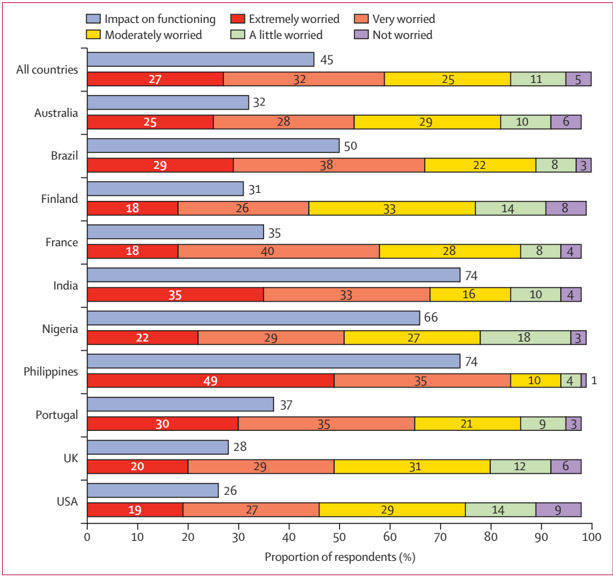
Background Climate change has important implications for the health and futures of children and young people, yet they have little power to limit its harm, making them vulnerable to climate anxiety. This is the first large-scale investigation of climate anxiety in children and young people globally and its relationship with perceived government response. Methods We surveyed 10 000 children and young people (aged 16-25 years) in ten countries (Australia, Brazil, Finland, France, India, Nigeria, Philippines, Portugal, the UK, and the USA; 1000 participants per country). Invitations to complete the survey were sent via the platform Kantar between May 18 and June 7, 2021. Data were collected on participants' thoughts and feelings about climate change, and government responses to climate change. Descriptive statistics were calculated for each aspect of climate anxiety, and Pearson's correlation analysis was done to evaluate whether climate-related distress, functioning, and negative beliefs about climate change were linked to thoughts and feelings about government response. Findings Respondents across all countries were worried about climate change (59% were very or extremely worried and 84% were at least moderately worried). More than 50% reported each of the following emotions: sad, anxious, angry, powerless, helpless, and guilty. More than 45% of respondents said their feelings about climate change negatively affected their daily life and functioning, and many reported a high n…
Verified 2026-11-25 · 1 reference not checked yet
Overview
CoChat Summary
TL;DR
This global survey of 10,000 people aged 16–25 across ten countries found widespread climate anxiety and distress, with many reporting negative functional impacts. Climate distress was correlated with negative perceptions of government responses and feelings of betrayal.
Key findings
- 59% were very or extremely worried about climate change and 84% were at least moderately worried; more than 50% reported feeling sad, anxious, angry, powerless, helpless, and guilty.
- More than 45% said their feelings about climate change negatively affected their daily life and functioning; 75% said the future is frightening and 83% said people have failed to take care of the planet.
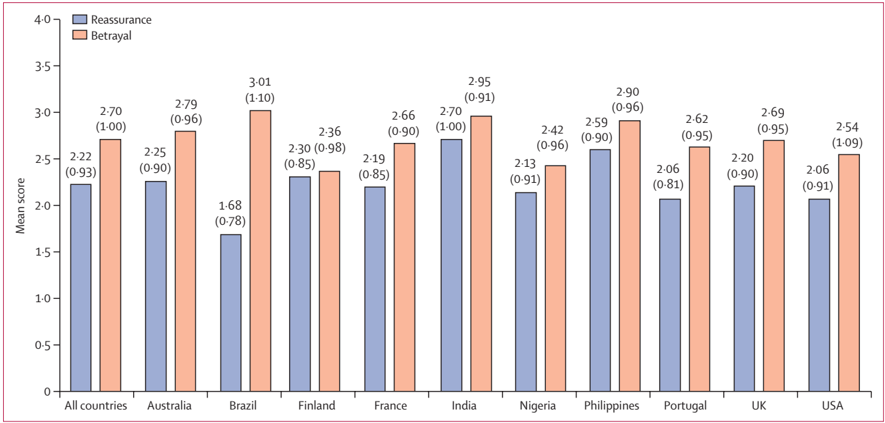
- Respondents rated government responses negatively (mean 14.96 on a 9–18 scale, SD 2.57) and reported greater betrayal (mean 2.7, SD 1.0) than reassurance (mean 2.22, SD 0.93; p<0.0001).
- Climate anxiety and distress were correlated with perceived inadequate government response and associated feelings of betrayal.
Methods
- Cross-sectional online survey of 10,000 children and young people aged 16–25 years in ten countries (Australia, Brazil, Finland, France, India, Nigeria, Philippines, Portugal, the UK, and the USA; 1000 per country), recruited via Kantar between May 18 and June 7, 2021.
- Quota sampling was based on age, gender, and region, with data weighted to OECD statistics for each country by age group, gender, and region.
- Descriptive statistics were calculated for climate anxiety constructs, and Pearson’s correlation analysis explored links between climate-related distress, functioning, negative beliefs, and thoughts/feelings about government response; findings significant at p≤0.001 are reported.
Limitations
- The paper states that non-standardised measures were used because no appropriate standardised measures existed; the study cannot indicate severity compared with normative samples, did not measure mental health outcomes, and used a yes/no/prefer-not-to-say response scale.
- The paper states that equal sample sizes per country were not weighted by population size, so aggregated results are not globally representative; online polling required internet access and sometimes English, and gender was recorded only as male or female.
- Evident from the text: the cross-sectional design cannot establish causality between perceived government response and climate distress.
Model-written summary. Check it against the paper before relying on it.
Integrity signals
Registry
Cites
Statistics
Figures
Verification
Claims the paper makes
12 Valid · 0 Not valid · 19 Not checked · 99 Own results and interpretations
Every source the paper cites for this claim was checked and supports it.
In the paper
“Children are now turning to legal action based on government failure to protect ecosystems, young citizens, and their futures. 26”
What the sources say
- Supportedcites [26] 26 Salas RN, Jacobs W, Perera F. The case of Juliana v. US-children and the health burdens of climate change. N Engl J Med 2019; 380: 2085-87 . source
The supplied Abstract passages describe children filing suit over federal inaction on climate change, which they say violates their constitutional rights. They also connect that inaction to threats to children’s safe environment and to future generations, supporting the citing sentence’s paraphrase. (LLM, conf=0.88)
plainstates a cause- Asserted: passes — The authors put it forward as true.
- Checkable: passes — It can be checked against evidence.
- Load-bearing: unclear — It is unclear whether the paper’s conclusions depend on it.
- Based: passes — The paper gives a reason why it holds.
- Supported
A result the paper reports from its own data — it cites no other source for it, so there is none to check. The quote shows it is in the paper.
In the paper
“in the Global North, Portugal (which had dramatic increases in wildfires since 2017) showed the highest level of worry.”
plainn = 1,000- Asserted: passes — The authors put it forward as true.
- Checkable: passes — It can be checked against evidence.
- Load-bearing: unclear — It is unclear whether the paper’s conclusions depend on it.
- Based: passes — The paper gives a reason why it holds.
A result the paper reports from its own data — it cites no other source for it, so there is none to check. The quote shows it is in the paper.
In the paper
“Respondents rated governmental responses to climate change negatively”
plain- Asserted: passes — The authors put it forward as true.
- Checkable: passes — It can be checked against evidence.
- Load-bearing: passes — The paper’s conclusions depend on it.
- Based: passes — The paper gives a reason why it holds.
A result the paper reports from its own data — it cites no other source for it, so there is none to check. The quote shows it is in the paper.
In the paper
“This distress was associated with beliefs about inadequate governmental response and feelings of betrayal.”
plainstates an association- Asserted: passes — The authors put it forward as true.
- Checkable: passes — It can be checked against evidence.
- Load-bearing: passes — The paper’s conclusions depend on it.
- Based: passes — The paper gives a reason why it holds.
A result the paper reports from its own data — it cites no other source for it, so there is none to check. The quote shows it is in the paper.
In the paper
“More than 45% of respondents said their feelings about climate change negatively affected their daily life and functioning”
- Also stated in: § Results · p. 5 · plain
“More than 45% of respondents said their feelings about climate change negatively affected their daily lives”
plainn = 10- Asserted: passes — The authors put it forward as true.
- Checkable: passes — It can be checked against evidence.
- Load-bearing: passes — The paper’s conclusions depend on it.
- Based: passes — The paper gives a reason why it holds.
- Also stated in: § Results · p. 5 · plain
50 more claims
Create a free account to see all 130 claims and to verify the 1 reference still open.
- Probably not a substantial claim. 51
- It may state two separate claims as one. 41
- The quote only partly states this claim. 6
Claims other papers make about this one
Each is checked against this paper’s own text: does it say what the citing paper says it does?
The source backs part of the claim, not all of it — or backs it for a different population, condition or comparison.
In the citing paper
“Investigations into anxiety about climate change have revealed that it is increasingly common for many people across the globe [9], with large-scale international studies identifying growing concern about climate change [10–12].”
From The relationship between climate change and mental health: a systematic review of the association between eco-anxiety, psychological distress, and symptoms of major affective disorders (2024) · cites this paper as [10]
Experimental — accuracy not yet measuredThe source backs part of the claim, not all of it — or backs it for a different population, condition or comparison.
In the citing paper
“The high prevalence of eco-anxiety [10] - be it at clinical or subclinical levels - underscores the need for broader level changes related to climate change.”
From The relationship between climate change and mental health: a systematic review of the association between eco-anxiety, psychological distress, and symptoms of major affective disorders (2024) · cites this paper as [10]
Experimental — accuracy not yet measuredThe source backs part of the claim, not all of it — or backs it for a different population, condition or comparison.
In the citing paper
“and varied understandings and experiences of climate change have differing impacts on the relationship with mental health [10, 12].”
From The relationship between climate change and mental health: a systematic review of the association between eco-anxiety, psychological distress, and symptoms of major affective disorders (2024) · cites this paper as [10]
Experimental — accuracy not yet measuredThe source backs part of the claim, not all of it — or backs it for a different population, condition or comparison.
In the citing paper
“A global survey of 10,000 young people (16-25) across 10 countries found: (1) 75% were frightened about the future; (2) 84% were moderately worried; (3) 59% were very or extremely worried; and (4) 45%+ reported climate change-related feelings negatively affected their daily life and functioning [21].”
From Climate Distress: A Review of Current Psychological Research and Practice (2023) · cites this paper as [21]
Experimental — accuracy not yet measuredThe source backs part of the claim, not all of it — or backs it for a different population, condition or comparison.
In the citing paper
“An overall lack of trust in government was also identified, with a wide belief that the government response to climate change will continue to be inadequate [21].”
From Climate Distress: A Review of Current Psychological Research and Practice (2023) · cites this paper as [21]
Experimental — accuracy not yet measured
21 more claims about this paper
Create a free account to see every claim other papers make about this one.
Self-check
Percentages, sums and reported differences re-computed from the paper’s own numbers.
Rated minor: it would not touch a result — a value no result rests on, a p-value that stays on the same side of the significance level, or a conflict that is clerical, resolved elsewhere in the paper, or outside its own findings.
In the paper
“15 543 people began the survey and 10 000 (68%) completed it.”
Reported 68 · recomputed 64.337644
Citations
Cites
Mental health of young people: A global public-health challenge
Patel, V., Flisher, A. J., Hetrick, S., & McGorry, P. (2007) · The Lancet · doi:10.1016/s0140-6736(07)60368-7 · Cited by 3,126 · cited 2×
“23 Children facing a future severely damaged by climate change will need support.”
Stress and Health: Psychological, Behavioral, and Biological Determinants
Schneiderman, N., Ironson, G., & Siegel, S. D. (2005) · Annual Review of Clinical Psychology · doi:10.1146/annurev.clinpsy.1.102803.144141 · Cited by 2,252 · cited 2×
“22 Exposure to chronic stress in childhood has a long-lasting impact and increases the risk of developing mental health problems.”
Development and validation of a measure of climate change anxiety
Clayton, S., & Karazsia, B. T. (2020) · Journal of Environmental Psychology · doi:10.1016/j.jenvp.2020.101434 · Cited by 1,196
Self-citationAnxiety and the Ecological Crisis: An Analysis of Eco-Anxiety and Climate Anxiety
Pihkala, P. (2020) · Sustainability · doi:10.3390/su12197836 · Cited by 978 · cited 2×
“In threatening and uncertain situations such as the climate crisis, this response can be seen as what is sometimes referred to as practical anxiety 1,4 because it has the beneficial effect of leading people to reassess their behaviour in order to respond appropriately.”
Self-citationMoral Injury: An Integrative Review
Griffin, B. J., Purcell, N., Burkman, K., Litz, B. T., Bryan, C. J., Schmitz, M., Villierme, C., Walsh, J., & Maguen, S. (2019) · Journal of Traumatic Stress · doi:10.1002/jts.22362 · Cited by 752 · cited 2×
“28 This might include an awareness of or failure to prevent harmful unethical behaviour.”
Stanley, S. K., Hogg, T. L., Leviston, Z., & Walker, I. (2021) · The Journal of Climate Change and Health · doi:10.1016/j.joclim.2021.100003 · Cited by 715
Anxiety, worry, and grief in a time of environmental and climate crisis: a narrative review
Ojala, M., Cunsolo, A., Ogunbode, C. A., & Middleton, J. (2021) · Annual Review of Environment and Resources · doi:10.1146/annurev-environ-012220-022716 · Cited by 670
The case for systems thinking about climate change and mental health
Berry, H. L., Waite, T. D., Dear, K. B. G., Capon, A. G., & Murray, V. (2018) · Nature Climate Change · doi:10.1038/s41558-018-0102-4 · Cited by 485 · cited 2×
“Changing climate and weather-related disasters have diverse impacts, both direct (eg, destruction and trauma) and indirect (eg, strained personal and public resources, interrupted community functioning), 2 as well as resulting in climate anxiety.”
Eco-Anxiety and Environmental Education
Pihkala, P. (2020) · Sustainability · doi:10.3390/su122310149 · Cited by 475
Self-citationThe Hogg Eco-Anxiety Scale: Development and Validation of a Multidimensional Scale
(2021) · doi:10.31219/osf.io/rxudb · Cited by 465
Research works printed but not linked: 4
- 11 Jensen T. Ecologies of guilt in environmental rhetorics. Cham: Palgrave Macmillan, 2019.
- 18 UNICEF. One billion children at 'extremely high risk' of the impacts of the climate crisis. Aug 20, 2021. https://www.unicef.org. uk/press-releases/onebillion-children-at-extremely-high-risk-of-theimpacts-of-the-climate-crisis-unicef (accessed Sept 5, 2021).
- 27 Weintrobe S. Psychological roots of the climate crisis: neoliberal exceptionalism and the culture of uncare. New York, NY: Bloomsbury Academic, 2021.
- 32 Mavronicola N. Torture, inhumanity and degradation under article 3 of the ECHR: absolute rights and absolute wrongs. Oxford: Bloomsbury Publishing, 2021.
Cited by
Items 2,001–2,100 of 2,164
Trifu, S. (2026) · Cogent Arts and Humanities · doi:10.1080/23311983.2026.2696090
Educommunication and Climate Crisis Literacy: Transmedia Artivism i5
Castrillo, C. F. (2026) · Springer eBooks · doi:10.1007/978-981-92-2304-6_12
Ist (religiöse) BNE gescheitert? Kritische Bestandsaufnahme mit Hoffnungsperspektiven
Gärtner, C., Herdramm, H., & Beckers, M.-C. (2026) · Religionspädagogische Beiträge · doi:10.20377/rpb-2002
How climate change is perceived to affect current lives and future decisions in a US sample
Clayton, S., Olsen, S., & Harper, S. (2026) · Cell Reports Sustainability · doi:10.1016/j.crsus.2026.100758 · Cited by 1
Self-citationVahedi, L., Zaïdi, S., Pradhan, S., Smolik, J., Tikhonov, J., Gaffey, M. F., & Bhutta, Z. A. (2026) · PLOS Climate · doi:10.1371/journal.pclm.0000984 · Cited by 1
Bélanger‐Gravel, A., Dufour, S., Brunet, A., & Claveau, D. (2026) · Health Communication · doi:10.1080/10410236.2026.2696876
Eco-Anxiety in Emerging Adulthood: Search for Well-Being in Complex Global Contexts
Hoffmann, T. (2026) · Springer eBooks · doi:10.1007/978-3-032-20072-3_23
Amaruddin, H., & Utami, W. T. P. (2026) · Pedagogy Culture and Society · doi:10.1080/14681366.2026.2707141
Transformative Literacy Practices for Active Global Citizenship
Harris, P., Brock, C. H., Phillips, L. G., Peterson, A., Ritchie, J., & Giannakis, E. (2026) · Research in the Teaching of English · doi:10.58680/rte2026604447
Climate change, environmental extremes, and human health
Yu, P., Liu, Y., Xing, Y., He, C., Huang, Y., Huang, L., Li, T., Alahmad, B., Phung, D. T., Chen, B., et al. (2026) · The Innovation Medicine · doi:10.59717/j.xinn-med.2026.100235
Zwalué, L., Wright, S. R., Roy, R., et al. (2026) · Proceedings of The Nutrition Society · doi:10.1017/s002966512610473x
Emotional Power and Communicating about Climate Change: Engaging Urban People with Bushfire
Antonellos, M., Bidwell, N. J., & Webber, S. E. (2026) · ACM SIGCAS/SIGCHI Conference on Computing and Sustainable Societies (COMPASS) · doi:10.1145/3811242.3819109
Jo, S. H., Koo, B., Cheon, E., & Yun, S. (2026) · Frontiers in Psychiatry · doi:10.3389/fpsyt.2026.1874447
“According to previous studies, many people worldwide — including young adults and adolescents — report signi fi cant levels of anxiety and helplessness regarding climate change (10, 11).”
From individual to collective: Catalyzing participation in carbon generalized system of preferences
Sun, S., Zhang, M., Zhou, D., & Lu, Y. (2026) · Environmental Impact Assessment Review · doi:10.1016/j.eiar.2026.108626
Çelik, S. A., İŞBAY, B., Dişsiz, M., & Kala, M. A. (2026) · BMC Pregnancy and Childbirth · doi:10.1186/s12884-026-09698-7
“This phenomenon is often explained by the concept of “eco-anxiety,” where heightened cognitive awareness of environmental issues is accompanied by emotional responses (22, 23).”
Graminius, C., & Wullenkord, M. C. (2026) · AMBIO · doi:10.1007/s13280-026-02444-5
Koraï, B., & Hellali, W. (2026) · Human Ecology · doi:10.1007/s10745-026-00752-8
“First, young people are at the forefront of climate-related issues, both as one of the groups most affected by the long-term consequences of climate change and as key actors in climate action and advocacy (Hickman et al., 2021 ; Searle & Gow, 2010; Wang et al., 2021 ).”
Küplen, F., Somogyi, A., Podstawski, R., Bulğay, C., & Szabó, A. (2026) · Frontiers in Psychology · doi:10.3389/fpsyg.2026.1889006 · Cited by 1
Anjum, G., & Aziz, M. (2026) · Journal of Anxiety Disorders · doi:10.1016/j.janxdis.2026.103211
Maternal and Child Health in the Era of Climate Change: Impacts, Interventions, Research Gaps
Prost, A., Devakumar, D., Sato, P., Nagginda, H. P., Mohamed, M., McGushin, A., & Romanello, M. B. (2026) · Springer eBooks · doi:10.1007/978-1-0716-5436-1_7
Cheng, J., Li, Y. M., Cheng, W., Zou, X., Fan, Y., Song, J., & Fan, Y. (2026) · Frontiers in Public Health · doi:10.3389/fpubh.2026.1891426
“Previous studies have suggested that excessive climate change anxiety may increase psychological stress and negatively affect learning and daily life (44, 45).”
Exploring Children’s Agency: Implications for Environmental Action in North India
Singh, S., Turner, K., & Ashworth, P. (2026) · Child & Youth Services · doi:10.1080/0145935x.2026.2706591
Watson, D., Hogg, T. L., Balogun, A., Joshi, L., Mugo, D., Musarurwa, P., Olude, A., Warner, A., Wray, B., & Lawrance, E. L. (2026) · Research Square · doi:10.21203/rs.3.rs-9979005/v1
Self-citationBuilding climate resilient mental healthsystems in South Asia: a framework for preparedness
Riaz, M. M. A., Tiwari, S., & Jindal, R. M. (2026) · Frontiers in Climate · doi:10.3389/fclim.2026.1852673
Badri, S. K. Z., & Mutallib, K. F. A. (2026) · Frontiers in Child and Adolescent Psychiatry · doi:10.3389/frcha.2026.1854310
STEAM temelli doğa etkinliklerinin özel yetenekli öğrencilerin doğa sevgisine etkisi
ÖZKUT, Ç., & Yürümezoğlu, K. (2026) · Balıkesir Üniversitesi Fen Bilimleri Enstitüsü Dergisi · doi:10.25092/baunfbed.1903775
Die Forschungsmethoden der klinischen Psychologie in Zeiten der Klimakrise
Mundorf, A., Peterburs, J., & Ocklenburg, S. (2026) · Springer eBooks · doi:10.1007/978-3-662-73259-5_19
Ng, M., Ram, N., Constantino, S. M., & Geiger, N. (2026) · Global Environmental Psychology · doi:10.5964/gep.16403 · Cited by 1
Niedzwiedz, C. L., Collery, A., Kibuchi, E., Orina, F., Meme, H., Odhiambo, M., Newton, C. R. J. C., Gray, C. M., & Kariuki, S. M. (2026) · Wellcome Open Research · doi:10.12688/wellcomeopenres.27258.1
Holloway, B. T. (2025) · Digital Commons - DU (University of Denver) · doi:10.56902/etdcrp.2025.130 · Cited by 1
Silva, H. M. (2026) · SCIAS Educação Comunicação e Tecnologia · doi:10.36704/sciaseducomtec.v8i1.10871
KI-Lernen: das kostet Energie … !?
Friederichs, H. (2026) · doi:10.59350/jgh8f-c8q05
Green State Regulation and Sustainable Consumption: Evidence from Eco-Conscious Prosumers
Mammadli, M., Namazova, N., Zeynalova, Z. Z., & Sadik‐Zada, E. R. (2026) · Sustainability · doi:10.3390/su18157963
Spiteri, J. (2026) · Frontiers in Conservation Science · doi:10.3389/fcosc.2026.1918579
KI-Lernen: das kostet Energie … !?
Friederichs, H. (2026) · doi:10.59350/h9j9p-kcn04
Martin, G., Dubois, C., Faulkner, V., Ojala, M., Treble, M., Roswell, T., Gilliland, J., Card, K. G., Gislason, M., Grewal, E., et al. (2026) · The Journal of Climate Change and Health · doi:10.1016/j.joclim.2026.100721
“The CCIDLS is a 5-item scale developed to extend the conceptualization and operationalization of a single item reported in Hickman et al. [22], which asks: “ My feelings about climate change negatively affect my daily life (in at least one of the following: eating, concentrating, work, school,…”
Nazar, M. S., Zakki, S. A., Muqadas, K., Inamullah, Noor-e-Haram, Azhar, S., Ali, N., & Amjad, J. (2026) · International Journal of Educational Research · doi:10.1016/j.ijer.2026.103081
Anger as a Bridge: Understanding How Climate Change Anxiety Shapes Well-Being
Pinho, M., & Varsori, E. (2026) · Chronic Stress · doi:10.1177/24705470261468139
Shang, K., Wei, S., & Hu, B. (2026) · BMC Psychology · doi:10.1186/s40359-026-05293-9
“Young people today face accelerating climate change, biodiversity loss, and rapid urbanization, and they will spend most of their adult lives navigating the consequences of these processes [25].”
InfluentialZangerl, K. E., Cleary, C. W., Andreas, M., Jungmann, M., Dalglish, S. L., Nilsson, M., Helldén, D., Alfvén, T., Phalkey, R. K., Solomon, A., et al. (2026) · PLOS Climate · doi:10.1371/journal.pclm.0001025
“These practices can erode trust and diminish the value of children’s contributions [89].”
Ecological Footprint and Climate Change: Awareness and Emotional Responses of University Students
Er, O., Kavlu, E., Metintaş, S., & Önsüz, M. F. (2026) · STED / Sürekli Tıp Eğitimi Dergisi · doi:10.17942/sted.1844724
Rahmian, L., Hod, Y., Mintz, K. K., & Ofek, S. (2026) · The Journal of Environmental Education · doi:10.1080/00958964.2026.2674698
“This monumental crisis, which several scientists liken to a potential 6th mass extinction event, can induce significant worries and even climate change anxiety, as shown in studies among youth worldwide (Clayton 2020; Hickman et al., 2021).”
Eco-Anxiety and Environmentally-Responsible Consumption in Emerging Adulthood
Balundė, A., Žukauskienė, R., & Bakaitytė, A. (2026) · Emerging Adulthood · doi:10.1177/21676968261476366
Wenn der Klimawandel Angst macht: Vom Phänomen zu Diagnose und Handlung
Forner, R., & Scholl‐Bürgi, S. (2026) · Monatsschrift Kinderheilkunde · doi:10.1007/s00112-026-02444-5
Galway, L. P., Hunt, S., Baba-Zada, M., Field, E., & Beery, T. H. (2026) · The Journal of Climate Change and Health · doi:10.1016/j.joclim.2026.100722 · Cited by 3
“…constitute mental illness, as clearly articulated by numerous leading organizations and scholars, the distress associated with climate and eco-anxiety can be paralyzing and problematic for YYA, with impacts on daily functioning, physical and mental health, and overall well-being [2,10,11,20,21].”
InfluentialDeivanayagam, T. A., Szawlowski, S., Abdul-Qayum, S., Camargo, A., Fonso, A., Isba, R., Narayan, S., Prost, A., van Schalkwyk, M. C., & Devakumar, D. (2026) · PLoS ONE · doi:10.1371/journal.pone.0356102
Associations between climate change and mental health conditions of German university students
Stolz, J., Wolf, F., Pereira, S., Spinler, L., & Bromma, L. (2026) · Frontiers in Climate · doi:10.3389/fclim.2026.1864605
From Anxiety to Action? Climate Anxiety and Pro-Environmental Behavior: A Systematic Review
Opara, C. V., Hall, T., Oni, O. Y., & Rudaz, M. (2026) · International Journal of Research and Review · doi:10.52403/ijrr.20260817
Nomm, A. H. L., McIntosh, J., Marques, B., & Smith, R. (2026) · Land · doi:10.3390/land15081468
Why has youth mental health worsened and what can be done: The role of parenting interventions
Kehoe, C. E., Kirby, G., Mazzucchelli, T. G., Higgins, D. J., Havighurst, S. S., Doyle, F. L., Rowe, S. L., Campbell, S., Toumbourou, J. W., Ryan, K. M., et al. (2026) · Mental Health & Prevention · doi:10.1016/j.mhp.2026.200553 · Cited by 1
Stacked Uncertainties: Understanding Educator Well-Being and Resilience in an Era of Rapid Change
Lawrence, B. C., & Leist, L. (2026) · Behavioral Sciences · doi:10.3390/bs16081403
“Emerging scholarship has documented experiences of climate grief, eco-anxiety, and anticipatory loss associated with the climate crisis and ongoing ecological degradation (Galway & Field, 2023; Hickman et al., 2021).”
The Mental Health Impacts of Wildfire Exposure: A Scoping Review of the Quantitative Evidence
Teigen, K., Coomes, D. M., Nori‐Sarma, A., & Casey, J. A. (2026) · Current Environmental Health Reports · doi:10.1007/s40572-026-00547-5 · Cited by 1
Canbulat, N., & Dursun, A. (2026) · Current Psychology · doi:10.1007/s12144-026-09931-8 · Cited by 1
“…international literature, the eco-emotion patterns of children and adolescents, their coping strategies, emotional regulation processes, and their relationship with individual psychological characteristics are increasingly being examined (Burke et al., 2018 ; Ojala, 2016 ; Hickman et al., 2021 ).”
The Dark Sides of Synthetic and Automated Life
Siibak, A., & Mascheroni, G. (2026) · Studies in childhood and youth · doi:10.1007/978-981-95-8922-7_3
Youth Well-Being Index: New Composite Index for Iranian Context
Kavousifard, A., Kamal, S. H. M., Zanjari, N., Dastgerdizad, H., & Harouni, G. G. (2026) · Child & Youth Services · doi:10.1080/0145935x.2026.2719580
Laverde-Rojas, H., Laverde-Rodríguez, C., & Castellanos, P. M. A. (2026) · Frontiers in Education · doi:10.3389/feduc.2026.1892104
DOKUMENTE. Sensibilisierung und Engagement – Musiktherapie im Feld der Klimakrise
Goditsch, M. J., Bals, C., Martin, C., Nass-Dambach, J., & Weymann, E. (2026) · Musiktherapeutische Umschau · doi:10.13109/muum.2026.47.3.247
Jalin, H., Sapin, A., Macherey, A., Congard, A., & Boudoukha, A. H. (2026) · Current Psychology · doi:10.1007/s12144-026-09945-2
Umwelt, Klima und psychische Gesundheit
Karl, S., Meyer‐Lindenberg, A., & Schneider, F. (2026) · Springer eBooks · doi:10.1007/978-3-662-70668-8_46
Bekker, J., Gorniak, A. N., Ahlstrom, M. K., Klingonsmith, B., & Warren, J. S. (2026) · Journal of Contextual Behavioral Science · doi:10.1016/j.jcbs.2026.101023
Gkargkavouzi, A., & Halkos, G. (2026) · Sustainability · doi:10.3390/su18168578
Solanki, S., Nwabanne, C., & Ozkan, D. S. (2026) · ASEE Annual Conference & Exposition · doi:10.18260/1-2--59597
Kolenatý, M., Winter, V., Činčera, J., & Möller, A. (2026) · Journal of Science Teacher Education · doi:10.1080/1046560x.2026.2713401
Ferrell, J. C., & Hager, J. (2026) · ASEE Annual Conference & Exposition · doi:10.18260/1-2--59493
Aziz, M., Anjum, G., & Nawaz, A. R. (2026) · Frontiers in Climate · doi:10.3389/fclim.2026.1806370
Tassone, V. C., & Frank, P. (2026) · Environmental Education Research · doi:10.1080/13504622.2026.2715121 · Cited by 1
Unravelling pre-service teachers’ futures consciousness – Narratives on desired futures of teachingPreprint
Hyyppä, I., Södervik, I., Krzywacki, H., & Laherto, A. (2026) · SSRN Electronic Journal · doi:10.2139/ssrn.7329430 · Cited by 2
Climate change awareness, eco-anxiety, and associated factors among adolescents
Kayan, S., ERBAY, E., & Bilgili, N. (2026) · Children and Youth Services Review · doi:10.1016/j.childyouth.2026.109249
Rooted in Resilience: Climate Change and Mental Health Narratives of Makgobistad’s Emerging Adults
Ncango, V., Hermann, C., & Davids, E. L. (2026) · South African Journal of Psychology · doi:10.1177/00812463261479521
Participatory Research Contributes to Parenting in Turbulent Times
Mouton, B., Zimmermann, G., & Weeland, J. (2026) · Parenting · doi:10.1080/15295192.2026.2716822
Parola, A., & Parrello, S. (2026) · Improving Schools · doi:10.1177/13654802261478986
Yerbury, R. M. (2026) · Journal of Adventure Education & Outdoor Learning · doi:10.1080/14729679.2026.2723108
Grüner, S., & Mußhoff, O. (2026) · PLOS Climate · doi:10.1371/journal.pclm.0000967
Yoo, C. (2026) · Current Psychology · doi:10.1007/s12144-026-09981-y
“Climate change is among the defining physical and psy - chological challenges of the present century for individuals and their families (Clayton, 2020 ; Hickman et al., 2021 ).”
Developing the Framework for Examining Student Resilience and Adaptive Capacity in STEM EducationPreprint
Srisawat, A., & Yuenyong, C. (2026) · Research Square · doi:10.21203/rs.3.rs-10415475/v1
Romano, L., Russo, C., Clemente, D., Marchetti, V., Rinallo, E., Fiorilli, C., Ojala, M., & Panno, A. (2026) · Frontiers in Psychology · doi:10.3389/fpsyg.2026.1878132
“…nature of studying, which is inherently an investment in future goals and prospects: climate distress and anxiety have been linked to a more threatened view of the future and to a weakened sense of future self-continuity (Hickman et al., 2021; Qin et al., 2024), a construct we did not assess here.”
Climate Anxiety and Self-Rated Health and Happiness among Community-dwelling Older Adults in GhanaPreprint
Boateng, S., Kofie, S., Isaac, A., Sekyi, E., & Gyasi, R. M. (2026) · Research Square · doi:10.21203/rs.3.rs-10594311/v1
Mental Health, Climate Change, and Sustainable Public Health Action: A Scoping Review
de Arruda, E. C., Favero, S. M., Martins, M. H. D. M., Cardoso, F. A. R., & Milani, R. G. (2026) · International Journal of Environmental Research and Public Health · doi:10.3390/ijerph23091112
Cazenave, M., & Bonnaire, C. (2026) · Pratiques Psychologiques · doi:10.1016/j.prps.2026.06.002
Student-led sustainability in schools? The emotional ambivalence of student voice for sustainability
Finneran, R. (2026) · Critical Studies in Education · doi:10.1080/17508487.2026.2722821
Sharma, A., Takaro, T. K., Logie, C. H., Ibrahim, M., & Card, K. G. (2026) · Chronic Stress · doi:10.1177/24705470261472655
Li, Y., Menéndez, H. D., & Fang, W. (2026) · International Conference on Geoinformatics · doi:10.1109/geoinformatics72247.2026.11665284
Ringhofer, S., Thaller, A., Loy, L. S., & Kogler, M. L. (2026) · Journal of Environmental Psychology · doi:10.1016/j.jenvp.2026.103194 · Cited by 4
Chaos and Concerns for the Future
Kolmos, A. (2026) · Springer eBooks · doi:10.1007/978-3-032-32540-2_2
Zhao, D., Jiao, L., Xiao, Y., Zhang, X., & Yang, Z. (2026) · Journal of Environmental Psychology · doi:10.1016/j.jenvp.2026.103195
Mejía, C., Álvarez-Risco, A., Cedillo-Balcázar, J., Serna-Alarcón, V., Pacheco, J. M. A., Paucar, M. C., Requena-Pastorelli, T., Del-Aguila-Arcentales, S., Davies, N. M., & Yáñez, J. A. (2026) · International Journal of Social Psychiatry · doi:10.1177/00207640261480718 · Cited by 1
Redmond, C., & Leaf, B. M. (2026) · Journal of Curriculum and Pedagogy · doi:10.1080/15505170.2026.2718910
Reese, R. F., Sturm, D. C., & Meixner, C. (2026) · Journal of Child and Adolescent Counseling · doi:10.1080/23727810.2026.2725504 · Cited by 1
Climate Change as a Determinant of Mental and Physical Health: A Review
Sahay, A., Mishra, U., Sharma, A., Alam, B., Shekhar, R., & Mishra, A. K. (2026) · Journal of Psychosexual Health · doi:10.1177/26318318261479108
Czech, K. A., & Manczak, E. M. (2026) · Journal of American College Health · doi:10.1080/07448481.2026.2721436
Healy, G., Perry, J., & Walshe, N. (2026) · London Review of Education · doi:10.14324/lre.24.1.16
Sturm, D. C., Kelchner, V. P., & Fetzer, J. (2026) · Journal of Child and Adolescent Counseling · doi:10.1080/23727810.2026.2725505 · Cited by 1
The impacts of weather and climate variability on tourism in selected communities in Tanzania
Asongu, A.-A., & Acha-Anyi, P. N. (2026) · African Journal of Hospitality Tourism and Leisure · doi:10.46222/ajhtl.19770720.794
Carone, N., Tracchegiani, J., Cruciani, G., & Zagaria, A. (2026) · Journal of Interpersonal Violence · doi:10.1177/08862605261478121 · Cited by 1
Mirandi, M., Luminet, O., De, E. F., Delvecchio, E., & Mazzeschi, C. (2026) · Youth & Society · doi:10.1177/0044118x261478263
Moula, Z., Powell, J., & Karkou, V. (2026) · British Journal of Music Therapy · doi:10.1177/13594575261481317
Climate-driven perinatal mental health impacts: A pilot study
Premji, S., Obilor, H. N., Rae, G. M., & Forcheh, N. (2026) · Journal of Health Psychology · doi:10.1177/13591053261479994
Okorie, A. I., Santacrose, L. B., Dunuwila, E., Austin, J., Thrasher-Carroll, C., & Rakow, D. A. (2026) · Journal of American College Health · doi:10.1080/07448481.2026.2721432
Savcı, H. (2026) · Current Psychology · doi:10.1007/s12144-026-10031-w
Hoyos-Alayo, W. M. (2026) · Educação e Pesquisa · doi:10.1590/s1678-4634202652302874en
Metadata
- Authors
- Hickman, C., Marks, E., Pihkala, P., Clayton, S., Lewandowski, R. E., Mayall, E. E., Wray, B., Mellor, C., & van Susteren, L.
- Affiliations
- University of Bath (GB)
- University of Helsinki (FI)
- College of Wooster (US)
- NYU Langone Health (US)
- University of East Anglia (GB)
- London School of Hygiene & Tropical Medicine (GB)
- Oxford Health NHS Foundation Trust (GB)
- Corresponding author
- Hickman, Caroline
- Venue
- The Lancet Planetary Health
- Publisher
- Elsevier BV
- Published
- 2021-12
- Volume
- 5
- Issue
- 12
- Pages
- e863-e873
- ISSN
- 2542-5196 (ISSN-L)
- OpenAlex
- W4200005759
- Semantic Scholar
- 4a876cc35863ba593aacf58fe6a24773b3cb9c29
- Cited by
- 2,324
- References
- 27
- Citations by year
- 2026: 566 · 2025: 652 · 2024: 566 · 2023: 364 · 2022: 170 · 2021: 4
- FWCI
- 382.19
- Type
- journal article
- Language
- en
- Open access
- gold
- doi.org
- Licence
- cc-by-nc-nd
- www.elsevier.com/tdm/userlicense/1.0/ (tdm)
- www.elsevier.com/legal/tdmrep-license (tdm)
- creativecommons.org/licenses/by-nc-nd/4.0/ (vor)
- Locations
- The Lancet Planetary Health (publishedVersion, cc-by-nc-nd)
- PubMed (publishedVersion)
- DOAJ (DOAJ: Directory of Open Access Journals) (submittedVersion, cc-by-sa)
- Työväentutkimus Vuosikirja (submittedVersion)
- Topics
- Social Sciences › Sociology and Political Science › Climate Change Communication and Perception
- Physical Sciences › Environmental Science › Health, Toxicology and Mutagenesis › Climate Change and Health Impacts
- Social Sciences › Psychology › Clinical Psychology › COVID-19 and Mental Health
- Keywords
- climate anxiety, children and young people, climate change, betrayal, climate change beliefs, daily functioning, global survey
- MeSH terms
- Adolescent, Adult, Anxiety, Australia, Child, Government, Humans, Surveys and Questionnaires, Young Adult, Climate Change
About these checks
Registry, retraction, Cites and statistics results are computed, not judged, with one exception: a printed reference that no index lists is read once by a model before it counts as a citation error. Claims are extracted by a model and kept only when their quote appears verbatim in the text; each cited source is then checked, with a model’s help, for whether it says what the claim relies on. Those verdicts can be wrong — read the claim’s quote and the cited source before relying on one.
The claim verdicts this report counts are experimental: their accuracy is not yet measured.
A language model drew the claims from the paper on 2026-10-10, under version 3 of the claim definition (model deepseek-v4.1-flash, prompt extract-v3).
A second model labelled each claim on 2026-10-10 (model jev-1.13-20260917, definition revision gold-guideline-v0.2).
Cited sources are checked with a language model’s help (gpt-6-sol).
Statistics and arithmetic are recomputed, not judged.
Confidence bands are shown only for fields calibrated on our annotated test set. None is calibrated yet, so no band is shown.
What counts as a claim ›How we measure confidence ›How we check this ›
Are you an author, or do you see a problem with this page? Request a review
Data sources
Bibliographic data: Semantic Scholar, OpenAlex, Crossref.
Contains information from the Semantic Scholar Academic Graph Datasets, made available under the ODC Attribution License (ODC-BY 1.0).
Semantic Scholar’s data is described in: Kinney, R., et al. (2023). The Semantic Scholar Open Data Platform. arXiv:2301.10140.
