

Climate anxiety in children and young people and their beliefs about government responses to climate change: a global survey
Open accessThe DOI matches its Crossref record; 27 of the 30 references it cites were found in a registry or an index, and 1 are not checked yet; 14 of the 48 sources its claims cite were checked for support.
Abstract
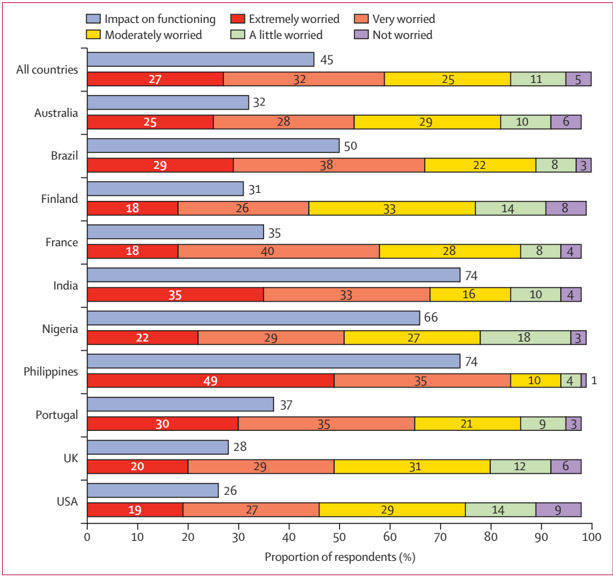
Background Climate change has important implications for the health and futures of children and young people, yet they have little power to limit its harm, making them vulnerable to climate anxiety. This is the first large-scale investigation of climate anxiety in children and young people globally and its relationship with perceived government response. Methods We surveyed 10 000 children and young people (aged 16-25 years) in ten countries (Australia, Brazil, Finland, France, India, Nigeria, Philippines, Portugal, the UK, and the USA; 1000 participants per country). Invitations to complete the survey were sent via the platform Kantar between May 18 and June 7, 2021. Data were collected on participants' thoughts and feelings about climate change, and government responses to climate change. Descriptive statistics were calculated for each aspect of climate anxiety, and Pearson's correlation analysis was done to evaluate whether climate-related distress, functioning, and negative beliefs about climate change were linked to thoughts and feelings about government response. Findings Respondents across all countries were worried about climate change (59% were very or extremely worried and 84% were at least moderately worried). More than 50% reported each of the following emotions: sad, anxious, angry, powerless, helpless, and guilty. More than 45% of respondents said their feelings about climate change negatively affected their daily life and functioning, and many reported a high n…
Verified 2026-11-25 · 1 reference not checked yet
Overview
CoChat Summary
TL;DR
This global survey of 10,000 people aged 16–25 across ten countries found widespread climate anxiety and distress, with many reporting negative functional impacts. Climate distress was correlated with negative perceptions of government responses and feelings of betrayal.
Key findings
- 59% were very or extremely worried about climate change and 84% were at least moderately worried; more than 50% reported feeling sad, anxious, angry, powerless, helpless, and guilty.
- More than 45% said their feelings about climate change negatively affected their daily life and functioning; 75% said the future is frightening and 83% said people have failed to take care of the planet.
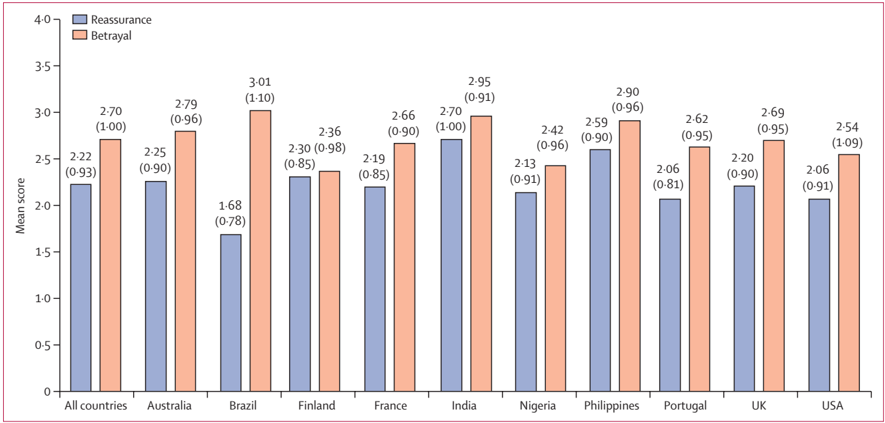
- Respondents rated government responses negatively (mean 14.96 on a 9–18 scale, SD 2.57) and reported greater betrayal (mean 2.7, SD 1.0) than reassurance (mean 2.22, SD 0.93; p<0.0001).
- Climate anxiety and distress were correlated with perceived inadequate government response and associated feelings of betrayal.
Methods
- Cross-sectional online survey of 10,000 children and young people aged 16–25 years in ten countries (Australia, Brazil, Finland, France, India, Nigeria, Philippines, Portugal, the UK, and the USA; 1000 per country), recruited via Kantar between May 18 and June 7, 2021.
- Quota sampling was based on age, gender, and region, with data weighted to OECD statistics for each country by age group, gender, and region.
- Descriptive statistics were calculated for climate anxiety constructs, and Pearson’s correlation analysis explored links between climate-related distress, functioning, negative beliefs, and thoughts/feelings about government response; findings significant at p≤0.001 are reported.
Limitations
- The paper states that non-standardised measures were used because no appropriate standardised measures existed; the study cannot indicate severity compared with normative samples, did not measure mental health outcomes, and used a yes/no/prefer-not-to-say response scale.
- The paper states that equal sample sizes per country were not weighted by population size, so aggregated results are not globally representative; online polling required internet access and sometimes English, and gender was recorded only as male or female.
- Evident from the text: the cross-sectional design cannot establish causality between perceived government response and climate distress.
Model-written summary. Check it against the paper before relying on it.
Integrity signals
Registry
Cites
Statistics
Figures
Verification
Claims the paper makes
12 Valid · 0 Not valid · 19 Not checked · 99 Own results and interpretations
Every source the paper cites for this claim was checked and supports it.
In the paper
“Children are now turning to legal action based on government failure to protect ecosystems, young citizens, and their futures. 26”
What the sources say
- Supportedcites [26] 26 Salas RN, Jacobs W, Perera F. The case of Juliana v. US-children and the health burdens of climate change. N Engl J Med 2019; 380: 2085-87 . source
The supplied Abstract passages describe children filing suit over federal inaction on climate change, which they say violates their constitutional rights. They also connect that inaction to threats to children’s safe environment and to future generations, supporting the citing sentence’s paraphrase. (LLM, conf=0.88)
plainstates a cause- Asserted: passes — The authors put it forward as true.
- Checkable: passes — It can be checked against evidence.
- Load-bearing: unclear — It is unclear whether the paper’s conclusions depend on it.
- Based: passes — The paper gives a reason why it holds.
- Supported
A result the paper reports from its own data — it cites no other source for it, so there is none to check. The quote shows it is in the paper.
In the paper
“in the Global North, Portugal (which had dramatic increases in wildfires since 2017) showed the highest level of worry.”
plainn = 1,000- Asserted: passes — The authors put it forward as true.
- Checkable: passes — It can be checked against evidence.
- Load-bearing: unclear — It is unclear whether the paper’s conclusions depend on it.
- Based: passes — The paper gives a reason why it holds.
A result the paper reports from its own data — it cites no other source for it, so there is none to check. The quote shows it is in the paper.
In the paper
“Respondents rated governmental responses to climate change negatively”
plain- Asserted: passes — The authors put it forward as true.
- Checkable: passes — It can be checked against evidence.
- Load-bearing: passes — The paper’s conclusions depend on it.
- Based: passes — The paper gives a reason why it holds.
A result the paper reports from its own data — it cites no other source for it, so there is none to check. The quote shows it is in the paper.
In the paper
“This distress was associated with beliefs about inadequate governmental response and feelings of betrayal.”
plainstates an association- Asserted: passes — The authors put it forward as true.
- Checkable: passes — It can be checked against evidence.
- Load-bearing: passes — The paper’s conclusions depend on it.
- Based: passes — The paper gives a reason why it holds.
A result the paper reports from its own data — it cites no other source for it, so there is none to check. The quote shows it is in the paper.
In the paper
“More than 45% of respondents said their feelings about climate change negatively affected their daily life and functioning”
- Also stated in: § Results · p. 5 · plain
“More than 45% of respondents said their feelings about climate change negatively affected their daily lives”
plainn = 10- Asserted: passes — The authors put it forward as true.
- Checkable: passes — It can be checked against evidence.
- Load-bearing: passes — The paper’s conclusions depend on it.
- Based: passes — The paper gives a reason why it holds.
- Also stated in: § Results · p. 5 · plain
50 more claims
Create a free account to see all 130 claims and to verify the 1 reference still open.
- Probably not a substantial claim. 51
- It may state two separate claims as one. 41
- The quote only partly states this claim. 6
Claims other papers make about this one
Each is checked against this paper’s own text: does it say what the citing paper says it does?
The source backs part of the claim, not all of it — or backs it for a different population, condition or comparison.
In the citing paper
“Investigations into anxiety about climate change have revealed that it is increasingly common for many people across the globe [9], with large-scale international studies identifying growing concern about climate change [10–12].”
From The relationship between climate change and mental health: a systematic review of the association between eco-anxiety, psychological distress, and symptoms of major affective disorders (2024) · cites this paper as [10]
Experimental — accuracy not yet measuredThe source backs part of the claim, not all of it — or backs it for a different population, condition or comparison.
In the citing paper
“The high prevalence of eco-anxiety [10] - be it at clinical or subclinical levels - underscores the need for broader level changes related to climate change.”
From The relationship between climate change and mental health: a systematic review of the association between eco-anxiety, psychological distress, and symptoms of major affective disorders (2024) · cites this paper as [10]
Experimental — accuracy not yet measuredThe source backs part of the claim, not all of it — or backs it for a different population, condition or comparison.
In the citing paper
“and varied understandings and experiences of climate change have differing impacts on the relationship with mental health [10, 12].”
From The relationship between climate change and mental health: a systematic review of the association between eco-anxiety, psychological distress, and symptoms of major affective disorders (2024) · cites this paper as [10]
Experimental — accuracy not yet measuredThe source backs part of the claim, not all of it — or backs it for a different population, condition or comparison.
In the citing paper
“A global survey of 10,000 young people (16-25) across 10 countries found: (1) 75% were frightened about the future; (2) 84% were moderately worried; (3) 59% were very or extremely worried; and (4) 45%+ reported climate change-related feelings negatively affected their daily life and functioning [21].”
From Climate Distress: A Review of Current Psychological Research and Practice (2023) · cites this paper as [21]
Experimental — accuracy not yet measuredThe source backs part of the claim, not all of it — or backs it for a different population, condition or comparison.
In the citing paper
“An overall lack of trust in government was also identified, with a wide belief that the government response to climate change will continue to be inadequate [21].”
From Climate Distress: A Review of Current Psychological Research and Practice (2023) · cites this paper as [21]
Experimental — accuracy not yet measured
21 more claims about this paper
Create a free account to see every claim other papers make about this one.
Self-check
Percentages, sums and reported differences re-computed from the paper’s own numbers.
Rated minor: it would not touch a result — a value no result rests on, a p-value that stays on the same side of the significance level, or a conflict that is clerical, resolved elsewhere in the paper, or outside its own findings.
In the paper
“15 543 people began the survey and 10 000 (68%) completed it.”
Reported 68 · recomputed 64.337644
Citations
Cites
Mental health of young people: A global public-health challenge
Patel, V., Flisher, A. J., Hetrick, S., & McGorry, P. (2007) · The Lancet · doi:10.1016/s0140-6736(07)60368-7 · Cited by 3,126 · cited 2×
“23 Children facing a future severely damaged by climate change will need support.”
Stress and Health: Psychological, Behavioral, and Biological Determinants
Schneiderman, N., Ironson, G., & Siegel, S. D. (2005) · Annual Review of Clinical Psychology · doi:10.1146/annurev.clinpsy.1.102803.144141 · Cited by 2,252 · cited 2×
“22 Exposure to chronic stress in childhood has a long-lasting impact and increases the risk of developing mental health problems.”
Development and validation of a measure of climate change anxiety
Clayton, S., & Karazsia, B. T. (2020) · Journal of Environmental Psychology · doi:10.1016/j.jenvp.2020.101434 · Cited by 1,196
Self-citationAnxiety and the Ecological Crisis: An Analysis of Eco-Anxiety and Climate Anxiety
Pihkala, P. (2020) · Sustainability · doi:10.3390/su12197836 · Cited by 978 · cited 2×
“In threatening and uncertain situations such as the climate crisis, this response can be seen as what is sometimes referred to as practical anxiety 1,4 because it has the beneficial effect of leading people to reassess their behaviour in order to respond appropriately.”
Self-citationMoral Injury: An Integrative Review
Griffin, B. J., Purcell, N., Burkman, K., Litz, B. T., Bryan, C. J., Schmitz, M., Villierme, C., Walsh, J., & Maguen, S. (2019) · Journal of Traumatic Stress · doi:10.1002/jts.22362 · Cited by 752 · cited 2×
“28 This might include an awareness of or failure to prevent harmful unethical behaviour.”
Stanley, S. K., Hogg, T. L., Leviston, Z., & Walker, I. (2021) · The Journal of Climate Change and Health · doi:10.1016/j.joclim.2021.100003 · Cited by 715
Anxiety, worry, and grief in a time of environmental and climate crisis: a narrative review
Ojala, M., Cunsolo, A., Ogunbode, C. A., & Middleton, J. (2021) · Annual Review of Environment and Resources · doi:10.1146/annurev-environ-012220-022716 · Cited by 670
The case for systems thinking about climate change and mental health
Berry, H. L., Waite, T. D., Dear, K. B. G., Capon, A. G., & Murray, V. (2018) · Nature Climate Change · doi:10.1038/s41558-018-0102-4 · Cited by 485 · cited 2×
“Changing climate and weather-related disasters have diverse impacts, both direct (eg, destruction and trauma) and indirect (eg, strained personal and public resources, interrupted community functioning), 2 as well as resulting in climate anxiety.”
Eco-Anxiety and Environmental Education
Pihkala, P. (2020) · Sustainability · doi:10.3390/su122310149 · Cited by 475
Self-citationThe Hogg Eco-Anxiety Scale: Development and Validation of a Multidimensional Scale
(2021) · doi:10.31219/osf.io/rxudb · Cited by 465
Research works printed but not linked: 4
- 11 Jensen T. Ecologies of guilt in environmental rhetorics. Cham: Palgrave Macmillan, 2019.
- 18 UNICEF. One billion children at 'extremely high risk' of the impacts of the climate crisis. Aug 20, 2021. https://www.unicef.org. uk/press-releases/onebillion-children-at-extremely-high-risk-of-theimpacts-of-the-climate-crisis-unicef (accessed Sept 5, 2021).
- 27 Weintrobe S. Psychological roots of the climate crisis: neoliberal exceptionalism and the culture of uncare. New York, NY: Bloomsbury Academic, 2021.
- 32 Mavronicola N. Torture, inhumanity and degradation under article 3 of the ECHR: absolute rights and absolute wrongs. Oxford: Bloomsbury Publishing, 2021.
Cited by
Items 1,601–1,700 of 2,164
Univer, M. J., Soobard, R., & Viru, B. (2025) · Environmental Education Research · doi:10.1080/13504622.2025.2549025
“The instrument by hickman et al. (2021) for ages 16 and up addressed climate anxiety, trust towards governmental (in)action, visions about the future, and CC in general.”
How schools and families can take climate action by learning about food systems
Edwards, G. (2023) · The Conversation · doi:10.64628/aam.dr5ua9pnj
Perigo oculto da crise climática: violência infantil
Datzberger, S., Iorfa, S. K., Parkes, J., & Howard‐Merrill, L. (2023) · The Conversation · doi:10.64628/ade.nswvapews
Keeping your cool in a warming world: 8 steps to help manage eco-anxiety
Magruder, K. J. (2023) · doi:10.64628/aai.kseuy4uc9
Dijkerman, S., McMullen, H., Hammond, N., & Coalition, S. A. R. H. A. R. (. A. C. J. (2025) · Frontiers in Reproductive Health · doi:10.3389/frph.2025.1569484 · Cited by 1
Engage, Educate and Empower: The 3 Es to discuss climate change with children
Lorteau, S., Racine, N. M., Deneault, A., & Bureau, J. (2023) · The Conversation · doi:10.64628/aam.sxnctxkkx
Bateman, T. S., & MANN, M. E. (2022) · doi:10.64628/aai.qgveamrqw
How to stay hopeful in a world seemingly beyond saving
Appolloni, S. (2023) · The Conversation · doi:10.64628/aam.gfmsafa5j
Spinks, H., Hannon, M. D., Murray, M., Goodey, N. M., Billings, L., & Tuininga, A. R. (2025) · Frontiers in Education · doi:10.3389/feduc.2025.1601451
Nadarajah, K., Pavic, T., Brun, L., Bordel, S., & Somat, A. (2025) · Psychiatry International · doi:10.3390/psychiatryint6030105
Lemaire, G. (2025) · Earth System Governance · doi:10.1016/j.esg.2025.100290 · Cited by 2
Exploring support systems for young people with climate anxiety: Suggestions from Brazil
Frota, M. A., Cardoso, M. C. V., Fernandes, M. N., Schor, M., Clayton, S., & Surkan, P. J. (2025) · Annals of the New York Academy of Sciences · doi:10.1111/nyas.70047 · Cited by 1
Self-citationEducating for Planetary and Human Flourishing Through the Arts and Philosophy
Moula, Z. (2025) · JAMA Network Open · doi:10.1001/jamanetworkopen.2025.31303
Working With Students as Co-Researchers; a Reflection on Process
Thomas-Hughes, H., Barke, J., & Clayton, A. (2025) · Journal of Participatory Research Methods · doi:10.35844/001c.129350
Zschach, M. (2025) · Zeitschrift für Politikwissenschaft · doi:10.1007/s41358-025-00426-9 · Cited by 1
“Sorge, was Klimawandelfragen anbelangt, im Gegensatz zu vielen anderen Untersuchungen (Burke et al. 2018; Clayton 2020; Hickman et al. 2021; Hülster und Müthing 2020; Schneekloth und Albert 2024).”
Schönstein, R. F., & Budke, A. (2025) · Environmental Education Research · doi:10.1080/13504622.2025.2555326
“A global study by Hickmann et al. (2021, 863) has shown that ‘climate anxiety […] are widespread in children and young people in countries across the world and impact their daily functioning’.”
Childhood, politics, and socio-cultural positionality: the critical analysis
Kumar, S. (2025) · Cultural-Historical Psychology · doi:10.17759/chp.2025210310
Generation Z and precision health
Marinova, D. V., & Bogueva, D. (2025) · BIO Web of Conferences · doi:10.1051/bioconf/202518707001
Lessard, M., & Busque‐Carrier, M. (2025) · Journal of Career Assessment · doi:10.1177/10690727251380684
“Climate change has led a majority of people to have concerns about the environment (see Hickman et al., 2021; Leiserowitz et al., 2024) to the extent that it is in fl uencing decisions individuals make about their lives, including those related to their career (e.g., Daeninck et al., 2023; Pascucci…”
Bentz, J., & Trajković, J. R. (2025) · Science for sustainable societies · doi:10.1007/978-981-96-9029-9_1
Climate change anxiety: a portrait of Portugal
Pinho, M. (2025) · Social Responsibility Journal · doi:10.1108/srj-03-2025-0242
Nature et santé mentale : perspectives pour les soins psychiatriques
Haesebaert, F., & Haesebaert, J. (2025) · Encyclopédie médico-chirurgicale. Psychiatrie · doi:10.1016/s0246-1072(25)49265-7
Carlson, J. M., Weiler, M., Yang, J., Patterson, A., Foley, J., Mattson, M., Loreto, N. D., & Fang, L. (2025) · Brain and Environment · doi:10.1016/j.braen.2025.100007 · Cited by 1
CONTOURS OF METAMODERN ESCHATOLOGY: A CORPUS-BASED APPROACH
Ilin, I., & Nihmatova, O. (2025) · The Journal of V N Karazin Kharkiv National University Series Philosophy Philosophical Peripeteias · doi:10.26565/2226-0994-2025-72-7
Chan, H., Tam, K., Wang, X., & Hong, Y. (2025) · Journal of Environmental Psychology · doi:10.1016/j.jenvp.2025.102785 · Cited by 2
The impact of Christian environmental education: the case of Catholic schools in England
Kowalewski, J., Walbank, R.-A., & Daw, R. (2025) · Journal of Religious Education · doi:10.1007/s40839-025-00268-1
“…students was related not to a lack of a clearly identifiable agent responsible for a crisis situation (Dunlop & Rushton, 2022a), but to a sense that others, especially those in authority, don’t act on their differentiated responsibilities (in line with findings suggested by Hickman et al., 2021).”
Trząsalski, K., Oświeczyńska, K., Sowa, A., Kupisiak, S., & Jędrzejewska-Rzezak, P. (2025) · International Journal of Innovative Technologies in Social Science · doi:10.31435/ijitss.3(47).2025.3858
“Young adults, particularly university students and environmental advocates, are especially vulnerable, often due to heightened awareness of the crisis and limited perceived control over outcomes [10][8].”
InfluentialChildren's Health and Environmental Sustainability: A Call for Collaboration
Hume, C., Milazzo, A., & Williams, C. (2025) · Health Promotion Journal of Australia · doi:10.1002/hpja.70110
Education as a Strategy for Climate Change Mitigation and Adaptation
Borde, B., Lescarmontier, L., Vogt, N., & Lena, P. J. (2025) · Springer eBooks · doi:10.1007/978-3-031-84483-6_149
Mclean, L. (2025) · Community psychology · doi:10.1007/978-3-031-99223-0_10
The Climate Crisis Is Political Violence: What Can Psychology Do?
Ziveri, D., Pégon, G., & Martín, F. M. (2025) · Community psychology · doi:10.1007/978-3-031-99223-0_4
Enters “ECEGADMAT”: Complications and Comparisons
Beran, O. (2025) · Springer eBooks · doi:10.1007/978-3-032-03075-7_6
Beran, O. (2025) · Springer eBooks · doi:10.1007/978-3-032-03075-7_2
Rader, A. M., Wu, A.-M., & Caggiano, H. (2025) · Journal of Environmental Studies and Sciences · doi:10.1007/s13412-025-01062-z · Cited by 2
“…focus of mainstream environmental and climate change education on scientific and technocratic explanation has proven impact-ful for students, as Hickman et al. (2021) report that from 10,000 survey results across 10 countries, approximately 89% of children and young people (< 25 years old)…”
Papasolomou, I., Pavelková, J., & Turčínková, J. (2025) · Palgrave studies in cross-disciplinary business research, in association with EuroMed Academy of Business · doi:10.1007/978-3-031-96676-7_7
The Multiplicity of Responses to the Environment
Beran, O. (2025) · Springer eBooks · doi:10.1007/978-3-032-03075-7_5
“We want to march too!”: Climate change and young children’s advocacies
Bentley, D. F., & Dawes, E. T. (2025) · Global Studies of Childhood · doi:10.1177/20436106251370379
González-Muñoz, E., & Pérez, J. G. (2025) · Revista Española de Pedagogía · doi:10.9781/rep.2025.366
Eco-Anxiety and Environmental Guilt: A Psychological Review of Emotional Drivers in Climate BehaviorPreprint
Eshan, A. N., Islam, A., Datta, A., Raisa, H. B. A., & Hossen, M. T. (2025) · Research Square · doi:10.21203/rs.3.rs-7781780/v1 · Cited by 1
Contemporary Classrooms: The Role of Motivation and Teachers' Beliefs
Sheehy, K., & Holliman, A. J. (2025) · IGI Global eBooks · doi:10.4018/979-8-3693-1293-3.ch004
Saliez, Z., Brohez, C., Roskam, I., & Mikolajczak, M. (2025) · Discover Psychology · doi:10.1007/s44202-025-00423-7
“For instance, climate change makes young people in France perceive the future as more frightening than their counterparts in Finland do, and it makes young people in the Philippines perceive it as even more frightening than young people in France and in Finland do [16].”
Not Just in Our Heads: Eco-Anxiety and the Politics of Responsibility
Morrison, S. (2025) · Capitalism Nature Socialism · doi:10.1080/10455752.2025.2570513 · Cited by 3
“Only participants under 30 years of age were included, as research suggests youth are at greater risk of experiencing climate anxiety (Hickman 2020; Hickman et al. 2021; Wu, Snell, and Samji 2020).”
Erb, M. (2025) · Elsevier eBooks · doi:10.1016/b978-0-443-31568-8.00045-3
Like I Couldn’t Turn into an Eco-Warrior Overnight, You Know? Imaginaries of Climate Change
Veale, A., O’Rourke, J., & Byrne, J. (2025) · Energy, climate and the environment · doi:10.1007/978-3-031-95020-9_7
Motivation for environmental action: analysis of English language textbooks
Glas, K., Chandía, F., Donner, M., & Mancilla-Cid, C. (2025) · Research Papers in Education · doi:10.1080/02671522.2025.2570361 · Cited by 1
“…climate emergencies becoming increasingly tangible for a growing number of people and in the face of insufficient action by decision-makers, an alarming percentage of young people around the world experience serious eco-anxiety and feelings of powerlessness about the future (Hickman et al. 2021).”
Fossil fuel gift economies as petro-pedagogies in public schools
Rowe, E., & Mayes, E. (2025) · The Australian Educational Researcher · doi:10.1007/s13384-025-00909-2
“…fuel corporations in these schools is out of step with what many young people are calling for across the world: quality climate change education (United Nations Education Scientific and Cultural Organization (UNESCO), 2022) and government action on climate (Hickman et al., 2021; Tannock, 2020).”
Impact of Stress and Eco-anxiety on Rheumatic Disease
Ploesser, M., Diaz, J. D. L., Zincke, M. T., Silverman, S. S., & Taylor, M. B. (2025) · Rheumatic Disease Clinics of North America · doi:10.1016/j.rdc.2025.09.003
A Great Asset to Society: Older People with a Sustained Physical and Cognitive Function
Degens, H. (2025) · Signals and communication technology · doi:10.1007/978-3-031-89537-1_1
Climate Crisis and Mental Health: Applying Positive Psychotherapy to Navigate Psychological Risks
Pudlatz, M. (2025) · Springer eBooks · doi:10.1007/978-3-031-94645-5_44
Mahbod, M., Parnian, A., Mahbod, M., & Prasad, M. N. V. (2025) · Elsevier eBooks · doi:10.1016/b978-0-443-40292-0.00034-0 · Cited by 1
The Impact of Climate Literacy and Financial Literacy on Consumer Willingness to Decarbonise
Eunbin, O., Camilleri, A. R., & Newell, B. R. (2025) · Australasian Marketing Journal (AMJ) · doi:10.1177/14413582251368421
Erderhitzung und Klimaemotionen – Wie sich die Klimakrise auf die psychische Gesundheit auswirkt
Liu, S., Heinzel, S., & Peter, F. (2025) · Springer eBooks · doi:10.1007/978-3-662-70622-0_26
Bechtoldt, M. N., Reese, G., Liu, S., Gutberlet, P., van Bronswijk, K., & Peter, F. (2025) · Springer eBooks · doi:10.1007/978-3-662-70622-0_27
Professionelle Kompetenzen und Perspektiven von Lehrkräften für die Klimabildung
Winter, V., Büssing, A. G., & Möller, A. (2025) · Springer eBooks · doi:10.1007/978-3-658-48374-6_17
Modellieren für Klimakompetenz
zu Belzen, A. U., Schöller, J., Krüger, D., & Beniermann, A. (2025) · Springer eBooks · doi:10.1007/978-3-658-48374-6_22
The Role of Digital Twins in Building Climate Change Resilience
Melén, C. N. K. T., Bertoni, M., Scurati, G. W., & Young, S. (2025) · IFIP advances in information and communication technology · doi:10.1007/978-3-032-05681-8_27
Pedrotti, G. M. D. A., Cimarosti, B., GRAFF, G. H., VIEIRA, C. C., Simon, G. C., Calabria, F. B., BORELLA, G. A., Bernardi, J. A. L., de Assis, T. P., MILANI, C. P., et al. (2025) · Psicologia e Saúde em Debate · doi:10.22289/2446-922x.v11a2a34
Chen, X., Lin, W., & Liu, Y. (2025) · Journal of Psychology in Africa · doi:10.32604/jpa.2025.068787 · Cited by 2
“Among young people; 60% of respondents aged 16 to 25 reported feeling “very” or “extremely” anxious about climate change, frequently experiencing emotions such as distress, anger, and helplessness (Hickman et al., 2021).”
Mind the gap: bringing adolescents and young adults and emotional resilience into climate action
Kohli, A., Igras, S. M., & Ramirez, L. (2025) · Frontiers in Climate · doi:10.3389/fclim.2025.1657851 · Cited by 1
Youth and democracy in the climate crisis
Pihkala, P. (2024) · Points de vue sur la jeunesse · doi:10.3917/e.europ.gorma.2024.01.0090 · Cited by 2
Self-citationYouth and democracy in the climate crisis
Manning, E., & Duffy, V. (2024) · Points de vue sur la jeunesse · doi:10.3917/e.europ.gorma.2024.01.0140
Sustainability: Research and Reality in the Education Debate
Hoath, L., & Dave, H. (2025) · Emerald Group Publishing Limited eBooks · doi:10.1108/978-1-83708-238-420251007
Climate Change Education Evolution at the University of Waterloo, Canada
Martin, M., Burke, J., Scott, D. J., et al. (2025) · Springer eBooks · doi:10.1007/978-3-031-25960-9_111-1
Climate change and paediatric health outcomes: implications for primary care practice
Chamarthi, V. S., Gunasekaran, V., & Chamarthi, S. (2025) · International Journal of Contemporary Pediatrics · doi:10.18203/2349-3291.ijcp20253385
Amin, M. R., Wahab, S. A., Yasin, I. M., & Hossain, M. A. (2025) · Journal of Applied Research in Higher Education · doi:10.1108/jarhe-06-2025-0457
Köhler, K. (2025) · Springer eBooks · doi:10.1007/978-3-662-71605-2_1
Löfström, E., Santandrea, C., & Hellevik, C. C. (2025) · Frontiers in Psychology · doi:10.3389/fpsyg.2025.1690875 · Cited by 2
Ãlvarez, I., Ayodele-Olajire, D. O., Burnside, G., et al. (2025) · Sustainability · doi:10.3390/su17219825
Parnian, A., Mahbod, M., Soliemanzadeh, A., Momenpour, A., Golbaz, M., ElZein, Z., Beyrami, H., & Boostani, H. R. (2025) · Urban sustainability · doi:10.1007/978-981-95-1645-2_12
Association Between Anxiety and Diet Quality Among Polish Adults: A Cross-Sectional Study
Sławińska, P., Piotrowska, E., Rak, K., & Raczkowska, E. (2025) · Nutrients · doi:10.3390/nu17223508
“This may indicate that young adults live with increasing levels of anxiety, potentially due to concerns about the future, particularly climate change or armed conflicts [36,37], but also because of excessive screen time on smartphones, which may become addictive [38].”
Heredia, M., & Kunze, S. (2025) · Springer eBooks · doi:10.1007/978-3-658-48821-5_7
Low-carbon, high-justice care: making digital mental health climate ready
Aruta, J. J. B. R. (2025) · Nature Mental Health · doi:10.1038/s44220-025-00536-x
Mahmoud, S. F., Kulintang, M. B. M., Ngo, A. L., Bassam, S. E. A., Elezaby, H. H., Ahmed, M. A. E. S., & Salama, T. R. A. (2025) · Educational Gerontology · doi:10.1080/03601277.2025.2584317 · Cited by 1
Climate Change and Resilience: Need, Challenges and Future
Srivastava, R., Mehara, G., Sharma, A., & Gupta, M. K. (2025) · Studies in systems, decision and control · doi:10.1007/978-3-032-06791-3_3
Youth Framing of Climate Change Through Video Production
Beach, R. W., Smith, B. E., Cirina, D. T., et al. (2025) · Emerald Group Publishing Limited eBooks · doi:10.1108/978-1-80592-409-820251006
Pelegrí, J. L., Bojanić, N., Pinto, P., Whyte, D., Annasawmy, P. A., Burgués, I., Bušelić, I., Carbajal, M. E., Fuster, N., Giannoukakou-Leontsini, I., et al. (2025) · npj Ocean Sustainability · doi:10.1038/s44183-025-00157-y · Cited by 1
“…all sort of human egoisms and exploitations of people and Nature, ranging from poverty to wars – and in individual-community happiness – which reaches far beyond physical wellbeing by including integrative-health aspects such as eco-anxiety 20 – 23 and lack of personal peace ( solastalgia ) 24,25 .”
Pfeifer, E., Stolterfoth, C., Aigner, S. E., & Ostermann, T. (2025) · Research Square · doi:10.21203/rs.3.rs-7779906/v1
L’éco-anxiété chez les enfants : Regard sur certaines facettes
Leblanc, N., Denis, I., & Singbo, L. (2025) · Éducation relative à l environnement · doi:10.4000/155si
Pauwels, F., Horckmans, R., Spruyt, B., & Siongers, J. (2025) · Environmental Sociology · doi:10.1080/23251042.2025.2592166
Ho, P., & Zhao, H. (2025) · The Journal of Environment & Development · doi:10.1177/10704965251395373
“A seminal study is by Hickman et al. (2021), who based on a survey of young people ( n = 1,000) in 10 countries (excluding China), found that 84% of the respondents were moderately or extremely worried about climate change, while over 45% said their feelings negatively affected daily life.”
Thaker, J. J., & Bhargav, N. (2025) · Environmental Communication · doi:10.1080/17524032.2025.2590037
“For example, 50% of the young respondents in a global poll said they experienced climate guilt, and 46% said that they felt “ashamed” (Hickman et al., 2021).”
Gielen, U. P., & Berger, A. S. M. (2024) · Emerald Group Publishing Limited eBooks · doi:10.1108/979-8-88730-582-020251004
Adams, D. (2025) · Journal of Adventure Education & Outdoor Learning · doi:10.1080/14729679.2025.2593838
Motzko, M. (2025) · Zeitschrift für Grundschulforschung · doi:10.1007/s42278-025-00258-0
Saunders, C., & Walley, B. (2025) · De Gruyter eBooks · doi:10.1515/9783111215105-022
Kobal, E., Sinkó, M., Čolaković, A. B., Grom, A. H., Lavtar, D., & Klanšček, H. J. (2025) · Slovenian Journal of Public Health · doi:10.2478/sjph-2025-0028
“Additionally, we expect that individuals with poor mental wellbeing, a risk of depression, or risky stress behaviour will report significantly higher levels of climate change worry (13, 15–17).”
Brock, A., Waltner, E.-M., & Rabinowitz, D. (2025) · Discover Sustainability · doi:10.1007/s43621-025-01763-z · Cited by 2
“The lack of political will and the limited impact of top-down climate decisions are also critical factors, especially given that younger generations are highly aware of the climate crisis but do not trust that politicians will act in line with scientific evidence or will protect their future [67].”
Ip, N., Yangali, A. P. G., Bazan, L. C., Uthayakumaran, S., Qamar, B., Luga, K.-A., Aquilina, C., Poensgen, G., Novotna, V., Flores, K. C., et al. (2025) · The Lancet Planetary Health · doi:10.1016/j.lanplh.2025.101397
Nitschke, J. P., Todorova, B., Doell, K. C., Pronizius, E., & Lamm, C. (2026) · Journal of Environmental Psychology · doi:10.1016/j.jenvp.2026.103042 · Cited by 2
Training clinicians for climate-informed mental healthcare
Williamson, R. E., Ruzek, J. I., Jiaqing, O., Wray, B., Safer, D. L., Punski‐Hoogervorst, J. L., Robohm, J. S., & Hyun, J. (2025) · Nature Mental Health · doi:10.1038/s44220-025-00530-3 · Cited by 2
“Although climate distress is increasingly finding its way into the therapy room, it is not always a malady in need of a cure 26–28 .”
Self-citationBarrett, B. F. D., Raj, S., Enkhtur, A., Fine, J., Ohta, H., Latu, F., Sandoval, F., & Zhang, Y. W. (2025) · Sustainability Science · doi:10.1007/s11625-025-01768-7 · Cited by 1
Sapiains, R., Ríos, P. F., Gómez, H., Estivill, P., Latorre-Takahashi, T., Maldonado‐Márquez, A., Paredes, J., Pérez, V. H., Pizarro, J., Seaman, K., et al. (2025) · Applied Environmental Education & Communication · doi:10.1080/1533015x.2025.2597539
“This emotional distress directly relates to the emerging issue of eco-anxiety and the broader academic study of mental health implications concerning climate change and environmental deterioration (Ágoston et al., 2022; Askland & Bunn, 2018; Hayes et al., 2018; Hickman et al., 2021).”
Nature-Based Intervention Approaches in Psychiatry
Topgül, S. (2025) · Psikiyatride Guncel Yaklasimlar - Current Approaches in Psychiatry · doi:10.18863/pgy.1708419
Mourning Together: The Climate Crisis as Collective Trauma
Thomas, L. R. (2025) · Journal of Pastoral Theology · doi:10.1080/10649867.2025.2605397
Drolet, M.-J., & Falardeau, M. (2025) · Canadian Journal of Occupational Therapy · doi:10.1177/00084174251398278
Sampaio, F., Costa, T. F. O., Teixeira-Santos, L., de Pinho, L. G., Sequeira, C., Luís, S., Loureiro, A., Soro, J. C., Roldán-Merino, J. F., Moreno‐Poyato, A. R., et al. (2024) · Figshare · doi:10.6084/m9.figshare.26622046
de Pereira, A. R. Q., Loray, J. S. P., Moreno‐Poyato, A. R., Roldán-Merino, J. F., Botero, C., Bongiardino, L., Aufenacker, S. I., Stanley, S. K., Costa, T. F. O., Luís, S., et al. (2024) · Figshare · doi:10.6084/m9.figshare.26711564
Trost, K., Ertl, V., König, J., Rosner, R., & Comteße, H. (2024) · Figshare · doi:10.6084/m9.figshare.25566231
Arnot, G., Thomas, S. L., Pitt, H., McCarthy, S., & Warner, E. (2024) · Figshare · doi:10.6084/m9.figshare.26289118
Metadata
- Authors
- Hickman, C., Marks, E., Pihkala, P., Clayton, S., Lewandowski, R. E., Mayall, E. E., Wray, B., Mellor, C., & van Susteren, L.
- Affiliations
- University of Bath (GB)
- University of Helsinki (FI)
- College of Wooster (US)
- NYU Langone Health (US)
- University of East Anglia (GB)
- London School of Hygiene & Tropical Medicine (GB)
- Oxford Health NHS Foundation Trust (GB)
- Corresponding author
- Hickman, Caroline
- Venue
- The Lancet Planetary Health
- Publisher
- Elsevier BV
- Published
- 2021-12
- Volume
- 5
- Issue
- 12
- Pages
- e863-e873
- ISSN
- 2542-5196 (ISSN-L)
- OpenAlex
- W4200005759
- Semantic Scholar
- 4a876cc35863ba593aacf58fe6a24773b3cb9c29
- Cited by
- 2,324
- References
- 27
- Citations by year
- 2026: 566 · 2025: 652 · 2024: 566 · 2023: 364 · 2022: 170 · 2021: 4
- FWCI
- 382.19
- Type
- journal article
- Language
- en
- Open access
- gold
- doi.org
- Licence
- cc-by-nc-nd
- www.elsevier.com/tdm/userlicense/1.0/ (tdm)
- www.elsevier.com/legal/tdmrep-license (tdm)
- creativecommons.org/licenses/by-nc-nd/4.0/ (vor)
- Locations
- The Lancet Planetary Health (publishedVersion, cc-by-nc-nd)
- PubMed (publishedVersion)
- DOAJ (DOAJ: Directory of Open Access Journals) (submittedVersion, cc-by-sa)
- Työväentutkimus Vuosikirja (submittedVersion)
- Topics
- Social Sciences › Sociology and Political Science › Climate Change Communication and Perception
- Physical Sciences › Environmental Science › Health, Toxicology and Mutagenesis › Climate Change and Health Impacts
- Social Sciences › Psychology › Clinical Psychology › COVID-19 and Mental Health
- Keywords
- climate anxiety, children and young people, climate change, betrayal, climate change beliefs, daily functioning, global survey
- MeSH terms
- Adolescent, Adult, Anxiety, Australia, Child, Government, Humans, Surveys and Questionnaires, Young Adult, Climate Change
About these checks
Registry, retraction, Cites and statistics results are computed, not judged, with one exception: a printed reference that no index lists is read once by a model before it counts as a citation error. Claims are extracted by a model and kept only when their quote appears verbatim in the text; each cited source is then checked, with a model’s help, for whether it says what the claim relies on. Those verdicts can be wrong — read the claim’s quote and the cited source before relying on one.
The claim verdicts this report counts are experimental: their accuracy is not yet measured.
A language model drew the claims from the paper on 2026-10-10, under version 3 of the claim definition (model deepseek-v4.1-flash, prompt extract-v3).
A second model labelled each claim on 2026-10-10 (model jev-1.13-20260917, definition revision gold-guideline-v0.2).
Cited sources are checked with a language model’s help (gpt-6-sol).
Statistics and arithmetic are recomputed, not judged.
Confidence bands are shown only for fields calibrated on our annotated test set. None is calibrated yet, so no band is shown.
What counts as a claim ›How we measure confidence ›How we check this ›
Are you an author, or do you see a problem with this page? Request a review
Data sources
Bibliographic data: Semantic Scholar, OpenAlex, Crossref.
Contains information from the Semantic Scholar Academic Graph Datasets, made available under the ODC Attribution License (ODC-BY 1.0).
Semantic Scholar’s data is described in: Kinney, R., et al. (2023). The Semantic Scholar Open Data Platform. arXiv:2301.10140.
