

Climate anxiety in children and young people and their beliefs about government responses to climate change: a global survey
Open accessThe DOI matches its Crossref record; 27 of the 30 references it cites were found in a registry or an index, and 1 are not checked yet; 14 of the 48 sources its claims cite were checked for support.
Abstract
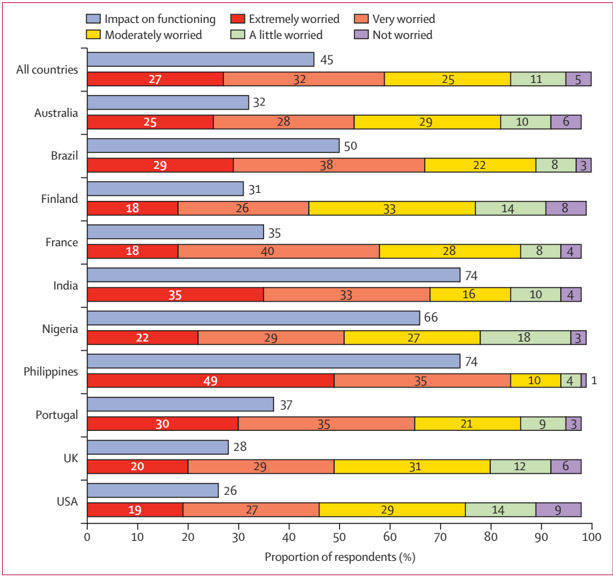
Background Climate change has important implications for the health and futures of children and young people, yet they have little power to limit its harm, making them vulnerable to climate anxiety. This is the first large-scale investigation of climate anxiety in children and young people globally and its relationship with perceived government response. Methods We surveyed 10 000 children and young people (aged 16-25 years) in ten countries (Australia, Brazil, Finland, France, India, Nigeria, Philippines, Portugal, the UK, and the USA; 1000 participants per country). Invitations to complete the survey were sent via the platform Kantar between May 18 and June 7, 2021. Data were collected on participants' thoughts and feelings about climate change, and government responses to climate change. Descriptive statistics were calculated for each aspect of climate anxiety, and Pearson's correlation analysis was done to evaluate whether climate-related distress, functioning, and negative beliefs about climate change were linked to thoughts and feelings about government response. Findings Respondents across all countries were worried about climate change (59% were very or extremely worried and 84% were at least moderately worried). More than 50% reported each of the following emotions: sad, anxious, angry, powerless, helpless, and guilty. More than 45% of respondents said their feelings about climate change negatively affected their daily life and functioning, and many reported a high n…
Verified 2026-11-25 · 1 reference not checked yet
Overview
CoChat Summary
TL;DR
This global survey of 10,000 people aged 16–25 across ten countries found widespread climate anxiety and distress, with many reporting negative functional impacts. Climate distress was correlated with negative perceptions of government responses and feelings of betrayal.
Key findings
- 59% were very or extremely worried about climate change and 84% were at least moderately worried; more than 50% reported feeling sad, anxious, angry, powerless, helpless, and guilty.
- More than 45% said their feelings about climate change negatively affected their daily life and functioning; 75% said the future is frightening and 83% said people have failed to take care of the planet.
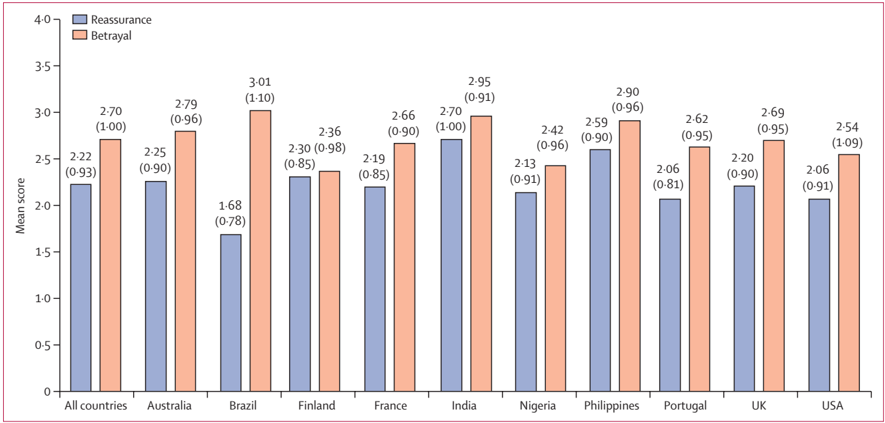
- Respondents rated government responses negatively (mean 14.96 on a 9–18 scale, SD 2.57) and reported greater betrayal (mean 2.7, SD 1.0) than reassurance (mean 2.22, SD 0.93; p<0.0001).
- Climate anxiety and distress were correlated with perceived inadequate government response and associated feelings of betrayal.
Methods
- Cross-sectional online survey of 10,000 children and young people aged 16–25 years in ten countries (Australia, Brazil, Finland, France, India, Nigeria, Philippines, Portugal, the UK, and the USA; 1000 per country), recruited via Kantar between May 18 and June 7, 2021.
- Quota sampling was based on age, gender, and region, with data weighted to OECD statistics for each country by age group, gender, and region.
- Descriptive statistics were calculated for climate anxiety constructs, and Pearson’s correlation analysis explored links between climate-related distress, functioning, negative beliefs, and thoughts/feelings about government response; findings significant at p≤0.001 are reported.
Limitations
- The paper states that non-standardised measures were used because no appropriate standardised measures existed; the study cannot indicate severity compared with normative samples, did not measure mental health outcomes, and used a yes/no/prefer-not-to-say response scale.
- The paper states that equal sample sizes per country were not weighted by population size, so aggregated results are not globally representative; online polling required internet access and sometimes English, and gender was recorded only as male or female.
- Evident from the text: the cross-sectional design cannot establish causality between perceived government response and climate distress.
Model-written summary. Check it against the paper before relying on it.
Integrity signals
Registry
Cites
Statistics
Figures
Verification
Claims the paper makes
12 Valid · 0 Not valid · 19 Not checked · 99 Own results and interpretations
Every source the paper cites for this claim was checked and supports it.
In the paper
“Children are now turning to legal action based on government failure to protect ecosystems, young citizens, and their futures. 26”
What the sources say
- Supportedcites [26] 26 Salas RN, Jacobs W, Perera F. The case of Juliana v. US-children and the health burdens of climate change. N Engl J Med 2019; 380: 2085-87 . source
The supplied Abstract passages describe children filing suit over federal inaction on climate change, which they say violates their constitutional rights. They also connect that inaction to threats to children’s safe environment and to future generations, supporting the citing sentence’s paraphrase. (LLM, conf=0.88)
plainstates a cause- Asserted: passes — The authors put it forward as true.
- Checkable: passes — It can be checked against evidence.
- Load-bearing: unclear — It is unclear whether the paper’s conclusions depend on it.
- Based: passes — The paper gives a reason why it holds.
- Supported
A result the paper reports from its own data — it cites no other source for it, so there is none to check. The quote shows it is in the paper.
In the paper
“in the Global North, Portugal (which had dramatic increases in wildfires since 2017) showed the highest level of worry.”
plainn = 1,000- Asserted: passes — The authors put it forward as true.
- Checkable: passes — It can be checked against evidence.
- Load-bearing: unclear — It is unclear whether the paper’s conclusions depend on it.
- Based: passes — The paper gives a reason why it holds.
A result the paper reports from its own data — it cites no other source for it, so there is none to check. The quote shows it is in the paper.
In the paper
“Respondents rated governmental responses to climate change negatively”
plain- Asserted: passes — The authors put it forward as true.
- Checkable: passes — It can be checked against evidence.
- Load-bearing: passes — The paper’s conclusions depend on it.
- Based: passes — The paper gives a reason why it holds.
A result the paper reports from its own data — it cites no other source for it, so there is none to check. The quote shows it is in the paper.
In the paper
“This distress was associated with beliefs about inadequate governmental response and feelings of betrayal.”
plainstates an association- Asserted: passes — The authors put it forward as true.
- Checkable: passes — It can be checked against evidence.
- Load-bearing: passes — The paper’s conclusions depend on it.
- Based: passes — The paper gives a reason why it holds.
A result the paper reports from its own data — it cites no other source for it, so there is none to check. The quote shows it is in the paper.
In the paper
“More than 45% of respondents said their feelings about climate change negatively affected their daily life and functioning”
- Also stated in: § Results · p. 5 · plain
“More than 45% of respondents said their feelings about climate change negatively affected their daily lives”
plainn = 10- Asserted: passes — The authors put it forward as true.
- Checkable: passes — It can be checked against evidence.
- Load-bearing: passes — The paper’s conclusions depend on it.
- Based: passes — The paper gives a reason why it holds.
- Also stated in: § Results · p. 5 · plain
50 more claims
Create a free account to see all 130 claims and to verify the 1 reference still open.
- Probably not a substantial claim. 51
- It may state two separate claims as one. 41
- The quote only partly states this claim. 6
Claims other papers make about this one
Each is checked against this paper’s own text: does it say what the citing paper says it does?
The source backs part of the claim, not all of it — or backs it for a different population, condition or comparison.
In the citing paper
“Investigations into anxiety about climate change have revealed that it is increasingly common for many people across the globe [9], with large-scale international studies identifying growing concern about climate change [10–12].”
From The relationship between climate change and mental health: a systematic review of the association between eco-anxiety, psychological distress, and symptoms of major affective disorders (2024) · cites this paper as [10]
Experimental — accuracy not yet measuredThe source backs part of the claim, not all of it — or backs it for a different population, condition or comparison.
In the citing paper
“The high prevalence of eco-anxiety [10] - be it at clinical or subclinical levels - underscores the need for broader level changes related to climate change.”
From The relationship between climate change and mental health: a systematic review of the association between eco-anxiety, psychological distress, and symptoms of major affective disorders (2024) · cites this paper as [10]
Experimental — accuracy not yet measuredThe source backs part of the claim, not all of it — or backs it for a different population, condition or comparison.
In the citing paper
“and varied understandings and experiences of climate change have differing impacts on the relationship with mental health [10, 12].”
From The relationship between climate change and mental health: a systematic review of the association between eco-anxiety, psychological distress, and symptoms of major affective disorders (2024) · cites this paper as [10]
Experimental — accuracy not yet measuredThe source backs part of the claim, not all of it — or backs it for a different population, condition or comparison.
In the citing paper
“A global survey of 10,000 young people (16-25) across 10 countries found: (1) 75% were frightened about the future; (2) 84% were moderately worried; (3) 59% were very or extremely worried; and (4) 45%+ reported climate change-related feelings negatively affected their daily life and functioning [21].”
From Climate Distress: A Review of Current Psychological Research and Practice (2023) · cites this paper as [21]
Experimental — accuracy not yet measuredThe source backs part of the claim, not all of it — or backs it for a different population, condition or comparison.
In the citing paper
“An overall lack of trust in government was also identified, with a wide belief that the government response to climate change will continue to be inadequate [21].”
From Climate Distress: A Review of Current Psychological Research and Practice (2023) · cites this paper as [21]
Experimental — accuracy not yet measured
21 more claims about this paper
Create a free account to see every claim other papers make about this one.
Self-check
Percentages, sums and reported differences re-computed from the paper’s own numbers.
Rated minor: it would not touch a result — a value no result rests on, a p-value that stays on the same side of the significance level, or a conflict that is clerical, resolved elsewhere in the paper, or outside its own findings.
In the paper
“15 543 people began the survey and 10 000 (68%) completed it.”
Reported 68 · recomputed 64.337644
Citations
Cites
Mental health of young people: A global public-health challenge
Patel, V., Flisher, A. J., Hetrick, S., & McGorry, P. (2007) · The Lancet · doi:10.1016/s0140-6736(07)60368-7 · Cited by 3,126 · cited 2×
“23 Children facing a future severely damaged by climate change will need support.”
Stress and Health: Psychological, Behavioral, and Biological Determinants
Schneiderman, N., Ironson, G., & Siegel, S. D. (2005) · Annual Review of Clinical Psychology · doi:10.1146/annurev.clinpsy.1.102803.144141 · Cited by 2,252 · cited 2×
“22 Exposure to chronic stress in childhood has a long-lasting impact and increases the risk of developing mental health problems.”
Development and validation of a measure of climate change anxiety
Clayton, S., & Karazsia, B. T. (2020) · Journal of Environmental Psychology · doi:10.1016/j.jenvp.2020.101434 · Cited by 1,196
Self-citationAnxiety and the Ecological Crisis: An Analysis of Eco-Anxiety and Climate Anxiety
Pihkala, P. (2020) · Sustainability · doi:10.3390/su12197836 · Cited by 978 · cited 2×
“In threatening and uncertain situations such as the climate crisis, this response can be seen as what is sometimes referred to as practical anxiety 1,4 because it has the beneficial effect of leading people to reassess their behaviour in order to respond appropriately.”
Self-citationMoral Injury: An Integrative Review
Griffin, B. J., Purcell, N., Burkman, K., Litz, B. T., Bryan, C. J., Schmitz, M., Villierme, C., Walsh, J., & Maguen, S. (2019) · Journal of Traumatic Stress · doi:10.1002/jts.22362 · Cited by 752 · cited 2×
“28 This might include an awareness of or failure to prevent harmful unethical behaviour.”
Stanley, S. K., Hogg, T. L., Leviston, Z., & Walker, I. (2021) · The Journal of Climate Change and Health · doi:10.1016/j.joclim.2021.100003 · Cited by 715
Anxiety, worry, and grief in a time of environmental and climate crisis: a narrative review
Ojala, M., Cunsolo, A., Ogunbode, C. A., & Middleton, J. (2021) · Annual Review of Environment and Resources · doi:10.1146/annurev-environ-012220-022716 · Cited by 670
The case for systems thinking about climate change and mental health
Berry, H. L., Waite, T. D., Dear, K. B. G., Capon, A. G., & Murray, V. (2018) · Nature Climate Change · doi:10.1038/s41558-018-0102-4 · Cited by 485 · cited 2×
“Changing climate and weather-related disasters have diverse impacts, both direct (eg, destruction and trauma) and indirect (eg, strained personal and public resources, interrupted community functioning), 2 as well as resulting in climate anxiety.”
Eco-Anxiety and Environmental Education
Pihkala, P. (2020) · Sustainability · doi:10.3390/su122310149 · Cited by 475
Self-citationThe Hogg Eco-Anxiety Scale: Development and Validation of a Multidimensional Scale
(2021) · doi:10.31219/osf.io/rxudb · Cited by 465
Research works printed but not linked: 4
- 11 Jensen T. Ecologies of guilt in environmental rhetorics. Cham: Palgrave Macmillan, 2019.
- 18 UNICEF. One billion children at 'extremely high risk' of the impacts of the climate crisis. Aug 20, 2021. https://www.unicef.org. uk/press-releases/onebillion-children-at-extremely-high-risk-of-theimpacts-of-the-climate-crisis-unicef (accessed Sept 5, 2021).
- 27 Weintrobe S. Psychological roots of the climate crisis: neoliberal exceptionalism and the culture of uncare. New York, NY: Bloomsbury Academic, 2021.
- 32 Mavronicola N. Torture, inhumanity and degradation under article 3 of the ECHR: absolute rights and absolute wrongs. Oxford: Bloomsbury Publishing, 2021.
Cited by
Items 1,201–1,300 of 2,164
Surging Eco-Anxiety: Consequences for Global Environmental Politics
Dauvergne, P., & van der Ven, H. (2026) · Global Environmental Politics · doi:10.1162/glep.a.17 · Cited by 4
Fleck, L., Wasmus, H., Schirmbeck, F. N., de Freitas, C., Teixeira, R., Sanna, L., de Graaff, A. M., Allegri, M. D., Nguyen, H. T., Boehnke, J. R., et al. (2025) · JMIR Research Protocols · doi:10.2196/77764 · Cited by 2
“Climate change–related distress is common in youth [2,4].”
Xu, Z., Wang, S., & Kashif, M. (2025) · Regional Studies in Marine Science · doi:10.1016/j.rsma.2025.104595 · Cited by 1
RetractedClimate Emotions and Readiness to Change: Evidences from Generalized Additive Models
Baroni, M., Tosti, A. E., Colombini, G., Braschi, S., Guazzini, A., & Duradoni, M. (2025) · Sustainability · doi:10.3390/su17219627 · Cited by 3
US policy changes denying children a healthy climate and a healthy future
Rashes, E. R., Cook, R. G., Koller, D., et al. (2025) · BMJ Paediatrics Open · doi:10.1136/bmjpo-2025-003839 · Cited by 1
Navigating environmental stress: Climate change impacts on adults' mental health in the Middle East
Fadhel, F. H., & Seyabi, S. A. A. (2025) · Geopsychiatry · doi:10.1016/j.geopsy.2025.100031 · Cited by 2
Cantwell-Chavez, D., Lecavalier, E., Papin, M., et al. (2025) · Global Environmental Politics · doi:10.1162/glep.a.699 · Cited by 1
“Documented high levels of climate anxiety and feelings of betrayal toward government inaction are on the rise among youths (Hickman et al. 2021), and similar sentiments appeared in the survey responses.”
Youth Advisory Panel (YAP) to Support Climate and Health Research: Lessons Learned
Kainth, D., Pendley, S. C., Clougherty, J. E., Morrow, F. L., & Sheffield, P. E. (2025) · Boston Congress of Public Health Review (BCPHR Formerly HPHR) · doi:10.54111/001c.138051 · Cited by 1
College Students’ Perceptions and Emotions Related to Climate Change and Government Climate Action
McLeod, A. B., & Coates, E. E. (2025) · Youth · doi:10.3390/youth5040118 · Cited by 1
“A growing body of literature focusing on the links between the climate crisis and psychological functioning reveals that young people’s perceptions and emotions about climate change are closely tied to their perceptions of the government’s climate action (Hickman et al., 2021).”
InfluentialAkanyako, J., Amana, L., & Akapule, S. A. (2025) · African Quarterly Social Science Review · doi:10.51867/aqssr.2.4.52 · Cited by 1
“Besides, they usually demonstrate a cynical behaviour towards brands (Gutfreund, 2016) Despite Gen Z’s awareness of sustainable issues, governments' lack of enthusiasm to address critical climate issues has caused them great disappointment (Hickman et al., 2021).”
Eco-anxiety and ocean stewardship: evidence from a U.S. National Survey
O’Halloran, C. (2025) · Frontiers in Psychology · doi:10.3389/fpsyg.2025.1680637 · Cited by 1
Sutcliffe, C., Naylor, R., Campos-González, J., & Blanuša, T. (2025) · Plants People Planet · doi:10.1002/ppp3.70139 · Cited by 4
“Relevant reviews indicate that most young people are worried about the environment (Hickman et al., 2021), and as such, educators have a responsibility to provide climate education.”
Evolution of environmental policy and sustainable marketing research using bibliometric methods
Bhardwaj, S., Thomas, A., Rastogi, S., et al. (2025) · Discover Global Society · doi:10.1007/s44282-025-00307-0 · Cited by 1
“Public awareness of environmental issues, particularly climate change activism among younger generations [8], has translated into increased academic interest in sustainable consumption patterns, ethical branding, and the role of marketing in supporting environmental goals.”
Chung, Y., Kim, M. S., & Song, I. H. (2025) · Humanities and Social Sciences Communications · doi:10.1057/s41599-025-06359-6 · Cited by 2
“In contrast to feelings of anger, resentment (Elliott, 2022), or a sense of betrayal towards the older generation (Hickman et al., 2021) observed in other, often Western, contexts, participants in this study tended to internalize their emotions.”
InfluentialMartinsson, A. R., Glatz, T., & Ojala, M. (2025) · Journal of Environmental Psychology · doi:10.1016/j.jenvp.2025.102879 · Cited by 3
Szadejko, K., Fioravanzo, R. E., & Sheshi, F. (2025) · Journal of Health and Environmental Research · doi:10.11648/j.jher.20251104.11 · Cited by 1
Hunt, E. (2025) · Journal of Occupational Science · doi:10.1080/14427591.2025.2592124 · Cited by 1
Trott, C. D. (2025) · Community psychology · doi:10.1007/978-3-031-99223-0_2 · Cited by 2
Sparking Curiosity, Inspiring Action: An Innovative Approach to Climate Education
Mohan, A., Mohan, L., Granados, E., et al. (2025) · The Science Teacher · doi:10.1080/00368555.2025.2558512 · Cited by 1
Ng, M., Herbert, N., Ram, N., & Wong‐Parodi, G. (2025) · Journal of Risk Research · doi:10.1080/13669877.2025.2603989 · Cited by 2
“Negative affect can be painful (Hickman et al. 2021; ogunbode et al. 2023), and negative experiences could indicate maladaptation.”
Treble, M., Martin, G., Faulkner, V., Akhtar, T. N., Cosma, A. P., Roswell, T., & Ali, H. M. (2025) · The Journal of Climate Change and Health · doi:10.1016/j.joclim.2025.100611 · Cited by 1
“These reactions arise not only from direct experiences with climate-related events but also from a heightened awareness of global climate change [6 – 10, While this area of research is growing, most existing evidence comes from the Global North [7,8].”
Cognitive and Emotional Impact of Environmental Media Texts on Youth: A Neuromarketing Study
Lobodenko, L. K., Cherednyakova, A. B., Astashova, Y. V., & Kharitonova, O. Y. (2025) · RUDN Journal of Studies in Literature and Journalism · doi:10.22363/2312-9220-2025-30-4-859-873 · Cited by 1
“Социологические опросы по-казывают, что более 80 % молодых людей интересуются экоповесткой, они обеспокоены изменением климата (Hickman et al., 2021).”
Pereira, T., Freire, T., & Faria, S. (2025) · International Journal of Applied Positive Psychology · doi:10.1007/s41042-025-00264-8 · Cited by 1
“The prevalence of climate-related thoughts is consistent with research that asserts that not only direct experiences of climate change impact youth but also their thoughts, wor - ries, and concerns about climate change (Clayton et al., 2023; Hickman et al., 2021).”
Baysak, B., Bilgetürk, M., & Berber, Ş. (2025) · Social enterprise journal · doi:10.1108/sej-07-2025-0152 · Cited by 1
The Nurse Practitioner’s Role in Pediatric Acute Care for Climate-Related Illness
Lyons, R. (2025) · The Journal for Nurse Practitioners · doi:10.1016/j.nurpra.2025.105665 · Cited by 1
Synergizing Sustainable Development Goals and Mental Health in India
Rajkumar, R. P. (2026) · Springer eBooks · doi:10.1007/978-981-95-2684-0_9 · Cited by 2
Sustainable energy adoption in UAE homes (villas and apartments)
Salameh, M. M., & Touqan, B. (2026) · Frontiers in Built Environment · doi:10.3389/fbuil.2025.1727538 · Cited by 1
Navarro, R. (2026) · Sociological Spectrum · doi:10.1080/02732173.2025.2611873 · Cited by 1
“Global surveys reveal that many adolescents and young adults feel helpless, betrayed by governments, or overwhelmed by the magnitude of the crisis (Hickman et al. 2021).”
Güdül, M. D., Güder, S. Y., Aydos, E. H., Erdem, A. Ü., Dalioğlu, S. T., & Açıkalın, K. P. (2026) · Current Psychology · doi:10.1007/s12144-025-08686-y · Cited by 2
“As part of the broader family of climate emotions—including fear, grief, guilt, and anger— eco-anxiety reflects a natural and often rational reaction to ecological disruption and adult inaction (Hickman et al., 2021).”
An Adolescent-Caregiver Dyad Approach to Climate Anxiety in the Pediatric Emergency Department
Assaf, R. R., Shelton, S. K., Morphew, T. L., Clayton, S., & Wu, J. (2026) · INQUIRY The Journal of Health Care Organization Provision and Financing · doi:10.1177/00469580251411470 · Cited by 2
“10 A combination of less socioeconomic advantage and the emotional-cognitive functional burden of climate anxiety 2,11,14 may serve as a double hit to adolescent resiliency and limit opportunity for growth and academic success.”
Self-citationCarlsson, M. (2026) · Health Education · doi:10.1108/he-06-2025-0105 · Cited by 1
Downs, S., Barlow, S., Staromiejska, W., Tannous, M., Policastro, P., Schoolman, E. D., & Elnakib, S. (2026) · Journal of Nutrition Education and Behavior · doi:10.1016/j.jneb.2025.12.010 · Cited by 1
Haag, C., Bürgin, D., Büeler, L. A., Janousch, C., Bechtiger, L., Ribeaud, D., Eisner, M., Shanahan, L., & von Wyl, V. (2026) · Journal of Affective Disorders · doi:10.1016/j.jad.2026.121221 · Cited by 4
Balboa, G. E. V., Noble, M.-A., & Wolfe, S. E. (2026) · International Journal of Science Education · doi:10.1080/09500693.2026.2617916 · Cited by 1
Haines, J., Parizeau, K., Eckert, K. F., Hayashi, F., Takemi, Y., Helmyati, S., Lukito, W., Principato, L., Toni, M., Torres, N., et al. (2026) · Challenges · doi:10.3390/challe17010005 · Cited by 3
“Previous survey studies have found that young adults are concerned about climate change and that perceptions of lack of action by government and other actors in the food system are contributing to this high level of climate anxiety and related stress [12,14].”
Fatores associados às preocupações com as mudanças climáticas em adolescentes
Santos, S. O., da Silva, M. R., & Corrêa, L. Q. (2026) · Ambiente & Educação · doi:10.63595/ambeduc.v30i4.19289 · Cited by 1
Where is the ‘Anxious’ in climate anxiety? Evidence from Chinese social media big data
Tan, L., Yang, Z., Xu, Z., Xu, Y., & Wu, X. (2026) · Journal of Anxiety Disorders · doi:10.1016/j.janxdis.2026.103127 · Cited by 2
Lohani, M., Zummo, L., & Janney, B. (2026) · Interdisciplinary Journal of Environmental and Science Education · doi:10.29333/ijese/17847 · Cited by 1
“In the context of climate challenges, negative emotions have been shown to impact mental health (e.g., Boluda-Verdu et al., 2022; Hickman et al., 2021; Ojala et al., 2021; Ogunbode et al., 2021; Ramadan & Ataallah, 2021; Rocque et al., 2021; Zaremba et al., 2022).”
Paradiso, A. (2026) · Applied Economics Letters · doi:10.1080/13504851.2026.2622549 · Cited by 1
The affective disruption of climate fatalism in education
Zembylas, M. (2026) · Pedagogy Culture and Society · doi:10.1080/14681366.2026.2628194 · Cited by 1
Delhey, J., Hess, S., & Schneickert, C. (2026) · Journal of Happiness Studies · doi:10.1007/s10902-026-01016-4 · Cited by 1
“Many people globally express deep concern about environmental issues (Dunlap & York, 2008 ), and a significant number of young people fear the impacts of climate change (Hickman et al., 2021).”
Alienation in Modern Culture: A Psychoanalytic Analysis of Five Societal Transitions
Bogaerts, S., Chasiotis, A., Klaiber, P., Bechara, J. P., Abrahams, L., Piyasinchai, B., Junker, T. L., Hoedjes, M., Stone, L. L., Janković, M., et al. (2026) · Human Arenas · doi:10.1007/s42087-025-00549-z · Cited by 1
Experimental Tests of an Affective Pathway to Pro-Environmental Intentions
Klackl, J., Uhl-Haedicke, I., Fowles, T., & Jonas, E. (2026) · Sustainability · doi:10.3390/su18041826 · Cited by 1
Navigating the winds of change: strategic foresight and the power of weak signals
Jabbour, J., Davidson, D. J., Carlsen, H., King, N., Lucatello, S., Aricò, S., Cooke, F. L., Datta, R. K., Gluckman, S. P., Gutiérrez-Espeleta, E. E., et al. (2026) · Sustainability Science · doi:10.1007/s11625-025-01786-5 · Cited by 7
Algae Quest: Evaluation of a Context Based and Active Learning Activity for Primary School Students
de Silva, A. P., Johnston, J., Marr, P. C., et al. (2026) · Journal of Chemical Education · doi:10.1021/acs.jchemed.5c01154 · Cited by 1
A psychometric and demographic evaluation of the Hogg Eco-Anxiety Scale in a German youth sample
Phan, D., Öngören, H. O., Spirkl, N., Heinzel, S., Metzen, D., Bechtoldt, M. N., & Asbrand, J. (2026) · Journal of Anxiety Disorders · doi:10.1016/j.janxdis.2026.103144 · Cited by 2
Climate change litigation as a tool for climate change education
Fuchs, T. T., Young, N., & Lenihan-Ikin, I. (2026) · Oxford Review of Education · doi:10.1080/03054985.2025.2597256 · Cited by 3
“Even now, youth are disproportionately harmed by climate change through climate anxiety (Hickman et al., 2021), and impacts on their physical and mental development (Donger, 2022).”
Kyriazis, N., & Stylos, G. (2026) · Environmental Education Research · doi:10.1080/13504622.2026.2631664 · Cited by 2
Compounding Disasters and Australian Youth Mental Health: A Time of Significant (di)stress
Lykins, A. D., Parsons, M. E., Cosh, S., Tully, P. J., Craig, B. M., Murray, C., & Hine, D. W. (2026) · Early Intervention in Psychiatry · doi:10.1111/eip.70159 · Cited by 2
“…consequences such as climate extremes (Burke et al. 2018; Garcia and Sheehan 2016; Wang et al. 2013), or the effects of climate change awareness (Hickman et al. 2021; Leger-Goodes et al. 2022; Martin et al. 2022; Sciberras and Fernando 2022), is uniformly consistent in predicting that there…”
Climate Change Messaging and Mental Health
Su, Z., Kaburu, F. M., Zhang, R., Kudiza, A., Tong, C., Intizar, M., Jiang, J., Yu, Y., Zhu, P., Yang, X. X., et al. (2026) · Sustainable Development · doi:10.1002/sd.70852 · Cited by 1
The carbon footprint of procreation: a critical review
Pont, E. (2026) · Environmental Research Letters · doi:10.1088/1748-9326/ae57c3 · Cited by 1
“Among the most reported recent results, 39% of respondents aged 16–25 stated that climate change made them hesitant to have children (Hickman et al 2021).”
Andrews, T. M., Olson, L. P., & Krupnikov, Y. (2026) · Cambridge University Press eBooks · doi:10.1017/9781009613668 · Cited by 1
Why geopsychiatry belongs in the medical curriculum: Lessons from a global survey
Torales, J. C., Persaud, A., Smith, A. J., Liebrenz, M., Ramachandran, P., Ayonrinde, O., Alibudbud, R. C., Okasha, T. A., Mufti, K. A., Sharma, D., et al. (2026) · Geopsychiatry · doi:10.1016/j.geopsy.2026.100074 · Cited by 3
Coping with Climate Change: Correlates of Adaptive and Maladaptive Coping in Young People
Crandon, T., Scott, J. G., Charlson, F., & Thomas, H. J. (2026) · Chronic Stress · doi:10.1177/24705470261437486 · Cited by 3
Call, T. M., Düllberg, G., Rinderhagen, M., Rickermann, J., Niediek, L., Liebner, K., Leidinger, M., Westfeld, C. L., Kössendrup, J., & Schmid, A. L. (2026) · BMC Psychology · doi:10.1186/s40359-026-04438-0 · Cited by 1
Boroumand, A., & Kolahi, M. (2026) · The Journal of Environmental Education · doi:10.1080/00958964.2026.2631988 · Cited by 1
Jampel, S. M., Borck, D., Meader, H., Parnes, M. F., Atkinson, J. W., Kramer, C. B., & Acolin, J. (2026) · PLOS Climate · doi:10.1371/journal.pclm.0000833 · Cited by 1
Life construction in the Anthropocene context: qualitative research in nine countries
Cohen‐Scali, V., Ribeiro, M. A., Hafsi, A., Erby, W. J., Bakyono‐Nabaloum, R., Sawadogo, W. A. L., Zein, R., Cerantola, M., Hult-Miekkavaara, H., Masdonati, J., et al. (2026) · International Journal for Educational and Vocational Guidance · doi:10.1007/s10775-026-09797-z · Cited by 1
Ahmead, M., Sharif, N. E., Maqboul, E., Zyoud, R. N., & Nawajah, I. (2026) · The Journal of Climate Change and Health · doi:10.1016/j.joclim.2025.100640 · Cited by 1
“Mental health practitioners have discussed "eco-anxiety" and "climate anxiety" in relation to climate change awareness [10], particularly among young people [6,11,12].”
InfluentialPeer Cultures and Climate Emotions in Early Childhood: A Culture-Evolutionary Framework
Spiteri, J. (2026) · Early Childhood Education Journal · doi:10.1007/s10643-026-02194-9 · Cited by 1
“Children around the world report experiencing worry, fear, sadness, anger, and hopelessness in relation to environmental degradation and climate uncertainty (Hickman et al., 2021; Martin et al., 2022; Pihkala, 2022; Spiteri & Pace, 2023).”
InfluentialLéger‐Goodes, T., Herba, C. M., Smith, J., Lefrançois, D., Éthier, M., Piché, J., & Malboeuf‐Hurtubise, C. (2026) · Chronic Stress · doi:10.1177/24705470261442334 · Cited by 1
Hytti, M., Sandström, N., & Bodfield, K. S. (2026) · Frontiers in Political Science · doi:10.3389/fpos.2026.1761729 · Cited by 2
The social-ecological learning framework: perception, action, and learning in a changing world
Janssen, C., Gorris, P., Pahl‐Wostl, C., & Schwarz, L. (2026) · Global Environmental Change · doi:10.1016/j.gloenvcha.2026.103159 · Cited by 2
Mental health in the time of polycrisis: geopolitical determinants and modern psychiatry
Bhugra, D., Liebrenz, M., & Smith, A. J. (2026) · Frontiers in Psychiatry · doi:10.3389/fpsyt.2026.1813883 · Cited by 3
Samarawickrama, S. K., Richmond, S., Kirk, H., & Freeman, N. C. (2026) · Environmental Education Research · doi:10.1080/13504622.2026.2660132 · Cited by 4
Ismailov, M. (2026) · Frontiers in Developmental Psychology · doi:10.3389/fdpys.2026.1793402 · Cited by 3
‘Educating to transgress’: ecotopian pedagogies for the Symbiocene
Alberro, H., Dermijnsbrugge, E. M. F. V., Firth, R., & Kopnina, H. (2026) · Pedagogy Culture and Society · doi:10.1080/14681366.2026.2663118 · Cited by 2
A climate of emotions pilot study reducing climate anxiety and strengthening resilience
Freedman, P. E., Choi, D. Y., Marczak, M., Chishti, H., & Freedman, J. M. (2026) · Discover Sustainability · doi:10.1007/s43621-026-03337-z · Cited by 1
“Worry and anxiety related to climate change frequently intersect with other emotions, such as isolation and powerlessness [1, 2].”
InfluentialWu, W., & Wang, Y. (2026) · Journal of Environmental Psychology · doi:10.1016/j.jenvp.2026.103063 · Cited by 1
Motive Alignment Promotes Adolescents’ Proenvironmental Behavior: A Field Experiment in Two Cultures
Spitzer, J., Grapsas, S., Poorthuis, A., Li, F., Song, Y., & Thomaes, S. (2026) · Psychology Science · doi:10.1177/09567976261440239 · Cited by 3
“Most adolescents are concerned about climate change and motivated to contribute to its mitigation (Hickman et al., 2021; United Nations Development Programme, or UNDP, 2021).”
Javed, M. S., Fossheim, K., Velasco‐Herrejón, P., Guzik, M. N., Seibt, B., & Zeyringer, M. (2026) · Environmental Research Energy · doi:10.1088/2753-3751/ae6dc1 · Cited by 1
“Psychological factors such as climate anxiety, coupled with environmental self-identity development during adolescence, likely contribute to prioritizing environmental protection over economic considerations [4].”
InfluentialClimate change and social health
Bower, M., Filia, K., Lawrance, E. L., Card, K. G., Teesson, L., Smout, S., Gao, C., Naderpajouh, N., Donohoe‐Bales, A., Lagi, R., et al. (2026) · Nature Human Behaviour · doi:10.1038/s41562-026-02455-y · Cited by 2
“A key challenge is rebuilding trust in institutions where communities perceive that governments, corporations or professionals have ignored, downplayed or denied climate risks 66,67,102 .”
Al‐Tammemi, A. B., Al-Maqableh, H. O., Aljarrah, M., Alhallaq, S. A., AlKhyat, A. W. A., Hasan, H., Tamimi, D. A., ALnatsheh, M. T. T., Hina, H. R., Qudah, E. M., et al. (2026) · International Journal of Environmental Research and Public Health · doi:10.3390/ijerph23050649 · Cited by 1
Miconi, D., Zambelli, M., Mounchingam, A. N., & Rousseau, C. (2026) · Journal of Research on Adolescence · doi:10.1111/jora.70203 · Cited by 1
Trustmaking: A guidebook on youth empowerment in urban transformation
Kränzle, E., Lehner, J. M., & Musch, M. (2026) · doi:10.59490/mg.218 · Cited by 1
Do climate emotions matter? Investigating their role in pro-environmental behavior
Blumenschein, P., Metzen, D., Hamann, K. R. S., & Heinzel, S. (2026) · Journal of Environmental Psychology · doi:10.1016/j.jenvp.2026.103092 · Cited by 4
Odo, V. O., Ike, O. O., & Isife, O. G. (2026) · Global Social Welfare · doi:10.1007/s40609-026-00468-z · Cited by 1
Ali, E., Gamette, P., & Anaisie, F. T. (2026) · Climate Risk Management · doi:10.1016/j.crm.2026.100848 · Cited by 1
Tabligan, B. M., Regulacion, H. E., Go, M. A., Chua, V., & Aruta, J. J. B. R. (2026) · Journal of Environmental Psychology · doi:10.1016/j.jenvp.2026.103126 · Cited by 2
Environmental Justice in Social Work Education: A Call to Integrate Children’s Voices
Zhang, Y., & He, N. (2026) · Journal of Community Practice · doi:10.1080/10705422.2026.2697893 · Cited by 1
“Globally, many children and young people are experiencing increasing levels of climate anxiety and dissatisfaction with government responses (Hickman et al., 2021).”
Exploring the eco-anxiety continuum: calibrating scales with item response theory
Hannachi, T., & Somat, A. (2026) · Methods in Psychology · doi:10.1016/j.metip.2026.100271 · Cited by 1
Dreissigacker, A., Michal, J., Rose, S., & Hepp, J. (2026) · Journal of Affective Disorders · doi:10.1016/j.jad.2026.122243 · Cited by 2
Parola, A., Marcionetti, J., Russo, A., & Zammitti, A. (2026) · Career Development International · doi:10.1108/cdi-05-2025-0233 · Cited by 1
Climate Education for Agency: The Power of Emotion
Hundemer, S., Monroe, M. C., Crippen, K. J., Brown, J. R., Ebert, E., & Tolppanen, S. (2026) · Research in Science Education · doi:10.1007/s11165-026-10363-4 · Cited by 1
Climate Anxiety Among Undergraduates at an R1 University in the United States
Shah, J. J. F., Banerjee, D., Yeo, S. K., Brunelle, A. R., Cachelin, A., Lohani, M., Zummo, L., Nistler, A. F., & Watt, J. H. (2026) · Sustainability · doi:10.3390/su18157944 · Cited by 1
Into the void: validating a LIWC-based index of linguistic expressions of nihilism
Champion, A. R. (2026) · Behavioral Sciences of Terrorism and Political Aggression · doi:10.1080/19434472.2026.2713487 · Cited by 1
Extreme heat exposure and depressive symptoms among adolescents: evidence from China
Wang, J., Xia, Q.-F., Liu, Y., & Chen, J. (2026) · Frontiers in Psychiatry · doi:10.3389/fpsyt.2026.1910951 · Cited by 2
“…10,000 young people aged 16 – 25 years across 10 countries found that more than 45% of respondents reported that climate-related anxiety had negatively affected their daily lives (9), suggesting that the mental health threat posed by extreme climate events to young people should not be overlooked.”
Sterner, E. O., Lundqvist, U., Persson, U. M., & Adawi, T. (2026) · European Journal of Engineering Education · doi:10.1080/03043797.2026.2701888 · Cited by 1
“…like feeling stupid for not being able to directly solve the tasks, may pertain to the nature of the interview situation and the group of students, others, like apocalyptic narratives, are documented to exist more generally, and under other social circum-stances as well (Hickman et al.2021).”
Beyond deliberation: Why we need affect for ecological democracy
Knops, L., & Silberzahn, L. (2026) · Environmental Values · doi:10.1177/09632719261472162 · Cited by 2
Climate Change: Outreaching to School Students and Teachers
Shallcross, D. E., Harrison, T. G., Khan, M. A. H., et al. (2024) · Springer eBooks · doi:10.1007/978-1-4614-6431-0_53-4 · Cited by 1
Empiirinen ekokritiikki: Kotimaisen kirjallisuudentutkimuksen vuosikirja
Lahtinen, T., & Löytty, O. (2022) · Joutsen / Svanen Kotimaisen kirjallisuudentutkimuksen vuosikirja · doi:10.33346/joutsensvanen.121673 · Cited by 6
Liebe und ihr Überleben in unerträglichen Zeiten
Weintrobe, S. (2022) · PSYCHE · doi:10.21706/ps-76-12-1108 · Cited by 1
Walters, A. S. (2023) · The Brown University Child and Adolescent Behavior Letter · doi:10.1002/cbl.30703 · Cited by 1
Tawfik, E. H., Mahrous, E. S. Y., & Mohamed, A. F. (2022) · Egyptian Journal of Health Care · doi:10.21608/ejhc.2022.287624 · Cited by 1
Ivanova, Z. I., & Yudenkova, O. V. (2023) · E3S Web of Conferences · doi:10.1051/e3sconf/202338908005 · Cited by 1
“The fact that young people are more concerned about climate change is confirmed by an Australian survey [21].”
BackgroundCritical Approaches to the Climate Crisis
Nishime, L. (2023) · Social Media + Society · doi:10.1177/20563051231177941 · Cited by 1
Philosophical Perspectives on Climate Anxiety
Vaškovic, P. (2023) · Handbooks in philosophy · doi:10.1007/978-3-030-16960-2_144-1 · Cited by 1
Demaio, S., Goldfeld, S. R., & Maury, S. (2023) · The Medical Journal of Australia · doi:10.5694/mja2.52141 · Cited by 1
Investigating the efficiency of air-source heat pumps in the secondary school physics laboratory
Cottle, D., & Campbell, R. (2023) · Physics Education · doi:10.1088/1361-6552/ad0d0c · Cited by 1
“Anxiety and distress in young people are increasingly being linked to fears about the future and the consequences of the perceived lack of urgent response by authorities to climate change [3].”
BackgroundSinging in Dark Times: Improvisational Singing with Children Amidst Ecological Crisis
Schuurman-Olson, S. (2023) · Occasional Paper Series · doi:10.58295/2375-3668.1489 · Cited by 1
“Children, while always excluded from policy making (even though they share the same anxieties, fears, and frustrations as adults) (Hickman et al., 2021), are still expected to be a beacon of hope for adults as we race toward unattainable government benchmarks and an almost certain extinction event.”
BackgroundInfluential
Metadata
- Authors
- Hickman, C., Marks, E., Pihkala, P., Clayton, S., Lewandowski, R. E., Mayall, E. E., Wray, B., Mellor, C., & van Susteren, L.
- Affiliations
- University of Bath (GB)
- University of Helsinki (FI)
- College of Wooster (US)
- NYU Langone Health (US)
- University of East Anglia (GB)
- London School of Hygiene & Tropical Medicine (GB)
- Oxford Health NHS Foundation Trust (GB)
- Corresponding author
- Hickman, Caroline
- Venue
- The Lancet Planetary Health
- Publisher
- Elsevier BV
- Published
- 2021-12
- Volume
- 5
- Issue
- 12
- Pages
- e863-e873
- ISSN
- 2542-5196 (ISSN-L)
- OpenAlex
- W4200005759
- Semantic Scholar
- 4a876cc35863ba593aacf58fe6a24773b3cb9c29
- Cited by
- 2,324
- References
- 27
- Citations by year
- 2026: 566 · 2025: 652 · 2024: 566 · 2023: 364 · 2022: 170 · 2021: 4
- FWCI
- 382.19
- Type
- journal article
- Language
- en
- Open access
- gold
- doi.org
- Licence
- cc-by-nc-nd
- www.elsevier.com/tdm/userlicense/1.0/ (tdm)
- www.elsevier.com/legal/tdmrep-license (tdm)
- creativecommons.org/licenses/by-nc-nd/4.0/ (vor)
- Locations
- The Lancet Planetary Health (publishedVersion, cc-by-nc-nd)
- PubMed (publishedVersion)
- DOAJ (DOAJ: Directory of Open Access Journals) (submittedVersion, cc-by-sa)
- Työväentutkimus Vuosikirja (submittedVersion)
- Topics
- Social Sciences › Sociology and Political Science › Climate Change Communication and Perception
- Physical Sciences › Environmental Science › Health, Toxicology and Mutagenesis › Climate Change and Health Impacts
- Social Sciences › Psychology › Clinical Psychology › COVID-19 and Mental Health
- Keywords
- climate anxiety, children and young people, climate change, betrayal, climate change beliefs, daily functioning, global survey
- MeSH terms
- Adolescent, Adult, Anxiety, Australia, Child, Government, Humans, Surveys and Questionnaires, Young Adult, Climate Change
About these checks
Registry, retraction, Cites and statistics results are computed, not judged, with one exception: a printed reference that no index lists is read once by a model before it counts as a citation error. Claims are extracted by a model and kept only when their quote appears verbatim in the text; each cited source is then checked, with a model’s help, for whether it says what the claim relies on. Those verdicts can be wrong — read the claim’s quote and the cited source before relying on one.
The claim verdicts this report counts are experimental: their accuracy is not yet measured.
A language model drew the claims from the paper on 2026-10-10, under version 3 of the claim definition (model deepseek-v4.1-flash, prompt extract-v3).
A second model labelled each claim on 2026-10-10 (model jev-1.13-20260917, definition revision gold-guideline-v0.2).
Cited sources are checked with a language model’s help (gpt-6-sol).
Statistics and arithmetic are recomputed, not judged.
Confidence bands are shown only for fields calibrated on our annotated test set. None is calibrated yet, so no band is shown.
What counts as a claim ›How we measure confidence ›How we check this ›
Are you an author, or do you see a problem with this page? Request a review
Data sources
Bibliographic data: Semantic Scholar, OpenAlex, Crossref.
Contains information from the Semantic Scholar Academic Graph Datasets, made available under the ODC Attribution License (ODC-BY 1.0).
Semantic Scholar’s data is described in: Kinney, R., et al. (2023). The Semantic Scholar Open Data Platform. arXiv:2301.10140.
